

Best Ice Fishing Shelters: From Solo Flip-Overs to Full Base Camps
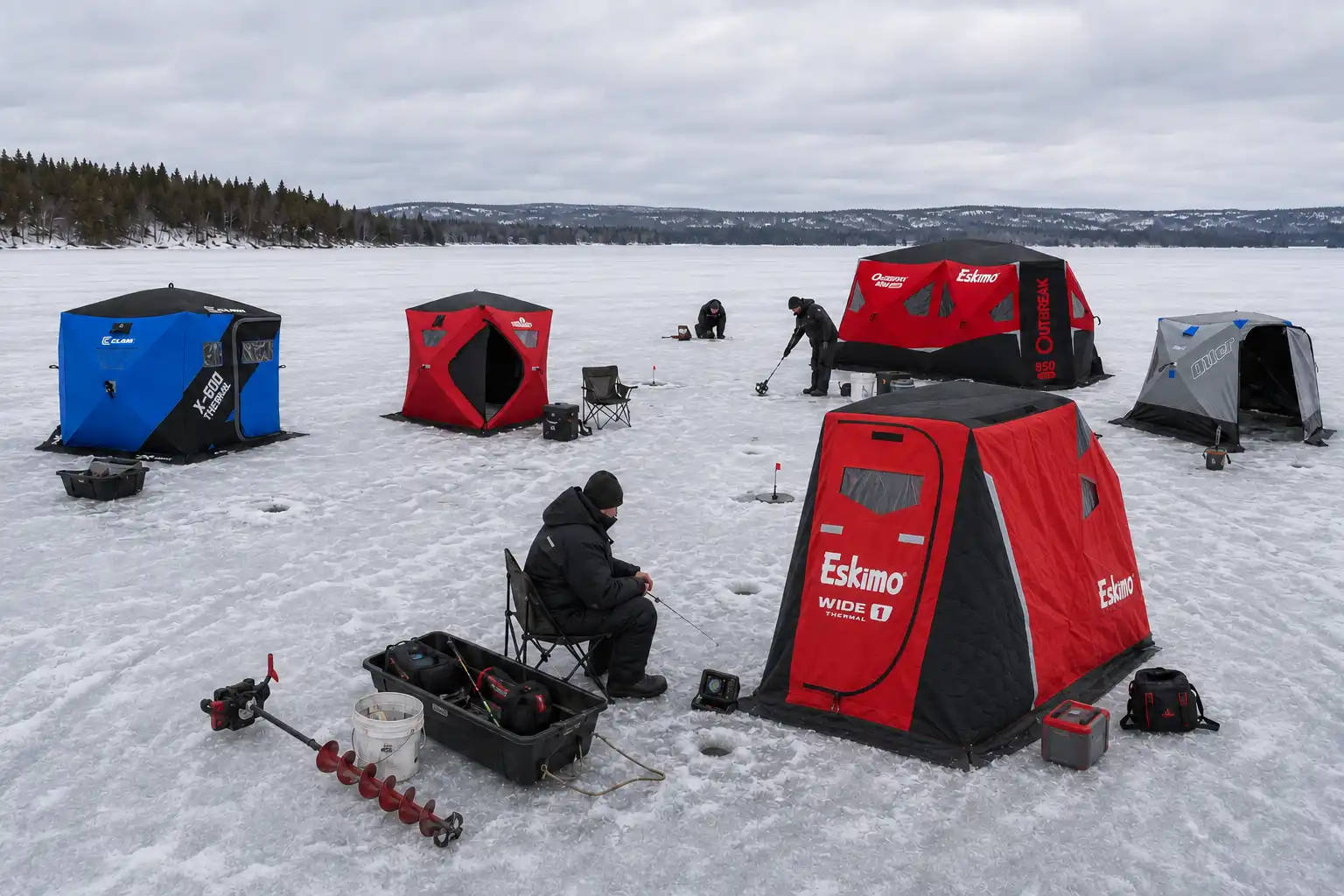
There’s a specific kind of cold that creeps in around hour three of a tip-up spread — not the wind, but the stillness. The best ice fishing shelters do more than block wind — they hold heat without trapping condensation, stay put when the wind picks up, and pack down small enough that hauling them isn’t its own chore. After comparing today’s leading thermal hubs and flip-over models, we picked five shelters for the situations anglers actually face: fishing solo, setting up with a group, camping overnight, working with a tighter budget, or building a premium base camp on the ice.
We also looked past the advertised capacity. A shelter marketed for five people may only be comfortable for three or four anglers once chairs, electronics, a heater, tackle, and multiple holes are inside.
Because we spend much of the winter ice fishing for pike, we paid close attention to what matters during long tip-up sessions: room for bulky cold-weather gear, visibility when a distant flag goes up, and enough working space to manage equipment without crowding everyone inside. Those same details make these shelters just as practical for walleye, perch, lake trout, or any other hard-water target.
As an Amazon Associate, we earn from qualifying purchases — no cost to you. That’s how we keep this site running. Read more ›
For most anglers, the Otter Vortex Pro Lodge Thermal Hub is our top pick — it offers the strongest balance of warmth, fishable space, stability, and portability. The remaining picks cover a dedicated solo flip-over, an ice-camping model, a premium large-group shelter, and a lower-cost option for occasional trips.
How we tested: We evaluated all five shelters on the ice, comparing setup and packdown, usable space with fishing equipment inside, heat retention, condensation, wind stability, visibility, and transport effort. Each shelter was judged for its intended use—from solo hole-hopping and regular day trips to group fishing and overnight camping.
MFG Quick List: Best Ice Fishing Shelters
If you’re short on time, these five shelters cover the most important situations — from solo run-and-gun trips to overnight camps and premium base camps on the ice.
- Otter Vortex Pro Lodge Thermal Hub — Best Overall: the strongest balance of warmth, fishable space, and stability for most anglers.
- CLAM Thermal X-600 — Best for Ice Camping: extra headroom and floor space built for overnight and multi-day trips.
- Eskimo Wide 1 Thermal — Best Solo Flip-Over: lightweight, expandable, and built for anglers who move spots often.
- Eskimo Outbreak 850XDP — Best Premium: the most fishable area and the most refined features on this list.
- THUNDERBAY Ice Cube 2-4 Man — Best Budget: reliable performance for occasional trips without the premium price tag.
Types of Ice Fishing Shelters: Hub vs. Flip-Over
Before picking a shelter, it helps to know which style actually fits how you fish. Most portable ice fishing shelters fall into one of two categories, and each comes with real tradeoffs.
Hub-Style Shelters
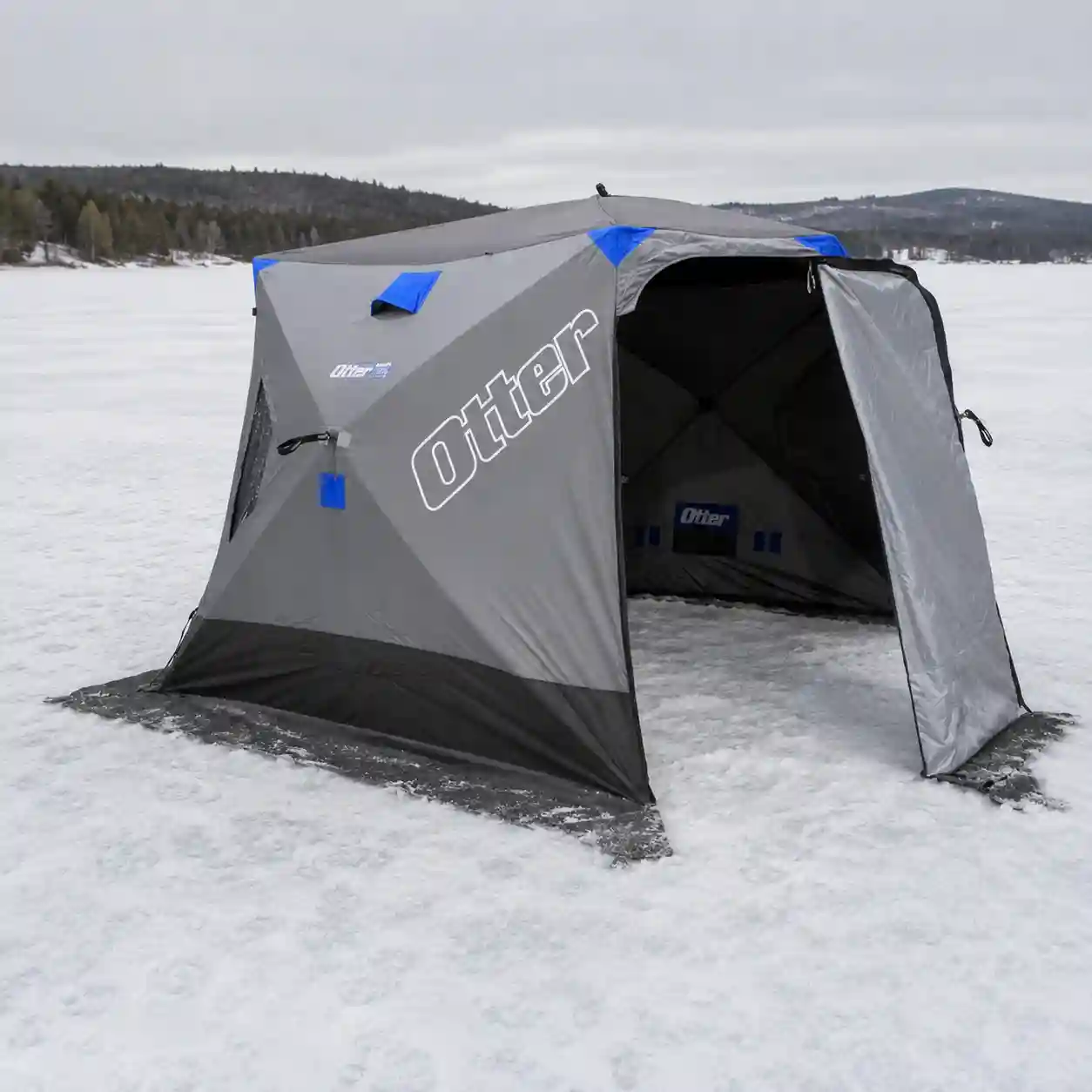
Hub-style shelters pop up into a tent-like structure supported by an integrated pole framework that locks into place. They offer the most fishable space per pound, generally provide enough headroom to stand, and seal out drafts well once properly anchored. The tradeoff is setup time—a hub takes longer to pitch than a flip-over, and the broad fabric panels can catch the wind like a sail during setup. Secure one point on the upwind side before fully expanding the shelter, following the manufacturer’s anchoring instructions. That first anchor can be the difference between pitching your shelter and chasing it across the lake.
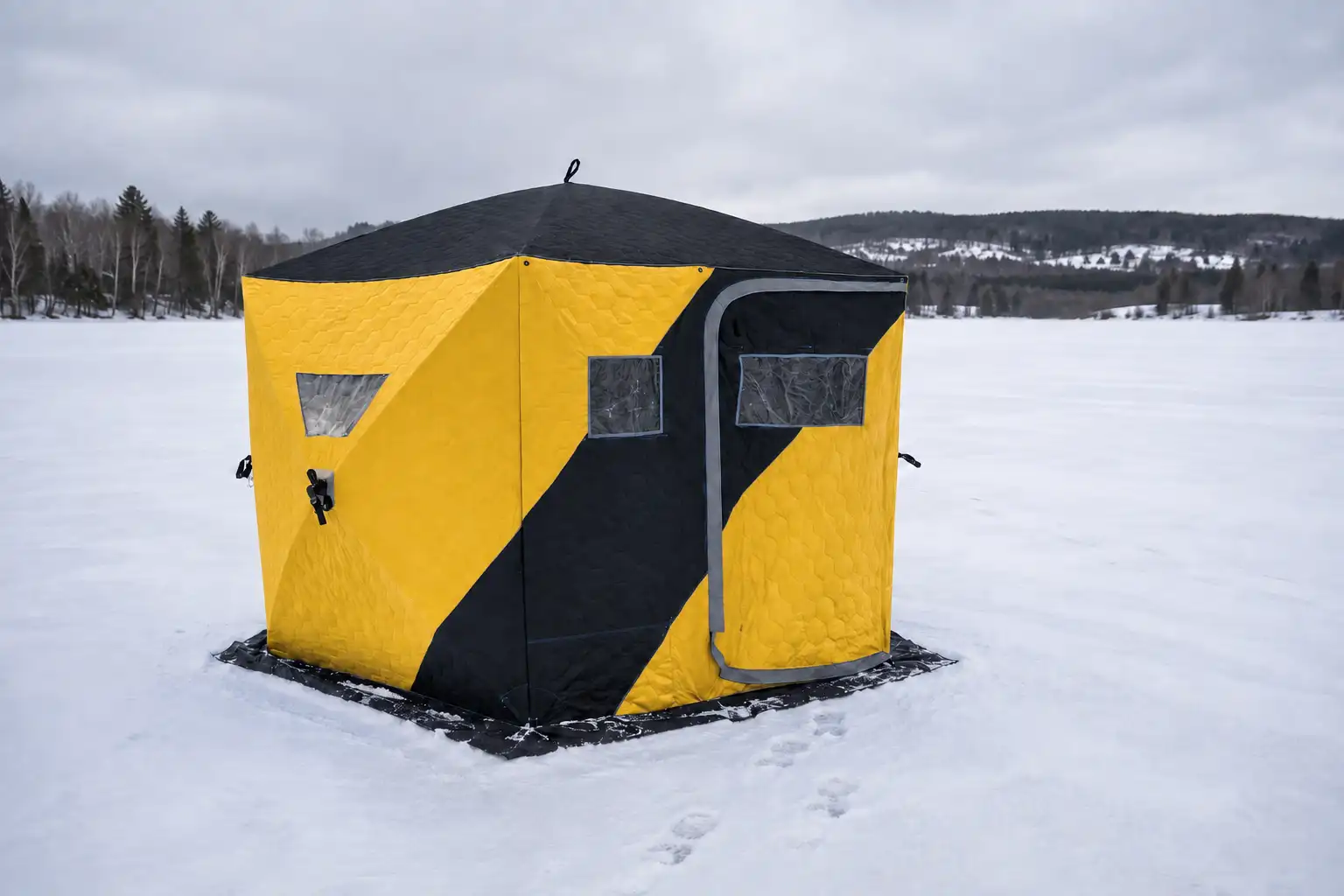
Packing down matters just as much as setting up. The skirt around the base can freeze into the slush beneath it by the end of a long session. If you do not carefully break that ice loose before folding the hub, the frozen fabric becomes stiff, takes up more room, and makes getting the shelter back into its carrying bag much harder—especially in single-digit temperatures.
Flip-Over Shelters
Flip-over shelters combine a sled base with a shell that folds up and over the fishing area. They are built for anglers who move often—drill a hole, pull the shelter into position, and you can be fishing within seconds—while the sled doubles as storage and a way to haul equipment across the ice. Interior space is tighter than in a comparable hub, and although larger models exist, most portable flip-overs are designed around one or two anglers.
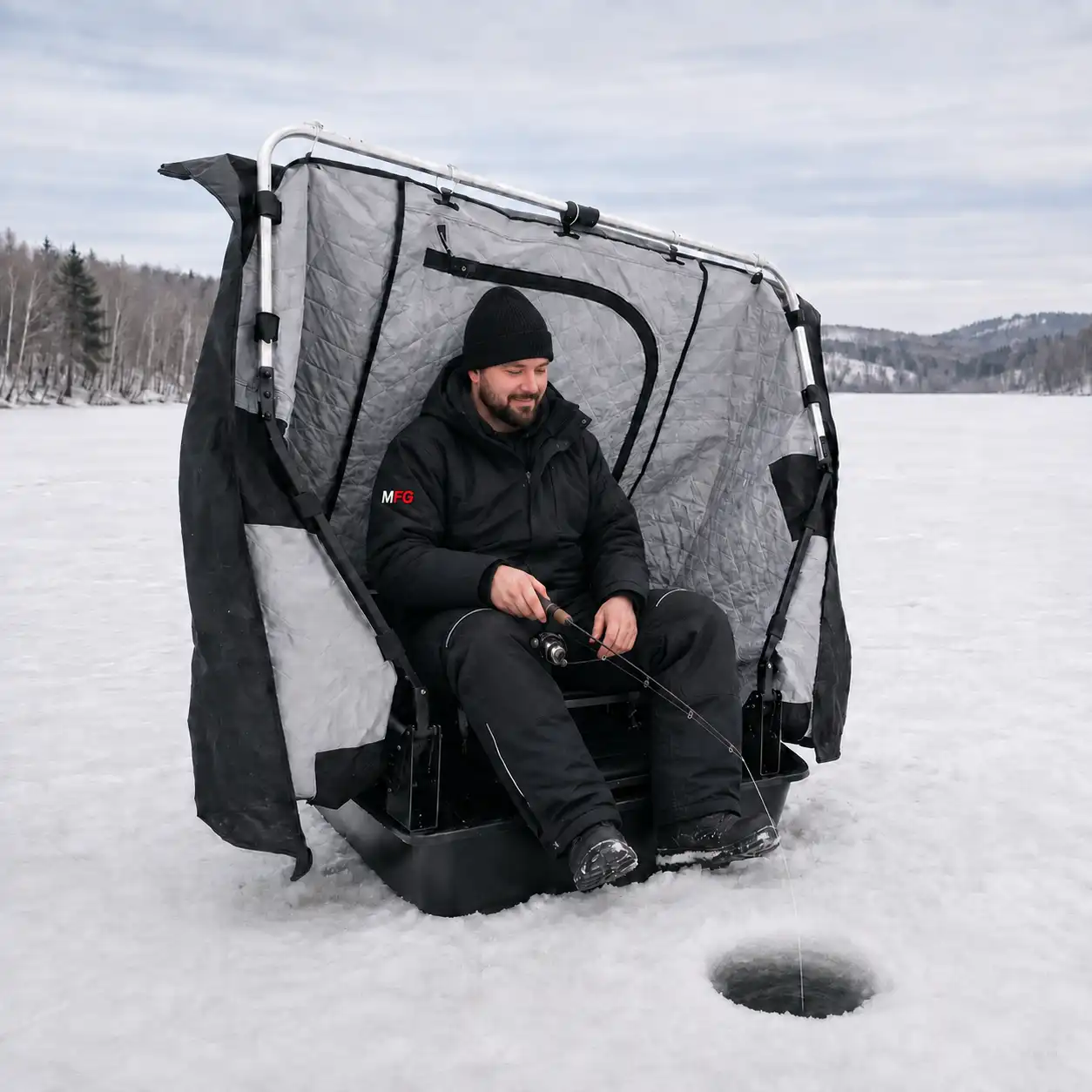
The biggest difficulty with a flip-over often comes when the fishing is finished. A loaded sled carrying a heater, batteries, electronics, tackle, and other equipment becomes heavy quickly, and lifting it alone into a pickup bed at the end of a long day is no small task. Pulling that weight by hand through deep snow or heavy slush without a snowmobile or ATV can be just as exhausting. If you regularly drag a flip-over across rough ice, boat ramps, gravel, or parking lots, Hyfax-style wear bars can protect the sled runners and prevent premature wear through the plastic base.
Neither style is universally better. If you are running a spread of tip-ups and staying in one location for hours, a hub provides the room and visibility needed to manage it. If you are hole-hopping to locate active fish, a flip-over keeps you mobile and reduces the time spent moving between spots.
Otter Vortex Pro Lodge Thermal Hub — Best Overall
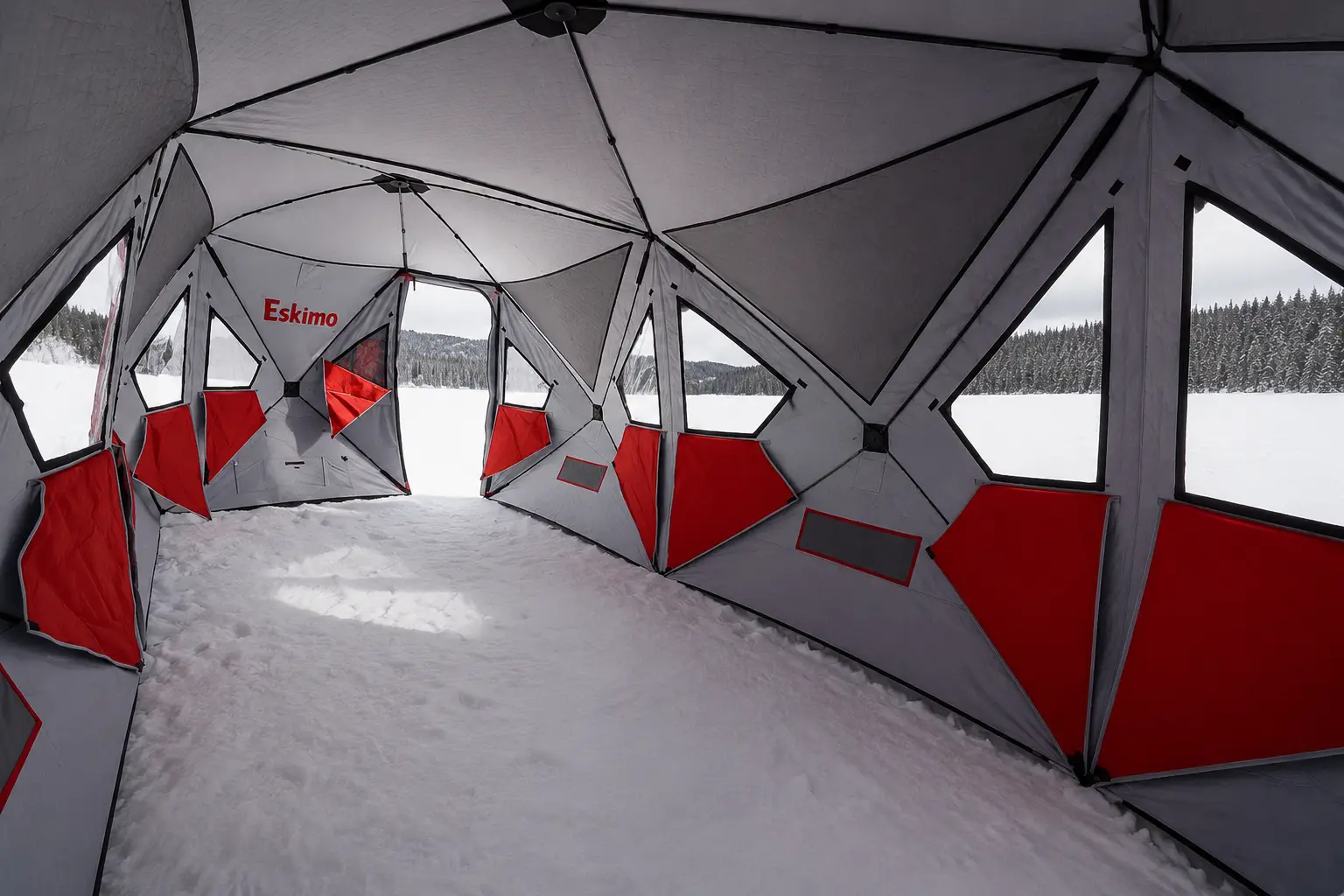
This is the shelter we’d grab first for a standard day on the ice, and it’s the one we’ve seen recommended most often by anglers who run tip-ups for hours at a stretch. At 74 square feet with a 79-inch center height, there’s enough room to stand up straight, work a spread of gear, and still have a buddy fishing beside you without elbows in the way.
The Ice-Lock anchoring system is what stood out most during setup in wind — the anchors bite into the ice rather than just adding dead weight, and paired with the 11mm cobalt poles, the walls hold firm instead of flexing and slapping the way thinner-poled shelters do in a 20 mph gust. That matters more than it sounds — you’re not shouting over flapping fabric to talk to whoever’s fishing next to you.
The tradeoff of the roomy interior is that it only has one door. With three or four anglers and gear spread across the floor, whoever’s sitting in the back corner ends up stepping over rods, buckets, and open holes every time a distant flag goes up. It’s a minor annoyance on a calm day and a real one when you’re moving fast to beat a fish to the hole.
Two details we didn’t expect to matter as much as they do: the 600-denier ThermalTec fabric holds heat well without soaking the interior in condensation, and the oversized carry bag makes a real difference at the end of a long day. By the time you’re packing up with cold hands, a bag that doesn’t require perfect folding is worth more than it sounds — this one has enough room to stuff the hub in without a fight. One thing worth doing before you pack it, though: knock the ice off the skirt first. Leave a frozen, slush-caked skirt on and the whole shelter folds up stiffer and heavier than it needs to.
What We Like: spacious interior for the weight, tall enough to fish standing up, strong anchoring system, oversized bag makes packing up easy even with cold hands.
What Could Be Better: single door means less convenient access for anglers seated furthest from the entrance, no floor included so a separate floor mat is worth budgeting for.
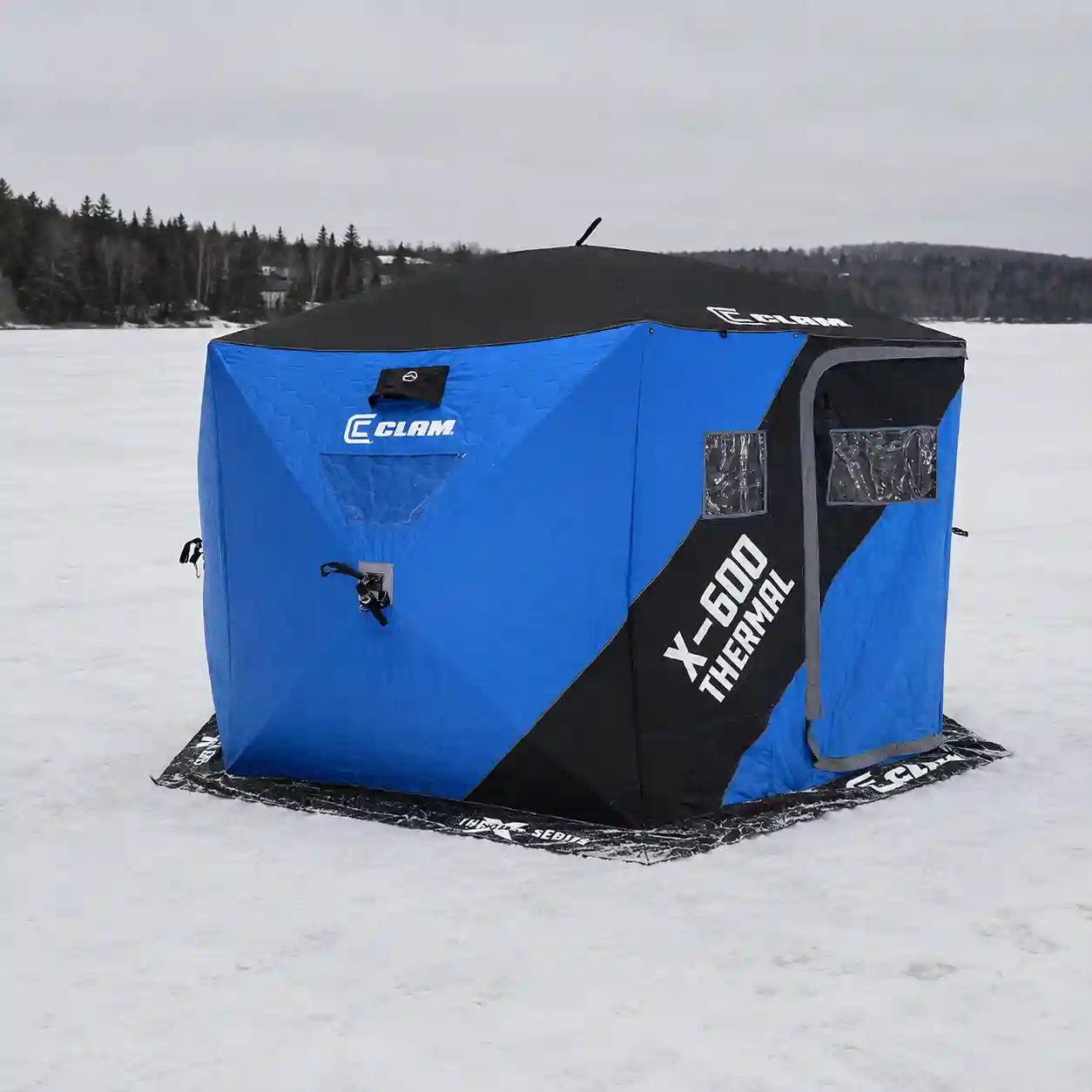
CLAM X-600 Thermal — Best for Ice Camping
This is the shelter to reach for when a day trip turns into an overnight push, or when the whole point of the outing is setting up a basecamp and staying put. We ran it through an overnight test at 3°F, and by 2 a.m. the advantage of having entrances on opposite sides was obvious. When a flag popped on an outside tip-up, whoever was sitting furthest from the main entrance could step through the opposite-side door in seconds—without climbing over a cot, the heater, or sonar cables to get there.
At 94 square feet, the X-600 gives a group room to spread out cots, a compact camp-kitchen kit, and fishing gear without everyone tripping over the next person’s rod. The 900-total-denier fabric and Full Thermal Trap insulation retained heat well enough to create a different problem overnight: the warmth gradually softened the ice beneath us. By morning, the cot legs and a gear box were sitting in a couple of inches of slush.
If you plan to sleep on the ice in this shelter, the compatible removable X-600 floor is more than a comfort upgrade—it helps insulate the interior and keeps cots, bags, and equipment out of meltwater. The floor is sold separately, so its cost needs to be included in an overnight-camping setup.
Setup follows the same wind-anchoring rule as any large hub: secure the upwind side before fully expanding the shelter. The flex-tested 11mm poles hold their shape well once the hub is up, while the oversized skirt gives you plenty of material to bank with snow and seal the lower edge against drafts. The oversized carry bag also makes packdown more manageable with cold hands, provided you break the frozen skirt free and remove the slush before folding the shelter.
We kept the shelter ventilated and used a carbon-monoxide alarm throughout the overnight test. Any heater or cooking appliance must be operated according to its manufacturer’s instructions, with the required ventilation and clearance from fabric, cots, and other combustible gear. Never sleep with an unvented combustion heater running.
What We Like: massive interior for a group or overnight camp, entrances on opposite sides, efficient heat retention for its size, strong 11mm poles, and an oversized carry bag that makes packdown easier.
What Could Be Better: the removable floor is not included and should be budgeted for when planning overnight trips; at this size, the X-600 is better suited to establishing a basecamp than moving repeatedly throughout the day.
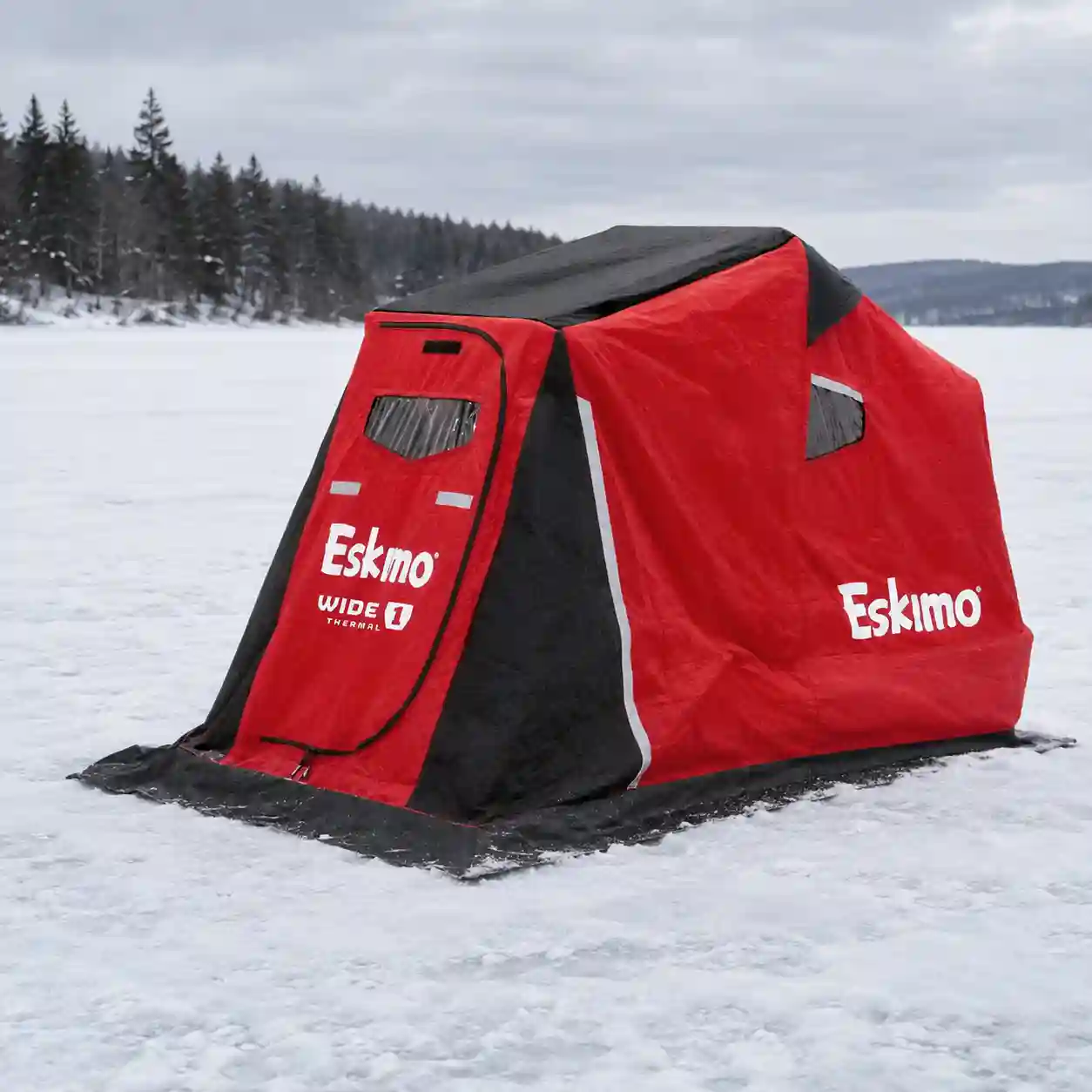
Eskimo Wide 1 Thermal — Best Solo Flip-Over
This is the shelter for anglers who’d rather drill five holes and find the fish than sit and wait in one spot. The expanding wide-bottom design is the standout feature here—the patented frame creates up to 32% more fishable area, providing 14.8 square feet once fully opened. That’s enough room for a heater, electronics, and a deadstick hole without feeling boxed in.
The Versa swivel seat made the biggest difference over a full day of hole-hopping—it’s built on a steel frame with mesh that holds up better than the thin folding stools some solo flip-overs ship with, and being able to swivel toward a rod without standing up saves your knees after the tenth hole of the day. The gray interior is a small touch that’s easy to overlook, but it keeps the inside bright enough to tie knots and rig leaders without needing a headlamp midday.
Eskimo rates the IQ insulated fabric as 35% warmer than a comparable non-insulated shelter, and the double-walled hinge bracket keeps the frame stable in wind—you can even lock the poles vertically and use it as a windbreak without fully closing the shell. One thing worth knowing before you buy: this isn’t the lightest one-person flip-over on the market. At 65 pounds, it’s built for durability and comfort rather than minimum weight, so pulling it any serious distance by hand takes more effort than a lighter, non-insulated solo flip-over. A good ice auger still matters here — the whole point of a solo flip-over is drilling multiple holes fast to find active fish.
What We Like: expandable design adds real usable space, comfortable swivel seat for long sessions, warm insulated fabric, stable in wind with the double-walled hinge.
What Could Be Better: heavier than some other solo flip-overs, ceiling height is tighter than a hub shelter if you’re tall and setting hooks with a longer rod.
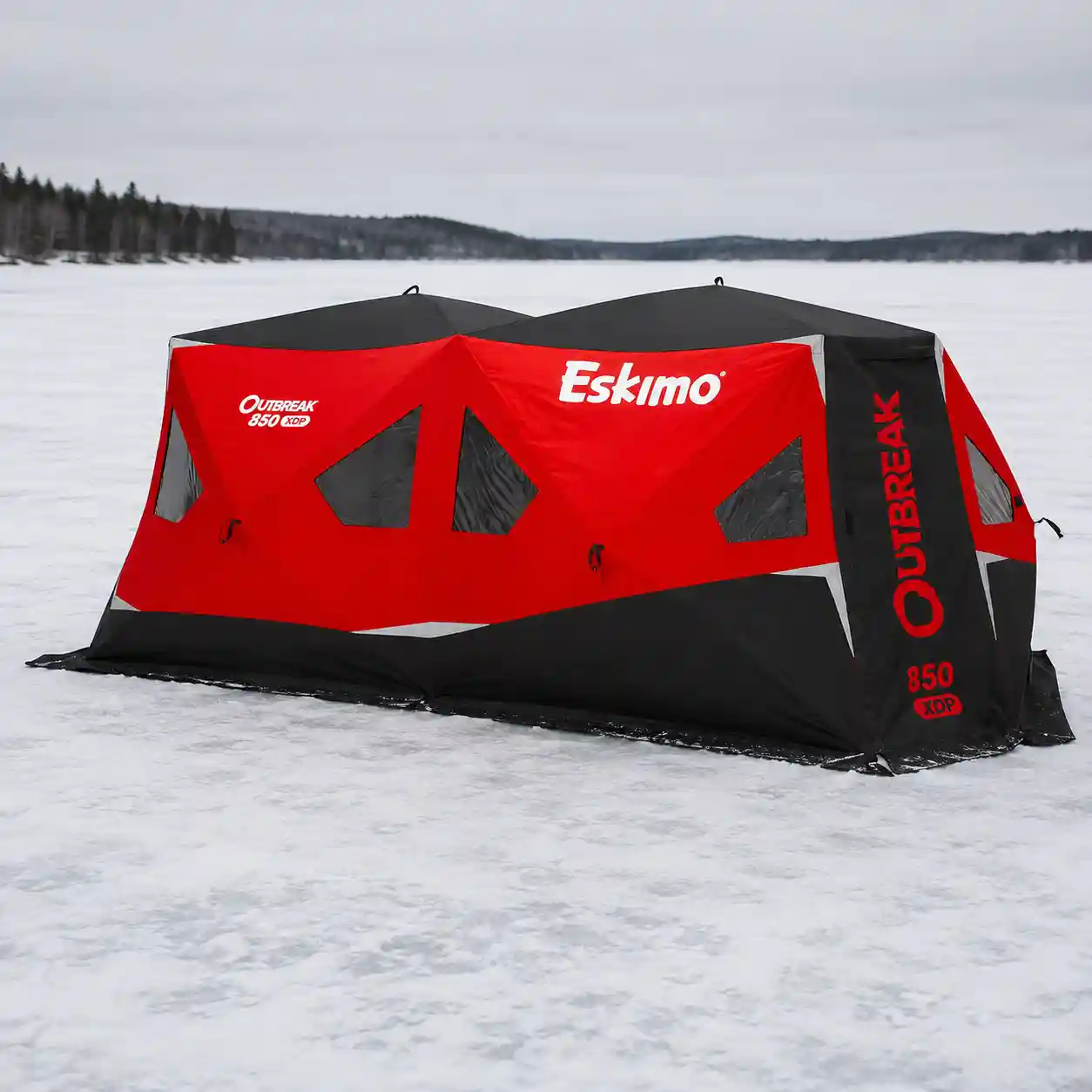
Eskimo Outbreak 850XDP — Best Premium
This is the shelter for anglers who want the biggest, most refined setup on the ice and don’t mind paying for it. At 120 square feet, it’s the largest shelter on this list, and the flared-bottom design makes good use of that footprint. There’s enough room for a pair of standard cots plus gear without the cramped feeling some large hubs develop once everyone and everything is inside.
The two No-Trip Doors — one at each end — are the feature that separates the 850XDP from a standard large hub. Each door opens as a full panel from ice level, eliminating the raised threshold that can catch a boot when you’re carrying gear or moving quickly toward a tip-up. During group setup, the second entrance also prevents everyone from funneling through the same doorway.
The defining feature of the XDP version is Eskimo’s Packdown hub geometry. Despite its massive footprint when deployed, the shelter collapses to just 57 inches long. That allows it to fit straight into a standard 5.5-foot pickup bed, as well as many tow sleds and ATV racks, without hanging over an open tailgate.
The three-layer StormShield fabric contains 80 grams of high-loft insulation to retain heat and reduce condensation. During our testing, once the interior reached temperature, we were able to turn the heater down instead of running it at full output continuously. Actual fuel consumption will still depend on the outside temperature, wind, heater size, and how frequently the doors are opened.
Two sealable ventilation and heat-duct ports accommodate compatible vented heating systems, including diesel heaters, without requiring an improvised opening around a door or window. Eskimo also includes a separate zippered port for routing a propane hose. As with any fuel-burning heater, keep the shelter ventilated, follow the heater manufacturer’s clearance requirements, and use a working carbon-monoxide detector.
At 78 pounds, this isn’t a shelter we’d want to pull any serious distance by hand, especially once anchors, seating, and other equipment are added. It’s better suited to transport in a tow sled, on an ATV, or in a truck. That weight — together with its premium price — is the tradeoff for the additional space, insulation, and refined entry and heating features.
What We Like: massive 120-square-foot fishable area, two No-Trip Doors make loading and exiting easier, compact 57-inch packdown length, dedicated ports accommodate compatible vented heaters.
What Could Be Better: 78-pound weight makes long hand-hauls impractical, and its premium price is difficult to justify for occasional trips or small groups.
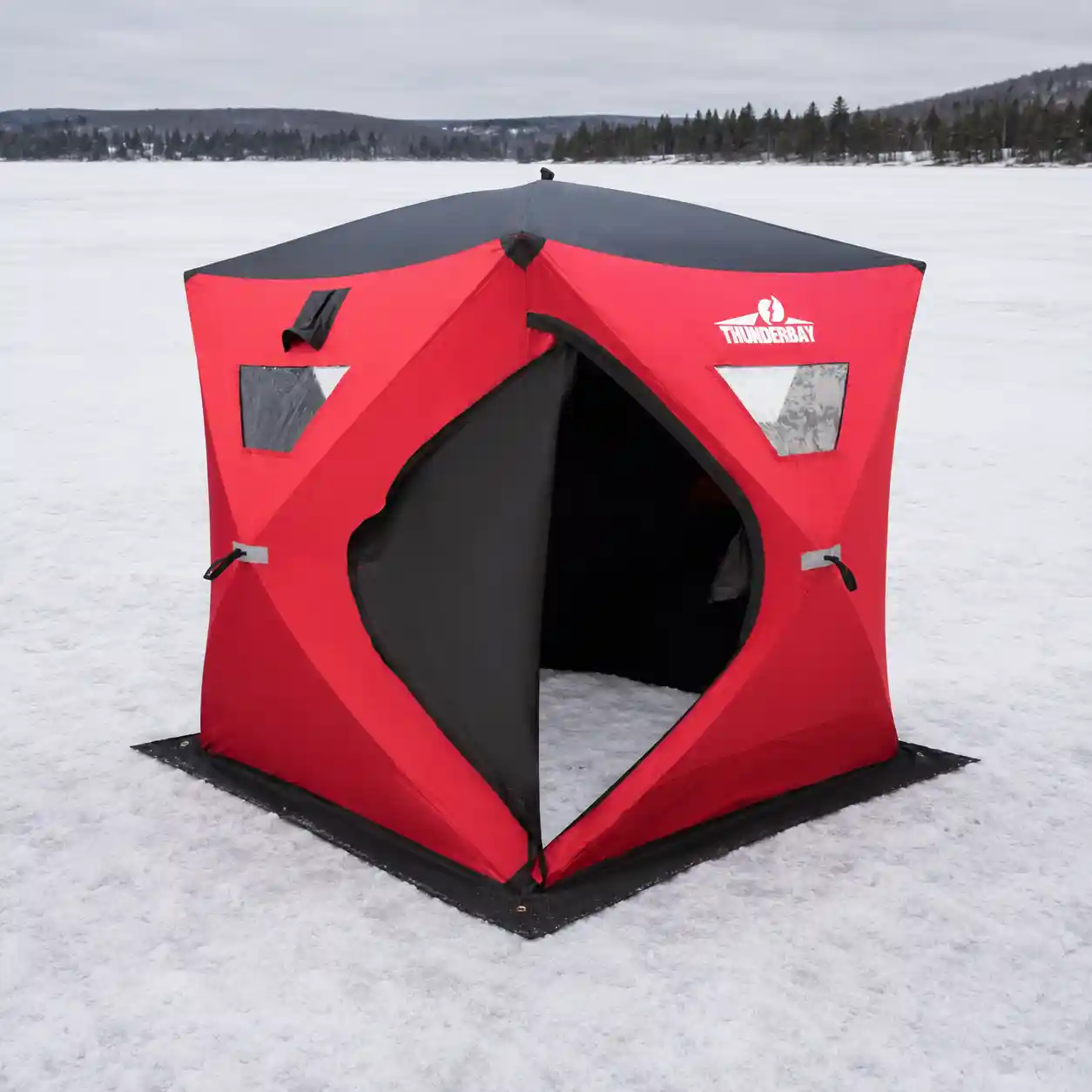
THUNDERBAY Ice Cube 2-4 Man — Best Budget
This is the shelter for anglers who want a real hub-style setup without paying premium thermal-shelter prices, and it held up better in our testing than the price tag suggests. The selected 3-Person style provides 34 square feet of fishable area, measures 90 by 90 inches from hub to hub, and has an 80-inch center height. There’s enough room for two anglers to fish comfortably with a heater and gear, while three can fit if one person is mostly along for company rather than actively fishing a separate hole.
The one thing to know going in is that this shelter isn’t insulated. Its single-layer 300-denier fabric blocks wind effectively, but it doesn’t retain heat like the multilayer thermal shelters elsewhere on this list. That’s the honest tradeoff for the lower price. Paired with a small heater on low, it held up well during our single-digit testing, but the heater needed to run more consistently than it did inside the insulated models. We would use it for regular day trips, but not for overnight camping or extended sits in extreme cold.
Where it earns its place is construction quality. Replaceable fiberglass poles and cast-aluminum hubs give the frame a more substantial feel than the plastic-heavy construction found on some budget shelters. The extra-wide skirt can be banked with snow to cut drafts, and six self-tapping ice anchors are included for securing the hub.
Setup is genuinely quick. Once we were familiar with the hub sequence, getting it upright was close to the advertised 60 seconds, although anchoring and banking the skirt naturally take longer. Four removable flexible PVC windows provide outside visibility and adjustable light, while two covered mesh vents provide dedicated airflow. The blackout coating is also useful when glare off the ice becomes tiring or when you need a darker interior for viewing electronics.
The main practical limitation is the single door. It works fine with two anglers, but with three people and gear spread across the floor, whoever is seated furthest from the entrance may need to step around rods, buckets, and open holes when an outside tip-up flag goes up.
What We Like: affordable hub-style shelter, realistic room for two anglers and their equipment, 80-inch standing height, durable fiberglass poles and cast-aluminum hubs, quick setup, removable windows and dedicated ventilation.
What Could Be Better: non-insulated fabric requires more heater use in severe cold, three active anglers make the 34-square-foot interior crowded, and the single door limits quick access when equipment is spread across the floor.
| Shelter | Best For | Fishable Area | Weight | Insulated | Ideal Scenario |
|---|---|---|---|---|---|
| Otter Vortex Pro Lodge | Best Overall | 74 sq ft | 48 lb | Yes | Standard day trips with a tip-up spread |
| CLAM X-600 Thermal | Best for Ice Camping | 94 sq ft | 60 lb | Yes | Overnight and multi-day basecamps |
| Eskimo Wide 1 Thermal | Best Solo Flip-Over | 14.8 sq ft | 65 lb | Yes | Solo anglers who move spots often |
| Eskimo Outbreak 850XDP | Best Premium | 120 sq ft | 78 lb | Yes | Large groups wanting maximum space and features |
| THUNDERBAY Ice Cube 2-4 Man | Best Budget | 34 sq ft | ~30 lb | No | Occasional day trips on a tighter budget |
How to Choose the Right Ice Fishing Shelter
Size It for Gear, Not Just People
Manufacturer capacity ratings describe how many people can physically fit inside, not necessarily how many can fish comfortably with a full winter setup. Once you add chairs, a heater, sonar, tackle, bulky clothing, and one or more open holes, a shelter rated for four people may be more practical for two or three active anglers.
As a general rule, reserve at least one advertised capacity position for equipment. If three anglers regularly fish together, a four- or five-person hub usually provides a more workable layout than a shelter rated for exactly three. For overnight use, account separately for cots, cooking equipment, floor panels, and the clearance required around the heater.
Choose Insulation for the Conditions
An insulated shelter costs and weighs more, but it retains heat better, reduces fuel consumption, and generally produces a more stable interior temperature during long sessions. That makes thermal fabric worthwhile when fishing in severe cold, strong wind, or for several hours without moving.
A non-insulated hub can still work well for shorter day trips, especially when its main job is blocking wind. It will usually require more heater output to maintain the same temperature, however, and its walls may develop more condensation as warm interior air meets the cold fabric. For occasional trips, lighter fabric can save money and hauling weight; for regular winter use or ice camping, full insulation is worth paying for.
Check the Anchoring System
A hub shelter presents a large surface to the wind, and an unsecured wall can catch a gust before the shelter is fully opened. Start by installing an anchor at the upwind corner, then expand the hubs and secure the remaining anchor points and exterior straps. Once the shelter is positioned, bank snow around the skirt to reduce drafts and keep the base from lifting.
Included anchor count matters less than anchor quality and placement. Self-tapping anchors should bite cleanly into hard ice without bending, while adjustable straps should remain tight after the fabric settles. Before leaving the shelter unattended or turning in for the night, check every anchor again and clear accumulated snow from the roof and ventilation openings.
Windows for Watching Your Tip-Up Spread
If you’re running tip-ups outside the shelter, visibility matters almost as much as warmth. Look for windows on multiple sides rather than only near the entrance. A flag that rises beside or behind the shelter is easy to miss when your view is limited to one direction.
Removable or adjustable windows also let you control interior light without opening the main door and dumping heat. For northern pike sessions, position the shelter before drilling the final holes so the most distant tip-ups remain visible from a seated position. Windows help with monitoring, but they do not replace regularly checking the spread and complying with local attendance requirements.
Ventilation and Carbon Monoxide Safety
Never assume that cracking the door provides enough ventilation for a fuel-burning heater. Use only a heater whose manufacturer specifically permits operation in an enclosed shelter, follow its clearance and ventilation requirements, and never modify the heater or its safety systems.
When using propane heat, maintain an unobstructed opening near the bottom of the shelter and another near the top. Check both regularly because snow, ice, and banked skirting can block airflow without anyone inside noticing. Keep combustible gear away from the heater and never use a stove, grill, or cooking appliance as a substitute heat source.
Carry a battery-powered carbon-monoxide alarm rated for the temperatures in which you fish, test it before each trip, and position it according to the alarm manufacturer’s instructions. If it sounds — or anyone develops a headache, dizziness, weakness, nausea, or confusion — shut off the heater if it is safe to do so, move everyone into fresh air immediately, and seek emergency assistance. A CO alarm is a backup safety measure, not a replacement for ventilation and correct heater use. For more on checking ice conditions and preparing for a day on the ice, see ice fishing safety.
Frequently Asked Questions
Is a propane heater safe to use inside an ice fishing shelter?
Only when the heater manufacturer specifically approves it for use in an enclosed shelter and all ventilation instructions are followed. Keep an unobstructed opening near the bottom of the shelter and another near the top, prevent snow and ice from blocking them, and carry a working battery-powered carbon monoxide alarm. Never seal the shelter completely while a fuel-burning heater is operating, and never use one while sleeping unless the manufacturer expressly permits it.
Do I need an insulated shelter, or is a non-insulated one enough?
It depends on how long you stay in one place and the conditions you normally fish in. A non-insulated shelter can work well for shorter day trips by blocking wind, but it generally requires more heater output in cold weather. An insulated shelter retains heat more efficiently, reduces fuel use during long sessions, and usually limits condensation. For regular winter use, overnight camping, strong wind, or extreme cold, insulation is generally worth the additional weight and cost.
How long does it take to set up a hub-style ice shelter?
Many hub shelters advertise setup times of around 60 seconds, which can be realistic in calm conditions once you’re familiar with the hub sequence. Complete setup takes longer because the shelter still needs to be positioned, anchored, and banked with snow. In strong wind, secure the upwind corner before expanding the remaining hubs so the fabric doesn’t catch a gust during setup.
How many people can actually fish comfortably inside a shelter?
Usually fewer than the advertised capacity. Manufacturer ratings indicate how many people can physically fit inside, but heaters, chairs, electronics, tackle, bulky clothing, and open holes all reduce usable space. As a general rule, plan for one or two fewer active anglers than the stated capacity, or reserve at least one capacity position for equipment.
What’s the difference between a hub-style and a flip-over shelter?
Hub-style shelters generally provide more fishable area and standing height, making them better for groups and anglers staying in one location for several hours. Flip-over shelters combine a sled base with an attached shell that folds into position quickly, sacrificing interior space for faster moves and easier gear hauling. A hub suits stationary tip-up sessions, while a flip-over is better for anglers who frequently move between holes.