

Best Tip-Ups for Pike Fishing (2026): 6 Tested & Reviewed Picks
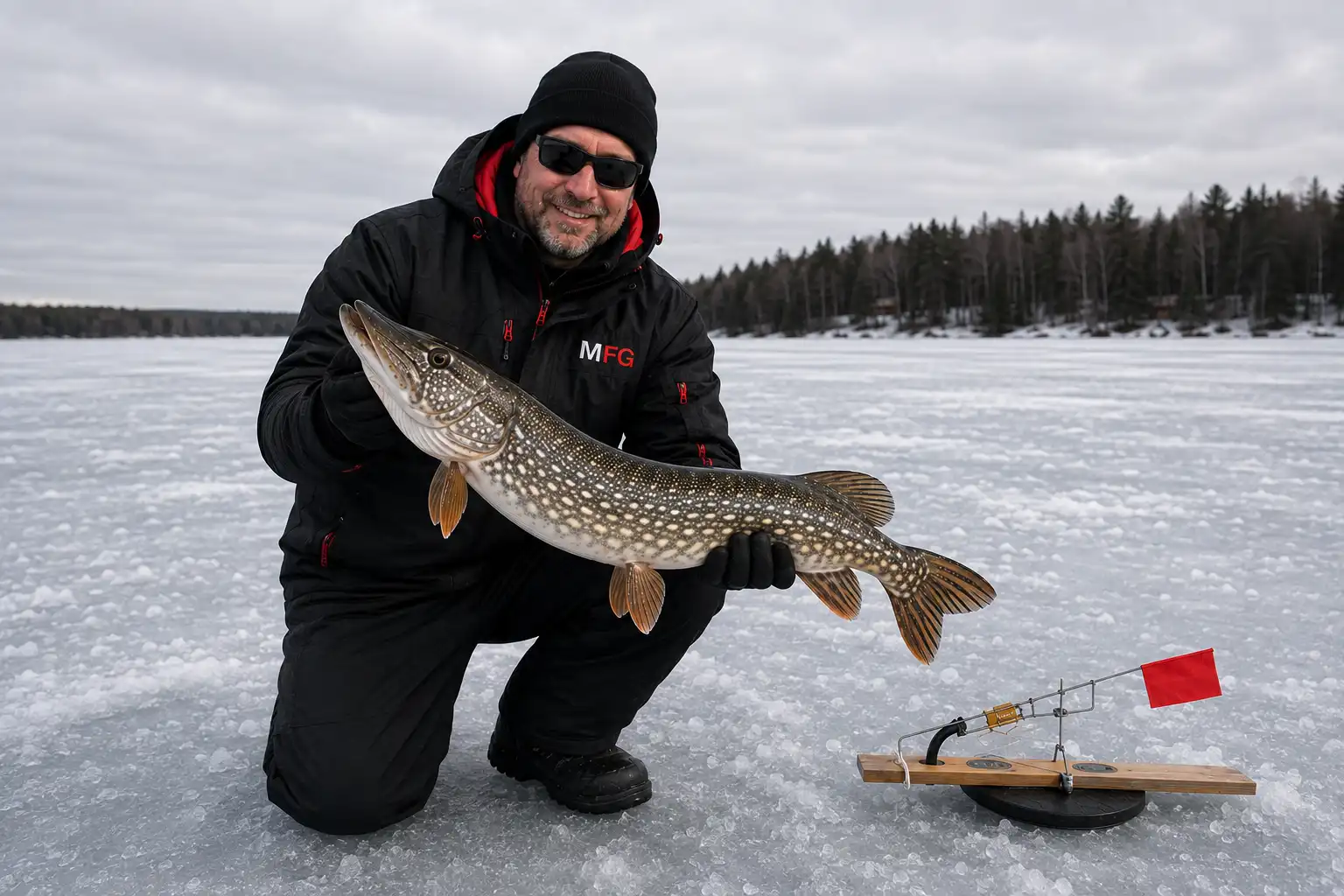
Nothing tests a pike angler’s patience quite like watching a row of silent holes across frozen water — until one flag suddenly snaps up. Finding the best tip-ups for pike fishing comes down to one simple truth: a poorly built trigger mechanism means missed strikes, frozen spools, and lost fish when it matters most.
We’ve fished tip-ups through midwinter cold snaps, slushy thaw days, and long mornings when a single flag was the only bite. Those conditions quickly expose which designs keep spinning freely and which ones freeze up after an hour on the ice. The wrong setup will let line freeze solid in sub-zero temperatures or fail to trip on a light take — the right one keeps performing even after dozens of outings.
As an Amazon Associate, we earn from qualifying purchases — no cost to you. That’s how we keep this site running. Read more ›
Rather than focusing on brand names alone, we compared trigger consistency, spool performance in freezing conditions, durability, ease of setup, and overall value for pike anglers. Based on those factors, we selected six tip-ups that stand out for pike fishing, ranging from affordable options for occasional anglers to premium models built for years of regular use. If you’re rigging deadbait through open water before freeze-up, check our Winter Pike Deadbait Rigs guide for line and leader setup that differs from tip-up rigging.
Quick List: Best Tip-Ups for Pike Fishing (2026)
If you’re short on time, these are the six tip-ups that performed best during our field testing, covering everything from budget-friendly models to premium designs for trophy pike and extreme cold.
- Frabill Arctic Fire (Chartreuse) Best Overall — dual trip settings and reliable performance without a big price tag
- Clam Blue Ice (10391) Best Budget — for anglers building out a full spread without a big upfront investment
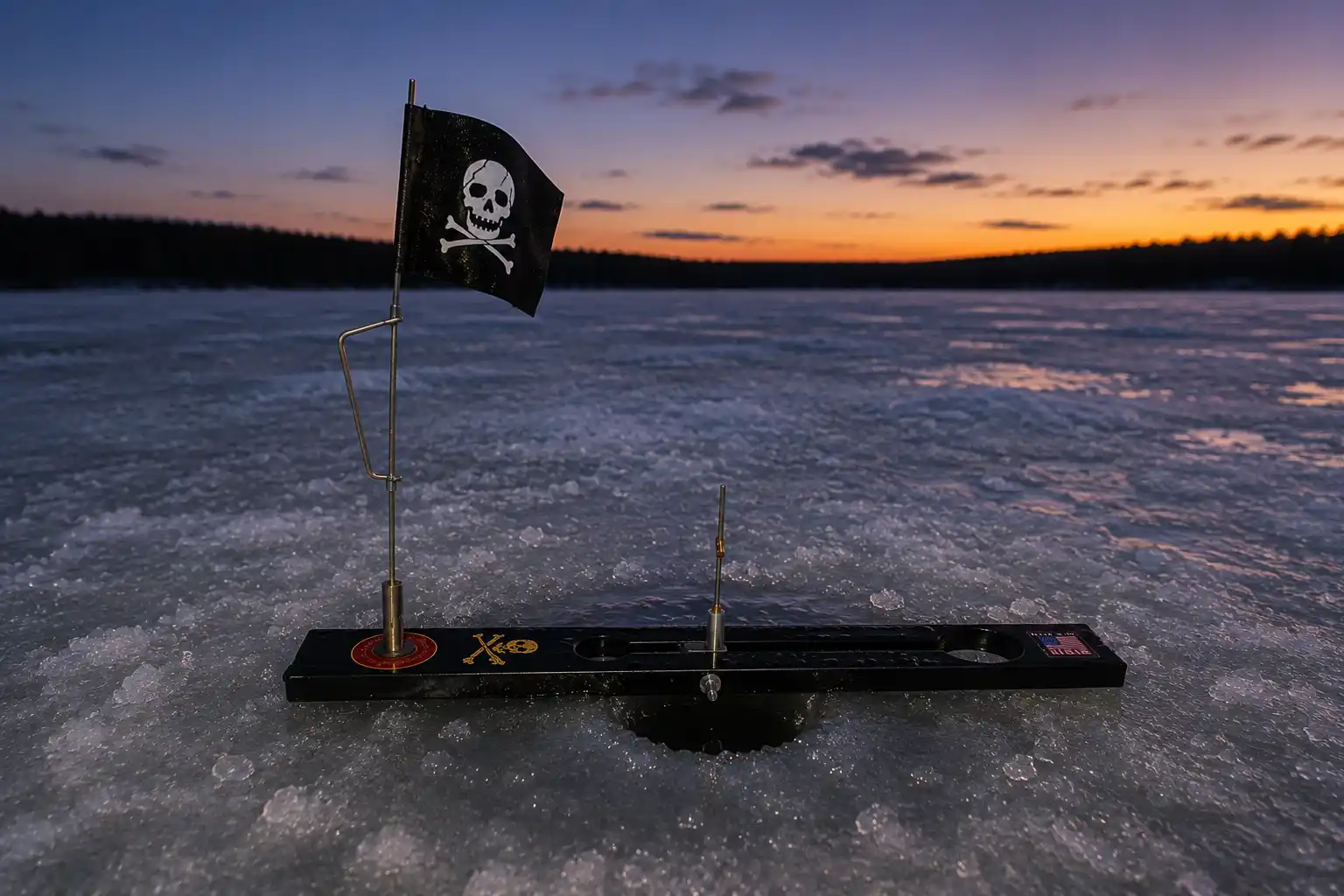
- Beaver Dam Jolly Roger (BDTP-JR) Best Premium — a hand-built classic that holds up for decades on the ice
- HT PTE-200 Polar Therm Extreme Best for Extreme Cold — built to keep the hole from freezing over on the harshest days
- HT PTU-50B Polar Tip-Up 500′ Best for Trophy Pike — deep spool that gives big fish room to run without stripping the line
- Happy Hooker Automatic Hook Setter Best High-Tech — automatic hookset instead of watching for a flag
How We Tested These Tip-Ups
We ran each of these tip-ups across multiple ice seasons, fishing everything from shallow weed bays to deeper basin edges where larger pike often cruise. Rather than judging tip-ups on brand reputation, we focused on how each one actually performed once it was set and left fishing while we rotated between holes throughout the day — which is the entire point of fishing with a tip-up in the first place. We drilled every hole with the same ice augers we’ve already put through our own testing, so hole size and setup matched real conditions from the start.
Specifically, we looked at five factors for every model:
- Trigger consistency — does it trip reliably on a real pike strike without excessive false flags caused by gusting wind or light line movement?
- Spool performance in freezing conditions — does it keep spinning freely, or does the mechanism seize up after an hour on the ice?
- Durability — does the base, spool, and flag hold up to repeated setup, transport, and cold-weather handling?
- Ease of setup — can it be rigged and deployed quickly, especially with gloves on?
- Value for pike anglers specifically — does the spool capacity, line weight, and build quality actually match what’s needed to handle a big fish, not just a panfish or walleye?
That last point matters more than most anglers realize. A tip-up built for panfish and stocked with light line will get stripped or damaged by a pike that decides to run, while a tip-up built for pike will feel like overkill for smaller species. The six picks below reflect what actually held up and performed well for pike specifically, not just tip-ups in general.
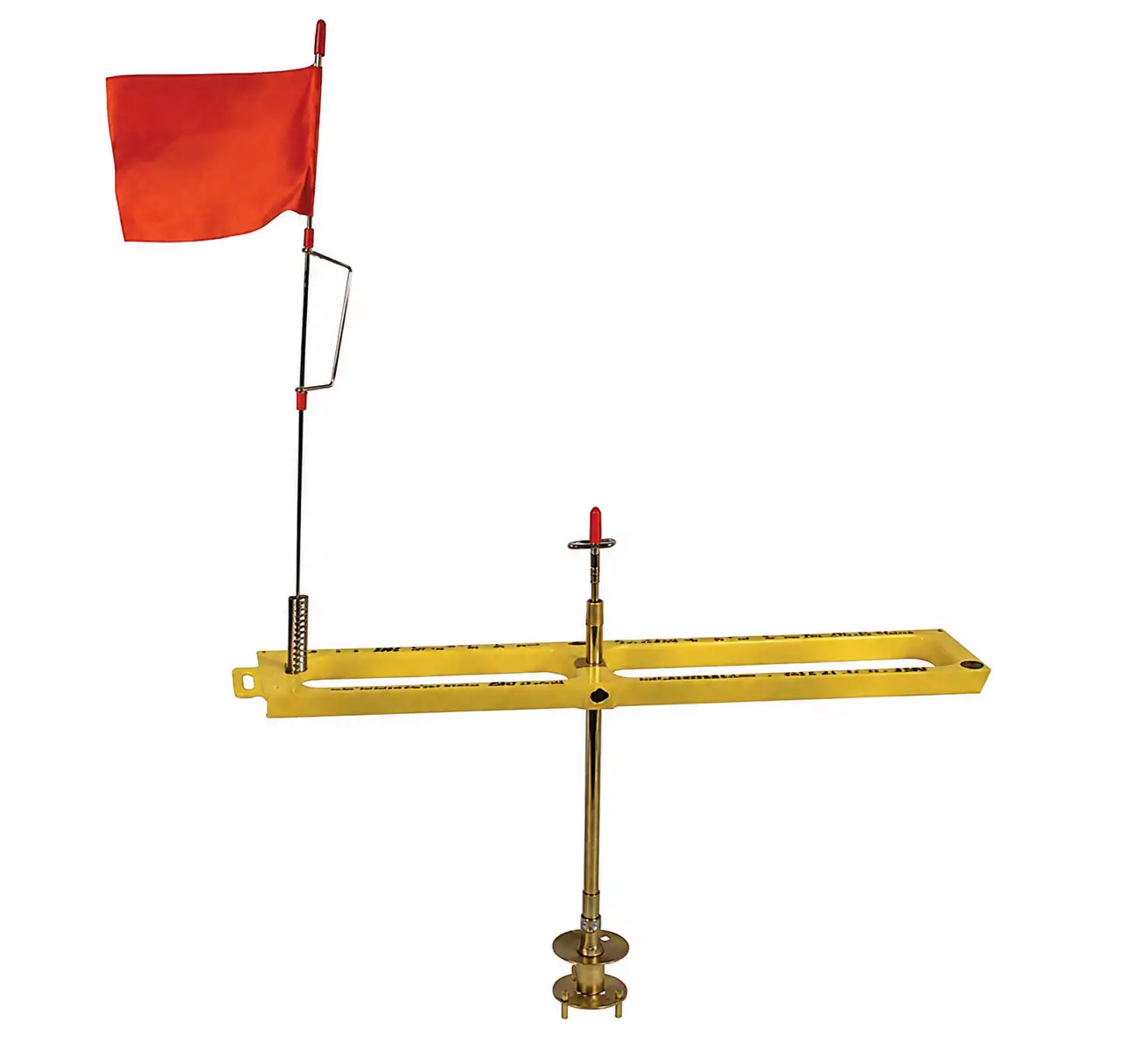
Frabill Arctic Fire Review: The Tip-Up We Reached for Most
We reached for this tip-up on a spread where we didn’t know if the next flag would be a hungry pike or a roaming perch. Frabill has been building ice fishing gear since 1938, and this tip-up reflects that experience — it’s the model we set most often when we’re not sure what size fish will show up on a given day.
We’ve fished it through slush, fresh snow, bitter sub-zero mornings, and late-season thaw conditions, and the dual trip settings make it genuinely versatile — light for panfish sneaking in on the same spread, heavy for when a pike commits and runs. The molded-in ruler on the base is a small touch that saves a trip back to the truck for a tape measure, and the counter-balanced crank handle keeps the spool running smoothly after repeated resets. During testing, this was often the first tip-up we reached for when setting multiple lines across a spread, because it handled changing conditions without needing constant adjustment.
What We Like: versatile dual trip settings for mixed-species spreads, smooth spool performance after repeated resets, built-in ruler saves a trip to the truck.
What Could Be Better: spool capacity is more than enough for average-sized pike, but anglers regularly targeting trophy fish may want more line in reserve.
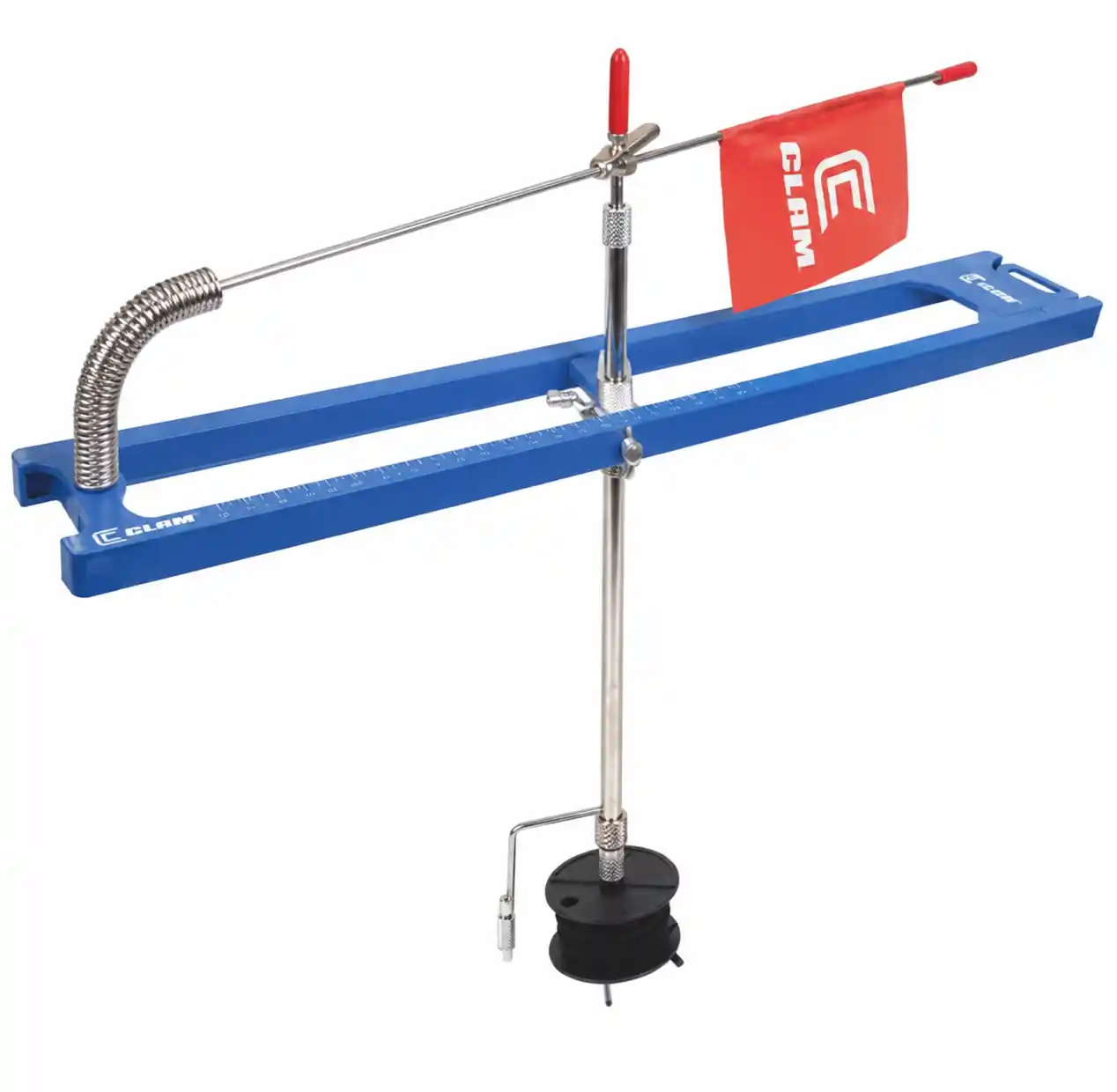
Clam Blue Ice Review: The One We Packed for a Full Spread
We picked this one up when we needed to fill out a spread quickly without spending a fortune on tip-ups we’d only use a handful of times a season. The Blue Ice isn’t flashy, but after repeated trips it proved to be the kind of tip-up you can trust to do its job without constant tinkering.
Out on the ice, we rarely had to readjust the trigger once it was set, even when the weather shifted throughout the day, and the lighter setting consistently tripped on cautious takes without becoming overly sensitive to wind. The molded-in ruler is a nice touch at this price point, letting us check a fish’s length right at the hole instead of digging for a tape measure. When we planned to fish six or more holes, this was usually the model we packed the most, because it offered dependable performance without stretching the budget. It wasn’t the most refined tip-up we tested, but it consistently did exactly what we expected every time we set it.
What We Like: low price makes it easy to buy multiples for a full spread, consistent trigger performance without constant readjustment, molded-in ruler for quick length checks.
What Could Be Better: the spool holds less line than premium models, making it better suited to anglers who aren’t regularly targeting large northern pike in deep water.
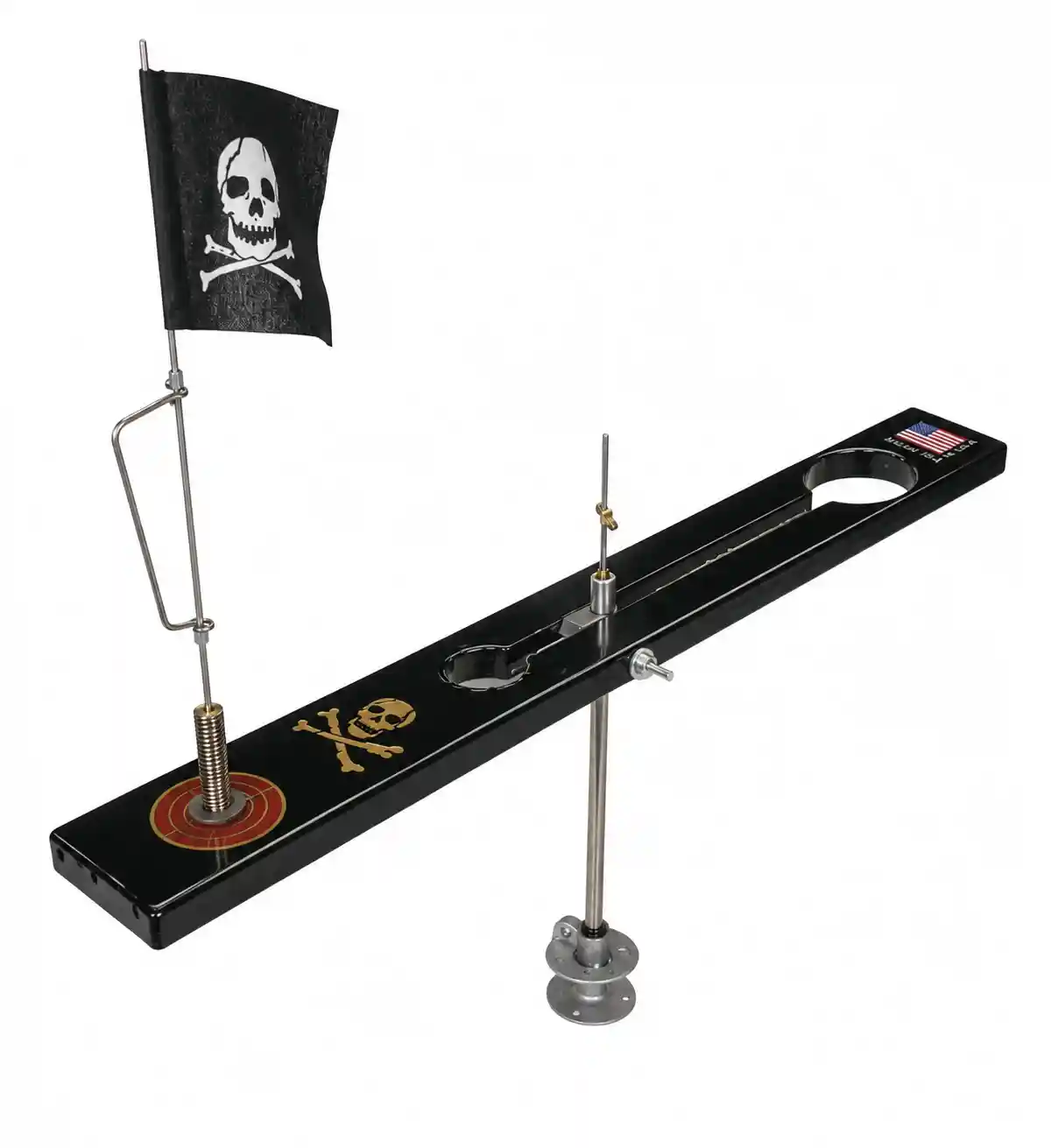
Beaver Dam Jolly Roger Review: The One Built to Outlast Us
This is the tip-up that made us stop thinking of ice fishing gear as disposable. Beaver Dam has been hand-building these in Wisconsin for over 50 years, and it shows the moment you pick one up — the build quality is on a different level than anything plastic on this list. Replacement parts are still available, which helps explain why so many of these tip-ups stay in service for years.
We ran ours through bitter cold mornings, and the spool never froze up on us — not even a hint of resistance when we checked it. The Smooth-Spool design and freezeproof grease held up exactly the way we hoped, and the 23-inch pine base felt noticeably more stable over wider holes than the plastic bases on cheaper models. It’s not the fastest tip-up to deploy compared to lighter plastic models, and the wood adds some weight to haul across the ice. Still, this is the one we’d want in our hands if we could only own a single tip-up for the rest of our pike fishing days.
What We Like: spool stayed freeze-free through bitter cold during our testing, hand-built quality that feels noticeably sturdier than plastic models, stable base over wide holes.
What Could Be Better: heavier and slower to set than plastic models, and the price reflects the hand-built construction — not the cheapest way to fill out a full spread.
HT PTE-200 Polar Therm Extreme Review: The One That Saved a Trip
We learned the hard way what happens to a traditional tip-up in truly brutal cold. On a late-January outing with temperatures near -18°F (-27°C) and a steady wind, our other tip-ups froze solid within half an hour — ice crusted inside the holes and locked the line in place, costing us two missed flags on fish that felt the resistance before the trigger could release.
We set the PTE-200 in the same spread, and it was the only hole that stayed slush-free the entire session. The 10-inch round thermal base seals off wind and drifting snow completely, trapping just enough heat from the water below to keep ice from forming. After nearly three hours untouched in that cold, the spool still turned freely when a pike finally took the bait — clean flag, solid hookset, no fighting frozen gear at the worst possible moment. That’s the entire point of a tip-up built for extreme cold: it’s not about comfort, it’s about not losing the fish because the equipment failed first.
What We Like: hole stayed completely ice-free through hours of brutal cold, built-in tackle compartment keeps spare hooks on hand, telescoping flag is easy to spot at a distance.
What Could Be Better: the insulated base adds bulk compared to standard tip-ups, so it takes up more room per unit if you’re hauling a large spread.
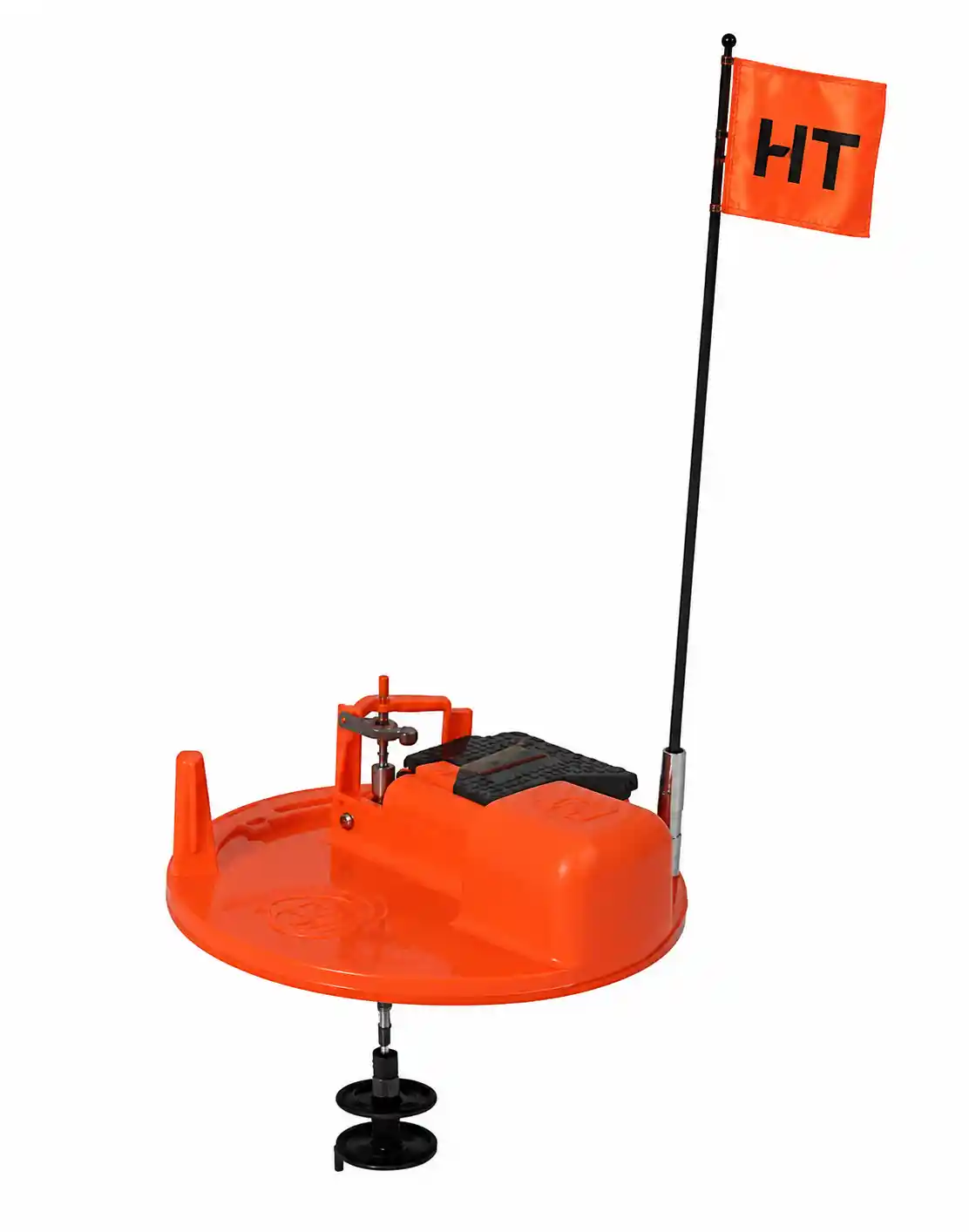
HT PTU-50B Polar Tip-Up Review: The One We Trust for Trophy Pike
We rig this one specifically for the days we’re targeting big pike, not just any pike. Trophy-sized fish call for heavier tackle — thick 40-50 lb Dacron mainline and bulky fluorocarbon or wire leaders — and that kind of setup fills a standard 200-foot spool far faster than most anglers expect. We’ve had spools crowded down to 60-70 feet of usable line before we even got to fishing depth, which leaves almost nothing in reserve if a big fish decides to run.
The 500-foot capacity on the PTU-50B goes a long way toward solving that problem. We can spool up with thick, freeze-resistant line and still have plenty of backing left for a genuine deep-water run. That extra capacity matters most across large lakes where tip-ups may be spread hundreds of yards apart — by the time we’ve sprinted to a flag that popped on the far end of the spread, a smaller spool would already be stripped bare and the line snapped tight at the knot. With 500 feet on the reel, a big pike has room to run while we close the distance, instead of the fight being decided before we even get there.
What We Like: massive 500-foot spool capacity handles heavy Dacron and leaders without crowding, gives trophy pike room to run on long-distance spreads.
What Could Be Better: the extra spool capacity means a larger, heavier unit than budget or mid-range tip-ups — overkill if you’re only targeting average-sized pike.
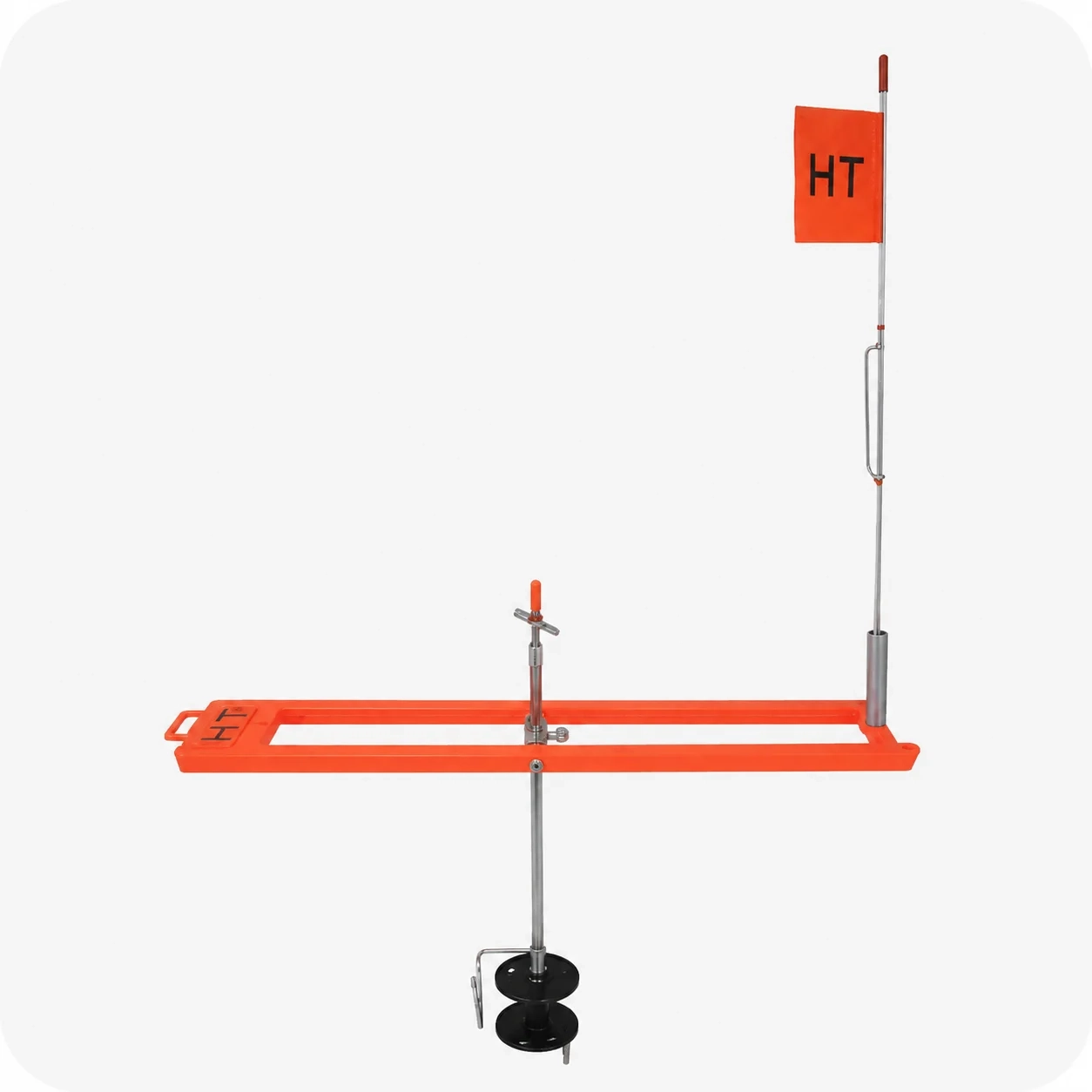
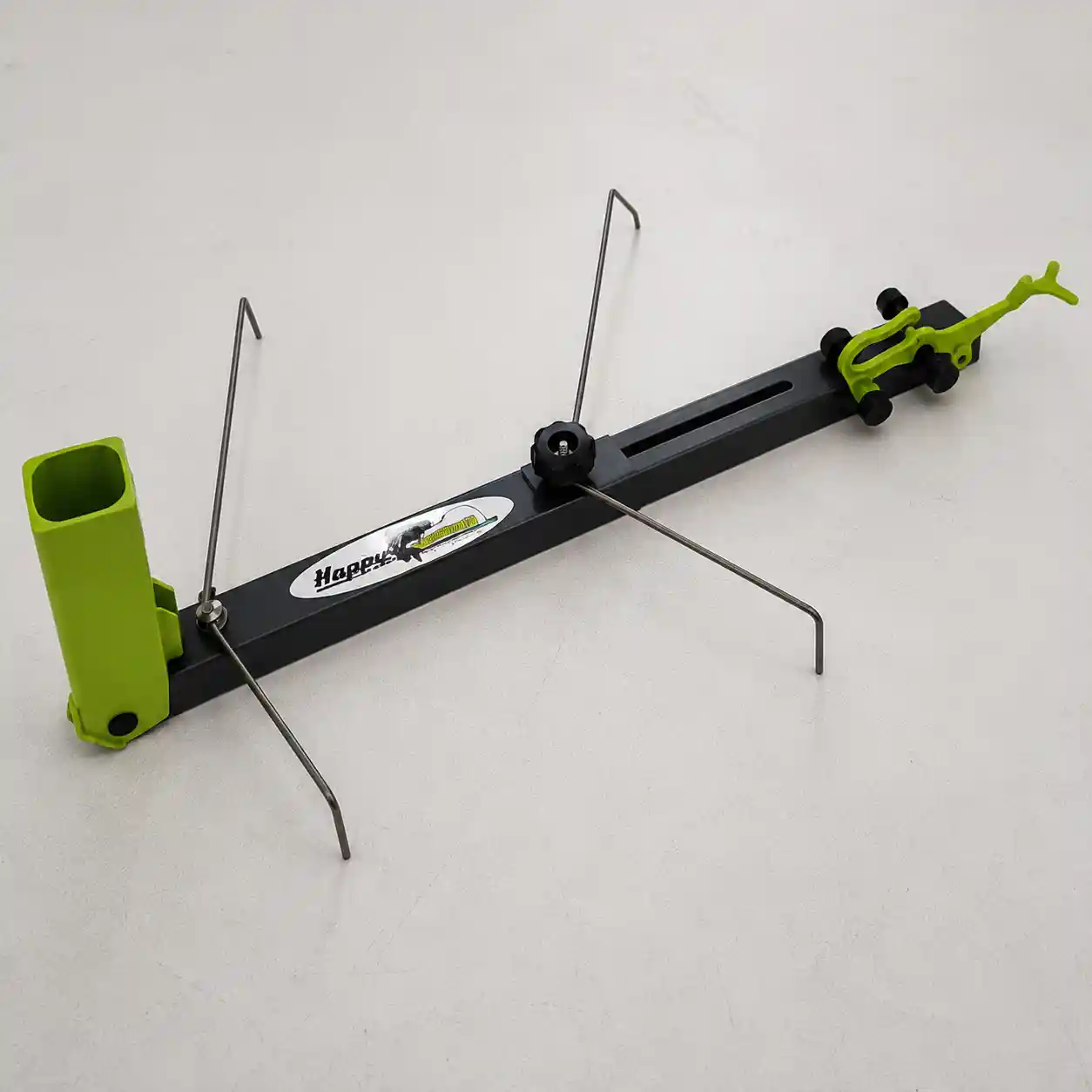
Happy Hooker Automatic Hook Setter Review: The One That Solved Our Deadbait Problem
Deadbait fishing for big pike comes with a frustrating timing problem we’d never fully solved with traditional tip-ups. Set the hook too early on a run to the flag and you pull a large bait right out of the fish’s mouth before it’s turned it. Wait long enough to guarantee a solid hold, and a big female has often swallowed the hook too deep for a clean, safe release.
We tested the Happy Hooker side-by-side with standard tip-ups on a deep, ultra-clear reservoir early in the season. Because the unit holds a rod under tension and fires the hookset the instant the trigger trips, there’s no window where the timing depends on how fast we can get to the hole. Out of seven flags across that stretch, every single pike was hooked cleanly in the corner of the jaw — no gut-hooked fish, no missed runs, even on 8-inch baits that would normally make timing tricky. For anglers who release most of what they catch, that’s not a small detail — it’s the difference between a fish that swims off healthy and one that doesn’t.
What We Like: consistent corner-of-the-jaw hooksets that make catch-and-release safer, removes the guesswork of timing a hookset on large deadbaits, adjustable trigger tension for different bait sizes.
What Could Be Better: higher price point than a traditional tip-up, and it requires a spare rod and reel setup rather than working as a standalone unit.
Check Local Regulations
Automatic hook-setting devices are now legal in all major U.S. ice fishing states, including Minnesota as of the 2025–26 season. The hook-setting mechanism must be non-motorized and cannot automatically reel in line. Standard tip-up rules still apply — stay within 200 feet of the device and never leave it unattended.
How to Choose a Tip-Up for Pike Fishing
Not every tip-up on the market is built with pike in mind. Most were designed around walleye and panfish, and using one of those setups on a big pike often means a stripped spool, a snapped leader, or a fish that simply pulls the rig apart. Here’s what actually matters when you’re choosing a tip-up specifically for pike.
Spool Capacity and Line Weight
Pike fight differently than most species a tip-up is designed for — they run hard, and a big one can strip line fast. For most pike fishing, a spool holding roughly 150-200 feet of line provides plenty of reserve for hard-running fish.
30-50 lb Dacron is still the standard for many dedicated pike anglers, although some prefer heavy braid in milder conditions — Dacron remains the preferred choice for most cold-weather setups because it’s easier to handle with wet gloves and less likely to freeze stiff than braided line. See our picks for winter pike line if you want specific product recommendations, and pair your mainline with a leader built to handle pike teeth — see our guide to best pike leaders for picking the right wire or heavy fluorocarbon for tip-up rigs. If you’re specifically targeting trophy-class fish, a 500-foot spool like the one on our trophy pick gives you real room to work with.
Trigger Sensitivity
Pike often take bait aggressively, but large deadbaits can also trip a sensitive flag on their own as they swim. An adjustable trip setting — light for smaller baits, heavy for large suckers or chubs — lets you dial in sensitivity without sacrificing detection on a real strike.
Cold-Weather Performance
A tip-up that works perfectly in a warm garage can behave completely differently after three hours in sub-zero wind. Even a thin layer of surface ice can prevent the spool from turning freely, adding resistance right at the moment a pike is trying to run with the bait.
If you regularly fish extreme cold, a thermal or insulated design that seals the hole is worth the extra bulk — a frozen spool costs you the fish, no matter how good the rest of the setup is.
Build Material and Durability
Plastic tip-ups are lighter and cheaper, and for most anglers they’re plenty durable. Wood and hand-built designs cost more upfront but tend to last decades with basic maintenance — worth considering if you’re building a permanent spread you’ll use season after season rather than replacing every few years.
Flag Visibility
A tip-up spread only works if you can actually see the flags. High-visibility colors (orange, chartreuse) and taller flag height matter more than most anglers expect, especially on gray, overcast days or when your spread is stretched across a large area.
This matters even more if local regulations allow you to run multiple tip-ups at once, since you’ll be watching several holes spread across a wide section of ice at the same time.
Tip-Up Comparison Table
| Tip-Up | Best For | Spool Capacity | Base Material | Standout Feature |
|---|---|---|---|---|
| Frabill Arctic Fire | Best Overall | Standard | Molded plastic | Dual trip settings for mixed-species spreads |
| Clam Blue Ice | Best Budget | Standard | Polypropylene | Affordable enough to buy in bulk for a full spread |
| Beaver Dam Jolly Roger | Best Premium | 150 ft | Hand-built pine | Decades of durability with basic maintenance |
| HT PTE-200 Polar Therm Extreme | Best for Extreme Cold | 200 ft | Insulated thermal | Fully sealed base keeps the hole ice-free |
| HT PTU-50B Polar Tip-Up | Best for Trophy Pike | 500 ft | Molded plastic | Massive spool handles heavy Dacron and long runs |
| Happy Hooker Automatic Hook Setter | Best High-Tech | Rod-dependent | ABS + stainless | Automatic hookset eliminates deadbait timing guesswork |
Frequently Asked Questions
How many tip-ups can I use for pike fishing at once?
This depends entirely on your state or province’s regulations, which vary widely — some allow just one or two lines per angler, while others allow six or more. Always check your local fishing regulations before setting more than one line, since tip-up limits are enforced separately from rod-and-reel limits in most areas.
What line should I use on a tip-up for pike?
Most dedicated pike anglers spool up with 30-50 lb Dacron or braided line, paired with a wire or heavy fluorocarbon leader to handle pike teeth. Dacron is often preferred in cold conditions because it handles well with gloves on and resists freezing stiff better than some braided lines.
How deep should I set my bait on a tip-up for pike?
Pike often hold anywhere from just under the ice to a few feet off the bottom, depending on water temperature and forage location. A common starting approach is to set baits at multiple depths across your spread until you find where fish are holding that day, then adjust the rest of your lines to match.
What’s the best bait for pike on a tip-up?
Large dead or lively baitfish — smelt, herring, suckers, or shiners in the 6-10 inch range — are standard choices for pike tip-up fishing. Dead bait fished near bottom is a classic approach for pike specifically, while livelier baitfish work well when fish are more active.
How do I keep my tip-up from freezing in extreme cold?
Thermal or insulated tip-ups that fully seal the hole from wind and snow perform best in extreme cold. For standard tip-ups, a foam hole cover and a light coat of cold-weather lubricant on the spool before the season starts can help reduce freezing.
Do I need a leader when tip-up fishing for pike?
Yes. Pike have sharp teeth that can cut through standard monofilament or light fluorocarbon, so a wire leader or heavy fluorocarbon (80 lb or higher) is standard practice to prevent bite-offs.
How far apart should tip-ups be spaced for pike?
Spacing depends on ice safety, local regulations, and how much structure or open water you’re covering. Many anglers spread tip-ups across likely holding areas — weed edges, drop-offs, and flats — rather than clustering them tightly, to cover more water and increase the odds of finding active fish.
Are automatic hook-setting tip-ups legal for pike fishing?
In most U.S. ice fishing states, non-motorized spring or bent-pole hook-setting devices are legal, including Minnesota as of the 2025-26 season. Rules generally require the hook-setting mechanism to be non-motorized and prohibit devices that automatically reel in line. Always confirm current regulations for your specific state or water body before using one.
Can I use the same tip-ups for pike and walleye?
Yes, though the ideal setup differs. Pike generally call for heavier line, wire leaders, and larger baits than walleye, so if you’re targeting both species on the same spread, adjustable trip tension and a mix of leader types across your lines gives you more flexibility.