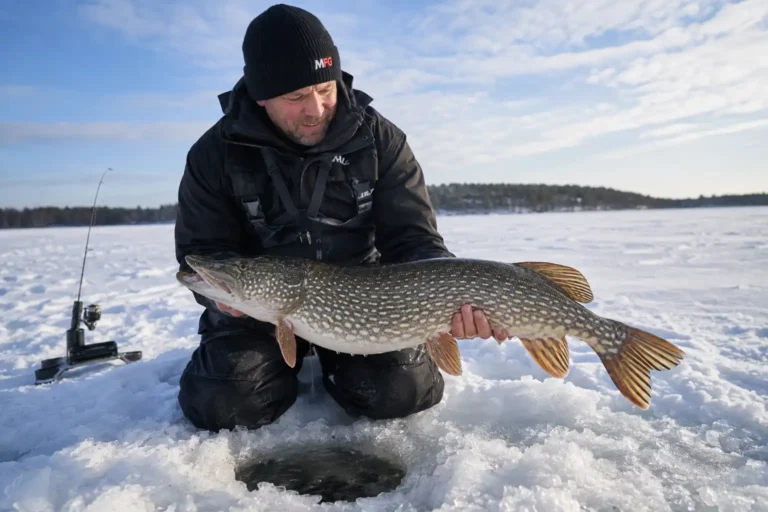


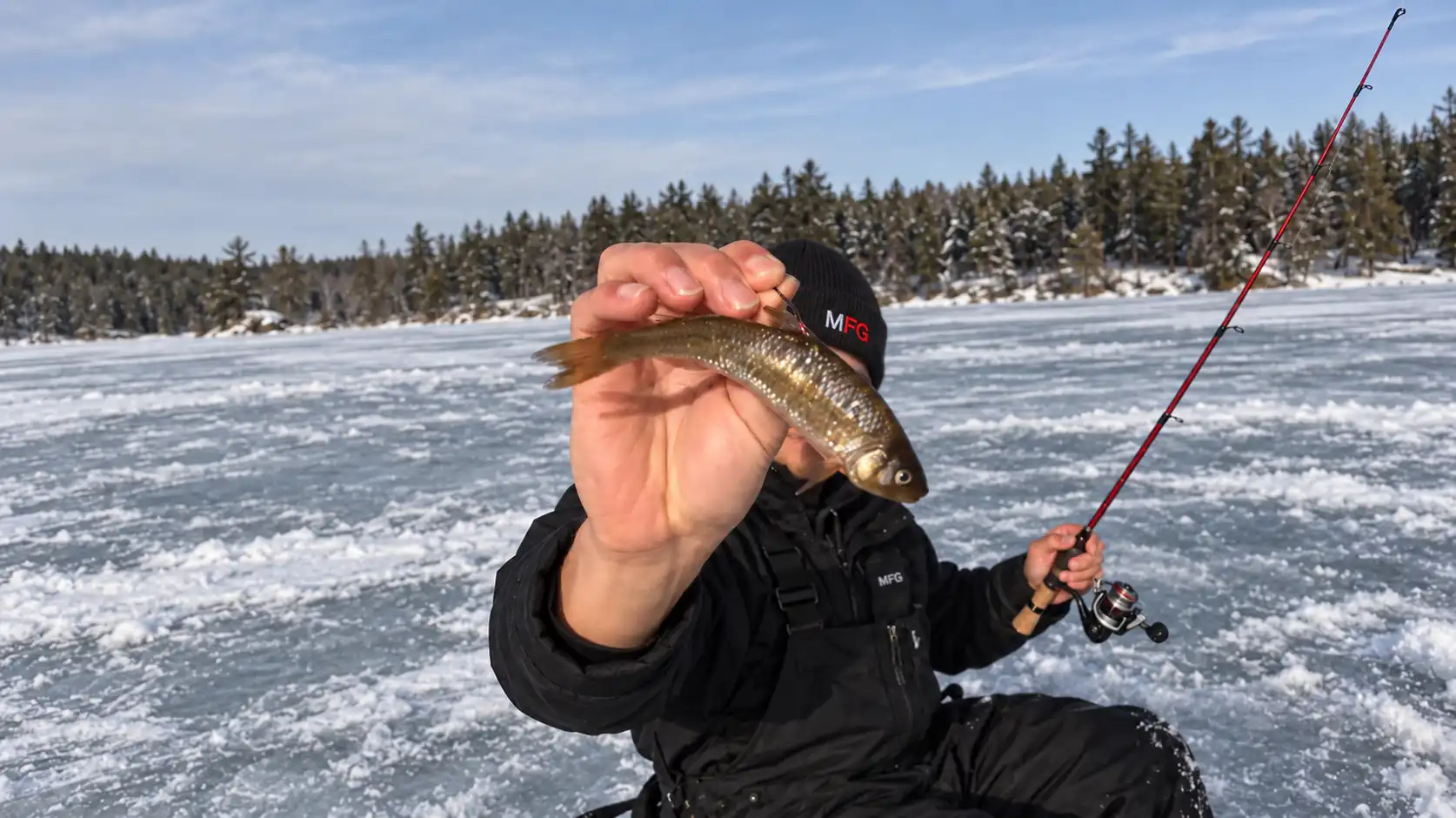
Live Bait for Ice Fishing Pike: Best Options, Sizes and Bait Care
Which baitfish should you buy, how big should they be, and how will you keep them alive until you need them? Choosing live bait for ice fishing pike involves more than picking the largest minnow in the tank. Sucker minnows and shiners are established options that bait shops commonly stock for pike anglers.
We lost plenty of baitfish before learning how to keep them alive throughout a fishing trip. That experience is why bait care deserves as much attention in this guide as species and size.
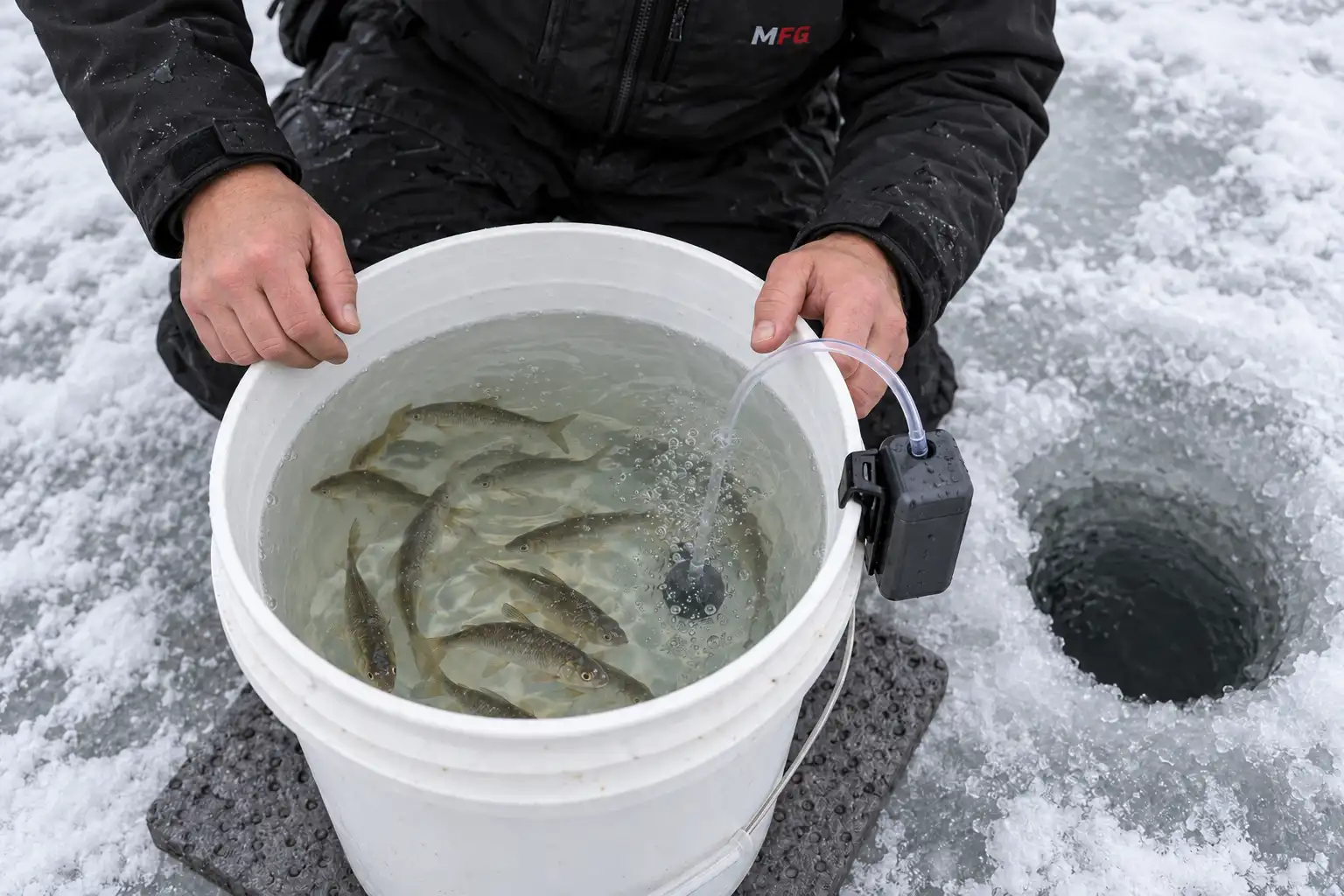
We cover how to choose healthy baitfish, select a suitable size, keep them alive on the ice, and recognize when they need replacing. Before buying or transporting bait, check the current rules for the water you plan to fish. For rig construction, bait depth and spread placement, see our guide to setting up tip-ups for pike. The same bait choices and care apply if you fish live bait on a deadstick rod.
Quick Answer: Best Live Bait for Ice Fishing Pike
Sucker minnows and shiners are our top live bait choices for ice fishing pike. Baitfish around 4–7 inches (10–18 cm) provide a useful starting range. Ask the local bait shop which species and bait sources are legal for the water you plan to fish.
- Bait choice: In our experience, sucker minnows are hardier and stay lively longer on the hook. Shiners are more delicate and need closer attention in the bait bucket.
- Bait size: When pike are reluctant, we change depth first, then bait species, before dropping to 4–5 inches (10–13 cm). Larger bait of 6–7 inches (15–18 cm) is our pick when targeting bigger fish.
- Bait care: We use an insulated bait bucket with a battery-powered aerator, avoid overcrowding, and keep it inside the shelter during severe cold, away from direct heater heat.
- During fishing: We check our bait roughly every 30–40 minutes, and more often when the holes ice over quickly. We look for three things: a bait that is still lively, weed tangles, and tooth marks or other damage.
Best Live Bait Options for Ice Fishing Pike
We have had mixed results with suckers and shiners. On some trips, shiners produced more strikes throughout the day, while the larger pike took only suckers. That is why we fish both before settling on one bait.
Sucker Minnows: Durability and Strong Movement
Sucker minnows are the bait we trust for a long session. They outlast shiners on the hook, and some of our better pike have come on them. That is a pattern, not a rule.
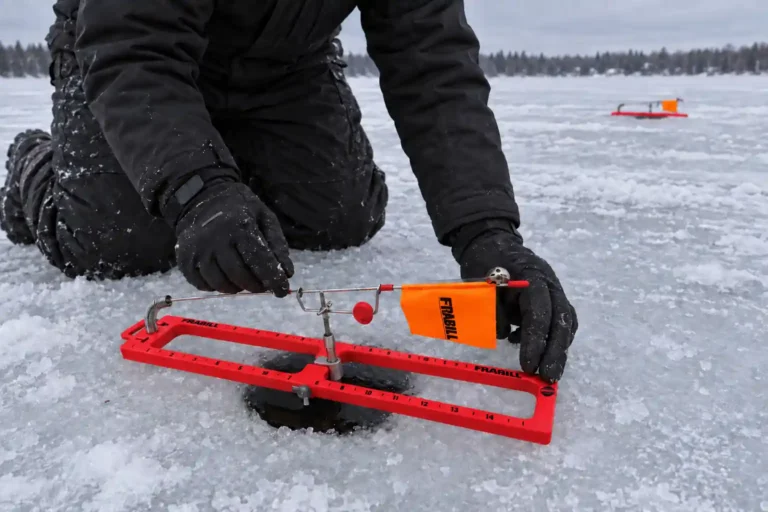
A healthy sucker can also trigger the flag by itself. When this happens, we move to a slightly heavier trip setting on tip-ups that offer that adjustment. We then test the release by pulling line from the spool, checking that it still releases smoothly.
On a deadstick there is no flag to trip. A strong sucker only works the rod tip, which makes it easier to tell the bait’s own movement from a take.
Shiners: Flash and Frequent Action
Shiners offer reflective flanks that flash as they swim and turn. That flash draws attention, though not always from the pike we were targeting.
On waters where small bass were abundant, we have had repeated flags followed by damaged shiners instead of a hooked pike. When that pattern develops, we inspect the bait and set a sucker on another line to see whether the flags continue.
Condition matters when buying them: we would take a healthy 4-inch shiner over a sluggish 6-inch one. Ask which species the shop sells, because bait regulations can distinguish between species.
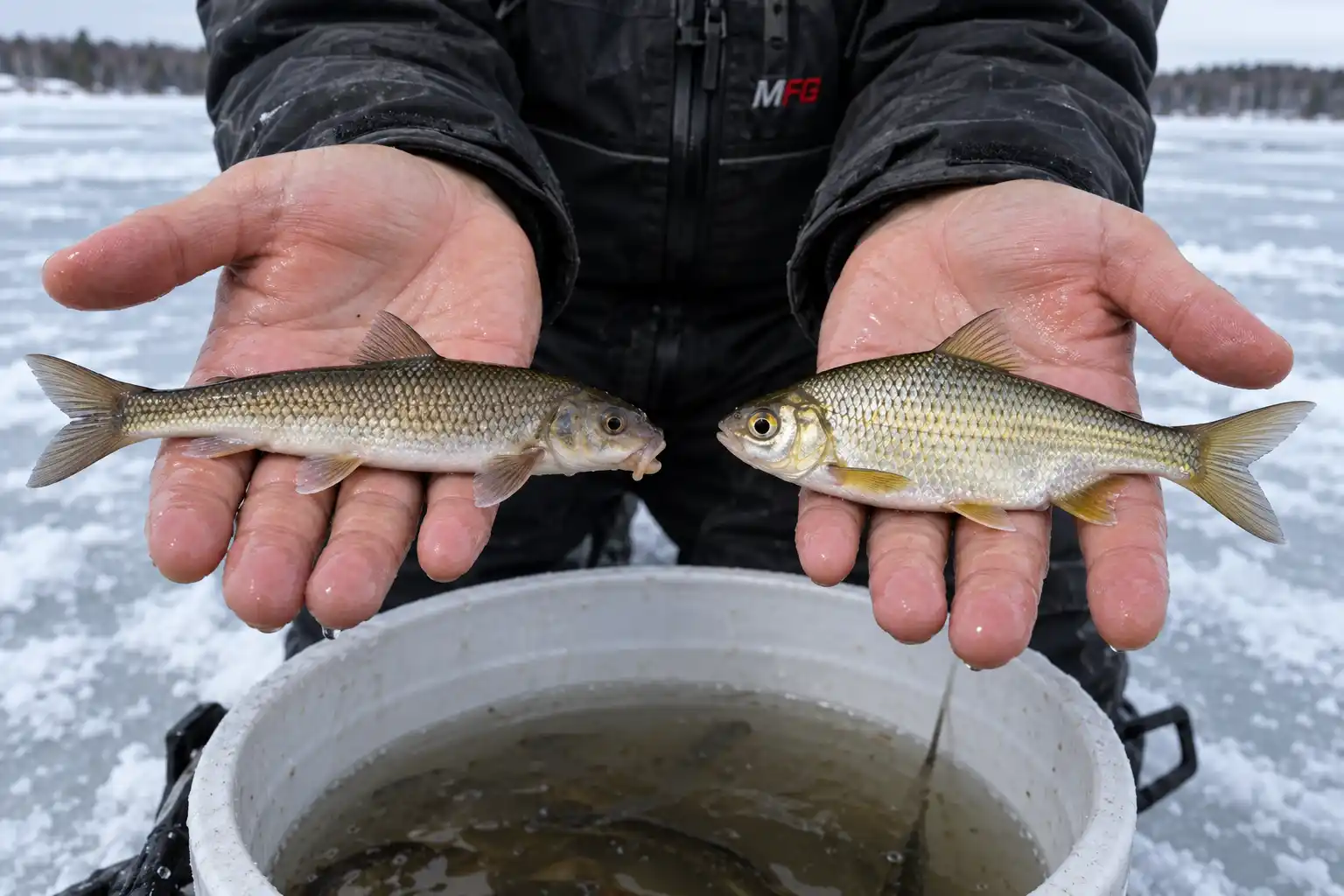
Comparing Both Baits in the Same Spread
We fish both during the same session, using similar bait sizes at comparable depths. A small shiner set shallow and a much larger sucker over a deep break tell us little about species, because size and depth changed too.
We count confirmed takes and landed pike, not just raised flags. Repeated damage from small fish or flags triggered by the bait itself can make one option look more productive than it really is.
Line direction gives us another clue when checking a flag. An angled line that keeps moving usually means a fish is running with the bait. A line hanging straight down is less convincing, so we check spool movement and feel for contact before resetting.
Other Options: Creek Chubs, Fallfish and Dace
Creek chubs, fallfish and dace have also worked for us when suckers or shiners were unavailable. We have found larger chubs particularly durable during cold sessions.
We keep larger chubs separate from much smaller baitfish after seeing them attack smaller fish in a shared bucket. Separate containers also make it easier to monitor each batch and remove damaged bait.
What Size Live Bait Should You Use for Pike?
We use 4–7 inches (10–18 cm) as our working range because both ends have a cost. Smaller baits attract the wrong fish, and larger ones change how a pike takes the bait and how the tip-up behaves.
Why We Rarely Go Below 4 Inches
The smallest live bait we have fished for pike was barely 3 inches (8 cm), on shallow, weedy bays when we were searching for any action at all. Perch and other small fish found it first. They tore at the tail and fins, and we kept walking to raised flags with no real chance that a pike had taken the bait.
A 4-inch baitfish is large enough to discourage most of that attention while still being an easy meal.
4–5 Inches: For Reluctant Pike
A 4–5 inch (10–13 cm) bait is where we go when pike show interest but will not commit. It is rarely our first adjustment, though. When the bite shuts down, we change depth before size: closer to the ice, or down toward the weed tops. Swapping bait species comes next. In our experience, a sluggish pike more often wants a different movement than a smaller meal. Our main guide to ice fishing for pike covers the other changes worth making when the flags stop.
6–7 Inches: Targeting Bigger Pike
A 6–7 inch (15–18 cm) bait is our pick when we are deliberately after larger fish. The take looks different at this size. A big pike often grabs a bulky baitfish across the body, holds it almost motionless, and repositions it before turning and taking line.
That pause matters at the flag. A spool that stops after the first pull does not always mean a dropped bait. Match hook size and placement to the baitfish, keeping the hook points exposed.
Beyond 7 Inches
We have fished baits over 8 inches (20 cm) on deeper, open basins when looking for a trophy pike. Some anglers go further and use 8–12 inch baits for that purpose. The trade-offs grow with the bait: a strong baitfish of that size trips flags more easily, fewer fit safely in one bucket, and smaller pike are less likely to take it.
To test size on your own water, fish a 4–5 inch sucker on one line and a 6–7 inch sucker on another at similar depths.
How to Choose Healthy Live Bait at the Shop
We look at the whole tank before any fish is netted. Healthy baitfish stay upright and swim steadily. Fish gasping at the surface or losing balance make us question the condition of the batch.
We learned this after half of one batch was floating stunned an hour into a trip. Looking back, the signs were there in the shop: dull, faded fish showing little movement near the bottom of the tank. We should have passed on them.
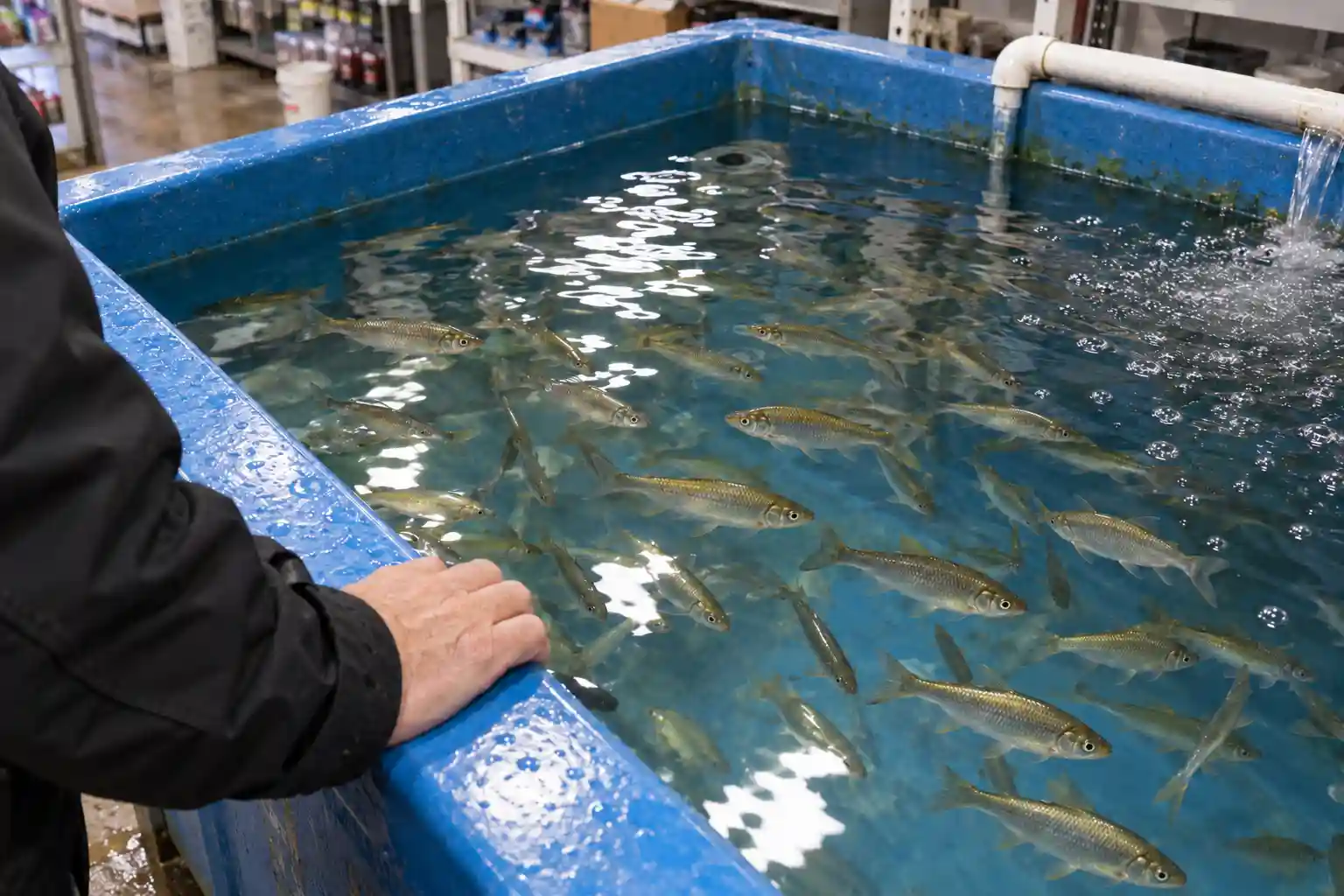
What We Check on Each Baitfish
- Movement: Upright, steady swimming. We avoid fish that roll, circle repeatedly or cannot hold their balance.
- Appearance: We compare fish of the same species in the tank. Unusually faded color combined with weak movement is a warning sign for us.
- Fins and tail: Intact, without heavy tearing or erosion.
- Body: No open wounds or obvious skin damage.
We do not accept a random scoop. We ask the shop to select the livelier fish and leave out any that are injured or too small for pike.
When to Walk Away
We have left shops without bait when the tank held fish lying on their sides or barely responding. We would not trust those fish for the drive to the lake and a full day of fishing. An aerator is part of bait care, not a reason to buy fish already in poor condition.
Ask for Transport Water
We ask the shop to send the bait with water from its holding tank. We once used cold tap water instead and lost half the bait within thirty minutes, before the first hole was drilled. We could not confirm the cause, but we have avoided repeating that mistake.
Tell the supplier your bait size, container capacity and how long you will be out. Ask how many fish the container can support with the aerator running. For a full day with several tip-ups, we buy 15–25 baitfish depending on their size.
Keep the Receipt and Required Paperwork
A healthy appearance does not prove that a baitfish is disease-free. On tightly regulated waters, officers check where live bait came from, and our shop receipt has been the proof we needed more than once. We also check whether our destination requires additional certification or transport paperwork.
Check the fish once more after they are in your bucket. That is the last chance to ask for a replacement if a damaged or struggling baitfish has been included.
How to Keep Live Bait Alive on the Ice
Three things decide whether our bait lasts the day: an ice-free bucket, a working aerator and enough room for the fish. We have lost bait to each of them.
Stop the Bucket From Freezing Over
In hard cold, we have watched a skin of ice form around the edges and across the surface of the bucket more times than we can count. We break it as soon as we see it and check that air is still reaching the water.
We set the bucket on a piece of foam board so it is not standing directly on the ice, and we top it up with a little fresh water from time to time. During severe cold the bucket stays inside the ice fishing shelter, but never right beside the heater.
Check the Aerator, Not Just the Switch
Look for bubbles reaching the water. A switched-on pump means nothing if the battery has died or the tubing is pinched.
Our aerator has stopped on the ice more than once, and drained batteries and moisture were to blame each time. After problems with alkaline batteries in extreme cold, we switched to 1.5V lithium batteries. We also keep the pump itself in a jacket pocket or an insulated bag, with its air intake unobstructed, and run only the air line to the bucket.
How Many Baitfish per Bucket
We carry an insulated 5-gallon (19-liter) bucket and normally put 15–20 larger baitfish in it, such as suckers. With our aerator running, that setup has kept them alive through a full day. With a smaller bucket, we would reduce the number or bring a second container.
Refresh the Water During the Day
When the bait turns dull and starts swimming slowly near the bottom, we check the airflow and change part of the water. Where local rules allow, we take clean, cold water from a drilled hole. Much colder water goes in slowly, never all at once.
Keep Handling Brief
Have the hook and rig ready before taking a baitfish out. Use a small bait net, wet your hands and avoid squeezing the fish. Close the lid again straight away so the rest are not exposed to freezing air while you rig.
What We Do With Leftover Bait
Bait that survives a full day on the ice is usually worn out. The fish that are still lively go into fresh, aerated water at home and wait for the next trip. We do not keep badly weakened or injured bait for another journey.
Never release leftover bait into the lake. Before leaving, check whether bait can be transported from that water, whether its water must be replaced, and how unwanted bait should be disposed of.
When to Check and Replace Your Bait
We check our bait every 30–40 minutes, and again after any flag that produces no fish. The point is to confirm that the bait is alive, free of weeds and still on the hook, not to replace it because nothing has bitten.
Check It Without Lifting It Out
Our first check is done by hand. We take up the line gently and lift until we feel the weight of the bait and, usually, its movement. If something feels wrong, such as no weight or an odd resistance, we bring the rig all the way up to see whether the bait is damaged or gone.
Have a replacement ready before lifting. If the bait is fine, lower it back to the marked depth. We have had flags go up within a minute of doing this. A freshly disturbed baitfish swims hard, and a pike already nearby reacts to it.
On a deadstick rod, a tip that has gone still prompts us to check the bait.
When to Keep It and When to Replace It
Keep a baitfish that stays upright and keeps swimming. Clear any weeds, check that the hook points are exposed, and make sure the leader has not wrapped around its body.
We do not throw a bait away just because it carries tooth marks. As long as it still has the energy to swim, it stays down, and we have caught pike on baits marked that way. We replace it once it can no longer hold itself upright.
| What You Find | What to Do |
|---|---|
| Lively bait with weeds on the hook or leader | Clear the weeds, check the rig and set the bait back above the vegetation. |
| Leader wrapped around the bait | Untangle it and check for injury before lowering it again. |
| Tooth marks, but the bait stays upright and swims without serious injury | Keep fishing it. |
| Bait losing balance or badly injured | Replace it and keep it out of the live bucket. |
| Repeated flags from a strong sucker | Move to a heavier trip setting and test that the spool still releases smoothly. |
| Repeated flags with torn fins or tail | Small fish are the likely cause. Try a larger bait or a sucker on that line. |
| Bait dead on the hook | Replace it with a live one, or leave it down as dead bait where allowed. |
What If the Bait Dies on the Hook?
A dead baitfish is not automatically useless. We have had pike take a bait that had died and was hanging still on the hook, but far less often than a live, active one. When we want live bait working, we replace it.
Where dead bait is permitted, an intact fish can stay down on purpose. Keep unwanted dead bait separate for disposal. Do not drop it into the hole or put it back in the live bucket.
Live Bait Rules to Check Before Your Trip
Bait rules differ by state, province and sometimes by individual lake, and they can change every season. The fisheries agency for the water you plan to fish publishes the current version. These are the points that apply to live bait:
- Permitted bait: Check whether live baitfish are allowed on the specific water and which species you may use. If live bait is prohibited, check dead bait rules separately.
- Source and paperwork: Confirm whether bait must come from an approved dealer and whether you need a receipt, health certification or transport document. If catching your own, check harvest rules too.
- Transport and reuse: Check restrictions on crossing borders, moving bait between waters and keeping leftovers for another trip.
- Bait water: Confirm whether lake water can be used in the bucket and whether it must be drained or replaced before leaving.
- Disposal: Follow local disposal requirements. Never release unwanted baitfish into the water.
In the United States, the national Stop Aquatic Hitchhikers guidance for anglers explains how to drain bait containers and dispose of unwanted bait. For Canadian waters, the Fisheries and Oceans Canada recreational fishing page links to each province and territory, where the bait rules for your destination are published.
When to Try Dead Bait Instead
Dead bait is the obvious choice on waters where live baitfish are banned but dead bait is allowed. It also earns a line in our spread when we are after larger pike. We have found it especially worthwhile late in the season, when some of our bigger fish have taken a stationary dead bait. For bait choice, see our best winter deadbaits for pike. For open-water winter setups, see our winter pike deadbait rigs. Where no natural bait is allowed at all, ice fishing lures for pike are the remaining option.
Frequently Asked Questions
Is live bait or dead bait better for ice fishing pike?
Neither wins every day. A lively baitfish has produced more takes for us on some trips. Dead bait is worth a line when you are after larger fish, especially late in the season, and it is an alternative where live baitfish are banned but dead bait is permitted.
How long do minnows stay alive in a bait bucket?
With an insulated bucket, a working aerator and enough room, they can last a full day on the ice. We keep 15–20 larger baitfish in a 5-gallon (19-liter) bucket and that setup has carried them through a whole session. Overcrowding, a frozen surface or a dead aerator battery will shorten that time quickly.
Can you use a baitfish that died in the bucket?
Yes, where dead bait is permitted and the fish is still fresh and intact. It will not attract pike with movement, so treat it as dead bait and not as a replacement for a live one. Keep it apart from the live fish so it does not foul the water.
Can you catch your own live bait for pike?
In some places you can, but the rules are strict. Many jurisdictions limit which species you may collect, how you may catch them and whether they can be moved to another water. Check the regulations for both the water where you collect the bait and the water where you plan to fish.
How do you hook a live baitfish for pike under a tip-up?
The most common method is through the back, just behind the dorsal fin, with the hook point clear of the spine. A baitfish hooked this way stays upright and keeps swimming. Hitting the spine kills it quickly, so check that the bait still moves normally before lowering it.