

Best Ice Fishing Lures for Pike: 7 Tested Picks for Any Situation
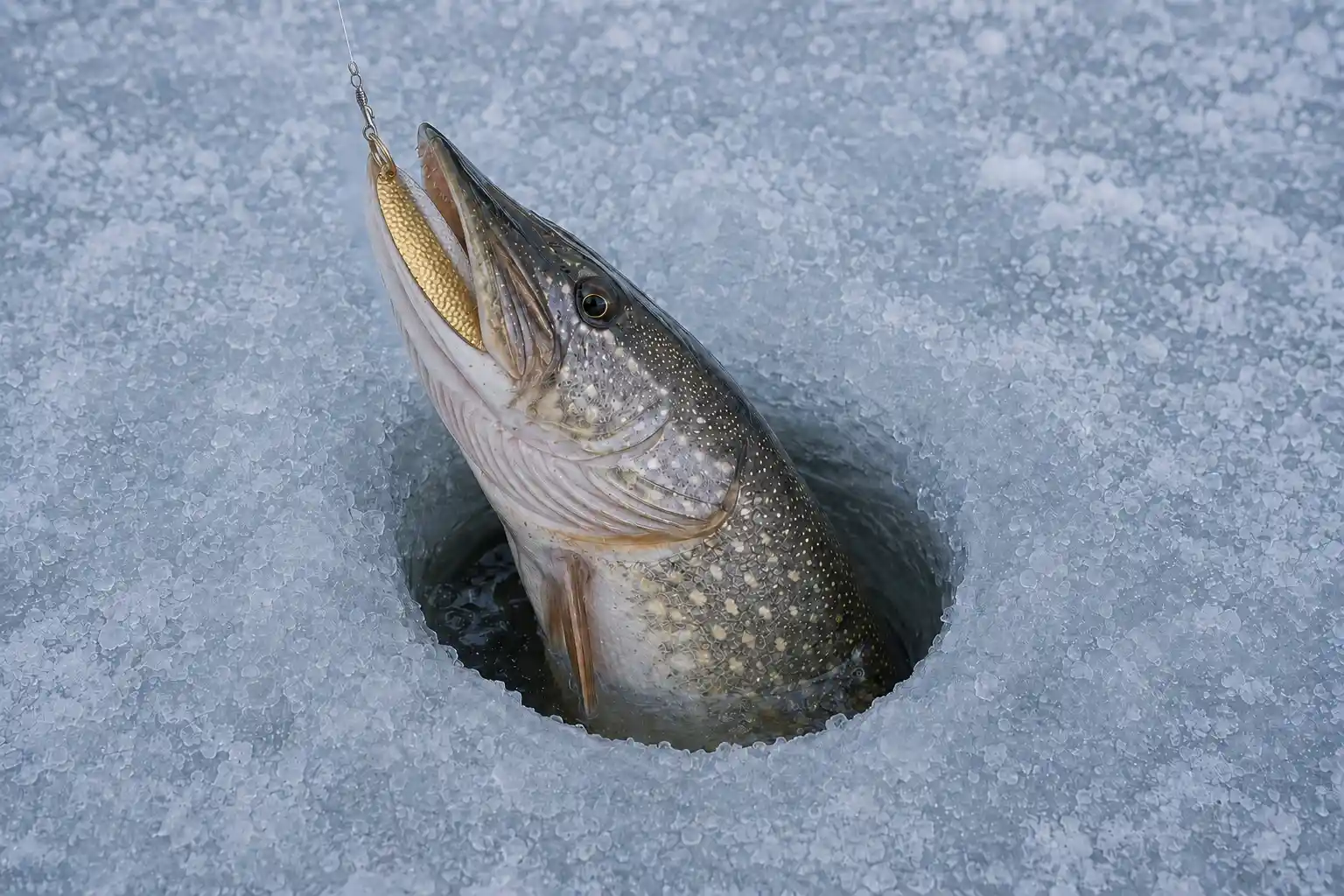
The first time a big pike crushed a spoon two feet under the hole, we nearly dropped the rod trying to set the hook fast enough. The best ice fishing lures for pike have to produce flash, vibration, and movement within a narrow vertical column, without relying on a long cast or steady retrieve. That demands a different approach from covering water with a casting spoon or trolling a crankbait. We built this list around seven lures that perform especially well when jigged through a hole, including rattle spoons, flutter spoons, blade baits, and swimming jigs with distinctly different actions on the lift and fall.
This is not simply a list of open-water pike lures repackaged for winter. Some of these baits also work in open water, but every pick below was selected for what it can do during a vertical presentation beneath the ice. If you’re looking for casting spoons and heavier metal for shore or boat fishing in cold water, our cold-water spoon guide covers those separately.
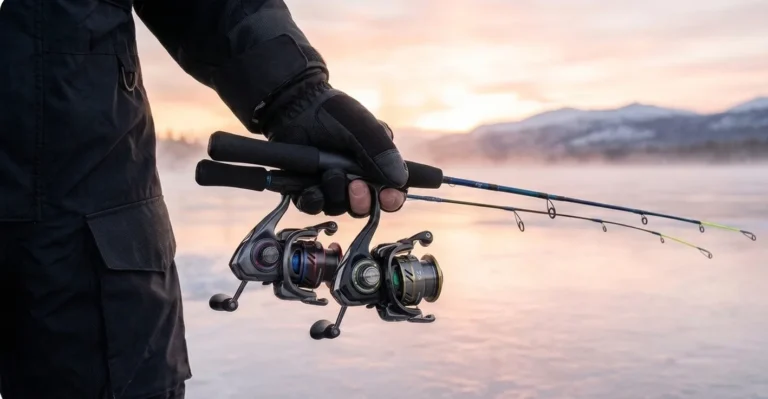
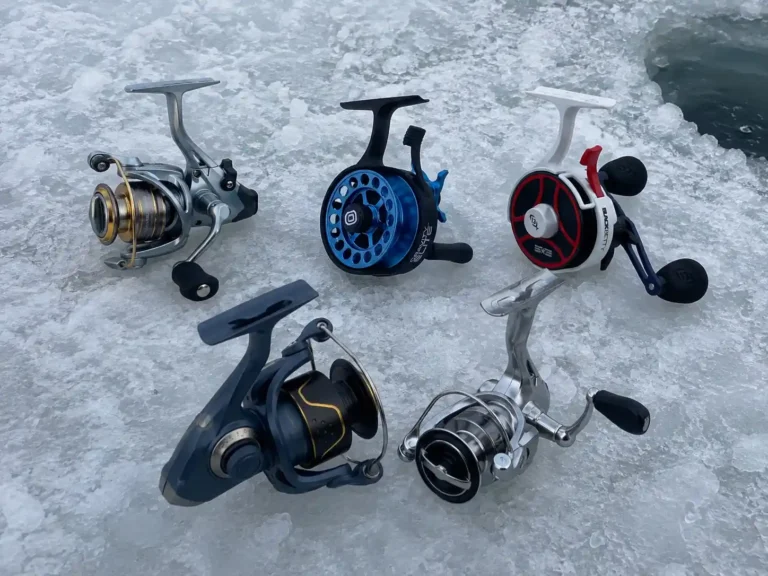
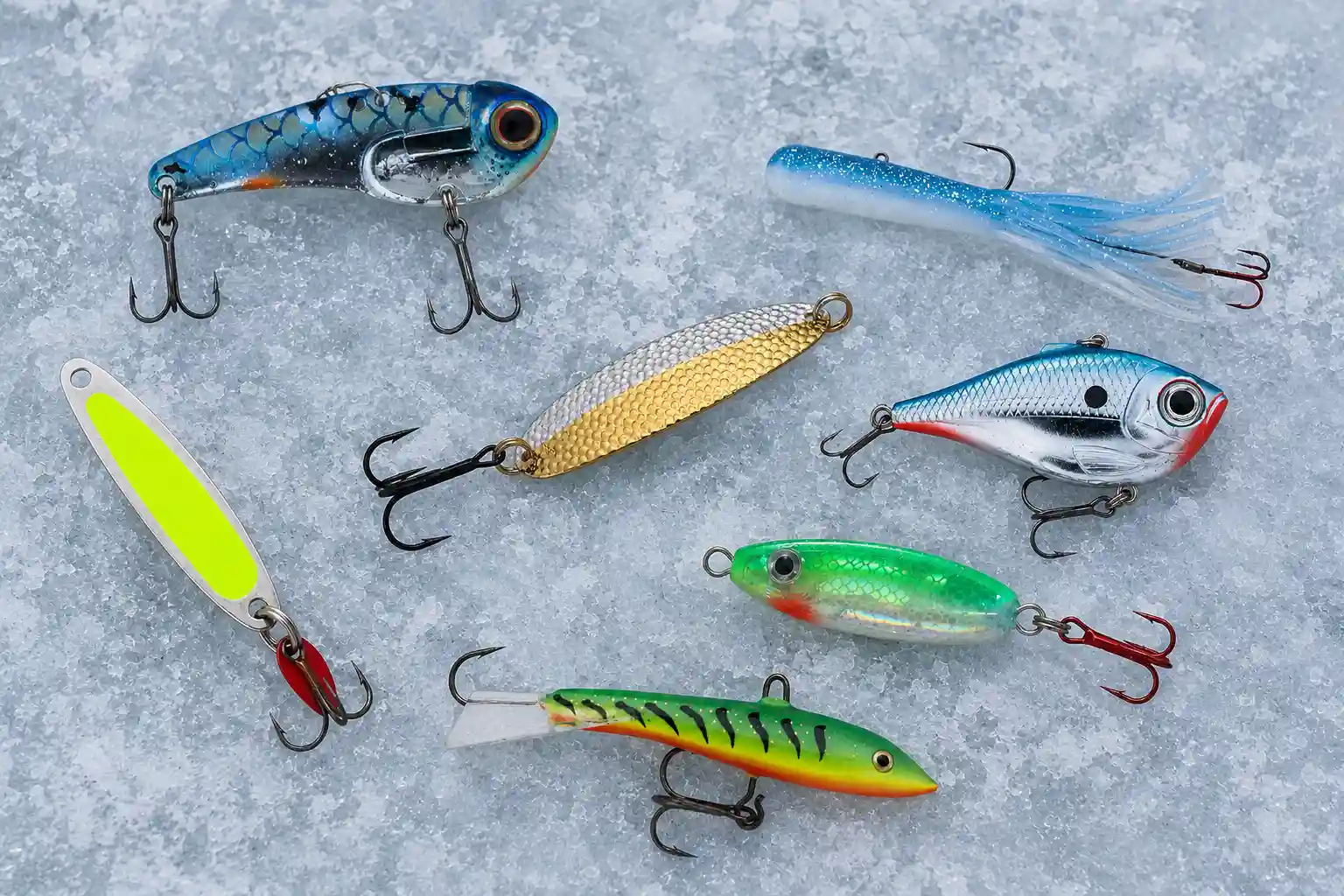
These seven picks cover the situations we regularly encounter on the ice: an aggressive all-around swimming lure, a loud rattle spoon for deep water, a wide-fluttering spoon for a slower fall, a vibrating lipless crankbait, a classic jigging spoon, a large soft-plastic tube for targeting trophy pike, and a compact blade bait for quickly checking holes and changing depths. Paired with the right ice fishing rod and reel, these seven lures give you an effective option for nearly every pike mood, depth, and presentation. For help finding pike and deciding where to drill, start with ice fishing for pike.
As an Amazon Associate, we earn from qualifying purchases at no additional cost to you. Read more ›
How we tested: We fished all seven lures through the ice on pike water, working each one through real holes rather than ranking them from specifications alone. We compared their action on the lift and fall, flash, vibration or sound, hook-up performance, and ability to trigger fish at different depths and activity levels — from aggressive pike willing to chase to neutral fish that required a slower, subtler presentation.
MFG Quick List: Best Ice Fishing Lures for Pike
If you’re short on time, these seven lures cover the situations that come up most often when jigging for pike through the ice — from aggressive all-around action to subtle presentations for neutral fish.
- Rapala Jigging Rap — Best Overall: a balanced minnow-style jig with strong swimming action and a slow, circling fall.
- Northland Buck-Shot Rattle Spoon — Best Rattle Spoon: loud internal rattle and strong flash that calls pike in from a wide radius in deep water.
- Williams Wabler — Best Flutter Spoon: a wide, wobbling fall that draws strikes from less aggressive pike holding off structure.
- Rapala Rippin’ Rap — Best Lipless Crankbait: hard vibration and rattle built for aggressive vertical ripping when pike are actively feeding.
- Bay de Noc Swedish Pimple — Best Vertical Jigging Spoon: a proven, decades-old design that darts and flutters cleanly straight beneath the hole.
- Northland Level-Head Predator Tube — Best Soft Plastic for Big Pike: a large, chewy profile that hangs horizontally and moves like a stressed baitfish for trophy fish.
- Berkley ThinFisher — Best Blade Bait: a noisy, compact profile with adjustable vibration for quickly checking holes and specific depths.
Types of Ice Fishing Lures for Pike: How Each One Moves
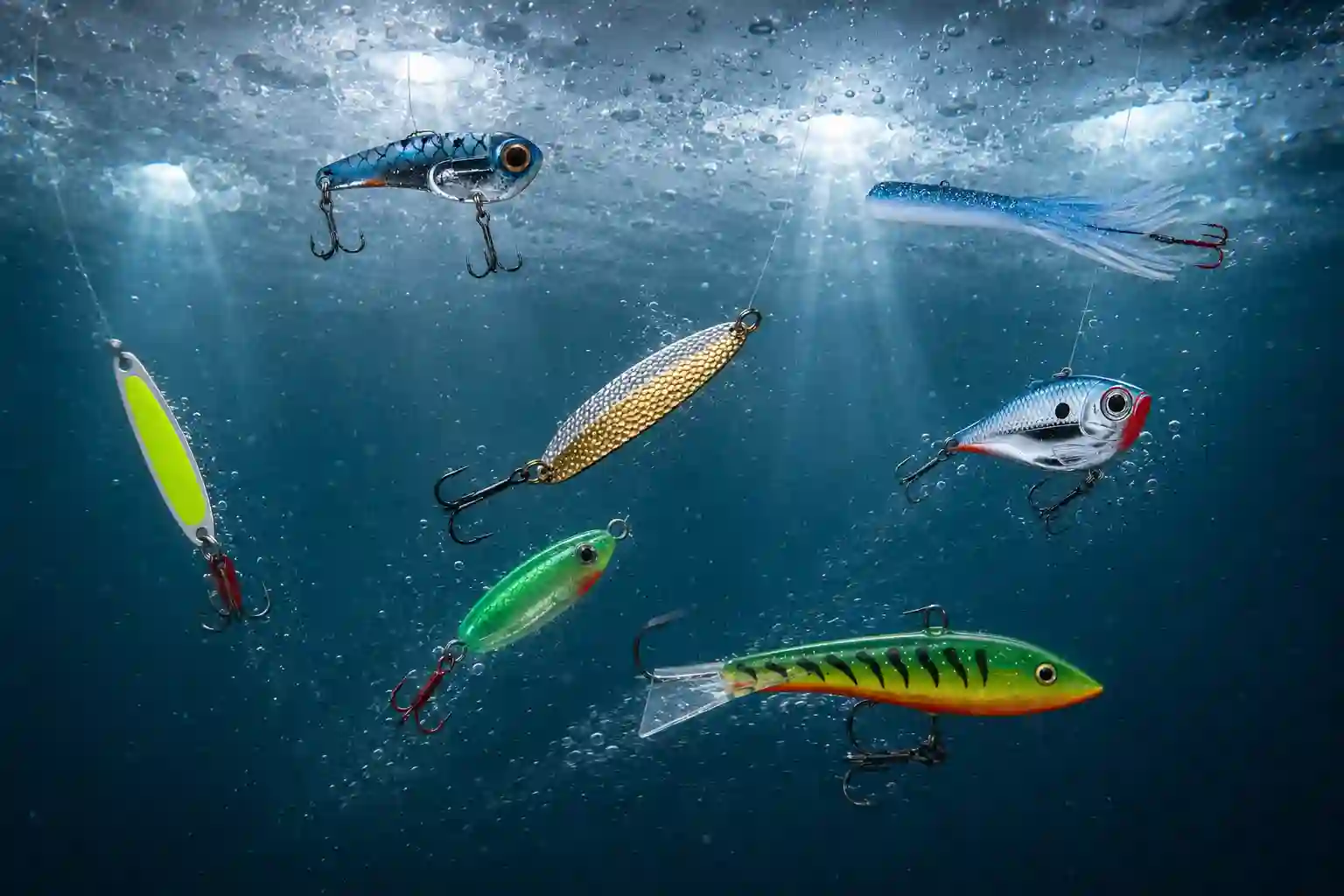
Every lure on this list follows the same basic vertical pattern — lifted and dropped through a hole — but what happens during that lift and fall differs considerably from one lure type to the next. Understanding how each type moves helps you match the lure to the mood of the fish, not just the depth.
Swimming and Darting Jigs
Swimming jigs like the Rapala Jigging Rap use a balanced, weighted body and tail fin that catch the water on the fall, sending the lure into a slow, circling glide before it settles back beneath the hole. The lift initiates the movement, but the circling action happens primarily on the drop. This is one of the most aggressive, attention-grabbing actions on the list — it covers more water horizontally around the hole than a traditional jigging spoon, making it a strong first lure when you’re searching for active fish rather than waiting them out.
Rattle Spoons and Flutter Spoons
Rattle spoons like the Northland Buck-Shot use an internal rattle chamber to add sound and vibration to the flash of the spoon — a useful combination in deep, dark, or stained water where visibility is limited. Flutter spoons like the Williams Wabler skip the rattle in favor of a wobbling action stabilized by a raised ridge along the spoon’s back. This patented design prevents the lure from rotating without removing its side-to-side movement, producing a quieter presentation that can work well on pressured fish or in clear, shallow water.
Vertical Jigging Spoons
Classic vertical jigging spoons like the Bay de Noc Swedish Pimple split the difference between a rattle spoon and a flutter spoon. Its compact metal body responds directly to the rod tip, kicking away on the lift before falling back beneath the hole without an internal rattle. It’s a simpler, more direct presentation that’s been catching pike and walleye through the ice for decades, and it’s often the lure we tie on first when we don’t yet know how aggressive the fish are.
Lipless Crankbaits
Lipless crankbaits like the Rapala Rippin’ Rap produce their strongest vibration and internal rattle when ripped upward, followed by a slower flutter and flash on the drop. That contrast between an aggressive lift and a less forceful fall gives pike two different triggering movements within each jigging cycle. It is best suited to active fish willing to react to a fast, noisy target.
Soft Plastic Tubes
A soft plastic tube like the Northland Level-Head Predator Tube swaps metal for a pre-rigged jig head and a dense, chewy plastic body balanced to hang horizontally at rest and dart to the side when lifted. Its larger, more natural profile makes it a strong option when targeting trophy pike, particularly when the fish are focused on larger forage rather than fast, flashy prey.
Blade Baits
Blade baits like the Berkley ThinFisher generate their strongest vibration on the retrieve or lift, when the thin metal body catches the water and shakes hard while the built-in sonic rattle chamber adds extra noise — on the fall, that vibration eases into wobble and flash. Three separate tow points let you shift between lighter, tighter vibration and a wider, stronger wobble depending on how the fish are responding. That adjustability is useful when working tight to structure or targeting a specific depth where fish are marked on a flasher or fish finder.
Rapala Jigging Rap — Best Overall
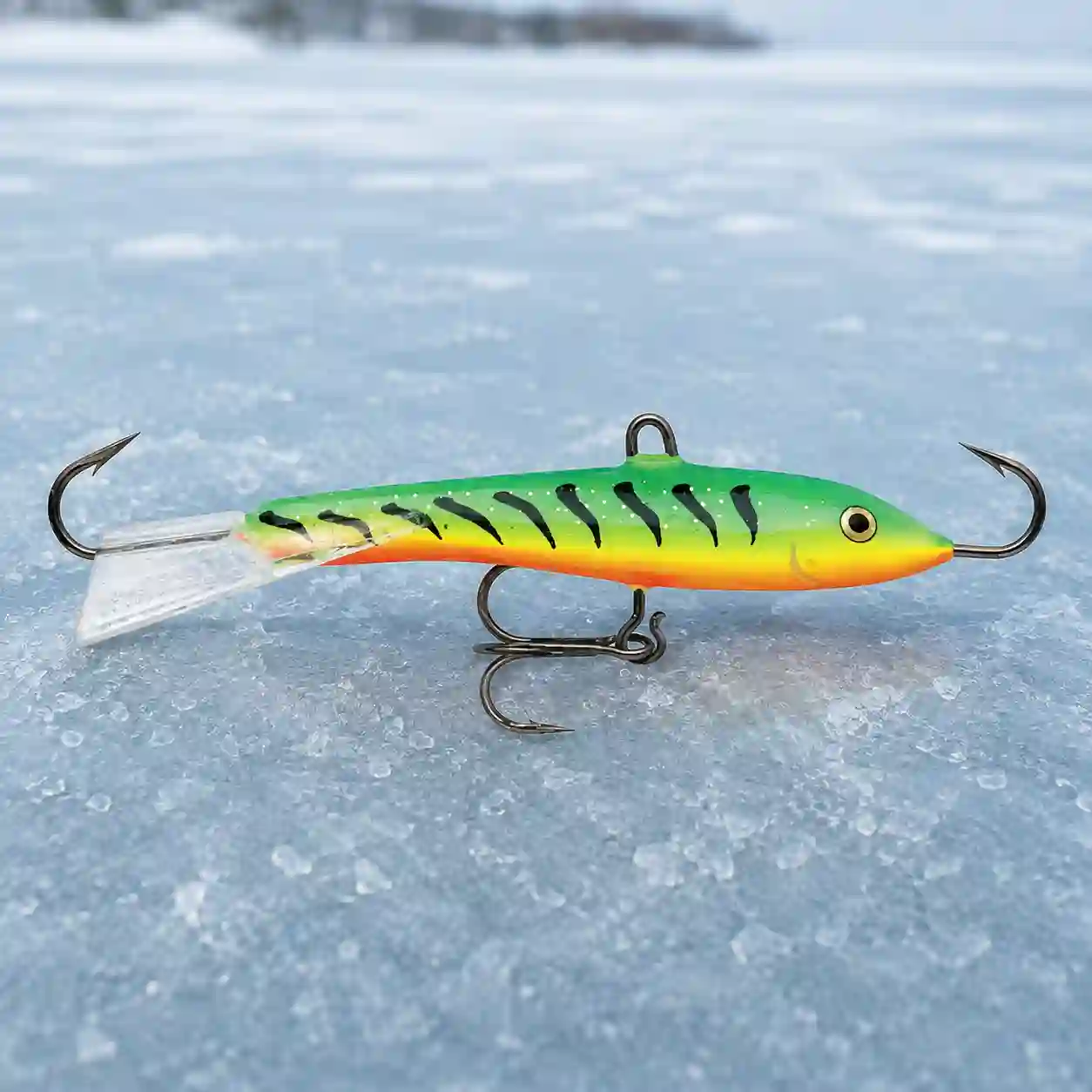
That morning the temperature had dropped well below freezing, and the flasher had shown nothing but the bottom line for hours. We finally moved to a break line dropping from roughly 12 to 16 feet along the outer edge of a dead reed bed and tied on a Rapala Jigging Rap W9 in Glow Tiger — a profile large enough for pike and a color that stood out clearly in the slightly stained water.
The jigging cadence is what made the difference that day. We let the W9 fall straight to the bottom first and popped it a few times to stir up a small cloud of silt, trying to attract anything holding tight to the lake floor. Then came two short, sharp rips of the rod tip that sent the lure gliding wide before it started circling back toward the center of the hole.
After the second rip, we held the rod tip completely still and allowed the lure to finish its circle — and on the fourth second of that pause, with no visible movement at the rod tip, a heavy, dull thump traveled straight up through the handle. The pike hadn’t touched it during the aggressive rip. It ate once the lure had almost stopped moving, and the belly treble caught it in the upper lip.
What followed was a short, hard fight on the ice rod, with several sharp changes of direction directly beneath the hole. The fish was a healthy 24-inch (60 cm) pike that we quickly measured, photographed, and released.
That fish summed up why the Jigging Rap earns the top spot here: it’s aggressive enough to search the water around the hole and trigger reaction strikes, but the pause after the rip is often when a following pike actually commits. The balanced, weighted minnow profile, reversed single hooks at the nose and tail, and center treble allow it to work as either a searching bait or a bottom-bounced, yo-yo presentation. Its wide selection of standard and glow finishes also provides suitable options for both clear and stained water beneath the ice.
Northland Buck-Shot Rattle Spoon — Best Rattle Spoon
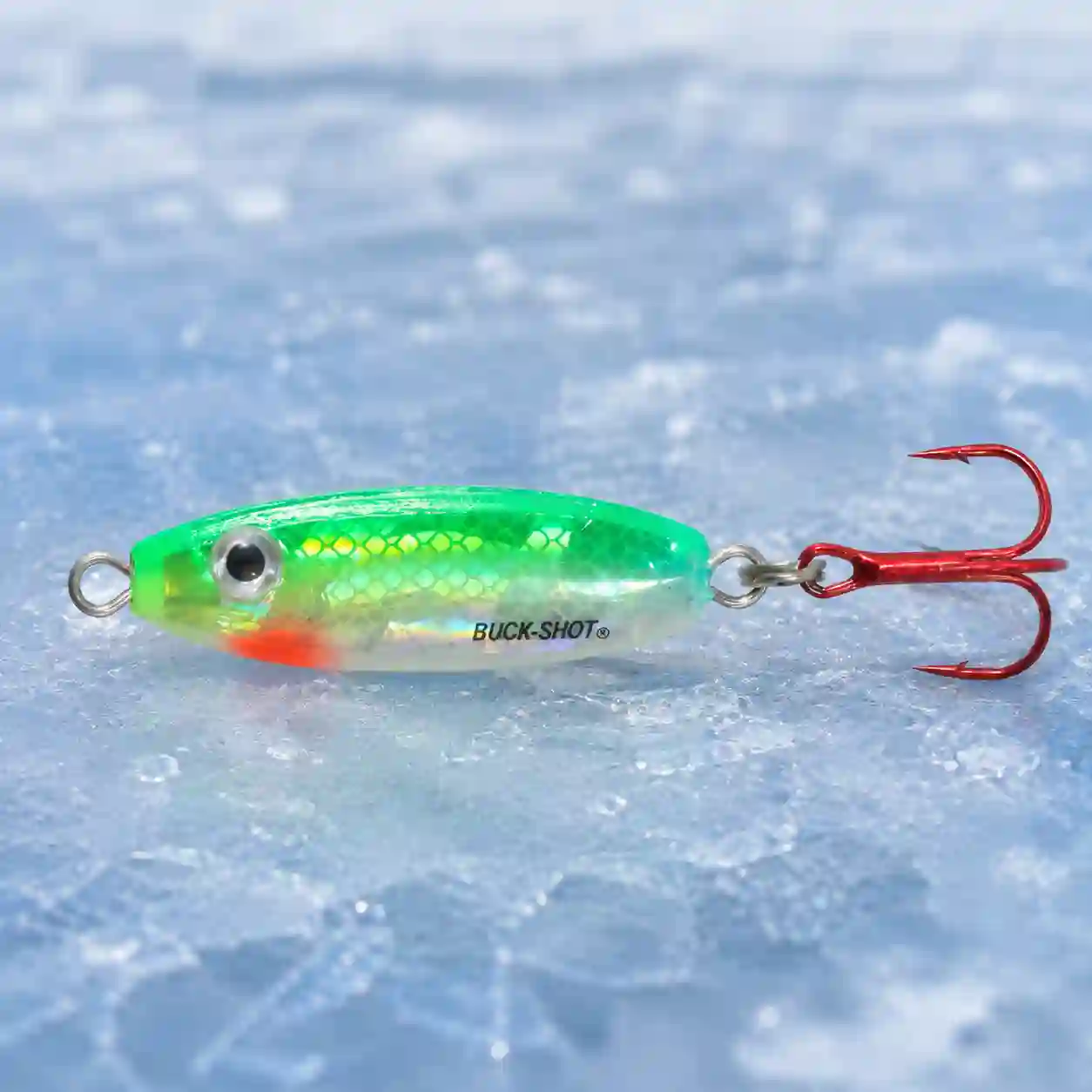
The Buck-Shot earned this spot because it gave us a response when quieter presentations produced no movement on the flasher. We were fishing a 22-foot basin where soft mud met the edge of a gravel drop-off. The water was heavily stained, and pike had ignored our passive minnow presentations through the midday lull, so we switched to the 3/4 oz Northland Buck-Shot Rattle Spoon in Super-Glo Perch.
Rather than ripping it high in the water column, we let the spoon hit the bottom twice to disturb the silt and make the brass rattle click against the lake floor. We then raised it roughly six inches and worked it with short, rapid shakes that kept the spoon close to the bottom while the internal rattle produced a sharp series of ticks and clatters.
Within about 90 seconds, a strong mark separated from the bottom on the flasher and began rising slowly toward the spoon. We stopped shaking and held the lure approximately four inches above the silt. As the fish’s mark merged with the lure, the rod loaded downward and a 23-inch pike took the spoon during the pause.
That response is why we reach for the Buck-Shot in deep or stained water: the brass rattle adds an audible trigger, while the reflective body and Super-Glo finish give an approaching pike a visible target at close range. The 3/4 oz version reaches deep water quickly and maintains good contact with the bottom, making it particularly useful around basin edges, gravel transitions, and other places where pike hold close to the lake floor.
The trade-off: This is not our first choice for clear, heavily pressured water or completely neutral fish. Its loud rattle can be too aggressive at close range, and the exposed treble can collect weeds or bottom debris. When fish approach but repeatedly refuse it, we switch to a quieter flutter spoon.
Williams Wabler W60HN — Best Flutter Spoon
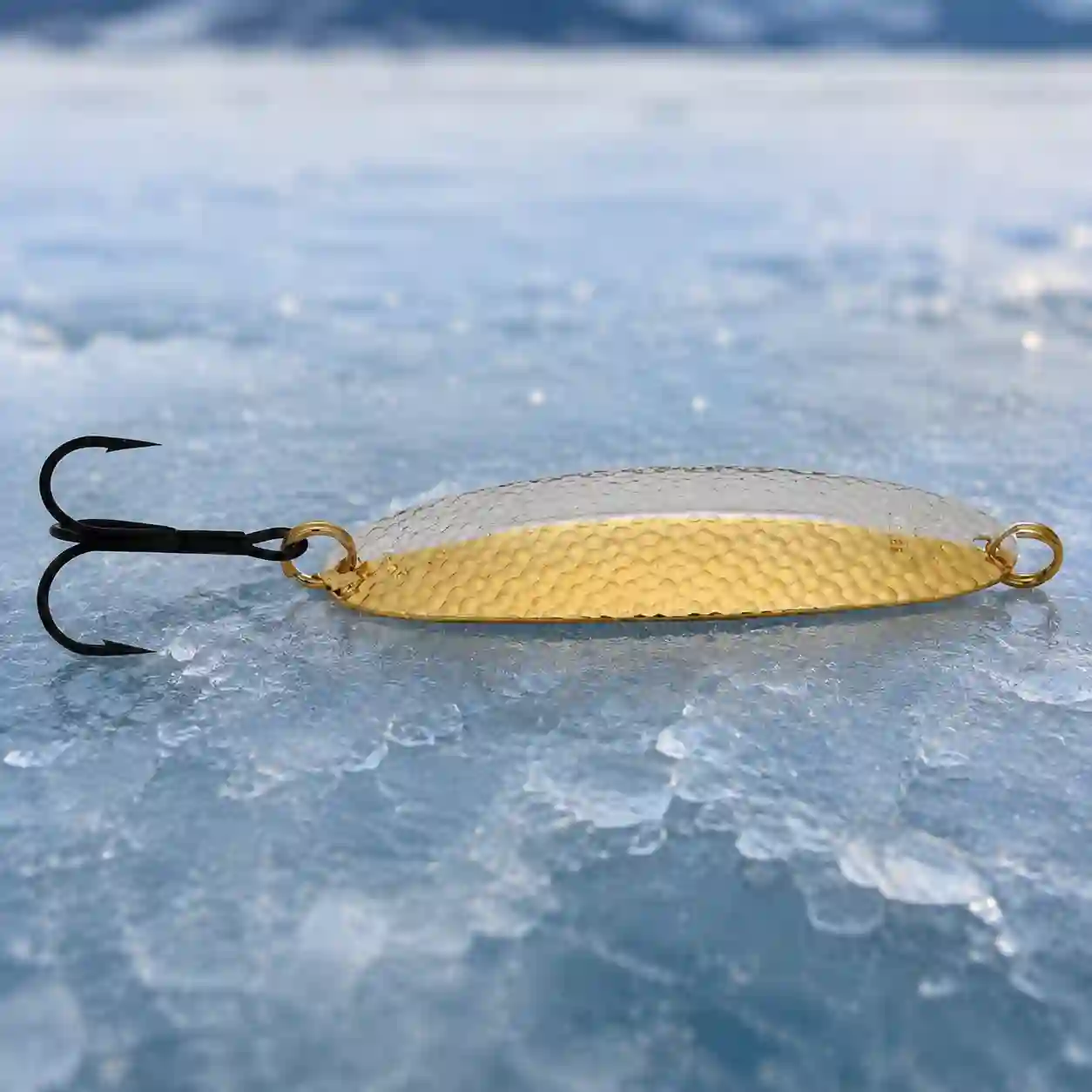
When pike followed the Buck-Shot but refused to commit, the Williams Wabler gave us the quieter presentation we needed. Unlike a compact rattle spoon that drops quickly and announces itself with sound, the broad W60 moves with a slower side-to-side wobble and throws flash in both directions as it falls. We tested the 3/4 oz W60HN in Silver & Gold Nu-Wrinkle, a 3 1/4-inch profile large enough to interest pike without requiring an aggressive jigging cadence.
Our most effective presentation was a controlled lift followed by a semi-slack drop. We raised the spoon roughly 12 to 18 inches, lowered the rod tip just quickly enough to let the Wabler move freely, and then paused after it returned beneath the hole. The patented ridge running along the body kept the spoon from rotating continuously, so it kicked from side to side instead of spinning and twisting the line.
The key was resisting the urge to work it too quickly. Short, repeated snaps reduced the wide wobble that makes this spoon useful. A slower lift-and-fall cadence gave the plated brass body time to reflect light as it changed direction, while a brief pause let an approaching pike inspect a target that was quieter and less erratic than the Jigging Rap or Buck-Shot.
That combination is why the W60HN earns our Best Flutter Spoon position: it creates strong visual attraction without relying on an internal rattle. The genuine silver and 24K gold-plated surfaces remain highly reflective in low light, while the 3/4 oz body carries enough weight to fish effectively at moderate depths without dropping as directly as a compact vertical jigging spoon.
The trade-off: The Wabler is less efficient when you need to reach deep fish quickly or call active pike from a wide area. Its broad action also requires more open space beneath the hole, so we avoid working it directly inside dense weeds or reeds. In deep, stained water, we usually start with the louder Buck-Shot; in clearer water or after fish begin refusing aggressive presentations, we switch to the Wabler.
Rapala Rippin’ Rap 07 — Best Lipless Crankbait
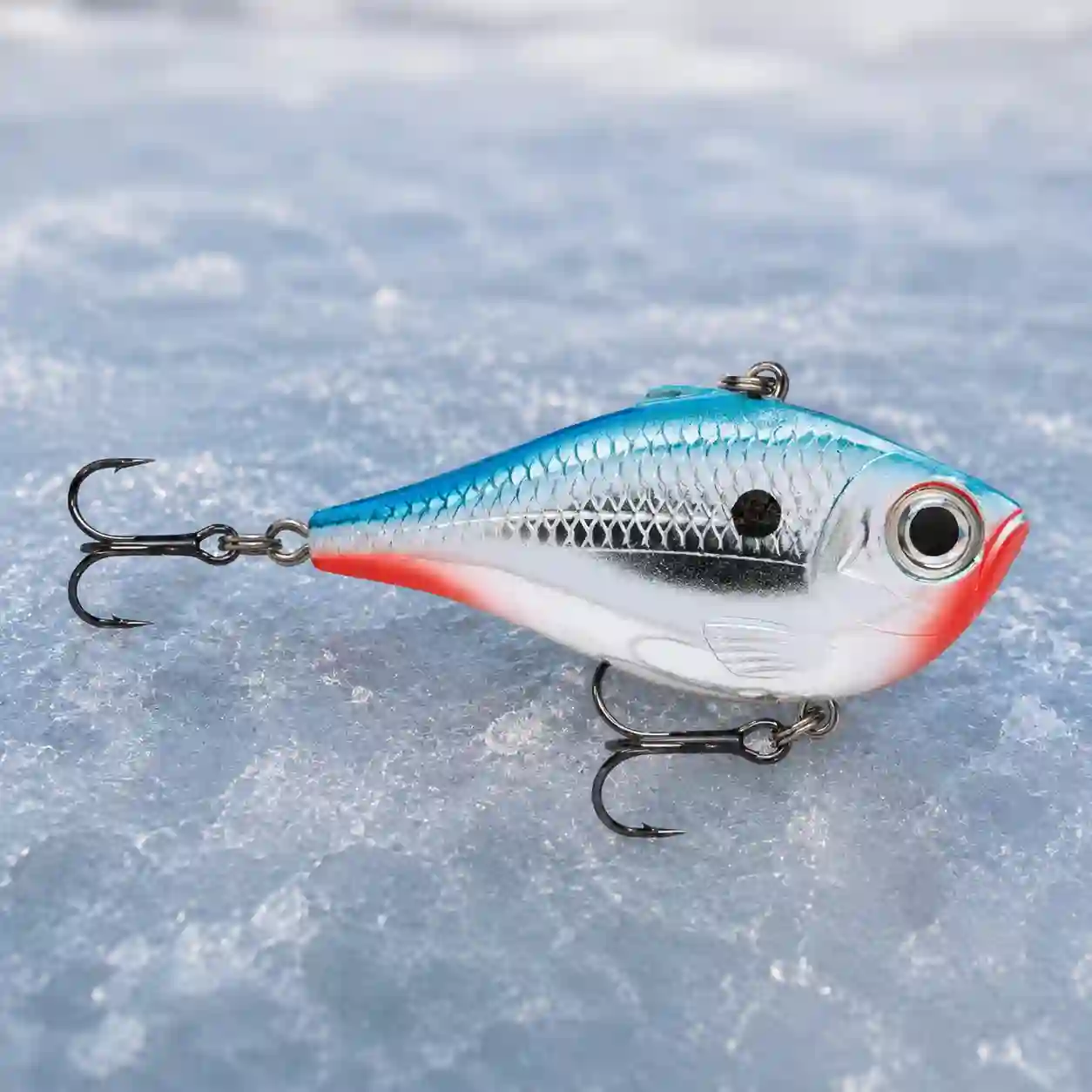
The Rippin’ Rap 07 produced the hardest vibration of any lure we tested, and you can feel exactly when its body engages through the rod handle. We used the 2 3/4-inch, 7/8 oz model in Chrome Blue, a heavy lipless crankbait that reaches the target depth quickly and combines a loud internal rattle with a bright, baitfish-style flash.
We got the best action with short, firm lifts rather than exaggerated upward rips. Raising the lure roughly 8 to 12 inches made the flat sides vibrate hard and activated the rattle, while lowering the rod tip on controlled slack allowed the body to flutter back down. After every two or three lifts, we paused long enough for the lure to settle before repeating the sequence.
That vibration also gives useful feedback above the ice. When the Rippin’ Rap was working correctly, we could feel a distinct buzzing pulse through the blank. If that sensation suddenly disappeared, the lure had usually collected a piece of vegetation or debris on one of its trebles. That made it easier to detect a fouled presentation without repeatedly pulling the bait out of the hole.
The contrast between the two parts of its action is why it earns the lipless crankbait position: the upward rip creates vibration, flash, and sound, while the falling body changes pace and flutters back toward the fish. The Chrome Blue finish is particularly effective when pike are feeding on silver-sided baitfish, and the 7/8 oz body provides enough weight to maintain control in deeper water.
The trade-off: The Rippin’ Rap 07 is an aggressive lure with two exposed treble hooks, so it is not our first choice inside dense vegetation or around inactive fish that repeatedly avoid loud presentations. The heavy 7/8 oz body also works best with a Medium-Heavy ice rod capable of producing sharp lifts without feeling overloaded. When pike follow the vibration but refuse to strike, we reduce the cadence or switch to a quieter spoon.
Bay de Noc Swedish Pimple — Best Vertical Jigging Spoon
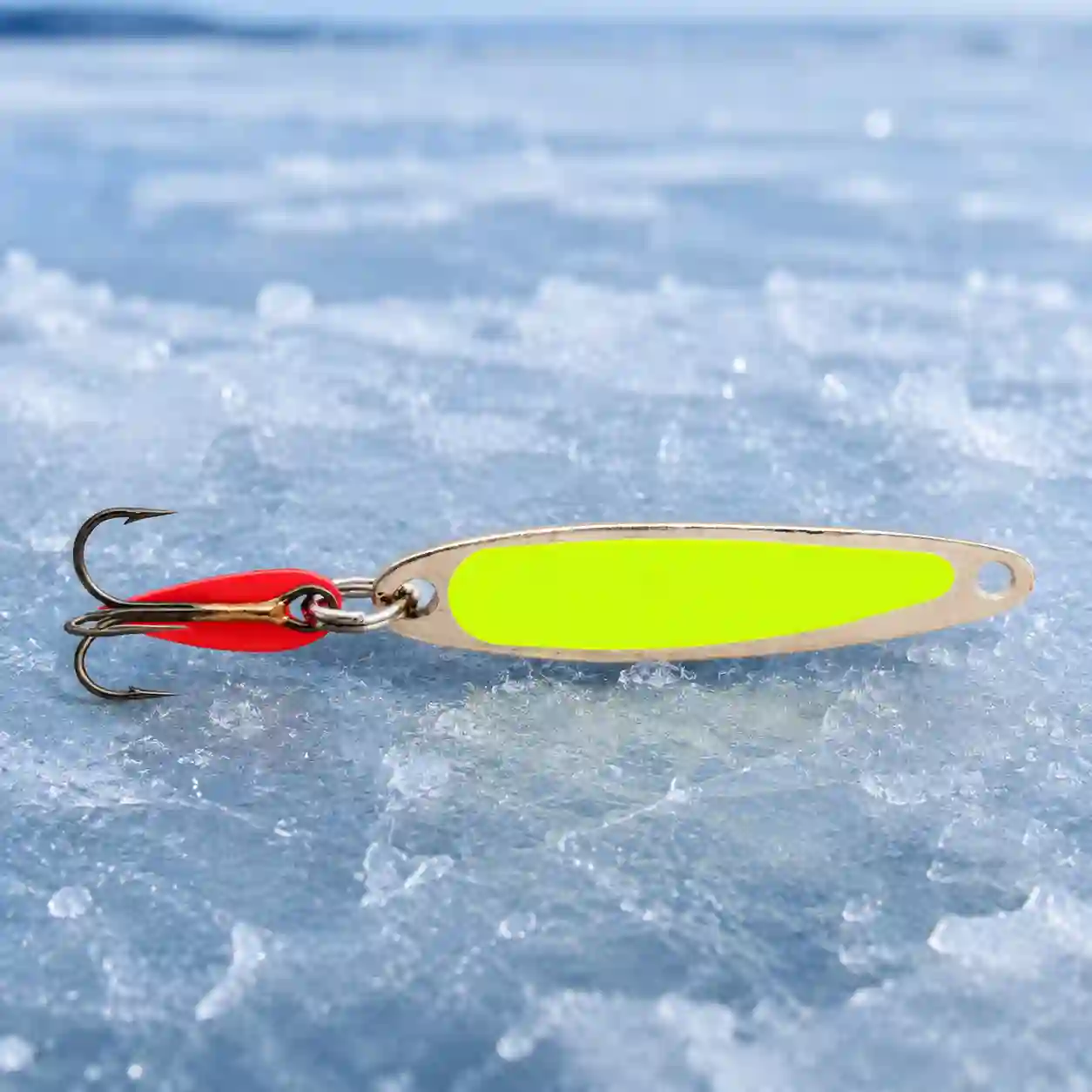
The Swedish Pimple is the lure we use when we want direct control without the constant noise of a rattle spoon or the wide swimming path of a Jigging Rap. We chose the Size 6 model, measuring 2 1/4 inches and weighing 1/2 oz, because it has enough weight to maintain contact at common pike depths while remaining compact enough for a controlled vertical presentation.
Our most consistent cadence followed a simple bob-pause-shimmer pattern. We lifted the spoon roughly 8 to 10 inches, allowed it to fall on controlled slack, and then shook the rod tip lightly before pausing. The solid brass body kicked away from center on the lift and returned beneath the hole, while the colored flipper near the treble added a smaller point of movement after the spoon itself had nearly stopped.
The Swedish Pimple worked best when we kept the movements deliberate rather than trying to make it behave like a lipless crankbait. One firm lift created enough flash and displacement to attract attention, but the short shimmer and pause gave pike time to close the distance. Because the lure responds immediately to small rod-tip movements, it was also easier to keep inside a narrow strike zone when fish were holding close to the bottom.
That predictable control is why it earns the vertical jigging spoon position: it can be worked aggressively to search a depth range or slowed down into a compact presentation without changing lures. That versatility becomes especially useful as pike behavior changes throughout the winter and fish begin responding better to a slower, more controlled presentation. The 1/2 oz Size 6 still reaches the bottom efficiently without requiring an aggressive jigging cadence.
The trade-off: The Swedish Pimple does not produce the same sound as the Buck-Shot or cover as much horizontal water as the Jigging Rap, so it is less effective for calling distant, active fish toward the hole. Its exposed treble can also collect weeds or bottom debris. We use it when precision and cadence control matter more than maximum noise or vibration.
Northland Level-Head Predator Tube — Best Soft Plastic for Big Pike
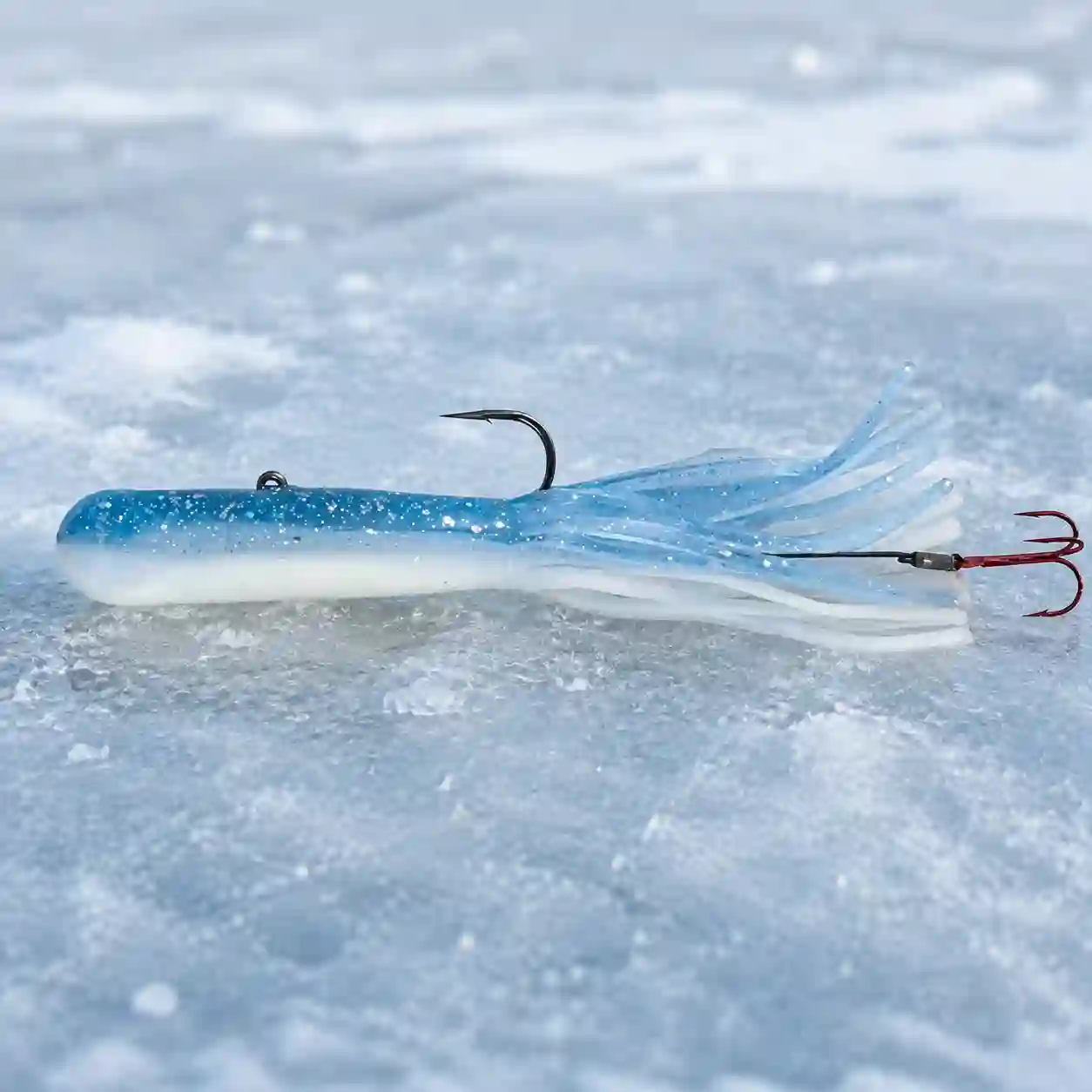
The Level-Head Predator Tube gave us a large pike profile without the constant flash, metal vibration, or rattle produced by the hard baits above. We used the 6-inch model in Blue & White, a pre-rigged soft plastic designed to hang horizontally at rest and dart like a distressed baitfish when moved.
The best presentation was a mixture of short shakes and occasional wider lifts. We started with two or three subtle rod-tip movements that made the tube quiver in place, followed by a firmer lift that sent it away from the center of the hole. Once it returned, we held it still and allowed the horizontal body and blood-red stinger treble to remain visible without adding unnecessary movement.
The ability to change its action without changing lures is what separated this tube from the metal options in our test. Small movements made the soft body pulse almost in place, while a sharper lift produced a wider dart. When we stopped moving the rod, the level-head design kept the tube horizontal instead of allowing it to hang nose-down, preserving the outline of a full-size baitfish throughout the pause.
The oversized profile is why it earns our big-pike position: the 6-inch body resembles the larger forage that mature pike can take without spending much energy. Its dense head keeps the presentation close to the hole and easy to track on electronics, while the stout primary hook and cable-mounted stinger provide two contact points when a fish strikes short or grabs the rear half of the tube. That large profile becomes especially useful when you understand where pike hold at different stages of winter and can place the tube directly inside their feeding zone.
The trade-off: This is a specialized big-fish presentation rather than a high-numbers lure. The 6-inch body can be too much for smaller or inactive pike, and the stinger treble is prone to collecting vegetation when worked inside thick weeds. We use it around open weed edges, basin transitions, and other areas where a large horizontal profile has room to dart without fouling.
Berkley ThinFisher — Best Blade Bait
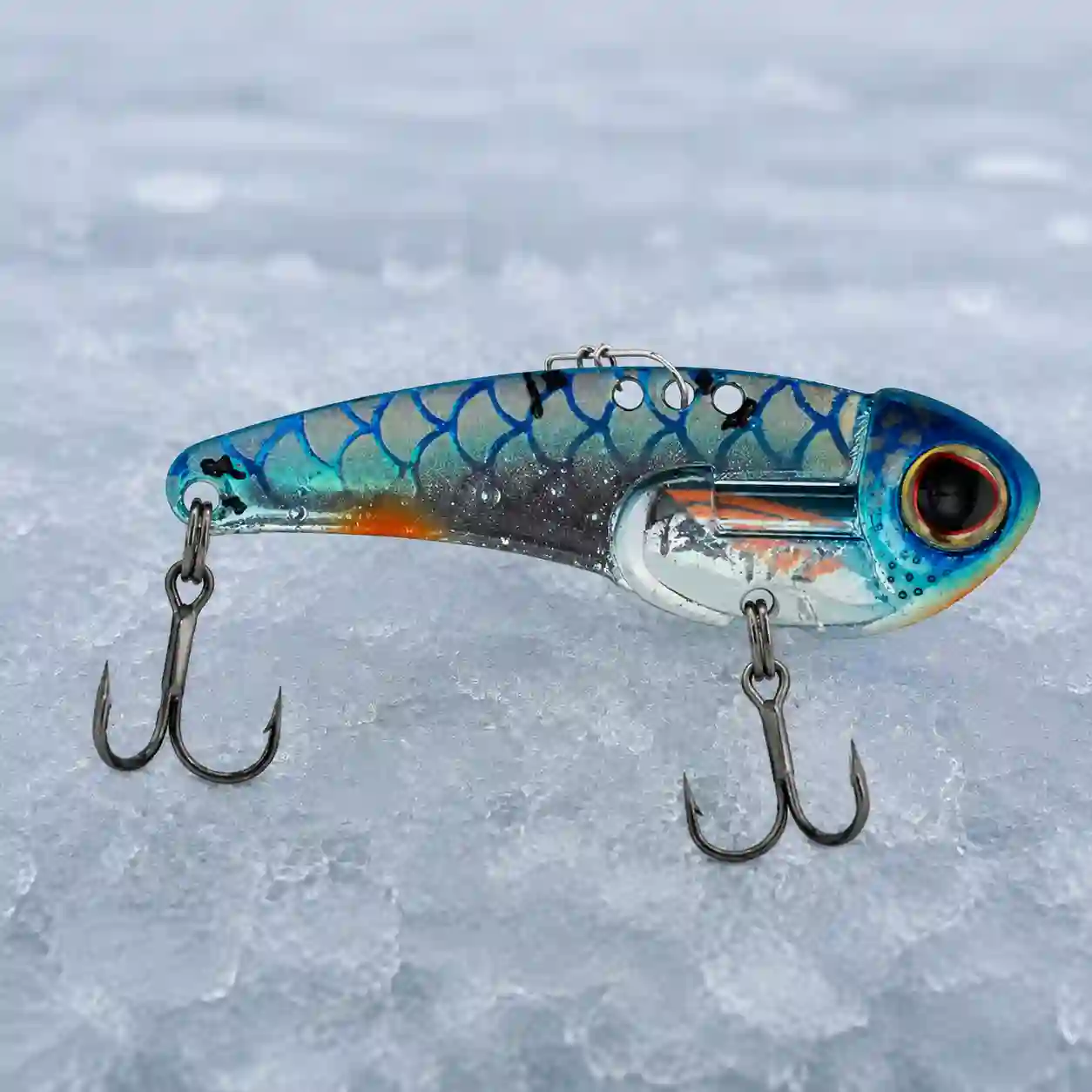
The ThinFisher was the most efficient lure in our test for checking multiple holes without spending several minutes at each one. We used the 2.25-inch, 1/2 oz model in Blue Silver, a compact blade bait that reaches the target depth quickly and begins vibrating with very little upward movement.
Our starting cadence was three short, firm lifts followed by a controlled drop. If nothing responded, we changed depth, repeated the sequence, and then moved to the next hole. The thin metal body produced an immediate wobble and strong side flash, while the built-in sonic rattle chamber added more sound than we expected from such a compact profile.
The three tow points made a noticeable difference in how the lure behaved. We used the middle position for a balanced amount of vibration during most vertical presentations. Moving the snap toward the front produced a lighter, tighter vibration, while the rear position created a wider wobble that worked better with slower lifts. That adjustability allowed us to change the intensity without replacing the lure.
The ThinFisher earns the blade-bait position because it combines fast depth changes, strong vibration, high side flash, and adjustable action in one compact body. Unlike the broader Wabler or the horizontally swimming Jigging Rap, it stays relatively close to the vertical column beneath the hole, making it useful when checking specific depths or working close to a break line — especially when paired with a flasher or fish finder to confirm where pike are actually holding.
The trade-off: Two exposed treble hooks make the ThinFisher prone to snagging weeds, wood, and bottom debris, and its compact metal body can feel too aggressive when overworked. Short lifts are usually enough to activate it; large, repeated rips create unnecessary noise and make the lure harder to control. We use it as a fast search bait in relatively clean water rather than a slow presentation inside heavy cover.
How to Choose an Ice Fishing Lure for Pike
Match the Lure to Water Clarity and Depth
Sound and vibration carry further than flash in deep or stained water, while flash and subtle movement tend to work better in shallow, clear water. Depth alone doesn’t decide it, though — activity level and visibility matter just as much. As a starting point, lean toward a rattle spoon or blade bait in deeper or stained water, and toward a flutter spoon or swimming jig in shallower, clearer water where pike can already see a lure from a distance without needing extra noise to find it.
Read the Fish, Not Just the Depth
Aggressive, actively feeding pike usually respond to a fast, loud presentation — a lipless crankbait or blade bait ripped hard and often. Neutral or pressured fish that follow a lure without striking are usually telling you to slow down, not speed up. When a pike shows up on the flasher but won’t commit, dropping to a quieter jigging spoon or soft plastic tube and adding a longer pause is often what turns a follow into a strike. For more on adjusting your lure movement when pike follow without striking, read how to jig for pike through the ice.
Size Up for Big Pike, Not Just for Depth
Pike are opportunistic and will just as readily hit a small lure as a large one, but a bigger, slower-moving profile like a soft plastic tube can be worth fishing when mature pike are keyed in on larger forage. If you’re specifically targeting trophy fish, don’t be afraid to fish a bigger bait than the water seems to call for — a large pike would rather expend less energy on one substantial meal than chase several small ones, at least when that forage is available.
Best Ice Fishing Lures for Pike Compared
| Lure | Best For | Type | Size / Weight | Sound | Ideal Scenario |
|---|---|---|---|---|---|
| Rapala Jigging Rap W9 | Best Overall | Swimming Jig | 7/8 oz | Silent | Searching water, triggering reaction strikes |
| Northland Buck-Shot Rattle Spoon | Best Rattle Spoon | Rattle Spoon | 3/4 oz | Loud | Deep, dark, or stained water |
| Williams Wabler W60HN | Best Flutter Spoon | Flutter Spoon | 3/4 oz | Silent | Clear water, pressured or hesitant pike |
| Rapala Rippin’ Rap 07 | Best Lipless Crankbait | Lipless Crankbait | 7/8 oz | Loud | Active, aggressively feeding pike |
| Bay de Noc Swedish Pimple | Best Vertical Jigging Spoon | Jigging Spoon | 1/2 oz | Silent | Precision control at a specific depth |
| Northland Level-Head Predator Tube | Best Soft Plastic for Big Pike | Soft Plastic Tube | 6 in / 1.5 oz | Silent | Targeting trophy-class pike |
| Berkley ThinFisher | Best Blade Bait | Blade Bait | 1/2 oz | Loud | Fast hole-checking and depth searching |
Frequently Asked Questions
What’s the best all-around ice fishing lure for pike?
A swimming jig like the Rapala Jigging Rap is the most versatile choice for most situations. Its circling action on the fall covers water horizontally around the hole, making it a strong first lure to try when you’re searching for active fish and don’t yet know how they’ll respond.
Do I need a rattle in my lure for ice fishing pike?
Not always. A rattle helps in deep, dark, or stained water where sound and vibration travel further than flash alone. In clear, shallow water — especially around pressured pike — a quieter flutter spoon or vertical jigging spoon without a rattle often draws more strikes than a loud one.
What size lure should I use for pike through the ice?
Many pike-sized hard baits fall between 1/2 and 1 oz, while large pre-rigged soft plastics can reach 1.5 oz and 6 inches. Match the lure to the forage, depth, and activity level rather than choosing size by species alone, and make sure the hooks and leader are strong enough for pike.
How do I know when to slow down my jigging cadence?
If a pike shows up on your flasher or fish finder but follows the lure without striking, that’s usually a sign to slow down rather than jig harder. Dropping to a quieter spoon or soft plastic and adding a longer pause after the lift is often what turns a follow into a strike.
What’s the difference between a rattle spoon and a blade bait?
A rattle spoon uses an internal rattle chamber to add sound to its flash and falling action. A blade bait generates its strongest vibration when lifted or retrieved, followed by wobble and flash on the fall. Some blade baits, including the ThinFisher, also include a separate rattle chamber.