

Best Ice Fishing Rods for Pike (2026): Tested Picks & Buying Guide
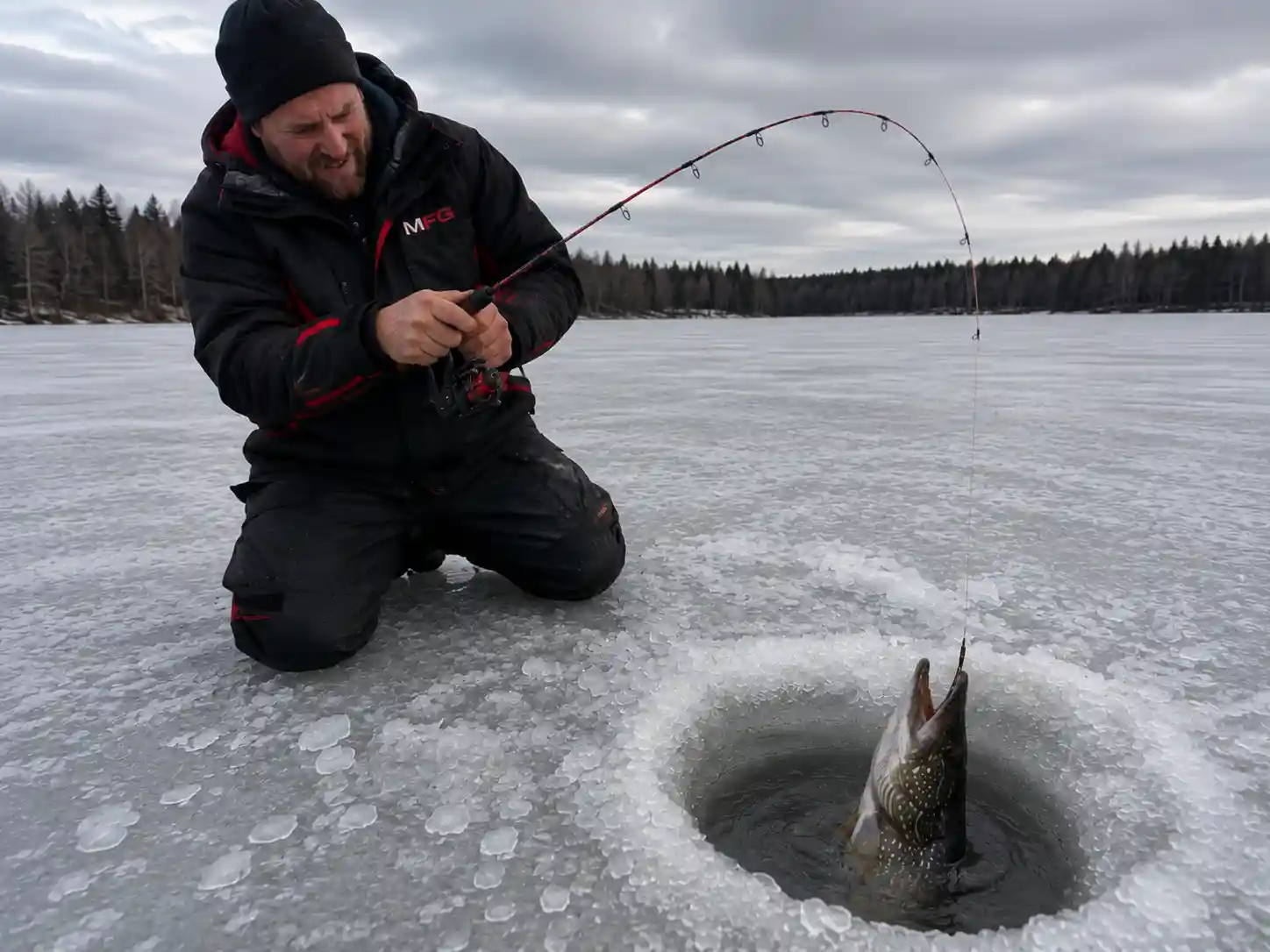
Most ice rods on the market are built for panfish and walleye — light tips, soft backbone, nothing that survives a big pike thrashing at the surface of a six-inch hole. We’ve had that exact moment: a rod bent double, a hookset barely holding, and a fish that nearly won because the rod underneath it wasn’t built for the job.
Not to be confused with our open-water winter pike rods — ice fishing rods are a completely different tool, built short for jigging straight down through a hole in the ice, not casting from shore or boat.
At Master Fishing Guide, we picked these rods specifically around pike — not generic multi-species compromises. Whether you need a balanced all-rounder, enough backbone to horse a big fish through the hole, or a premium blank that telegraphs every tap, there’s a rod below built for that exact job.
As an Amazon Associate, we earn from qualifying purchases — no cost to you. That’s how we keep this site running. Read more ›
Before you buy, it helps to know why length, power, and action matter more for pike than for any other species you’ll target through the ice. Below is our quick-buy breakdown, then how to choose the right rod for your setup, followed by our top picks and the real-world testing behind them. If you’re planning the whole trip, start with our ice fishing for pike guide.
MFG Quick List: Best Ice Fishing Rods for Pike
If you’re short on time, these four rods cover the most important pike ice fishing situations — from all-around jigging to premium sensitivity and heavy-lure control.
- Ugly Stik Carbon Ice — Best Overall: a balanced spinning rod with enough backbone for pike and enough sensitivity for everyday jigging.
- St. Croix Custom Ice — Best Premium: a durable carbon blank with a hi-vis tip built for anglers who want top-tier feel and control.
- CLAM The Mack — Best for Heavy Lures & Big Baits: built with a rigid backbone for driving hooks home on large jigs and heavy baits.
- Ugly Stik GX2 Ice — Best Budget: a tough, no-fuss spinning rod that still holds up against a heavy pike.
How to Choose an Ice Rod for Pike (Length, Power & Reel Type)
Most ice rod buying guides treat length and power as an afterthought — for pike, they’re the whole decision. Get either one wrong and you’re either muscling a fish with a rod that flexes like a noodle, or missing bites because the rod is too stiff to load properly.
Pike Ice Rod Length: Why 36 to 40 Inches Is the Sweet Spot
Ice rods for panfish and walleye often run short — 24 to 32 inches — built for finesse jigging in a shelter. Pike call for the opposite: 36 to 40 inches of rod, whether you’re fishing in the open or out of a hub shelter with enough headroom to work a longer blank. The extra length isn’t about casting distance — it’s about controlling a fish that’s still fighting hard three feet under the ice, giving you more leverage to steer it toward the hole and more cushion to absorb a headshake at the surface.
Every rod on this list falls in that 36-40″ range for exactly that reason. Going shorter starts costing you the leverage you need the moment a big pike commits.
Ice Fishing Rod Power: Why Medium-Heavy Is the Pike Standard
Most ice rods on store shelves are built Ultra-Light to Medium for panfish and walleye — good for detecting a light bite, useless for setting a hook into a pike’s jaw and holding it there. Medium-Heavy is the power range that actually matches pike: enough backbone to drive a hookset through a solid frame, enough give in the tip that you’re not fighting the rod as much as the fish.
Going heavier than Medium-Heavy trades away feel for muscle — fine if you’re exclusively fishing heavy jigging spoons, but for anglers running a mix of jigs and bait presentations, Medium-Heavy is the rod you reach for every trip. The one exception on this list is our premium pick, which trades a bit of that backbone for extra sensitivity — a deliberate tradeoff for anglers who prioritize feeling a light bite over raw muscle, covered in more detail in its individual review below.
Spinning, Not Baitcasting
Every rod on this list is a spinning rod, and that’s not a coincidence. Spinning reels are the standard for ice fishing across the board — they handle the lighter lines common through the ice better, ice up less at the guides, and don’t punish you with a backlash while you’re wearing thick gloves. Baitcasting setups exist for ice fishing, but they’re a niche choice mostly reserved for deep-water lake trout, not something we’d recommend for pike. For compatible options, see our best ice fishing reels for pike.
How We Tested These Ice Fishing Rods for Pike
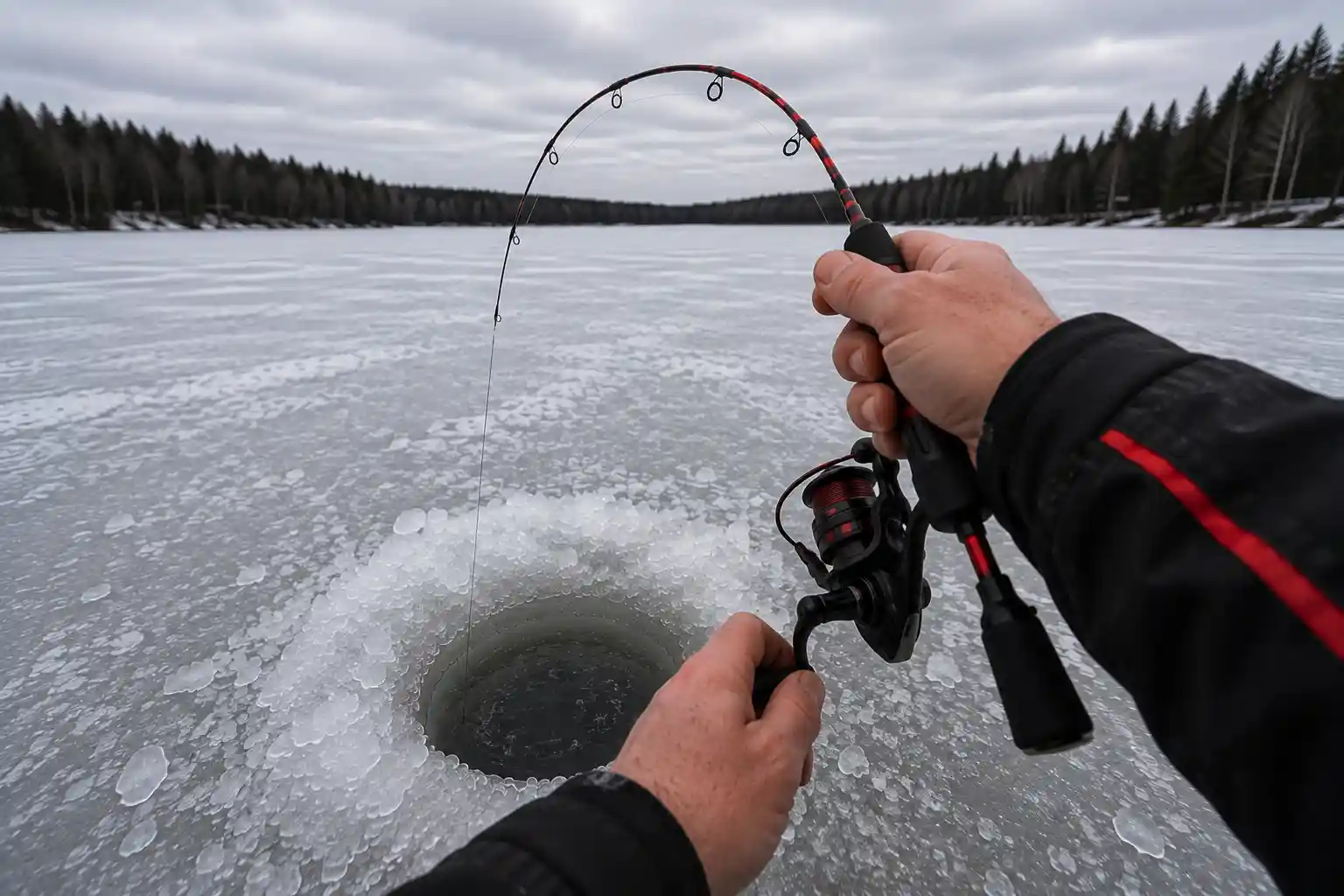
We put each rod through real-world stress testing: jigging heavy spoons, setting hooks hard into aggressive strikes, and testing how the blank handles heavy loads right beneath the hole. A rod can feel balance-perfect in a tackle shop, but real ice fishing reveals whether the tip action, backbone, and guide spacing actually perform under pressure. For the lure movements and adjustments we use on the ice, see our guide to jigging for pike through the ice. We drilled every hole ourselves with the same ice augers we’ve already put through our own testing, so the setup below the ice matched real conditions, not a tackle-shop demo.
To complement our hands-on field testing, we also track long-term quality control across hundreds of verified owner experiences. While a few days on the ice proves a rod’s immediate action and sensitivity, aggregated owner data helps us flag long-term durability trends — like guide insert pop-outs or reel seat looseness over multiple seasons. If a rod passed our hands-on tests but showed a high frequency of recurring structural failures in the field, it didn’t make this list.
Finally, we evaluate post-purchase support and availability. Great performance on the ice means little if the manufacturer lacks solid warranty coverage or consistent production standards. Every rod featured here comes from an established brand with a proven track record.
Ugly Stik Carbon Ice — Best Overall
Ugly Stik built its reputation on rods that survive abuse, and the Carbon Ice is the first ice-specific rod from them that doesn’t feel like a compromise to get that toughness. Where the classic Ugly Stik glass/graphite blanks always had a bit of extra heft to them, this one leans into a 100% 24-ton graphite build — noticeably lighter in hand than we expected walking out onto the ice with it.
What stood out during testing was how the rod loaded under a hookset. Jigging a heavy spoon and driving the hook home into a solid pike frame, the blank bent smoothly into the fight instead of feeling like it was fighting back against us. That’s the balance a Medium-Heavy pike rod is supposed to hit — enough backbone to set the hook, enough give in the tip that the fish doesn’t just rip free.
The 6 PVD-coated stainless steel guides shrugged off the usual ice buildup we’ve dealt with on cheaper guides, and the EVA split-grip handle held up fine even fishing with thick gloves on — no slipping, no numb-fingers fumbling to reset a jig.
What We Like: genuinely lightweight for how much backbone it carries, smooth hookset action that doesn’t feel stiff, guides resist ice buildup well, comfortable grip even with gloves on.
What Could Be Better: at this price point you’re not getting the ultra-refined sensitivity of the premium picks further down this list — fine for jigging and hooksets, but anglers chasing every last bit of tip feel may want to step up.
St. Croix Custom Ice — Best Premium
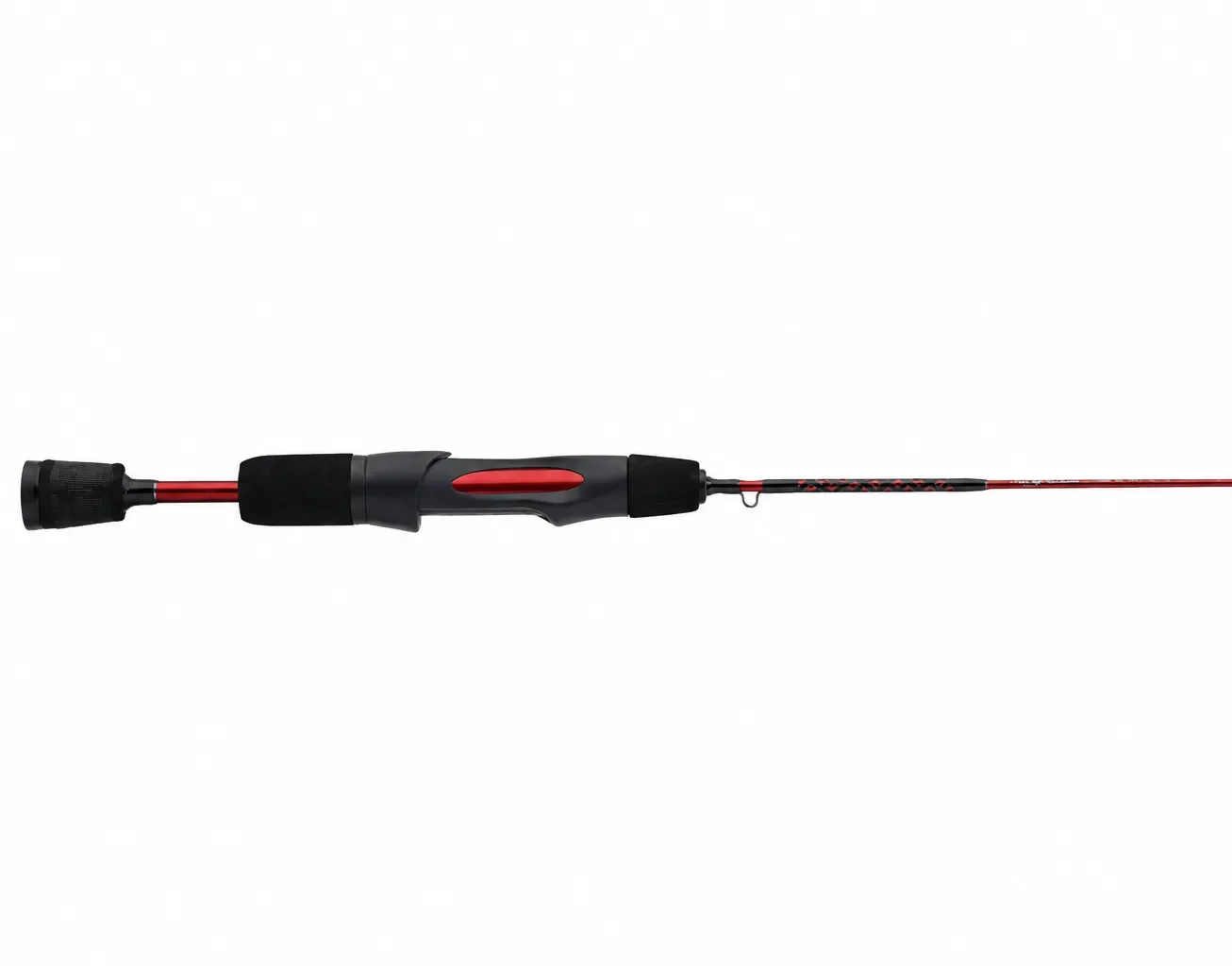
St. Croix has built its name on rods that justify the higher price tag, and the Custom Ice is where that shows up most on the ice. The precision-taper solid carbon blank gives it a noticeably different feel in hand than anything else on this list — lighter under load, and far more responsive through the tip when a pike is just mouthing a jig rather than committing to it.
The hi-vis tip earned its place fast during testing. Watching for a visual strike instead of relying purely on feel made a real difference on slower days, when pike were nosing a bait without giving much resistance through the blank. The REC recoil guides also did their job well — after the rod bent hard into a hookset, they snapped back into position instead of staying kinked, which is a small detail that matters over a full day of repeated hooksets.
The split-grip cork handle is genuinely more comfortable over a long session than the EVA grips on the rest of this list, though that comfort comes with a tradeoff we want to be upfront about.
What We Like: noticeably more sensitive blank than anything else on this list, hi-vis tip helps detect light bites visually, recoil guides hold up well under repeated hooksets, premium cork handle stays comfortable over a full day.
What Could Be Better: this is the priciest rod on our list, and some owner reviews reported rods arriving damaged from the shipper — inspect yours the moment it arrives, and don’t hesitate to use the return window if anything looks off.
CLAM The Mack — Best for Heavy Lures & Big Baits
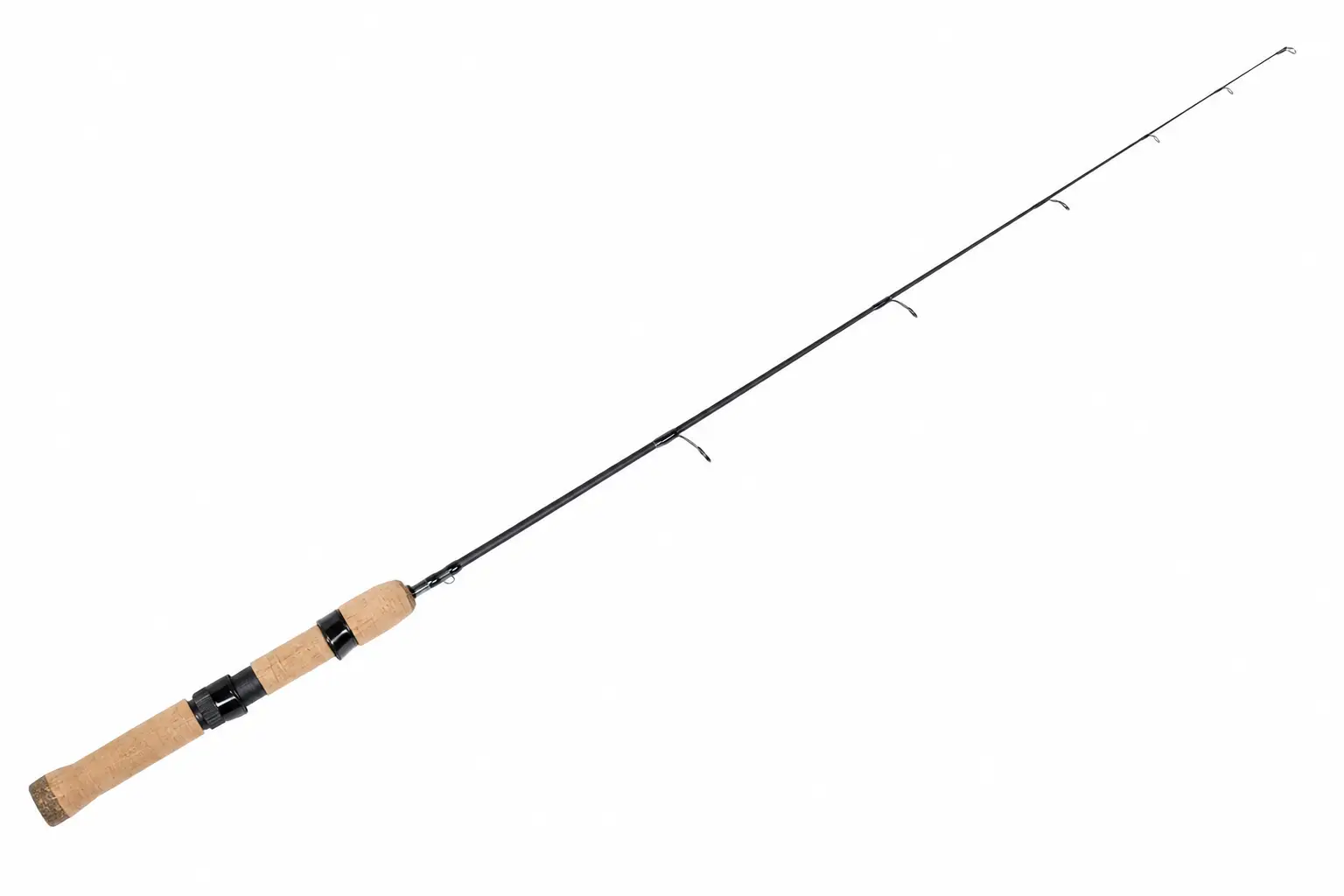
Some pike presentations call for weight — big jigging spoons, heavy soft-plastic swimbaits, dead-bait rigs — and that’s exactly where the Mack earns its spot on this list. The rigid graphite backbone doesn’t flex away from a heavy lure the way a softer rod does; it loads properly and lets you actually work the bait instead of fighting your own rod on every jig stroke.
We felt that backbone the moment we tied on a large soft-plastic swimbait and started working it through a school of baitfish. Rods built lighter tend to feel mushy under that kind of weight, but the Mack stayed responsive — we could feel exactly where the bait was in the water column, and when a pike finally committed, burying the hook took none of the extra effort we’ve had with softer blanks.
The skeletal reel seat also did its job well during testing — direct blank contact meant we picked up subtler taps than we expected from a rod built this stiff, without giving up any of the power needed to horse a big fish up through the hole. The oversized guides were another standout feature. They gave ice less chance to build up around the inserts than the smaller guides found on many lighter ice rods, which meant fewer interruptions on cold, windy days.
What We Like: rigid backbone handles heavy jigs and big baits without flexing away, skeletal reel seat keeps sensitivity despite the stiffer build, oversized guides shed ice well in exposed conditions, real leverage for horsing big fish through the hole.
What Could Be Better: that same stiffness makes it less forgiving for finesse presentations or light bites — if you’re mixing in smaller jigs, pair this with a softer rod rather than trying to make the Mack do everything.
Ugly Stik GX2 Ice — Best Budget
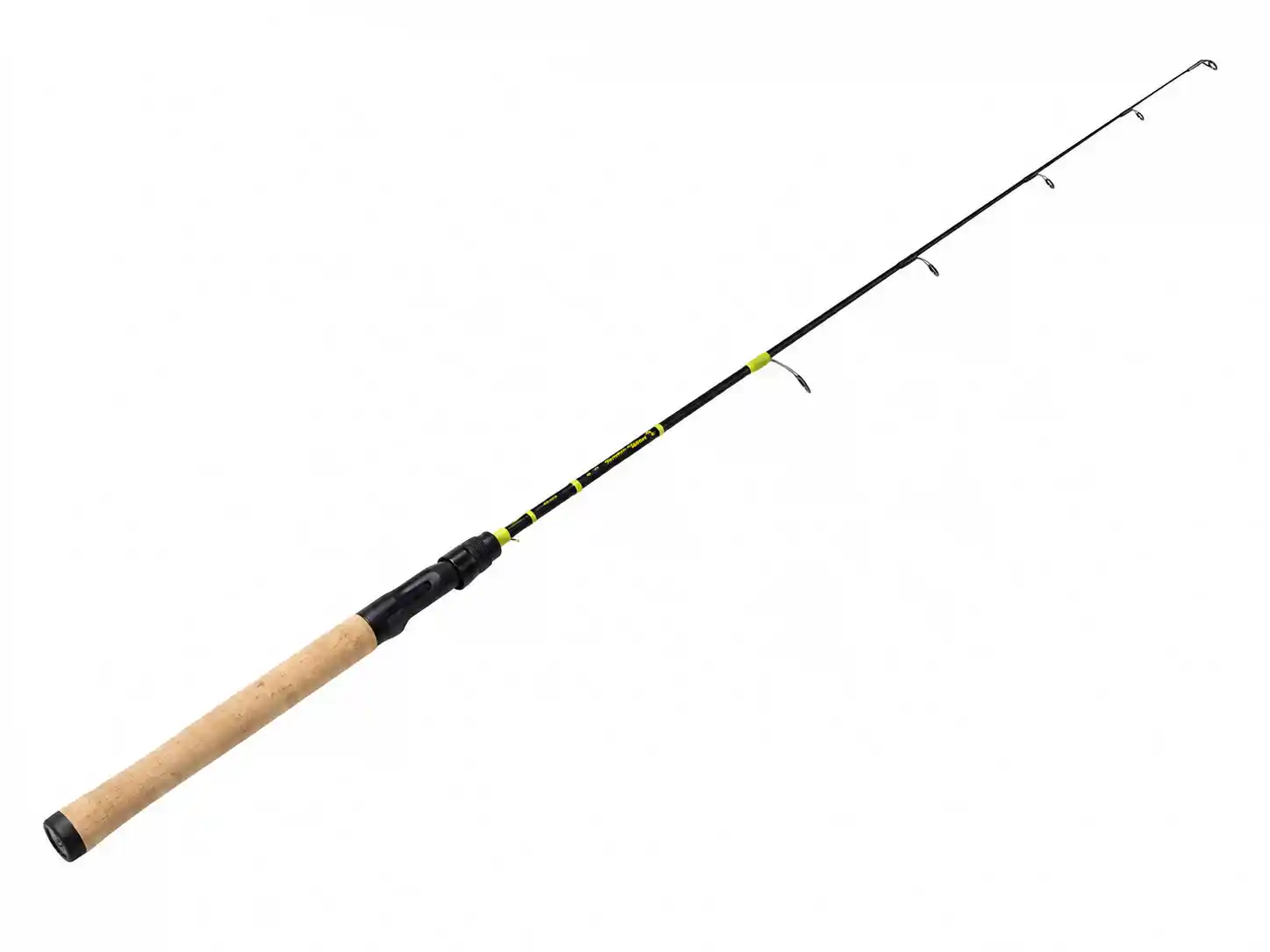
You don’t need to spend big to get a rod that actually holds up to pike, and the GX2 is the proof. At under $40, it’s the cheapest rod on this list by a wide margin, but the graphite-and-fiberglass Ugly Tech build behind it is the same DNA that’s made Ugly Stik a household name for anglers who don’t baby their gear.
We rigged it with 20-pound braid and a fluorocarbon leader, expecting the rod to feel overmatched the moment a fish committed. It didn’t. Two pike came through the hole on this setup during testing — a 27-incher and a 30-incher — and the rod loaded with a good amount of bend on both without ever feeling like it was about to fold.
The Clear Tip design held up well through repeated hooksets, and the exposed-blank reel seat gave a surprising amount of feel through the handle for a rod at this price — even working the jig with a good pair of winter fishing gloves on, we could still tell exactly when a fish had taken the bait.
What We Like: real backbone for the price, handles heavier braid and leader setups without complaint, good feel through the handle even with gloves on, backed by a 10-year warranty most rods this cheap don’t offer.
What Could Be Better: there’s no built-in hook keeper, which is a minor annoyance when you’re moving between holes — not a dealbreaker, just something to plan around.
Common Mistakes When Choosing an Ice Rod for Pike
Buying a rod built for another species. The single biggest mistake we see is anglers grabbing whatever ice rod is on the shelf without checking the power rating. A Light or Medium rod built for walleye and panfish will bend double the moment a real pike commits, and by the time you feel that, the hookset is already too late to save.
Going too short to save space in the sled. A 24 or 28-inch rod packs down nicely, but that same compact length costs you the leverage you need once a pike is fighting hard three feet under the ice. We’d rather deal with a slightly longer rod bag than lose a fish at the surface because the rod ran out of backbone.
Ignoring the reel seat and guides in favor of the blank alone. A stiff, powerful blank paired with cheap guides that ice over constantly, or a reel seat that loosens after a season, will still cost you fish — just in a different way. The full package matters, not just the power rating on the box.
Assuming a baitcasting setup will perform better through the ice. Baitcasting reels have their place on open water, but on the ice they’re more prone to backlash in cold weather and harder to manage with gloves on. Unless you’re specifically targeting deep-water lake trout, a spinning setup is the more reliable choice for pike.
Pairing a good rod with the wrong line or leader. Even the right rod won’t save a fish if a pike’s teeth go straight through unprotected line. Skipping a proper braided line and a wire or fluorocarbon leader is a mistake that has nothing to do with the rod itself, but it’s one of the most common ways anglers lose a fish they otherwise had.
| Rod | Best For | Length | Power | Reel Type | Ideal Pike Scenario |
|---|---|---|---|---|---|
| Ugly Stik Carbon Ice | Best Overall | 36 in | Medium-Heavy | Spinning | All-around jigging and everyday pike fishing |
| St. Croix Custom Ice | Best Premium | 38 in | Medium | Spinning | Detecting light bites; anglers who want top-tier feel |
| CLAM The Mack | Best for Heavy Lures & Big Baits | 40 in | Medium-Heavy | Spinning | Big jigging spoons, swimbaits, dead-bait rigs |
| Ugly Stik GX2 Ice | Best Budget | 36 in | Medium-Heavy | Spinning | First ice rod or backup setup on a budget |
Frequently Asked Questions
What’s the best power rating for an ice fishing rod for pike?
Medium-Heavy is the power range that matches pike best for most anglers. It provides enough backbone to drive a hookset through a pike’s jaw while still keeping enough tip flex to avoid ripping the hook free on a hard strike. Anglers who prioritize detecting light bites over raw power sometimes step down to a Medium rod and rely on their reel’s drag to handle the fight instead of the blank itself.
How long should an ice fishing rod be for pike?
36 to 40 inches is the sweet spot for pike specifically, longer than the 24 to 32-inch rods built for panfish and walleye. The extra length gives you more leverage to steer a big fish toward the hole and more cushion to absorb a headshake once it reaches the surface, where most fish are actually lost.
Can you use a regular ice fishing rod for pike, or do you need a specific one?
A generic panfish or walleye ice rod will usually be underpowered for pike. Those rods are built Ultra-Light to Medium for detecting subtle bites from smaller fish, and the blank simply won’t have the backbone to set a hook into a pike’s jaw or handle a big fish thrashing at the surface. A dedicated Medium-Heavy pike rod is worth the switch if you’re targeting pike regularly.
Do you need a special reel for an ice fishing pike rod, or does any spinning reel work?
Any spinning reel rated for the line weight you’re using will pair fine with these rods. What matters more than the reel model itself is a smooth, reliable drag system, since that drag does a lot of the work absorbing a pike’s runs and headshakes that the rod alone can’t fully cushion.
Is a longer or shorter ice rod better for fishing inside a shelter?
Shorter rods, typically 24 to 32 inches, are easier to work inside a flip-over or hub shelter without banging the tip against the walls. For pike specifically, most anglers still lean toward the longer end of what their shelter allows, since the extra leverage matters more once a big fish is on the line than the few extra inches of clearance.
What line and leader should you pair with a pike ice rod?
Braided line in the 15 to 20-pound range paired with a short fluorocarbon or wire leader is a common setup for pike through the ice. The leader matters more than most anglers expect, since a pike’s teeth will go through straight monofilament or light fluorocarbon without a leader in place.
Why do some ice rods cost so much more than others for the same power rating?
Price differences usually come down to blank material, guide quality, and manufacturing tolerances rather than raw power. A premium carbon blank transmits more feel through the rod and often uses higher-grade guides that resist ice buildup better, but a budget graphite or fiberglass blank at the same power rating will still set a hook and land a fish — it just won’t feel as refined doing it.