

Do Pike Survive Catch and Release? What Research Shows
A northern pike kicks once and disappears below the surface. As pike anglers, that’s the moment we get to see. What happens in the hours and days that follow is harder to know.
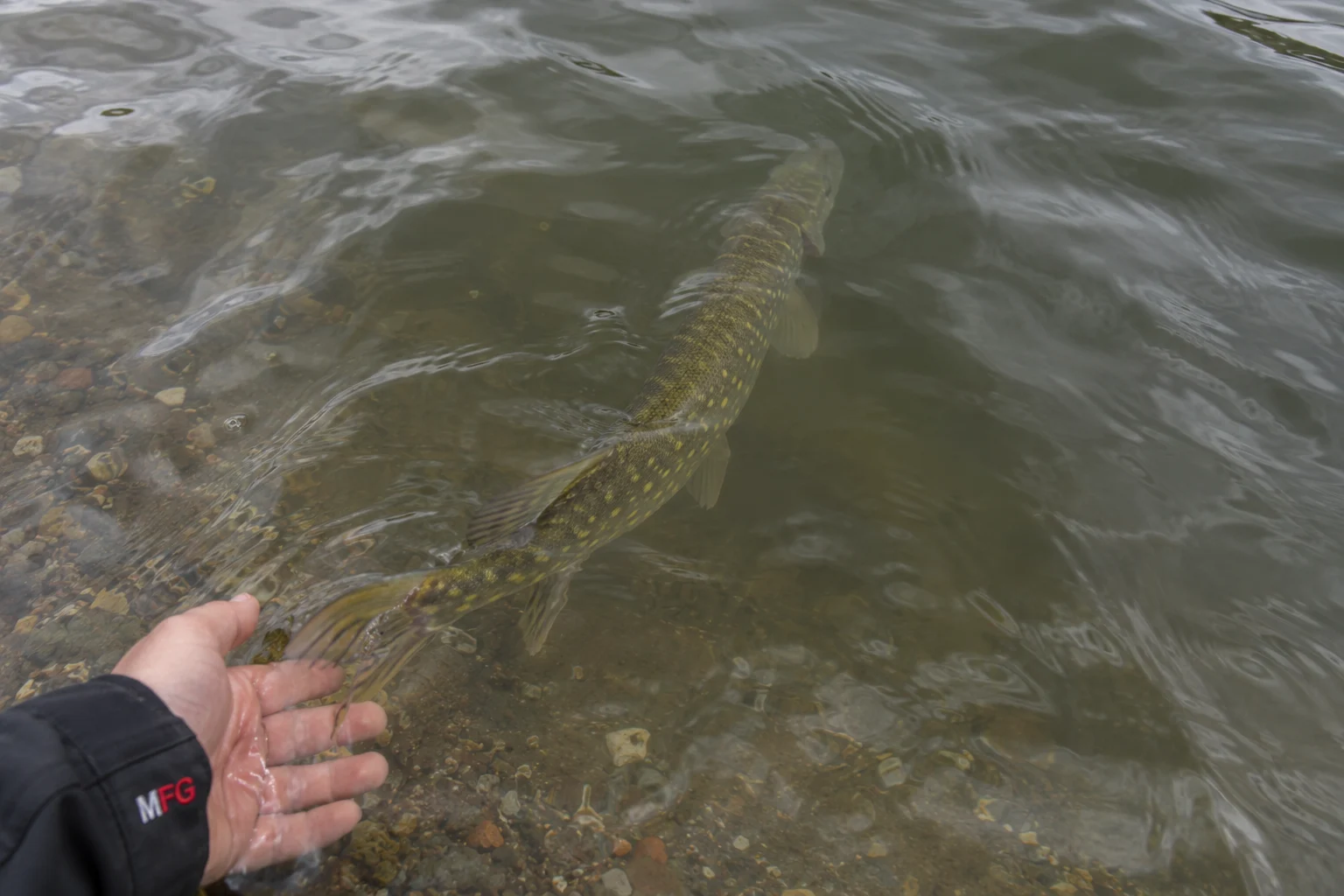
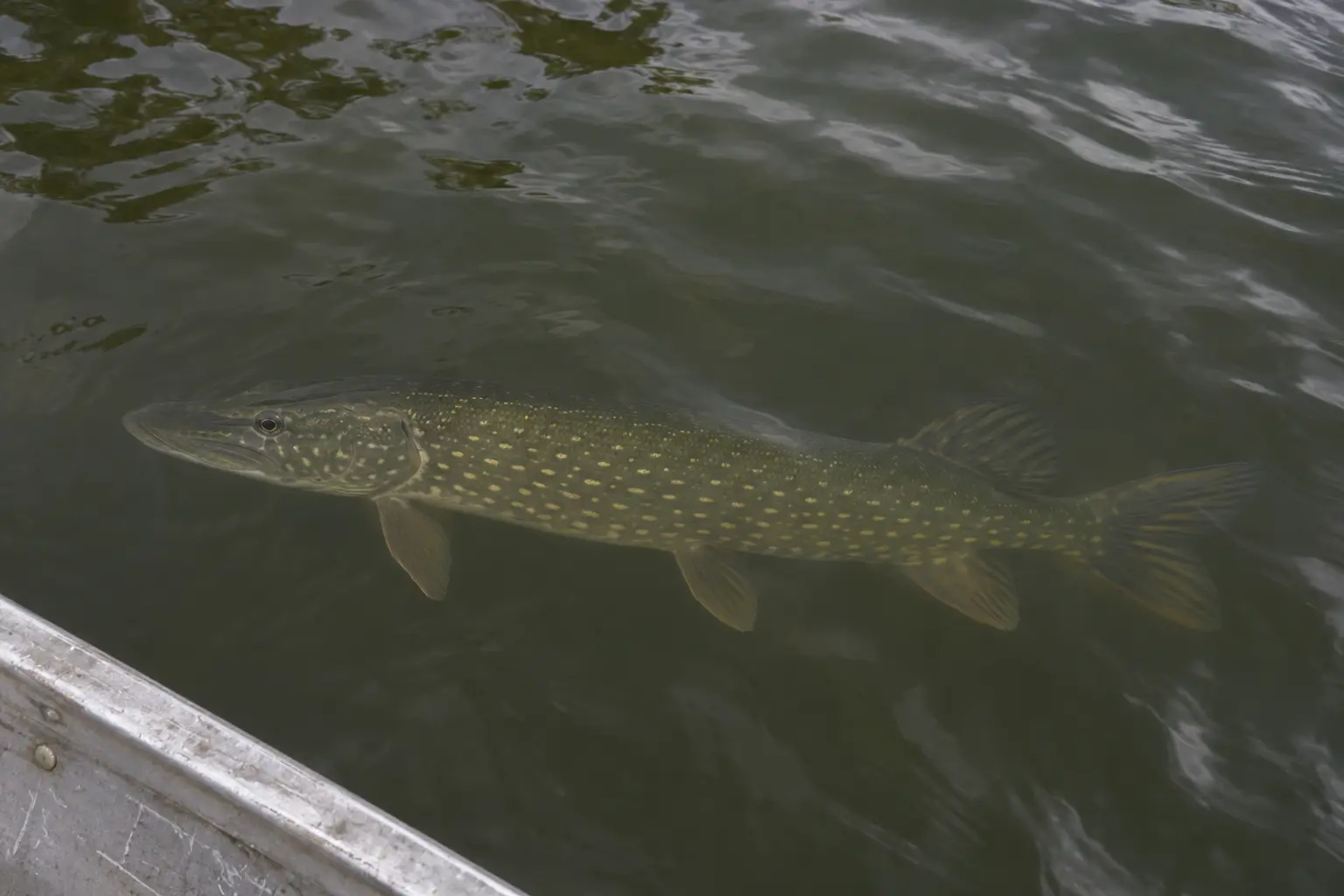
After a long fight, we’ve watched pike hold still beside the boat, just under the surface, their gill covers opening and closing before they swim off. On some of our winter trips, fish have moved away sooner. On warm summer outings, we’ve had fish linger beside the boat longer.
So, do pike survive catch and release? Yes, northern pike can survive catch and release. A fish swimming away tells us it was alive at the moment of release. To find out how it fared afterward, researchers had to keep tracking it.
In one study on Lake Opinicon in Ontario, researchers radio-tagged 40 northern pike in spring, when the water averaged 15.7 °C (60.3 °F), and tracked them for three weeks. None of the tracked fish died during that period. In the first hour after release, pike exposed to air for 300 seconds spent more time resting than pike with no air exposure, and took longer to make their first move than pike exposed for 0 or 60 seconds. A pike can survive the catch and still show changes in behavior after release.
Below, we compare what researchers measured, from hook injuries and bleeding to movement and survival, and how long they followed the fish. An hour of observation can capture the immediate effects. Following fish for days or weeks can reveal deaths that occur later.
Northern Pike Survival After Release: What the Studies Found
How long researchers watch a fish determines what they can learn about its survival. One study counted deaths at landing or during a brief holding period before release. Another used radio tags to follow pike for three weeks after they returned to the lake. The table shows what each study measured, when its observations ended, and where its results stop.
On smaller screens, scroll horizontally to see every column.
| Study | What researchers tested | Observation period | What they found | Limitations |
|---|---|---|---|---|
| Arlinghaus et al. (2008) | Bait type and size, hook location, and bleeding in open water; Kleiner Döllnsee, Germany (June–September 2005) and Lake Opinicon, Canada (May 2006) | At landing; pike that lost equilibrium were held up to 1 hour in lake water before release | 2.4% initial mortality. More severe bleeding was associated with a greater risk of dying during this early period. | No tracking after release, so deaths that occurred later were not measured |
| LaRochelle et al. (2023) | 25 pike, 620–1030 mm (24.4–40.6 in), landed by hand, with a cradle, or with a net | 12 hours after release | No deaths observed. Post-release activity differed with body size and landing method. | Small sample; 12 hours of monitoring cannot detect deaths that occur days later |
| DuBois et al. (1994) | 185 pike caught through the ice in three Wisconsin lakes | 48 hours | Less than 1% mortality with size 4 treble hooks baited with live fish, compared with 33% (8 of 24 pike) with Swedish pike hooks baited with rainbow smelt. | Only 24 fish in the Swedish hook group; hook and bait both differed between groups, so the effect cannot be assigned to one factor |
| Arlinghaus et al. (2009) | 40 radio-tagged pike in four air exposure groups (0, 60, 180, and 300 seconds) at Lake Opinicon, Ontario | 3 weeks after release | No deaths observed. In the first hour, the 300-second group spent more time resting than the 0-second group and took longer to make a first move than the 0- and 60-second groups. Distance moved did not differ significantly. | Spring conditions, water averaging 15.7 °C (60.3 °F); 10 fish per group; warmer summer water was not tested |
These percentages describe the fish and conditions in each study. For example, 2.4% initial mortality tells us how many fish died at landing or during a brief period before release. The study by Arlinghaus et al. (2009) followed fish after release and recorded both survival and changes in movement. Keeping those outcomes separate helps explain why a fish can survive and still show signs of impairment.
The landing-method study also produced a practical recommendation. For pike longer than 775 mm (30.5 in), the authors recommend landing the fish with a net, which shortened fight times, while keeping handling time as short as possible.
Does a Pike Survive If It Swims Away?
A pike that swims away under its own power has made it through the release. The question is what happens once it’s out of sight. In the study by Arlinghaus et al. (2009), researchers tracked radio-tagged pike for three weeks. None of the tracked fish died, and anglers reported catching several of them again during the study. Those recaptures gave the researchers another sign that some fish had resumed feeding.
Not every release is planned. We’ve lost pike to a snapped line with a lure still in their mouths, and we’ve landed pike carrying an old lure from someone else’s break-off. Those fish raise a harder question: what happens to a pike that leaves with hooks still in it?
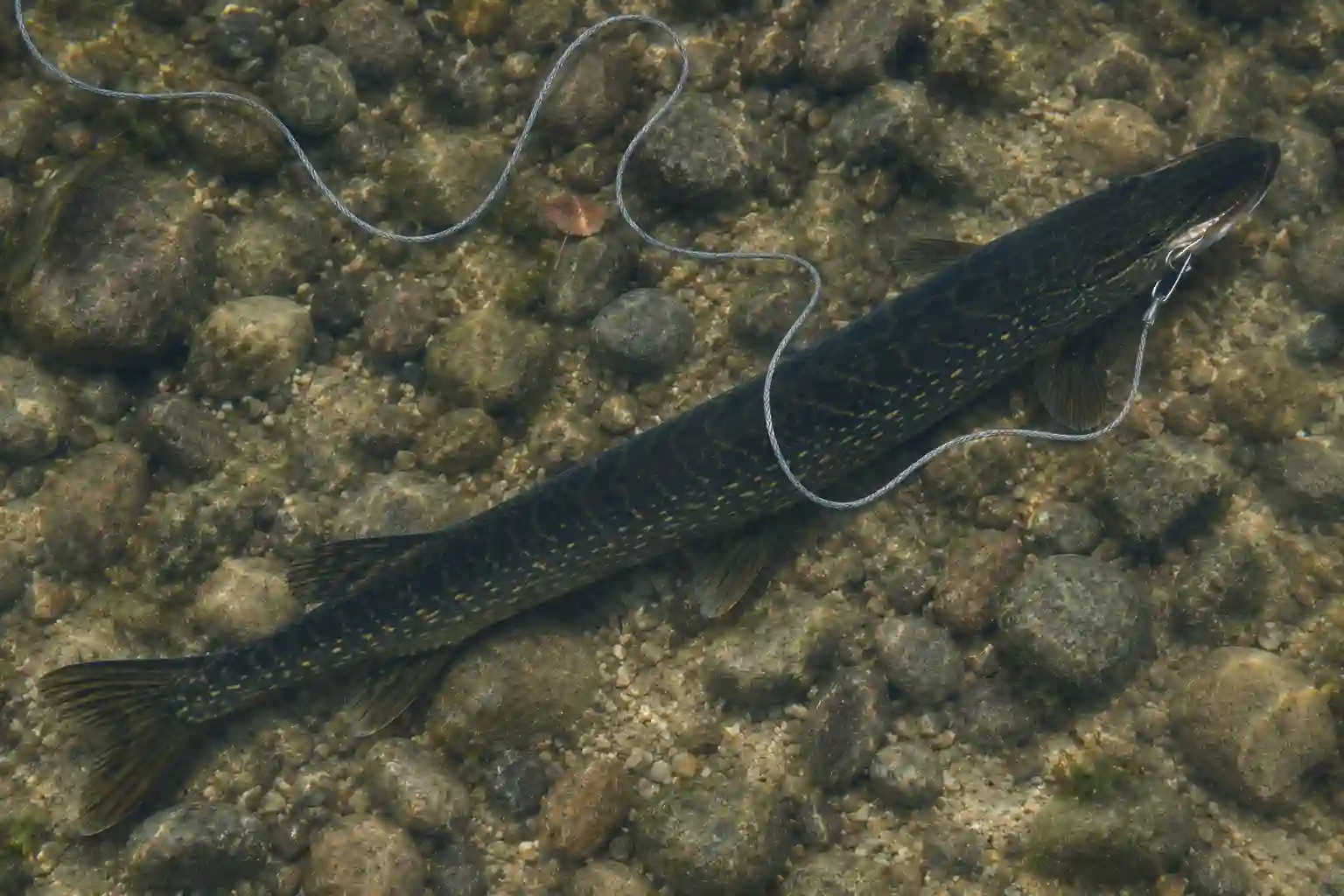
A study by Pullen et al. (2019) simulated exactly that. At Lake Opinicon in summer (June–July 2009), researchers released 51 northern pike, averaging 522 mm (20.6 in), with a lure still attached, and used radio transmitters built into the lures to track them. Three fish died, a mortality rate of 6%. One with a deeply embedded hook died immediately. A second deeply hooked pike died three days after release, and a fish hooked in both the upper and lower jaws died six days after release.
The timing is what makes those cases useful. A 48-hour check would have missed both delayed deaths. When we read a survival figure, the follow-up period tells us how much of the story the researchers could see.
Of the 48 pike that survived, 47 shed their lures within two weeks. Lures took longer to come free when the hooks had barbs or were lodged in the lower jaw. On the water, we use a pike fishing leader to reduce the risk of a bite-off.
Do Pike Survive Catch and Release When Deeply Hooked?
Some do. In the open-water study by Arlinghaus et al. (2008), about 71% of pike hooked in the gills bled, and 25% of all gill-hooked pike died within an hour of capture. Across all 415 pike in the study, 10 died during that early observation period (2.4%). The overall figure includes fish hooked in less vulnerable areas, such as the jaw.
Pike hooked in the gills or throat bled more often than jaw-hooked fish. Across the full sample, bleeding was the only factor statistically linked to initial mortality in the researchers’ analysis. More than 80% of the fish that bled were still alive at the end of the initial observation period. The study did not track them after release.
Hook location varied with bait type and size. Natural bait was more likely to be swallowed deeply than the other baits tested, and 15.4% of the pike caught on it were hooked in the throat. Spoons showed up more often than expected among fish hooked in the gills, while soft plastic shads and jigs showed up more often among fish hooked in the throat and less often among fish hooked in the gills. Baits shorter than 75 mm (3 in) were also more likely to hook pike in the gills.
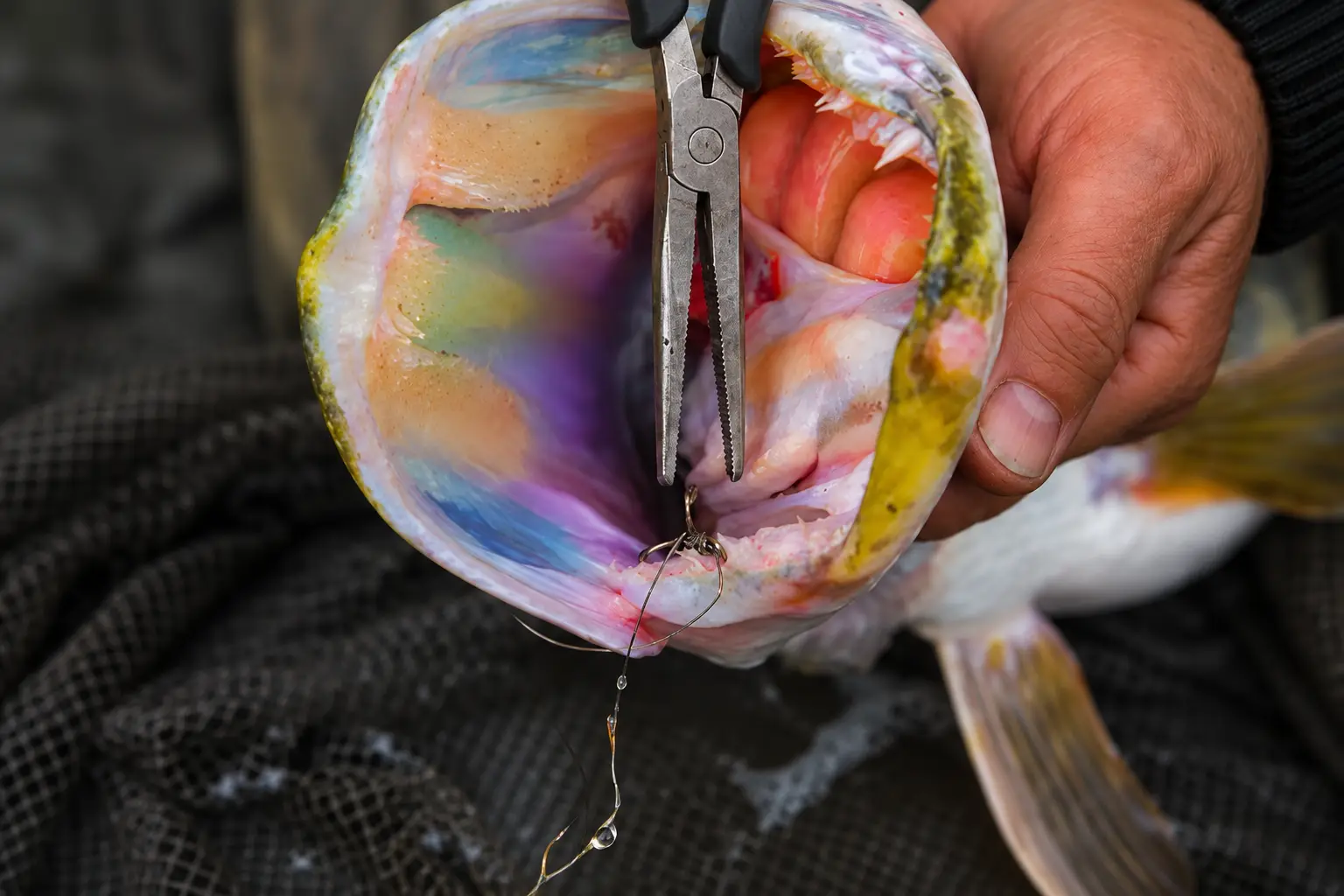
On our waters, most of the deeply hooked pike we’ve dealt with took a dead bait on a tip-up or a freespool rig. A pike will often take the bait crosswise and swim off before turning it to swallow headfirst. Small soft plastics on a plain jig head have given us deep hookups too, especially in cold water. With jerkbaits and crankbaits it happens less often, though a rear treble can still catch in the throat. Those experiences are one reason we pay close attention to hook placement in our tip-up setup for pike.
In the Wisconsin ice-fishing study by DuBois et al. (1994), seven of the nine pike that died had been hooked in the esophagus, stomach, or gills. Eight of the nine were caught on Swedish pike hooks. Among fish that bled at capture, 84% survived the 48-hour observation period. The researchers did not examine the dead fish internally to establish a cause of death.
Bleeding and deep hooking raise the risk, but most bleeding fish in both studies were still alive when observation ended. Neither study followed them long enough to say what happened next.
How Does Time Out of Water Affect Pike After Release?
Time out of water can change how a pike moves after release. In the study by Arlinghaus et al. (2009), researchers tested 0, 60, 180, and 300 seconds of air exposure in water that averaged 15.7 °C (60.3 °F). During the first hour after release, pike in the 300-second group spent more time resting than fish in the 0-second group. They also took more than 15 minutes on average to make their first move, longer than fish in the 0- and 60-second groups. The difference in total distance moved during that hour was not statistically significant.
A 2022 study using motion sensors tested shorter intervals: 0, 15, 30, 60, and 180 seconds. During the first minute after release, pike released immediately were more active than pike held out of water. The sensors captured what the fish did immediately after release. That comparison did not measure how many fish survived in the days that followed.
The two experiments measured different parts of recovery. One picked up differences in movement within the first minute. The other showed how long pike took to start moving and how much of the first hour they spent still. Both tell us how pike responded under the conditions tested. Neither establishes a survival cutoff in seconds.
Do Pike Survive Catch and Release Through the Ice?
Most do. In the Wisconsin study summarized above, 176 of 185 northern pike survived the 48-hour observation period. Results differed between the two hook-and-bait combinations: about one in three pike caught on Swedish pike hooks baited with smelt died, compared with fewer than 1% of those caught on treble hooks baited with live fish. Because the hook and the bait both changed, we can’t say how much of that difference came from the hook alone. More recent studies look at what happens before a fish reaches the hole and how it behaves after it goes back under the ice.
In a 2020 tip-up study, researchers compared hook types and waited anywhere from 0 to 7 minutes after a strike before setting the hook. They recorded 142 bites and landed 65 pike. Longer waits were associated with deeper hook placement and more fish dropping the bait. None of the landed pike swallowed the hook completely. The researchers measured where the hooks lodged, so the study gives no survival rate for each waiting period.
Hook choice also changed the kinds of injuries researchers saw. In a 2025 study of 221 pike caught over three winters, rigs with multiple trebles landed fish more often but took longer to unhook and caused more foul hooking, where the hook catches outside the mouth. Deep hooking was uncommon overall and occurred most often with the single-treble quick-strike rig and the circle hook. Foul hooking and deep hooking are different injuries, so the researchers counted them separately.
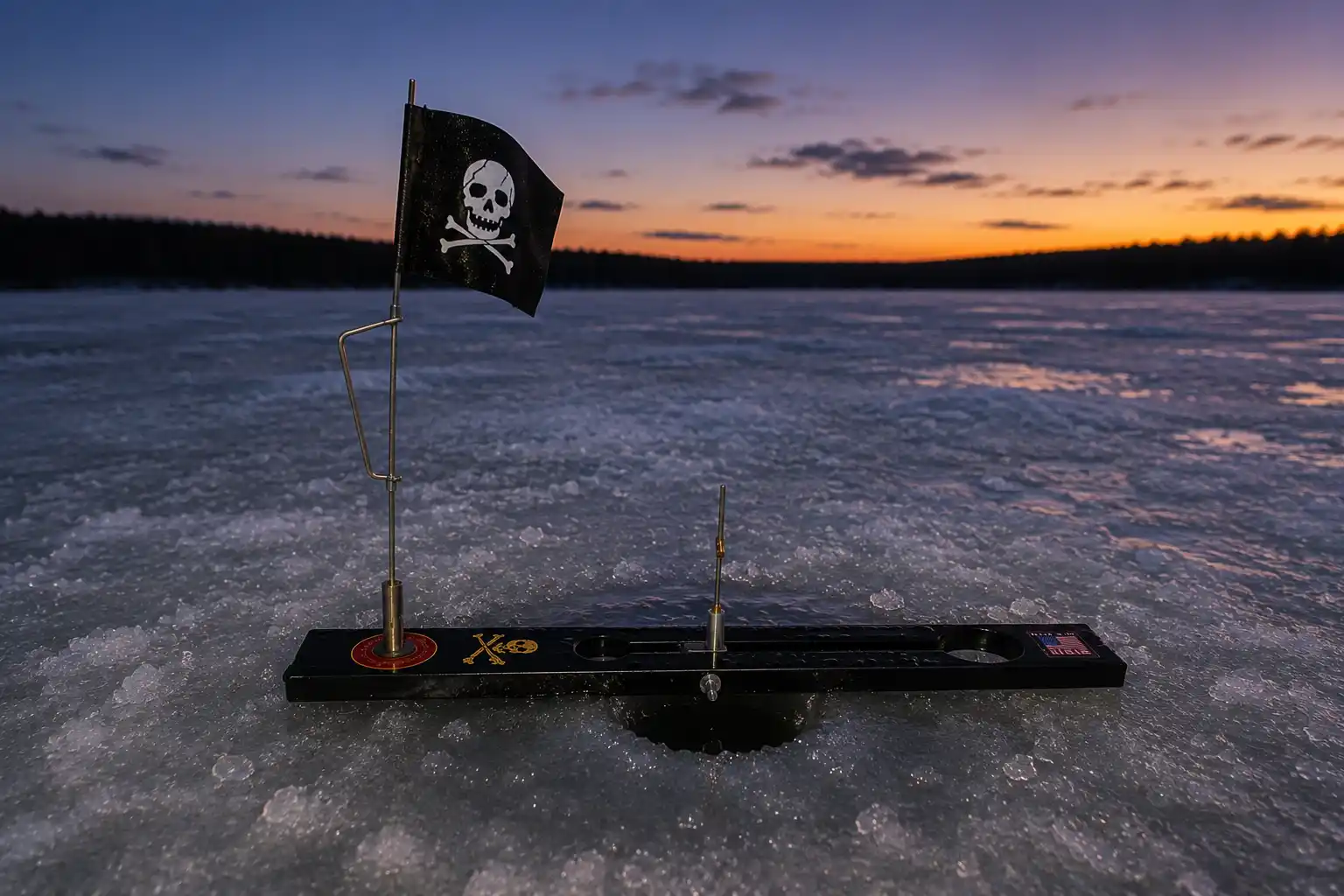
On the ice, we set the hook fast. Once the flag goes up and the spool stops or slows, we usually give the pike 10 to 15 seconds. When it has taken line and paused, or we feel slight resistance as we tighten by hand, we set hard.
We run quick-strike rigs on dead bait, with two small trebles or a double and a treble, one near the head and one toward the back or tail. Because the hooks sit on the outside of the bait, we can set as soon as the pike starts to turn it, and most of our fish end up hooked in the jaw or the corner of the mouth. A single large treble pushes you to wait until the bait is swallowed, and that is where deep hooking starts.
Another team looked at what happened once the fish were back under the ice. In a 2022 winter study, researchers compared pike exposed to air for 0, 2, or 5 minutes. They detected no difference in movement among the groups during 30 minutes of monitoring. That result describes how the fish moved during the first half hour. Survival over the next few days was outside the study’s observation window.
Air on the ice is a different problem from air in summer. On cold, windy days, we’ve seen ice start to form on a pike quickly once it’s out of the hole. So we leave the fish in the water until the unhooking mat and hook remover are out of the warm bag and ready. Measuring, a quick photo, and unhooking take us 30 to 45 seconds, and the pike never goes down on bare, frozen ice.
Do Pike Survive After Being Held on a Stringer?
Some do, but a 2023 study by Madden et al. found much higher mortality among pike held on a stringer, a cord or metal chain used to keep caught fish in the water. The researchers caught 168 northern pike in total. Of those, 104 were held for two hours on one of four stringer types, cord or metal, passed through either the gill cover or the lower jaw. A control group of 27 pike spent the same two hours in an aerated tank.
During the 48 hours after release, 27% of the pike held on stringers died, compared with 7% of the control fish. Mortality was higher when the stringer passed through the gill cover (37%) than through the lower jaw (17%). The worst result came from a cord through the gill cover: 14 of 25 pike in that group died. Stringer-held fish also showed more injuries, more reflex impairment, and higher blood lactate than the controls.
Based on those results, the authors recommend that a pike placed on a stringer should count toward the daily bag limit, because releasing it later does not mean it will survive. The figures apply to pike held for two hours under the conditions of the experiment.
What the Research Means for Pike Anglers
Northern pike can survive catch and release, and some are caught again. The studies we reviewed also found that hook injuries and bleeding can affect a fish’s chances, and that time out of water can change how it moves after release. When we read a survival percentage, we look at how the fish were caught, where they were hooked, and how long the researchers followed them.
Those findings shape how we fish. On tip-ups, we set the hook quickly, because longer waits led to deeper hooking. We rig dead bait with the hooks on the outside of the bait, so we never have to wait for a pike to swallow it. We keep the fish in the water until our pike fishing pliers and the rest of our tools are ready, and we keep any time in the air short, especially on the ice in freezing wind. A pike we plan to release never goes on a stringer.
For the full process of landing, unhooking, and releasing a fish, see how to handle pike safely.
Northern Pike Catch-and-Release FAQ
What percentage of northern pike survive catch and release?
There is no single survival percentage that applies to every catch, but most pike in the studies we reviewed were still alive when observation ended. In an open-water study by Arlinghaus et al. (2008), 405 of 415 pike survived the initial observation period after capture. In a Wisconsin ice-fishing study, 176 of 185 pike survived 48 hours. In a telemetry study by Pullen et al. (2019), 48 of 51 pike survived the tracking period. Studies used different gear and followed fish for different lengths of time. A percentage measured over 48 hours tells us how many fish were alive at that point.
Can a northern pike survive if it bleeds after being hooked?
Yes. In a Wisconsin ice-fishing study, 84% of the pike that bled at capture survived the 48-hour observation period. In a separate open-water study, bleeding was the only factor statistically linked to initial mortality. Bleeding points to a more serious injury, but most of the bleeding fish in both studies were still alive when observation ended.
Can a released pike bite again?
Yes. Anglers recaught several radio-tagged pike during the three-week study by Arlinghaus et al. (2009). Those recaptures showed that at least some fish resumed feeding after release.
How long can a pike stay out of water?
The studies we reviewed do not establish a safe limit in seconds. They measured how air exposure affected movement over short periods after release, not a point at which survival drops.
Does a pike survive after being kept on a stringer?
Many do not. In a 2023 study by Madden et al., 27% of pike held on stringers for two hours died within 48 hours of release, compared with 7% of fish held in an aerated tank. The authors recommend that a pike placed on a stringer should count toward the daily bag limit.
How to Cite This Page
To cite our comparison of northern pike catch-and-release studies, use the reference below:
Jonic, A. (2026). Do Pike Survive Catch and Release? What Research Shows. Master Fishing Guide (MFG). masterfishingguide.com/do-pike-survive-catch-and-release/
For findings from a specific study, cite the original paper linked in the article.