

Pike vs Muskie: How to Tell the Difference: Complete Identification Guide
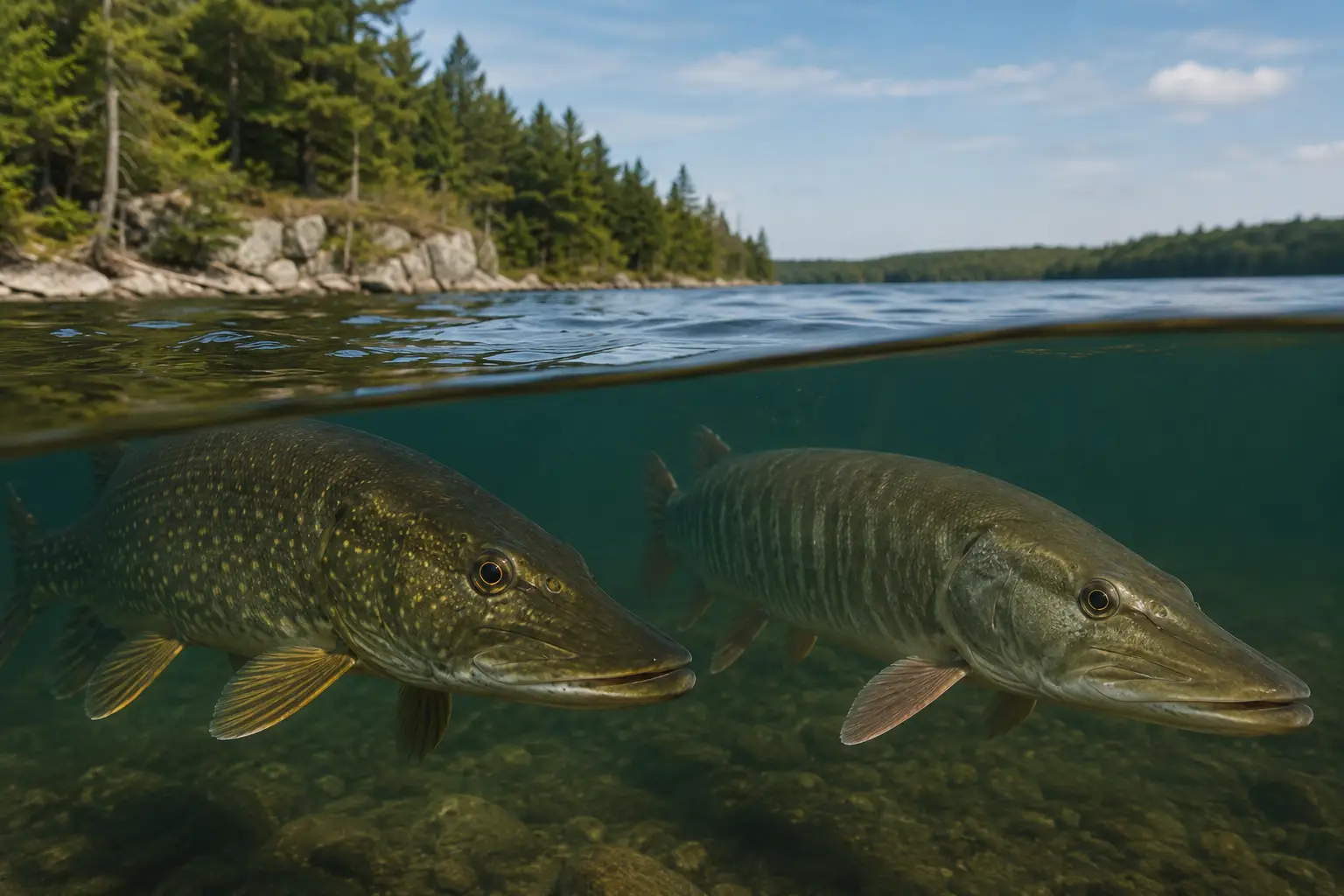
If you’ve ever searched for pike vs muskie, you’re certainly not alone. Even experienced anglers sometimes mistake one for the other, especially on lakes where both species share the same water. At first glance they can look remarkably similar, but a few reliable physical features make it possible to tell them apart in just a matter of seconds.
After years of targeting both northern pike and muskies on waters where the two species coexist, we’ve learned that the differences are far more reliable than most anglers assume—once you know exactly where to look.
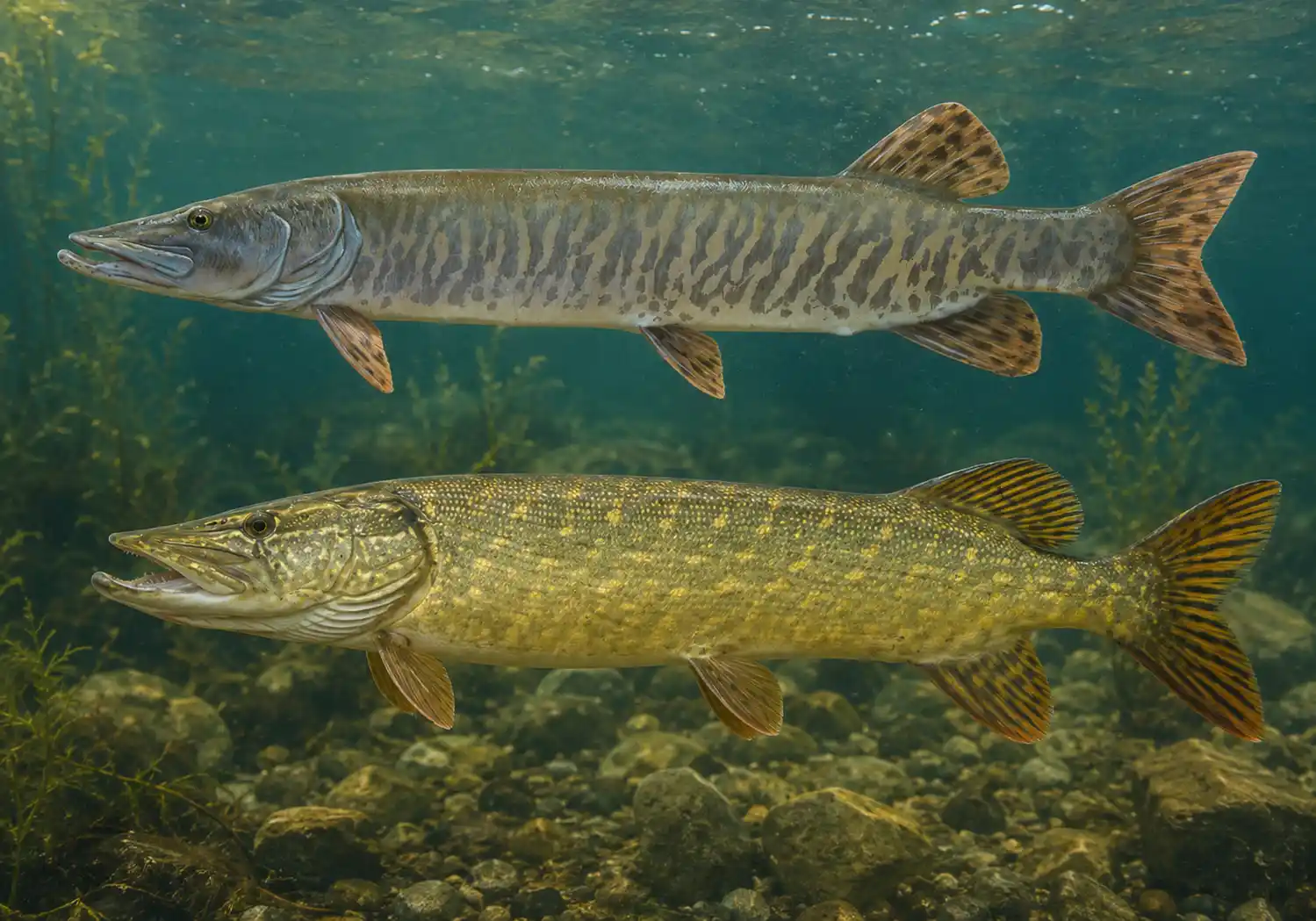
The fastest way to tell them apart is by checking the body markings, tail shape, and the number of sensory pores beneath the lower jaw. Northern pike typically have light-colored spots on a darker body, while muskies usually display dark bars or spots on a lighter background. A muskie also has 6–9 sensory pores on each side of the lower jaw, compared to 4–5 pores on a northern pike, along with a more deeply forked tail.
In this guide, you’ll learn exactly how to tell the difference between pike and muskie using clear identification features, avoid the most common mistakes anglers make, and understand why correctly identifying these two apex predators matters both on the water and under local fishing regulations.
Pike vs Muskie Comparison Table
| Feature | Northern Pike | Muskie |
|---|---|---|
| Scientific Name | Esox lucius | Esox masquinongy |
| Body Markings | Light spots on a darker body | Dark bars or spots on a lighter body |
| Tail Shape | Rounded, moderately forked | Deeply forked, pointed tips |
| Lower Jaw Pores | 4–5 pores per side | 6–9 pores per side |
| Typical Length | 16–22 in (40–55 cm) | 30–50 in (76–127 cm) |
| Trophy Size | 40+ in (102+ cm) | 50+ in (127+ cm) |
| Typical Habitat | Weedy lakes, bays, rivers, and slow-moving backwaters | Large lakes, reservoirs, and connected river systems |
| Distribution | North America, Europe, and Asia | Native to North America |
| Aggressiveness | Generally more willing to strike | Often more selective and unpredictable |
| Difficulty to Catch | Moderate | High (“the fish of 10,000 casts”) |
| Fight Style | Powerful headshakes and short, explosive runs | Often longer, less predictable fights, especially in larger fish |
Pike vs Muskie Appearance: The Key Visual Differences
The most obvious difference in a pike vs muskie comparison is the overall appearance of the fish. While both belong to the Esox family and share the same long, torpedo-shaped body, several physical characteristics make it possible to distinguish them with confidence. The most reliable visual clues include the body markings, body shape, tail, head, and cheek scale pattern.
A simple way to remember the difference is that northern pike usually have light markings on a darker body, while muskies typically have dark markings on a lighter body. Although this rule is accurate in many situations, it should never be used as the only identification method. Water clarity, fish age, lighting conditions, and natural color variation can all make the markings appear less obvious.
Body Shape and Color
Both species have streamlined bodies built for explosive acceleration and ambush attacks, making them easy to confuse at first glance. Northern pike generally appear slightly deeper and stockier through the middle of the body, while muskies usually have a longer, leaner profile with a smoother transition toward the tail.
In hand, that difference is often easier to feel than to see. A northern pike usually feels thicker through the shoulders, while a muskie tends to feel noticeably longer and slimmer for its length.
Northern pike are typically dark olive or green across the back with lighter sides and a white or cream-colored belly. Their fins often display orange, reddish, or brown tones with darker markings. Muskies show much greater color variation depending on the strain and the water they inhabit. They may appear silver, light green, bronze, or tan with darker markings across a lighter background.
Body Markings: Spots vs Bars
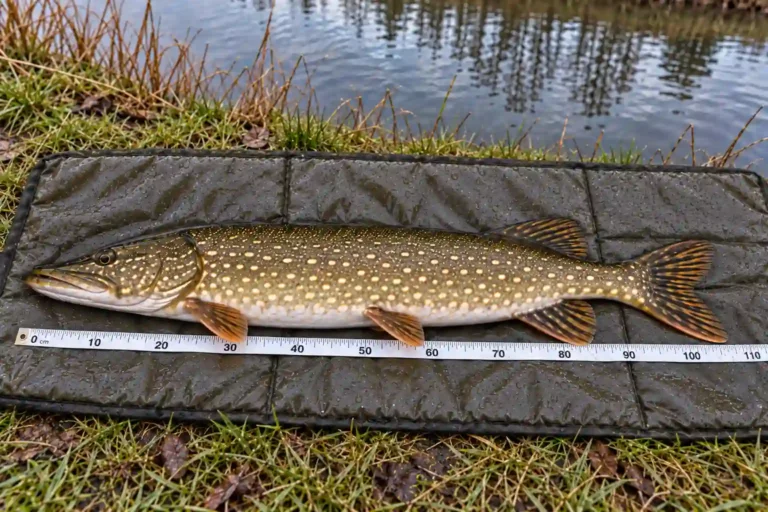
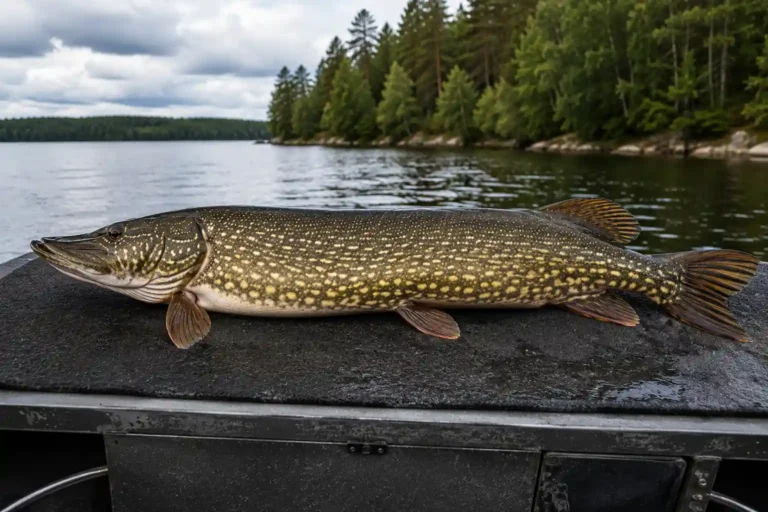
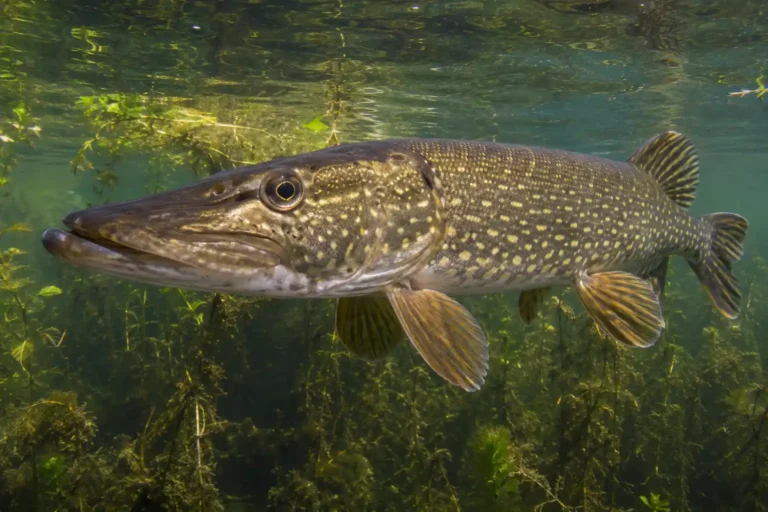
The body pattern is usually the quickest feature anglers notice. Northern pike almost always display light-colored oval or bean-shaped spots scattered across a darker body. Muskies usually show dark vertical bars, blotches, or spots over a lighter background.
Despite this well-known rule, markings alone should never be considered conclusive. Some muskies have very faint or almost invisible bars, while younger fish often display stronger markings than older individuals. Likewise, water conditions, mud, and fish coloration can make either species appear different from the textbook examples.
When the markings are difficult to interpret, continue checking the tail, lower jaw pores, and cheek scale pattern before making an identification.
Tail Shape
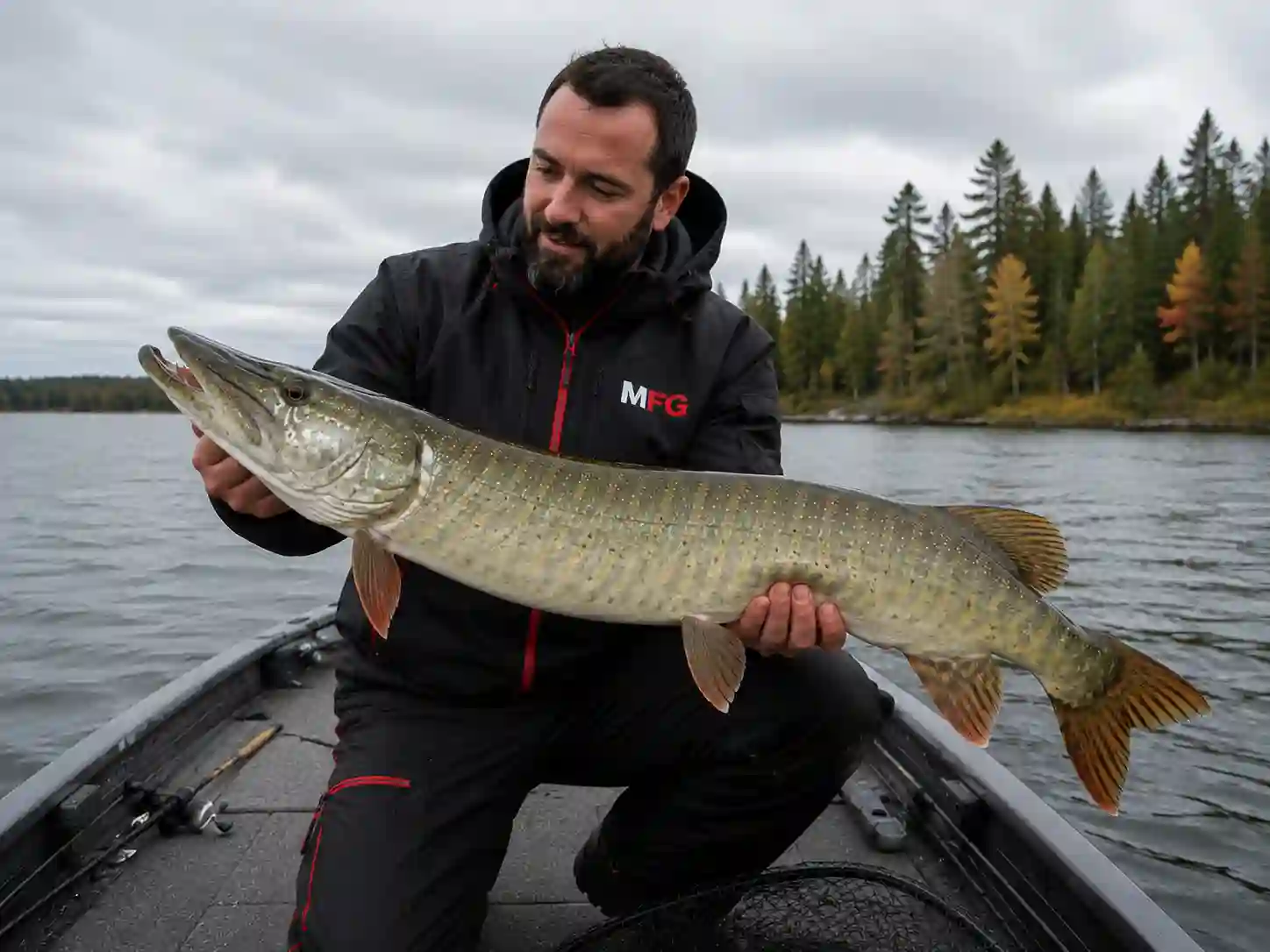
The tail is one of the fastest features to examine while the fish is still in the net. A northern pike generally has a broader tail with a moderate fork and more rounded outer tips.
We check the tail before the fish even comes out of the net. It takes only a second, and it’s often the fastest reliable clue when the body markings aren’t immediately obvious.
A muskie usually has a noticeably deeper fork with narrower, sharper points, giving the tail a more angular appearance. Although this difference becomes much easier to recognize after seeing both species side by side, it remains one of the quickest visual identification methods in the field.
Head and Facial Features
Both fish have flattened, duckbill-shaped heads filled with sharp teeth, but there are subtle differences. A muskie often appears to have a slightly longer, narrower head with a more pointed snout, while a northern pike generally has a broader, heavier-looking head and snout.
Head shape can support an identification, but it should never be used on its own. Fish size, viewing angle, and natural variation can easily make one species resemble the other.
Cheek Scale Pattern
Another useful identification feature is the pattern of scales covering the cheek and gill cover. On a northern pike, both the cheek and the gill cover are completely covered with scales. On a muskie, both the cheek and the gill cover are scaled only on the upper half, with smooth, bare skin below.
This is one of the last features most anglers think to check, but it’s often the one that confirms the identification when the markings leave any doubt.
Although this feature takes a closer look than body markings or tail shape, it provides valuable confirmation when the fish has faded markings or unusual coloration. Combined with the tail shape and the number of sensory pores beneath the lower jaw, it becomes one of the most reliable ways to distinguish a northern pike from a muskie.
How to Count Lower Jaw Pores to Identify Pike and Muskie
If the body markings leave you uncertain, the sensory pores beneath the lower jaw provide one of the most dependable ways to distinguish a northern pike from a muskie. Unlike body color or markings, the number of pores does not change with age, water clarity, or seasonal coloration.
A northern pike has 4–5 sensory pores on each side of the lower jaw, while a muskie has 6–9 pores per side. Counting these pores takes only a few seconds and is widely considered one of the most reliable identification methods when the fish cannot be identified confidently by appearance alone.
The pores form part of the fish’s sensory system, allowing it to detect subtle water movement and vibration from nearby prey. Although they are small, they are usually easy to see at close range with good lighting.
We rely on jaw pores whenever the markings or tail shape leave any doubt. Instead of guessing based on color alone, a quick pore count provides a much more dependable answer before the fish is safely handled and released.
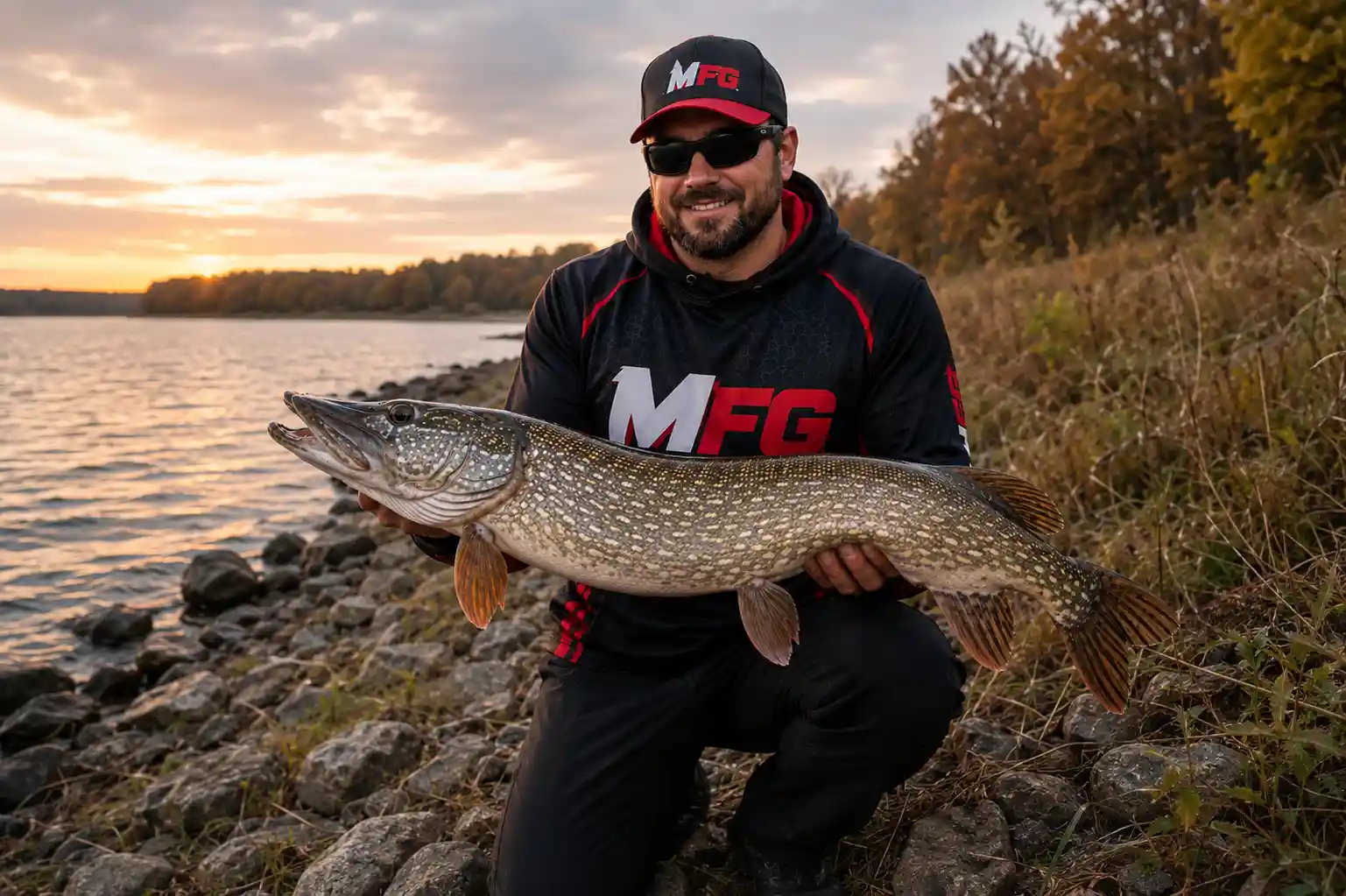
To count them correctly, look along one side of the lower jaw rather than across the entire chin. Count only the visible pores on a single side, then compare the total with the identification guide above. If you count 4–5 pores, the fish is a northern pike. If you count 6–9 pores, it’s a muskie.
While no single feature should be relied on in complete isolation, combining the jaw pores with the body markings, tail shape, and cheek scale pattern provides an extremely accurate way to identify either species in the field.
How to Tell a Pike from a Muskie in Seconds
If you’re standing on the bank or in the boat wondering whether you’ve caught a northern pike or a muskie, don’t rely on just one feature. Instead, work through this quick checklist. In most cases, these five checks are all you need to identify the fish with confidence.
- Look at the body markings. Northern pike usually have light spots on a darker body, while muskies typically have dark bars or spots on a lighter background.
- Check the tail. Pike have a broader tail with a moderate fork, whereas a muskie’s tail is more deeply forked with sharper outer tips.
- Count the lower jaw pores. A northern pike has 4–5 pores on each side of the lower jaw, while a muskie has 6–9 pores. This is one of the most reliable identification methods.
- Inspect the cheek and gill cover. Northern pike have scales covering both completely, while a muskie has scales only on the upper half, leaving the lower portion smooth.
- Use head shape only as supporting evidence. A muskie often appears longer and narrower through the head, while a northern pike usually looks broader. This feature should never be used on its own.
No single feature should be used on its own. If the markings leave any doubt, or if two features seem to disagree, the jaw pores and cheek scale pattern are the most reliable way to settle the identification.
Common Mistakes When Identifying Pike and Muskie
Even experienced anglers occasionally mistake a northern pike for a muskie or vice versa. Most identification mistakes happen because people focus on a single feature instead of looking at the fish as a whole.
One of the most common mistakes is relying only on body color. Water clarity, light conditions, and the fish’s age can all change how the markings appear. A pike caught in dark, stained water may look much darker than expected, while some muskies show faint or broken markings that can easily be mistaken for spots.
Size can be misleading as well. While muskies generally grow much larger than northern pike, smaller muskies often overlap in size with average pike. A 32-inch fish could realistically be either species depending on where it was caught.
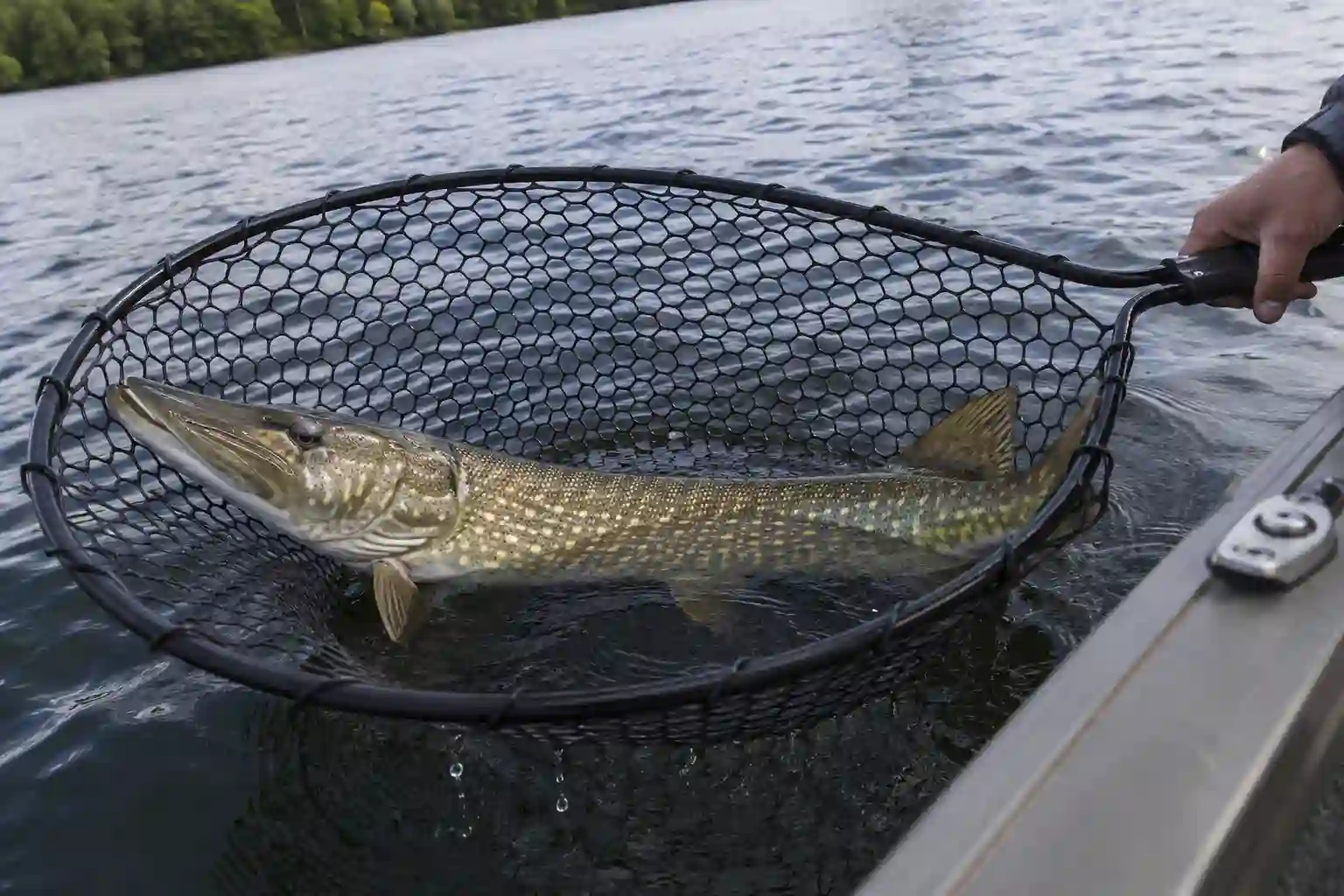
We learned that lesson ourselves one autumn afternoon on Mille Lacs when a long, heavily built fish followed a jerkbait to the side of the boat. At first glance, everyone was convinced it was one of the biggest northern pike we’d seen that season. It wasn’t until the fish settled in the net that we counted the lower jaw pores and noticed the partially scaled cheek. It turned out to be a muskie. Since then, we’ve made a habit of checking several identification features before calling the species.
The easiest way to avoid mistakes is to slow down for a few seconds and check multiple characteristics. Body markings, tail shape, lower jaw pores, and cheek scale pattern together provide a far more reliable identification than any single feature on its own.
How Big Do Pike and Muskie Get?
Although northern pike and muskies can look similar, their maximum size is very different. Muskies are the larger of the two species and have the potential to reach lengths and weights that only exceptional northern pike ever achieve.
A typical adult northern pike measures between 16 and 22 inches (40–55 cm), although fish over 30 inches are considered a strong catch in productive waters. Trophy pike often exceed 40 inches and typically weigh between 16 and 20 pounds, with exceptional fish going higher.
Muskies typically measure 30 to 50 inches (76–127 cm), with mature fish frequently weighing more than 20 pounds. Trophy muskies over 50 inches are considered a lifetime catch for most anglers — the current IGFA all-tackle length world record, a 54.33-inch muskie, was caught in 2024 on Mille Lacs Lake, the same water where we’ve seen the identification challenges described above.
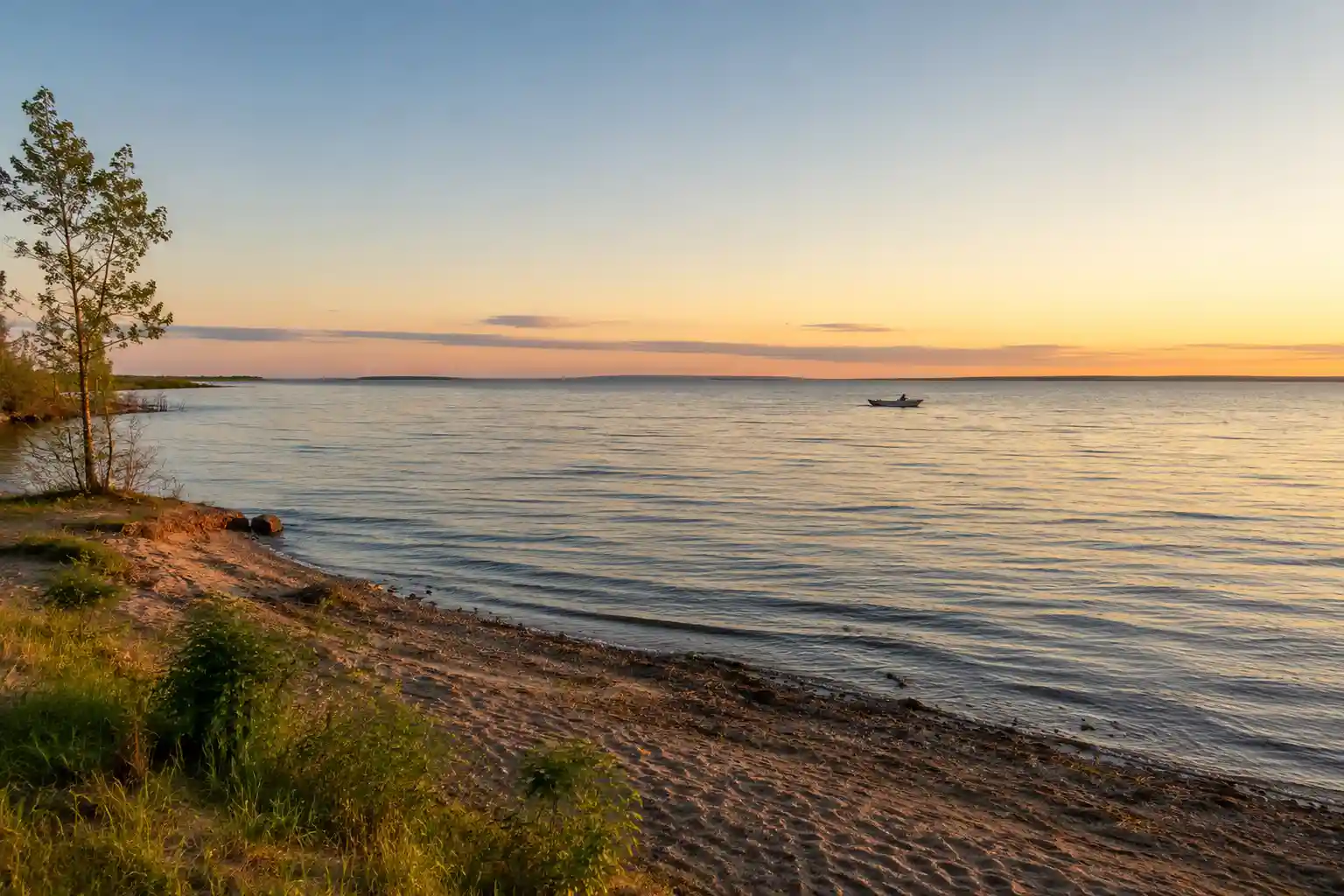
We’ve had our own moments on that water too — nothing close to a record, but a 44-inch muskie we netted a few seasons back still ranks as one of the best fish we’ve handled on Mille Lacs.
Despite these differences, size alone should never be used to identify the species. A smaller muskie can easily be mistaken for a large northern pike, especially when both species inhabit the same lake or river.
If you’re trying to identify the fish rather than estimate its age or trophy potential, always rely on physical characteristics instead of length or weight. Body markings, lower jaw pores, tail shape, and cheek scale pattern remain much more reliable than size.
Where Do Pike and Muskie Live?
Northern pike and muskies are both native to North America and often inhabit the same lakes and river systems. Because their ranges overlap across much of the northern United States and southern Canada, anglers regularly encounter both species on the same trip.
Northern pike are generally more widespread and adapt well to a variety of habitats, including shallow lakes, marshes, slow-moving rivers, and weedy backwaters—the same water types covered in our complete pike fishing guide. Muskies prefer many of the same waters but are less common overall and tend to thrive in larger lakes and river systems with healthy forage populations.
Some of the best-known fisheries where both species may be encountered include Mille Lacs Lake, Lake of the Woods, the St. Lawrence River, and parts of the Ottawa River. In waters like these, it’s not unusual to hook a fish expecting one species only to discover it’s the other once it’s alongside the boat.
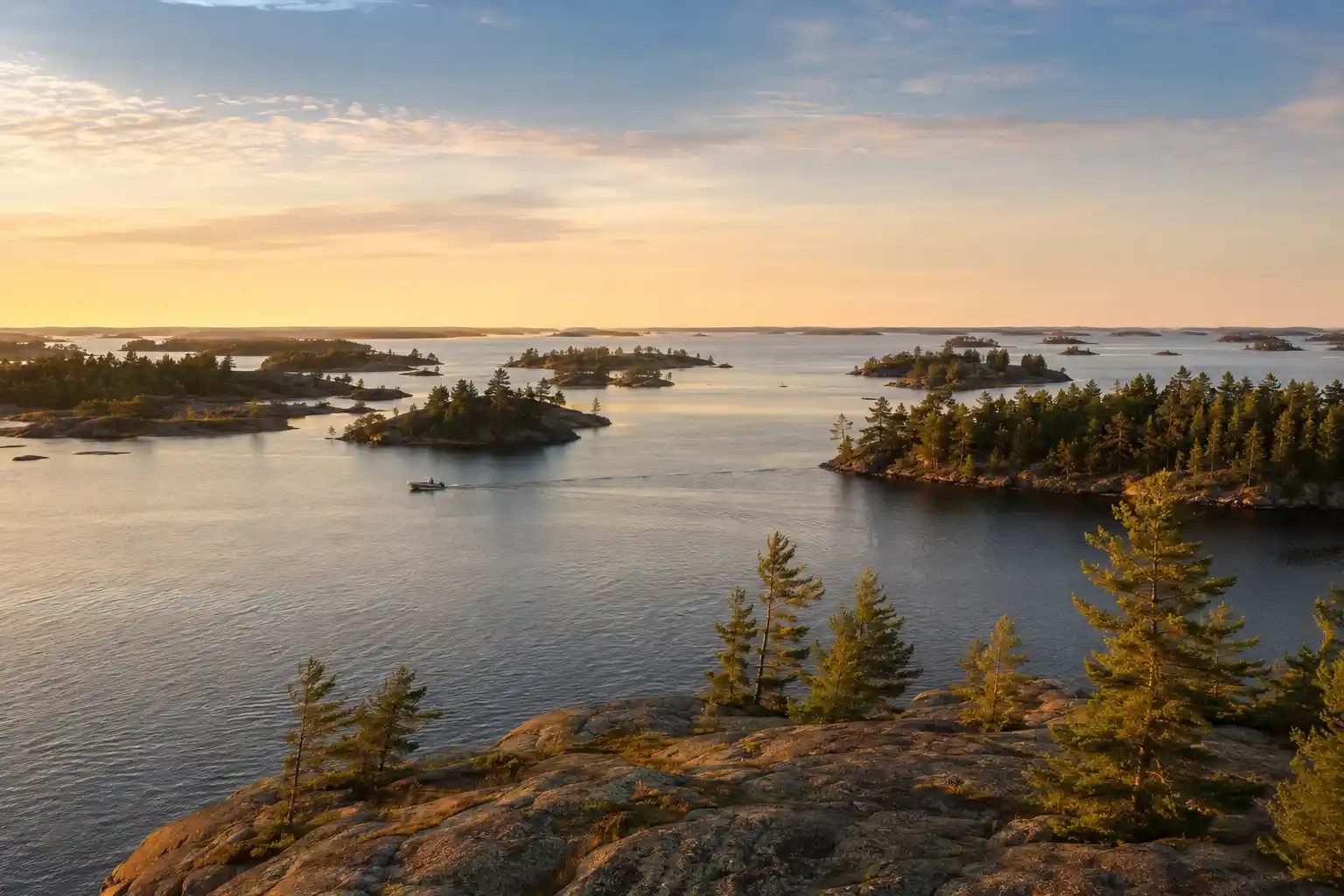
Outside North America, northern pike are widely distributed across Europe and northern Asia. Muskies, however, are native only to North America, although they have been introduced into a limited number of waters outside their historic range.
Where both species coexist, learning to identify them correctly becomes especially important. Similar habitat, overlapping sizes, and comparable feeding behavior mean that anglers often need to rely on physical characteristics rather than location alone.
How Do Pike and Muskie Behave?
Although northern pike and muskies share many physical characteristics, their behavior often feels surprisingly different once you’ve spent time targeting both species. They’re both ambush predators, but they don’t always respond to the same situations in the same way.
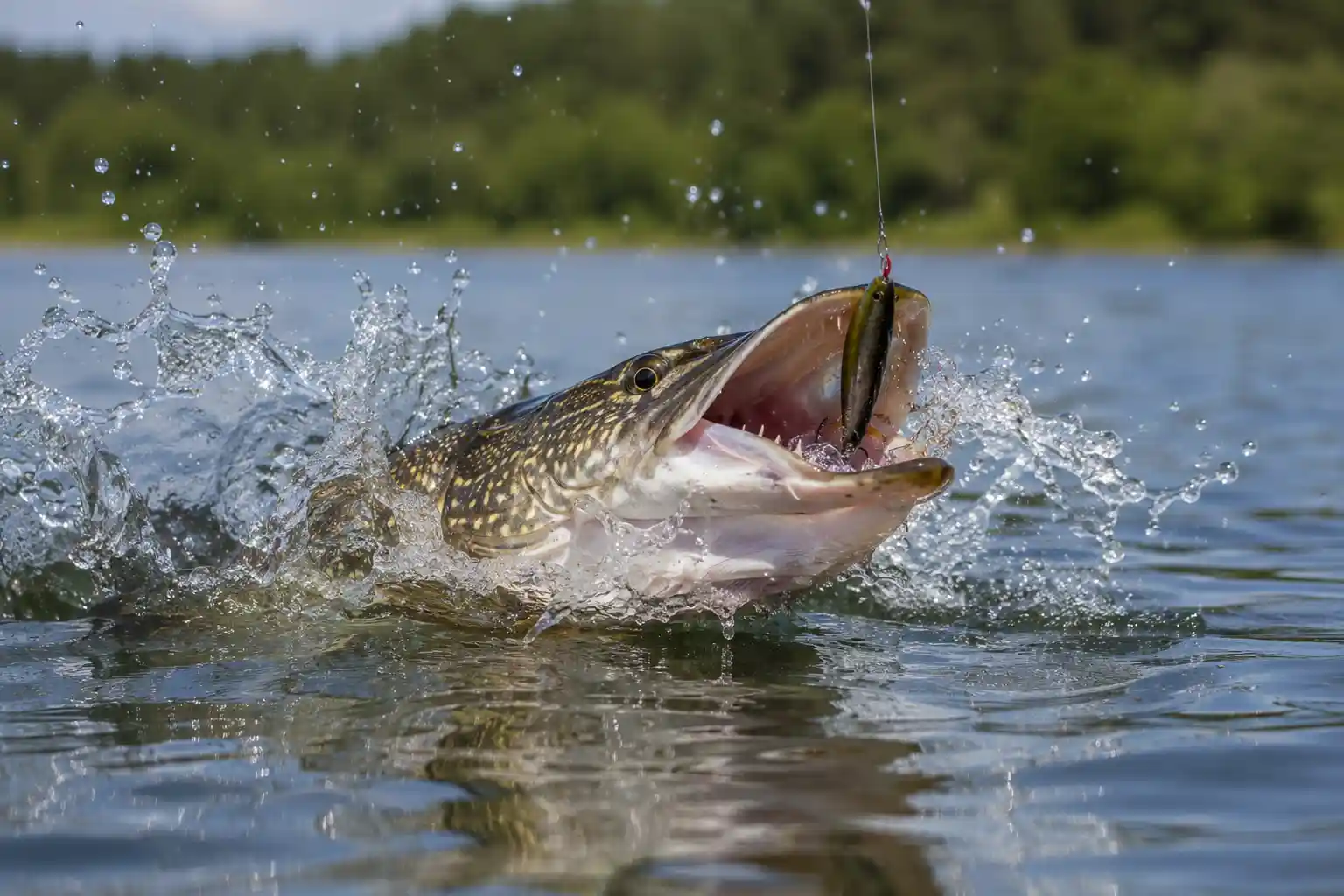
Northern pike are generally more opportunistic feeders. They readily attack a wide range of prey, including fish, frogs, waterfowl, and even small mammals when the opportunity presents itself. Pike also tend to react aggressively to fast-moving lures, making them feel more predictable during a typical day on the water.
Muskies are often more selective. They frequently inspect a lure before committing and are well known for following baits without striking. In our experience, pike are simply more aggressive — they commit fast and rarely hesitate, while muskies hang back, inspecting a lure and losing interest if something doesn’t look quite right. While they can be incredibly aggressive, many anglers find that convincing a muskie to bite requires more patience and persistence than targeting northern pike.
Both species spend much of their time hunting alone rather than in groups, relying on camouflage and short bursts of speed to ambush prey. Despite their similar hunting strategy, pike often appear more willing to capitalize on an easy feeding opportunity, while muskies are more likely to ignore presentations that don’t look convincing.
These are general behavioral tendencies rather than fixed rules. Individual fish can behave very differently, which is why experienced anglers avoid judging a species based on behavior alone. Physical identification features remain the most reliable way to tell a pike from a muskie.
Many of these behaviors change throughout the year. Our winter pike behavior guide breaks down exactly how feeding patterns shift once water temperatures drop.
Do Pike or Muskie Fight Harder?
Both northern pike and muskies are powerful predators capable of explosive strikes, but the fight that follows often feels quite different. While every fish is unique, experienced anglers quickly notice distinct fighting styles between the two species.
Northern pike usually hit hard and fight aggressively from the start. Fast runs, violent headshakes, and sudden changes of direction are common, especially during the first few moments after the hookset. Many pike are landed surprisingly quickly—often in under a minute on appropriately matched tackle—before the fish gradually tires.
Muskies often rely more on their size, weight, and endurance. They may stay deep, make long, steady runs, or suddenly surge beside the boat just when they seem ready to come in. Even experienced muskie anglers know that a fish isn’t landed until it’s safely in the net, although many are still brought to hand within a few minutes on balanced tackle.
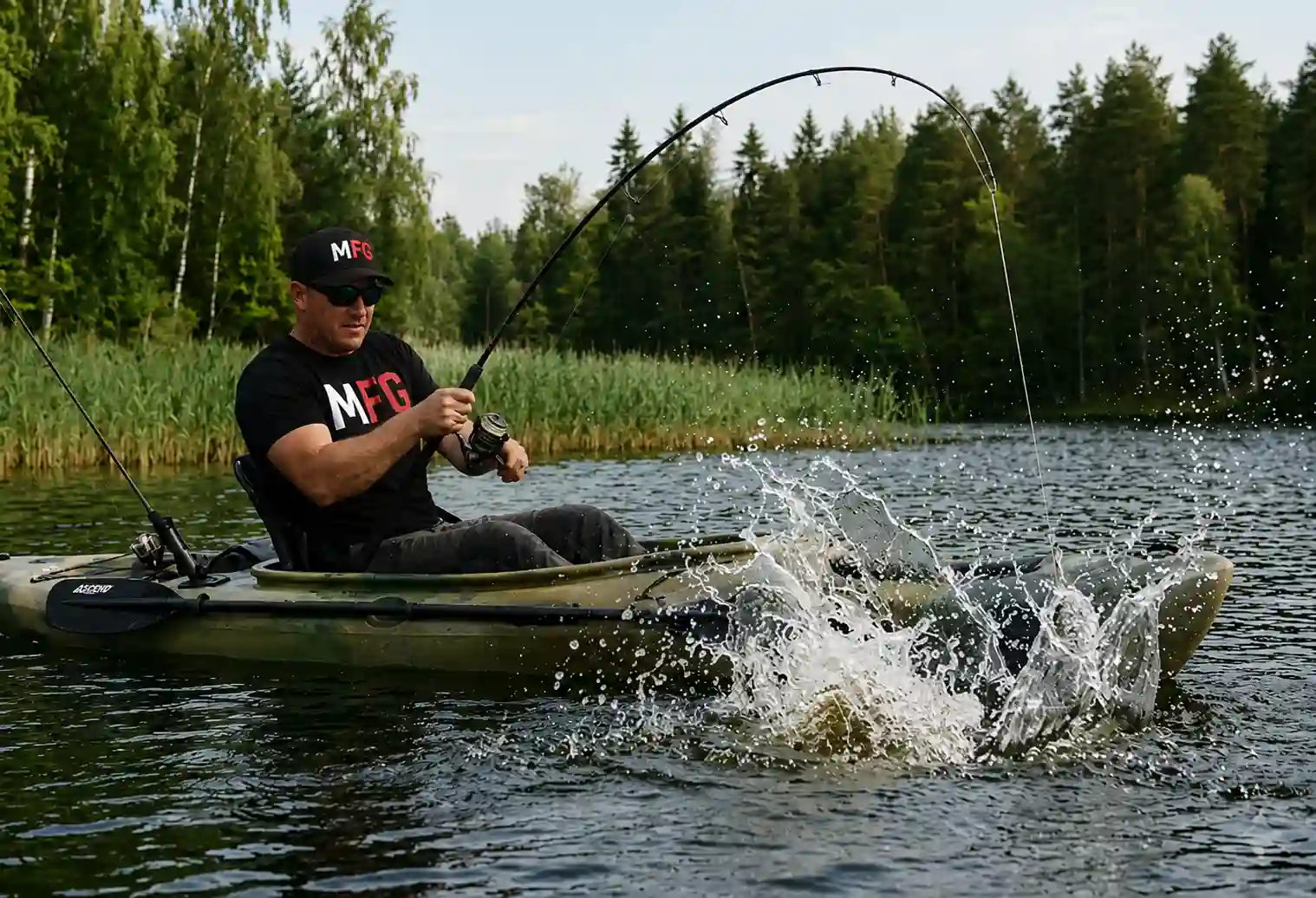
In our experience, muskies demand more patience throughout the fight, while pike tend to be more explosive and unpredictable early on. We landed both species within an hour of each other during one trip on Lake St. Clair, and the contrast was obvious. The pike took a little longer than usual—just over ninety seconds of violent headshakes before it finally gave in. The muskie fought even longer, staying deep and surging twice beside the boat before it finally rolled onto its side after nearly three minutes. Neither fight was typical, but the difference in fighting style was impossible to miss. Neither species should be underestimated, as both are capable of throwing hooks during violent headshakes or powerful boatside surges.
Which fish fights harder ultimately comes down to what you value most. If you enjoy explosive strikes and fast-paced action, northern pike rarely disappoint. If you prefer longer battles that test both your tackle and patience, muskies are hard to beat.
Recommended Gear If You Fish Both Species
- Best Pike Rods — the same backbone needed to handle a big pike works just as well for muskie
- Best Spinning Reels for Pike — smooth drag matters even more once a muskie makes its first long run
- Best Baitcasting Reels for Pike — better lure control and cranking power for the heavier glide baits and jerkbaits both species chase
- Best Pike Leaders — a muskie’s bite calls for the same abrasion resistance as a big pike
- Best Pike Lures — many of these same baits draw strikes from muskie sharing the same water
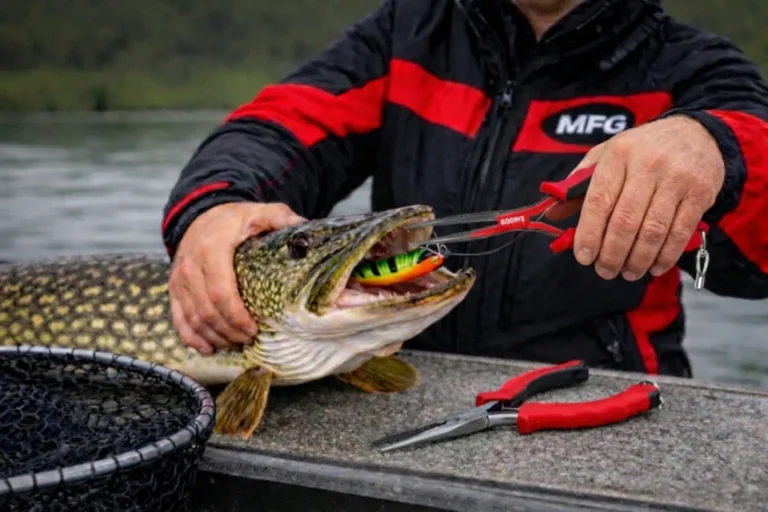
- Best Pike Fishing Pliers — for safely checking jaw pores and removing hooks on either species
- How to Handle Pike Safely — the same principles apply when you’re holding a muskie
Can Pike and Muskie Mate? Understanding the Tiger Muskie
Yes. Northern pike and muskies can hybridize, producing a fish known as the tiger muskie. Although this happens naturally on rare occasions where both species share the same water, most tiger muskies found in North America come from stocking programs managed by fisheries agencies.
Tiger muskies typically inherit characteristics from both parent species. They often display bold, maze-like markings across the body, giving them a distinctive appearance that differs from the spots of a northern pike or the bars commonly seen on a muskie.
In many waters, tiger muskies are sterile, meaning they cannot reproduce. This allows fisheries managers to introduce them without creating self-sustaining hybrid populations, making them a popular choice for sport fishing in selected lakes and reservoirs.
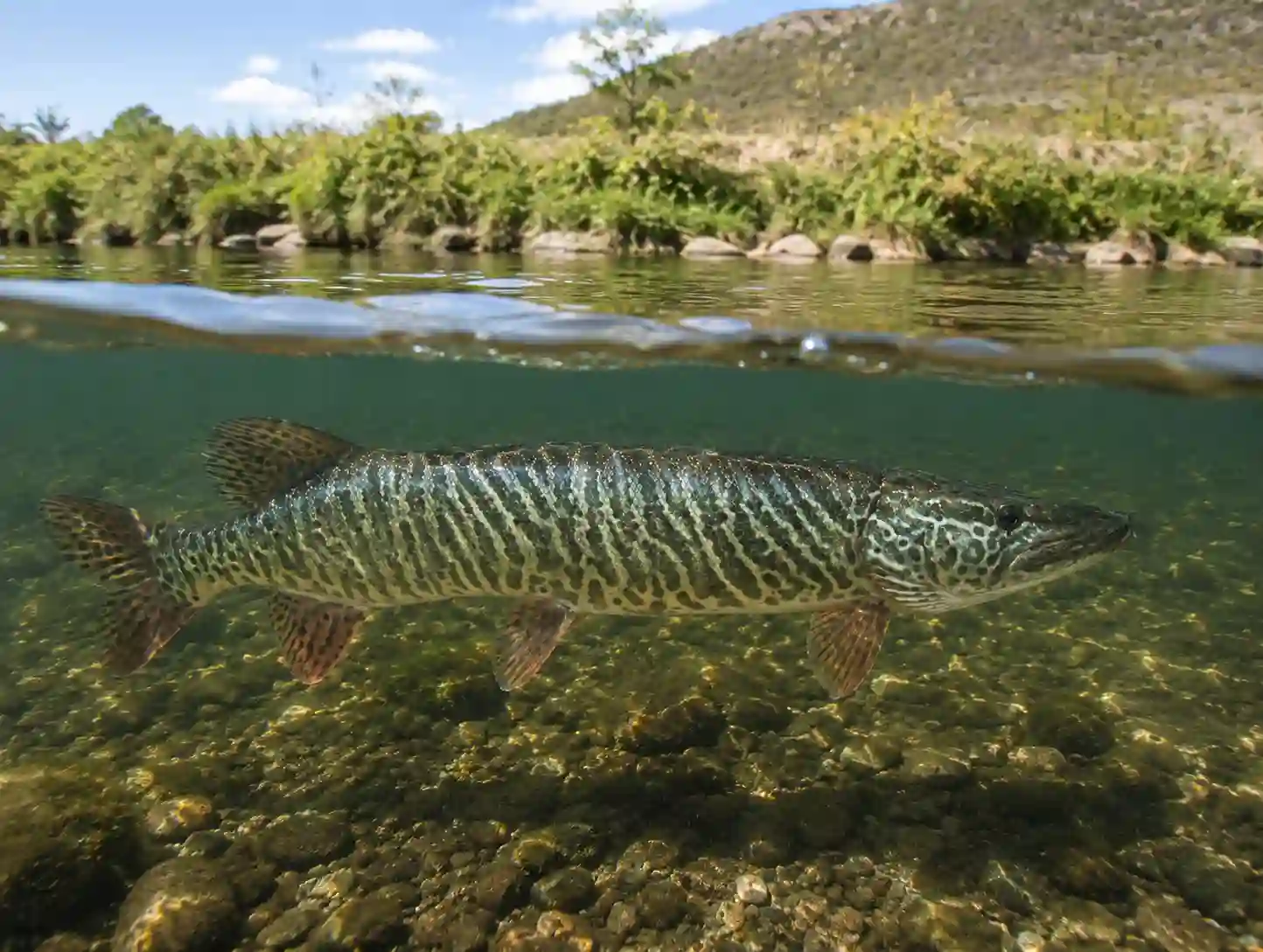
Because tiger muskies combine features of both species, they’re occasionally mistaken for unusually marked pike or muskies. We’ve only crossed paths with a true tiger muskie once—a heavily barred fish that had us second-guessing everything at first glance. It wasn’t until we checked the tail, counted the lower jaw pores, and looked at the fish as a whole that the picture became clear. That experience reinforced something we’ve learned time and again: no single feature is enough when identifying a fish that combines characteristics of both parent species.
For most anglers, catching a tiger muskie is a rare and memorable experience. While this hybrid shares traits with both parent species, it remains a distinct fish that deserves careful handling and release wherever regulations encourage catch-and-release.
Why Correct Identification Matters
Telling a northern pike from a muskie isn’t just a matter of curiosity. In many states and provinces, the two species are managed under completely different rules, and misidentifying your catch can mean an accidental violation, even when there was no intent to break the law.
Minnesota is a clear example of how different these rules can be. Muskies there carry a statewide 54-inch minimum length limit in most waters, among the highest in the country. Northern pike, meanwhile, are managed under a protected slot in many of the same waters: pike between 24 and 36 inches must be released immediately, with only one fish over 36 inches allowed in possession. A angler who mistakes a mid-40s muskie for an oversized pike, or the reverse, could easily end up keeping a fish that regulations required them to release.
Wisconsin manages muskie under a 40-inch minimum across most of its waters, with select trophy waters set even higher. Iowa’s regulations are similar, and its own Department of Natural Resources notes plainly that even after landing “the fish of ten thousand casts,” an undersized muskie still has to go back in the water.
These rules vary significantly by state, province, and even by individual lake, so always check the current regulations for the specific water you’re fishing before deciding whether to keep a fish. A tiger muskie typically counts as a muskie for length and possession limits in most jurisdictions, adding one more reason to confirm identification before making that call.
Beyond the legal side, correct identification protects the fish themselves. Muskie populations in particular are naturally sparse compared to pike, and many fisheries rely on anglers releasing fish they may not even be required to by law. Taking the extra few seconds to check the tail, jaw pores, and cheek scale pattern isn’t just about staying compliant. It’s part of keeping these fisheries healthy for the next angler.
Frequently Asked Questions
What’s the fastest way to tell a pike from a muskie?
Check the tail shape, count the sensory pores under the lower jaw, and look at the cheek and gill cover scaling. Northern pike have a rounded tail, 4–5 jaw pores per side, and fully scaled cheeks and gill covers. Muskies have a sharply forked tail, 6–9 pores per side, and scales only on the upper half of the cheek and gill cover.
Can northern pike and muskies interbreed?
Yes. When pike and muskie share the same water, they can produce a hybrid known as the tiger muskie. Most tiger muskies found in North America come from fisheries stocking programs rather than natural hybridization, and the hybrid is usually sterile.
Which is bigger, pike or muskie?
Muskies grow larger on average. A typical adult pike measures 16–22 inches, while a typical adult muskie measures 30–50 inches. Trophy pike exceed 40 inches, while trophy muskies exceed 50 inches.
Do pike and muskie live in the same lakes?
In many parts of North America, yes. Waters like Mille Lacs Lake, Lake of the Woods, the St. Lawrence River, and Lake St. Clair are well known for holding both species, which is exactly why correct identification matters on these waters.
Which fights harder, pike or muskie?
Pike typically hit harder and fight more explosively right from the hookset, but the fight is usually shorter. Muskies tend to rely more on size, endurance, and unpredictable boatside surges, often making for a longer battle overall.
Is it illegal to keep a muskie that’s actually a pike, or the reverse?
Regulations vary by state and province, and pike and muskie are frequently managed under very different size and possession limits on the same water. Misidentifying your catch can result in an accidental violation, so always confirm the species and check current local regulations before keeping any fish.
Is a tiger muskie a pike or a muskie?
Neither, technically. A tiger muskie is a hybrid, the offspring of a northern pike and a true muskellunge, carrying genetic traits from both parent species. Most fisheries agencies still classify tiger muskies as muskie for length and possession limits, but biologically it’s a distinct hybrid, not a pure-strain pike or muskie.
Whether you end up holding a northern pike or a muskie, taking a few extra seconds to check the tail, jaw pores, and cheek scale pattern will settle the identification far more reliably than color or size alone. If you want to double-check your catch against an official source, the Minnesota DNR’s pike and muskie identification guide is a solid, science-backed reference to compare against.