

Best Ice Fishing Fish Finders for Pike (2026): 5 Tested Picks for Deep Water, Weeds & Live Sonar
A pike does not need to be directly beneath your hole to be close enough to catch—and that is where the differences between ice fishing fish finders become important. A narrow-beam flasher can separate a fish holding tight to a deep break, a wider cone can cover more water above shallow weeds, and forward-facing sonar can reveal a moving pike before you drill the next hole.
We tested numerous ice fishing fish finders across the exact situations pike anglers encounter on the ice: deep basin edges, shallow weed flats, suspended fish, repeated hole-hopping, and long sessions in temperatures ranging from 5°F to 15°F (-15°C to -9°C). In these conditions, cold-weather battery drain and stiff transducer cables quickly exposed cheaper units. These five stood out for their instantaneous response, cone coverage, target separation, screen clarity, and ability to track both small lures and heavy wire rigs as an approaching pike came into view.
As an Amazon Associate, we earn from qualifying purchases — no cost to you. That’s how we keep this site running. Read more ›
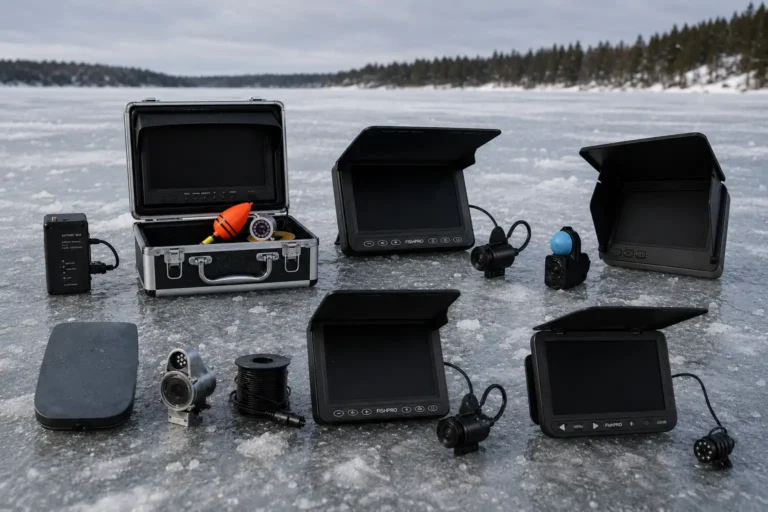
Every pick below is a dedicated hard-water package with the ice transducer, cold-weather power source, and carrying shuttle required for fishing through the ice. For boat- and kayak-mounted electronics designed to work across open water, see our best all-season fish finders guide.
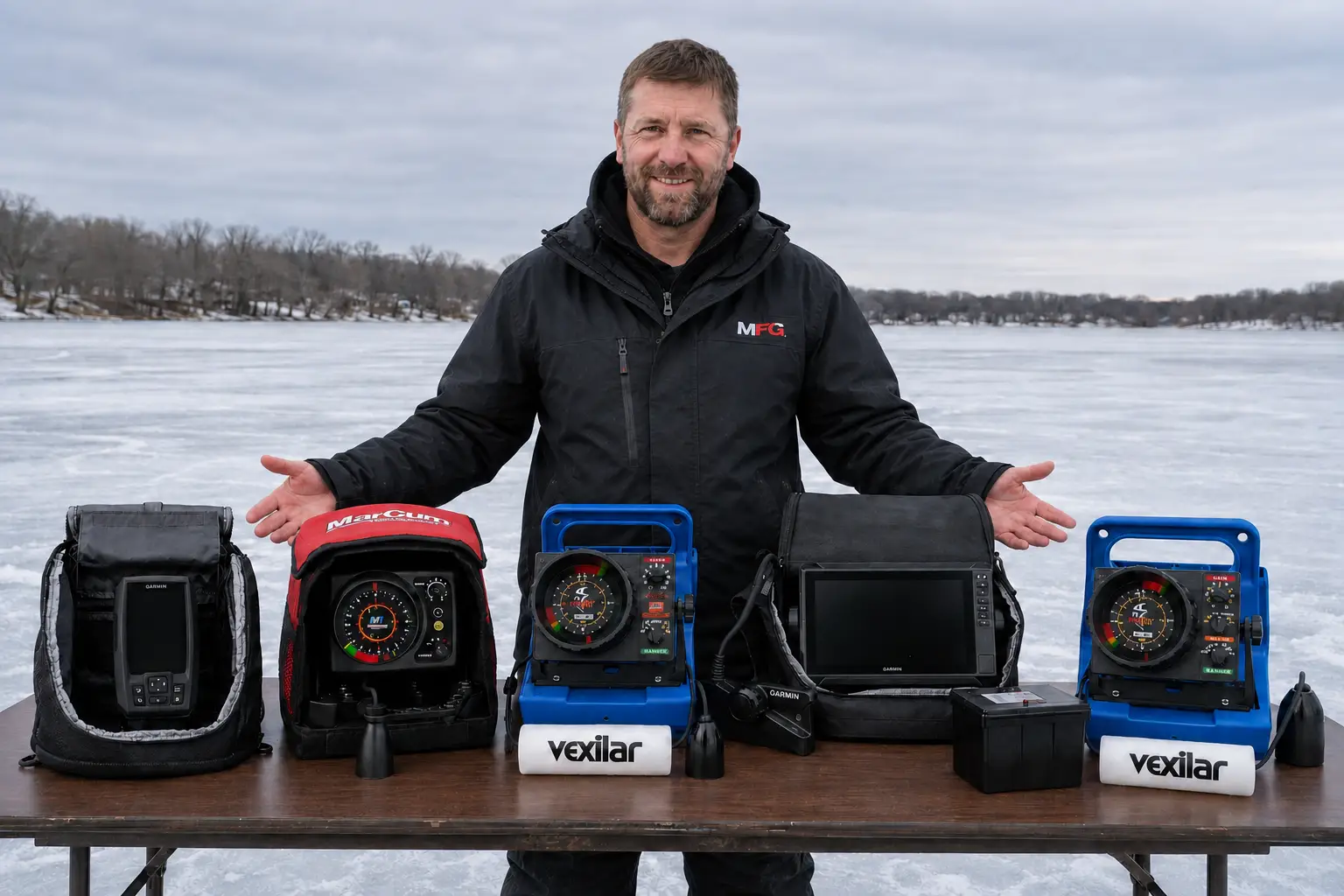
Quick List: Best Ice Fishing Fish Finders for Pike (2026)
If you’re short on time, these five field-tested ice fishing fish finders cover the key situations pike anglers encounter—from shallow weed flats and deep structure to hole-hopping, GPS mapping, and forward-facing live sonar.
- Vexilar FL-18 Genz Pack Best for Deep-Water Pike — narrow 12° cone and bottom zoom for separating fish holding close to deep structure
- Vexilar FL-8SE Genz Pack Best for Shallow Weed Flats — wider 19° cone for covering more water around shallow vegetation
- MarCum M1 Flasher System Best Budget Flasher — straightforward real-time flasher with a 20° transducer and bottom-lock zoom
- Garmin Striker Plus 4 Ice Fishing Bundle Best GPS & Digital Sonar — compact CHIRP system with built-in GPS, Quickdraw Contours, and a dual-beam ice transducer
- Garmin LiveScope Plus Ice Fishing Bundle Best Premium Live Sonar — forward-facing sonar for locating moving pike beyond the hole and watching their response in real time
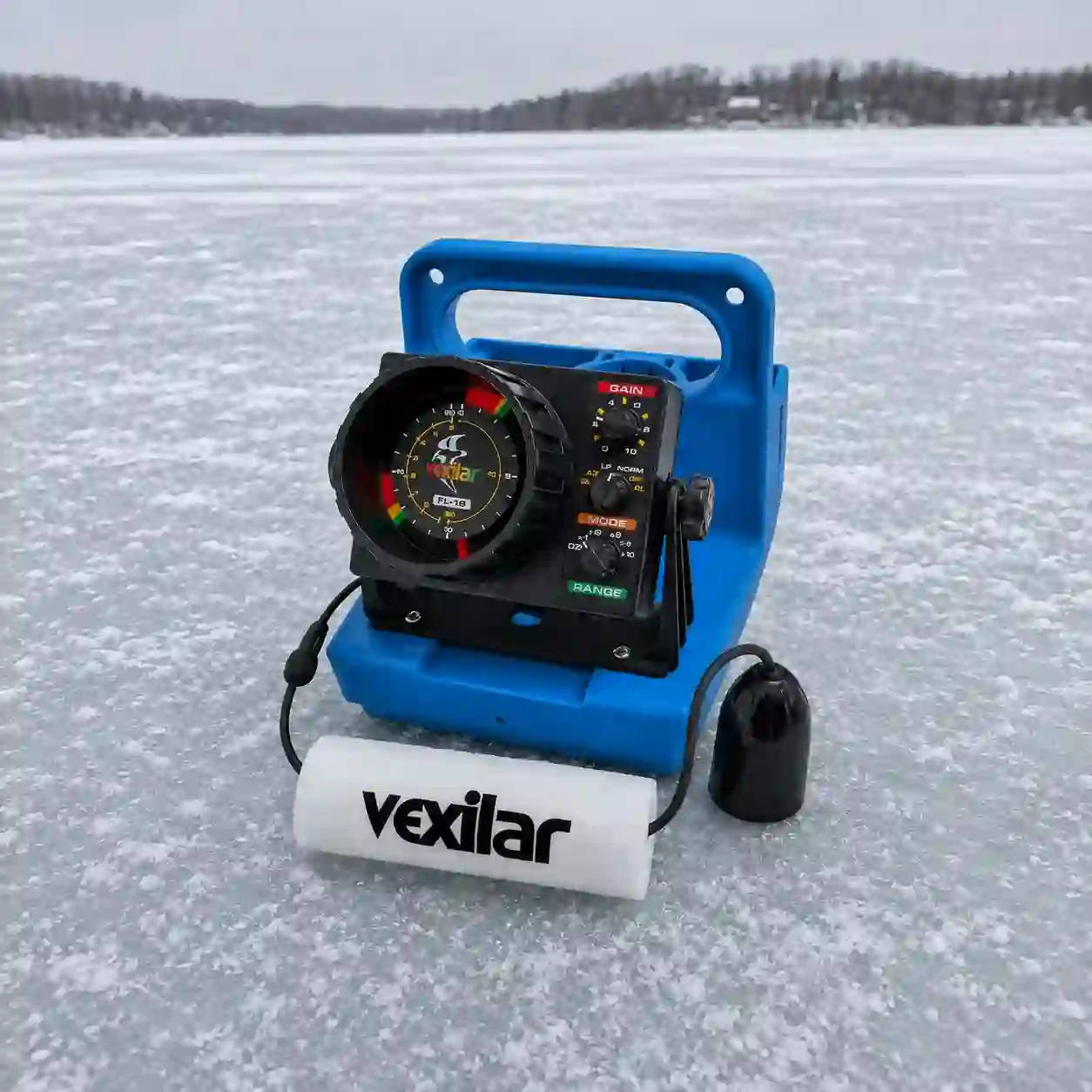
Vexilar FL-18 Genz Pack — Best for Deep-Water Pike (Nothing Hides From This One)
We ran an FL-18 through a full week of first-ice on Lake of the Woods, working the same string of main-lake points every morning at first light, and it consistently held a clean, distinct fish mark in 25 to 30 feet of water where wider-beam units on the ice around us were struggling. Deep, wind-scoured basins are where big female pike stack up in early and mid-winter, and that’s exactly the water this flasher was built for.
The 12° cone is narrow by design, and on the ice that narrowness is a feature, not a limitation. In water past 20 feet, a wider beam covers a much larger area of bottom the deeper it travels, so a fish holding tight to structure can blend into the same return signal as the lake floor itself — the FL-18’s tight beam kept that return as its own distinct mark, four separate mornings in a row.
Pair that with the Auto Zoom, which locks in on the bottom six feet of the water column while still showing the full depth range above it, and you stop guessing whether that flicker near the bottom line is a fish or just noise off the structure. We fished it alongside a pattern we’d mapped out earlier in the season using the drop-offs and channel edges described in our winter pike behavior guide, and the combination of zoom and cone width made it easy to tell a suspended baitfish ball from a single fish sitting a foot off bottom.
The 12V/9Ah battery held up through two full eight-hour days in single-digit temperatures without a recharge, and the three-color LED display stayed readable even with direct morning sun bouncing off the snow around the shack.
What We Like: tight 12° cone for precise targeting in deep water, Auto Zoom keeps the bottom six feet in focus without losing the rest of the water column, rugged Genz case handles being dragged across the ice on a sled, 12V/9Ah battery easily outlasted two full eight-hour days in single-digit temperatures.
What Could Be Better: the narrow cone that makes it excellent in deep water works against it in shallow weed flats, where a wider beam covers more ground; three-color LED display is a step behind the full-color screens on the Garmin units in this lineup; no built-in GPS or mapping.
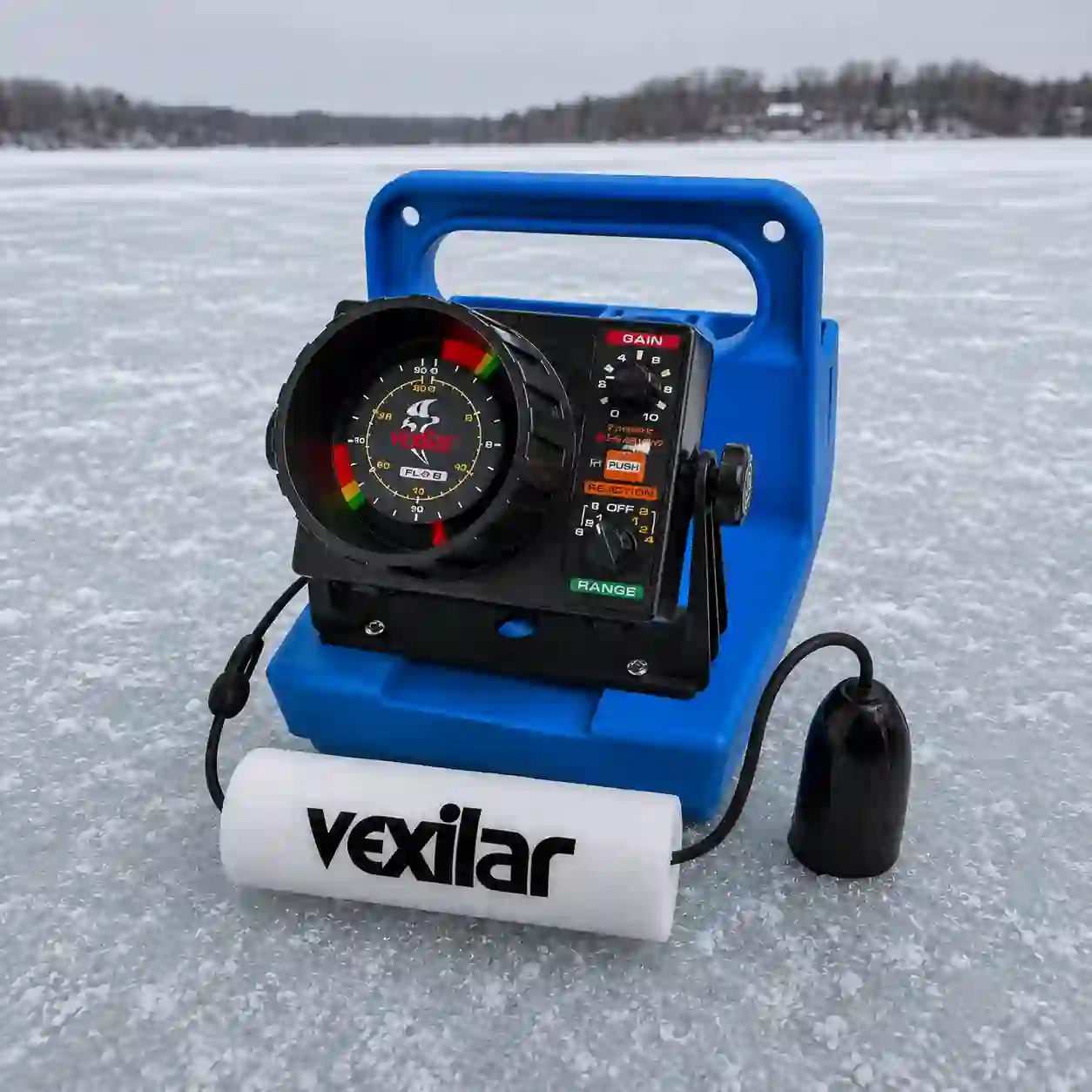
Vexilar FL-8SE Genz Pack — Best for Shallow Weed Flats (Built for Pike Above Shallow Cover)
On Mille Lacs, we spent a slow first-ice morning working a cabbage flat in six to nine feet of water, and the FL-8SE’s 19° cone made the difference between seeing a single return near the hole and picking up three separate returns moving through the same flat. Shallow weed flats are where pike scatter to ambush baitfish moving through the cover, and a narrow beam simply doesn’t see enough of that water at once.
The wider cone comes at a real cost in deep water — a wide beam covers a much larger area of bottom the deeper it travels, so fish, vegetation, and uneven structure can blend into the same return signal — but in six to twelve feet of water over remaining cabbage and coontail, it shows a wider slice of what’s actually down there. We watched two separate fish returns drift into view on the edge of the screen before ever passing under the hole, giving us time to adjust the jig instead of reacting after the fact.
That kind of early warning matters most in the shallow, vegetation-heavy water covered in our pike water clarity breakdown, where visibility and structure decide how close a pike will let you get before it commits.
The 525-segment, three-color display made it easy to tell separate targets apart even with three of us jigging within a few feet of each other, while the 10-step interference rejection kept our units from stepping on each other’s signal.
What We Like: wide 19° cone covers more water over weed flats and shallow structure, 525-segment display separates close targets cleanly, 10-step interference rejection holds up with multiple units running nearby, Genz case gives you a stable base beside the hole and protects the battery and controls during transport.
What Could Be Better: the same wide cone that excels in shallow water loses precision past 20 feet, where the FL-18’s narrower beam performs better; LED display isn’t as sharp as the full-color screens on the Garmin picks; heavier to haul than the MarCum M1.
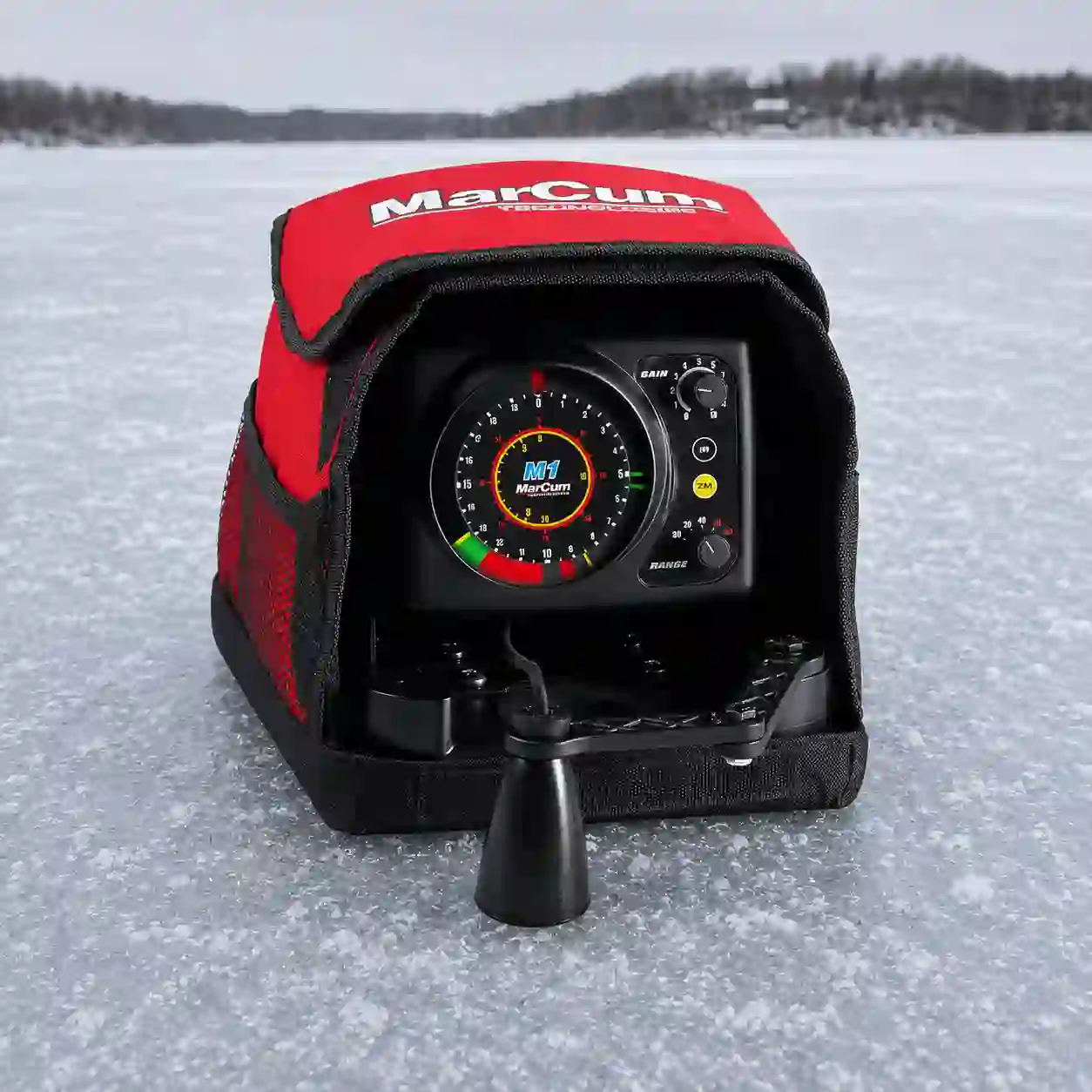
MarCum M1 Flasher System — Best Budget Flasher (Proof You Don’t Need to Overspend)
We handed the M1 to a buddy who’d never run a flasher before, and inside of twenty minutes on the ice he was calling out depth, marking his jig, and telling us when a pike came into range — no manual, no fumbling with settings. For an entry-level unit, that kind of immediate usability is worth more than a spec sheet full of extras nobody needs their first season.
1,000 watts of peak-to-peak power and 2-inch target separation punch well above what you’d expect at this price point, and the 20° cone gave us a genuinely wide look at the water column without the unit feeling underpowered. We ran it on a string of shallow ambush points where pike were holding just off remaining vegetation, and the split-screen 5-foot bottom-lock zoom made it easy to keep the bottom in view while still tracking a suspended fish higher in the column — a feature we didn’t expect to see on a budget flasher at all.
The TrueColor brushless display stayed crisp and easy to read in direct sun, while the patented multi-level interference rejection kept the signal clean even with another flasher running nearby.
What We Like: 1,000 watts of peak-to-peak power and 2-inch target separation deliver serious performance for the price, wide 20° cone covers plenty of water, split-screen bottom-lock zoom is a genuine step up from typical entry-level flashers, simple enough that a first-timer was reading it confidently within minutes.
What Could Be Better: at roughly 9 pounds it’s not noticeably lighter than the pricier Vexilar packs, so don’t expect a portability advantage; the traditional three-color display provides less visual detail than the full-color Garmin units in this lineup; no GPS or mapping features.
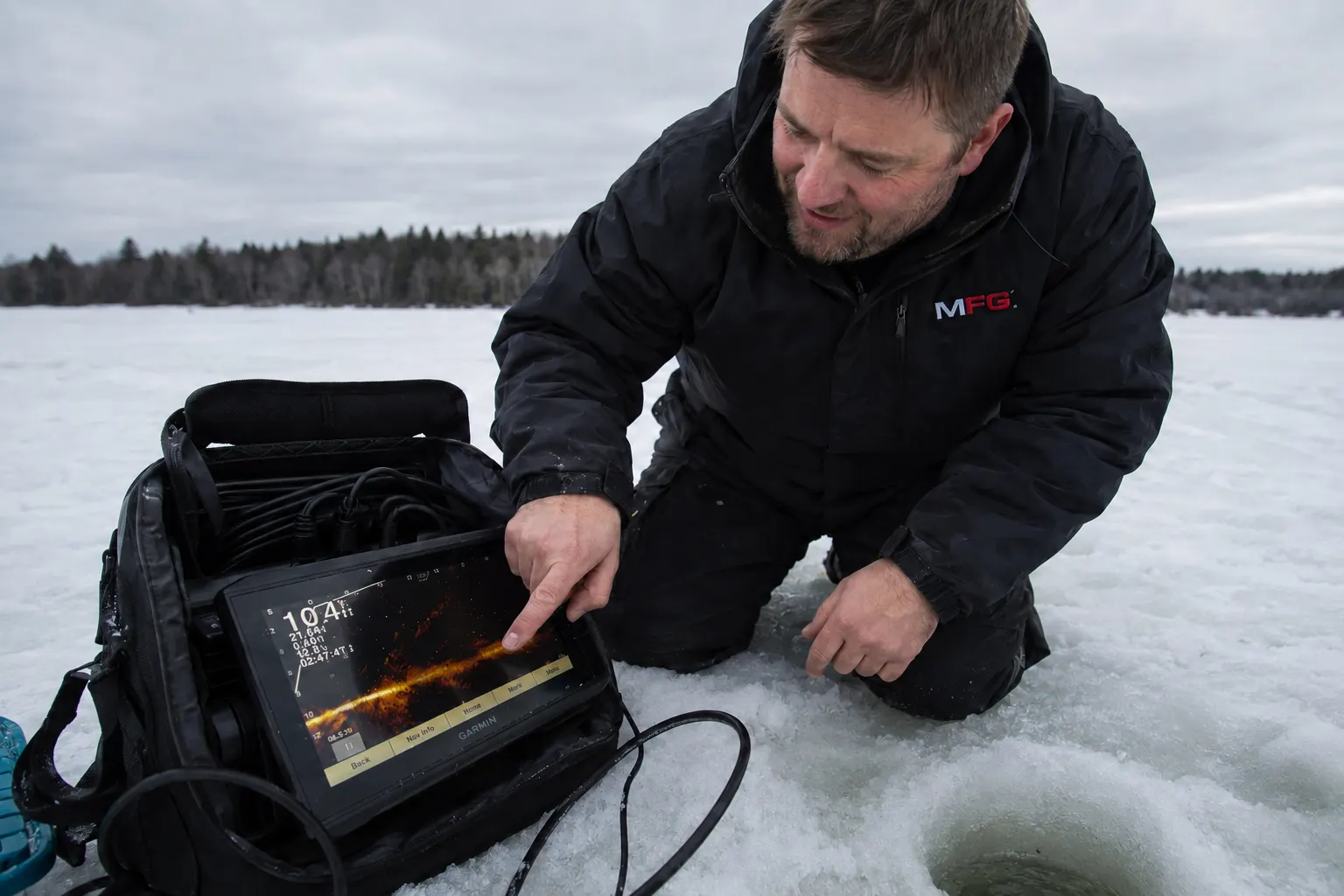
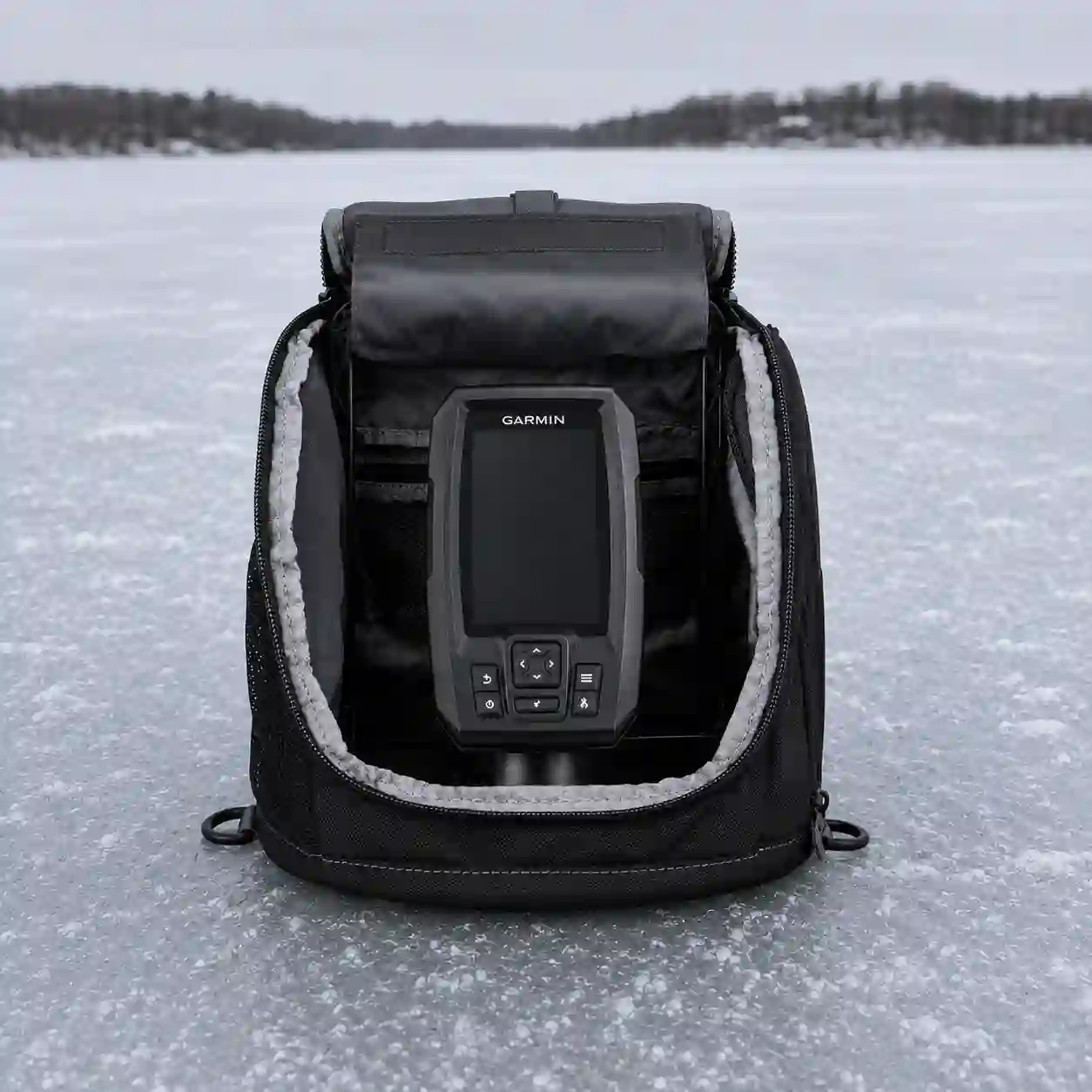
Garmin Striker Plus 4 Ice Fishing Bundle — Best GPS & Digital Sonar (Never Fish Blind Water Twice)
On Devils Lake, where flooded timber and submerged roadbeds turn open water into a maze, we marked a productive break line on day one, saved it as a waypoint, and walked straight back to the same fifteen-foot stretch three mornings later without wasting a single hole on empty water. That’s the real advantage of GPS on the ice — it turns a good day into a repeatable pattern instead of a lucky accident.
Quickdraw Contours let us log our own depth readings in an area with no detailed lake map to begin with, which mattered more here than almost anywhere else we tested — submerged roadbeds and old channels create depth changes that most standard lake charts simply don’t show. Since the transducer stays put in one hole on the ice, we built that picture the slow way: drilling a series of holes across the flat, logging a depth reading at each one, and saving the important changes as GPS waypoints we could reference on later trips instead of scanning the whole area in one pass the way it would from a moving boat.
The dual-beam CHIRP sonar picked out individual fish holding tight to submerged brush piles, and target separation stayed clean even with structure cluttering the screen. The 4-inch color display made it easy to pick out a single, larger return from a tight ball of baitfish at a glance, even if you still have to use judgment — and watch how the return reacts to the jig — to know exactly what’s down there.
Switching between sonar and mapping views took one button press — no menu diving with cold fingers.
What We Like: built-in GPS lets you mark and return to productive holes without guesswork, Quickdraw Contours lets you log a custom depth picture of water with no existing chart data, dual-beam CHIRP sonar handles cluttered structure cleanly, full-color display makes bigger returns easy to spot at a glance.
What Could Be Better: menu-based interface has a slight learning curve compared to the instant readout of a flasher; reaction time on a fast-moving fish isn’t quite as immediate as the FL-18 or FL-8SE; building a useful depth picture on the ice takes patience since it’s logged hole by hole, not swept in one pass like it would be from a boat.
Garmin LiveScope Plus Ice Fishing Bundle — Best Premium Live Sonar (This Is the Closest Thing to X-Ray Vision)
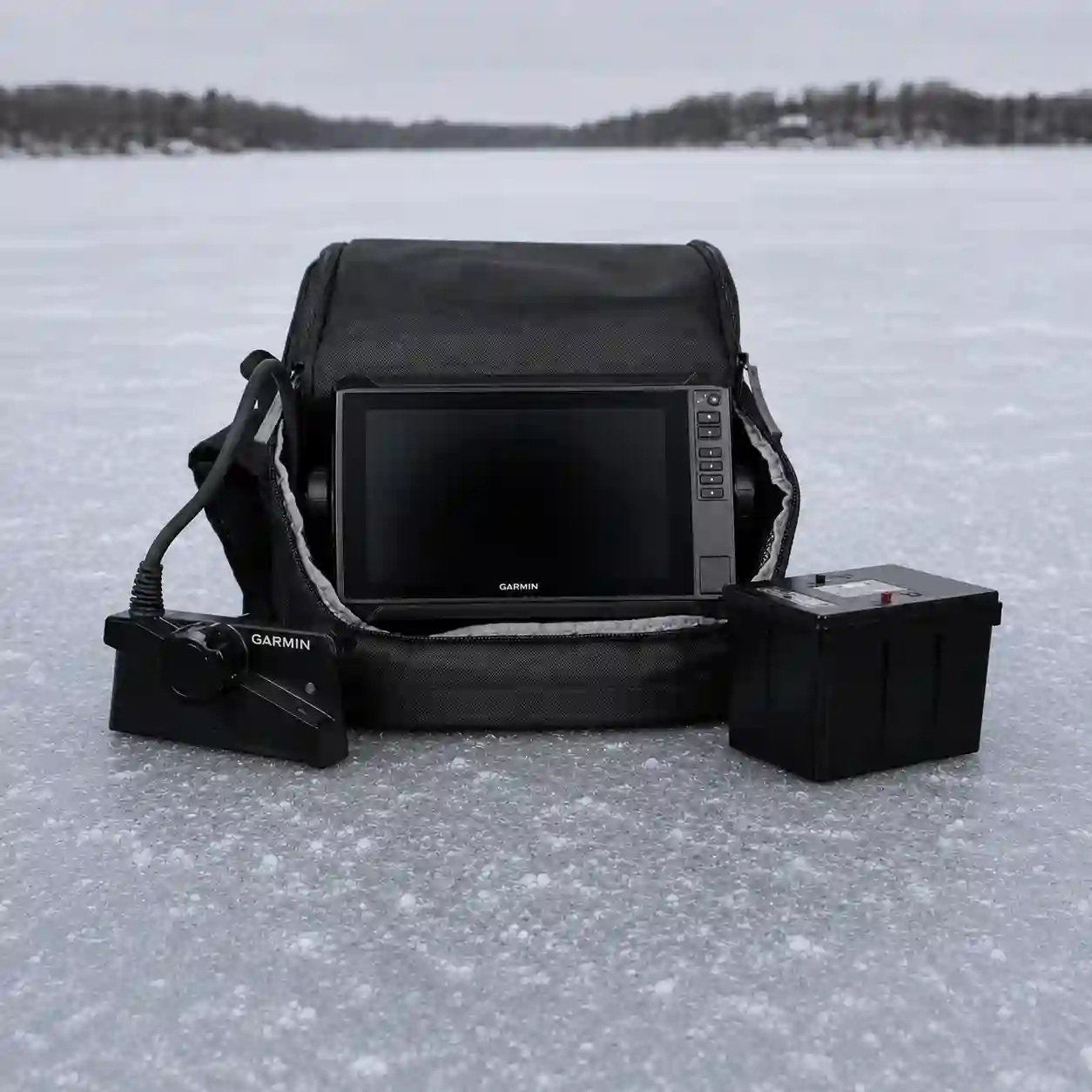
This is the closest thing to fishing with X-ray vision. While the traditional flashers on this list tell you what’s happening directly beneath your hole, the LiveScope Plus shows you what’s happening around it — schools of baitfish moving through, structure you didn’t know was there, and a pike sliding into range before it ever appears beneath the hole. For serious ice anglers who treat every hole as an investment of time and effort, this bundle doesn’t just find fish — it helps you decide where to drill next.
We drilled our first hole of the morning, dropped the transducer, and used Forward mode to scan the water around that point before drilling any additional holes — and watched a pike track across the screen from more than sixty feet away, well outside the area any traditional flasher on this list could have shown us. Instead of drilling blind and hoping, we used a reliable ice auger for pike fishing to open our next hole in the direction the fish was moving and had a bait down shortly after.
Down mode gave us the same real-time clarity once we switched over to jigging, showing the pike rise, hesitate, and commit to the lure in a way that felt more like watching open-water video than reading a sonar return.
The 9-inch ECHOMAP touchscreen made switching between Forward and Down modes simple even with gloves on, and the lithium battery ran a full day of scanning and jigging without needing a swap. The cold-flexible transducer cable didn’t stiffen up even after sitting in a sled at single-digit temperatures overnight.
What We Like: Forward mode lets you scout for the next hole instead of drilling blind, real-time tracking shows how a fish reacts to your presentation, large touchscreen display is easy to read and navigate even with gloves on, built-in Navionics+ mapping covers thousands of lakes out of the box.
What Could Be Better: the price puts it well out of reach for casual ice anglers; the touchscreen interface takes longer to learn than a flasher’s simple dial; it’s a bulkier setup to haul across the ice than any other pick on this list. If you’re serious enough about ice fishing to want the same technology tournament anglers run on open water, brought onto the ice, this is it.
How to Choose an Ice Fishing Fish Finder
The right ice fishing fish finder depends less on maximum advertised range and more on how you actually fish. A traditional flasher is ideal for real-time jigging beneath one hole, digital sonar adds GPS and mapping, while forward-facing live sonar helps mobile anglers search beyond the hole. For pike, fishing depth, vegetation, portability, and cold-weather battery performance matter most.
Flasher vs. Digital Sonar vs. Live Sonar
Traditional flashers such as the Vexilar FL-18, FL-8SE, and MarCum M1 provide an immediate view of your lure, the bottom, and fish moving through the sonar cone. Their simple controls, fast response, and long battery life make them dependable choices for jigging for pike through the ice.
Digital sonar units such as the Garmin Striker Plus 4 display returns as a scrolling graph and add features such as GPS, waypoints, and custom depth mapping. They are particularly useful when you want to save productive holes, follow submerged roadbeds, or return to the same break line on a later trip.
Forward-facing live sonar shows fish and structure beyond the area directly beneath the transducer. It can help you decide where to drill next and follow moving pike, but it costs considerably more and creates a heavier setup to transport. It makes the most sense for serious, mobile anglers who regularly search large flats, points, and basin edges.
Match the Cone Angle to Your Fishing Depth
Cone angle determines how much water the transducer covers beneath the hole. A narrow beam around 9° to 12° stays more focused as it reaches deeper water, reducing bottom clutter and helping separate fish holding close to steep breaks or the lake floor.
A wider beam around 19° to 20° covers more water and is usually more useful over shallow weed flats, scattered vegetation, and other areas where pike roam away from the center of the hole. The trade-off is reduced precision in deep water because the beam covers a larger section of the bottom.
Look Beyond Maximum Depth
Most ice-specific fish finders can read far deeper than the water where pike are normally targeted, so maximum depth should not decide the purchase by itself. Target separation, bottom zoom, interference rejection, and the ability to distinguish your lure from vegetation or bottom clutter are more useful in real fishing conditions.
For deep-water jigging, prioritize a narrow cone and bottom zoom. For shallow cover, prioritize wider coverage and strong interference rejection, especially when several anglers are operating sonar units close together.
Consider Battery Performance in Cold Weather
Battery runtime decreases as temperatures fall, and large color displays, GPS, and live sonar generally consume more power than traditional flashers. A basic flasher can be the better choice for long days when you only need real-time sonar beneath the hole, while advanced Garmin systems justify their higher power consumption with mapping and wider-area scanning.
Compare battery chemistry and capacity rather than relying only on an advertised runtime. Begin each trip with a fully charged battery, keep spare batteries insulated when possible, and avoid leaving them discharged between outings.
Do Not Ignore Weight and Portability
If you fish from a permanent shelter or stay on a small number of known spots, additional weight may not matter. If you drill repeatedly and move across large areas, the combined weight of the display, battery, transducer, shuttle, and protective case becomes much more important.
A compact flasher is easier to carry and faster to set up beside each hole. Live sonar provides far more information, but its larger display, transducer assembly, and battery make it better suited to a sled. Choose the lightest package that still provides the sonar coverage and features you will actually use.
Ice Fishing Fish Finder Comparison Table
| Fish Finder | Best For | Type | Cone Angle / Range | Power | Standout Feature |
|---|---|---|---|---|---|
| Vexilar FL-18 Genz Pack | Best for Deep-Water Pike | Flasher | 12° cone, up to 200 ft | 400W peak-to-peak | Auto Zoom locks onto the bottom six feet for precise deep-water targeting |
| Vexilar FL-8SE Genz Pack | Best for Shallow Weed Flats | Flasher | 19° cone, up to 120 ft | 400W peak-to-peak | Wide beam covers more water over cabbage and weed cover |
| MarCum M1 Flasher System | Best Budget Flasher | Flasher | 20° cone, up to 160 ft | 1,000W peak-to-peak | Split-screen bottom-lock zoom rarely found at this price |
| Garmin Striker Plus 4 Ice Bundle | Best GPS & Digital Sonar | CHIRP + GPS | Dual-beam, up to 1,600 ft | CHIRP sonar | Built-in GPS and Quickdraw Contours for marking and returning to holes |
| Garmin LiveScope Plus Ice Bundle | Best Premium Live Sonar | Live Sonar | Forward/Down, up to 200 ft | LiveScope sonar | Forward mode scouts for pike before you drill the next hole |
Frequently Asked Questions
What’s the difference between a flasher and a GPS fish finder for ice fishing?
A flasher shows sonar returns in real time on a circular dial, with almost no lag between what’s happening under the ice and what you see on the display. A GPS fish finder like the Striker Plus 4 shows the same sonar information on a digital screen, but adds mapping, waypoints, and the ability to mark and return to productive spots. Flashers react faster; GPS units add navigation and memory.
What cone angle is best for ice fishing pike?
A narrow cone around 9 to 12 degrees works best in deep water because it keeps the beam tight and separates individual fish from bottom clutter. A wider cone around 19 to 20 degrees covers more water and works better over shallow weed flats and scattered cover, where pike could be anywhere within a few feet of the hole.
Can I use a boat fish finder for ice fishing?
A standard transom-mounted boat fish finder isn’t practical for ice fishing without the right ice-specific accessories. You need an ice transducer, a portable power source, and typically a carrying case or shuttle designed to sit beside the hole rather than mount to a hull.
How deep does ice fishing sonar work?
Most dedicated ice flashers and fish finders read effectively from a few feet down to well over 100 feet, with several models rated to 160 feet or more. Depth performance depends on the transducer’s power output and cone angle, with narrower, higher-powered units typically reading deeper and clearer.
Is live sonar worth it for ice fishing pike?
Live sonar earns its price for anglers who want to scout for fish before committing to a hole, since it shows a wide area around the transducer instead of only what’s directly beneath it. For anglers who mainly fish one or two known spots, a traditional flasher can provide all the real-time information they need at a fraction of the cost.
Do flasher batteries work in extreme cold?
Quality ice flashers are built to run a full day in sub-zero and single-digit temperatures without a significant drop in performance, though battery life can shorten somewhat compared to milder conditions. Sealed lead-acid and lithium batteries used in most ice-specific units both hold up well in cold weather when kept charged before each trip.
What’s the difference between MarCum and Vexilar flashers?
Both brands build dedicated flasher-style sonar with similar core technology, but they differ in cone angle options, display style, and price point across their lineups. The right choice usually comes down to which specific model’s cone angle and depth range match the water you’re fishing, rather than the brand itself.
Do I need GPS for ice fishing?
GPS isn’t required to catch pike through the ice, but it becomes valuable once you start finding productive spots you want to return to across multiple trips or seasons. Anglers who fish the same lake repeatedly get the most value from GPS waypoints and mapping features.