

Best Ice Fishing Reels for Pike (2026): Tested Picks & Buying Guide
Many “best ice fishing reel” lists are built for panfish and walleye — light drags, small spools, nothing rated for a pike that decides to peel line the second it feels the hook. We’ve had that moment ourselves: a budget reel locking up mid-fight because the drag simply wasn’t built for a fish that size.
At Master Fishing Guide, we selected these ice fishing reels specifically for northern pike — active jigging, budget jigging, inline setups, and deadsticking — not generic multi-species picks that happen to survive winter. Whether you’re punching jigs through six inches of ice or running a live minnow on a deadstick rig, there’s a reel below built for that exact job.
As an Amazon Associate, we earn from qualifying purchases — no cost to you. That’s how we keep this site running. Read more ›
For the full approach to finding and catching pike through the ice, see our ice fishing for pike. Looking for a reel for open-water casting in cold weather instead? Check our best reels for pike fishing in cold water guide — this article is strictly for fishing through the ice.
Quick List: Best Ice Fishing Reels for Pike (2026)
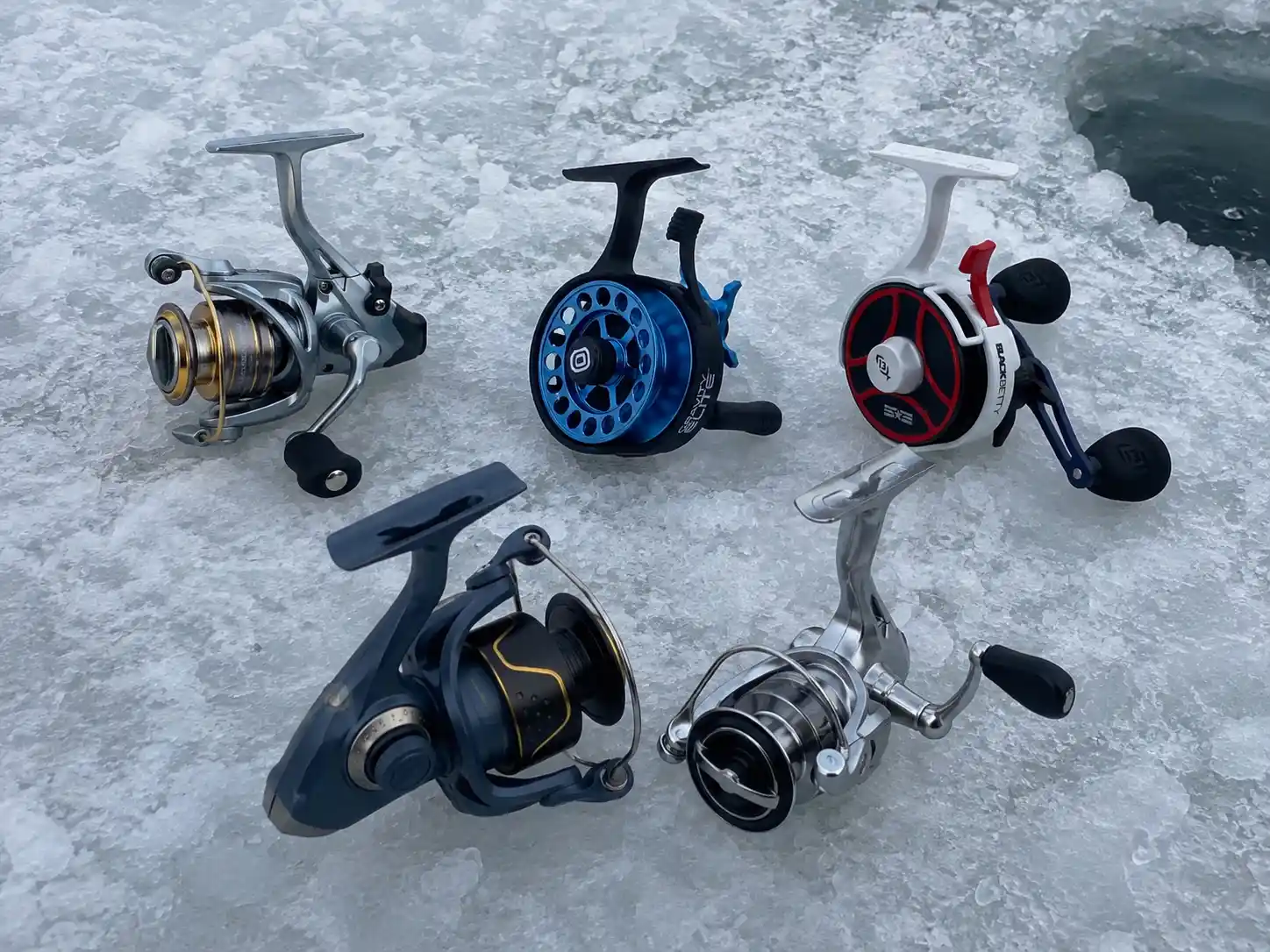
If you’re short on time, these five field-tested spinning, inline, and baitfeeder reels cover every major pike ice fishing technique — from active jigging to deadsticking.
- Shimano Stradic FL 2500 Best Premium — premium spinning reel for serious pike anglers
- Pflueger President 30 Best Overall — spinning reel combining reliability, smooth drag, and outstanding value for pike
- 13 Fishing FreeFall Ghost Maverick Best Budget Inline — inline reel for precise vertical presentations
- Clam Gravity Elite Best Premium Inline — inline reel with a fast retrieve for aggressive jigging
- Okuma Avenger ABF-1000 Best Baitfeeder — baitfeeder reel for deadsticking live bait for trophy pike
How to Choose an Ice Fishing Reel for Pike
Pike put a different kind of stress on a reel than panfish or even walleye. The drag needs to hold up under a hard, sudden run, and the anti-reverse needs to lock instantly for a solid hookset.
None of it can seize up when the temperature drops below freezing. Here’s what actually matters when you’re picking one.
Spinning, Inline, or Baitfeeder
Spinning reels are the most familiar option and the easiest to jig aggressively with — they’re what most anglers already own from open-water fishing, and they handle a hard pike strike without much of a learning curve.
Inline reels give you a straight, twist-free drop, which matters more the deeper you’re fishing, and they let you react to a bite the instant you release the trigger. Baitfeeder reels are built for one job: deadsticking live bait, where a pike can pick up the bait and swim off before you engage the drag and set the hook.
Reel Size and Drag
Match the reel size to the rod, not the fish. A short, 32–40 inch ice rod gets thrown off balance fast by a reel built for open water — that’s why every reel on this list sits in the 2500-and-under spinning class or the equivalent inline/baitfeeder size, even though pike can easily test a 20+ lb drag on a casting reel in summer. For rods that suit these setups, see our best ice fishing rods for pike.
Spool diameter matters more in the cold than most anglers expect. Heavier mono or a thick fluorocarbon leader coming off a small, narrow spool at sub-zero temps tends to coil off like a spring instead of falling straight, which kills your drop and makes light jigs impossible to fish naturally. A reel with a wider spool (like the Stradic 2500 or President 30) keeps that line flowing and lets the jig fall on its own weight.
Gear Ratio Matters Less Than Smoothness
Unlike open-water pike fishing, you’re not burning crankbaits back to the boat. Most presentations happen almost straight below the hole, so a silky retrieve and consistent drag matter far more than a blazing-fast gear ratio.
For active jigging, a slightly faster reel helps recover slack after a strike, but don’t choose a reel just because it advertises a high retrieve rate. Reliability in freezing temperatures is far more important. For lure movement and what to change when a fish follows without striking, see how to jig for pike through the ice.
Cold-Weather Reliability
A reel that performs flawlessly in your garage can still fail on the ice. Standard grease thickens below freezing, and cheaper anti-reverse mechanisms can bind or slip once the temperature drops.
We’ve seen this firsthand with reels that ran perfectly at 40°F and then started backspooling the moment we stepped out of a warm shelter into a real cold front, likely from moisture on the roller bearing freezing solid.
We only recommend reels here with a confirmed track record in actual sub-zero conditions — not just reels that happen to be marketed for ice fishing. It’s also worth noting that an all-aluminum body pulls cold straight into your hand through a thin glove, while a graphite or composite frame stays noticeably warmer through a full day of jigging.
How We Tested These Ice Fishing Reels
We didn’t pick these reels off a spec sheet. Every reel on this list has gone through actual ice sessions on our own rods — jigged through real cold fronts, not just tested at room temperature and assumed to hold up.
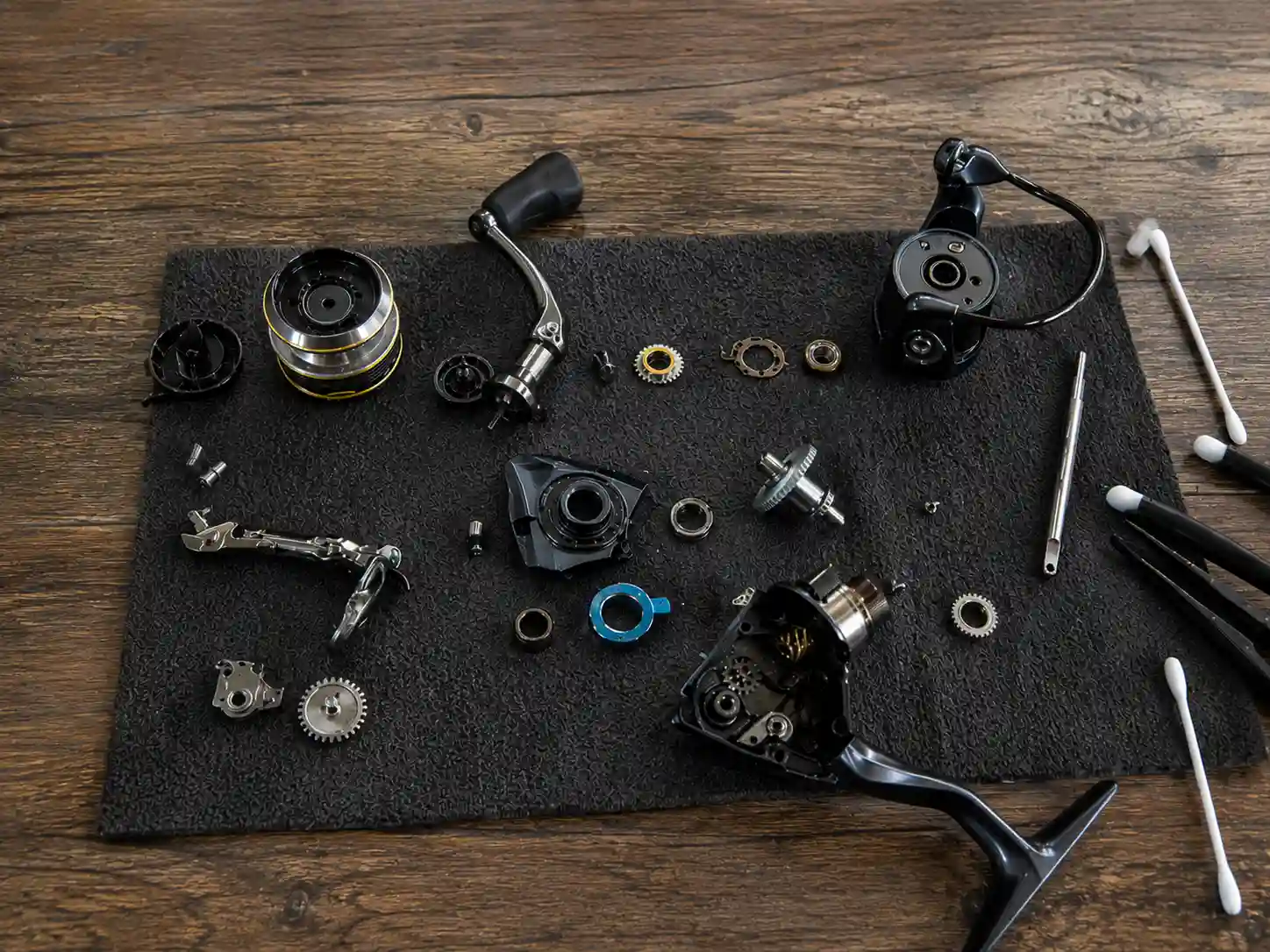
We paired each reel with the rod class it’s built for (short spinning setups for the Stradic and President, dedicated inline blanks for the Ghost Maverick and Gravity Elite, a light deadstick rig for the Okuma) and ran them the way we’d actually fish pike — hard hooksets, sustained runs, and long days on the ice after drilling multiple holes with our go-to ice auger.
We also cross-checked every pick against independent field reports from other ice anglers — not just our own sessions — to rule out one-off failures or lucky results before anything made this list.
Shimano Stradic FL 2500 Review: The Reel We Trust When It’s Well Below Zero
We reached for this reel on the mornings when the thermometer read well below zero and we couldn’t afford a mechanism that seized up mid-fight. The Stradic line has earned its reputation among serious hardwater anglers over decades. Even though Shimano designed it as an all-around spinning reel rather than an ice-specific model, it’s become a trusted choice for anglers who regularly fish in freezing conditions.
We found out exactly why on a morning around 5°F (-15°C), when a big pike hit barely 6–10 ft (two to three meters) below our boots. With some cheaper reels that use felt drag washers, the cold causes a small amount of moisture on those washers to stiffen, and the drag “sticks” for a split second before it releases — what’s known as startup inertia. On a short ice rod with almost no shock absorption in the line, that split-second stick is often enough to snap a leader or rip the hook straight out of a pike’s rock-hard jaw.
The Stradic’s Cross Carbon drag didn’t do that. The moment the fish pulled straight down under the hole, the drag gave line smoothly from the very first pull — no stutter, no grab, nothing to fight against except the fish itself. The extended power handle is a small detail that matters too — it’s noticeably easier to crank with thick gloves on than a standard handle, especially once your hands start losing feeling a few hours in.
We paired it most often with a 36-inch medium-heavy ice rod and 20 lb braid connected to a fluorocarbon leader, which gave the setup enough power for large spoons while keeping it balanced in hand.
What We Like: Cross Carbon drag has no startup stick even in extreme cold, extended handle works well with thick gloves, wide spool keeps mono and fluorocarbon from coiling off in freezing temps.
What Could Be Better: the price puts it well above every other reel on this list — it’s a premium pick for anglers who fish hard all season, not a budget-conscious first reel.
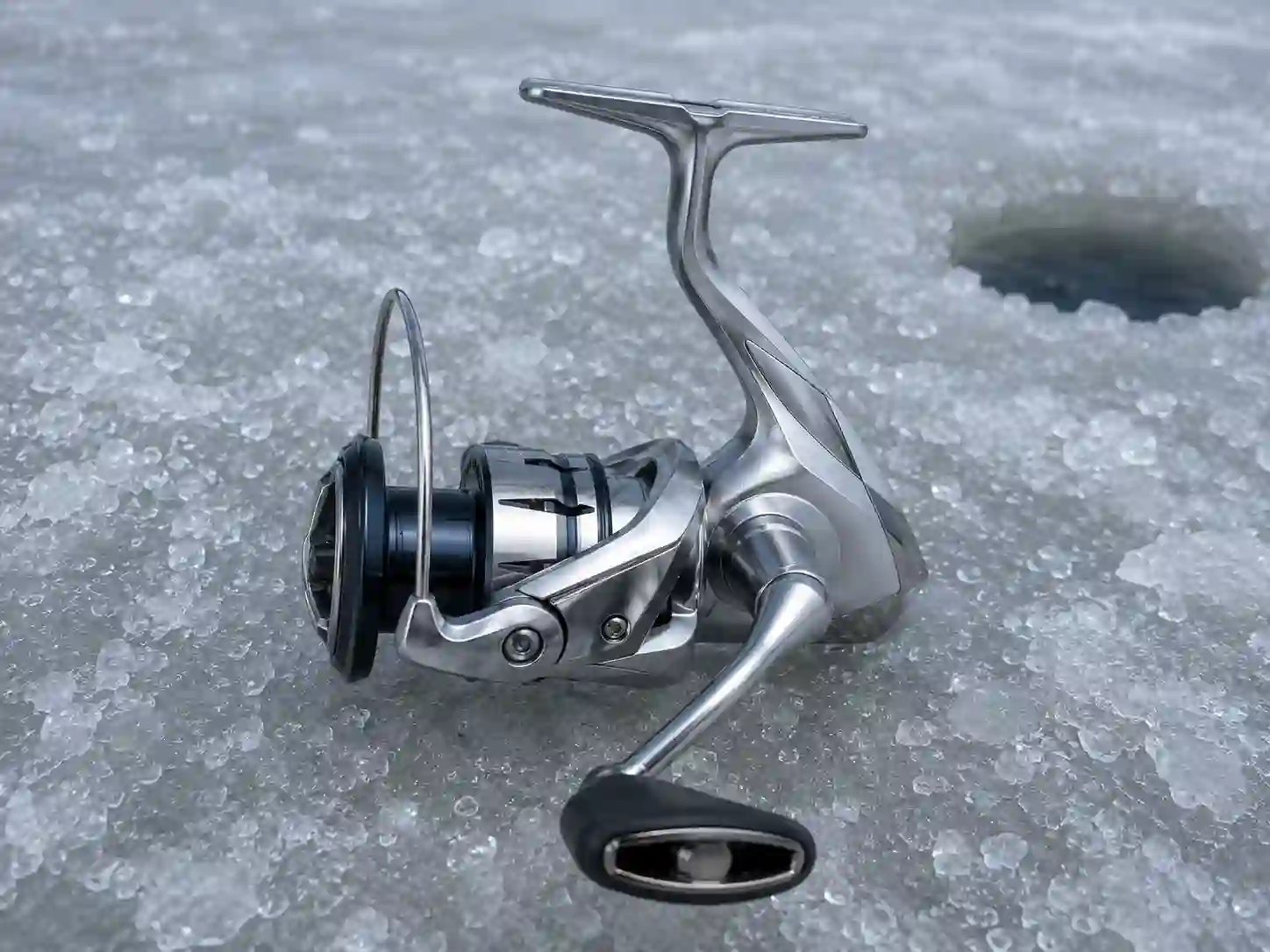
Pflueger President 30 Review: The Reel That Earns Its Spot as Best Overall
The first time we took this reel out for a full day on serious cold, we ran into a problem other ice anglers have mentioned too — the factory grease inside the housing stiffens up in sub-freezing temperatures, and the handle gets noticeably heavier to crank through a glove. It’s a known quirk of the President line, not a defect, and it’s an easy fix once you know what’s causing it.
We popped the side plate, cleaned out the factory grease with a degreaser, and added a few drops of a thin, winter-rated synthetic reel oil designed for fishing reels. That five-minute service made a real difference — after it, the President 30 turned light and silent even once the temperature dropped well below freezing. It’s the kind of maintenance we’d recommend doing before the season starts on any reel in this price range, not just this one.
Size matters more than most anglers assume here. Don’t fall into the trap of buying a 20 or 25 just because “smaller is better on the ice” — on a 38-inch medium-heavy rod like the Ugly Stik Carbon Ice, a size 20 makes the whole setup tip-heavy, and your wrist pays for it after two hours of jigging heavy spoons. The size 30 keeps the balance point right under your fingers, and its wider spool keeps 12 lb mono from coiling up in the cold.
If we could recommend only one spinning reel for dedicated pike anglers, this would be it. It offers the best balance of reliability, cold-weather performance, and value of any reel we tested.
What We Like: excellent balance on 36–38 inch medium-heavy rods, smooth drag once properly lubricated, wide spool resists line coiling in freezing temps.
What Could Be Better: factory grease needs a quick winter service straight out of the box if you’re fishing hard in extreme cold.
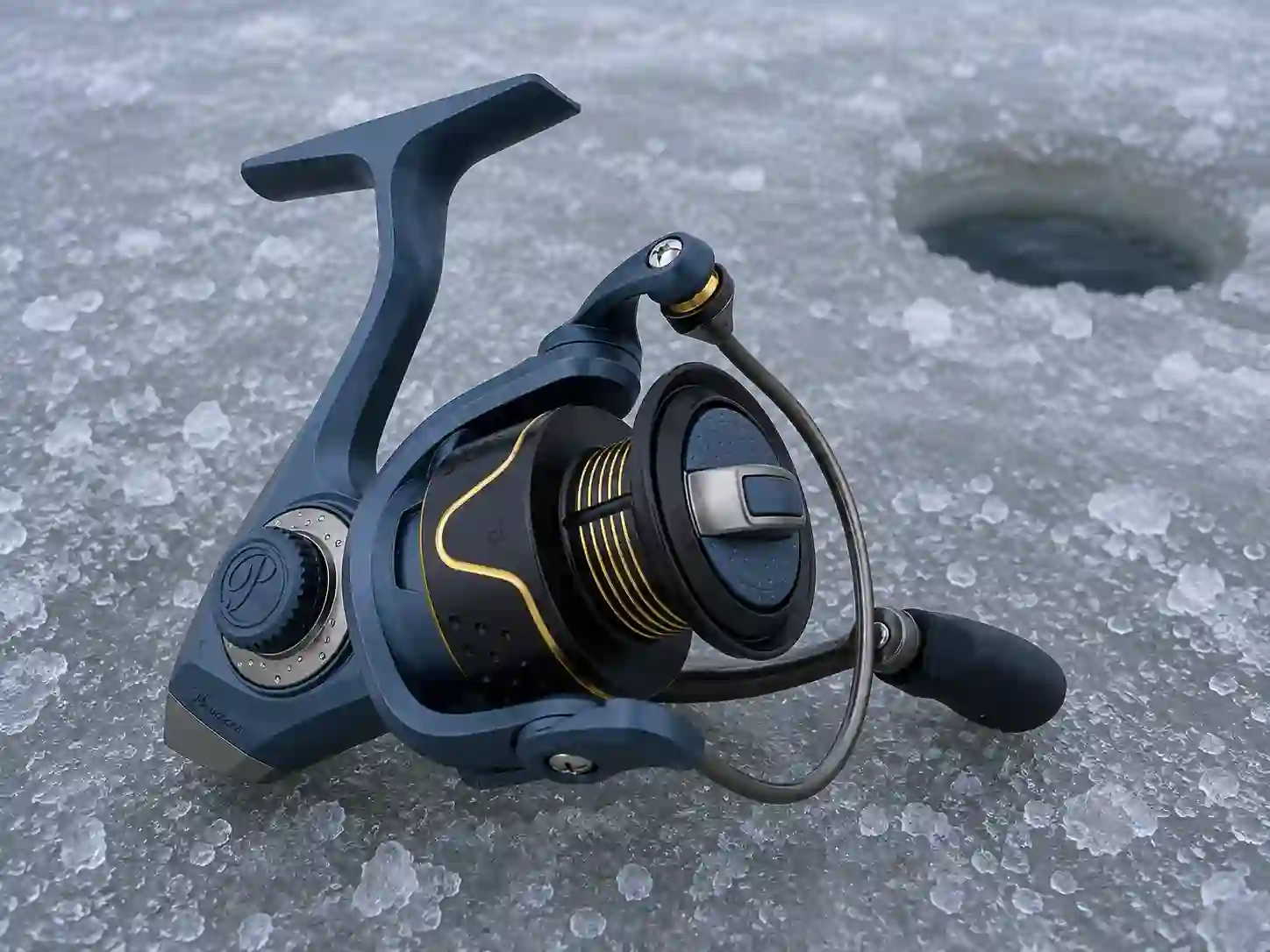
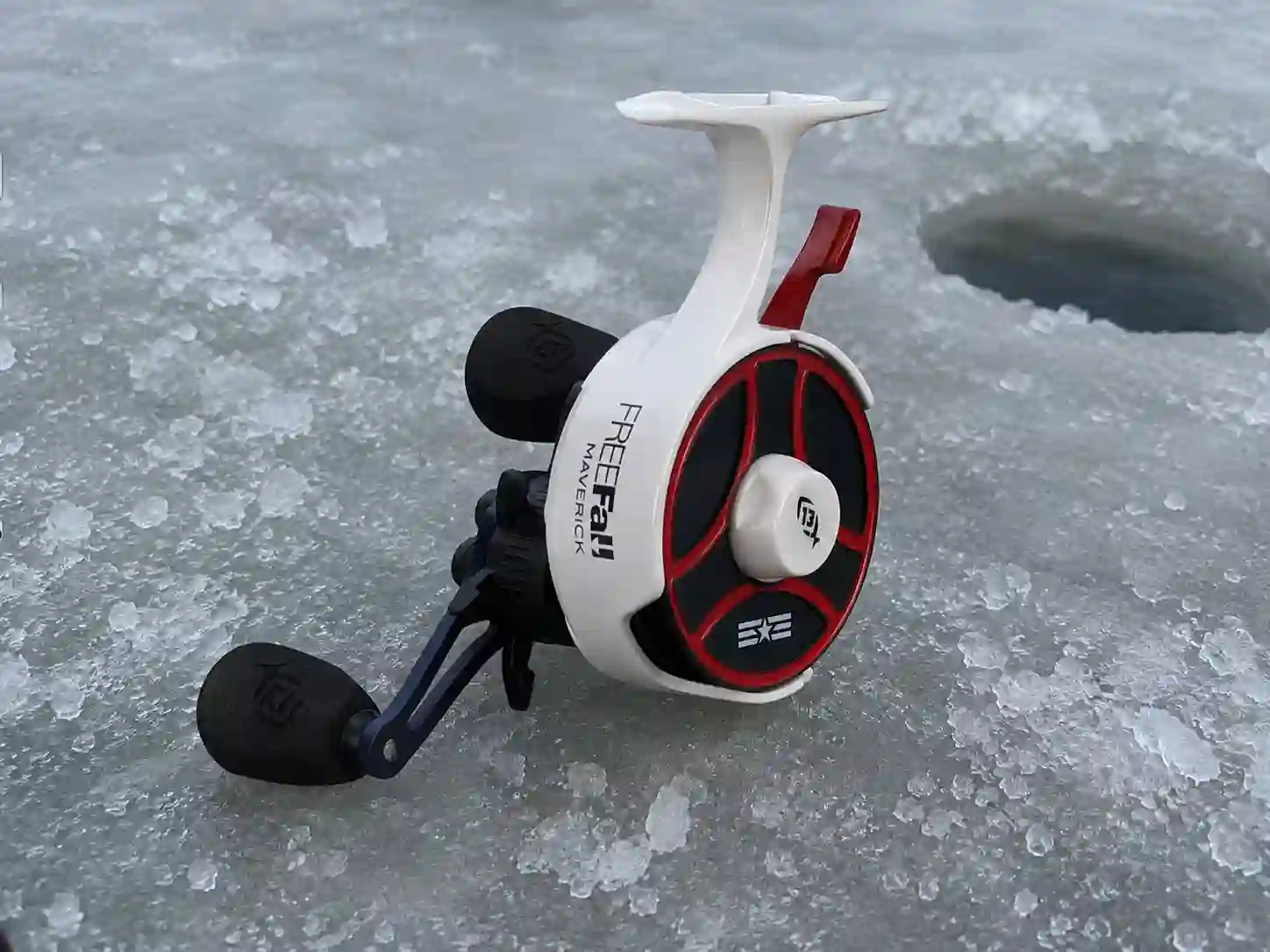
13 Fishing FreeFall Ghost Maverick Review: Best Budget Inline
We’ve watched it happen on the flasher more times than we can count — a pike rises off the bottom, closes to within about 13 ft (4 meters) of the lure, follows it for a few seconds, and then just turns off. With a standard spinning reel, the line coming off the spool under the ice puts a slight spin on the lure as it hangs — a subtle rotation that can make a cautious pike hesitate in clear-water conditions.
With the FreeFall Ghost, the line comes straight off the spool and virtually eliminates that twist. Pull the trigger, and the lure or spoon hangs nearly still under the ice, without the slow rotation a spinning reel tends to add. In our experience, presentations looked noticeably more natural, and following fish were more willing to commit. The trigger also gives you precise one-finger control to drop a lure and hold it 4 in (10 cm) above submerged grass, which matters when pike are holding tight to weed edges.
We’ll be honest about where this reel isn’t the right tool. The 2.5:1 gear ratio means a lot of cranking if you’re fishing 40+ ft (12+ meters) of water — it’s simply not built for deep-water retrieves. But in shallow water and moderate depths, up to about 16–20 ft (5–6 meters), where pike are hunting in and around grass, we haven’t found another inline reel in this price range that’s easier to fish with.
If you primarily fish shallow weed flats, this is the inline reel we’d buy before spending significantly more on premium models.
What We Like: greatly reduced line twist keeps lures hanging naturally for finicky, following pike; one-finger trigger control for precise depth adjustments near weeds and cover; genuinely budget-friendly for an inline reel.
What Could Be Better: the slow 2.5:1 gear ratio makes it a poor choice for deep water — stick to shallow and moderate depths.
Clam Gravity Elite Review: Best Premium Inline
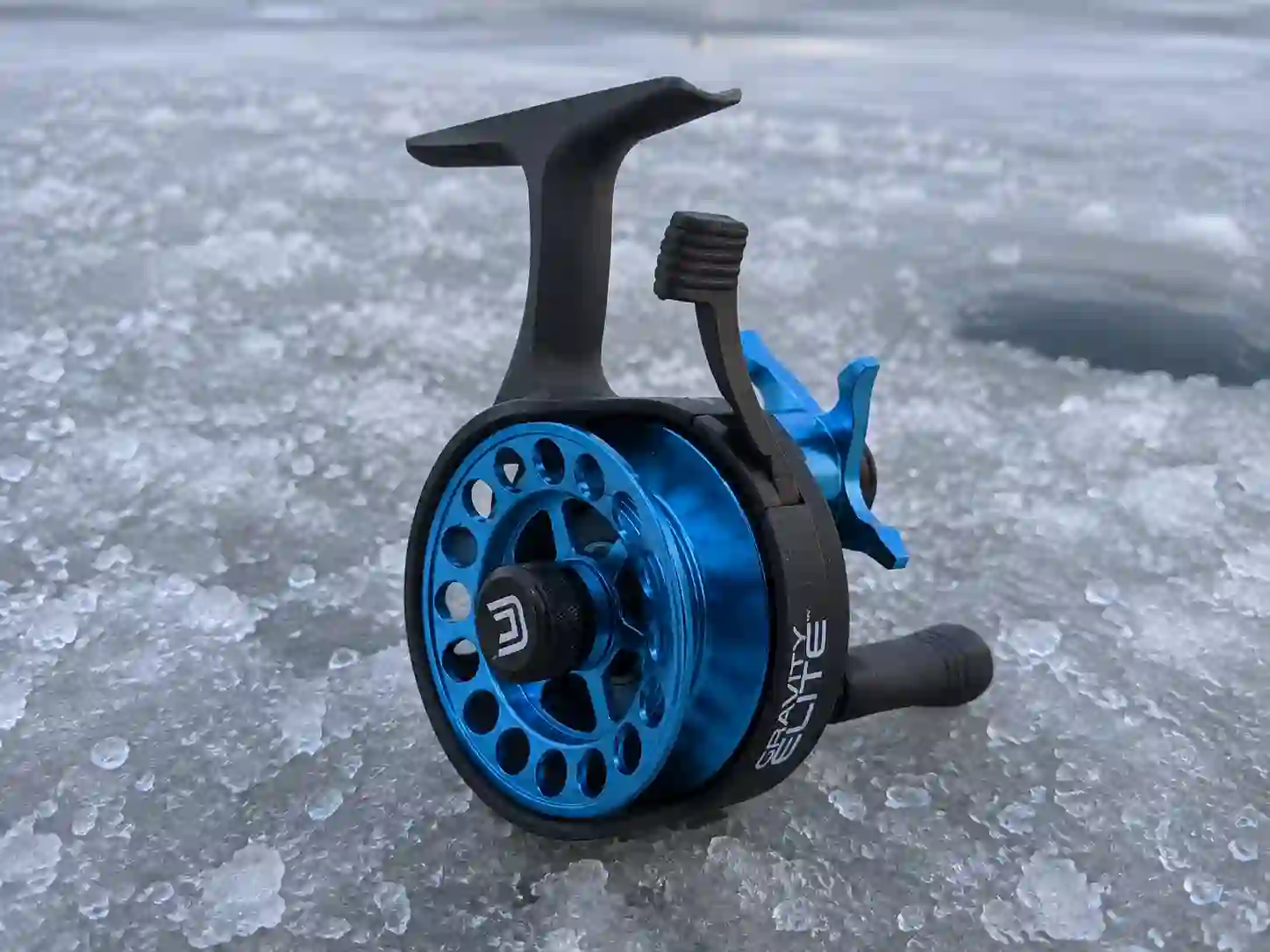
When a pike misses the strike or shifts to a different depth — say 26–33 ft (8–10 meters) — the extra time spent cranking a slower inline reel can be enough for an active pike to lose interest and drift away. Compared with lower-geared inline reels such as the Ghost Maverick, that gap in speed costs you exactly when you need it least.
The Gravity Elite’s faster 3.6:1 gear ratio and wider spool solved that problem for us on the ice. We could reel a lure back up fast and get it back in front of a fish while it was still showing on the flasher, instead of watching it lose interest while we cranked. That extra speed matters more than it sounds when you’re working active, cruising pike instead of ones sitting still.
The controls held up just as well when conditions got miserable. On a windy, sub-freezing day where you can’t afford to strip off your gloves every five minutes, the Gravity Elite’s larger, more ergonomic drag and drop-speed knobs let us dial in the fall rate on a heavier spoon without ever taking off our winter fishing gloves.
The composite housing is worth mentioning too — unlike some aluminum-bodied reels that pull cold straight into your hand, the Gravity Elite stayed neutral in hand through a full day of jigging.
If you already know you prefer inline reels and spend long days chasing active pike, the Gravity Elite is the upgrade we’d make without hesitation.
What We Like: faster 3.6:1 retrieve makes repositioning on active pike much quicker; large, glove-friendly drag and drop-speed controls; composite housing doesn’t transfer cold to your hand.
What Could Be Better: costs more than the Ghost Maverick, so it’s a step up for anglers who fish inline reels seriously, not a first purchase.
Okuma Avenger ABF-1000 Review: Best Baitfeeder
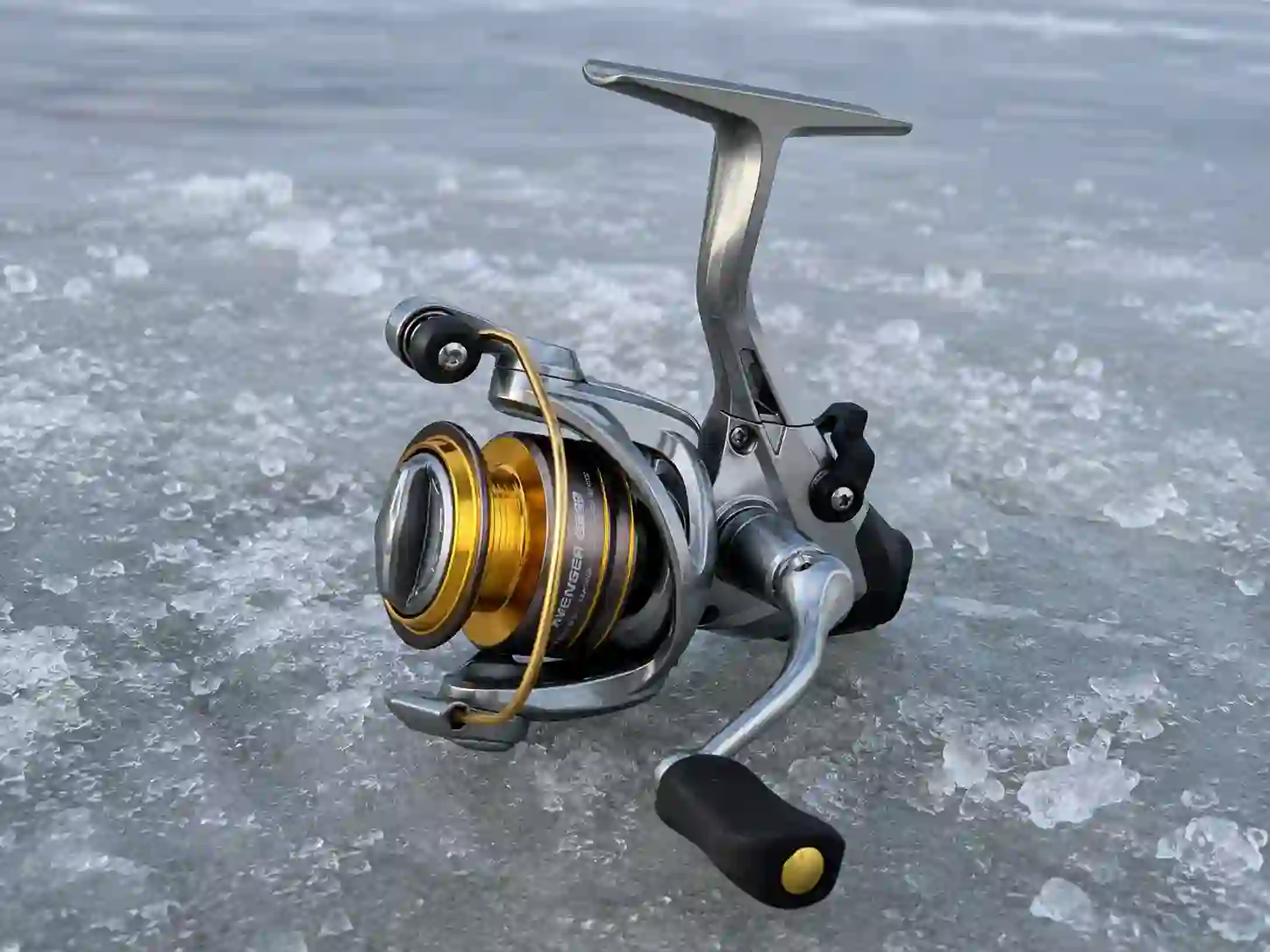
While you’re actively jigging a spoon on your main rod, a deadstick rod sits in a holder nearby with a live minnow doing the work. When a trophy pike moves in and inhales that bait, even a small amount of resistance from a locked-down drag is often enough for the fish to feel something’s wrong and spit it back out before you can even get to the rod.
That’s exactly what the baitfeeder system on this reel is built to prevent. Flip the secondary lever on the back, and the spool turns with almost no resistance at all — the pike takes the bait and swims off, and the line pays out smoothly behind it. One turn of the handle (or flipping that lever back) instantly re-engages the main drag, so you’re fighting the fish on a fully locked-down setting the moment you set the hook.
We know the size 1000 looks small compared to everything else on this list, and that’s intentional, not a compromise. A deadstick rod is typically a softer, more flexible medium-light or light blank — pairing it with a bulkier reel just adds unnecessary weight to the rod holder and dulls the sensitivity you need to notice a bite in the first place. The 1000 keeps the whole setup light, and the main drag still has more than enough strength to handle a pike once it’s hooked and you’re fighting it under the hole.
What We Like: baitfeeder lever lets pike take live bait without feeling resistance; compact size keeps a light deadstick rod balanced and sensitive; instant switch back to full drag for the hookset.
What Could Be Better: if you’re specifically targeting trophy-class pike and want extra insurance on the hookset, step up to a heavier leader and stronger main line rather than a bigger reel — the 1000 is sized for the rod, not the fish.
Ice Fishing Reel Comparison Table
| Reel | Best For | Type | Recommended Technique | Gear Ratio | Standout Feature |
|---|---|---|---|---|---|
| Shimano Stradic FL 2500 | Best Premium | Spinning | Heavy spoons & aggressive jigging | 5.3:1 | Cross Carbon drag with excellent cold-weather performance |
| Pflueger President 30 | Best Overall | Spinning | Active jigging | 5.2:1 | Best balance of reliability, cold performance, and value |
| 13 Fishing FreeFall Ghost Maverick | Best Budget Inline | Inline | Suspended jigging in shallow water | 2.5:1 | Greatly reduces line twist for natural lure presentation |
| Clam Gravity Elite | Best Premium Inline | Inline | Active fish & fast repositioning | 3.6:1 | Fast retrieve for repositioning on active pike |
| Okuma Avenger ABF-1000 | Best Baitfeeder | Baitfeeder | Deadsticking with live bait | 5.0:1 | Free-spool lever lets pike take live bait undetected |
FAQ: Ice Fishing Reels for Pike
What size reel do I need for pike on the ice?
For active jigging, a 2500-size spinning reel (or the equivalent inline/baitfeeder size) is the sweet spot for pike. It holds enough drag to handle a hard strike without throwing off the balance of a short, 32–40 inch ice rod. Going bigger doesn’t add much benefit and just makes the rod tip-heavy after a few hours of jigging.
Is a spinning reel or inline reel better for pike?
Both work well, and the right choice depends on how you’re fishing. Spinning reels are more familiar and handle aggressive jigging without a learning curve. Inline reels give a straight, twist-free drop that can produce a more natural presentation, especially in shallow, weed-heavy water where pike are cautious.
Can I use a baitcasting reel for ice fishing pike?
Baitcasting reels aren’t a common choice for ice fishing. They’re built around a casting motion that doesn’t come into play through a hole in the ice, and most ice-specific rods aren’t set up with the reel seat a baitcaster needs. A spinning, inline, or baitfeeder reel is a better fit.
Why do some reels freeze up or lock up on the ice?
Standard grease and felt drag washers can stiffen or trap moisture once temperatures drop well below freezing, which causes the drag to stick or the anti-reverse to bind. Reels built with cold-weather-rated grease and sealed components hold up much better through a full day on the ice.
What’s a baitfeeder reel, and do I need one?
A baitfeeder reel has a secondary lever that disengages the main drag, letting a fish take live bait and swim off without feeling resistance. It’s built specifically for deadsticking — if you’re running a live minnow on a second rod while jigging, a baitfeeder reel is worth having.
Does gear ratio matter for ice fishing reels?
Less than it does in open water. Since most presentations happen almost straight below the hole rather than requiring a long retrieve, a smooth, reliable drag matters more than a high gear ratio. A slightly faster ratio helps take up slack after a strike, but it shouldn’t be the main factor in choosing a reel.
How do I keep my ice fishing reel from freezing up?
Before the season starts, clean out the factory grease and replace it with a thin, winter-rated synthetic reel oil designed for cold temperatures. Keeping the reel in an insulated bag between trips and avoiding sudden temperature swings — like leaving it in a hot truck cab — also helps prevent condensation from building up inside the housing.