

Best Ice Fishing Sleds (Tested): From Budget Haulers to ATV Tow Sleds
Forty pounds of gear doesn’t sound like much until you have to pull it a quarter mile across a frozen lake. Add wind-packed snow, a few rough ice ridges, and a sled that refuses to track straight, and you can wear yourself out before drilling the first hole.
The best ice fishing sleds should make that walk easier, keep your gear where you loaded it, and survive more than one hard winter. They don’t need a complicated design, but they do need a tough hull, reliable pull points, and enough room for the equipment you actually bring onto the ice.
As an Amazon Associate, we earn from qualifying purchases at no additional cost to you. Read more ›
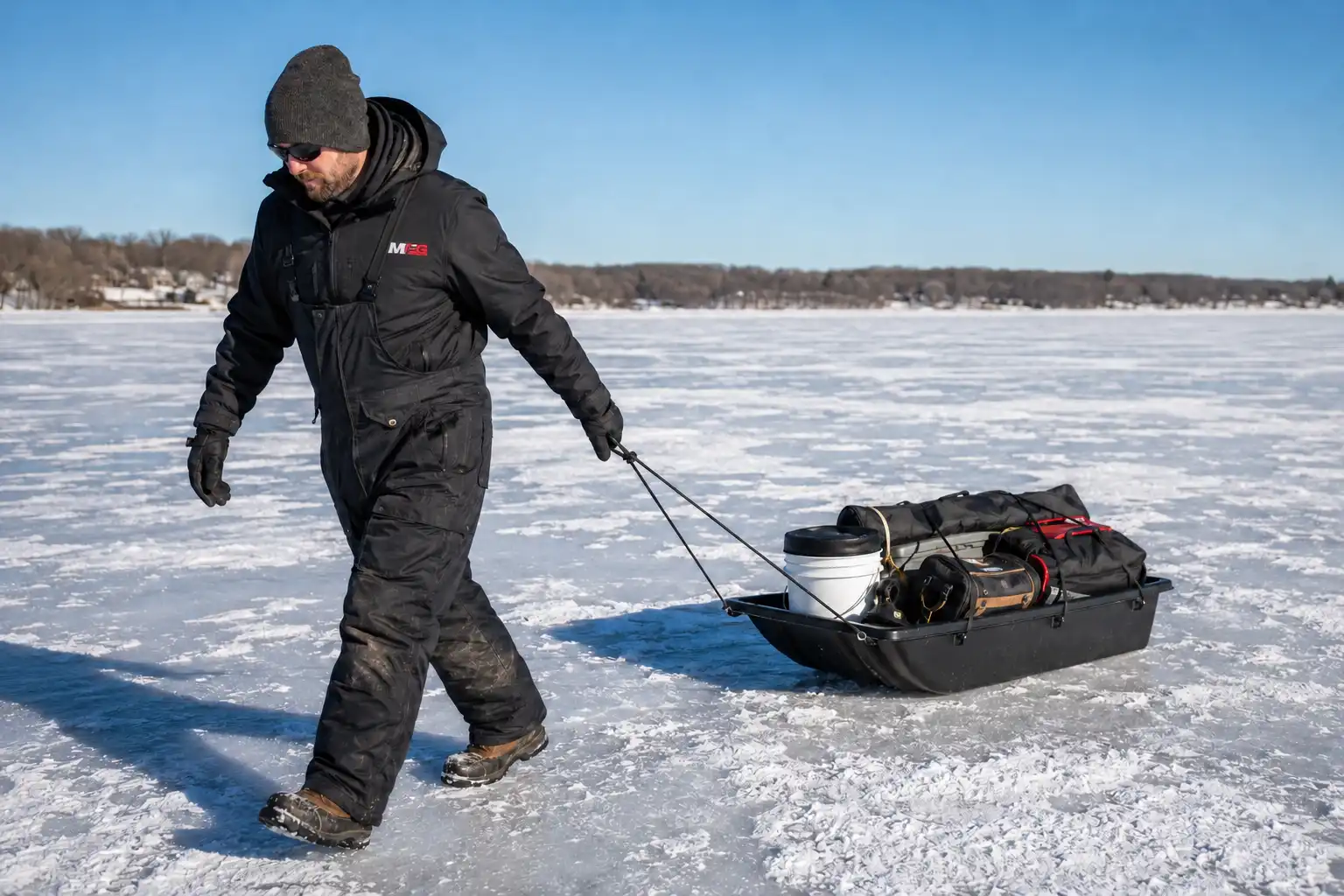
Over the years, we’ve hauled shanties, augers, tip-up spreads, rod cases, and five-gallon bait buckets across everything from hard-packed snow to wet late-season slush. We’ve also overloaded sleds when we should have made two trips. That taught us where problems show up first: ropes pull hard against weak attachment holes, overloaded hulls flex over frozen ridges, low sides let gear spill during sharp turns, and narrow sleds tip when heavy equipment is stacked too high.
We’ve had sleds that felt fine on smooth ice but became exhausting as soon as the snow softened. Others tracked well with a light load, then wandered from side to side once we added an auger and shelter. A few developed worn bottoms or stress marks around the pull points after repeated use. Those failures shaped what we looked for here far more than product photos or marketing claims.
How We Tested: We tested these six sleds across two full ice fishing seasons and more than 30 combined trips onto natural lakes and reservoirs. Conditions ranged from wind-scoured clear ice and deep slush to wind-drifted snow and rough shoreline transitions with exposed rock and frozen ruts.
Our hand-pull loads ranged from light 30-pound mobile setups—a bucket, auger, rod case, and tackle—to heavier shelter-and-heater combinations. The Pelican Trek Sport 75 was tested separately behind an ATV on hard-packed trails with loads exceeding 250 pounds, including a two-person pop-up shelter, propane heater, full tip-up spread, and power auger.
We compared starting resistance, tracking stability, hull flex, sidewall rigidity, usable cargo space, and tow-point durability. We also changed the weight and position of the gear to find where each sled became harder to start, control, or keep balanced. Finally, we checked the published specifications and compared the structural wear we observed with recurring feedback from other multi-season ice anglers.
The result isn’t six versions of the same plastic tub. This list includes a balanced all-around sled, a lower-cost gear hauler, a large model built for snowmobile or ATV towing, an extra-long option for bulky equipment, a compact solo sled, and a tougher premium choice for hand pulling.
MFG Quick List: Best Ice Fishing Sleds
If you’re short on time, these six sleds cover the situations anglers actually run into—from a balanced all-around hauler to a dedicated ATV tow sled, an extra-long option for bulky gear, and a compact pick for solo trips.
- Beavertail Sport Sled (Medium) — Best Overall: the strongest balance of durability, capacity, and price for most anglers.
- Pelican Trek 45 — Best Budget: 130-lb capacity and built-in runners at a practical price for everyday gear hauling.
- Pelican Trek Sport 75 — Best for Snowmobile/ATV Towing: a 500-lb-capacity sled built specifically for motorized towing.
- Flexible Flyer Winter Trek 3-Person — Best Extra-Long Sled: a 66-inch platform for long, bulky gear that will not fit comfortably in a compact utility sled.
- Pelican Nomad 40 — Best Compact/Solo: light enough to hole-hop all day without dragging unnecessary weight.
- Otter Sport Sled (Medium) — Best Premium Hand-Pull Sled: a tougher, hand-pull-focused build from a trusted ice fishing brand.
Beavertail Sport Sled (Medium) — Best Overall
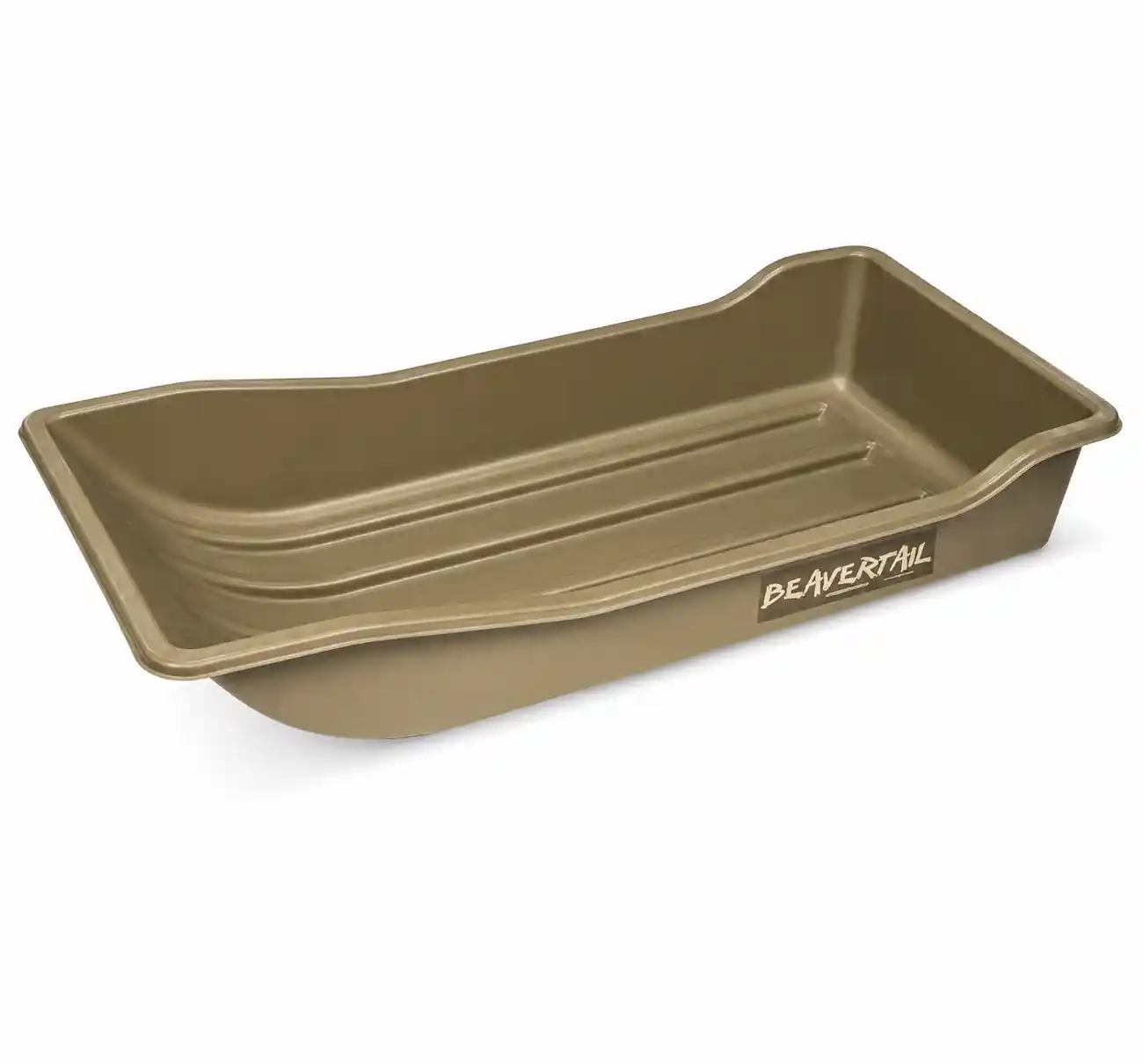
The first time we loaded a compact pop-up shanty, an auger, and a full tip-up spread into the Beavertail, we expected the uneven load to make it wander on the walk out. It didn’t. The 24-inch-wide hull and molded bottom runners kept it tracking with fewer corrections than the narrower sleds we pulled through the same stretch of wind-drifted snow.
What sold us wasn’t a single trip, though. It was how the sled held up after being loaded, unloaded, and dragged across the rough transition between the shoreline and the lake. The bottom picked up the surface scratches we expected, but the polyethylene hull showed no cracks or deep wear after repeated contact with frozen ridges and exposed rock. The reinforced upper lip also helped the sidewalls hold their shape when the load pressed against them.
At 55 inches long, 24 inches wide, and 10 inches deep, the Medium has enough usable room for a compact ice fishing shelter, auger, bucket, and tip-up gear without forcing everything into a tall, unstable stack. It still needs to be loaded carefully and secured when the trail gets rough, but its size strikes a useful balance: noticeably more cargo space than a compact solo sled without becoming exhausting to pull by hand.
What We Like:
- Predictable tracking even with an uneven, front-loaded stack.
- Durable polyethylene construction that shrugged off rock and frozen ridges.
- Enough room for a complete solo shanty-and-gear setup.
- Reinforced upper lip adds real sidewall strength under load.
What Could Be Better:
- The included tow rope is the weakest part of the package — fine for normal pulling, but a longer, thicker replacement is worth considering for heavy loads and longer walks.
Pelican Trek 45 — Best Budget
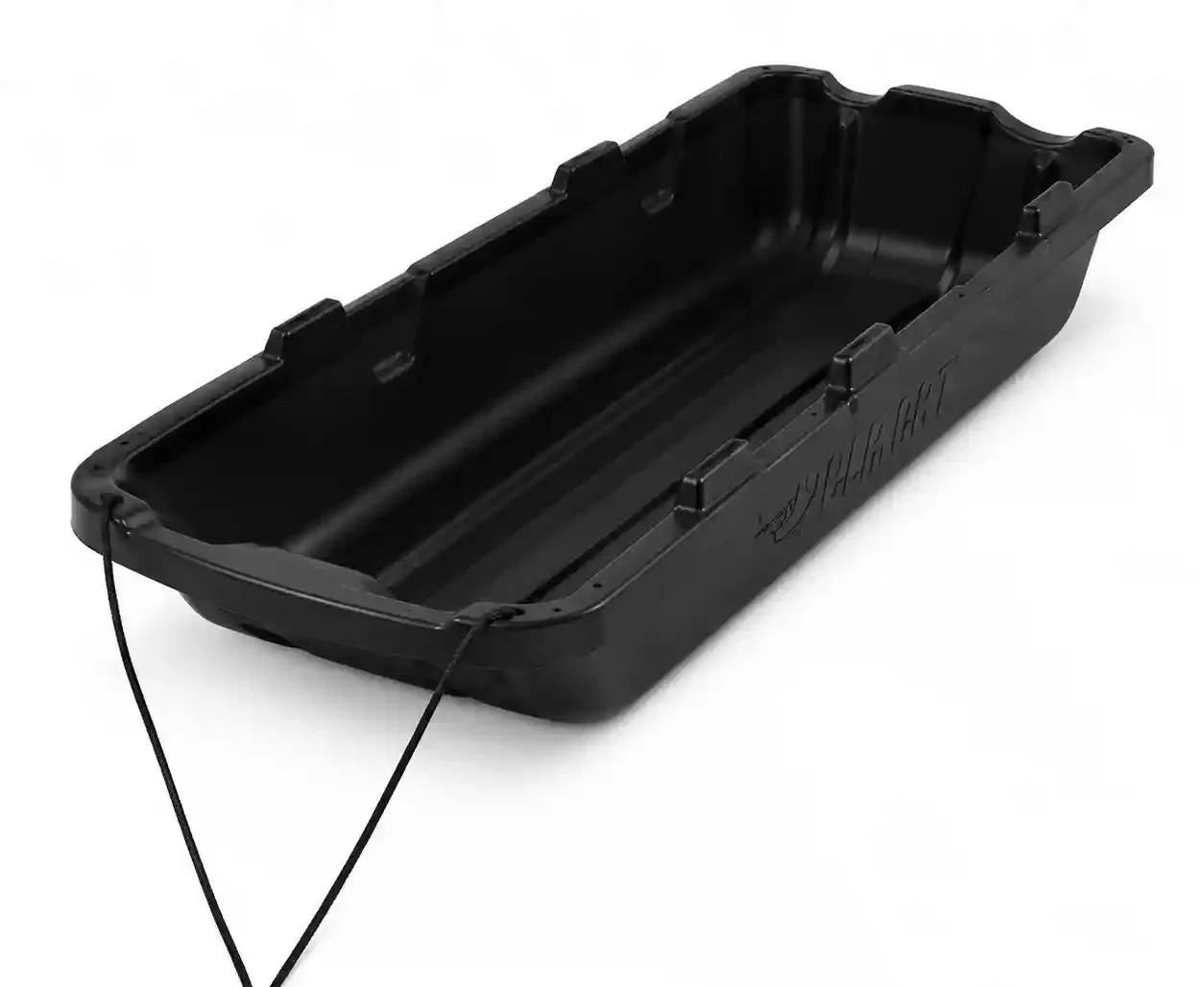
At just six pounds, the Trek 45 became the sled we grabbed for simple mornings when we wanted to travel light—one of our tested ice augers for pike, a bucket, a rod case, and enough tackle to keep moving between holes. With that load, it started moving easily and followed behind us without demanding constant corrections on packed snow.
The pre-molded HDPE runners are integrated directly into the hull, and we could feel the difference compared with inexpensive flat-bottom sleds that tend to wander from side to side. The Trek 45 tracked well with our normal solo load and showed no concerning flex as it crossed packed snow and shallow frozen ruts.
We also kept adding gear to find the point where its budget construction began to show. As the load moved closer to the 130-pound limit, the hull flexed more and the sled took noticeably more effort to start, particularly when the snow softened. It still carried the weight, but the test confirmed that the Trek 45 works best as a light-to-medium solo hauler, not as a substitute for one of Pelican’s larger utility sleds.
Its 45.5 × 20 × 8-inch hull provides 71 liters of cargo space. In practice, that space runs out before most anglers approach the maximum weight rating. A bucket, auger, rod case, and tackle fit naturally, while a shelter, heater, and the rest of a full-day setup quickly become a tall load. Built-in indentations help hold your own bungee cords or cargo net in position, but the bungees themselves are not included.
What We Like:
- Six-pound weight makes it easy to carry, load, and pull by hand.
- Molded bottom runners provide steadier tracking than the flat-bottom budget sleds we tested.
- The 130-pound rating leaves plenty of capacity for a standard solo setup.
- Built-in indentations help keep cargo nets and bungee cords from sliding out of position.
What Could Be Better:
- The 71-liter hull fills quickly, and adding a shelter and heater creates a tall, top-heavy load.
- Hull flex becomes more noticeable when the sled is loaded close to its maximum weight rating.
Pelican Trek Sport 75 — Best for Snowmobile/ATV Towing
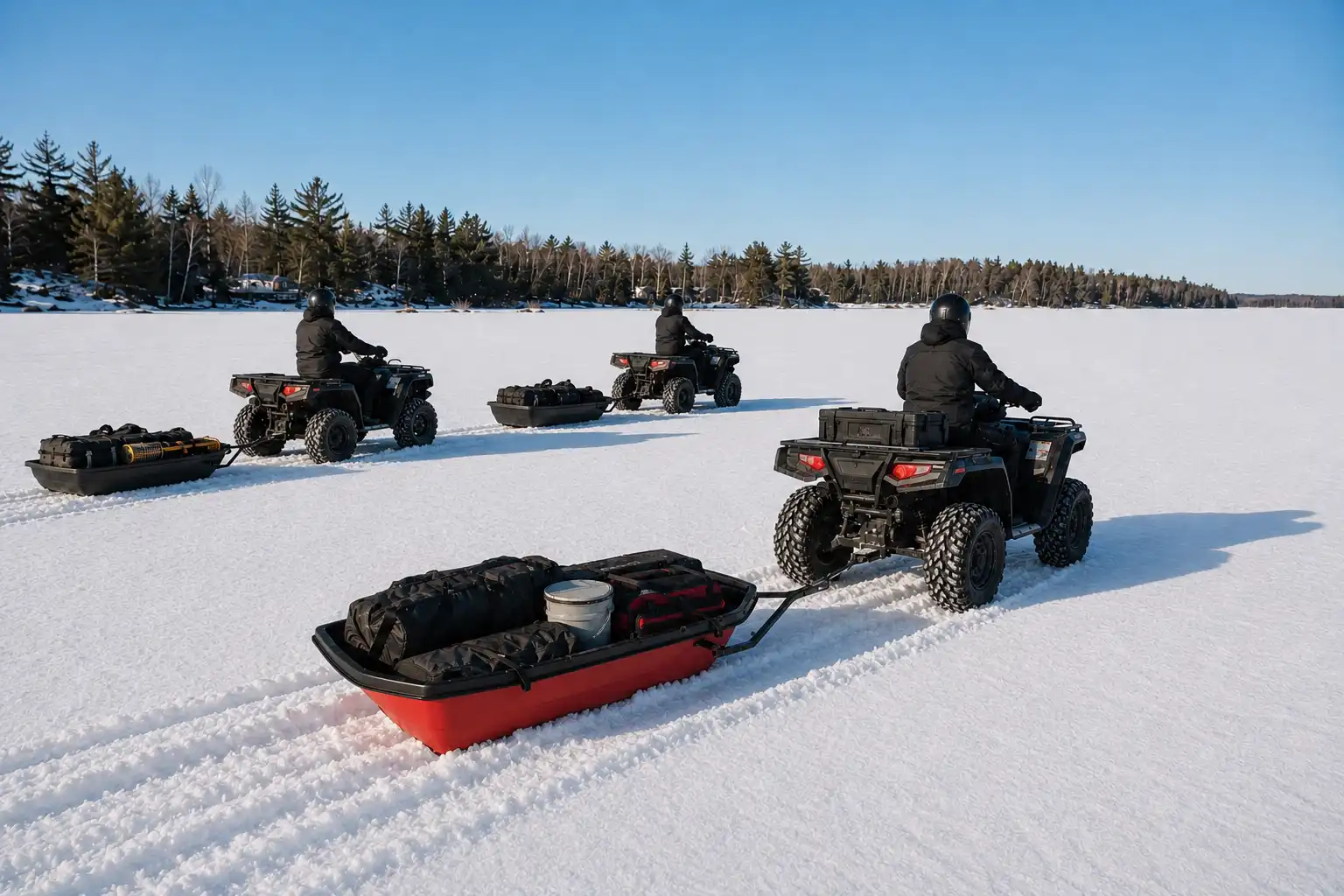
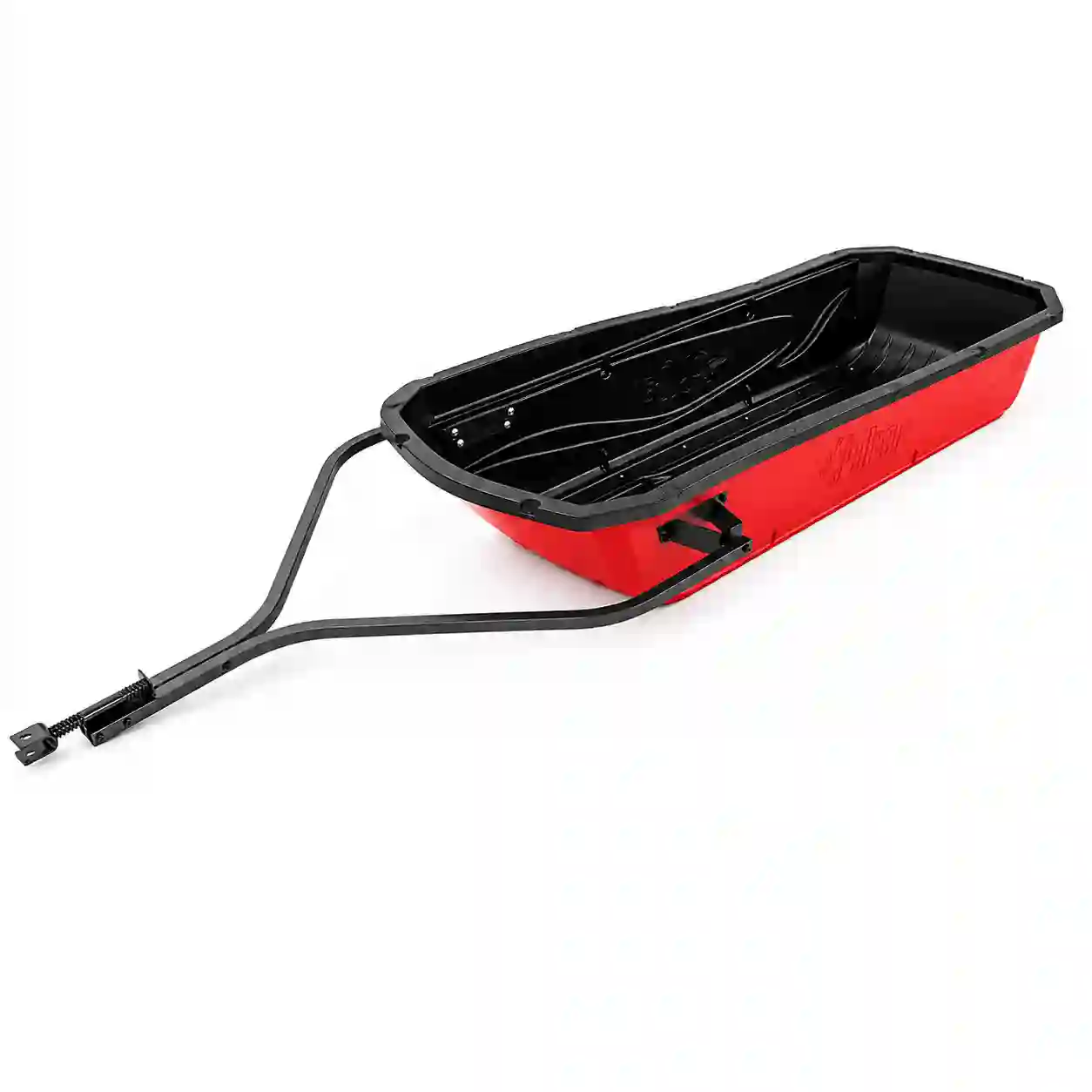
We hitched the Trek Sport 75 behind an ATV and loaded it with a pop-up shanty, heater, auger, and gear for two anglers. Across rough, wind-drifted trail sections, the wide hull stayed planted and followed the ATV without the load leaning heavily from side to side. That stability is where its 30.5-inch width and 14.75-inch depth make a real difference.
The metal tow hitch kept the sled under control when the trail changed from hard-packed snow to softer drifts, while its shock-absorbing design reduced the sharp tug we felt during starts and stops. The included RAM-X runners helped it hold its line across icy sections, and the hitch folds back over the sled when it is time to transport or store the package.
This is the only sled on our list designed from the start for motorized towing. At 74.5 inches long with a 500-pound capacity, it has enough room for a shelter, heater, auger, a complete spread of tip-ups for pike, and the rest of two anglers’ gear without building a tall, unstable stack. The included travel cover helps shield the load from loose snow and spray, although we would still protect anything that must remain completely dry.
The Trek Sport 75 can also be fitted with owner-made dividers using Pelican’s provided template. That takes more work than having factory dividers included, but it gives you a practical way to separate an auger, heater, buckets, and smaller equipment instead of letting everything shift into one pile during the tow.
What We Like:
- Wide, deep hull stays stable with a properly balanced load during motorized towing.
- The large hull and 500-pound capacity provide ample room for a shelter and gear for two anglers.
- Shock-absorbing metal tow hitch, RAM-X runners, and travel cover are included.
- Provided template allows the interior to be organized with owner-made dividers.
What Could Be Better:
- At 33 pounds and 74.5 inches long, it is cumbersome to pull by hand once loaded.
Flexible Flyer Winter Trek 3-Person — Best Extra-Long Sled
The Winter Trek made the most sense as soon as we loaded the long pieces of our setup: a folded hub shelter, rod case, spud bar, and auger. On shorter sleds, that equipment extended over the back or had to be balanced across a bucket. Here, we could arrange it along the 66-inch platform, keep the weight lower, and avoid building the tall stack that had given us trouble with compact haulers.
With the longer items centered and secured, the sled followed cleanly across hard-packed snow and a stretch of bare, wind-scoured ice. The molded grooves running along the bottom helped it hold its direction, while the long base spread the load over more surface area. It still needed careful loading—placing too much weight on one side made it pull unevenly—but a balanced load was easier to control than we expected from such a long sled.
At 66 inches long, 20 inches wide, and only 6 inches deep, the Winter Trek is built more like a utility toboggan than a conventional tub sled. Its approximate 300-pound rating sounds substantial, but capacity is not the main reason to choose it. The real advantage is having enough length for awkward equipment that does not sit properly inside a compact sled.
The shallow sides are also its biggest limitation. They make loading long gear easy, but they do little to contain buckets, heaters, or equipment stacked vertically. There are no dedicated cargo tie-down points, so we used our own straps to keep the shelter, rod case, and auger together. This sled works best when the load is long, relatively low, and securely tied down.
What We Like:
- The 66-inch platform accommodates a folded hub shelter, long rod case, and other awkward equipment.
- Long base lets gear sit lower instead of being stacked into an unstable pile.
- Molded bottom grooves provide steady tracking when the load is centered and balanced.
- HDPE construction handled hard-packed snow and rough ice without cracking during our testing.
What Could Be Better:
- Six-inch sides do not contain tall or top-heavy equipment as well as a deep utility tub.
- Dedicated cargo tie-down points are not included, so long gear must be secured with your own straps or bungee cords.
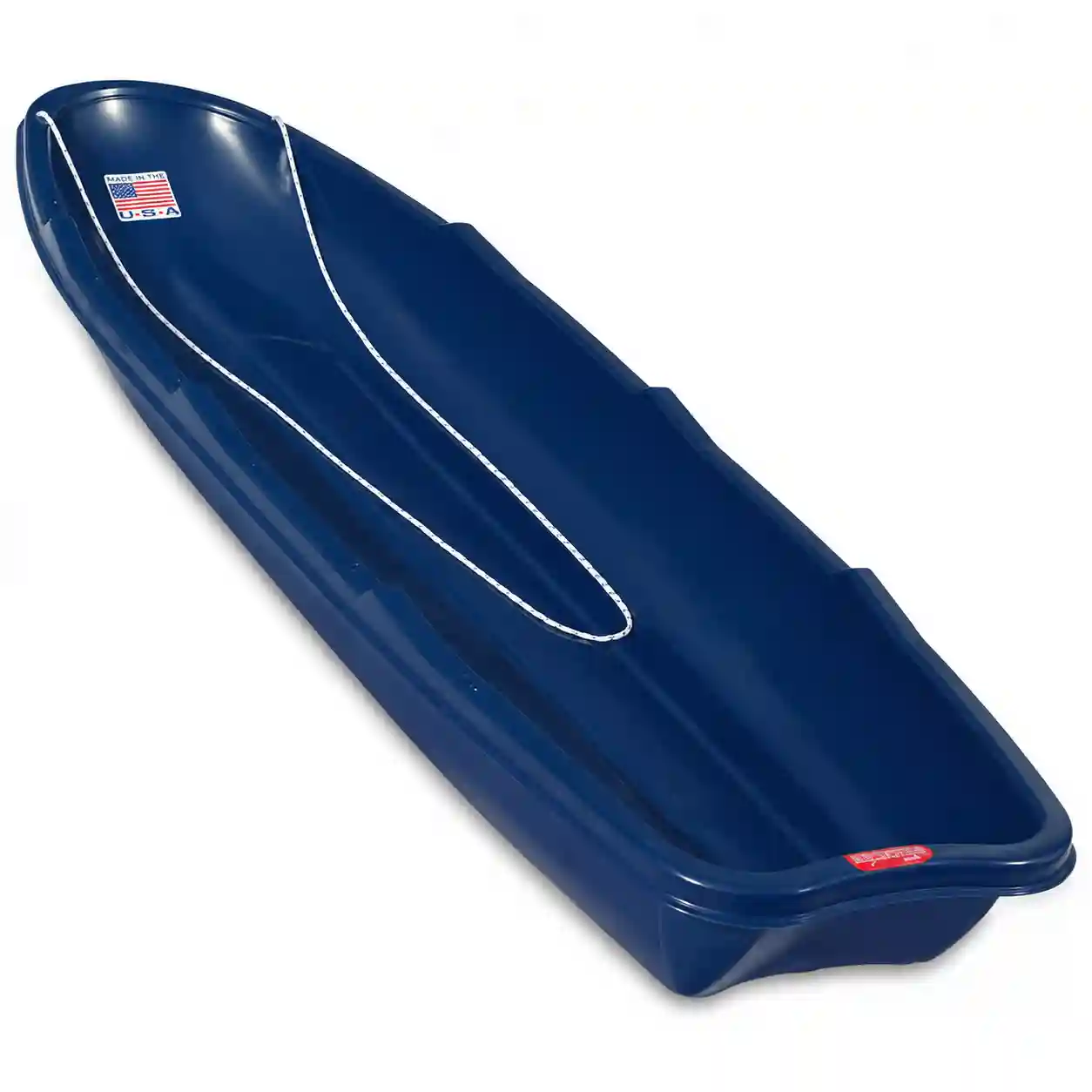
Pelican Nomad 40 — Best Compact/Solo
The Nomad 40 made the most sense on mornings when we planned to keep moving until we found active fish. At only 4.6 pounds, it was easy to turn around beside a hole, lift over a frozen drift, or reposition without unloading the bucket, tip-ups, and small tackle bag inside.
That low empty weight mattered more during frequent moves than it did on the initial walk onto the lake. Instead of dragging a large tub every time we shifted the spread, we could grab the side rope, lift the front, and point the sled toward the next set of holes. It never felt like we were hauling more sled than gear.
The pre-molded runners helped it follow cleanly across packed snow and smooth ice when the load was centered. In softer snow, the short hull required more pulling effort, but its compact size still made it easier to maneuver around drilled holes, buckets, and other equipment than the longer sleds in this guide.
At 40 inches long with a 90-pound capacity, the Nomad is designed around a stripped-down solo load. It can carry an auger, bucket, tip-ups, a compact ice rod setup for pike, and basic tackle, but adding a shelter, heater, and full-day gear quickly creates an awkward stack. The raised sides help contain smaller items, while the side ropes provide useful grab points when lifting or repositioning the sled. We would still use separate bungee cords or straps to secure the load during a longer walk.
What We Like:
- The 4.6-pound empty weight makes it easy to lift, turn, and reposition between holes.
- Compact hull is easier to maneuver around a tip-up spread than a full-size utility sled.
- Pre-molded runners provide steady tracking when the load is centered.
- Side ropes provide convenient grab points for lifting and repositioning the sled.
What Could Be Better:
- The 40-inch hull and 90-pound capacity are limiting once a shelter, heater, and other bulky equipment are added.
- Side ropes help with handling, but separate straps or bungee cords are still needed to secure fishing gear.
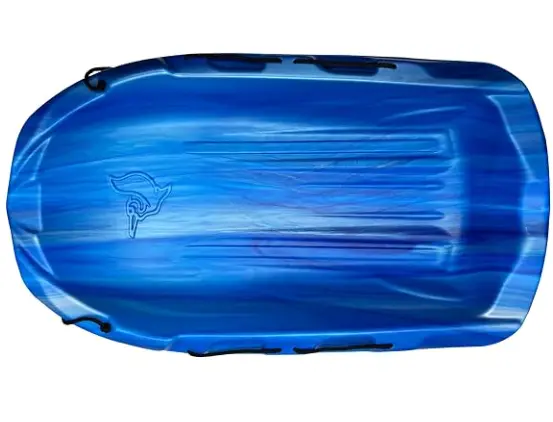
Otter Sport Sled (Medium) — Best Premium Hand-Pull Sled
We went into this test expecting the Otter name to carry the sled, but the one-piece roto-molded shell did more to justify the premium label than the badge. We loaded it with a battery auger, heater, full bait bucket, and the rest of our core gear, creating a denser and less evenly distributed load than we had used in the compact sleds.
The reinforced outer lip held its shape when the bucket shifted toward one side, and the sidewalls did not fold inward when the heavier equipment pressed against them. That made the sled feel more solid while loading and unloading, especially when we lifted the front over frozen ruts near the shoreline. The difference was not that the Otter carried dramatically more gear—it was that the hull felt less affected by how that weight was arranged.
Otter designed the Sport line as a lighter, hand-pull-focused alternative to its heavier Pro sleds, and that purpose was clear on the walk back from the lake. The raised rear section helped keep the load inside the hull as the trail climbed, while the included rope provided a straightforward hand-pull setup. We still secured the bucket and heater with our own straps rather than relying on the hull shape alone.
The one-piece polyethylene construction is also compatible with an optional travel cover and Otter’s Universal Tow Hitch Adapter. That gives the Medium Sport Sled more room for future upgrades than a basic utility tub, although neither accessory is included with the sled.
What We Like:
- Reinforced outer lip and stable sidewalls handle a dense, uneven load without losing their shape.
- One-piece roto-molded polyethylene construction feels solid during repeated loading and unloading.
- Raised rear section helps contain gear when pulling the sled up an incline.
- Lighter Sport design is better suited to hand pulling than Otter’s heavier Pro sleds.
- Optional travel cover and tow-hitch adapter allow the setup to be upgraded later.
What Could Be Better:
- The included pull rope is short for longer walks, and some owners replace it with a longer rope and a more comfortable handle.
- The travel cover and Universal Tow Hitch Adapter are sold separately, adding to an already premium-priced setup.
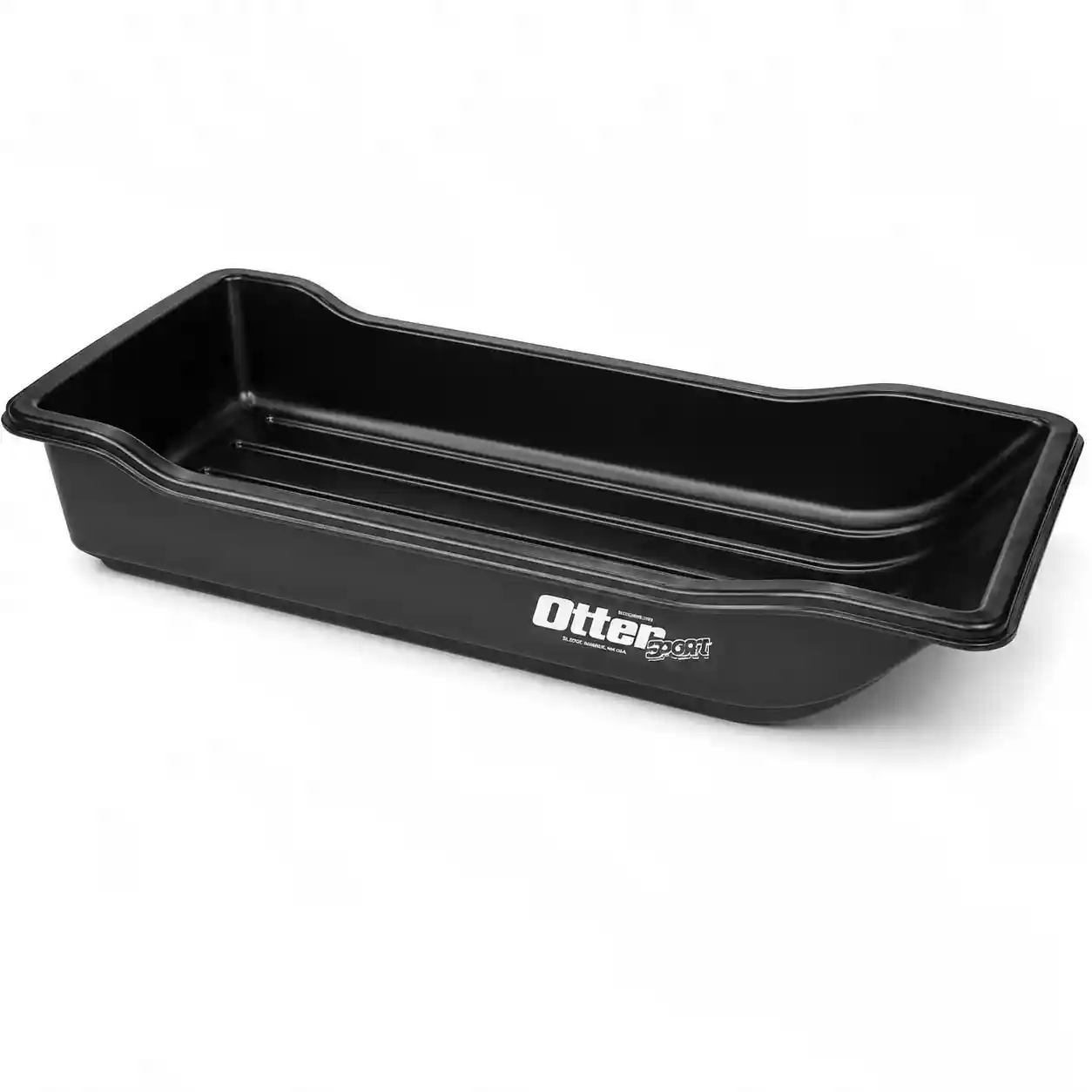
| Sled | Best For | Dimensions | Weight / Capacity | Ideal Scenario |
|---|---|---|---|---|
| Beavertail Sport Sled (Medium) | Best Overall | 55 × 24 × 10 in | 12.5 lb / Not listed | Complete solo setup across packed snow and rough shoreline transitions |
| Pelican Trek 45 | Best Budget | 45.5 × 20 × 8 in | 6 lb / 130 lb | Light-to-medium solo gear on a tighter budget |
| Pelican Trek Sport 75 | Best for Snowmobile/ATV Towing | 74.5 × 30.5 × 14.75 in | 33 lb / 500 lb | Motorized towing with a shelter, heater, and gear for two anglers |
| Flexible Flyer Winter Trek 3-Person | Best Extra-Long Sled | 66 × 20 × 6 in | Not listed / Approx. 300 lb | Long, awkward equipment that will not fit securely in a compact tub sled |
| Pelican Nomad 40 | Best Compact/Solo | 40 × 22.5 × 7 in | 4.6 lb / 90 lb | Frequent solo hole-hopping with a stripped-down core setup |
| Otter Sport Sled (Medium) | Best Premium Hand-Pull Sled | 53 × 25 × 10 in | 12.5 lb / Not listed | Dense hand-pulled loads where stronger sidewalls matter more than minimum weight |
How to Choose an Ice Fishing Sled
The right sled depends less on the brand name and more on how you actually fish. A solo angler moving between holes needs something very different from a pair of anglers hauling a shelter, heater, and full tip-up spread—or anyone towing gear behind a snowmobile or ATV. If you’re still planning your overall approach on the hardwater, our complete breakdown of ice fishing for pike covers where to set up and how to work the fish once you get there. Here is what matters when comparing your options.
Match Capacity to Your Real Load
A sled’s stated weight rating is a maximum limit, not necessarily its most practical working load. As weight increases, the sled takes more effort to start, becomes harder to control, and may flex more when crossing frozen ruts or rough ice. Soft snow adds even more resistance. On bare, wind-scoured ice, the problem flips: the sled slides easily, but your boots don’t, and a good pair of ice fishing cleats keeps you from slipping every time a heavy load resists the first pull.
Think about the equipment you carry on a normal trip, not the lightest setup you could get away with. If your shelter, auger, heater, buckets, tackle, and ice fishing electronics regularly bring you close to the sled’s maximum rating, moving up to a larger model will usually provide better stability and easier loading.
Choose Between Hull Depth and Usable Length
Deep-sided tub sleds are better at containing buckets, heaters, tackle bags, and equipment that could tip or shift during a turn. They let you build a taller load, although that load still needs to be balanced and secured.
Longer, shallower sleds trade some containment for space to carry awkward equipment. A folded hub shelter, long rod case, spud bar, or auger can lie along the platform instead of hanging over the back of a compact tub. Neither shape is universally better—the right choice depends on whether your gear is mostly tall and bulky or long and awkward.
Separate Hand-Pull Sleds From Motorized Tow Sleds
A hand-pull sled and a sled designed for towing behind a snowmobile or ATV are different tools, even when their plastic hulls look similar. Hand-pull models prioritize lower weight and simple rope attachment. Motorized tow sleds are generally larger and use a rigid hitch, reinforced attachment points, and runners designed for sustained towing.
Never tow a hand-pull sled with a motorized vehicle unless the manufacturer approves it and offers compatible towing hardware. An ordinary pull rope does not provide the control of a rigid tow bar, and an improvised connection can damage the hull, allow the sled to swing into turns, or separate during the tow.
Before taking a snowmobile or ATV onto the lake, check the ice along your planned route. Our ice fishing safety article covers ice thickness, ice quality, and conditions that can weaken it.
Consider the Bottom Design and Runners
Molded or installed runners can help a loaded sled hold its direction across packed snow and uneven ice. They may also reduce wear by keeping more of the hull away from abrasive surfaces. However, runners cannot correct poor loading—a sled can still pull unevenly if most of the weight is placed on one side or too far toward the front or rear.
A flat-bottomed sled can work well for short, light hauls, but differences in tracking and pulling resistance become more noticeable as the load and distance increase.
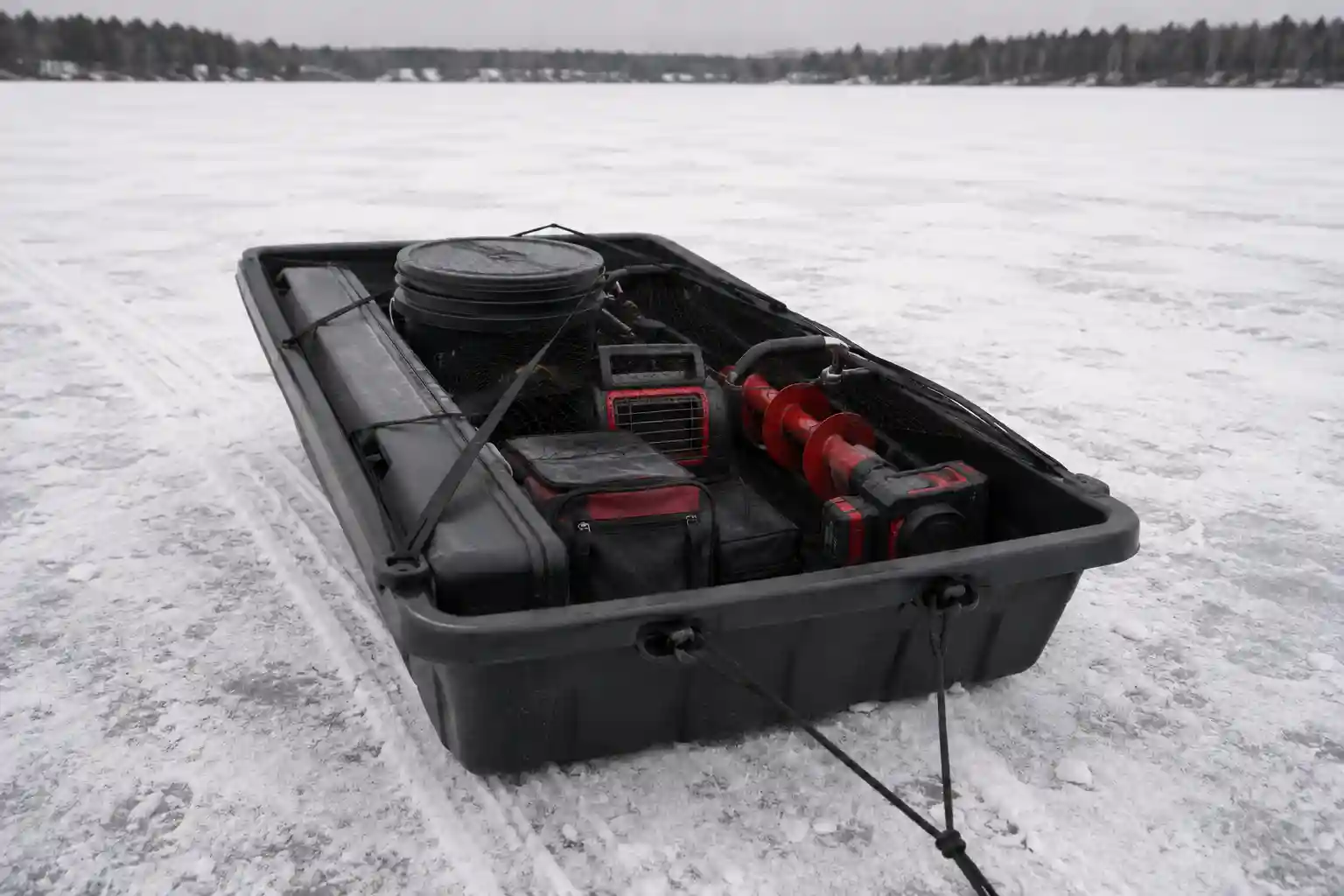
Load the Sled Low and Balanced
Place the heaviest equipment low and close to the center of the hull, then arrange lighter or longer items around it. Avoid stacking a bucket, heater, or auger high on one side, where it can pull the sled off line or tip when crossing a frozen ridge. A low, balanced load starts more easily, tracks more predictably, and puts less strain on the pull rope or tow hitch.
Plan How You Will Secure the Load
Before buying, look at how the sled allows you to control shifting gear. Built-in attachment points, bungee indentations, cargo nets, and compatible covers can make loading easier. Interior dividers serve a different purpose: they separate equipment and limit movement, but they do not replace straps or bungee cords.
Side ropes may provide useful grab points, but they should not automatically be treated as load-rated tie-downs. Buckets, heaters, augers, and rod cases should be secured with appropriate straps or bungee cords, especially when crossing rough ice or towing over longer distances.
Frequently Asked Questions
How much weight can an ice fishing sled actually carry?
The compact sleds in this guide are rated between 90 and 130 lb, while the Pelican Trek Sport 75 is rated for up to 500 lb. Treat those numbers as maximum limits rather than ideal working loads. A heavily loaded sled takes more effort to start and control, especially in soft or wet snow.
Can I tow an ice fishing sled behind an ATV or snowmobile?
Only if the manufacturer approves the sled for motorized towing and offers compatible towing hardware. A proper tow sled uses a rigid hitch and reinforced attachment points to handle motorized towing forces. An improvised rope connection can allow the sled to swing during turns, damage the hull, or separate from the vehicle.
Do ice fishing sleds need runners?
Runners are not strictly required, but they can improve tracking and reduce wear on the hull. Their benefit becomes more noticeable with heavier loads and longer distances across packed snow or uneven ice. Load position still matters—a sled with runners can pull unevenly if most of the weight is placed on one side.
What size ice fishing sled does one angler need?
A sled between 40 and 55 inches long is usually enough for an auger, bucket, rod case, tip-ups, and basic tackle. A solo angler carrying a shelter, heater, and full-day setup may still need a larger or deeper sled. Choose according to the equipment you actually bring rather than the number of people fishing.
Can I use a regular snow sled for ice fishing?
Yes, provided it has durable construction, enough room for the load, and a reliable way to secure the gear. A long recreational toboggan can work well for a folded shelter, rod case, or other awkward equipment. However, shallow sides offer less containment than a utility tub, so buckets, augers, and tackle must be secured with straps or bungee cords.