


Best Ice Augers for Pike Fishing (2026): Tested Picks & How to Choose the Right One
Ice augers for pike fishing aren’t just another item on your winter checklist — they’re the bottleneck between landing a trophy fish and watching your line snap at the ice line. There’s a specific kind of panic that hits when an 18-pound northern buries itself sideways at the bottom of a six-inch hole and refuses to turn its head. In that second, the auger you chose — not your knot, and not your rod — decides if that fish comes up or breaks off.
At Master Fishing Guide, we’ve spent enough brutal winters on the ice to stop relying on garage spec sheets and generic star ratings. We test augers against that exact moment of truth: cold batteries, thick ice, and heavy fish.
As an Amazon Associate, we earn from qualifying purchases — no cost to you. That’s how we keep this site running. Read more ›
Before you spend a dollar, you need to match your auger to how you actually fish — your local ice thickness, whether you’re hauling gear on foot or by sled, and the true size of the pike in your waters. Below is our quick-buy breakdown, then how to size your hole for pike, followed by real-world testing data and our top five auger picks for every pike scenario.
MFG Quick List: Best Ice Augers for Pike Fishing
If you’re short on time, these five augers cover the most important pike ice fishing situations — from trophy-size holes to a reliable first auger.
- Eskimo E40 Composite — Best for Trophy Pike: a 10-inch electric auger that cuts a hole large enough to land big fish without a fight, without the weight of a bigger power unit.
- ION Alpha Gen 3 — Best Premium Performance: the fastest, most powerful electric auger in this list, built for anglers who drill a lot of holes and don’t want to wait.
- K-Drill — Best for Tip-Up Fishing: a light, drill-powered auger built for anglers re-drilling several holes fast on a tip-up spread.
- NILS Convertible — Best Premium Manual Auger: hand-crank or attach to a cordless drill, giving you both options in one tool.
- StrikeMaster Mora — Best First Auger: a proven, no-fuss manual option for anglers just getting into pike ice fishing.
How to Size Your Hole for Pike (8″ vs 10″)
This is the question most ice auger guides skip entirely, and it’s the one that actually matters for pike. Hole diameter isn’t just about how fast you cut through the ice — it’s about whether you can get a big fish through it without a fight at the surface.
An 8-inch hole covers most pike you’ll catch through the ice. It’s the industry standard for a reason — enough room to guide a 25 to 30-inch fish up without much drama, while keeping the auger lighter and the battery lasting longer between charges.
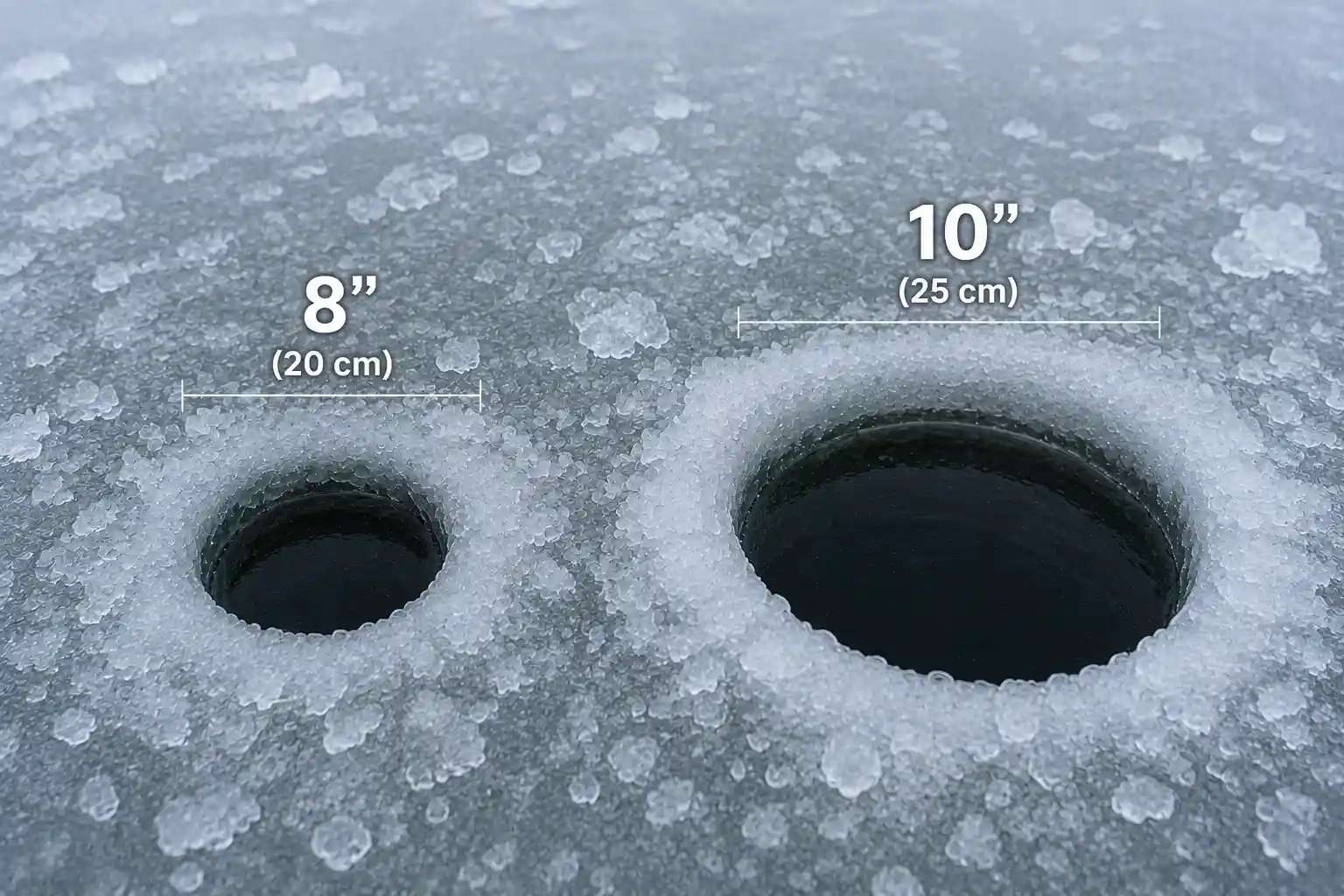
A 10-inch hole earns its keep once you’re targeting genuinely large pike — fish pushing 35 inches and up. The extra diameter means less maneuvering at the surface and a lot less risk of a big fish rolling back down the hole right when you think you’ve got it landed. The tradeoff is a heavier auger and fewer holes per battery charge.
We’ve landed pike well over 30 inches through an 8-inch hole and it worked fine — but we’ve also had a fish roll at the last second and slide back down a 6-inch hole because there just wasn’t enough room to turn its head. That’s the moment that convinced us: if you’re regularly on water with a real shot at 35-inch-plus fish, size up to 10 inches. If you’re fishing average water and want more holes per battery charge, 8 inches is plenty. Once your hole is drilled, the next decision is what goes in it — see our guide to best tip-ups for pike for setups built to handle a big fish once it commits.
Types of Ice Augers: What’s Actually Out There
Before you can pick the right auger, it helps to know what you’re actually choosing between. Ice augers for pike fishing generally fall into four categories, and each one solves a different problem.
Electric Augers
Electric augers run on a rechargeable battery and come as a complete, self-contained unit — motor, battery, and blades all built in. You press a trigger and it drills. These have become the dominant choice for pike anglers because they’re fast, quiet, and don’t require mixing gas. We’ve switched almost entirely to electric on our own trips — no more fumbling with a choke and pull cord with numb fingers at 6am.
Drill-Powered Augers
Drill-powered augers are just the cutting head — you supply your own cordless drill to spin it. They’re lighter and cheaper than a full electric unit, but only as good as the drill you pair them with. We’ve had one bind up mid-hole on thick, dirty ice simply because the drill we were using didn’t have enough torque for it.
Manual (Hand) Augers
Manual augers have no motor at all. You crank them by hand. They’re the lightest, cheapest, and most reliable option since there’s nothing electronic to fail, but they take real effort once the ice gets thick. Past a foot or so of ice, a manual auger turns into a real workout — we’ve felt that burn in our shoulders more than once on late-season pike trips.
Gas Augers
Gas augers run on a small two-stroke engine. They were the standard for decades and still have a place for anglers drilling dozens of holes on extremely thick late-season ice, but most manufacturers — including StrikeMaster — have shifted their newest development toward electric models instead. We still keep one in the truck for the coldest days, mostly because gas doesn’t care how far the temperature drops.
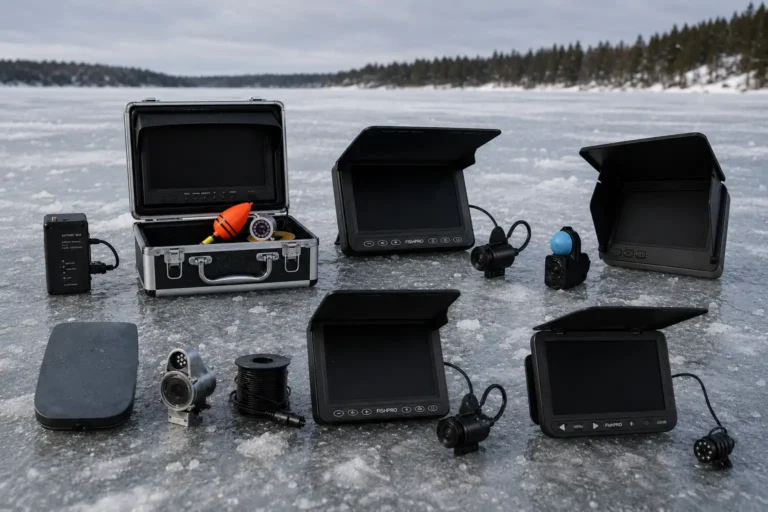
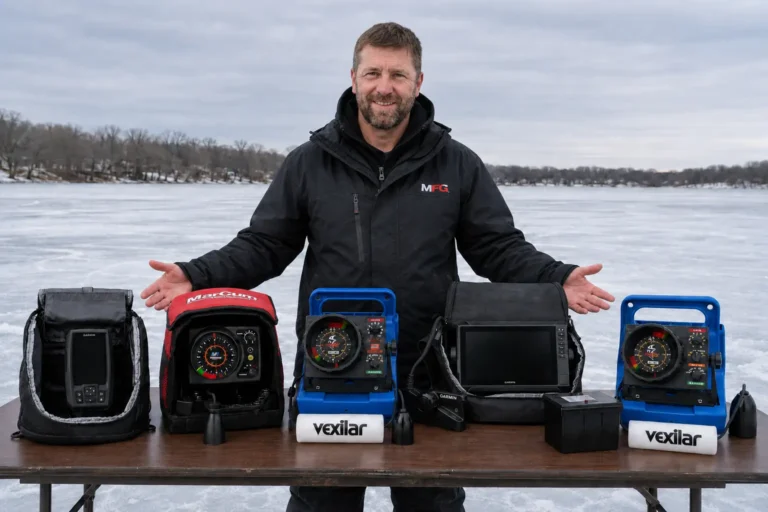
Whichever type you pick, it’s worth knowing where you’re actually drilling before you start. Pairing your auger with a good ice fishing fish finder to check depth and structure first saves you from drilling a dozen blind holes hoping to find fish.
How We Tested These Ice Augers
We drilled with every auger on this list ourselves — no auger made this guide off a spec sheet alone. We ran each one against real pike holes, forced a few re-drills through ice that had already started skinning over, and paid attention to what happened once the temperature actually dropped, not what the box promised it would do.
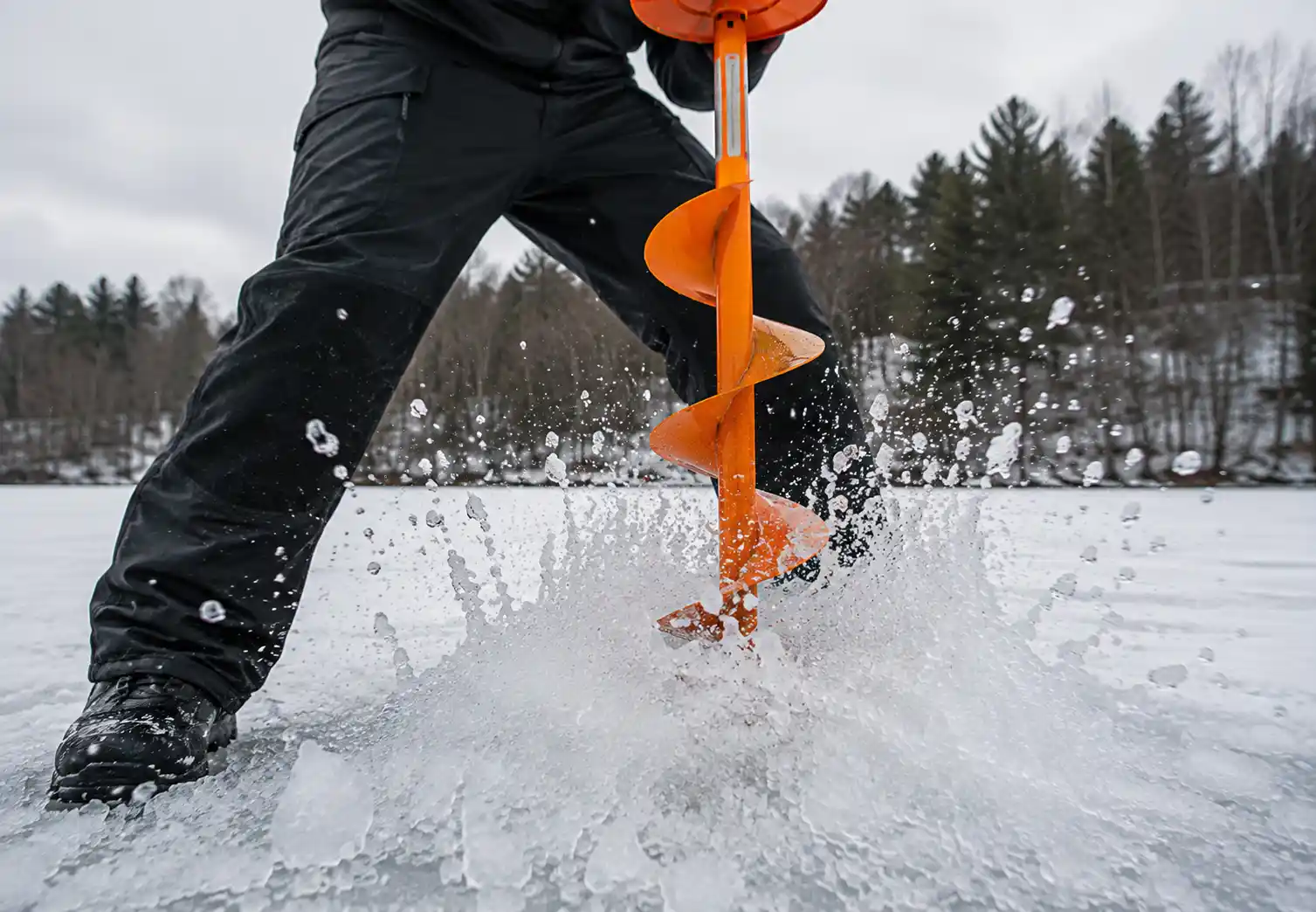
Some of the sharpest lessons came from other owners, not just our own trips out. We looked for patterns rather than isolated complaints — when the same issue kept showing up across dozens of reviews, a battery going flat at -10°F, a blade that dulled fast on gritty late-season ice, that told us something a single afternoon on the water couldn’t.
We also thought about what happens after the sale. An auger that cuts great but has no replacement blades six months from now isn’t worth recommending — we’ve all had that gear that worked fine until the one part you needed disappeared. Every pick here comes from a brand that still stocks parts and answers the phone.
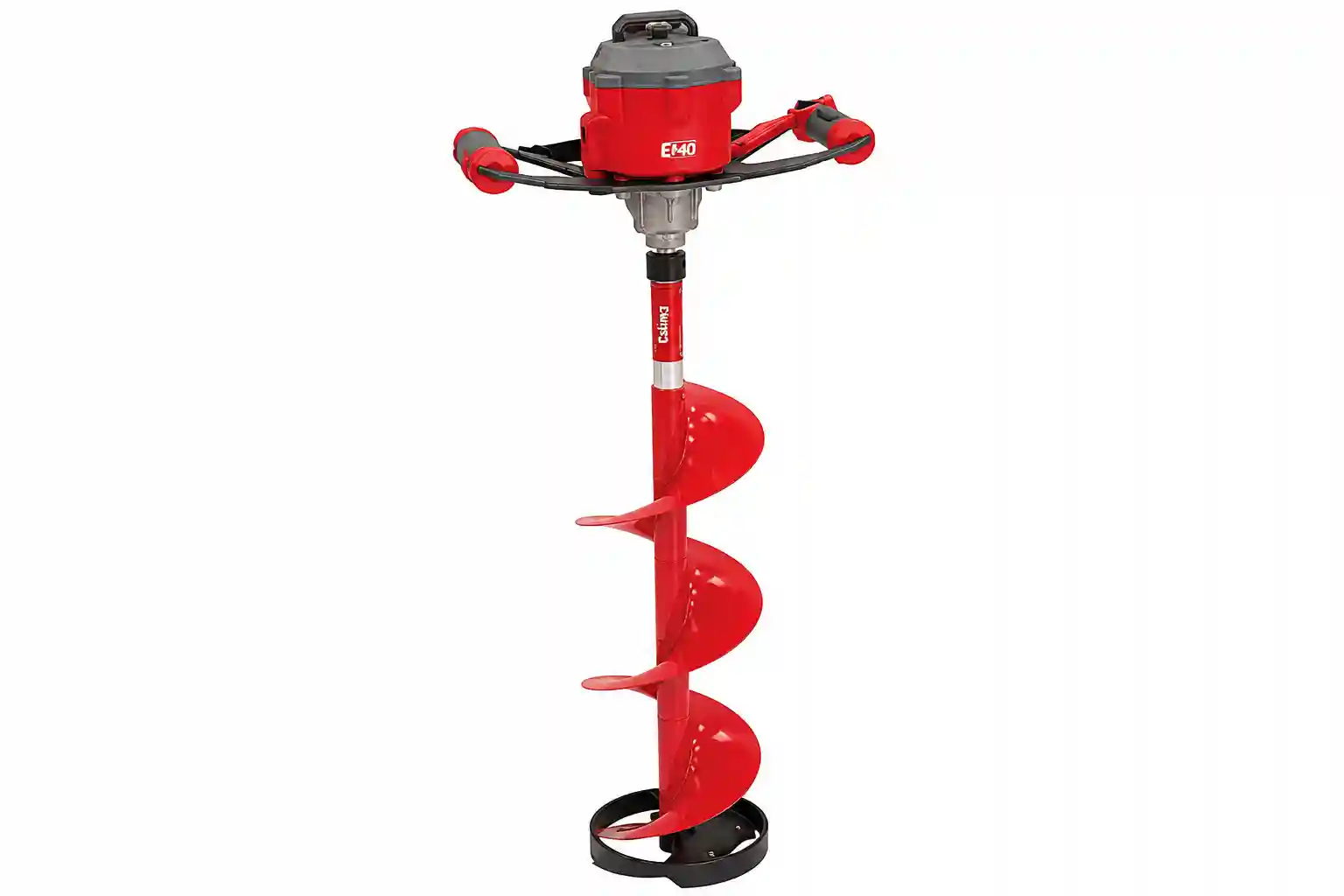
Eskimo E40 Composite — Best for Trophy Pike
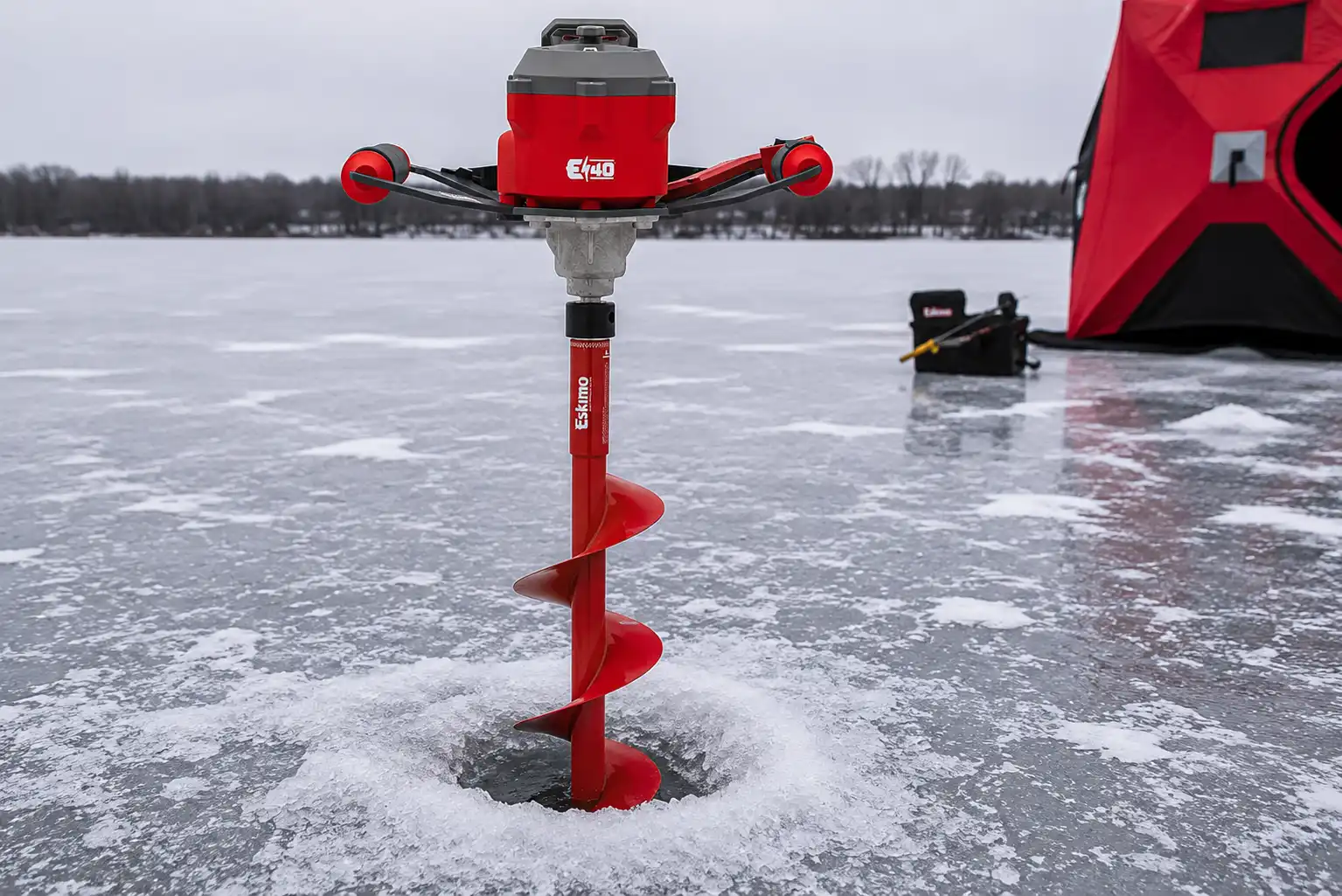
The first time we hauled the Eskimo E40 onto the ice, we were honestly expecting a muscle workout. If you’ve ever owned a traditional 10-inch gas auger, you know the drill: your shoulder hurts before you even reach your spots, you’re breathing in exhaust, and right as the blades break through the bottom of the ice sheet, the powerhead wrenches your wrists like it’s trying to snap them.
The E40 is the exact opposite experience. At under 14 pounds with the battery locked in, carrying this 10-inch setup out on the ice feels almost wrong — like you forgot half the gear back in the truck.
What blew us away during our testing wasn’t just how fast it cut through thick mid-winter ice, but how smoothly it did it. That composite cutting head completely changes the break-through phase. Instead of grabbing or kicking violently at the bottom of the hole, it glides right through without any wrist torque. Re-drilling holes that had skinned over overnight — usually a nightmare with steel flutes — was just as effortless. No bouncing, no jamming, just clean, perfectly centered holes.
Because you’re pushing a full 10 inches of width, it does draw more power than an 8-inch model. But while running a full spread of pike tip-ups in sub-zero temps, we still had plenty of juice left in the 40V 4Ah battery at the end of the day without having to keep it hidden inside our jackets.
What We Like: featherlight for a 10-inch auger, glides through break-through instead of kicking, handles re-drilling frozen holes without jamming, holds a charge through a full tip-up spread in sub-zero cold.
What Could Be Better: the 10-inch composite head draws noticeably more power than an 8-inch would — if the pike where you fish run smaller, the extra draw isn’t buying you anything.
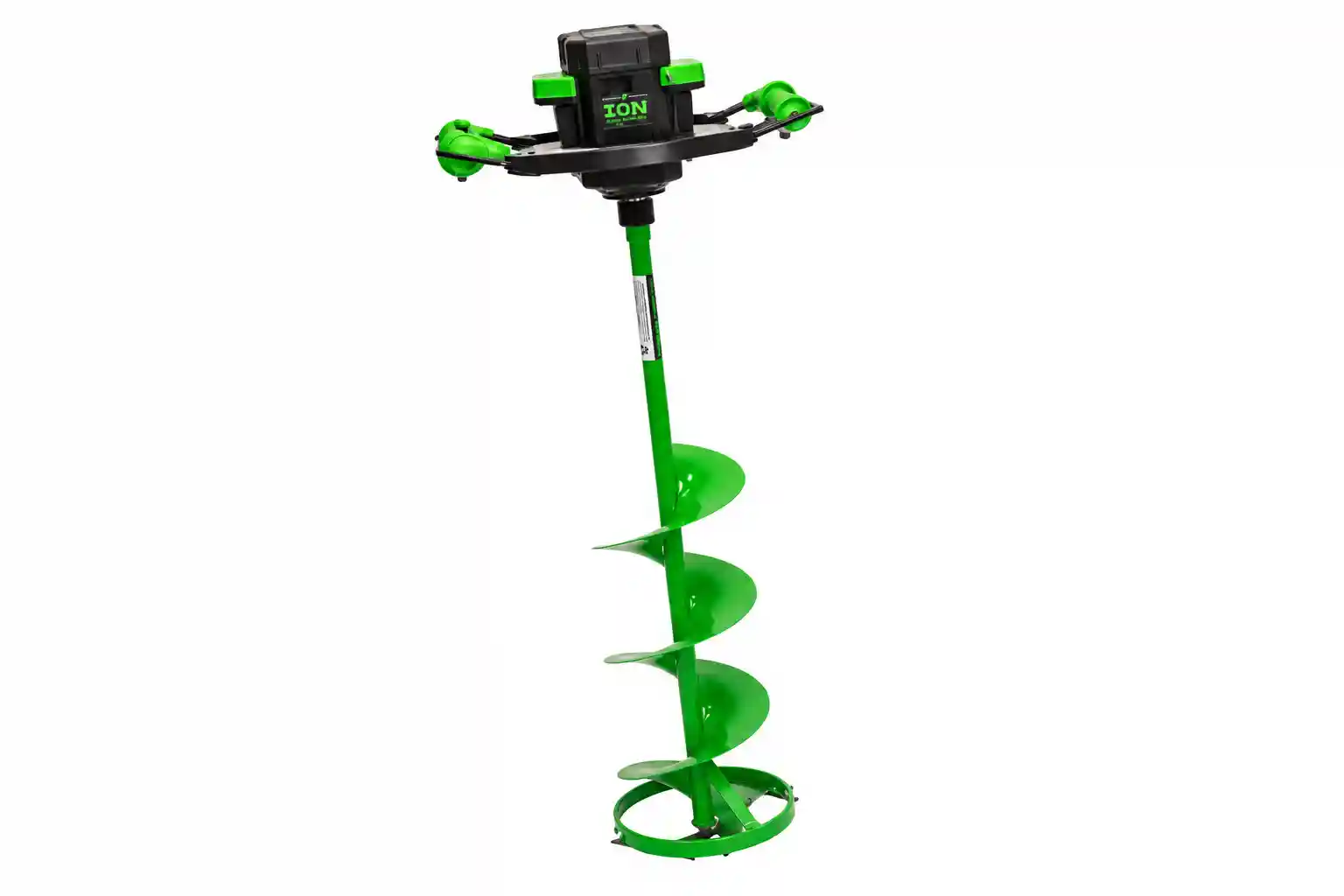
ION Alpha Gen 3 (10″ Steel) — Best Premium Performance
The Eskimo E40 wins on finesse — the ION Alpha Gen 3 wins on raw authority. This isn’t the auger you buy to save your shoulder; it’s the one you buy when you want a hole cut with zero hesitation, zero flex, and zero doubt about whether it’ll get through whatever’s under the ice that day.
We ran this rig on a windy, single-digit January morning through 18 inches of dense black ice. There was no ramp-up, no bogging at the bottom of the cut — the steel Turbo head just planted itself and drilled straight through in under eight seconds. At 21.6 pounds, it’s heavier than most auger in this class, and that weight works in its favor: it plants itself into the ice instead of skating or catching, so the blades do the cutting instead of your arms.
Where this auger separates itself from anything else we tested is the slush-flushing reverse. Drop the head back in the water and hit reverse, and it clears almost all the ice slush out of the column on its own. Managing a full spread of pike lines in bitter cold, not spending five minutes skimmer-cleaning every 10-inch hole with numb hands is a real difference-maker by the third or fourth hole.
The steel flutes add weight compared to ION’s composite-bottom models, but for anglers dragging gear in a sled or drilling out of a permanent wheelhouse, the extra durability against bank ice and hard bumps earns its keep.
What We Like: plants and cuts with authority through dense, layered ice, slush-flushing reverse saves real time on every hole, steel construction shrugs off hard bumps and bank ice, battery holds power exceptionally well in the cold.
What Could Be Better: at 21.6 lbs it’s noticeably heavier than 8-inch lightweight run-and-gun augers, and replacement 10-inch steel Turbo blades cost a bit more when it’s time to sharpen.
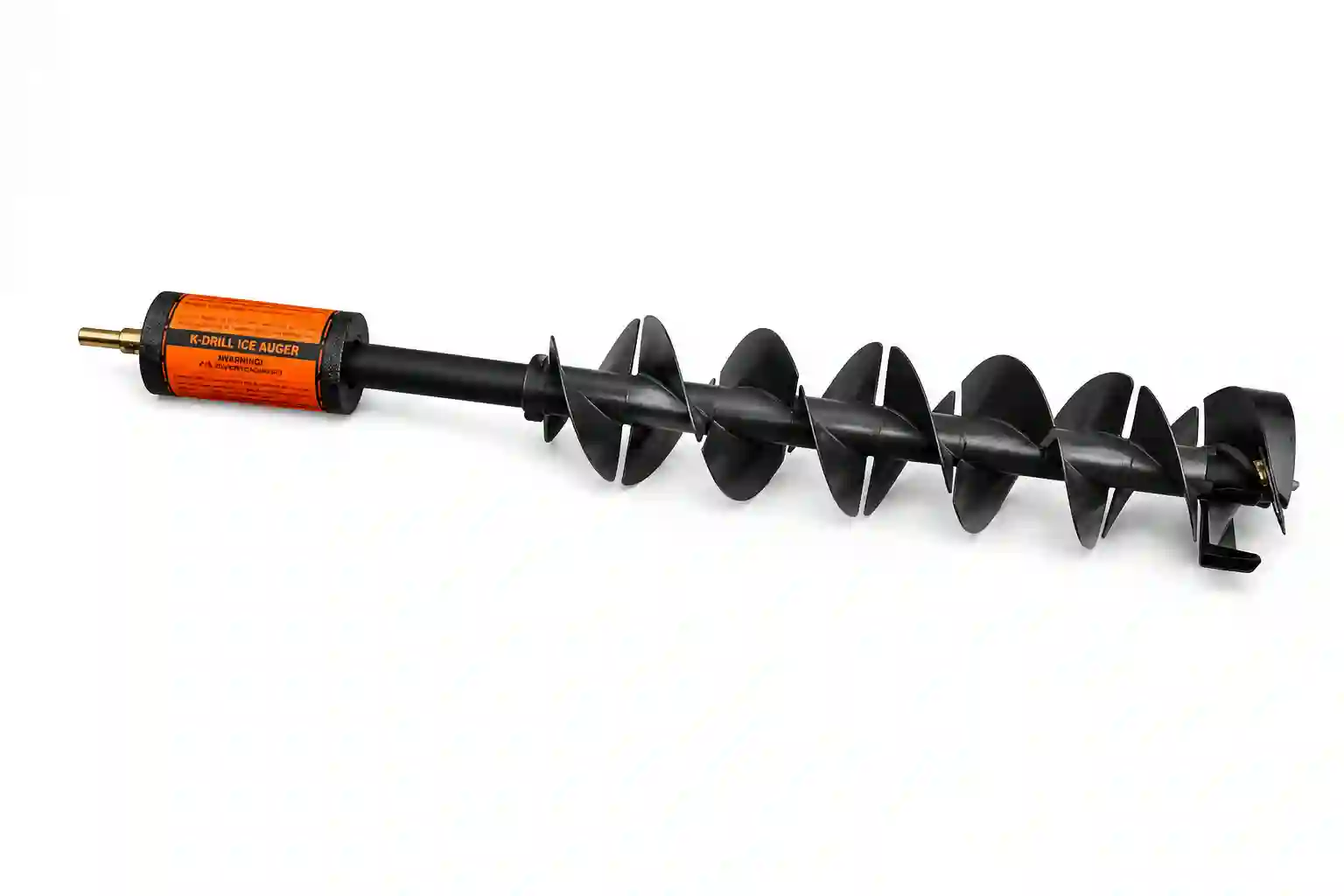
K-Drill 8.5 Ice Auger System — Best for Tip-Up Fishing
If you already own a heavy-duty 1/2-inch cordless brushless drill like a Milwaukee M18, the K-Drill 8.5 is hands-down the lightest setup you can put on the ice. Rather than buying a standalone powerhead with a dedicated battery system you only use four months out of the year, this unit turns the high-torque drill sitting in your garage into a hole-punching machine.
When we paired the 8.5-inch K-Drill with an M18 driver on a cold, overcast late-January afternoon, the weight savings immediately changed how we moved across the ice. Without a dedicated powerhead to carry, hauling gear across a full tip-up spread felt noticeably lighter than running a standalone electric auger.
On the ice, the high carbon steel tool blades handled everything we threw at them. We drove it through 20 inches of hard, sandy bank-ice that normally dulls razor-style blades fast, and the K-Drill shaved right through without binding at the bottom of the cut. The large center point also made re-drilling old, refrozen holes noticeably safer and more stable than fighting a bit that wants to walk across the ice.
The 8.5-inch width hits a solid sweet spot for pike anglers running several tip-ups. It gives you enough margin to steer a broad-shouldered 30-plus inch pike into the hole without dragging the weight penalty of a full 10-inch powerhead system.
What We Like: lightweight since there’s no dedicated powerhead to carry, tool steel blades handle dirty or sandy ice without dulling fast, large center point makes re-drilling old holes safer, no engine or standalone battery system to maintain.
What Could Be Better: requires a high-torque 1/2-inch cordless drill you may not already own, and performance depends entirely on how strong that drill is.
NILS Convertible 8″ Auger — Best Premium Manual/Convertible
If you talk to veteran ice anglers, the name NILS carries almost legendary status — and a few seconds on the ice with the Convertible 8-inch model makes it obvious why. While most drill-adapter augers rely on raw torque to grind their way through a hole, NILS uses razor-sharp Scandinavian geometry to shave ice like butter.
When we locked this unit onto a brushless 18V cordless drill on a clear, single-digit morning, the difference was instant. Because of the chromium steel cutting head and center point, the auger doesn’t bounce or skate across glaze ice when you start a hole. You simply set the center pin down, pull the trigger, and let the weight of the drill do the work — no pushing or leaning required.
What really sets the Convertible model apart is versatility: if your drill battery dies miles out on the ice or freezes up, you can lock the included manual auger handle back on in seconds and comfortably hand-crank an 8-inch hole without exhausting yourself.
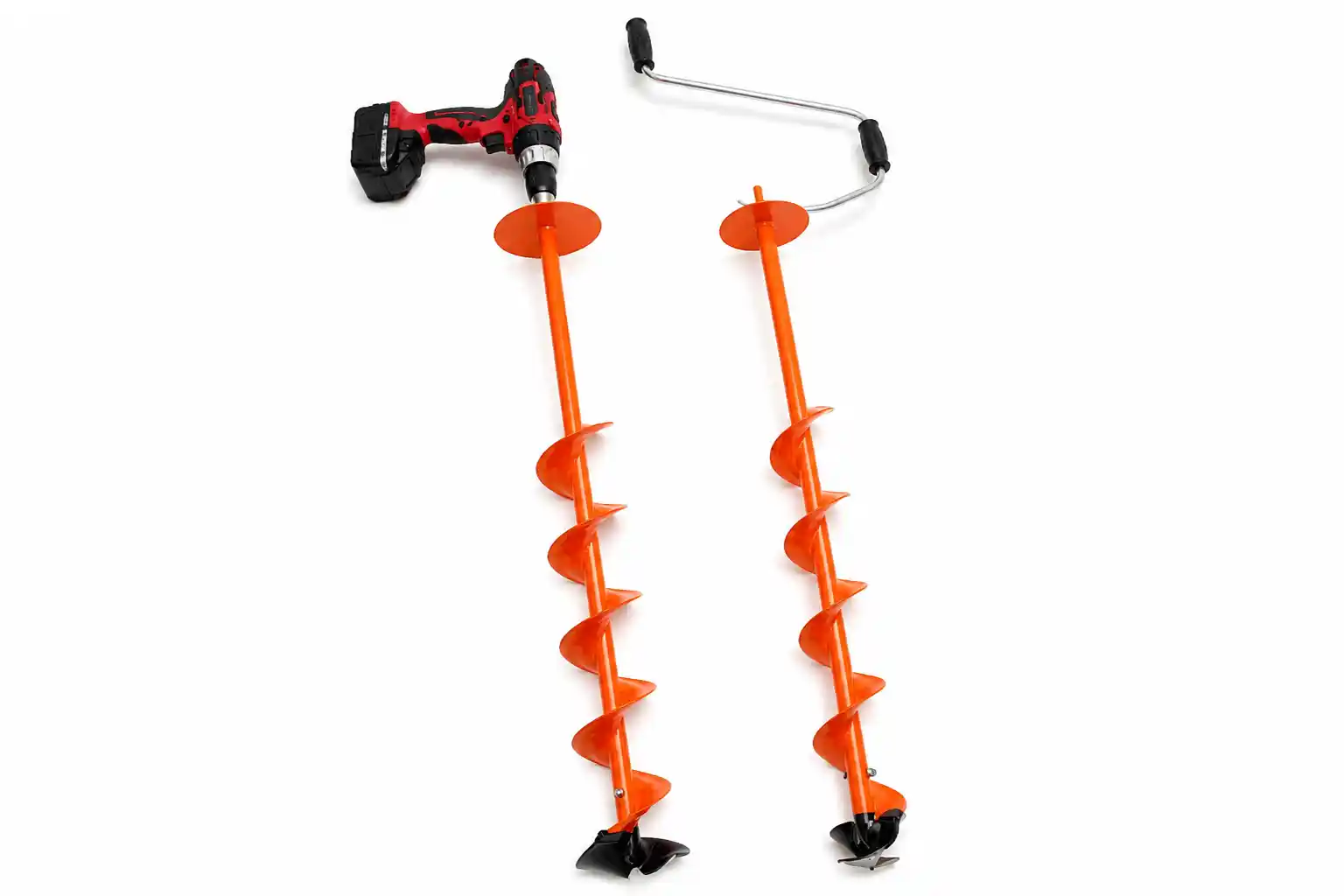
The trade-off for this precision is maintenance. Those orange-coated cutting heads with black blades last for years on clean ice, but if you hit dirty bank-ice, sand, or bottom silt, you can’t just slap cheap replacement blades on with an Allen wrench — the head needs proper care to hold its edge.
What We Like: razor-sharp cutting with minimal downward pressure needed, included manual handle works as a real backup, center point prevents head-skating on smooth black ice, converts between drill and hand-crank in seconds.
What Could Be Better: the chromium steel head is pricier to replace than basic steel blades, and the plastic head cover needs to stay on during transport to protect the edge.
StrikeMaster Mora 2-Piece Hand Auger — Best First Auger
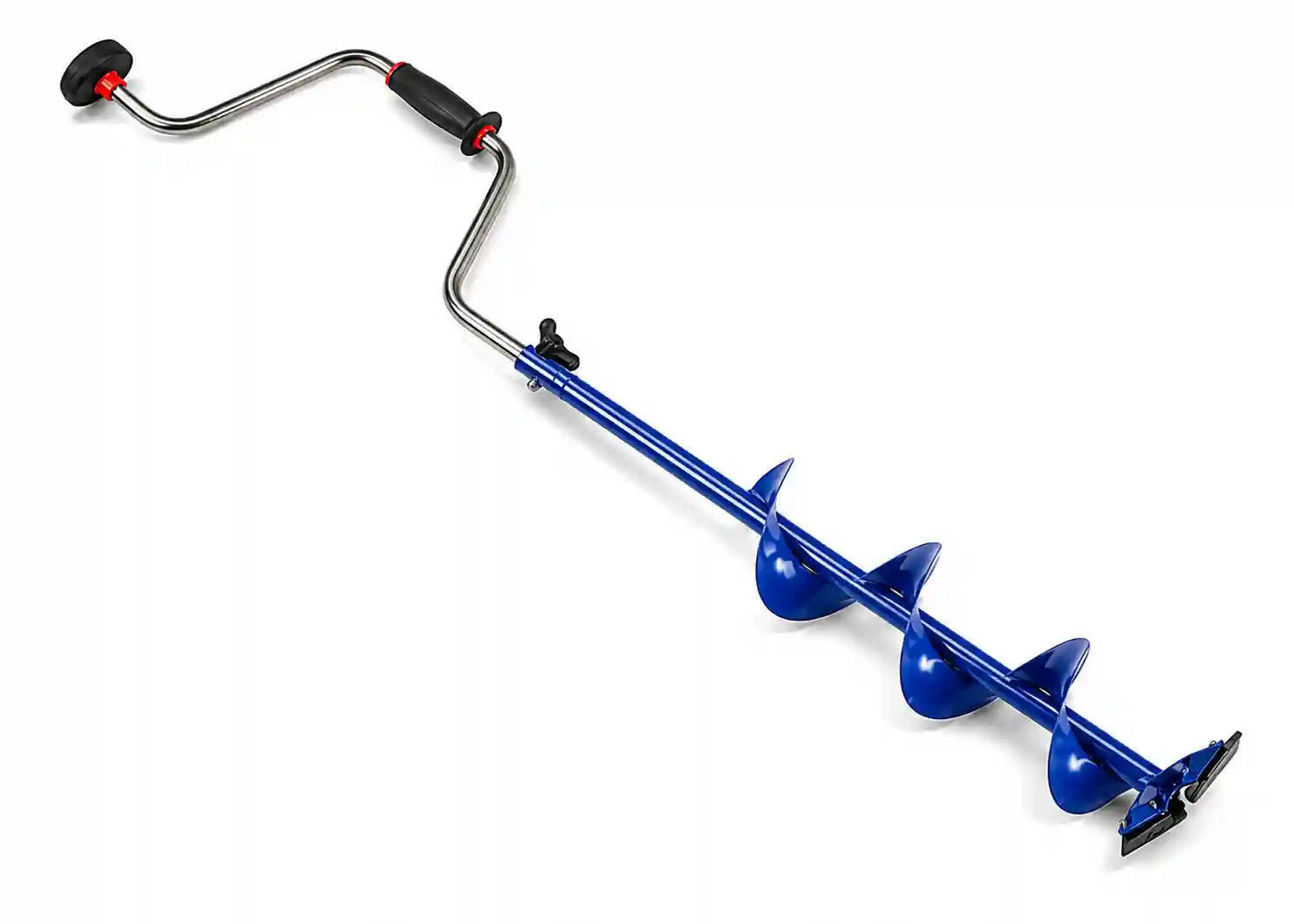
You don’t always need a high-tech battery system or a heavy electric powerhead just to punch a few holes on early-season ice. If you’re targeting shallow bays, traveling light in a pull-sled, or simply want an ultra-reliable backup that will never fail because of a dead battery, the StrikeMaster Mora is the gold standard of hand augers.
When we took this powder-blue auger out on a crisp, clear December morning with eight inches of fresh first-ice, the simplicity of the design really shined. Carrying it across the ice feels effortless. The adjustable handle lets you set the height for optimal leverage, and the rubber cushion grips keep your hands comfortable even when working through thick thermal gloves.
The high-alloy carbon steel blades hit a sharp, aggressive angle that bites into clear ice without slipping or skittering across the surface. While hand-drilling through 15-plus inches of late-winter ice will definitely test your shoulder endurance, on standard 6 to 10-inch ice it takes less than twenty seconds of steady cranking to pop a clean, smooth hole.
Because the main shaft breaks down into two compact pieces with a simple collar lock, it slips easily into the back of a short-bed truck, a small sled, or the trunk of a sedan without taking up precious gear space. It’s an unbeatable, low-cost tool every pike angler should keep in their seasonal lineup.
What We Like: lightweight and breaks down into two compact pieces for easy transport, steel blades bite quickly on smooth ice, no batteries or fuel to worry about, incredible value for early-season or backup use.
What Could Be Better: manual drilling requires physical effort through thick mid-winter ice, and re-sharpening the blades becomes necessary if you frequently hit dirty or sandy ice.
Blade Types and Auger Materials: What Actually Matters
Most buying guides mention blade type in one throwaway sentence, and it’s honestly one of the biggest reasons an auger performs great on one lake and disappoints on another. There are two blade styles you’ll run into: shaver blades and chipper blades.
Shaver blades are razor-sharp and cut clean ice fast — we’ve watched an ION Alpha rip through a foot of clear black ice almost silently with them. But drag them across sandy bank-ice or an old, dirty re-drilled hole, and they dull noticeably faster.
Chipper blades are the opposite — a little slower on clean ice, but they keep grinding through dirty, gritty, or already-drilled ice without losing their edge nearly as fast. That’s exactly why the K-Drill’s tool steel blades held up when we drove them through 20 inches of sandy bank-ice that would’ve chewed up a shaver blade in a handful of holes.
Flighting material matters just as much, and it’s rarely explained well. Steel flighting is the most durable option and shrugs off hard bumps, but it’s heavier, and we’ve felt that extra weight on our shoulders after the fifth or sixth hole of a long day.
Composite flighting — like what’s on the Eskimo E40 — sheds ice buildup better and is noticeably lighter to carry, though it can develop stress fractures over years of hard use or getting dropped on concrete loading docks. Polymer or nylon flighting, the kind you’ll find on drill-attachment units like the K-Drill, is the lightest of the three and flexes under impact instead of cracking, but it’s built more for occasional use than for someone drilling fifty holes a weekend, season after season.
Neither option is universally “better” — it depends on what you’re actually drilling into. If you fish clean lakes with soft-bottom ice, a shaver-blade, composite-flight auger like the E40 or ION Alpha will serve you well for years. If you’re regularly hitting sandy shallows, old refrozen holes, or bank ice loaded with grit, a chipper-blade setup like the K-Drill is going to hold its edge a lot longer between sharpenings.
| Auger | Best For | Power Source | Hole Size | Weight | Ideal Pike Scenario |
|---|---|---|---|---|---|
| Eskimo E40 Composite | Best for Trophy Pike | Electric (40V) | 10 in (25.4 cm) | ~14 lbs | Targeting fish 35 in and up |
| ION Alpha Gen 3 | Best Premium Performance | Electric (40V, Steel) | 10 in (25.4 cm) | 21.6 lbs | Thick, layered ice; frequent drilling |
| K-Drill 8.5″ | Best for Tip-Up Fishing | Drill-powered | 8.5 in (21.6 cm) | Under 5 lbs (auger only) | Multiple holes, tip-up spreads |
| NILS Convertible 8″ | Best Premium Manual/Convertible | Drill or Hand-Crank | 8 in (20.3 cm) | Lightweight | Anglers who want a drill and manual backup in one |
| StrikeMaster Mora 2-Piece | Best First Auger | Manual | 6-8 in (15.2-20.3 cm) | Under 7 lbs | First-ice, backup, budget setups |
Cold-Weather Battery Care and Re-Drilling Frozen Holes
Nothing kills a good bite faster than watching your battery percentage tank at -10°F when the pike finally start moving. Lithium batteries lose real capacity in the cold, and we’ve had it happen ourselves — a battery that read half-charged in the truck barely lasted ten holes once it sat exposed on the ice for twenty minutes.
The fix is simple and it works: keep a spare battery inside your jacket, close to your body, until you actually need it. We’ve gotten in the habit of swapping batteries mid-morning even before the first one dies, just to keep a warm one ready to go.
Re-drilling an old hole that’s skinned over is its own kind of frustrating if your auger isn’t built for it. Without a centering point, the blades want to walk sideways across the ice instead of dropping straight down, and we’ve had a bit skate right off an old hole and nearly buckle before catching an edge. Every auger in this guide has some form of centering point, and it’s not a minor feature — it’s the difference between a clean re-drill and fighting your auger for the first three seconds of every hole.
One habit that saves real frustration: never leave an auger sitting in a fresh hole for more than a few minutes. We’ve come back to a bit frozen solid in the ice, and prying it free cost us more time than just drilling a fresh hole next to it would have.
Landing a Big Pike Through the Hole Safely (and the Mistakes That Cost You a Fish)
Getting a pike to the hole is only half the job — the last three feet are where most fish are actually lost. We’ve had an 18-pound pike roll sideways right at the surface of a 6-inch hole and slide back down simply because there wasn’t enough room for it to turn its head. That’s the moment your hole size decision from earlier in this guide actually matters, not in theory, but with a fish on the line.
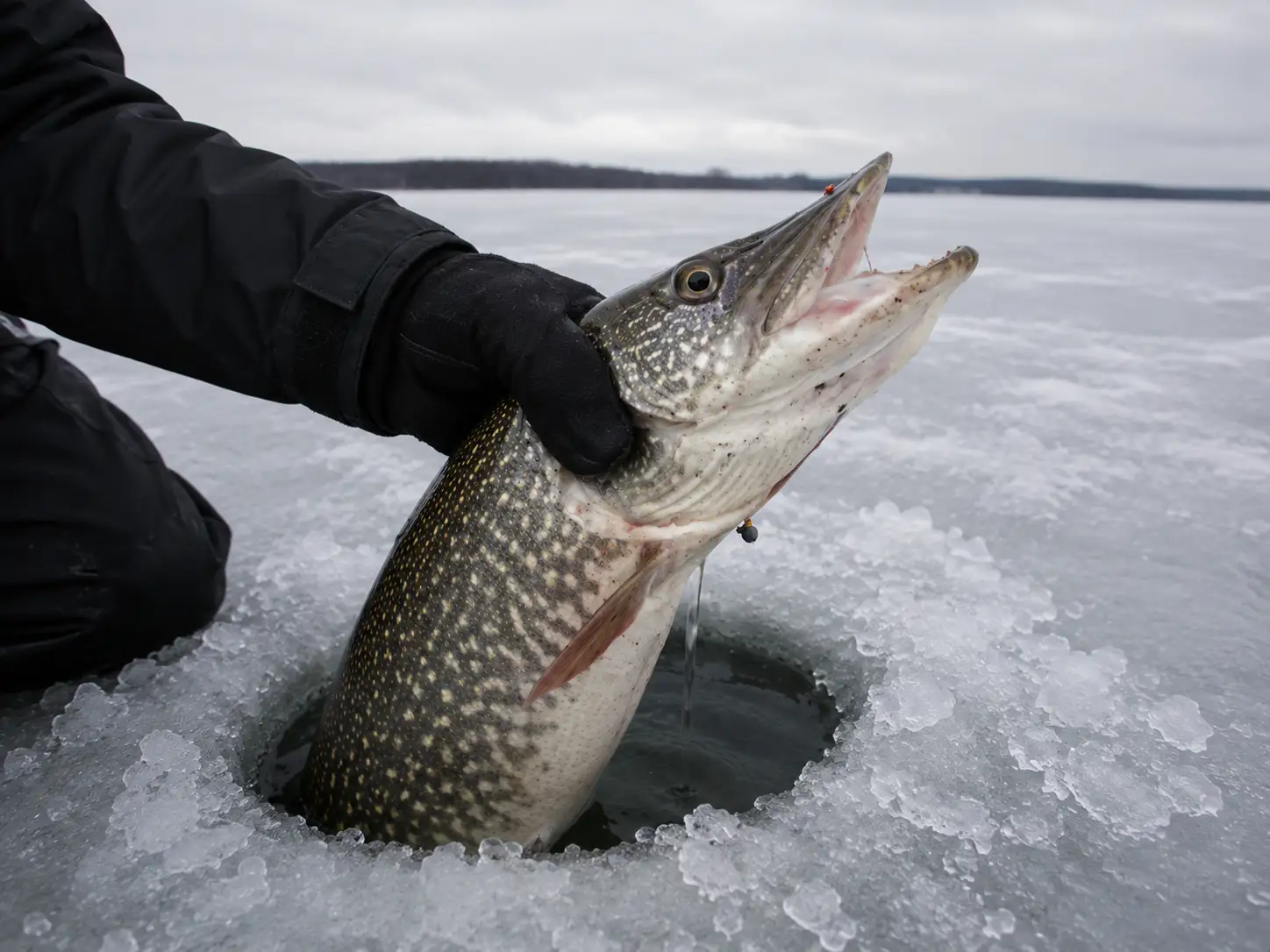
Once the head clears the ice, get a hand on the gill plate as fast as you can — not the eyes, not the throat.
A firm grip behind the gill plate controls the fish without risking your fingers near the teeth, and it works even on a fish that’s still thrashing. If you’d rather not grip the gill plate directly, a good lip grip does the same job.
Keep the pike as horizontal as possible during the lift; holding a big pike vertically by the head for too long puts real strain on its jaw and spine, especially if you’re planning to release it. For a full breakdown of safe handling technique, see our guide on how to handle pike safely.
The biggest mistake we see anglers make is trying to force a pike through a hole that’s genuinely too small for it.
If a fish won’t turn after a few seconds of gentle guidance, back off, let it settle, and try again at a slightly different angle instead of muscling it. Forcing it usually ends with a rolled fish, a bent hook, or a pike that swims off before you ever get a hand on it.
If the hook is buried deep, a good mouth spreader makes it far easier to work it free without risking your fingers.
The second mistake is rushing the release. If you fought that pike hard getting it up through the ice, it needs a few extra seconds in the water at the hole before it swims off strong — not five minutes of photos on the ice in freezing air.
If you’re building a complete pike handling kit, also see our guides to Best Pike Fishing Pliers and Best Pike Landing Nets.
Frequently Asked Questions
What size ice auger do I need for pike?
An 8-inch hole handles most pike, including fish in the 25 to 30-inch range, without much trouble. If you regularly target pike over 35 inches, a 10-inch auger gives you more margin to land a big fish without a fight at the surface.
Is an electric or gas ice auger better for pike fishing?
Electric augers have become the preferred choice for most pike anglers because of lower maintenance, quieter operation, and instant starting in cold weather. Gas augers still have a place for anglers drilling large numbers of holes far from a charging source, or fishing in extreme cold where battery performance suffers most.
How many holes can an electric ice auger drill on one charge?
It depends on hole diameter and ice thickness, but most 40V electric augers in this class cut somewhere between 800 and 2,000 inches of ice per charge. An 8-inch hole uses noticeably less power per cut than a 10-inch hole, so you’ll get more holes per charge with the smaller diameter.
Do I need a drill-powered auger or a standalone electric one?
A drill-powered auger like the K-Drill is lighter and cheaper if you already own a strong cordless drill, but performance depends entirely on that drill’s torque and battery. A standalone electric auger is a complete, self-contained unit that performs consistently regardless of what other tools you own.
How do I stop my auger battery from dying in extreme cold?
Keep a spare battery inside your jacket, close to your body, and swap it in before the first one fully dies rather than waiting until it fails. Cold weather reduces usable battery capacity even when the charge indicator looks fine.
Can I re-drill an old ice fishing hole that’s frozen over?
Yes, as long as your auger has a centering point. Without one, the blades tend to walk sideways across the old hole instead of dropping straight through, which can be frustrating and occasionally damage the blades.