

Fall Pike Fishing from Shore: Bank Fishing Tips That Catch More Pike
Fall pike fishing from shore can produce some of the biggest fish of the year, but success rarely comes from casting at random stretches of bank. Throughout the fall, we’ve consistently caught more pike by targeting shoreline areas where deep water, dying weeds, or current come within casting range than by simply fishing the longest or easiest stretch of bank. One productive point or creek mouth can easily outperform several hundred yards of featureless shoreline.
Unlike boat anglers, shore anglers can’t reposition over structure or use electronics to locate fish. Every decision matters before the first cast. At MFG, we usually give a promising shoreline about 15 minutes, working different casting angles and depths before moving on. If we don’t see baitfish, a follow, or a strike during that time, we’d rather cover new water than spend another hour hoping active pike will move in.
In this guide, you’ll learn practical bank fishing tactics for catching more pike during fall, including how to choose productive shoreline, fish it efficiently, and make the most of every opportunity from the bank. If you’re looking for a complete overview of seasonal pike behavior before focusing on shore tactics, start with our fall pike fishing guide.
Quick Answer
Fall pike fishing from shore is most productive where deep water, dying weeds, or current come within casting range. Focus on points, creek mouths, steep banks, and wind-blown shorelines rather than long featureless banks. Cover water by fishing several casting angles, and if there’s no sign of baitfish or pike activity after about 15 minutes, move to the next promising stretch of shoreline.
Best Shore Spots for Fall Pike
Some of the best fall pike water simply isn’t reachable from the bank, which is exactly why choosing the right stretch of shoreline matters more than making hundreds of extra casts. At MFG, we consistently focus on areas where abrupt drop-offs, decaying vegetation, or moving water come within casting range instead of spending time on long, featureless banks with little structure.
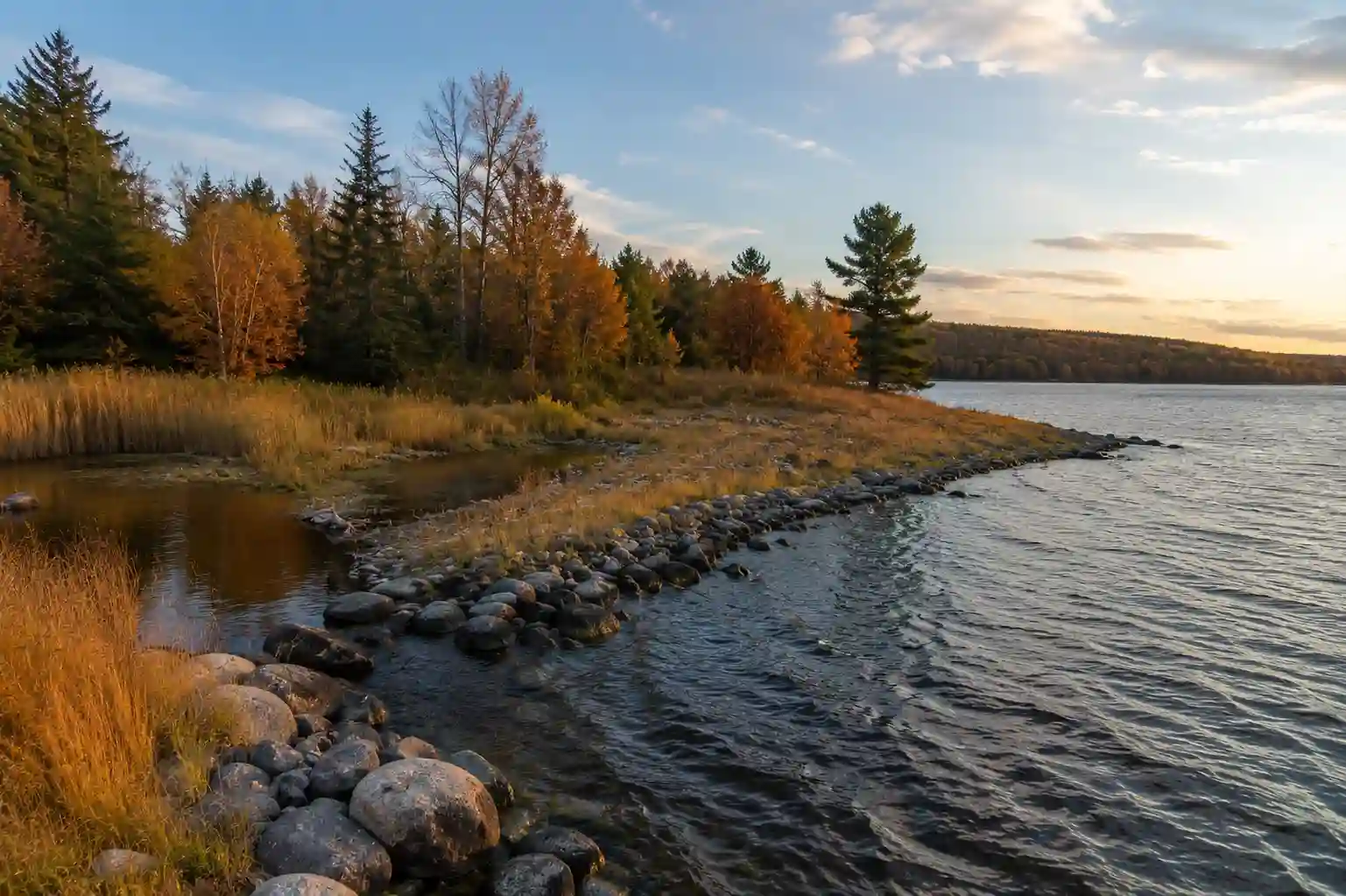
Some of the most reliable shore locations include points, creek mouths, steep banks with deep water close to shore, wind-blown shorelines, and outside weed edges that can be reached from land. These areas naturally concentrate baitfish during fall while giving pike enough depth and cover to feed efficiently.
We’ve also noticed that some of our most productive fall sessions have come from relatively small shoreline features rather than long stretches of bank. A creek mouth, point, or small bay entrance often lets us fish shallow water, nearby drop-offs, and transition zones from several casting angles without ever leaving the bank. If you’re unsure which shoreline features hold the most pike throughout the season, our where to find pike in fall guide explains how productive locations change from early to late fall.
How Wind Affects Shore Fishing
Wind can completely change the quality of a shoreline during fall. While many anglers automatically avoid windy banks, we’ve often found the opposite to be true. A steady wind pushing into the shoreline frequently concentrates baitfish, stirs up the water, and creates ideal ambush conditions for pike.
When we arrive at a lake, one of the first things we check is the wind direction before making the first cast. If a point, creek mouth, or weed edge is receiving a consistent wind, that’s usually where we start. We’ve had many sessions where the wind-blown bank produced several follows or strikes while the calm side of the lake remained completely quiet.
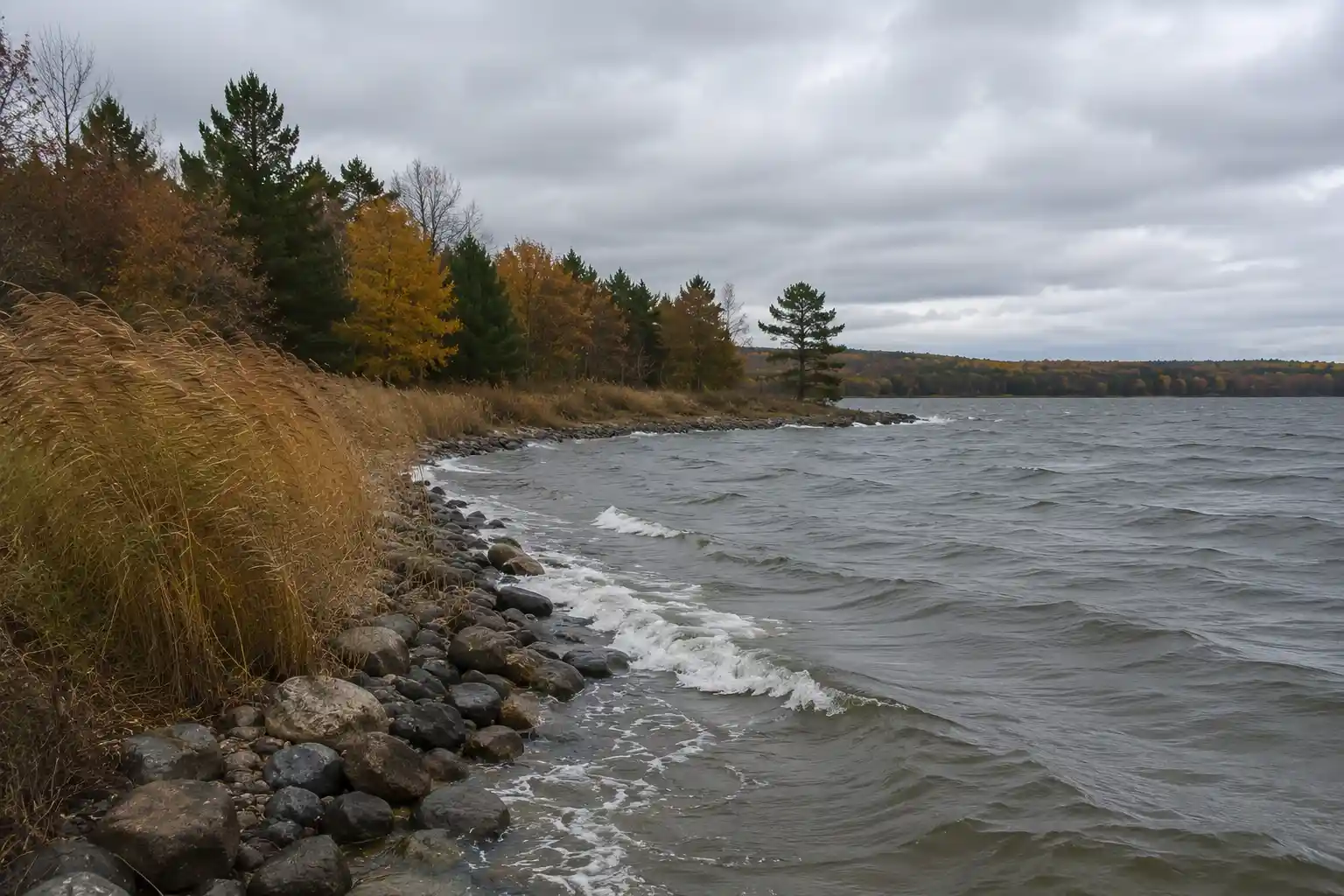
Wind isn’t always an advantage, though. Extremely strong winds can make accurate casting difficult and reduce lure control, especially with lighter presentations from shore. In those situations, we usually look for nearby shoreline that still receives some wind but offers better casting angles and improved lure control. This is where choosing the right lure for the conditions becomes just as important as picking the spot.
How to Cover Water from Shore
One of the biggest mistakes shore anglers make is staying in one place for too long. Even the best-looking shoreline won’t produce consistently if active pike are holding fifty yards away. We treat every bank as a series of smaller high-percentage spots, covering each one methodically before moving to the next.
We always start by fishing the water closest to shore before making longer casts toward deeper water. Then we change casting angles to work the same structure from different directions.
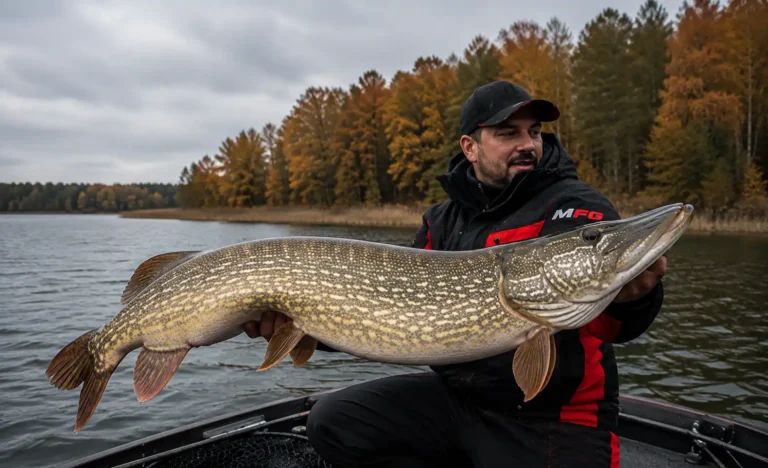
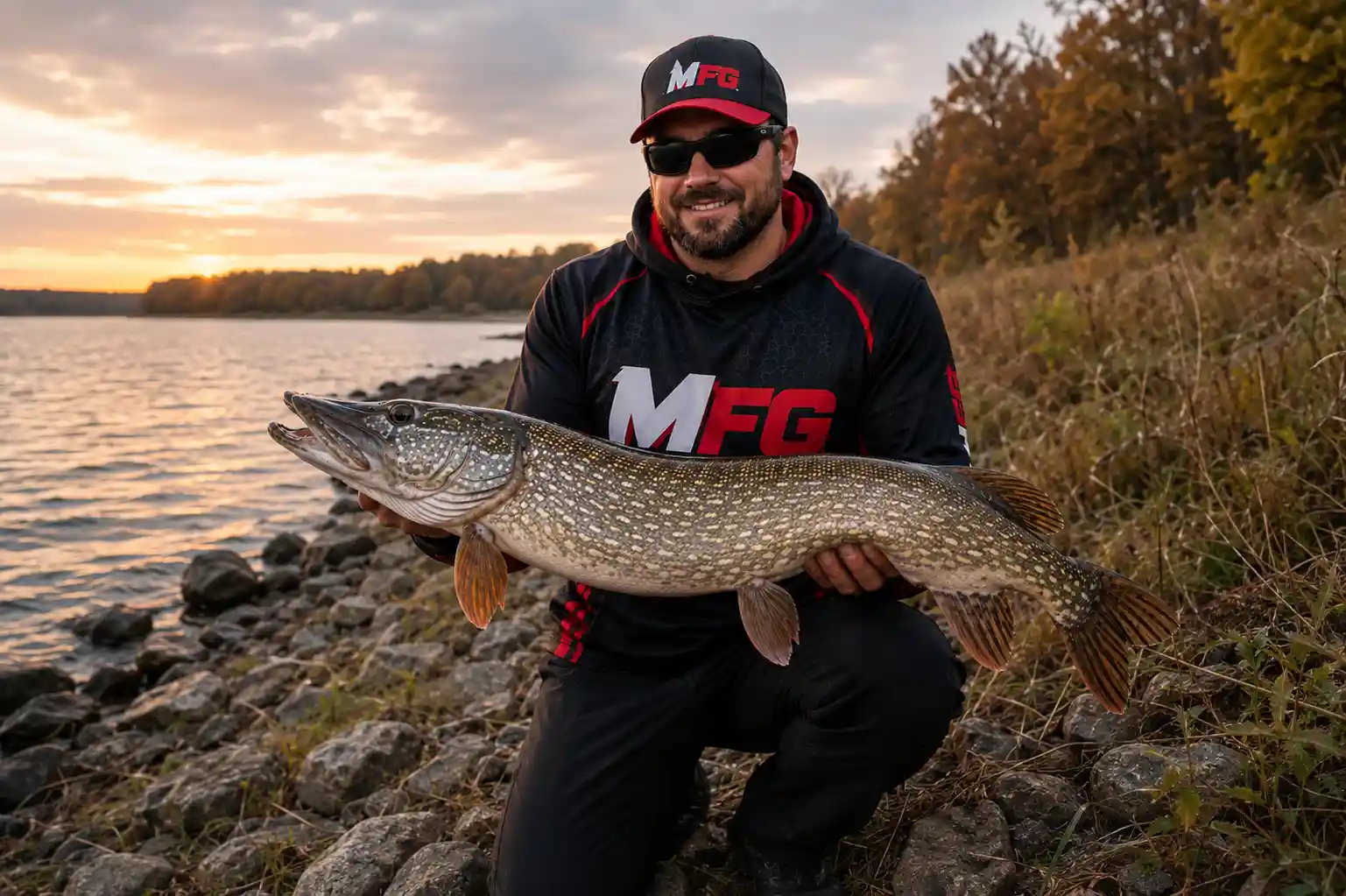
One fall session showed us exactly why this approach works. After covering a shoreline without a single follow, we moved a short distance to a small point where the weed edge came closer to shore. A few casts later, changing the casting angle produced a violent strike from a 98 cm northern pike.
The fish stayed deep for most of the fight and took nearly seven minutes to land from the bank. That fish didn’t appear because we made another random cast—it came because we approached the same structure from a better angle.
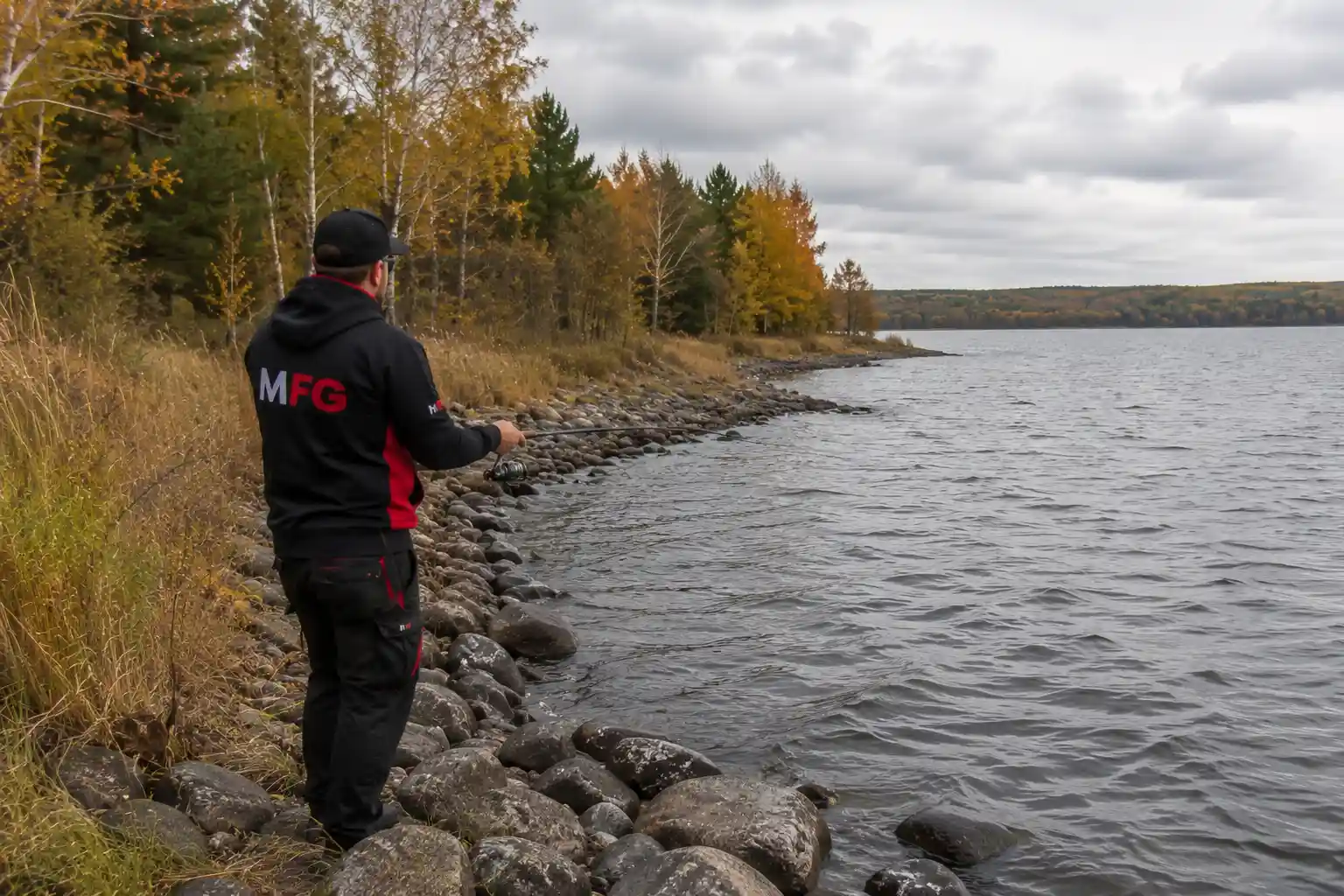
Mobility is just as important as casting distance. If a promising shoreline shows no signs of baitfish, follows, or strikes after about 15 minutes, we move to the next section of bank.
Reaching distant weed edges, points, and drop-offs becomes much easier with the right equipment. A longer pike rod provides better casting distance, while the right pike line gives you the control needed to work lures effectively at distance, making a noticeable difference during fall bank fishing.
Best Casting Angles from Shore
Changing your casting angle is often more effective than changing your lure. Many shore anglers stand in one place and repeatedly cast straight ahead, leaving productive water untouched. A simple change in lure direction can make the presentation look completely different to a waiting pike.
Whenever we fish outside weed edges or shoreline points, we work the area from several directions instead of relying on one casting angle. We start with shorter casts close to shore, then gradually reach deeper water before making parallel casts along the weed edge whenever possible.
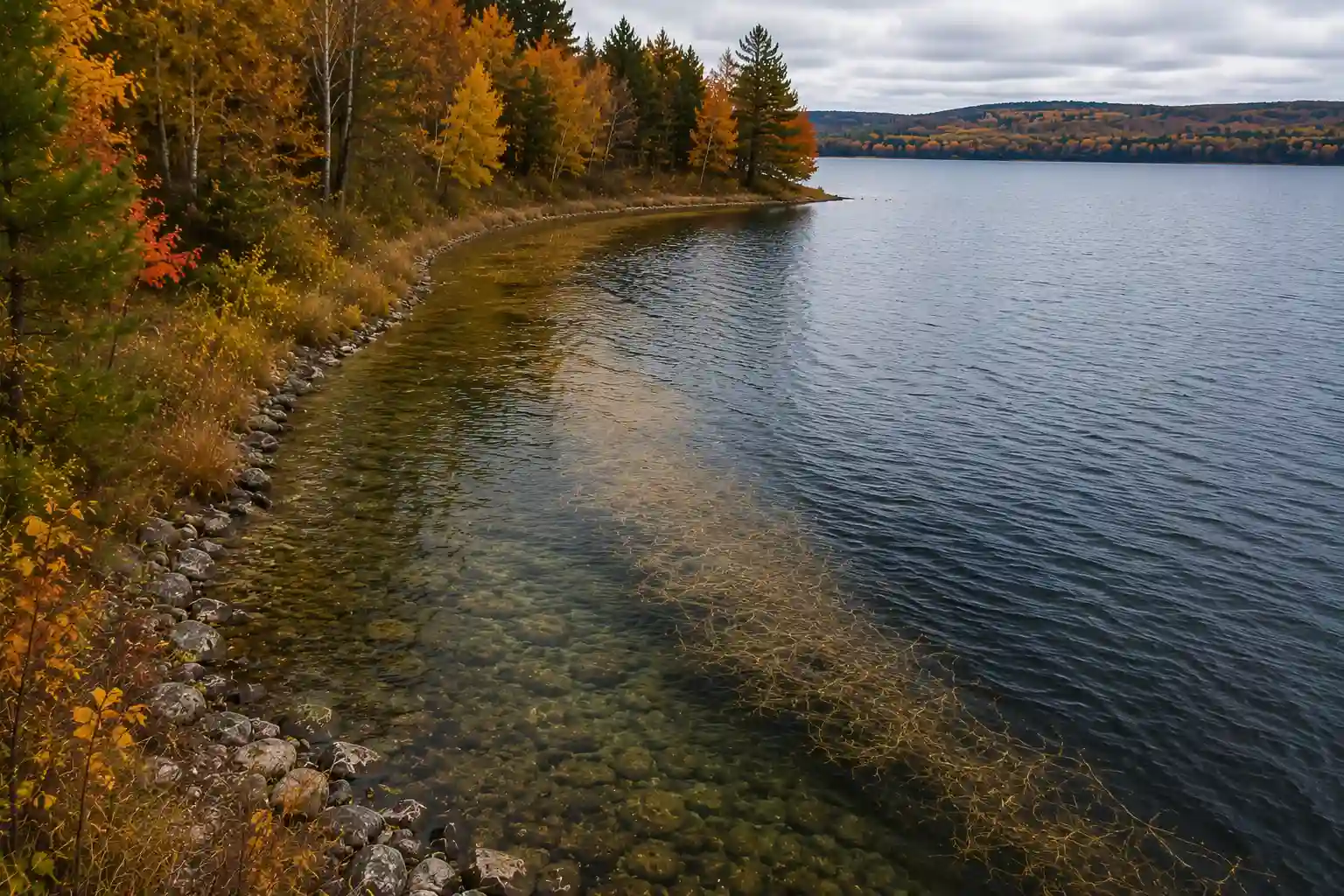
One fall session proved just how important that final adjustment can be. We had already spent nearly twenty minutes casting across a long weed edge without a single follow or strike. Before leaving, we made one last cast parallel to the weeds instead of across them. After only a few turns of the reel handle, a pike slammed the lure. We hadn’t changed the lure, retrieve, or location—only the casting angle. Since then, changing angles has always been one of our first adjustments before switching lures or moving to another spot.
On creek mouths and steep shorelines, we follow the same approach. Instead of retrieving the lure straight back to the bank every time, we look for angles that keep it alongside weed edges, transition zones, or drop-offs for as long as possible. A lure that stays in the strike zone a few seconds longer often gets the bite that several previous casts never produced.
Best Gear for Fall Shore Pike Fishing
The right tackle won’t create more pike, but it can help you reach fish that would otherwise stay out of range. From shore, you can’t move the boat closer to a weed edge or position yourself over deeper water, so casting distance, lure control, and landing power become much more important throughout the fall.
We’ve seen this on several occasions when the outside weed edge was only a few yards beyond the reach of a shorter rod. After switching to a longer setup, we could finally reach the productive edge consistently instead of landing every cast just short of it. It wasn’t the lure that changed—it was finally putting the lure where the pike were holding.
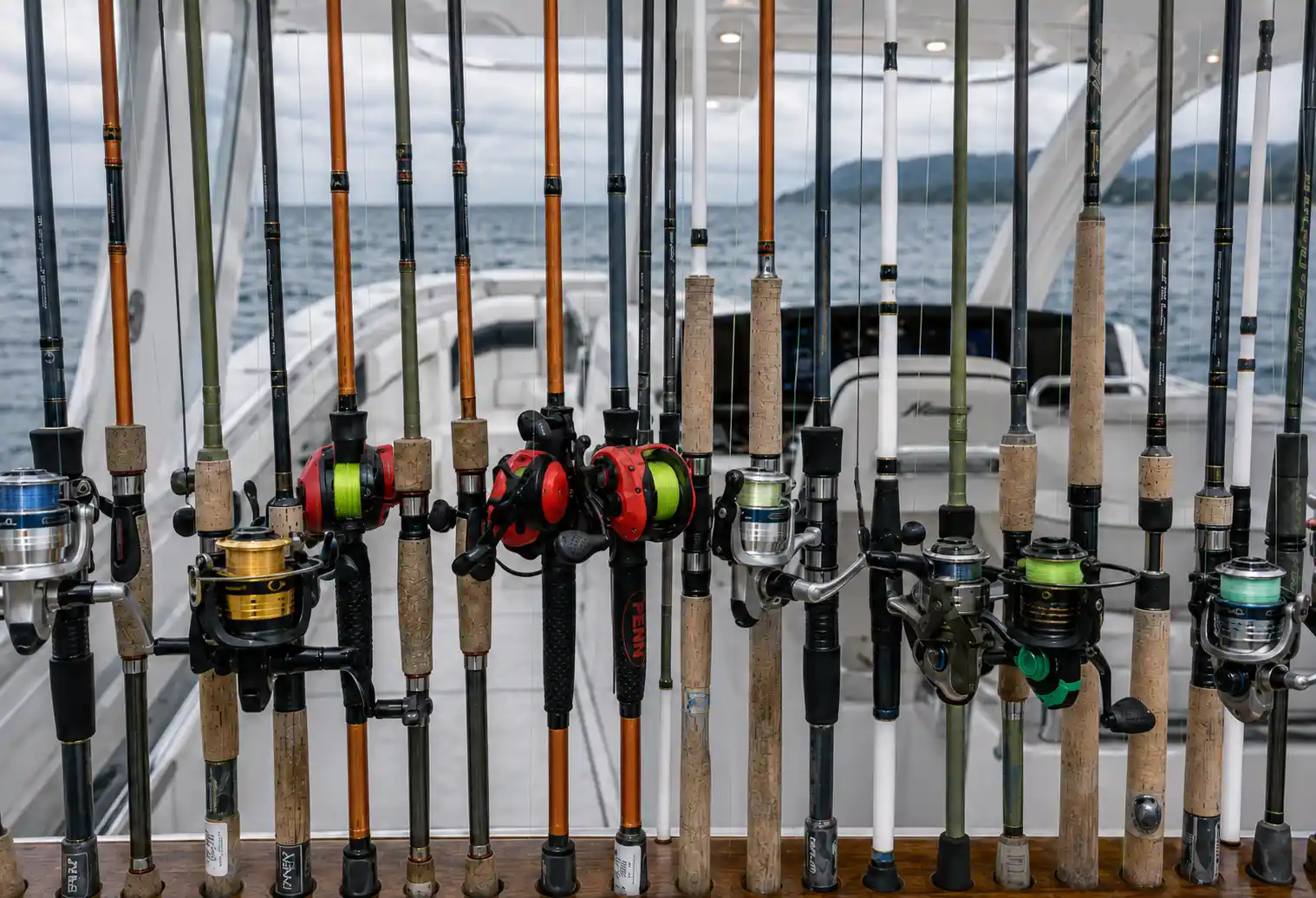
Choose the Right Rod Length
For most shore anglers, a rod between 7’6″ and 8’0″ offers the best balance of casting distance and lure control. The extra length also helps keep hooked fish away from shoreline weeds and reeds during the fight. If you’re choosing a new pike rod, length is one of the first things to consider before looking at brands or price.
Medium Heavy handles the majority of fall pike lures, while Heavy becomes the better option if you regularly fish oversized swimbaits, glide baits, or heavy soft plastics. Matching rod power to the lures you actually throw matters far more than simply buying the stiffest rod available.
Spinning or Baitcasting?
Both systems catch plenty of pike from shore. A quality spinning reel is hard to beat when you’re casting lighter spinnerbaits, spoons, and soft plastics over long distances. It handles lighter presentations effortlessly and is usually the easiest option for covering water all day.
If your fishing revolves around larger jerkbaits, glide baits, or heavy swimbaits, a baitcasting reel provides better lure control, more cranking power, and greater comfort during hundreds of casts. Neither system is universally better—the right choice depends on the presentations you fish most often.
Line and Leader
A quality pike fishing line becomes even more important from shore because long casts leave less room for error. Braided line provides better sensitivity, more solid hooksets at distance, and improved lure control when fishing along weed edges or deep drop-offs.
No matter which line you choose, never fish for pike without a reliable pike leader. Sharp teeth, violent head shakes, and fish rolling near the bank put tremendous pressure on the final few feet of your setup. We’ve had pike roll twice right in front of the net during the last moments of the fight—exactly the kind of situation where a weak leader is most likely to fail. It’s one piece of tackle we never compromise on.
Our Fall Shore Fishing Strategy
Every fall session starts long before we make the first cast. We don’t fish every autumn day the same way because pike don’t behave the same way throughout the season. During early fall, we’re often on the bank around sunrise while the water is still relatively warm. By late fall, especially after a cold night or heavy frost, we’ve learned there’s little reason to rush. We’d rather arrive closer to late morning or early afternoon, when the water has warmed slightly and active fish are far easier to locate.
Once we reach the lake, we don’t immediately start casting. We spend a few minutes looking at the shoreline, checking the wind direction, watching for baitfish activity, and deciding which bank gives us the highest chance of reaching productive water from shore. More often than not, our first casts are made on a wind-blown point, a creek mouth, or a shoreline where deeper water comes close to the bank.
We rarely fish an area randomly. We begin by covering the water closest to shore before extending our casts toward deeper water, changing casting angles as we work through the spot. If we don’t see baitfish, follows, or strikes after about 15 minutes, we move to the next high-percentage location instead of waiting for fish to appear.
When we do catch a pike, we almost never leave immediately. Fall fish often use the same piece of structure, so we’ll continue fishing the area from different angles before moving on. Some of our best sessions have produced two or three fish from a single point after the first strike suggested more pike were holding nearby.
By the end of the day, we’ve usually fished several carefully chosen locations instead of every stretch of available shoreline. That’s the biggest difference in our approach. We don’t try to make every bank produce—we keep moving until we find the sections of shoreline where the conditions, structure, and fish all come together.
Common Shore Fishing Mistakes
Staying Too Long in One Spot
One of the most common mistakes is believing that more time automatically means more fish. If a productive-looking shoreline shows no signs of baitfish, follows, or strikes after about 15 minutes, it’s usually better to move. Walking another fifty yards often produces more opportunities than making another fifty casts from the same place.
Ignoring the Wind
Many anglers automatically choose the calmest bank because it’s easier to cast. In reality, a steady wind often pushes baitfish toward the shoreline and creates excellent ambush conditions for pike. We always check the wind before deciding where to start, and it’s surprising how often the rougher bank produces the better fishing.
Casting the Same Angle Every Time
Making twenty casts in exactly the same direction rarely tells you everything about a spot. Pike can position themselves differently around weed edges, points, and drop-offs. Changing the casting angle often puts the lure in front of fish that completely ignored the previous presentation.
Fishing Too Fast in Late Fall
As water temperatures continue to drop, many anglers keep fishing at the same pace they used in September. Late-fall pike often respond better to slower, more controlled presentations that remain in the strike zone longer. Slowing down doesn’t always mean crawling the lure—it means giving fish enough time to react.
Making Too Much Noise
Shore anglers sometimes forget how much noise travels through shallow water. Heavy footsteps, dropped tackle, or walking directly along the water’s edge can easily alert nearby fish. We usually approach quietly, make our first casts before standing at the water’s edge, and avoid unnecessary movement whenever possible.
Leaving After the First Pike
Landing one fish doesn’t always mean the spot is finished. During fall, we’ve often found several active pike using the same point, weed edge, or creek mouth. After landing a fish, we continue covering the area from different casting angles before deciding it’s time to move.
Skipping the Water Closest to Shore
Many anglers immediately make their longest cast, assuming the fish are holding as far away as possible. In reality, fall pike often patrol surprisingly close to the bank, where predators can corner baitfish against the shoreline using the last remaining green weeds or subtle drop-offs as natural ambush points. We always fish the water closest to shore before making our longest casts because some of our most unexpected strikes have come just a few feet from the bank.
One More Thing Before You Go
One lesson we’ve learned after countless fall sessions is that the best shoreline isn’t always the easiest one to fish. Walking a little farther to reach a wind-blown point, a creek mouth, or a bank where deep water comes close to shore has rewarded us far more often than staying at the first convenient access point.
If you’re willing to keep moving, change your casting angles, and let the conditions guide your decisions instead of fishing every bank the same way, you’ll put yourself in front of more active pike throughout the season.
If you’d like to learn more about northern pike biology, habitat, and management, the Minnesota Department of Natural Resources offers a useful overview.
Frequently Asked Questions
- Can you catch big pike from shore in the fall? Yes. Many large pike patrol shoreline structure throughout the fall, especially around wind-blown points, creek mouths, outside weed edges, and steep banks where deep water comes close to shore.
- How long should I fish one spot before moving? If a productive-looking shoreline shows no baitfish activity, follows, or strikes after about 15 minutes, it’s usually more productive to move to another high-percentage location than continue casting the same water.
- What is the best lure for fall shore pike fishing? The best lure depends on the stage of fall. Spinnerbaits and paddletails often excel during early fall, while jerkbaits, spoons, larger soft plastics, and glide baits become increasingly effective as water temperatures continue to drop.
- Is wind good or bad for shore pike fishing? A steady wind often improves shore fishing by pushing baitfish toward the bank and creating ideal ambush conditions for pike. Extremely strong winds can make casting more difficult, so choose areas where you still have good lure control.
- Should I cast straight out or change casting angles? Changing casting angles usually covers far more productive water than repeatedly casting in the same direction. Working weed edges, points, and drop-offs from multiple angles often produces strikes that a single presentation misses.