

Fall Pike Fishing from a Boat: Positioning and Autumn Tactics That Catch More Pike
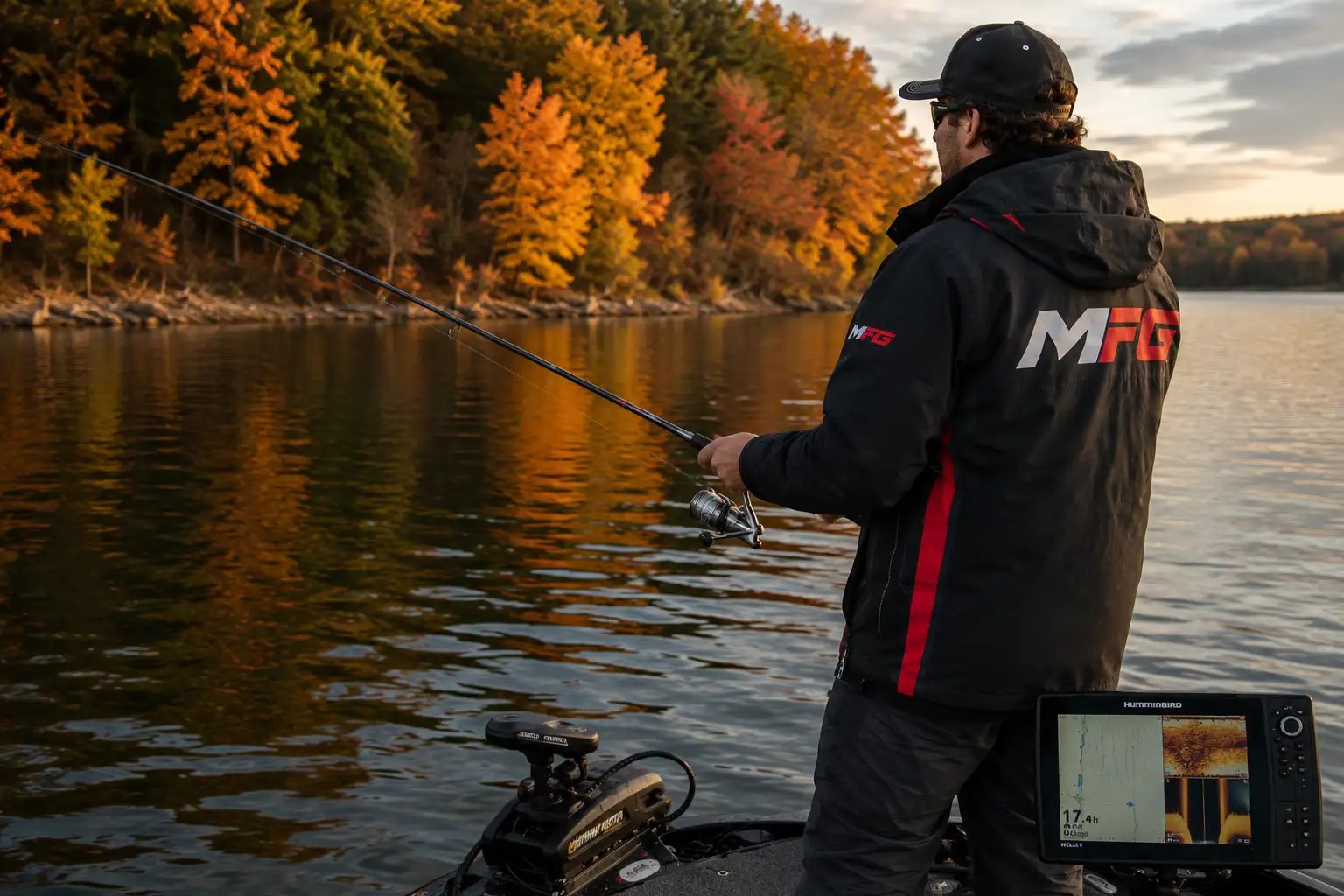
Fall pike fishing from a boat gives anglers access to water that simply can’t be reached from shore, but that advantage only matters if the boat is positioned correctly. We’ve learned over the years that our boat setup changes constantly throughout autumn. The way we approach healthy weed beds in September is completely different from how we fish deep breaklines and basin edges after the water cools later in the season. Staying in the same position regardless of changing conditions often means making difficult casts, covering water inefficiently, and missing active fish.
Rather than treating every fall trip the same, we adjust our boat position, casting angles, and boat control as the season progresses. Wind, water temperature, and the movement of baitfish all influence where we place the boat before making the first cast. On many late-fall trips, we’ve spent more time positioning the boat than actually fishing because a small adjustment often gives us far better lure presentation over productive structure.
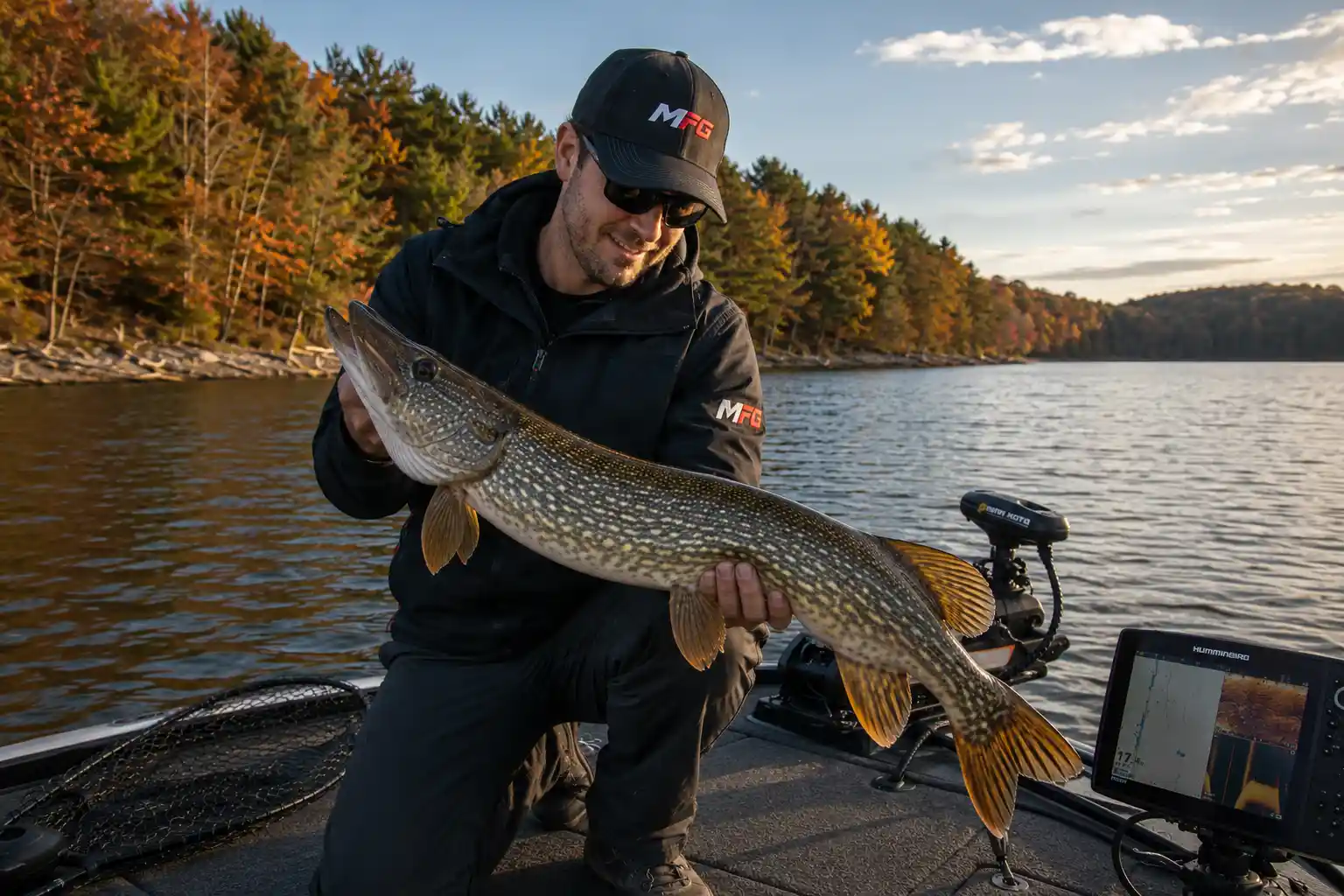
Success from a boat during autumn isn’t about making more casts—it’s about making every cast from the right position. Throughout this guide, we’ll explain how our approach changes from early to late fall, when electronics become most valuable, and how different boat-control strategies help us fish autumn structure more effectively.
Why Boat Positioning Changes Throughout Fall
Successful fall pike fishing from a boat isn’t only about finding fish—it’s about positioning the boat to match how pike use the lake as autumn progresses. As water temperatures fall, baitfish gradually move to different parts of the lake, and pike follow those seasonal movements. Understanding where to find pike in fall is the first step, but once you reach those areas, boat positioning often determines whether your lure is presented naturally or passes through low-percentage water.
Our approach changes throughout the season. During early fall, we usually position the boat outside healthy weed edges to cover shallow feeding areas efficiently. By mid-fall, we’re often working points, breaklines, and expansive flats from several casting angles, while late fall typically requires much more precise positioning over deeper structure. Trying to fish every stage of autumn from the same distance or angle is one of the easiest ways to reduce your chances of success.
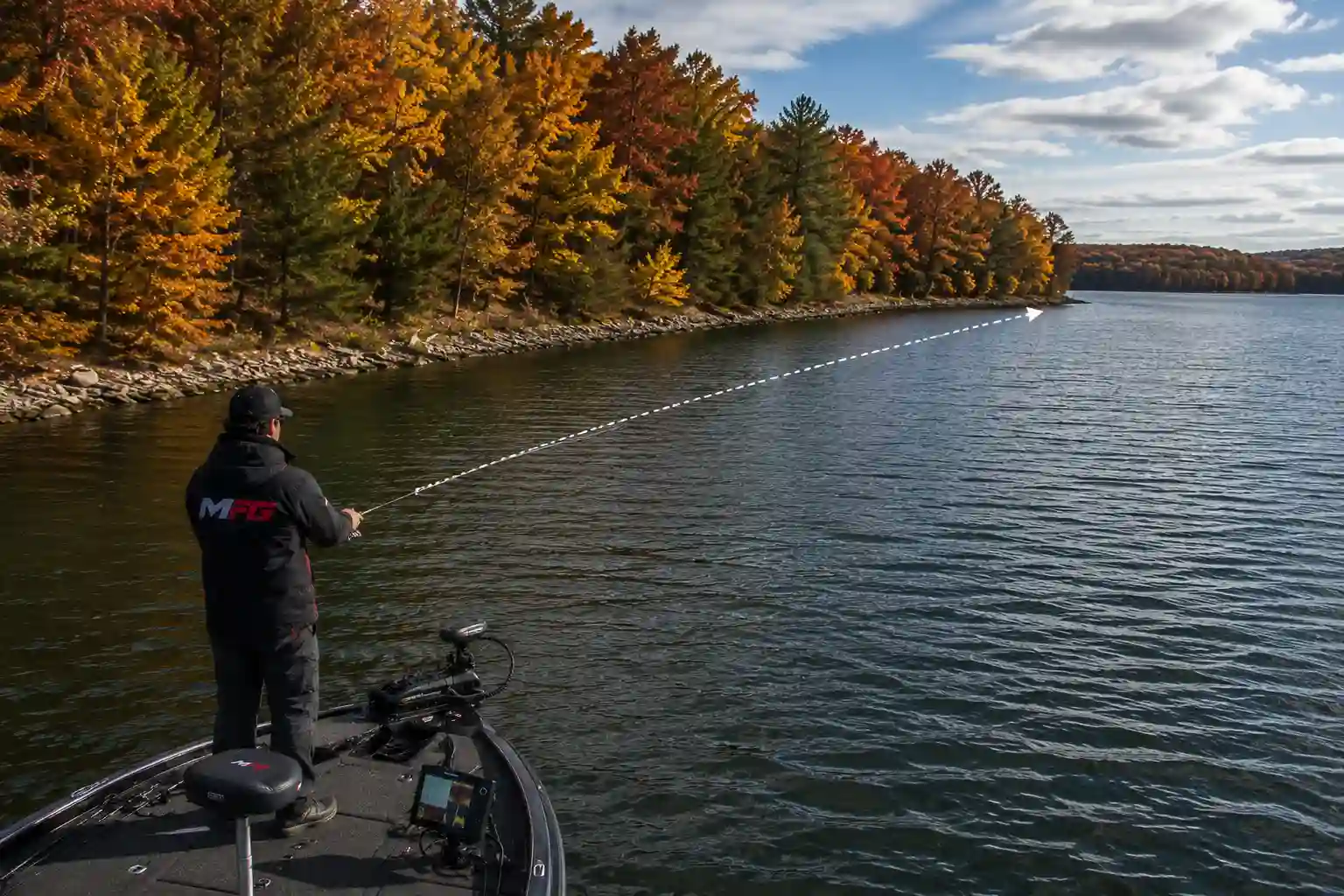
On more than one occasion, moving the boat just 20 to 30 yards has completely changed our casting angle and produced follows or strikes within only a few casts. The fish hadn’t moved—we simply started presenting the lure from a better position. Every decision in this guide, from boat control to electronics, begins with placing the boat where each cast works in your favor.
Early Fall Boat Positioning Around Healthy Weed Beds
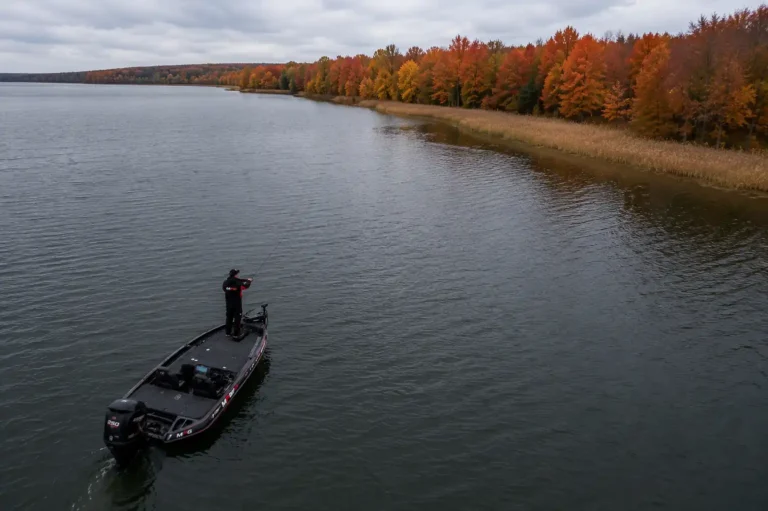
Early fall is the time when healthy weed beds still hold large numbers of baitfish, making them one of the first places we target from the boat. Rather than moving directly over the vegetation, we usually position the boat about 65 to 100 feet (20–30 m) outside the main weed edge. This gives us enough room to make long, accurate casts while keeping the lure alongside the outside weed line for most of the retrieve, where actively feeding pike often patrol during this stage of autumn.
Once the boat is in position, we usually begin by casting parallel to the weed edge before changing casting angles. Covering the same stretch from several directions often triggers fish that ignore a lure approaching from only one angle. If the wind is blowing along the weed edge, we’ll frequently use a slow controlled drift instead of repositioning after every few casts. Once we’ve established the right boat position, we match it with the best pike lures for fall for the conditions to keep the presentation effective throughout the retrieve.
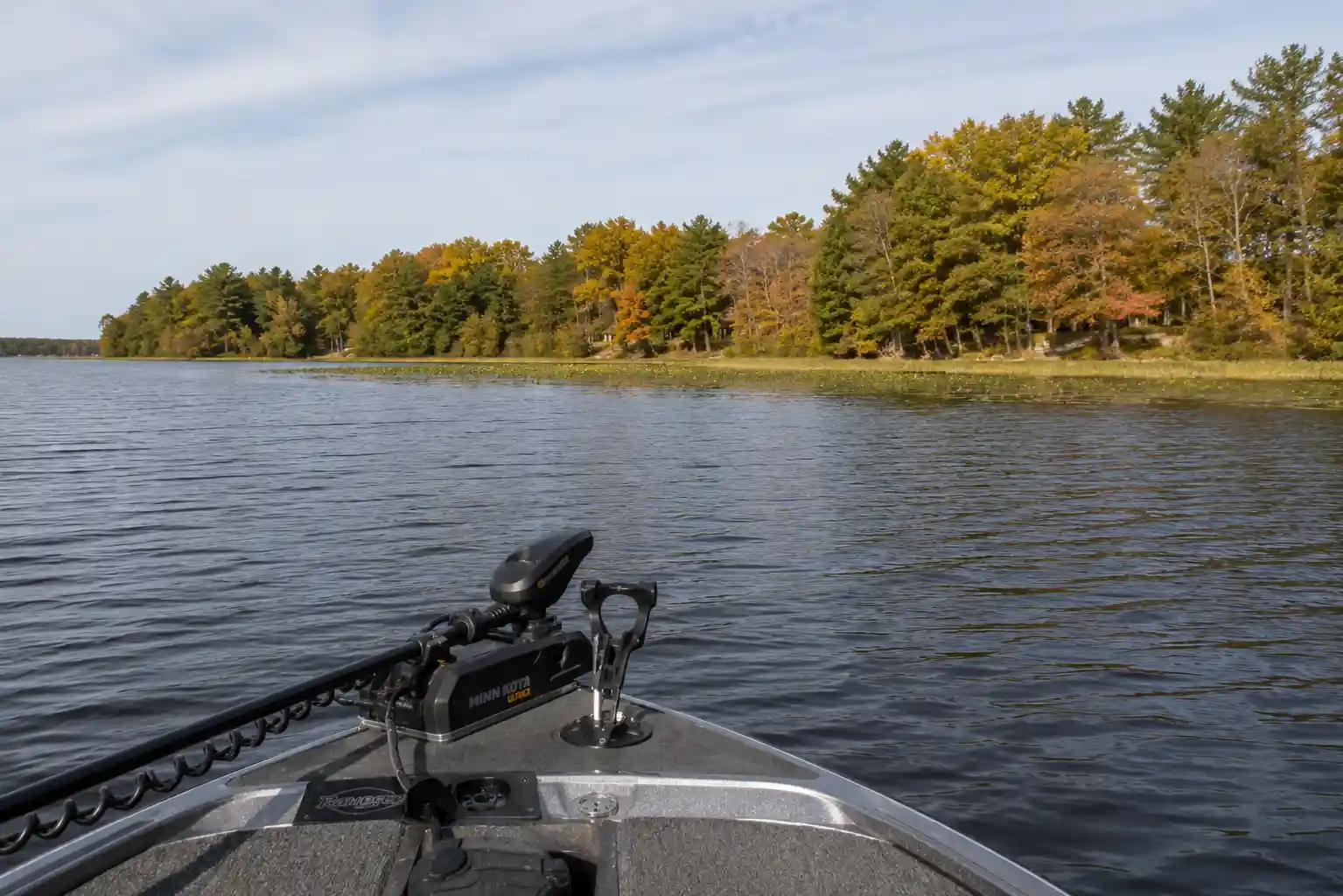
One mistake we’ve repeated ourselves is moving the boat too close to the weeds simply because the fish looked reachable. More than once, backing the boat away by roughly 30 to 50 feet (10–15 m) completely changed our casting angle and produced follows or strikes within only a few casts. The fish hadn’t moved—we simply started presenting the lure along the outside weed edge instead of pulling it away from the cover too early.
Mid-Fall Boat Control on Points, Breaklines and Flats
By mid-fall, many productive weed beds begin to lose their importance, and our attention shifts toward points, breaklines, and large flats where baitfish spend more time. These structures usually cover much more water than a weed edge, so boat control becomes just as important as finding the fish. Planning your trip around the best time for fall pike fishing helps make the most of these shorter feeding windows, but once you’re on the water, controlling the boat is what allows you to fish each structure effectively.
Instead of drifting across an entire point, we usually work it in sections. We’ll often make 10 to 15 casts from one position before moving the boat about 50 to 65 feet (15–20 m) to create a different casting angle. On windy days, a trolling motor with Spot-Lock or short controlled drifts helps us keep the lure in the productive zone much longer than constantly moving over the structure. The goal isn’t to cover water as quickly as possible—it’s to cover the structure from several angles before leaving.
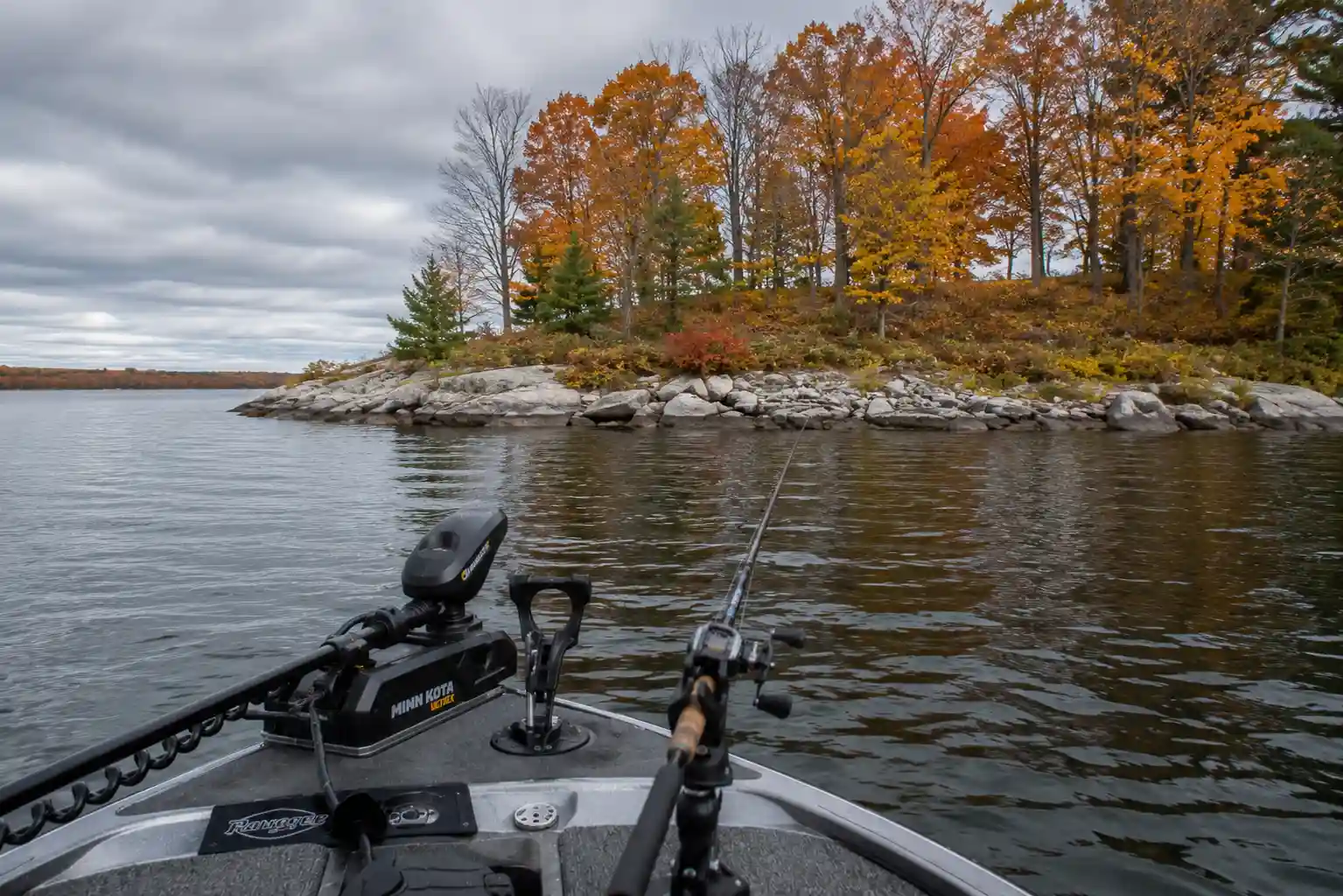
We’ve had plenty of days when the first dozen casts produced nothing, but moving the boat about 50 feet (15 m) and approaching the same breakline from a different angle resulted in an immediate strike. The fish hadn’t changed position. Our lure simply entered the strike zone in a way that looked more natural, proving once again that small adjustments in boat control often outperform constantly searching for new water.
Late Fall Boat Positioning Over Deep Structure
Late fall often requires a completely different approach from everything we did earlier in the season. Instead of working long weed edges or shallow flats, we spend most of our time around steep breaklines, basin edges, and underwater points where baitfish gather before winter. Rather than positioning the boat directly above the structure, we usually stay about 80 to 120 feet (25–35 m) away and cast across or along the drop-off. The exact distance depends on water depth and the steepness of the breakline, but keeping the boat off the structure allows us to work the entire slope without passing directly over the area we’re trying to fish.
Once we find baitfish, we rarely leave after only a handful of casts. Instead, we’ll work the same structure from several directions, usually repositioning the boat by about 65 to 80 feet (20–25 m) between setups. Approaching the same breakline from different angles often keeps the lure in the strike zone longer and presents it in a way that looks more natural to pike holding along the slope.
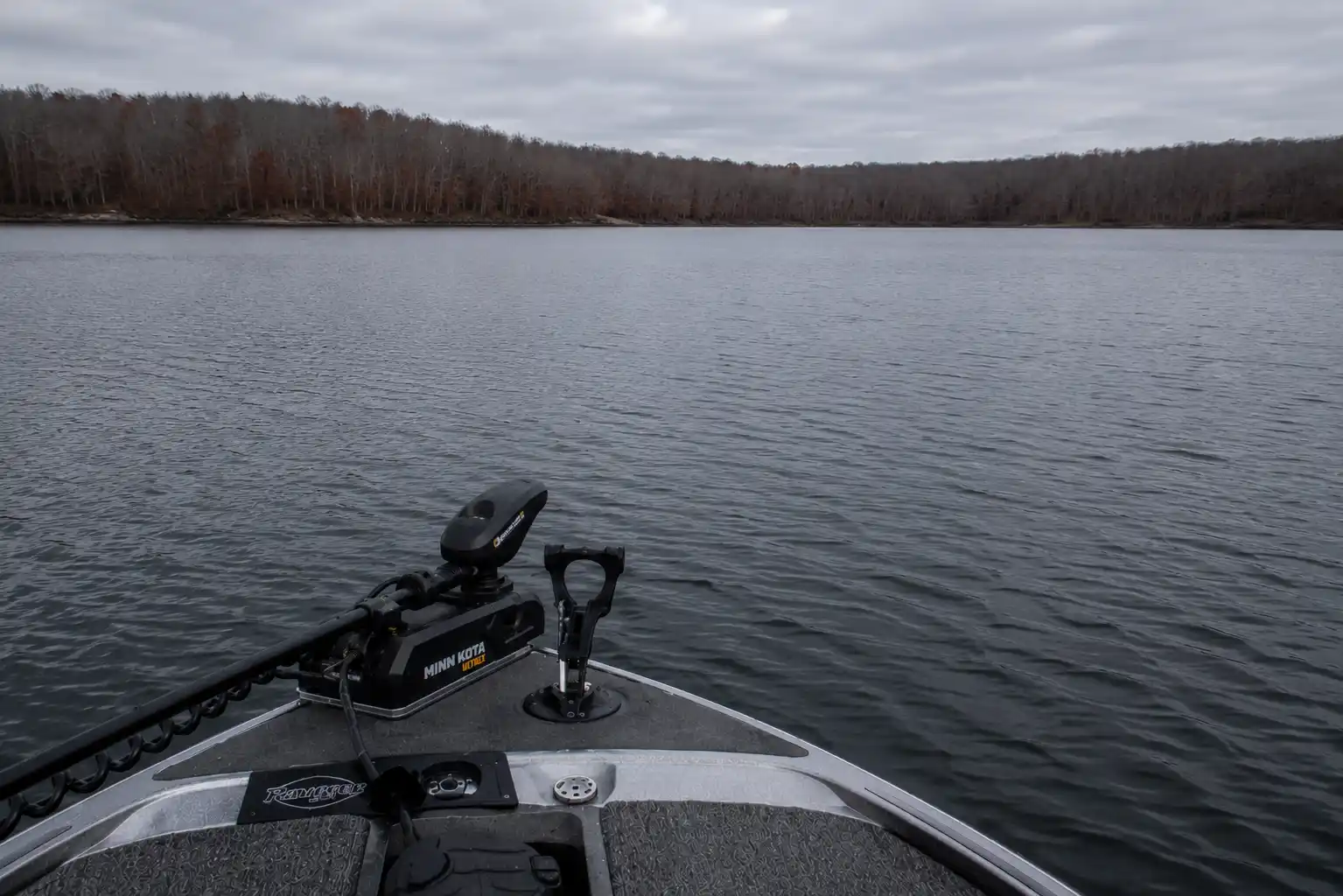
One November afternoon, we spent nearly an hour casting a deep breakline without a single follow. We were convinced the fish had already left the area. Before moving to another spot, we repositioned the boat about 65 feet (20 m) farther along the breakline and began casting across the slope instead of straight down it. Within a few casts, one large pike followed the lure almost to the boat, and another fish struck on the very next drift. The structure hadn’t changed—we had simply found a presentation angle that kept the lure in front of the fish for a little longer.
Using Electronics More Effectively During Fall
As pike move toward deeper structure later in the season, electronics become one of the most valuable tools in the boat. Rather than searching for individual fish, we first use a fish finder for pike to locate schools of baitfish. If the food isn’t there, there’s a good chance the pike won’t stay there for long either.
Before making the first cast, we’ll often scan 3 to 5 promising structures instead of stopping at the first breakline that looks good on the map. We’re looking for baitfish, depth changes, and anything that makes one area stand out from the others. Spending an extra 10 to 15 minutes scanning usually saves far more time than fishing unproductive water for an hour.
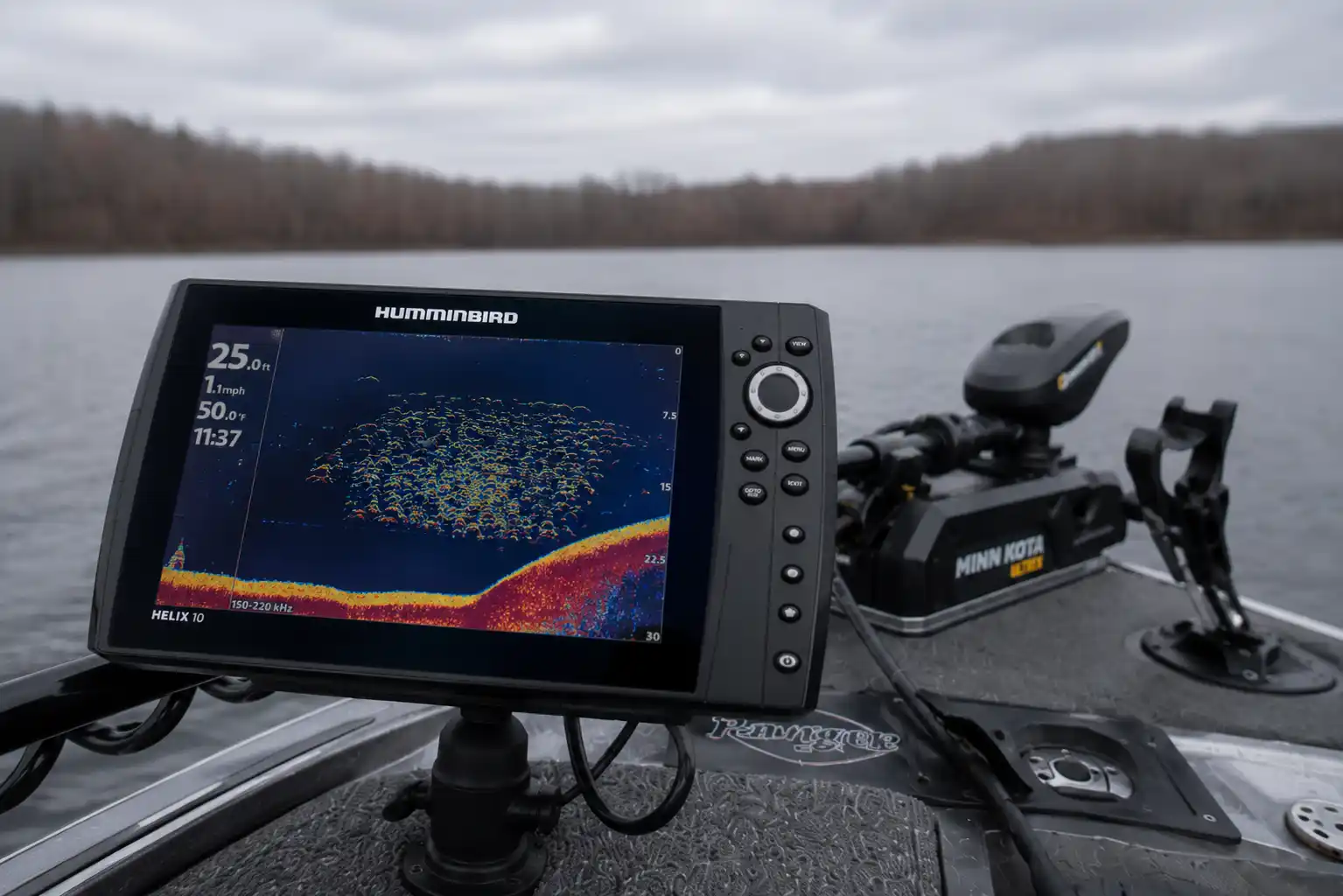
One late-fall trip, we were ready to start casting a steep breakline that looked perfect on the map. Before picking up a rod, we made one more pass with the fish finder and realized the area was almost empty. We moved to the next basin edge about 300 feet (90 m) away, immediately found a large school of baitfish, and had our first follow within a few casts. That day reminded us that electronics don’t catch fish—they help us avoid wasting time on the wrong water.
Drift, Spot-Lock, or Anchor? Choosing the Right Boat Control During Fall
Boat positioning doesn’t end once you’ve found productive water. Keeping the boat in the right place is just as important as choosing the right location. During fall, we regularly switch between controlled drifts, Spot-Lock, and occasionally an anchor, depending on the structure, wind conditions, and how precisely we need to present the lure.
On long weed edges and extended breaklines, we usually prefer a slow controlled drift. If possible, we try to keep the boat moving at around 0.3 to 0.6 mph (0.5–1 km/h), allowing the lure to cover fresh water naturally without rushing through productive areas. Once we locate a small section holding active fish, Spot-Lock often becomes the better option because it lets us thoroughly work the area from multiple casting angles while keeping the boat in exactly the same position.
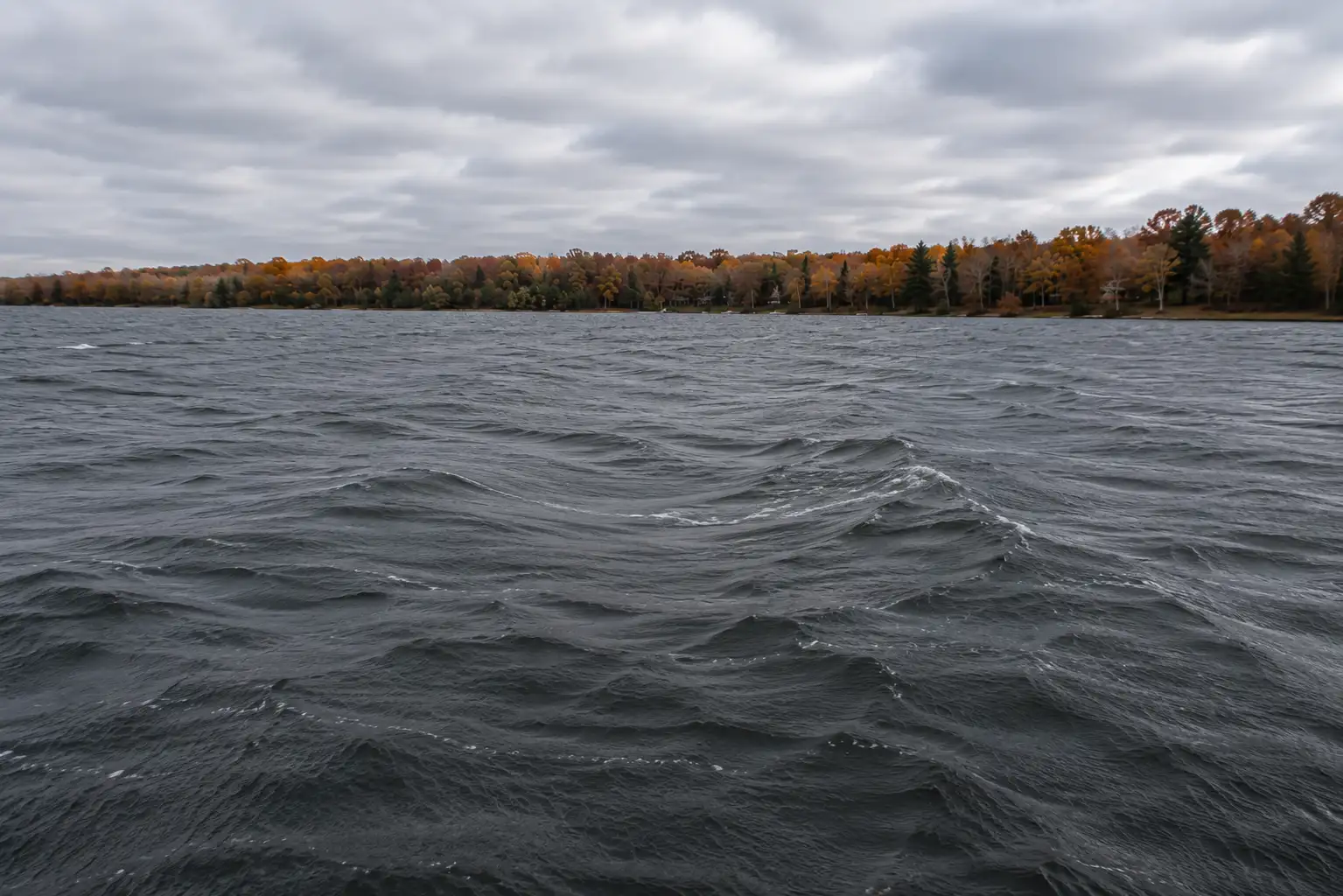
Although Spot-Lock has become our first choice whenever conditions allow, an anchor still has its place. On very windy days, or when fishing from a boat without a trolling motor, dropping anchor can provide a much more stable presentation than constantly correcting your position with the outboard. The same principle also applies when fishing from the best fishing kayak, where maintaining precise boat control in changing wind conditions is often even more important.
One afternoon, a steady crosswind kept pushing us off a deep breakline before we could properly work it. After several frustrating drifts, we stopped trying to correct the boat every few seconds and dropped the anchor about 100 feet (30 m) from the edge.
The difference was immediate. Instead of fighting the wind throughout every retrieve, we could focus entirely on lure presentation. It didn’t take long before one solid pike struck halfway back to the boat. Sometimes, the best boat control isn’t the newest technology—it’s simply choosing the method that lets you present the lure naturally and keep it in the strike zone for as long as possible.
Common Boat Mistakes During Fall Pike Fishing
Many fall boat anglers spend plenty of time looking for better spots when the real problem is often how they’re fishing the spot they’ve already found. Small mistakes in boat positioning, boat control, or decision-making can dramatically reduce the number of quality presentations, even when pike are present.
Getting Too Close to the Structure
One of the most common mistakes is positioning the boat directly over weed edges, breaklines, or basin edges. Staying a little farther away usually creates better casting angles, keeps the lure in the strike zone longer, and reduces the chance of disturbing fish before the first cast is even made.
Leaving Productive Water Too Quickly
Not every active pike strikes within the first few casts. If electronics show baitfish or the structure looks promising, it’s often worth changing your casting angle before deciding to leave. We’ve had several fish strike only after approaching the same area from a completely different direction.
Ignoring Wind Direction
Wind doesn’t only influence where baitfish gather—it also affects boat control and lure presentation. Fighting the wind instead of using it for a controlled drift often results in inconsistent retrieves and poor casting accuracy.
Relying Only on the Map
Maps are excellent for locating potential structure, but they don’t show where baitfish are today. Before committing to a spot, we always verify what we’re seeing with a fish finder. A promising contour without baitfish rarely keeps our attention for long.
Changing Spots Instead of Changing Boat Position
We’ve learned that moving the boat only a short distance can sometimes be more effective than running to the next location. A new casting angle, a slower drift, or a steadier position often changes how the lure moves through the strike zone. More than once, a small adjustment has produced a strike on water we were seconds away from leaving.
Fall Pike Fishing from a Boat: FAQ
How do you position a boat for fall pike fishing?
The best boat position changes as fall progresses. In early fall, we usually stay outside healthy weed beds and cast along the edge instead of sitting directly over the cover. During mid-fall, we work points, flats, and breaklines from several directions before moving to new water. In late fall, we often keep the boat off deeper structure and cast across or along the drop-off so the lure stays in productive water longer.
Should you drift or stay stationary when fishing for pike from a boat in fall?
Both methods work, but they serve different purposes. A slow controlled drift is better when pike are spread across a weed edge, flat, or long breakline. Staying stationary with Spot-Lock or an anchor is better when baitfish or strikes show that one small area deserves more attention. We usually drift first to find active water, then slow down once we have a reason to fish one section more carefully.
How close should the boat be to pike structure in fall?
The boat should usually stay far enough away that your lure can work through the structure naturally. Getting too close often shortens the retrieve, pulls the lure out of the strike zone too quickly, or places the boat directly over fish before they see the lure. Around weeds, points, breaklines, and basin edges, we prefer enough distance to make full casts and control the lure path through the best part of the structure.
Are electronics necessary for fall pike fishing from a boat?
Electronics are not required, but they become much more valuable as the water cools. In early fall, visible weeds, wind direction, and shoreline structure can still guide many decisions. By mid and late fall, a fish finder helps locate baitfish, depth changes, hard bottom, and empty-looking structure that is not worth fishing for long. Electronics do not replace fishing experience, but they help us spend more time around water that actually holds food.
Does wind direction matter when positioning a boat for fall pike?
Wind direction matters a lot because it affects both baitfish movement and boat control. Wind can push baitfish toward weed edges, points, and breaklines, but it can also make lure presentation sloppy if the boat drifts too fast or from the wrong direction. When possible, we use the wind to create a controlled drift instead of fighting it. If the wind becomes too strong, Spot-Lock or an anchor often gives better lure control.
Boat Positioning Makes the Difference
Successful fall pike fishing from a boat isn’t about making more casts or covering every corner of the lake. It’s about putting the boat in the right position for the conditions you face that day. As autumn progresses, healthy weed beds give way to points, breaklines, and deep basin edges, and your boat positioning should evolve with those seasonal changes. The more precisely you control the boat, the more naturally your lure moves through the areas where pike are most likely to feed.
We continue to refine our approach every fall because no two days on the water are exactly alike. Paying attention to wind, baitfish activity, water temperature, and boat control has consistently produced better results than simply moving from spot to spot. If you’d like to learn more about the biology, distribution, and ecology of northern pike, the FishBase species profile for Esox lucius is an excellent scientific resource.