

Best Time for Fall Pike Fishing: When Pike Feed Most During the Day
Best time for fall pike fishing isn’t a single hour you can circle on a calendar — it changes as water temperature drops through the season, and a schedule that worked in September often stops producing by November.
A 65°F afternoon and a 42°F afternoon do not produce pike at the same time of day. The feeding window shifts as water temperatures continue to fall, and ignoring that shift is the difference between three fish before lunch and three hours of nothing. This guide breaks down when pike actually feed during fall — early, mid, and late season — and exactly which hours produce the most strikes at each stage, plus how weather conditions can move that window earlier, later, or shorten it altogether.
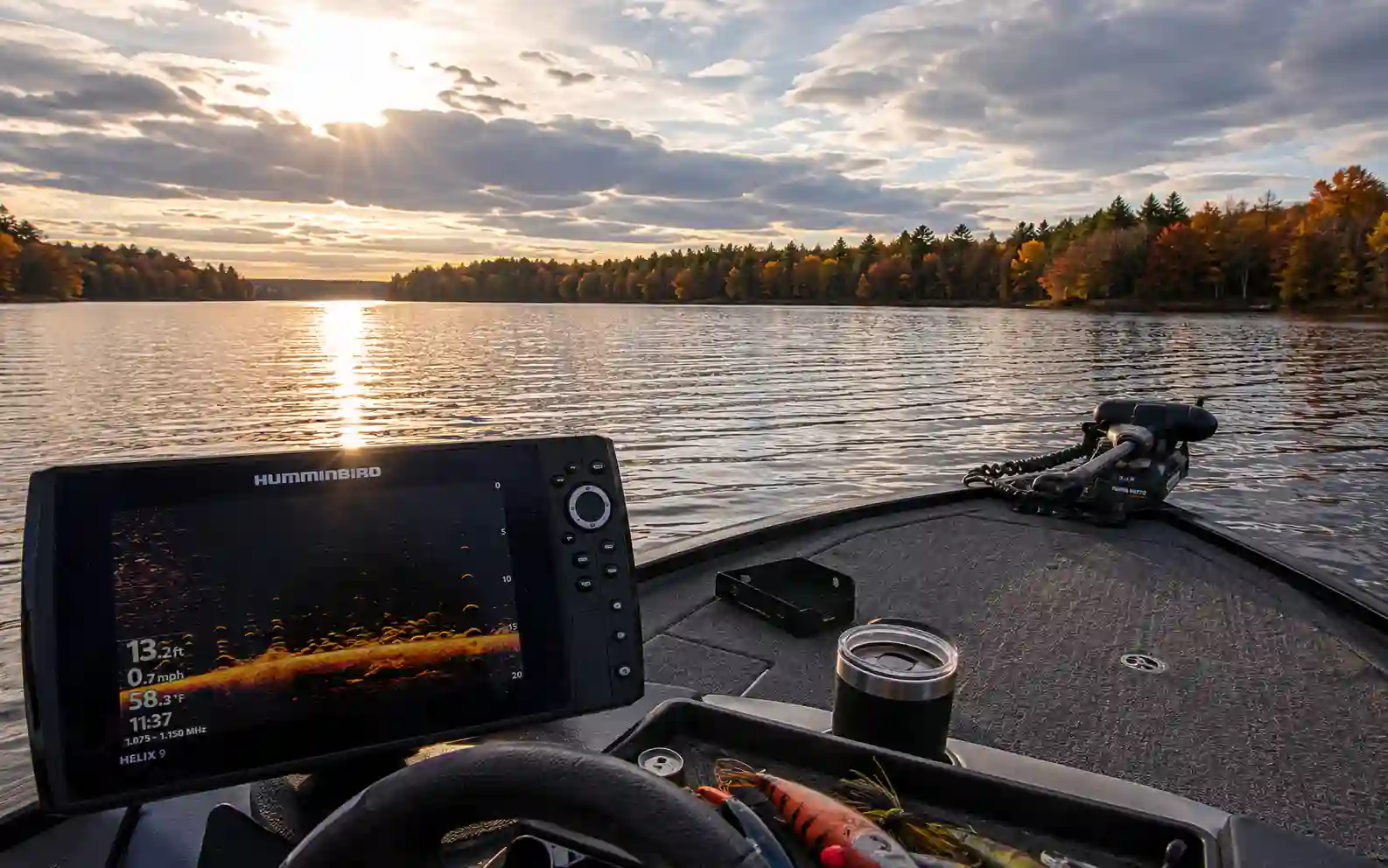
For the complete approach to catching pike this season, see our fall pike fishing guide.
Best Time for Fall Pike Fishing by Water Temperature
Fall doesn’t offer one universal feeding window from September through freeze-up. The hours that produce fish in early autumn often look very different from those that produce in late fall. Water temperature gradually shifts the most consistent feeding periods later into the day as the season progresses.
Early Fall (Above 60°F / 16°C)
Water above 60°F still carries summer’s feeding rhythm, and the bite hasn’t compressed into a tight window yet. Dawn through mid-morning, roughly 6:30 AM to 9:30 AM, and again from late afternoon into dusk around 5:00 PM to 7:00 PM, remain the most consistent stretches, and much of the daily activity still resembles what pike were doing only a few weeks earlier in late summer. On one early-September trip with surface temps sitting at 64°F, we picked up fish steadily from 7:00 AM through almost 10:00 AM, then again starting around 5:30 PM — the bite never fully stopped between those windows, just slowed.
Mid Fall (Mid-50s°F / 12–14°C)
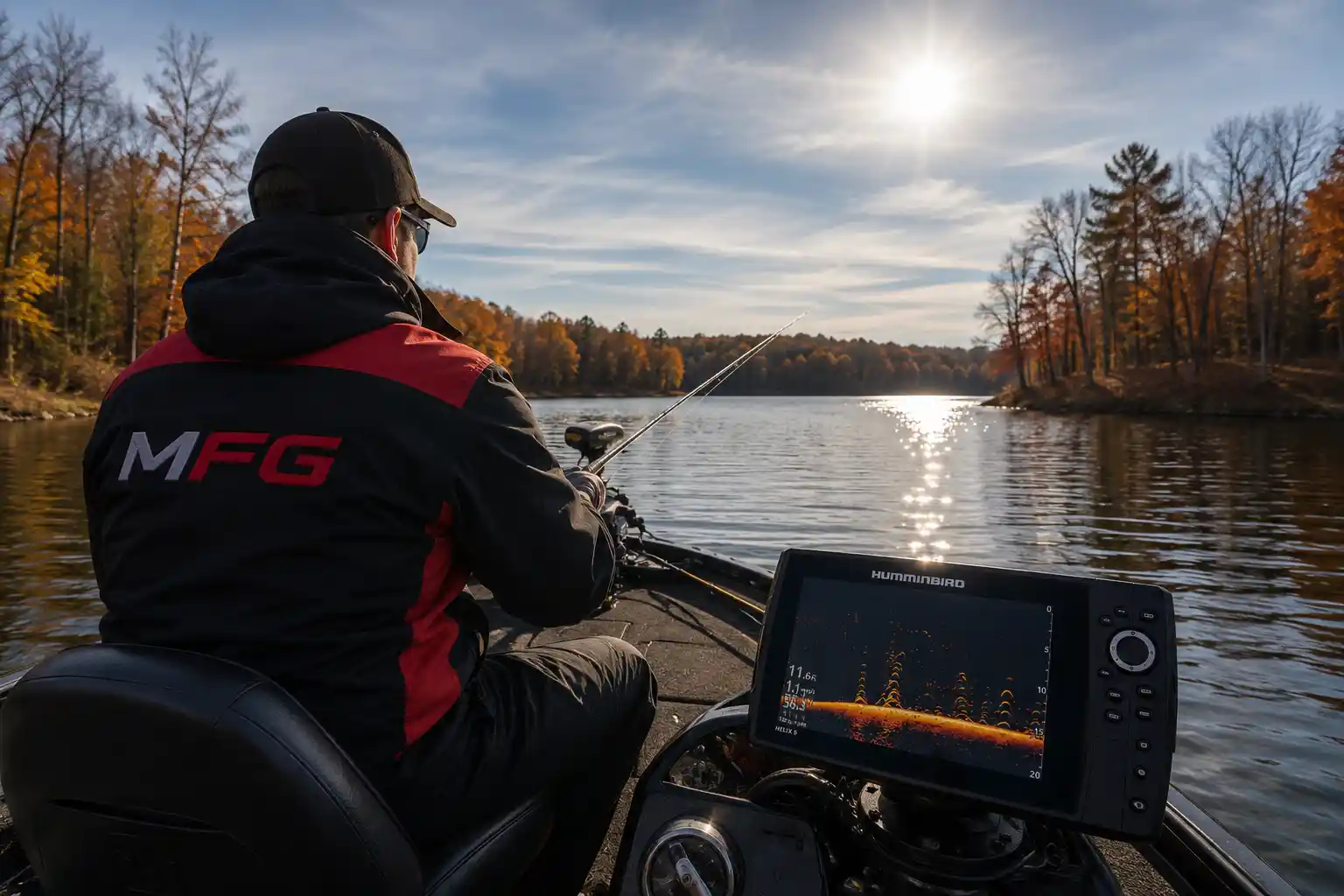
This is where the day’s strongest feeding period becomes easier to identify. As surface temps settle into the mid-50s, the feeding period stretches into the middle of the day instead of staying locked around dawn and dusk. Water takes longer to warm at this stage, so fish that were active at 7:00 AM in early fall now don’t turn on until closer to 10:00 AM, with the strongest activity typically running through 1:00 PM, once the sun has had a few hours to work on the surface. We’ve had some of our best mid-fall sessions running from 11:00 AM to 2:00 PM, particularly on lakes with darker bottom that holds heat slightly longer.
Late Fall (Low 40s°F / 4–7°C)
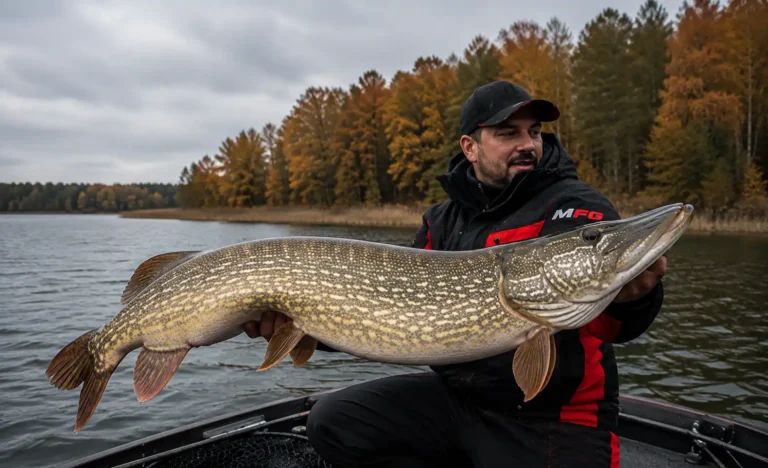
Below 50°F, the bite concentrates almost entirely into a short stretch around the warmest part of the day, usually 11:00 AM to 2:00 PM. During one late October session after an overnight frost, we didn’t move a fish before 11:00 AM. Between 11:30 AM and 2:00 PM, three pike over 36 inches came from the same deep breakline as the water warmed slightly under clear skies. Early morning, which was the best time just weeks earlier, often becomes the least productive part of the day at this stage — the cold overnight temperatures need hours of sun to recover before pike commit to feeding.
How Weather Affects Fall Pike Feeding Times
Water temperature sets the general feeding window for each stage of fall, but weather decides whether that window opens on schedule, shifts, or barely opens at all. The same 52°F afternoon can produce two completely different days depending on what the sky and barometer are doing.
Stable Weather
A few days of consistent conditions — similar temperatures, similar pressure, no major fronts — lets pike settle into the predictable pattern described above for whatever stage the water is in. We’ve found these stretches the easiest to plan around, since a 1:00 PM bite on Monday usually repeats close to the same hour on Tuesday if nothing else changes. One mid-October week with three flat, unremarkable days in a row produced almost identical results each afternoon: first fish between 11:45 AM and 12:15 PM, every single day.
Approaching Fronts
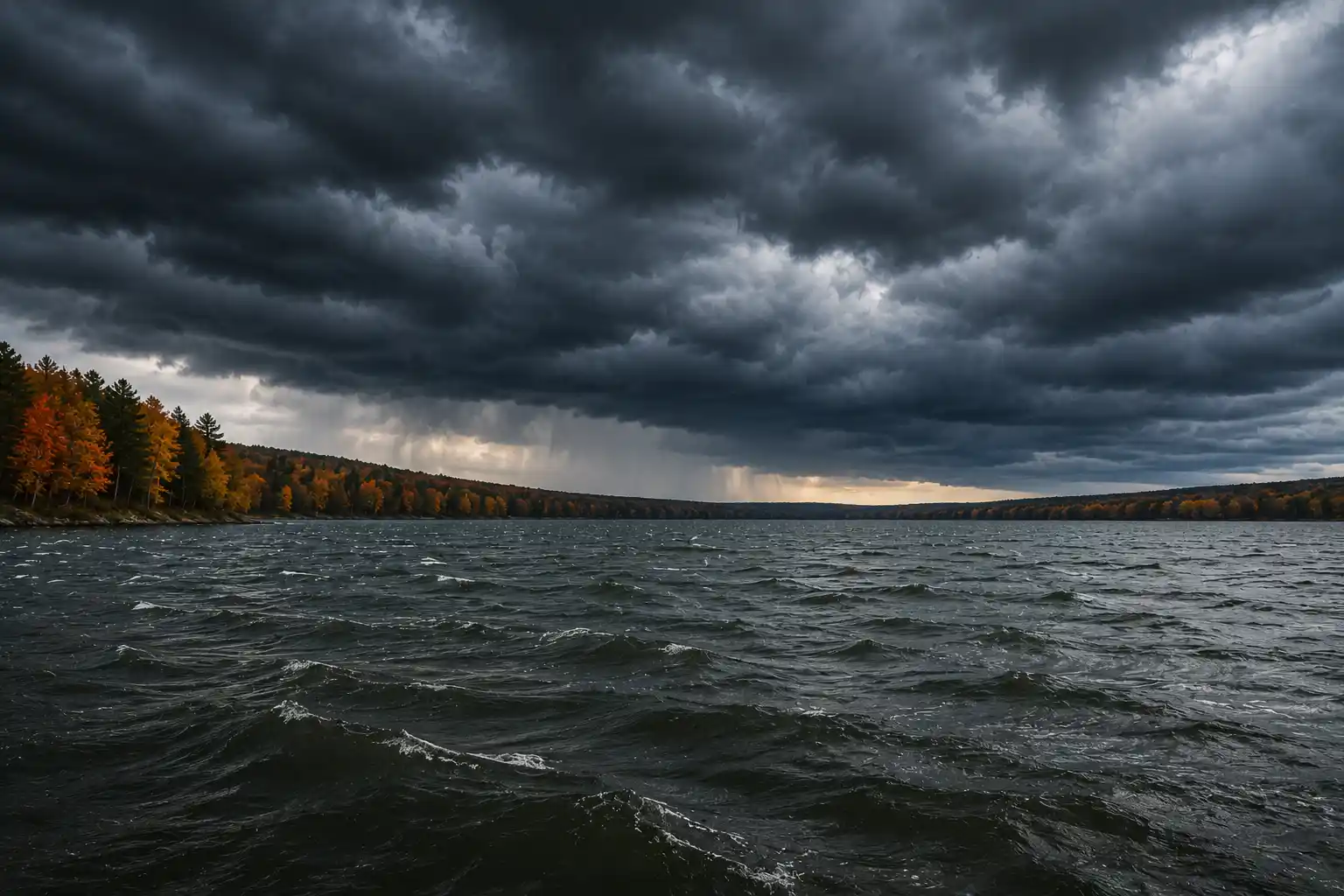
Falling pressure ahead of an incoming system often pulls the feeding window earlier and can extend it. We’ve had sessions where pike that normally wouldn’t show interest until late morning were already striking by 9:00 AM, hours before the front actually arrived. The day before a cold front hit a lake we fish regularly, surface temp was still 56°F and three fish over 34 inches came in the two hours before clouds even built on the horizon.
Cold Fronts
Once the front passes and clear skies and rising pressure settle in behind it, the bite usually shuts down hard for a day or two. We’ve sat through entire afternoons with zero bites right after a front moved through, on water that had been firing the day before. When activity does return, it tends to come back compressed into the shortest window of the conditions covered here — sometimes no more than 45 minutes around the warmest part of the day.
Windy Days
Wind doesn’t shut feeding down the way a cold front does, but it changes when the bite shows up. A steady 15 mph wind pushing into one shoreline on an otherwise unremarkable mid-50s day moved our first strike up by almost two hours compared to calmer days at the same temperature.
Best Conditions for Big Fall Pike
Large pike rarely need long feeding periods. A fish carrying years of growth can get what it needs from a short burst of activity, which is one reason trophy-class pike often appear during a narrow window while smaller fish remain catchable throughout the day. The most consistent periods tend to occur after several days of stable weather, especially when water temperatures remain between 48°F and 58°F (9–14°C), light to moderate wind keeps the surface broken without making it unfishable, and skies stay overcast or partly clouded rather than bright and clear.
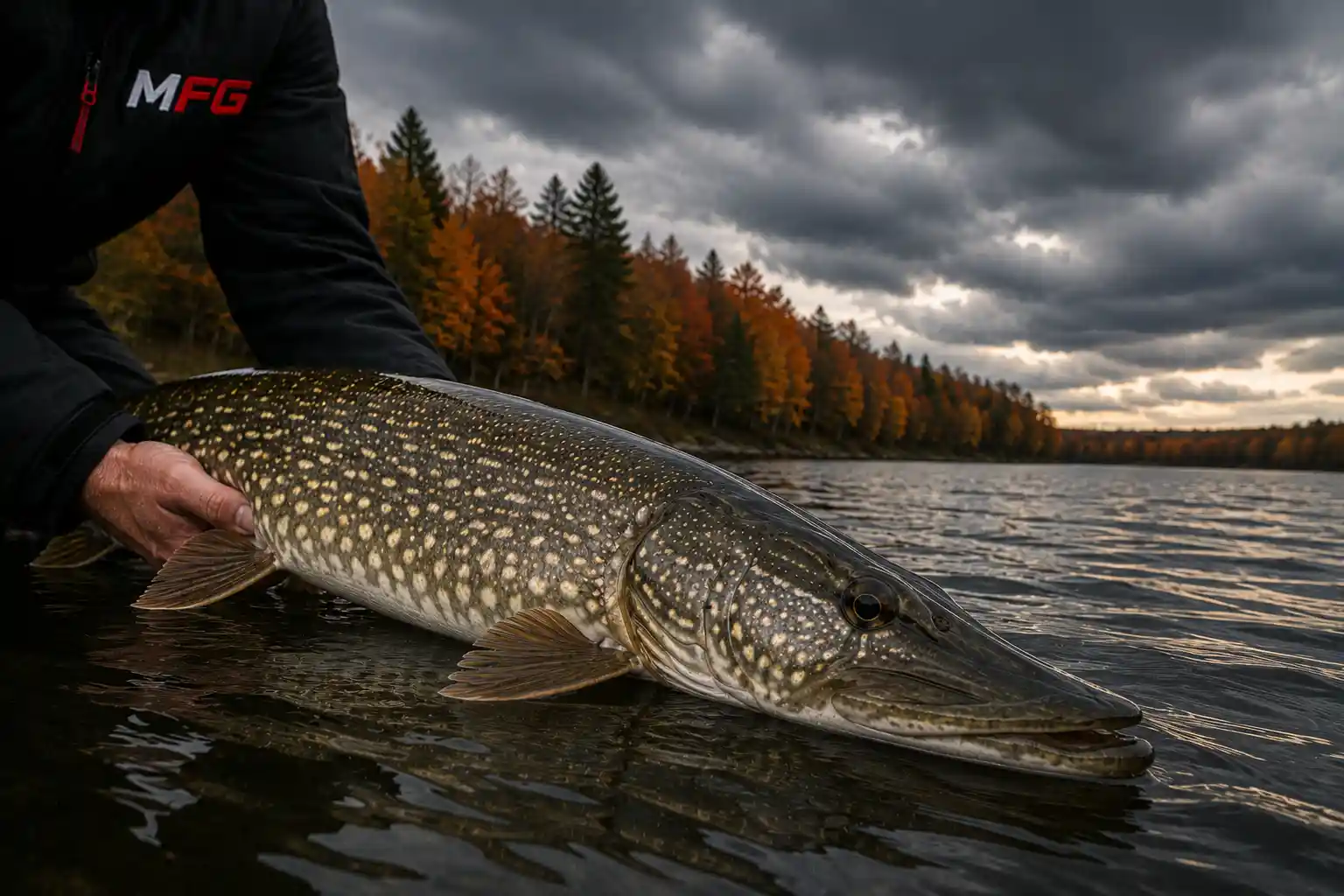
This is different from chasing general activity. A 24–28 inch pike will often feed on a loose schedule and respond to several different windows throughout the day, picking off whatever crosses its path with little hesitation. A pike that’s been adding size for years doesn’t operate the same way. It tends to hold tight to a specific piece of structure, often one we first identify using sonar, conserve energy for most of the day, and commit only when conditions line up well enough to make the effort worthwhile. That narrower threshold is exactly why the biggest fish in a system often show up later, or in a shorter window, than the smaller ones already being caught around them.
During one late-fall stretch with water sitting at 48°F, we spent three mornings launching before sunrise and never moved a fish before 10:30 AM. Every pike over 35 inches came after midday once the lake had several hours of daylight.
Why Fall Pike Feeding Times Change
A one-degree temperature change means very little in July. In late fall, the difference between 44°F and 46°F can completely change when pike become active. Understanding why the window keeps moving makes the timing in this guide easier to apply on water you haven’t fished before.
In early fall, overnight temperatures haven’t dropped far enough to matter. A night that cools the surface from 64°F to 61°F doesn’t put pike into recovery mode the way a hard frost does later in the season, so the bite stays spread across most of the day.
By mid fall, shorter days and colder nights start working against the morning bite specifically. The sun has less time to recover whatever heat was lost overnight, which is why the window keeps sliding later — not because pike suddenly change behavior, but because the water takes longer to recover from overnight cooling.
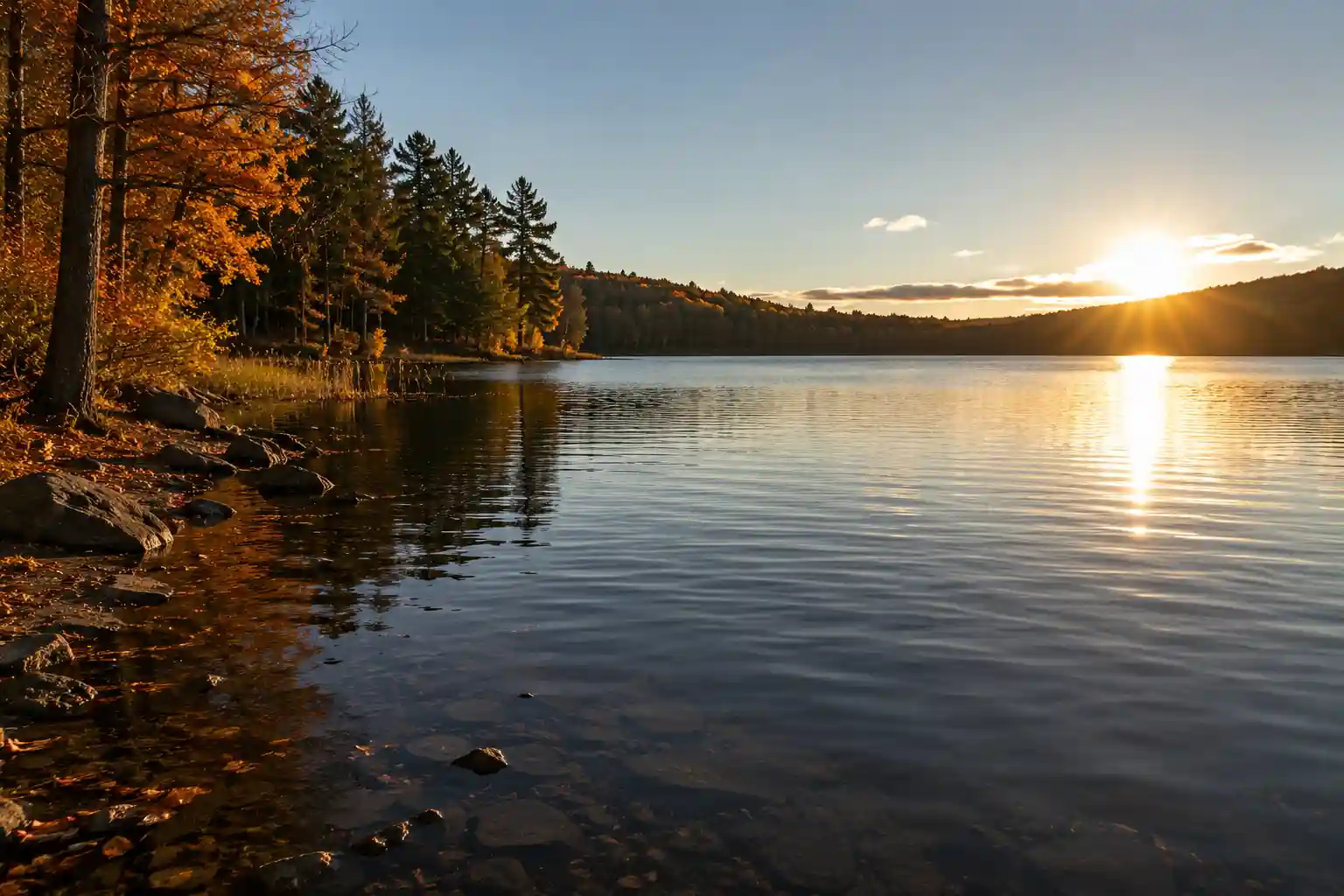
Air temperature in the early morning becomes a better predictor at this stage than it was just weeks earlier. A clear, cold morning that drops air temperature into the 30s°F pulls more heat out of the shallows overnight than a cloudy one sitting in the 40s°F, even if the daytime high ends up similar. A sunny afternoon also stops being interchangeable with any other sunny afternoon — a sunny day in early November carries far less warming power than the same sky in September, simply because the sun sits lower in the sky.
Late fall takes that same pattern to its extreme. Overnight lows sitting near or below freezing mean the lake starts each day from a colder baseline than the day before, even during stable weather. By the time water in the upper shallows finally warms a degree or two under direct sun, half the daylight hours are already gone. That’s why the warmest part of the day stops being a convenient detail and becomes the entire session.
We saw this firsthand during a late-November stretch when water temperatures climbed from 44°F to 46°F after two unusually mild afternoons. The morning period remained quiet, but the midday window expanded from less than an hour to nearly three hours. Over two days, we caught six pike between noon and 2:30 PM, while the first three hours after sunrise produced nothing.
Planning Your Fall Pike Fishing Day
Most of this guide covers what happens once you’re already on the water. Just as important is deciding when to head out in the first place, since the wrong starting point can waste an entire morning before the actual feeding window ever opens.
After Consecutive Stable Days
A single stable day rarely tells you much, but two or three in a row build the kind of predictable pattern worth planning around. Skipping the first day after a front in favor of the second or third stable day that follows often produces a far stronger session than fishing the front’s immediate aftermath. During one November stretch we deliberately skipped the first day after a cold front and fished the second and third stable days instead. The first outing produced a single pike, while the following two afternoons produced seven.
Following Overnight Frosts
A hard overnight frost is one of the clearest signals to delay a launch rather than rush it. Arriving two or three hours later than usual, once the sun has had time to work on the water, often beats showing up at first light and fishing through several unproductive hours. On several late-season trips we stopped launching before sunrise altogether. Arriving at 10:00 AM instead of 7:00 AM put us on the water during the only productive period of the day and eliminated hours of unproductive fishing.
During Rapid Temperature Swings
A sudden warm spell after several cold days often changes the schedule faster than anglers expect. When water temperature jumps several degrees after a stretch of cold, stable weather, the feeding window can shift earlier than the previous few trips would suggest. One 50°F afternoon after a week of low-40s temperatures produced our first strike on a suspending jerkbait nearly two hours earlier than the previous trip on the same lake.
Common Timing Mistakes in Fall Pike Fishing
Most fall pike fishing mistakes aren’t about gear or location. They come down to misreading the clock for the stage the water is actually in, often based on habits formed earlier in the season or assumptions that stopped applying weeks ago.
Fishing Too Early in Late Fall
Showing up before sunrise still feels like the right call once it’s a habit, even after the water has cooled past the point where early morning produces. Once overnight lows are regularly dropping near freezing, the first two or three hours of daylight are usually the least productive part of the day, not the most. We’ve watched anglers leave a spot at 9:00 AM convinced the water was dead, only to see it turn on for someone else two hours later once the sun had finally warmed the shallows.
Leaving During the Best Midday Window
A morning with no action by 10:00 or 11:00 AM feels like a sign to call it quits, especially out of habit from earlier in the season when that would have been a fair read. In mid and late fall, that exact stretch is often the setup for the day’s strongest period rather than confirmation that nothing is going to happen. One mid-November trip nearly ended at 11:30 AM after a quiet morning, and the decision to stay produced four fish in the next ninety minutes.
Using Air Temperature Instead of Water Temperature
A cold, frosty morning and a mild, overcast one can sit on top of nearly identical water temperatures, but anglers planning around the air alone often treat them as completely different days. Water temperature remains the primary factor deciding when pike feed, while air temperature mainly influences how quickly the lake reaches that point. We’ve fished mornings that felt brutally cold with water still holding at 52°F from several preceding mild days, and the bite showed up almost exactly on schedule despite how the air made the day feel.
Frequently Asked Questions About Best Time for Fall Pike Fishing
What is the single best time of day for fall pike fishing?
There isn’t one fixed hour that holds for the entire season. Early fall favors dawn and dusk, mid fall shifts toward late morning through early afternoon, and late fall narrows almost entirely into the warmest stretch of the day, usually between 11:00 AM and 2:00 PM.
Is midday the best time for late-fall pike fishing?
In many cases, yes. Once water temperatures fall into the low 40s°F (4–7°C), the most consistent activity often occurs between late morning and early afternoon. After cold nights, the lake may need several hours of daylight before pike begin feeding consistently.
Does a cold front ruin fall pike fishing for the whole day?
It usually doesn’t ruin the day completely, but it does compress the window. The bite typically slows or stops for a stretch after a front passes, then returns in a shorter, less predictable period than it would on stable weather.
Do big pike feed at different times than smaller pike in fall?
Often, yes. Smaller pike tend to feed across a wider stretch of the day, while larger fish are more selective and frequently show up later, closer to the warmest part of the day, rather than during the early-morning activity that produces smaller fish.
How long should I stay on the water during fall pike fishing?
That depends on water temperature and weather conditions, but leaving before midday is a common mistake during mid and late fall. Some of the most productive feeding periods don’t begin until several hours after sunrise, especially following cold nights.
Should I plan a fall pike trip around air temperature or water temperature?
Water temperature is the better planning tool since it’s what actually drives feeding activity. Air temperature is still useful as a signal for how quickly the water is likely to warm or cool, but it shouldn’t replace checking water temperature directly when it’s available.
Reading the Water Before the Clock
Fall pike fishing rewards anglers who track water temperature rather than the calendar. The same lake that produces best at dawn in September can sit dead until noon by November, and the only way to stay ahead of that shift is paying attention to the stage the water is actually in, not the stage the date suggests it should be.
Water temperature influences when pike feed, how weather affects that feeding window, and how long the most productive period lasts. Minnesota DNR’s species profile on northern pike confirms pike are daytime feeders with a strong preference for specific water temperature ranges, the same underlying relationship behind why a handful of degrees can shift the entire feeding window earlier or later in the day. Once you start paying attention to temperature alongside weather and recent conditions, feeding windows become far easier to predict and fall fishing becomes much more consistent from one trip to the next.