

Best Pike Lures for Fall: 8 Proven Choices for Every Stage of Autumn
Choosing the best pike lures for fall isn’t simply a matter of tying on your favorite bait and fishing it from September through November. As water temperatures drop, pike shift from aggressive weed-focused feeding patterns to deeper, slower presentations around baitfish concentrations, and the lures that produce consistently in early fall often become far less effective by late autumn.
In this guide, we’ll break down the best fall pike lures by water temperature and seasonal conditions, including when each lure performs best, how we fish it, and where it fits into an overall autumn strategy.
As an Amazon Associate, we earn from qualifying purchases — no cost to you. That’s how we keep this site running. Read more ›
Our Master Fishing Guide team has fished these lures through every stage of fall, from warm early-season weed patterns to late-autumn basin edges just before ice-up. While some continue producing throughout the season, others become noticeably more effective once water temperatures reach a specific range. That’s why we’ve grouped them by seasonal conditions rather than simply ranking them from one to eight.
For the complete approach to finding, timing, and catching pike throughout the season, see our Fall Pike Fishing guide.
MFG Quick List: Best Pike Lures for Fall
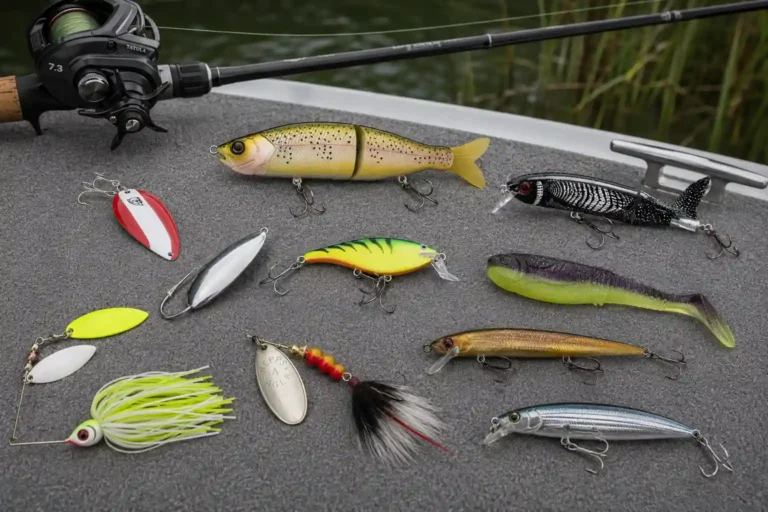
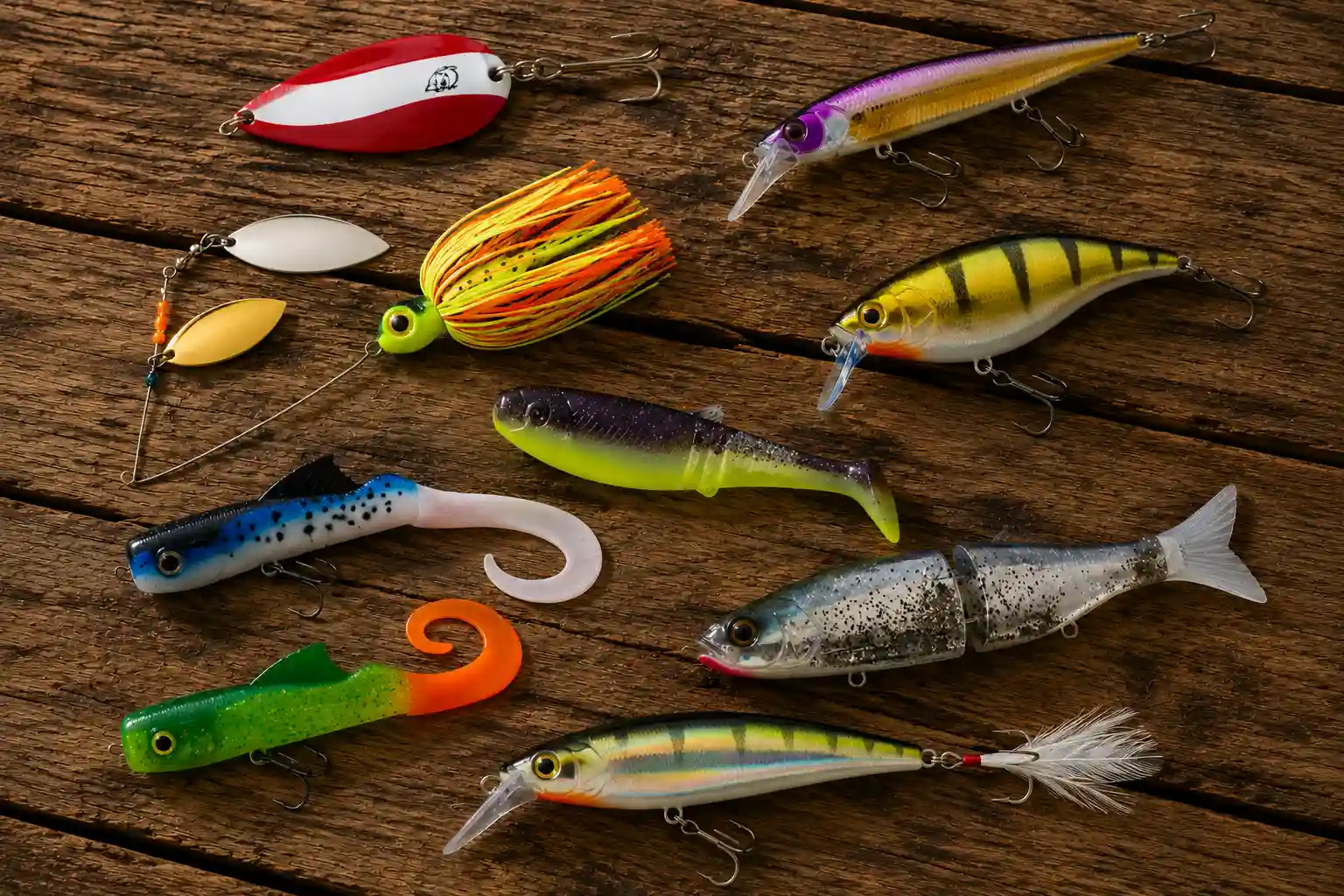
If you’re short on time, these 8 proven fall pike lures cover every stage of the season, from warm early-fall weed patterns to late-autumn feeding windows before ice-up.
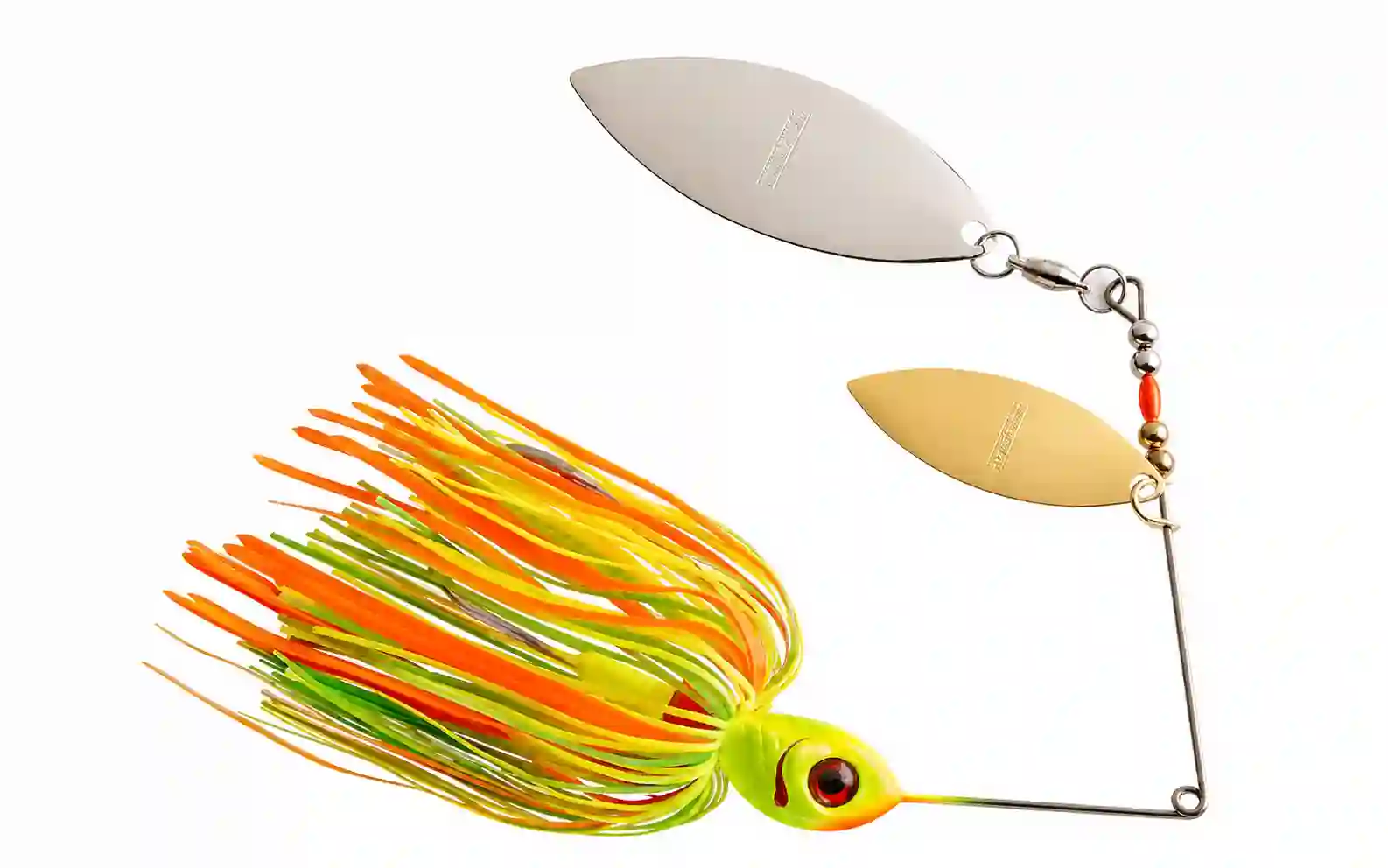
- BOOYAH Pikee Spinnerbait — Best Early Fall Pike Lure: excels around healthy weeds, reed edges, and shallow cover while water temperatures remain warm
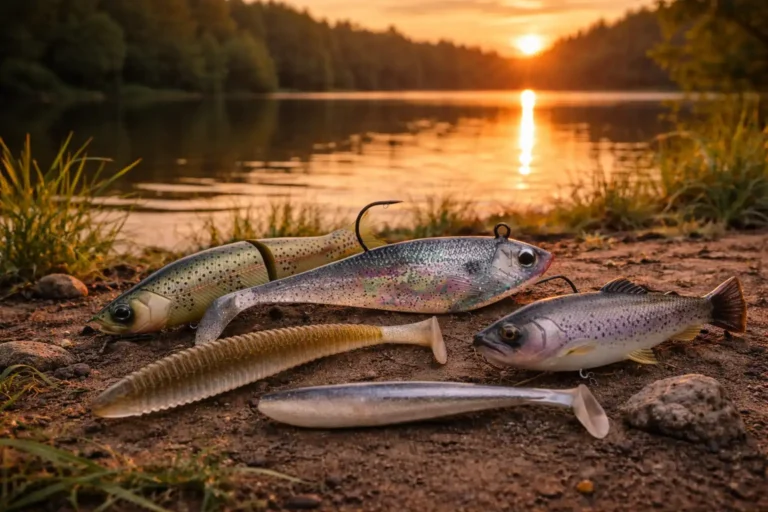
- Savage Gear Cannibal Shad 5″ — Best Early Fall Soft Plastic: ideal for covering weed flats, transition zones, and roaming pike in warmer autumn water
- Rapala X-Rap XR10 — Best Mid-Fall Jerkbait: a suspending hard bait that shines as cooling water concentrates pike around baitfish and weed edges
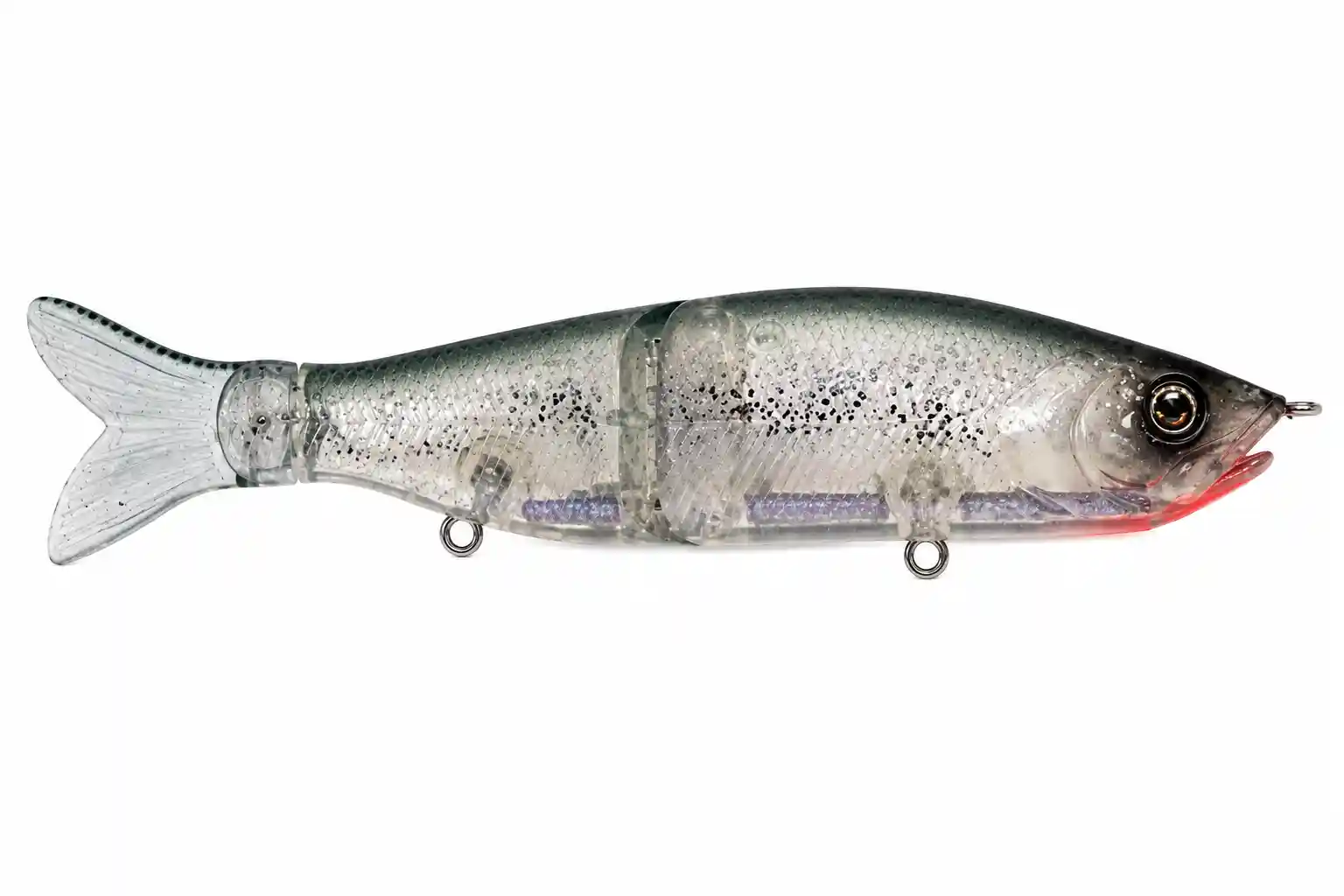
- River2Sea S-Waver 168 — Best Mid-Fall Glide Bait: designed to imitate larger forage and trigger strikes from bigger fish
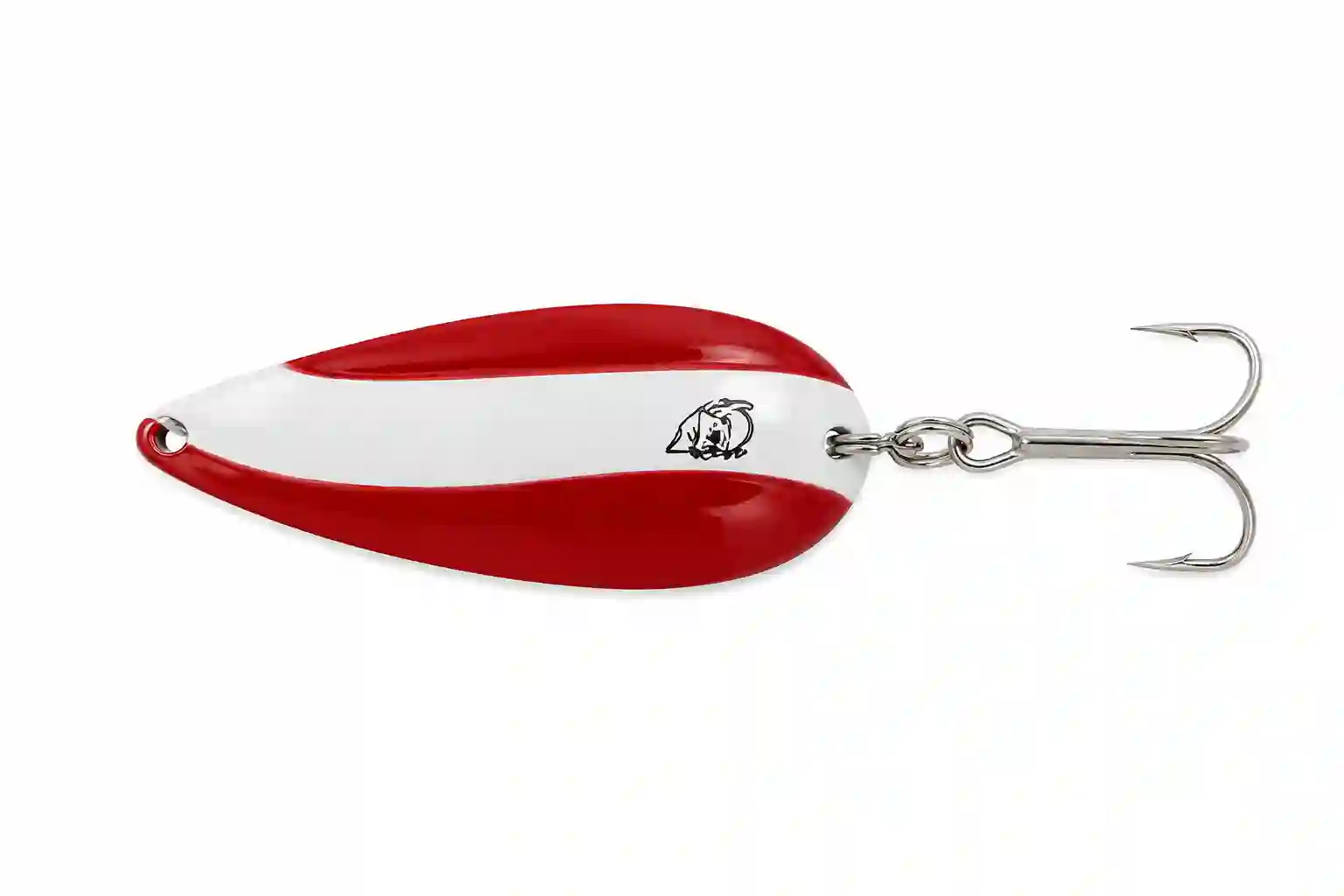
- Eppinger Dardevle Spoon — Best Mid-Fall Spoon for Pike: covers water quickly and provokes reaction strikes throughout the middle of the season
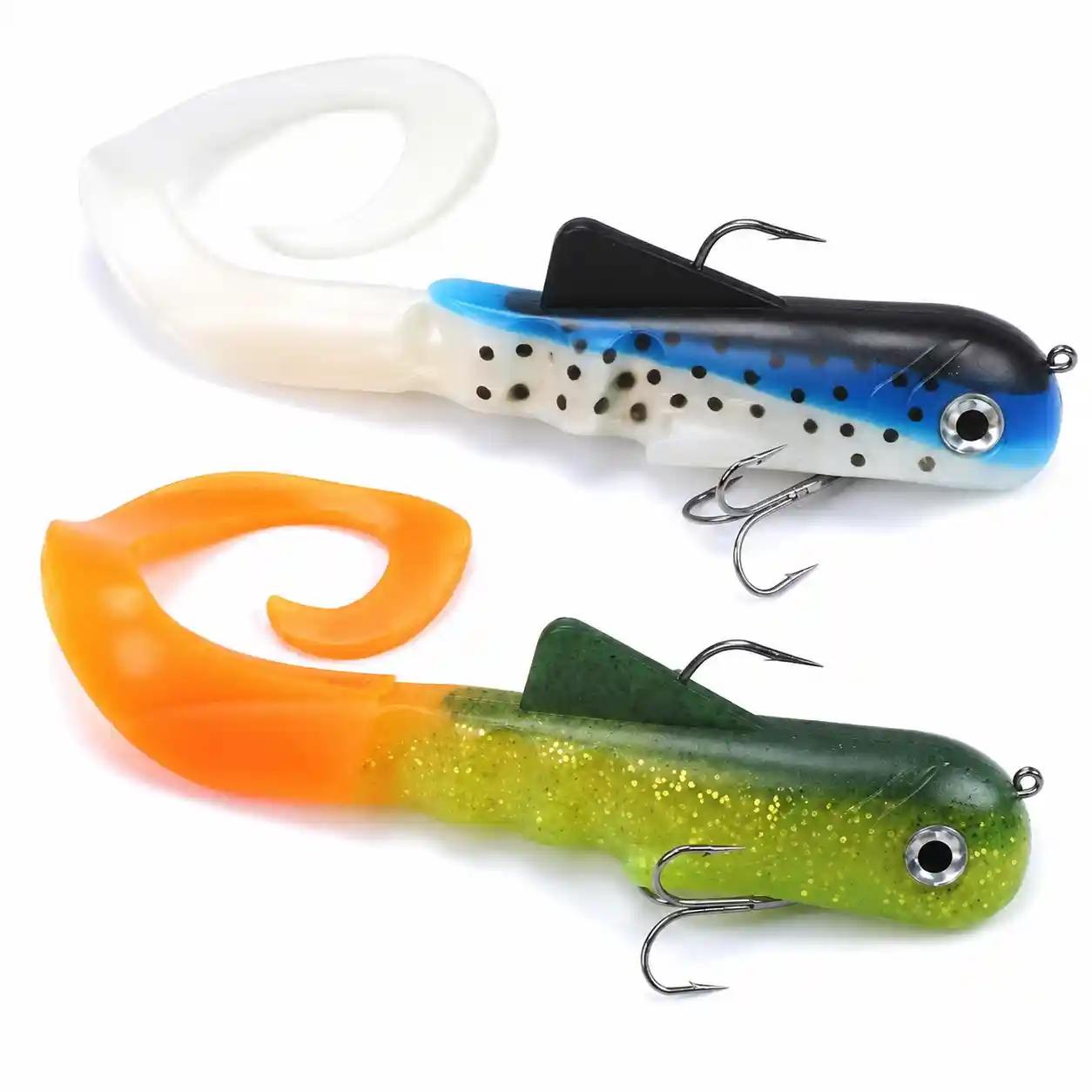
- Mizugiwa Musky Dawg — Best Late Fall Soft Plastic: excels when pike move deeper and respond better to larger, slower presentations
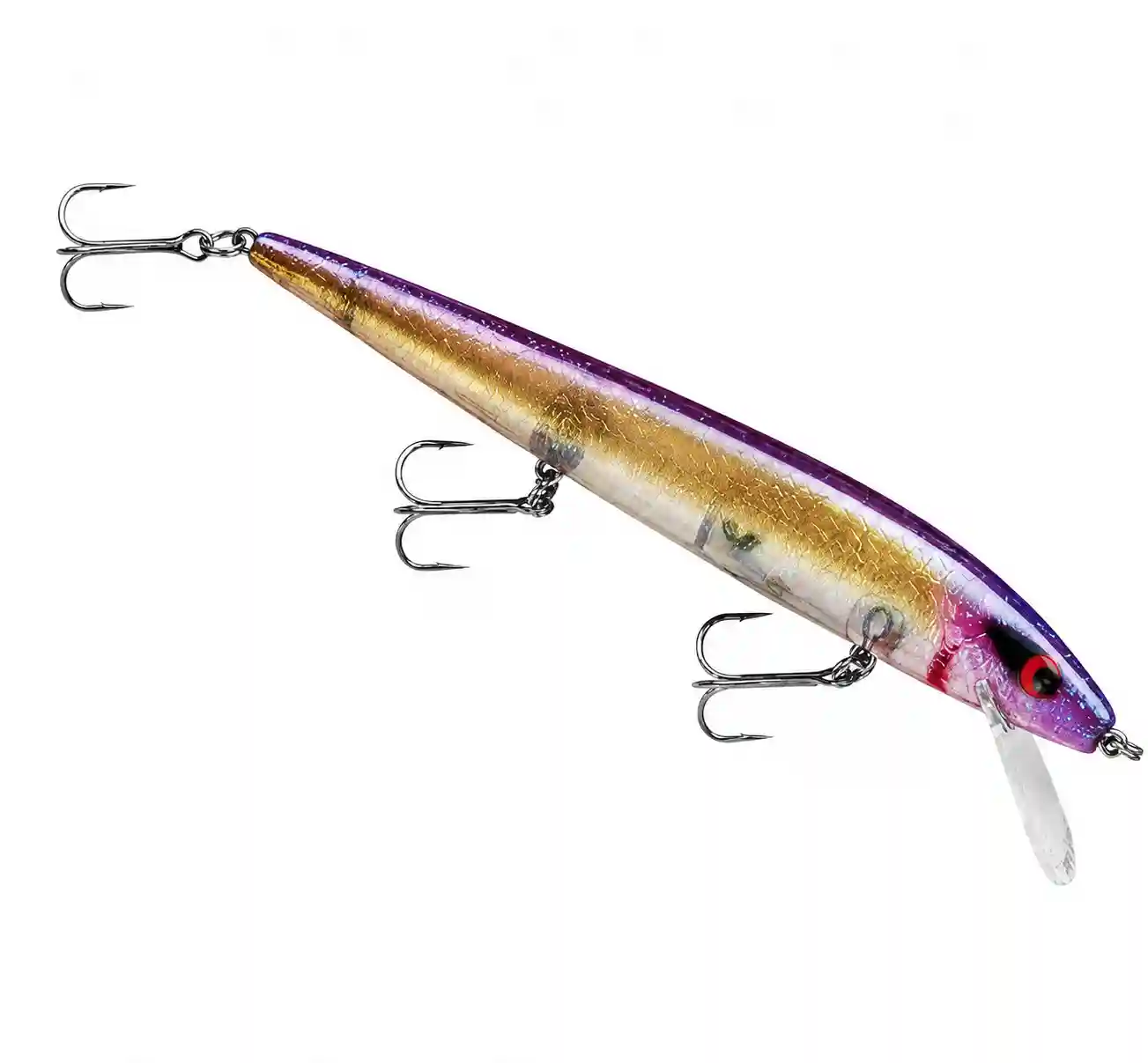
- Smithwick Perfect 10 Rogue — Best Late Fall Jerkbait: reaches deeper fish and remains effective as water temperatures continue to fall
- Rapala Super Shad Rap 14 — Best Late Fall Crankbait: a proven choice for targeting pike feeding around concentrated baitfish before winter
Best Pike Lures for Fall by Water Temperature
Not every fall lure performs equally well from September through late November. As water temperatures drop, pike gradually shift from shallow weed-focused feeding patterns toward deeper structure and baitfish concentrations.
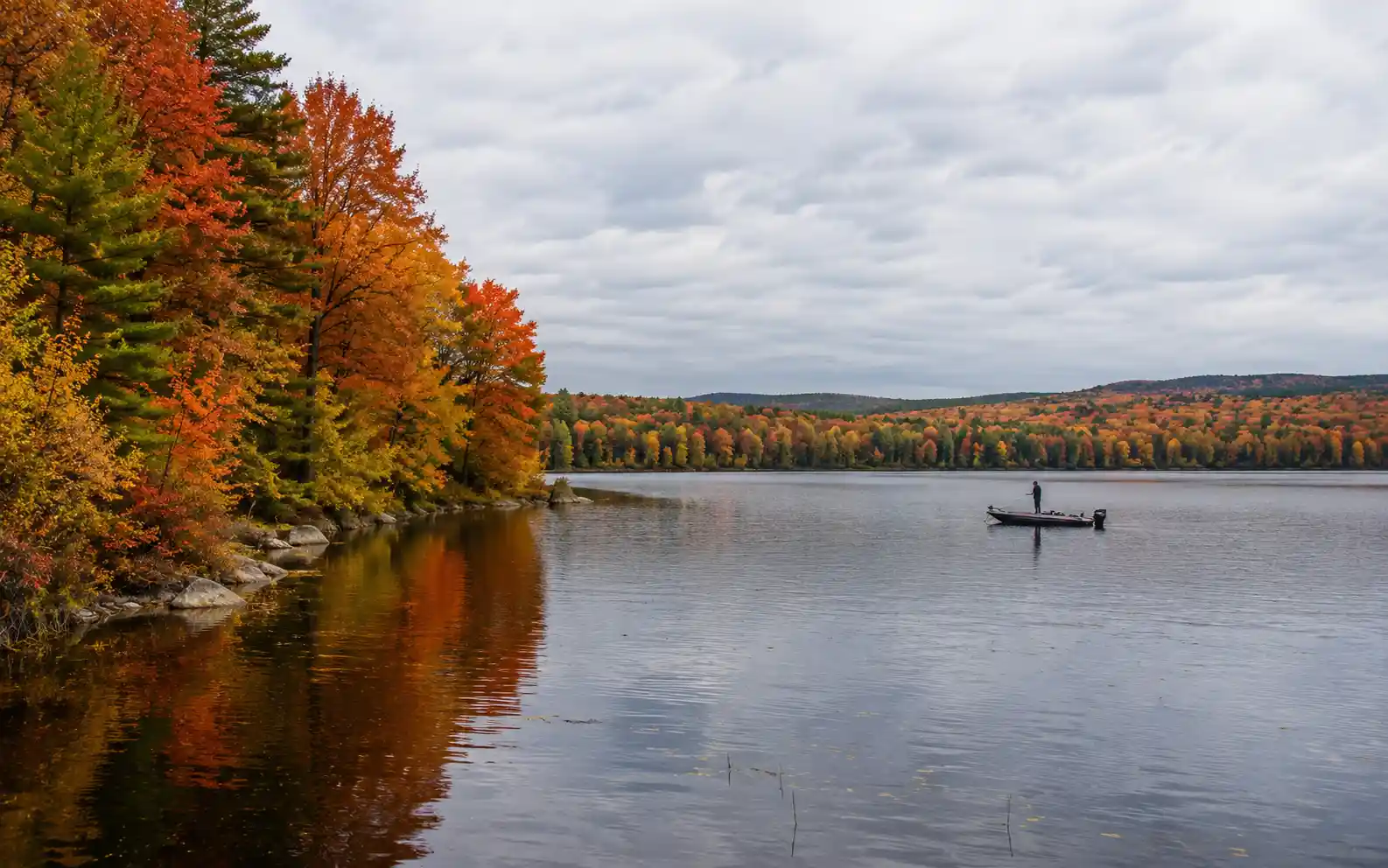
To reflect those seasonal changes, we’ve grouped these lures into three stages of fall:
- Early Fall (Above 60°F / 16°C)
- Mid Fall (50–60°F / 10–16°C)
- Late Fall (Low 40s°F to 50°F / 4–10°C)
These recommendations come from tracking which lures actually produced as water temperatures dropped across multiple fall seasons — not just which ones are popular or widely recommended.
While several of these lures can produce throughout the season, we’ve placed each one where it consistently performs best. This doesn’t mean a lure stops working outside its assigned stage — it means that, based on our experience, this is the window where it produces most consistently.
Early Fall Pike Lures (Above 60°F / 16°C)
Early fall often feels more like late summer than the closing stages of the fishing season. Weed beds remain healthy, baitfish are still widely distributed across shallow areas, and pike continue feeding aggressively around vegetation, reed lines, and nearby transition zones.
At this stage, lures that can cover water efficiently while working through weeds without constant snagging usually outperform deeper, slower presentations. The following two lures have consistently produced for our team whenever water temperatures remained above 60°F (16°C).
BOOYAH Pikee Spinnerbait
The BOOYAH Pikee Spinnerbait is one of the most reliable early fall pike lures we’ve used around healthy weed beds. While many hard baits constantly foul on cabbage, coontail, and scattered vegetation, the Pikee can be retrieved directly through cover while maintaining enough flash and vibration to attract fish from several feet away.
Its strength lies in covering water quickly. During early fall, pike are often spread throughout large weed flats rather than concentrated on specific structures, making search efficiency extremely important. The Pikee allows anglers to eliminate unproductive water quickly while still triggering reaction strikes from active fish.
Our most productive pattern has been targeting outside weed edges in 6–10 feet (2–3 m) of water and retrieving the lure just fast enough to keep the blades turning consistently. On windy days, the added vibration often helps fish locate the lure even when visibility is reduced. During one early October session, three pike came from the same weed edge in less than an hour after several passes with hard baits produced nothing. Every fish struck the spinnerbait as it moved through scattered cabbage where treble-hooked lures repeatedly fouled.
Although we’ve grouped the Pikee in the Early Fall category, it doesn’t stop working once temperatures drop below 60°F (16°C). It can remain productive well into mid fall whenever green weeds continue holding baitfish and feeding pike.
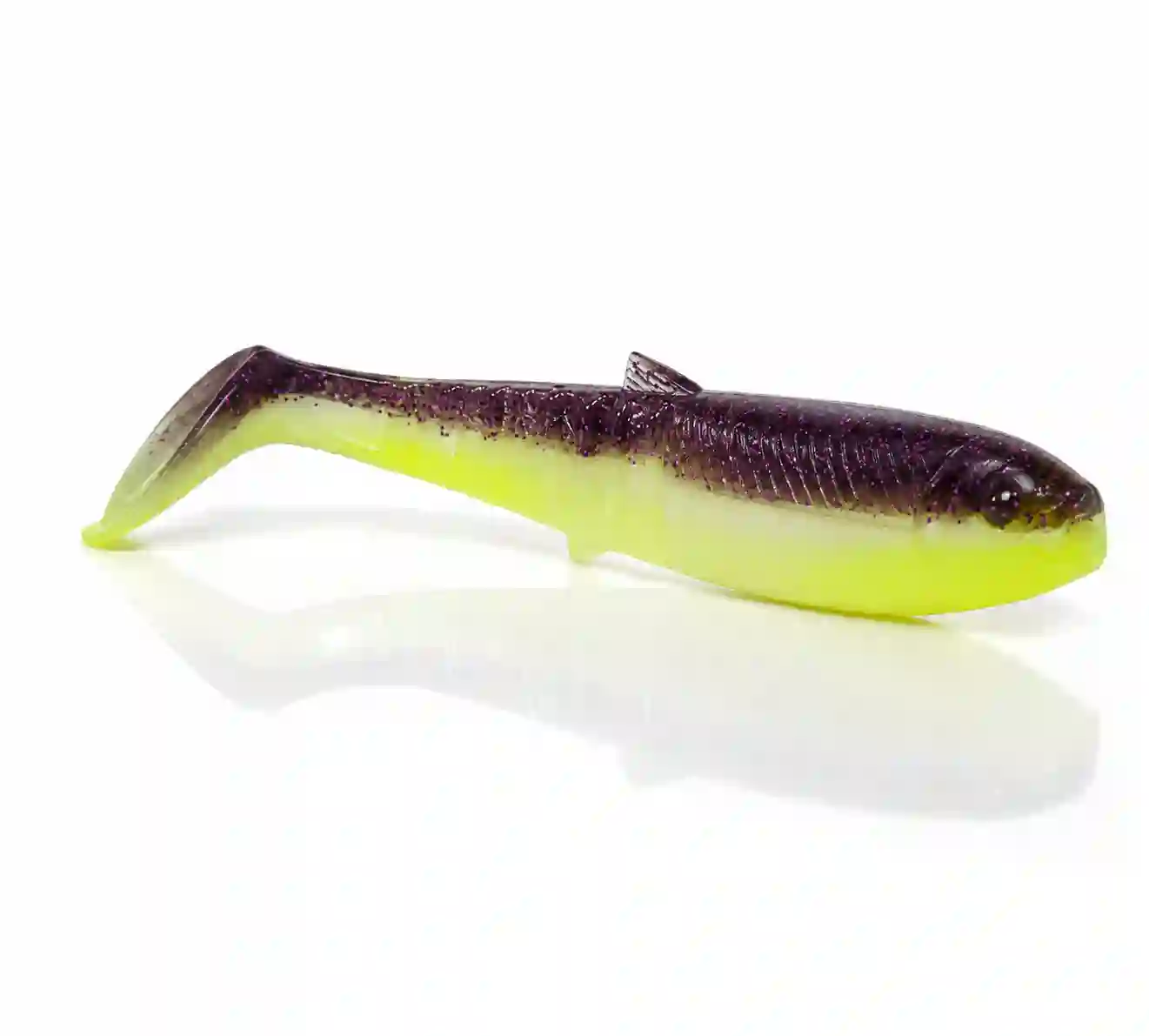
Savage Gear Cannibal Shad 5″ (Purple Glitter Bomb)
When pike are actively feeding but showing less interest in spinnerbaits, the Savage Gear Cannibal Shad becomes one of the most effective alternatives. Its natural swimming action closely resembles the perch, roach, and other forage species that dominate many early fall pike fisheries.
Unlike a spinnerbait, the Cannibal Shad allows anglers to fish both shallow and slightly deeper water with the same lure simply by adjusting jig-head weight and retrieve speed. This versatility makes it especially useful during changing weather conditions when pike may move between weed tops, edges, and nearby drop-offs throughout the day.
We’ve had consistent success swimming the Cannibal Shad over submerged vegetation and along the first break outside major weed beds. A steady retrieve is often enough, although occasional pauses can trigger strikes from following fish that hesitate to fully commit. One stained-water afternoon after a night of rain, switching from a spinnerbait to the Purple Glitter Bomb pattern produced three strikes in roughly twenty minutes after the faster presentation had gone completely quiet.
The Purple Glitter Bomb pattern has performed particularly well in slightly stained water where additional contrast helps fish locate the lure. While we’ve categorized it as an Early Fall lure, it remains effective throughout much of mid fall whenever baitfish continue holding around vegetation.
Mid Fall Pike Lures (50–60°F / 10–16°C)
Mid fall is where many early-season weed patterns start to change. Baitfish become more concentrated, weed beds begin breaking down, and pike often shift toward outside weed edges, points, and nearby drop-offs.
Fish are still willing to chase, but lure speed and hang time matter more than they did in early fall. Presentations that suspend, glide, or flash through the strike zone without leaving it too quickly usually become more reliable during this stage.
The following three lures have consistently produced for our team whenever water temperatures ranged between 50°F and 60°F (10–16°C).
Rapala X-Rap XR10
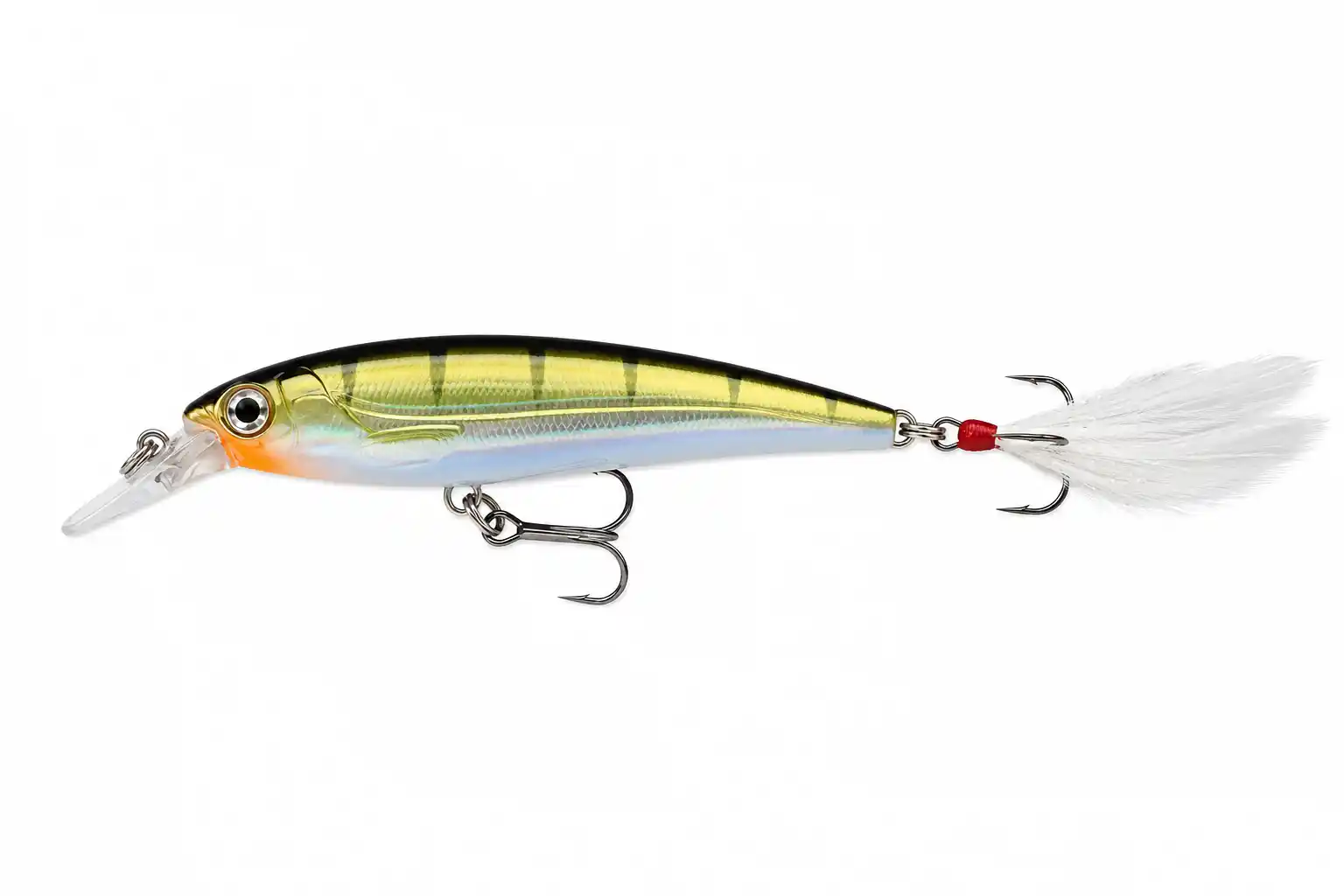
The Rapala X-Rap XR10 is one of the most dependable mid-fall pike lures because it stays in the strike zone longer than faster search baits. As water cools and pike begin holding tighter to weed edges and baitfish, a suspending jerkbait that can be paused directly in front of following fish becomes extremely valuable.
We fish the XR10 with sharp twitches followed by short pauses, usually around outside weed edges, points, and the first break near remaining green vegetation. In warmer mid-fall conditions, shorter pauses often work best. Once the water moves closer to the low 50s°F, extending the pause by a few seconds can make a noticeable difference.
One mid-October afternoon, the XR10 produced two pike from the same outside weed edge after faster retrieves with spinnerbaits failed to draw a strike. Both fish hit during the pause, not during the twitch, which told us the lure’s hang time was the reason it worked.
Although we’ve grouped the X-Rap XR10 in the Mid Fall category, it remains useful outside this window. It can still catch early fall pike around active weed edges and can continue producing into late fall whenever fish are willing to move up for a suspending minnow bait.
River2Sea S-Waver 168
The River2Sea S-Waver 168 becomes especially useful in mid fall when larger pike begin keying on bigger forage. Its wide, deliberate glide gives fish time to track the bait, and that slower side-to-side movement often works better than a fast crankbait or spinnerbait once the water cools.
We like the S-Waver around points, dying weed edges, and the outside corners of major flats where baitfish begin pulling away from shallow cover. Its biggest advantage is drawing attention from larger pike without forcing the lure to move too fast through the strike zone.
During one cloudy mid-fall session, a larger pike followed the S-Waver twice without committing, then struck on the third cast after we slowed the retrieve and let the bait glide wider beside the weed edge. That kind of follow-and-convert bite is exactly where the S-Waver earns its place.
Although we’ve placed the S-Waver in the Mid Fall category, it can also produce earlier in autumn when pike are feeding on larger baitfish in shallow water. It can even work into late fall on mild days when fish are still willing to move for a bigger glide bait.
Eppinger Dardevle Spoon
The Eppinger Dardevle Spoon is still one of the best mid-fall pike lures when fish are active enough to react but spread across too much water to target slowly. Its flash, wobble, and casting distance make it ideal for covering broad weed edges, points, and wind-blown banks.
Unlike suspending jerkbaits or glide baits, the Dardevle works best when pike are still willing to chase. It shines during mid fall because it can quickly locate active fish while still offering the flash and vibration pike respond to in cooling water.
On one windy October afternoon, the spoon produced the first two strikes of the session along a wind-blown outside weed edge after slower baits failed to show whether fish were present. Both strikes came near the end of long casts, which made the Dardevle useful not just as a catching lure, but as a search tool.
Although we’ve grouped the Dardevle in the Mid Fall category, it can catch pike throughout autumn whenever fish are active and visibility is good enough for flash to matter. It remains especially useful on windy days, around scattered baitfish, and anywhere you need to cover water quickly.
Late Fall Pike Lures (Low 40s°F to 50°F / 4–10°C)
Late fall is where lure selection starts slowing down dramatically. Pike often concentrate around deeper structure, basin edges, channel swings, and baitfish schools, while aggressive early-season retrieves become far less reliable.
Although fish are still capable of feeding heavily before winter, presentations that stay deeper and remain in the strike zone longer usually outperform faster-moving search baits. The following three lures have consistently produced for our team whenever water temperatures dropped into the final stage of fall.
Mizugiwa Musky Dawg
The Mizugiwa Musky Dawg is one of the most effective late-fall pike lures we’ve used whenever fish become reluctant to chase faster-moving presentations. Its large profile, slow sink rate, and subtle tail action make it ideal for targeting pike holding near deeper structure and concentrated baitfish.
Unlike many hard baits, the Musky Dawg can be worked extremely slowly while still maintaining an enticing action. That ability to stay in the strike zone for an extended period often becomes critical once water temperatures fall into the 40s°F.
One late-November afternoon, we spent nearly two hours working jerkbaits along a steep breakline without a strike before switching to the Musky Dawg. A fish followed on the second cast, and the only pike landed that day came less than ten minutes later. The slower presentation clearly matched what the fish wanted under those conditions.
Although we’ve grouped the Musky Dawg in the Late Fall category, it can also produce during mid fall whenever pike begin focusing on larger forage and showing less interest in fast-moving lures.
Smithwick Perfect 10 Rogue (Table Rock Gold)
The Smithwick Perfect 10 Rogue excels during late fall because it combines the profile of a larger baitfish with the ability to reach depths where pike commonly hold once shallow weeds lose their importance.
Its long, suspending profile allows anglers to work the lure slowly while keeping it near deeper breaklines, basin transitions, and channel edges. Few lures are better at staying in front of cold-water pike without forcing them to chase aggressively.
One of the most memorable late-fall encounters we’ve had with the Rogue ended without a fish in the net — a large pike followed the lure almost all the way to the boat before striking beside the rod tip and throwing the hooks during the fight. While frustrating, it reinforced how often cold-water pike inspect a lure for an extended period before finally committing.
Although we’ve categorized the Perfect 10 Rogue as a Late Fall lure, it can be highly effective throughout mid fall whenever pike are relating to deeper weed edges and suspended baitfish.
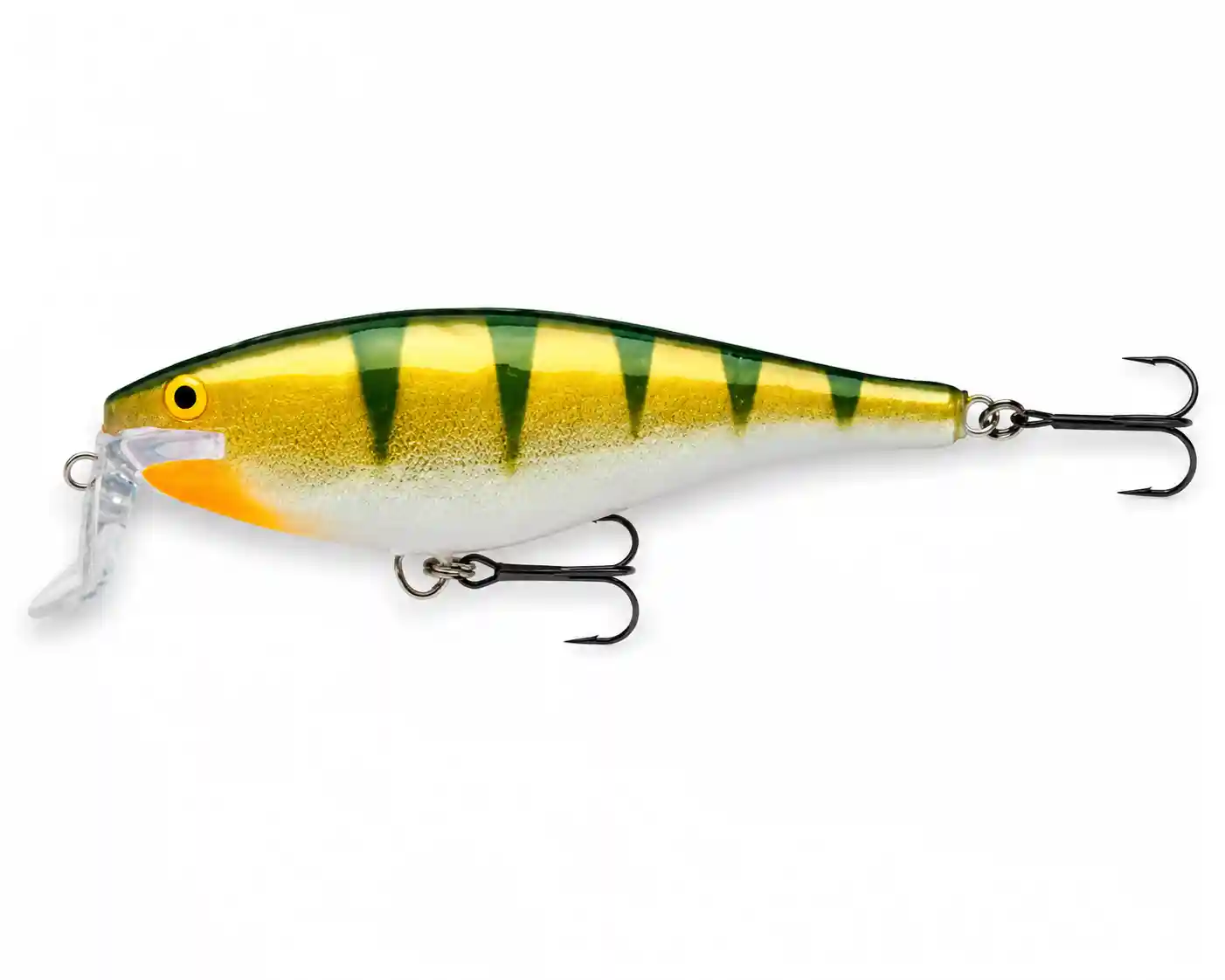
Rapala Super Shad Rap 14 (Yellow Perch)
The Rapala Super Shad Rap has earned a permanent place in our late-fall rotation because of its ability to imitate the larger baitfish that pike often target before winter. Its aggressive wobble and larger profile help it stand out around schools of perch and other forage species.
We most often fish the Super Shad Rap along basin edges, channel swings, and deeper breaklines where baitfish concentrate during the final weeks of open-water fishing. When pike are feeding heavily on larger forage, few crankbaits match its combination of profile, vibration, and depth range.
During one late-fall outing, we spent most of the morning casting shallow structure without seeing any meaningful activity — once sonar revealed baitfish holding along a deeper basin edge, the Super Shad Rap produced a strike within minutes of reaching the area. The remainder of the session was spent targeting similar bait concentrations with consistent results.
Although we’ve grouped the Super Shad Rap in the Late Fall category, it remains effective earlier in autumn whenever pike are actively feeding on larger baitfish around points, breaklines, and deeper weed edges.
Recommended Pike Fishing Gear
Looking to upgrade your setup for fall? Every rod and reel featured in these guides has been tested and evaluated by the Master Fishing Guide team during real pike fishing sessions.
Common Fall Pike Lure Mistakes
Fall is one of the most productive times of year for pike fishing, but it’s also a season where small lure-selection mistakes can dramatically reduce success. Many anglers continue fishing the same way from September through November, even though pike behavior changes significantly as water temperatures fall.
Fishing the Same Lure All Fall
One of the most common mistakes is sticking with a single confidence bait throughout the entire season. A spinnerbait that performs exceptionally well around healthy weed beds in early fall may become far less effective once pike shift toward deeper structure and baitfish concentrations.
Successful fall anglers adjust lure style as conditions change. Early fall often favors weed-friendly search baits, mid fall frequently rewards jerkbaits and glide baits, while late fall tends to favor larger soft plastics, deeper minnow baits, and crankbaits that remain in the strike zone longer.
Switching Lures Too Often Instead of Trusting the Pattern
The opposite mistake shows up just as often. Some anglers change lures after every few casts, never giving a presentation enough time to work once it’s actually matched to the conditions.
If a lure fits the current stage of fall and pike are showing follows or short strikes, the answer is usually a small adjustment — not a different lure entirely. Slowing the retrieve, extending a pause, or changing the angle of the cast often solves the problem faster than starting over with something new.
Choosing Lure Size Based on Season Instead of Forage
Many anglers automatically switch to the biggest lures they own once late fall arrives. While larger presentations often become more effective during this period, forage size should still influence lure selection.
Match your lure to what pike are actively feeding on. If baitfish remain relatively small, downsizing can sometimes outperform oversized presentations regardless of the season.
Not Upsizing Your Leader When You Upsize Your Lure
As fall progresses and lure profiles get larger — moving from spinnerbaits to glide baits, deep-diving jerkbaits, and big crankbaits — the hooks and treble points fishing close to a pike’s mouth get larger too. A leader that handled a small early-fall spinnerbait without issue can become marginal once a fish is thrashing with a heavier, multi-hook bait buried deep.
Late-fall pike are also some of the largest and most powerful fish of the year, which means leader failure costs you the best fish you’re likely to catch all season. If you’re stepping up lure size as the water cools, it’s worth checking that your leader has stepped up with it. Our best pike leaders guide breaks down which options hold up best as lure size and fish size both increase through fall.
Frequently Asked Questions
- What is the best pike lure for early fall? For many situations, a spinnerbait such as the BOOYAH Pikee is one of the most effective early-fall choices because it can be fished efficiently around healthy weeds, reed edges, and shallow cover where pike often feed when water temperatures remain above 60°F (16°C).
- What is the best pike lure for late fall? Late-fall pike often respond best to larger lures that stay in the strike zone longer. Soft plastics such as the Mizugiwa Musky Dawg, deep-diving minnow baits like the Smithwick Perfect 10 Rogue, and larger crankbaits such as the Rapala Super Shad Rap are all strong options once water temperatures drop into the 40s°F.
- Do pike prefer bigger lures in fall? Pike frequently become more willing to attack larger lures as fall progresses, but forage size still matters. Matching lure size to the baitfish available in a particular lake is usually more important than simply choosing the biggest lure possible.
- Are spinnerbaits good for fall pike fishing? Yes. Spinnerbaits can be extremely effective during early fall when pike remain around healthy weed beds. They often become less reliable later in the season as fish move toward deeper structure and baitfish concentrations.
- Can the same lure work throughout the entire fall season? Some versatile lures can produce from September through November, but no lure dominates every stage of fall. Adjusting lure style as water temperatures change is usually more effective than relying on a single bait all season.
- What colors work best for fall pike lures? Natural baitfish patterns such as perch, roach, silver, and gold are reliable choices throughout fall. In stained water, brighter colors and higher-contrast patterns often help pike locate a lure more easily.
Putting It All Together
No single lure dominates the entire fall season. As water temperatures drop, pike gradually shift from healthy weed beds toward deeper structure and concentrated baitfish, which is why lure selection needs to evolve along with the conditions.
The lures in this guide have consistently produced for our team during specific stages of fall, but the most successful anglers remain flexible and adjust presentations as fish behavior changes.
For a complete breakdown of locations, timing, presentations, and seasonal movements, see our Fall Pike Fishing guide.