

Best Baitcasting Rods for Pike (2026): 6 All-Season Picks for Power & Control
The best baitcasting rods for pike are the ones that keep working when everything else starts falling apart. Wind picks up, weeds get thicker, fish stop committing — and suddenly every small detail matters. That’s where rod choice stops being theory and starts becoming the difference between follows and actual strikes.
These rods weren’t picked from a catalog. Our team tested them across different conditions — from cold, unstable spring water to heavy summer weed growth and late-season wind. When you’re casting all day in changing conditions, you quickly learn which setups stay consistent and which ones start losing control.
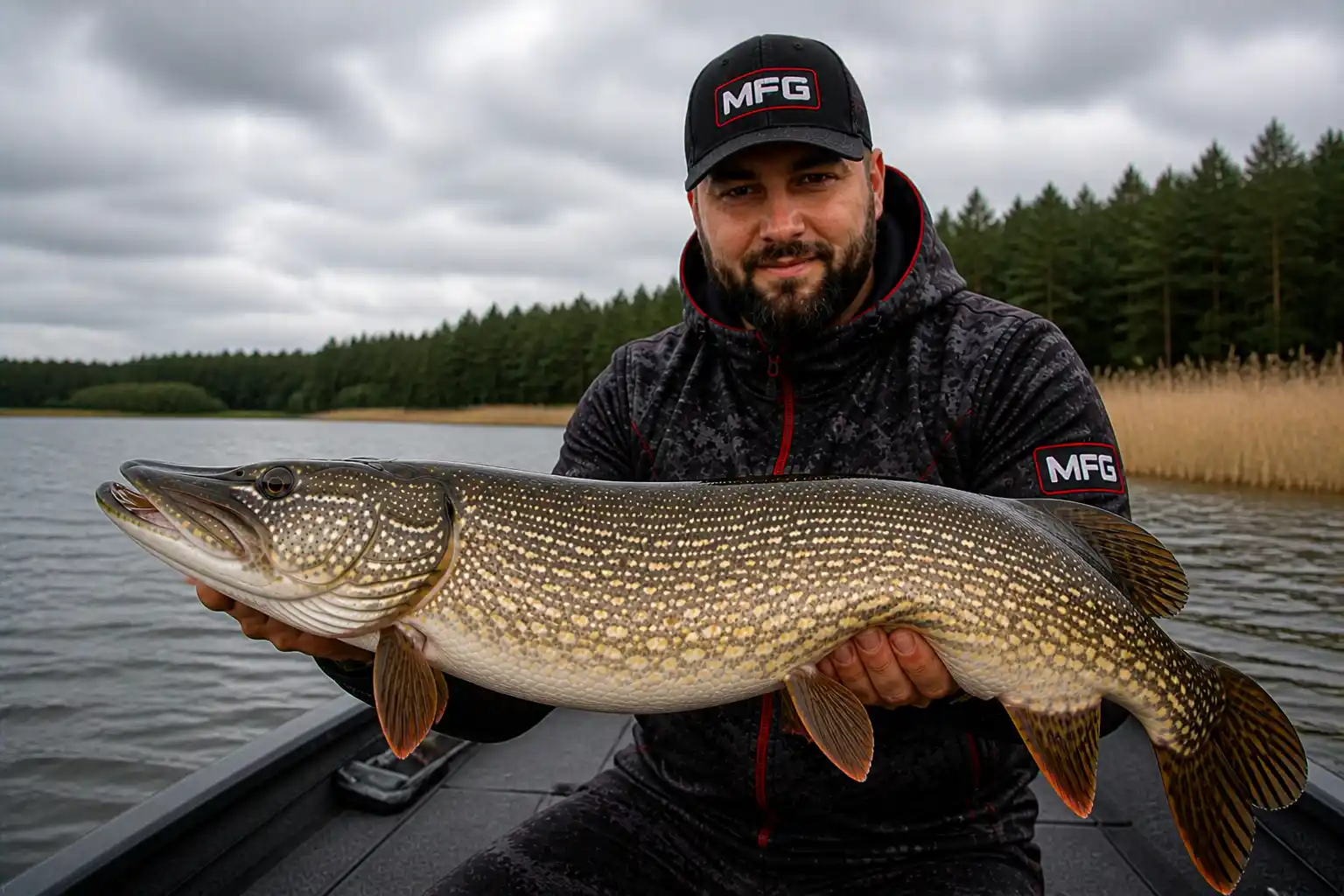
Most of the rods in this list are originally designed for bass fishing — and that’s exactly why they work so well for pike. They have a strong butt section that gives you control over heavier lures and the power needed to drive hooks into bony jaws without hesitation.
As an Amazon Associate, we earn from qualifying purchases — no cost to you. That’s how we keep this site running. Read more ›
One of the biggest real-world tests is not just lure weight — it’s resistance. Large spinnerbaits, deep-diving crankbaits, and high-drag lures put constant pressure on the blank. If the rod can’t handle that load cleanly, you lose lure feedback, casting accuracy, and eventually control over the fish.
On the water, the difference shows up in small moments. A rod that loads properly sends a 20–40 g (0.7–1.4 oz) lure exactly where it needs to land. When a pike follows without committing, you feel that hesitation through the blank before you ever see the fish. And when it finally hits, you need enough backbone to keep it out of heavy cabbage and turn it before it buries itself.
Control is everything. Keeping pressure on a fish in thick cover, adjusting angles along weed edges, and maintaining contact during the retrieve all depend on how the rod behaves under load — not just how it feels in your hand. This becomes even clearer when you understand how fish react in different conditions, especially during spring pike behavior.
The rods below are not chosen for specs alone. They are setups that hold up under pressure — when conditions change, fish get unpredictable, and every detail starts to matter.
MFG List: Best Baitcasting Rods for Pike (2026)
If you are in a hurry, these 6 best baitcasting rods for pike are proven on the water—built for power, casting control, and staying reliable when conditions get unpredictable.
- Shimano SLX Casting Rod — Best budget workhorse. Our team found it delivers a surprisingly stiff backbone that holds up well when fighting mid-sized pike in light cover, without losing casting control.
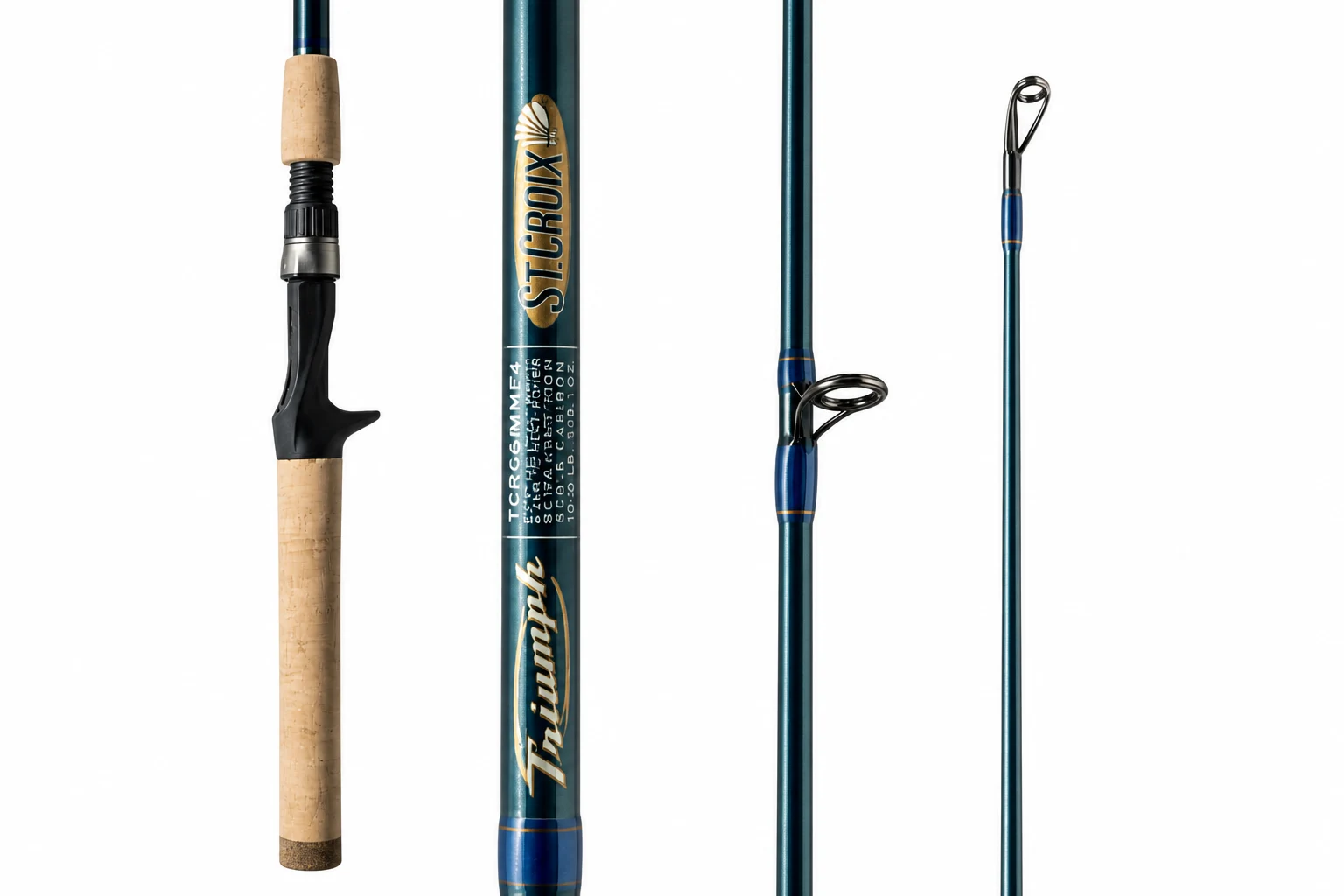
- St. Croix Triumph Casting Rod — Best all-weather durability. We’ve pushed this rod in cold, unstable conditions, and it keeps its structure and recovery speed even when other blanks start feeling sluggish.
- Abu Garcia Veritas Casting Rod — Best for lure feedback. The sensitivity in this model made it easier to detect slower, hesitant bites — especially when pike follow before committing.
- Daiwa Tatula Casting Rod — Best for technical accuracy. When working lures around weeds and structure, this rod stays balanced and recovers quickly, giving you precise control over every cast.
- Pflueger President XT Casting Rod — Best for shore-based leverage. The added length and loading profile help launch lures further and maintain control when fishing beyond the first drop-off.
- St. Croix Legend Tournament Casting Rod — The elite powerhouse. Built for aggressive hooksets and full control when larger pike start shaking hard and trying to turn back into heavy cover.
How We Tested Baitcasting Rods for Pike
These rods were not selected based on specs or brand reputation alone. Our team used them in real pike fishing conditions — working lures along weed edges, casting into tight cover, and testing how each rod behaves when a fish actually hits.
Testing wasn’t a one-day event; we used these rods across multiple sessions to see how they perform after long-term exposure to water and repeated stress. This matters because rods can feel great at first but lose consistency over time.
We focused on what matters on the water: casting control, hook-setting power, and how the rod holds pressure when pike turn toward structure. Small details made the difference — how the blank loads, how fast it recovers after the cast, and how clearly it transmits changes in lure movement.
Different setups were tested in wind, cold water, and heavy vegetation. The goal was simple: find rods that stay consistent when conditions are not perfect — not just when everything feels easy.
Shimano SLX Casting Rod – Best Budget Baitcasting Rod for Pike That Actually Holds Up
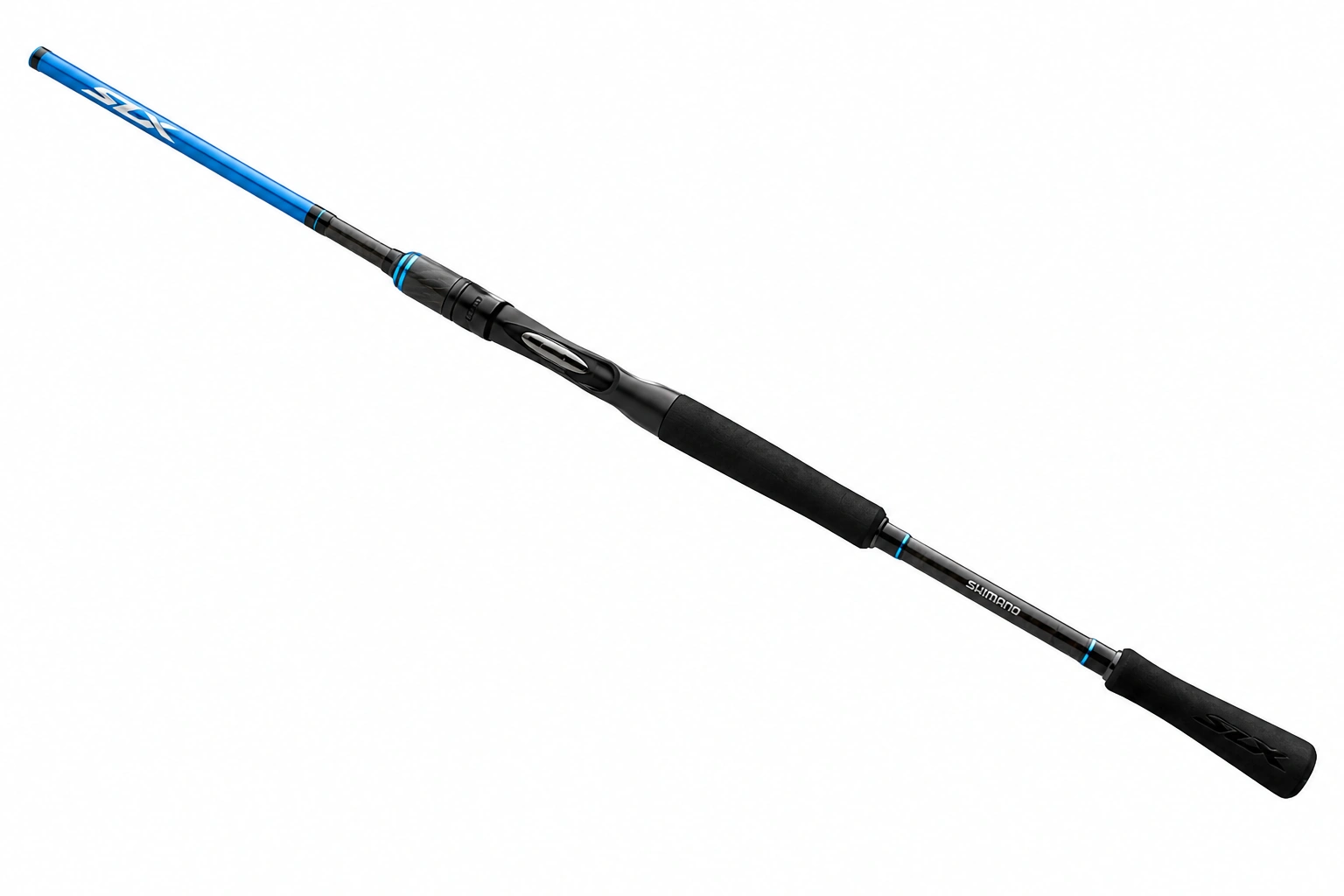
The Shimano SLX Casting Rod is one of those budget rods that keeps showing up for a reason. This is one of the few lower-priced baitcasting rods that can actually handle real pike fishing without feeling underpowered.
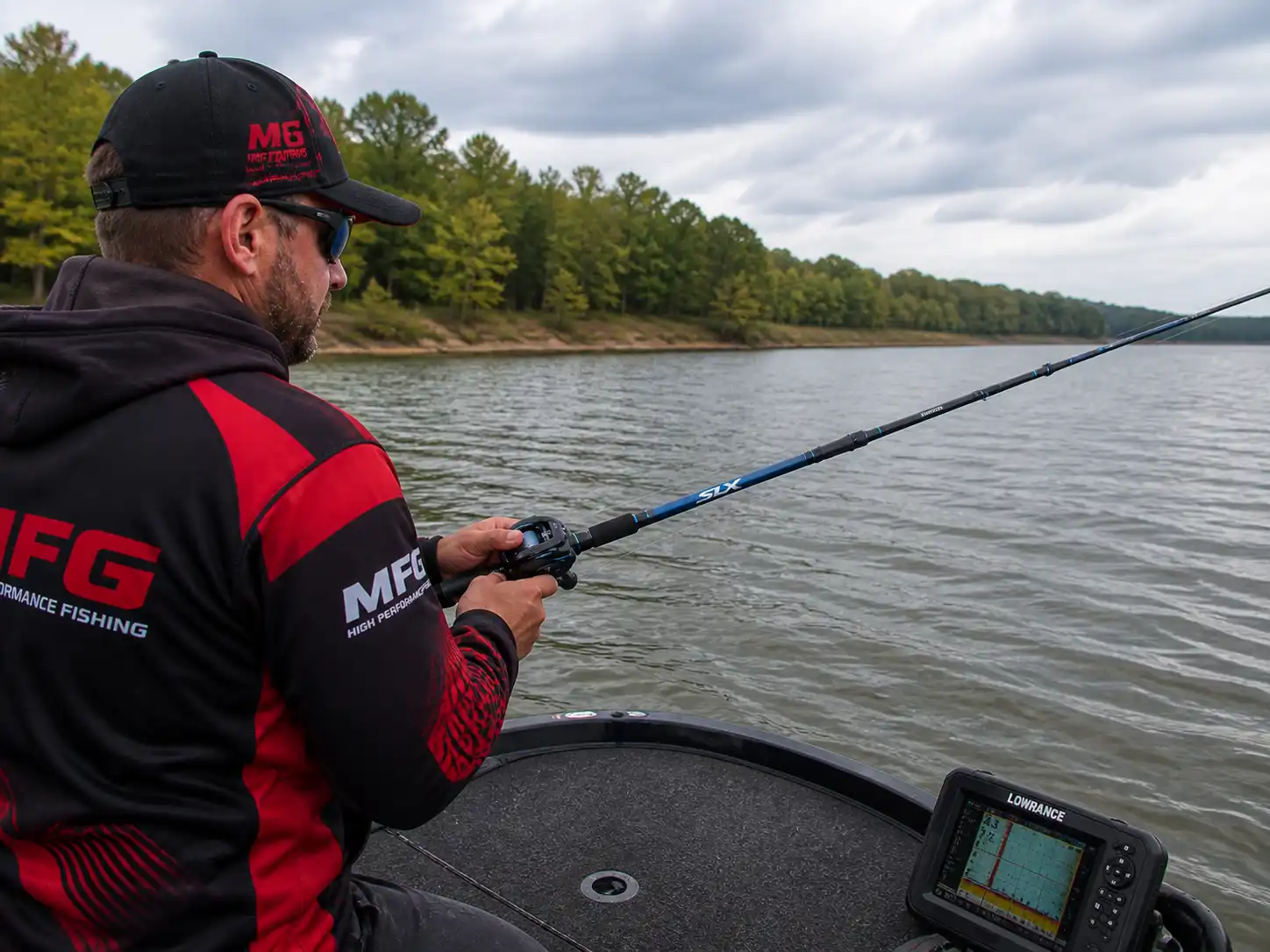
After using it across different sessions—from weed edges to open water casting—what stands out is consistency. You don’t have to fight the rod to make it work, and it doesn’t fall apart once a fish hits.
How It Performs on the Water
On the water, the biggest difference shows up in how the rod loads and recovers. With lures in the 20–40 g (0.7–1.4 oz) range, casting stays clean and predictable without that soft, delayed feel common in cheaper rods.
When we were casting near heavy lily pads, the tip recovery allowed us to place a 30 g (1.05 oz) jerkbait into tight pockets without that loud “slap” on the water that often spooks shallow pike. That kind of controlled entry makes a noticeable difference in clear, shallow zones.
The backbone is where it overdelivers for the price. When a pike hits and turns toward cover, the lower section holds pressure without collapsing, giving you enough control to keep the fish moving.
Where It Works Best
This rod performs best as an all-around pike setup. Spinnerbaits, jerkbaits, and smaller swimbaits all stay within its comfort zone, making it a solid choice when you want one rod that covers multiple techniques.
Best Setup & Use Case
For pike fishing, the Medium Heavy power version makes the most sense. It gives you enough strength for hooksets while still keeping casting control.
If you are fishing from a boat, the 7’ version gives you excellent control and accuracy in tight spaces. For shore anglers, going slightly longer helps with casting over bank vegetation and keeping better line control.
Recommended setup: 30–50 lb braid paired with a reliable pike fishing line for better control in weeds and structure.
Heavier, high-resistance lures are where the limits show. Large deep divers or bulky soft baits can overload the blank, reducing casting control and overall feedback during the retrieve.
St. Croix Triumph Casting Rod – A Durable All-Weather Baitcasting Rod for Pike
The St. Croix Triumph Casting Rod is the kind of rod that makes sense when you want durability more than flash. Built on St. Croix’s SCII carbon, the blank has a tougher, more forgiving feel that handles real-world abuse better than more brittle high-end rods.
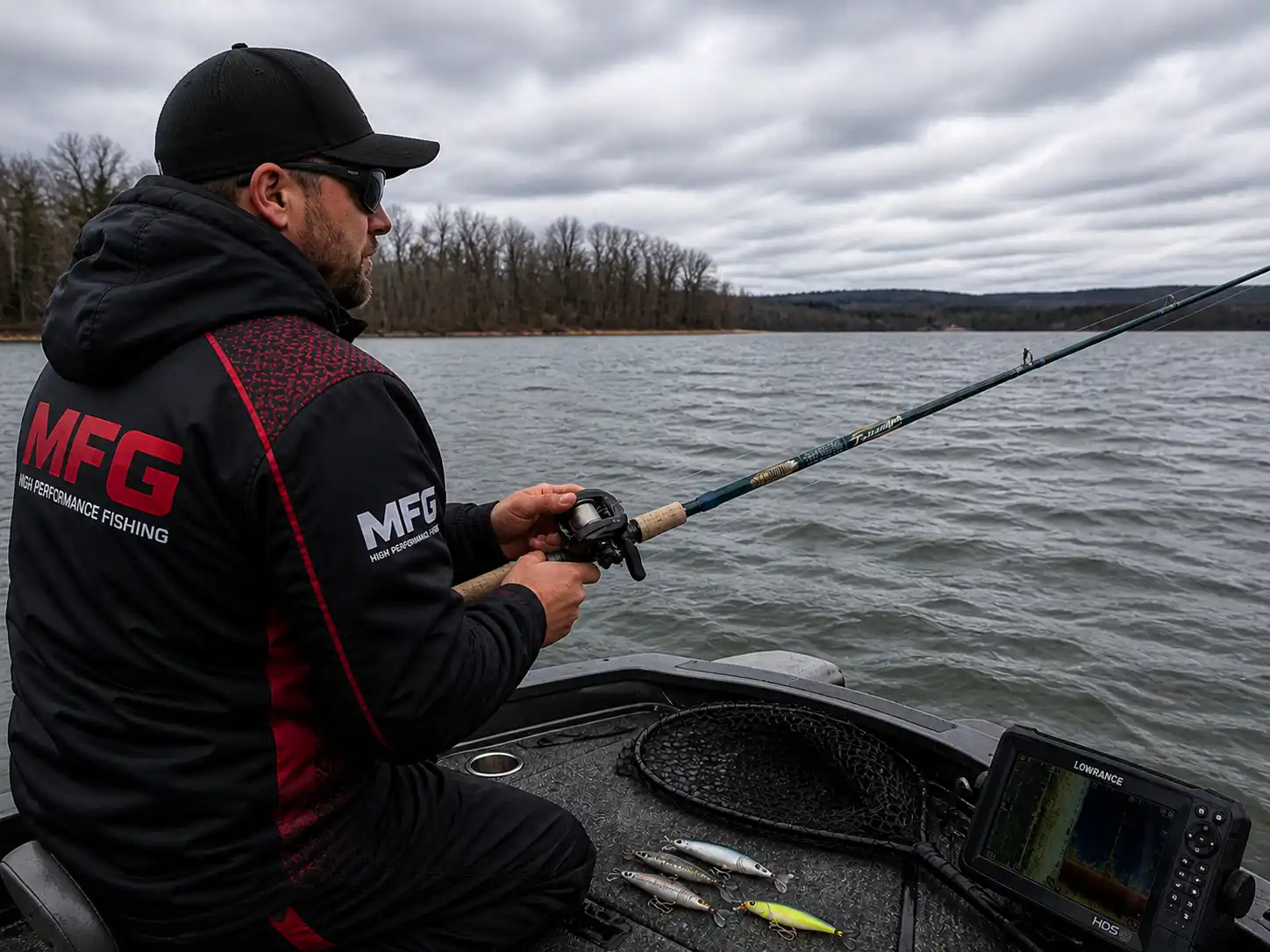
What stood out early is how well it deals with small impacts. In boat fishing, rods constantly touch the gunwale, rod locker edges, or the deck — and this blank takes those accidental hits without feeling like it will chip or weaken. That kind of durability becomes more important over time than raw sensitivity.
How It Performs on the Water
The Triumph has a slightly more forgiving action compared to faster rods, and that shows up during long sessions. When working larger spinnerbaits, especially double-blade setups, the blank absorbs heavy vibration instead of transferring everything directly into your wrist. That reduces fatigue and keeps your retrieve consistent even after hours of casting.
With jerkbaits and medium swimbaits, it still loads smoothly and recovers cleanly. You keep enough control over the lure without the rod feeling overly stiff or “twitchy.” That balance makes it easier to stay consistent across different lure types.
Hooksets feel controlled rather than aggressive. When a pike hits near weeds or structure, the rod gives you enough power to move the fish, but without the harsh snap that can pull hooks on shorter strikes.
Cold Conditions & Sensitivity
Where this rod really separates itself is in colder conditions. In wind, rain, and low water temperatures, the blank keeps its recovery speed and doesn’t turn dull after repeated casts.
More importantly, you still feel what’s happening under the surface. We could detect subtle changes in lure weight — that slight “heaviness” when a pike tracks behind the bait in colder water. That kind of feedback helps you react before the actual strike happens, especially when you understand how fish behave in these conditions during winter pike behavior.
Where It Works Best
This rod fits anglers who want a reliable all-season baitcasting setup. It performs best with medium-sized lures and in conditions where durability and consistency matter more than maximum sensitivity.
From a boat, the 7’ range gives strong control around weed edges and tight casting lanes. From shore, it is better for controlled casting than maximum distance, making it more effective when fish are within range rather than far offshore.
The main limitation is raw power. It is not designed for very large, high-resistance lures or heavy-duty pike setups, where a stiffer Heavy rod would offer more control.
Abu Garcia Veritas Casting Rod – A Baitcasting Rod That Improves Lure Feedback and Strike Detection
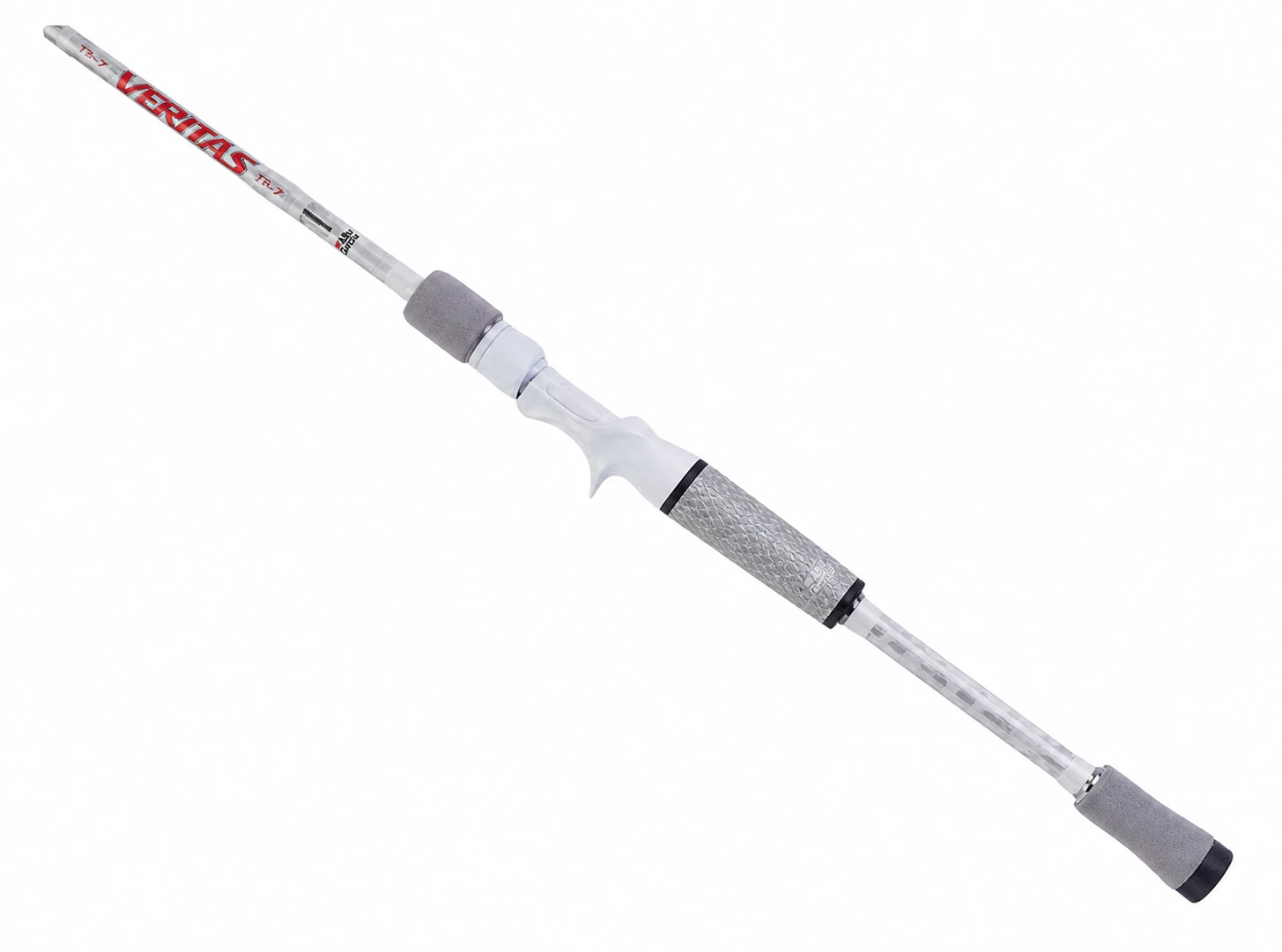
The Abu Garcia Veritas Casting Rod stands out for one specific reason: it gives you a clearer connection to what your lure is actually doing under the water. Built on 30-ton graphite, the blank feels noticeably lighter than most rods in this class, which reduces shoulder fatigue over long sessions while keeping the response sharp and direct.
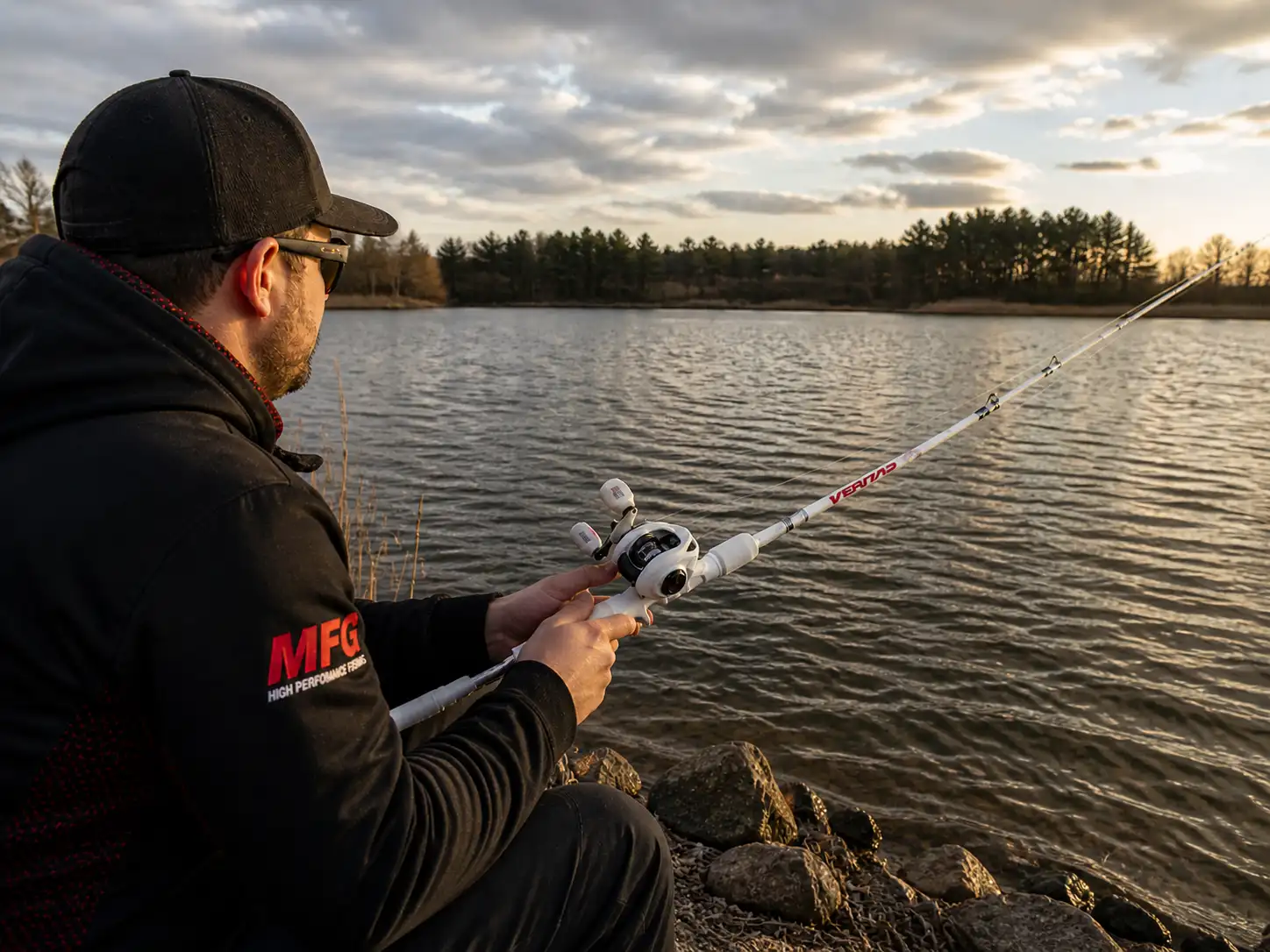
During testing, this is the rod we kept reaching for when bites were not obvious. When pike were following instead of striking, or reacting late, the Veritas made those subtle changes easier to detect.
How It Performs on the Water
The first thing you notice is sensitivity. Small changes in retrieve tension, light contact with weeds, or slight interruptions in lure movement come through the blank more clearly than expected for this price range.
In colder conditions, this becomes even more important. We could feel that slight “weight shift” — when a pike tracks behind the lure without committing — giving just enough time to pause or change retrieve before the strike.
It also separates different types of contact cleanly. Our team could clearly tell the difference between hitting a lily stem and the softer drag of weeds on the hook, which helps you react correctly instead of pulling the lure out of the strike zone too early.
The rod still keeps enough backbone to handle the fight. When a pike commits, it transfers power quickly for a clean hookset while staying connected during sudden head shakes.
Where It Works Best
This rod performs best in situations where reading the lure matters more than brute force. Jerkbaits, lighter swimbaits, and spinnerbaits all benefit from that extra feedback, especially when fish are inactive or reacting slowly, which often comes down to timing during best time to catch pike in spring.
It also has a small advantage in low light. The white blank makes it easier to track the rod tip and line movement at dusk, which helps when visual cues become harder to read against darker water.
Real-World Use
In practical fishing, this is the rod that helps you understand what is happening below the surface. Instead of guessing, you start reacting to small signals — and that’s where it gains its advantage.
The trade-off comes with how the blank is built. Because it is lighter and sharper, it is less forgiving and requires more care — it is not a rod you want to bang against the boat or throw on the deck. It rewards controlled use, but it is not built for rough handling.
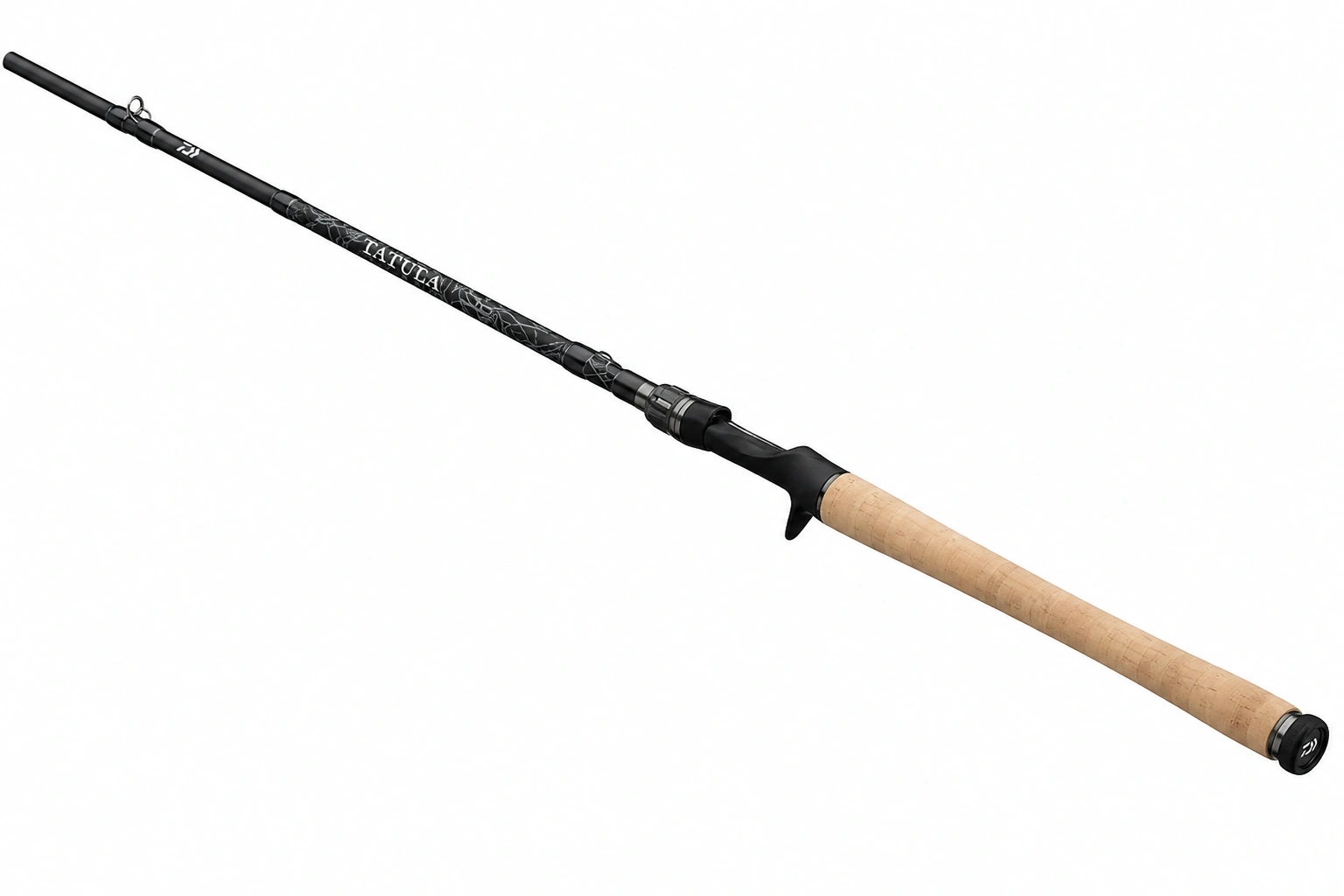
Daiwa Tatula Casting Rod – A Baitcasting Rod Built for Precision and Control
The Daiwa Tatula Casting Rod is the rod you reach for when accuracy starts to matter more than anything else. Built with Daiwa’s X45 bias construction, the blank resists twist under load, so casts track straight instead of drifting off line. That shows up immediately when you put power into a cast — the lure goes where you aim, not where the rod flex tries to send it.
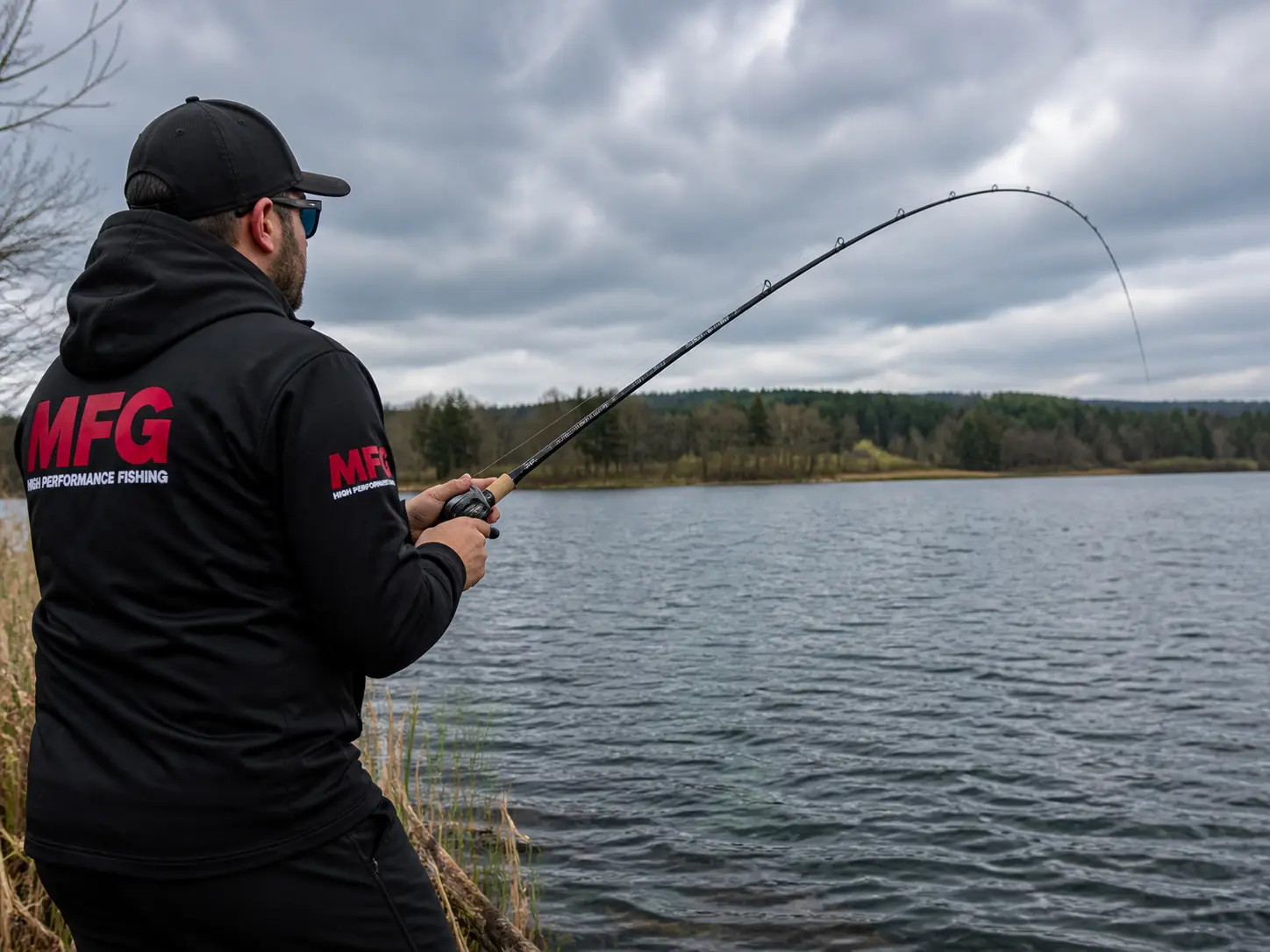
During testing, this was the setup that consistently delivered clean, repeatable casts. When working tight zones — weed lines, gaps between lily pads, or edges of submerged structure — the rod recovered quickly and stayed stable without wobble. That kind of consistency is what separates it from softer or less balanced rods.
How It Performs on the Water
The biggest advantage shows up in tip recovery and balance. After the cast, the blank settles immediately instead of bouncing, which keeps your lure entry quiet and controlled. That matters when fishing shallow pike that react to noise and sudden disturbance.
Under resistance, the rod keeps its shape. When pulling larger crankbaits or heavy spinnerbaits, it doesn’t wash out or fold into the handle — it holds structure so you can guide the lure instead of letting the lure control you. That steady tension makes long retrieves more consistent and easier to manage.
Hooksets are fast and direct. Power transfers cleanly without delay, which matters when pike strike off-angle or during a pause. You get immediate response without that soft lag you feel on slower blanks.
Where It Works Best
This rod performs best in technical fishing situations. If you are targeting specific spots instead of just covering water, it gives you the control needed to place lures exactly where they need to be, especially when you understand where to find pike in summer.
- weed edges and outside lines
- lily pad pockets
- submerged structure and drop transitions
In these situations, precision matters more than distance, and this is where the Tatula clearly stands out.
Real-World Feel & Control
In hand, the setup feels compact and connected. The low-profile balance makes the rod and reel behave like an extension of your forearm, which becomes noticeable during roll casts and short, accurate placements. That “from the wrist” control is hard to get on heavier or tip-heavy rods.
The trade-off comes from that same fast, controlled feel. Because it is more responsive and less forgiving, it transfers more load into your hand during long sessions with high-resistance lures, which can lead to fatigue.
It’s also not built for brute-force fishing. If your style is ripping fish out of heavy cover or throwing oversized baits all day, a heavier, more forgiving rod will suit you better. This one rewards control, timing, and precise presentations.
Pflueger President XT Casting Rod – Best 9 ft Baitcasting Rod for Shore Pike Fishing
The Pflueger President XT Casting Rod in the 9 ft (2.74 m) Medium Heavy version fills a role most baitcasting rods simply don’t: it gives you reach, leverage, and control from the bank that shorter rods cannot match.
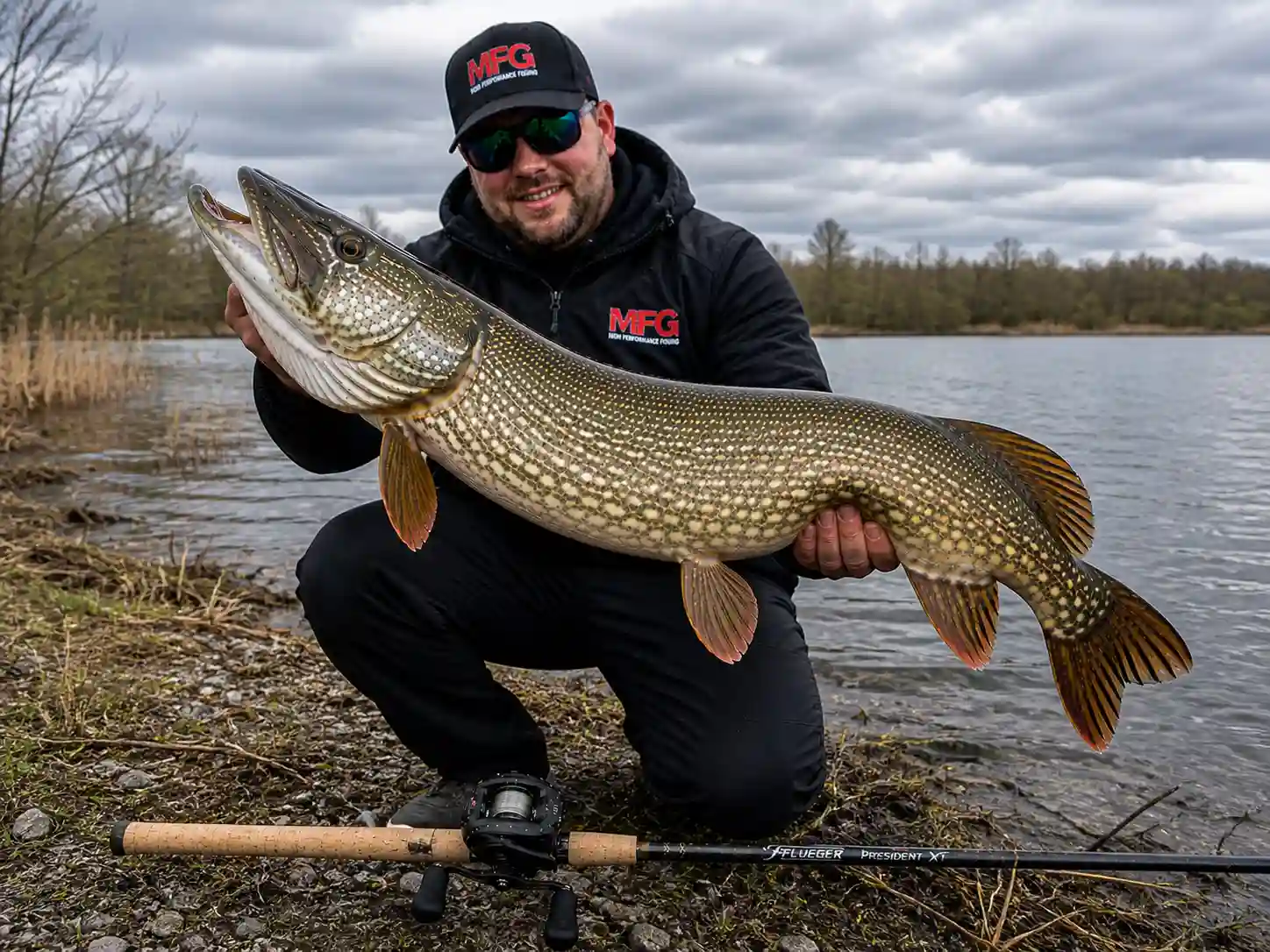
From shore, this extra length acts like an extended arm. You can keep the rod tip higher and guide the lure parallel to reed lines without your line constantly catching vegetation in front of you. That creates a steeper line angle, allowing the lure to stay in the strike zone longer instead of digging into the bottom or picking up weeds near the bank.
How It Performs on the Water
The first thing you notice is how the rod loads during the cast. This is not a fast, wrist-driven rod — it works like a catapult. A longer, smoother casting motion loads the full 9 ft blank, and when it releases, it sends the lure further than shorter rods without forcing power.
Distance also changes hooksets. At 30–50 meters, line slack becomes a real problem, but this rod picks up significantly more line with each movement — up to around 1.5 meters more than a standard 7 ft rod. That means your hookset connects faster and cleaner instead of getting lost in slack.
When a pike hits far from shore, the longer blank helps maintain pressure and absorb sudden runs while keeping tension steady. You stay connected instead of reacting late.
Where It Works Best
This rod is built for shore-based pike fishing. If you fish from banks, rocks, or uneven terrain, the 9 ft length gives you both reach and control over water that is normally difficult to access, especially when fishing from shore in real conditions like spring pike fishing from shore.
- casting beyond shallow zones and first drop-offs
- working lures parallel to reeds and shoreline cover
- keeping line clear of vegetation near your feet
Real-World Use
In real fishing, this rod changes how much effort you need to cast. The IM-8 blank absorbs mechanical stress during long casts, meaning you don’t have to force every cast with pure muscle. Instead of putting in 100% effort, the length and loading of the rod do a significant part of the work for you.
Over long sessions, that difference becomes noticeable. You stay more consistent, with less fatigue, especially when covering large areas from shore.
The trade-off is precision. This is not a rod for tight, technical casting or close-range accuracy. It requires space and a smoother casting rhythm to perform at its best.
It also feels slower compared to shorter rods. For fast lure manipulation or aggressive, short-range work, a 7 ft setup still gives better control.
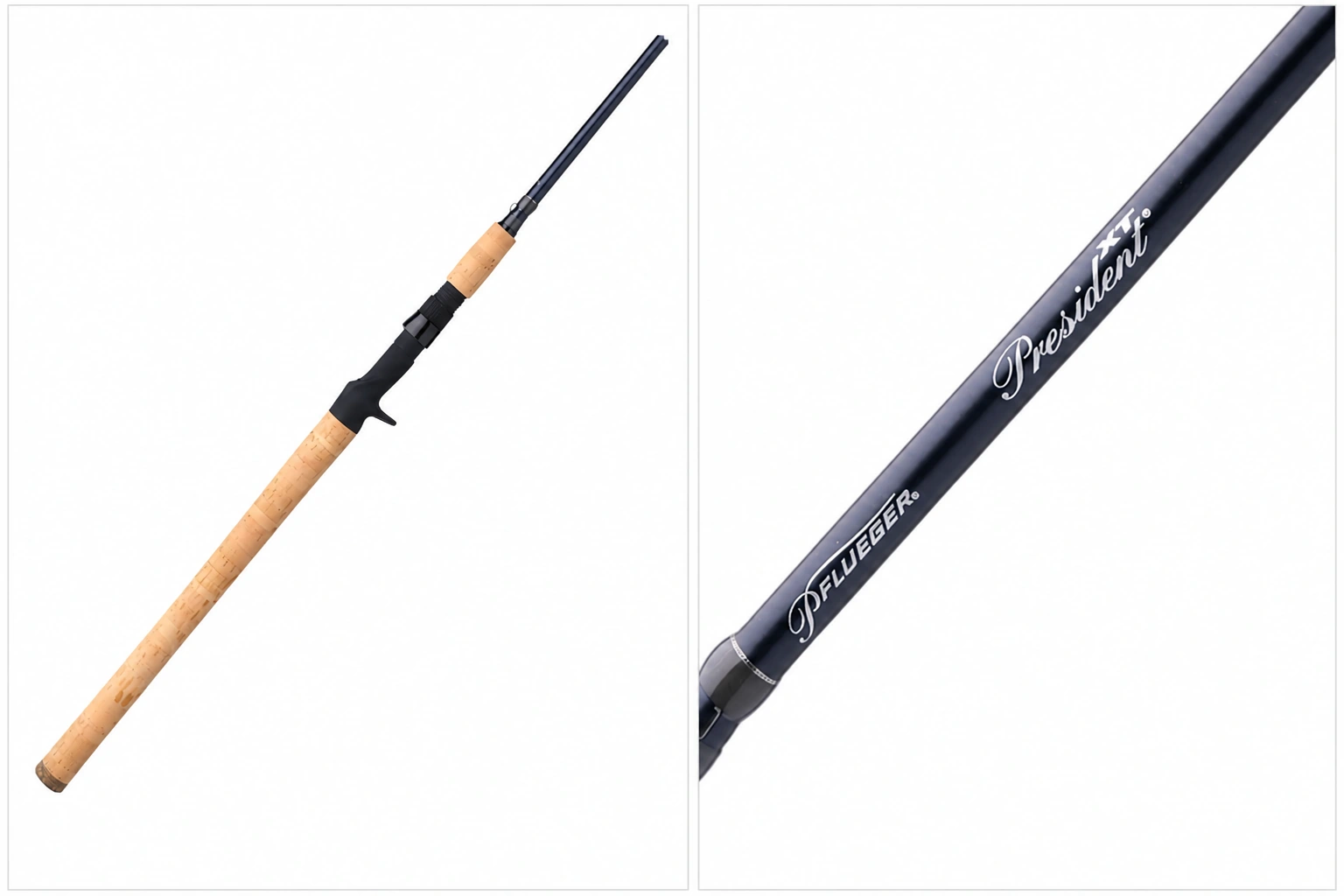
St. Croix Legend Tournament Casting Rod – Elite Powerhouse for Trophy Pike Fishing
The St. Croix Legend Tournament Casting Rod sits in a completely different category compared to standard baitcasting rods. This is not a rod you choose for versatility — this is a rod you choose when you want absolute control over big, aggressive fish.
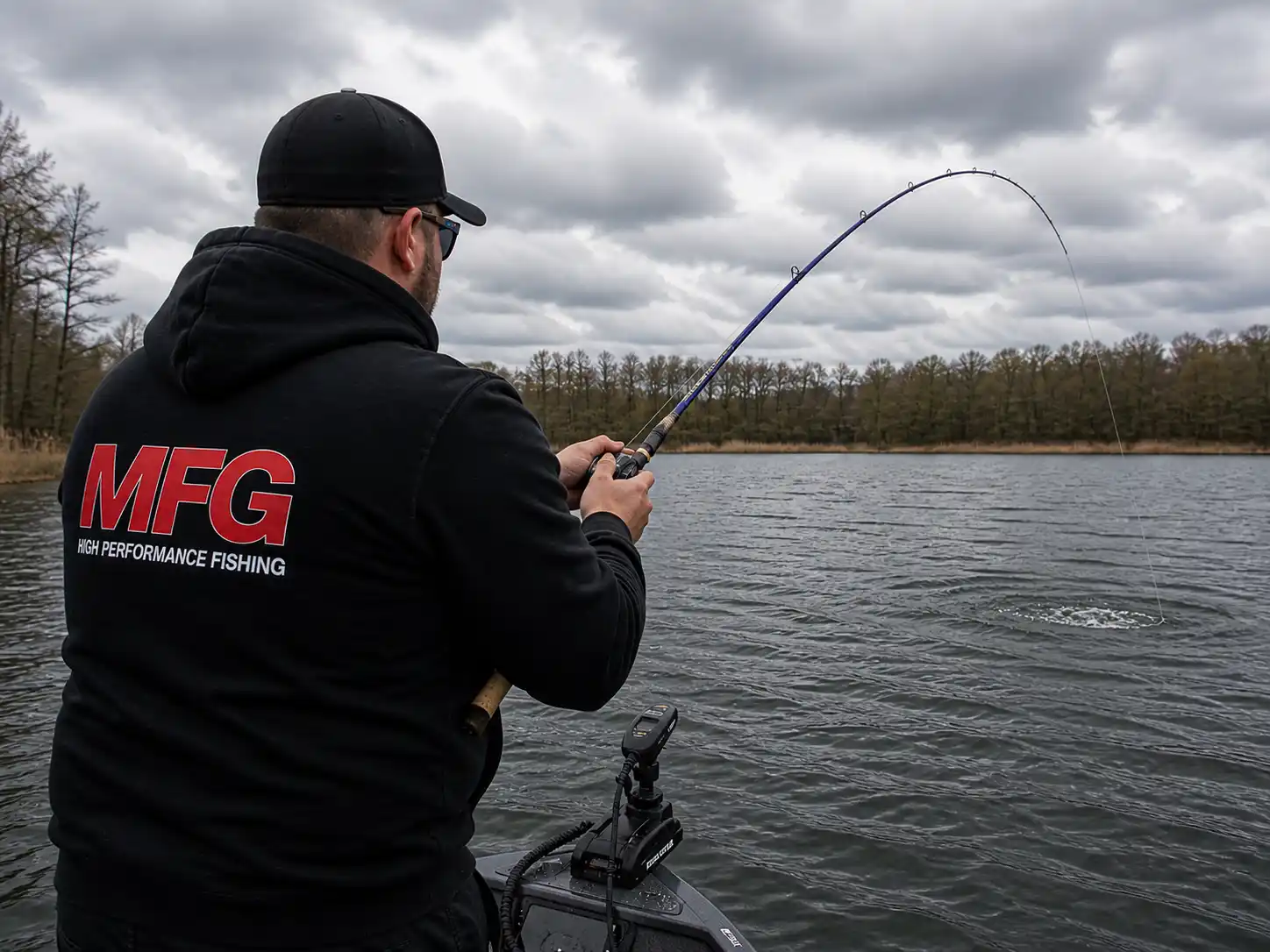
Built with St. Croix’s advanced technologies like IPC, ART, and FRS (Fortified Resin System), this blank is significantly stronger than standard rods while staying extremely light in hand. FRS increases overall strength without adding bulk, which creates a rare balance: the rod feels sharp and sensitive, but never fragile under pressure.
How It Performs on the Water
The first thing you notice is how immediate everything feels. There is no “loading delay” — the rod responds instantly to movement. That becomes critical when working larger lures or reacting to subtle changes during the retrieve.
Hooksets are on another level. There is virtually zero lag between your movement and power transfer. The moment you move your wrist, the rod drives the hook forward with full force — which is exactly what you need to penetrate the hard, bony structure of a pike’s jaw.
Sensitivity is just as impressive. You can feel when a lure hesitates, when resistance changes, or when a fish simply tracks behind it without striking. That level of feedback gives you control before the bite even happens.
During the fight, the rod stays dominant. When larger pike start shaking or turning into heavy cover, it maintains pressure without losing authority. Instead of reacting to the fish, you stay in control of the entire sequence.
Components & Build Quality
This rod is built as a long-term tool, not a seasonal upgrade. High-end components like Fuji K-Series guides reduce line friction and help prevent wind knots, while the premium cork handle keeps the setup stable and comfortable over long sessions.
Everything about the construction supports one idea: this is gear designed to be used hard and trusted over time.
Real-World Use
On the water, this rod changes your approach to big fish. You stop worrying about limitations and start focusing purely on execution. Heavy lures, strong fish, difficult cover — the setup stays stable through all of it.
It rewards an aggressive style of fishing. Fast hooksets, confident retrieves, and direct control all feel natural with this rod.
At the same time, it’s not built for everyone. If you only fish occasionally, this level of performance is unnecessary. But if you spend serious time targeting pike and want your gear to match that level, this is the kind of rod that removes doubt from the equation — especially when paired with a high-quality baitcasting reel for pike that can handle the same level of pressure and control.
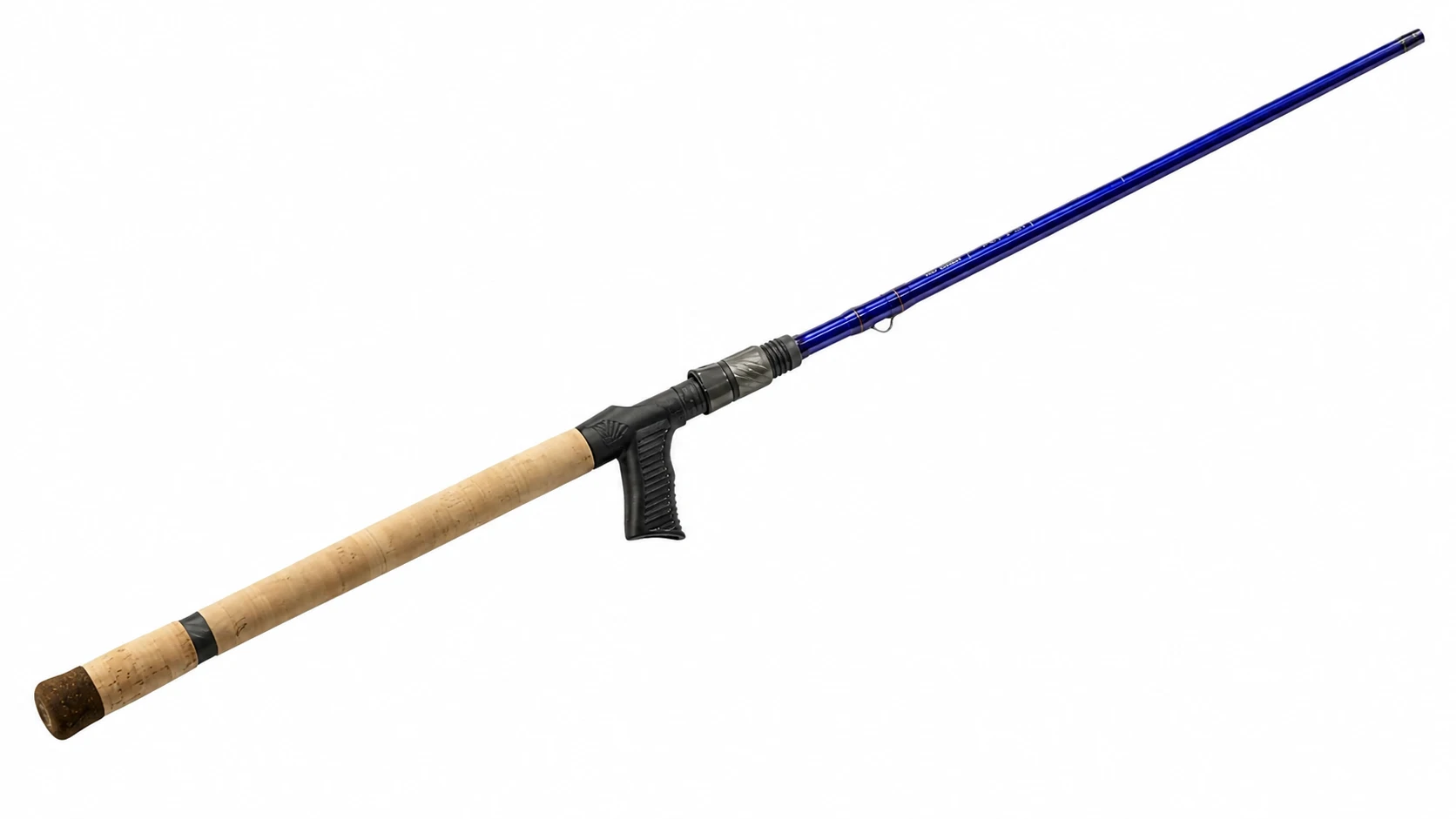
Best Baitcasting Rods for Pike (2026) – What Actually Matters?
Are baitcasting rods really good for pike fishing or just for bass?
Baitcasting rods are excellent for pike fishing, and the difference between “bass” and “pike” rods is often just marketing. The blank (carbon construction) is what actually matters, and Medium Heavy or Heavy baitcasting rods provide more than enough strength for pike in real conditions.
What power is best for baitcasting rods for pike – Medium Heavy or Heavy?
Medium Heavy is the most versatile choice for most pike fishing situations. It handles lures between 15–40 g (0.5–1.4 oz) and gives a strong balance of casting control and hook-setting power. Heavy rods become the better option when using large lures, fishing thick cover, or targeting bigger fish.
What is the best length for baitcasting rods for pike fishing?
The ideal length for most anglers is between 7’ and 7’6”. This range offers the best balance between casting accuracy and control during the fight. Specialized 9-foot rods are a game changer for bank anglers who need to cast over lily pads and keep their lure away from shoreline snags.
Can you use bass baitcasting rods for pike fishing?
Yes — many of the best baitcasting rods for pike are originally designed for bass fishing. The key is choosing the right power and action. A strong backbone and fast action allow these rods to handle pike strikes and maintain control during the fight.
What line should you use with baitcasting rods for pike?
Braid in the 30–50 lb range is the most common choice for pike fishing. It provides strength, sensitivity, and better hooksets at distance. Pair it with a strong leader for protection, especially when fishing around sharp teeth and structure.
Which Baitcasting Rod for Pike Should You Choose?
Choosing the best baitcasting rod for pike comes down to how and where you fish. If you want a reliable budget option that simply works, the Shimano SLX gets the job done. For better feedback and control, rods like the Abu Garcia Veritas and Daiwa Tatula give you a more precise connection to the lure.
From shore, longer rods like the 9 ft Pflueger President XT open water you can’t reach otherwise. And if you’re targeting bigger pike with heavier setups, the St. Croix Legend Tournament gives you full control when it matters most. Pick based on your fishing style — not just the price.
Once you have the right rod, pairing it with a high-quality baitcasting reel is the next step to building a setup that stays balanced and reliable when it matters most.