

How Deep Are Pike in Summer: Exact Depth Patterns for Heat, Oxygen & Weed Lines
How deep are pike in summer? That’s the question that comes up fast when spring spots suddenly stop producing.
In summer, pike shift into depth zones where conditions stay stable enough to hold fish. As water temperatures rise, they stop roaming and lock into tight areas where oxygen, temperature stability, and baitfish all intersect.
Across our on-the-water experience at Master Fishing Guide, one pattern keeps repeating: it’s not about fishing “deep” or “shallow”—it’s about finding the exact depth band where conditions stay stable enough for pike to hold and feed. Some days that’s just below the weed tops. Other days it’s along the first clean depth break. And during heat peaks, fish slide even deeper without ever leaving structure.
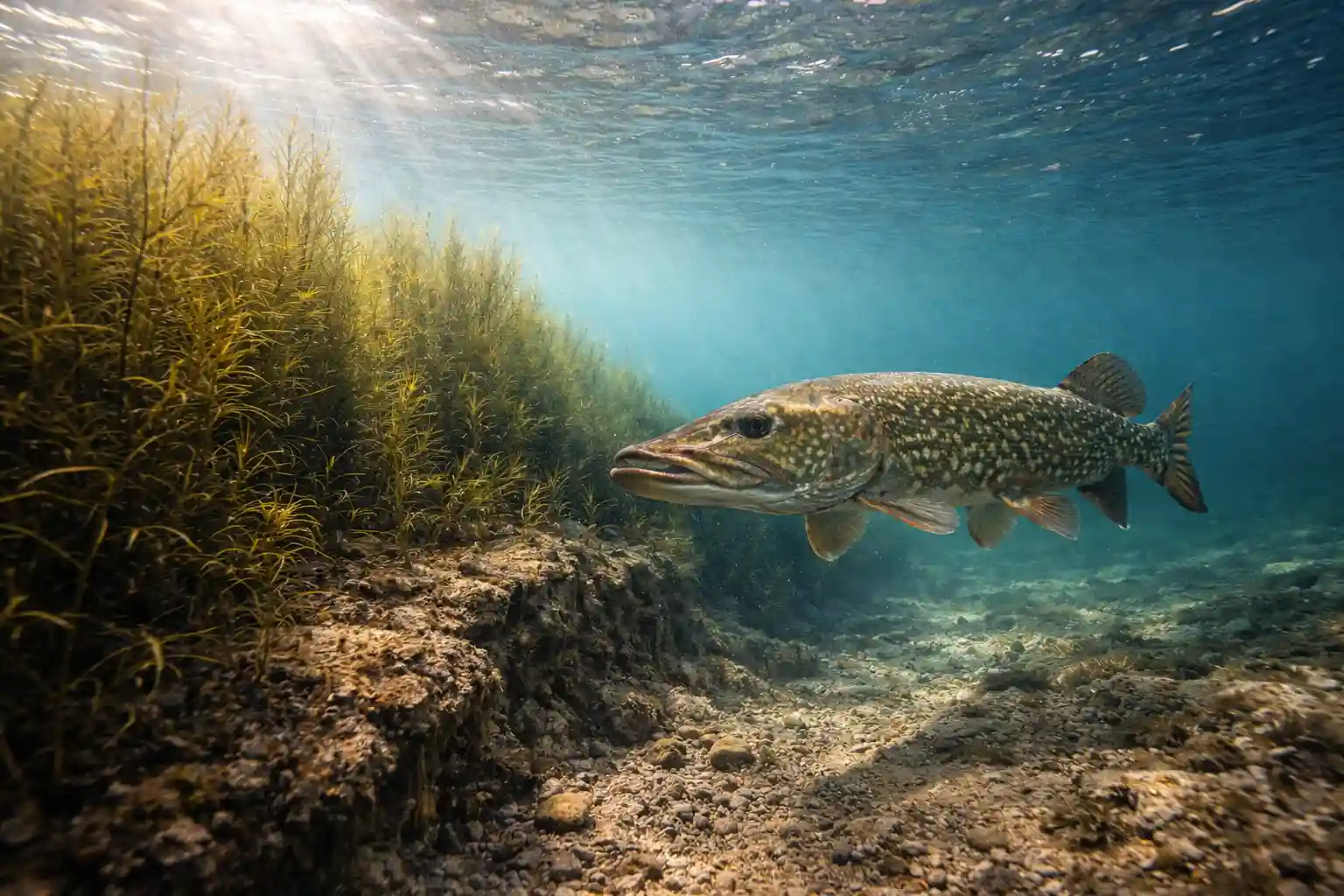
This is where most anglers lose the bite. They keep casting into visible cover but miss the depth where pike are actually sitting. You can be in the right location—and still fish the wrong layer of water.
In this guide, we’re not guessing or repeating generic advice. We’re breaking down exact summer pike depth patterns based on water temperature, oxygen levels, time of day, and real on-water observations—so you know exactly where in the water column your lure needs to be.
How Deep Are Pike in Summer? (Exact Depth Ranges Explained)
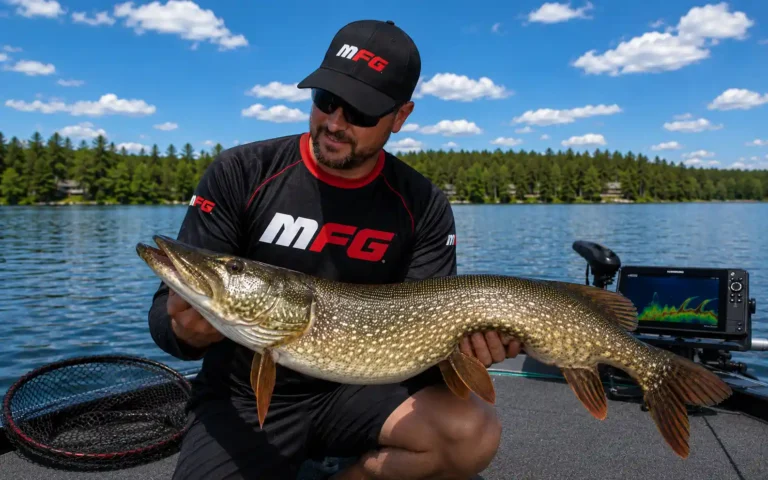
In summer, pike are typically found between 2–6 meters (6–20 ft), depending on temperature, oxygen levels, and time of day.
Most consistent summer depth patterns look like this:
Early Summer (June): Why Pike Stay Shallow–Mid Depth (2–5 m)
At the start of summer, pike don’t immediately leave shallow water. Weed beds are still healthy, oxygen is stable, and baitfish are concentrated in bays and along the first drop-offs.
What consistently shows on the water is that pike hold just off the edge of visible cover—not buried inside it like in spring, but not fully deep either. They sit in that 2–5 m (6–16 ft) band where they can slide up to feed and drop back without effort.
The key detail: you’ll often get follows from shallow fish, but the actual strikes come slightly deeper—right on that first clean edge outside the weeds.
Mid-Summer (July): Why Pike Shift Deeper (4–8 m)
Once surface temperatures push past roughly 20–21°C (68–70°F), shallow water becomes unreliable. Oxygen drops in dense vegetation, especially during calm days, and pike begin avoiding areas where feeding becomes energetically inefficient.
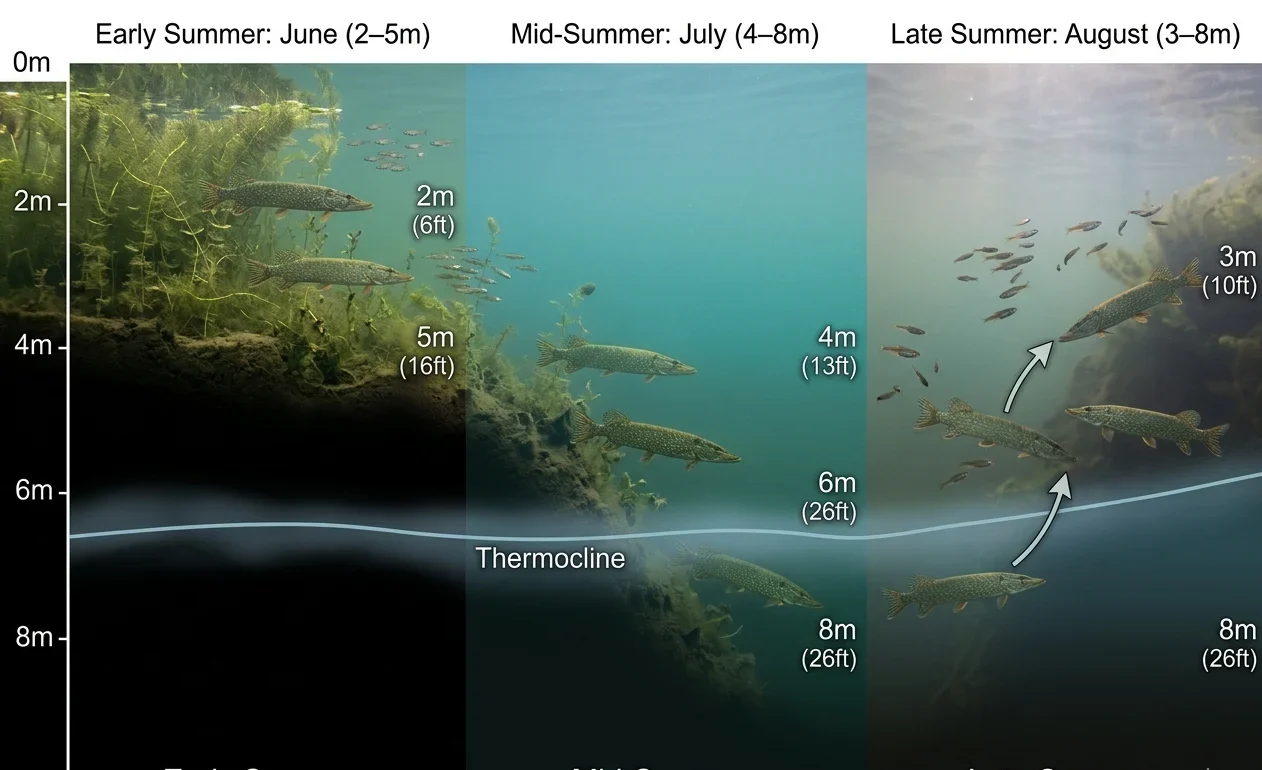
This is where fish reposition into 4–8 m (13–26 ft), usually along the same structures, but positioned slightly deeper within the water column. This depth band often sits just above the thermocline—offering a balance of cooler water and enough oxygen to support active feeding.
From experience, this is the phase where most anglers fish too shallow and miss the entire population. Pike are still close to structure—but they’re sitting just below it, not on top of it.
The giveaway: you stop seeing fish… but the moment you adjust depth by even 1–2 meters, the bites come back.
Late Summer (August): Why Depth Becomes Flexible (3–8 m)
Late summer is less stable—and that’s where opportunity comes back. Small drops in temperature, wind, and changing light conditions start pushing baitfish around again.
Pike respond by moving more actively between 3–8 m (10–26 ft), often sliding shallower during feeding windows and pulling back when conditions stabilize.
One consistent on-water pattern: depth shifts are often triggered by light. During evening transitions, when shadows hit the weed line, pike can move from deeper holding zones into shallower water very quickly.
In multiple sessions, we’ve seen fish move from around 6–7 m up to 3–4 m within less than an hour—not randomly, but following bait as conditions become more favorable.
The anglers who stay on fish here are the ones adjusting constantly—not the ones fishing one depth all day.
The key is not the exact number—it’s the depth band. Pike rarely sit at the deepest point in the lake. Instead, they hold at the highest depth where temperature and oxygen still allow them to feed efficiently, usually just off visible structure.
How Water Temperature Controls Summer Pike Depths
Water temperature is the single biggest factor that controls where pike hold in summer—but not in the way most anglers think. It’s not about fish simply moving “deeper” as the surface warms. It’s about how temperature reshapes the entire water column, forcing pike to find the narrow zone where conditions remain stable enough to survive and feed.
Across our testing, one pattern stays consistent: once surface temperatures climb above roughly 20–24°C (68–75°F), shallow water becomes increasingly unstable. Oxygen levels drop in dense vegetation, temperature fluctuates quickly, and pike begin to abandon exposed areas—unless there is constant oxygen replenishment (wind, current, or inflow).
This is where stratification comes into play. In most lakes during summer, the water separates into three distinct layers:
• Surface layer (warm, oxygen-variable): This zone heats up the fastest and can still hold active fish early and late in the day. But during peak heat, it often becomes too unstable—especially in calm, weedy bays.
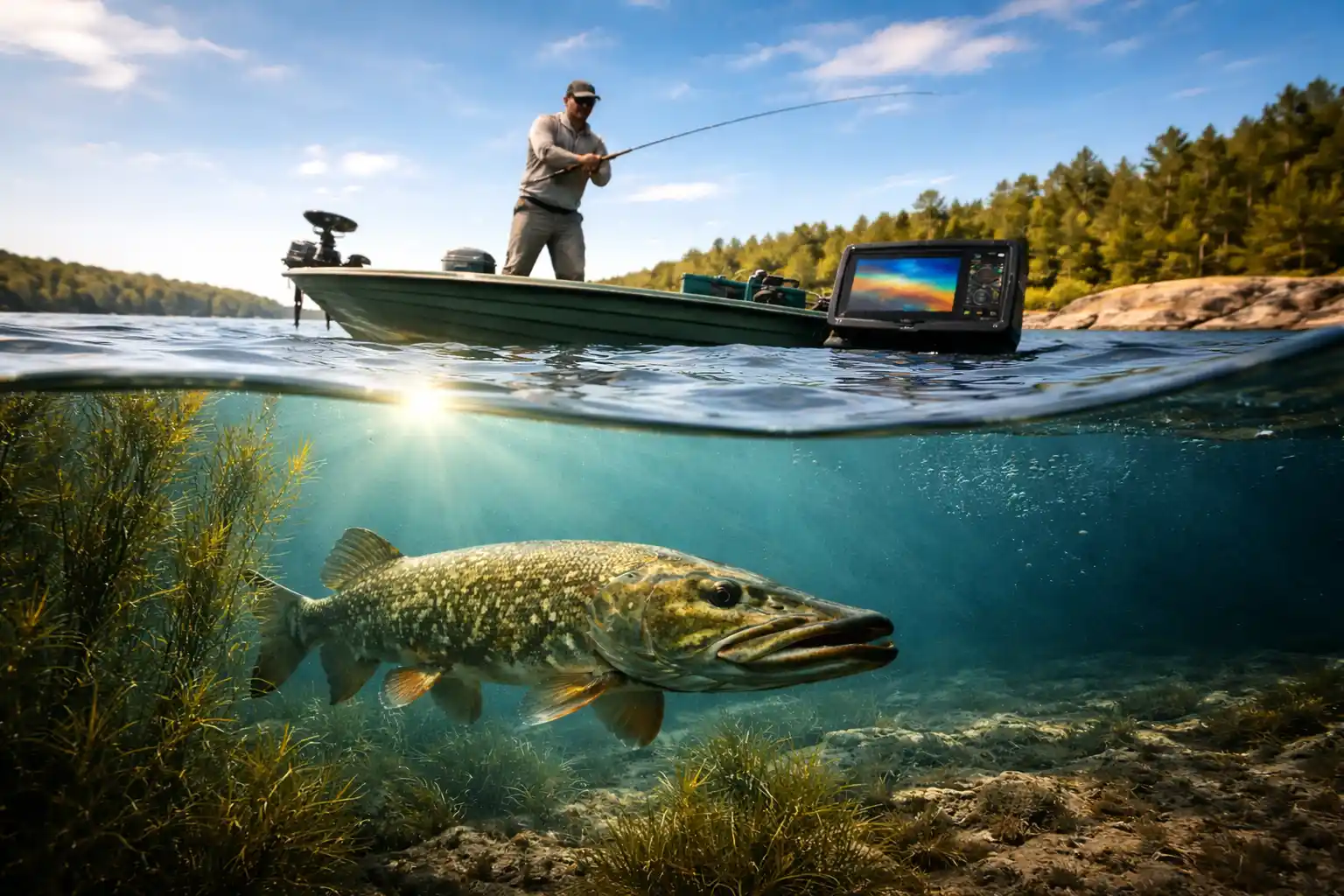
• Thermocline (stable transition zone): This is the key layer. Temperature drops gradually here, and oxygen is still present. In most natural lakes, this zone often forms somewhere around 4–8 meters (13–26 ft), depending on depth, clarity, and weather patterns. This is where pike spend a large part of the day during mid-summer.
• Deep water (cold, low oxygen): Contrary to what many believe, the deepest water is not always better. Below the thermocline, oxygen levels can drop sharply, especially in eutrophic lakes. Pike may pass through this zone, but rarely stay there for long unless conditions allow it.
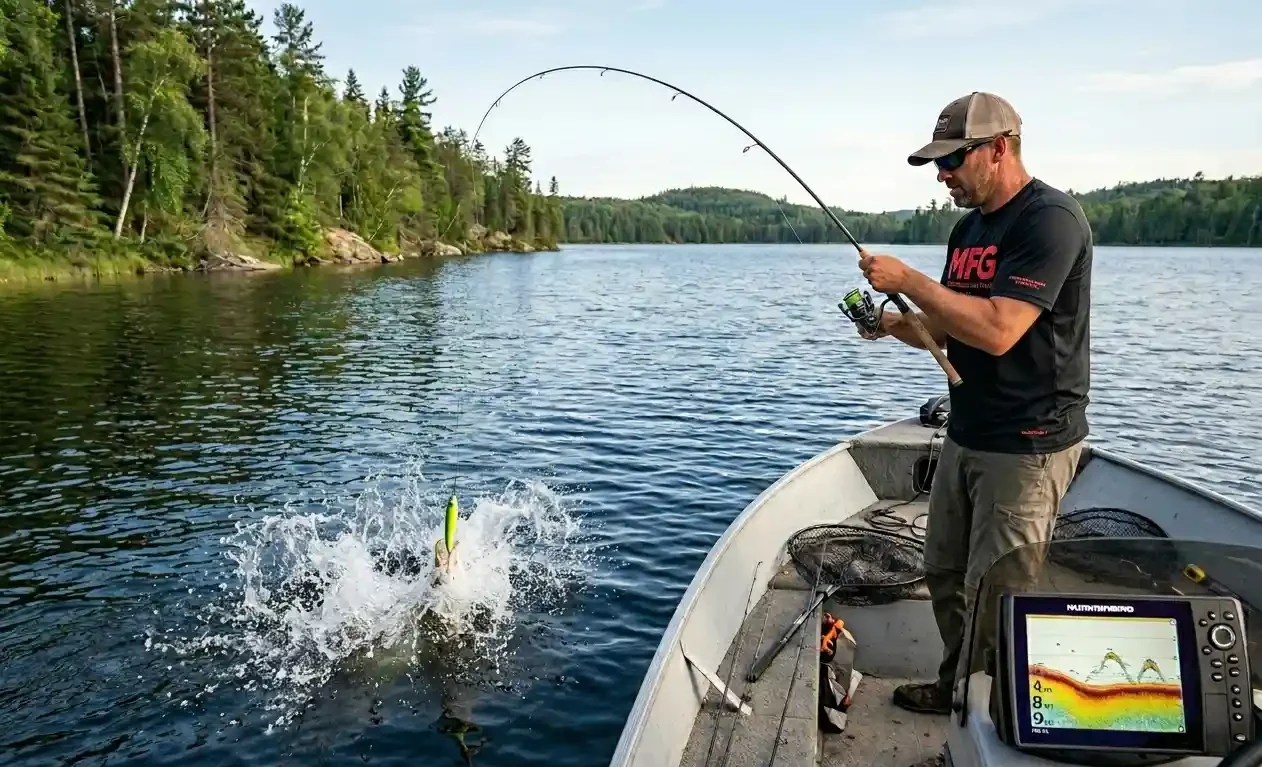
One important detail from real on-water experience: deeper doesn’t always mean better fish. It’s common to mark large fish on fish finders in 10–12+ meters, but in many cases, these fish are inactive—holding in low-oxygen zones where they are not actively feeding.
This is where many anglers get fooled by electronics. Seeing fish deep does not mean they are catchable. The fish that actually strike are almost always positioned higher—closer to the thermocline or just above structure where conditions support active feeding.
What consistently shows on the water is this: pike do not choose depth randomly—they position themselves at the highest depth where both temperature and oxygen remain stable. That usually means holding just above or along the thermocline, often tight to structure like weed edges, drop-offs, or submerged points.
This is the critical shift most anglers miss. They keep fishing visible cover in shallow water, while fish are holding just a few meters deeper—often directly below or just outside that same structure.
In practical terms, this means that a productive summer depth is not a fixed number. It’s a moving band that changes with heat, light, and oxygen conditions throughout the day. The anglers who stay on fish are not guessing depth—they’re adjusting with the water.
Lake vs River Summer Pike Depths (Key Differences Most Anglers Miss)
Summer pike depth is not the same in lakes and rivers—and this is where many anglers go wrong. The numbers might look similar on paper, but the reasons behind those depths are completely different.
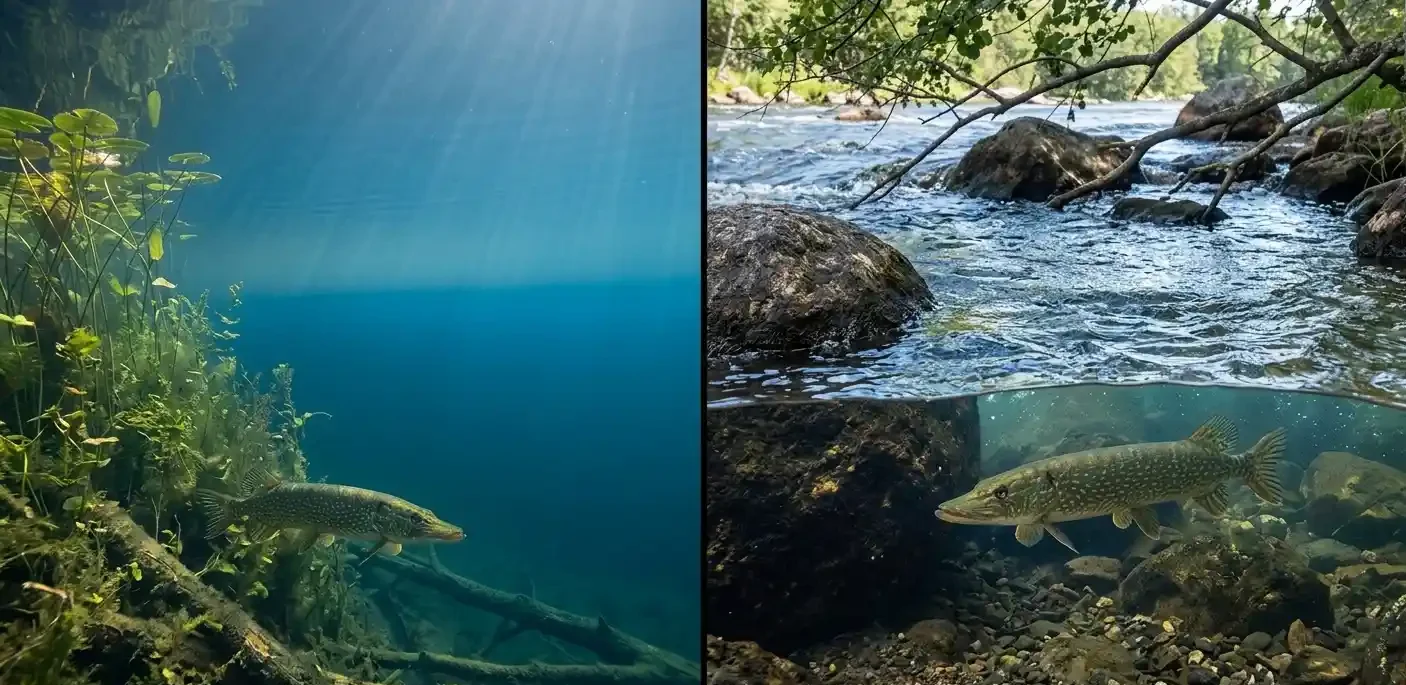
Lake Summer Depths: Stable Layers Control Everything
In lakes, depth is controlled by temperature and oxygen stratification. Once summer sets in, water separates into layers, and pike position themselves around the most stable zone—usually near the thermocline.
In practical terms, this means most active fish hold in 4–8 m (13–26 ft) during peak summer, often along weed edges, drop-offs, and submerged structure.
The key mistake in lakes: anglers fish visible shallow cover too long. Pike may still be nearby—but usually sitting slightly deeper, just outside or below that same structure where conditions are more stable.
River Summer Depths: Current, Oxygen & Energy Efficiency
In rivers, depth is far less important than current and oxygen flow. Because water is constantly moving, oxygen levels remain higher even in shallower zones, allowing pike to stay active without dropping as deep as they would in lakes.
Current acts as a natural stabilizer: moving water stays cooler and oxygenated, which is why a pike holding in 2 m (6–7 ft) of river current is often more active than a pike at the same depth in stagnant lake water.
Most river pike are commonly found in 1.5–4 m (5–13 ft), especially around current breaks—areas where flow slows down, such as behind structure, along river bends, near submerged obstacles, or in slack water pockets.
The key difference: instead of holding at a fixed depth, river pike position based on energy efficiency—staying close enough to moving water for feeding opportunities, but avoiding strong current that would drain energy.
What Most Anglers Miss
The biggest mistake is applying lake logic to rivers—and river logic to lakes.
In lakes, going deeper often solves the problem. In rivers, going deeper doesn’t fix anything if current and oxygen are already stable in shallower zones.
On the water, this shows up clearly: anglers coming from lakes tend to fish rivers too deep, while river anglers often fish lakes too shallow during summer heat.
Understanding this difference is what keeps you on fish. It’s not just about finding depth—it’s about understanding what controls that depth in the first place.
How Pike Move Throughout the Day in Summer (Depth Changes Explained)
Summer pike don’t stay at one depth all day. They constantly adjust their position based on light, temperature, and feeding opportunities. Understanding these daily movements is often the difference between blank sessions and consistent action.
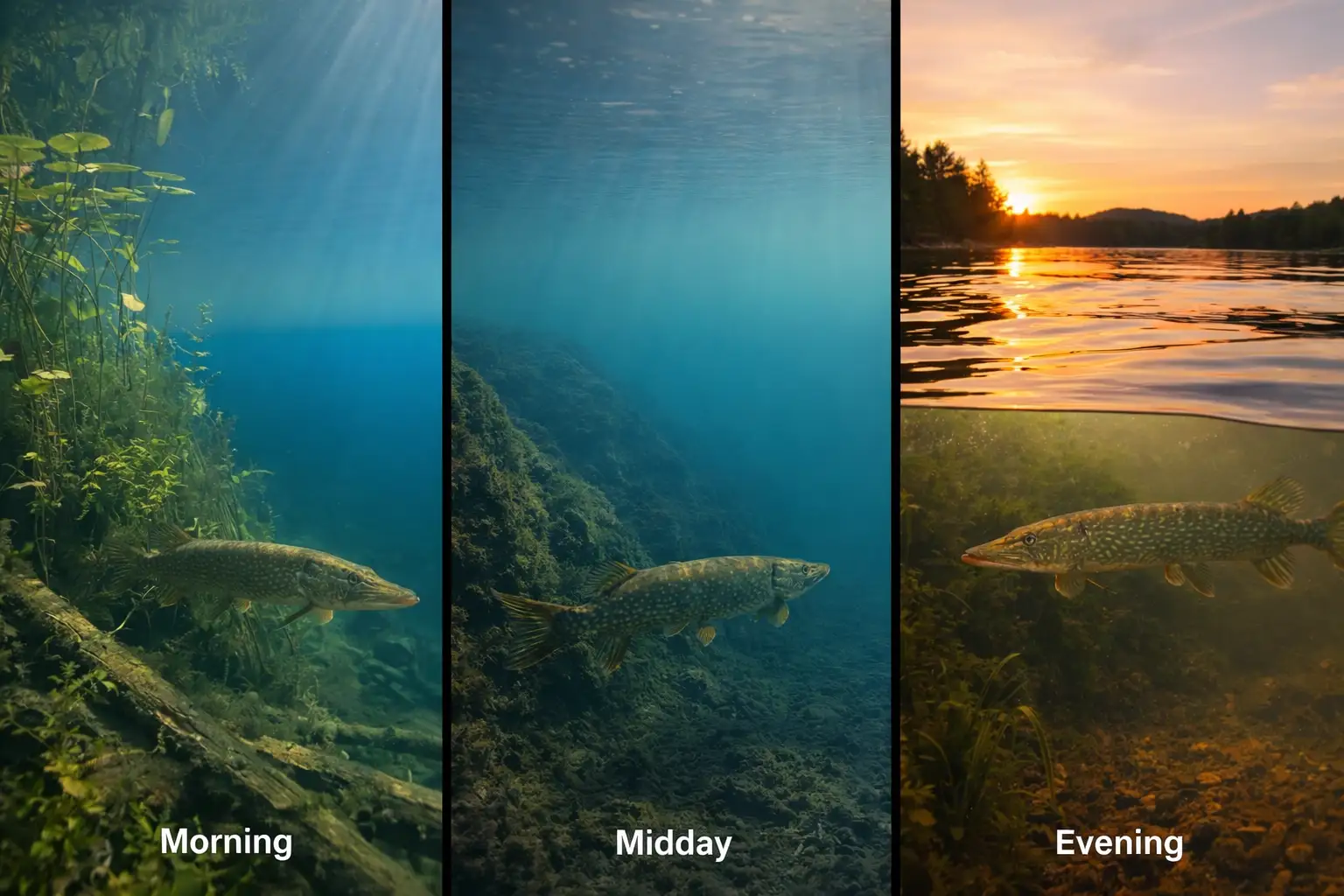
Morning: Shallow Feeding Windows (2–4 m)
Early in the day, pike move shallower to feed. Lower light levels and cooler overnight temperatures make shallow zones more stable, especially around weed edges and flats.
Most active fish during this window are found in 2–4 m (6–13 ft), often cruising just outside weed beds or over submerged vegetation.
On the water, this is when you’ll see the most follows and aggressive strikes. Fish are willing to move, chase, and commit—especially in the first few hours after sunrise.
Midday: Deeper Holding Zones (4–8 m)
As the sun rises and heat builds, pike pull deeper. Light penetration increases, surface temperatures peak, and shallow zones become less comfortable.
During this period, most fish settle into 4–8 m (13–26 ft), holding close to structure like weed edges, drop-offs, or deeper pockets adjacent to feeding areas.
This is where “transition zones” become critical. Steeper drop-offs and clean weed edges act as vertical highways, allowing pike to slide up and down the water column quickly without leaving their feeding area.
This is where many anglers lose contact with fish. They stay shallow while pike drop just a few meters deeper and become less active.
The key adjustment: slower presentations and precise depth control. Fish are still there—but they won’t move far to strike.
Evening: Return to Shallow Water (2–5 m)
As light fades, pike become active again and move shallower to feed. Cooling surface water and reduced light create another feeding window, often similar to early morning—but sometimes even stronger.
Fish typically move back into 2–5 m (6–16 ft), especially along weed lines, flats, and areas where baitfish are concentrated.
While morning and evening depths look similar, evening fish often hold slightly further down the slope due to the heat built up during the day—unless wind or cloud cover cools the shallows faster.
One consistent pattern: the moment shadows reach the water—whether from shoreline cover, clouds, or sunset—pike begin repositioning quickly.
Short feeding windows can open fast and close just as quickly. Being on the right depth at the right moment matters more than covering water blindly.
What This Means on the Water
The biggest mistake is fishing one depth all day. Summer pike are not static—they shift between depth zones as conditions change.
The anglers who stay consistent are the ones tracking these movements. Start shallow in the morning, adjust deeper through the day, and return shallow as light drops. Having a reliable setup makes these adjustments much easier, especially when using gear from our guide on best spinning reels for pike.
If the bites stop, don’t change location first—change depth. In summer, that’s usually the missing piece.
Common Summer Pike Depth Mistakes (That Kill Your Bite)
Most summer pike struggles don’t come from bad spots—they come from fishing the wrong depth. You can be in the right location, around the right structure, and still have zero results simply because your lure is not in the depth band where fish are actually holding.
Fishing Too Shallow All Day
This is the most common mistake. Anglers catch fish shallow in the morning—and then keep fishing the same depth for the rest of the day.
As conditions change, pike slide deeper. But many anglers stay locked into visible cover, casting to the same spots while fish reposition just a few meters below.
If the bite dies after morning, it’s usually not the spot—it’s the depth.
Going Too Deep After Seeing Fish
Electronics can be misleading if you don’t understand what you’re seeing. Marking fish in deep water doesn’t mean those fish are feeding.
In summer, deeper fish often sit in low-oxygen zones and remain inactive. Dropping your lure straight to the deepest marks usually leads to wasted time.
The fish that actually strike are almost always positioned higher—closer to the thermocline or structure.
Ignoring Oxygen in Thick Weeds
Weeds don’t always mean fish. In summer, dense vegetation can lose oxygen—especially during hot, calm conditions.
Anglers often keep casting into thick weed beds, expecting spring behavior, while pike have already moved to cleaner edges or slightly deeper water where oxygen is more stable.
If the weeds feel “dead,” the fish are usually gone too.
Fishing Structure at the Wrong Depth
Being on structure is not enough—you have to fish the right layer of that structure. Precision like this becomes much easier with the right line setup, which we break down in our guide on best pike fishing lines.
For example, fishing a weed edge too shallow, or working a drop-off without reaching the depth where fish are holding, results in zero contact—even when fish are present.
In summer, a difference of 1–2 meters can decide everything. Our observations show that being just 1 meter above or below the active depth band often results in zero followers—let alone strikes.
Not Adjusting Depth Throughout the Day
Pike move constantly in summer—but many anglers don’t.
They pick one depth and stick to it, even as light, temperature, and feeding activity change.
The anglers who stay on fish are the ones adjusting depth first—not changing spots.
What This Means on the Water
If you’re not getting bites, don’t assume there are no fish. In most cases, you’re simply not fishing at the depth where they are holding.
Before changing location, always test a different depth range. In summer, that adjustment alone often turns a slow session into a productive one.
Summer Pike Depth FAQ
How deep are pike in summer?
Most active pike hold between 2–6 meters (6–20 ft), depending on temperature, oxygen levels, and time of day. They stay within a stable depth band rather than the deepest water available.
Do pike go deeper as water temperature rises?
Yes, but only within a specific range. As surface temperatures increase, pike shift toward deeper zones near the thermocline, but avoid depths where oxygen levels drop.
What depth do pike stay in during mid-summer?
In peak summer conditions, most feeding fish are found in 4–8 meters (13–26 ft), typically just above the thermocline where temperature and oxygen remain stable.
Do pike stay at the same depth all day?
No—pike adjust depth throughout the day. They move deeper during bright, hot periods and return shallower during low-light feeding windows like morning and evening.
How precise does depth need to be for summer pike?
Very precise. Even a difference of 1–2 meters can move your lure completely out of the active feeding zone, resulting in no follows or strikes.
Summer Pike Depth: What Actually Matters on the Water
Summer pike fishing becomes much simpler the moment you stop guessing depth. Fish don’t disappear when temperatures rise—they just move into a narrower, more precise depth band where conditions allow them to stay active.
The biggest shift is not location—it’s positioning. Most anglers are already fishing the right areas. They’re just not reaching the depth where pike are actually holding.
Everything in this guide points to one thing: depth control matters more than anything else in summer. Not lure color. Not constant spot changes. Just getting your presentation into the correct layer of water—something that aligns with broader predator behavior patterns in warm water environments described by Animal Diversity Web.
While this guide explains how deep pike are in summer, understanding exact locations is just as important. If you want a complete breakdown of where fish actually position, check our full guide on where to find pike in summer.
If you remember one rule, make it this: when the bite stops, don’t leave the area—adjust your depth first. In most cases, the fish are still there.
On the water, that simple adjustment is often the difference between a slow session and a productive one.