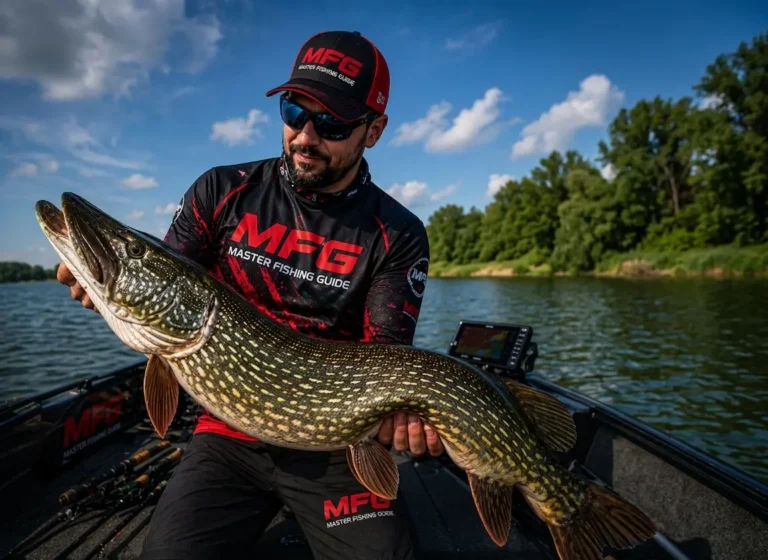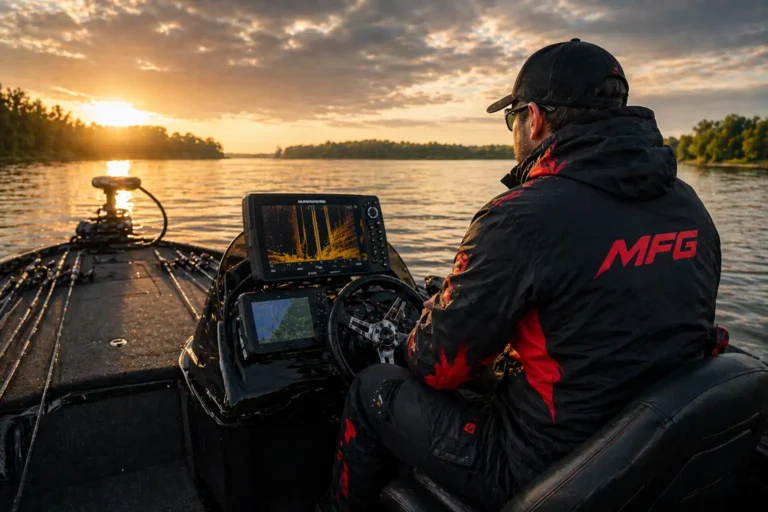


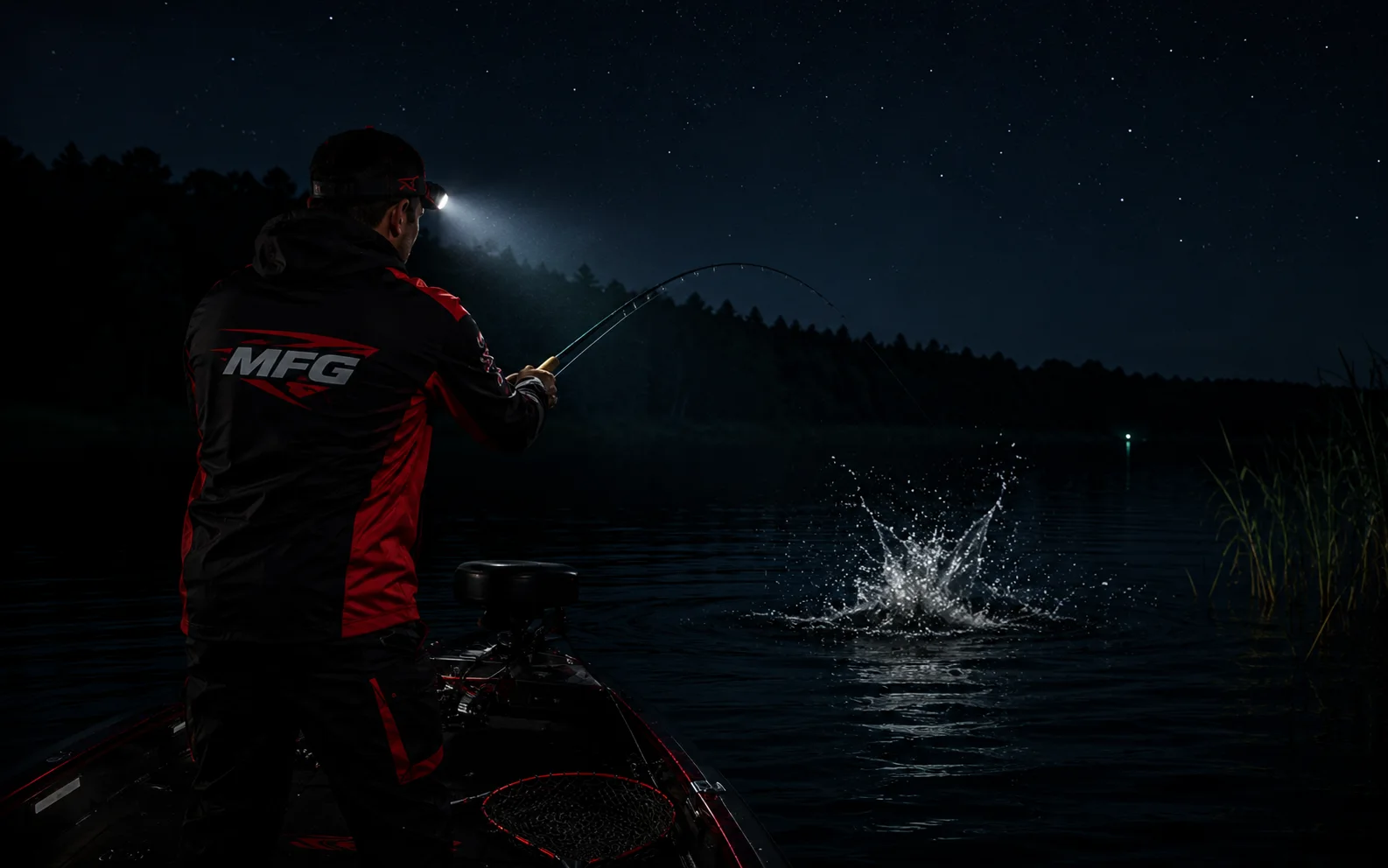
Summer Night Pike Fishing: How to Catch Pike After Dark When Daytime Fails
Summer night pike fishing is not a backup plan — it is often the only plan that works. When water temperatures climb above 22°C (72°F) and daytime sessions produce nothing but follows and short strikes, the fish do not disappear. They shift. They compress into specific depth bands during the heat of the day, conserve energy, and wait.
Then, as light fades and surface temperatures begin to drop, something changes. Pike that ignored every lure for eight hours suddenly become aggressive, predictable, and catchable.
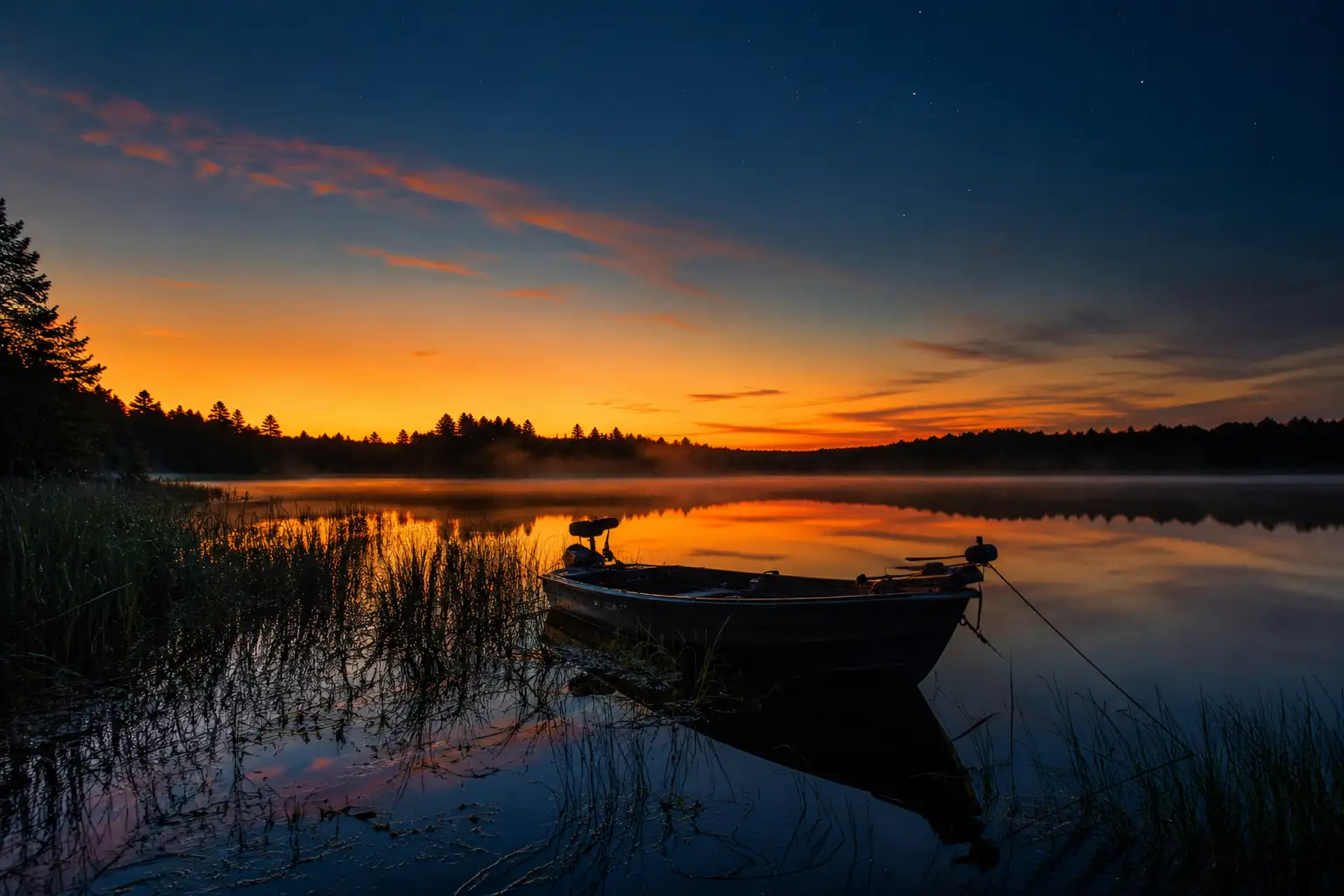
We learned this the hard way over several summers — logging sessions that started at dusk and ran past midnight, tracking exactly how quickly pike moved shallow after sunset, and noting which locations triggered the first strike. The pattern repeated itself across clear natural lakes, stained reservoirs, and shallow windless bays where daytime heat had pushed fish completely off the flats.
The feeding window after dark in summer is not random — it follows rules, and once you understand those rules, night fishing stops feeling like gambling and starts feeling like strategy.
This is not about fishing blind in the dark. Summer night pike fishing rewards preparation, specific lure choices, and an understanding of how pike use low light to their advantage. If you already know where pike hold in summer during the day, you are already halfway there — because the same structure that holds fish at depth in the heat becomes a feeding lane after sunset.
When to Go: The Exact Summer Night Window That Produces Pike
Timing is everything in summer night pike fishing — and the difference between a productive session and a blank night often comes down to a single hour. The feeding window does not open the moment the sun sets. In our experience across multiple summers, the most consistent action starts between 45 minutes and 90 minutes after sunset, when surface temperature has dropped enough for pike to move shallow but darkness has not yet pushed baitfish off the flats completely.
The single most reliable trigger we found was surface temperature dropping below 20°C (68°F). On nights when the temperature stayed above that threshold until midnight, strikes were rare and short. On nights when it crossed that line within the first hour after sunset — fish moved, baitfish became active near the surface, and pike followed within minutes.
A simple surface thermometer changed the way we planned every summer night session.
What most anglers miss completely is the pre-dawn window. In our sessions, the hour before first light — roughly 60 to 90 minutes before sunrise — produced some of the largest pike of entire summer nights. Baitfish that had been active through the night begin compressing toward the surface as light approaches, and big pike make one final aggressive push into the shallows before retreating to deeper water for the day.
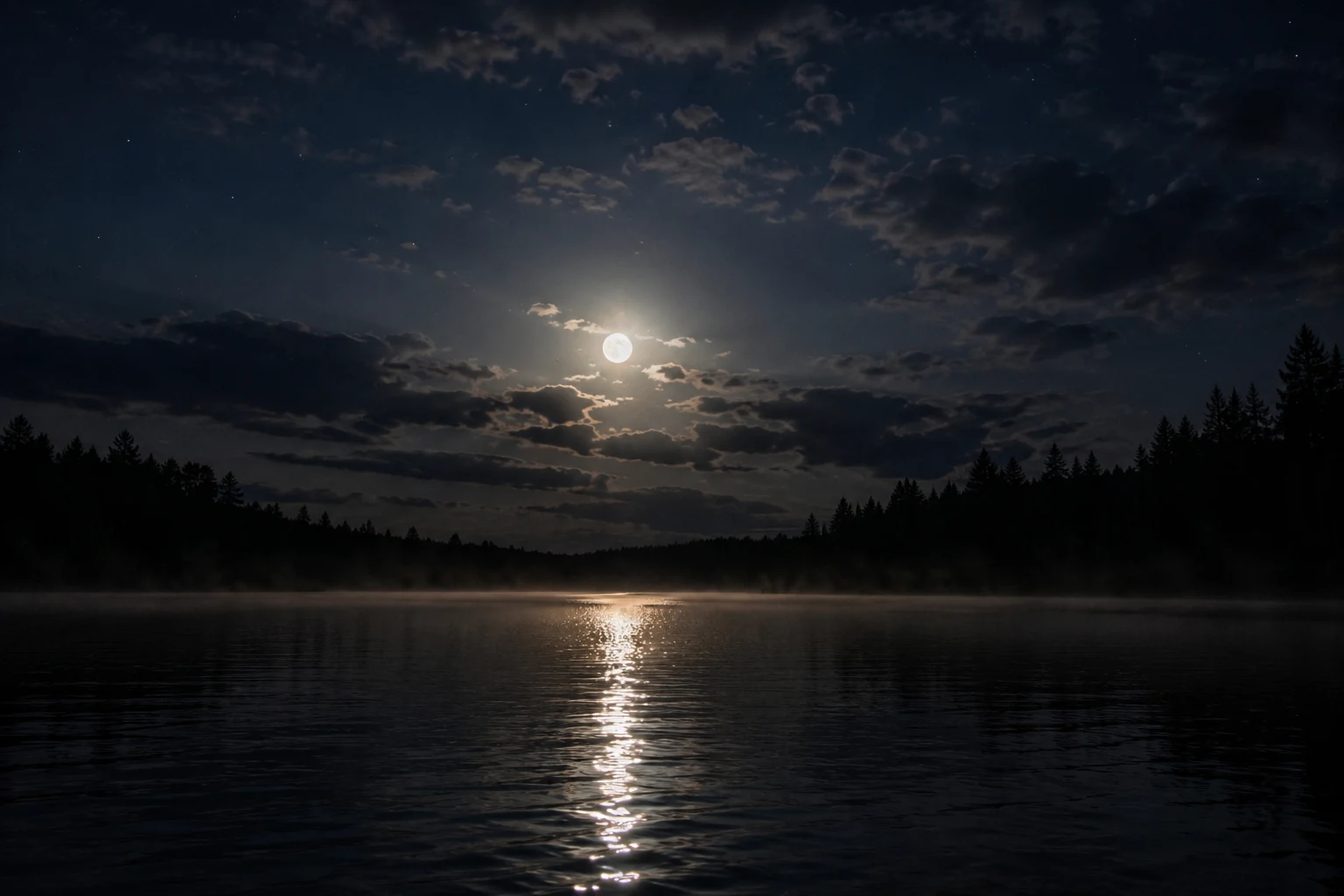
If you leave at midnight, you are missing half the session. The best time for summer pike fishing at night is not one window — it is two. For a full breakdown of every feeding window across the entire summer day, our guide on best time to catch pike in summer covers exactly when pike feed from dawn to dusk.
Moon phase matters more than most anglers realize — but not in the way they think. On full moon nights with clear skies, pike can see perfectly in shallow water, and the feeding window shifts dramatically. Instead of the standard dusk window, fish often stay inactive until around midnight or 1 AM when the moon is highest and baitfish movement peaks under direct moonlight.
On dark nights — new moon or heavy cloud cover — the opposite is true: both the dusk window and the pre-dawn window produce hard, and the middle of the night goes quiet. Matching your session timing to moon phase is one of the most underused adjustments in summer night pike fishing.
Solunar factors follow a similar logic. Major solunar periods that overlap with the dusk or pre-dawn window consistently produced more aggressive strikes in our night sessions — not because pike follow a calendar, but because those periods align with baitfish movement patterns that pike have learned to anticipate. When a major solunar period falls within 30 minutes of sunset or sunrise during summer, that session moves to the top of our priority list.
The best summer nights for pike are not the hottest ones — they are the ones with the biggest temperature drop after sunset. Overcast nights with light wind consistently outperformed clear, calm nights in our sessions. Cloud cover slows daytime heating, keeps water temperature for pike activity in a more favorable range, and removes the moon as a variable that pushes fish deeper or makes them lure-shy in the shallows.
If you want to understand why pike shut down completely during the day before your night session, our breakdown of why pike are not biting in summer covers exactly what happens to fish behavior when water temperature peaks — and what you can still do to trigger strikes before dark.
Where to Find Pike at Night in Summer: Locations That Actually Hold Fish After Dark
Night fishing without a location plan is just casting in the dark — literally. The good news is that summer night pike locations follow a predictable pattern once you understand how pike use structure differently after sunset.
The same fish that spent the day compressed against deep weed edges and shaded structure begin moving the moment light fades — and they move in specific directions, toward specific features, for specific reasons.
Shallow Flats Adjacent to Deep Daytime Zones
The single most reliable night location in summer is a shallow flat adjacent to a deeper daytime holding zone. Pike do not randomly scatter after dark — they follow the baitfish, and baitfish in summer move shallow at night to feed on insects and zooplankton near the surface.
Any flat between 1 and 3 meters (3 to 10 feet) deep that sits directly next to a 4 to 6 meter (13 to 20 feet) daytime zone becomes a feeding lane after sunset. We have returned to the same flats on different lakes across multiple summers and found the same pattern repeating every time.
Reed Edges and Weed Line Corners
Reed edges and weed lines are the second most productive night structure — but only the sections that connect shallow and deep water directly. A reed bed that runs parallel to open water with no depth transition behind it produces far less than a reed corner or point where shallow vegetation meets a sudden drop.
Pike use these corners as ambush positions, sitting at the transition and pushing baitfish against the vegetation before striking. On calm nights, you can often hear this happening before you even make a cast.
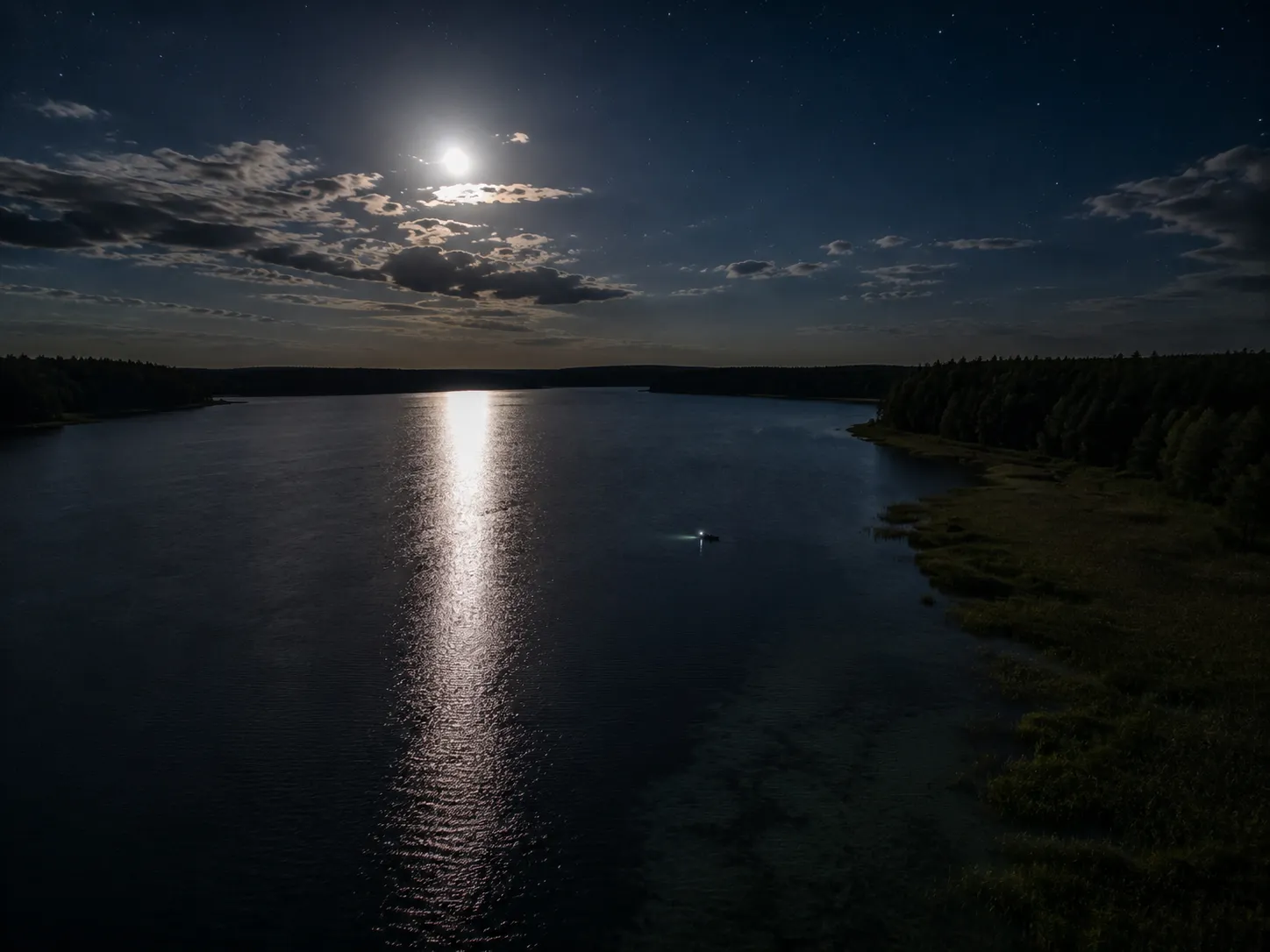
Rocky Points and Hard Bottom Transitions
Rocky points and hard bottom transitions deserve special attention in summer night sessions. Hard bottom areas retain heat differently than soft silt — and on warm nights, the slight temperature difference between rock and weed edges is enough to concentrate baitfish activity.
We noticed that on nights above 20°C (68°F) air temperature, rocky points consistently produced earlier in the night than weed edges — sometimes within the first 20 minutes after sunset.
Open Water Above Submerged Structure
One location that surprises most anglers is open water directly above submerged structure — a sunken island, a submerged point, or a hard bottom hump in 2 to 4 meters (6 to 13 feet) of water. During the day these spots are often ignored because they lack visible cover.
At night, the thermocline breaks down as surface temperatures cool, baitfish that were suspended at depth during the heat of the day rise toward the surface, and pike follow that vertical baitfish movement upward — feeding aggressively in open water where nothing visible suggested fish should be present. Some of our most unexpected night sessions came from exactly these spots.
Understanding exactly where pike position during the day is the foundation of finding them at night — because the night movement always starts from the daytime holding zone. Our detailed breakdown of where to find pike in summer covers the daytime structure in detail. If you fish from shore, our guide on summer pike fishing from shore shows exactly which bank positions access these night locations — and if you fish from a boat, how to catch pike from a boat in summer covers positioning and drift tactics for the same structure.
And because depth changes drive the entire night movement, how deep pike hold in summer explains exactly what happens to fish position as temperature changes through the day — which directly predicts where they will be when darkness arrives.
How to Fish for Pike at Night in Summer: Technique, Retrieve & Presentation
Night fishing for pike in summer demands a completely different approach than daytime fishing — not because pike behave differently as predators, but because the entire sensory equation changes after dark. Vision drops out as the primary trigger. What replaces it is movement, vibration, and silhouette.
Every decision you make about lure choice, retrieve speed, and presentation angle needs to be built around those three things.
Slow Down Your Retrieve — Then Slow It Down Again
The single biggest mistake anglers make on their first night sessions is fishing too fast. Slow down every retrieve you would normally use during the day — then slow it down again. At night, pike are not chasing down fast-moving targets. They are intercepting. Pike rely almost entirely on their lateral line at night — detecting pressure waves and vibration to locate and track prey in complete darkness.
They hear or feel the lure approaching, position themselves in its path, and strike when it enters their strike zone. A retrieve that is too fast pulls the lure through that zone before the fish can commit. In our night sessions, the strikes that came on faster retrieves were almost always smaller fish — the big ones consistently hit slow, deliberate presentations that gave their lateral line enough time to lock onto the target.
Cast Parallel to Structure, Not Perpendicular
Casting angle matters more at night than most anglers realize. Cast parallel to structure rather than perpendicular to it whenever possible. A lure that runs along a reed edge for 10 meters spends far more time in the strike zone than one that crosses it at a right angle in two seconds.
From a boat, this means repositioning to cast along the weed line rather than toward it. From shore, it means working the structure that runs parallel to your bank rather than casting straight out into open water. This single adjustment has produced more night fish for us than any lure change ever did.
Stealth Is Not Optional — It Is the Foundation
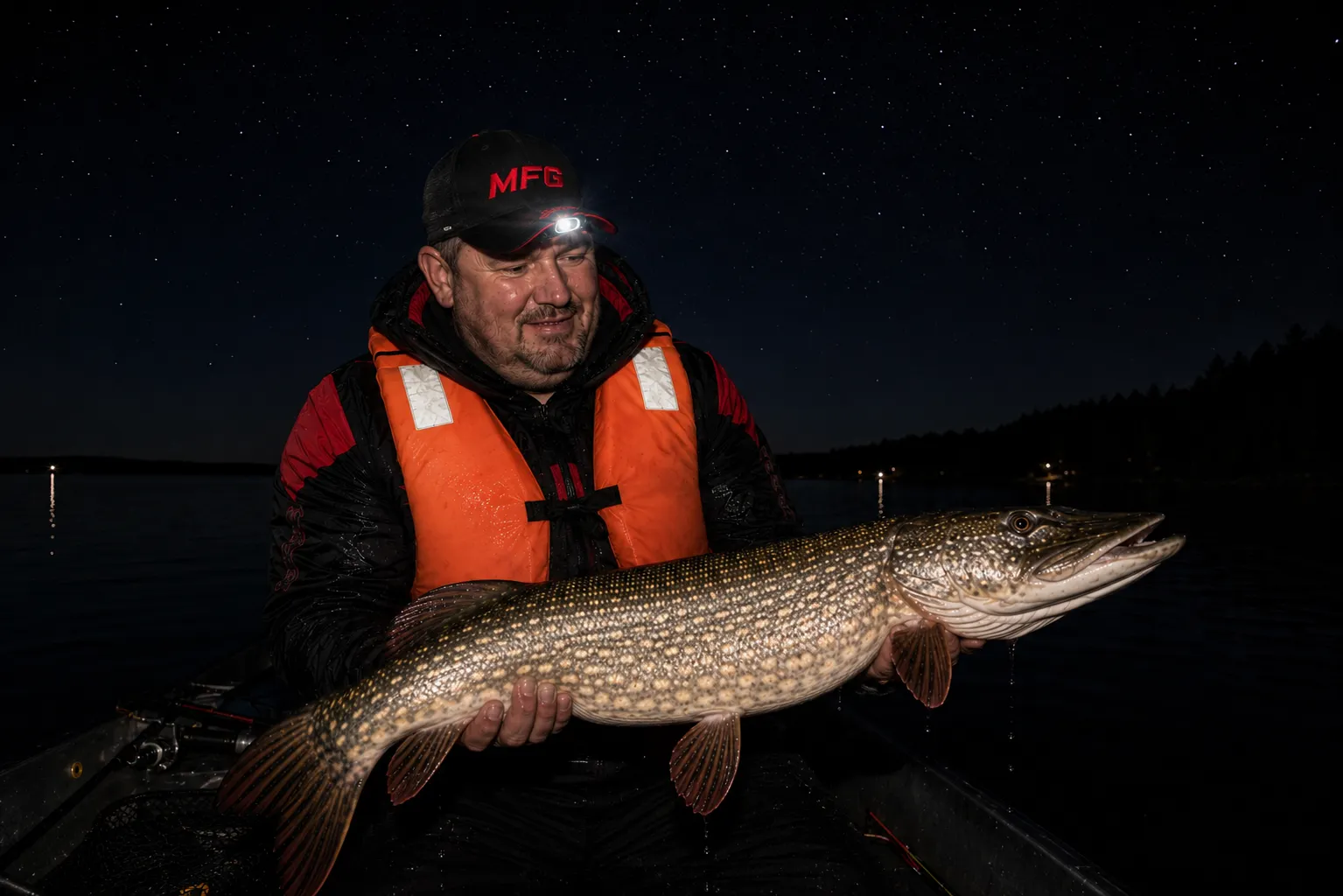
Stealth is not optional in summer night fishing — it is the foundation of the entire session. Pike in shallow water at night are alert and easily spooked. Engine noise, banging tackle boxes, bright headlamps sweeping the water — any of these can shut down a feeding flat instantly.
We use red-light headlamps to preserve night vision and avoid shining light directly on the water. On calm nights especially, the difference between a session that produces five fish and one that produces none often comes down to how quietly you approached the location.
The Sounds That Kill Night Sessions — And How to Stop Making Them
Most blown night sessions are not caused by the wrong lure or the wrong location — they are caused by noise that happens before the first cast. Pike holding in 1 to 2 meters of water on a calm summer night are operating in near-silence. Sound travels through water roughly four times faster than through air, and vibration from above the surface reaches fish immediately.
The most common session killers we have witnessed on the water: dropping a metal net handle onto an aluminum boat floor, rummaging through a tackle box while positioned over a feeding flat, sweeping a white headlamp across the surface to find a lure, kicking a tackle box with a boot, or starting an engine within 50 meters of a productive spot. Any single one of these can clear a shallow flat in seconds.
On one session we watched a fish follow a lure to within two rod lengths of the boat — then vanish the moment a tackle tray rattled against the gunwale. The flat produced nothing for the next 40 minutes.
The discipline that actually works: rig everything before you reach the location, move into position with a paddle or electric motor at minimum speed, keep all gear secured and silent before you stop, and treat your headlamp as a last resort rather than a convenience. Night fishing rewards anglers who prepare in daylight and improvise nothing after dark.
Strike Everything You Feel — Without Exception
Hooksets at night require more force and more commitment than during the day. You cannot see the strike coming, which means you are reacting to feel rather than anticipating visually. By the time you feel the weight of the fish, the pike has already turned with the lure. A strong, decisive hookset the moment you feel resistance — not a gentle lift — is what converts night follows into landed fish.
There is one rule we follow on every night session without exception: strike everything you feel, immediately and without hesitation. At night you will regularly feel resistance that turns out to be weed, a soft bottom touch, or a lure tick against submerged wood. It does not matter. The cost of striking weed is one lost second. The cost of not striking a pike is a missed fish.
After enough night sessions, your hands learn the difference automatically — but until then, the rule is simple: if you feel it, you strike it.
A faster rod action pays off specifically in night fishing — not just for hookset power, but because it transfers the feel of resistance to your hands more clearly, which is your only sensory input when you cannot see the lure. For both spinning and baitcasting setups, our picks for best spinning rods for pike and best baitcasting rods for pike include models that perform specifically well in low-visibility conditions where sensitivity and hookset power matter most.
For the complete picture of how retrieve speed and pause patterns affect pike response in warm summer water, our breakdown of how to retrieve lures for summer pike covers the exact cadences that trigger strikes — and most of those principles become even more important after dark when presentation is everything.
Summer Night Pike Fishing Safety: What You Need to Know Before You Go
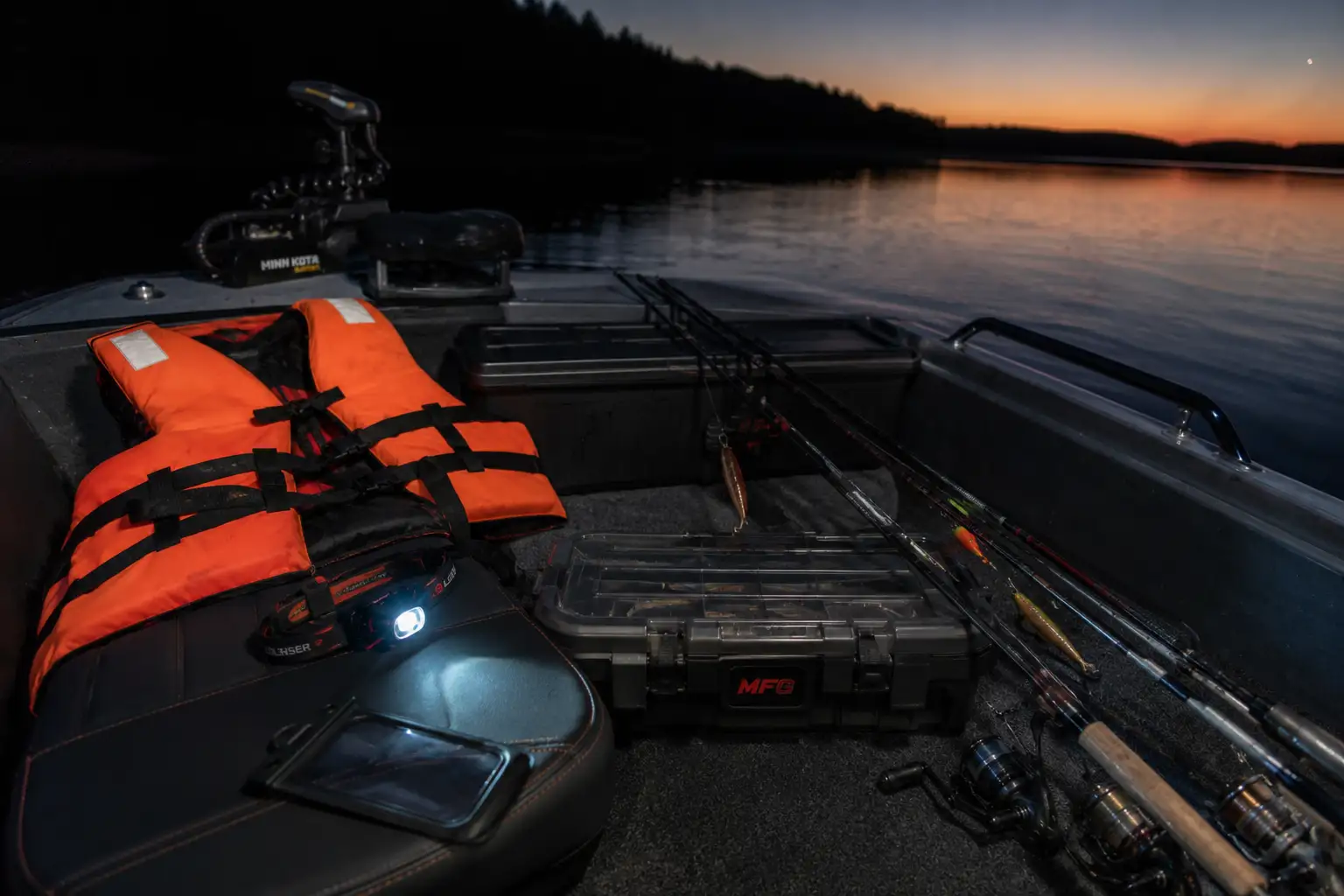
Night fishing adds a layer of risk that daylight sessions simply do not have. We learned this firsthand on a summer night session — three of us on a boat, fish on, one of us stood up too fast to grab the net. The boat rocked, he lost his footing, and went straight into the water. No panic, no drama — we had him back in the boat in under a minute. The reason it stayed a story and not something worse was simple: he was wearing his life jacket. That one habit made the difference between a funny moment and a serious situation.
Since that night, these are non-negotiable on every session we run:
Before You Leave
Tell someone exactly where you are going and when you expect to be back. Carry a fully charged phone in a waterproof case and bring a backup headlamp with fresh batteries. Never rely on your phone screen as your only light source on the water.
Boat Fishing at Night
Wear a life jacket from the moment you launch to the moment you step off — not when you feel like it. Keep navigation lights on at all times, move at minimum speed in unfamiliar water, and always have a paddle or backup motor on board. Engine failure in darkness on open water is not a situation you want to improvise your way out of.
Shore Fishing at Night
Always scout your bank position in daylight before fishing it at night. Steep drops, slippery rocks, and soft mud edges look completely different after dark. Trailside reeds and tall grass can hide the water’s edge entirely — mark your safe casting positions before the sun goes down and do not move beyond them at night.
Best Gear for Summer Night Pike Fishing: What Actually Matters After Dark
Night fishing does not require completely different gear — but it does require gear that performs well under conditions where you cannot see what is happening. Sensitivity, reliability, and line control become more important after dark than any other time of year.
The three things that actually change your night fishing results are reel smoothness under load, line visibility management, and leader reliability.
Reel: Smoothness and Instant Engagement
The reel requirement for night fishing comes down to one thing — instant, smooth engagement the moment you strike. Any slop in the retrieve, any handle play, any drag stutter under initial load becomes a much bigger problem at night when your reaction is already delayed by the fact that you are responding to feel rather than sight.
A reel that hesitates for even a fraction of a second between the hookset and full drag engagement is a reel that costs you fish after dark. We cover the specific models that held up under this kind of pressure in our tested selections for best spinning reels for pike and best baitcasting reels for pike.
Line: Braid, Visibility, and Night Control
Line choice at night is more nuanced than most anglers expect. High-visibility braid — chartreuse or white — is actually an advantage at night, not a disadvantage. Pike cannot see your line above the surface, but you can. Being able to watch your line in the darkness tells you exactly where your lure is, when it has entered structure, and — critically — when a fish has taken the lure before you feel it on the rod.
A line that moves sideways or twitches unnaturally before you feel any weight is a pike that has picked up the lure and is moving with it. Strike immediately. Low-visibility line in darkness removes this visual cue completely and costs you fish. For full line recommendations tested in real conditions, our breakdown of best pike fishing lines covers everything you need for summer night sessions.
Leader: Keep It Simple and Strong
At night, leader changes are the single fastest way to destroy a feeding window. Summer night pike sessions run on tight timing — the dusk window and the pre-dawn window are each measured in minutes, not hours. Stopping to retie a leader in the dark, swatting mosquitoes, fumbling with a headlamp, losing focus on the water — by the time you are fishing again, the window can be gone.
Rig once with a strong, reliable leader before you start and do not change it unless absolutely necessary. We use a minimum 30cm (12 inch) steel or heavy fluorocarbon leader — long enough to handle a deep take but short enough not to affect lure action. Everything that can be prepared in daylight should be — your time on the water at night is too valuable to spend on tackle management.
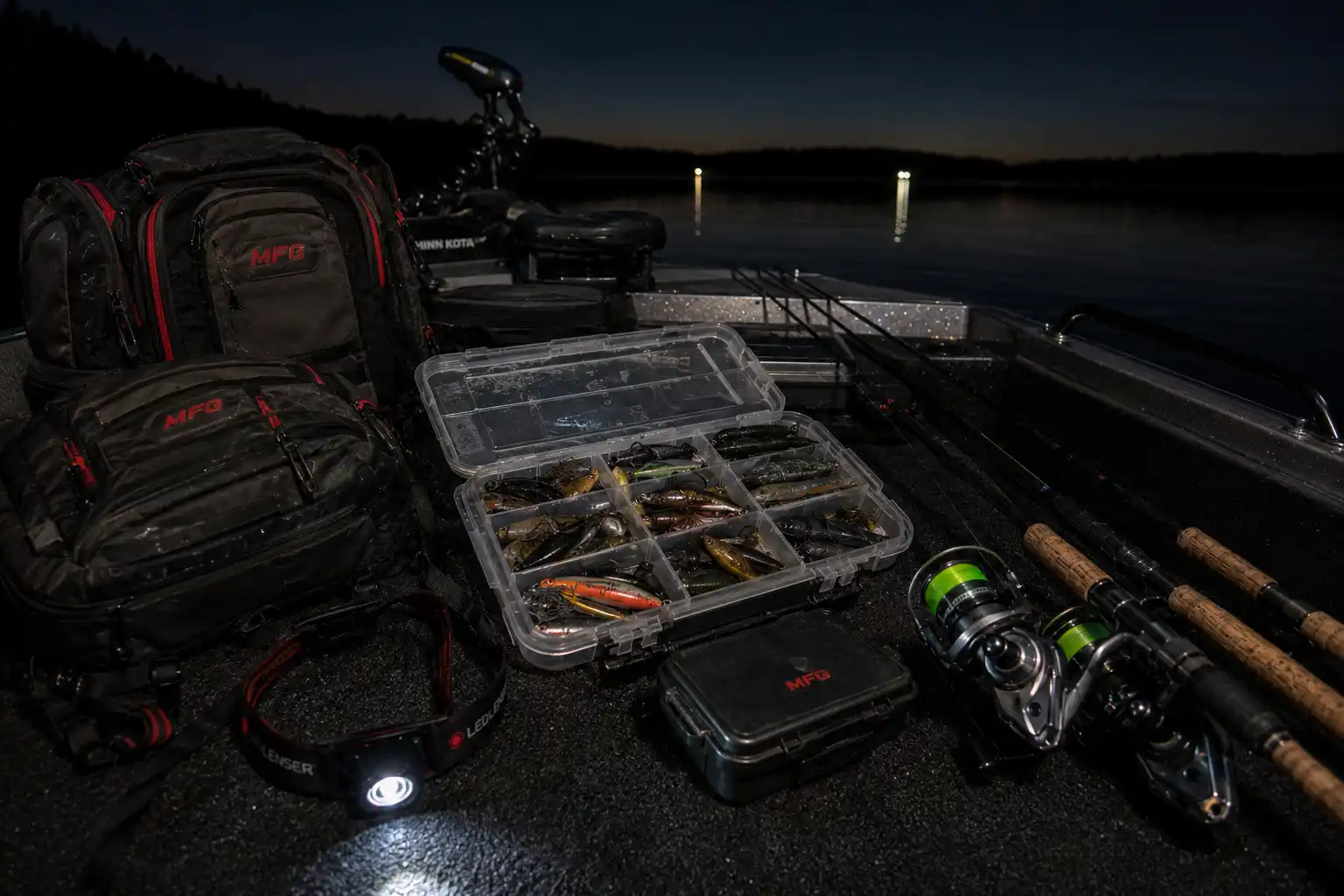
Topwater Lures and Wake Baits — The Dusk Window
Topwater lures and wake baits are the most aggressive night option and the right choice for the first hour after sunset. When pike push into the shallows at dusk, surface disturbance triggers reaction strikes that are unlike anything you experience during the day. The combination of low light, warm surface temperature, and active baitfish near the top creates a short but explosive window.
Dark colored topwaters — black or dark purple — create the strongest silhouette against the night sky when viewed from below, which is the exact angle pike use when targeting surface prey. Work them slowly and steadily — erratic speed changes that work at midday often pull the lure away from a tracking fish before it can commit.
Soft Swimbaits — The Middle of the Night
Once the initial dusk aggression settles, soft swimbaits retrieved slowly just below the surface become the most reliable producer through the middle of the night. Pike shift from reaction striking to deliberate interception — they are still feeding, but on their terms.
A soft swimbait in dark natural colors, worked at a pace just fast enough to keep the tail moving, covers water efficiently while staying in the strike zone long enough for fish to commit. The key difference from daytime swimbait fishing is the pause — longer, more frequent, and held closer to structure where pike are positioned.
Suspending Jerkbaits — The Pre-Dawn Window
Suspending jerkbaits worked on a long pause retrieve are the most reliable option for the pre-dawn window — that final hour before first light when big pike make one last push into the shallows. The pause imitates an injured baitfish holding still in the water column, which is exactly the low-effort, high-probability target that large pike prefer during this window.
Three sharp twitches followed by a pause of five to eight seconds — longer than feels natural — is the cadence that consistently produced the biggest fish in our pre-dawn sessions. Dark jerkbaits in black or dark olive outperform natural colors in the hour before sunrise.
For a full breakdown of the specific lures that produced results across our summer sessions, our tested selection of best summer pike lures covers the exact models and sizes that work when water is warm and light is low.
Why Summer Nights Trigger the Biggest Pike Feeding Windows
Understanding why summer night pike fishing works so consistently starts with understanding what changes for the fish when light disappears — not just what changes for the angler. The same pike that sat motionless against a deep weed edge at 2 PM, refusing every lure, does not suddenly become a different fish at 10 PM.
The fish is identical. What changes is the cost-benefit equation that controls every feeding decision it makes.
During peak summer heat, pike operate in what we call an energy conservation mode. Water temperatures between 20–24°C (68–75°F) reduce oxygen stability, increase the metabolic cost of movement, and make active chasing genuinely dangerous for a large predator. Every chase burns calories that become increasingly difficult to replace when the body is working harder just to process oxygen. The result is a fish that feeds only when conditions make success almost certain — ambush opportunities, slow-moving prey, minimal energy expenditure.
After dark, three things change simultaneously — and all three shift the equation back in the pike’s favor.
Surface Temperature Drops
Within the first two hours after sunset, surface temperature typically falls by 3–5°C (5–9°F). That drop alone reduces the metabolic pressure on pike and makes active movement far less costly than it was at peak afternoon heat. The fish does not decide to feed at night out of preference — it feeds because the temperature finally makes feeding energetically efficient again.
Oxygen Levels Stabilize
As photosynthesis stops after dark and surface cooling begins, oxygen levels near the surface stabilize significantly. During peak daytime heat, oxygen instability near the surface is one of the primary reasons pike retreat to deeper, more stable water. Once that instability resolves after sunset, the barrier that kept pike away from shallow feeding zones disappears — and fish move accordingly.
Baitfish Move Shallow
Baitfish that held deeper or tight to structure during the heat move shallow after dark to feed on insects and zooplankton that concentrate near the surface at night. Pike do not move shallow because darkness makes them feel safe — they move shallow because that is where the food goes. The entire night feeding pattern is driven by baitfish movement, and understanding that movement is what separates productive night sessions from random ones.
This is also why the pre-dawn window produces such large fish specifically. Big pike — the ones that have survived long enough to become genuinely large — are more conservative with energy than smaller fish. They wait longer into the night before committing to shallow feeding. By the time first light approaches, those fish have been active for hours in the darkness, and the compressing baitfish of the pre-dawn period represent exactly the kind of concentrated, low-effort feeding opportunity that triggers the most aggressive strikes of the entire night.
Pike are built for exactly this kind of hunting. Behind the retina, pike carry a reflective layer called the tapetum lucidum — the same structure that causes predator eyes to glow in the dark — which amplifies available light and gives them exceptional vision in near-zero light conditions. But tapetum lucidum alone does not explain how pike hunt in complete darkness.
The full sequence works like this: the lateral line detects pressure waves and vibration from moving prey, orienting the fish toward the target. The pike closes the distance using that vibration signal. Then, in the final moments of the strike, the tapetum lucidum takes over — amplifying whatever ambient light exists to lock onto the silhouette of the prey against the surface above. This is why dark lures that create a strong silhouette against the night sky are so consistently effective — you are exploiting the exact two-stage sensory system pike use to hunt after dark.
Summer night pike fishing is not a trick or a workaround. It is fishing in sync with how pike actually want to feed when summer heat makes daytime conditions unfavorable. For a deeper look at exactly what happens to pike behavior during the day before your night session, our full breakdown of why pike are not biting in summer explains the complete picture of summer pike behavior from first light through peak heat — and why the night shift is not an accident.
Summer Night Pike Fishing — FAQ
Can pike see in the dark?
Yes, pike can see remarkably well in low-light conditions. They possess a specialized reflective layer behind their retina called the tapetum lucidum, which amplifies ambient light from stars, the moon, and skyglow. This allows them to clearly spot dark silhouettes swimming above them against the surface.
Do pike bite at midnight during the summer?
Yes, but midnight feeding is highly dependent on cloud cover and moon phases. On pitch-black or heavily overcast nights, the peak action usually occurs during the first two hours after sunset and right before dawn. However, during a clear full moon, pike will actively hunt right through the middle of the night (midnight to 2 AM).
What color lure is best for pike fishing at night?
Dark colors like black, dark purple, and dark navy blue are the most effective colors for night pike fishing. Unlike daytime fishing where realistic flash matters, night fishing relies on contrast. Dark colors create a sharp, undeniable silhouette against the night sky when viewed from below, making it much easier for a pike to lock onto the target.
Do I need to fish deep at night for summer pike?
No, you should actually fish shallow. Even though pike spend hot summer days deep or suspended over deep water to conserve energy, they move onto shallow flats (1 to 3 meters / 3 to 10 feet deep) after dark. They do this because cooler surface temperatures and shifting baitfish draw them into the shallows to feed.
Summer Night Pike Fishing: The Biology Does the Work — You Just Need to Show Up
Every element of summer night pike fishing connects back to one central idea — the fish are not gone during the day, and they are not randomly active at night. The feeding windows, the locations, the lure choices, and the retrieve adjustments all follow the same biological logic: pike feed when conditions make feeding efficient, and in summer, those conditions consistently arrive after dark.
The biology backs this up completely. Pike are built for low-light hunting — their tapetum lucidum amplifies available light to levels that give them a clear vision advantage over prey in near-darkness, while their lateral line detects movement and pressure waves that no amount of darkness can block. PubMed research on Esox lucius confirms that pike catch 50 to 75 percent of their total prey at light levels below 1 Lux — they are not accidental night feeders, they are designed for it.
Show up at the right time, fish the right locations, slow everything down, and let the biology work in your favor. That is summer night pike fishing done right.