

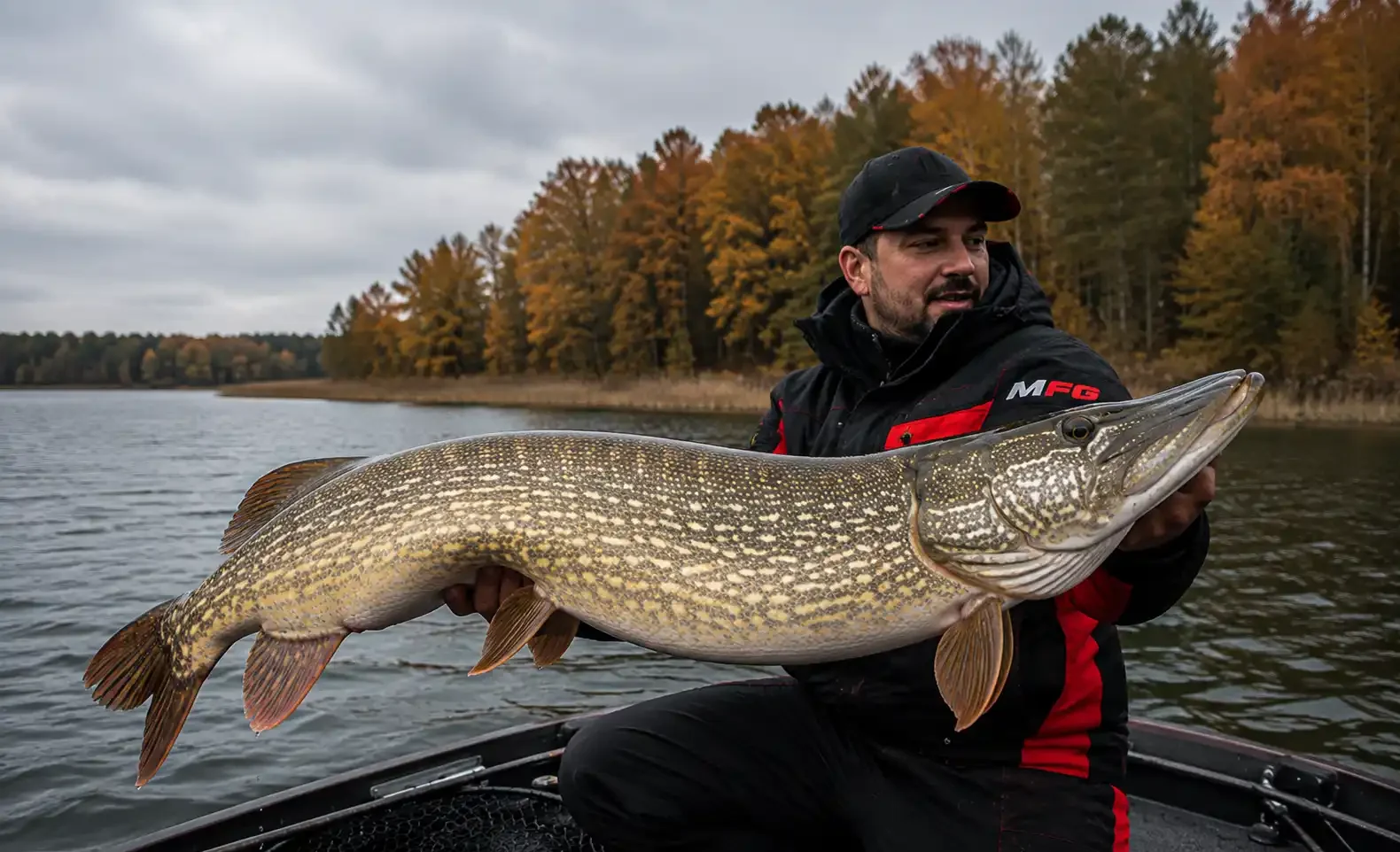
Fall Pike Fishing: Complete Guide to Finding and Catching Pike in Autumn
Over the past year, we’ve worked hard at MFG to help anglers catch more pike throughout every stage of the season.
From cold-water spring patterns and post-spawn transitions to the challenges of summer pike fishing, each guide we’ve published has focused on one goal: helping you spend less time searching and more time catching fish. Now we arrive at fall pike fishing, the season many serious pike anglers wait for all year.
Fall is when pike become predictable again.
Water temperatures start falling, baitfish movements become more predictable, heavy weed growth begins breaking down, and pike know winter is approaching. Fish that seemed difficult to locate during parts of summer often become far more aggressive and willing to feed. For many lakes, this is the period when anglers have their best chance of connecting with genuine trophy fish.
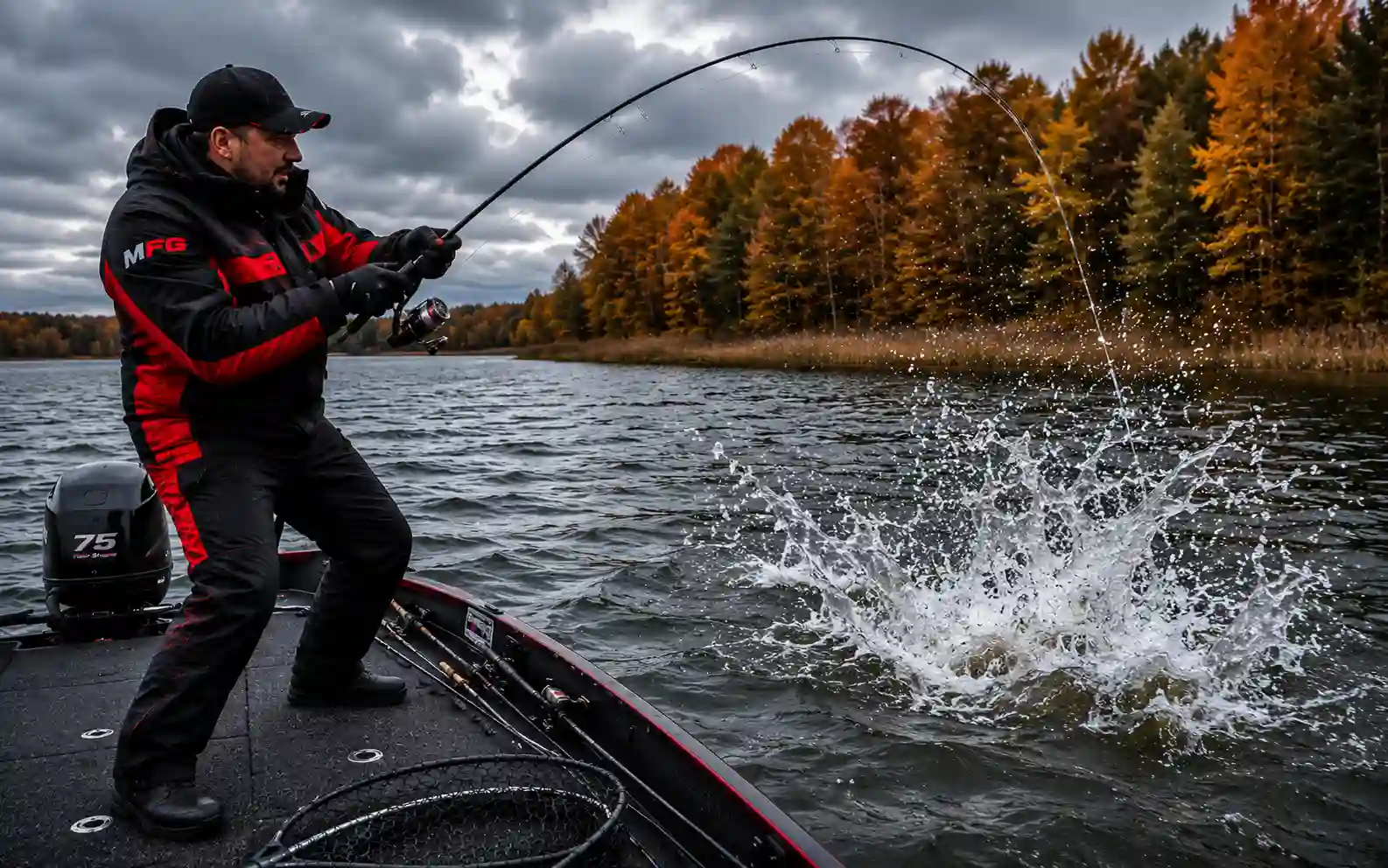
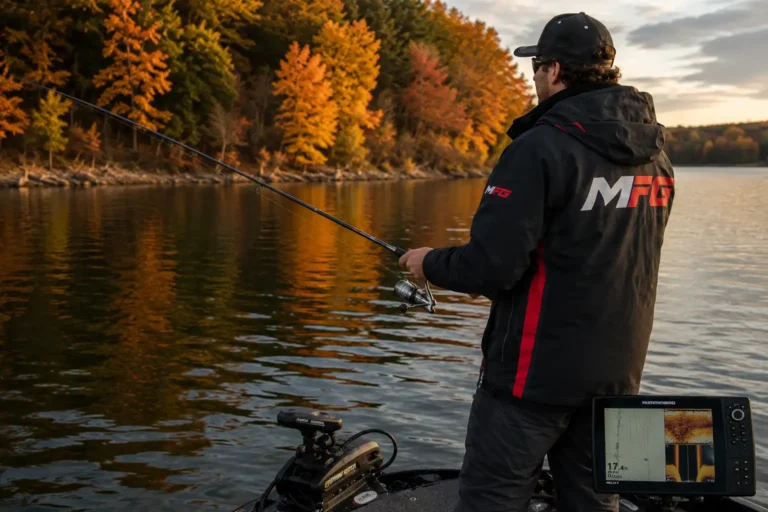
At Master Fishing Guide, some of our most productive days on the water have happened during autumn. We’ve experienced mid-October mornings when water temperatures dropped from 60°F to 55°F (16°C to 13°C) over a few weeks and previously quiet shallow bays suddenly filled with feeding fish. We’ve watched large pike push schools of perch against wind-blown shorelines, suspend along deep weed edges in 12 to 18 feet of water, and crush large swimbaits that had produced little interest just a month earlier.
But successful fall pike fishing is about much more than simply making casts and expecting bigger fish.
Autumn changes constantly. Early fall can look surprisingly similar to summer. Mid fall often creates some of the most consistent action of the year. Late fall becomes a completely different game focused on deeper water, slower presentations, and feeding windows that often produce true trophy-class pike.
Understanding these seasonal transitions is what separates occasional success from the kind of days every pike angler remembers for years.
In this complete guide, we’ll show you exactly how we approach fall pike fishing at MFG. You’ll learn where to find pike in fall, how their behavior changes as water cools, the conditions we look for before every trip, and the tactics that consistently produce fish when many anglers believe the season is already winding down.
For anglers chasing the pike of a lifetime, this is the season that deserves your full attention.
Understanding Fall Pike Behavior
Pike don’t feed more in fall by accident.
The biggest trigger is falling water temperature. Throughout much of summer, pike often limit their activity to short feeding windows, especially when surface temperatures climb above 70°F (21°C). As autumn arrives and temperatures begin dropping back into the 60s and eventually the 50s, pike start feeding through longer windows and become active across larger portions of the day.
A large part of understanding fall pike behavior is understanding what happens to the food sources pike depend on. Schools of perch, shiners, and roach move away from many of their summer locations. Some gather around remaining healthy weed beds, while others transition toward deeper basins, points, channels, and steep breaks. Pike adjust their position accordingly.
Large pike become noticeably more mobile during fall. Fish that spent much of summer holding in small feeding zones often begin covering significantly more water as they track forage. This is one reason anglers frequently encounter both higher numbers of fish and larger average sizes during autumn.
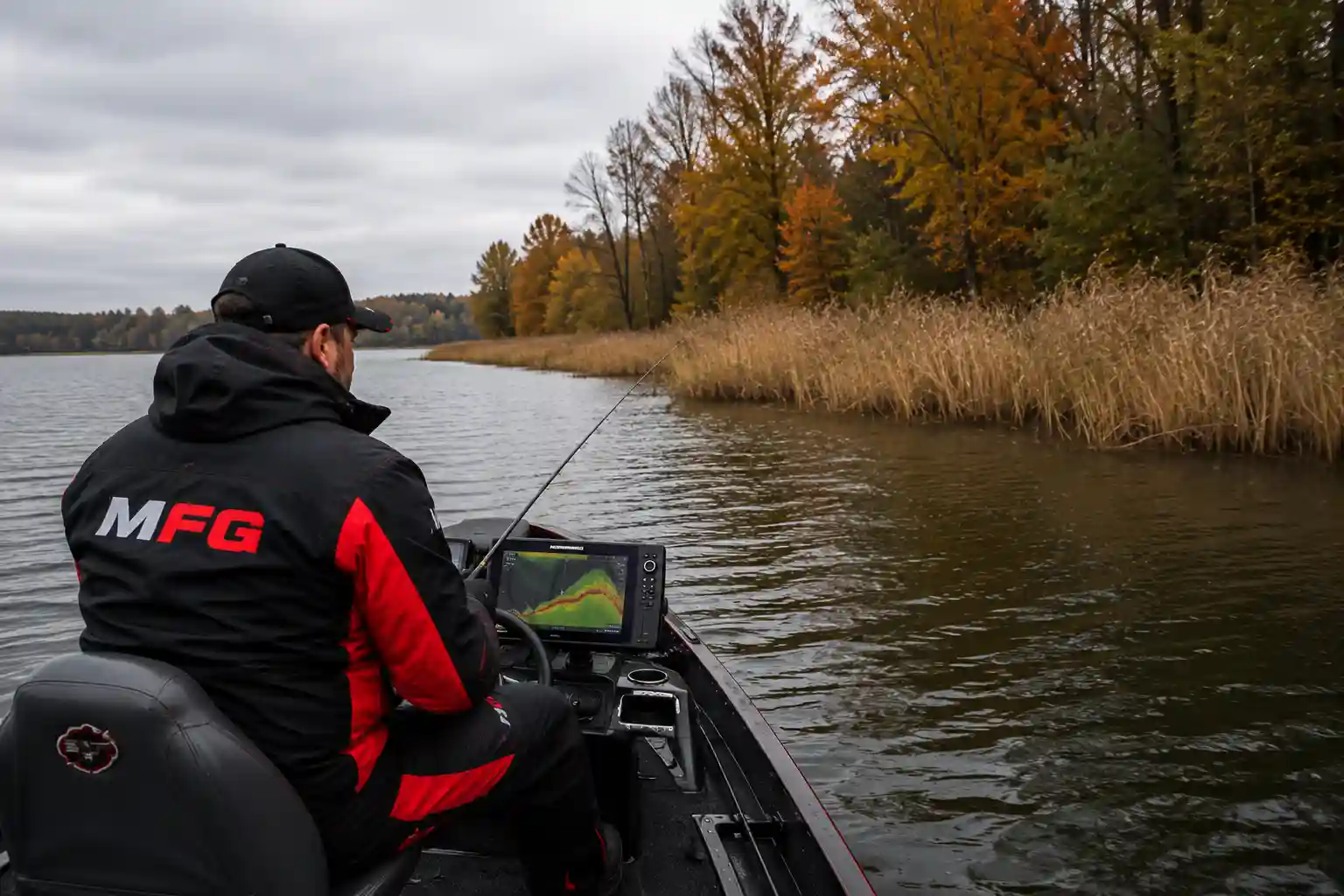
We’ve seen this happen during consecutive fall seasons on natural lakes where perch made a noticeable shift from shallow summer cover toward nearby weed edges and breaklines. Areas that held very few fish during late summer suddenly became productive once those baitfish moved. The pike followed shortly after.
However, fall should not be treated as a single period. A pike’s location and feeding behavior in early September can look completely different from its behavior in late October or November. Water temperature, forage location, vegetation decline, and weather stability all influence where fish position themselves on any given day.
Pike are not feeding more because winter is approaching — they are feeding more because prey is easier to locate and conditions finally work in their favor. That distinction matters when it comes to reading the water and deciding where to look next.
Fall Pike Fishing Locations: Where to Find Pike in Autumn
Finding pike in fall becomes much easier once you stop focusing on the fish and start focusing on their food.
Throughout autumn, pike rarely position themselves far from reliable forage. As schools of perch, shiners, and roach move between seasonal locations, pike are rarely far behind. The exact location may change from week to week, but the relationship between predator and prey remains consistent.
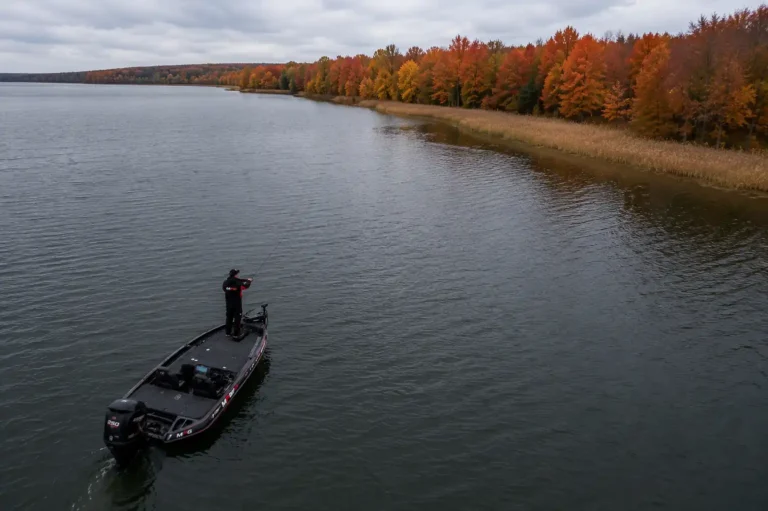
On several October trips, large areas of dying weeds looked promising but produced almost no activity. Nearby patches of still-green cabbage weeds consistently held baitfish and feeding pike. In some cases, the productive water was less than a hundred yards away.
Pike positioning changes significantly as autumn progresses. What works in early September often stops working by late October. Understanding those shifts is usually the difference between finding fish and searching all day. For a more detailed breakdown of seasonal movements, structure selection, and location patterns throughout the season, see our Where to Find Pike in Fall guide.
Early Fall Locations: Green Weeds, Shallow Bays, and First Breaks
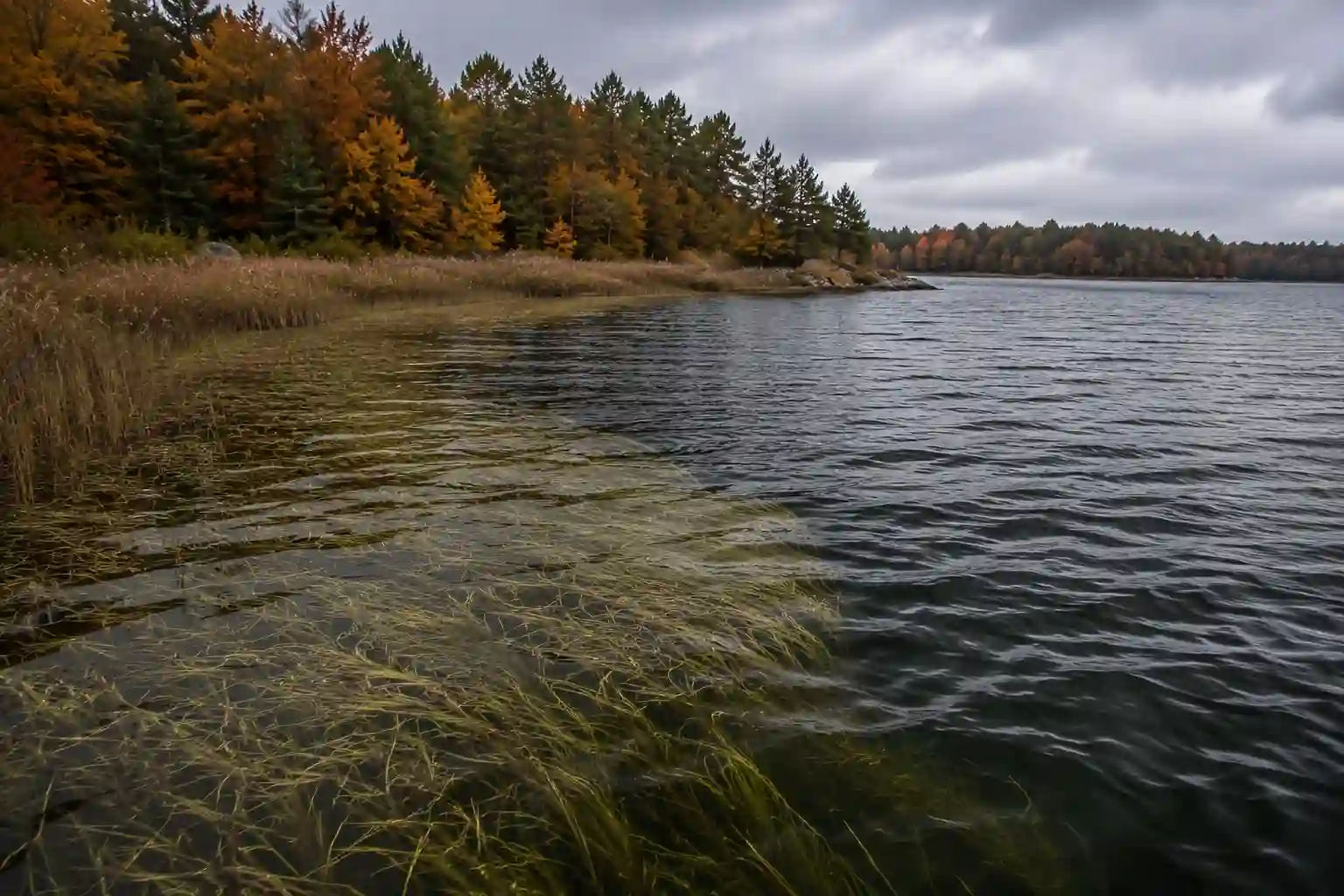
During early fall, when water temperatures are still above 60°F (16°C), pike behavior often looks similar to late summer. Healthy green weed beds remain the most reliable starting point. These areas continue holding baitfish, provide ambush cover, and stay productive long after many anglers abandon them for deeper water.
Shallow bays that warm quickly during the day can also hold fish during early fall, particularly in the morning and late afternoon. Inside weed edges, irregular weed pockets, and the first significant depth change adjacent to flats are all worth checking before moving to deeper structure.
On several early fall outings, we’ve found the most active fish holding right on the inside edge of cabbage weed beds in 6 to 10 feet of water, often in areas that would have been unproductive during the heat of summer.
Mid Fall Locations: Weed Edges, Points, and Transition Zones
As water temperatures drop into the mid-50s°F (12–14°C), baitfish begin moving away from many of their early fall locations. This is when transition zones become the most productive water on most lakes. Weed edges, points, channels, saddles, and first drop-offs frequently concentrate both forage and predators.
Mid fall is often the most consistent period of the entire season. Pike are actively feeding, forage is easier to locate, and fish frequently move between shallow and deeper water throughout the day depending on conditions.
Late Fall Locations: Deep Structure, Basin Edges, and Breaklines
When temperatures approach the low 40s°F (4–7°C), pike location shifts significantly. Many fish move away from remaining weed growth and begin spending more time near deeper structure. Basin edges, steep breaklines, channel swings, deep weed lines, and underwater points adjacent to large concentrations of forage become the most reliable areas.
Late fall fishing often requires more patience and more precise presentations. Feeding windows can be shorter, but the fish that do feed are frequently among the largest of the season. Stable weather typically produces better results than fishing through rapidly changing conditions.
During one late-October session with water temperatures around 44°F (7°C), we found a large concentration of perch holding along a steep breakline in 18 to 22 feet of water. The pike were stacked just off that same edge. Moving shallower produced nothing — the fish had completely committed to deep structure for the remainder of the season.
Best Time of Day for Fall Pike Fishing
Unlike summer, when pike feed during short low-light windows, fall gives pike — and anglers — much more of the day to work with. Cooling water allows fish to remain active for longer periods, which means productive fishing can occur at almost any hour under the right conditions.
That said, not all fall days fish the same.
During early fall, when water temperatures often remain above 60°F (16°C), the most consistent action frequently occurs during the first few hours after sunrise and again during the evening. Fish may still behave similarly to their summer patterns, especially during stable weather.
As temperatures fall into the 50s°F (10–15°C), feeding activity often becomes more spread throughout the day. Some of the most productive sessions occur between late morning and mid-afternoon, particularly after cool nights when sunlight has had time to warm shallow areas slightly.
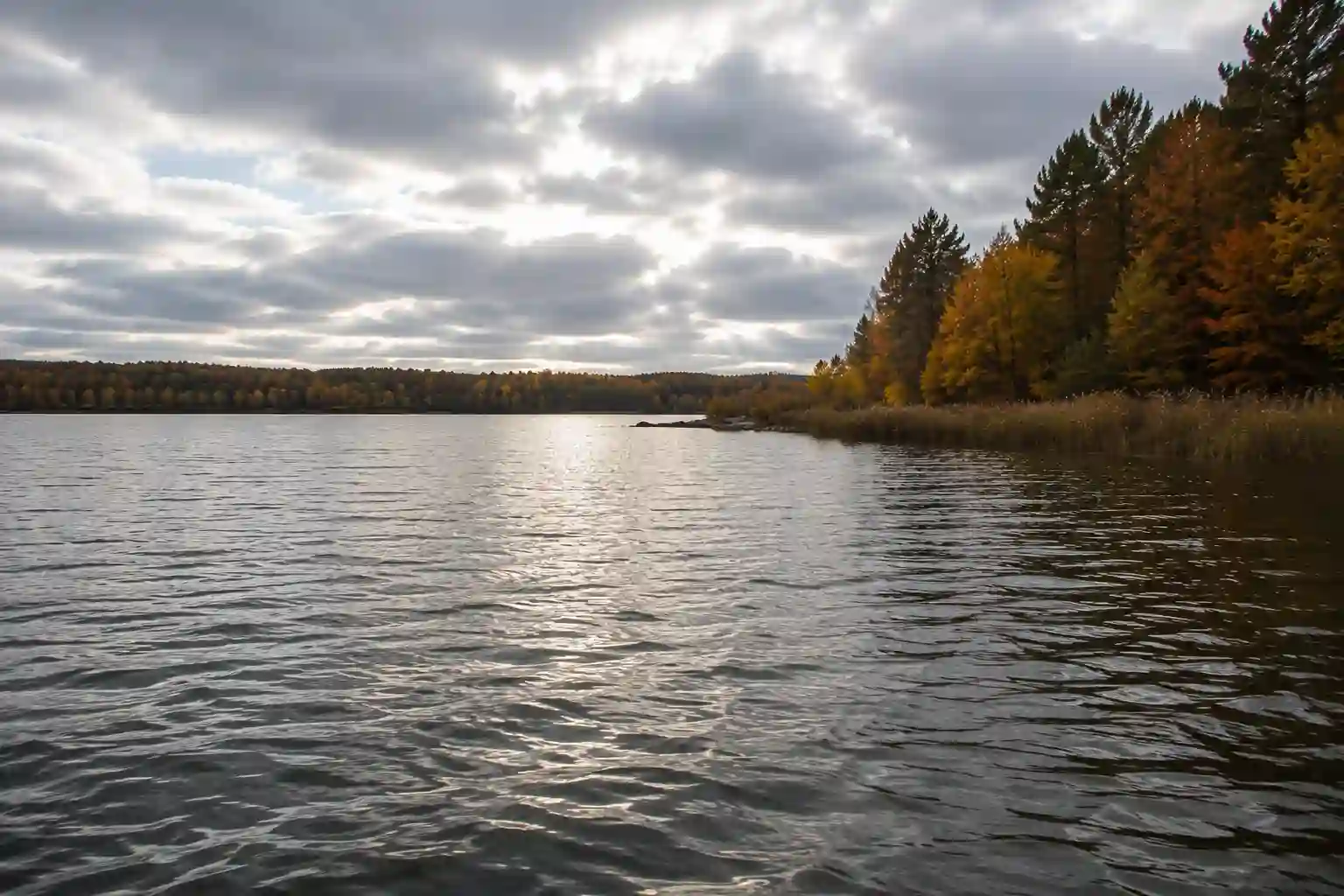
We’ve had October sessions on natural lakes where the first pike didn’t strike until nearly 11:30 a.m., with three fish over 36 inches caught between midday and 2 p.m. after a cold, slow morning. On those days, being patient mattered far more than getting on the water before sunrise.
Weather conditions often matter more than the clock. Overcast skies and stable conditions can keep pike active for extended periods. A cold front can shut fish down fast — pike become less aggressive and hold tighter to cover. Once conditions stabilize over a day or two, feeding usually picks back up. Most experienced pike anglers would rather fish three days of stable cool weather than chase a single day between fronts.
Rather than focusing on a specific hour, pay attention to water temperature, weather stability, wind direction, and baitfish activity. Those factors tell you far more about when pike are likely to feed than the time on your watch.
Best Lures for Fall Pike Fishing
Fall pike don’t respond to one lure all season. The most productive choice shifts with water temperature, forage location, depth, and pike activity level — sometimes from one week to the next.
Some days pike chase fast-moving presentations across shallow flats. Other days they want a slower bait worked along deep structure. Reading those conditions matters more than having a favorite lure.
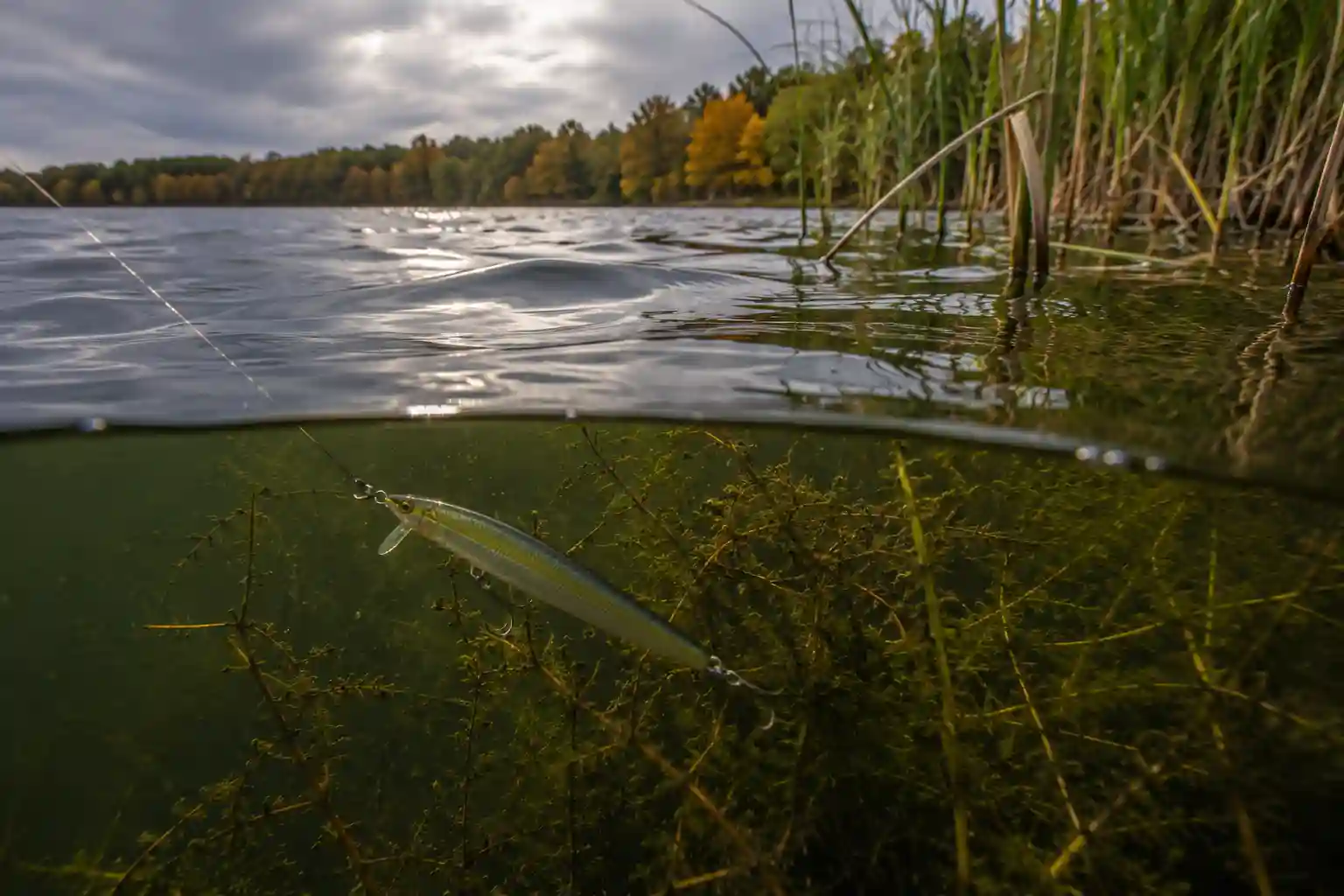
Jerkbaits are often among the most productive options during early and mid fall. Lures such as the Rapala X-Rap XR12 cover water efficiently while keeping the bait in the strike zone. Long pauses become increasingly important as temperatures fall. On several fall outings, the best fish struck after a pause of three to five seconds along weed edges in 8 to 12 feet of water, often when the lure appeared completely motionless.
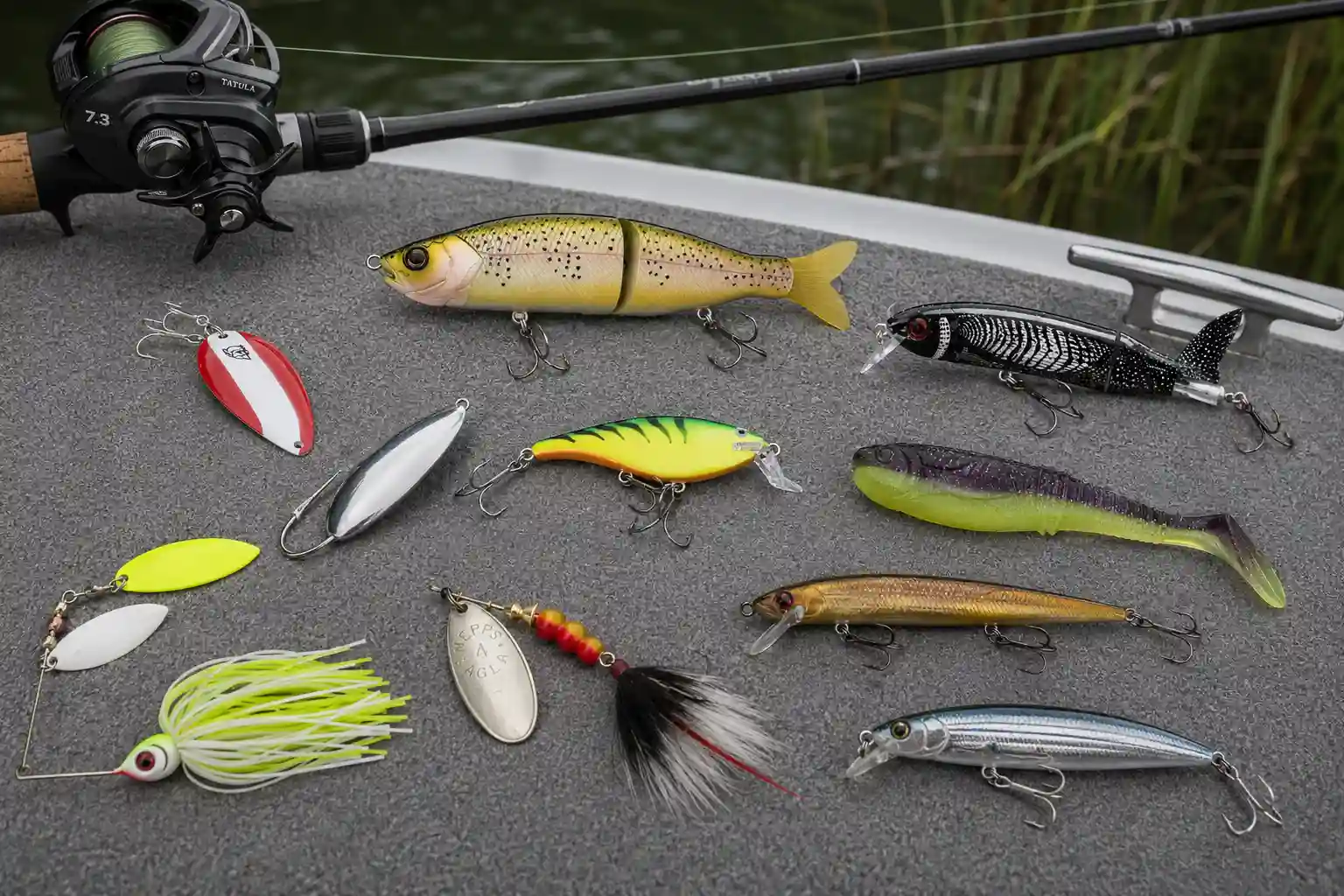
Swimbaits become especially effective once larger pike start focusing on bigger meals. Glide-style swimbaits such as the River2Sea S-Waver 120 work particularly well when fished slowly along deep weed edges and transition zones. One late-October trip made this clear — water temperatures had dropped to around 52°F (11°C) and smaller lures were producing only occasional follows. After switching to a larger swimbait and slowing the retrieve along a deep weed edge, the first pass produced a heavy strike from a fish that had ignored smaller presentations all morning. Over the next two hours, every pike landed came on the larger profile.
Crankbaits excel when pike are actively hunting along weed edges, points, and breaklines. Larger profiles such as the Rapala Super Shad Rap frequently trigger reaction strikes from fish that ignore smaller presentations. During early fall, we’ve often used crankbaits to locate active fish before slowing down and working the area more thoroughly with other lures.
Spoons remain one of the most overlooked fall pike lures. Flash, vibration, and a slow sink rate make them effective across weed pockets, transition areas, and deeper edges. During windy October conditions, we’ve had success letting spoons flutter down the deep side of weed lines before beginning a slow retrieve — triggering strikes from fish that ignored faster presentations entirely.
Spinnerbaits continue producing fish well into fall, especially around remaining healthy vegetation. A slow retrieve through cover that would foul most other lure styles makes them particularly effective around scattered cabbage weeds and irregular weed edges.
Soft plastics and paddle-tail swimbaits become more valuable as temperatures drop into the low 40s. At slow speeds they still produce action — which matches how baitfish behave during the later stages of the season.
For a complete breakdown of the lures we rely on most often, see our Best Pike Lures article.
Fall Pike Fishing Techniques
Finding pike is only part of the equation. Throughout fall, presentation often determines whether a fish follows, strikes, or disappears back into cover.
Covering Water With Search Baits
When arriving at a new area, covering water efficiently is often the fastest way to locate active fish. Jerkbaits, crankbaits, spinnerbaits, and swimbaits let you quickly check weed edges, points, and transition areas without spending excessive time in unproductive water.
The goal is not necessarily to catch every fish immediately, but to identify which sections of structure are holding life. Once you find it, you slow down.
Slowing Down Around Key Structure
Once fish are located, slowing down often becomes more important than continuing to cover water. Weed points, inside turns, isolated weed clumps, and breakline intersections frequently hold multiple pike throughout autumn.
Many productive fall spots appear ordinary at first glance. A few extra casts around a subtle structural feature can produce fish that were missed during the initial pass.
Working Weed Edges Methodically
Rather than making repeated casts to the same section of a weed edge, it pays to work down the edge systematically and change casting angles as you go.
Pike rarely position themselves evenly along an entire weed line. Pockets, points, turns, and isolated clumps frequently concentrate fish in surprisingly small areas. We’ve had days when multiple pike came from a single inside turn while long stretches of nearby weed edge produced nothing — the fish were there, just not spread out.
Using Pause Length to Trigger Strikes
As water temperatures fall, pause length becomes increasingly important. Jerkbaits, glide baits, and soft plastics often produce strikes during the pause rather than during the retrieve itself.
Extending pauses from one or two seconds to four or five seconds can completely change the number of strikes generated, especially when fish are holding near deeper edges. During a late-fall session with water temperatures around 48°F (9°C), shorter pauses produced only follows. Extending to roughly five seconds changed the response immediately — several pike struck as soon as the lure started moving again.
Reading Wind Before You Launch
A sustained wind pushing into a shoreline, point, or weed edge concentrates baitfish — and pike follow. Spots that look unremarkable on a map can become the most productive water on the lake when wind has been pushing into them for several hours.
One afternoon, a protected shoreline that looked ideal on the map produced almost nothing. A nearby point receiving direct wind held baitfish, several follows, and the majority of fish caught that day. The structure was similar — the wind exposure was not.
Fall Pike Fishing Gear
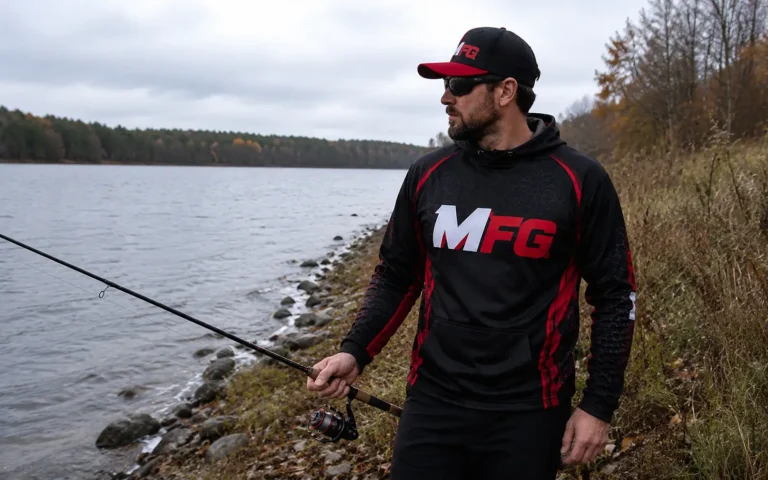
Fall pike fishing doesn’t require a completely different setup, but a few gear adjustments become more important as water cools and fish move deeper. Heavier lures, longer casts, and more time spent working deep structure all put extra demands on your equipment.
Rod and Reel Setup for Fall Conditions
For most fall situations, a medium-heavy rod in the 7 to 7’6″ range covers everything from jerkbaits to large swimbaits. That length gives you enough reach for long casts to deep weed edges while still maintaining control when a fish surges close to the boat. We’ve fished both spinning and baitcasting setups throughout fall and found that the choice matters less than having enough backbone to drive hooks on long pauses and enough sensitivity to feel subtle structure changes through braided line.
A simple way to decide:
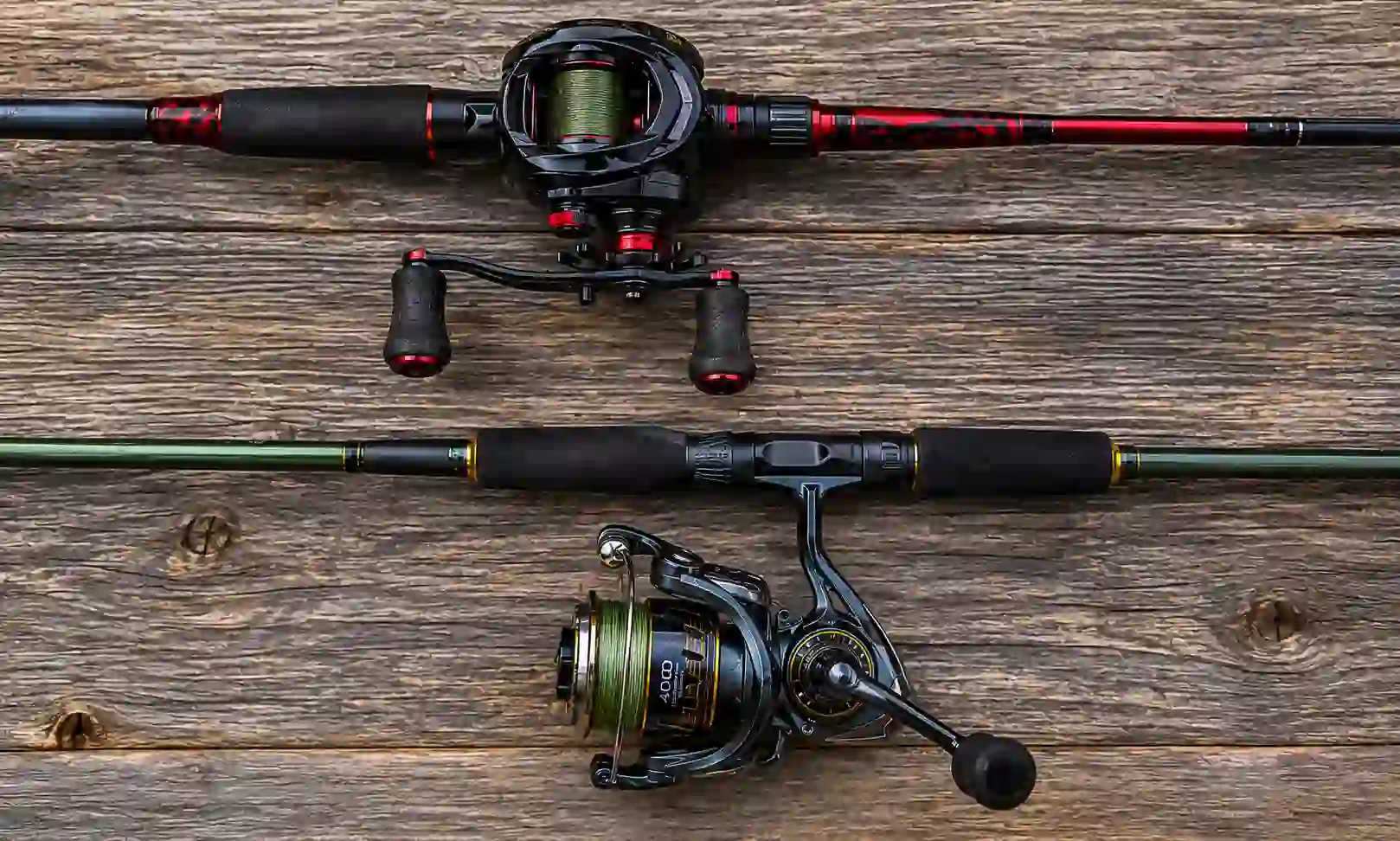
- Spinning setup — better for lighter lures (jerkbaits, spinnerbaits, smaller swimbaits), shore fishing, and anglers who prefer a more forgiving cast in cold conditions
- Baitcasting setup — better for heavier lures (large swimbaits, big crankbaits, heavy spoons), casting into wind, and situations where accuracy to specific structure matters
- 7′ rod — better for boat fishing in tighter areas where a shorter blank gives more control close to the boat
- 7’6″ rod — better for longer casts to distant weed edges, breaklines, and open water structure
For detailed breakdowns, see our guides on spinning rods for pike and spinning reels for pike.
Line and Leader (More Important in Fall Than You Think)
When you’re casting to a breakline in 18 feet of water and feeling for bottom contact through 40 yards of line, the difference between mono and braid becomes obvious fast. Braided mainline in the 30–50 lb range gives you the direct connection you need at depth — both for detecting subtle takes and for pulling lures free from deep weed edges without losing fish. A wire or heavy fluorocarbon leader is non-negotiable — large fall pike hit hard and their teeth will cut through unprotected line before you know what happened.
Quick line selection guide:
- 30 lb braid — clear water, lighter lures, situations where lower diameter helps casting distance
- 50 lb braid — heavy weed structure, large swimbaits, situations where abrasion resistance matters more than diameter
- Wire leader — most reliable option for large fall pike, especially around heavy structure and weeds
- Heavy fluorocarbon leader — better in clear water where wire visibility may cause follows without strikes
For detailed recommendations, see our best pike fishing lines and best pike leaders guides.
When to Use Baitcasting Setups
Baitcasting setups become more useful in fall specifically because of lure weight. Once you’re throwing larger swimbaits, heavy crankbaits, or big spoons into wind or toward deep structure, a baitcaster gives you more casting control and accuracy than most spinning setups at that weight range. For our tested picks, see our best baitcasting reels for pike guide.
Common Fall Pike Fishing Mistakes
Fall is one of the most productive seasons for pike, but summer habits die hard. These are the mistakes that most often cost anglers fish during autumn.
Abandoning Healthy Weeds Too Early
While some vegetation begins dying off during fall, the last remaining patches of healthy green weeds often continue holding both baitfish and pike well into October. Many anglers move offshore the moment temperatures begin falling and overlook some of the most productive water on the lake.
Until weeds lose their color and forage disappears from them, they remain worth fishing.
Fishing the Same Areas All Season
A location that produced fish in early fall may be nearly empty three weeks later. Pike don’t stay where you found them — they follow the food, and the food keeps moving.
Where you caught fish last trip is a starting point, not a guarantee. Check it, but be ready to move.
Retrieving Too Fast as Water Cools
A retrieve speed that worked in September often stops working by late October. As water temperatures drop, presentations benefit from longer pauses, slower retrieves, and more deliberate lure control.
Slowing down doesn’t mean fishing slowly all day. It means giving fish more time to inspect and commit — which they increasingly need as water cools.
Following the Calendar Instead of Conditions
Fall doesn’t arrive on the same date every year, and lakes transition at different speeds. Deciding where and how to fish based on the month — rather than actual water temperature, weed condition, and forage location — is one of the most consistent ways to fall behind the fish.
Water temperature, forage location, weed condition, and weather patterns tell you far more than the date. Use them.
Frequently Asked Questions About Fall Pike Fishing
What is the best month for fall pike fishing?
There is no single best month for every lake, but October is often the most consistent period. Water temperatures are usually cooling, baitfish movements become easier to read, and pike often feed more aggressively than they did during late summer.
Where do pike go in late fall?
In late fall, pike often move toward deep weed edges, basin transitions, steep breaklines, channel swings, and underwater points near large baitfish concentrations. Exact locations vary by lake, but deeper structure close to food becomes increasingly important.
What depth are pike holding in during fall?
Pike depth changes as fall progresses. Early fall fish are often found around healthy weed beds in 6 to 10 feet of water. By mid fall, many shift toward weed edges, points, and transition zones in 8 to 15 feet. During late fall, larger fish frequently hold along deep breaklines, basin edges, and baitfish-related structure in 15 to 25 feet or more.
Do pike stay in weeds during fall?
Yes, especially during early fall. Healthy green weeds continue attracting baitfish after summer ends, making them one of the most reliable places to find pike. As vegetation dies back and water temperatures keep dropping, many fish gradually shift toward weed edges, transition areas, and deeper structure.
Do pike feed all day during fall?
Fall pike often remain active for longer periods than they do during summer. Morning and evening can still be productive, but late morning and afternoon often produce well, especially after cold nights when shallow areas warm slightly.
Are windy days good for fall pike fishing?
Yes. Wind can improve fall pike fishing by pushing baitfish against shorelines, points, weed edges, and other structure. If forage is present, wind-blown areas often produce better action than similar-looking protected water.
Why Fall Produces Some of the Biggest Pike of the Year
Fall is the season that separates anglers who follow a routine from those who follow the fish. Water temperatures drop, baitfish relocate, weed edges thin out — and pike shift with all of it. The anglers who stay on fish through October and November are usually the ones making decisions based on what the lake is showing them that day, not what worked three weeks earlier.
For many waters across North America, the largest pike of the entire year are caught during this window. That alone makes fall worth your full attention.
For scientific background on northern pike distribution and habitat across North America, the USGS Nonindigenous Aquatic Species Database — Northern Pike is a reliable government resource.