

How to Deadstick for Pike Through the Ice: Setup, Bite Detection and Hookset
Learning how to deadstick for pike through the ice is less about leaving a bait motionless and more about controlling what happens when a fish finally takes it. We have watched an active jig draw a pike toward the hole, only for the fish to ignore it and take the quieter bait hanging from a nearby deadstick. That is where this method earns its place: it gives a following or cautious pike an easier target without forcing you to stop jigging.
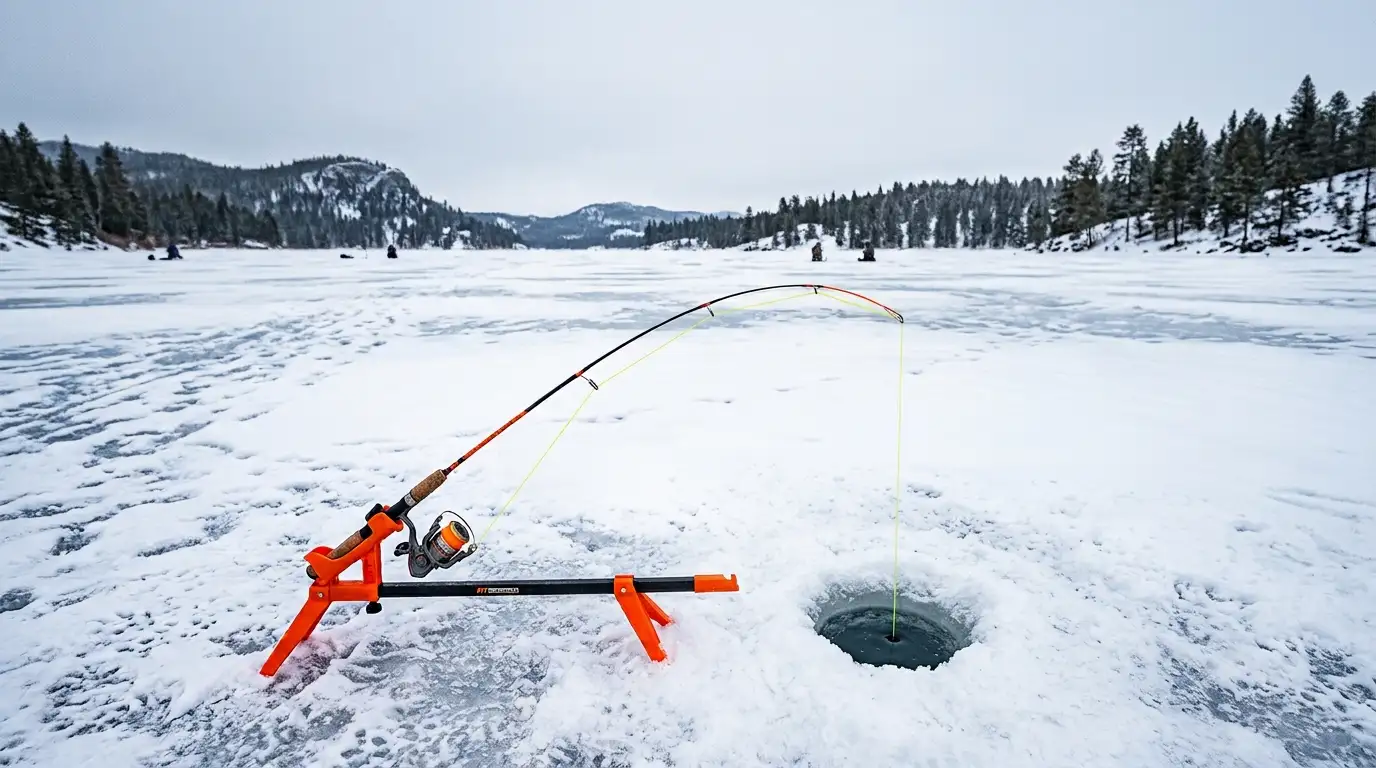
The setup looks simple—a baited rod resting in a holder—but small mistakes matter. Too much reel resistance can make a pike drop the bait, too much slack can hide the bite or create a tangle, and an unsecured holder can send the entire rod toward the hole. We learned to treat the deadstick as an attended second presentation, not as a rod that can be set and forgotten.
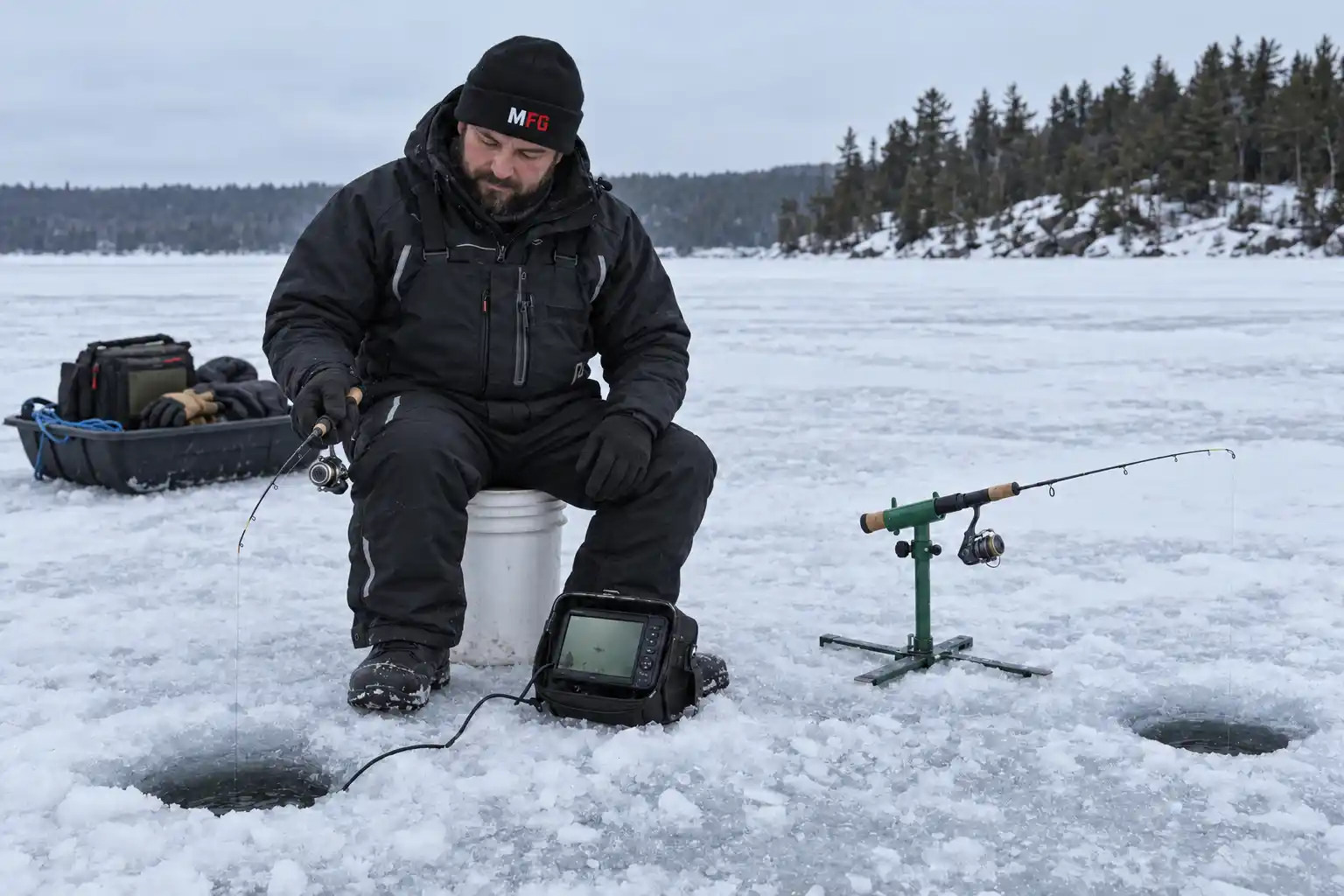
This guide explains how to secure the rod, set the reel for minimal resistance, tell normal bait movement from a pike bite, and take control before making the hookset. It covers the deadstick only: for choosing between tip-ups, jigging and deadsticking, start with our ice fishing for pike guide, and for the active rod in a two-rod setup, see how to jig for pike through the ice.
How to Deadstick for Pike Through the Ice: Quick Answer
To deadstick for pike, place a baited ice rod in a secure holder beside the hole, use a bite-resistant leader and a legal hook system, and set the reel so a pike can take line without pulling the rod into the water or feeling heavy resistance.
- Secure the holder: Position it far enough from the hole that the rod cannot slide or be pulled into the water.
- Lower the bait: Set it at the chosen height above bottom, weeds, or marked fish.
- Control the line: Remove unnecessary slack while leaving the bait free to move naturally.
- Set the reel: Engage the baitfeeder or clicker, or use a carefully adjusted drag that allows line to leave the spool under controlled pressure.
- Learn the bait’s rhythm: Watch the rod tip before stepping back so you know what normal bait movement looks like.
- Confirm the take: A steady bend, line leaving the reel, or the tip suddenly straightening can indicate that a pike has picked up the bait.
- Take control: Lift the rod, engage the reel’s fighting drag or close the bail, reel down until you feel the fish, and make a firm, controlled hookset.
A deadstick is not an unattended set line. Stay close enough to reach the rod as soon as it loads, keep it in sight, and check the current rules for line limits, live bait, hook systems, and attended-line requirements before fishing. For leader and hook-system choices, see our tip-up setup article.
What Is a Deadstick in Ice Fishing?
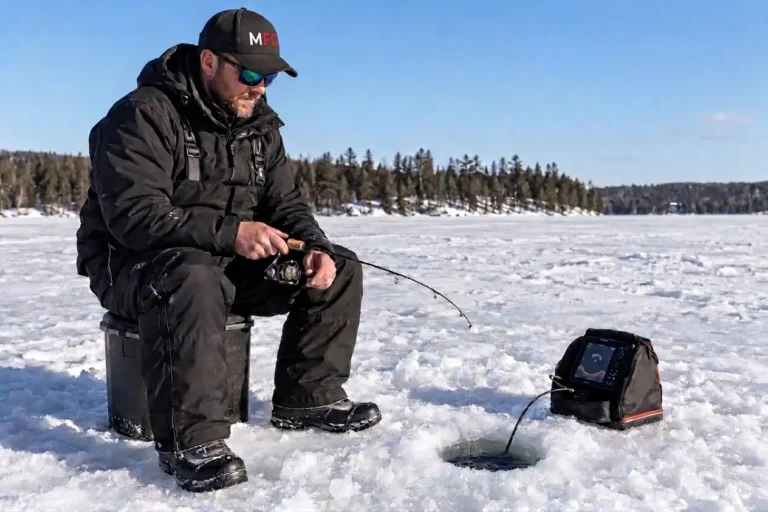
A deadstick is a baited ice fishing rod placed in a holder while the angler allows the bait to work without actively moving the rod. Unlike jigging, there is no repeated lift, drop or deliberate cadence. The rod remains still until its tip or the reel signals that a fish has taken the bait.
The word “dead” describes the angler’s input, not the condition of the bait. A live baitfish can still swim within the limits of the rig, while water movement can give a dead bait or an artificial one a small amount of natural motion. The purpose is to give a pike a slower, less aggressive option than a jigged lure.
A deadstick also keeps a conventional rod and reel in the system. When a pike takes the bait, the angler lifts the rod from the holder, brings the line under control and makes the hookset manually. That direct control over the reel and drag is what separates deadsticking from fishing with a traditional tip-up.
When and Where a Deadstick Works Best for Pike
A deadstick works best when pike are present but unwilling to commit to an actively moving lure. We learned not to set one over an unproven hole simply because we had a second rod available. A deadstick did not rescue poor placement—it only kept us waiting longer. It became far more useful after we found baitfish or a productive edge.
- When pike follow but do not strike: We have had fish approach a jig several times without committing, then take the slower bait nearby.
- Along a productive travel lane: Once we identify a weed edge, break or route that pike are using, the deadstick can hold a bait in that zone while the active rod searches the water immediately around it.
- Beside an active jigging hole: The jig supplies the flash while the deadstick stays quiet next to it, so the two rods do different jobs. We cover the full two-rod layout in our jigging article.
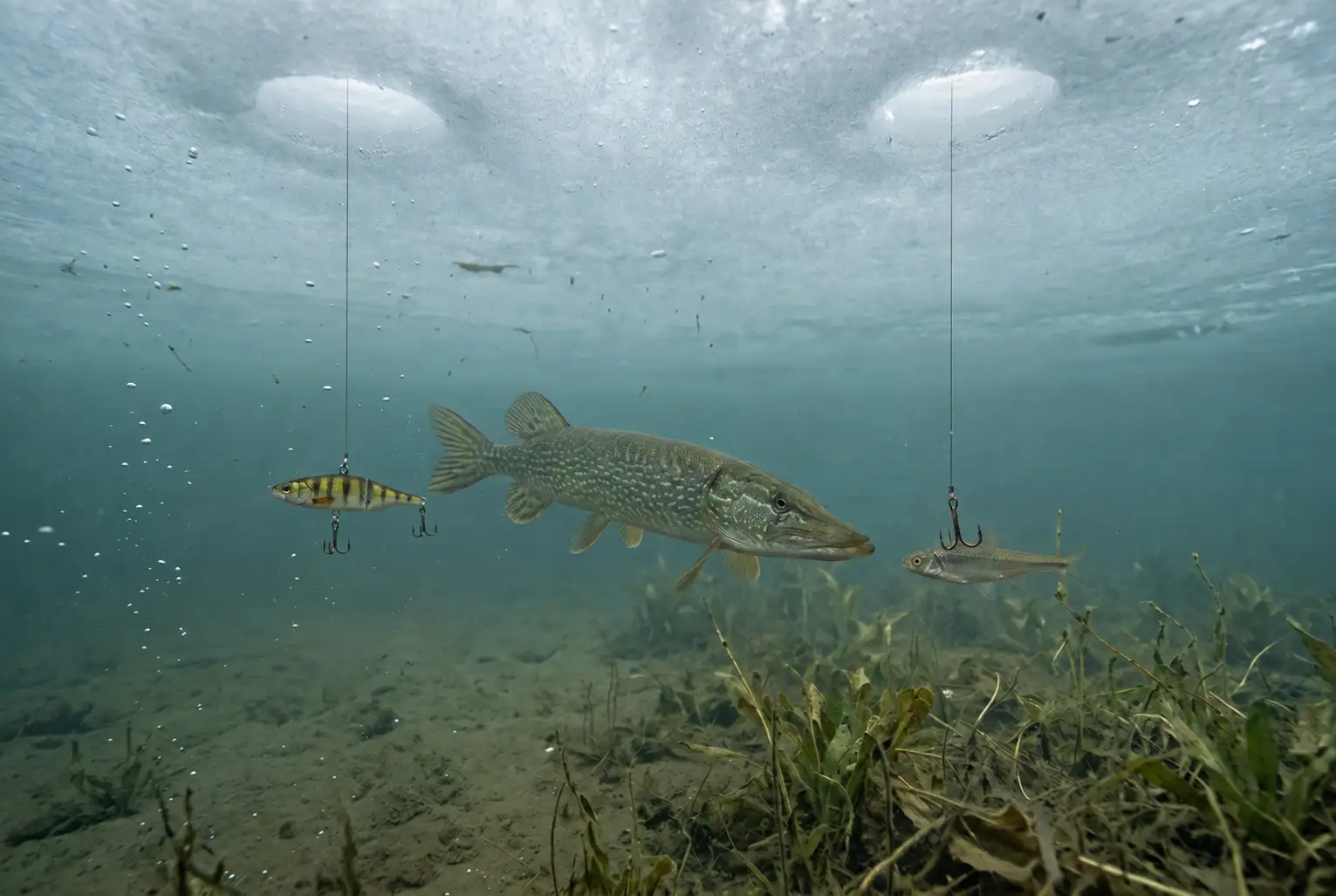
We treat the deadstick as a conversion tool, not a substitute for finding fish. If the area gives us no sign of bait, structure or pike activity, we move.
Deadstick Rod, Reel and Holder
A reliable pike deadstick setup needs a rod with enough backbone to control the fish, a reel that can release line under managed resistance, a bite-resistant leader and a holder that cannot slide toward the hole. Each part has a separate job: the rod shows the take, the reel controls resistance, the terminal tackle keeps the fish connected and the holder protects the whole setup until you reach it.
Rod: Backbone With a Tip You Can Read
We prefer a medium-heavy ice rod with enough power through the lower half of the blank to turn a pike away from the bottom edge of the hole. The tip should still be responsive enough to show the regular pulse of the bait and the slower, heavier load of a fish taking it.
A very soft panfish rod may display every movement, but it can fold too deeply under a large pike and make a controlled hookset difficult. A stiff rod with an unresponsive tip can hide the early stages of a take. The useful balance is a visible tip above a blank that still has authority once the fight begins.
Rod length depends partly on where we are fishing. A longer rod gives the line a smoother angle and more room to load on open ice, while a shorter model is easier to manage inside a compact ice fishing shelter. Our tested ice fishing rods for pike cover both situations.
Reel: Baitfeeder, Clicker or Standard Drag
A baitfeeder spinning reel is the most straightforward deadstick option because it separates the take from the fight. The secondary drag allows a pike to pull line under light, controlled resistance; turning the handle or switching the lever returns the reel to the main fighting drag.
A baitcasting reel with a functional clicker can provide a clear audible signal while allowing controlled line movement. A standard spinning reel can also work, but its drag must be adjusted carefully before the rod enters the holder. For suitable reel styles, see our ice fishing reels for pike guide.
Main Line, Leader and Hook System
Whatever main line we use, we finish it with a wire or appropriately heavy fluorocarbon leader, because pike teeth cut through ordinary monofilament and bare braid. The hook system depends on the bait, the presentation and local regulations. Leader material, hook placement and bait rigging are covered in our tip-up setup guide, and the same choices apply here.
How High to Set a Deadstick Bait for Pike
Start by holding the bait above the cover or bottom rather than hiding it inside vegetation or resting it in debris. Over clean bottom, we usually begin about 1–3 feet above it. Along a weed edge, we position the bait just above the top of the remaining green weeds, where a cruising pike can see it from the side or below.
If fish appear suspended on sonar, we place the bait at their level or slightly above them. The first position is only a starting point—if the hole produces follows but no take, we change the bait height before abandoning the location.
Rod Holder: The Part That Cannot Fail
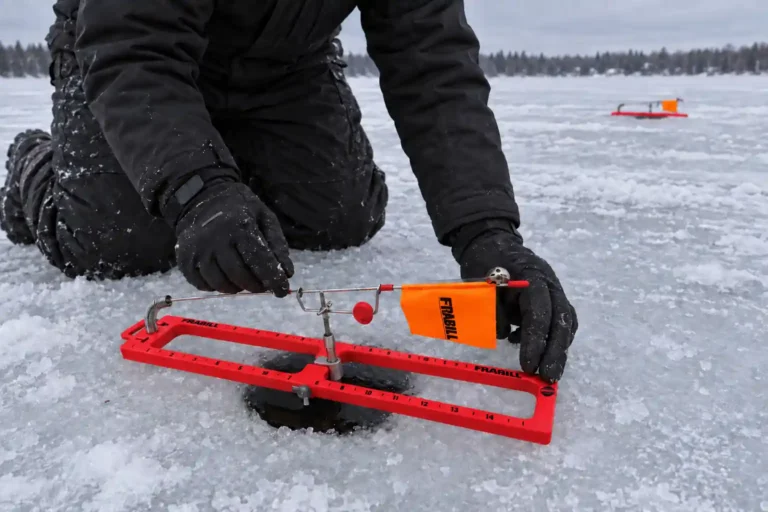
The holder must support the rod under load without trapping it when it is time to react. We look for a wide, stable base, a cradle that controls the handle, a positive stop so the butt cannot move forward when the tip loads, and enough clearance to lift the rod cleanly in one movement. A narrow holder balanced on uneven snow can tip before the reel has a chance to release line.
We place the holder on firm ice beyond the wet, slushy edge of the hole and point the rod so the line travels into the water without rubbing against the side. Before lowering the bait, we pull line from the reel with more force than a bait can create. If the base slides or rotates, or the rod begins to lift out, the setup is not ready.
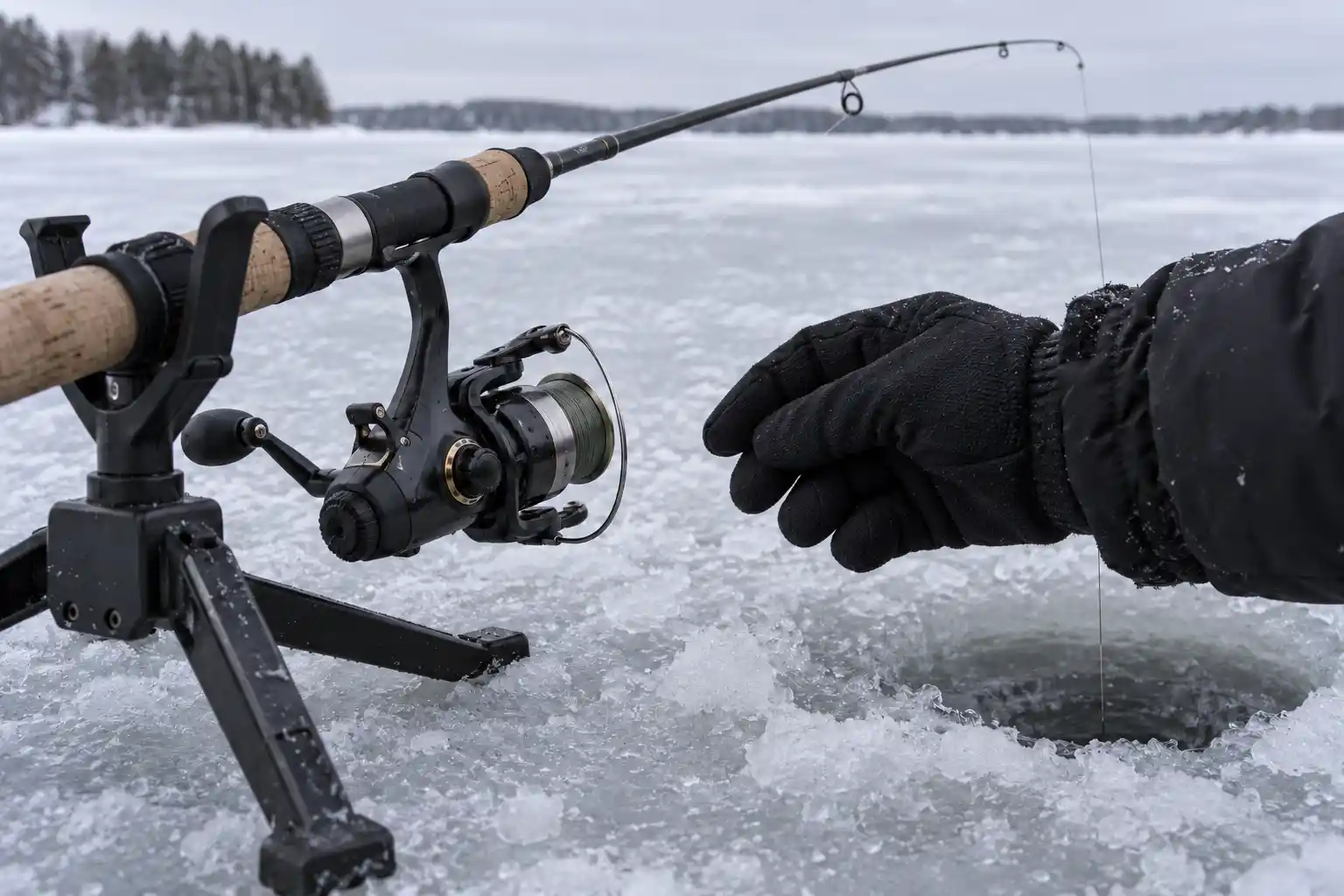
Deadstick Final Check Before You Step Away
The goal is to create a straight, controlled path from the rod tip to the bait before a pike ever touches it. We check the whole system before stepping away from the hole rather than trying to correct the rod, drag or line after a fish has already taken the bait.
- Clear the hole completely. Remove loose ice and slush that could catch the line or freeze around it. Check the lower edge as well as the surface, because the line will move across that edge when a pike changes direction.
- Control the line angle. Position the rod so the line enters the water cleanly without resting against the upper edge of the hole. Remove excess slack, but do not pull the bait upward or restrict its natural movement.
- Make a final reach and clearance check. Confirm that you can reach the handle quickly, lift the rod straight out of the holder and step around the hole without crossing another line, the transducer cable or loose equipment.
We repeat this check after every move or bait change. A holder can sit differently on a new patch of snow, and a heavier or more active bait can change how the rod tip and reel behave even when the rest of the setup remains unchanged. Ice can also build up in the guides and on the reel of a rod that sits still, so we check them each time we return to it. Our guide on how to stop rod guides freezing covers the fixes.
How to Tell Bait Movement From a Pike Bite
The most reliable sign of a pike bite is not one particular twitch—it is a clear change from the bait’s normal rhythm. Before moving away from the hole, we watch the rod tip long enough to learn how the bait behaves on its own. A live baitfish usually produces small, repeated pulses within the same range, while a dead bait should leave the tip comparatively still.
We used to react to every sharp movement and often reached the rod while the bait was simply making another short run. What matters more is a change in pattern, not a single sharp signal.
- Small, repeated taps: Usually normal live-bait movement, especially when the tip repeatedly returns to the same resting position.
- Sudden nervous vibration: The bait may be reacting to a nearby predator, but this alone does not confirm that a pike has taken it.
- A slow, steady bend: Can indicate that a pike has the bait and is moving away under consistent pressure.
- The tip bends and then straightens: The fish may be moving toward the hole or creating slack, although a tangled bait or shifting line can produce a similar signal.
- Line leaves the reel: A turning spool, sounding clicker or baitfeeder releasing line is the clearest confirmation that something is moving away with the bait.
Wind can shake the blank, move loose line and make normal bait movement look more dramatic than it is. Calm weather or a sheltered position makes subtle changes easier to read. In exposed conditions, we watch the line and reel as well as the rod tip instead of trusting the tip alone.
When and How to Set the Hook on a Pike Deadstick
Move to the rod when the tip develops a sustained load or the reel begins releasing line—not at the first nervous movement of the bait. Once contact is clear, we do not stand over a running reel and wait through an arbitrary countdown, because unnecessary delay increases the chance of a deeply hooked fish.
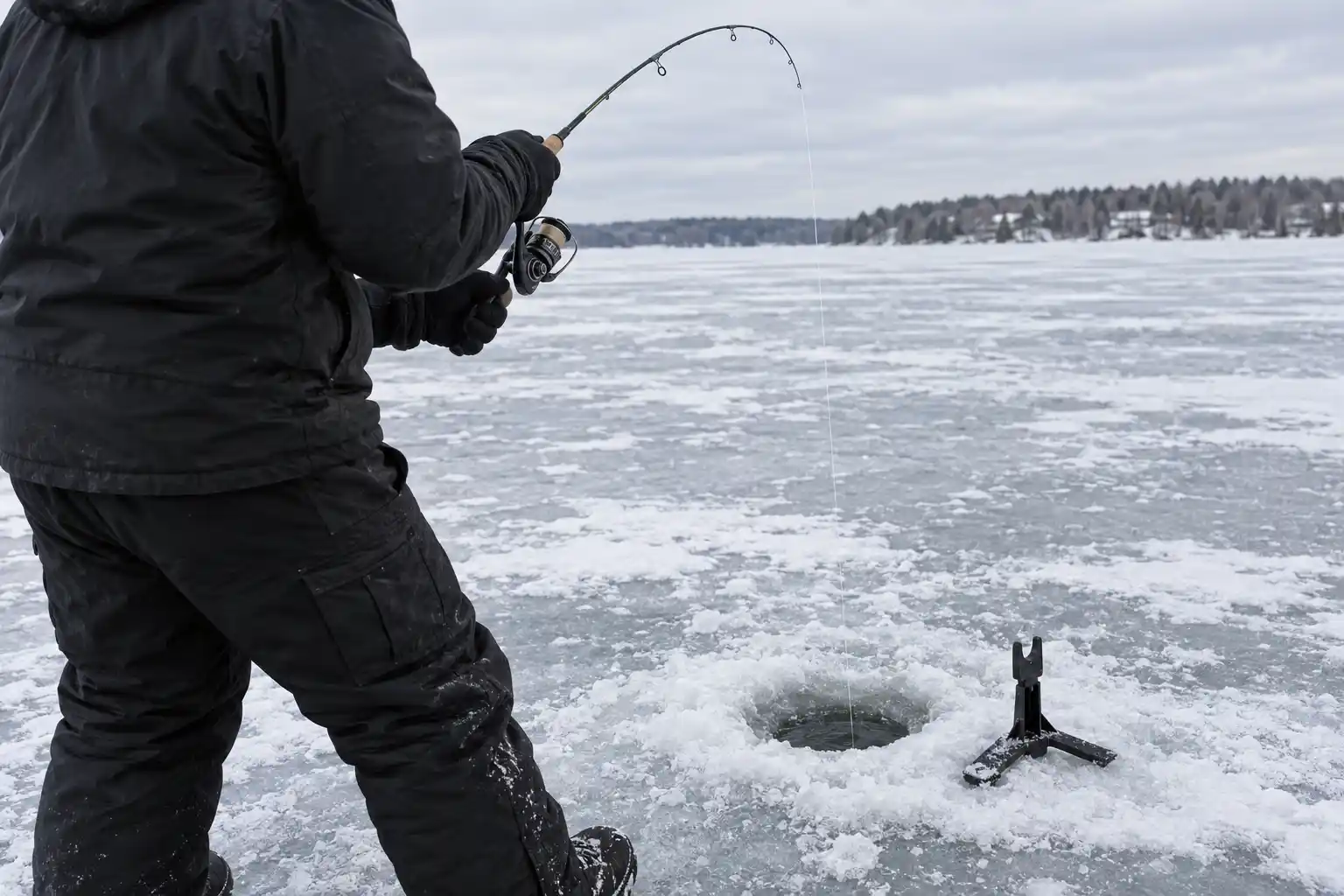
- Approach without grabbing the line: Move directly to the holder and keep your hands away from the line between the rod tip and the hole. Pulling or pinching it can transmit sudden resistance to the fish.
- Lift the rod cleanly from the holder: Take hold of the handle and raise it without sweeping the tip sideways. A clean lift keeps the line aligned with the hole and avoids creating extra slack.
- Take control of the reel: Engage the fighting drag, close the bail or return a loosened drag to the fighting setting, depending on the reel system. Make sure the line is seated correctly, then reel down until the rod begins to load. Do not strike while loose line remains between the rod and the pike.
- Set the hook firmly: Lift the rod decisively against the weight of the fish to drive the hook home while maintaining tension. Keep the rod loaded afterward and let the drag handle the first run. Fighting the fish at the hole is covered in our jigging article.
Timing also depends on the hook system and local rules. A legal quick-strike rig is designed to allow an earlier hookset, while a single-hook rig may be given a little more time; in both cases, we confirm the take through the rod, line and reel, then come tight instead of waiting for a fixed count.
Check Local Rules Before Using a Deadstick
A rod in a holder can be classified differently from a rod in your hand, depending on how the regulations define an attended line, set line or ice-fishing device. Before setting a deadstick, check the current official regulations for the exact water rather than assuming that the rules for a hand-held jigging rod apply to it as well.
Read the definitions as well as the limits. The wording of what counts as a line, and how close you must stay to it, decides whether a deadstick is treated like a jigging rod or like a tip-up. If the wording is unclear, ask the state, provincial or local fisheries agency before the trip instead of guessing on the ice. The Minnesota DNR fishing regulations are one example of an official source.
FAQ: Deadstick for Pike Through the Ice
What does deadstick mean in ice fishing?
Deadsticking means placing a baited rod in a holder and allowing the bait to work without actively moving the rod. The angler watches the rod tip and reel, then takes the rod and makes the hookset manually when a fish takes the bait.
What rod should you use to deadstick for pike?
A medium-heavy ice rod with a responsive tip is a practical starting point. The tip should show normal bait movement and a developing bite, while the lower part of the blank needs enough power to set the hook and control a pike beside the hole.
Do you need a baitfeeder reel for a pike deadstick?
No, but a baitfeeder makes the transition from the take to the fight easier. Its secondary drag releases line under light resistance, while the main drag is ready when you turn the handle or move the lever. A carefully adjusted spinning reel or a baitcasting reel with a clicker can also work.
Should the bail be open when deadsticking?
An open bail reduces initial resistance, but it can also allow loose coils to spill from the spool, tangle or freeze. We prefer a baitfeeder or another controlled line-release system when available. If you use an open bail, manage the line carefully and confirm that it can leave the spool without forming loops.
How can you tell a pike bite from live-bait movement?
Watch the bait long enough to establish its normal rhythm. Small taps that repeatedly return to the same resting position are usually bait movement. A sustained bend, an unexpected loss of tension or line leaving the reel indicates that the pattern has changed and a pike may have taken the bait.
Why do pike drop the bait on a deadstick?
Heavy resistance is a common cause. If the reel does not release line smoothly, the holder shifts or the rod is lifted during the bait’s normal movement, a pike may release the bait before you establish contact. Wait for a sustained load or controlled line movement, then take up the slack and set the hook without relying on a fixed countdown.