

Summer Pike Fishing: How to Find, Catch & Time Pike When the Water Heats Up
Summer pike fishing can feel simple one day — and completely dead the next. Many anglers return to the same spots that produced in spring, throw the same lures, and wonder where the fish went once the water warms up. The truth is, pike are still there — but summer changes everything about how, where, and when they feed.
One pattern we’ve repeatedly seen at MFG over multiple summers is that summer pike aren’t harder to catch — they’re simply behaving differently than most anglers expect. We’ve watched fish leave shallow weed flats as surface temperatures climbed through the morning, then reposition just off the first deeper cabbage edge where cooler water, shade, and bait were still available. Some of the most consistent bites came during short low-light windows when baitfish pushed back shallow and the entire area suddenly came alive for twenty or thirty minutes.
This is what makes summer pike fishing so interesting — and so frustrating if you miss the pattern. Light levels, water temperature, oxygen, depth, and bait movement all work together — and when one shifts, the fish shift with it. Once you start reading those changes correctly, summer becomes far more predictable than many anglers realize.
This guide brings the full summer pattern together in one place. Where pike hold when water temperatures rise. How deep they stay throughout the season. When the strongest bite windows open. Why fish suddenly stop feeding — and what usually triggers them again. Which lures work best in warm water, how to retrieve them correctly, and how the approach changes from shore, from a boat, after dark, or on the surface.
Each section below links to a full in-depth guide on that specific topic. Use this page to understand the full pattern behind summer pike behavior, then dive deeper into the part of the season you want to improve next.
Where to Find Pike in Summer
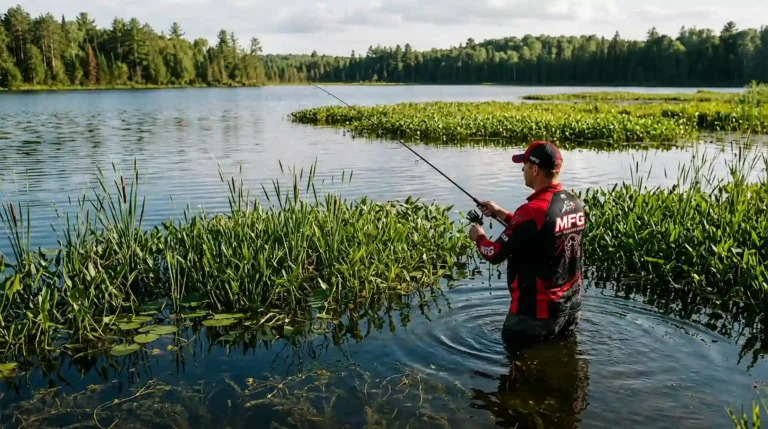
This is where most summer sessions are won or lost before the first cast. The shallow bays and weed flats that held fish consistently in spring start going quiet once water temperatures climb — not because pike left, but because they repositioned around three things: oxygen, bait, and access to depth.
What we’ve seen repeatedly on the water is that summer pike don’t roam — they lock onto specific edges where conditions stay stable. Deep weed lines, drop-offs, wind-exposed points, and transitions between warm and cooler water become the most reliable holding areas. Miss those edges by just a meter or two and you’ll cast through empty water all day.
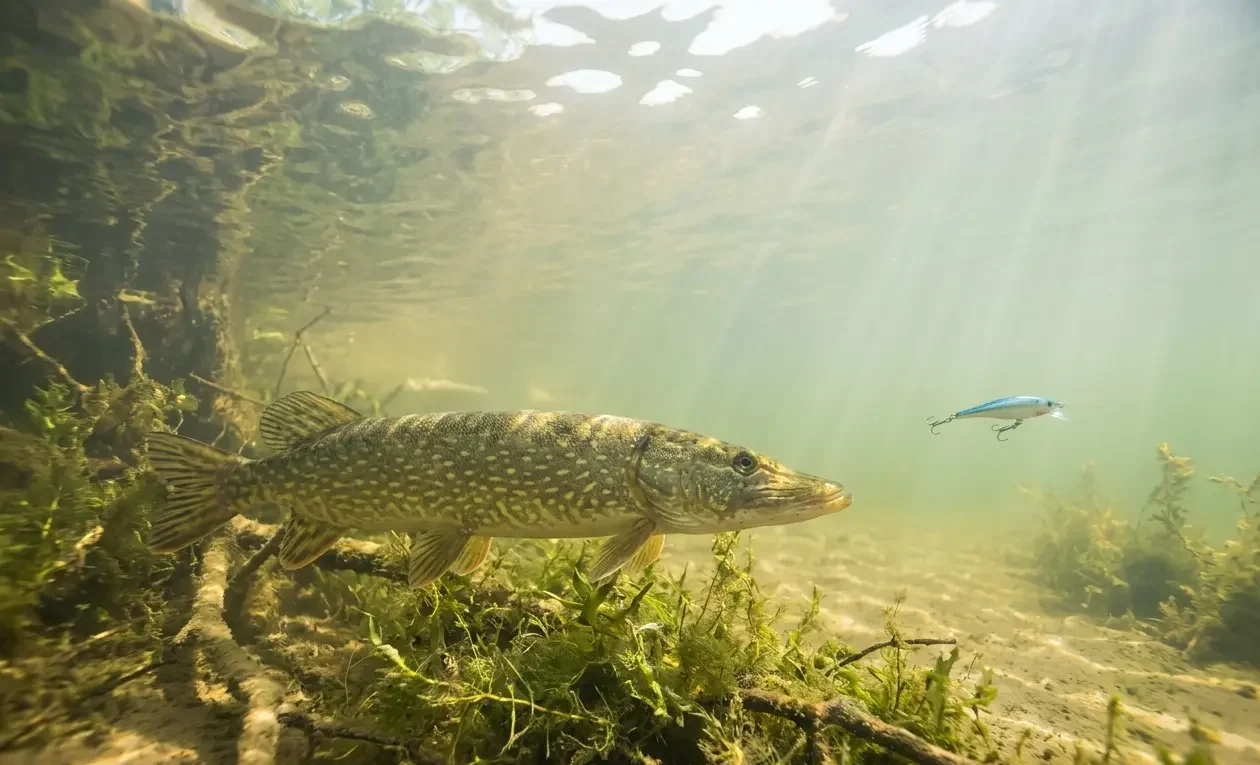
Knowing where NOT to fish matters just as much. Stagnant shallow bays, featureless flats, and “perfect-looking” water with no bait activity are consistent time-wasters in summer — no matter how good they looked in April.
Where pike hold in summer often becomes much easier to predict once you start reading structure, bait movement, and changing water conditions together.
How Deep Are Pike in Summer
Once you know where pike are holding, the next question is depth — and in summer, depth often becomes the difference between finding fish and fishing empty water. Many anglers work the right structure, fish the right area, and still struggle to get bites simply because their lure is running above or below the zone where the fish are actually positioned.
One consistent pattern on the water is that summer pike rarely hold at random depths. They settle into the highest part of the water column where temperature, oxygen, light, and bait all still work in their favor. That zone can shift through the day. Fish may move shallower during low light, then slide deeper once the sun gets high. And the pattern can look completely different between lakes, rivers, reservoirs, or heavily weeded water.
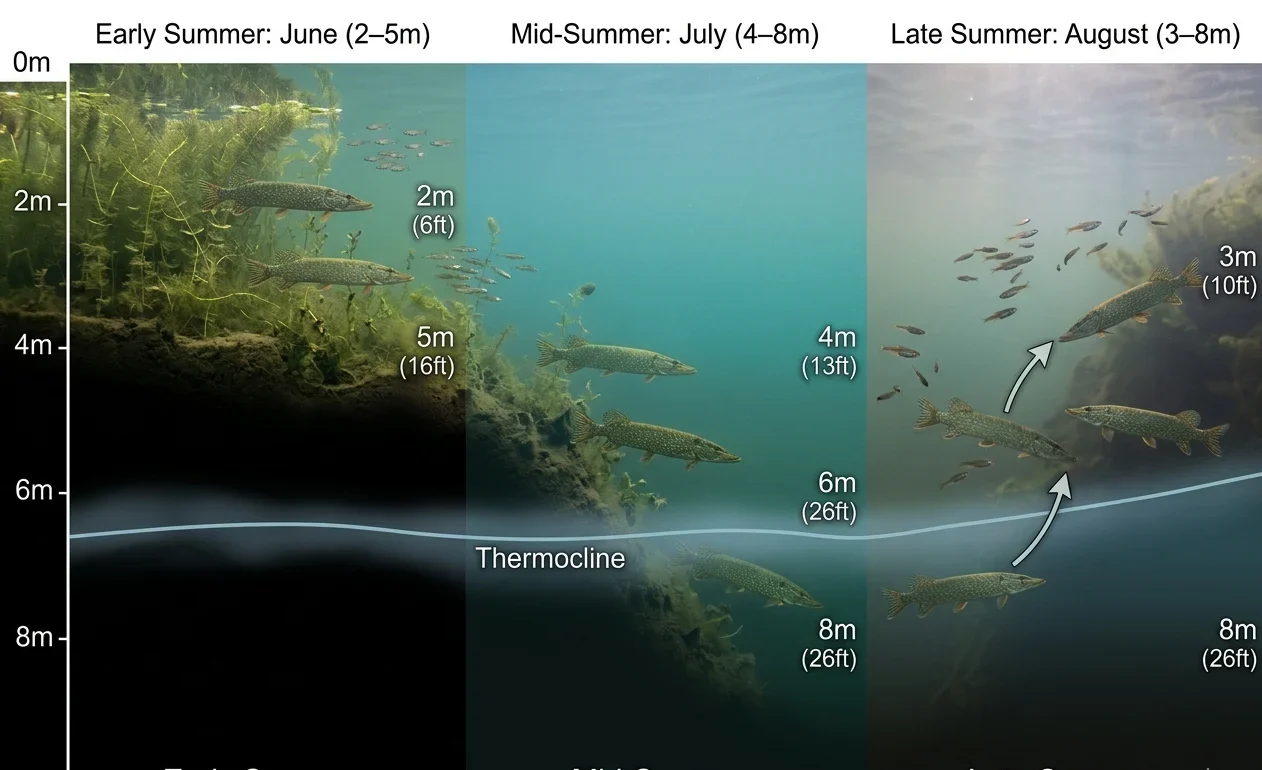
The biggest mistake isn’t always fishing the wrong spot — it’s fishing the right spot at the wrong depth. When the bite slows down, many anglers move immediately. Often the fish are still there — just holding slightly deeper, tighter to the edge, or suspended just off the structure.
One of the biggest summer adjustments many anglers miss is how deep pike hold through the day as light, temperature, and bait movement begin to shift.
Best Time to Catch Pike in Summer
Location and depth will often put you on summer pike — but timing is what decides whether they actually feed. Unlike spring, pike rarely stay active for long periods once water temperatures rise. As heat builds and oxygen shifts, feeding becomes compressed into short, predictable windows that can open quickly and shut just as fast.
The mistake isn’t always the lure or the location. Most summer sessions are lost simply by fishing the right water at the wrong time. Arriving an hour after a morning feeding window closes — or leaving just before an evening burst begins — is often enough to miss the most active fish in the area.
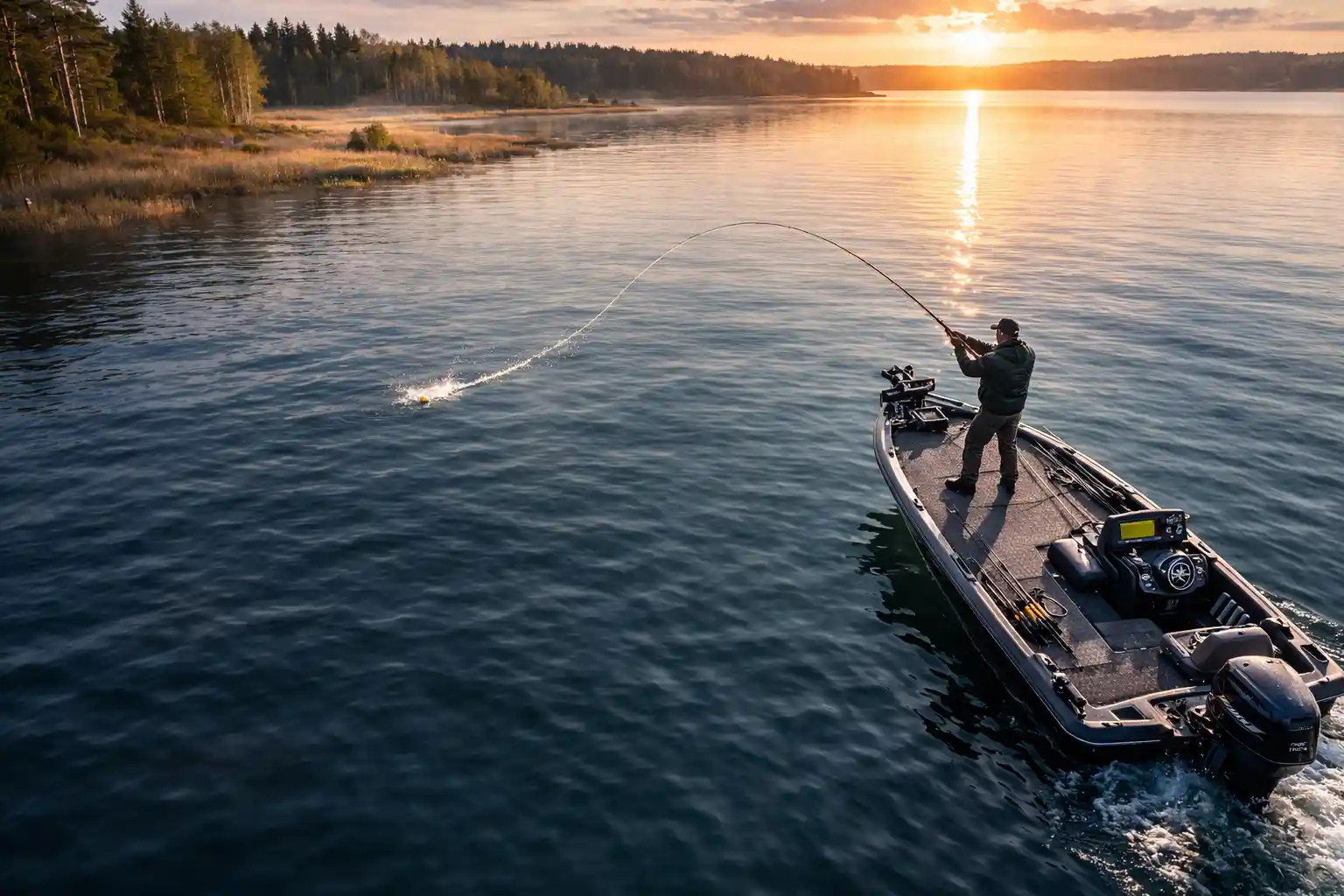
One thing summer makes obvious is that the clock alone doesn’t explain feeding behavior. Wind direction, cloud cover, light penetration, bait movement, and sudden pressure shifts can all trigger activity. Slow water can come alive within minutes after a wind shift — and shut down just as quickly once the light changes. The anglers who stay consistent are usually the ones reading conditions, not just watching the clock.
Summer bite windows for pike often feel short — but once you recognize them, they become far more predictable from one session to the next.
Why Are Pike Not Biting in Summer
This is the question every summer pike angler asks sooner or later — standing on a proven spot, making solid casts, and getting absolutely nothing back. No strike. No follow. No sign of life. The natural reaction is to change the lure, speed up the retrieve, slow it down, or start experimenting. But most of the time, the lure itself isn’t the real problem.
In warm water, pike rarely stop feeding because of what you’re throwing. They stop feeding because the conditions no longer justify the energy cost of chasing. A fish that crushed a lure at first light can sit motionless in the same area two hours later — not because it disappeared, and not because it was spooked, but because the feeding window closed.
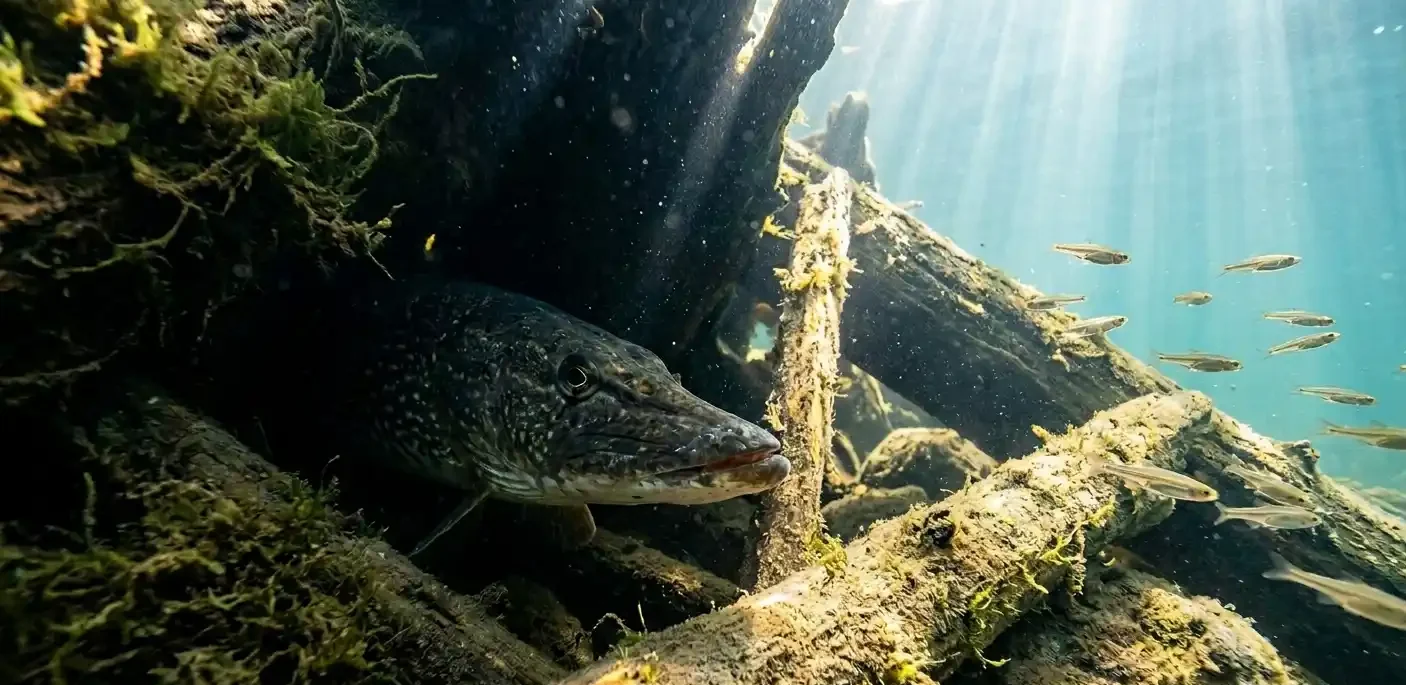
What makes summer so frustrating is that the fish are often still there. The spot isn’t dead. The timing changed. And once that happens, extra casts, lure changes, or working harder through the same water usually won’t restart the bite. More often, it takes a change in light, wind, temperature, or bait movement before those fish switch back on again.
This guide explains what’s really happening below the surface when summer pike refuse to bite — why fish suddenly shut down, what lazy follows usually mean, and how to recognize when conditions are beginning to shift back in your favor.
Best Summer Pike Lures
Once you understand where pike hold and when they feed, the next question is what to throw. And in summer, lure choice matters differently than in spring. The same baits that produced through April and May often stop working — not because pike suddenly became smarter, but because warm water changes what kind of presentation they’re willing to respond to.
Summer pike don’t chase the way cold-water fish do. Feeding windows are shorter, energy is more carefully spent, and fish that have been pressured through the season become increasingly selective. The right lure for a shallow topwater window at first light looks nothing like the right lure for a deep midday structure fish — and neither of those works on a pressured fish sitting in heavy weed cover by afternoon.
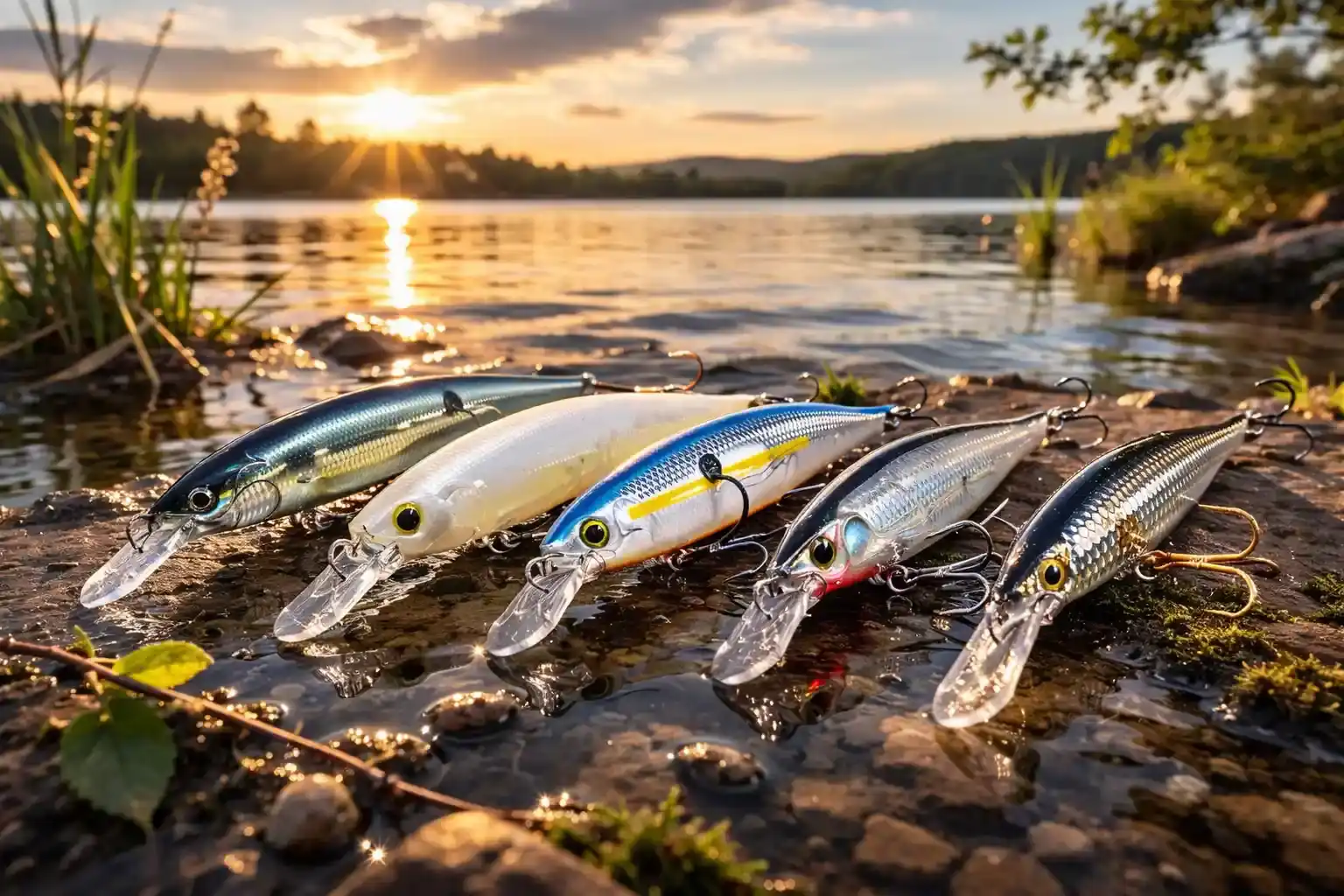
That’s the real challenge. It’s not about finding one great summer lure. It’s about matching the right presentation to the specific situation in front of you — cover type, depth, light level, fish behavior, and how much pressure the water has already seen that week.
7 tested summer pike lures — each one selected for a specific warm-water scenario, from early morning surface strikes to deep midday structure fish to trophy pike that need a reason to move.
How to Retrieve Lures for Summer Pike
Having the right lure is only half the equation. In summer, how you work it often matters more than what you tie on. The same spinnerbait that gets crushed on a slow roll can be ignored completely when burned too fast. A jerkbait that triggers violent strikes at first light can draw nothing but lazy follows by midday — not because the lure changed, but because the retrieve no longer matches what the fish are willing to do.
In warm water, pike don’t chase — they intercept. That shift changes everything about how a lure needs to move. Retrieve speed, pause length, depth control, and even the small imperfections built into the presentation often matter more than color or profile. Many summer follows that never turn into strikes are a retrieve problem, not a lure problem.
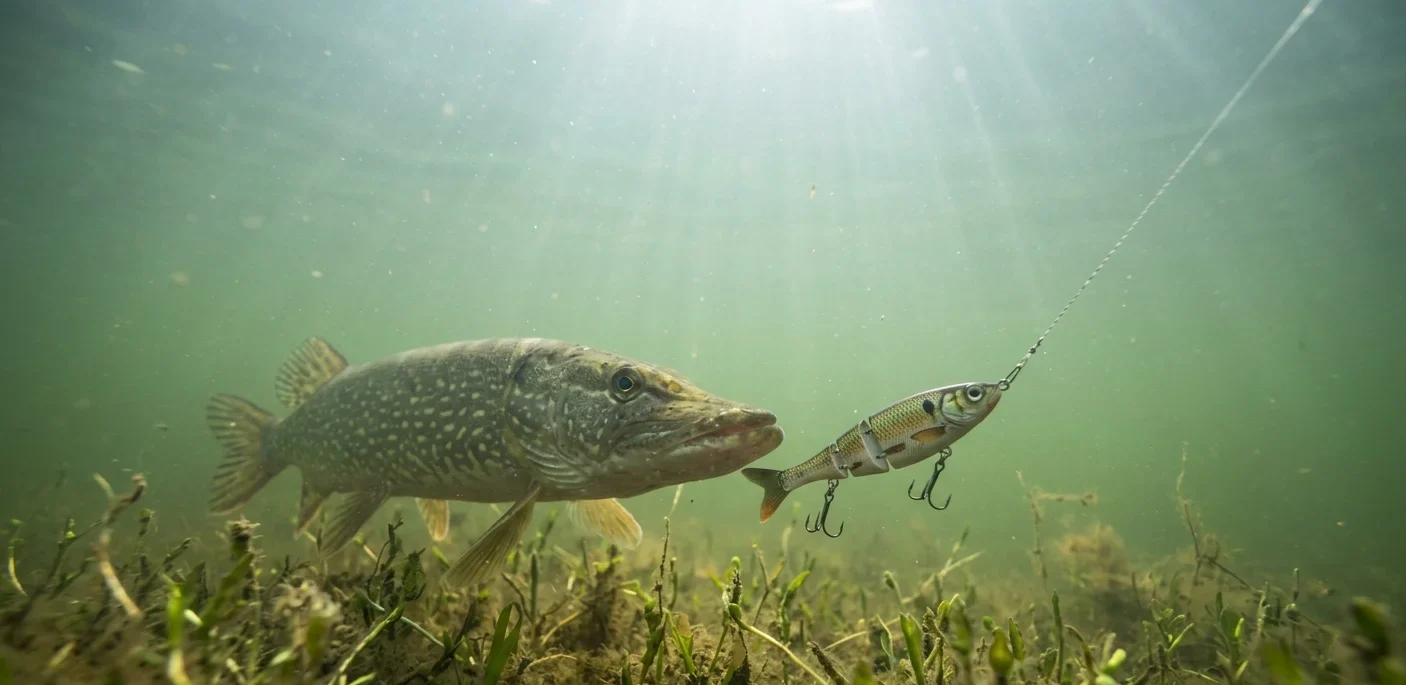
What makes summer retrieves difficult is that there’s rarely one correct cadence. The right retrieve for an active fish pushing bait at first light looks completely different from the right retrieve for a neutral fish holding tight to a deeper weed edge at midday. Reading which situation you’re in — and adjusting your retrieve to match it — is often what separates consistent summer anglers from those who keep changing lures without changing the presentation.
Retrieve patterns that trigger summer pike — from speed and pause timing to the small adjustments that turn follows into strikes.
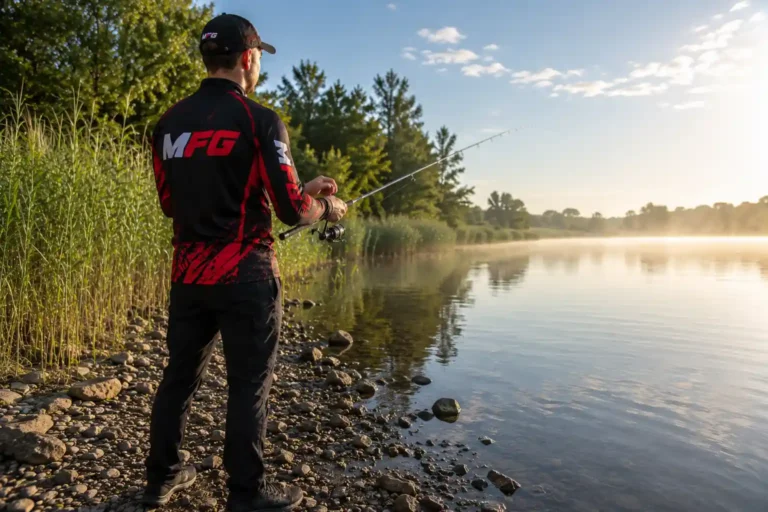
Summer Pike Fishing from Shore and Boat
Where you’re fishing from changes everything about how you approach summer pike. Not just the gear — the entire logic shifts. Both approaches work, but each runs on a completely different set of rules once water temperatures rise.
Fishing from Shore
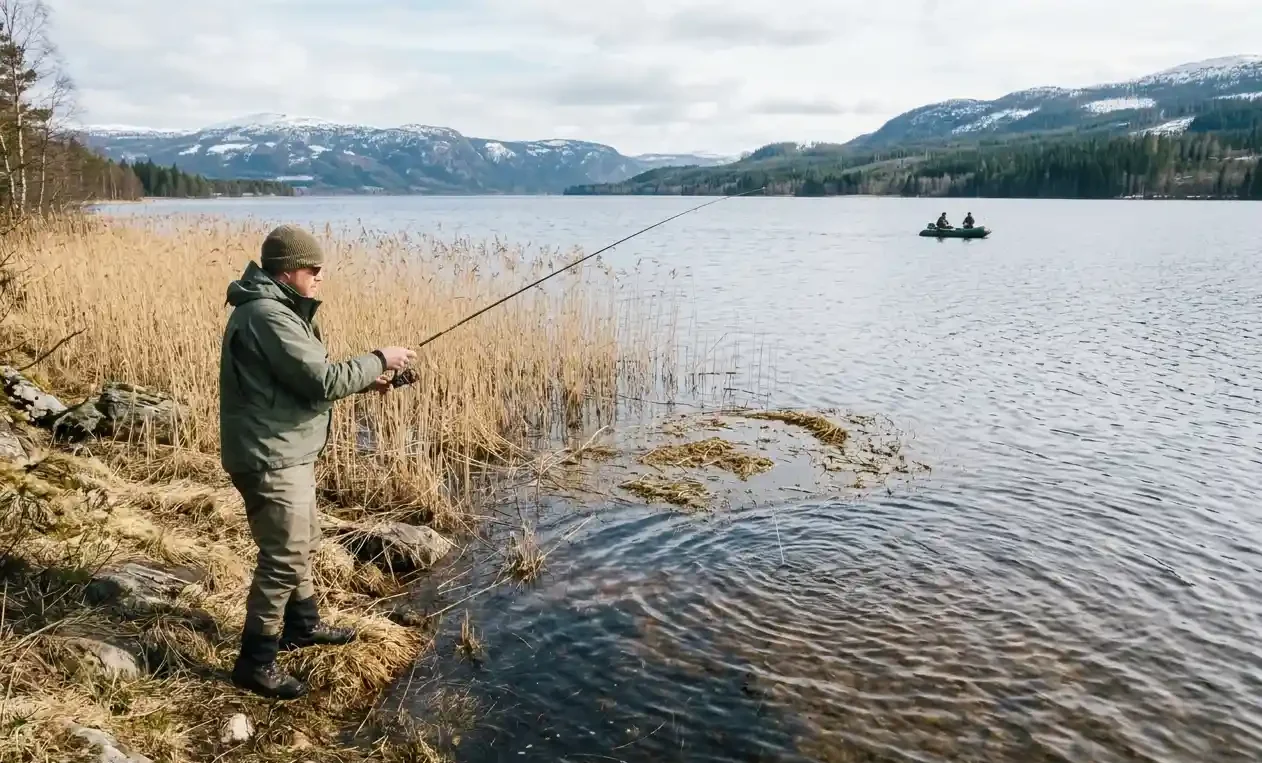
From the bank, the biggest challenge isn’t finding pike — it’s finding pike that are still within casting range. Summer repositions fish within the same structures they held in spring, but often just deep enough to put them out of reach. The anglers who consistently catch fish from the bank aren’t finding better spots — they’re fishing the right ones at the right time, usually within a narrow window around first light before heat pushes fish beyond casting distance.
Stealth matters more than in any other season. Approach angle, shadow control, and how far back you stand from the edge often decide whether fish are catchable before the first cast even lands.
For anglers fishing from the bank, summer shore tactics often come down to timing, stealth, and staying within range of active fish.
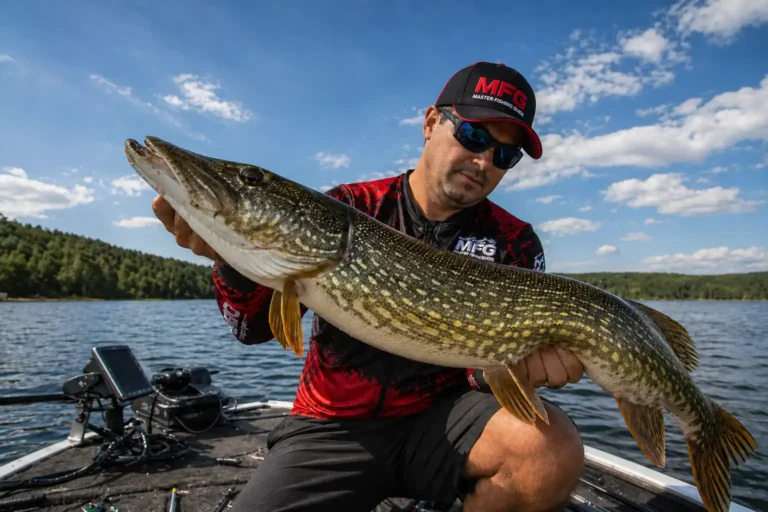
Fishing from a Boat
From a boat, mobility is an advantage — but also where most mistakes happen. Getting too close to structure, drifting over active fish, or spending too long on dead water are far more common reasons for blank sessions than wrong lure choice. Summer boat fishing is about positioning, drift control, and knowing when to move.
The best summer boat anglers don’t ask “what should I throw?” first. They ask “where should the boat be right now?” — and everything else follows from there.
Much of summer boat success comes down to boat positioning and control before the cast even begins.
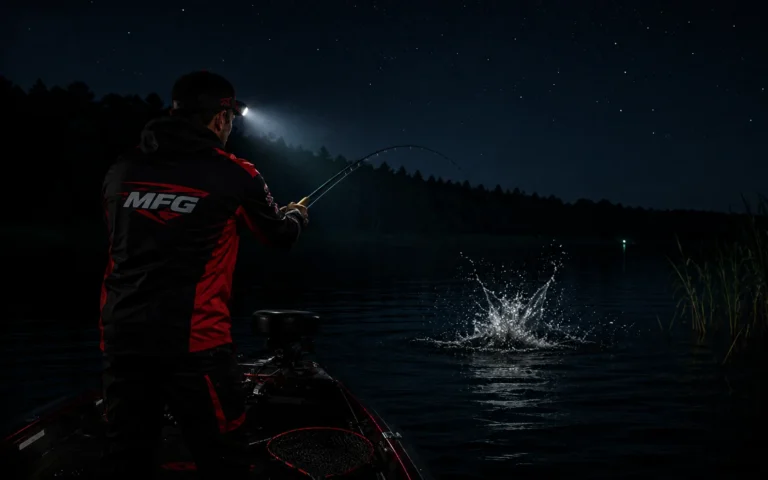
Summer Night Pike Fishing
When daytime sessions slow into follows, missed strikes, or complete silence, many anglers pack up and head home. But the fish that ignored everything all afternoon often haven’t gone anywhere — they’re simply waiting for conditions to shift. As surface temperatures fall after sunset and baitfish move shallow again, pike that spent the day pinned to deeper structure can become some of the most aggressive fish of the entire summer.
Summer night fishing isn’t a backup option. For many anglers during heatwaves, it becomes the most reliable bite window of the season. The reason is simple — pike are built to hunt in low light, and summer nights often give them the cooler water, reduced light, and feeding conditions that hot afternoons do not. Once you understand those windows, night fishing stops feeling unpredictable.
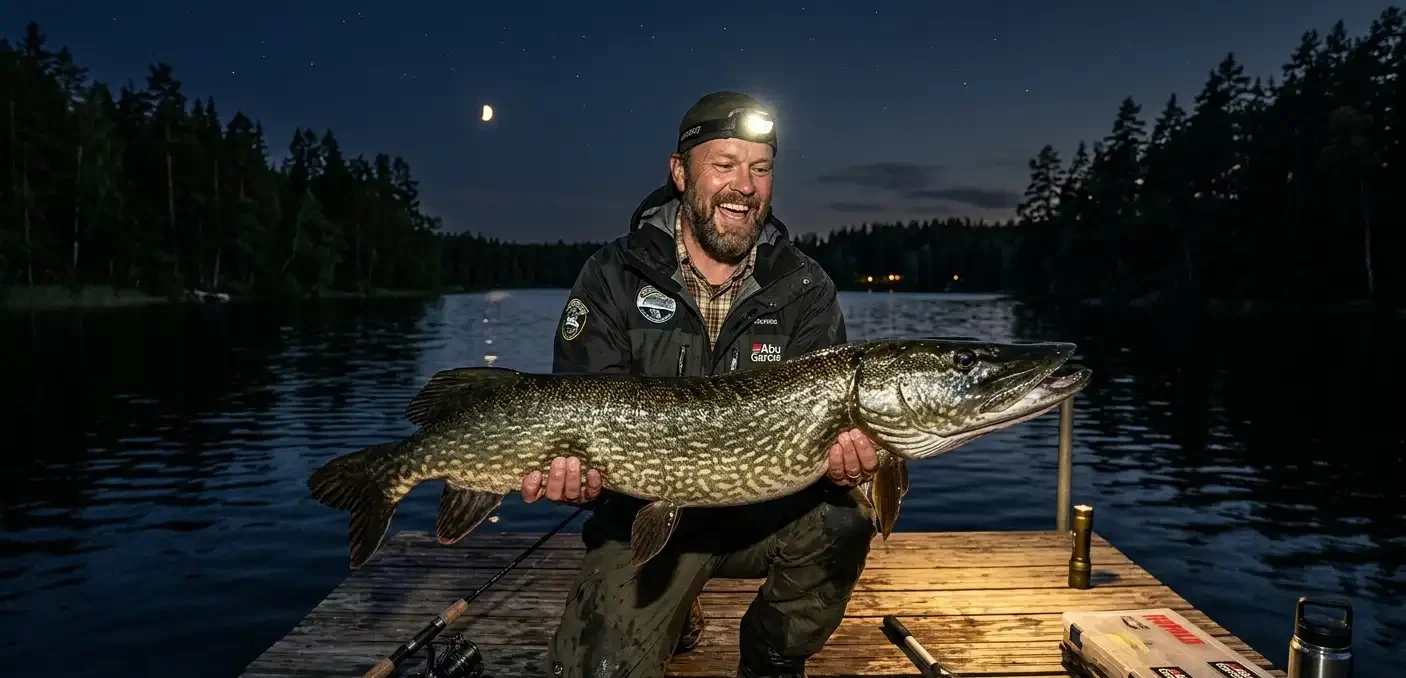
What makes it different from daytime fishing isn’t just the darkness — it’s how the entire feeding equation changes. Vision becomes less important. Movement, vibration, silhouette, and lure displacement take over. Retrieve speed, lure profile, casting angle, and boat or bank positioning all start working under a different set of rules.
Some of the best summer sessions begin after sunset — especially once you understand how pike move, feed, and how to catch them after dark.
Topwater Pike Fishing in Summer
For many anglers, this is the moment summer pike fishing builds toward. After understanding where pike hold, how deep they sit, when they feed, and how conditions shape their behavior, topwater becomes the final piece — the most explosive, most visual, and most timing-sensitive way to catch summer pike.
Surface strikes rarely happen by accident. They happen in specific windows, under specific conditions, and around specific structure. Outside those windows, the same fish that exploded on a lure at first light may ignore every surface presentation you throw an hour later. That narrow feeding window is exactly what makes topwater so addictive. When it opens and everything lines up, very little in freshwater fishing compares to it.
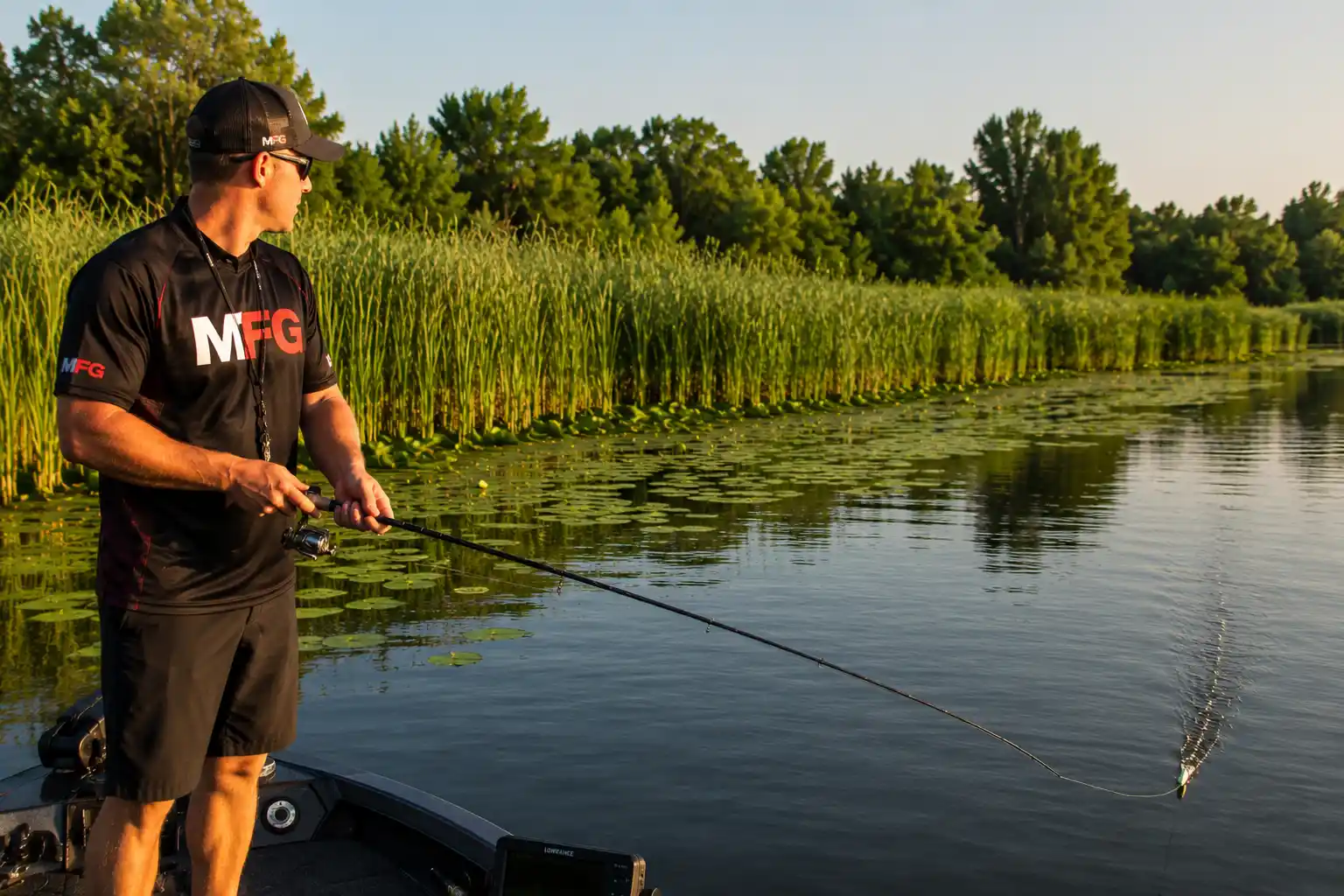
Pike are naturally built for the surface strike. Their upward-facing jaw, flat head profile, and ability to hunt effectively in low light make them deadly from below. In summer, when baitfish push high in the water column during feeding windows, topwater places the lure directly inside that strike zone. It doesn’t force a reaction — it puts a target exactly where a feeding pike already expects to find one.
Topwater pike fishing covers everything from how to fish it and when it works best to the best lures, retrieves, and techniques for summer surface strikes.
Gear considerations for summer pike
Summer pike fishing puts more pressure on your setup than most anglers expect — longer casts, deeper edges, heavy weeds, and hard fights close to cover all demand gear you can trust.
Spinning rods for pikeBaitcasting rods for pike
Spinning reels for pike
Baitcasting reels for pike
Pike fishing lines
Pike leaders
Summer Pike Fishing Is About Reading the Pattern
Summer pike fishing can feel difficult when you look at each session as a separate problem to solve. But once you start reading the bigger pattern, everything becomes clearer. Location connects to depth. Depth connects to timing. Timing connects to feeding behavior. And every decision — lure choice, retrieve speed, positioning, even whether to fish at sunrise or after dark — starts making more sense.
The fish are still there in summer. They haven’t disappeared. They’ve simply adjusted to warmer water, changing oxygen, shifting bait, and shorter feeding windows. The anglers who stay consistent are usually not the ones covering the most water or changing lures every ten minutes — they’re the ones paying attention to what the conditions are telling them.
That’s what summer pike fishing becomes at its best: not random luck, but a pattern you learn to recognize. And once that pattern clicks, some of the most difficult sessions of the year can quickly become the most productive.
If you’ve been chasing pike this summer — from the bank, from the boat, after dark, or during a topwater window at first light — we’d love to see how your season is going. Share your catches, your local conditions, or your favorite summer setups with us on the Master Fishing Guide Facebook Page.
Summer Pike Fishing — Questions We Hear Most on the Water
Do pike actually feed in summer or do they shut down completely?
Pike never stop feeding entirely — but summer compresses their activity into shorter, more precise windows. The fish that ignored everything all afternoon can become aggressive within minutes once light drops, wind picks up, or surface temperature shifts. The feeding doesn’t disappear. The timing just gets tighter.
What is the single most important thing to get right for summer pike?
Timing. Not lure choice, not color, not retrieve speed. Being on the right water during an active feeding window consistently outperforms perfect presentation during a dead period. Most summer failures happen because anglers are fishing at the wrong hour, not with the wrong lure.
Why do summer pike follow lures but not strike?
A lazy follow usually means the fish is interested but the conditions don’t justify the energy cost of committing. Warm water makes every movement expensive. Before changing lures, try slowing down the retrieve, extending the pause, or adjusting depth by a meter or two. Most followers convert when the presentation stops demanding effort from the fish.
Is early morning really that much better than the rest of the day?
On most summer days, yes — significantly. Overnight cooling stabilizes oxygen near the surface, baitfish push shallow, and pike move with confidence before direct sunlight changes the equation. On clear lakes the entire productive window can close within 90 minutes of sunrise. Overcast days are the exception — cloud cover extends that window considerably.
Can you catch pike from shore in summer or do you need a boat?
Shore fishing works — but it runs on different rules than spring. The challenge isn’t finding pike, it’s finding pike that are still within casting range. Deep-access points, shaded banks, and weed edges with an adjacent drop are the bank positions that keep fish reachable. Timing matters even more from shore because you can’t follow fish as they reposition through the day.
When does night fishing become worth it in summer?
Once daytime temperatures consistently push above 22–23°C and daytime sessions slow to follows and short strikes, night fishing stops being an option and becomes the primary plan. During heatwaves especially, the hour after sunset and the hour before first light often produce the most aggressive fish of the entire season.
How do you know when to move spots and when to wait it out?
If there are no signs of life — no baitfish movement, no follows, no surface activity — within 15 minutes on a high-quality spot, move. Summer pike in active zones almost always show themselves quickly. If you’re getting follows without commits, that’s different — stay and adjust your presentation before leaving.
Does lure color actually matter in summer?
Less than most anglers think. Natural profiles in clear water, higher contrast in stained water or low light. Beyond that, retrieve and depth control consistently matter more than color. If fish are present and active, most reasonable color choices will produce. If they’re not feeding, no color will fix it.