

Best Floating Ice Fishing Bibs: 5 Tested for Kneeling, Hauling & Bitter Cold
The best floating ice fishing bibs spend much of their working life doing something a specification sheet rarely mentions: taking your weight when you kneel to clear a hole, check a tip-up, or steady yourself on slick ice. We’ve watched knee padding work loose and slide away from the pressure point while the outer panel still looked perfectly usable—and that’s the kind of failure nobody talks about, because it happens during an ordinary day on the ice, not during a dramatic breakthrough.
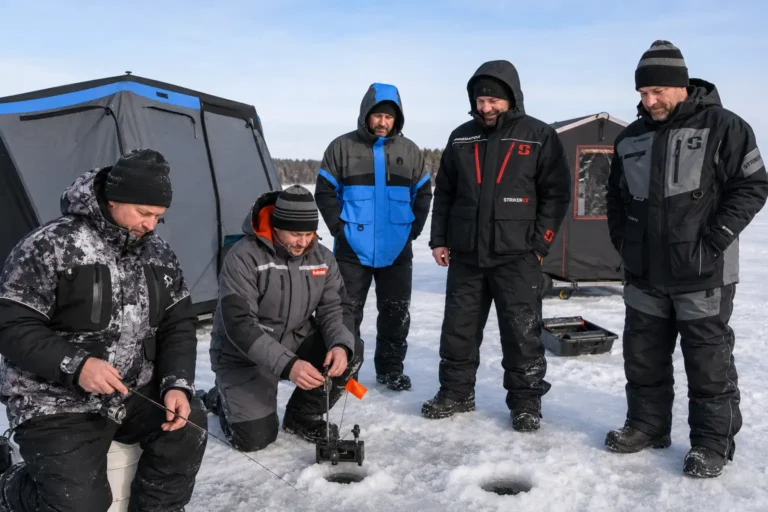
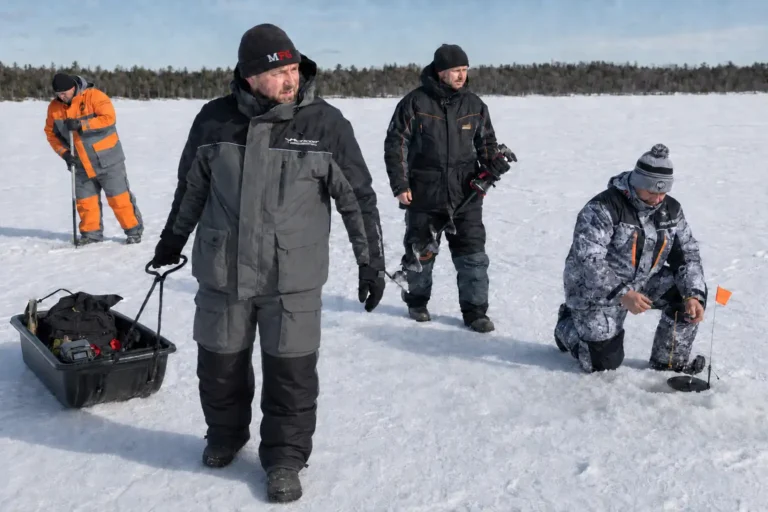
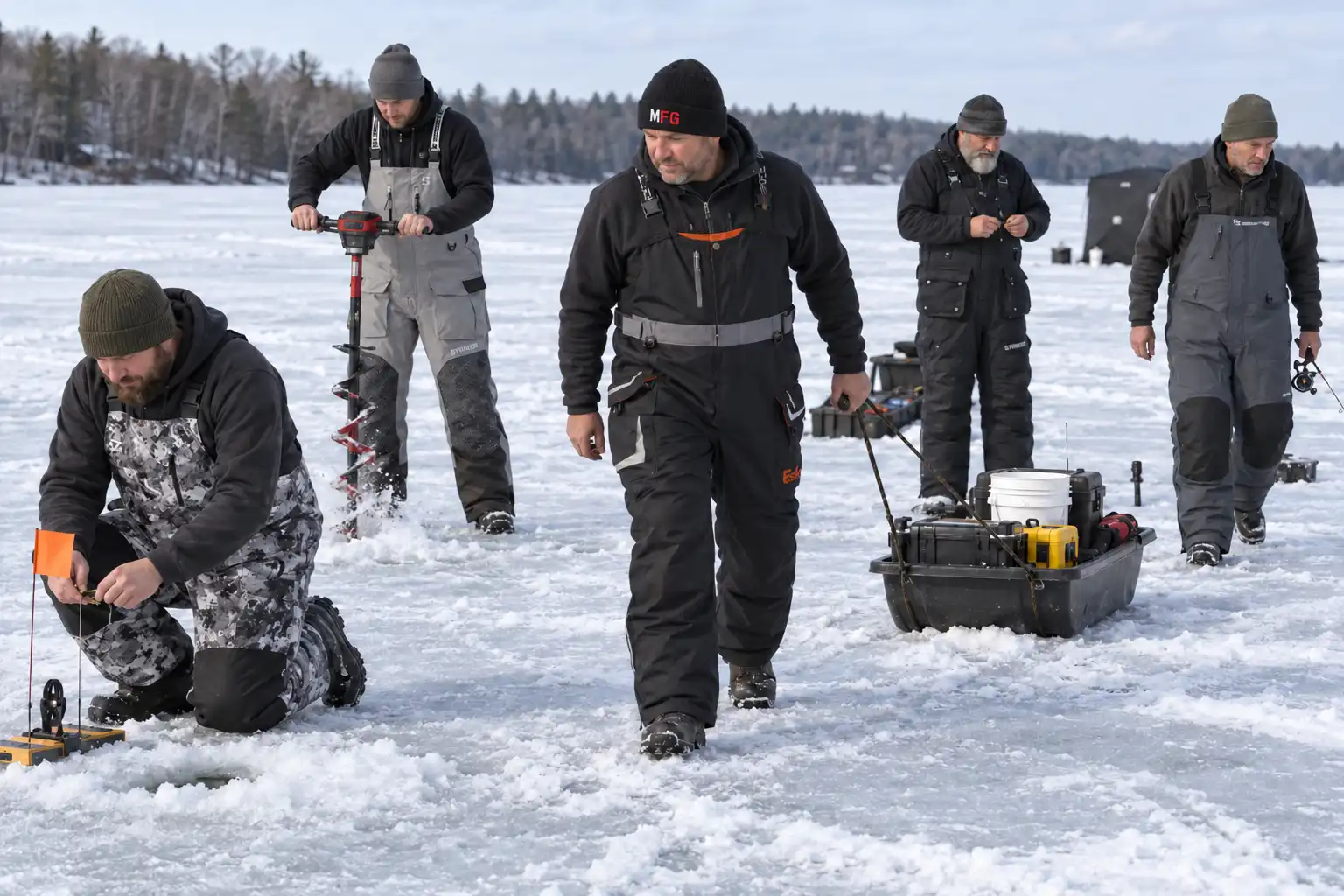
So this list isn’t based on flotation alone. We wore each of these five bibs separately, paired them with different jackets, and used them while kneeling over tip-ups, hauling loaded sleds across open ice, and sitting still in temperatures ranging from the low 30s°F down to -30°F. That showed us which bibs held warmth where it mattered—the knees, seat, and lower back—and which became restrictive or uncomfortable during a full day of fishing.
As an Amazon Associate, we earn from qualifying purchases — no cost to you. That’s how we keep this site running. Read more ›
Every bib included here is sold separately and uses flotation-assist material within the bib itself rather than relying on a matching jacket. If you’re building a two-piece setup, pair one with our tested floating ice fishing jackets, or see our tested complete float suits if you’d rather buy a coordinated jacket-and-bib set.
Quick List: Best Floating Ice Fishing Bibs
Short on time? These five bibs cover every situation we ran into on the ice, from all-day comfort to the coldest mornings of the season.
- IceArmor by Clam Ascent Float Bib — Best Overall: MotionFloat buoyancy, a removable liner, and knee reinforcement that held up to repeated kneeling
- Striker Ice Climate Bib — Best for Extreme Cold: the heaviest insulation in this lineup, built for long, stationary sits in brutal temperatures
- Eskimo Superior Bibs — Best for Breathability & Layering: a modular shell-and-liner system that adapts from early ice to deep winter
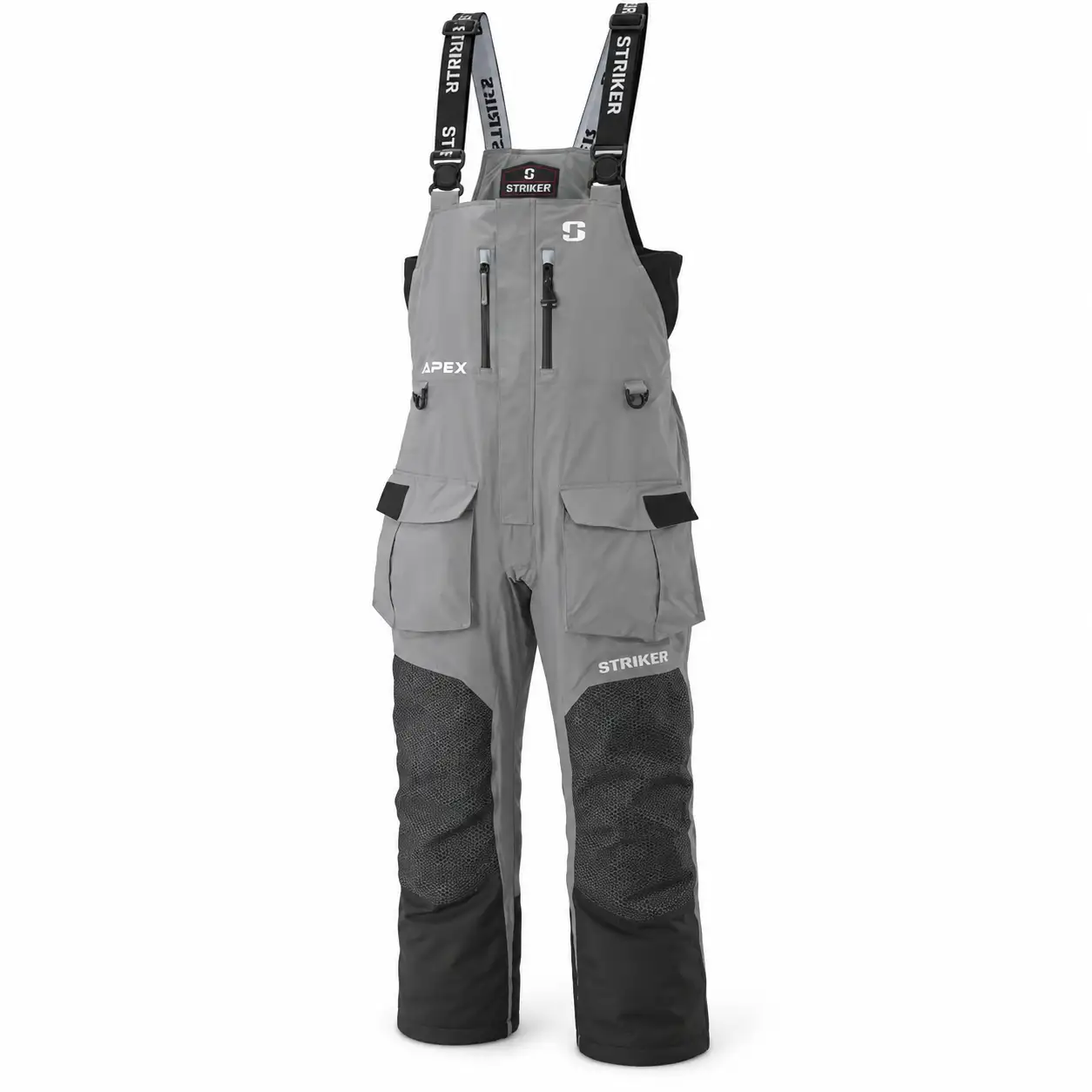
- Striker Apex Bib — Best Premium Warmth-to-Weight: aerogel-infused insulation that retains warmth without the bulk of the Climate
- Piscifun Ice Fishing Bibs — Best Value: flotation-assist construction and reinforced knees at well below the price of the premium models
How MFG Tested and Selected These Bibs
We wore every bib on its own, without the matching jacket, so the flotation, warmth, and fit we’re describing belong to the bib itself. Testing covered a full range of conditions—from mild, slushy afternoons in the low 30s°F to sustained mornings between -20°F and -30°F, with wind cutting across open ice. Each pair went through the same core stress points we hit on a normal day: kneeling repeatedly to check a hole or tip-up, hauling a loaded sled across open ice, and sitting still through long stretches of cold while the wind worked on us.
The knees told us the most. One bib we tried before narrowing the list had knee padding shifting out of place by the end of a single season—not torn, but worked loose by repeated kneeling on hard ice. That’s the failure we watched for in every pair included here: whether the reinforcement stayed put after real contact with ice and packed snow, not just how padded it felt while standing in a store.
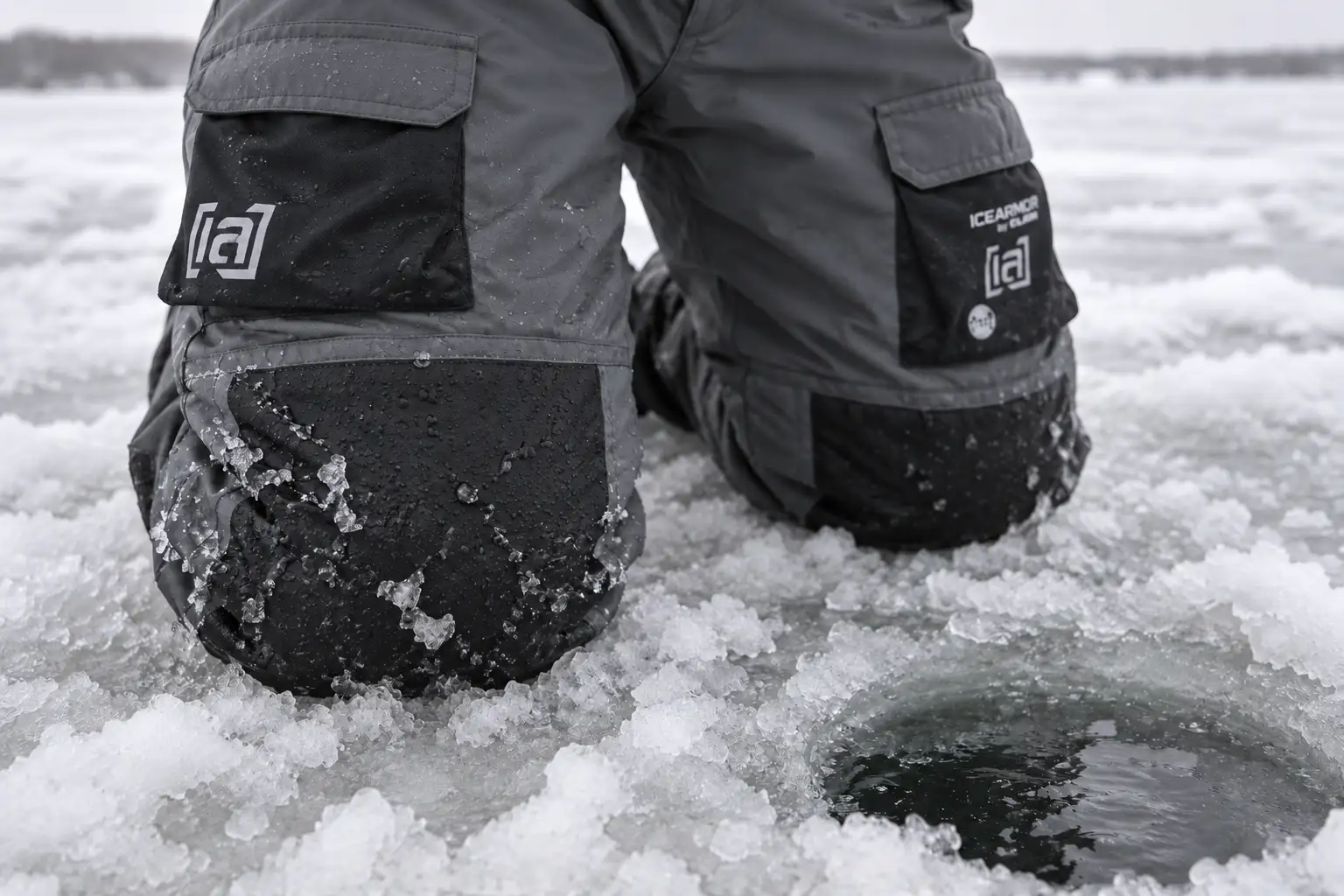
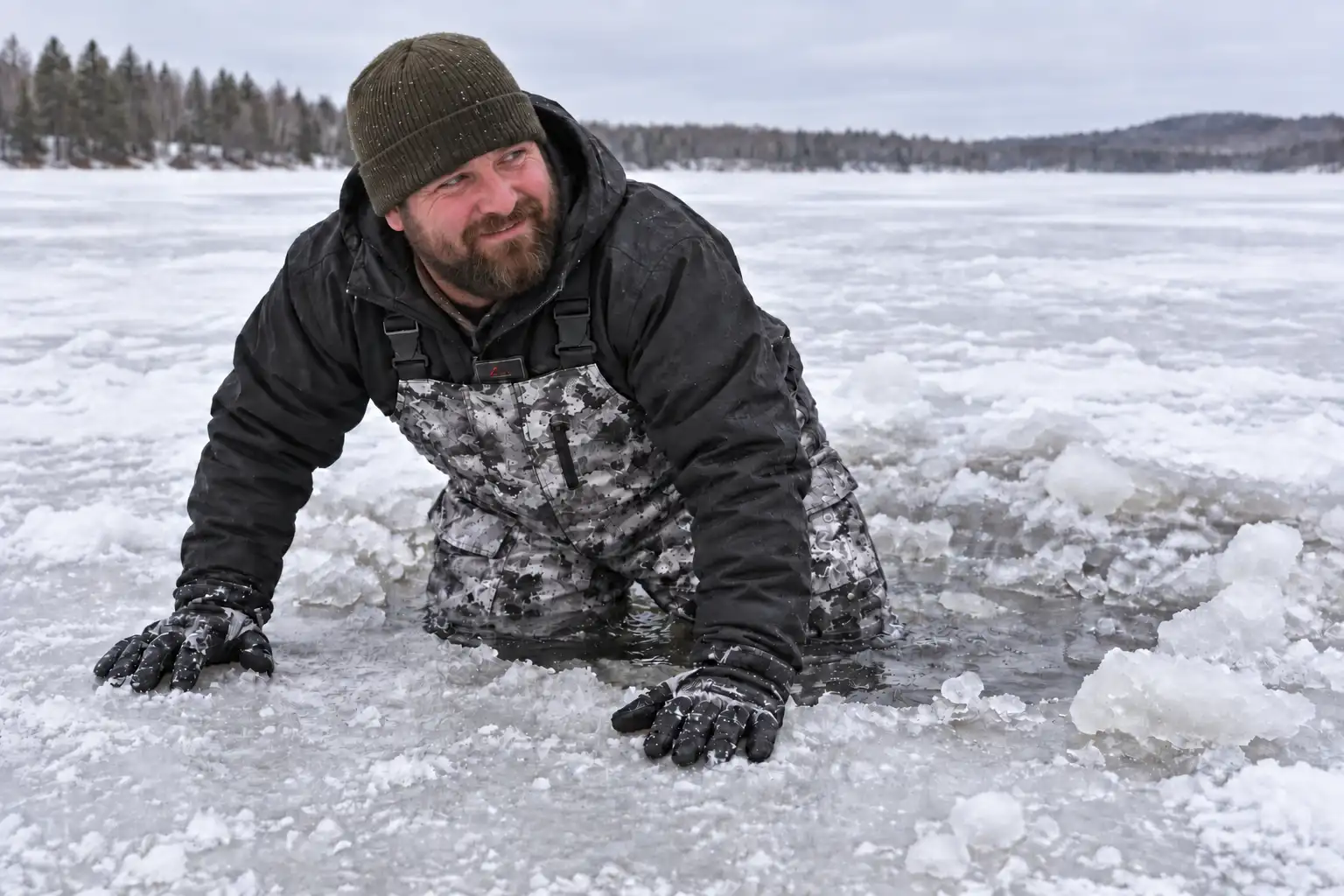
Ice conditions change fast, and despite checking the thickness at every new spot, members of our team ended up in the water while wearing more than one of these bibs over the seasons we tested them. These weren’t controlled dunk tests, but separate, unplanned drops ranging from knee depth to past the waist. Some happened while wearing only the bib and others while it was paired with a floating jacket, giving us a direct read on drainage, movement, and how differently the two setups supported the body once soaked.
Fit changed the results as much as the materials did. A bib that felt fine while standing straight sometimes bound up the moment we crouched to clear slush from a hole, so we moved through that same range of motion—kneel, crouch, reach—in every pair before deciding what made this list.
IceArmor by Clam Ascent Float Bib — Best Overall
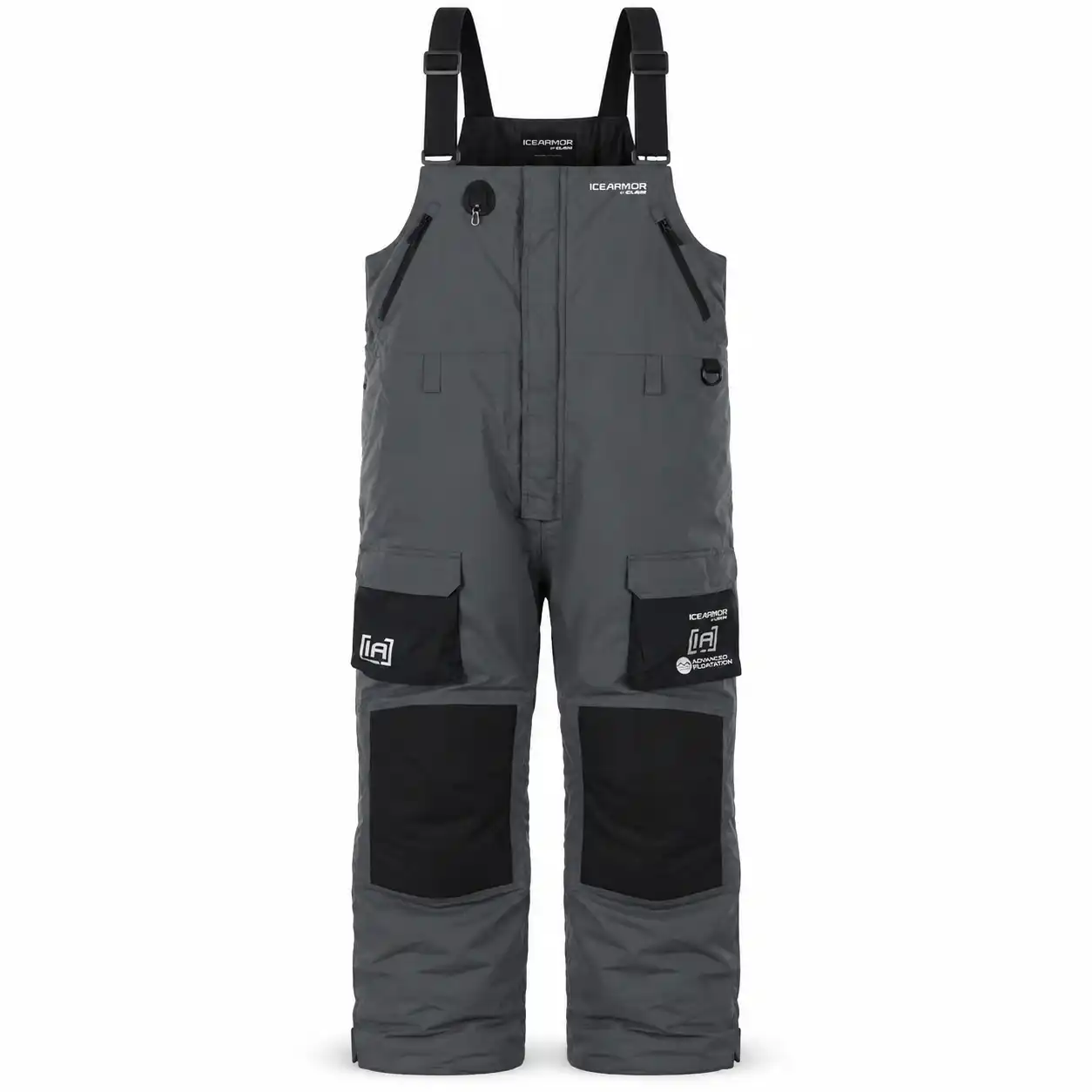
This bib logged more time on its knees than any other in our lineup, including three especially demanding weekends on Leech Lake where the pike were holding tight to a rock hump. Constantly clearing slush and checking holes kept us kneeling instead of sitting back on a bucket. Despite that concentrated abuse—and the additional time we wore it throughout the season—the 1000D ballistic nylon knee panels never shifted or wore thin, and we couldn’t feel cold pushing through the knees where they had been grinding against the ice.
What earns this bib the top spot is how little it asked us to compromise. The rapid drainage system prevented water and melting slush from collecting around the lower legs, while the removable 150g Thinsulate liner let us strip back insulation on milder days and add it again for the coldest stretches without owning two separate bibs. Clam confirms that its MotionFloat buoyancy-assist material is built into the bib itself rather than depending on the matching jacket.
What We Like:
- 1000D ballistic nylon knees showed no shifting or visible wear after repeated kneeling throughout the season
- Rapid drainage prevented water and melting slush from collecting around the lower legs
- Removable 150g Thinsulate liner adapts the same bib to milder days and deep-winter cold
What Could Be Better:
- The legs run noticeably wide through the thighs, adding bulk for anglers with a slimmer build
- Priced above the budget options on this list
Striker Ice Climate Bib — Best for Extreme Cold
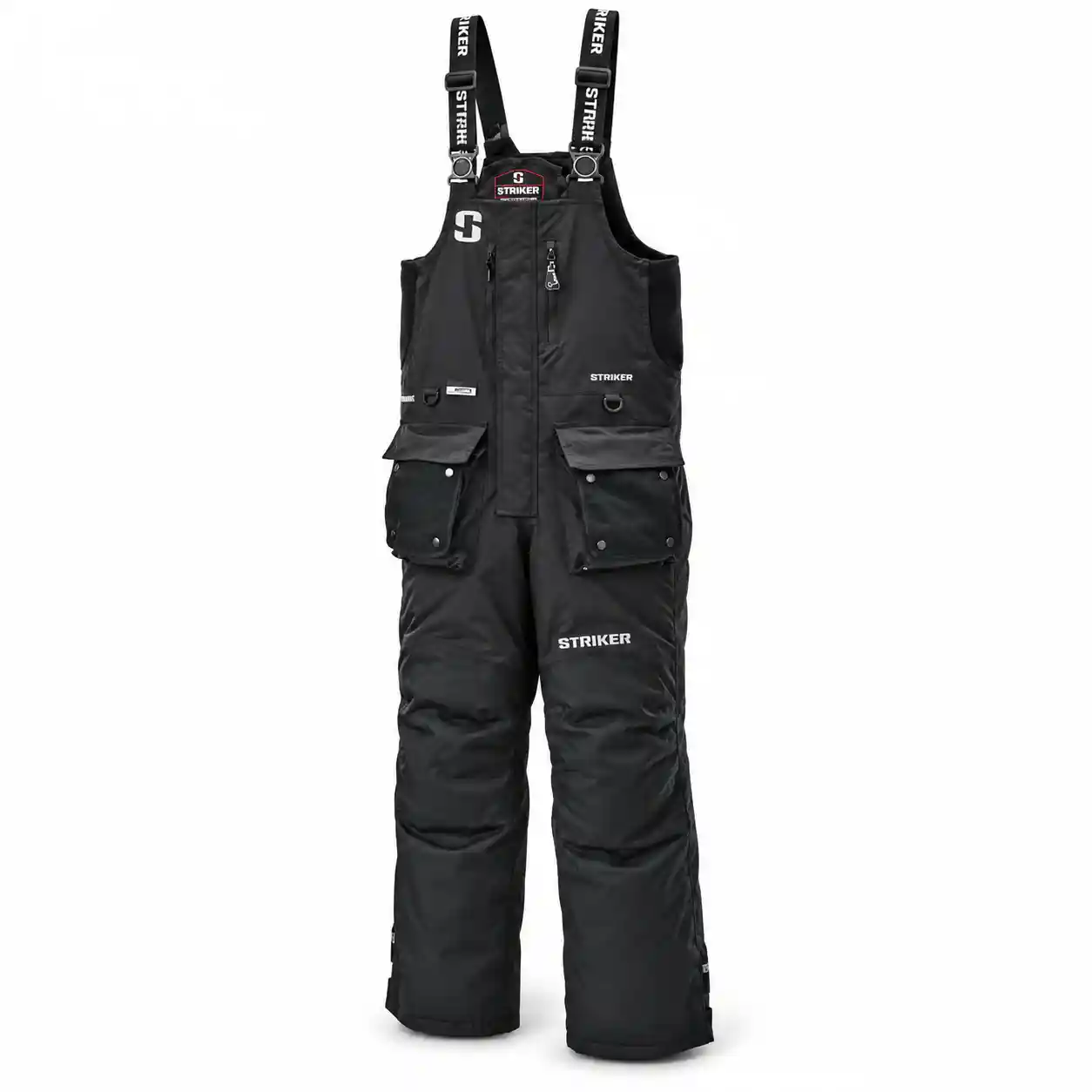
This is the bib we reached for when temperatures fell below zero and the wind cut across open ice—the kind of morning when standing still for more than a few minutes exposes every weak point in your insulation. Parked over a spread of tip-ups for most of the morning, we wore it through sustained temperatures in the -20°F to -30°F range. The removable 175g Thermadex liner kept the cold from working into the seat, thighs, and lower back during the long stretches between flags.
That warmth comes with real weight. This is the heaviest, bulkiest bib in our lineup, and it shows the moment you stop sitting still. Climbing in and out of a shelter or crouching to check a hole took noticeably more effort than it did in any of the lighter options here. But for anglers who spend most of a trip watching tip-ups or fishing from one position rather than moving between holes, that trade-off is the reason to own this bib.
What We Like:
- Removable 175g Thermadex liner kept the seat, thighs, and lower back warm during extended stationary sessions in severe cold
- Removing the liner makes the same bib usable on milder days
- Sureflote flotation-assist material is built into the bib rather than depending on a matching jacket
What Could Be Better:
- The heaviest, bulkiest bib in our test—movement felt noticeably more restricted while kneeling or climbing in and out of a shelter
- The most expensive bib in our lineup
Eskimo Superior Bibs — Best for Breathability & Layering
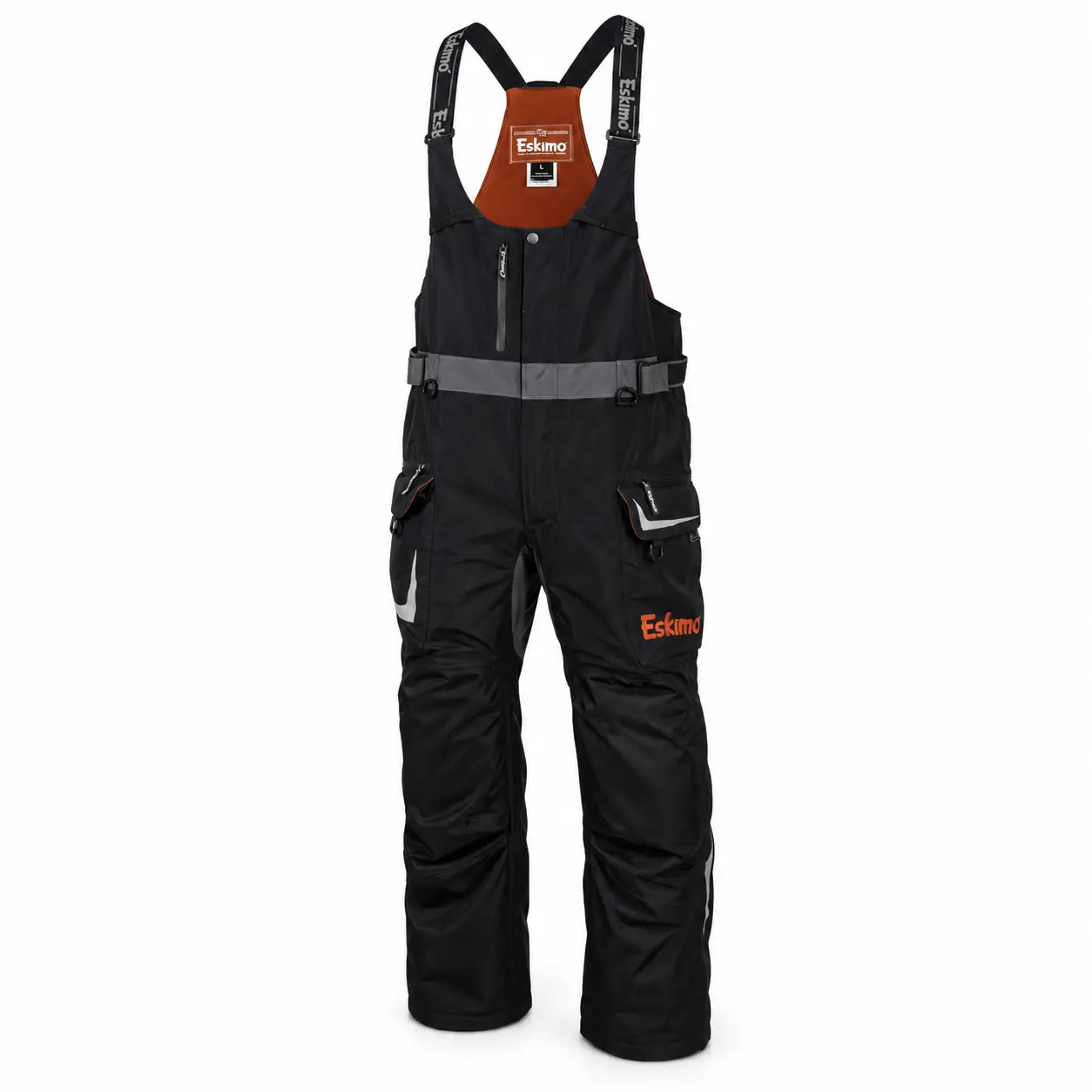
We started one trip in the low single digits, watched the temperature climb above freezing by early afternoon, and then felt it fall again toward evening. This was the only bib in our test that let us adjust to the entire swing without changing our outer gear. We began the morning with the removable 100g 3M Thinsulate liner under the shell, pulled it out for the warm and active part of the afternoon, and put it back on when the temperature dropped again.
That modular system is the whole reason this bib earns its category. Most insulated bibs force you to choose between staying warm while stationary and overheating once you start hauling gear or drilling holes. Pairing an uninsulated Uplyft float shell with a separate liner pant let us match the insulation to the conditions instead of sweating through a built-in layer we couldn’t remove. The 15k/15k waterproof/breathable shell kept moisture out through a wet, sloppy stretch of snow, while the removable knee pads let us pull them for a lighter feel or leave them in for a full morning of kneeling.
What We Like:
- Removable liner adapts to temperature and activity changes within a single trip, not just from season to season
- 15k/15k waterproof/breathable shell kept moisture out through wet, sloppy snow
- Removable knee pads let us choose between additional protection and a lighter feel
What Could Be Better:
- The legs run long, and shorter anglers may find excess material bunching around their boots
- The uninsulated shell alone didn’t provide enough warmth for stationary sits in severe cold
Striker Apex Bib — Best Premium Warmth-to-Weight
We wore the Apex on a day built around covering ground—drilling a new hole every 15 or 20 minutes, checking the flasher, and moving again when nothing showed up. That’s exactly the pace where the heavier Climate would have worn us out. The Apex handled the constant movement without overheating us, yet still held enough warmth once we stopped to fish a spot that looked right.
The aerogel-infused PrimaLoft insulation is what makes that possible—only 80g of fill compared with the Climate’s 175g, but it didn’t feel like a meaningful step down in warmth during the active stretches of the day. What earns it the “premium” label rather than simply “lightweight” is its SuperFabric knee reinforcement and 10,000mm/5,000g Hydrapore Pro shell. Both endured the same repeated kneeling and slush exposure as the heavier bibs without showing early wear or allowing moisture through. The trade-off appeared once we stopped moving: during a longer stationary stretch, we felt the cold working in faster than it did in the Climate.
What We Like:
- Aerogel-infused insulation delivered real warmth with a fraction of the bulk of heavier bibs
- SuperFabric knees showed no wear after repeated kneeling on hard ice
- 10,000mm/5,000g Hydrapore Pro shell handled slush and snow without allowing moisture through
What Could Be Better:
- Ran smaller than the other Striker bibs our team tested—we needed to size up to fit a base layer without restricting movement
- Cold worked in faster than it did with the Climate during long stationary stretches
Piscifun Ice Fishing Bibs — Best Value
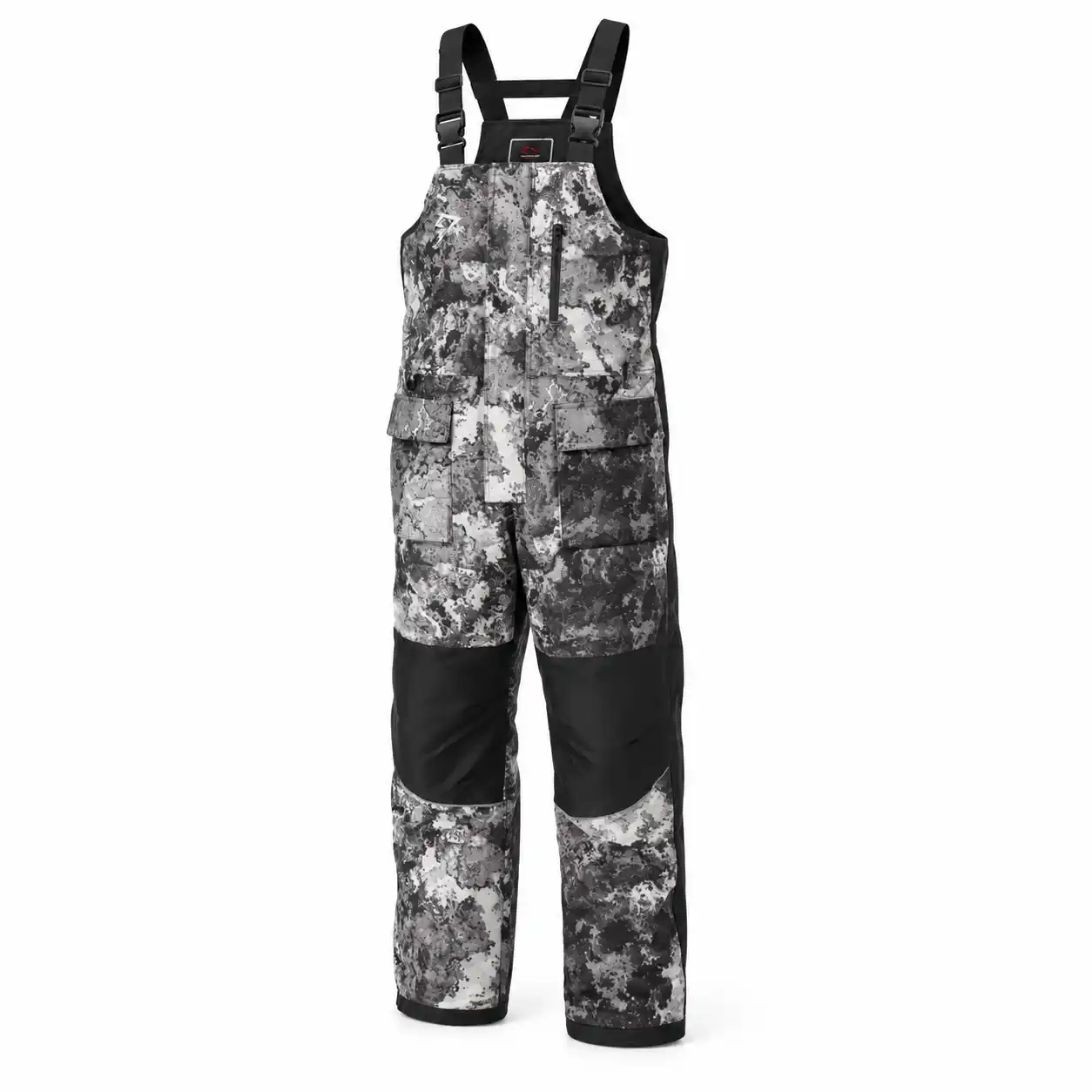
We first wore the Piscifun bibs during a short early-ice scouting session when we spent more time kneeling to check thickness with the auger than actually fishing. That gave the budget model nowhere to hide: its knees stayed in repeated contact with wet ice, while the lower legs moved through slush as we worked carefully from one checked spot to the next. It handled both without feeling like the obvious compromise we expected at well under half the price of the Climate.
What earns this bib its category isn’t just the lower price—it’s that the essentials are still here. Its flotation-assist technology, taped seams, and reflective safety details come at a significantly lower price than the premium bibs in this lineup. The 1680D Oxford knee panels and removable EVA plates also held up to the same repeated kneeling we put the other bibs through. The compromise became clear once we stopped moving: during a longer, colder sit, the seat and lower back lost heat sooner than they did in the insulated Striker and Clam models.
What We Like:
- Flotation-assist construction and reinforced knees at well below the price of the premium bibs in this list
- 1680D Oxford knee panels and removable EVA plates held up to repeated kneeling on wet ice
- Taped seams kept water from reaching our base layers in wet, slushy conditions
What Could Be Better:
- The seat and lower back lost heat sooner than they did in the insulated Striker and Clam bibs during longer stationary sits
- Hook-and-loop closures began losing their grip sooner than the rest of the bib showed wear
How to Choose a Floating Ice Fishing Bib
Once you’re comparing bibs side by side, the specifications can start to blur together. Here’s what actually matters once you’re kneeling on ice, hauling a sled, or fighting the cold for hours at a stretch.
Confirm That the Bib Itself Provides Flotation Assistance
Don’t assume a bib provides flotation assistance just because it’s sold as part of a matching float suit. Check whether the manufacturer specifically states that flotation material is built into the bib itself rather than making a claim that applies only to the complete jacket-and-bib combination. Manufacturers vary in how clearly they explain this, so look for the named flotation technology in the bib’s own specifications rather than relying on the suit name or product photography.
Clam identifies MotionFloat technology inside the Ascent bib, Eskimo lists Uplyft flotation assistance in the Superior, and Striker confirms that its Sureflote-equipped bibs provide buoyancy independently of the matching jacket. Remember that flotation assistance adds buoyancy after an unexpected breakthrough; it does not make unsafe ice safe or replace a certified PFD where one is required.
Match the Insulation to How You Fish
More insulation isn’t automatically the right choice—it depends on how much of your day is spent sitting versus moving. Heavier bibs like the Climate hold heat well for anglers parked over a tip-up spread for hours. Lighter bibs like the Apex trade some stationary warmth for reduced bulk, which matters when you’re drilling holes, hauling a sled, and changing locations throughout the day.
A removable liner system gives you more control when conditions or activity levels change. The Clam Ascent and Eskimo Superior both allow insulation to be removed, letting you reduce warmth for active or milder sessions and add it again when temperatures fall or you expect to sit still.
Understand Waterproof and Breathability Ratings
Ratings such as 15,000mm/15,000g are usually shown together, but they measure different things. The first number indicates how much water pressure the fabric can resist before leaking. The second indicates how much moisture vapor can pass through one square meter of fabric over 24 hours.
A higher waterproof rating matters when you’re repeatedly kneeling in slush or fishing wet, late-ice conditions, while greater breathability becomes more important when you’re drilling, hauling, and moving enough to sweat. Neither difference will be as noticeable during a dry, cold day spent mostly sitting on packed snow.
Don’t Judge Knee Protection by Denier Alone
Denier—the “D” number shown in specifications such as 300D, 1000D, or 1680D—technically measures the linear mass of the fibers used in the fabric. When comparing similar materials and construction, a higher denier usually indicates a heavier and more abrasion-resistant panel, but the number alone doesn’t guarantee durability or waterproofing.
Padding, articulation, seam placement, and whether the reinforcement stays centered over your knee matter just as much as the denier rating. The 1000D knees on the Clam Ascent held their shape and position through a full season of kneeling on hard ice, while the padding on a bib we ruled out during testing had started sliding off-center by the end of its first season—the panel was still there, just no longer where our knee actually landed. This deserves close attention on a bib because the knees take more repeated contact with hard ice than almost any other part of your outerwear.
Suspenders, Side-Zip Access & Layering With Boots
This is the part almost nobody writing about bibs actually addresses, and it matters more than it sounds like it should: at some point during a full day on the ice, you’re going to need fast access—for a bathroom break, to replace a wet base layer, or simply to dump heat after hauling gear. If that requires partially undressing in single-digit wind, it isn’t a minor inconvenience. It’s the difference between a quick adjustment and standing exposed to the cold longer than necessary.
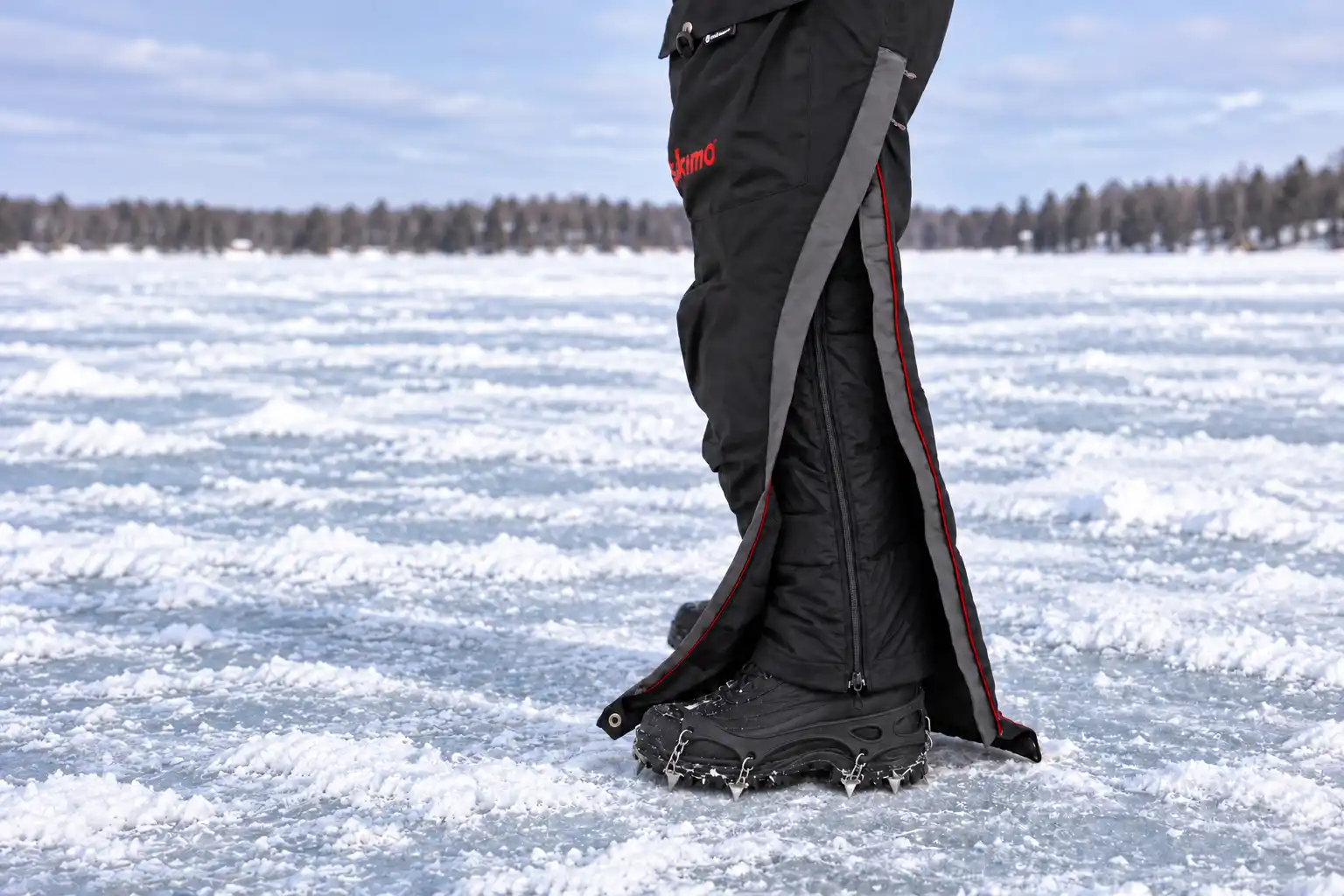
Start with the suspenders and front zipper. The straps should remain secure while kneeling but still be easy to adjust while wearing gloves. A two-way front zipper makes bathroom access and ventilation considerably easier without forcing you to lower the entire bib.
The next detail to check is how far the leg zippers extend. Full-length and waist-high openings offer the easiest on-and-off access over bulky winter boots. Thigh-length zippers can still provide useful ventilation and enough room around the lower leg, while short ankle openings are the least practical and may force you to remove your boots before taking the bib completely off.
Don’t treat every “long leg zipper” description as meaning the same thing. The Striker Climate and Apex use full-length leg zippers, the Clam Ascent uses waist-height openings, and the Eskimo Superior uses thigh-length zippers. Check the exact configuration on the model you’re considering rather than assuming every premium bib opens all the way to the hip.
These details don’t attract attention on a specification sheet the way insulation weight or waterproof ratings do, but they separate a bib that works with your actual winter layers from one that becomes frustrating every time you need access or ventilation.
Check the Fit With Your Actual Layers
A floating ice fishing bib should leave enough room for your base and mid-layers without pulling across your shoulders or binding at the knees. Test the fit in the positions you’ll actually use on the ice: kneel, crouch, reach forward, sit down, and step over something roughly the height of a sled rail.
Fit varies considerably between brands and even between models from the same manufacturer. Some run wide through the thighs, while others fit more closely through the waist or torso. We needed a larger Apex than the other Striker bibs our team tested to preserve room for a base layer without restricting movement. Use the manufacturer’s size chart as a starting point, but choose around the layers you’ll actually wear rather than the size printed inside your regular pants.
Floating Ice Fishing Bibs Compared
| Bib | Best For | Insulation | Knee Reinforcement | Leg Zip Access | Flotation Technology |
|---|---|---|---|---|---|
| IceArmor by Clam Ascent | Best Overall | Removable 150g 3M Thinsulate liner | 1000D ballistic nylon | Waist-high leg zips | MotionFloat |
| Striker Ice Climate | Best for Extreme Cold | Removable 175g Thermadex liner | Reinforced knee panels | Full-length leg zips | Sureflote |
| Eskimo Superior | Best for Breathability & Layering | Removable 100g 3M Thinsulate liner pant | Removable foam knee pads | Thigh-length leg zips | Uplyft Breathable Flotation |
| Striker Apex | Best Premium Warmth-to-Weight | 80g PrimaLoft Gold Cross Core (aerogel) | SuperFabric reinforced | Full-length leg zips | Sureflote |
| Piscifun | Best Value | Polyester thermal insulation | 1680D Oxford + removable EVA plates | Full-length leg zips | Professional Flotation Technology |
Flotation Assist vs. a USCG-Approved PFD
Every bib on this list adds buoyancy, but none is a USCG-approved life jacket—and flotation assistance is not the same thing as PFD certification. A USCG-approved PFD has passed defined performance and labeling requirements for its intended use. Some life jackets are designed to turn most unconscious wearers face-up, while other approved designs provide buoyancy but may require the wearer to position themselves in the water.
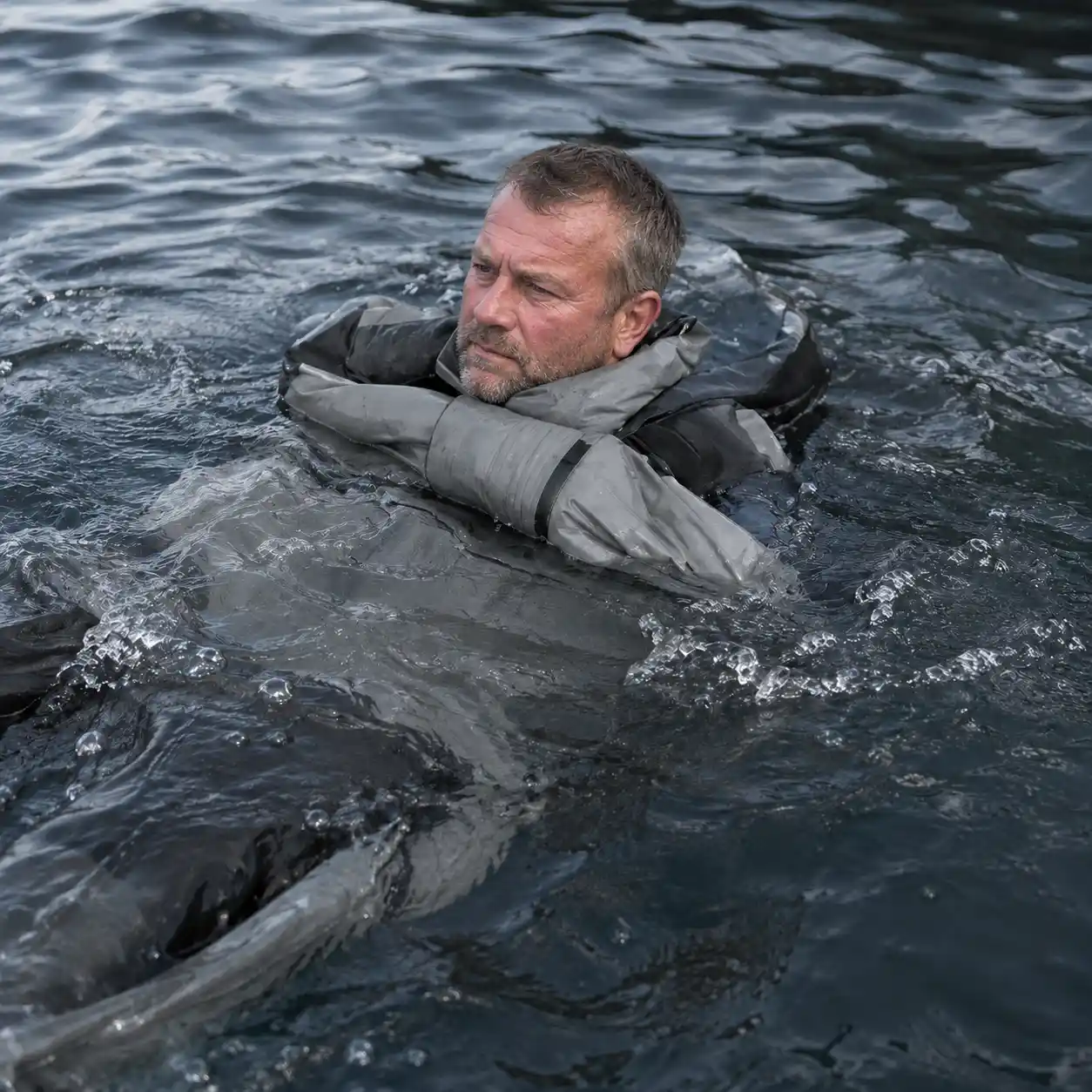
A floating bib serves a different purpose. Its buoyant material sits primarily around the waist and legs, where it can help lift the lower body, reduce the effort required to remain near the surface, and assist with self-rescue. What it cannot do by itself is provide the upper-body and head support of a properly fitted life jacket.
We treat every bib here as additional buoyancy that works alongside a floating jacket, not as a substitute for one. Across the separate incidents our team experienced, the difference was clear. When only a floating bib was being worn, it helped lift the waist and legs, but we still had to work actively to control body position. When a floating jacket was worn with the bib, it added the upper-body support the bib alone could not provide, kept the body more level in the water, and reduced the effort required to move back toward solid ice.
Clam, Eskimo, and Striker all describe their built-in flotation as assistance rather than a USCG-approved PFD. A notable exception in ice-fishing outerwear was the Frabill I-Float system, but even that distinction applied only to the jacket. Frabill stated directly that the matching I-Float bib was not USCG certified and instead provided additional flotation intended to elevate the legs and assist with self-rescue.
Buy flotation-assist bibs for what they genuinely add: more total buoyancy when paired with appropriate upper-body protection. They do not make questionable ice safe, guarantee survival after a breakthrough, or replace a USCG-approved PFD when one is required.
Frequently Asked Questions
Can I buy and wear floating ice fishing bibs without the matching jacket?
Yes. Every bib in this guide is sold separately and contains flotation-assist material in the bib itself. Pairing it with a floating jacket adds upper-body support and greater total buoyancy, but the bib doesn’t require its matching jacket to provide its stated flotation assistance. Based on our experience in the water, however, we would not rely on a floating bib as our only source of flotation.
Are floating ice fishing bibs the same as a life jacket?
No. Floating ice fishing bibs add buoyancy primarily around the waist and legs, but they are not USCG-approved personal flotation devices. Treat them as additional buoyancy rather than a replacement for a properly fitted, USCG-approved PFD when one is required.
How warm should floating ice fishing bibs be?
It depends on your activity level as much as the temperature. Anglers who sit stationary over a tip-up spread generally benefit from heavier insulation. If you drill frequently, haul a sled, or move between holes, lighter insulation with effective ventilation can help prevent sweat from building up in your base layers.
Do floating ice fishing bibs run true to size?
Not consistently. Fit varied even between models from the same manufacturer during our testing. Measure yourself over the base and mid-layers you’ll actually wear, then compare those measurements with the manufacturer’s size chart. Leave enough room to kneel and crouch without pulling across the shoulders or binding behind the knees.
What should I look for in the knees of floating ice fishing bibs?
Denier alone doesn’t guarantee durability. A higher number usually indicates a heavier and more abrasion-resistant panel when similar materials are being compared, but padding, articulation, seam placement, and whether the reinforcement remains centered over your knee matter just as much. Since bibs take repeated contact with hard ice, inspect the entire knee construction rather than relying on the denier number alone.