

Best Floating Ice Fishing Jackets: Our Top 5 After Real Testing
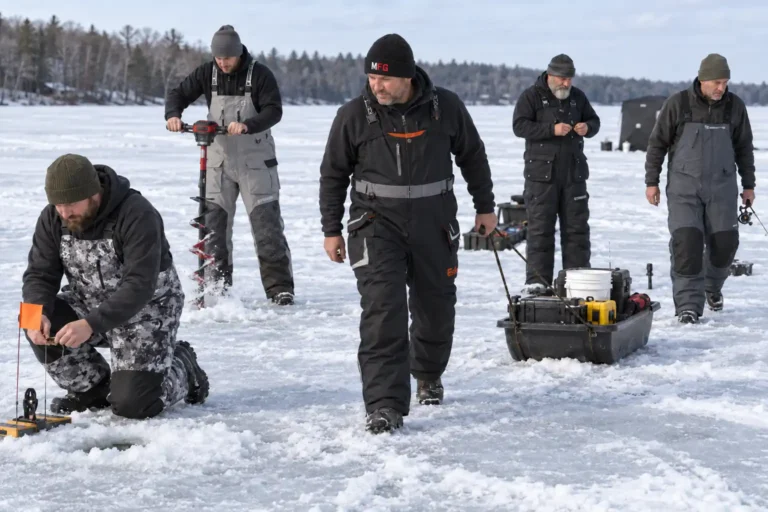
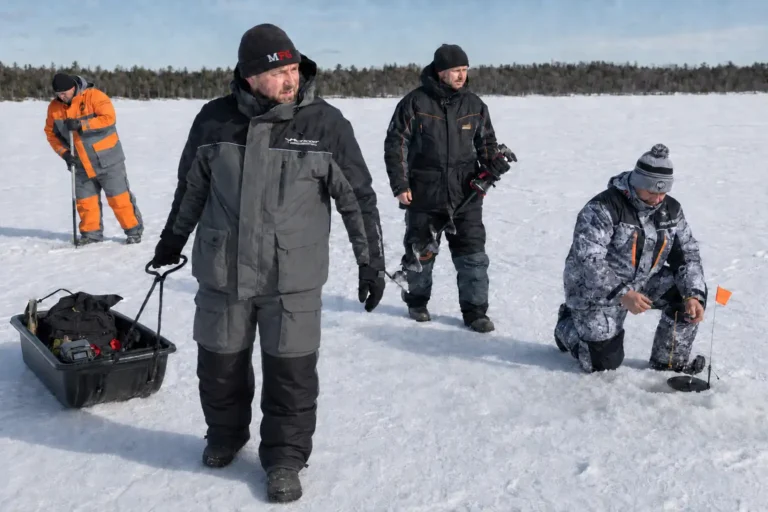
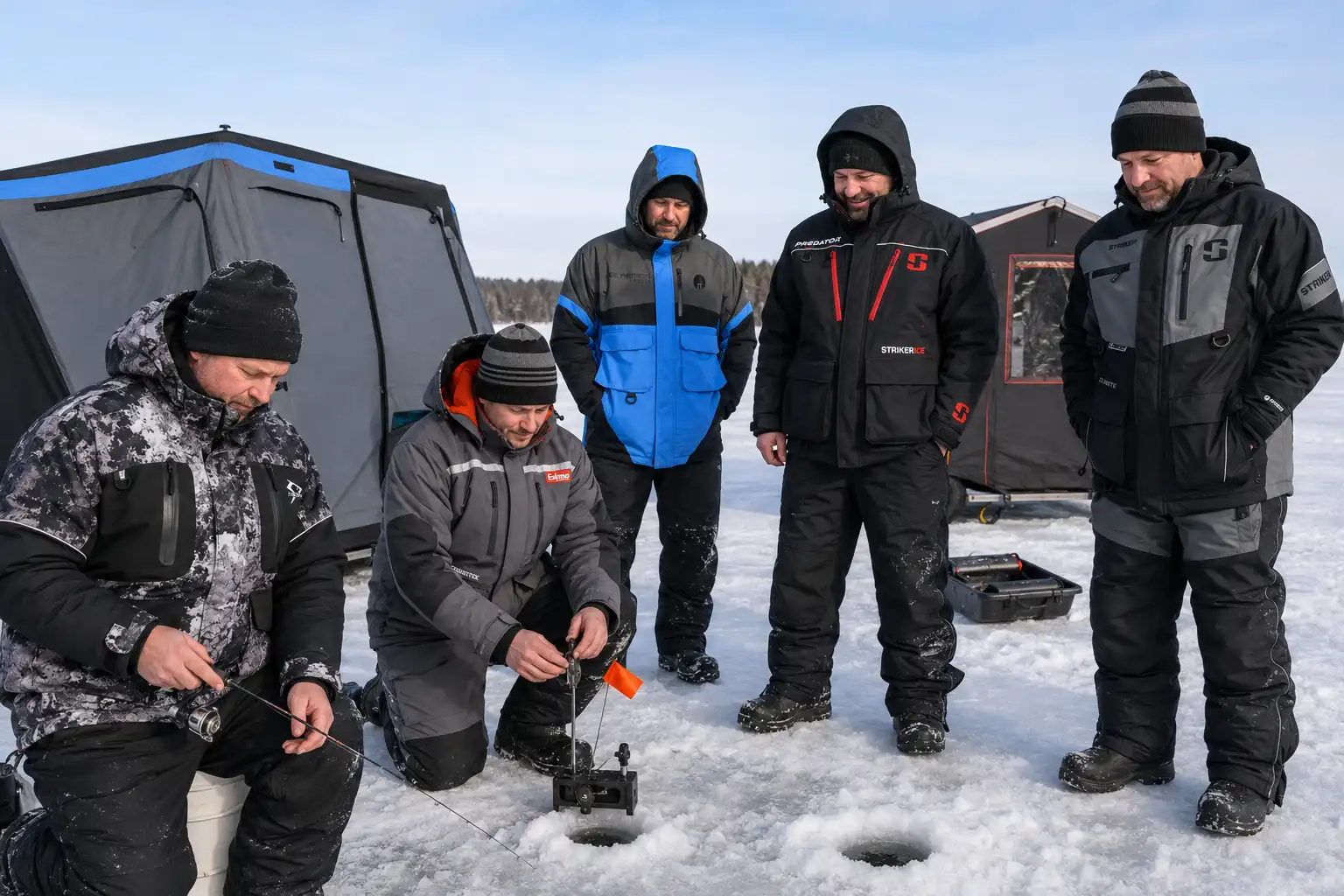
We tested the best floating ice fishing jackets during real days on the ice, wearing each one without the matching bibs. We drilled holes, hauled sleds, moved between spots, and sat through freezing winds to compare warmth, mobility, weather protection, pocket access, and active comfort.
Testing jackets on their own matters because most guides evaluate complete suits. Many anglers already own good bibs, want more flexibility on milder days, or prefer a lighter setup for active hole-hopping. Every jacket on this list is sold separately and features built-in flotation-assist technology.
As an Amazon Associate, we earn from qualifying purchases — no cost to you. That’s how we keep this site running. Read more ›
We cross-referenced our field observations with manufacturer specifications and long-term angler feedback, but our rankings were driven by real performance on the ice. Flotation-assist jackets provide additional buoyancy in an emergency, but they are not replacements for a USCG-approved life jacket. If you need a complete set, see our guide to the best floating ice fishing suits, or pair your jacket with our tested floating ice fishing bibs.
Quick List: Best Floating Ice Fishing Jackets
Short on time? These five field-tested jackets cover the main ways anglers fish the ice—and each can be purchased without matching bibs.
- Striker Ice Climate Jacket — Best Overall: the warmest jacket in our test, with a removable liner and versatile 3-in-1 design
- Striker Predator Jacket — Best for Run-and-Gun Mobility: lighter insulation and cross-flow venting for anglers who move between holes all day
- IceArmor by Clam Ascent Float Parka — Best for Wet & Slushy Conditions: rapid drainage and rotary venting suited to messy early- and late-ice conditions
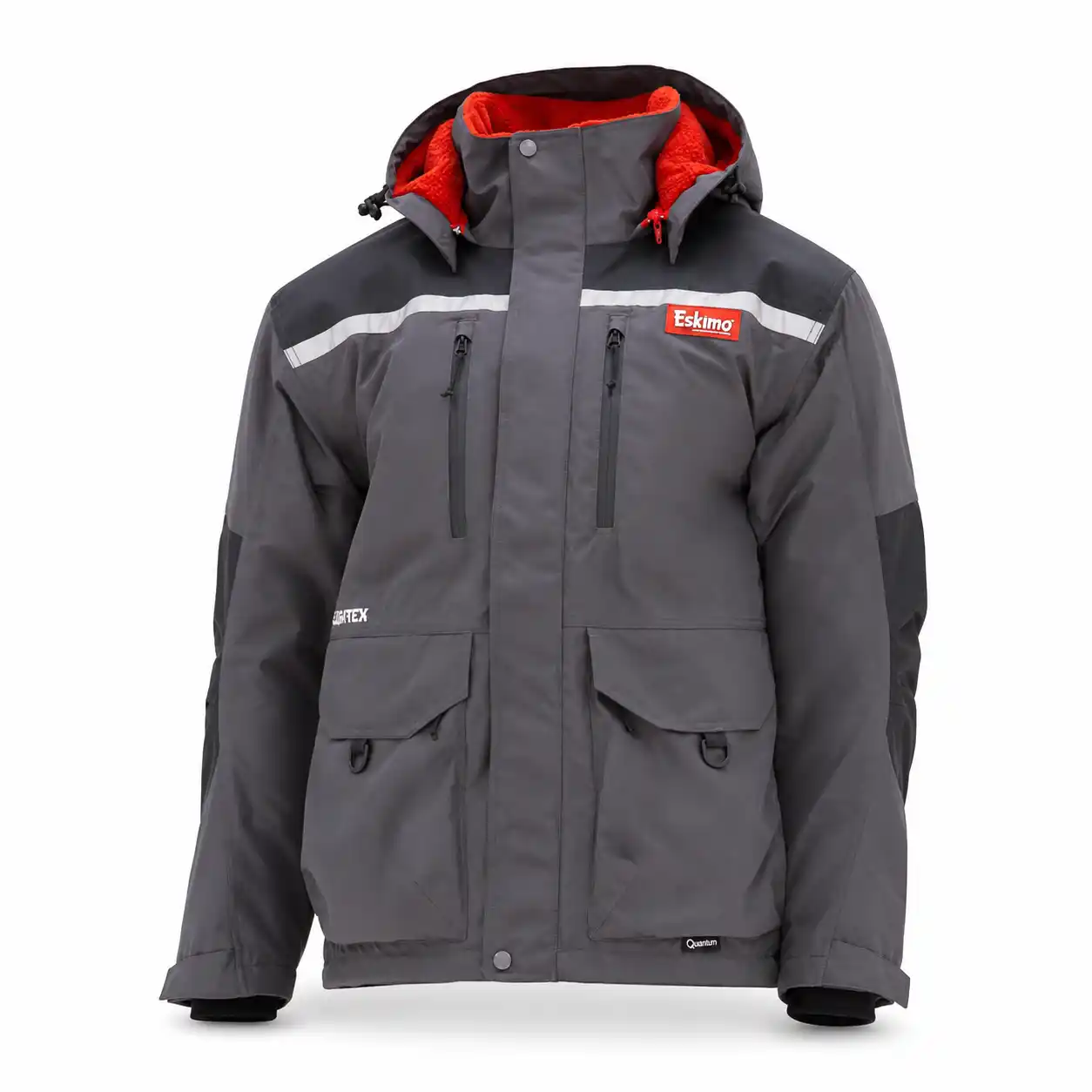
- Eskimo Roughneck Jacket — Best for Durability: reinforced shoulders and elbows for anglers who are hard on their gear
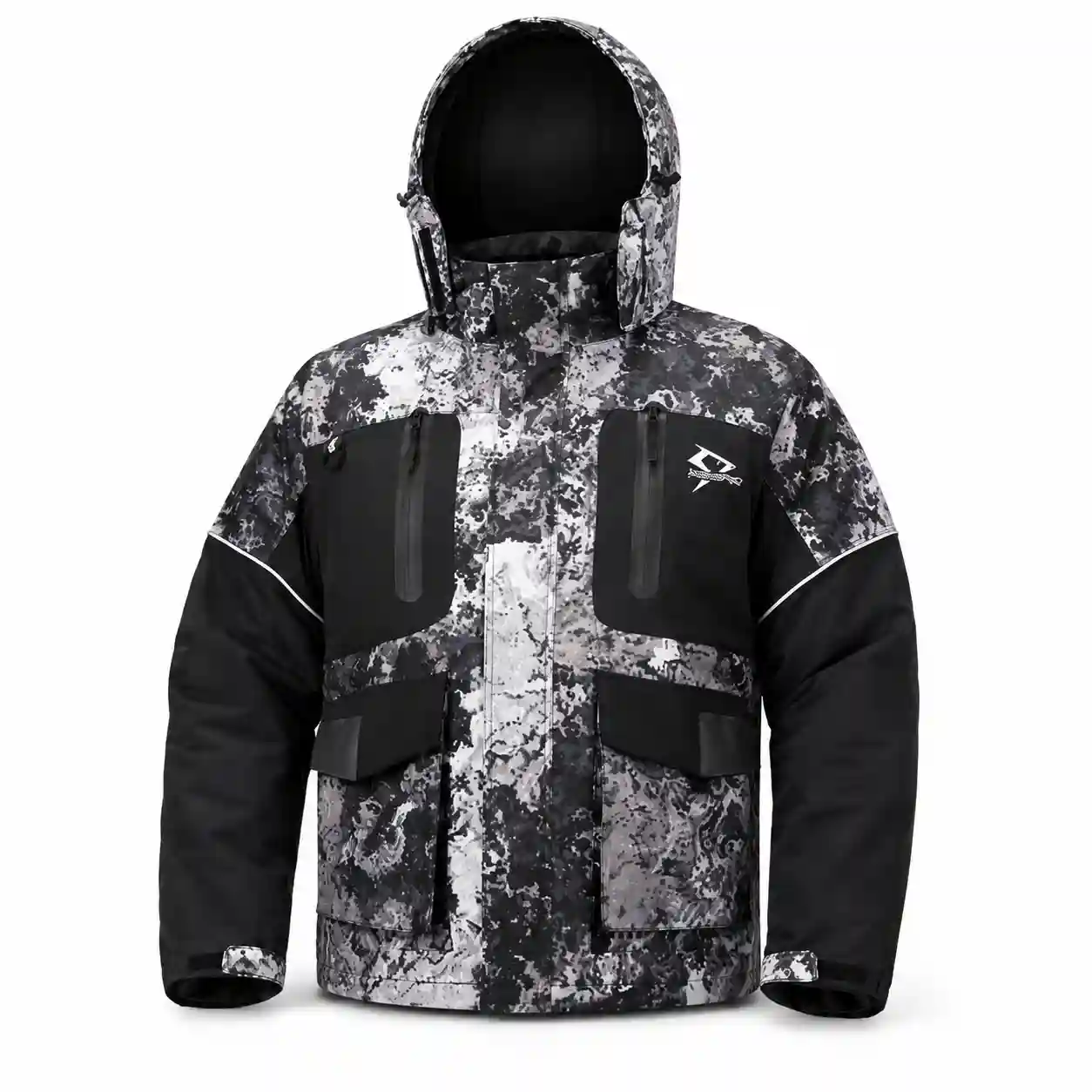
- Piscifun Ice Fishing Jacket — Best Value: built-in flotation assistance and useful safety features without the premium price
How MFG Tested and Selected These Jackets
We tested every jacket without its matching flotation bibs. Depending on the conditions, we paired them with regular insulated bibs or lighter layers so we could judge the jacket itself—not the performance of a complete suit.
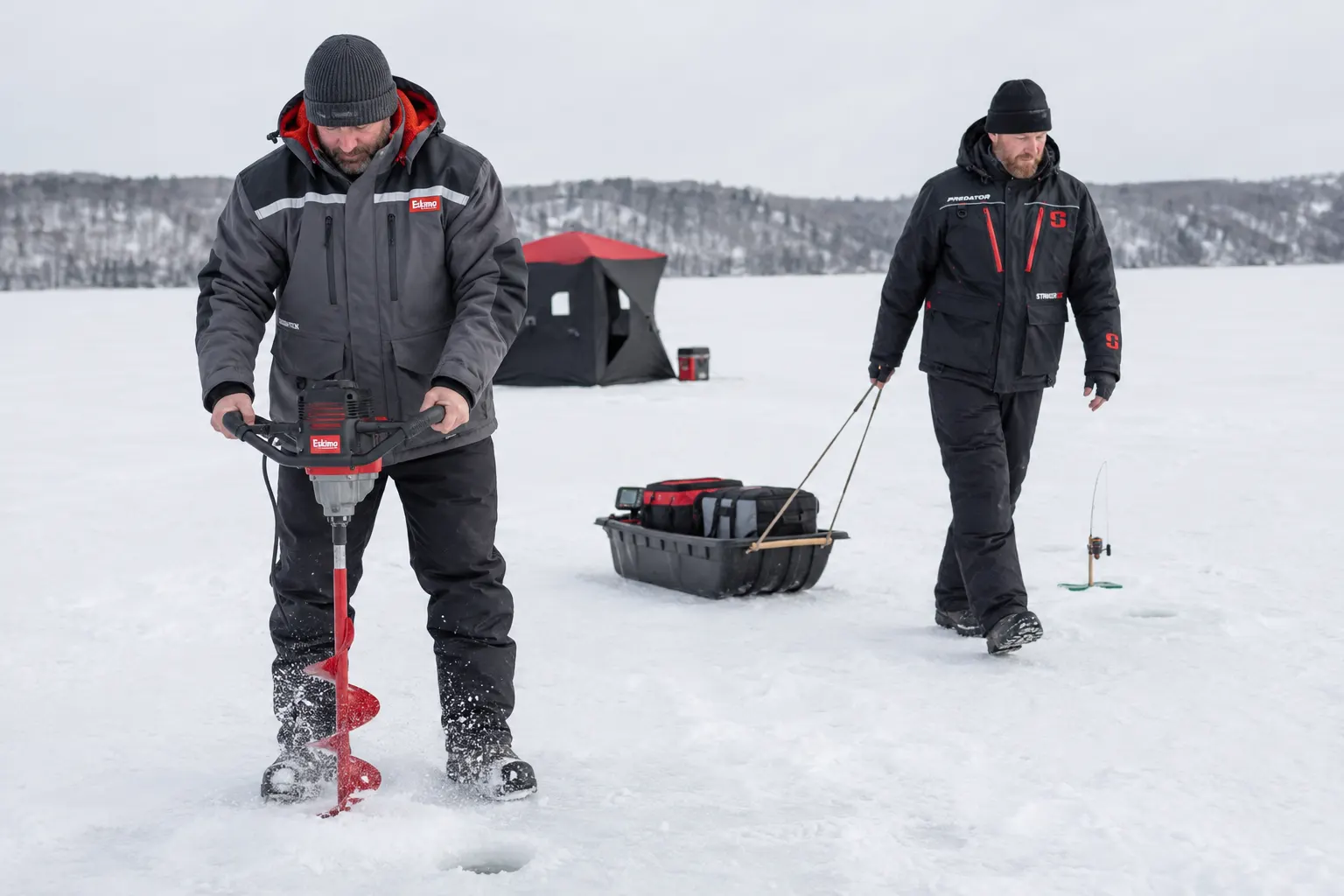
Each model spent real time on the ice while we drilled holes, hauled loaded sleds, set and checked tip-ups, moved between spots, and waited through long stretches of wind and cold. We paid close attention to what changed as our activity level changed: whether the jacket trapped sweat while moving, blocked wind while sitting, restricted our shoulders while drilling, or made pockets and zippers difficult to use with gloves.
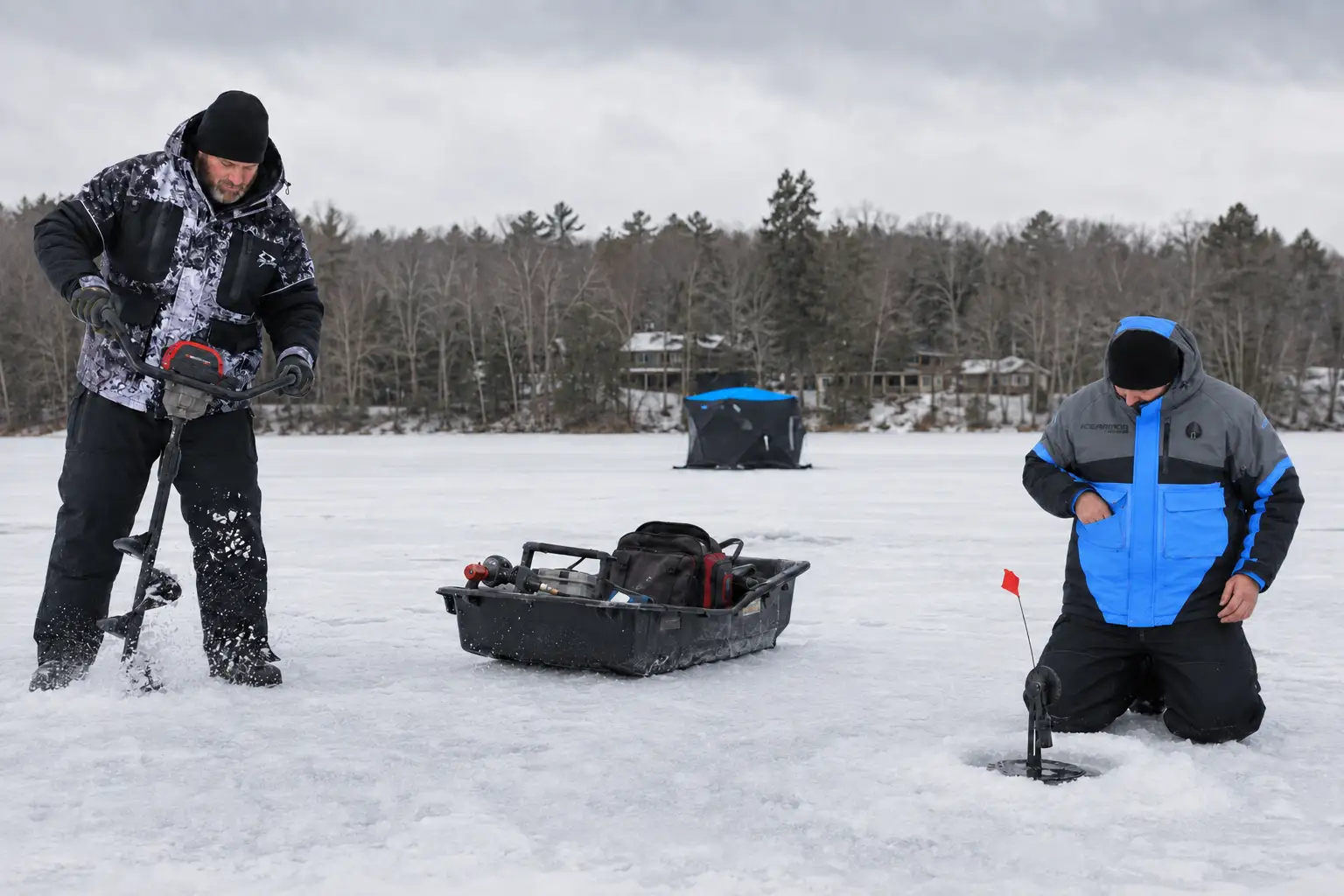
After the field testing, we checked each manufacturer’s specifications to verify insulation, shell construction, ventilation, drainage, and flotation-assist technology. We also reviewed hundreds of owner reports for recurring sizing, zipper, and durability problems that may take more than one season to appear. Those reports helped identify long-term concerns, but our category winners were determined by their performance on the ice.
To qualify, a jacket had to be sold separately and contain flotation-assist material in the jacket itself. We did not assume that a jacket floats independently simply because it belongs to a matching float suit.
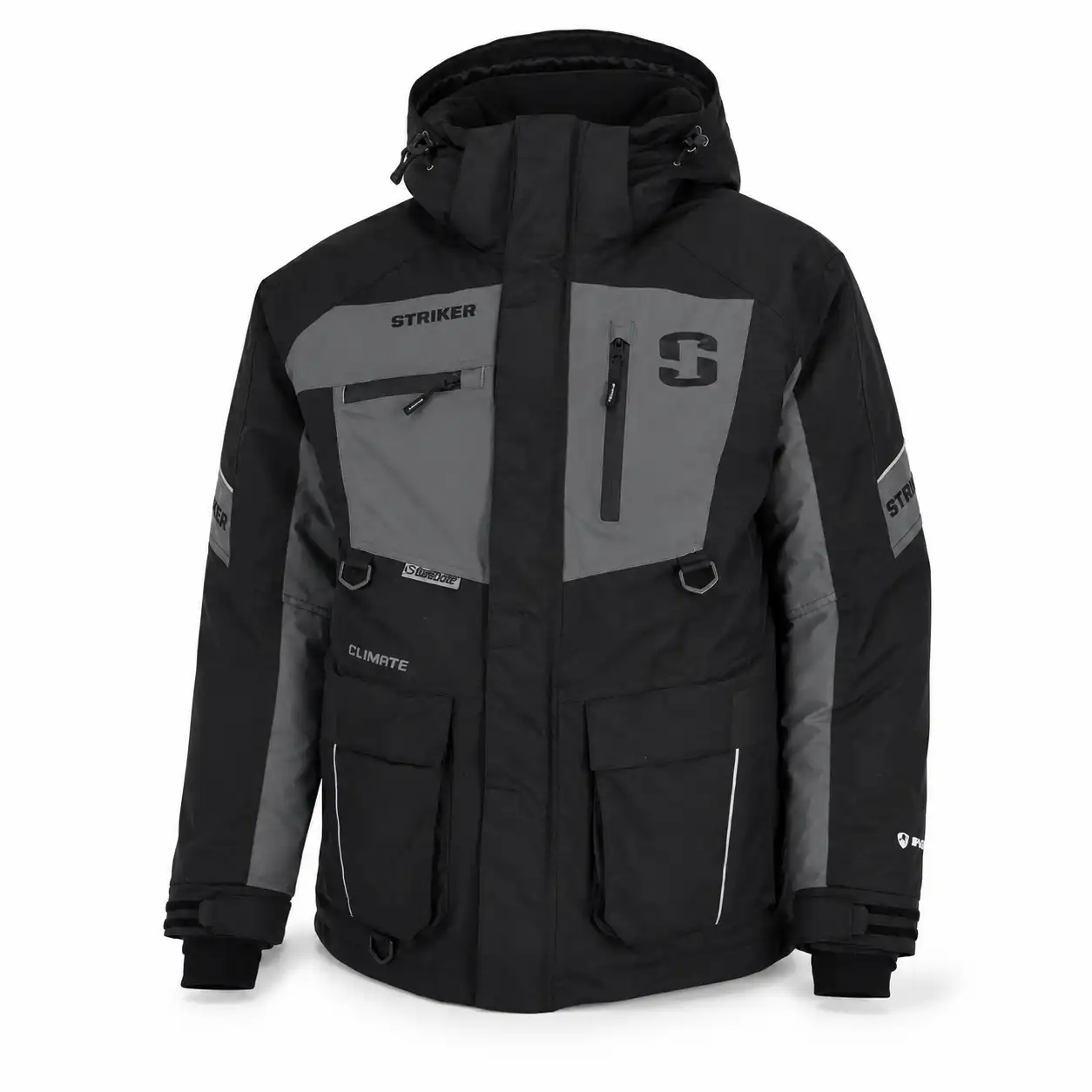
Striker Ice Climate Jacket — Best Overall
We pulled this one out for the coldest stretch of our testing window on Devils Lake — a string of single-digit mornings with a steady 15 mph wind that had every other jacket on the list feeling thin by comparison. Sitting still for over an hour waiting on a flag in that wind, the cold never worked its way in.
What sets the Climate apart is the removable liner system. We wore just the shell on a warmer afternoon with sun on the ice, then zipped the liner back in for a pre-dawn tip-up check the next morning — same jacket, two completely different days. The magnetic storm flap over the main zipper held its own too, with no cold spots leaking through even while fumbling at it with gloves on. The trade-off shows the moment you stop sitting still: this is the bulkiest jacket we tested, and hauling a sled or drilling multiple holes in it means working harder than you would in something built for movement.
What We Like:
- Removable liner covers everything from early ice to deep winter without buying two jackets
- Magnetic storm flap genuinely blocked wind during our windiest test session
- Fully taped seams held up clean through repeated snow and slush exposure
What Could Be Better:
- The bulkiest jacket in our test — noticeably restricts movement while drilling or hauling a sled
- Priced well above the rest of this list
- Striker does not publish a confirmed flotation duration for the jacket when worn without the matching bibs
StrikerICE Predator Jacket — Best for Run-and-Gun Mobility
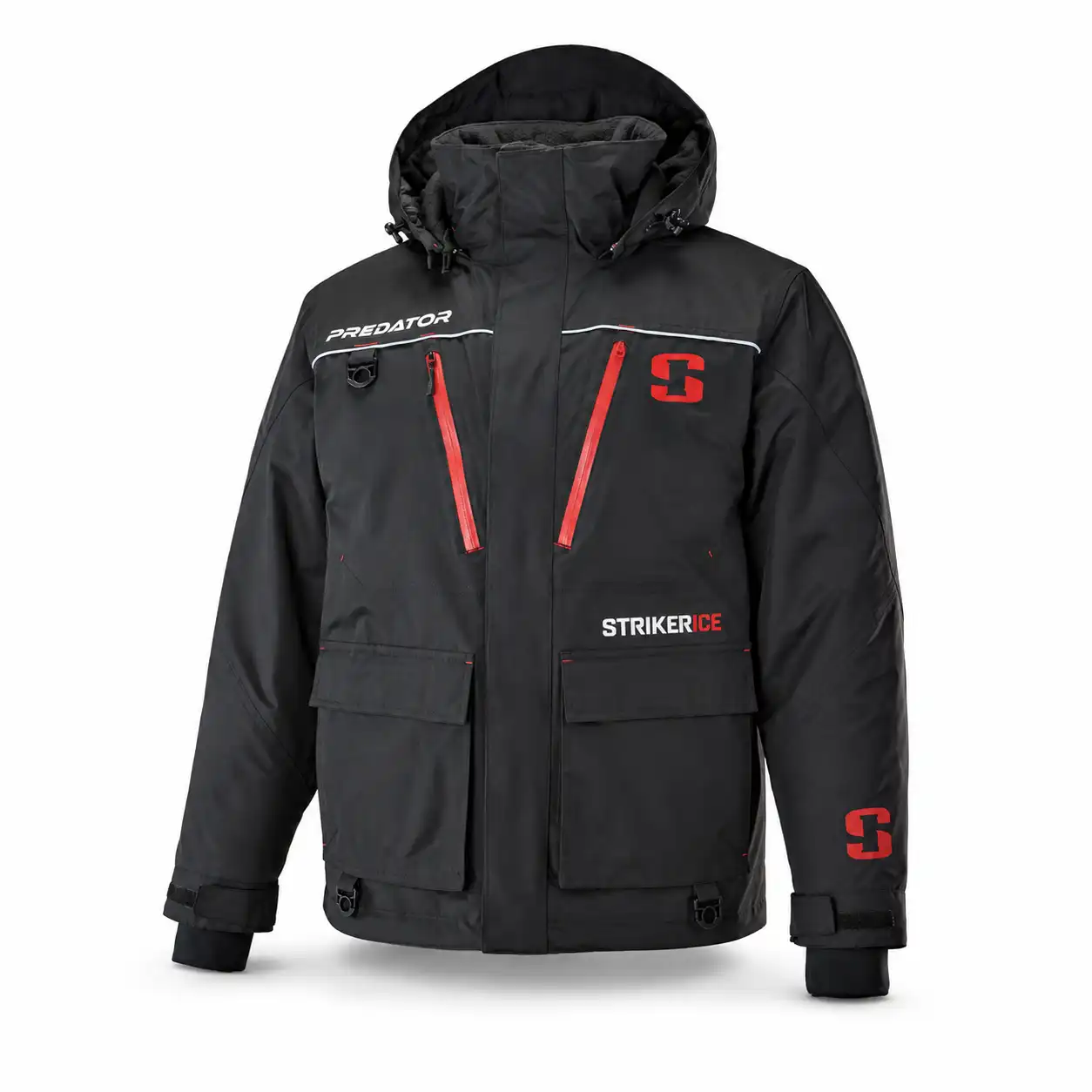
We wore this one on a milder afternoon on Lake of the Woods, working a stretch of structure where nothing was biting until we started drilling and moving — eight holes with the auger in under an hour, checking each one before pushing further out. That’s exactly the situation this jacket is built for, and it’s where the Climate would have had us sweating through our base layer well before hole four.
The cross-flow venting system is the reason this one earns its category. Drilling repeatedly and hauling gear between spots normally means overheating fast in an insulated jacket, but we stayed dry underneath even after the eighth hole. The lighter 100g Thermadex insulation is the trade-off that makes that possible — it’s noticeably less warm than the Climate for standing still, which is exactly why we wouldn’t recommend it for a full day parked in a shelter. The two-point adjustable hood also stayed out of our line of sight while drilling, something we can’t say for every hood on this list.
What We Like:
- Cross-flow venting genuinely prevented sweat build-up through repeated active stretches
- Noticeably lighter and less restrictive than the Climate while moving between holes
- Two-point adjustable hood stayed out of the way during drilling
What Could Be Better:
- The lighter insulation means it runs cold during long stationary stretches — not the pick for parking in a shelter all day
- Sizing runs generous — several owners report needing to size down from their usual fit
IceArmor by Clam Ascent Float Parka — Best for Wet & Slushy Conditions
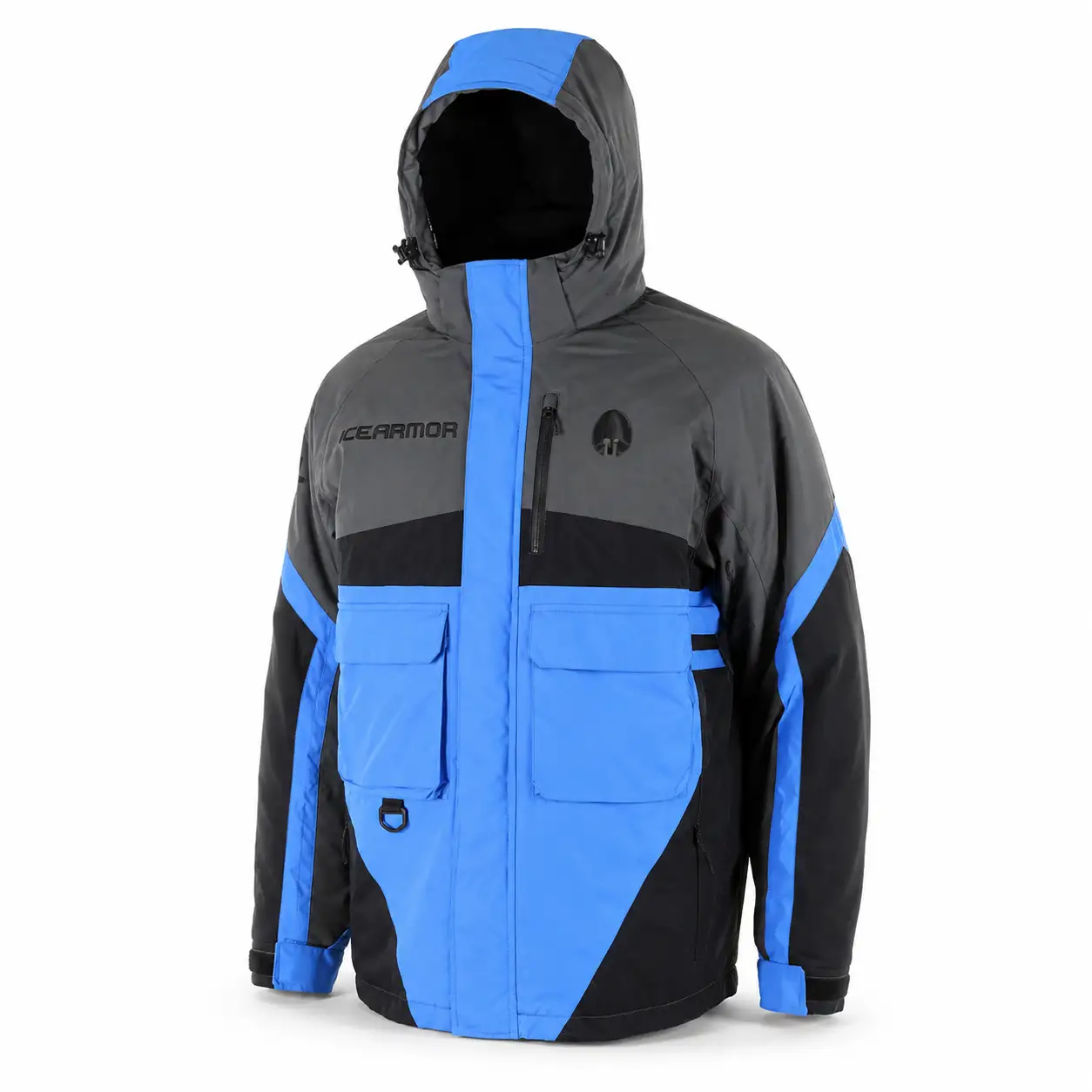
We tested this one on a West-Central Minnesota lake during a late-ice thaw, where standing water had pooled a few inches deep on top of the ice around every hole. Kneeling to check a tip-up meant kneeling straight into slush, and this jacket handled those conditions better than any other model in our test.
The rapid drainage system is the standout feature — water that entered around the hem and cuffs drained out instead of sitting against the fabric, and the jacket felt noticeably lighter by the end of the session than we expected after that much exposure. The rotary torso venting also earned its place: between drilling through slush and hauling the sled back to the truck, we ran warm fast, and being able to dump heat through the torso without opening the whole front zipper made a real difference. The waterproof phone pouch held up too — we checked it at the end of the day and found our phone completely dry despite the conditions.
What We Like:
- Rapid drainage system kept water from sitting against the fabric in standing slush
- Rotary torso venting let us dump heat without fully opening the jacket
- Waterproof phone pouch kept our phone dry through repeated slush exposure
What Could Be Better:
- The removable fleece liner adds versatility, but it makes the jacket feel heavier and less streamlined than the Predator
- Runs slightly small — a few owners recommend sizing up
Eskimo Roughneck Jacket — Best for Durability
This is the jacket we grabbed for the roughest day of testing—hauling gear across a wind-scoured stretch on Fort Peck and catching a sleeve on the edge of the shelter frame more than once while loading and unloading. Nothing tore or frayed, and the reinforced shoulders and elbows showed no visible wear by the end of the trip.
The DuraDry shell is what carries this jacket. It shrugged off repeated contact with ice edges and sled hardware without showing visible scuffs, while the fully taped seams kept us dry through a full day of loading gear in blowing snow. Where it comes up short is the main zipper—it was the fussiest in our test and required careful alignment instead of simply pulling it closed with insulated gloves. The fit also runs snug through the shoulders, so consider sizing up if you plan to wear heavy layers underneath.
What We Like:
- Reinforced shoulders and elbows showed no visible wear after repeated contact with hard edges
- DuraDry shell resisted scuffs from ice edges and sled hardware
- Fully taped seams kept us dry through a full day of blowing snow
What Could Be Better:
- Main zipper requires careful alignment and was harder to close with gloves than the others we tested
- Fits snug through the shoulders—consider sizing up if you plan to layer heavily
Piscifun Ice Fishing Jacket — Best Value
We brought the Piscifun along for a short afternoon session on a metro-area lake—the kind of trip where you have a couple of hours after work to check several holes before dark. It was the least expensive jacket in our test, but it never felt stripped down to reach that price. For shorter trips and milder conditions, it covered the essentials without making us feel that we had left an important feature behind.
The mesh hem allowed water to drain quickly after slush splashed inside while we were clearing a hole, and the reflective strips on the front and back were easy to spot during the walk back to the truck after dark. The YKK zipper felt sturdier than we expected at this price, while seven pockets gave us enough room for pliers, a spare spool, and a phone without forcing us to dig through one overloaded compartment.
More importantly, Piscifun still includes built-in flotation assistance, fully taped seams, reflective safety details, a whistle, and rapid drainage at a substantially lower price than the premium jackets we tested. That combination—not the low price alone—is why it earned our Best Value designation. The compromise is warmth: its insulation felt noticeably thinner during stationary periods, so we would choose it for shorter sessions and milder days rather than sitting for hours in deep cold.
What We Like:
- Lowest-priced jacket in our test without giving up built-in flotation assistance
- Mesh hem allowed water to drain quickly after slush entered the jacket
- YKK zipper, fully taped seams, reflective strips, and safety whistle add value beyond the price
- Seven pockets provided useful storage without overloading a single compartment
What Could Be Better:
- Noticeably less warm during long stationary periods than the premium jackets we tested
- The cut can feel short through the torso, especially when bending or reaching
How to Choose a Floating Ice Fishing Jacket
Once you compare several jackets side by side, the specifications can start to look interchangeable. They aren’t. Here is what actually affects warmth, protection, and comfort once you are standing on the ice.
Confirm That the Jacket Itself Provides Flotation Assistance
Do not assume that every jacket from a floating suit provides the same flotation assistance when worn by itself. Check whether the manufacturer specifically states that flotation material is built into the jacket, rather than relying on a rating or claim that applies only to the complete jacket-and-bib combination.
Flotation-assist foam can provide additional buoyancy after an unexpected breakthrough, but performance claims are not standardized across every brand. Also check for a drainage system that allows trapped water to escape instead of weighing down the jacket during self-rescue.
Match the Insulation to How You Fish
The warmest jacket is not automatically the best choice—it depends on how much time you spend moving. Heavier, bulkier systems work well when you are waiting on tip-up flags or sitting exposed to the wind in a shelter, but they can trap too much heat while drilling holes and hauling a sled. If you’re not sure which style of day you’ll be fishing, our complete breakdown of ice fishing for pike covers when a stationary tip-up spread or active jigging makes more sense.
Insulation weights also cannot always be compared directly across different materials and jacket designs. For example, the Climate uses a removable 60g PrimaLoft Black insulated liner, while the Predator uses 100g Thermadex insulation. Despite the numbers, our testing found the complete Climate system warmer and bulkier, while the Predator was easier to manage during active hole-hopping. If your day regularly shifts between movement and long stationary periods, a removable liner provides the most flexibility.
Understand Waterproof and Breathability Ratings
These ratings are commonly displayed together, such as 5,000mm/5,000g, but they measure different things. The first number indicates how much water pressure the fabric can resist before leaking. The second indicates how much moisture vapor can pass through a square meter of fabric over 24 hours under the manufacturer’s test conditions.
Waterproofing matters most during wet snow, sleet, blowing slush, and late-ice thaws. Breathability becomes more important when drilling repeatedly, pulling a loaded sled, or walking long distances between holes. Ratings from different brands are not always directly comparable, so also look for fully taped seams, protected zippers, ventilation openings, and a durable water-repellent finish.
Do Not Confuse Denier With Waterproofing
Denier—the “D” number in descriptions such as 300D or 600D—is a measure related to the weight of the yarn used in the fabric. A higher number often indicates a heavier, more abrasion-resistant material, but denier is not a waterproof rating or a guarantee of durability by itself.
Fabric construction, coatings, seam quality, and reinforcement placement matter too. Reinforced shoulders and elbows are especially useful if your jacket regularly rubs against shelter frames, sled hardware, rough ice, or other equipment.
Check the Fit With Your Actual Layers
An ice fishing jacket should leave enough room for base and mid-layers without restricting your shoulders. Fit varies considerably between brands: some jackets run snug through the chest and shoulders, while others are intentionally generous enough to accommodate heavy layering.
Use the manufacturer’s size chart as a starting point, then check consistent sizing patterns in owner feedback. Pay particular attention to shoulder mobility, sleeve length, and torso coverage. If you regularly wear a thick hoodie or insulated mid-layer, account for it before choosing your size.
Prioritize Ventilation and Mobility for Active Fishing
If you spend more time moving than sitting, look for underarm vents, torso vents, or a cross-flow ventilation system. Articulated sleeves and enough room across the shoulders also make drilling and hauling equipment easier.
Sweat trapped inside an insulated jacket can become a problem as soon as you stop moving. Venting allows heat and moisture to escape before your base layers become damp, helping you remain comfortable when you switch from drilling holes to waiting for a bite.
Floating Ice Fishing Jackets Compared
| Jacket | Best For | Insulation | Weather Protection | Flotation Technology |
|---|---|---|---|---|
| Striker Ice Climate | Best Overall | Removable 60g PrimaLoft Black liner | 5,000mm waterproof / 5,000g breathable | Sureflote |
| StrikerICE Predator | Run-and-Gun Mobility | 100g Thermadex | 5,000mm waterproof / 5,000g breathable | Sureflote |
| IceArmor by Clam Ascent | Wet & Slushy Conditions | Removable, wearable fleece liner | Waterproof, windproof and breathable 300D shell | MotionFloat |
| Eskimo Roughneck | Durability | Sherpa fleece insulation | 5,000mm waterproof / 5,000g breathable | Uplyft Breathable Flotation |
| Piscifun Ice Fishing Jacket | Best Value | Polyester insulation; weight not published | DWR-coated shell with fully taped and sealed seams | Professional Flotation Technology |
Flotation Assist vs. a USCG-Approved PFD
Every jacket on this list contains flotation-assist material, but none is a USCG-approved personal flotation device. That distinction matters because additional buoyancy and certified PFD performance are not the same thing.
Flotation-assist jackets contain buoyant material inside the garment. Sureflote, MotionFloat, Uplyft, and Piscifun’s Professional Flotation Technology are different manufacturer-specific versions of that concept. They are designed to provide additional buoyancy after an unexpected breakthrough, but the manufacturers do not present these jackets as substitutes for certified life jackets. Clam explicitly states that its MotionFloat system is “Not Coast Guard Approved as PFD,” and Eskimo gives the same warning for Uplyft.
A USCG-approved PFD must be evaluated and tested by a Coast Guard-recognized laboratory and carry an approval label describing its intended use and performance. Some approved life jackets are designed to provide face-up support, including for many unconscious wearers, while other approved buoyancy aids are intended primarily for conscious users. Never assume that a garment will turn you face-up unless its approval label specifically indicates that capability.
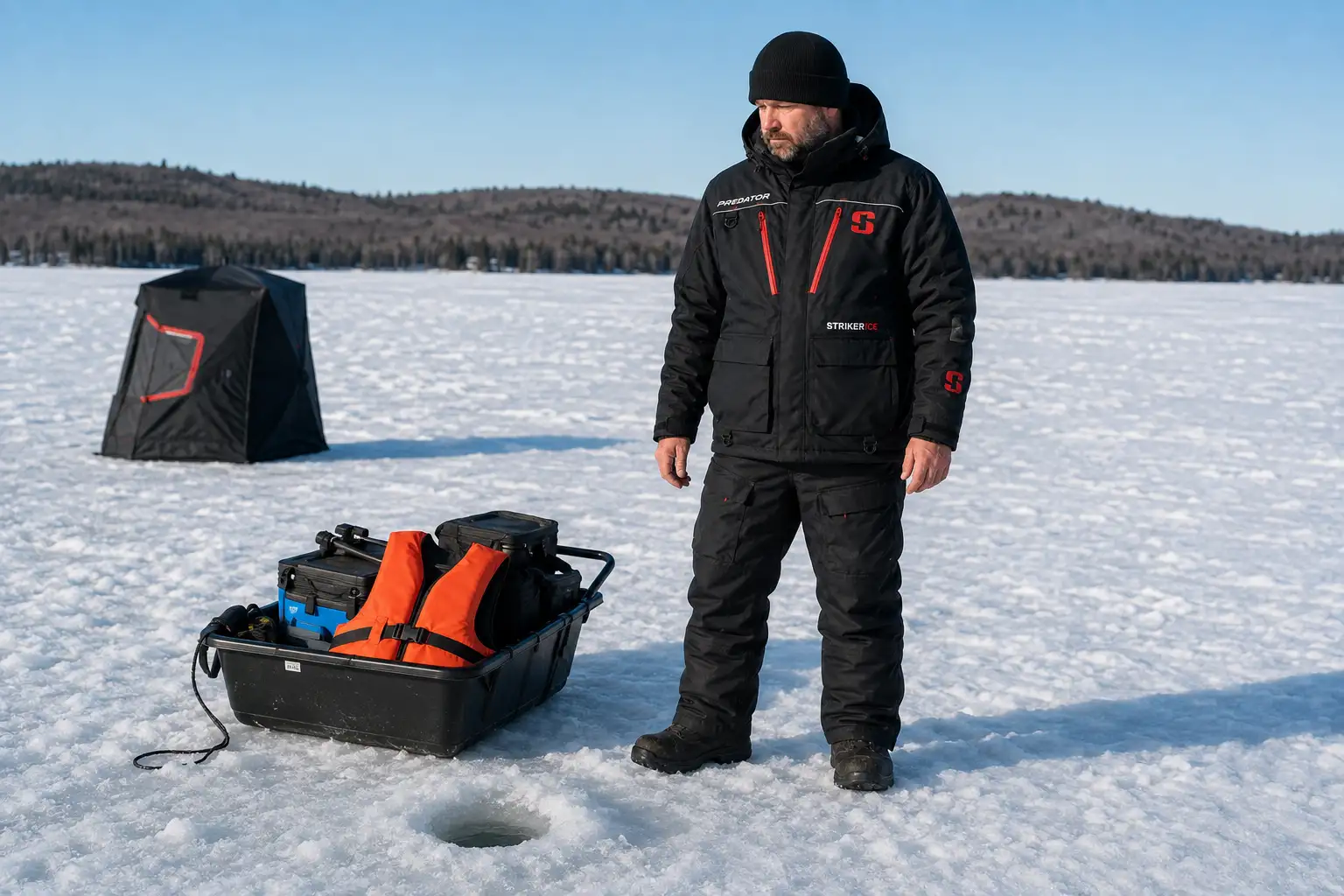
One notable exception in the ice-fishing category was the Frabill I-Float Jacket, which was sold as a USCG-certified PFD. The matching I-Float bib was not certified. The jacket is no longer part of Frabill’s current product range and now appears mainly through remaining inventory and secondhand listings, so it is not a practical recommendation for most buyers.
That does not make flotation assistance pointless. Additional buoyancy can reduce the effort required to remain near the surface while you control your breathing and begin self-rescue. However, it is an assist rather than a guarantee. It cannot make weak ice safe, prevent cold-water shock, or replace checking ice thickness, fishing with a partner, and carrying ice picks where you can reach them immediately.
Frequently Asked Questions
Can I buy and wear a floating ice fishing jacket without the matching bibs?
Yes. Every jacket in this guide is sold separately and contains flotation-assist material in the jacket itself. Matching bibs can add warmth, coverage, and total buoyancy, but they are not required for the jacket to provide its stated flotation assistance.
Is a floating ice fishing jacket the same as a life jacket?
No. A floating ice fishing jacket contains buoyant material that can provide additional flotation after an unexpected breakthrough, but the jackets in this guide are not USCG-approved personal flotation devices. Treat flotation assistance as an added safety feature, not as a replacement for a properly fitted and approved life jacket.
How warm should a floating ice fishing jacket be?
That depends on your activity level as much as the temperature. Anglers who sit still in a shelter or wait on tip-up flags generally benefit from a warmer jacket. If you drill frequently, pull a sled, or move between holes, lighter insulation and effective ventilation can help prevent sweat from collecting in your base layers.
Do floating ice fishing jackets run true to size?
Fit varies between brands and models. Measure your chest and compare it with the manufacturer’s size chart while accounting for the layers you normally wear underneath. Owner feedback can then help identify recurring issues such as tight shoulders, short torso coverage, or an unusually generous cut.
What is the difference between waterproofing and flotation assistance?
Waterproof and breathable ratings describe how well the shell resists external moisture and allows body-generated vapor to escape. Flotation assistance comes from buoyant material built into the jacket. The two features are independent: a jacket can be highly waterproof without providing flotation, while a flotation-assist jacket still needs an effective shell, sealed seams, and protected openings to keep you dry.