

Do Bigger Lures Catch Bigger Pike? What the Research Shows
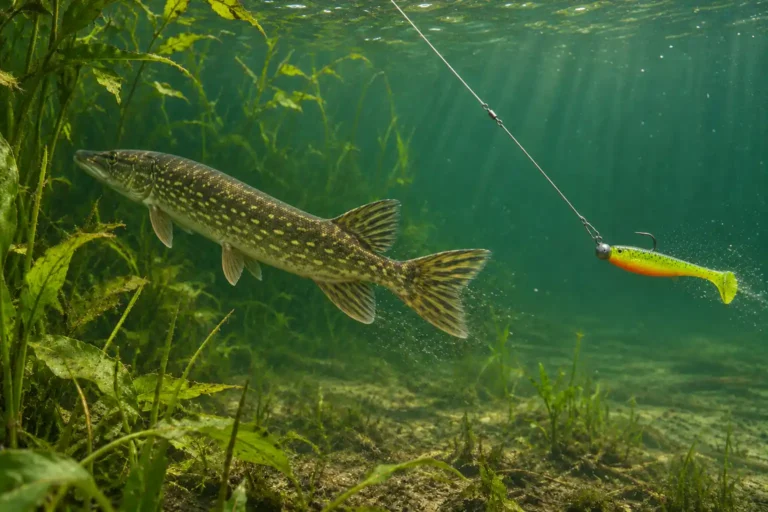
Do bigger lures catch bigger pike? Research suggests that larger lures and natural baits can increase the average size of northern pike caught by reducing the proportion of smaller fish in the catch. However, this does not necessarily mean that using a bigger lure increases your chances of landing a trophy pike.
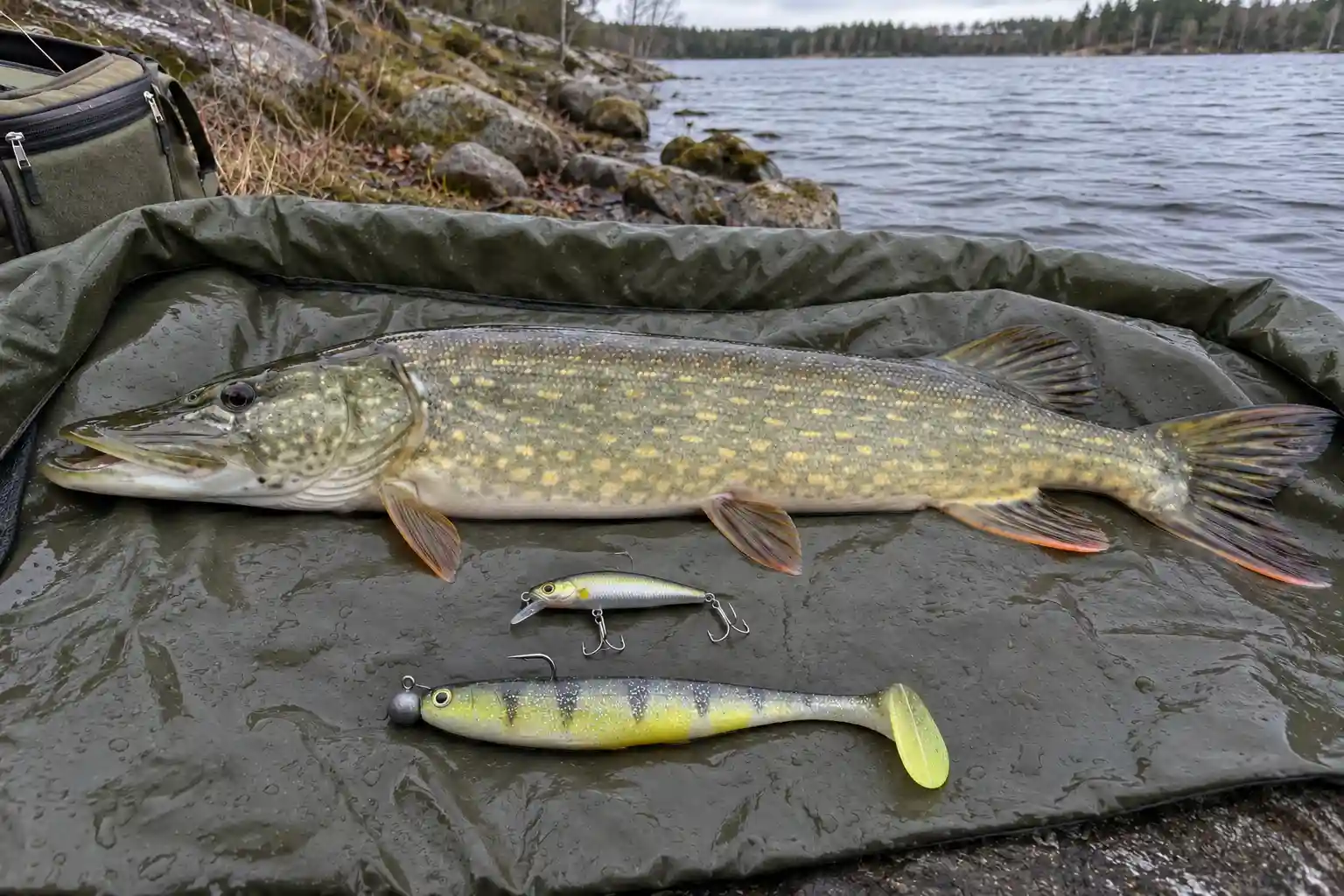
Our own time on the water matches that pattern. As soon as we switch to lures in the 18–23 cm (7–9 in) range, small pike under 45 cm (18 in) almost drop out of the picture; by our rough count, we hook around 70–80% fewer of them. They still follow the lure or nip at its tail, but they rarely stick. Our biggest fall pike, 95–105 cm (37–41 in), mostly came on swimbaits of 20 cm (8 in) and up, yet in early spring and cold water we have regularly landed fish over 90 cm (35 in) on 10–11 cm (4 in) suspending jerkbaits, on days when big pike simply would not chase a large meal.
A 2008 study involving 415 northern pike in Germany and Canada found that baits of at least 150 mm (5.9 in) were associated with longer fish. Other studies, however, found that switching lure types did not change the size of pike that came to the net.
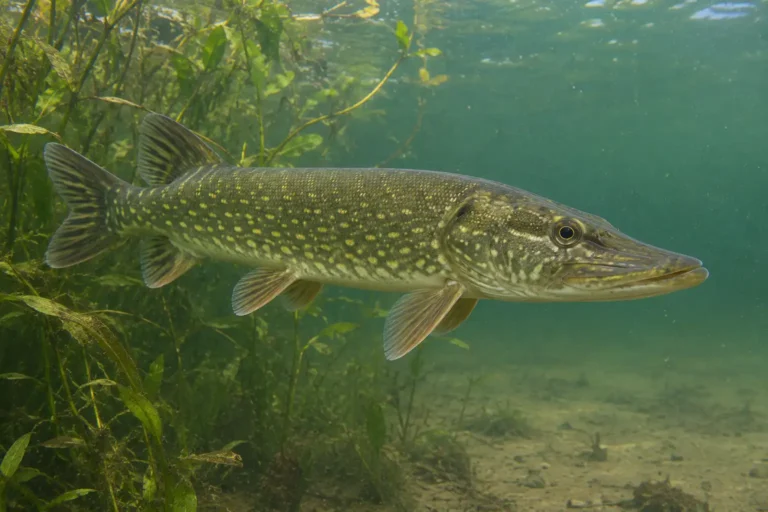
The biology of northern pike helps explain why. Big pike can swallow surprisingly large prey, but they keep eating small fish as they grow.
Below, we compare the key studies on bait size, lure type, prey size and hooking injuries side by side, then turn the findings into practical lure choices.


Bigger Lures and Bigger Pike: What the Studies Actually Found
Several scientific studies have looked at how fishing lures influence the size of northern pike that anglers catch. However, the researchers did not all test the same variables. Some measured bait length, while others compared lure types, catch rates or hooking injuries.
Here’s how the four studies compare, including what each one could not show.
On smaller screens, scroll horizontally to see every column.
| Study | Location and Sample | What Was Tested | Key Finding | Limitation |
|---|---|---|---|---|
| Arlinghaus et al. (2008) | Germany and Canada; 415 pike, 399 measured for length | Bait size and type | Size effect found: baits of at least 150 mm (5.9 in) were associated with larger average fish size. | Covers natural baits as well as artificial lures, not lures alone. |
| Stålhammar et al. (2014) | Baltic Sea, Sweden; 862 pike (39–113 cm / 15.4–44.5 in) | Lure type, fish size and hooking injuries | Type effect found: tailbaits caught significantly longer pike than bucktails and gliders, while spinflies caught significantly longer pike than gliders. | Lure length not tested separately; spring fishing only (March–June 2009). |
| Arlinghaus et al. (2017) | Lake Kleiner Döllnsee, Germany; 313 pike from 30 sampling sites | Soft plastic shads versus spoons | No lure-type effect on fish size: lure type affected catch rates but not the size of captured pike. | Only two lure types, in a single lake. |
| Turunen et al. (2026) | 16 Finnish lakes; 93 pike | Four lure types and two color categories | No lure-type effect on fish size: no significant relationship between lure type and captured fish length (p = 0.826). | Lure length was not tested. |
The clearest direct evidence for size selectivity comes from the 2008 study. The other studies show how lure type can affect fishing success, but none of them tested whether a longer lure, on its own, gives you a better shot at a bigger pike.
Then there’s fishing pressure. As we explained in our research on whether pike learn to avoid lures, a pike’s willingness to attack an artificial bait can change regardless of its body size.
Do Larger Lures Filter Out Smaller Pike?
One of the strongest findings from Arlinghaus et al. (2008) was that larger baits changed the size distribution of captured northern pike.
The researchers divided artificial lures and natural baits into three size categories and compared the proportion of captured pike measuring below 500 mm (19.7 in) with those measuring at least 500 mm (19.7 in).
On smaller screens, scroll horizontally to see every column.
| Bait Size | Sample Size | Average Pike Length | Pike Below 500 mm (19.7 in) | Pike at Least 500 mm (19.7 in) |
|---|---|---|---|---|
| Small: <75 mm (2.95 in) | 81 | 49.8 cm (19.6 in) | 48% | 52% |
| Medium: 75–<150 mm (2.95–<5.9 in) | 195 | 49.3 cm (19.4 in) | 57% | 43% |
| Large: ≥150 mm (5.9 in) | 84 | 56.0 cm (22.0 in) | 31% | 69% |
Sample sizes, average fish lengths and rounded percentages are reported directly in Figure 2 of the original study. This analysis included 360 of the 415 captured pike. The 500 mm (19.7 in) threshold was the size classification used by the researchers, not a universal legal or trophy size.
Share of Pike at Least 500 mm (19.7 in) by Bait Size
Baits of at least 150 mm (5.9 in) shifted the catch toward larger fish.
<75 mm
(<2.95 in)
n = 81 Medium
75–<150 mm
(2.95–<5.9 in)
n = 195 Large
≥150 mm
(≥5.9 in)
n = 84
Moving from small to medium baits did not produce a statistically significant difference in fish length or size distribution. In fact, the smallest baits had a higher observed proportion of pike measuring at least 500 mm (19.7 in): 52%, compared with 43% on medium baits. Only baits of at least 150 mm (5.9 in) were associated with a significantly greater average fish length and a different size distribution (p < 0.001).
Large baits did not eliminate smaller pike from the catch, but they substantially reduced their proportion. On the largest bait category, 31% of captured fish were still below 500 mm (19.7 in). That lines up with what we described earlier: small pike don’t vanish when we switch to genuinely big lures; they make up a much smaller proportion of our catch.
Pike can handle bigger prey as they grow, which fits with the effect showing up only at the large end. But that doesn’t mean every extra inch of lure buys you a bigger fish. Because the study pooled natural baits with artificial lures, it also can’t give you an exact lure-size cutoff that works on every water.
Does Lure Type Matter More Than Lure Size?
Three lures measuring 15 cm (5.9 in) can present very different targets to a northern pike. A slender jerkbait, a broad-bodied swimbait and a metal spoon differ in silhouette, vibration and movement through the water, even when their lengths are identical.
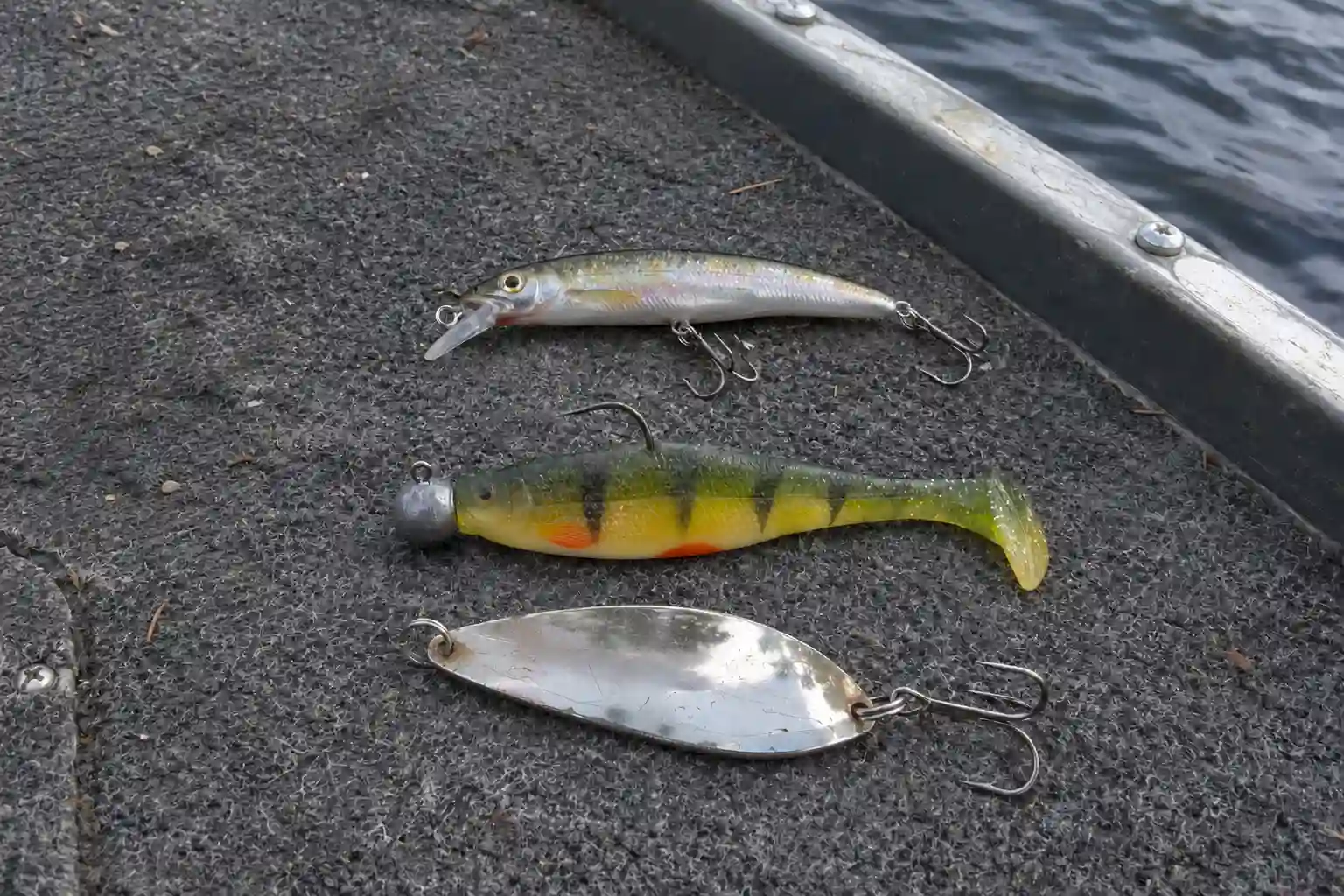
The Baltic data from Stålhammar et al. (2014) shows how much lure type alone can matter. Looking closer than the comparison table above, tailbaits caught significantly longer pike than both bucktails and gliders, while spinflies caught significantly longer pike than gliders, without lure length ever being tested as a separate factor.
Why the Results Differ Between Waters
The German whole-lake experiment by Arlinghaus et al. (2017) offers a clue. Catch rates dropped over each week-long fishing campaign, the largest pike tended to be caught first, and fish from sublittoral areas were significantly smaller than those from other habitats. The authors concluded that time on the water and habitat choice mattered most, while lure choice added only a moderate effect.
The Finnish data from Turunen et al. (2026) adds a detail anglers argue about constantly: lure color. Fluorescent and natural colors produced similar catch rates, and neither color nor lure type changed the length of captured pike.
A lure that catches more pike does not necessarily catch bigger pike. Where you fish and how long you stay there can outweigh the lure tied to your leader.
That’s also why we look past length when choosing between different types of pike lures. We swap soft swimbaits like the Savage Gear 3D Pulse Tail Trout 8″ for heavy metal spoons of 21–42 g (3/4–1.5 oz), such as a large Mepps Syclops, whenever depth, wind or cold, sluggish fish become the limiting factor.
Once pike drop onto 3.7–7.6 m (12–25 ft) breaks in late autumn or winter, a heavy spoon gets down fast, stays vertical in a strong crosswind and keeps bottom contact where a bulky swimbait would plane upward. On a slow lift-and-fall, its wide, fluttering flash imitates a dying baitfish without any speed from us.
That spoon keeps putting heavy, bottom-hugging pike in our net when cold water slows everything down. Our picks of heavy spoons for northern pike are built around exactly that job.
Research hasn’t settled whether lure type or lure length matters more. Both can change what you catch, but neither reliably decides how big the pike on the end of your line will be.
Why Big Pike Still Eat Small Prey
As northern pike grow, the range of prey sizes they can consume expands considerably. What does not increase at the same rate is the typical size of their meals.
In a 2018 study by Gaeta et al., researchers analyzed 2,233 prey fish recovered from 784 northern pike in two lakes in Alberta, Canada, and Minnesota, USA. The numbers show a clear gap between what a big pike can eat and what it usually eats.
Northern Pike Prey Size Chart
We converted the researchers’ published regression equations for northern pike into estimates for four common pike lengths.
On smaller screens, scroll horizontally to see every column.
| Pike Length | Median Prey Length | Upper Prey Size Estimate (99th Percentile) |
|---|---|---|
| 50 cm (19.7 in) | 6.6 cm (2.6 in) | 17.9 cm (7.0 in) |
| 60 cm (23.6 in) | 7.1 cm (2.8 in) | 23.2 cm (9.1 in) |
| 70 cm (27.6 in) | 7.6 cm (3.0 in) | 28.9 cm (11.4 in) |
| 80 cm (31.5 in) | 8.0 cm (3.1 in) | 35.0 cm (13.8 in) |
These are model-derived estimates of consumed prey, not recommended lure sizes or absolute maximum swallowing capacities. They reflect what pike actually ate in the two study lakes, not what they would choose, and do not account for which prey sizes were available.
How Big Is a Pike’s Meal? Estimated Prey Length by Pike Length
The estimated upper prey length nearly doubles as pike grow from 50 to 80 cm (19.7–31.5 in), while median prey length changes very little.
(19.7 in) 60 cm pike
(23.6 in) 70 cm pike
(27.6 in) 80 cm pike
(31.5 in)
MFG analysis based on the northern pike regression equations in Gaeta et al. (2018), Tables 2 and 3. Values in cm. Estimates of prey actually eaten in two study lakes, not recommended lure sizes.
Notice how the upper estimated prey length nearly doubles between a 50 cm and an 80 cm pike, while median prey length increases by only 1.4 cm (0.55 in). Bigger pike become capable of eating much larger fish without abandoning smaller prey.
Prey Shape Matters Too
Research by Nilsson and Brönmark (2000) demonstrated that prey body depth influences what northern pike can swallow. The researchers also found that deeper-bodied prey required longer handling times than slender prey of the same length.
We see the same pattern on the water. Slender baitfish such as bleak or young roach (or shiners and small suckers on North American waters) are easy for a pike to clamp across the body and turn head-first, while deep-bodied fish like bream or crucian carp (think bluegill or crappie) force a wider attack angle. That’s when we see more tail hits and angled grabs from pike that don’t commit squarely. It’s one reason a slim, minnow-style lure tends to give us cleaner hookups, while a taller, broader profile makes more sense where heavy, deep-bodied forage dominates.
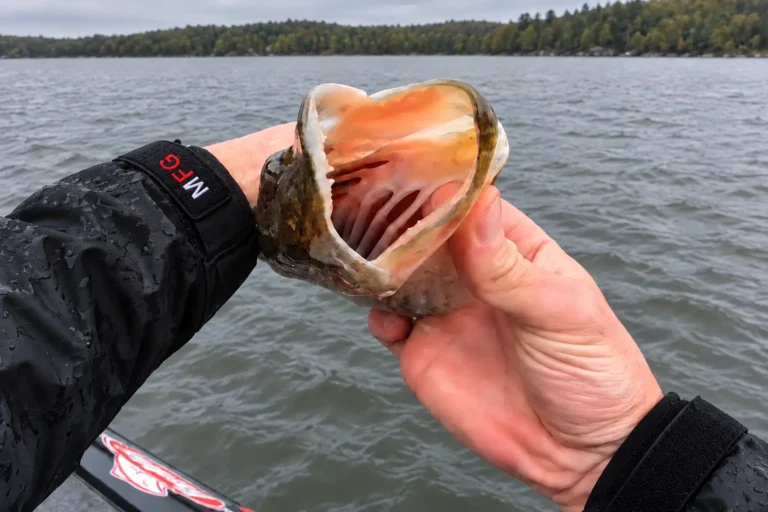
The jaw structure and specialized teeth of northern pike let them grip and turn prey, but a fish’s length alone doesn’t decide how easy it is to eat. That’s why a big pike will often hit a fairly small lure, even when it could swallow something several times larger.
Do Bigger Lures Increase Your Chances of Catching Trophy Pike?
Catching fewer small pike and catching more trophy pike are two different outcomes. A larger bait may increase the average size of your catch simply because fewer small fish take it.
Consider two hypothetical fishing sessions with the same amount of fishing time:
| Lure Size | Small Pike | Medium Pike | Trophy Pike | Total Catch |
|---|---|---|---|---|
| 10 cm (3.9 in) | 12 | 6 | 2 | 20 |
| 20 cm (7.9 in) | 2 | 6 | 2 | 10 |
This is a hypothetical example designed to illustrate size selectivity, not data from a scientific experiment or MFG catch records.
In this example, trophy pike make up 20% of the catch on the larger lure, compared with 10% on the smaller lure. Yet the actual number of trophy fish caught remains identical.
Doubling the proportion of trophy fish in your catch does not necessarily double your chances of catching one.
To be fair, our own fishing carries the same seasonal bias as the studies. We throw 18–23 cm (7–9 in) swimbaits hardest in autumn, which is already the prime feeding window for big pike. On days dedicated strictly to oversized lures, our total catch drops noticeably compared with standard 10–13 cm (4–5 in) baits, so we trade steady action for selectivity.
The number of pike over 90 cm (35 in) doesn’t suddenly multiply, because big pike are scarce in any system. What goes up is the average size of the fish that do commit. Answering the trophy question properly would take a controlled comparison of trophy pike caught per hour on different lure sizes, and the studies reviewed here do not provide that comparison.
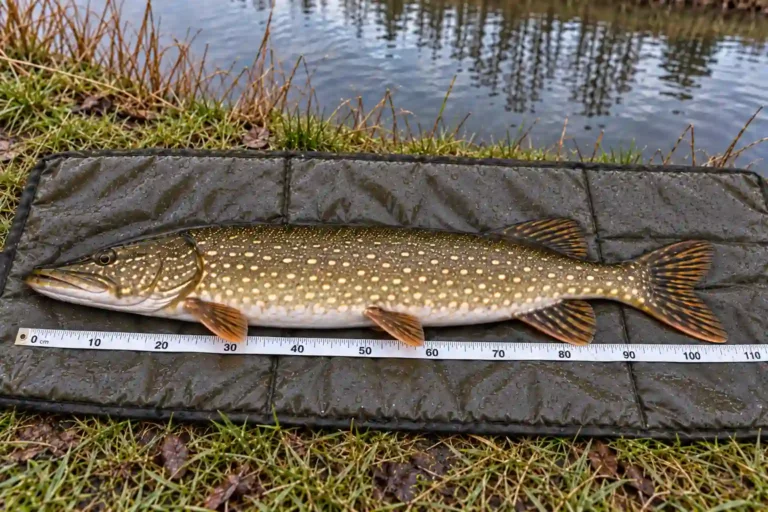
What counts as a trophy also depends on the water. In our book, 90–99 cm (35–39 in) is a legitimate big pike on most waters, while the 100 cm (40 in) mark remains the true trophy benchmark. Our northern pike state records show how widely the top recorded sizes vary from state to state, and since length alone doesn’t tell you how heavy a fish is, our northern pike weight calculator turns a measured length into an estimated weight.
Why Finding Big Pike Matters More Than Choosing Bigger Lures
Even the largest swimbait cannot produce a trophy fish if no large pike are within reach of it. As the 2017 Kleiner Döllnsee experiment showed, where you fish and how many fish you encounter can outweigh the lure you choose.
In autumn, we focus on deep outer weed edges, sharp drop-offs and rock or gravel transitions, typically in 2.4–5.5 m (8–18 ft) of water. As the weeds die back in winter, we slide deeper onto 3.7–7.6 m (12–25 ft) breaks, channels and structural edges.
On our fish finders, we look for a defined baitfish school holding at a specific depth, paired with larger arches or stronger marks just below or beside the forage along a break or bottom feature. That combination tells us a spot is worth stopping to work.
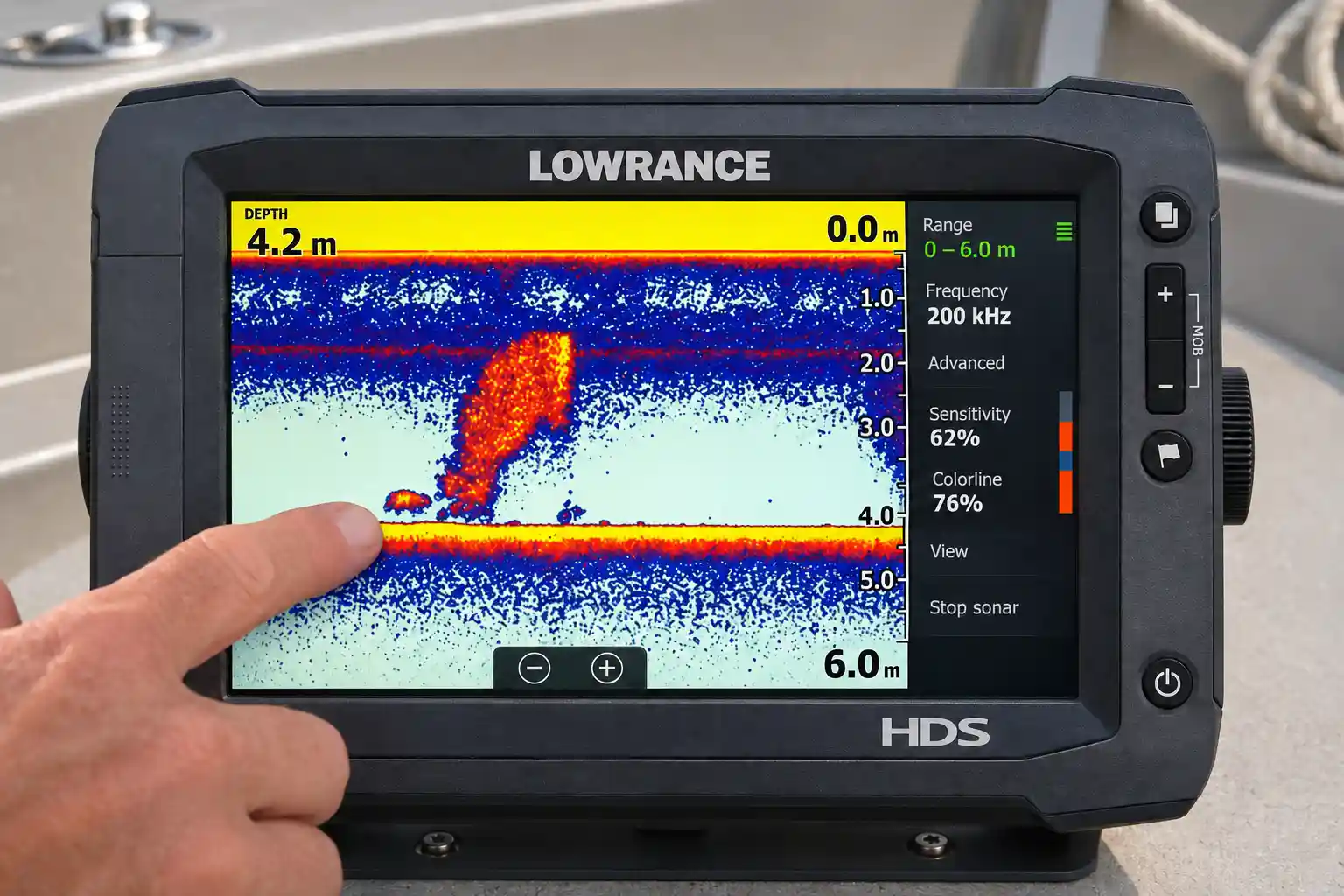
Some of those spots are hard to reach from the bank. Fishing kayaks let us slip into quiet back pockets, outer weedlines and subtle breaks we couldn’t fish from shore without heavy wading, and without spooking fish the way a bigger boat can.
Finding suitable habitat comes first. Choosing the right lure size comes second.
Does Lure Size Affect Hooking Injuries?
Lure size influences more than the size of captured pike. It can also affect where the hooks penetrate the fish.
In the 2008 study by Arlinghaus et al., gill hooking occurred in the following proportions:
- Small baits (<75 mm / 2.95 in): 15.2%.
- Medium baits (75–<150 mm / 2.95–<5.9 in): 4.3%.
- Large baits (≥150 mm / 5.9 in): 7.4%.
Source: Arlinghaus et al. (2008), Table 2.
The biggest drop in gill hooking came from moving away from small baits. Going beyond medium size did not reduce it any further; medium baits actually had the lowest observed rate.
Bait type mattered too. In the same study, hooking in critical locations such as the gills or gullet was more common with natural baits, soft plastic shads and jigs, and spoons than with spinners and wobblers. Overall initial mortality stayed low, at about 2.4%.
Cold Water and Deeper Hooking
Water temperature plays a role as well. In the Baltic study by Stålhammar et al. (2014), pike caught in colder water tended to be hooked deeper.
We see why on the water. In late fall and winter, long pauses on suspending jerkbaits and slow bottom presentations give pike more time to hold the lure. Cold-water bites are often less violent, so if you’re slow to set the hook on a subtle take, the lure can end up much deeper.
How We Deal With Deep-Hooked Pike
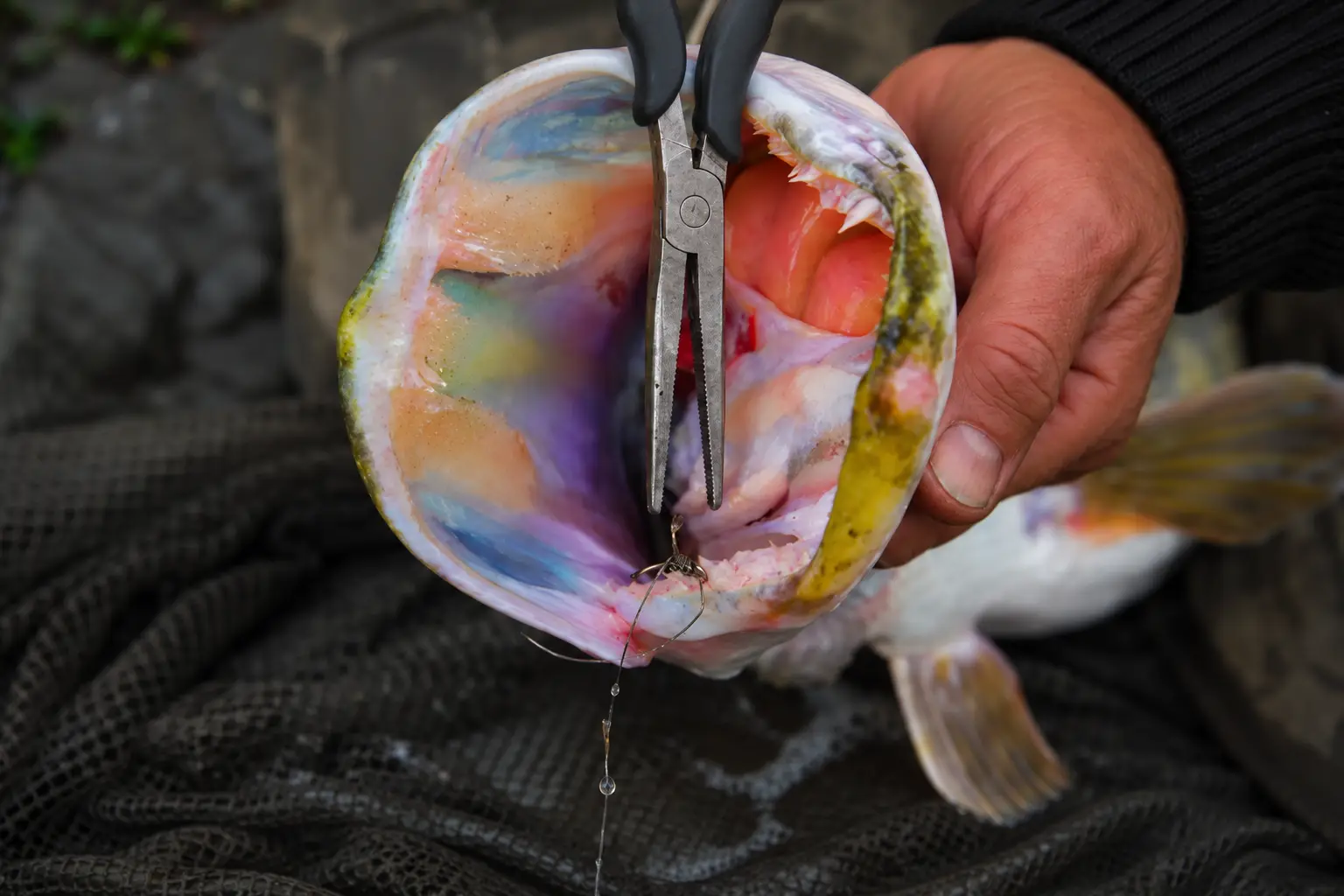
Injuries involving the gills can have serious consequences, as we explain in our research on northern pike catch-and-release survival. Whenever a pike is hooked deep or near the gills, we keep it supported in a rubber pike landing net and reach for long-nose pliers or a jaw spreader first.
If a hook won’t clear cleanly without tearing gill tissue, we cut it with heavy cutters rather than pry it out. The full process is covered in our article on how to handle pike safely.
On bigger lures, we also pay close attention to hook hardware: replacing weak or dull factory trebles on heavy-duty baits, pinching barbs down for faster, cleaner unhooking while keeping steady line tension, and switching to single hooks where it makes sense to reduce multi-point damage and make release easier.
Choosing Pike Lure Size Based on the Evidence
Rather than relying on a single lure size throughout the year, we adjust our presentation according to available forage, water temperature and our target fish size.
- 7–10 cm (2.8–3.9 in): Small forage, pressured fish and subtle presentations. Baits under 7.5 cm (2.95 in) had the highest gill-hooking rate in the 2008 study, so set the hook quickly.
- 10–15 cm (3.9–5.9 in): A versatile starting range for general pike fishing.
- 15–23 cm (5.9–9 in): Targeting larger fish and reducing the proportion of smaller pike in the catch. This range starts right at the 150 mm (5.9 in) threshold where the 2008 study found a clear shift toward bigger fish.
- Over 23 cm (9 in): Specialized big-bait fishing where conditions and available forage justify larger presentations.
These ranges are practical starting points, not scientifically established thresholds. In cold water, we often alternate between slow-moving soft swimbaits and suspending winter jerkbaits.
When pike follow without committing, we usually downsize slightly, dropping from 18–23 cm (7–9 in) baits toward 12–15 cm (5–6 in) or slimmer profiles. We also change pause length or retrieve speed rather than forcing a bigger bait on fish that have already said no.
We save lures over 23 cm (9 in) for specific windows, mainly late summer and autumn, on waters holding substantial forage such as larger bream, carp, cisco or other big baitfish. That’s when selectivity matters more to us than the total number of bites.
Bigger lures also demand the right tackle. For 18–23 cm swimbaits, we fish a Heavy or Extra Heavy pike rod between 2.3 and 2.6 m (7’6″–8’6″), paired with a capable reel and 30–50 lb braid. A setup like that, or a well-matched pike fishing combo, keeps casting control, hooksets and line management solid without overworking the blank.
Choose lure size for the situation, not simply for the size of the pike you hope to catch.
What the Research Still Cannot Tell Us
Although the evidence supports size-selective fishing with larger baits, several important questions remain unanswered:
- Whether larger artificial lures increase trophy pike catches per hour.
- Whether the same lure-size relationships apply across different pike populations and seasons.
- How lure length interacts with body profile, action, retrieve speed and fishing pressure.
- Whether extremely large lures provide additional size selectivity beyond the 150 mm (5.9 in) category examined in the 2008 study.
- How results would change in studies designed around lure size from the start. Only the 2008 study tested bait size directly; the others focused on hooking injuries, catch rates, diet or population surveys.
Most of this evidence also comes from a small number of waters: two lakes in the 2008 study, a single Baltic spring season in 2014, one German lake in 2017 and 16 small Finnish lakes in 2026. The prey data from Gaeta et al. (2018) covers two lakes and shows what pike ate, not what they would have chosen.
Big lures sort pike by size. They don’t create trophy fish that aren’t there. Population size structure and forage change from one water to the next, so read your own water and adjust.
Frequently Asked Questions
Do bigger lures catch bigger pike?
Larger lures can increase the average size of captured pike by reducing the proportion of smaller fish in the catch. However, research has not established that they consistently increase trophy pike catch rates.
Can small lures catch trophy pike?
Yes. Large northern pike continue to feed on small prey throughout their lives. In early spring and cold water, we regularly land pike over 90 cm (35 in) on 10–11 cm (4 in) suspending jerkbaits, especially when bigger presentations fail to trigger strikes.
Is a 6-inch lure too big for pike?
No. A 6-inch (15.2 cm) lure is a reasonable size for northern pike. It sits right at the 150 mm (5.9 in) threshold where research found a larger average size of captured fish.
Do big pike prefer big prey?
Not necessarily. Larger pike can consume bigger prey, but stomach-content research shows that relatively small fish remain an important part of their diet. Those studies show what pike ate, not what they would have chosen.
What is the best lure size for northern pike?
A lure measuring 10–15 cm (3.9–5.9 in) is a versatile starting point. Larger presentations of 15–23 cm (5.9–9 in) can help anglers fish more selectively when targeting bigger pike.
Scientific References
- Arlinghaus, R., Klefoth, T., Kobler, A., & Cooke, S. J. (2008). Size selectivity, injury, handling time, and determinants of initial hooking mortality in recreational angling for northern pike: The influence of type and size of bait. North American Journal of Fisheries Management, 28(1), 123–134. https://doi.org/10.1577/M06-263.1
- Stålhammar, M., Fränstam, T., Lindström, J., Höjesjö, J., Arlinghaus, R., & Nilsson, P. A. (2014). Effects of lure type, fish size and water temperature on hooking location and bleeding in northern pike (Esox lucius) angled in the Baltic Sea. Fisheries Research, 157, 164–169. https://doi.org/10.1016/j.fishres.2014.04.002
- Arlinghaus, R., Alós, J., Pieterek, T., & Klefoth, T. (2017). Determinants of angling catch of northern pike (Esox lucius) as revealed by a controlled whole-lake catch-and-release angling experiment—The role of abiotic and biotic factors, spatial encounters and lure type. Fisheries Research, 186(3), 648–657. https://doi.org/10.1016/j.fishres.2016.09.009
- Turunen, A., Tiainen, J., Olin, M., & Vainikka, A. (2026). Does survey angling CPUE reflect population density of northern pike (Esox lucius) in small boreal lakes? Fisheries Management and Ecology. https://doi.org/10.1111/fme.70090
- Gaeta, J. W., Ahrenstorff, T. D., Diana, J. S., Fetzer, W. W., Jones, T. S., Lawson, Z. J., McInerny, M. C., Santucci, V. J., Jr., & Vander Zanden, M. J. (2018). Go big or … don’t? A field-based diet evaluation of freshwater piscivore and prey fish size relationships. PLoS ONE, 13(3), e0194092. https://doi.org/10.1371/journal.pone.0194092
- Nilsson, P. A., & Brönmark, C. (2000). Prey vulnerability to a gape-size limited predator: Behavioural and morphological impacts on northern pike piscivory. Oikos, 88(3), 539–546. https://doi.org/10.1034/j.1600-0706.2000.880310.x