

Do Pike Learn to Avoid Lures? What the Research Shows
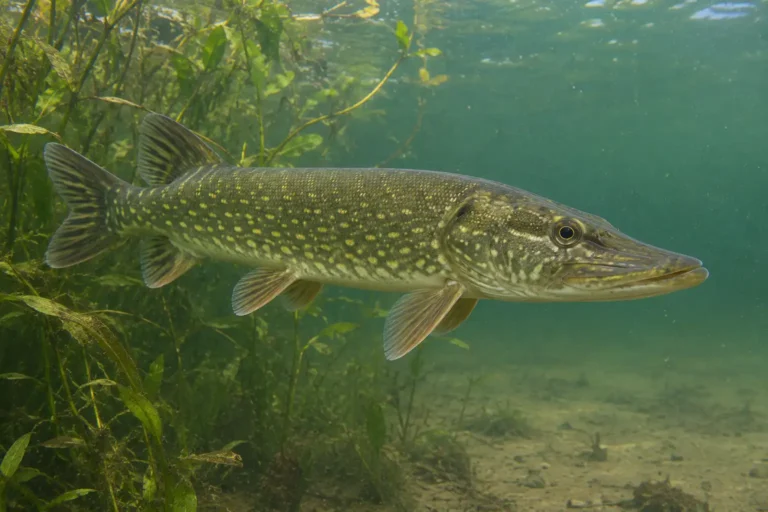
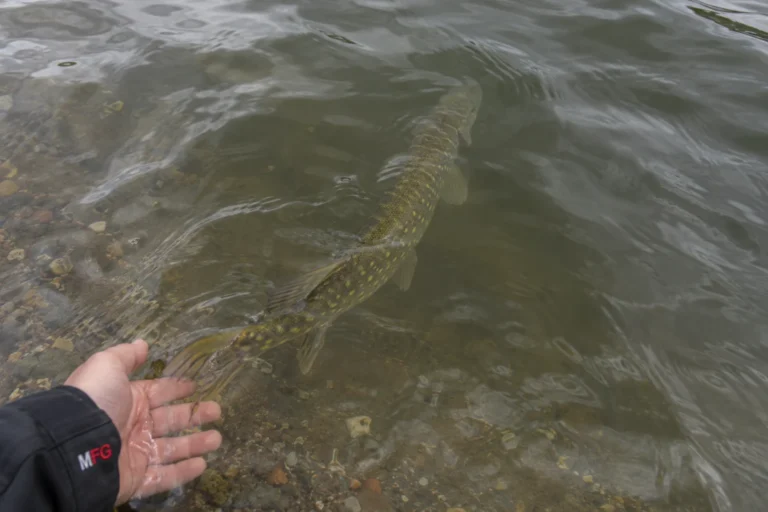
Do pike learn to avoid lures? Research indicates that northern pike (Esox lucius) can learn from fishing encounters and become less susceptible to capture, particularly with certain lure types.
In a three-year study published by Lucas and colleagues in Fisheries Management and Ecology in September 2026, researchers made 22,213 casts. Bright-colored soft plastic lures accounted for 38.8% of first-time captures but only 11.1% of recaptures.
Many pike anglers have watched a fish follow a lure without striking. But does that mean the fish has learned to avoid it? Not necessarily.
We examine original research to understand how pike respond to previous fishing encounters, whether capture is necessary for avoidance learning, and how long these behavioral changes may last.


Do Pike Remember Being Caught?
One of the earliest experiments on learned lure avoidance in northern pike was published in 1970 by J. J. Beukema in the Journal of Fish Biology.
Beukema compared two fishing methods in a pond containing tagged pike: artificial spinners and live baitfish. Every captured fish was released, allowing him to monitor changes in catchability as fishing continued.
Once approximately half the pike population had been caught on spinners, catchability with spinners dropped sharply. Individual pike became difficult to catch again using the same method, while live baitfish continued to produce catches.
This suggests that pike do not simply become wary of everything resembling food. Learned avoidance appears to be associated with specific bait or lure presentations.
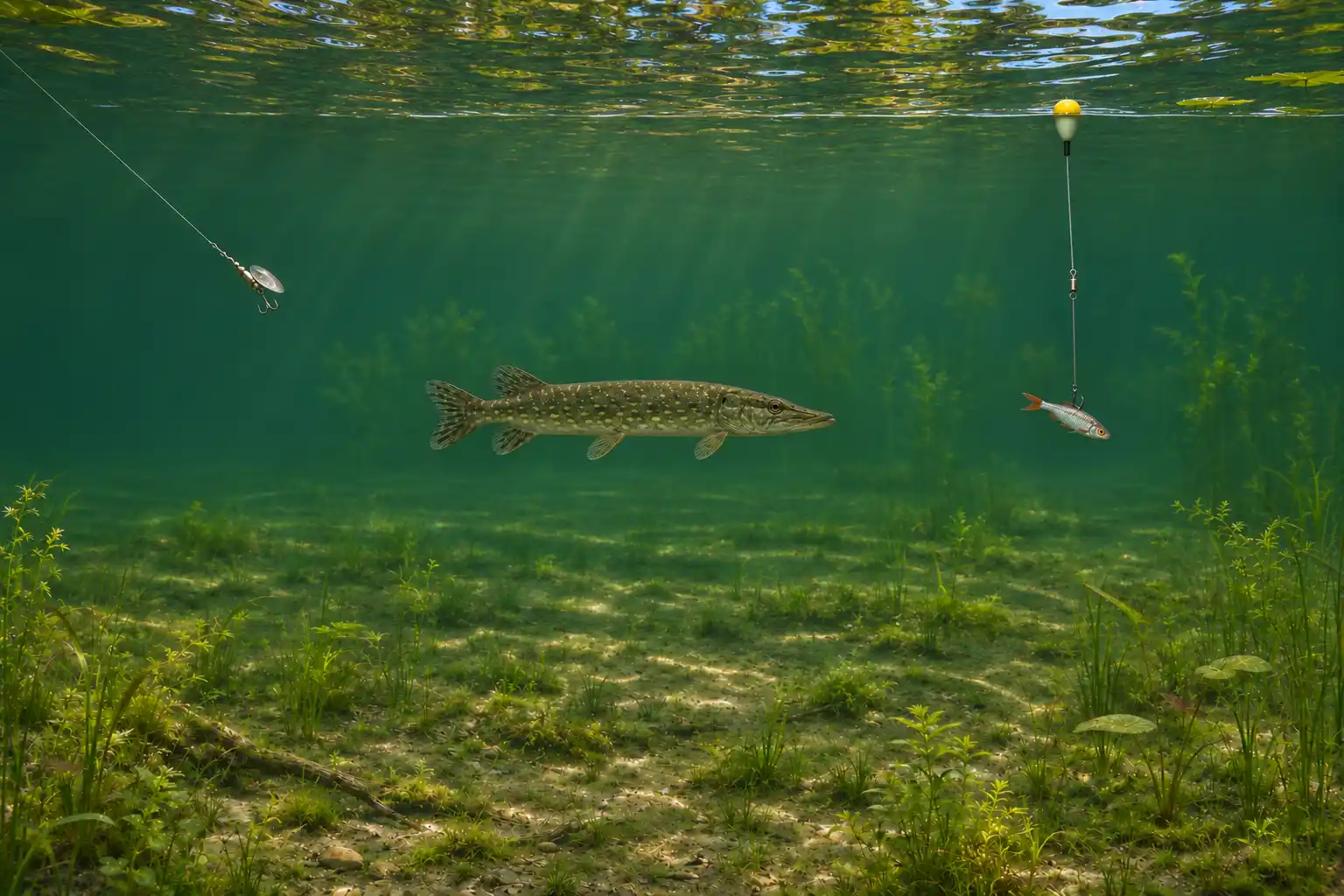
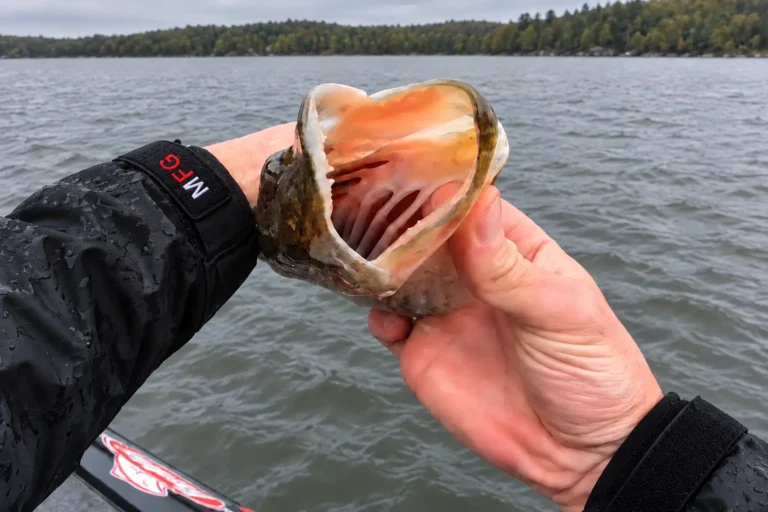
The study also recorded where the hooks ended up. Baited hooks went past the gill arches in 29% of pike, while spinners were rarely swallowed. That matches what we see on the ice: our deeply hooked pike come mostly from dead bait on tip-ups and freespool rigs, and far less often from treble-hook jerkbaits.
However, Beukema’s experiment left an important question unanswered: how long does a pike retain that learned response? Answering that required longer-term research.
Can Pike Learn to Avoid Lures Without Being Hooked?
In 2023, Lucas and colleagues tested whether northern pike could develop bait avoidance without an actual capture. The study was published in the Canadian Journal of Fisheries and Aquatic Sciences.
The work was done in a laboratory, where pike were filmed during simulated angling trials with artificial lures and natural baits. The likelihood of attacking these baits dropped with repeated encounters, even though the fish were never hooked.
The researchers also sorted pike into bolder, proactive fish and more cautious, reactive ones. Both types learned to avoid the baits quickly, so this was not limited to a few wary individuals.
Their ability to hunt live prey stayed the same. What changed was the response to angling baits, not their predatory behavior in general.
On heavily pressured water, this means a pike that has never been landed may already have learned to ignore certain presentations. That fits how we approach shut-down fish: we rarely just downsize the bait. We change depth first, slow the presentation down, or switch to a different bait species.
A lab tank is not a lake, though, and the trials ran over a short period. The results show that pike can learn without being hooked, not how strongly or how long that happens in the wild.
Also, a pike following a lure without striking is not proof of learned avoidance. Water temperature and low feeding motivation can explain that behavior just as well, which is also why pike stop biting in summer.
Do Pike Learn to Avoid Lures After the First Capture?
On September 17, 2026, Lucas et al. published a three-year study examining lure avoidance in a previously unfished pike population in southern Germany.
Researchers made 22,213 casts using three bait types under standardized fishing conditions.
The researchers did not use physical tags. Each pike was photographed and identified by its unique body markings using I3S Pattern+ software, with length and weight as an extra check. Over three years, the casts produced 238 recorded attacks and 69 hooked catches, or roughly one attack every 93 casts and one landed pike every 322 casts. Those catches involved 49 individual pike measuring 11 to 29.1 inches (27.9–74 cm), and 15 of them (30.6%) were caught again at least once. Electrofishing identified 140 individuals, and the population was estimated at 174 pike (95% CI: 52–668).
The interesting part is what happened when the same fish were caught again.
| Bait Type | First Captures (n = 49) | Recapture Events (n = 18) |
|---|---|---|
| Bright-colored soft plastics | 19 (38.8%) | 2 (11.1%) |
| Natural-colored soft plastics | 8 (16.3%) | 5 (27.8%) |
| Dead baitfish | 22 (44.9%) | 11 (61.1%) |
Source: Lucas et al. (2026), Table 5 and Section 3.3, Fisheries Management and Ecology, doi:10.1111/fme.70108. Recapture events shown are those included in the bait-type analysis; the study recorded 69 hooked catches in total.
Only bright-colored soft plastics showed a statistically significant decline in their share of captures (p = 0.045). Neither of the other two bait categories showed a statistically significant change.
Despite the large number of casts, the recapture sample was small. Only two of the 18 recapture events involved bright-colored soft plastics. These percentages describe the distribution of catches by bait type, not the probability of catching an individual pike on each cast.
On pressured water, that is a good reason to carry natural colors alongside the bright ones in your best pike lures box.
However, the results come from a single pike population. They do not establish that bright-colored lures become ineffective after a single capture.
How Long Do Pike Remember Fishing Lures?
The 2026 study by Lucas et al. found evidence suggesting that reduced susceptibility to angling can persist for at least one year.
Between 2022 and 2024, researchers conducted fishing sessions in April–May and October–November, separated by approximately six months. They compared only the first two fishing days of each session to minimize the influence of recent fishing pressure.
Despite these extended breaks, both strike probability (p < 0.001) and capture probability (p = 0.048) declined significantly across years. This suggests that the effects of previous fishing encounters persisted between sessions.
We see a shorter version of this within a single season. On heavily pressured water, pike that hit standard, loud lures aggressively early in the season become far more cautious by the end of it. They often ignore the same baits until we switch to quieter, slower presentations. That kind of short-term pressure is exactly what the researchers filtered out by using only the first days of each session, which makes their year-to-year result stand out even more.
Could fewer catches simply mean fewer pike? The experiment took place in an isolated lake, and no post-release deaths were observed during the fishing sessions. However, researchers assumed a stable population and estimated natural mortality rather than measuring it directly.
Differences in environmental conditions, prey availability, and where pike hold within the lake could also influence catchability between years. Pike movement patterns shift with season and conditions, even in a closed water body.
The findings are consistent with long-term learned avoidance, but the exact duration of lure memory in individual pike remains unknown.
Does Fishing Pressure Make Wild Pike Lure-Shy?
In a study published online in December 2024 (final issue 2025), Roser et al. examined wild northern pike at three pairs of partially protected and unprotected sites in the southern Baltic Sea.
Pike were two to four times more abundant in partially protected areas and responded more aggressively to artificial lures than fish in areas open to recreational fishing. Abundance was not counted directly, though. It was estimated indirectly from catch per unit effort in survey nets.
The researchers estimated that roughly one-third of the difference in angling catch rates between protected and unprotected areas could be attributed to lure shyness, with the rest reflecting fewer pike. That estimate assumes the nets give an unbiased picture of relative pike abundance, a limitation the authors point out themselves.
So on heavily fished water, a drop in catches can mean two things at once: fewer pike, and pike that are harder to fool.
Pressured pike also tend to hit differently. On heavily fished water, we see far more short, tapping strikes, fish nipping at the tail of the lure, or a last-second hit right at the boat or the ice hole. One possible explanation is that the pike feels line tension or the hook, or reacts to a pattern it has met before, and lets go in a split second. We cannot know what the fish actually registers, but on quieter water, strikes are usually more committed and the fish takes the lure deeper.
However, the study did not separate individual learning from other explanations. The authors discuss the selective removal of more aggressive fish as one alternative, without proving it as the cause. That alternative is realistic: in a separate study, Monk et al. (2021) found that a more active pike was more likely to be caught than a less active pike of the same size. Both mechanisms could contribute to reduced catchability in heavily fished populations.
Why Do Pike Follow Lures Without Striking?
In 2025, Lucas et al. used underwater cameras to film how wild northern pike responded to trolled soft plastic lures and dead baitfish. The fish lived in Mindelsee, a natural glacial lake of about 284 acres (115 ha) in southern Germany.
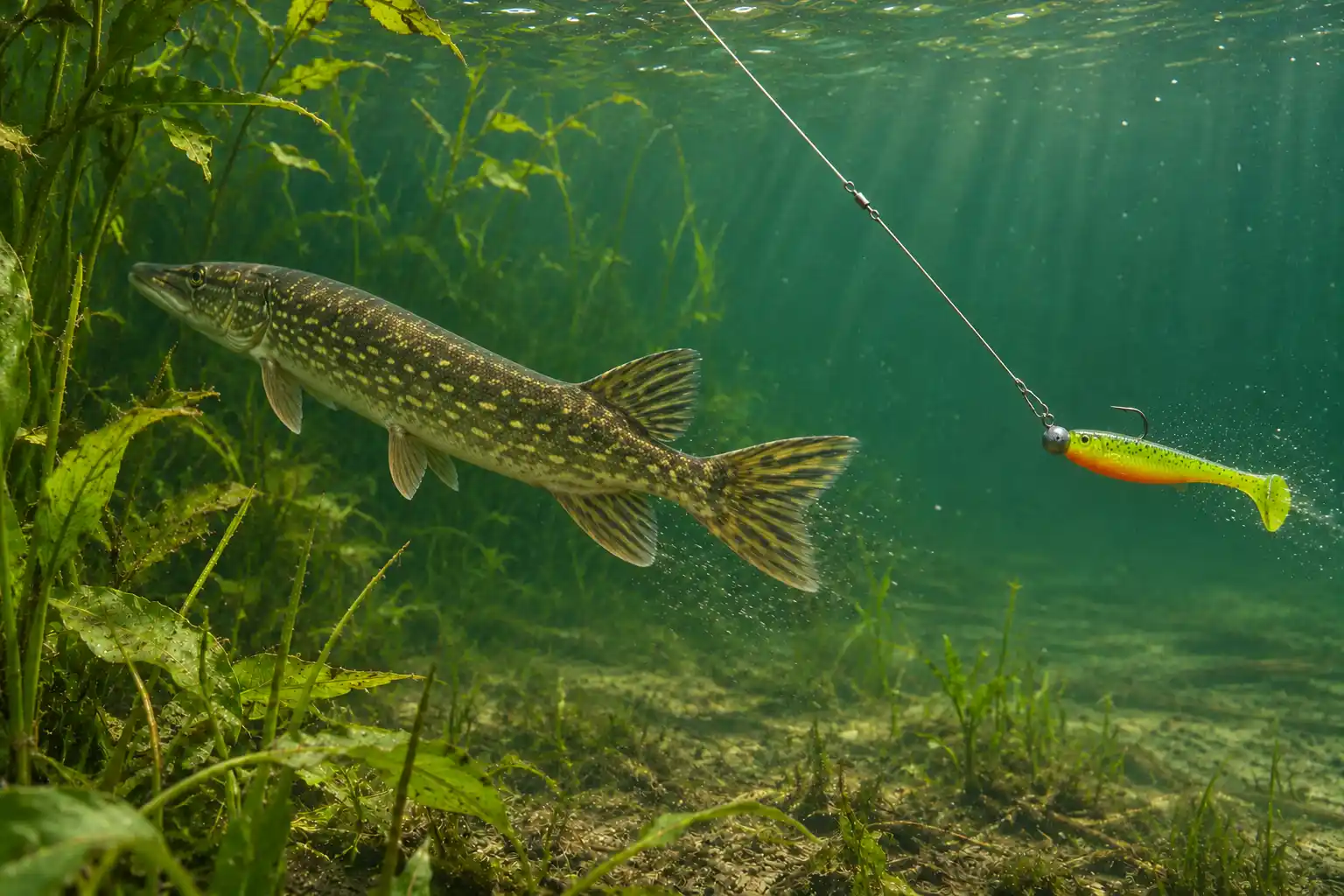
Relative to fishing time, researchers recorded 1.4 times more approaches to the artificial lure than to the dead baitfish. But fewer of those encounters ended in an attack: about 59% for the soft plastic, compared with about 78% for the natural bait.
When pike did go for the soft plastic, they attacked it faster. Speed is not the same as commitment, though. The natural bait had three times higher odds of being engulfed more completely (p = 0.044), and pike that bit the artificial lure showed a faster defensive response. Even so, the likelihood of capture did not differ between the two.
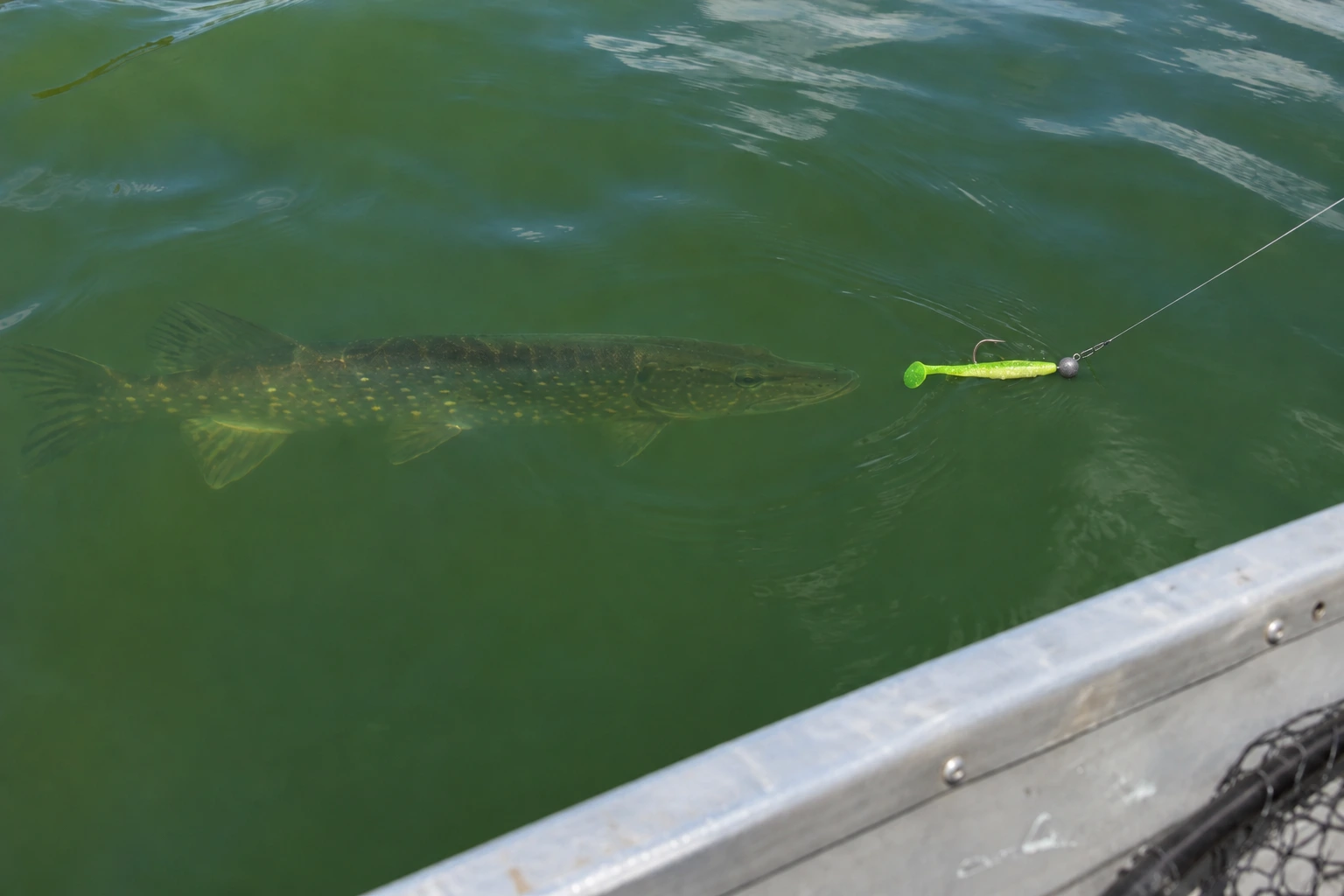
This suggests that attracting a pike and triggering a strike are two different things. A lure can draw enough interest to bring a fish in without convincing it to bite.
That matches what we see on the water. When a pike follows to the boat without hitting, we go into a wide figure-eight or change speed suddenly. At an ice hole, we stop the bait dead. Most of those fish still turn and leave, but roughly one in five or six hesitant pike will hit.
The researchers could not tell whether earlier fishing experience caused this hesitation. Individual differences and feeding motivation are just as possible, so a follow without a strike should not be read as proof of learned lure avoidance.
What the Research on Pike Lure Avoidance Tells Us
Five studies published between 1970 and 2026 provide evidence of how northern pike respond to fishing pressure and previous encounters with lures.
| Study | Main Finding | Key Limitation |
|---|---|---|
| Beukema (1970) | Spinner catchability declined, even in pike that had not been hooked before, while live bait catchability remained unaffected. | Long-term memory was not established. |
| Lucas et al. (2023) | Bait avoidance developed without hooking. | Short-term laboratory trials. |
| Roser et al. (2025) | Approximately one-third of the catch rate difference between protected and open areas may reflect lure shyness. | Individual learning was not isolated; abundance estimates may be biased. |
| Lucas et al. (2025) | Soft plastics attracted more approaches, but fewer encounters resulted in attacks than with natural bait. | Previous fishing experience was not tested. |
| Lucas et al. (2026) | Bright soft plastics accounted for 38.8% of first captures versus 11.1% of recaptures. Strike probability declined across years. | Single lake; only 18 recapture events. |
Northern pike can develop learned avoidance of fishing presentations, even without being hooked. However, the strength and duration of that response may vary among individual fish, lure types, and environments.
What This Means for Pike Anglers
None of this means every missed strike comes from a lure-shy pike. But the research does point to a few practical adjustments for pressured water.
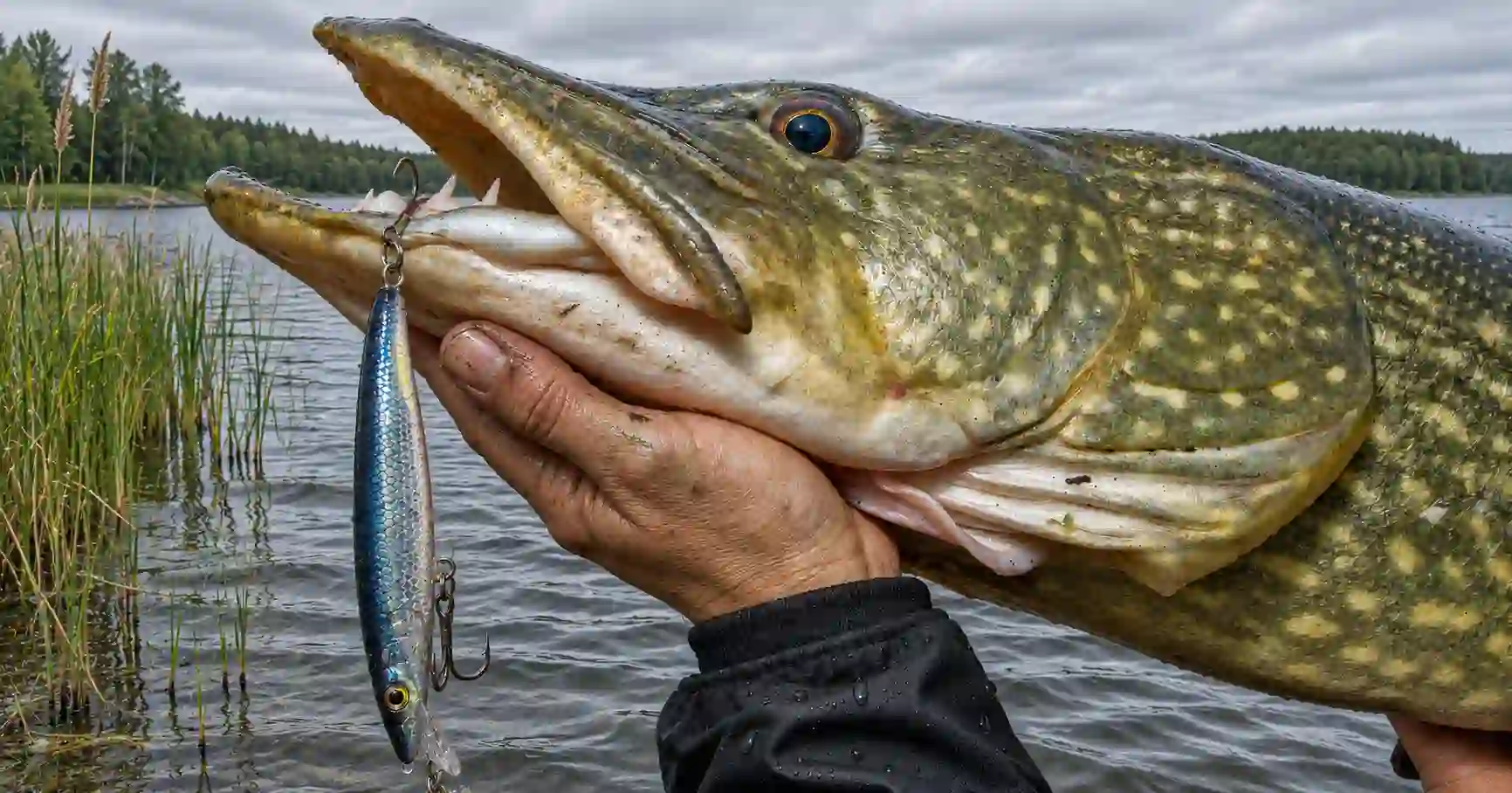
- Change lure characteristics: Experiment with color, profile, vibration, and retrieve speed rather than repeatedly presenting the same lure.
- Switch to natural bait where it’s legal: Across three of the studies, natural bait drew a steadier response than artificial lures. Beukema’s live bait kept catching fish, dead baitfish made up a larger share of recaptures in the 2026 study, and in the 2025 camera study 78% of encounters with natural bait ended in an attack, compared with 59% for soft plastics, with more complete takes. When pike shut down on lures, switching bait species is one of the first changes we make.
- Rest productive spots, but don’t expect a reset: A break can ease short-term pressure from repeated casting. The 2026 study, however, found that reduced catchability persisted even after six-month breaks, so resting a spot may not erase what pike have already learned.
- Do not abandon bright colors: The 2026 study showed that brightly colored lures were effective for first-time captures, despite their lower representation among recaptures.
- Consider seasonal conditions: Water temperature, prey availability, and feeding motivation can influence lure acceptance independently of fishing pressure.
When a pike follows without striking, we prefer to change one element of the presentation at a time. This helps us distinguish which adjustments may be influencing the fish’s response.
Learned lure avoidance explains some tough days on pressured water, but not every unsuccessful fishing session.
Frequently Asked Questions
Do pike learn to avoid lures?
Yes, they can. Research shows that northern pike can develop learned avoidance of certain fishing presentations through repeated encounters. In experiments, this happened even in fish that had never been hooked.
Do pike remember being caught?
Previous capture can reduce a pike’s susceptibility to future capture, but the effect appears to depend on the bait or lure used. In a 2026 study, bright-colored soft plastics accounted for 38.8% of first captures but only 11.1% of recaptures.
How long do pike remember lures?
Research suggests that reduced catchability can persist for at least one year at the population level. The exact duration of lure memory in individual pike remains unknown.
Does a pike following a lure mean it has learned to avoid it?
Not necessarily. Feeding motivation, individual behavior, and lure characteristics can also influence whether a pike follows or attacks a lure.
Scientific References
- Beukema, J. J. (1970). Acquired hook-avoidance in the pike Esox lucius L. fished with artificial and natural baits. Journal of Fish Biology, 2(2), 155–160.
- Monk, C. T., et al. (2021). The battle between harvest and natural selection creates small and shy fish. Proceedings of the National Academy of Sciences.
- Lucas, J., Ros, A., Geist, J., & Brinker, A. (2023). Effects of behavioral strategies on catchability, bait selectivity, and hunting behavior in northern pike (Esox lucius). Canadian Journal of Fisheries and Aquatic Sciences, 80(12), 1890–1905.
- Roser, P., et al. (2025). Getting Scarce and Lure Shy: Impacts of Recreational Fishing on Coastal Northern Pike (Esox lucius) Abundance, Size Structure and Vulnerability to Angling. Fisheries Management and Ecology.
- Lucas, J., Ros, A., Geist, J., & Brinker, A. (2025). Predator responses in recreational fishing: Assessing selective pressure of bait types on behavioral diversity in northern pike (Esox lucius). Fisheries Research, 283, 107299.
- Lucas, J., Ros, A., Geist, J., & Brinker, A. (2026). Capture Probability and Effects of Bait Type on Learning Behavior in an Unexploited Population of Northern Pike (Esox lucius). Fisheries Management and Ecology.