

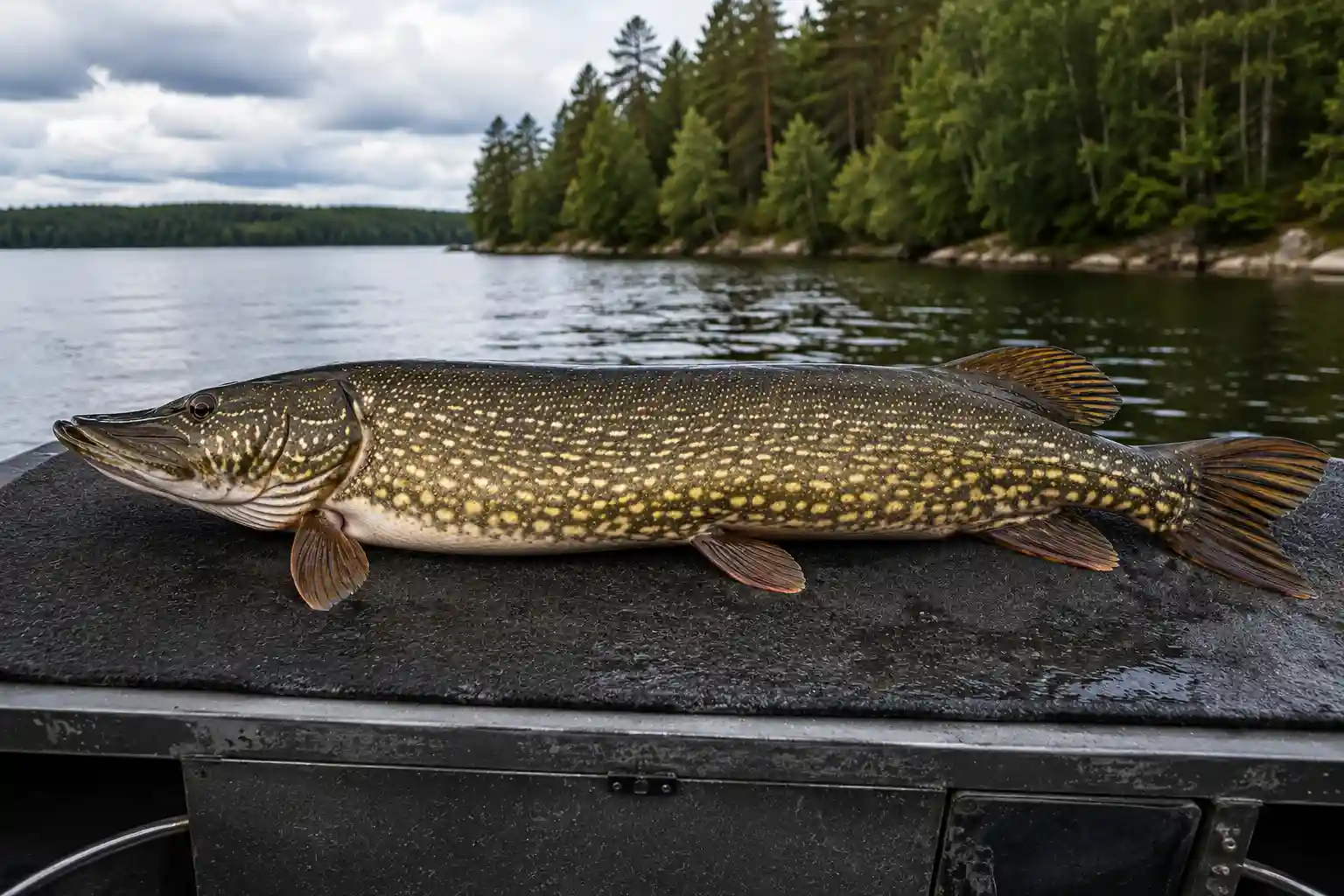
Northern Pike: Complete Species Guide (Identification, Habitat, Size & Facts)
Northern pike (Esox lucius) is a large freshwater predator native to North America, Europe, and parts of Asia. Most adult northern pike measure 20-30 inches (50-75 cm), while trophy fish commonly exceed 40 inches (100 cm). The largest authenticated northern pike on record weighed 55 lb 1 oz (25.0 kg), making the species one of the biggest and most powerful freshwater ambush predators in the Northern Hemisphere.
Recognizable by its long, torpedo-shaped body, duck-like snout, and hundreds of razor-sharp teeth, northern pike inhabit lakes, rivers, reservoirs, and slow-moving waters with abundant vegetation. As apex predators, they play an important ecological role by regulating prey fish populations, while their explosive strikes and aggressive feeding behavior have made them one of the world’s most respected freshwater game fish.
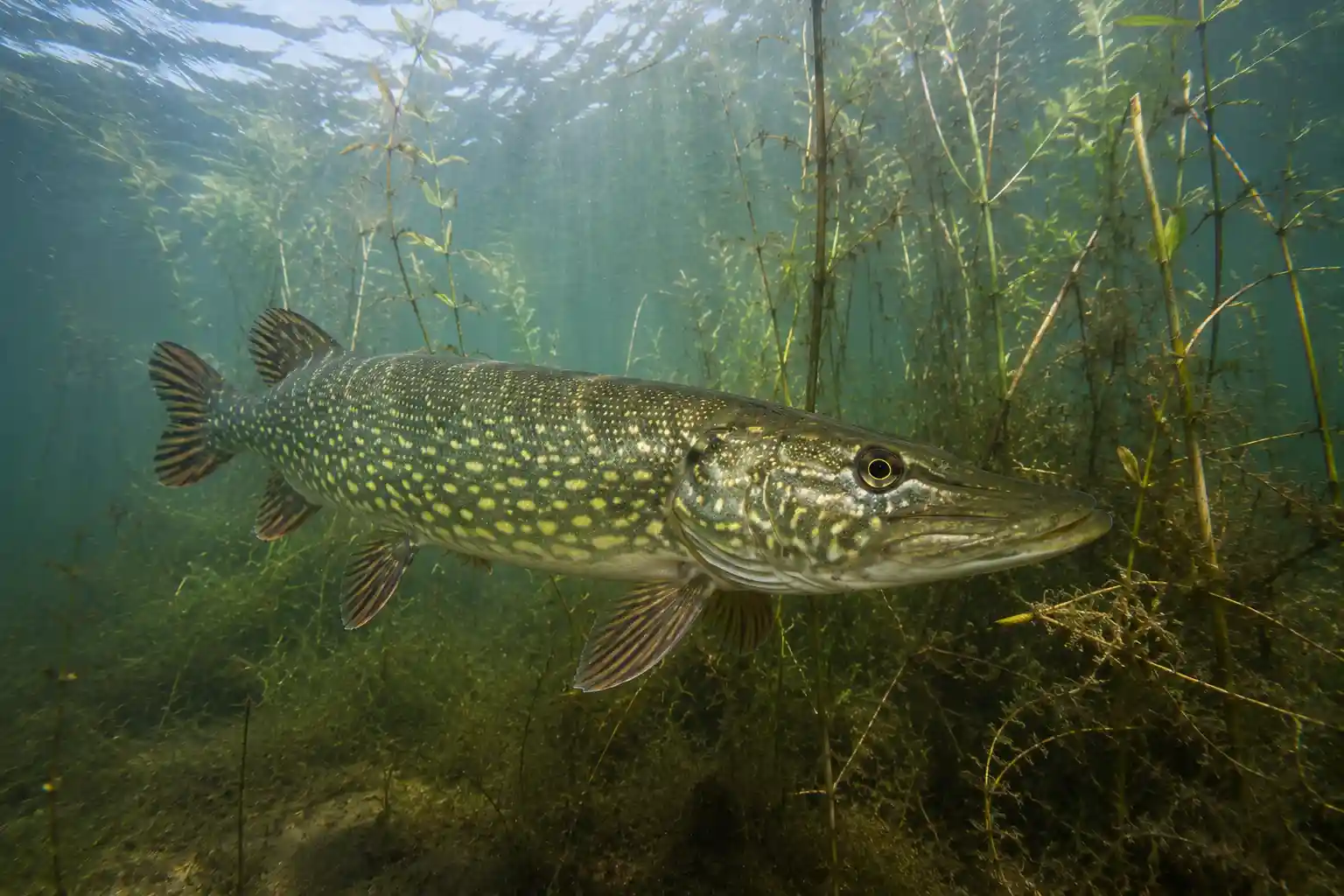
This complete species guide explains everything you need to know about northern pike, including identification, habitat, distribution, size, growth, lifespan, anatomy, diet, hunting behavior, reproduction, conservation, and fascinating biological facts. Throughout the guide, you’ll also find links to more detailed MFG resources covering specific topics such as growth rates, spawning, identification, and seasonal fishing strategies.
Quick Facts About Northern Pike
| Characteristic | Details |
|---|---|
| Scientific Name | Esox lucius |
| Common Name | Northern Pike |
| Family | Esocidae |
| Native Range | North America, Europe, and northern Asia |
| Habitat | Lakes, rivers, reservoirs, marshes, and slow-moving freshwater with abundant vegetation |
| Average Adult Length | 20–30 inches (50–75 cm) |
| Trophy Size | 40+ inches (100+ cm) |
| Maximum Recorded Weight | 55 lb 1 oz (25.0 kg) |
| Average Lifespan | 7–15 years |
| Maximum Lifespan | 20+ years |
| Oldest Verified | 25+ years |
| Diet | Primarily fish, but also amphibians, crayfish, small mammals, and waterfowl |
| Conservation Status | Least Concern (IUCN) |
What Is a Northern Pike?
The northern pike (Esox lucius) is a freshwater fish species belonging to the family Esocidae, a small group of highly specialized ambush predators. Native to much of the Northern Hemisphere, it naturally occurs across North America, Europe, and northern Asia, where it inhabits lakes, rivers, reservoirs, marshes, and slow-moving waters rich in aquatic vegetation. Thanks to both natural distribution and human introductions, northern pike are now found in many freshwater systems outside their original range.
Unlike schooling predators that actively chase prey over long distances, northern pike rely on stealth. Their elongated body, rear-positioned dorsal and anal fins, broad flattened head, and powerful tail are all adaptations for explosive acceleration over short distances. Instead of pursuing prey for extended periods, pike typically remain motionless among submerged vegetation before launching lightning-fast attacks when an opportunity presents itself.
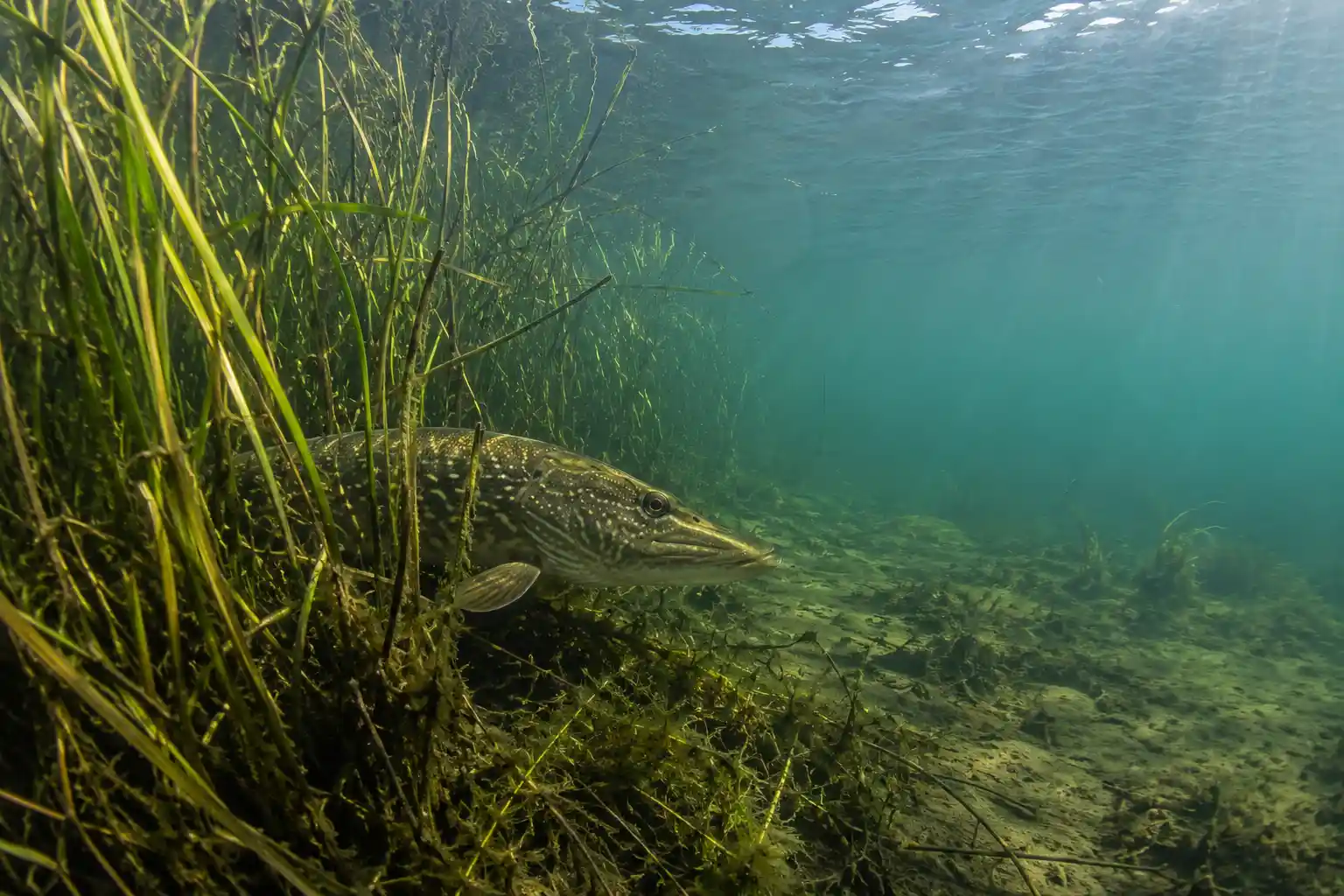
As one of the dominant predators in many freshwater ecosystems, northern pike help regulate prey populations and influence the balance of aquatic food webs. Their opportunistic feeding behavior, rapid acceleration, and ability to exploit a wide variety of habitats have allowed the species to thrive across an enormous geographic range. The northern pike’s diet, hunting strategy, and feeding adaptations are explored in greater detail later in this guide.
What Does a Northern Pike Look Like?
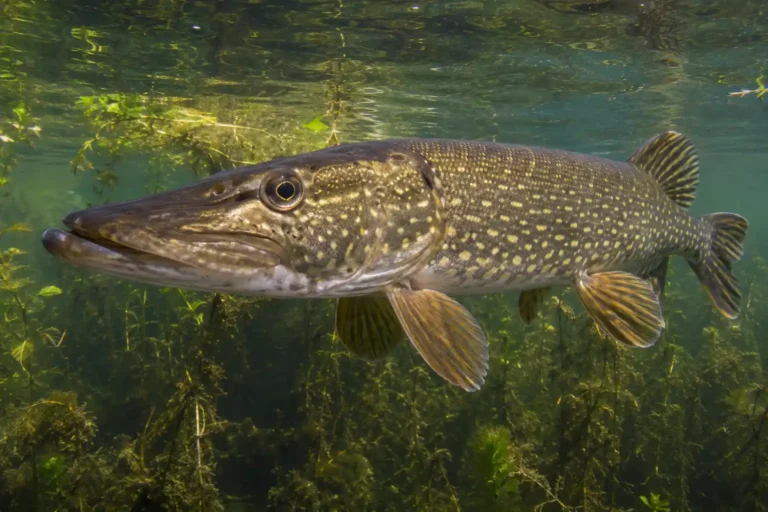
Northern pike have a long, torpedo-shaped body built for sudden bursts of speed, a broad, flattened head, and a duck-bill-shaped snout lined with hundreds of sharp teeth. Coloration typically ranges from olive-green to dark green, with light yellow or cream-colored bean-shaped spots scattered along the sides. The exact pattern and intensity of these markings often vary with habitat, water clarity, and the surrounding environment, helping northern pike remain well camouflaged while lying in ambush.
We’ve noticed this firsthand while fishing different waters. Pike caught in weedy, tannin-stained lakes and rivers often appear noticeably darker with more pronounced markings than fish from clearer, rockier waters. Although individual coloration varies considerably, the species’ overall body shape and distinctive spot pattern remain reliable identification features.
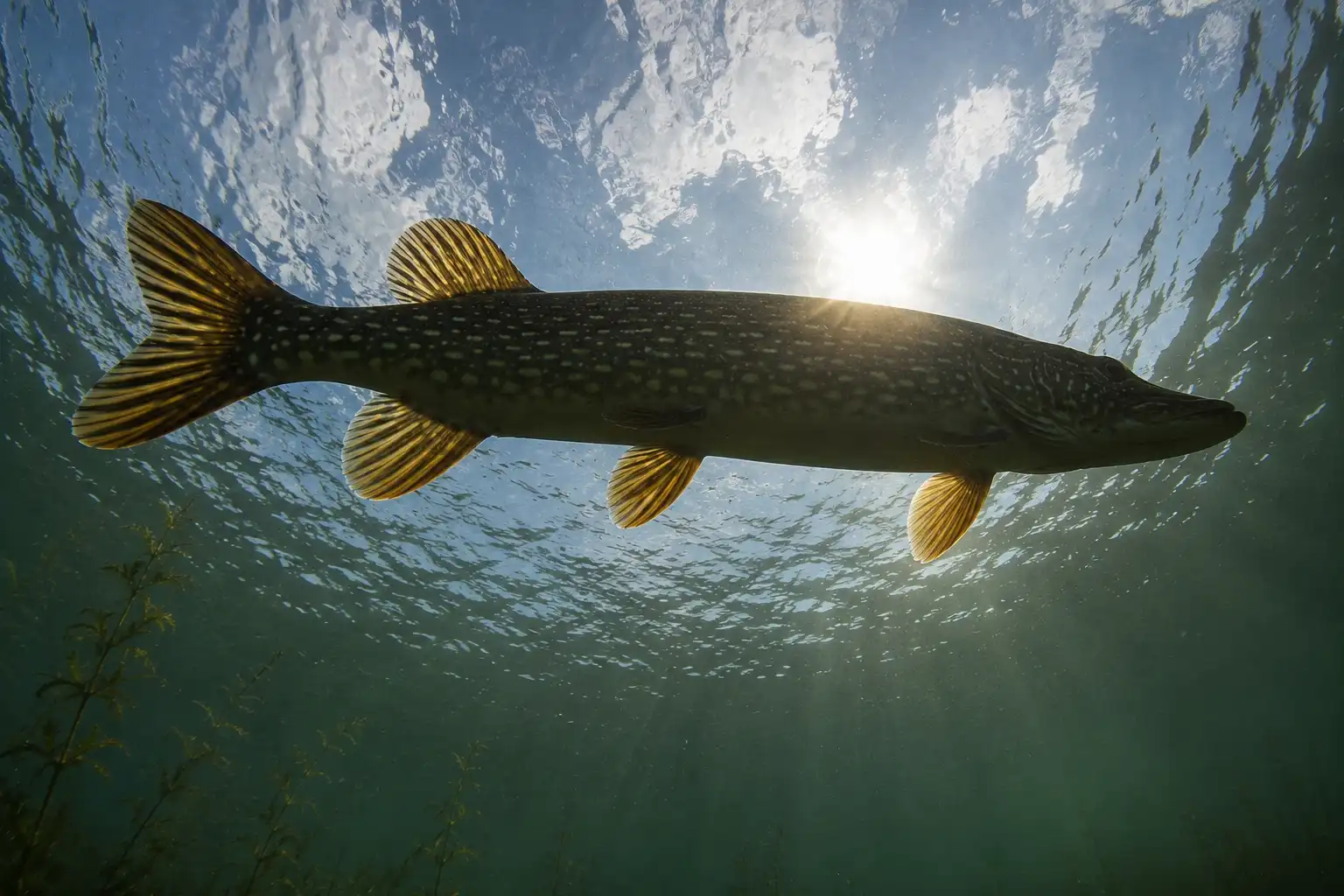
One of the northern pike’s most distinctive anatomical features is the position of its fins. The dorsal and anal fins are located far back on the body, almost directly opposite each other near the tail. Combined with a muscular, streamlined body, this arrangement allows northern pike to generate explosive acceleration from a standstill, making them exceptionally effective ambush predators.
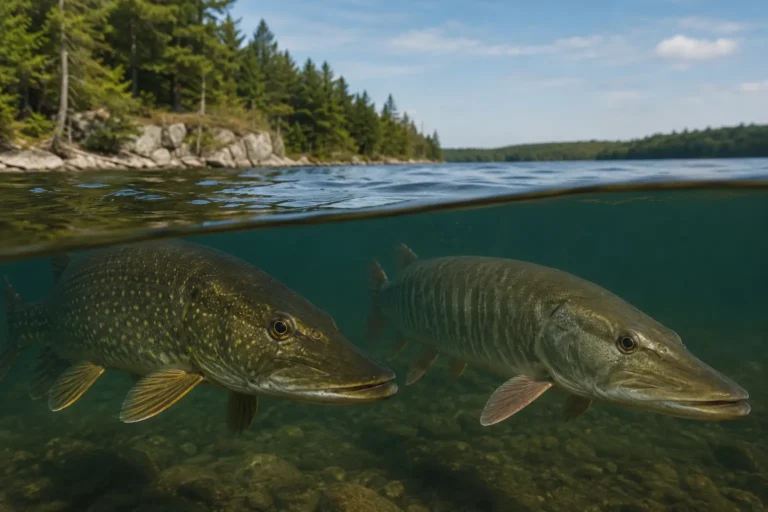
Because northern pike share a similar body shape with muskellunge, the two species are frequently confused, especially by anglers encountering either fish for the first time. However, they differ in several identifying features, including spot pattern, tail shape, cheek and gill cover scaling, and sensory pore counts beneath the jaw. For a complete breakdown of these differences, see our Pike vs. Muskie identification guide.
Where Do Northern Pike Live?
Northern pike naturally inhabit freshwater ecosystems across much of the Northern Hemisphere, including North America, Europe, and northern Asia. They thrive in a wide variety of waters, from small ponds and slow-moving rivers to large natural lakes and reservoirs. Although their distribution is naturally extensive, northern pike have also been intentionally introduced into additional waters for recreational fishing, establishing self-sustaining populations in many regions outside their native range.
The species prefers shallow to moderately deep water with abundant aquatic vegetation, submerged timber, reed beds, and other structures that provide both cover and ideal ambush positions. Healthy pike populations are commonly found in clear, cool, well-oxygenated waters, but the species is highly adaptable and can also thrive in darker, stained lakes, marshes, and slow-flowing rivers where suitable prey is abundant. Across the waters we’ve fished — from Devils Lake to the Danube and Sava to Sweden’s Lake Vänern — pike have consistently held tight to the same type of cover, regardless of continent or climate.
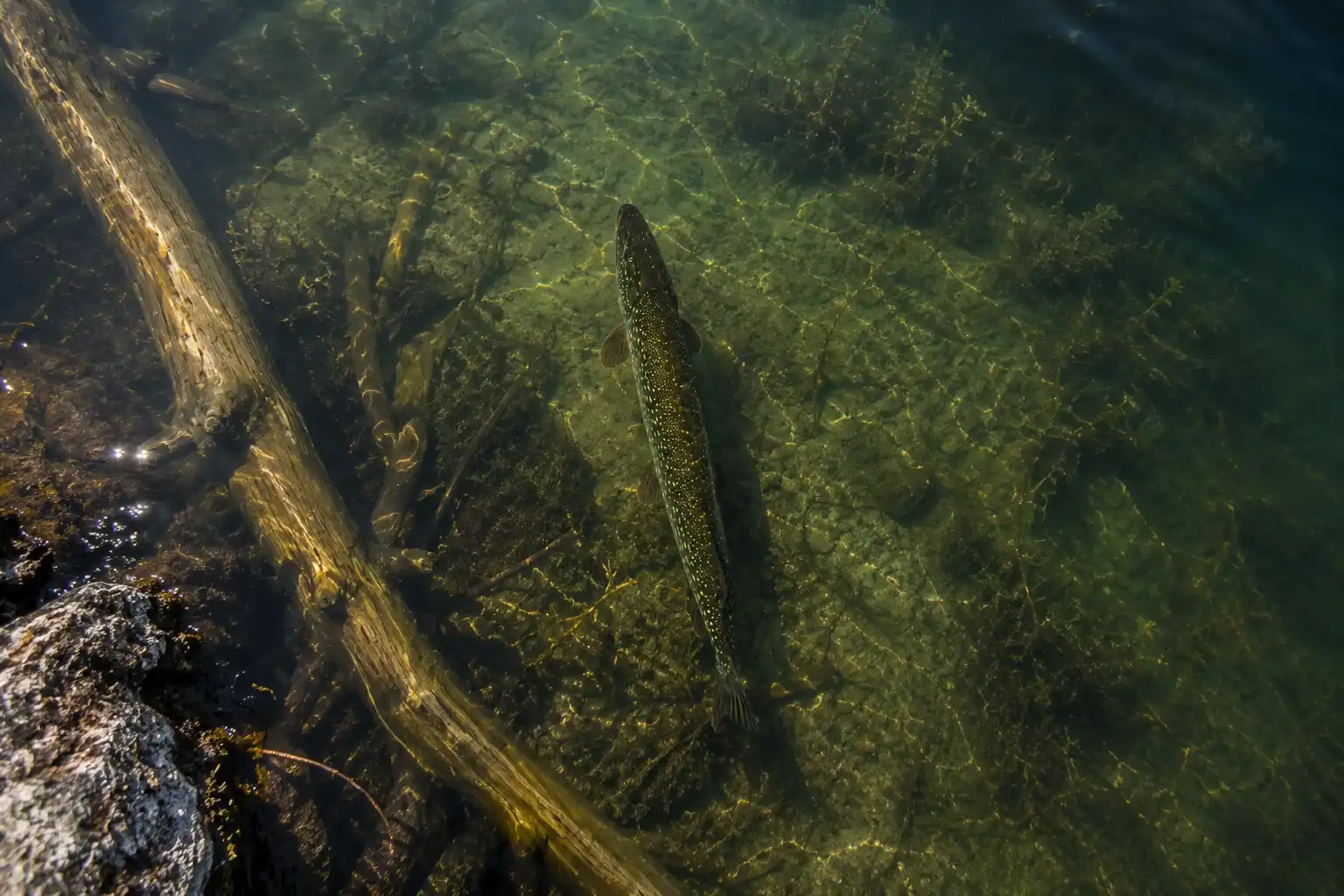
Young northern pike spend much of their time in protected, heavily vegetated shallows where dense cover offers shelter from predators while providing excellent feeding opportunities. As they grow larger, adult fish gradually expand into a broader range of habitats, including deeper weed edges, submerged points, rocky transitions, river channels, and offshore structure.
Habitat use also shifts throughout the year as water temperature, spawning cycles, and prey movement change. These seasonal patterns are explored in detail later in this guide.
What Do Northern Pike Eat?
Northern pike are opportunistic carnivores that feed primarily on fish, but their diet changes as they grow. Newly hatched pike begin feeding on zooplankton and tiny aquatic invertebrates before gradually switching to insects, small fish, and eventually becoming highly efficient fish predators. Adult northern pike consume a wide variety of prey, adapting their feeding habits to whatever is most abundant and easiest to capture within their habitat.
Depending on the waterbody, northern pike commonly prey on perch, roach, minnows, suckers, ciscoes, and many other forage fish. They also eat crayfish, frogs, salamanders, and occasionally small mammals or waterfowl. Rather than specializing on a single prey species, pike are highly adaptable predators that take advantage of seasonal food availability throughout the year.
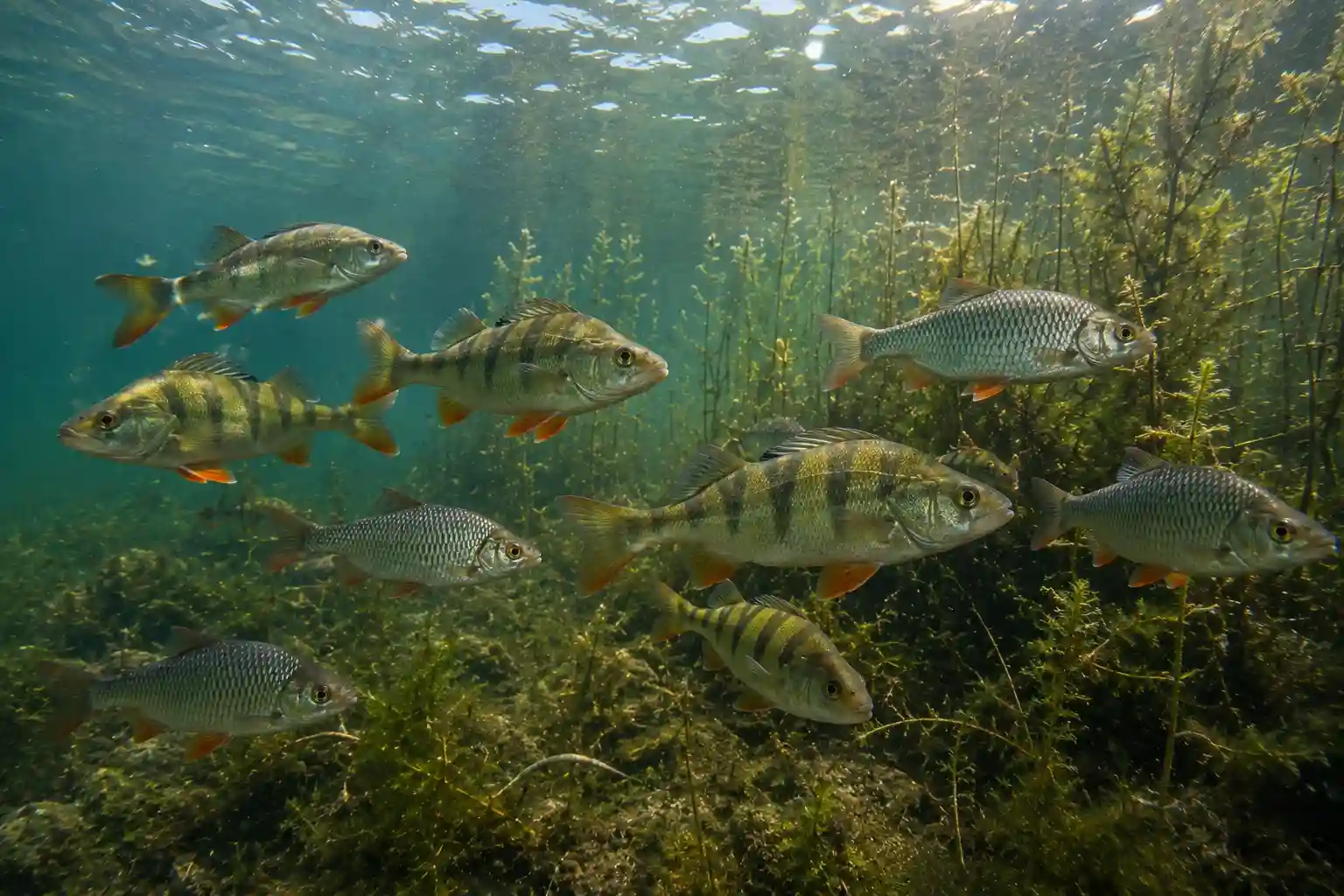
Large northern pike are capable of swallowing surprisingly large prey relative to their own size. Research shows that most prey fish typically measure around 10–20% of a pike’s total length, although exceptional individuals have been documented consuming prey approaching 46% of their own length. During our time targeting trophy pike, we’ve consistently noticed that the biggest fish often ignore schools of tiny baitfish and instead position themselves near larger forage such as perch, roach, or suckers, waiting for a single high-energy feeding opportunity rather than chasing dozens of small meals. Cannibalism is also a natural part of northern pike ecology, particularly where young pike are abundant and alternative prey is scarce.
Diet changes throughout the seasons. Water temperature, spawning cycles, prey movements, and habitat conditions all influence what northern pike eat and when they feed most actively. These seasonal shifts help explain why lure choice, bait size, and presentation often need to change between spring, summer, fall, and winter.
How Water Temperature Controls Northern Pike Behavior
Water temperature is the single most important environmental factor influencing northern pike behavior because it directly affects the fish’s metabolism. As a cold-water species, northern pike do not maintain a constant body temperature. Instead, their body temperature closely follows the surrounding water, causing nearly every biological process—including digestion, swimming performance, oxygen demand, and feeding activity—to change as water temperatures rise or fall.
One of the best-established concepts in fish physiology is the Q10 principle, which describes how metabolic rate changes with temperature. Research has shown that, for many fish species, increasing water temperature by 10°C (18°F) can approximately double metabolic rate. A large review published in the Journal of Animal Ecology reported a median Q10 value of 2.40 across 138 fish studies, illustrating just how strongly temperature influences fish physiology.
For northern pike, these metabolic changes help explain many of the seasonal behavioral patterns anglers observe. As water warms, digestion accelerates, energy requirements increase, and feeding opportunities often become more frequent. When temperatures fall, metabolism slows, meals take longer to digest, and pike generally conserve energy by reducing unnecessary movement.
We’ve observed this relationship repeatedly while fishing different waters. Pike in warm summer lakes often feed more frequently and recover faster after a meal than fish inhabiting much colder waters during early spring. While every lake is different and prey availability also plays an important role, these real-world observations closely reflect the biological effects predicted by the Q10 principle.
Understanding this biological relationship is the foundation of successful pike fishing throughout the year. If you’d like to see how different water temperatures influence seasonal activity, feeding windows, and location on the water, explore our detailed guides to Water Temperature vs. Pike Activity and Winter Pike Behavior, where these biological principles are applied to real fishing conditions.
How Northern Pike Hunt
Northern pike are classic ambush predators that rely on stealth, explosive acceleration, and highly developed senses rather than long-distance pursuit. Instead of constantly searching for prey, they often remain nearly motionless beside aquatic vegetation, submerged timber, reed beds, or other cover until a suitable target moves within striking distance.
Vision plays a major role in prey detection, particularly in clear water where northern pike can accurately judge movement and distance before attacking. At the same time, the species also relies on its lateral line system—a row of specialized sensory organs running along each side of the body—to detect vibrations and subtle pressure changes produced by nearby fish. This allows pike to locate prey even in stained water, dense vegetation, or low-light conditions where visibility is reduced.
Once a target is selected, the attack happens remarkably fast. Rather than chasing prey over long distances, northern pike wait until a fish enters striking range before launching a sudden burst toward the target. The entire sequence—from detecting movement to engulfing the prey—often lasts only a fraction of a second, leaving little opportunity for escape. This short-distance ambush strategy allows pike to conserve energy while remaining highly effective predators throughout their lives.
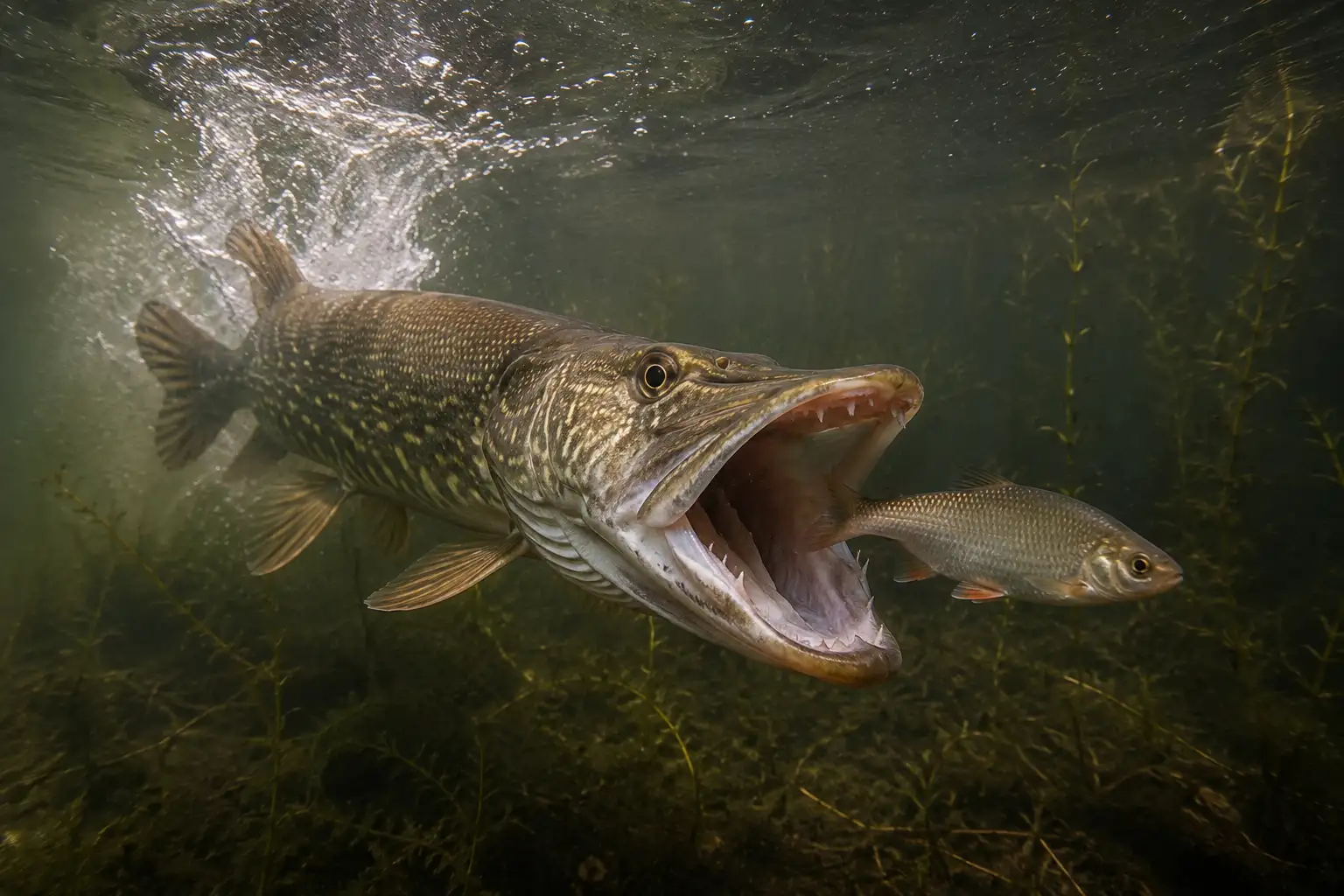
We’ve watched this behavior countless times while sight-fishing in shallow water. Large pike often remain completely motionless for several minutes, allowing smaller fish to swim within inches of their snout before launching a lightning-fast strike. In many cases, the attack is over so quickly that the prey has virtually no time to react, demonstrating why patience is one of the species’ greatest hunting advantages.
This highly specialized hunting strategy explains why northern pike are among the most efficient freshwater predators in the world. Rather than relying on endurance, they maximize surprise, timing, and precision. Combined with highly developed sensory systems and remarkable acceleration, this ambush strategy has allowed northern pike to thrive across an enormous variety of freshwater habitats throughout the Northern Hemisphere.
Pike Teeth and Anatomy
Northern pike possess a highly specialized anatomy that has evolved for one purpose—capturing and holding slippery prey. Every major feature, from the shape of the head to the arrangement of the teeth and jaw structure, contributes to the species’ remarkable efficiency as an ambush predator.
Perhaps the most recognizable feature is the pike’s mouth. Northern pike are commonly estimated to possess between 300 and 700 sharp, backward-pointing teeth of various sizes distributed across the jaws, tongue, and roof of the mouth. Rather than chewing prey, these teeth function like hooks, gripping struggling fish securely and making escape extremely difficult once the jaws close.
Northern pike continuously replace damaged or lost teeth throughout their lives. Individual teeth are regularly shed and replaced as they become worn or broken, ensuring the fish maintains an effective grip on prey. Research by the Michigan Department of Conservation (Research Report 310, 1935) found that tooth replacement occurs continuously rather than seasonally, while the overall number of functional teeth remains relatively stable as pike mature.
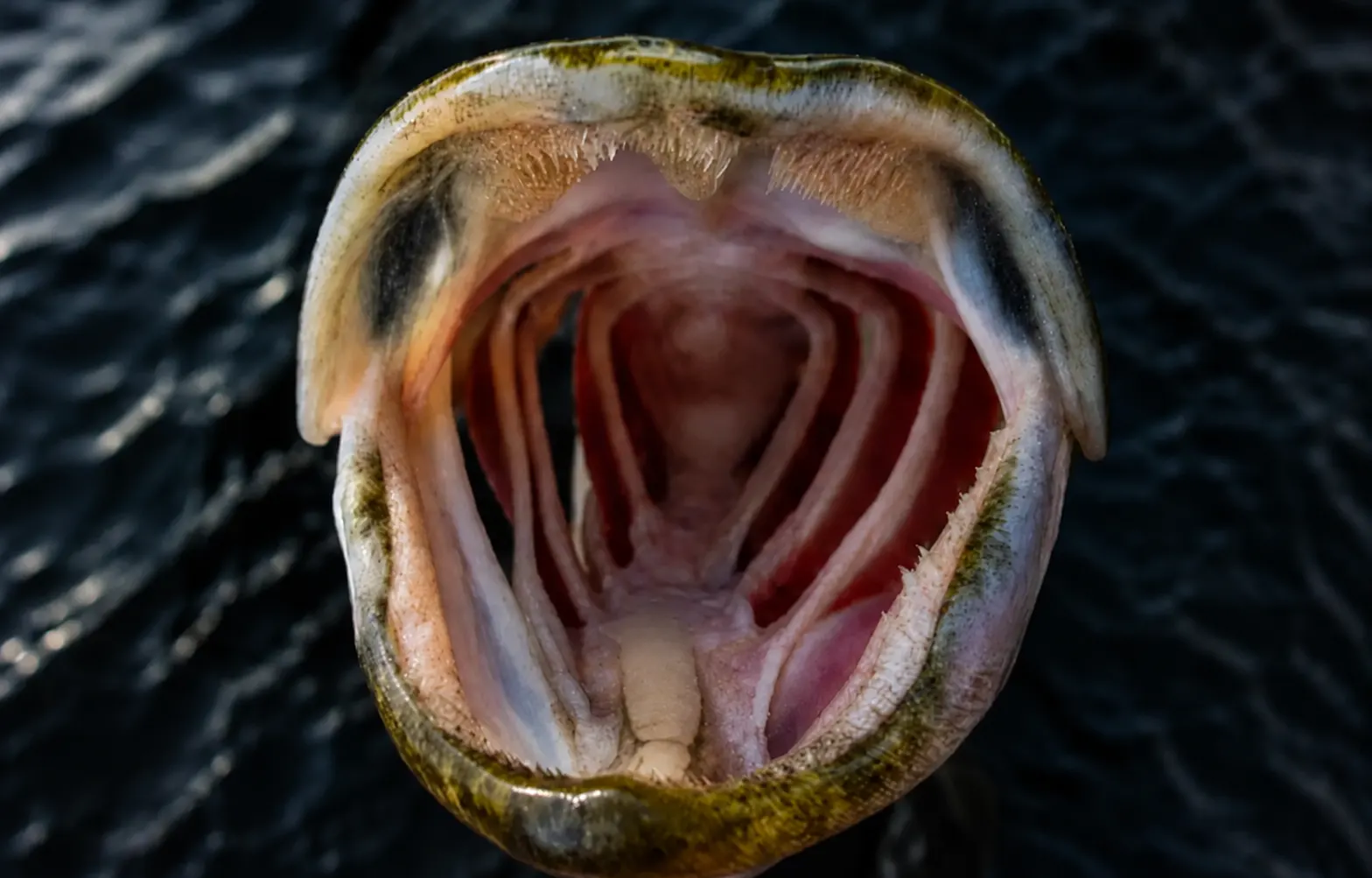
We’ve noticed the effects of this firsthand when unhooking pike boatside. It’s common to spot a small gap or a soft, partially regrown tooth along the jawline, especially on fish that regularly strike hard lures or bony prey. Far from being a sign of poor health, this is simply the natural replacement process at work, and it explains why anglers occasionally notice missing or partially developed teeth when handling pike.
Powerful jaw muscles and a flexible palate work together with these teeth to make northern pike exceptionally effective predators. Once prey is captured, the backward-pointing teeth prevent escape while the jaws and palate gradually reposition the fish so it can be swallowed headfirst. These anatomical adaptations allow northern pike to capture prey quickly and efficiently while minimizing the risk of losing a meal.
Northern Pike Size and Growth
Northern pike are among the fastest-growing freshwater predators in North America and Europe, though growth rates vary significantly depending on water body, climate, and prey availability. Most adults settle into a typical range of 20–30 inches, but under favorable conditions, individual fish can continue growing for well over a decade, eventually reaching trophy sizes exceeding 40 inches.
Growth is fastest during the first few years of life, then gradually slows as the fish matures, a pattern common to most large predatory fish species. Regional differences also play a major role—pike in nutrient-rich, prey-abundant waters tend to reach larger sizes at a younger age than fish in colder, less productive systems. We’ve experienced this contrast directly — pike caught in warmer, richer waters on one continent have consistently run larger and heavier at a given length than similarly aged fish from colder, less fertile waters elsewhere.
For a complete breakdown of northern pike growth by age, regional size differences, and the biological factors that separate an average fish from a true trophy, see our in-depth Pike Lifespan and Growth Rate guide.
Northern Pike Reproduction
Northern pike spawn in early spring, shortly after ice-out, once shallow water stabilizes between roughly 4–10°C (39–50°F). Adults move into shallow, vegetated backwaters and slow tributaries, where females release thousands of eggs that adhere to submerged vegetation before hatching within one to two weeks.
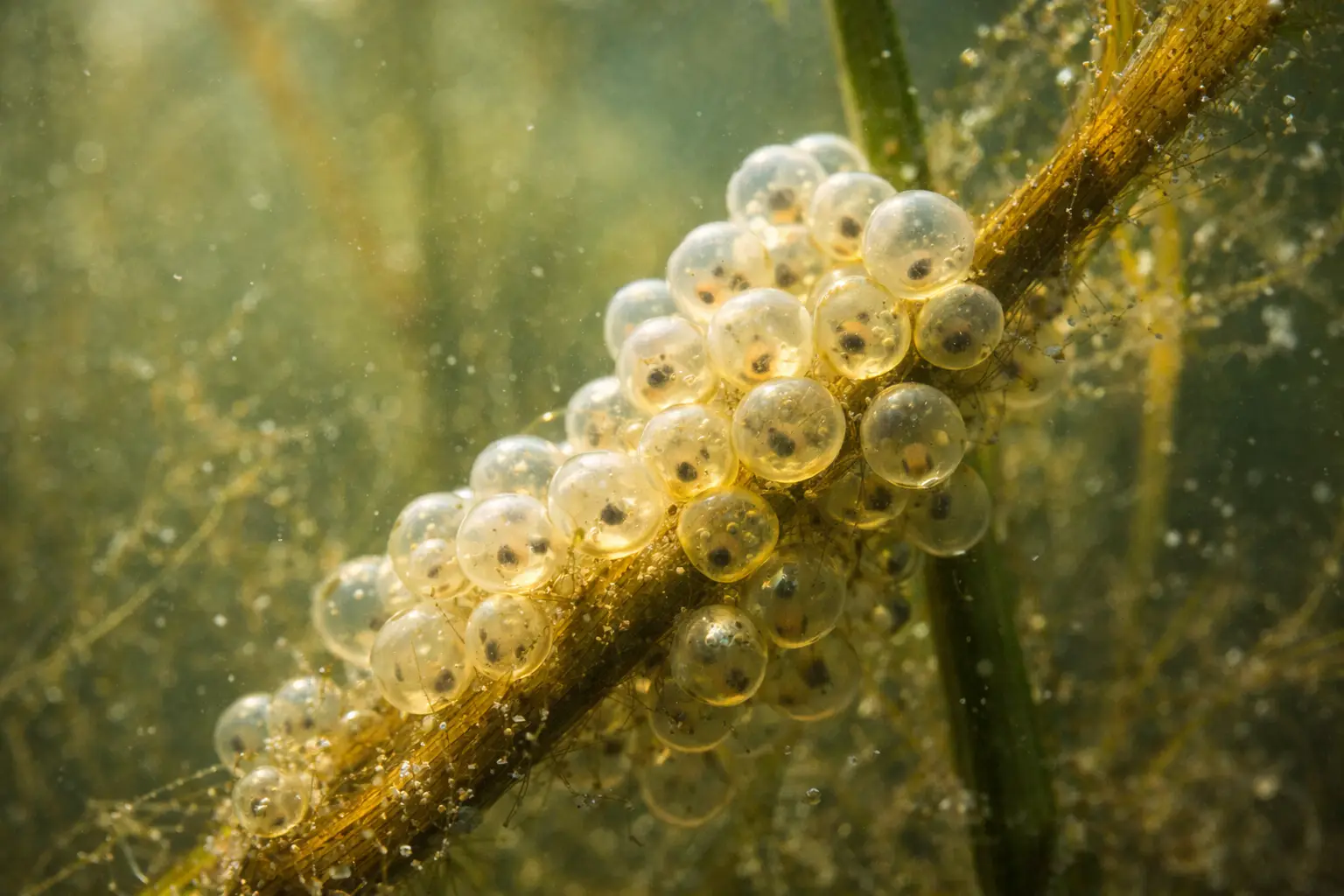
Unlike many fish species, northern pike provide no parental care after spawning. Survival rates for fry are naturally low, with the majority lost to predation, poor habitat conditions, or fluctuating water levels during this vulnerable early stage.
Spawning success has a direct impact on future fishing quality, and the exact timing and staging behavior involved are worth understanding in more depth. For a complete breakdown of spawning temperature windows, staging behavior, and how it affects early-season fishing, see our in-depth Pike Spawning in Spring guide.
Northern Pike Behavior Through the Seasons
While the biological principles behind pike behavior stay the same year-round, how those principles show up on the water changes dramatically from one season to the next. Location, feeding intensity, and daily activity windows all shift as water temperature and spawning cycles progress through the year.
In spring, pike move shallow to spawn and then gradually recover, transitioning from a non-feeding state into aggressive post-spawn feeding. Summer brings stable warm-water patterns, with pike often relating to deeper structure during peak heat and feeding more actively during low-light periods. Fall triggers a strong feeding response as pike bulk up before winter, often becoming more predictable and aggressive as water temperatures drop through specific ranges. Winter concentrates pike in stable, energy-efficient locations where precise presentation matters more than covering water.
Each season demands a different approach, which is why we’ve built a complete guide dedicated to every stage of the year. Explore our in-depth seasonal guides to learn exactly where to find pike and how to catch them in every season:
Seasonal Pike Fishing Guides
Predators and Threats to Northern Pike
As adults, northern pike have few natural predators and sit near the top of the freshwater food chain—but that isn’t true for every stage of their lives. Eggs and newly hatched fry are highly vulnerable, preyed upon by other fish, aquatic insects, and diving birds. Juvenile pike remain at risk from larger fish, including adult pike themselves, until they grow large enough to become effective predators in their own right.
Once pike reach adulthood, natural predation becomes rare. Only the largest fish-eating birds, and occasionally much larger predatory fish in certain ecosystems, pose any real threat, and even then, mainly to smaller or injured individuals.
For mature pike, the greatest threats come from human activity rather than natural predators. Overharvest, habitat degradation, and the loss of shallow, vegetated spawning grounds to development or water-level manipulation can all reduce population health over time. Fishing pressure in particular affects the size structure of a fishery, since large, mature females are the fish most capable of producing strong year classes.
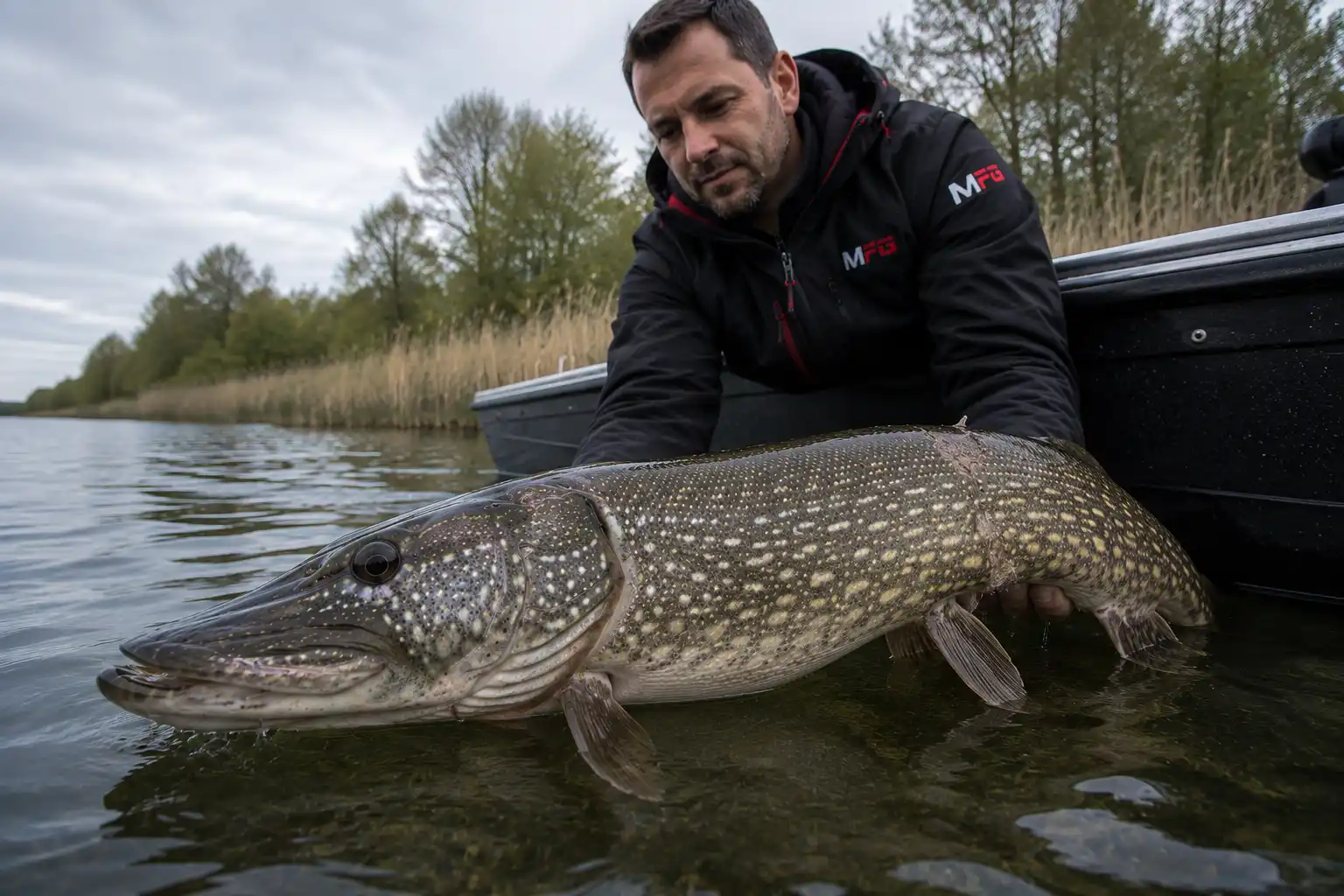
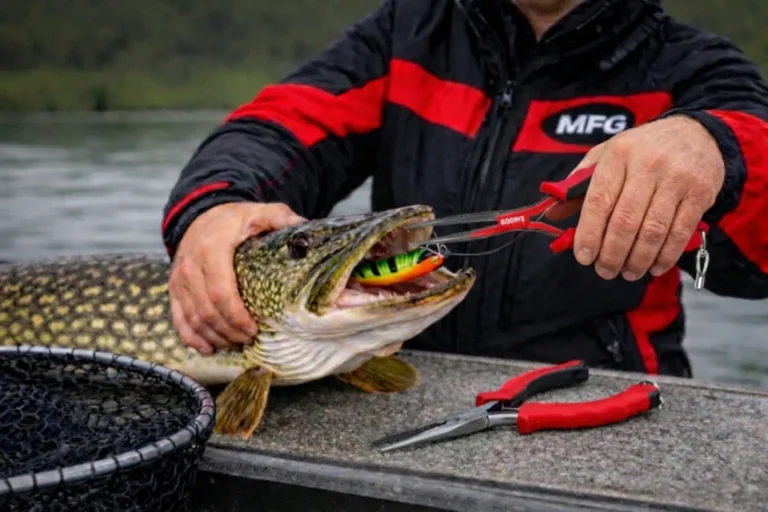
Responsible handling plays a direct role in protecting these fish once they’re caught. Proper catch-and-release technique significantly improves a pike’s chances of survival after capture, helping preserve the large, breeding-age fish that sustain healthy populations. For a complete breakdown of safe handling, hook removal, and release best practices, see our guide on How to Handle Pike Safely.
Frequently Asked Questions About Northern Pike
What is the scientific name for northern pike?
The scientific name for northern pike is Esox lucius. It belongs to the family Esocidae, a small group of specialized ambush predators found throughout the Northern Hemisphere.
How big do northern pike get?
Most adult northern pike measure 20–30 inches (50–75 cm), while trophy-class fish commonly exceed 40 inches (100+ cm). The largest authenticated northern pike on record weighed 55 lb 1 oz (25.0 kg).
Do northern pike have any natural predators?
Adult northern pike have few natural predators due to their size and position at the top of the food chain, though eggs, fry, and juvenile pike face significant predation from other fish, birds, and even larger pike.
What do northern pike eat?
Northern pike are opportunistic predators that feed primarily on other fish, including perch, roach, minnows, suckers, and ciscoes. They also consume crayfish, frogs, salamanders, and occasionally small mammals or waterfowl.
Where do northern pike live?
Northern pike are native to freshwater ecosystems across North America, Europe, and northern Asia, inhabiting lakes, rivers, reservoirs, marshes, and slow-moving waters with abundant vegetation.
How many teeth does a northern pike have?
Northern pike are commonly estimated to have between 300 and 700 sharp, backward-pointing teeth distributed across the jaws, tongue, and roof of the mouth, which they continuously shed and replace throughout their lives.
What is the difference between a northern pike and a muskie?
Northern pike and muskellunge share a similar body shape but differ in spot pattern, tail shape, cheek and gill cover scaling, and sensory pore counts beneath the jaw.