

Pike Lifespan and Growth Rate: How Long They Live and How Fast They Grow
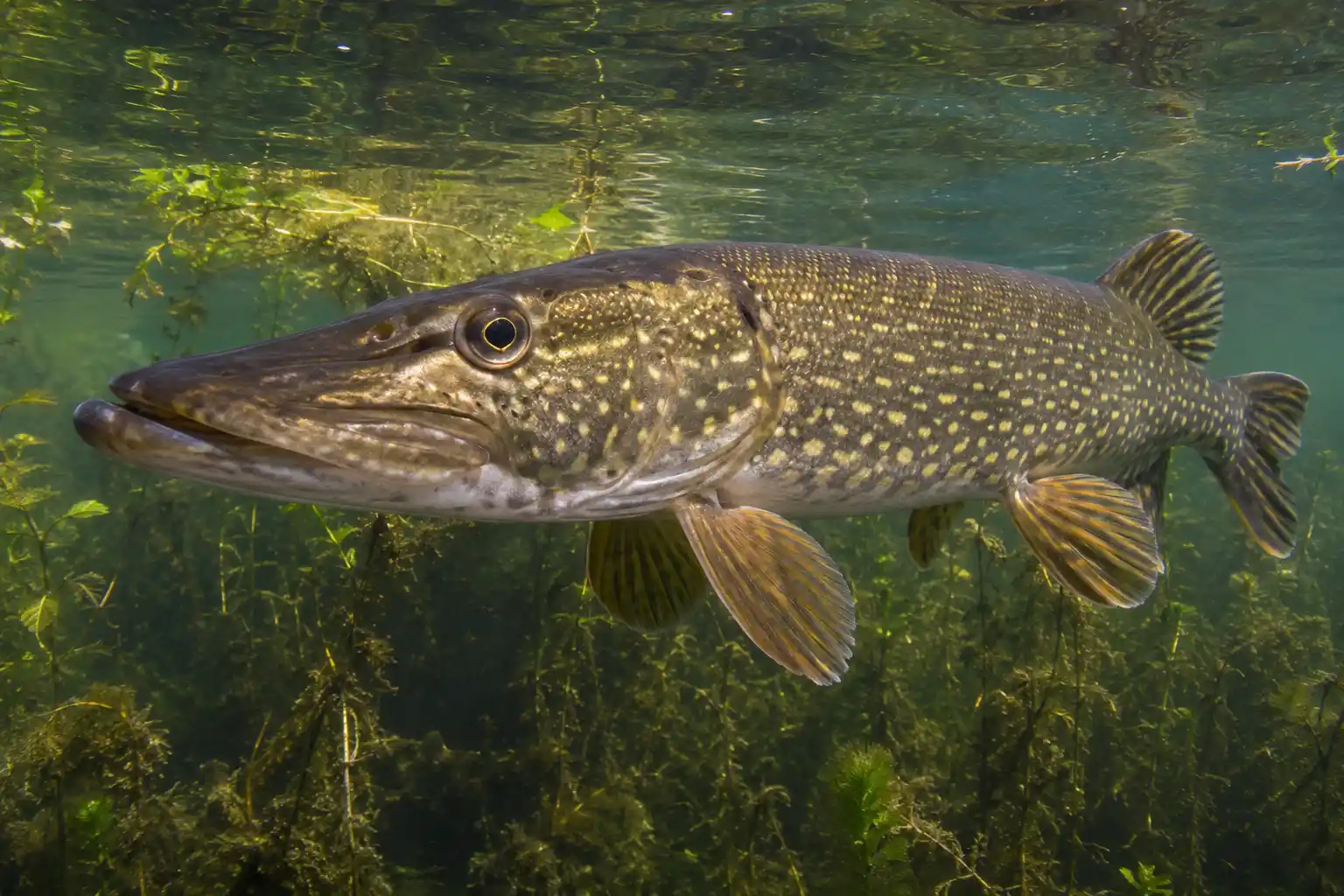
Pike lifespan and growth rate vary more than most anglers realize. Northern pike (Esox lucius) are among the fastest-growing freshwater predators in the Northern Hemisphere, yet two fish hatched in the same spring can differ dramatically in size just a few years later, depending on water temperature, food availability, fishing pressure, and countless other environmental factors.
That variation often leads anglers to assume that every large pike must be extremely old—or that small pike are always young. Neither assumption is accurate. In productive waters, a pike can reach trophy size surprisingly quickly, while fish living in cold, nutrient-poor lakes may require well over a decade to achieve the same length. During our time fishing waters as different as Devils Lake, the Danube, the Sava, and Sweden’s Lake Vänern, we’ve repeatedly seen just how differently pike populations can grow despite belonging to the same species.
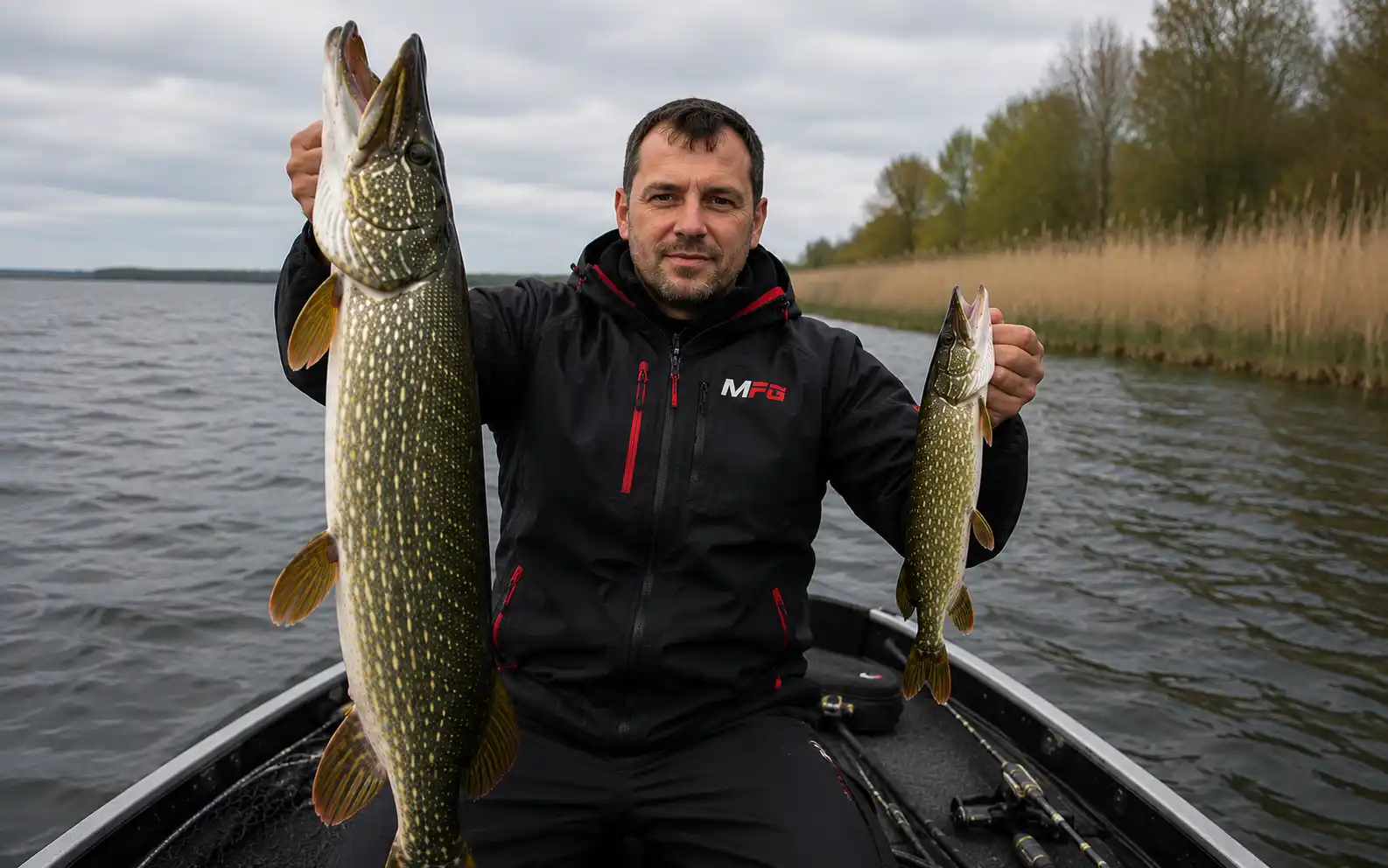
Most northern pike live between 7 and 15 years, although individuals in lightly exploited waters regularly exceed 20 years, and the oldest scientifically verified specimens have lived for more than 25 years. Growth is fastest during the first few years of life before slowing noticeably after sexual maturity, with females typically growing larger than males.
In this guide, you’ll learn everything about pike lifespan and growth rate, including how long northern pike actually live, how quickly they grow at different stages of life, why growth rates vary so widely between lakes and rivers, how fisheries biologists determine a pike’s age, and what all of this means when targeting trophy fish.
Pike Lifespan and Growth Rate: How Long Do Northern Pike Live?
Northern pike are among the longer-lived freshwater predators, but there is no single lifespan that applies to every population. Lifespan varies because every lake and river places different demands on a pike population. Fish growing in productive waters with abundant prey often reach large sizes relatively quickly, whereas pike living in colder or less productive environments may grow more slowly and require many additional years to reach the same length. Heavy angling pressure can also significantly reduce the number of fish that ever reach old age.
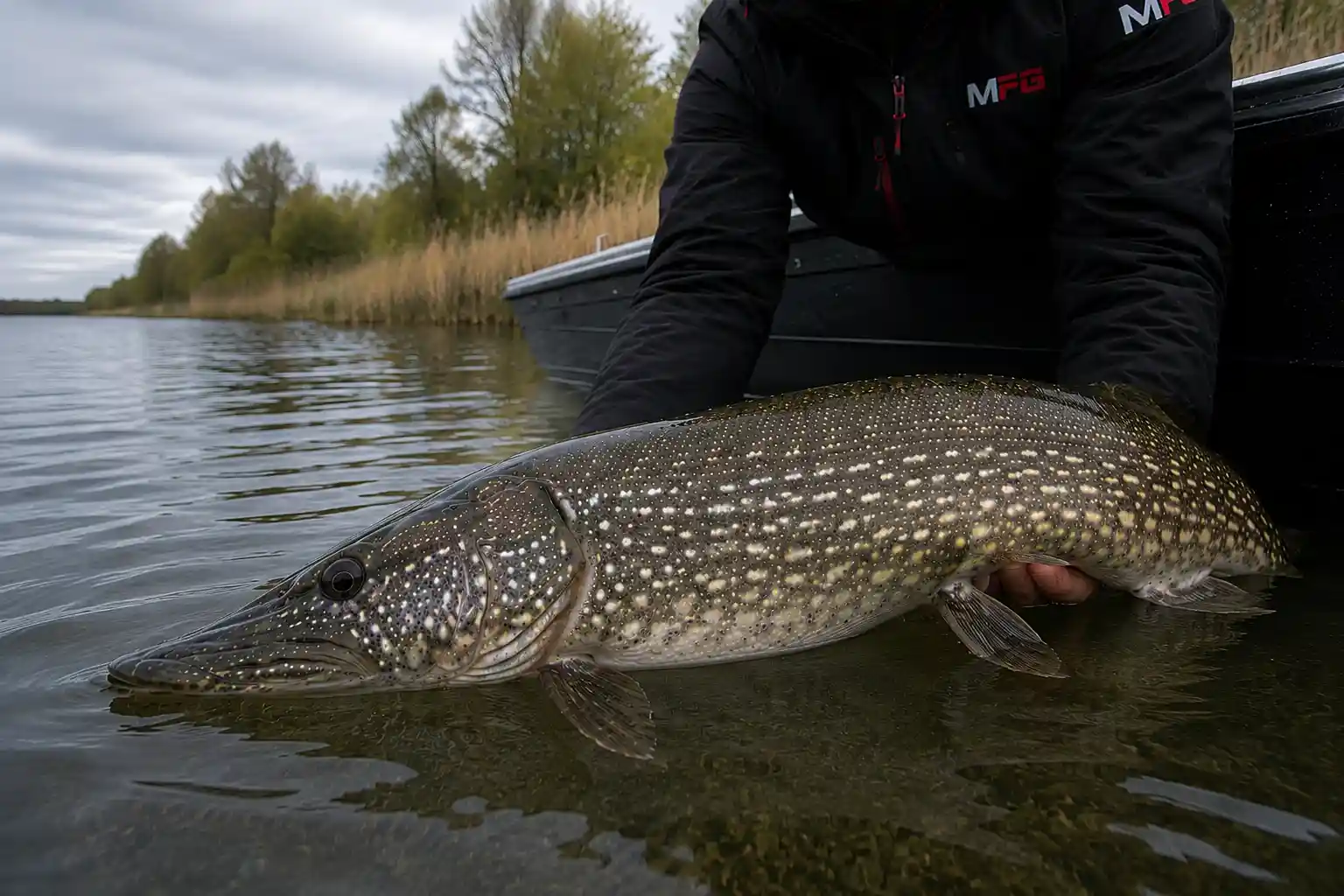
Sex plays an important role as well. Male northern pike usually mature earlier and remain smaller throughout life, while females continue growing for a longer period and ultimately reach much larger sizes. As a result, nearly all truly trophy-class pike—and virtually every record fish—are female.
Average vs Maximum Recorded Age
It’s important to distinguish between the average age most fish reach and the maximum age ever scientifically verified. Most pike die long before reaching their biological limit due to natural mortality, disease, predation during their early years, spawning stress, habitat changes, or fishing pressure. In our own years on the water, truly old, heavily worn pike are rare encounters—most fish we handle fall well inside the average range, not anywhere near the biological ceiling.
Quick Facts: Pike Lifespan
- Average lifespan in most fisheries 7–15 years
- Older fish in lightly exploited waters 20+ years
- Oldest scientifically verified northern pike 25+ years
Exceptional longevity is rare largely because of biological cost, not just environment. Every spawning season places significant metabolic strain on a pike’s body, and repeated cycles of that stress accumulate over the years, gradually reducing an individual’s resilience to disease, injury, and cold-season energy deficits. Combined with natural predation on juveniles and the cumulative effect of fishing pressure on adults, very few fish ever survive long enough to approach the species’ biological ceiling. That’s why fisheries biologists determine age using calcified structures such as scales, cleithra, or otoliths rather than estimating it from length alone.
How Fast Do Northern Pike Grow?
Northern pike grow remarkably fast compared to many other freshwater predators, especially during their first years of life. Under favorable conditions, young pike can grow at an exceptional rate during a single growing season before growth gradually slows as they approach maturity. However, there is no universal growth rate. Water temperature, prey availability, growing season length, population density, genetics, and overall ecosystem productivity all influence how quickly an individual pike develops.
The fastest growth occurs during the first few years of life. Once northern pike reach sexual maturity, an increasing share of their energy is diverted toward annual spawning rather than body growth. From that point onward, fish continue growing throughout life, but their annual increase in length becomes noticeably smaller. Females generally maintain faster growth for longer than males, which explains why they dominate the upper end of the size distribution in most fisheries.
First Year
The first year is the most critical period in a northern pike’s life. Newly hatched fry initially feed on zooplankton and aquatic invertebrates before switching to small fish as their jaws and hunting ability develop. That dietary shift dramatically accelerates growth because fish prey provides far more energy than microscopic organisms.
In productive waters with abundant forage, young pike commonly reach 20–30 cm (8–12 inches) by the end of their first growing season, although growth may be considerably slower in colder climates or food-limited environments. During spring fishing trips, we’ve often spotted young-of-the-year pike holding in shallow, weed-filled margins where warmer water, dense vegetation, and abundant prey provide ideal conditions for early growth. Mortality is also highest during this stage, with juvenile pike falling prey to larger fish, fish-eating birds, and even adult pike.
Years 2–5
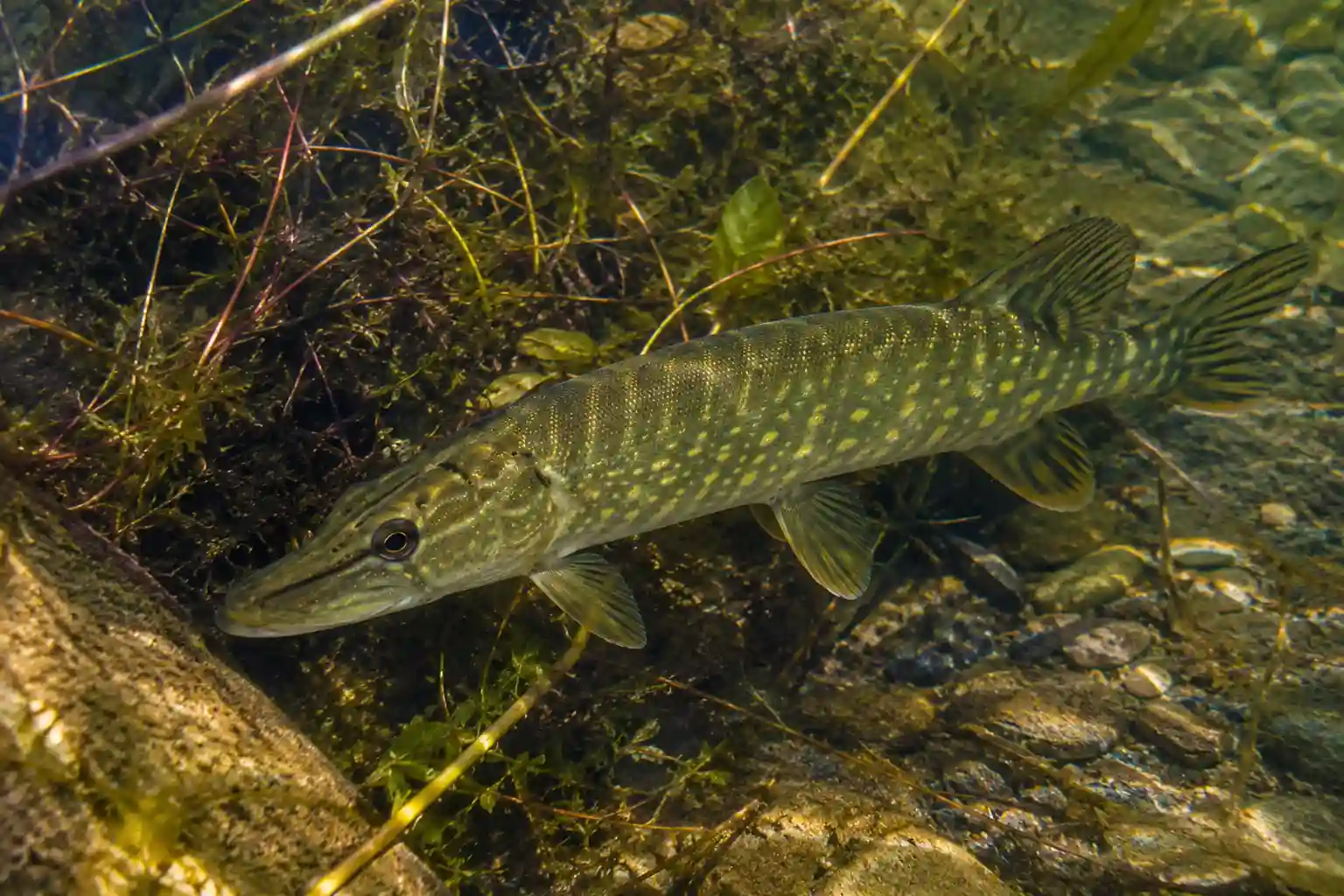
Between their second and fifth year of life, northern pike experience their most consistent period of rapid growth. By this stage, they have become highly efficient ambush predators capable of capturing larger, energy-rich prey, allowing them to convert food into body mass much more efficiently than during their first year.
Growth during this period varies considerably between fisheries. Lakes with abundant forage species such as perch, roach, ciscoes, or whitefish often produce noticeably faster-growing pike than waters where prey is scarce or competition is intense. Population density is equally important—waters holding too many pike frequently produce slower-growing fish because individuals compete for the same food resources.
By the end of this stage, many northern pike measure approximately 50–60 cm (20–24 inches), although exceptionally productive fisheries may produce larger individuals of the same age. We’ve seen this repeatedly across productive pike fisheries, where fish of nearly identical length often differ dramatically in body condition, highlighting how forage availability influences growth just as much as age.
After Maturity
Once northern pike reach maturity, growth continues throughout life, but at a much slower pace than during their juvenile years. Instead of investing most available energy into increasing body length, mature fish must also allocate resources to annual reproduction, maintenance, and survival. As a result, yearly gains become progressively smaller even under excellent environmental conditions.
Because females continue adding length and weight over a much longer period, they account for the overwhelming majority of trophy-sized northern pike found in healthy fisheries. Reaching exceptional size depends not only on age, but also on abundant forage, favorable genetics, low mortality, and enough years to keep growing.
We’ve noticed this pattern repeatedly on large fisheries where trophy pike are common. Two fish that appear similar in age can differ surprisingly in both length and body mass, reinforcing one of the most important principles of pike biology: growth rate is determined by the interaction of age, environment, and food availability—not age alone.
Northern Pike Growth Chart by Age
Although northern pike follow the same general growth pattern, no two fisheries produce identical fish. Climate, forage availability, water productivity, genetics, and fishing pressure all influence how quickly an individual pike grows. For that reason, the figures below should be viewed as typical ranges rather than fixed milestones.
Fisheries biologists use age-and-growth data to compare pike populations, monitor fish health, and evaluate habitat quality. Anglers can use the same information to better understand why two pike of identical length may differ significantly in age depending on where they were caught.
Quick Reference: Growth by Age
| Age | Typical Length | Growth Stage | What Happens |
|---|---|---|---|
| 1 year | 20–30 cm (8–12 in) | Juvenile | Rapid growth after switching from invertebrates to fish prey. |
| 2 years | 30–40 cm (12–16 in) | Juvenile | Growth remains fast as hunting efficiency improves. |
| 3 years | 40–50 cm (16–20 in) | Subadult | Many fish approach or reach sexual maturity. |
| 4–5 years | 50–60 cm (20–24 in) | Young adult | Growth begins to slow while body condition continues improving. |
| 6–10 years | 60–90 cm (24–35 in) | Adult | Growth depends heavily on forage availability, genetics, and fishing pressure. |
| 10+ years | 90+ cm (35+ in) | Mature adult | Only a small percentage of fish survive long enough to reach trophy size. |
This chart represents typical growth observed across a wide range of northern pike fisheries, not an exact prediction for every individual fish. Our experience across different pike fisheries has shown the same pattern: fish of nearly identical length can differ noticeably in overall condition, reinforcing that growth is shaped by local environmental conditions as much as by age itself.
How Environmental Conditions Affect Pike Growth
Age alone does not determine how large a northern pike will become. Environmental conditions often have an even greater influence on growth than the number of years a fish has lived. Two pike born in the same year can differ dramatically in size if they grow in ecosystems with different temperatures, prey availability, competition levels, or fishing pressure.
Fisheries biologists consistently identify several key factors that shape growth rates across northern pike populations. While these factors rarely act independently, together they explain why some waters consistently produce trophy fish while others support much slower-growing populations.
Water Temperature and Growing Season
Pike living in temperate regions generally experience a longer growing season than fish inhabiting far northern lakes. Warmer water within the species’ preferred temperature range allows prey fish to remain active for longer periods, giving pike more opportunities to feed and convert energy into growth. In contrast, long winters and extended ice cover shorten the feeding season, slowing annual growth even when forage is abundant.
Forage Availability
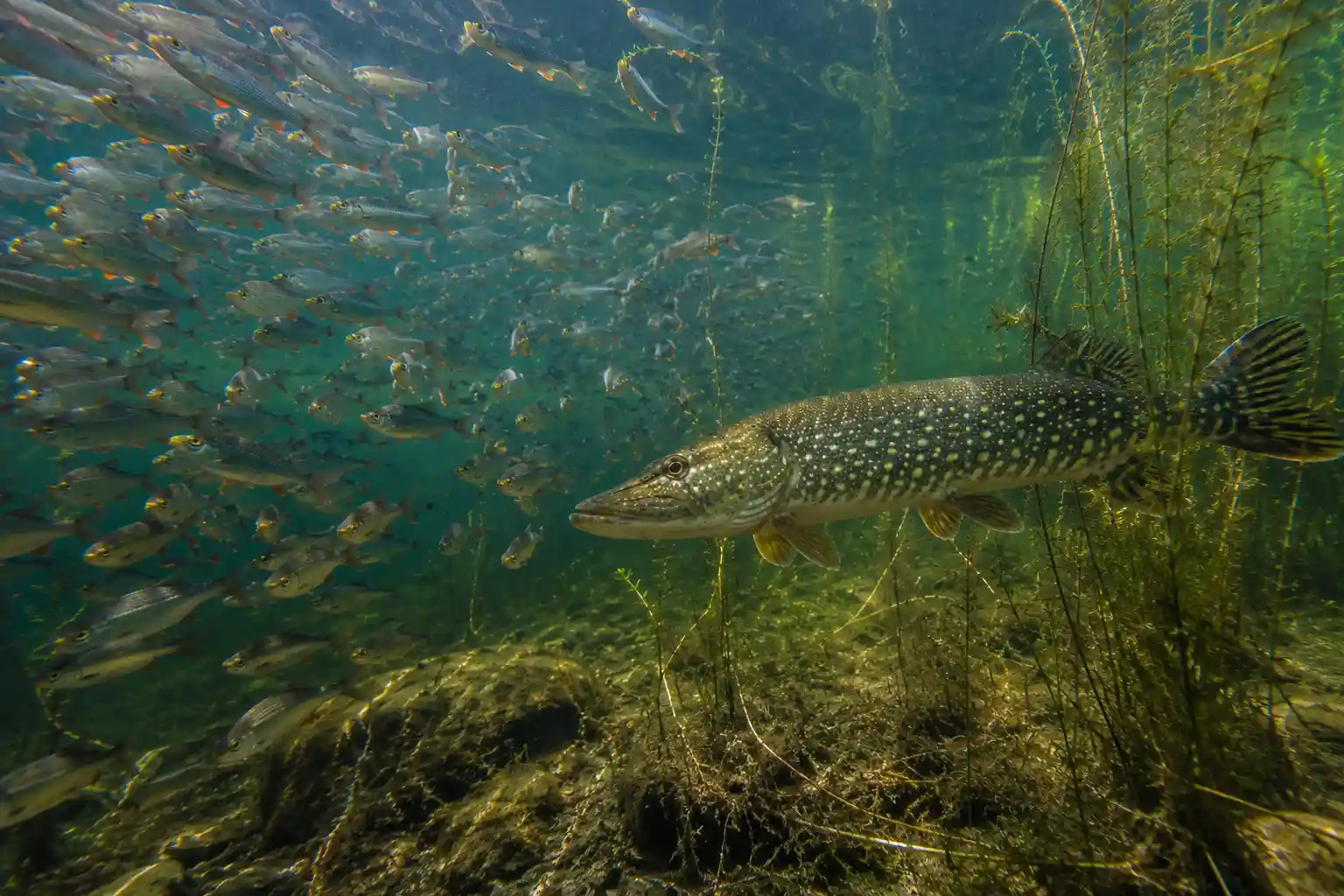
Food supply is one of the strongest predictors of growth. Lakes and rivers with healthy populations of perch, roach, whitefish, ciscoes, or other forage species typically produce larger pike at younger ages than waters where prey is scarce. Energy-rich prey allows pike to spend less effort hunting while gaining more energy from each successful strike. We’ve repeatedly observed this contrast between highly productive fisheries and waters where forage is limited, with pike of similar age often showing obvious differences in both length and body condition.
Population Density
High pike density often results in slower growth because more predators compete for the same food resources. Fisheries with moderate pike numbers and abundant forage frequently produce fewer fish overall, but a much higher proportion of large individuals. This relationship is one reason many fisheries agencies use harvest regulations to maintain balanced predator populations.
Genetics and Natural Variation
Even under nearly identical environmental conditions, some pike simply grow faster than others. Genetic differences influence metabolism, feeding behavior, and growth potential throughout life. These natural variations explain why exceptionally large individuals occasionally appear in waters that otherwise produce average-sized fish.
Female vs Male Growth
Sex is one of the clearest predictors of eventual size. Male northern pike typically mature earlier and stop investing heavily in length growth sooner, while females continue growing for a longer stretch of their lives and ultimately reach much greater sizes. This pattern is consistent enough that, in most fisheries, virtually every fish over roughly 90 cm (35 inches) is female. It does not mean males grow faster in any given year—rather, females simply keep growing for longer before maturity redirects most of their energy toward reproduction.
Fishing Pressure and Mortality
A northern pike can only become a trophy if it survives long enough to reach that size. Heavy harvest, illegal removal of large fish, and high natural mortality reduce the number of individuals capable of reaching advanced ages. Fisheries that protect larger pike through size regulations or widespread catch-and-release practices often develop healthier age structures, allowing more fish to continue growing for many years.
Taken together, these factors explain why length alone is never a reliable indicator of age. A 90 cm (35-inch) pike from a highly productive lake may be several years younger than a fish of identical length living in a colder, less fertile system where growth has been much slower.
How Old Is a Trophy Northern Pike?
Trophy hunters often want a simple answer: how old is a pike of a certain size? Unfortunately, length alone can never tell you the exact age of a northern pike. A fast-growing fish from a productive lake can reach a given length years before a slower-growing fish of the same size in a colder or less fertile system. The following estimates should be viewed as reasonable ranges rather than fixed answers.
How Old Is a 30-Inch Pike?
A 30-inch (76 cm) northern pike is typically between 6 and 9 years old, based on the growth patterns outlined in the chart above. In highly productive waters with abundant forage, some fish may reach this length toward the lower end of that range, while pike living in colder, less fertile systems may require considerably more time to grow to the same size.
How Old Is a 40-Inch Pike?
A 40-inch (102 cm) northern pike is a genuine trophy in most fisheries, and most fish reaching this length are typically between 8 and 15 years old. Because females continue growing for longer than males, a pike of this size is almost always female. Our own biggest pike, a 41-inch fish from Devils Lake, was a heavy, thick-bodied female — consistent with what we’ve observed among other 40-inch-class pike we’ve handled on Devils Lake and Sweden’s Lake Vänern.
How Old Is a 50-Inch Pike?
A 50-inch (127 cm) northern pike is an exceptionally rare fish, achieved only by a small number of individuals that combine favorable genetics, abundant forage, low mortality, and enough years to keep adding length. Most 50-inch northern pike are estimated to be at least 15 years old, although age can vary considerably between fisheries. In colder or less productive waters, fish of this size may be substantially older before reaching such exceptional length.
For additional perspective, agencies such as North Dakota Game and Fish define a trophy northern pike as a fish of roughly 39.4 inches (1 meter) or longer in their Missouri River System studies — closely matching the age ranges discussed above. Even the longest northern pike ever officially documented, a 48.82-inch (124 cm) fish caught in Italy’s Lake Maggiore in 2021, fell short of 50 inches, underscoring just how exceptional a true 50-inch pike would be.
How Do Biologists Determine a Pike’s Age?
Estimating a northern pike’s age from its length alone is unreliable because growth rates vary so widely between fisheries. Instead, fisheries biologists determine age by examining calcified structures that develop annual growth rings, much like the rings of a tree. These structures record periods of rapid summer growth and slower winter growth, allowing trained readers to estimate a fish’s age with far greater accuracy than length measurements alone.
Scale Aging
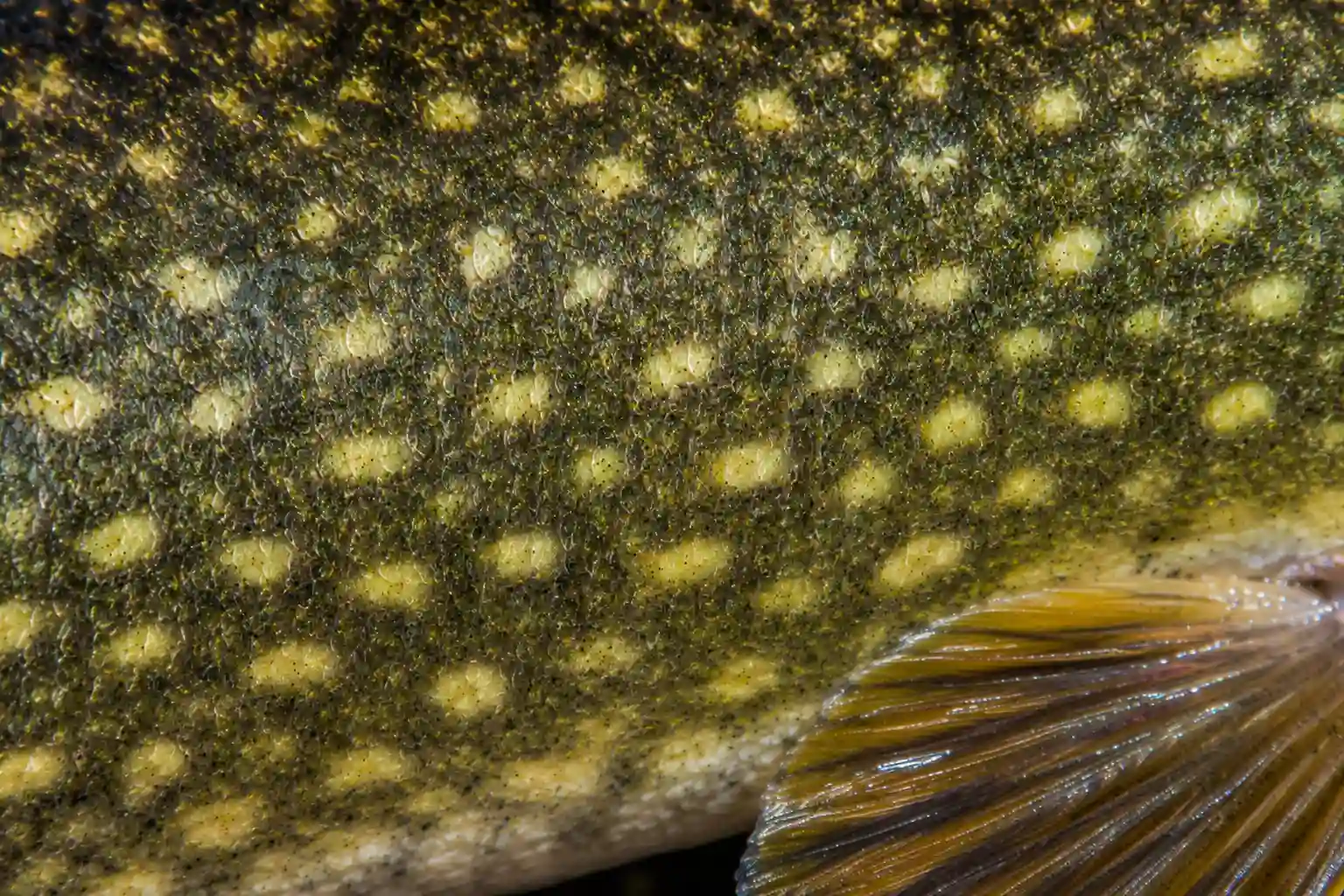
Scales are the most commonly collected structure because they can usually be removed without harming the fish. Under magnification, biologists count annual growth rings, known as annuli, to estimate age. Scale aging works reasonably well for younger northern pike, but it becomes less reliable as fish grow older because the center of the scale gradually compresses, making individual annuli increasingly difficult to distinguish.
For routine fisheries surveys where large numbers of fish must be sampled quickly, scales often provide a practical balance between accuracy, speed, and minimal impact on the fish.
Cleithra and Otoliths
When greater precision is required, fisheries biologists often examine the cleithrum—a flat bone located just behind the gill cover—or the fish’s otoliths, commonly called ear stones. Both structures preserve annual growth rings more clearly than scales, particularly in older fish where age estimates become more challenging.
Cleithra are widely regarded as one of the most reliable structures for aging northern pike because they remain readable even in older individuals that have experienced many years of growth. Otoliths can provide equally accurate or even superior results, but they require sacrificing the fish, making them unsuitable for most catch-and-release studies.
These aging techniques are far more than academic exercises. They allow fisheries biologists to monitor population health, evaluate growth rates, measure the success of management programs, and understand how different lakes and rivers produce pike of different sizes and ages. The information gathered from these studies ultimately shapes fishing regulations and conservation strategies that help maintain healthy northern pike populations for future generations of anglers.
Common Myths About Pike Lifespan and Growth
Northern pike have been studied for decades, yet many misconceptions about their lifespan and growth continue to circulate among anglers. Most of these myths originate from judging fish by size alone or applying observations from one fishery to every lake and river. Understanding what research actually shows helps separate fact from fiction.
Myth 1: Every Big Pike Is Extremely Old
Not necessarily. While large northern pike are generally older than smaller fish, exceptional growing conditions can produce trophy-sized individuals surprisingly quickly. In highly productive waters with abundant forage and long growing seasons, a pike may reach trophy length several years earlier than a fish living in a colder, less productive environment.
Myth 2: Small Pike Are Always Young
Size alone doesn’t guarantee a fish is young. Slow-growing northern pike can remain relatively small for many years if food is limited, competition is high, or environmental conditions restrict growth. A short, thin pike may actually be older than a much larger fish from a more productive fishery.
Myth 3: Pike Stop Growing After They Reach Maturity
This is one of the most common misconceptions. Northern pike continue growing throughout their lives, but the rate of growth slows after maturity as more energy is devoted to reproduction, maintenance, and survival. Under favorable conditions, adult pike can continue adding both length and weight for many years.
Myth 4: All Lakes Produce Pike at the Same Rate
No two fisheries are identical. Water temperature, forage availability, population density, genetics, fishing pressure, and the length of the growing season all influence how quickly northern pike develop. That’s why age and size relationships that are accurate for one lake may be completely different in another.
Recognizing these differences helps anglers develop more realistic expectations when targeting trophy fish and better appreciate the remarkable adaptability of northern pike across their vast natural range.
Why Understanding Pike Growth Makes You a Better Angler
Knowing how northern pike grow is more than an interesting biology lesson—it helps explain where fish are likely to be, how they feed, and why trophy pike are common in some waters but almost absent in others. Understanding growth patterns allows anglers to make better decisions on the water while developing more realistic expectations for the fishery they are fishing.
Fast-growing pike usually indicate abundant forage and productive habitat. In these fisheries, relatively young fish can already reach impressive sizes, making them excellent destinations for anglers seeking trophies. By contrast, lakes that produce slower-growing pike may still hold very old fish, even if relatively few exceed 40 inches. Judging the quality of a fishery by size alone can therefore be misleading. That’s one reason we approach fisheries like Devils Lake, the Danube, and Sweden’s Lake Vänern differently—each has its own growth potential, forage base, and pace at which trophy fish develop.
Growth knowledge also encourages responsible fish handling. A large northern pike represents years of survival through harsh winters, repeated spawning seasons, disease, predators, and fishing pressure. Landing our own 41-inch Devils Lake pike reinforced that perspective. While it’s impossible to know the exact age of that fish without biological aging techniques, it had clearly survived many seasons to reach that size. That’s why we handle every trophy pike with extra care before release, giving exceptional fish the opportunity to continue contributing to the population and allowing other anglers the chance to experience them as well.
Whether you’re targeting your first 30-inch pike or chasing the fish of a lifetime, understanding how northern pike grow provides valuable perspective. Every fish reflects a unique combination of age, habitat quality, food availability, genetics, and simple survival—factors that make catching a truly large pike one of freshwater fishing’s greatest achievements.
Frequently Asked Questions About Pike Lifespan and Growth
What is the average lifespan of a northern pike?
Most northern pike live between 7 and 15 years, although fish in lightly exploited waters can regularly exceed 20 years, and scientifically verified individuals have lived for more than 25 years.
What is the oldest recorded northern pike?
Scientifically verified northern pike have been documented living more than 25 years, though such ages represent rare, exceptional individuals rather than the norm for the species.
How much can a pike grow in one year?
Growth varies widely by fishery, but in productive waters, young pike commonly reach 20–30 cm (8–12 inches) by the end of their first growing season. Growth is fastest during the first few years of life before slowing noticeably after sexual maturity.
How long does it take a pike to reach 30 inches?
A 30-inch (76 cm) northern pike is typically between 6 and 9 years old, though fish in highly productive waters with abundant forage may reach this length sooner.
How old is a 40-inch northern pike?
Most 40-inch (102 cm) northern pike are between 8 and 15 years old. Because females grow larger and for longer than males, a pike of this size is almost always female.
Do female pike grow larger than males?
Yes. Male northern pike typically mature earlier and stop investing heavily in length growth sooner, while females continue growing for a longer stretch of their lives and ultimately reach much greater sizes. Nearly all trophy-class pike are female.
Do northern pike grow their entire lives?
Yes. Northern pike continue growing throughout their lives, although their annual growth slows after maturity as more energy is devoted to reproduction, maintenance, and survival.
Can you age a pike from a photograph?
No. Age cannot be reliably determined from length, weight, or appearance alone. Fisheries biologists estimate age by examining calcified structures such as scales, cleithra, or otoliths, which develop annual growth rings.
Do pike grow during winter?
Northern pike continue growing during winter, but growth slows dramatically as cold water and shorter feeding periods reduce feeding activity and metabolic rate. Most annual growth occurs during the warmer months of the growing season.
Why are pike smaller in some lakes?
Growth depends on water temperature, forage availability, population density, genetics, and fishing pressure. Lakes with abundant forage and moderate pike density typically produce larger, faster-growing fish than waters with scarce prey or high competition.
Does releasing large pike improve trophy potential?
Yes. Since only a small percentage of pike survive long enough to reach trophy size, protecting large, mature females through catch-and-release helps maintain a healthier age structure and increases the number of future trophy fish within the population.