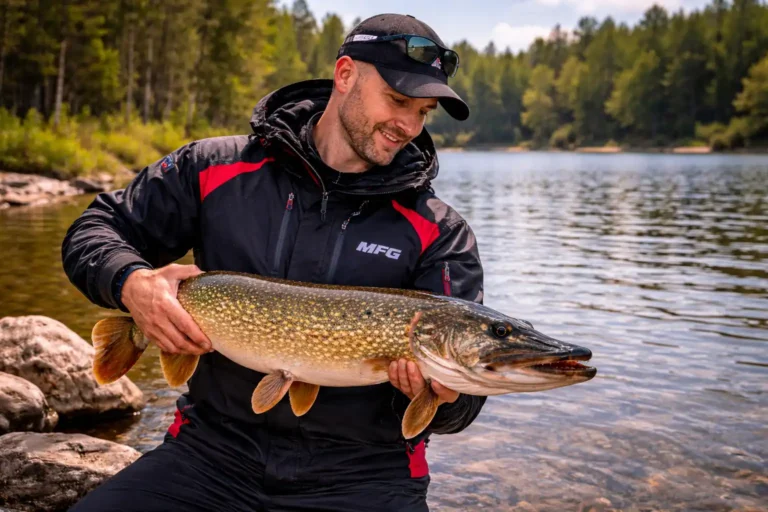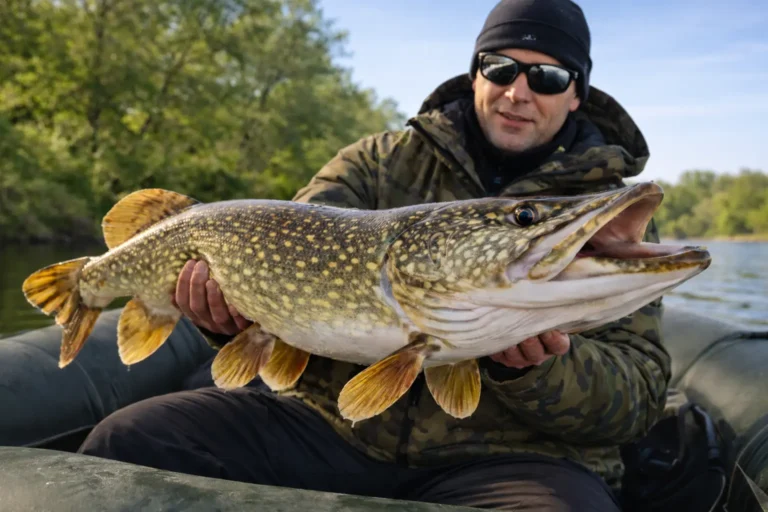


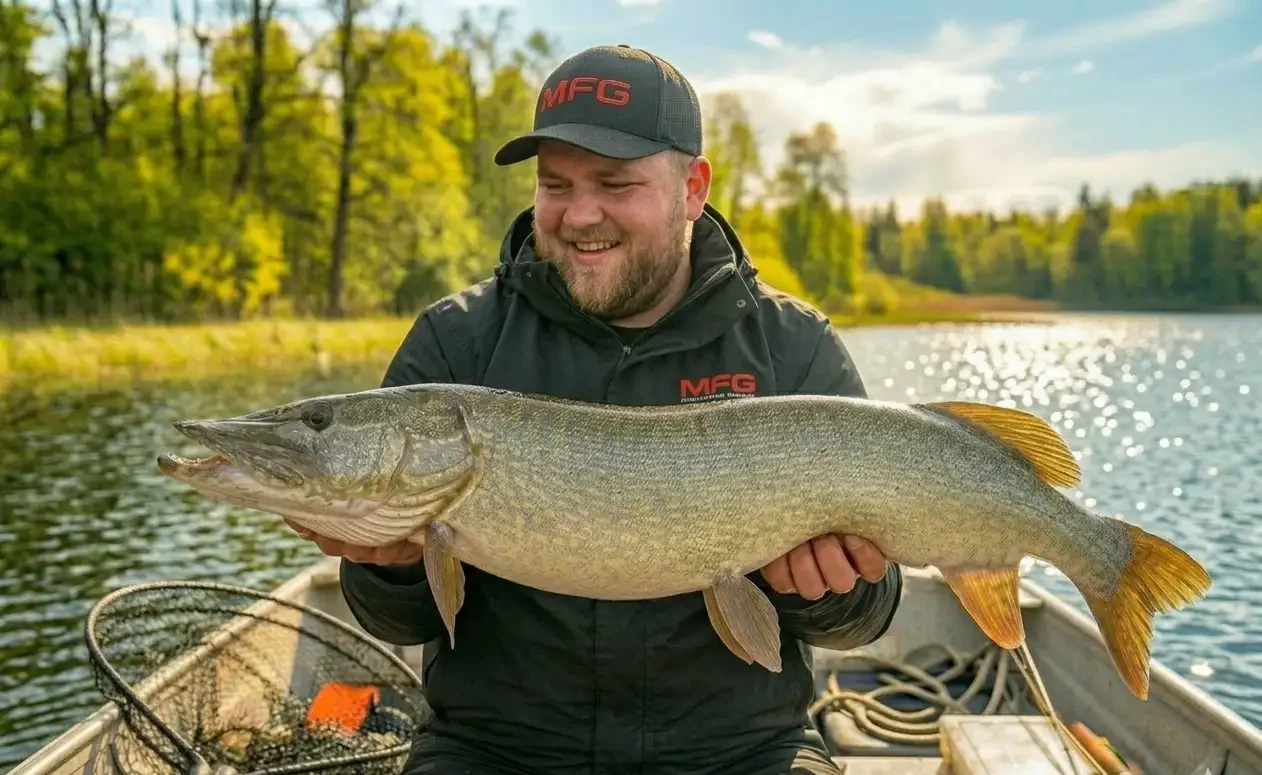
Late Spring Pike Fishing: How to Catch Pike in Transition Zones Before Summer
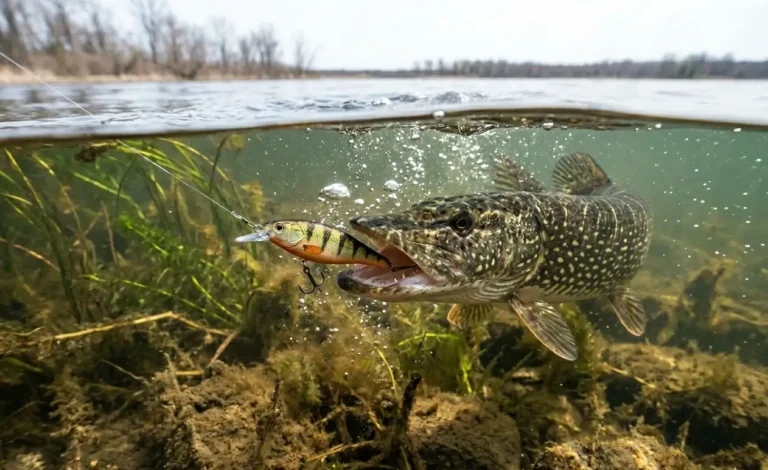
Late spring pike fishing is one of the most productive periods of the entire season.
Spawning is over, pike are recovering, and for the first time in weeks, they begin feeding with purpose again. This is when strikes become more aggressive, more frequent, and far more predictable—if you understand where the fish actually move.
This post-spawn recovery phase is especially important for larger female pike. After spawning, they are depleted and actively feeding to regain lost body weight—which is why late spring often produces some of the biggest fish of the season.
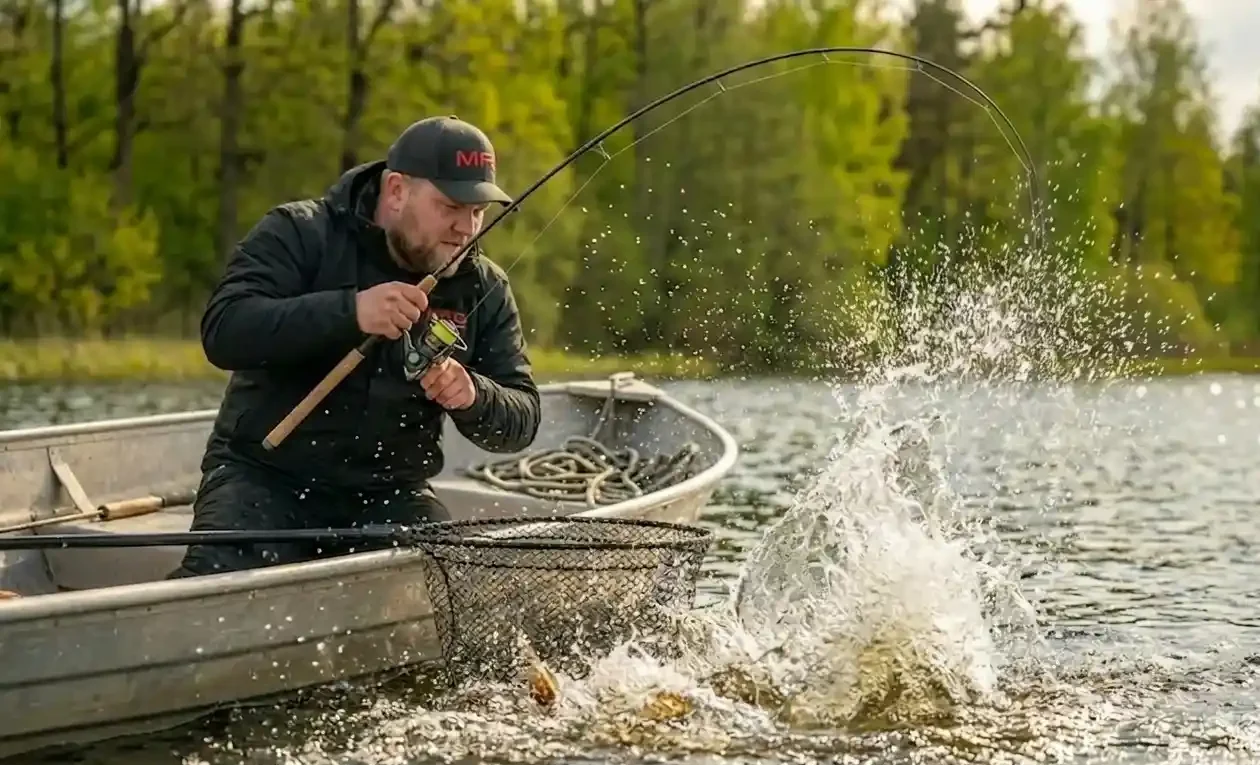
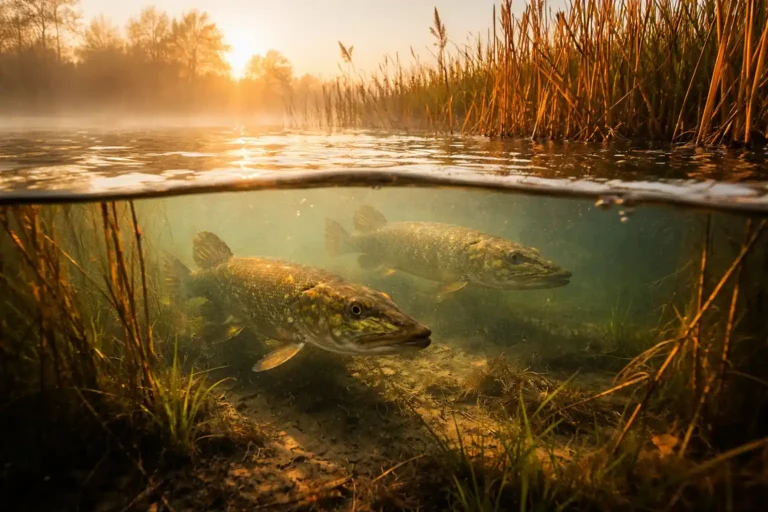
Water is warming fast, baitfish are spreading out, and pike are no longer locked into shallow spawning areas. They start transitioning—moving between zones, feeding actively, and positioning themselves where conditions are stable and food is available.
This is the window many anglers describe as the “golden period” for pike fishing. But it only works if you adjust.
Most anglers keep fishing the same shallow spots that worked during spring pike fishing—and suddenly everything stops.
The truth is simple: pike haven’t disappeared—they’ve moved.
This guide shows exactly how to catch late spring pike by understanding those transition zones—where fish reposition after spawning, how deep they hold, and when they feed most aggressively before summer patterns take over.
Why Late Spring Is the Best Time to Catch Pike
Late spring pike fishing stands out because it sits right between two extremes—post-spawn recovery and the first signs of summer pressure. This is not just a “good time”—it’s a narrow window where water temperature stabilizes, oxygen remains high, and baitfish activity expands across multiple zones.
As water temperatures rise steadily, pike metabolism increases. They are no longer sluggish like in early spring, but they are also not yet limited by the high-temperature stress of summer. This puts them in a highly active feeding mode, where they are willing to chase, strike harder, and commit more confidently.
In most lakes, when water temperatures reach roughly 14–18°C (57–64°F), pike hit a metabolic “sweet spot”—active enough to hunt aggressively, but still comfortable enough to move freely across different depths and structure.
The most important factor is energy recovery. After spawning, pike—especially large females—have lost a significant amount of body mass. To compensate, they begin feeding aggressively, targeting larger and more frequent meals to rebuild strength.
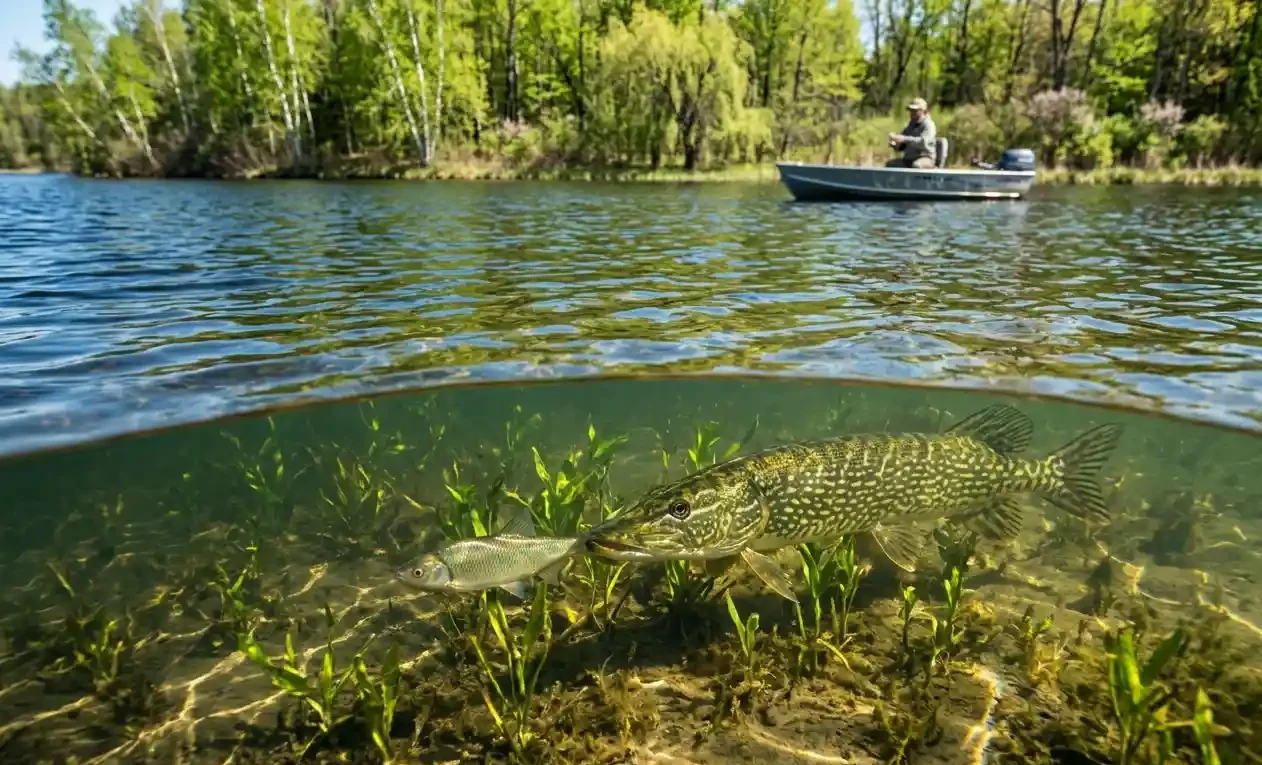
In our field sessions, especially in late May, we often see aggressive feeding windows open suddenly. On one session, water temperature climbed from 15°C to 17°C (59–63°F) within two hours—and within that short window, we had multiple strikes from fish that were inactive just minutes earlier.
At the same time, baitfish become more mobile and spread into new areas. This forces pike to reposition and follow food sources, creating predictable movement patterns instead of random behavior. This same movement pattern starts earlier in the season—as we break down in our early spring pike behavior guide—when temperature first begins controlling positioning.
This combination—rising metabolism, active feeding, and constant movement—is what makes late spring one of the most consistent and rewarding times to catch pike.
But there’s a catch.
If you keep fishing shallow spawning areas like it’s still early spring, you will miss most of the action. The fish have already started moving—and the next step is understanding exactly where they go.
Deep vs Weed — Where Should You Start First?
One of the biggest mistakes anglers make in late spring is trying to fish everything at once. Shallow, deep, weeds, open water—random casting without a clear plan.
The truth is simple: you need to choose the right starting zone based on conditions—and fish it with intent. Late spring rewards clarity, not confusion.
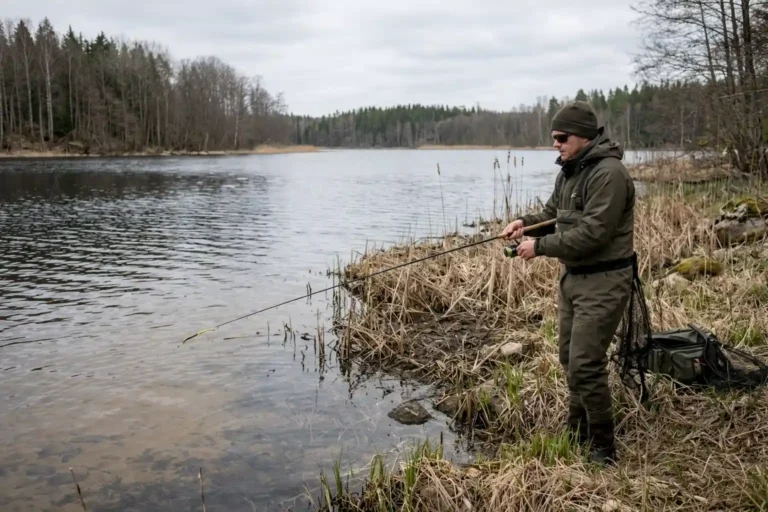
If your lake has developing vegetation, start with weed edges. These areas hold both baitfish and recovering pike, especially larger females that want easy ambush opportunities close to deeper water.
Weed edges are your highest percentage starting point in most late spring scenarios. Focus on the outer edge, not the thickest part of the vegetation.
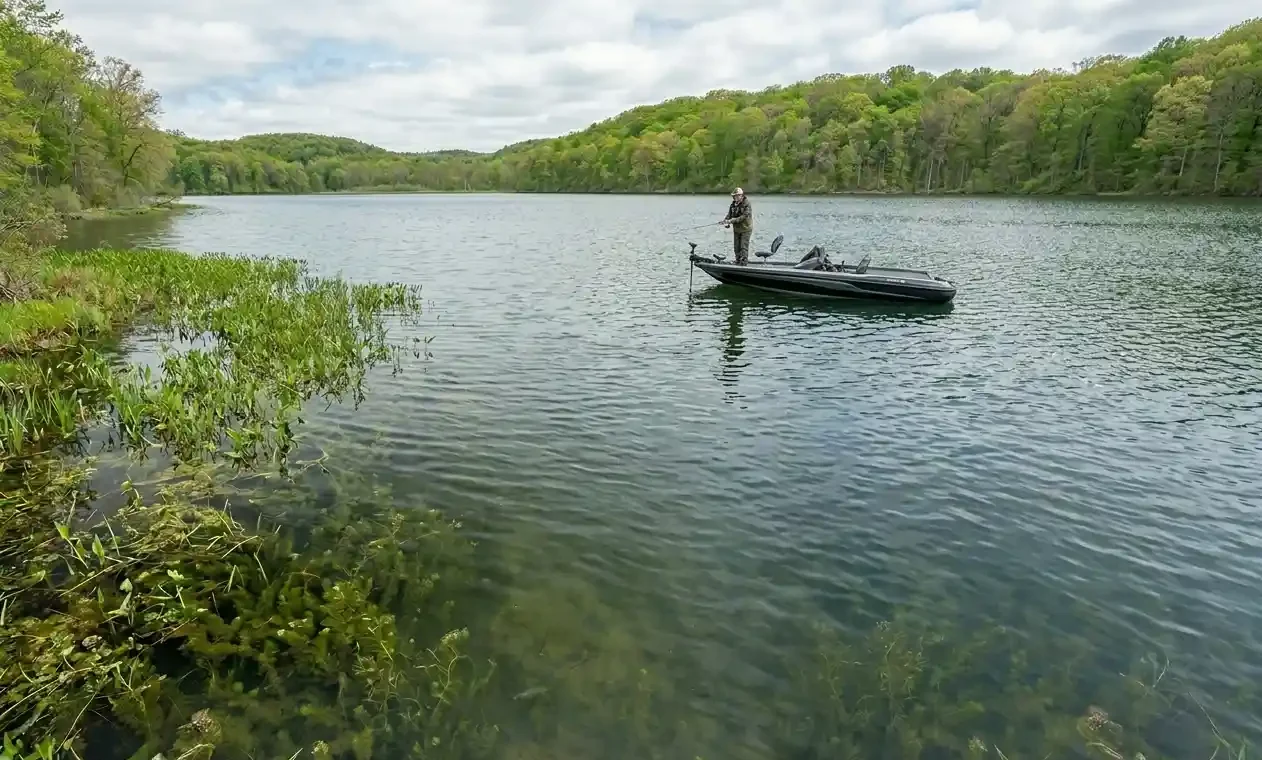
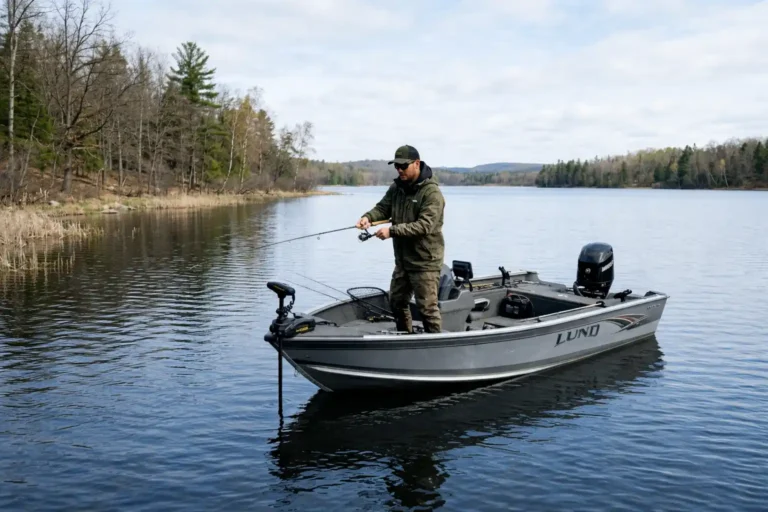
If there’s little to no vegetation—or if the water is clearer and more open—shift your focus to deeper structure. Drop-offs, mid-depth flats, and depth transitions become far more important.
This is where control becomes critical. Fishing deeper water requires precise lure depth, strong hooksets, and the ability to manage fish during the fight.
At the same time, late spring strikes are often aggressive and unpredictable. Pike will hit harder and fight stronger compared to early spring, especially when feeding actively.
Start with weeds if they exist. Go deeper if they don’t. Make a decision, commit to it, and fish that zone thoroughly before switching.
How Deep Are Pike in Late Spring?
Late spring pike are no longer sitting in shallow spawning areas—but they’re not fully pushed into deep summer zones either. This is a transition phase where most fish settle into a mid-depth range that allows them to move efficiently between feeding and resting zones.
In most lakes, this means a consistent depth range of around 3–6 m (10–20 ft). This is where temperature, oxygen, and baitfish activity overlap during late spring—creating the most stable and productive conditions.
This is exactly where most anglers go wrong. They either stay too shallow, hoping fish are still in spawning areas—or they go too deep, assuming pike have already switched to full summer patterns.
Early in the transition, some fish may still hold slightly shallower, especially near spawning bays. But as water continues to warm, the majority of active pike shift toward deeper edges, mid-depth flats, and structure that connects multiple zones.
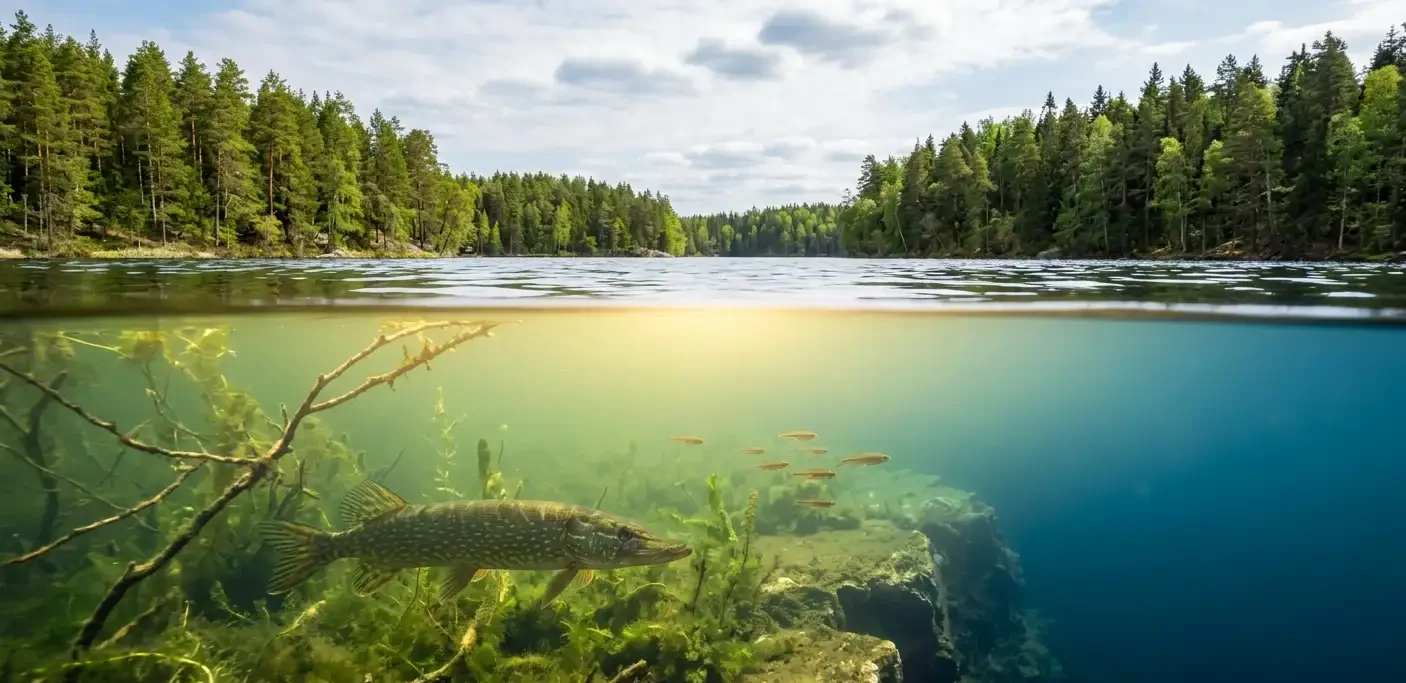
The key is not just depth—it’s access. Pike rarely lock into one exact level. Instead, they position themselves where they can quickly move up or down depending on feeding opportunities and baitfish movement. This same adaptive positioning begins earlier in the season—as we break down in our early spring pike behavior guide.
At MFG, we consistently see the same pattern in late spring—the season of the “follower.” Big pike will often track a lure all the way to the boat or bank in that 3–5 meter range without striking. This behavior is rare in early spring when fish are still sluggish, but once metabolism ramps up, they have the energy to inspect before committing.
What separates successful anglers: when a follower appears, they don’t pull the lure out. They trigger the strike. A sudden twitch or a tight figure-eight near the edge is often enough to force a reaction—especially from large post-spawn females that are curious but undecided.
This is why areas like drop-offs, weed edges, and transition lines consistently produce fish—they allow pike to control their environment without wasting energy.
If you want a clearer comparison of how depth shifts from the early season into this phase, check our early spring pike depths guide.
Stay in that 3–6 m range, focus on structure, and adjust based on baitfish activity—and you’ll stay where most active pike are actually feeding.
Ignore it, and you’ll spend the day fishing empty water—just a few meters away from where the fish really are.
How to Catch Late Spring Pike: Retrieve Speed, Strike Triggers & Real On-Water Control
Late spring pike are active—but they are not reckless. This is where most anglers make a critical mistake. They speed up, fish aggressively, and assume more movement equals more bites.
In reality, late spring is where control matters more than speed. Fish have recovered from the spawn, they are feeding, but they still take time to inspect a presentation before committing. Using a well-balanced setup—like those in our best spinning rods for pike guide—helps you control lure depth, maintain constant tension, and react instantly when a fish commits.
This is why you’ll often see pike follow your bait without striking. Not because they aren’t hungry—but because nothing forced them to make a decision.
Why Fast Retrieves Kill Late Spring Pike Fishing
As water warms, anglers naturally speed up. It feels logical—but it backfires.
Pike don’t want chaos—they want opportunity. Movement that’s too fast looks unnatural, especially in clear water or pressured areas. Instead of triggering aggression, it gives the fish time to back off.
This is the moment where most bites are lost—before they even happen.
What Actually Triggers a Strike in Late Spring
The key is not speed—it’s change.
Late spring pike respond to pauses, direction changes, and sudden rhythm shifts. That’s what turns curiosity into a strike.
Subtle variations in cadence—short pauses, slight accelerations, or brief hesitations near structure—create the illusion of vulnerability. That’s what forces a decision.
The Detail That Turns Followers Into Fish
Seeing a pike follow your bait is not failure—it’s a signal.
It means your location and presentation are correct. The only thing missing is a trigger.
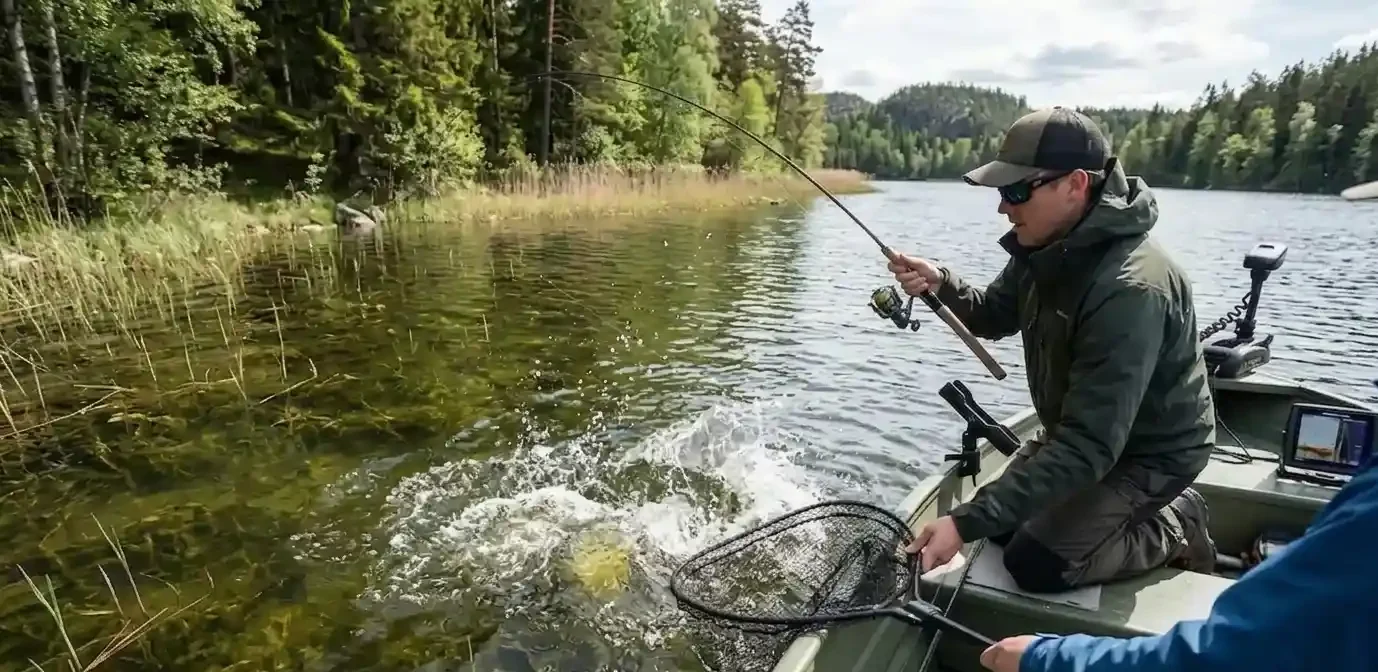
One of the most consistent late spring patterns we see is fish following all the way to the bank or boat and stopping at the last second. Pulling the bait out ends the opportunity.
The difference-maker: a sudden change right at the end of the retrieve—a sharp twitch or a tight figure-eight. That last-second movement forces the fish to react instead of think. A smooth drag system—like those in our spinning reels for pike guide—keeps pressure consistent during sudden strikes and prevents fish from throwing the hook at close range.
This is where many of the biggest post-spawn pike are actually caught.
Late spring success doesn’t come from fishing faster—it comes from knowing exactly when to break the rhythm and force the strike.
Best Late Spring Pike Lures: What Actually Triggers Post-Spawn Pike
Late spring is one of the most productive periods of the year—but only if you match the lure to the behavior.
After the spawn, pike are actively feeding, but they don’t attack randomly. They respond to controlled movement, natural presentation, and clear strike triggers.
This is where most anglers go wrong—they focus on changing lures instead of understanding how fish react.
What Actually Works in Late Spring
Late spring pike are aggressive—but selective. They won’t hit everything. The key is choosing lure types that allow you to control the retrieve and create a trigger at the right moment.
- Pause-driven presentations → force reaction after inspection
- Subtle natural movement → works best in clear water
- Vibration and flash → helps fish locate bait in stained or windy conditions
This is the difference between getting follows—and getting committed strikes.
Most of these lure types are commonly associated with early spring—but they remain highly effective in late spring when used differently. As water warms and pike become more aggressive, the same jerkbaits, swimbaits, and spinnerbaits shift from slow finesse tools into reaction and trigger-based presentations.
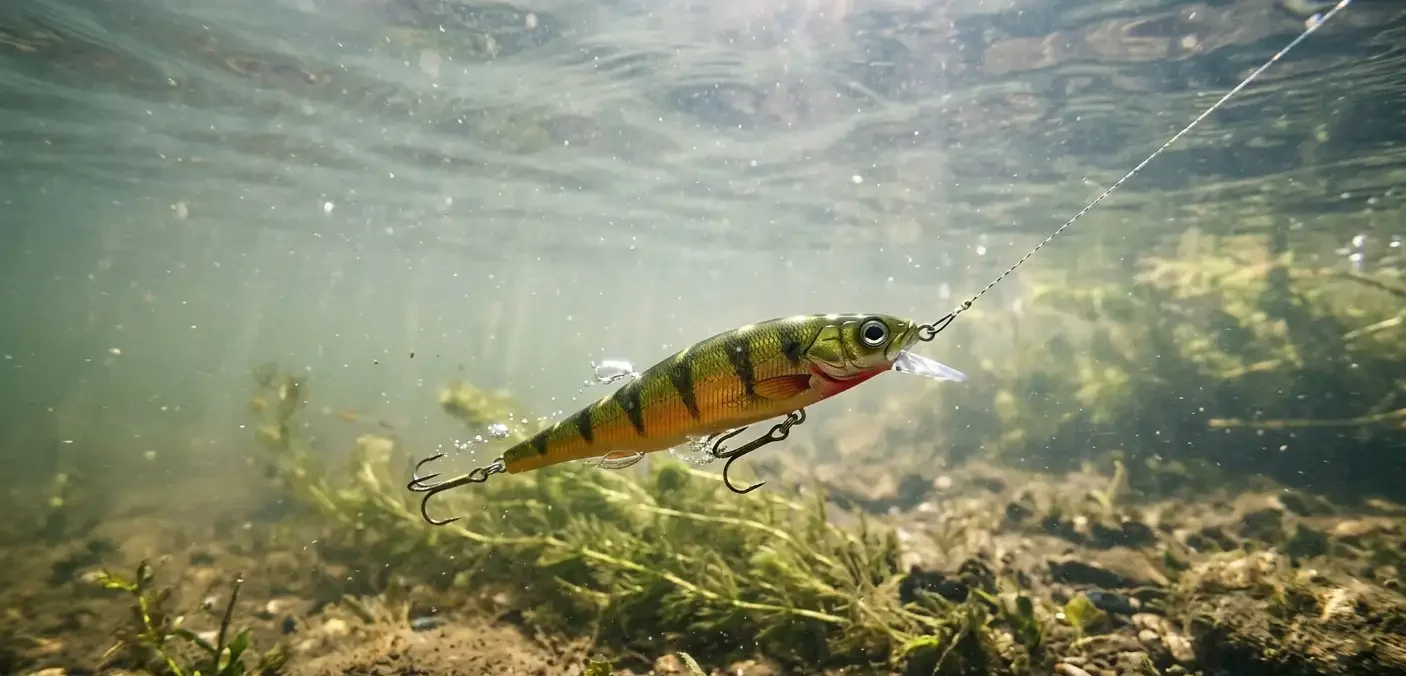
How to Match Lures to Conditions
Clear water and pressure: we consistently rely on our tested spring pike jerkbaits and proven spring swimbaits when fish have time to inspect the bait. These setups allow precise control over pause timing and strike triggers.
Wind, stained water, or low visibility: reaction becomes critical. In these conditions, our tested spring spinnerbait setups consistently trigger strikes by helping fish locate the presentation faster.
Shallow warming zones: fish hold longer and inspect more. Slower, controlled retrieves outperform speed almost every time.
The Mistake That Kills Late Spring Bite
Constantly switching lures instead of adjusting presentation.
If your setup matches the conditions but you’re not getting bites, the problem is rarely the lure itself. It’s how you fish it.
Most missed opportunities come down to retrieve control—something we break down step by step in spring pike retrieve techniques. The same core principles apply here—but in late spring, the difference comes from adding sharper triggers, faster adjustments, and more aggressive finish moves.
Dial in the presentation first. Then adjust the lure if needed.
In late spring, the angler who controls the retrieve controls the strike.
Best Time to Catch Late Spring Pike (Daily Windows That Actually Work)
Late spring pike don’t feed randomly—they feed in short, predictable windows driven by temperature, light, and stability.
This is where most anglers lose fish. Not because they’re in the wrong spot—but because they’re fishing at the wrong time.
Unlike early spring, where timing is heavily limited by cold water, late spring creates multiple feeding opportunities throughout the day. But those windows are still precise—and missing them often means long, unproductive sessions.
Morning vs Afternoon — What Actually Works Better?
Early morning can be slow in late spring. Water temperatures are at their lowest point of the day, and pike often remain less active until conditions stabilize.
The real activity usually starts as the water begins to warm. Late morning into early afternoon consistently produces more aggressive fish, especially after stable overnight conditions.
In many cases, the best bite window happens between 10:00 AM and 4:00 PM—when water temperature peaks and baitfish become more active.
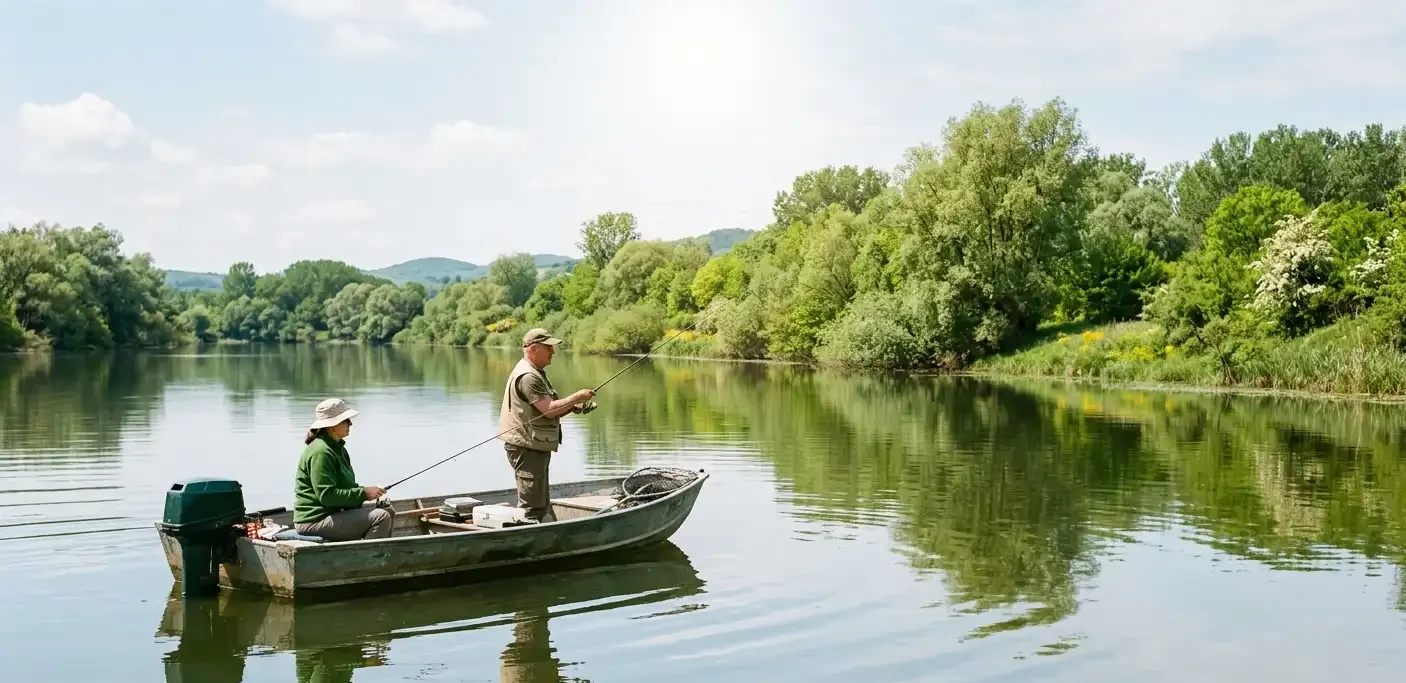
How Weather Stability Changes Everything
Stable conditions create predictable feeding windows. When weather holds for 2–3 days—consistent temperature, light wind, and steady pressure—pike settle into repeatable patterns.
This is when you can time the bite. The same zones, the same depths, and often the same hours will produce fish day after day.
These patterns are explained in detail in our best time to catch pike in spring guide, where feeding windows become even more predictable under stable conditions.
On the other hand, sudden weather changes—cold fronts, pressure drops, or strong winds—compress feeding windows into much shorter periods. Fish may still bite, but timing becomes critical.
The Late Spring Feeding Window Most Anglers Miss
Late spring pike often feed in short bursts—not all day.
One of the most consistent patterns we see is a sharp increase in activity for 30–90 minutes, followed by long inactive periods. If you’re not on the water—or not focused—during that window, you’ll miss the entire bite.
This is why observation matters. A single follow, a missed strike, or visible baitfish movement is often a signal that a feeding window is opening.
When it happens, slow down, stay in the zone, and adjust your retrieve. This is where multiple fish are often caught in a short period of time.
Late spring is not about fishing longer—it’s about fishing at the right moment.
Late Spring Pike Fishing: Putting It All Together Before Summer Patterns Begin
Late spring is not about luck—it’s about understanding movement.
Pike are no longer locked into spawning areas, but they haven’t fully committed to summer structure either. They are transitioning—moving between zones, feeding in short windows, and positioning themselves where conditions stay stable.
The anglers who succeed in this period are not the ones casting more—they are the ones adjusting faster. They follow bait, track depth changes, and recognize when a feeding window is opening.
This is why late spring consistently produces some of the biggest pike of the season. Fish are recovering, actively feeding, and willing to commit—but only if the presentation forces a decision.
From our experience at MFG, the difference comes down to three things:
- Fishing the right depth (not too shallow, not too deep)
- Controlling the retrieve instead of rushing it
- Recognizing and exploiting short feeding windows
Miss one of these—and the fish seem gone. Dial them in—and everything changes fast.
Seasonal behavior and feeding patterns of northern pike are consistently documented by fisheries research, including insights from the Ontario Ministry of Natural Resources and Forestry, highlighting increased activity as water temperatures stabilize in late spring.
Late spring is your last window before summer patterns scatter fish across deeper and more complex structure.
Use it right—and it can be one of the most productive periods of your entire season.
Late Spring Pike Fishing FAQ
Are pike shallow or deep in late spring?
Most pike hold in mid-depth ranges during late spring—typically around 3–6 m (10–20 ft). They are no longer in shallow spawning areas, but they haven’t moved fully into deep summer structure. Instead, they stay in zones that allow quick movement between shallow feeding areas and deeper water.
What is the best time of day to catch pike in late spring?
Late morning to early afternoon is usually the most productive period. As water warms throughout the day, pike become more active and feed more aggressively. Short feeding windows often occur between 10:00 AM and 4:00 PM, especially during stable weather.
What lures work best for late spring pike?
Lures that allow controlled retrieves and strong strike triggers work best. Jerkbaits, swimbaits, and spinnerbaits are the most consistent choices. The key is not just the lure—but how you fish it, using pauses, changes in speed, and direction to trigger strikes.
Why do pike follow lures without striking in late spring?
Because they have the energy to inspect before committing. As metabolism increases, pike often track a lure first and strike only when triggered. A sudden change in movement—like a twitch or figure-eight—can turn a follower into a strike.
What conditions are best for late spring pike fishing?
Stable weather conditions produce the most consistent results. When temperature, light, and pressure remain steady for several days, pike settle into predictable feeding patterns. Sudden changes can still produce bites—but in much shorter and less predictable windows.