

Spring Pike Fishing After a Cold Front: Exact Pressure & Positioning Tactics
Spring pike fishing after a cold front is where most anglers lose confidence — and where experienced anglers quietly gain an edge.
We’ve all seen it. You arrive at the boat ramp and your breath is suddenly visible in the air after days of mild weather. The north wind cuts harder than forecasted. You glance at your electronics and notice the surface temperature has dropped 1–2°C (2–4°F) overnight. The sky is crystal clear — classic bluebird post-front conditions. The same shallow flat that produced follows yesterday now feels empty.
But cold fronts do not erase spring pike — they reposition them.
During pre-spawn, northern pike operate inside a narrow biological window. In 4–8°C (39–46°F) water, metabolism is active but still conservative. Feeding windows shorten, strike radius compresses, and positioning becomes energy-efficient. When barometric pressure rises sharply — whether measured in hPa (hectopascals) or inHg (inches of mercury) — the internal equilibrium of the fish shifts.
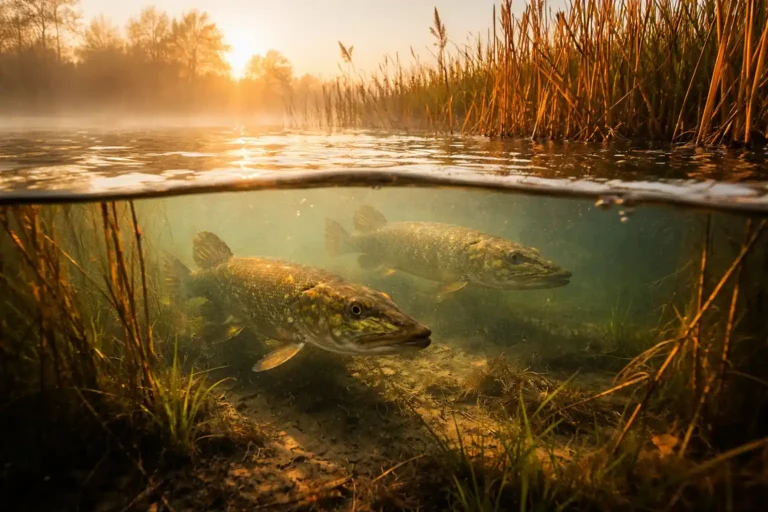
The geometry changes — Pike reposition vertically, not just deeper. Fish that were cruising shallow flats often slide to the first breakline, reed edge drop, or subtle contour transition. What was a roaming 1–2 meter (3–6 ft) ambush lane can compress into a tight, structure-bound strike pocket within hours.
High pressure systems also increase light penetration. Under clear skies, sunlight drives deeper into the water column. Pike do not have eyelids, and sudden brightness can irritate them after a front. Combined with cooling surface layers, this often pushes fish tighter to cover or slightly deeper along defined structure.
The pike strike window compresses significantly during a rapid pressure spike. Not because feeding stops — but because the fish require tighter positioning and more efficient presentations before committing.
Cold fronts can also reshape clarity dynamics. While the air clears, sustained wind may stack sediment into defined seams — creating structured positioning lanes like those detailed in our Muddy Spring Water guide. In certain cases, that stained edge becomes a temporary thermal and visual refuge during elevated pressure.
This article breaks down what changes before a front, during a pressure spike above 1025 hPa (30.27 inHg), and 24–48 hours after stabilization. We’ll examine depth shifts, seam positioning, and presentation control — building directly on the structural foundation explained in our Spring Pike Fishing pillar.
Weather does not cancel spring feeding cycles. It reshapes them. And once you understand how atmospheric pressure alters positioning instead of eliminating activity, cold fronts stop being setbacks — and start becoming predictable structural events you can plan around.
Quick Answer
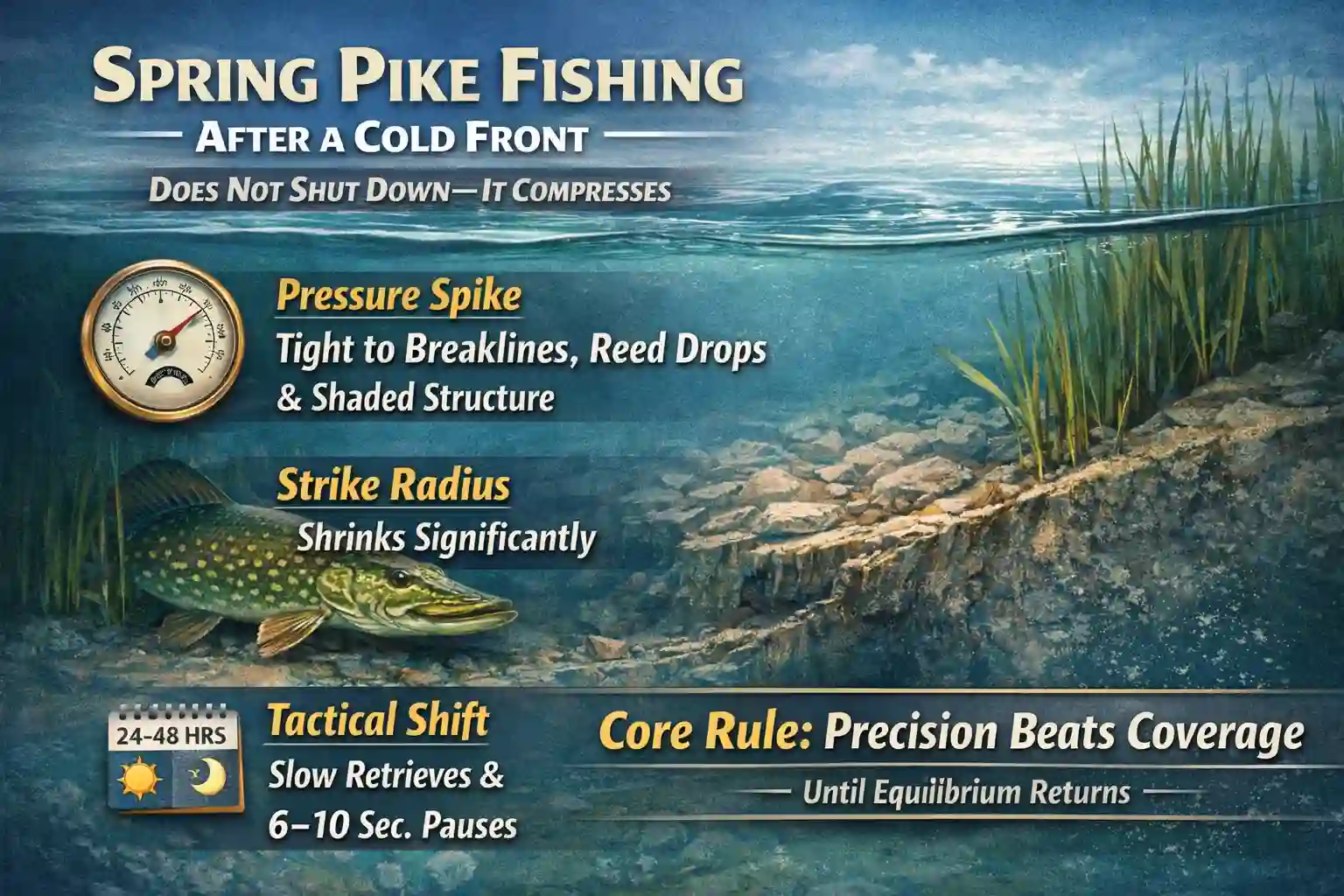
Spring pike fishing after a cold front does not shut down — it compresses.
- Pressure spike: Pike tighten to breaklines, reed-edge drops, and shaded structure.
- Strike radius: Shrinks significantly during rapid barometric rise.
- Tactical shift: Slow retrieves, 6–10 second pauses, and parallel structure runs outperform open-water coverage.
- Recovery window: Predictability often returns within 24–48 hours after pressure stabilizes.
Core rule: Precision beats coverage until equilibrium returns.
Do Spring Pike Bite Before a Cold Front? The 24-Hour Pre-Frontal Feeding Surge Explained
Yes — spring pike often bite harder in the 24 hours before a cold front than at any other time during the week.
This phase is driven by a steady drop in barometric pressure, commonly sliding below 1015 hPa (29.97 inHg) and continuing downward. It’s not the exact number that matters — it’s the downward trend. As pressure falls, compression on the swim bladder slightly decreases, often increasing comfort and mobility.
Water temperature usually remains stable in the 4–8°C (39–46°F) pre-spawn range, while cloud cover thickens and a south or southwest wind begins pushing surface layers toward shallow bays. That wind matters. It often carries the warmest upper layer of water into protected pockets, temporarily enhancing metabolic efficiency before the incoming north wind reverses the system.
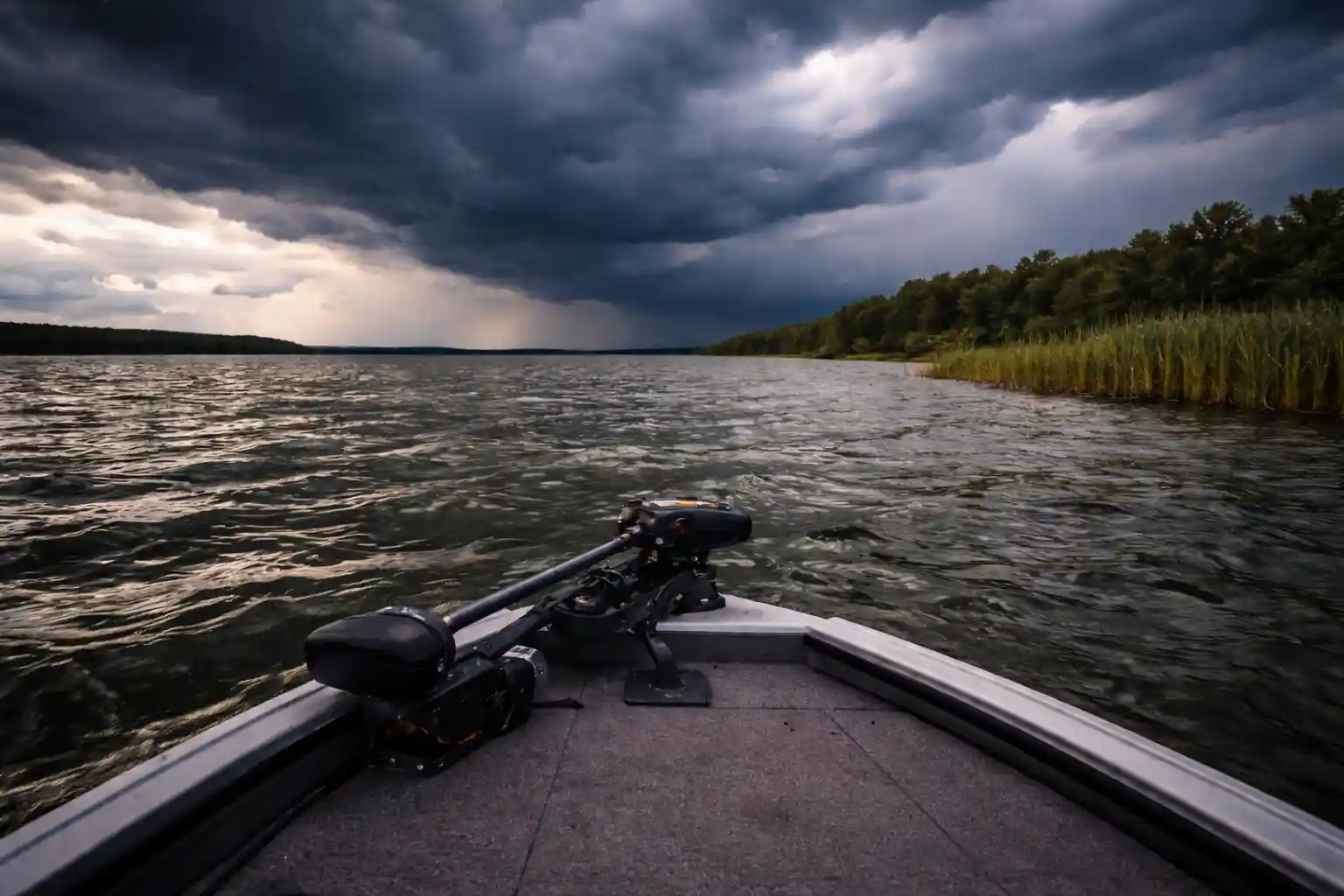
Strike radius expands during falling pressure because pike shift back to horizontal movement. Instead of vertical ambushers pinned to the first breakline, they become roaming interceptors covering 1–2 meters (3–6 ft) at a time across warming flats.
This is where search-style presentations excel. Moderate-speed chatterbaits, slightly larger paddle-tail swimbaits, and faster-cadence jerkbaits allow you to cover water efficiently while the pike strike window is temporarily expanded.
Pre-frontal positioning typically follows a repeatable pattern:
- Falling pressure: Increased horizontal roaming activity
- South/SW wind push: Warm surface layer stacks into shallow zones
- Cloud cover: Reduced light penetration lowers visual stress
- Bait compression: Pike hold slightly upwind, facing into drift
The dusk window (last 45 minutes of light) can be explosive under pre-frontal conditions. As light penetration drops further beneath heavy cloud cover and falling pressure, even cautious trophy females may slide into water as shallow as 60 cm (2 ft) to feed. This short evening surge often feels subtle at first — one follow, one missed swipe — before turning into a concentrated burst of activity.
This behavior aligns with the broader movement framework explained in our Spring Pike Behavior guide — but intensity increases due to atmospheric shift rather than seasonal progression alone.
If you want consistent success with spring pike after a cold front, fish aggressively the day before it arrives. That pre-frontal surge often produces the largest females of the entire transitional window.
Spring Pike Fishing After a Cold Front: What Happens During the Pressure Spike?
Spring pike fishing after a cold front becomes most difficult during the first 12–24 hours of the pressure spike.
Once the front passes, barometric pressure often climbs rapidly above 1020–1025 hPa (30.12–30.27 inHg). Skies clear. Wind shifts north. Air temperature drops. What anglers call “bluebird conditions” settles in — high visibility, sharp shadows, and maximum light penetration.
This is the compression phase.
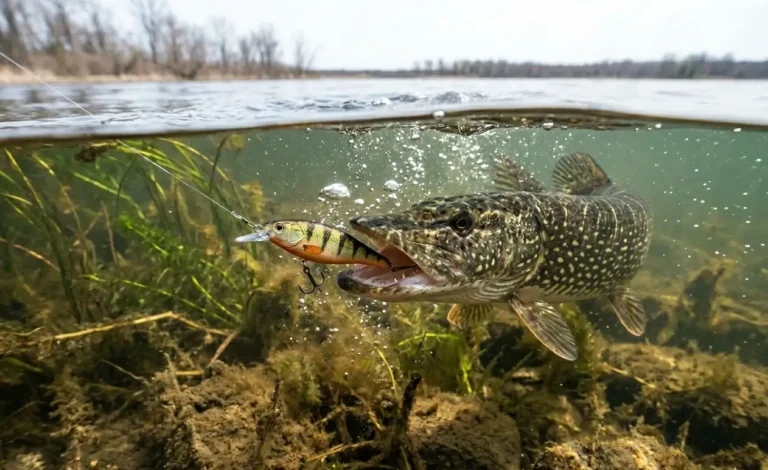
Strike radius shrinks dramatically during a rapid pressure rise. Not because pike stop feeding, but because their positioning tightens. Instead of roaming flats, fish slide into vertical reference points — the first breakline, deeper reed edges, subtle depressions, submerged timber, or contour transitions where depth changes quickly.
In many 4–8°C (39–46°F) post-front sessions, active fish that were cruising 1–2 meters (3–6 ft) the day before reposition to slightly deeper holding zones — often just 0.5–1.5 meters (1.5–5 ft) deeper than pre-frontal lanes. This vertical shift is consistent with the structural mechanics explained in our Spring Pike Depths guide.
This rapid rise toward 1025 hPa (30.27 inHg) exerts measurable pressure on the swim bladder, making neutral buoyancy slightly harder to maintain. By pinning themselves closer to bottom structure or vertical cover, pike reduce the energy required to stabilize their position in the water column under elevated atmospheric compression.
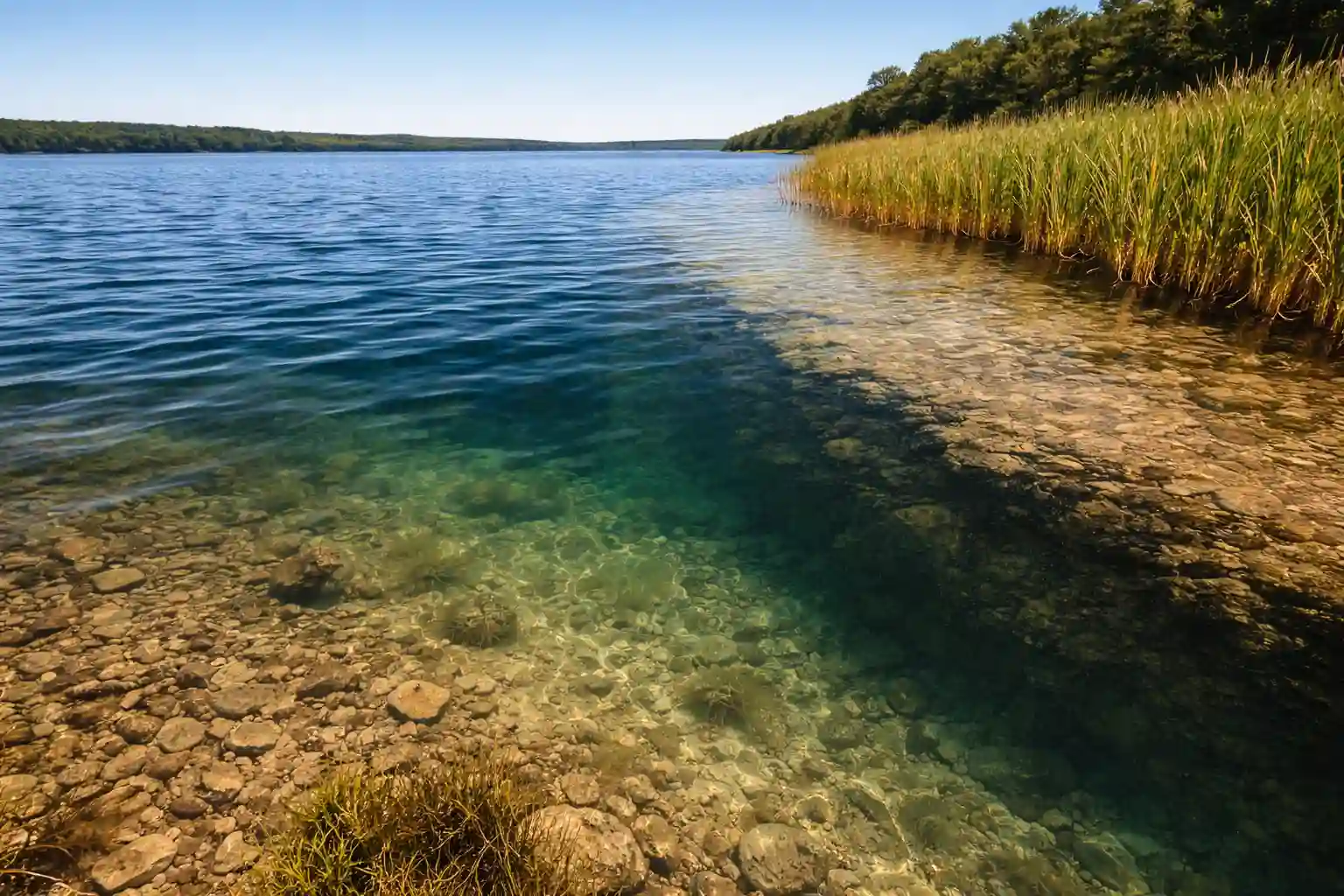
MFG Field Example: On a mid-April reservoir session, pressure climbed from 1013 to 1026 hPa in less than 16 hours. The shallow flat that produced two follows the evening before went silent by morning. Surface temperature dropped 1.2°C (2°F), and fish that were cruising 1.5 meters (5 ft) repositioned to the first contour lip at 2.5 meters (8 ft). After switching from a moderate search retrieve to a suspending jerkbait with controlled 10-second pauses parallel to the breakline, contact came within 20 minutes — a single heavy female positioned tight to the shaded side of submerged timber. The fish hadn’t disappeared. It had compressed vertically.
Spring pike after a cold front do not disappear — they reduce movement and demand precision. The ambush angle changes. Instead of chasing across open lanes, they hold tight and intercept only what passes directly through their compressed strike pocket.
During this phase, presentation must adjust:
- Reduced speed: Slower retrieve to maintain controlled displacement
- Tighter lanes: Cast parallel to structure, not across open flats
- Longer pauses: 6–10 second suspends in cold, clear post-front water
- Depth control: Keep the lure in the exact vertical zone
The post-front pike strike window often narrows to 15–30 minutes, usually triggered by subtle environmental stabilization — minor wind ripple, slight temperature rebound, or temporary cloud cover breaking the direct light intensity.
If you continue fishing aggressively like it’s still pre-frontal, you will assume the bite is dead. If you slow down, compress your casting angles, and match the new vertical positioning, contact is still possible — often with the same trophy females that fed the day before.
This pressure spike phase is not about covering water. It’s about surgical placement, depth discipline, and patience.
When Pressure Stabilizes: The 24–48 Hour Window That Brings Pike Back
Spring pike fishing after a cold front often improves 24–48 hours after pressure stabilizes. Many anglers leave too early, assuming the damage is permanent. In reality, this recovery phase is where disciplined anglers quietly regain control.
Once barometric pressure stops rising and levels off — even if it remains high around 1022–1026 hPa (30.18–30.30 inHg) — fish begin adapting to the new equilibrium. In spring pike fishing after a cold front, the key shift is not the number itself, but the stabilization of atmospheric force on the swim bladder.
Stability restores predictability. Pike that were pinned tightly to bottom structure during the spike phase begin expanding their vertical comfort zone again. Not aggressively — but measurably. Instead of holding directly on the breakline, they may slide half a meter higher in the column or reposition slightly shallower along the same structural edge.
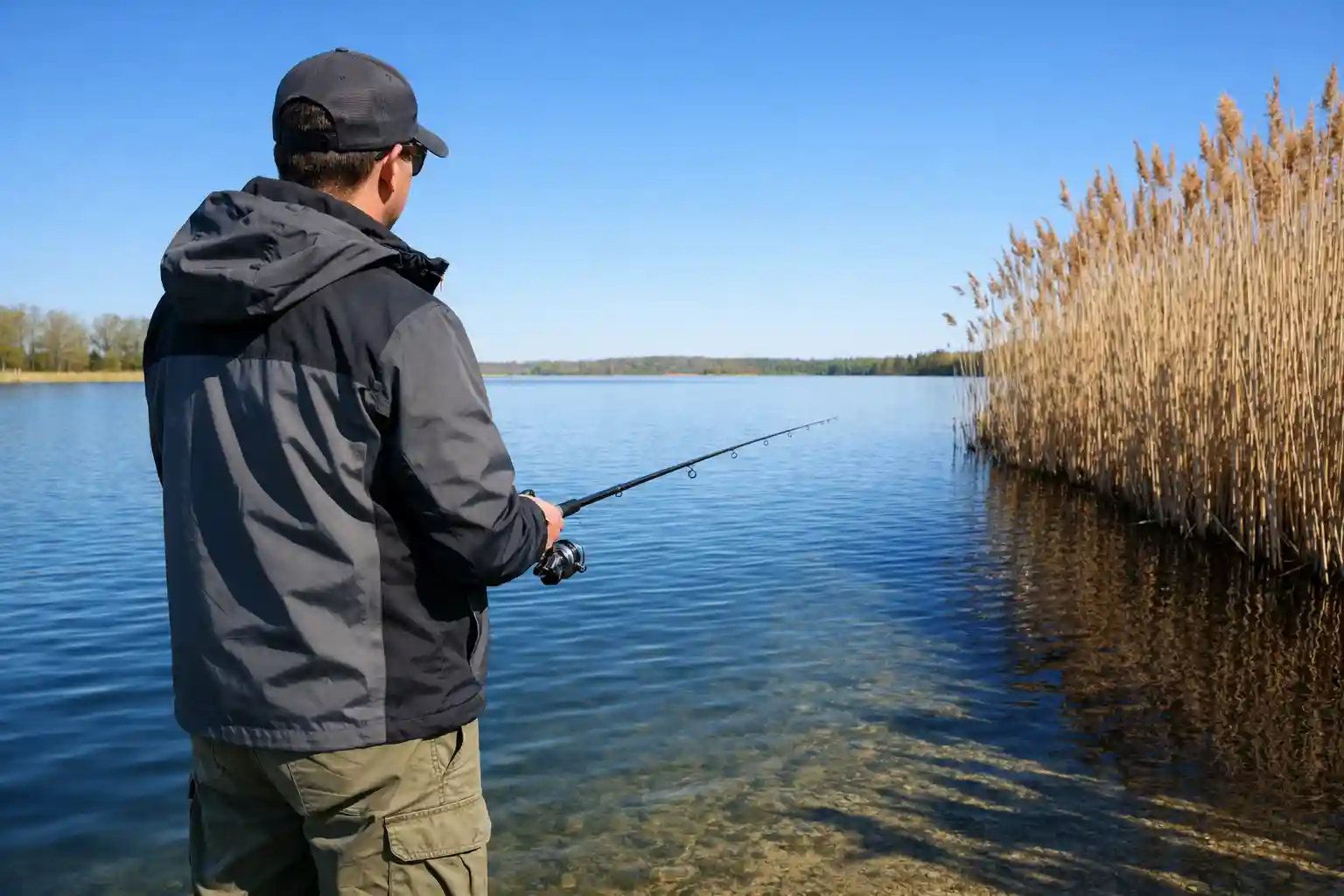
Under lingering bluebird post-front conditions, sharp shadows become a positioning factor. Pike frequently select the shaded side of structure — the darker edge of reeds, timber, dock posts, or contour lips — using shadow as visual shelter. Without eyelids to regulate light exposure, they actively exploit reduced glare zones to conserve energy while maintaining ambush capability.
In 4–8°C (39–46°F) water, metabolic rate does not surge instantly. What changes first is movement confidence. The pike strike window widens from an ultra-compressed 15-minute reaction phase to a more fishable 30–60 minute opportunity. In spring pike fishing after a cold front, this expanded window often aligns with the slight daily surface temperature peak — typically between 14:00 and 15:30 — even if air temperatures remain low.
- Light ripple on the surface: Softens extreme light penetration
- Minor wind return: Restarts subtle bait displacement
- Small temperature rebound: Even +0.3°C (+0.5°F) can matter
- Cloud fragments: Break harsh overhead light
Presentation remains controlled but can loosen slightly. Retrieve speed should stay deliberate, yet incorporate dead-sticking phases where the lure remains motionless inside the strike pocket. In stabilized post-front water, a visible but suspended bait often triggers commitment more effectively than continuous movement — especially during spring pike fishing after a cold front when fish are recalibrating to pressure.
Spring pike fishing after a cold front transitions from survival mode to calculated feeding once pressure stabilizes. Fish do not explode back onto shallow flats immediately — they test structural edges first. Secondary breaklines, inside turns, and subtle contour shifts frequently produce before obvious main-lake points — especially in the transitional zones outlined in our Spring Pike Locations guide.
If the pre-frontal phase is horizontal expansion and the pressure spike is vertical compression, the recovery phase is structural balance.
This is where consistency returns. In spring pike fishing after a cold front, patience during stabilization consistently outperforms aggression during the spike. Not fast action — but repeatable positioning that rewards shadow awareness, depth control, and disciplined execution.
Spring Pike Fishing After a Cold Front: Tactical Execution (Lure Selection & Presentation)
Spring pike fishing after a cold front is won or lost in the strike zone. When barometric pressure compresses the fish’s vertical comfort range, success shifts from covering water to occupying precise space.
Whether you are fishing from the bank or a boat, the principle stays consistent: Surgical precision over speed.
Core Lure Categories for Post-Front Pike
Under stabilized high pressure around 1024–1026 hPa (30.24–30.30 inHg), pike reduce horizontal roaming and tighten to structure. Your lure choice must allow depth control, neutral presence, and extended hang time inside the strike pocket.
- Suspending jerkbaits: The ultimate tool for dead-sticking. Because they maintain near-neutral buoyancy, you can pause them for 8–15 seconds. In 4–8°C (39–46°F) water, this prolonged suspension often triggers otherwise inactive trophy females.
- Chatterbaits & spoons: Best during the early recovery phase. Controlled vibration helps fish locate the bait when north wind creates slight turbidity, while a spoon’s controlled flutter on the drop mimics a dying baitfish inside a compressed strike lane.
- Small floating minnows: Ideal for the 14:00–15:30 solar peak window. When shallow reed flats gain even +0.3°C (+0.5°F), a slow-worked floater can pull fish upward without overwhelming them in high-clarity water.
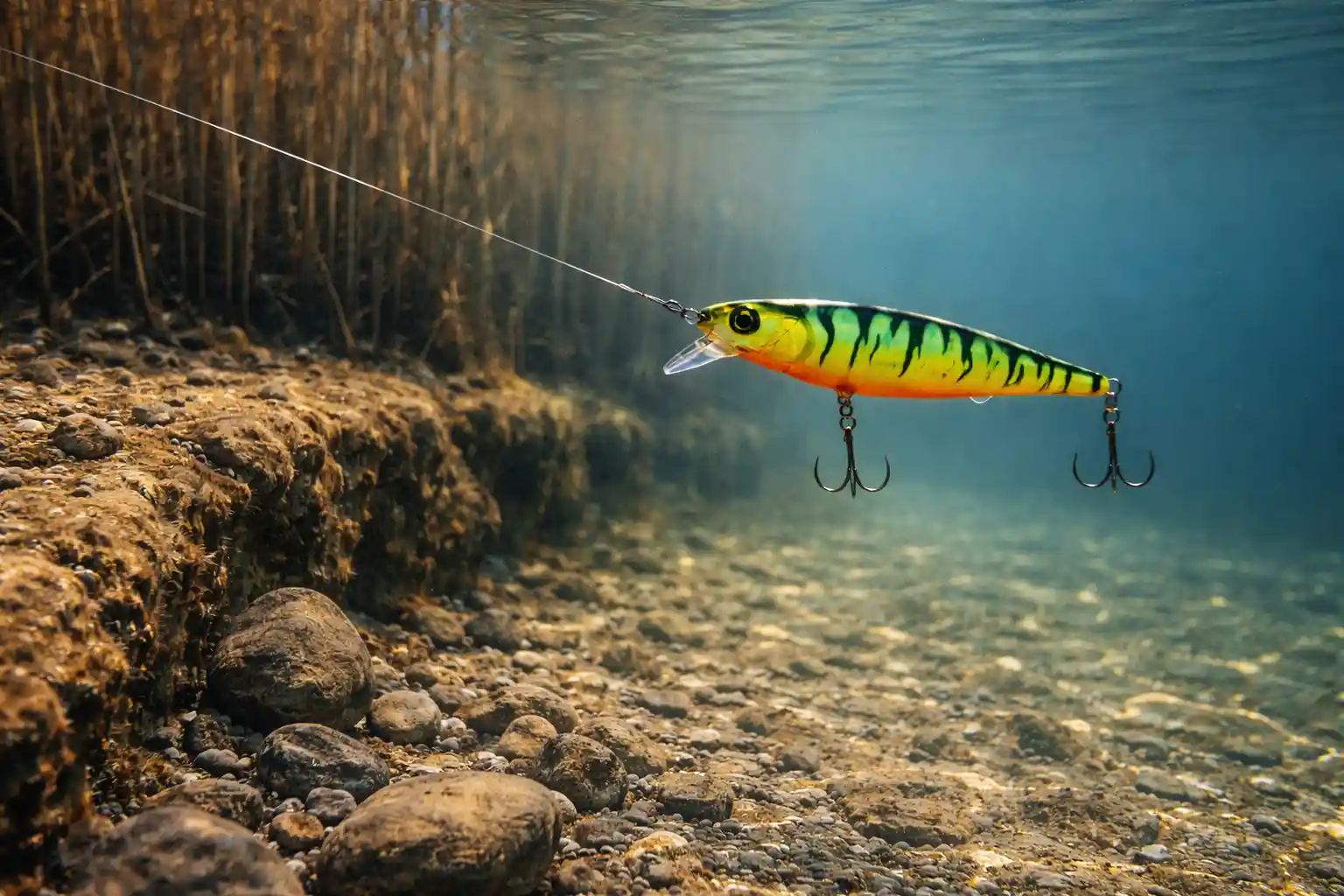
Shore vs. Boat: Execution Geometry
Spring pike fishing after a cold front demands different casting geometry depending on your platform. Under elevated pressure, pike are hyper-aware of vibration and silhouette disturbance.
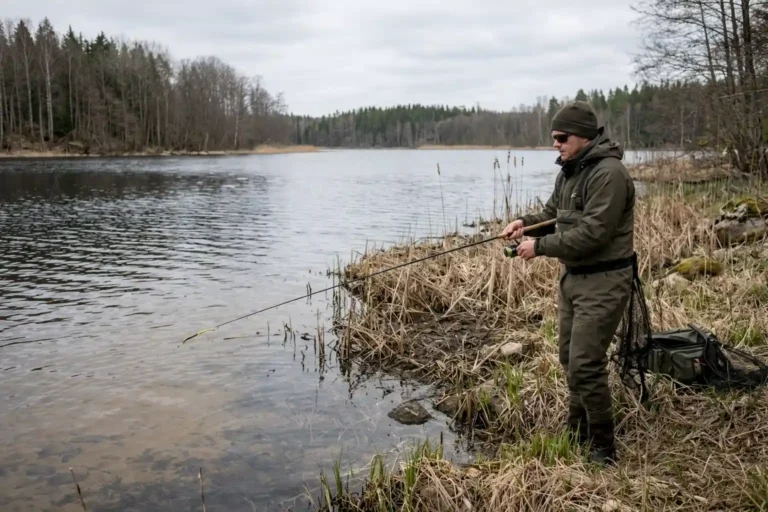
From the Shore: The Stealth Edge
When pressure sits above 1025 hPa, fish are often closer than expected — but highly sensitive.
- The 45-degree rule: Cast at a 45° angle along the shoreline to keep the lure inside the transition zone (reed edge to first drop) for up to 70% of the retrieve.
- Wind management: Cast slightly upwind and allow controlled line bow. This naturally sweeps a suspending jerkbait parallel to structure instead of dragging it off the edge.
- Bank discipline: Stay at least 2 meters (6.5 ft) back from the waterline. Under bluebird post-front light, shoreline shadow movement spooks fish instantly.
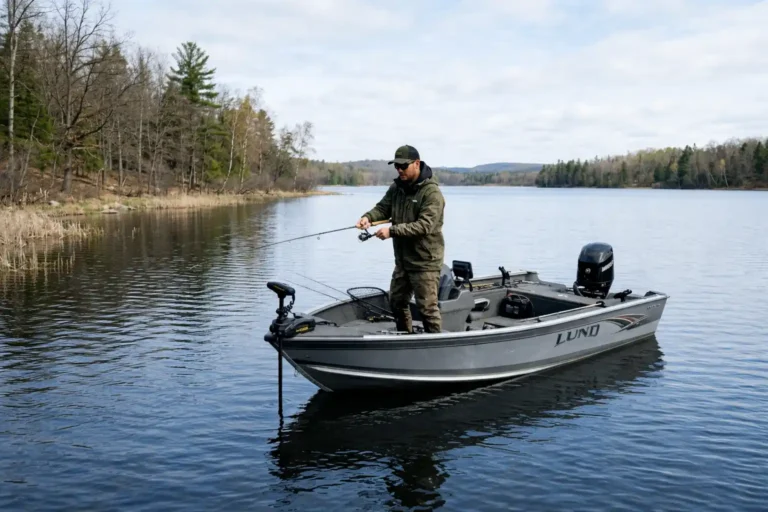
From the Boat: Outside-In Control
The boat provides access to the shaded side of structure and deeper positioning lanes unreachable from shore.
- Positioning: Hold in 4–5 meters (13–16 ft) and cast toward the shallow shelf. Post-front pike frequently face outward toward deeper water, making falling presentations highly effective.
- The slow-roll trigger: With spoons or chatterbaits, let the lure contact bottom. Begin a slow, rhythmic retrieve — just enough to feel blade vibration. If you feel contact with reeds or rock, pause and allow a controlled flutter. That pause remains the universal strike trigger.
- Electronics control: In less than 2.5 meters (8 ft), switch sonar to standby. Continuous transducer pinging can reduce response in ultra-clear post-front conditions.
Profile matters more than color after a cold front. In crystal-clear water, translucent or “ghost” patterns outperform loud contrast patterns. If you observe follows without commitment, reduce lure size before increasing retrieve speed.
For a deeper breakdown of specific models, weights, and seasonal adjustments, see our structured guide to Best Spring Pike Lures, where each category is matched to real post-front scenarios.
Spring Pike Fishing After a Cold Front: Frequently Asked Questions
Do pike completely stop biting after a cold front?
No — spring pike fishing after a cold front does not shut down completely. What changes is positioning and strike radius. During a rapid barometric pressure spike above 1025 hPa (30.27 inHg), pike compress vertically and demand tighter presentation control. Feeding windows shorten, but they rarely disappear entirely.
What barometric pressure is bad for spring pike fishing?
There is no single “bad” number. In spring pike fishing after a cold front, the problem is not high pressure itself — it is the rapid rise. A sharp climb from 1012 to 1025 hPa within 12–18 hours compresses the swim bladder equilibrium and reduces movement. Once pressure stabilizes, fish begin adapting and predictability returns.
How long does post-front lockjaw last in spring?
In most 4–8°C (39–46°F) pre-spawn scenarios, the tightest bite window occurs within the first 12–24 hours of the pressure spike. Spring pike fishing after a cold front typically improves after 24–48 hours, especially when minor wind ripple or slight temperature rebound occurs.
Where should I look for pike after a cold front in spring?
Focus on secondary breaklines, inside turns, shaded reed edges, and subtle contour drops. Under high light penetration, pike frequently hold on the shaded side of structure to reduce visual stress. Vertical reference points outperform open flats during this phase.
What is the best lure for spring pike fishing after a cold front?
The most consistent category is a suspending jerkbait worked with long dead-sticking pauses of 8–15 seconds. In stabilized high-pressure conditions, extended hang time inside the strike pocket often outperforms aggressive search-style retrieves. Thin-diameter braid helps maintain contact during those long pauses.
Conclusion: Pressure Changes Position — Not Biology
Spring pike fishing after a cold front is not about fighting the weather — it is about understanding the biology behind it. Atmospheric pressure does not switch feeding off. It temporarily alters buoyancy balance, vertical comfort, and light tolerance.
Northern pike (Esox lucius) are cold-water apex predators built for early-season activity. Their pre-spawn phase is hormonally driven and metabolically necessary. As documented in species research summaries such as the Animal Diversity Web profile on Esox lucius, these fish are adapted to function in cold, oxygen-rich water long before many other freshwater species become active.
A cold front does not override that biological program. It compresses positioning. It reduces strike radius. It tightens movement efficiency. But the pre-spawn feeding imperative remains intact.
That is why spring pike fishing after a cold front rewards anglers who adjust geometry instead of changing lakes. Vertical compression replaces horizontal roaming. Shadow becomes structure. Pauses replace speed. And stabilization restores predictability.
Weather reshapes opportunity — it does not eliminate it. Once you understand how pressure interacts with buoyancy, light penetration, and structural positioning, spring cold fronts stop feeling random. They become readable, repeatable patterns.
And in early season pike fishing, pattern recognition always beats emotion.