

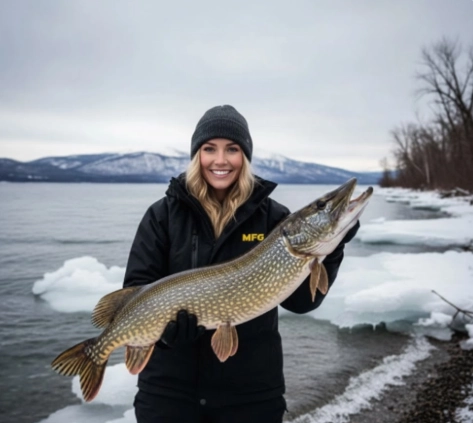
Winter Pike Fishing Guide 2026: Winning Spots, Proven Tactics & Pro-Level Gear
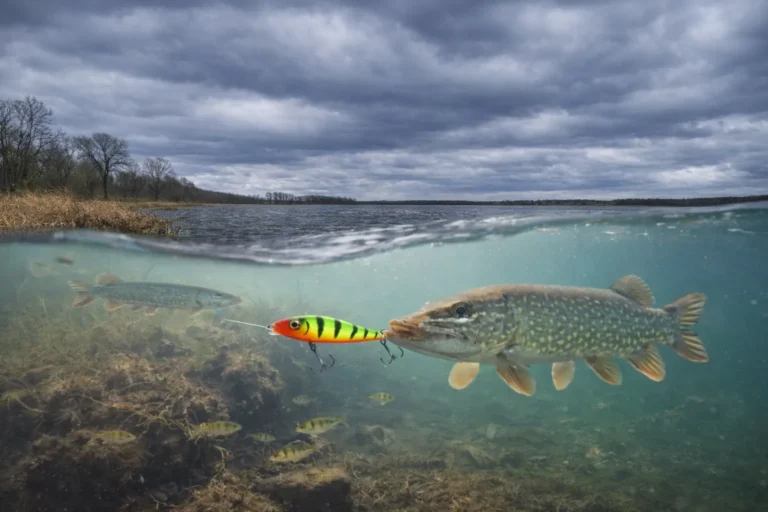
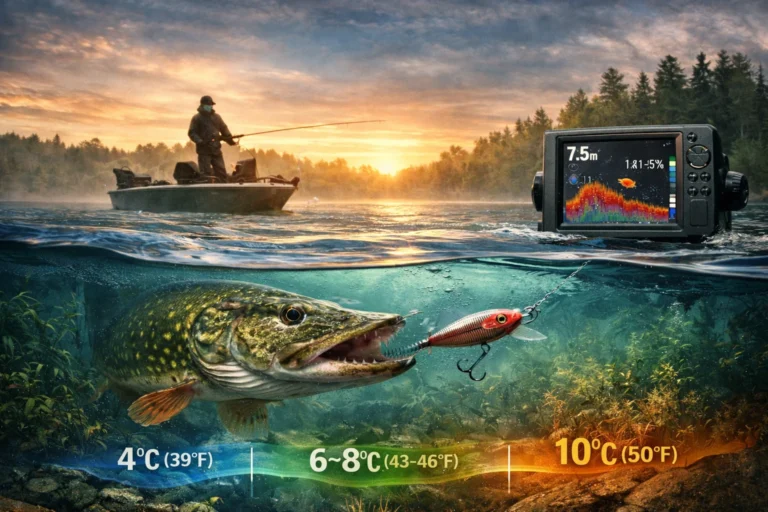
When the season shifts and autumn fades, the water cools below 8°C (46°F) and the entire behavior of pike changes. The fast, aggressive strikes from early fall slow down. Pike stop roaming and begin conserving energy. If you keep fishing with the same speed, depth, and lure styles you used in autumn — you will blank. But if you adjust now — your positioning, depth control, and especially your retrieve cadence — you’ll start catching fish when everyone else can’t.
This guide reflects real winter patterns we’ve observed on the water — from the heart of January to the unstable days when winter begins to loosen its grip.
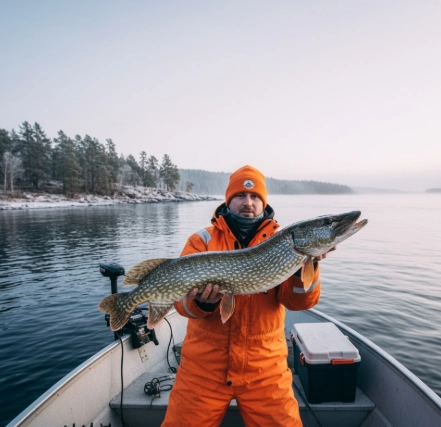
This complete Winter Pike Fishing Guide shows you exactly how to adapt your presentation, location choice, and gear setup to match cold-water behavior and trigger strikes in short feeding periods.
If you want a quick refresher on what worked during the warm part of the season before shifting into the winter approach, review the fall breakdown here: Best 5 Pike Lures for Autumn.
Winter pike still hit hard — they just refuse to waste effort. Your success now depends on knowing where they hold, recognizing their short strike periods, and keeping your lure in the kill zone long enough for them to commit.
How Pike Behaves in Cold Water (Strike Periods & Energy Logic)
When water drops below 8°C (46°F), a pike’s metabolism slows. Every movement costs energy, so it stops chasing and starts waiting for prey to come close. It will still hit hard, but only if the target looks like an easy meal inside its strike zone.
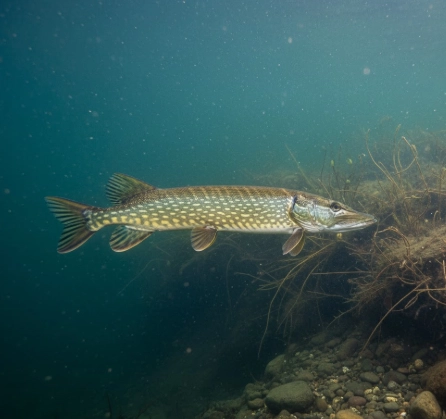
Strike periods get short. In cold water, pike feed in brief, predictable intervals. These periods often last 30–90 minutes and are triggered by small changes in light, pressure, or wind direction. Your goal is not to fish “all day” — your goal is to be in the right spot when a strike period opens. This is also why winter night pike fishing can suddenly outproduce daylight sessions — the same narrow windows exist after dark, only fewer anglers are present to recognize them.
Positioning matters more than casting. Instead of roaming, pike settle on edges, drop-off lines, slow-current pockets, and areas holding baitfish. If your lure isn’t moving through these zones, you’re not actually fishing for pike — you’re just casting.
Depth control beats lure selection. On lakes, pike slide into 4–9 m (13–30 ft). On rivers, they hold in reduced-flow pockets just off the main current. Your success depends on keeping your lure in that depth band long enough for the fish to commit.
Slow does not mean lifeless. Pike still want a signal — a pause, a glide, a slow roll. Strikes happen when the lure hovers or stalls close to the fish. Winter fishing is less about “action” and more about control and patience.
How Barometric Pressure Controls Winter Pike Feeding Windows
Barometric pressure is one of the main hidden drivers behind winter pike strike periods. In cold water, pike do not feed continuously — they respond to pressure trends that signal changes in light, weather stability, and prey behavior. These changes directly influence how safe a pike feels when deciding whether to expend energy on a strike.
A falling barometer is usually the most productive scenario in winter. It often brings cloud cover, wind, or incoming weather systems that break light penetration and reduce visibility. Under these conditions, pike become noticeably more confident, sliding slightly out of their tight holding zones and feeding during short but predictable windows. Understanding exact barometric pressure effects on winter pike feeding allows you to plan sessions around these windows instead of fishing blindly all day.
Stable or rising high pressure creates the opposite effect. Clear skies, high visibility, and steady conditions push pike into a defensive, energy-saving mode. They hold tighter to structure, reduce movement, and feed only when conditions briefly align. During these periods, success depends on fishing slower, deeper, and with longer pauses rather than increasing lure changes or casting speed.
Pressure never works alone. Its real impact appears when combined with water temperature stability. When cold water temperatures remain consistent and pressure trends align, strike windows become far more predictable. This is why experienced anglers track both variables together — using water temperature vs pike activity to anticipate when winter pike will actually open their feeding window.
What actually matters: don’t focus on exact pressure numbers. Watch the direction of pressure change, pair it with stable cold-water temperatures, and fish only when those factors align. In winter, timing beats effort — every single time.
Where Pike Hold in Cold Water: Proven Structure for Winter Success
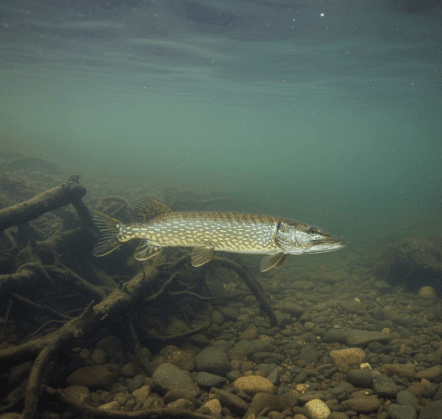
Winter pike fishing is about location first, presentation second. If you’re not fishing where pike actually hold in cold water, even the best lure and perfect retrieve won’t matter. The spots below are the key winter holding zones that consistently produce fish once temperatures drop. These are locations experienced anglers return to every season.
Lakes: First Drop-Offs, Edge Transitions & Remaining Weedlines
As fall ends, pike slide off the shallow feeding flats and position along the first major depth break — where the bottom shifts from 2–3 m (6–10 ft) into 4–9 m (13–30 ft). This zone provides stable temperature and an ambush advantage. Understanding how winter pike use depth changes is critical, especially when targeting larger, less mobile fish.
Key lake holding features:
- The last viable weedline where vegetation dies back and baitfish gather.
- Submerged points that funnel prey from shallow to deep water.
- Basin drop-offs where bait naturally slides in cold conditions.
- Mixed bottom transitions (sand → gravel, mud → shell) which attract forage.
If any collapsed weed beds remain, do not overlook them. Even dead vegetation can hold micro-oxygen zones, keeping baitfish nearby. And where prey gathers — pike stay close.
Rivers: Slow-Flow Ambush Zones & Deep Outside Bends
In rivers, pike avoid strong current because it burns too much energy. They hold where the flow slows but still carries food to them. These locations are predictable and repeatable all winter.
Look for:
- Back-eddies behind boulders, bridge pilings, root systems or man-made structure.
- Outside bends where deeper water meets soft current pockets.
- Channel edge drop-offs — the “inside ledge” just off the main flow.
- Wintering holes that consistently hold baitfish and slower-moving prey.
If you get one follow or even a soft bump, do not leave. In cold water, pike often need 2–3 passes to commit. Most winter anglers move too soon.
Reservoirs & Canals: Suspended Pike Tracking Pelagic Bait
In large open systems, pike don’t always relate to structure. Instead, they track schools of suspended baitfish. This makes the bite seem random unless you know what to look for.
Key cues:
- Bait clouds on sonar — pike rarely sit far from them.
- Wind-driven surface slicks concentrating bait along one shoreline.
- Submerged channel contours that act as travel corridors for prey.
- Temperature breaks near creek inflow or drainage points.
When pike are suspended, your target depth matters more than the lure. A slow-rolled soft swimbait or a suspending jerkbait fished through the middle water column consistently triggers strikes from pike holding 3–7 m (10–23 ft) off the bottom.
In winter, pike settle in spots where they can save energy while still having the best chance to intercept prey. Find that balance, and you’re no longer searching for fish — you’re fishing where they already live.
Proven Winter Pike Tactics (How to Trigger Strikes in Cold Water)
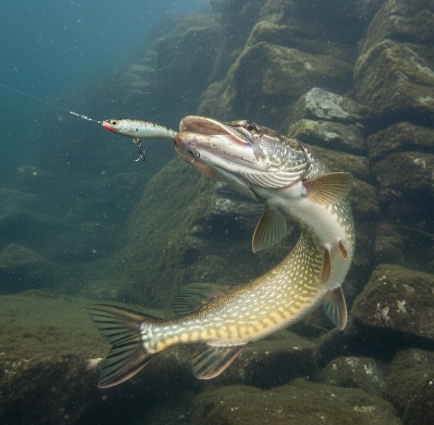
Winter pike do not react to speed. They react to control, pauses, and depth stability. Your goal is to keep the lure in the strike zone longer than the fish expects. If your retrieve is too fast or too loose, you’re no longer fishing where the pike is actually willing to strike.
1. Slow the Retrieve — Then Slow It Again
Even when you think you’re retrieving slowly, you’re probably still going too fast. In cold water, your base speed should feel almost “too slow.” The fish needs time to evaluate and commit.
- Standard Pace: 2–3 slow handle turns → pause 3–5 seconds
- Very Cold Water (below 4°C / 39°F): 1–2 slow turns → pause 6–10 seconds
Strikes often happen during the pause, not during movement. If you never pause long enough, the fish never decides to eat.
2. Keep the Lure in the Strike Depth
Depth control is more important than action. If your lure rises too high or falls out of the zone, the fish ignores it.
- On lakes: keep the lure in 4–9 m (13–30 ft)
- On rivers: run it through slow-current pockets just off the main flow
- In reservoirs/canals: track the middle water column where bait suspends
Count the fall. Hold depth. Don’t rush the retrieve just to recast.
3. Use a “Trigger Moment” to Force the Strike
Neutral winter pike often follow the lure without committing. To convert that follow into a strike, introduce a micro-acceleration at the right moment:
- Slow roll… slow roll… tiny burst (¼–½ turn) → then pause.
- Or: pull → glide → pause → tiny twitch → pause.
This moment simulates a wounded prey’s final escape attempt — which flips the predator’s instinctive kill response.
4. Use Lures That Hold Depth and Hover Naturally
You need lures that can stay in the zone without rising or sinking too fast. Heavy spoons, suspending jerkbaits, and weighted soft swimbaits are ideal for this. Their movement slows cleanly and they don’t “float out of position.”
For cold-water lure options specifically designed to hold depth and trigger strikes during long pauses, see: Best 6 Pike Lures for Winter 2026.
5. Read the Response — Then Adjust
If you feel:
- light taps → increase pause length
- follows without contact → add a single micro-acceleration mid-retrieve
- no sign of fish → same lure, same pace, different depth (not different spot)
Small adjustments matter more than lure changes in winter.
Simple rule: Keep it slow, hold the depth, and add one clean trigger — that’s how winter strikes happen.
Winter Pike Lures Explained (When Each Lure Type Works Best)
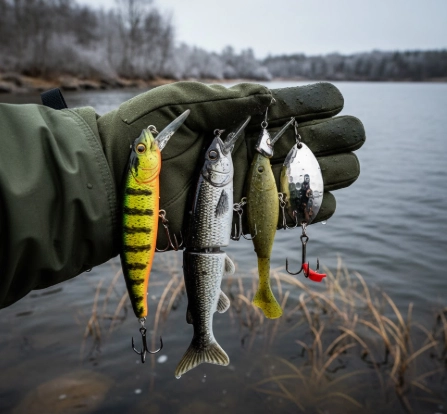
Winter is not about throwing every lure you have. It’s about choosing lure types that stay in the strike zone longer, waste less energy to fish, and force the pike to decide. Below are the lure styles that consistently produce in cold water — plus when to use each one.
1. Heavy Spoons – Depth Control & Long Glide Pauses
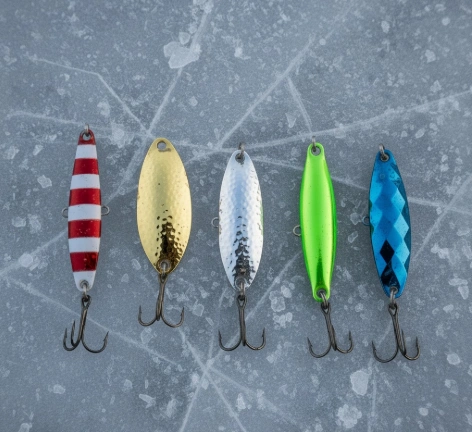
Heavy spoons are one of the most reliable winter pike lures because they stay in the correct depth zone and create a slow, dying-baitfish flutter on the fall. This is exactly what triggers cold-water strike behavior. When pike won’t chase, spoons let you present the lure directly in their face and hold it there.
When to use heavy spoons:
- Lakes: first major drop-off edges (4–9 m / 13–30 ft)
- Rivers: slow-current side pockets and outside bend slack zones
- Reservoirs/Canals: when pike track suspended bait clouds
Retrieve pattern: Lift the rod slowly → let the spoon fall on a controlled slack → pause 3–8 seconds. If the water is below 4°C (39°F), extend pauses to 8–12 seconds. Strikes usually occur during the pause, not during the lift.
For anglers targeting truly big fish in deep winter water, heavy spoons remain one of the most consistent tools. Their role in big-pike fishing is covered in detail in this winter spoon guide for monster pike.
2. Suspending Jerkbaits – The Hover That Forces Commitment
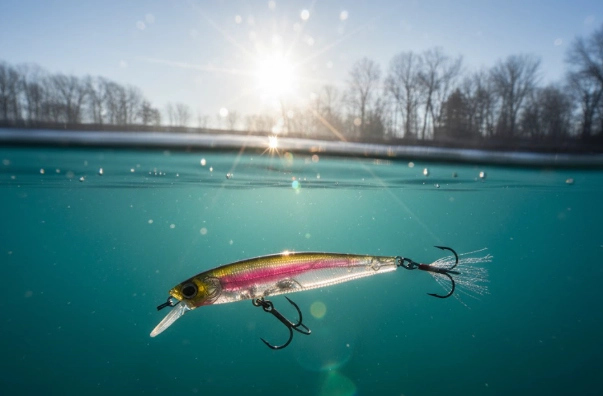
Suspending jerkbaits work because they can stay in place long enough for pike to evaluate the target. When movement stops, the fish has to decide: eat or ignore. In winter, that pause often matters more than the jerk itself.
When to use: clear water, dying weed edges, 2–5 m (6–16 ft) depth zones.
Retrieve: Jerk → jerk → pause 4–7 seconds. In colder water: pause 8–12 seconds. Many lures marketed as “suspending” fail here, which is why choosing proven winter suspending jerkbaits makes such a difference.
3. Weighted Soft Swimbaits – Slow Rolling in the Strike Zone

Soft swimbaits rigged on a properly sized jig head allow you to maintain exact depth while keeping a natural, slow swimming motion. This is key when pike follow schools of small bait. Not all soft plastics perform equally well at ultra-slow speeds, which is why selecting the right soft swimbaits for cold water becomes critical in winter.
When to use: reservoirs, canal systems, slow river sections.
Retrieve: Slow, steady roll with occasional micro-twitches to simulate a wounded baitfish.
4. Bladebaits & Jigging Spoons – When Pike Stick to the Bottom
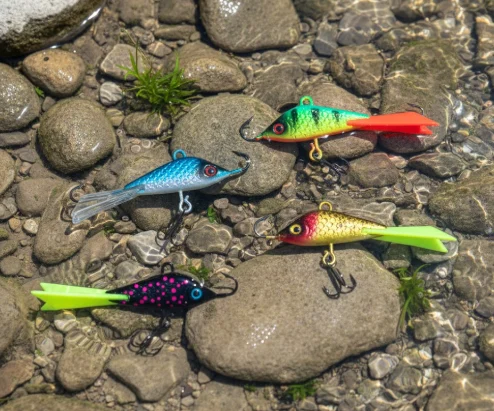
When pike lie flat on the bottom to conserve energy, vertical presentations outperform horizontal retrieves. Bladebaits send vibration signals that pike detect even when they refuse to move.
When to use: deep wintering holes, very cold water, low-oxygen basins.
Retrieve: Short vertical lift → long pause on bottom.
5. Lipless Crankbaits – Locating Fish in Open Water
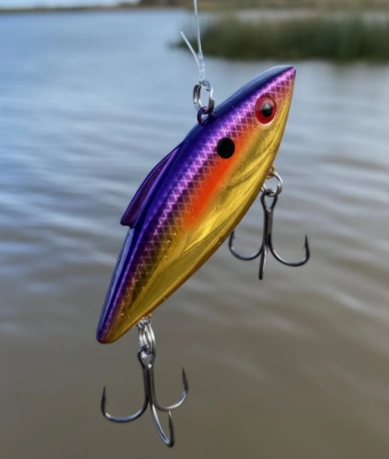
Lipless cranks are best used as search tools. Once you locate pike through sonar, follow, or strike attempt — switch to spoons or swimbaits to finish the fish.
Retrieve: Slow lift and fall — no fast rattle retrieves in winter.
What really works: Winter strikes come when the lure stays put in the strike zone — speed and aggression don’t help here.
Winter Deadbait Fishing for Pike
When Deadbait Outperforms Lures in Winter
There are winter windows when even perfectly presented lures stop producing. Extremely cold water, stable high pressure, or inactive baitfish often push pike into a low-effort feeding mode. During these periods, predators are no longer willing to chase, accelerate, or correct their position to intercept a moving target.
This is where deadbait becomes the most efficient winter option. Instead of triggering reaction strikes, deadbait targets a different instinct — the need to take an easy, energy-efficient meal that requires minimal movement. A stationary or slowly drifting baitfish placed directly in the holding zone fits perfectly into how winter pike actually feed.
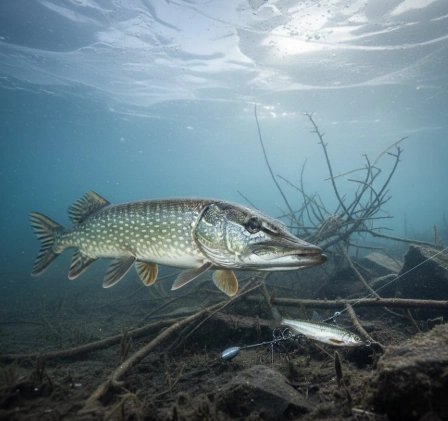
Why Scent and Realism Matter More Than Action
In cold water, scent and realism matter more than action. Pike rely heavily on their lateral line and olfactory senses, especially when visibility is reduced or metabolism is low. Understanding winter deadbaits for pike — including correct bait size, profile, and natural oil release — often makes the difference between a blank session and a single decisive strike.
Deadbait allows pike to commit without expending energy. There is no chase, no sudden acceleration — just a slow, deliberate intake. This feeding behavior explains why deadbait continues to work during cold fronts and long stable pressure periods when moving lures fail completely.
Presentation, Rigs, and Commitment in Cold Water
Deadbait fishing is not passive fishing. Success depends on precise placement, correct depth, and patience. Pike rarely move far to inspect a deadbait in winter. If the bait is not already inside the strike window, the fish simply ignores it. This is why location and depth selection must already be correct before deadbait ever enters the water.
Presentation becomes just as important as bait choice. Rig selection, hook placement, leader stiffness, and how freely the bait can move all influence how natural the offering appears. In cold water, even small resistance can cause pike to drop the bait before committing. This is why proven winter deadbait rigs and techniques consistently outperform improvised or summer-style setups.
What this means on the water: When lures stop working in winter, deadbait keeps you in the game. You’re not forcing movement — you’re giving the pike an easy meal, and that’s often exactly what makes it commit.
Pro-Level Winter Pike Gear (Rods, Reels & Line Setup)
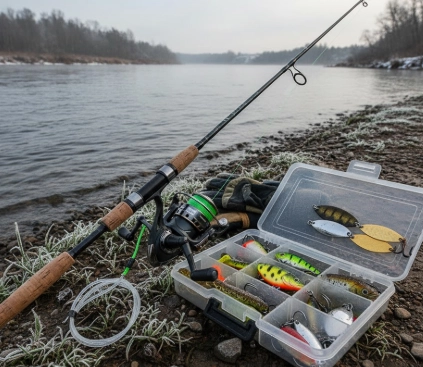
This is where most anglers lose fish in winter. When pike barely move, your gear has to help you keep the lure in the strike zone longer — with control, not power. You don’t need “expensive gear,” you need gear with the right behavior.
Winter Pike Rods – Backbone + Tip Control (Without Killing the Action)
Your rod should have enough backbone to drive the hook through a tough jaw, but with a responsive tip so you can control slow retrieves and long pauses. Too soft → you lose depth control. Too stiff → you kill the lure’s natural glide.
Ideal setup: 7’10”–9’ (2.40–2.70 m) / Heavy or X-Heavy / Fast or Extra-Fast action.
For proven rod models that hold up in freezing conditions, see: Best Pike Fishing Rods for Winter
Key takeaway: If you can’t control depth, you’re not actually fishing for winter pike.
Winter Pike Reels – Stability in the Cold (No Slip, No Grind)
Your reel must stay smooth and consistent in cold weather. If the drag sticks or the rotor feels uneven, you lose control over the pause — and that’s when the strike happens.
Anglers who rely on precise lure control with heavy spoons and jerkbaits often switch to winter baitcasting reels, which maintain consistent retrieve tension and pause timing in cold conditions where standard reels start to lose feel.
Look for:
- Size: 4000–5000
- Moderate gear ratio (5.2:1 to 6.0:1)
- Solid handle connection (no play)
- Drag that behaves the same at +5°C and -5°C
For reels that stay reliable in freezing conditions, see: Best Reels for Pike Fishing in Cold Water 2026
Key point: If the reel can’t hold a steady retrieve, you can’t trigger a strike.
Line & Leaders – Feel Everything, Lose Nothing
Winter pike fishing is all about contact and feedback. If you don’t feel the lure, you can’t time the pause, the glide, or the trigger move. Cold water exposes weaknesses in both line and leader far more quickly than warm conditions.
- Braid: 30–50 lb (0.18–0.23 mm) for sensitivity and depth control
- Leader: 0.70–1.00 mm fluorocarbon or 20–40 lb wire
Fluorocarbon for clear water and subtle presentations, while wire excels when strikes turn aggressive or visibility drops. In true winter conditions, the practical differences between titanium and fluorocarbon leaders become especially important during slow, committed takes.
Line choice matters just as much. Stiff coatings, oversized diameter, or poor cold resistance all reduce control during long pauses, which is why selecting the right winter pike fishing line directly affects how long your lure stays in the strike zone.
If you lose contact, slow down, add weight, or shorten your retrieve distance — control is everything in winter.
Winter Pike Fishing from a Boat (Positioning & Casting Angles)
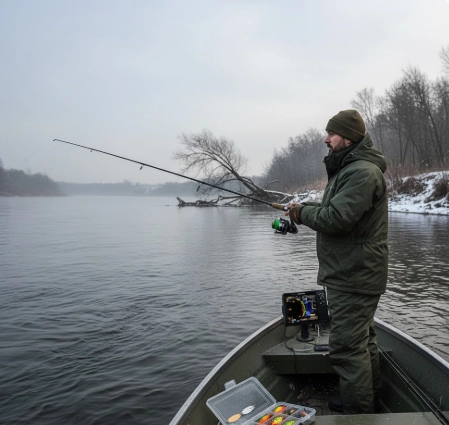
If you’re fishing from a boat in winter, the key is positioning. You never sit directly on top of the fish. Pike won’t move far in cold water, so if you’re sitting over the spot, you’re actually above them and outside their strike lane.
Boat Positioning
Find the structure (drop-off, edge, transition) and stop the boat 5–12 m (15–40 ft) off the strike zone. You cast into the zone — you don’t float on top of it.
Rule: Boat sits in neutral water → lure enters strike water.
Casting Angles
Cover the area in a wide fan pattern instead of repeating the same angle:
- Left edge of the drop-off
- Center transition
- Slightly deeper pass
- Back to the break line
You are locating the exact micro-position where the pike is holding, not searching “open water.”
Using Sonar
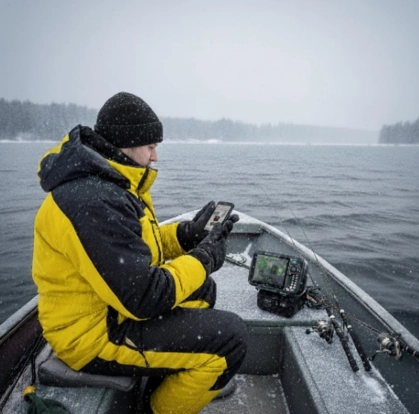
When using fish finders in winter, don’t hunt for the pike shape itself. Look for bait clouds and bottom transitions. Pike will be nearby.
Movement Strategy
If you get a follow, tap, or lazy swipe — stay. Winter pike often require multiple passes to commit.
If you get no sign in 12–18 minutes, slide the boat 10–20 m along the structure. Small moves, not big relocations.
Small adjustments catch winter pike. Big jumps waste time.
Winter Pike Fishing – Frequently Asked Questions
What is the best water temperature for winter pike fishing?
The most consistent winter pike action happens when water temperatures drop below 8°C (46°F) and stabilize. Pike remain catchable all the way down to 1–2°C (34–36°F), but strike windows become shorter and pauses must be longer.
How deep do pike usually hold in winter?
In lakes, winter pike commonly hold between 4–9 m (13–30 ft), especially along first major drop-offs and basin edges. In rivers, they favor slow-current pockets just off the main flow, often slightly shallower but protected from current.
Are lures or deadbait better for winter pike?
Both work, but under different conditions. Lures dominate during short feeding windows when pike react to movement and pauses. Deadbait outperforms lures during extreme cold, high pressure, or inactive baitfish periods when pike conserve maximum energy.
How long should pauses be when fishing lures in winter?
In moderate winter conditions, pauses of 3–6 seconds are effective. When water drops below 4°C (39°F), pauses often need to extend to 8–12 seconds. Most winter strikes occur during the pause, not during movement.
What leader material is best for winter pike?
Both titanium and fluorocarbon work in winter. Titanium leaders excel when using lures and handling repeated strikes because they don’t kink. Thick fluorocarbon performs well for deadbait and subtle presentations in clear water.
Is winter pike fishing better from a boat or from shore?
A boat offers superior positioning and depth control, but winter pike are still very catchable from shore. Understanding the real trade-offs between platforms — covered in our winter pike fishing from shore vs boat guide — helps anglers choose the right approach for their water. Bank anglers should focus on steep drop-offs, outside bends, and deep access points rather than trying to cover long distances.
What is the most common mistake anglers make in winter?
The biggest mistake is fishing too fast. Winter pike respond to control, depth stability, and patience. Speed, aggressive retrieves, and constant recasting drastically reduce success in cold water.
How to Put This All Together (Your Winter Pike Gameplan)
Winter pike fishing is not complicated once you understand what the fish are doing and why. The metabolism slows, the strike radius shrinks, and feeding becomes selective. You’re not trying to convince a pike to chase — you’re trying to place the lure where it already is and hold it there long enough to trigger a decision. Everything in your approach should support that.
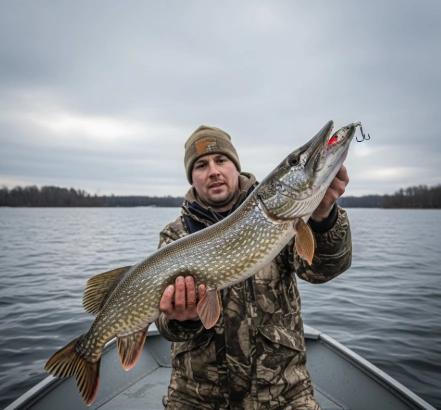
Your starting point: pick one structure and fish it correctly before moving on. Lakes = first drop-off edges and last remaining vegetation. Rivers = slow-current pockets beside depth. Reservoirs = bait clouds suspended in mid-water. If the water is extremely cold or pressure is stable and high, expect longer pauses before strikes. Weather data matters, and monitoring pressure trends is useful. For reference, see: NOAA Weather & Pressure Data.
January is where winter pike fishing becomes brutally honest. Strike windows shrink to minutes, not hours, and timing mistakes are rarely forgiven. If you’re fishing the heart of winter, understanding January pike behavior and ultra-short feeding windows is critical — both for choosing the right days and for knowing when conditions are simply not worth fishing.
As winter begins to loosen its grip, a different challenge appears. Late in the season, light increases, water starts to breathe again, and pike shift subtly — not into spring mode, but out of pure winter stillness. This in-between phase is why February pike fishing feels so unpredictable: the old winter rules start to bend, but true spring patterns have not yet formed.
Once that late-winter instability passes and water temperatures continue rising, those same fish fully commit to shallow movement and predictable feeding routes — which is where our spring pike fishing guide breaks down exactly how to locate pre-spawn fish and intercept them consistently.
Extreme cold also introduces mechanical problems that silently ruin presentation. Rod guides freezing and line icing reduce depth control, kill pause timing, and cause missed strikes without you realizing why. When gear stops behaving normally, even perfect positioning won’t save the session. Knowing how to stop rod guides freezing in winter ensures your lure stays in the strike zone and behaves correctly when conditions are at their worst.
Extreme winter success is also limited by how long you can physically stay effective on the water. Cold feet and numb hands shorten focus, slow reaction time, and cause rushed decisions during the most critical strike windows. Proper insulation and waterproofing are not about comfort — they directly affect how long you can fish with full control. Choosing winter fishing boots built for extreme cold and winter fishing gloves that preserve dexterity allows you to stay patient, precise, and effective when winter pike finally decide to feed.
How to open the spot: Start with a slow controlled retrieve using a lure that holds depth. Count the fall, feel the weight, then pause. If nothing happens in the first few casts, change the angle, not the lure. Winter fish respond more to presentation and cadence than lure variety.
Adjustment rules:
- If you get follows → slow down and lengthen pauses.
- If you get taps → increase pause or drop slightly deeper.
- If nothing at all happens → move 10–20 m along the structure.
The goal is not to cover water — the goal is to stay in the strike zone and let the fish make the decision. Each cast is deliberate. Each pause is intentional. If you stay patient and controlled, the strikes come.
MFG advice: Winter success comes from pairing the right holding spots with deep-holding lures (spoons, suspending jerkbaits, weighted swimbaits) and using a winter-ready rod & reel setup that gives full control over depth and pause timing.
If you land a good fish this winter, share your catch with us on the Master Fishing Guide Facebook Page — we’d love to see it.