


How to Fish for Bass at Night (2025 Guide: Lures, Spots & Timing)
Night bass fishing isn’t just a summer alternative — it’s one of the most consistent ways to catch trophy fish when daytime pressure shuts the bite down. As surface temps climb above 75 °F (24 °C) and boat traffic spooks shallow fish, big largemouth and smallmouth often slide shallow after dark, hunt more confidently, and make fewer mistakes.
As an Amazon Associate, we earn from qualifying purchases — no cost to you. That’s how we keep this site running. Read more ›
But fishing for bass at night is not the same game. Visibility drops, sound travels farther, and bass rely more on vibration and silhouette than color. In this 2025 guide you’ll learn exactly where, when, and how to catch bass after dark — with proven lures, moon-phase timing, and adjustments that turn quiet nights into your best sessions. Many anglers who master bass fishing during the day are surprised how the same habits shift after sunset, especially on lakes that come alive once boat traffic fades.
Do Bass Bite at Night?
Yes — and often the biggest ones do. Many anglers don’t realize that bass feed more aggressively at night than during the day, especially in the heat of summer. When sunlight fades, cooler surface temperatures and lower light give them the comfort and confidence to move shallow and hunt. That’s why some of the best catches of the year happen long after sunset.
Light and vision: Bass eyes are built for low light. They see silhouettes and motion better than detail, which means a dark lure against the sky is easier to track than bright colors. In clear or slightly stained water, use baits that create strong contrast — black, dark purple, or blue work best when the moon is high.
Sound and vibration: When visibility drops, bass depend on their lateral line — the sense that picks up vibration. That’s why spinnerbaits, buzzbaits, and chatterbaits shine after dark. The steady thump and vibration guide bass to the lure even in complete darkness.
Temperature and oxygen: After sunset, surface water cools fast and oxygen levels rise. Bass that stayed deep at 15–25 ft (4.5–7.5 m) by day often move into 4–8 ft (1.2–2.4 m) zones to feed. If you’re on a lake with grass, focus on the outside edges and shallow holes — those areas “turn on” 60–90 minutes after sunset.
Pressure and noise: The best part of night bass fishing is peace — no boats, no waves, no sonar pings. Even highly pressured waters reset after dark. Shallow docks, rocky points, and riprap banks that were dead at noon can suddenly come alive when the crowd leaves. Move quietly, keep lights low, and let the silence work for you.
Bottom line: Bass absolutely bite at night — they just do it differently. Think contrast + vibration + slow retrieve. Keep your presentation steady, work the comfort zone, and you’ll start catching fish others never see.
Best Time for Night Bass Fishing
The most productive period for night bass fishing depends on temperature, moonlight, and weather stability. In general, the bite improves once water stays between 70–80 °F (21–27 °C) and daytime activity slows down. That’s when bass leave deep structure and move toward shallow feeding zones, especially on large lakes where long rocky points and grass edges create perfect transition routes.
Summer nights bring the most consistent action. After hot days, surface layers cool and oxygen levels rise — perfect conditions for largemouth and smallmouth to patrol the shallows. The first two hours after sunset and the last hour before sunrise are usually the most active windows. Calm, humid nights with a light breeze almost always produce more steady bites than cold, windy evenings.
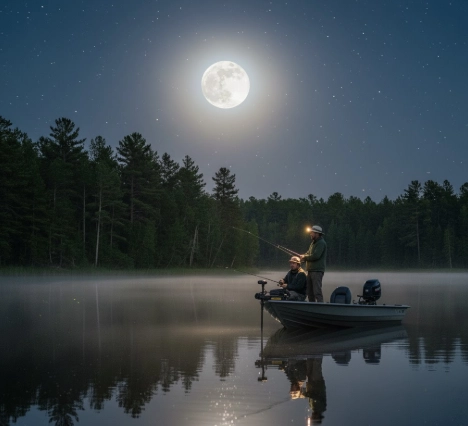
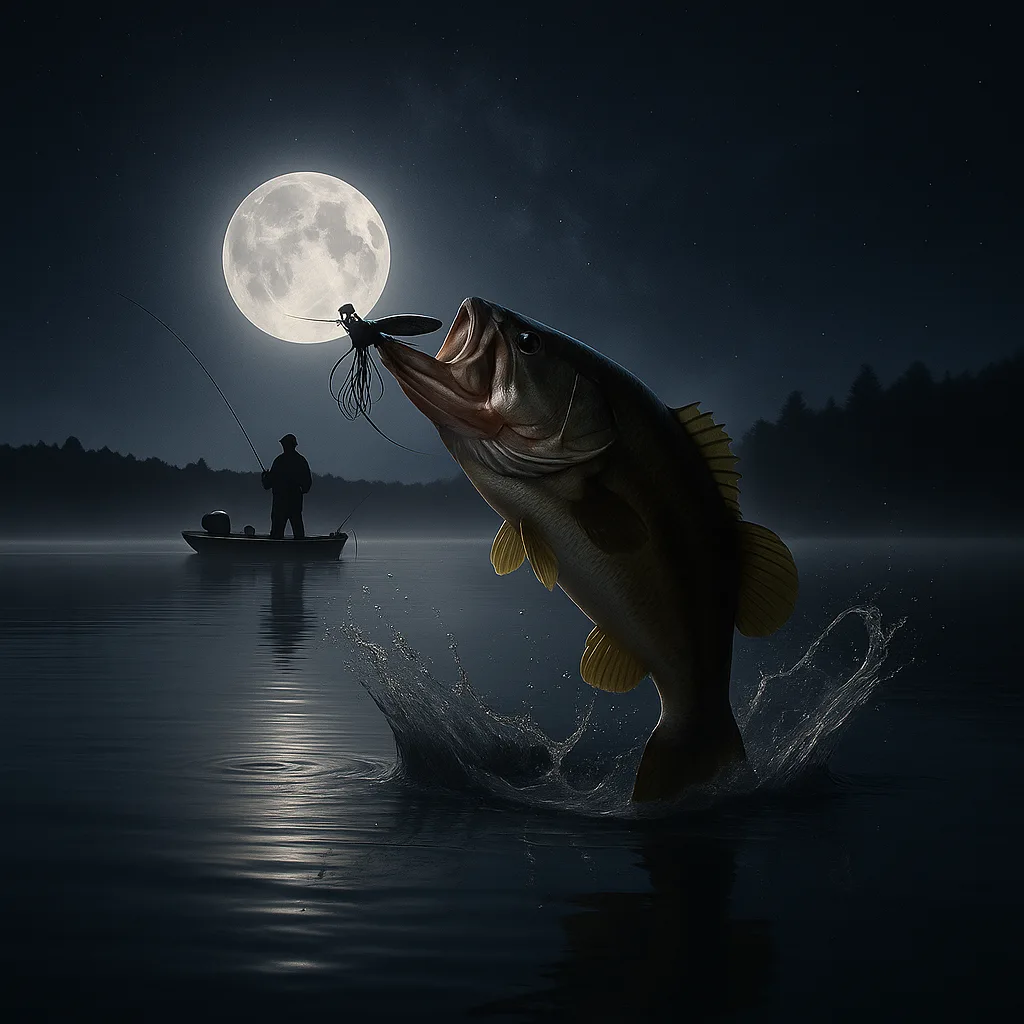
Full moon bass fishing can be incredible when the light is soft and stable. Moonlight helps bass track silhouettes from greater distances, making them more aggressive toward moving lures. Many experienced anglers plan their trips around three to five days before and after the full moon, when shallow flats, riprap banks, and creek mouths stay active well into the night.
New moon conditions — when it’s completely dark — favor vibration baits over visual ones. In low visibility, bass switch from sight to sound and strike based on vibration and pressure waves. Slow-rolling spinnerbaits or buzzing topwaters along shoreline cover often outfish brighter lures during the darkest nights.
Weather stability plays a huge role. A calm, clear night following several warm days is ideal, while a sudden cold front or pressure spike can shut the bite down entirely. When that happens, slowing down and switching to bottom-contact lures can make the difference. Downsizing your bait and focusing on precise control — similar to the finesse approach used in ultralight BFS fishing — often triggers bites when conditions get tough.
Key takeaway: The best time for night bass fishing is during warm, stable evenings with consistent temperatures and gentle moonlight. Focus on calm nights around the full moon, maintain steady retrieves, and you’ll see how aggressive big bass become once the sun disappears.
Best Lures and Colors for Night Bass Fishing (2025 Update)
At night, bass don’t see color the same way they do in daylight — they hunt by vibration, silhouette, and pressure changes. The best approach is to pick lures that stand out through movement and sound rather than brightness. In most cases, a dark profile bait creates a stronger outline against the sky, helping fish locate it faster even in murky water.
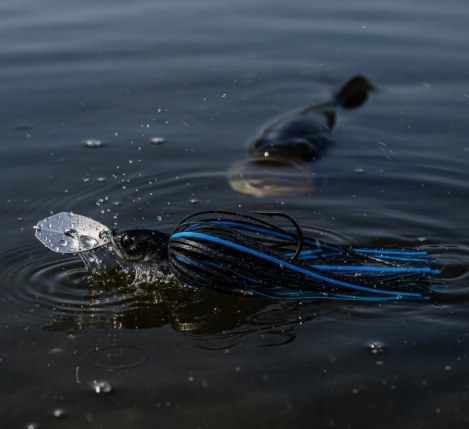
Buzzbaits and spinnerbaits dominate when there’s a steady breeze or ripples on the surface. The consistent thump and flash let bass track the bait purely through vibration. A classic black buzzbait like the Booyah Buzz 3/8 oz remains one of the top producers for shallow cover, while a Booyah Moontalker Spinner-Bait performs perfectly over submerged grass at night.
When the surface bite fades, switch to a slow-moving jig with a soft trailer. Dark combinations like black-blue or junebug imitate crawfish and stand out well under moonlight. Pair your jig with a sensitive setup and a strong fluorocarbon line — it sinks quietly, keeps contact on long casts, and helps detect light strikes in the dark.
Topwater poppers and walking baits still catch fish after dark, especially around docks and shallow points. Go for natural sounds and a slow cadence. Loud rattles often spook bass in calm conditions; soft plops and subtle surface ripples trigger more confident bites. To get the best casting control for night presentations, use a balanced setup with one of the best spinning rods — a sensitive tip helps detect strikes even when you can’t see the line move in the dark.
As for color, the general rule is simple: dark lures in dark water, lighter tones under bright moonlight. Black, blue, and purple silhouettes are unbeatable under the new moon, while silver or shad-pattern spinnerbaits perform well under full moon light. For stained lakes, red or chartreuse crankbaits help create contrast that triggers strikes even when vision is limited.
Key takeaway: Focus on movement, sound, and contrast. Whether you’re slow-rolling a spinnerbait over grass or working a buzzbait across the surface, it’s the rhythm and silhouette — not color — that trigger the night strike.
Where to Find Bass at Night (Lakes, Rivers & Ponds)
Finding where bass move after dark starts with understanding how they use structure, cover, and depth. Bass don’t wander randomly at night — they follow predictable routes from their daytime holding areas to shallow feeding zones. Once light fades, the same fish that stayed deep all afternoon can move into just a few feet of water, especially on lakes with long points, rocky transitions, and grass edges.
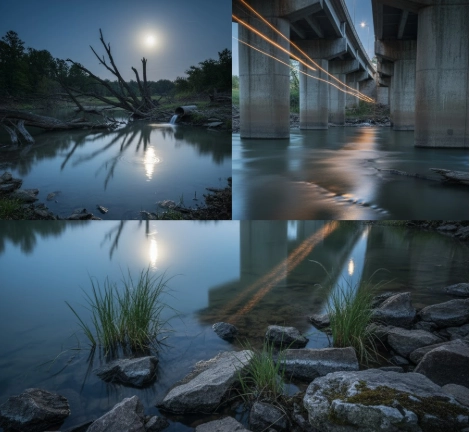
Lakes and reservoirs: On larger bodies of water, start near points, riprap, and creek mouths. These areas collect baitfish under low light and act as natural feeding lanes. Bass often hold on the first breakline off the bank, then move shallower as the moon rises. Casting parallel to the shore instead of directly at it keeps your bait in the strike zone longer — one of those small fishing techniques that separates consistent anglers from lucky ones.
Rivers: In current, bass position according to flow strength and cover. They often tuck behind wood, bridge pilings, or outside bends where current slows just enough to hold bait. Focus on areas with gentle current and overhead protection like shade lines or log jams. When you’re fishing from a boat, stay close to channel edges — not in the middle — and let your presentation drift naturally with the flow.
Ponds and small lakes: In smaller waters, oxygen levels drop faster at night, especially during hot months. Bass gather around inflows, drain pipes, and dam faces where fresh water keeps circulation steady. Submerged cover such as brush or fallen trees is prime; fish position tight to it until sunrise. Keep your approach quiet and make long casts — shallow fish are less tolerant of sudden noise when the water is calm and still.
Key takeaway: Bass follow the same highways every night — from deep structure to shallow feeding spots — but their comfort zones shrink after dark. Focus on transition areas with food and shade, and always pay attention to water movement. Whether you’re fishing big lakes or small ponds, precision and patience catch more fish than covering water blindly.
Essential Gear for Night Bass Fishing (Reels, Lights & Safety)
Night fishing challenges your awareness — you can’t rely on sight alone. The right gear makes all the difference between a calm, focused session and a frustrating one. Every serious angler who enjoys bass fishing after dark should focus on three things: control, visibility, and safety.
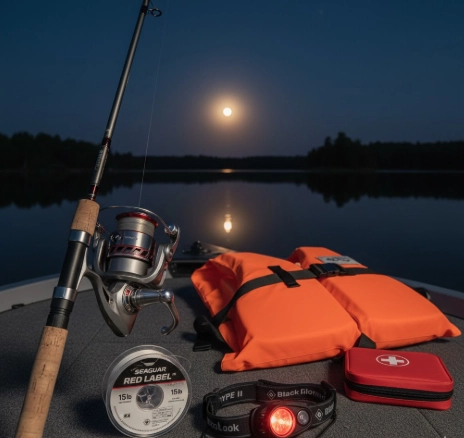
Reels and rods: Smooth drag and sensitivity matter more than ever when you can’t see your line. A quality spinning setup helps detect light bites and prevents line twist during slow retrieves. Pair it with a reliable reel such as the Shimano Sedona FI, and you’ll have the control and precision needed for working lures in the dark.
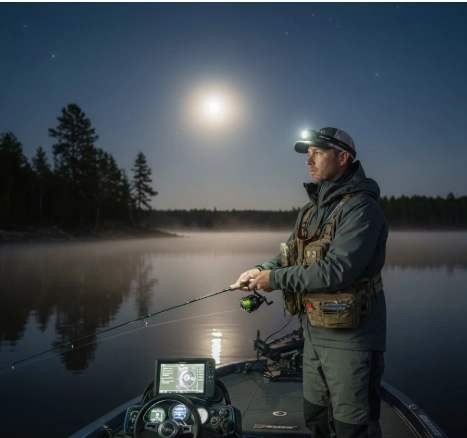
Headlamps and lighting: Your eyes adjust quickly to darkness, but you still need targeted light for tying knots or changing lures. A waterproof headlamp like the Black Diamond Spot 400 Headlamp provides adjustable brightness and long battery life without spooking fish. Red-light mode keeps your night vision intact — a simple feature that saves time and frustration.
Line and visibility: At night, sensitivity is everything. A strong, low-stretch line like Seaguar Red Label Fluorocarbon transmits vibration even in light wind or current, helping you feel subtle strikes. Combine it with darker lures and maintain steady tension to improve hookup ratios when you can’t visually track your bait.
Safety and organization: Always keep a clear deck and minimal gear clutter. Bring a small waterproof bag for essentials and a floating net if you’re fishing from a boat or kayak. PFDs and a compact first-aid kit should be mandatory for all-night sessions. For shoreline anglers, reflective tape on gear and rods helps avoid tangled lines and misplaced setups in low light.
Key takeaway: The best gear for night bass fishing blends sensitivity, visibility, and safety. Choose quiet reels, soft light sources, and strong lines that give feedback even when you can’t see the strike. When the right tools disappear into the background, you can focus entirely on what matters — feeling that heavy thump in the dark.
Best Night Fishing Lures for Bass (Top Baits & Retrieval Tips 2025)
At night, bass rely more on vibration, sound, and silhouette than color. The goal is to help them find your lure through feel and noise, not sight. These three proven night baits deliver consistent strikes when visibility is low.
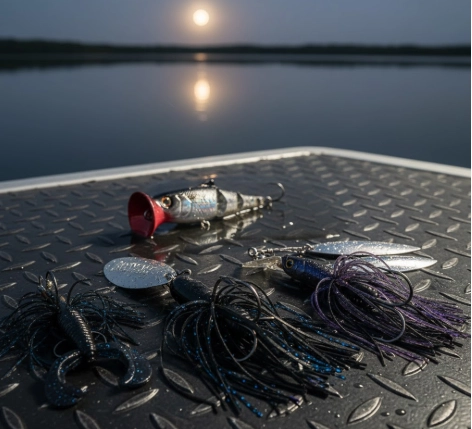
1. Heddon Lucky 13 Topwater Lure — A true classic that still dominates night fishing. Its wide, noisy “plop” and surface roll attract big bass from a distance. Fish it slowly near structure or across calm coves. Heddon Lucky 13 Topwater Lure.
2. Booyah Buzz 3/8 oz Buzzbait — When you need vibration and sound, this buzzbait is unbeatable. Run it along grass lines or shallow flats right after sunset. The strong metal blade creates turbulence and a steady hum that helps bass home in through vibration. Booyah Buzz 3/8 oz Buzzbait.
3. Strike King Red Eye Shad — Ideal for covering water fast when fish are active. The internal rattle system and tight wobble make it easy to track by vibration alone. Cast beyond key structure and let it sink before retrieving with a steady lift-and-fall motion. Strike King Red Eye Shad.
Retrieval Tips: At night, less is more. Slow down your retrieve, pause often, and let the bait work naturally. For topwater lures, keep the cadence steady — bass often strike right after the pause. For vibration baits, maintain bottom contact and let the rattle do the work.
Key takeaway: These three baits — Lucky 13, Booyah Buzzbait, and Red Eye Shad — combine sound, flash, and vibration, making them perfect tools for triggering reaction bites in total darkness. Use them strategically around structure and transition zones, and you’ll catch fish long after sunset.
Night Fishing Safety & First Aid Preparedness
Even the calmest night on the water can turn unpredictable. Visibility is low, balance shifts with every wave, and small mistakes can become real dangers. Every angler planning a night session should treat safety as part of the gear list — not an afterthought.
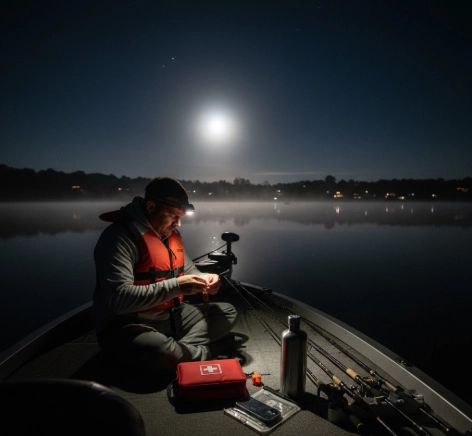
Personal safety gear: Always wear a life jacket (PFD) — even in calm lakes. Keep a whistle, waterproof phone case, and small headlamp within reach. If you’re fishing from a kayak or small boat, clip your PFD tether to your light so rescuers can spot you if you fall overboard.
First aid readiness: A compact first aid kit can make the difference in an emergency. Include disinfectant wipes, bandages, pain relievers, tweezers, and antihistamines for bug bites or allergic reactions. Keep it in a sealed dry bag and store it in the same spot every trip so you can find it quickly in the dark. For verified guidelines on basic emergency response, visit American Red Cross – First Aid Kit Essentials.
Weather and navigation: Before heading out, check both radar and wind forecasts. Avoid high-wind nights and fast-moving fronts. Use shoreline markers, GPS, or even small reflective stickers to retrace your route. Always let someone know your fishing location and estimated return time.
Lighting discipline: Maintain two separate light sources — one for navigation, one for working. Red or amber modes preserve night vision and attract fewer insects. Never shine bright beams directly into the water; sudden light changes can spook bass and cause disorientation in fog or mist.
Hydration and fatigue: Anglers often underestimate how dehydration and tiredness hit at night. Bring more water than you think you need and snack regularly to stay alert. If your concentration drops or your balance feels off, anchor up and take a break before continuing.
Key takeaway: The goal of night fishing isn’t just catching fish — it’s making it back safely. Preparedness, calm movement, and awareness of your surroundings keep the experience rewarding. No trophy bass is worth risking your safety for.
Final Thoughts on Night Bass Fishing 2025
Night bass fishing isn’t just about catching fish when everyone else is asleep — it’s about learning how to read the water by instinct. The stillness of the night sharpens your focus. You begin to rely less on sight and more on sound, feel, and rhythm. Every cast teaches you something about patience, precision, and timing. Once you experience the strike of a largemouth under a full moon, you’ll understand why so many anglers call night fishing the most honest form of the sport.
The key to success after dark is control: control of light, noise, and movement. Keep your gear organized, use reliable lures that produce vibration and sound, and let the fish find you. Combine that with steady awareness of your surroundings, and night fishing becomes both safer and more rewarding. Preparation turns risk into opportunity, and awareness turns silence into confidence.
Whether you fish from the bank, a kayak, or a bass boat, remember this — the best anglers aren’t the loudest or the fastest; they’re the ones who adapt. The darkness doesn’t hide your mistakes; it amplifies them. Respect the water, stay patient, and every night on the lake will teach you more than a dozen days in the sun.