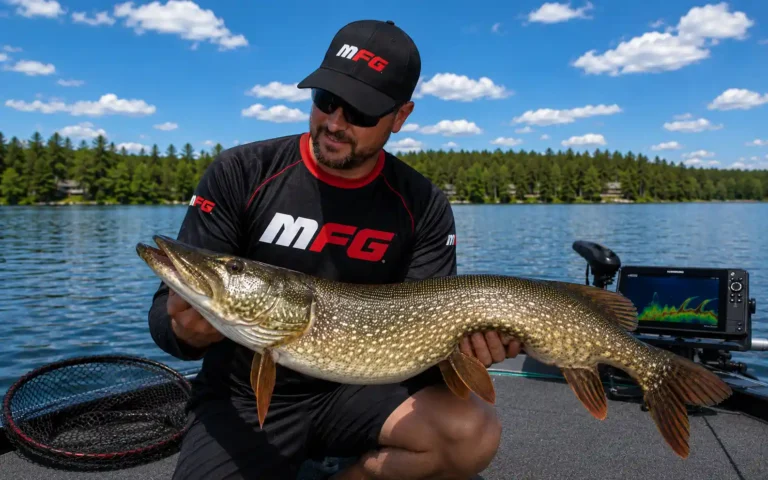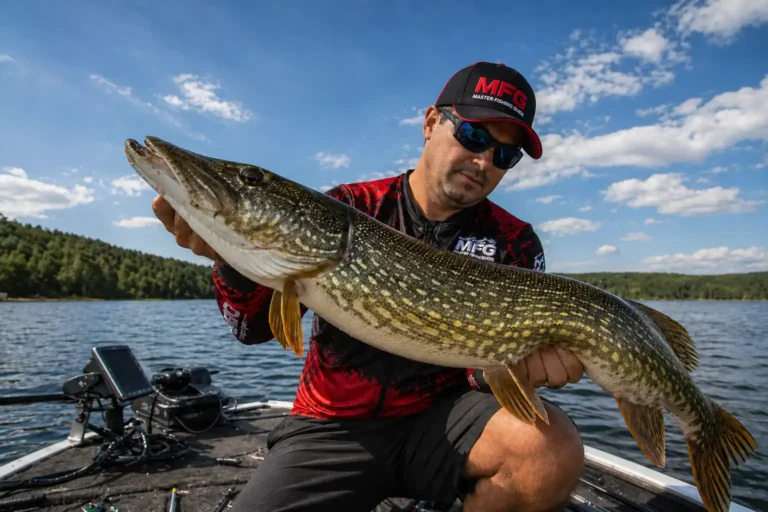


Summer Pike Fishing from Shore: Bank Fishing Tactics That Actually Work in Hot Water
Summer pike fishing from shore is one of those situations where most anglers set themselves up to fail before the first cast even lands.
They show up at 10 AM, walk straight to the same reed edge that produced fish in April, and start throwing the same lures they used all spring. Two hours later — nothing. The conclusion? Pike don’t bite from shore in summer.
That’s not what’s happening.
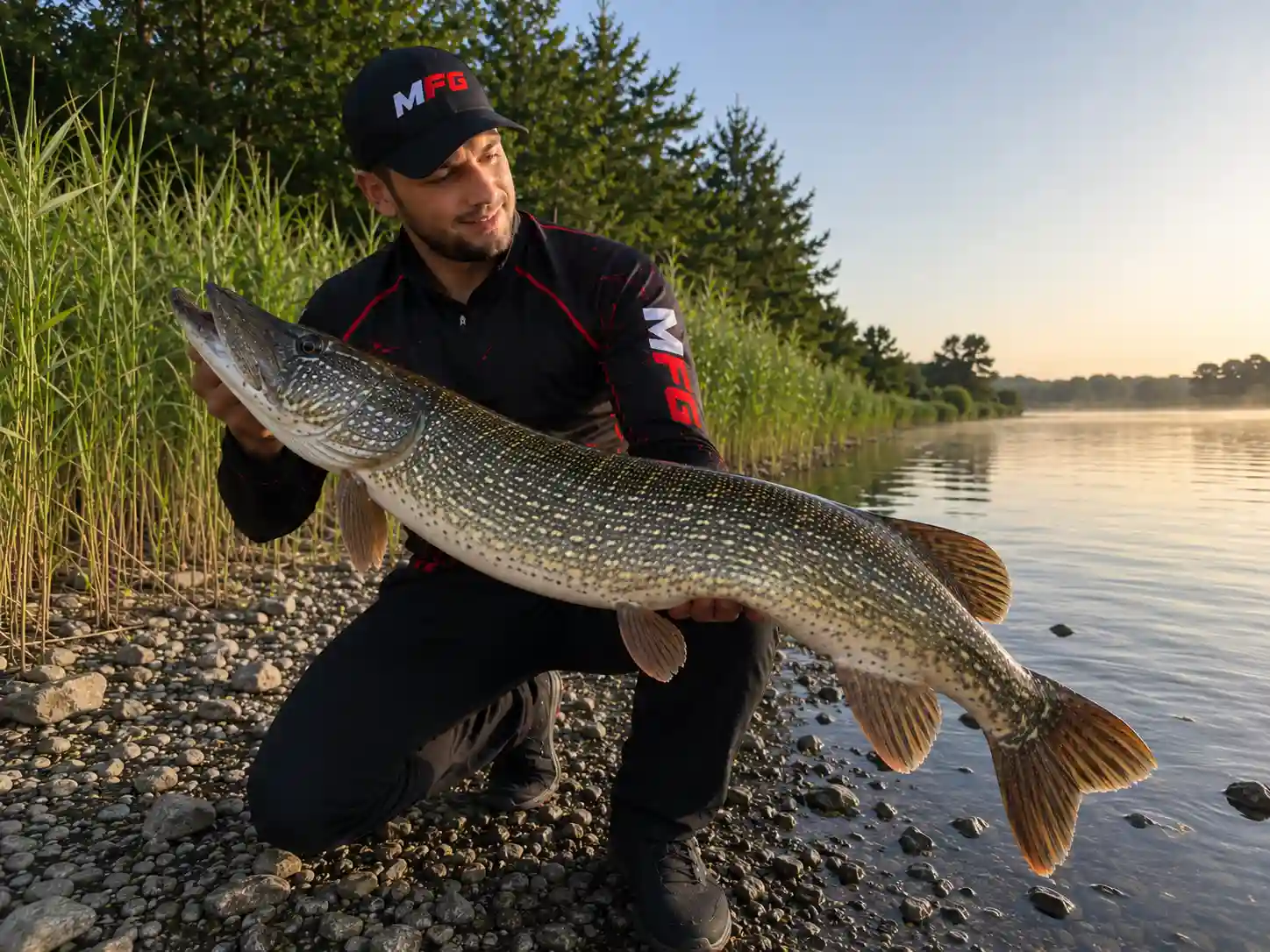
We’ve fished the same bank positions in July and August that completely shut down during midday — and returned to those exact spots at 5:30 AM the next morning to find fish actively pushing into the shallows. The pike were there the entire time. The window just wasn’t open.
Summer pike fishing from shore works. But it runs on completely different rules than spring. The fish have moved within the same structure, the feeding windows have compressed — and the biggest challenge isn’t finding pike. It’s finding pike that are still within casting range of the bank.
Boat anglers can follow fish as they move deeper, reposition for a better angle, and chase activity across the system. Shore anglers can’t. You work with the water in front of you — which means understanding exactly where summer pike position within reach of the bank is the difference between a productive session and two hours of dead water.
In this article, we break down exactly where summer pike hold within casting range of shore anglers, when those short feeding windows open, and how to fish them without spooking fish that have had an entire season to get educated.
Why Summer Shore Fishing Is Different from Spring
The biggest mistake we see shore anglers make every summer is simple — they fish spring spots at summer hours and expect spring results.
Same reed edge. Same lure. Same bank position. But July is not April, and the water in front of you is a completely different system than it was three months ago.
The MFG team has logged enough summer sessions from the bank to know exactly where this breaks down. In spring, shallow water was the warmest, most oxygen-rich zone on the lake — pike moved toward it naturally. By mid-July, that same shallow zone can read 25–27°C (77–81°F) by 10 AM. Oxygen drops. Baitfish scatter. And pike that were sitting in 0.5 meters of water in April are now holding in 3–5 meters — just off the same edge, but completely out of reach for a standard bank presentation.
The fish didn’t abandon the structure. They moved within it. Deeper, tighter to cover, and feeding only during windows so short that most shore anglers never realize they opened.
Understanding exactly how summer repositions pike — and which bank structures still keep fish within casting range — is what separates productive summer sessions from dead ones. We break that down fully in where to find pike in summer.
| Tactic | Best Time | Why It Works |
|---|---|---|
| Timing the Window | 45–60 min before and after sunrise | Surface temperatures are at their daily low and pike push shallow to feed |
| Deep-Access Points | First light to early sun | Pike hold in comfortable depth while staying within casting range |
| Shaded Banks First | Before direct sunlight hits them | Cooler water extends shallow feeding activity longer into the morning |
| Stealth Approach | Every single spot | Pressured summer pike detect shoreline movement before the lure arrives |
| Reading the Bank | Before the first cast | Baitfish, weed condition and subtle surface movement reveal active water |
When to Fish: The Shore Timing Windows That Actually Produce
This is the part most shore anglers never figure out — and it’s why summer feels so inconsistent from the bank.
It’s not the spot. It’s not the lure. It’s the window.
The MFG team has tracked summer feeding activity from the bank across multiple seasons, and one pattern repeats every time: the same stretch of water that produces nothing for three hours can explode with activity in a 20-minute window — then go completely dead again. Same spot. Same lure. Completely different fish behavior.
In summer, summer pike fishing from shore only works consistently if you build your session around these windows instead of hoping they find you.
First Light: The Only Window You Can Count On
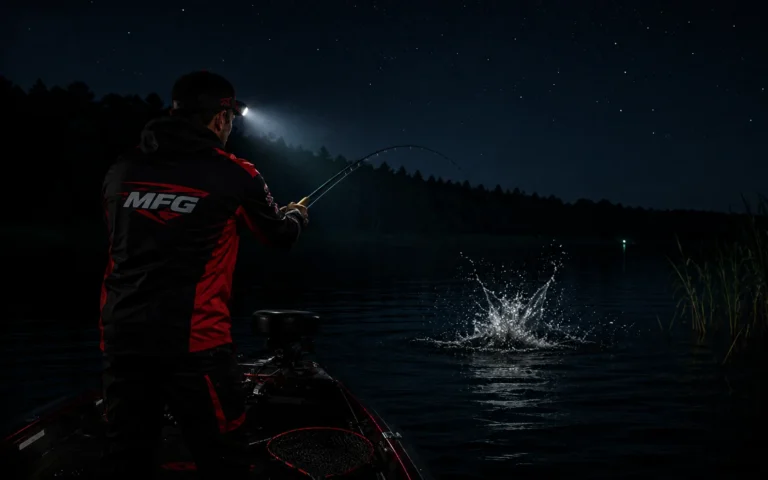
The most reliable bank fishing window of the entire summer is the hour before and after sunrise. Surface temperatures are at their daily low, oxygen near the surface is at its most stable, and baitfish push into shallow edges overnight. Pike follow them.
On one mid-July session, we arrived at a reed-edged bay at 5:20 AM. Surface temperature read 19°C (66°F) — nearly 6 degrees cooler than the same spot at noon the day before. Within the first 40 minutes we had three takes, two landed. By 7:15 AM, when the sun cleared the treeline and surface temperature started climbing, the same water went completely silent.
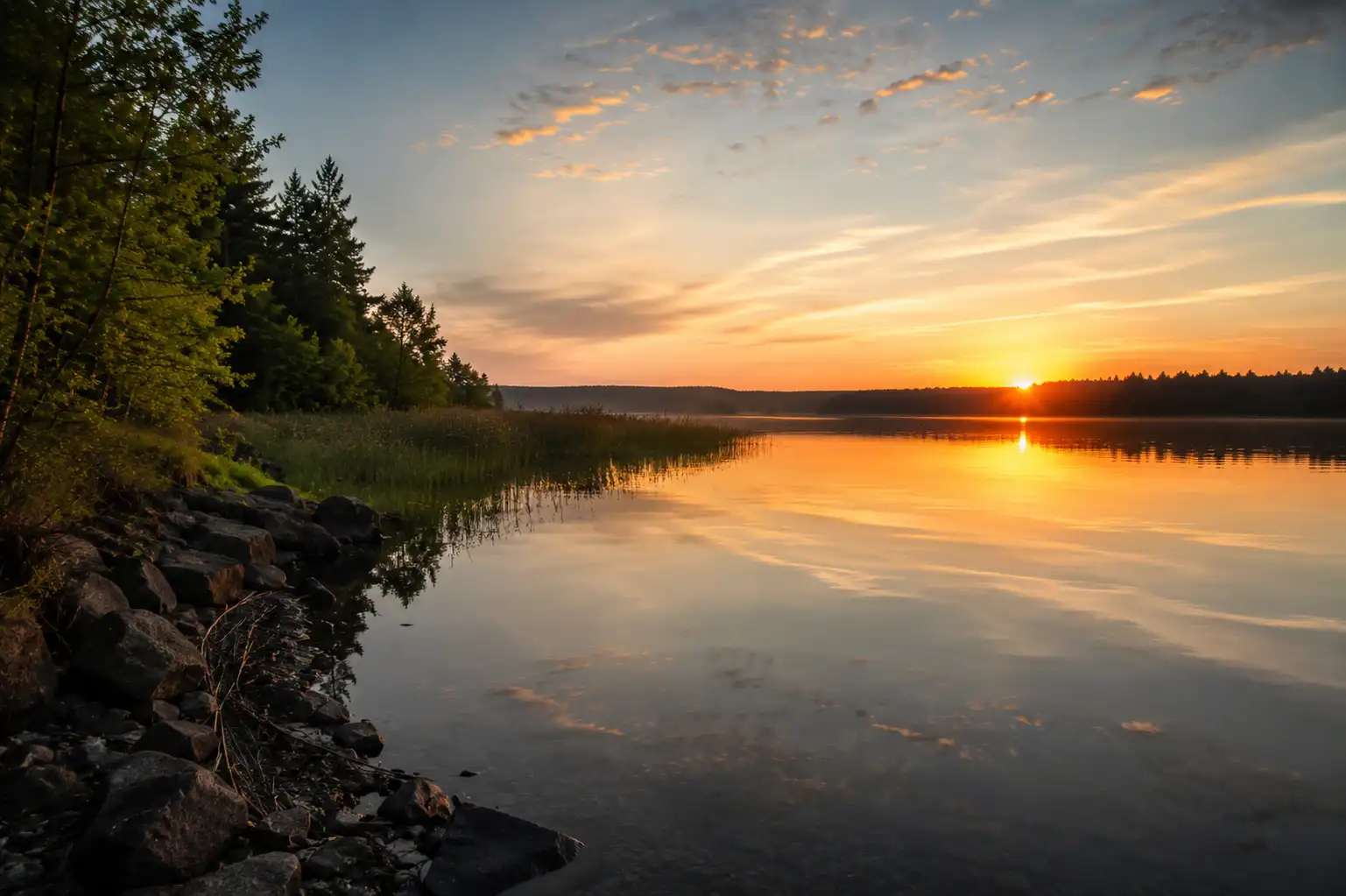
That window was 55 minutes. Outside of it, the spot was dead.
Be on the bank before first light. Make your first cast before the sun clears the horizon. The fish that will feed are already moving — your job is to be positioned when they arrive.
Evening: Shorter, Less Predictable — But Worth It
As light fades and surface temperatures begin dropping, pike make a second shallow push. This window typically opens 30–45 minutes before dark and can extend past sunset on overcast or windy evenings. It’s shorter and harder to time than the morning window — but on pressured waters where morning banks are crowded, evening is often your best realistic option.
Overcast Days Change Everything
Heavy cloud cover is the one condition that genuinely extends summer shore fishing beyond narrow windows. Reduced light penetration keeps surface temperatures more stable, and pike can remain active in shallow bank structure well into midmorning — sometimes longer. On a fully overcast summer day, we’ve had consistent bank action until 10 AM from spots that would be completely dead by 7:30 on a clear morning.
These are the days to fish longer and cover more bank. Don’t waste them.
For the full breakdown of what drives these windows — light, pressure, oxygen, temperature — we break it down fully in best time to catch pike in summer.
Where Summer Pike Hold Within Casting Range of the Bank
Most shore anglers in summer make the same read — they look for structure, find a good-looking reed edge or weed flat, and start casting. The structure is right. The depth is wrong.
In summer, it’s not about finding pike. It’s about finding pike that are still reachable from the bank.
That distinction matters more than anything else from shore. A fish holding in 6 meters of open water might as well not exist for a bank angler. But that same fish at 3–4 meters, tight to a drop-off that starts 15 meters from the bank — that’s a completely different situation.
Deep-Access Points
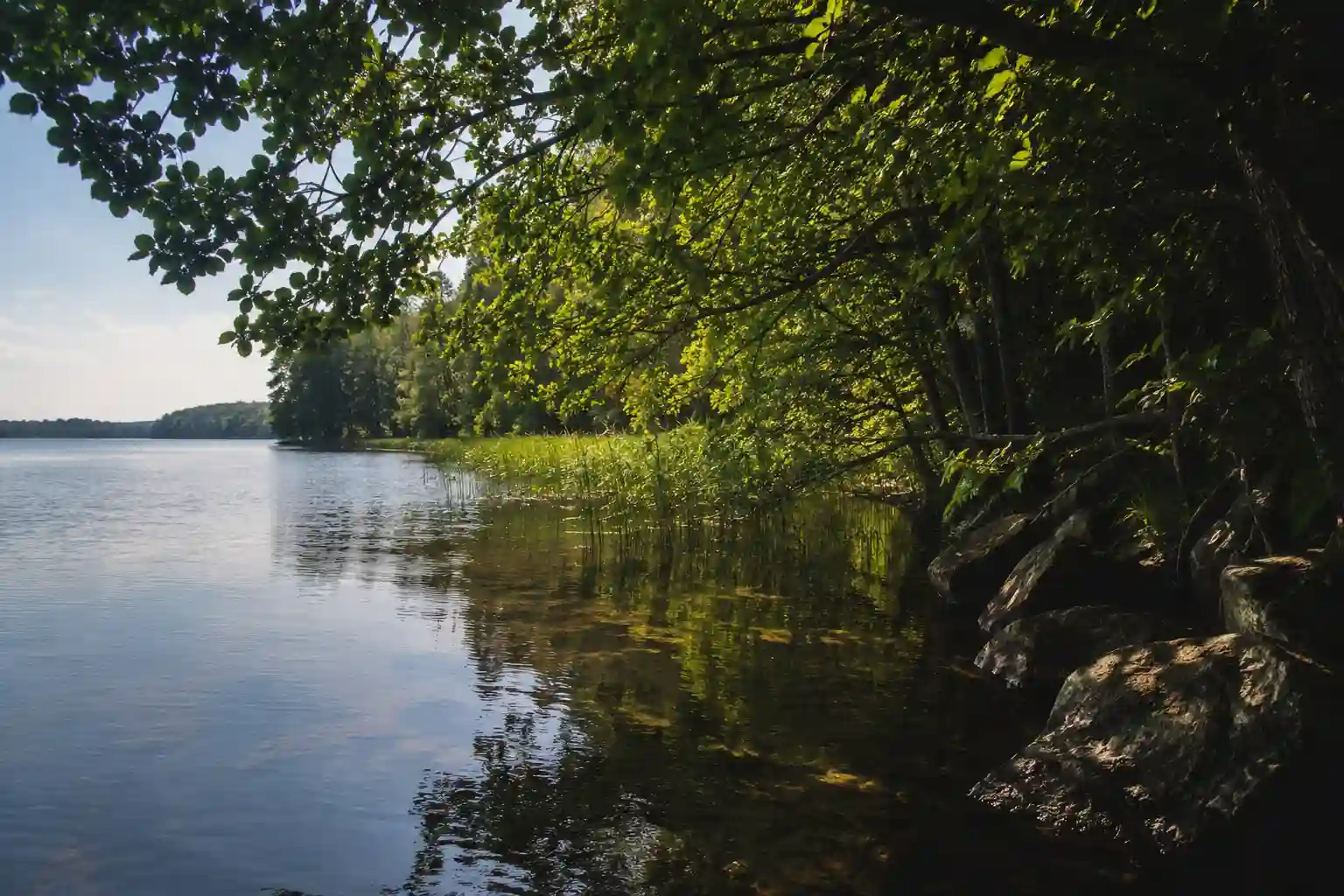
The single most valuable bank position in summer is anywhere deep water comes close to shore. Steep rocky banks, river bends where the channel cuts tight to the edge, points that drop sharply into 4–5 meters within a single cast — these are spots where pike can hold in comfortable depth and still be within reach.
On one late-July session, we spent two hours working a shallow bay that looked perfect — clean weed edges, good cover, textbook structure. Nothing. We moved 200 meters down the bank to a rocky point where the depth dropped to 4 meters within 12 meters of shore. First cast, first fish. The pike were there the entire morning — just not where we were fishing.
Shaded Banks
Tree-lined shores, overhanging vegetation, north and east-facing banks — anywhere that stays out of direct sun longer than surrounding stretches. In midsummer, shaded water can run 2–3°C cooler than an exposed bank just 100 meters away. That difference keeps pike in shallow, bank-accessible zones for an extra hour or more after a sunny bank has already pushed fish deep.
Arrive at shaded banks first. Fish them hard during the morning window before the sun reaches them — then move.
Weed Edges With a Drop
Not all weed edges hold summer pike from shore — only the ones where the vegetation runs along a depth transition. A weed edge in 1 meter of flat water is a spring spot. A weed edge where the outside drops to 3–4 meters is a summer spot.
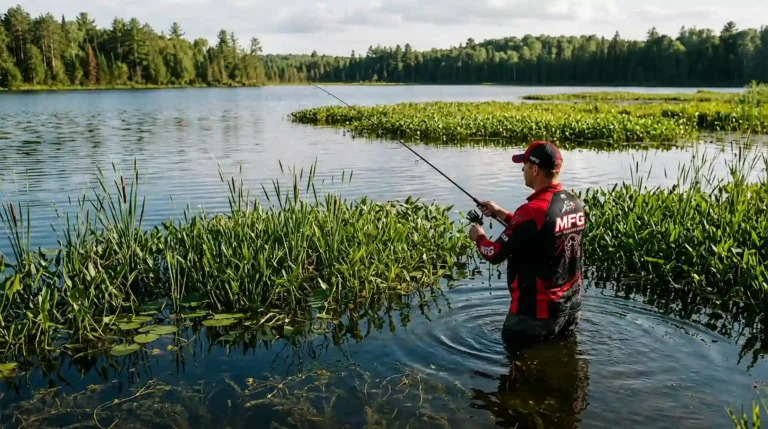
From the bank, cast parallel to that outside edge — not into the weeds, not into open water, but along the exact line where the weed wall meets the drop. That seam is where summer pike sit. It gives them shade, cover, and immediate access to deeper water without committing to open exposure.
Current Banks in Rivers and Inflows
Moving water carries more oxygen than still water in summer — and pike know it. Any bank position near a river current, a tributary inflow, or even wind-driven surface movement that concentrates oxygen is worth targeting. Inside bends with slower water behind them, points that break current, areas where a small stream enters a lake — all of these create conditions that keep pike active longer than surrounding dead water.
Understanding exactly how pike use these structures at different depths throughout the day is covered in detail in how deep are pike in summer — the depth patterns there apply directly to reading which bank positions will still hold fish during peak heat.
How to Approach Summer Bank Spots Without Spooking Fish
Summer pike in shallow water are not the same fish they were in April. They’ve had months of boat traffic, lure presentations, and bank pressure to get educated. A careless approach kills the spot before your lure hits the water.
We’ve watched this happen more times than we can count — an angler walks straight to the edge, lobs a cast into the shallows, and wonders why nothing happens. The fish saw him coming from 10 meters away.
Stay Back Longer Than Feels Necessary
In spring, 2–3 meters back from the edge was enough. In summer, add to that. On calm, clear mornings when light penetrates deep and the surface is flat, pike in 1 meter of water detect bank movement from surprising distances. Start your first cast from 4–5 meters back, work the near water completely, then move closer.
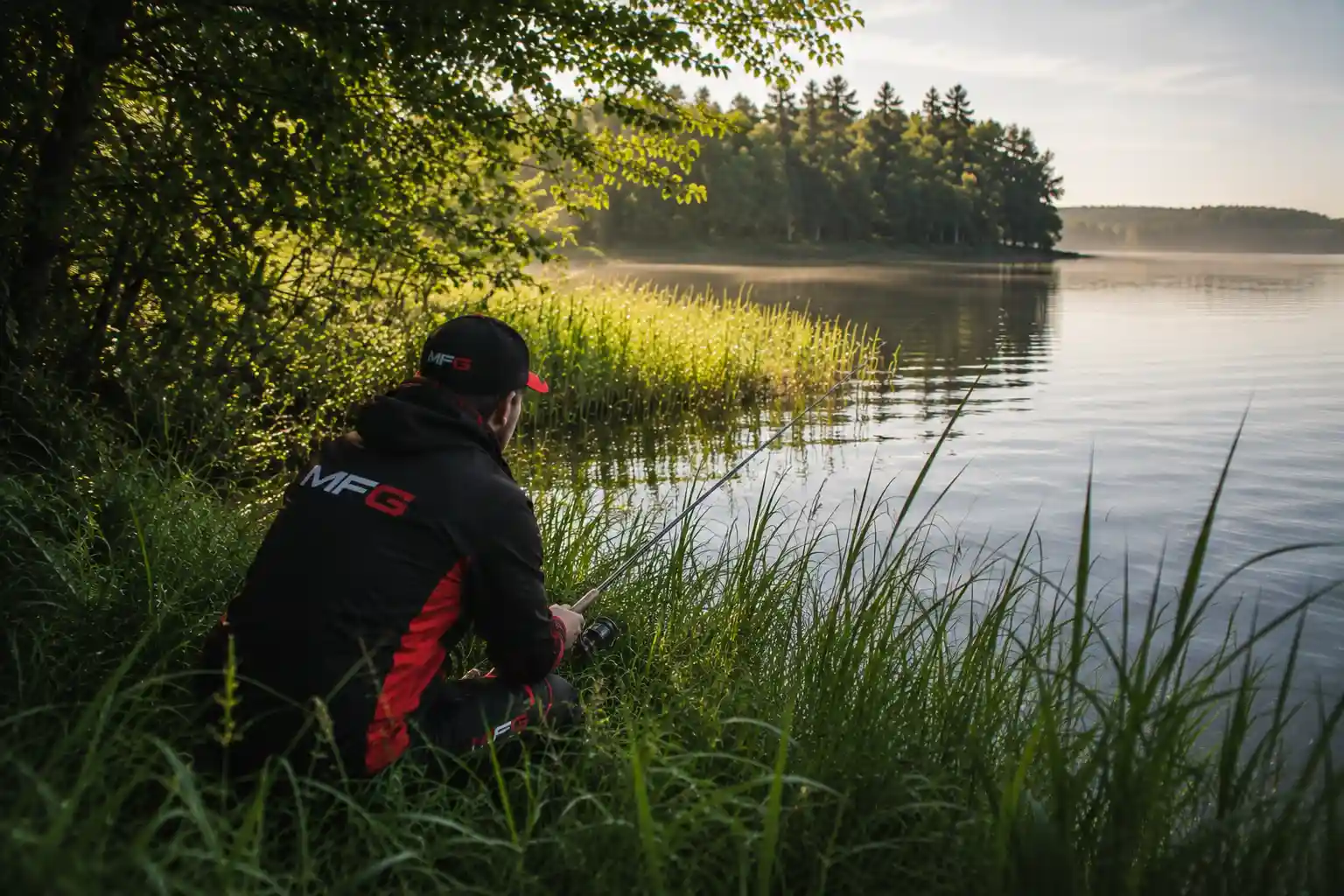
It feels excessive until the day you do it and get a strike on your first cast — from water you would have walked straight through.
Control Your Silhouette
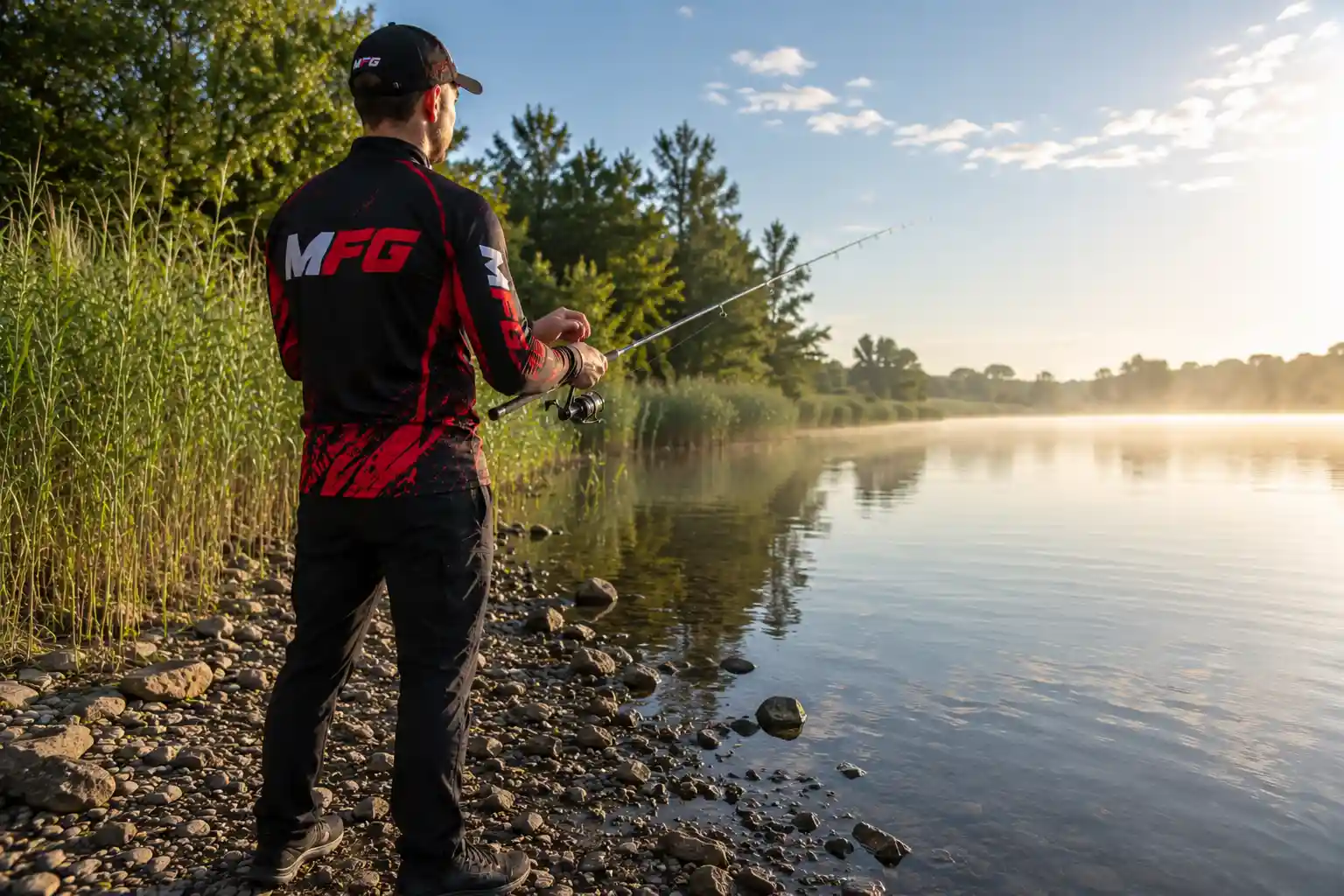
Early morning and evening light creates long shadows, and your outline against a bright sky is visible from below. Keep vegetation, trees, or any background cover behind you. On open exposed banks, crouch for your first several casts into the shallow zone before standing upright.
Walk Slow, Walk Parallel
Vibration travels through soft ground into the water. Heavy footsteps on a clay or muddy bank disturb fish that are already in a light, alert state after a short morning feeding push. Move deliberately, quietly, and always parallel to the bank — never straight toward the structure you’re targeting. Coming in from the side keeps your approach path out of the water you’re about to fish.
Shadow Control
One detail most anglers ignore completely. If the sun is behind you, your shadow projects directly into the strike zone — often before your lure arrives. On summer mornings with low sun angles, that shadow can extend 4–5 meters into the water. Approach from an angle where your shadow stays off to the side, not ahead of you.
None of this is complicated. But skipping any one of these steps on a pressured summer bank is usually enough to turn a productive spot into a dead one. For why summer pike are this alert and what triggers them to feed despite it, our why pike are not biting in summer explains the behavioral side in detail.
Summer Shore Setup: Rods, Reels and Lures That Work from the Bank
From the bank in summer, your setup matters more than most anglers think. You can’t reposition for a better angle, you can’t follow a fish that drops deeper, and you can’t afford to lose a good fish because your drag stuck or your rod didn’t have enough backbone to turn a pike away from a weed clump.
Get the setup right once — then focus entirely on timing and positioning.
Rod
For most summer bank situations — topwater along reed edges, weedless spoons through lily pads, swimbaits over weed tops — a medium-heavy spinning rod in the 7’–7’6″ range is the right tool. Long enough to reach structure from a distance, stiff enough to drive hooks on a hard strike, but with enough tip sensitivity to feel a subtle take in warm water when pike aren’t hitting aggressively.
Our full breakdown of what works across all summer conditions is in best spinning rods for pike. If you fish heavier glide baits or large swimbaits from the bank, a baitcasting setup gives you more precise control — those picks are in best baitcasting rods for pike.
Reel
Summer shore fishing puts real demands on a reel — long sessions, constant casting, heat. A 4000-size spinning reel with a smooth drag and reliable retrieve is the standard for pike from the bank. You need a drag that releases instantly on a hard run without sticking, and a retrieve smooth enough to maintain slow, consistent speeds when fish are being selective.
Reels that perform well in these conditions are in best spinning reels for pike. For a baitcasting setup, our picks are in best baitcasting reels for pike.
Lures
Four lures cover almost every summer bank situation:
- Topwater — for the morning window along reed and weed edges
- Weedless spoon — for heavy vegetation that destroys standard treble hook lures
- Soft swimbait — for pressured fish that refuse harder presentations
- Spinnerbait — for covering water quickly from a fixed bank position
Which specific models we use, retrieve speeds, and color selection for summer conditions are all in best summer pike lures.
How to Read the Bank in Summer (Before Your First Cast)
The best shore anglers don’t start fishing when they arrive at the water. They start reading it.
Stand back, stay quiet, and watch for two to three minutes before you do anything. In summer, the water tells you more than most anglers notice — if you’re paying attention.
Baitfish Position
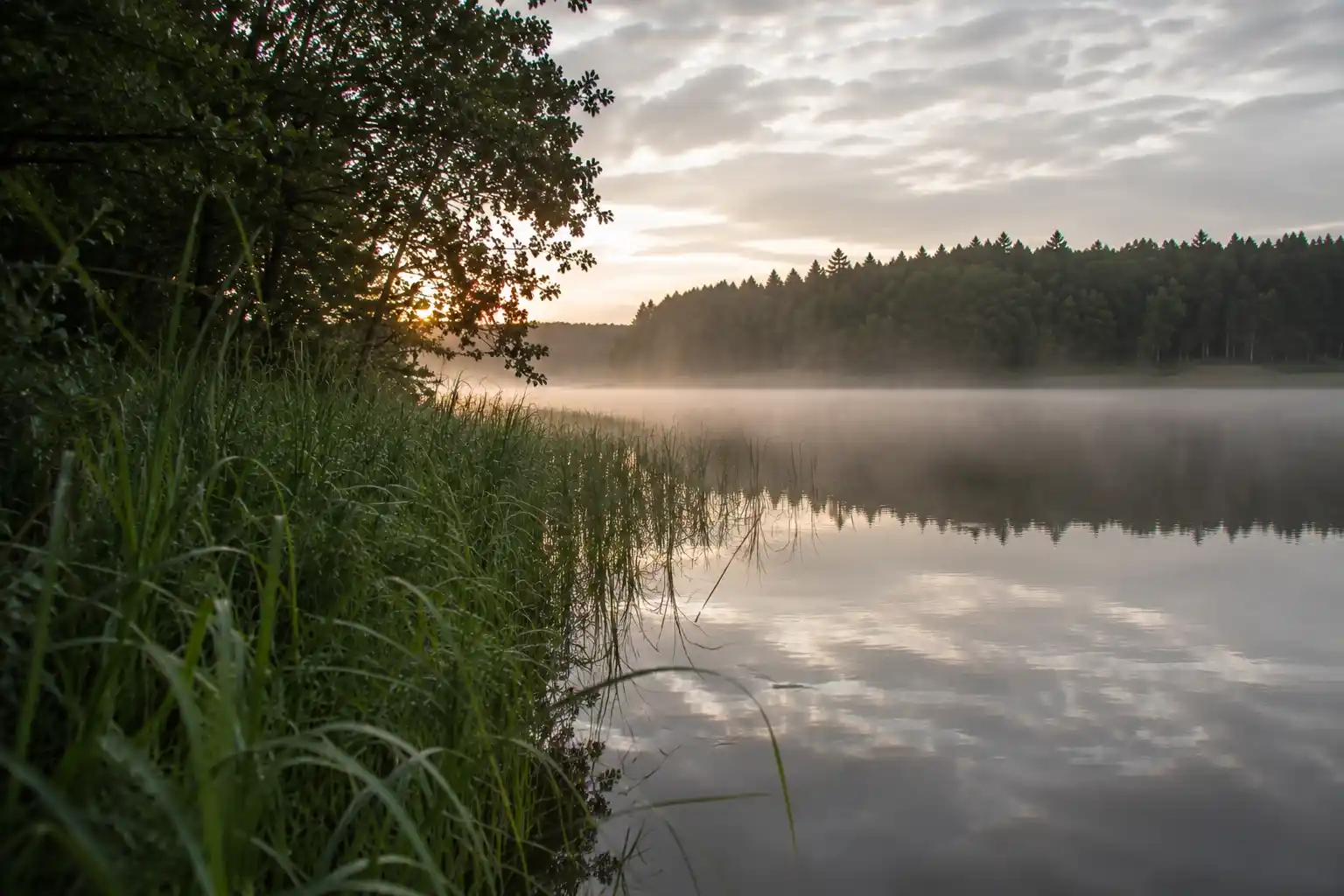
Small roach, perch fry, or minnows flickering near the surface at first light are the clearest signal that the zone is active. If baitfish are pushed tight to a reed edge or scattered over a weed flat, pike are nearby. No baitfish activity in a spot that looks structurally perfect is usually a sign to keep moving.
Don’t cast into a zone that shows no life. Find where the food is first — the pike won’t be far.
Surface Disturbance
A subtle bow wave along a reed bed. A single ripple moving against the wind. A brief flash just below the surface near a weed edge. These are pike — moving, repositioning, or following bait. Easy to miss if you’re focused on rigging up instead of watching the water.
We’ve arrived at spots, seen a single bow wave along the near reed edge, and had a fish on the first cast. That signal was worth more than an hour of blind casting.
Weed Condition
Dense, dark green surface vegetation holds cooler water underneath than sparse or yellowing weed. In summer, the darkest, densest weed patches are often the coolest micro-zones along a shore — and pike that remain shallow during heat tuck directly alongside this vegetation. A yellowing or thinning weed edge in July is a sign the area has warmed through. Follow the dark green.
Bird Activity
Herons standing motionless at a reed edge, terns diving repeatedly over a shallow flat, cormorants working a specific zone — all pointing to concentrated baitfish. Birds have already done the search for you. Set up where they’re working, not where the bank looks convenient.
Combine two or three of these signals in one spot — baitfish present, surface movement, dense weed — and you’re not guessing anymore. You’re fishing water that’s already showing you it’s alive.
Summer Pike Fishing from Shore: What Actually Makes the Difference
Summer shore fishing doesn’t fail because the fish aren’t there. It fails because most anglers fish the wrong depth at the wrong time — and approach the water in a way that guarantees the fish they’re targeting already knew they were coming.
The system is simple once you see it. Pike haven’t left your bank — they’ve repositioned within it. The same structure that held fish in spring still holds fish in summer, just deeper, tighter to cover, and on a feeding schedule that runs in windows most anglers sleep through.
Show up before first light. Read the water before you cast. Target the drop, not the flat. Stay back, stay low, stay quiet. Those four things will put you ahead of 90% of the anglers fishing the same bank.
What makes summer shore fishing genuinely interesting is that the fish are behaviorally predictable once you understand what’s driving them. Research from the University of Alaska Fairbanks College of Fisheries and Ocean Sciences confirms that pike feeding activity is directly tied to water temperature shifts — the same thermal triggers that control when your morning window opens and closes. The biology doesn’t change. The window just gets shorter.
Work within it, and summer pike fishing from shore stops feeling like a gamble — and starts feeling like a system.
Summer Pike Fishing from Shore: FAQ
Can you catch pike from shore in summer?
Yes — but consistently only during specific windows. First light and last light are the most reliable times when pike push into bank-accessible water. Midday shore fishing in summer is largely unproductive unless conditions are heavily overcast or unusually stable.
What is the best time for summer pike fishing from shore?
The first 45–60 minutes of daylight is the most productive bank window. Pike push shallow during low light and cooler overnight surface temperatures. Be on the bank before sunrise — not after. Evening is a secondary window but shorter and less predictable.
Where do summer pike hold that shore anglers can reach?
Deep-access points where deeper water comes close to the bank, shaded tree-lined shores, weed edges with an adjacent drop to 3–4 meters, and current-facing river banks. Flat shallow water that produced in spring is mostly dead from shore in summer.
What lures work best for summer pike fishing from shore?
Topwater during the morning window, weedless spoons through heavy vegetation, soft swimbaits for pressured fish, and spinnerbaits for covering water from a fixed position.
Why do pike stop biting from shore during the day in summer?
Surface temperatures rise, oxygen near the surface drops, and the energy cost of feeding outweighs the benefit. Pike retreat to deeper water and only return to bank-accessible zones when conditions shift — typically at first and last light.
Is summer shore fishing different from spring shore fishing?
Completely. In spring, shallow water was the warmest zone and pike moved toward the bank. In summer, that same shallow zone becomes the least comfortable place for a pike to be. Same structure, completely different target depth and timing.