

Best Summer Pike Lures (2026): 7 Tested Picks for Hot Water, Weeds & Deep Edges
Best summer pike lures are not about throwing the loudest bait in the tackle box. Summer pike fishing separates anglers who understand heat from anglers who just show up and cast.
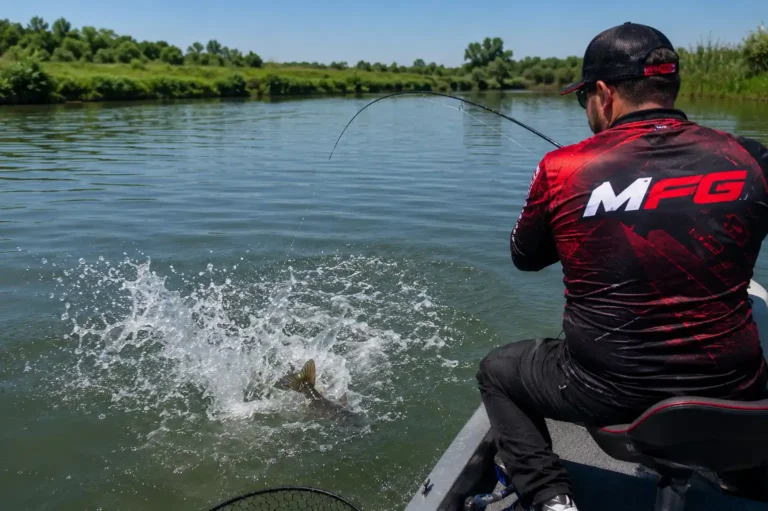
When water climbs above 20°C (68°F), everything changes. In stable summer heat, pike often feed in bursts so short that one wrong retrieve angle can kill the entire window. They pull off shallow flats, compress into specific depth bands, tuck into weed edges, and feed in windows so short that the wrong lure at the wrong moment means nothing.
At Master Fishing Guide, we’ve logged enough summer sessions across lakes, rivers, and reservoirs to know one thing with certainty: lure choice in summer is not about what looks good in the package. It’s about what works when the water is warm, the fish are pressured, and the feeding window is closing fast.
As an Amazon Associate, we earn from qualifying purchases — no cost to you. That’s how we keep this site running. Read more ›
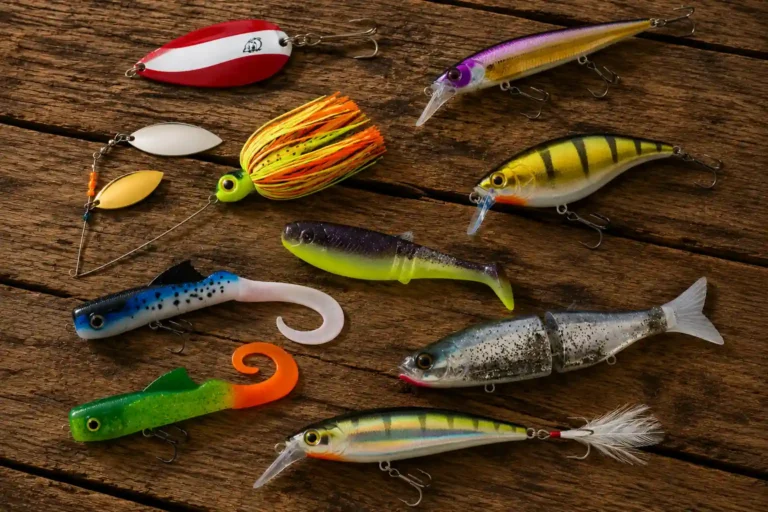
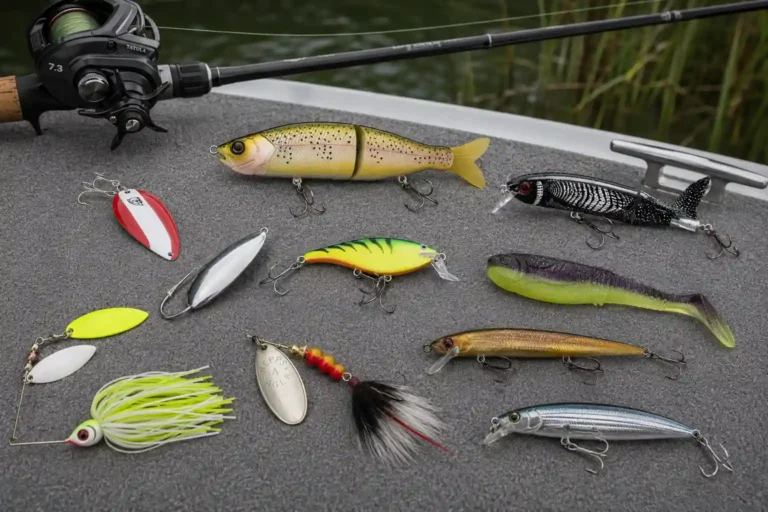
The seven lures below cover every real summer scenario — topwater aggression at first light, weed edges at midday, deep structure during peak heat, and big-profile triggers for fish that need something worth moving for. Each one earned its place through real sessions, not spec sheets.
If you want the full picture of where pike hold in summer and when they feed, our complete guide on where to find pike in summer explains the full system. This page is strictly about the lures that let you execute it.
Quick List: Best Summer Pike Lures (2026)
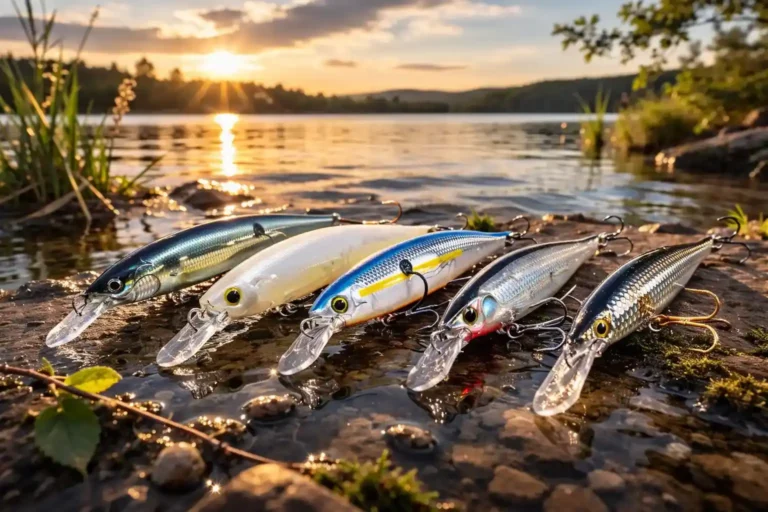
If you are in a hurry, these 7 proven summer pike lures cover the most important hot-water situations — early morning topwater feeds, midday weed edges, deeper summer structure, pressured fish, and aggressive reaction windows that open fast and disappear just as quickly.
- Whopper Plopper 130 — best topwater lure for violent summer surface strikes during low-light feeding windows when pike push shallow to ambush baitfish
- River2Sea S-Waver 168 — best glide bait for triggering larger summer pike holding along deep weed edges, transition zones, and suspended structure
- Rapala Deep Tail Dancer 11 — best deep crankbait for reaching pike holding deeper during peak summer heat when shallow water becomes unstable
- Johnson Silver Minnow — best weedless spoon for fishing heavy summer vegetation, lily pads, and shallow ambush lanes without constant snagging
- Berkley PowerBait Hollow Belly — best soft swimbait for pressured summer pike that respond better to subtle movement and natural baitfish profiles
- Booyah Pikee Spinnerbait — best spinnerbait for covering shallow water quickly and triggering reaction strikes around weeds during active feeding periods
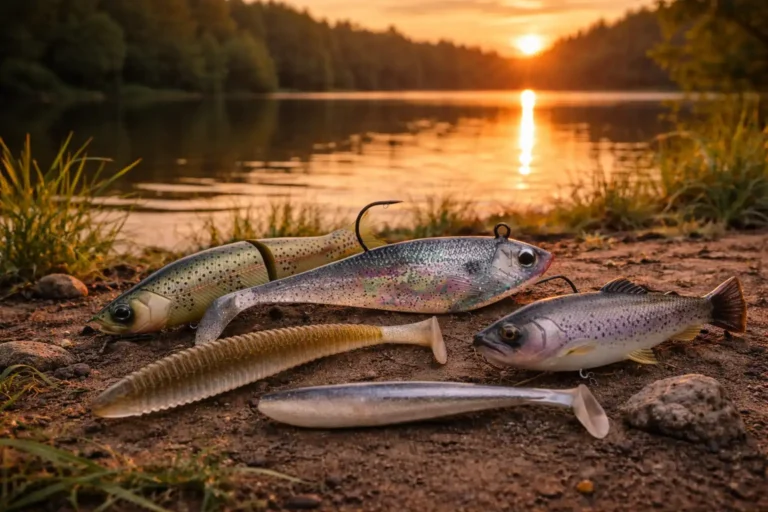
- Savage Gear 3D Pulse Tail Trout — best large-profile trout imitation for trophy summer pike looking for a single high-calorie target instead of chasing smaller prey
Whopper Plopper 130 — Best Topwater Lure for Summer Pike (2026)
The first time we threw a Whopper Plopper 130 for summer pike, we almost didn’t believe what happened.
It was early July. Water temperature had been sitting above 22°C (72°F) for four straight days. Midday sessions had been completely dead — no follows, no taps, nothing. We switched spots three times and came up empty. Classic summer slump.
We showed up the next morning at 5:45 AM, before the sun cleared the treeline. The surface was flat and dark. We tied on the Whopper Plopper, made a long cast along a reed edge, and started a slow, steady retrieve. Fifteen seconds in — the water exploded. Not a subtle take. A full surface eruption that soaked the closest angler completely.
That session taught us something we now follow every summer: topwater for pike is not a gimmick — it is a timing game. Miss the window and you’ll never know it existed. Hit it right and nothing else comes close.
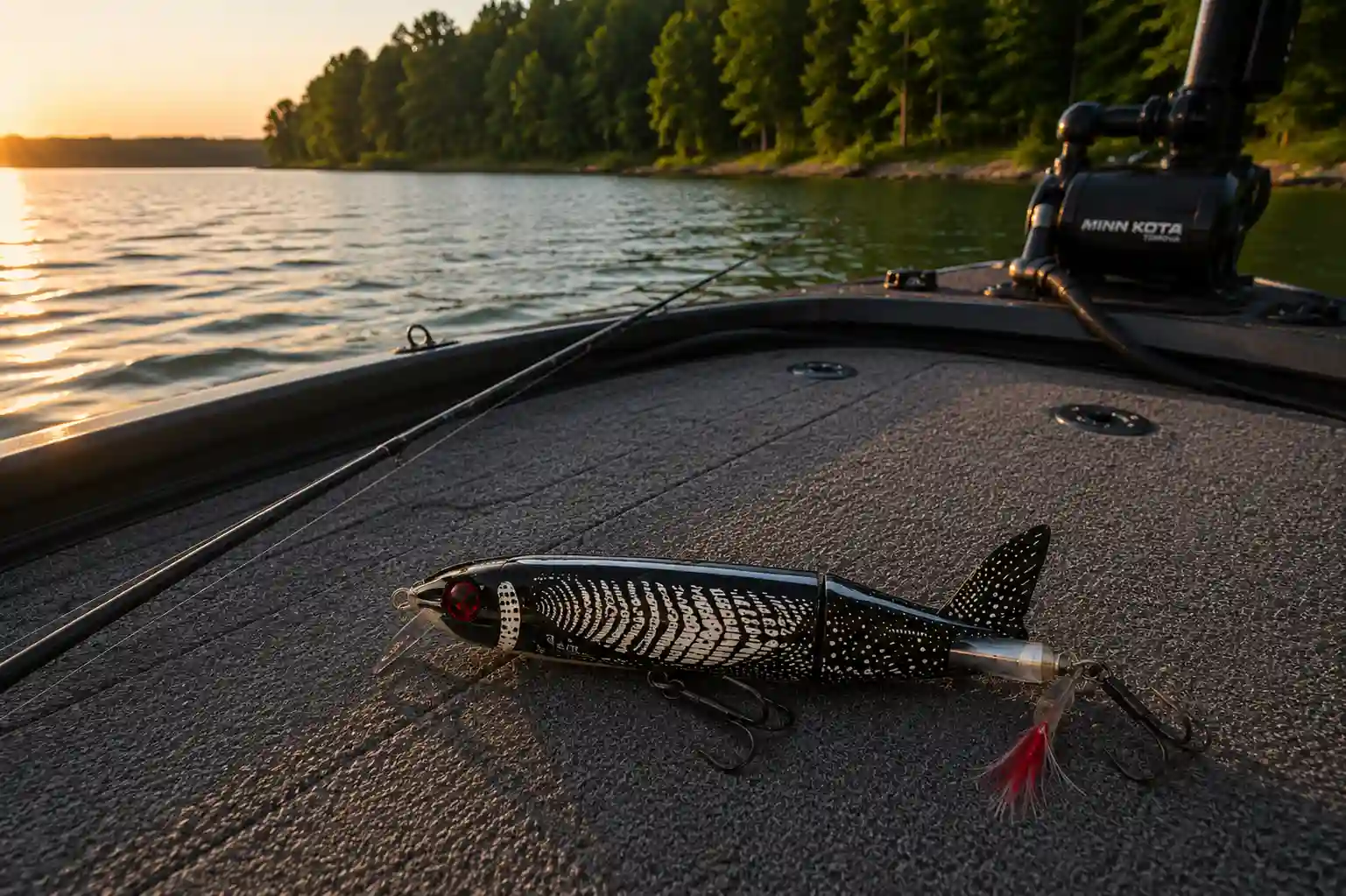
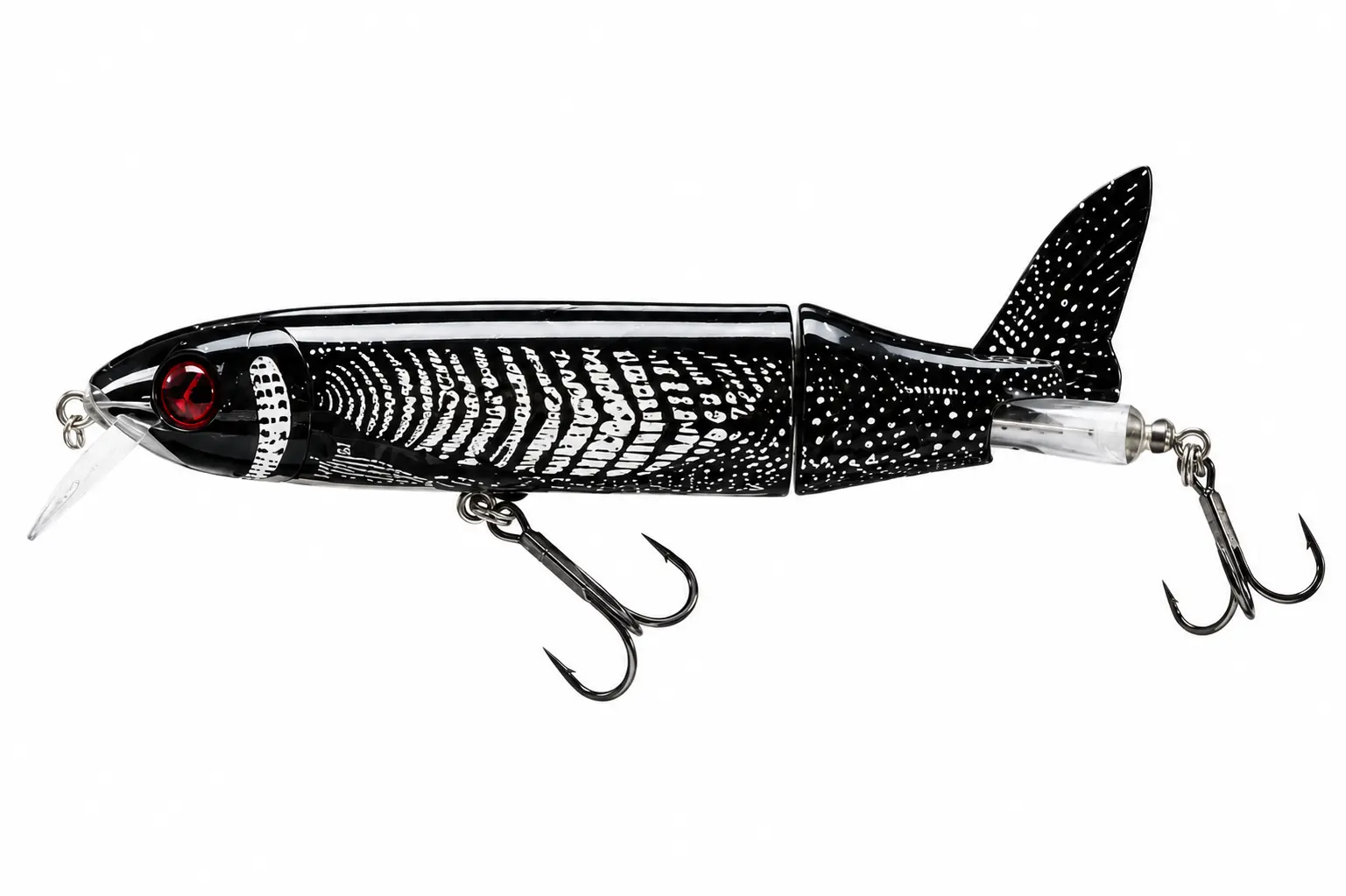
The Whopper Plopper works because of one thing — the rotating tail. At slow to medium retrieve speed, it produces a rhythmic chopping sound and surface disturbance that pike locate from a surprising distance in low-light conditions. It doesn’t require technique. It doesn’t require pauses or twitches. You cast it, you retrieve it steady, and you hold on.
In summer, pike that have been pressured by heat and boat traffic during the day become completely different fish at first light and last light. They push into shallow lanes, over weed flats, and tight to reed edges to ambush baitfish that gather near the surface overnight. This is the exact window the Whopper Plopper was built for.
How We Fish It in Summer
Steady medium retrieve along structure edges. No pauses, no twitches — the tail does everything. Cast parallel to reed lines, not into them. Keep the lure within 50–80 cm (2–3 ft) of the edge the entire retrieve. That tight lane is where the strike happens, not in open water.
If fish are rolling or swirling behind it without committing, slow down slightly. In our experience, a slower tail rhythm — just fast enough to keep it churning — triggers more confident strikes than burning it across the surface.
Where It Excels
Reed edges, lily pad fields, shallow weed flats, and any protected bay that warms overnight and holds baitfish at the surface. First 45 minutes of daylight and last 30 minutes before dark are the prime windows. On overcast days, the window extends — we’ve had violent topwater strikes at midday under heavy cloud cover when surface light stayed low.
If you want to understand exactly why pike push shallow during these windows and where they position, our guide on best time to catch pike in summer breaks down the full feeding window system.
Best Colors
In low light — bone white or ghost patterns. Pike see silhouette against the surface, and lighter colors create the strongest contrast from below. In stained water or overcast conditions, chartreuse or firetiger adds enough visibility to pull fish from slightly deeper. Natural perch patterns work well on clear, calm mornings when fish are holding shallow and have time to inspect. The Loon pattern — dark body with subtle flash — is our go-to when pike are pressured and skittish in clear, calm conditions at first light.
Selected Version
The 130 size is the right call for pike. Large enough to push water and create serious disturbance, but still castable on a medium-heavy spinning rod without feeling unbalanced — and light enough to fish all morning without fatigue.
Whopper Plopper 130 is the one lure we never leave behind in summer. When the window opens, nothing triggers surface strikes faster or more consistently.
River2Sea S-Waver 168 — Best Glide Bait for Trophy Summer Pike (2026)
There is a specific type of summer pike that doesn’t chase. It follows.
Mid-August, water sitting at 23°C (73°F). We had been working a deep weed edge for two hours with spinnerbaits and swimbaits — covering water, triggering reaction strikes, catching fish. Then we noticed a shadow. A big one. It tracked the swimbait all the way to the boat, turned at the last second, and disappeared back into the dark water.
We switched to the River2Sea S-Waver 168. Same edge, same direction. Third cast — the shadow appeared again. This time it didn’t turn away. It committed.
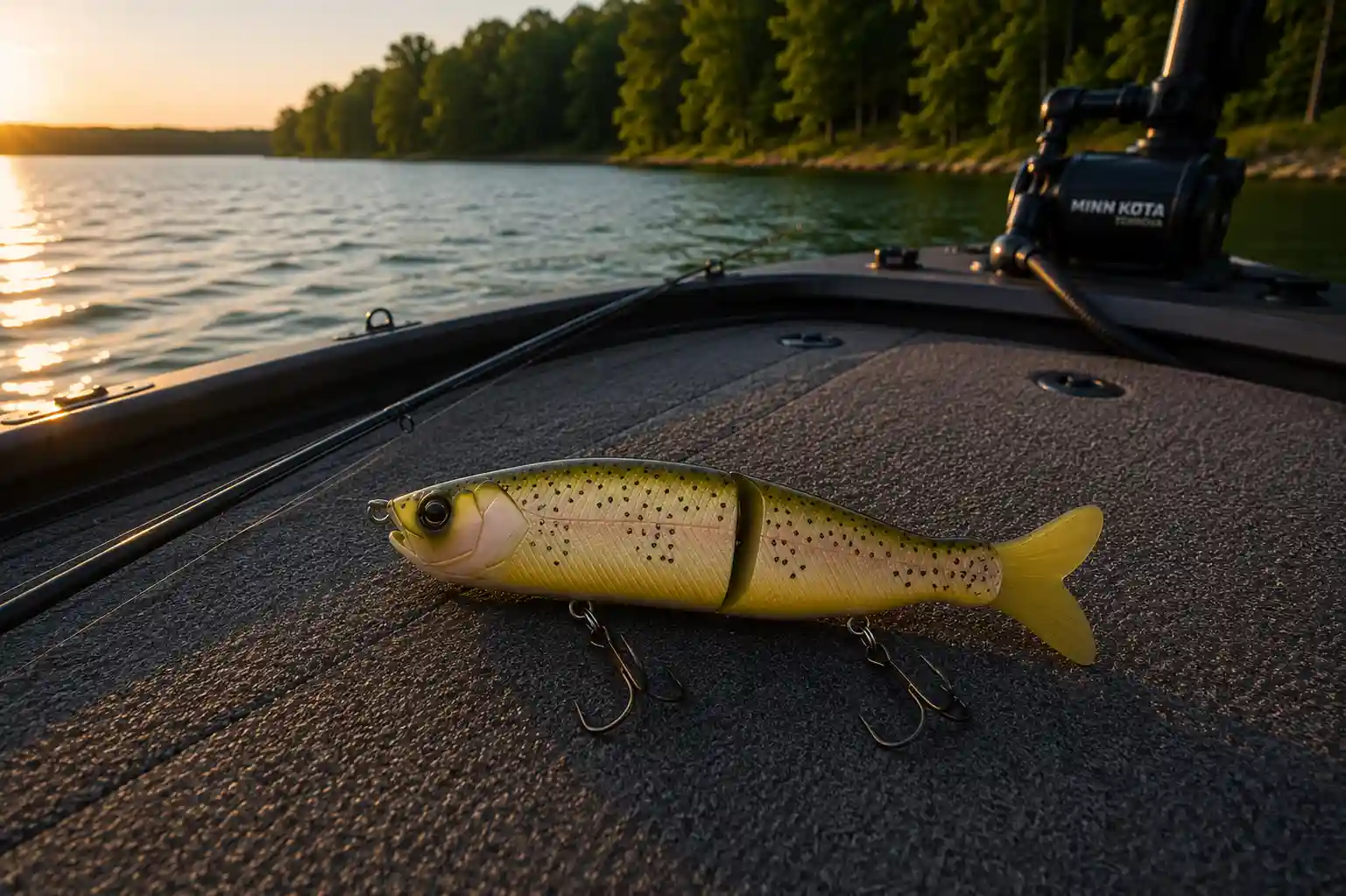
That is exactly what glide baits do that nothing else can. They don’t trigger reaction. They trigger decision. A big summer pike that has seen spinnerbaits and swimbaits all season will often ignore everything — until something large, slow, and deliberate slides through its lane and gives it time to commit.
The S-Waver 168 is larger than the 120 we use in spring for a reason. Summer pike are not the same fish they were in April. They want a single high-calorie target, not a small baitfish they have to chase. The wider, heavier profile of the 168 matches that feeding mindset perfectly — it looks like a meal worth moving for.
How We Fish It in Summer
Slow, wide sweeps of the rod tip with a pause between each glide. The lure should slide left, pause, slide right, pause — never rushing, never straight. That side-to-side flash on the pause is what triggers the final commitment from following fish. If a pike is tracking and not committing, extend the pause. Let it sit. The strike almost always comes when the lure appears to lose momentum.
Where It Excels
Deep weed edges, drop-offs, and open transition zones where big pike suspend in summer. This is not a shallow water lure — it belongs in the 3–6 meter (10–20 ft) depth range where larger fish hold during peak heat. For exact depth zones where summer pike compress, our guide on how deep are pike in summer maps out the full pattern.
Best Colors
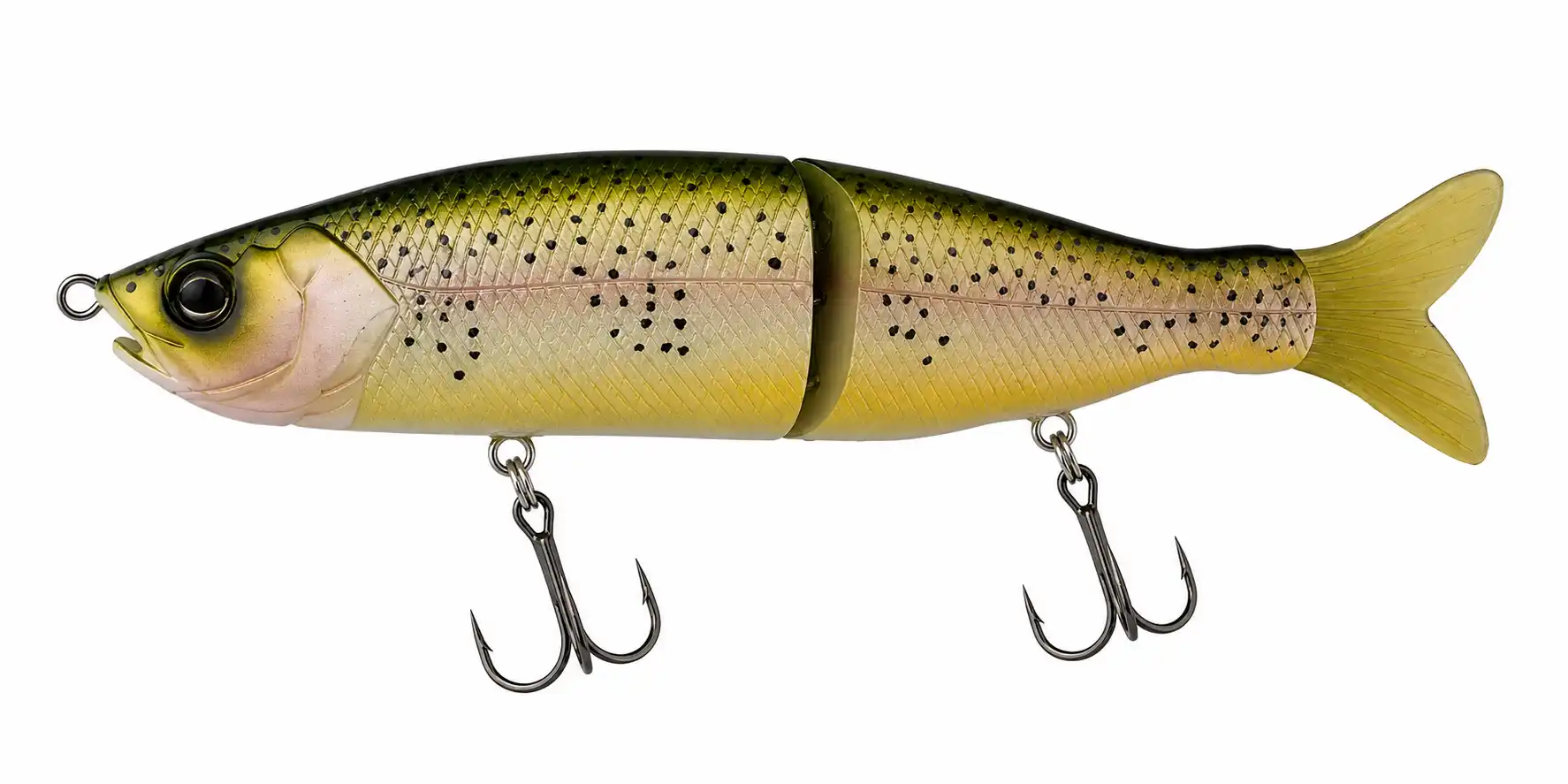
Natural baitfish patterns — ghost shad, perch, and roach finishes — dominate in clear summer water. The Lite Trout pattern is our go-to for pressured clear lakes — the subtle olive and brown tones match the natural forage pike key on during summer without looking artificial. In stained conditions or low light, stronger contrast patterns with silver flash help the glide stay visible through the water column. Avoid overly bright colors in pressured clear lakes — summer pike inspect before they commit.
Selected Version
The 168 size over the 120 for summer. The extra profile and weight gives you better casting distance on open water and a slower, more deliberate glide that big summer pike respond to differently than lighter versions. The weight of this lure makes a medium-heavy baitcasting rod the natural choice — it gives you the precise sweep control and direct feedback that glide bait fishing demands.
River2Sea S-Waver 168 is our first choice when we know a big fish is in the area but refuses to react. It converts followers into strikes when everything else has already failed.
Rapala Deep Tail Dancer 11 — Best Deep Crankbait for Summer Pike (2026)
Most anglers give up on summer pike by noon. We used to do the same thing.
It was late July, air temperature pushing 34°C (93°F), water surface reading 25°C (77°F). Topwater was dead. Weed edges were quiet. Every shallow spot we knew had produced nothing since 8 AM. We were about to pack up when one of us said — let’s go deeper.
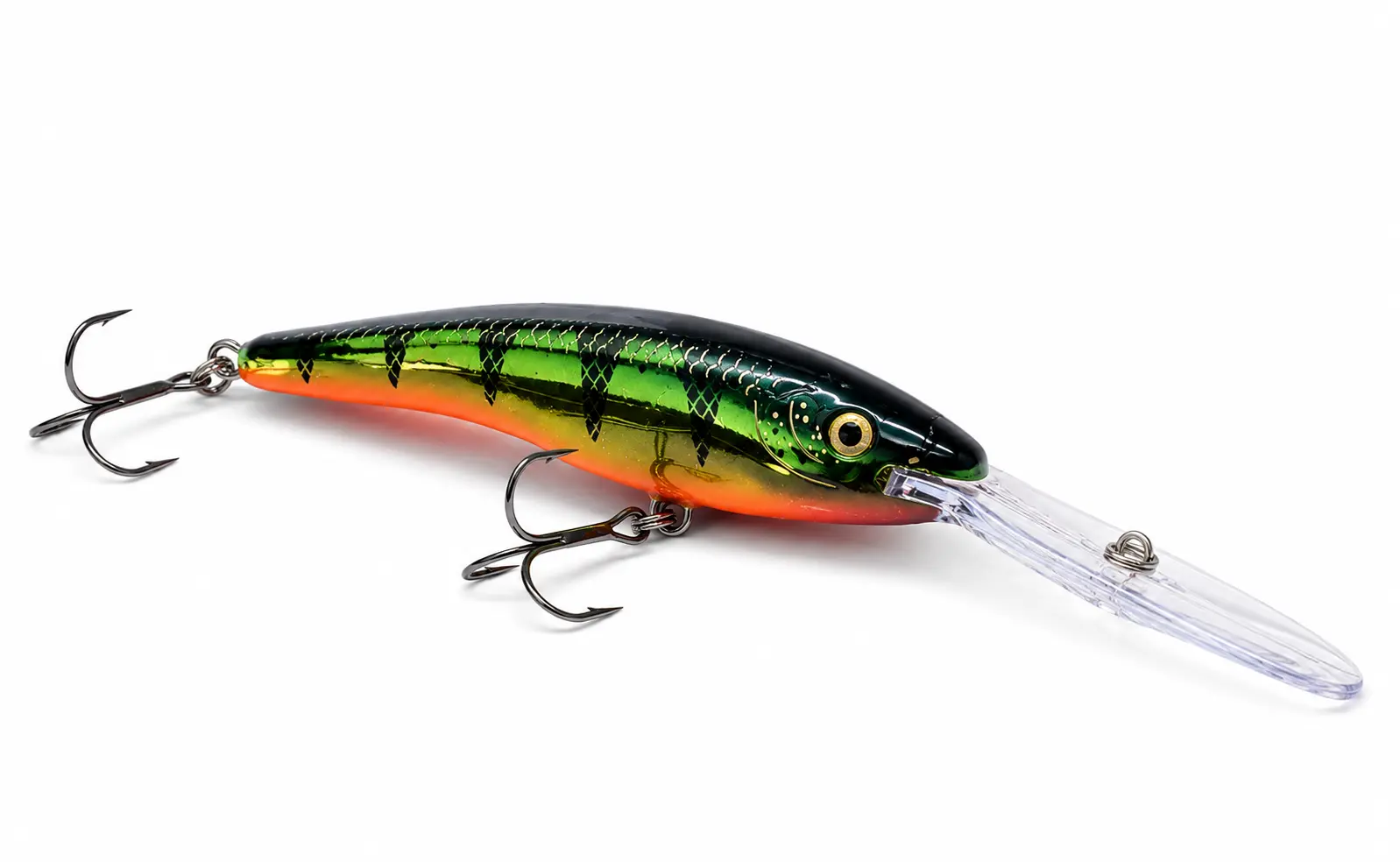
We switched to the Rapala Deep Tail Dancer 11, moved to a steep drop-off on the main lake basin, and started working 4–6 meters (13–20 ft). Second retrieve — a heavy, slow pull. Not a violent strike. Just weight. A pike that had been sitting motionless in cooler water all morning finally found something worth eating.
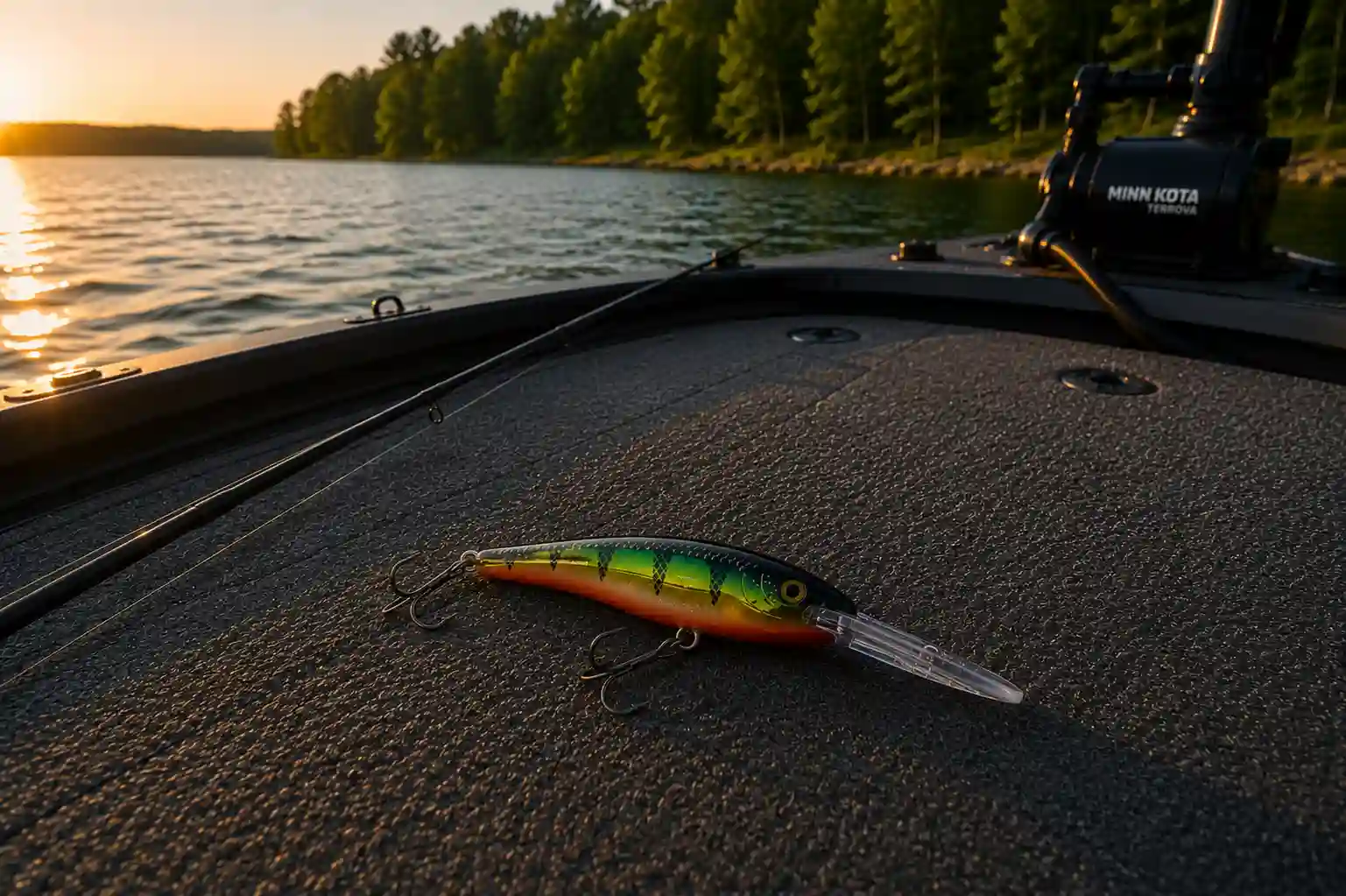
That session changed how we approach summer midday fishing completely. The fish don’t disappear — they go down. And most lures simply cannot reach them where they hold when surface temperatures spike.
The Deep Tail Dancer solves that problem. Its long lip drives it down fast and keeps it running true at depth on a steady retrieve. Unlike trolling-only deep divers, this lure is fully controllable on a cast-and-retrieve setup from the bank or boat. You feel every movement, every depth change, every subtle tap from a fish that barely opens its mouth in the heat.
How We Fish It in Summer
Long cast, count it down to depth, then slow and steady retrieve. No aggressive twitching — summer pike at depth are not chasing. They are ambushing. Keep the lure running just above the thermocline where pike stage. Occasional speed burst for 2–3 seconds followed by return to slow retrieve triggers fish that have been following without committing. Most strikes feel like the lure suddenly got heavier — set the hook immediately. At 4–6 meters, that subtle take is only detectable with thin-diameter braided line — mono kills the feedback at depth.
Where It Excels
Steep drop-offs, main lake basins, and deep channel edges during peak summer heat between 11 AM and 4 PM. This is the lure for the hours nobody else is catching fish. If you understand where pike compress vertically when surface temperatures become unstable, our guide on how deep are pike in summer explains exactly which depth bands hold the most fish during heat spikes.
Best Colors
At depth, natural perch, silver, and blue-silver patterns produce the most consistent results in clear water. The Flash Perch pattern is our go-to — the perch coloring matches the natural forage at depth while the flash finish stays visible in low light conditions below the thermocline. In darker or stained conditions, firetiger and chartreuse give the lure enough visibility to stand out without looking unnatural.
Selected Version
The size 11 hits the right balance between diving depth and lure profile for pike. Heavy enough to cast well, large enough to register as a real meal, and runs deep enough to reach fish that have abandoned shallow water entirely during summer heat.
Rapala Deep Tail Dancer 11 is the lure that keeps producing when everyone else has gone home. If you fish through midday heat instead of giving up on it, this is what you tie on.
Johnson Silver Minnow — Best Weedless Spoon for Summer Pike (2026)
Summer pike fishing has one problem that no other season creates at the same scale — weeds.
Early August. A shallow bay we had been watching all season had completely filled in — lily pads from bank to bank, thick cabbage weed underneath, scattered reed patches breaking the surface every few meters. The kind of water most anglers look at and keep driving past.
We stopped. Because we know something most anglers forget: the thickest summer weed is not a dead zone — it is a feeding lane. Pike use dense vegetation as cover to ambush baitfish that hide there. The problem is getting a lure through it without snagging every second cast.
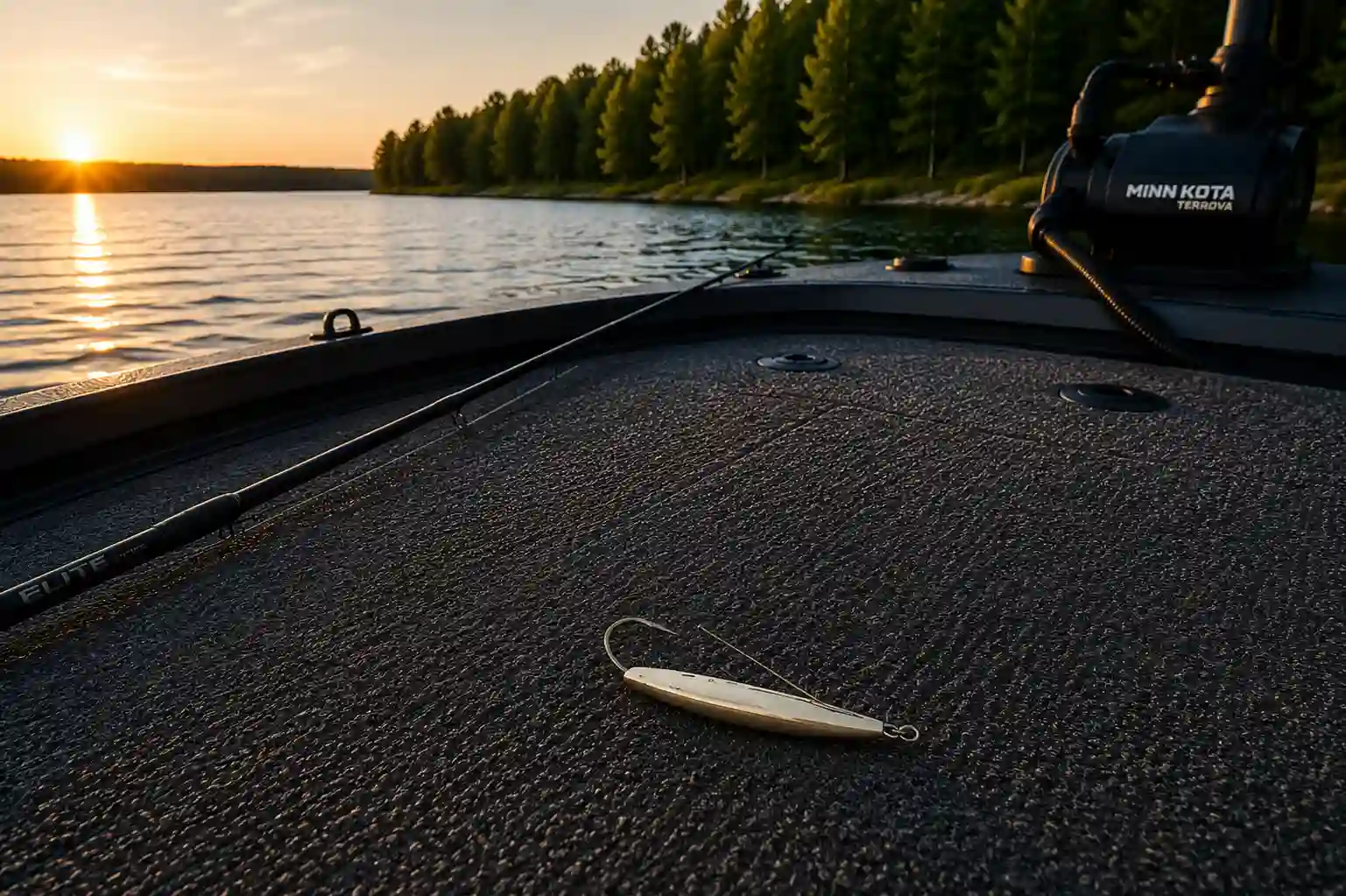
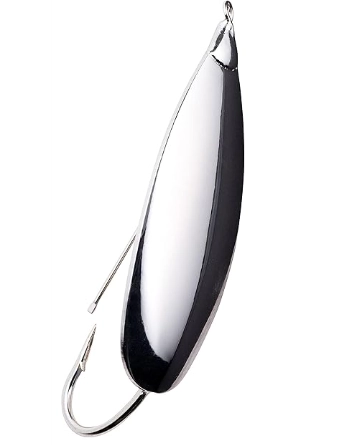
We tied on the Johnson Silver Minnow. Single weedless hook riding up, spoon body deflecting off stems and pads. Cast after cast through water that would have destroyed any treble hook lure in seconds — completely clean. On the sixth cast, a pike exploded out of a lily pad gap and took it so hard the rod nearly left the hand.
That is the Johnson Silver Minnow in summer. It goes where other lures cannot, stays in the strike zone longer, and still produces enough flash and vibration to pull pike out of heavy cover.
How We Fish It in Summer
Steady medium retrieve just fast enough to keep the spoon wobbling without breaking the surface. Let it deflect off lily pad stems and weed clumps — that sudden direction change is often what triggers the strike. When you hit a gap in the vegetation, slow down for one or two seconds and let the spoon flutter slightly before continuing. Most strikes happen right after a deflection or at the edge of a gap where pike are waiting to ambush. In clear summer water, a fluorocarbon leader gives you the stealth you need — steel wire stands out too much when pike are sitting shallow.
Where It Excels
Lily pad fields, cabbage weed flats, mixed reed and weed bays, and any shallow summer structure that holds baitfish but destroys standard lures. This is the only lure in our summer box that we fish confidently through truly heavy cover. For understanding which weed types and shallow structures hold the most summer pike, our guide on where to find pike in summer maps out exactly where to target.
Best Colors
Silver is the standard and it works in almost every condition — the flash mimics a baitfish breaking from cover perfectly. In stained water or under heavy cloud cover, gold or chartreuse-tipped versions add warmth and visibility. On bright summer days in clear water, silver remains the strongest choice because it catches and reflects available light even in shadowed weed lanes.
Selected Version
The 3/4 oz (21g) version casts well enough to reach far weed edges from shore and is heavy enough to stay controlled on the retrieve without riding too high in shallow water. Light enough to work over lily pads without constant surface fouling.
Johnson Silver Minnow is the lure that unlocks summer water everyone else ignores. If there are weeds, there are pike — and this is how you reach them.
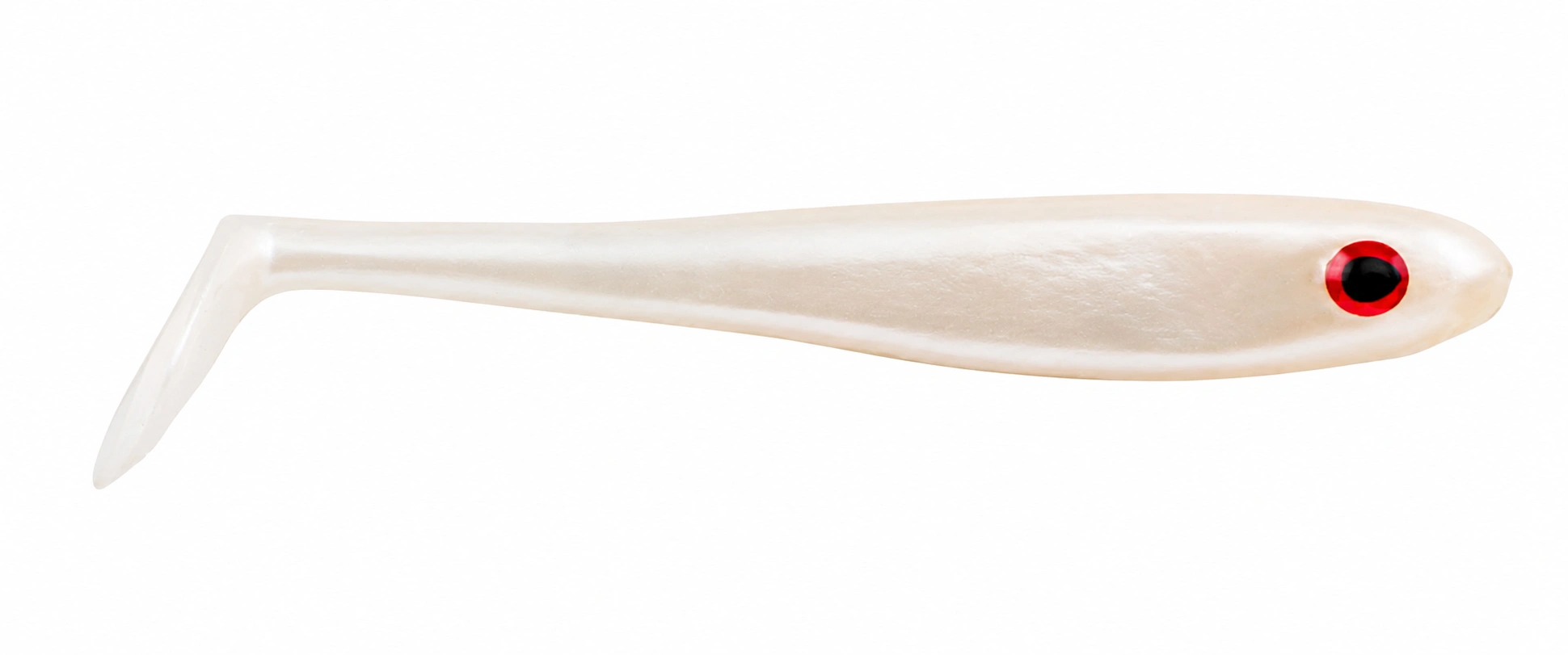
Berkley PowerBait Hollow Belly — Best Soft Swimbait for Pressured Summer Pike (2026)
There are summer days when pike have seen everything. And those are the days the Berkley PowerBait Hollow Belly earns its place in the box.
Late August on a lake we fish regularly. Boat traffic had been heavy all week — kayaks, swimmers, other anglers working the same weed edges we target. The fish were there. We could see them on sonar, mark them on edges, watch them follow. But nothing was triggering a committed strike. Spinnerbait — follow, turn away. Glide bait — follow, turn away. Whopper Plopper — one swirl, nothing.
We downsized. Rigged a Berkley PowerBait Hollow Belly on a light jig head, cast it along the same weed edge, and started a slow, natural paddle-tail retrieve just above the vegetation. No flash. No vibration. Just a soft baitfish profile moving slowly through the water.
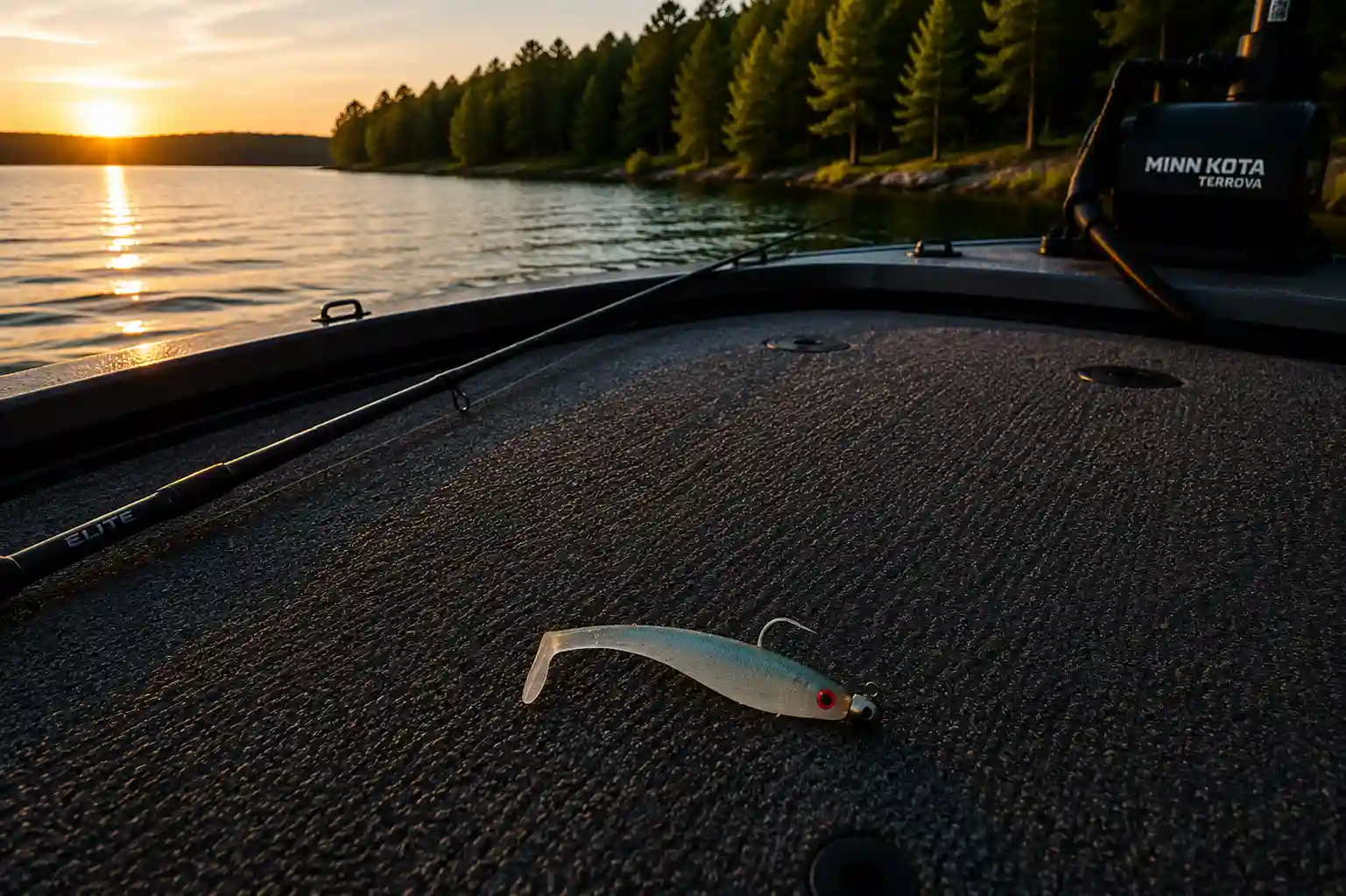
The pike that had been ignoring everything all morning ate it on the first pass. No follow. No inspection. Just a clean, confident strike from a fish that had finally seen something that didn’t feel like a trap.
That is what soft swimbaits do in summer that hard baits cannot. They remove the trigger points that pressured fish have learned to avoid. No blade flash, no hard rattle, no aggressive action — just a natural profile moving at a pace that feels safe to commit to.
How We Fish It in Summer
Light jig head, 10–20g (3/8–3/4 oz) depending on depth. Slow, steady retrieve just fast enough to activate the paddle tail. Occasional lift and drop along weed edges — let it fall naturally toward the vegetation, then lift before it snags. Most strikes come on the fall when the tail kicks as the lure drops. In clear water, slow down more than feels comfortable. Pressured summer pike need time to decide — and the Hollow Belly gives them that time without looking threatening.
Where It Excels
Clear water lakes under fishing pressure, calm summer mornings after heavy weekend boat traffic, and any situation where pike are visibly present but refusing hard baits. This is also an excellent evening lure when pike move shallow in low light and want something subtle over a weed flat. For understanding exactly when summer pike shift into these softer feeding moods, our guide on best time to catch pike in summer covers the full feeding window breakdown.
Best Colors
Pearl White is our go-to for pressured clear water — it matches the natural baitfish profile without adding any visual pressure that spooks cautious fish. Natural shad and white patterns dominate in clear water generally — they match the small baitfish pike are keying on without adding unnecessary visual pressure. In stained water, chartreuse and firetiger give enough contrast to stay visible on a slow retrieve. Avoid overly bright or unnatural colors on pressured clear lakes — the whole point of this lure is to look like nothing suspicious.
Selected Version
The 5 inch version is the right size for summer pike. Large enough to register as a real target but small enough to look natural and non-threatening to fish that have been pressured. Pair with a smooth spinning reel — consistent drag on a slow retrieve makes the difference between a lure that looks alive and one that just swims.
Berkley PowerBait Hollow Belly is the lure we reach for when everything else has already been rejected. On pressured summer water, subtlety wins — and nothing delivers subtlety better than this.
Booyah Pikee Spinnerbait — Best Spinnerbait for Summer Pike (2026)
Some summer mornings you don’t know where the fish are. And on those mornings, the Booyah Pikee Spinnerbait is the first lure we tie on.
Early June, first warm week of the season. Water had climbed to 19°C (66°F) overnight and pike had just started their post-spawn scatter — spread across the lake with no obvious pattern yet. We had three hours before the heat shut everything down. We needed to cover water fast and find active fish before the window closed.
We split the lake between two anglers. One worked jerkbaits methodically along known edges. The other burned a Booyah Pikee across open weed flats, bay mouths, and channel transitions — covering three times the water in the same time. By the time they met at the boat ramp, the spinnerbait angler had found fish in two locations nobody had targeted all spring. Both spots produced for the rest of the summer.
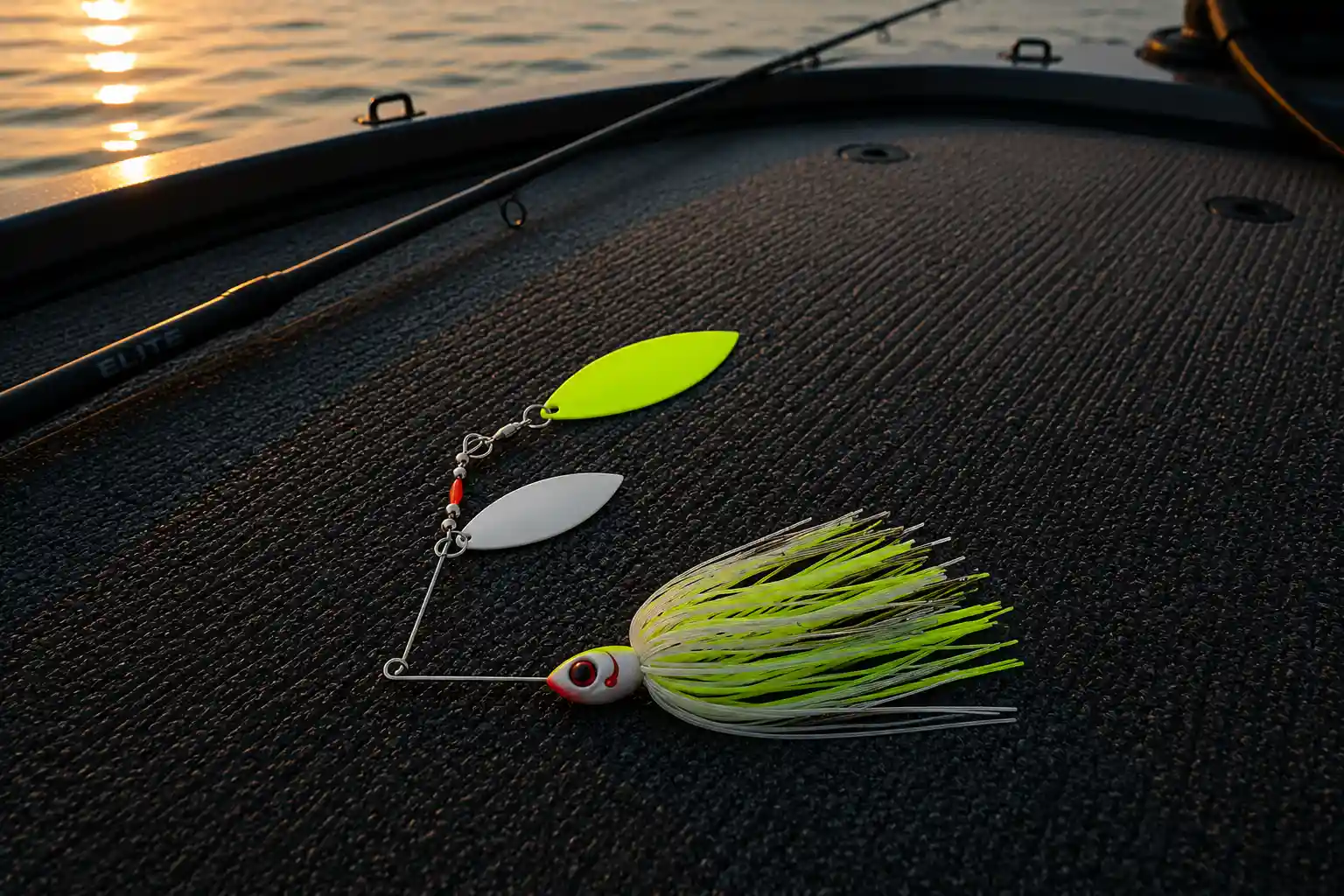
That is what spinnerbaits do that no other summer lure can match — they find fish fast. The combination of blade flash, thump vibration, and skirt movement triggers reaction strikes from active pike before they have time to inspect or refuse. In summer, when feeding windows are short and fish are scattered, covering water is often more important than perfect presentation.
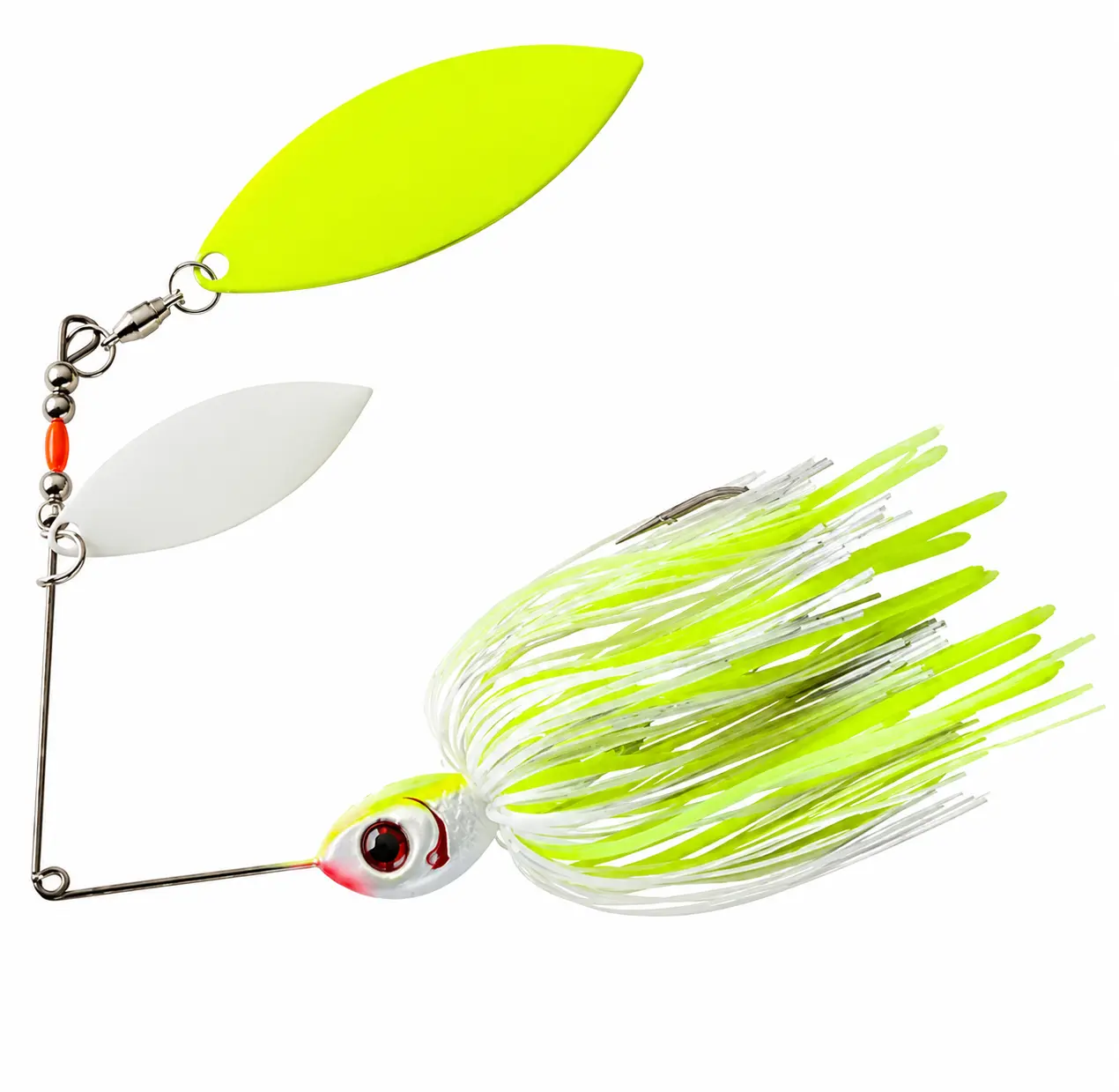
The Booyah Pikee is built specifically for pike — heavier wire, stronger hook, larger blade than standard bass spinnerbaits. It handles the violent headshakes and raw power of a summer pike without bending out or losing blade rotation under pressure.
How We Fish It in Summer
Medium-fast retrieve along weed edges, over submerged flats, and through bay mouths. Keep the blade just below the surface — you want to see the wake without breaking water. Along deeper edges, slow-roll it just above the weed tops at 2–3 meters (6–10 ft). When you find active fish, slow down and work the area thoroughly. When nothing responds after several casts, keep moving. The spinnerbait rewards mobility more than any other summer lure.
Where It Excels
Open weed flats, bay mouths, channel transitions, and any mixed structure where pike scatter after the spawn. This is the best search lure in our entire summer box — when we don’t know where fish are holding, the Booyah Pikee finds them faster than anything else. Once located, we switch to more precise presentations. For understanding how pike position and move on summer structure from a boat, our guide on how to catch pike from a boat in summer covers the full approach.
Best Colors
White and chartreuse are the two most consistent summer colors — high visibility in both clear and stained water, strong contrast from below, and enough flash to trigger reaction strikes from distance. In clear morning water, natural perch and silver blade combinations work well when pike have time to inspect. In wind or current, go louder — double willow blade in gold or chartreuse pushes more water and stays visible in chop.
Selected Version
The 3/8 oz or 1/2 oz version covers most summer pike situations. Light enough to run shallow over weed tops, heavy enough to slow-roll along deeper edges. Pairs equally well with a medium-heavy spinning rod for all-day bank fishing or a baitcasting setup for heavier versions from a boat.
Booyah Pikee is the lure that finds summer pike when nothing else gives you a starting point. Cover water, trigger reactions, locate fish — then let the rest of this list close the deal.
Savage Gear 3D Pulse Tail Trout — Best Large Profile Swimbait for Trophy Summer Pike (2026)
Some summer pike are not interested in reaction strikes. They are not chasing spinnerbaits or exploding on topwater. They are sitting deep, conserving energy, and waiting for one thing — a meal that is worth the effort.
It was the second week of August. We had been on the water since 6 AM, worked through the topwater window, covered the weed edges with the spinnerbait, slow-rolled the deep crank through the basin. Good session — several fish between 60–75 cm (24–30 inches). Then we moved to a deep bay entrance we had been saving. Sonar showed one large mark sitting motionless at 5 meters (16 ft), tight to a submerged weed edge — exactly the kind of mark you learn to read with a reliable fish finder.
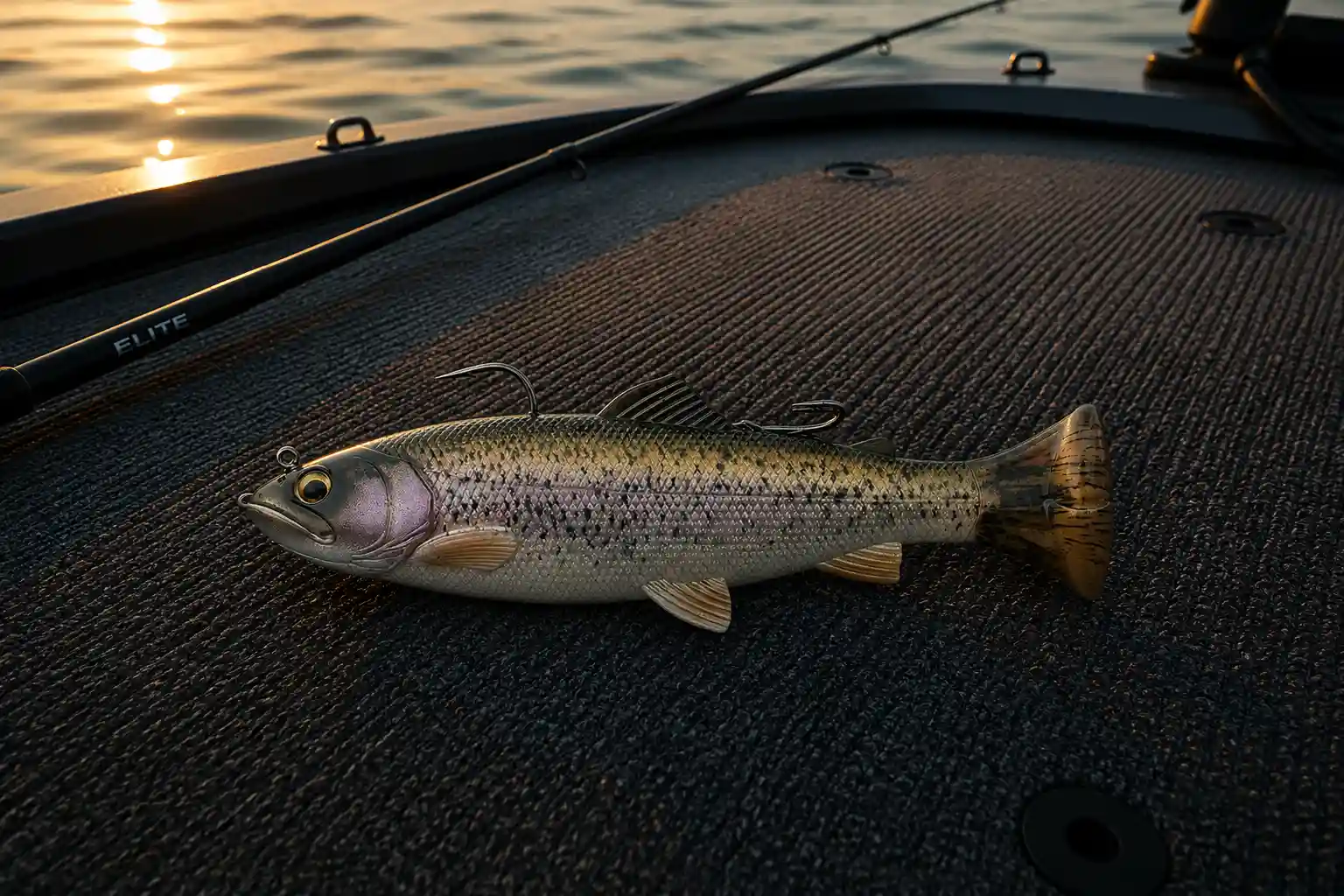
We tied on the Savage Gear 3D Pulse Tail Trout. Cast it past the mark, let it sink to depth, and started the slowest retrieve we could manage — barely moving, just enough to activate the pulse tail. The mark on sonar lifted. Moved toward the lure. And then the rod loaded up with the kind of weight that makes you check your drag before you do anything else.
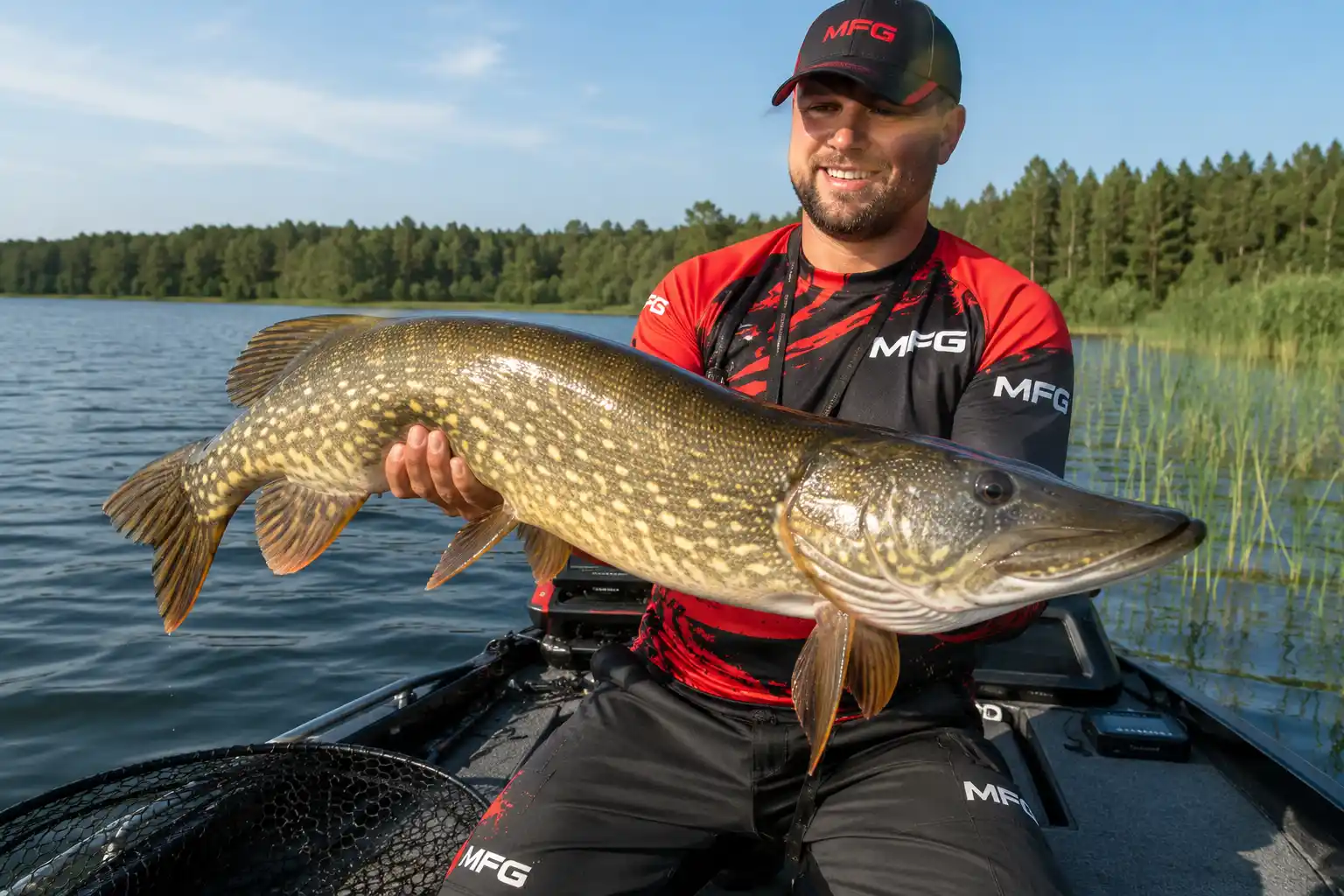
That fish went 98 cm (39 inches). The biggest of the summer. And it ignored every other lure we had thrown that morning.
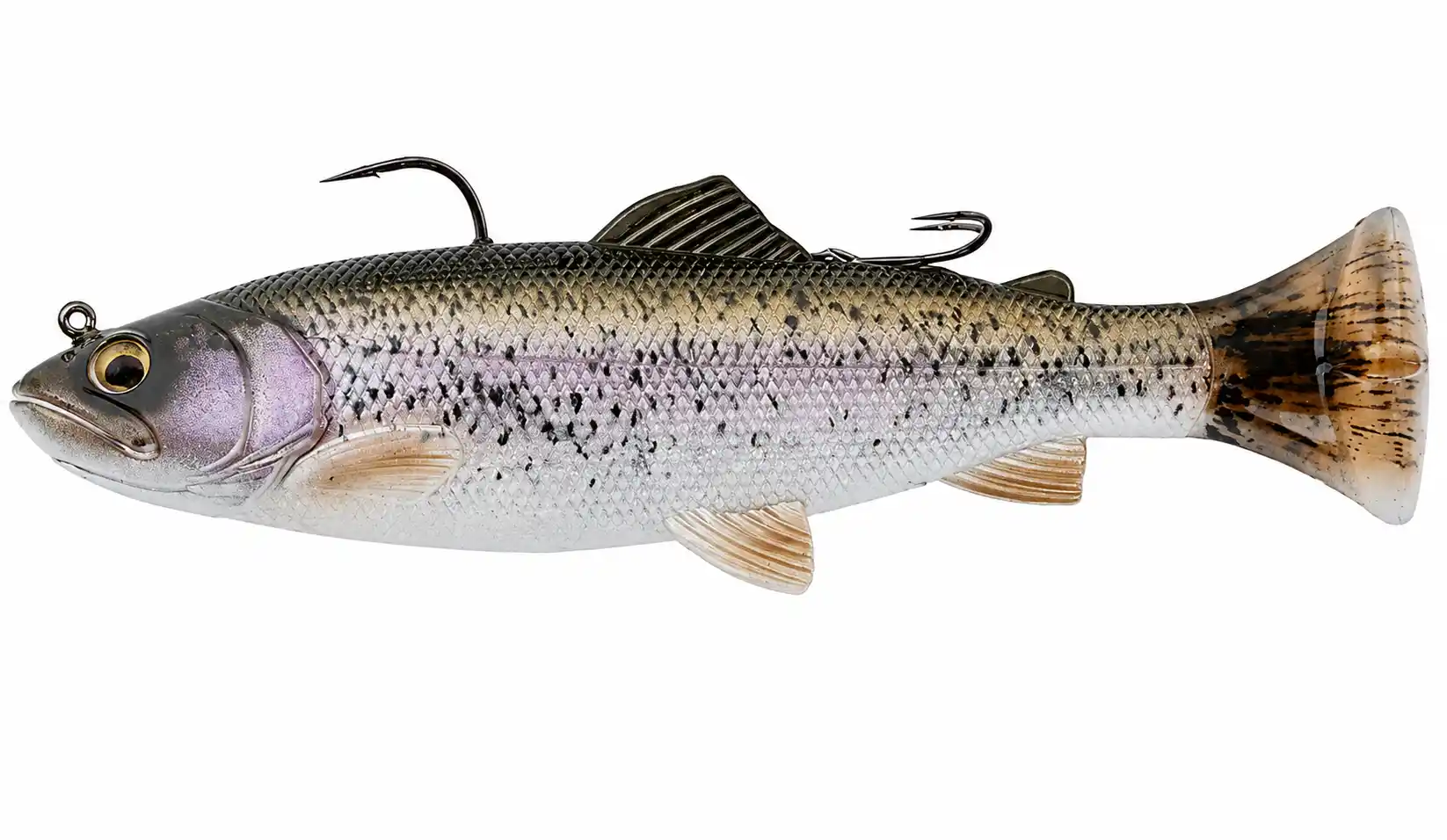
The Savage Gear 3D Pulse Tail Trout works on trophy summer pike for one reason — it looks exactly like a real trout. The 3D scan detail, the realistic paint, the pulse tail that kicks with just the slightest water movement — it does not look like fishing tackle. It looks like prey. And large summer pike that have learned to be selective respond to it differently than anything else in the box.
How We Fish It in Summer
Slow, straight retrieve just above the weed line or along deep structural edges. Let the pulse tail do the work — do not twitch, do not jerk, do not add action. The lure is most convincing when it moves like a real fish swimming naturally through open water. Occasional speed change for 2 seconds followed by return to slow retrieve mimics a baitfish adjusting direction — that change is often the final trigger for a following fish. Most strikes feel like sudden, heavy weight rather than a violent hit — set the hook firmly and immediately.
Where It Excels
Deep bay entrances, submerged weed edges, main lake drop-offs, and any structure that holds large pike during peak summer heat. This is not a search lure and not a reaction lure — it is a precision tool for targeting specific large fish in known locations. Use the rest of this list to find and locate fish. Use the Savage Gear when you know something big is there and needs a reason to commit. For locating the exact structures that hold trophy summer pike, our guide on how deep are pike in summer covers the full depth and structure breakdown.
Best Colors
Ghost Trout is our go-to in clear summer water — the translucent finish with subtle detail triggers inspection strikes from trophy pike that refuse anything that looks artificial. Rainbow trout and brown trout finishes are equally consistent in clear conditions. In slightly stained water, firetiger trout or perch patterns add contrast while keeping the realistic profile intact.
Selected Version
The 6 inch RTF (Ready To Fish) version comes pre-rigged and balanced for immediate use. Heavy enough to reach the depths where big summer pike hold during heat, and the RTF setup ensures the lure runs correctly without rigging adjustments. A baitcasting reel with strong drag gives you the instant hookset control you need when a heavy fish commits at depth.
Savage Gear 3D Pulse Tail Trout is the lure we save for the fish that matter most. When everything else has been tried and a big pike is still sitting there — this is what changes the outcome.
Why Summer Pike Lures Matter More in Hot Water
Summer pike fishing becomes far less forgiving once water temperatures stabilize and feeding windows shrink. Fish reposition deeper, bury into weeds, or feed in short bursts that can disappear in minutes. The right lure is no longer just about catching fish — it is about matching the exact situation in front of you.
The seven lures in this guide cover the full summer system we rely on every season — topwater feeding windows, weed cover, pressured fish, deep midday structure, and large-profile presentations for trophy pike that refuse smaller baits. Once you know which lure fits the situation, our guide on how to retrieve lures for summer pike covers the exact speeds, pauses, and triggers that convert follows into strikes.
If you want to see the full specifications and action details behind one of our favorite summer trophy lures, the official Savage Gear 3D Pulse Tail Trout page breaks down the exact design and RTF setup we use during peak summer heat.
Best Summer Pike Lures FAQ
What are the best summer pike lures for hot water?
Best summer pike lures for hot water are usually the ones that match how pike behave during stable heat — topwater lures at low light, weedless spoons in heavy cover, deep crankbaits for midday structure, and large-profile swimbaits for deeper fish holding off the edge.
Do pike still hit topwater lures in summer?
Yes — often during the first hour of daylight and the final low-light window before dark. Summer pike move shallow during these periods and react aggressively to surface disturbance when baitfish gather near weed edges and reed lines.
What lure works best for pressured summer pike?
Soft swimbaits with subtle movement usually outperform loud reaction baits on pressured summer water. Natural retrieves and realistic baitfish profiles give hesitant fish more confidence to commit.
Where should you throw summer pike lures?
The best summer pike lures work around weed edges, deep transition zones, lily pad fields, bay mouths, drop-offs, and submerged structure where pike hold once surface temperatures rise.
What colors work best for summer pike fishing?
Natural perch, shad, silver, and trout patterns perform best in clear water. In stained water or low light, chartreuse, firetiger, and high-contrast patterns help pike locate the lure faster.
What rod and reel setup works best for summer pike lures?
A medium-heavy spinning rod paired with a smooth spinning reel covers most summer situations — topwater, spinnerbaits, and soft swimbaits. For heavier glide baits and deep crankbaits, a baitcasting rod paired with a baitcasting reel gives better control and casting precision.