

Spring Pike Fishing from Shore: How to Catch More Pike Without a Boat (Proven Bank Tactics)
Spring pike fishing from shore is one of the most overlooked ways to catch aggressive pre-spawn fish—yet it consistently produces some of the most violent strikes of the entire season.
As water temperatures begin to rise, pike move out of deeper winter areas and push toward shallow zones to feed. Once the water reaches around 4–6°C (39–43°F), their metabolism starts to activate, and these fish begin positioning in warming shallows between 0.5–1.5 m (1.5–5 ft). These areas heat faster under direct sunlight, often creating the first real feeding zones of spring—and that’s exactly where shore anglers already have the advantage.
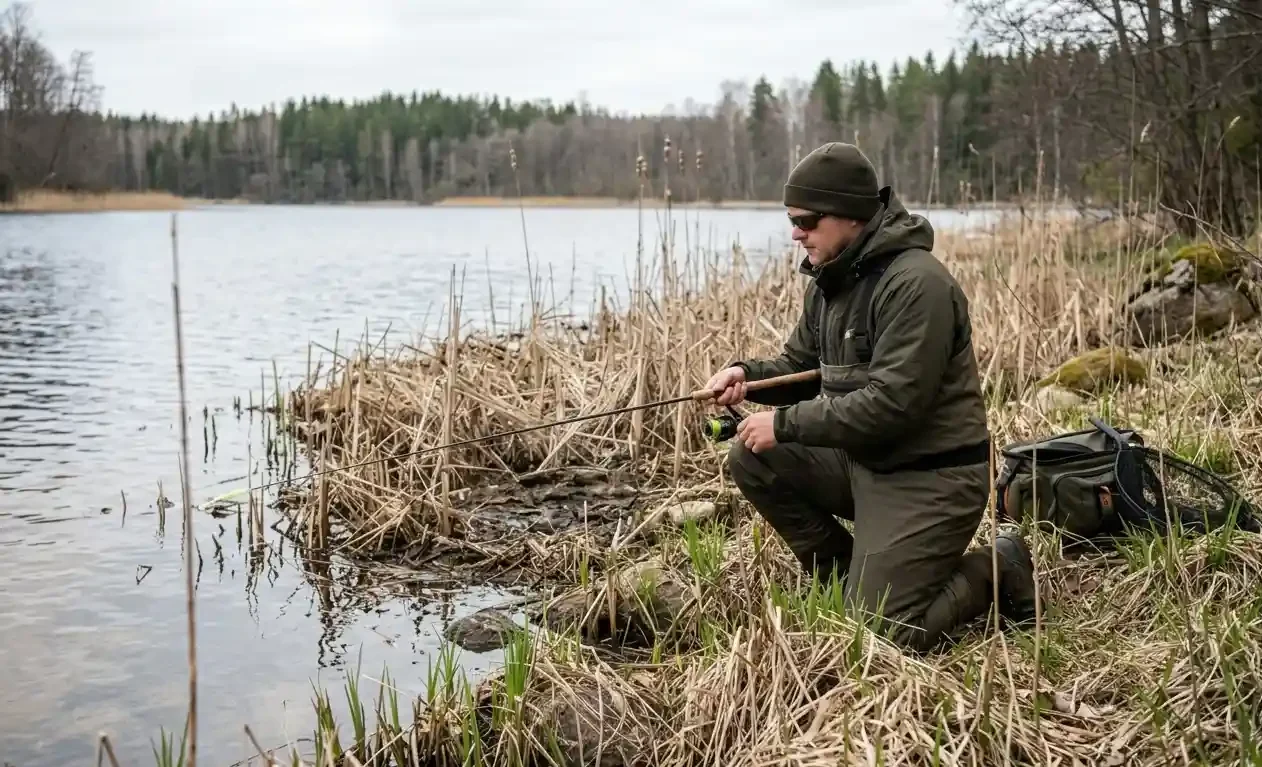
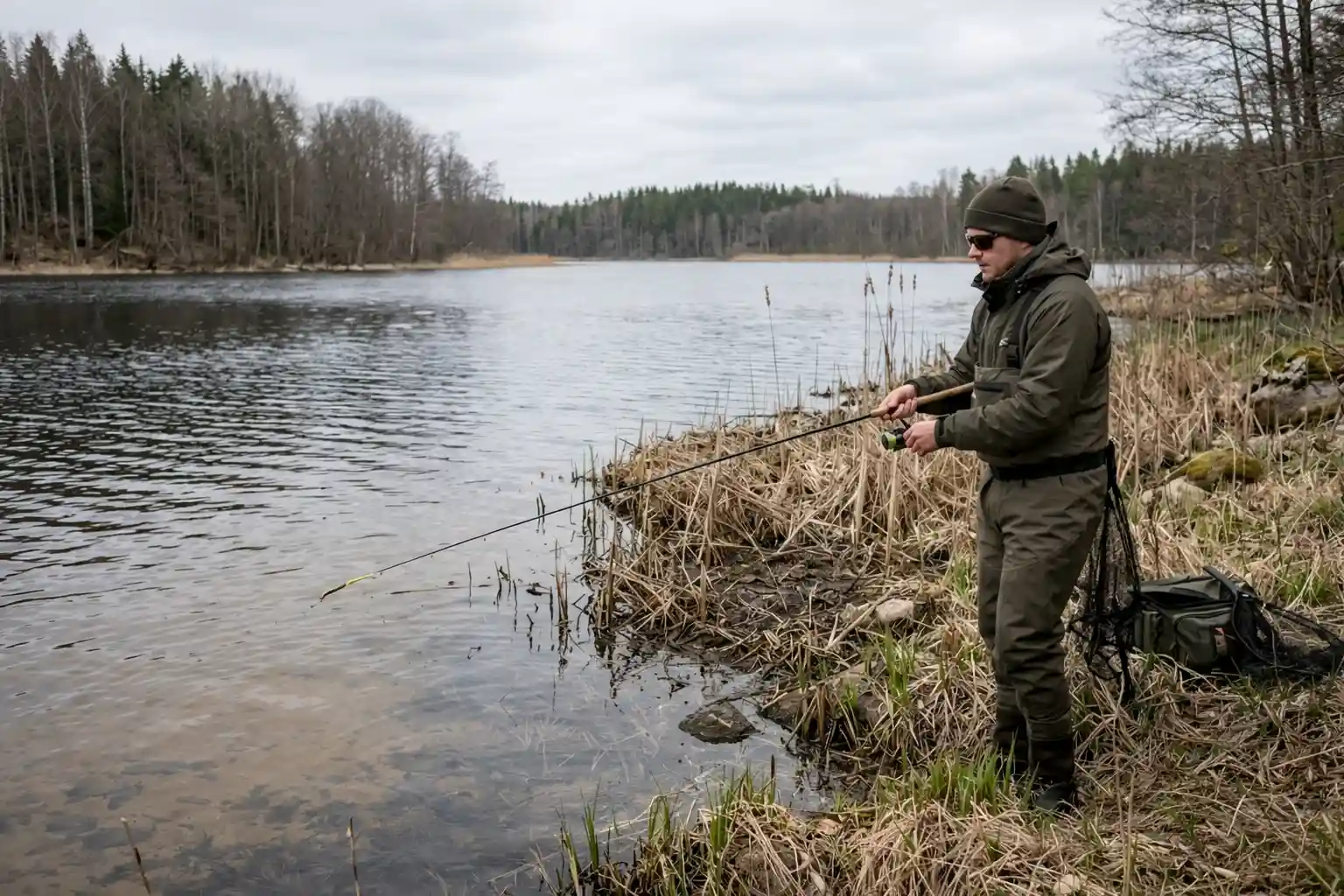
The biggest mistake I see from the bank is simple: anglers walk straight to the water’s edge before making their first cast. In clear spring conditions, a pike holding in shallow cover can spot your silhouette instantly. Before your lure even hits the water, the fish is already gone. Your first cast should always come from at least 2–3 meters back, allowing your presentation to enter the strike zone naturally without alerting the fish.
From shore, every movement matters. You don’t have the luxury of repositioning like you would from a boat. Your casting angles, distance control, and approach determine whether you trigger a strike—or completely miss fish holding just a few meters away.
Most anglers treat shore fishing as a limited option, but in reality, it can be one of the most precise and effective ways to target spring pike—if you understand how fish move, where they position, and how to present your lure without spooking them.
In this guide, you’ll learn exactly how to approach spring pike fishing from the bank, including where to stand, how to cast, what lures to use, and how to stay in the strike zone long enough to trigger aggressive reactions.
Spring Pike Fishing from Shore: Why Bank Anglers Have an Advantage in Early Season
In early spring, shore anglers are often closer to active pike than boat anglers—they just don’t realize it. As water temperatures begin to rise, pike don’t spread randomly across the system. They follow a predictable movement pattern from deeper winter holding areas toward shallow, warming zones where feeding activity starts first.
These zones are almost always within casting distance from the bank. South-facing shorelines, protected bays, reed edges, and dark-bottom areas warm faster than open water. Even a small temperature difference—sometimes just 1–2°C—can pull baitfish into these areas, and pike follow immediately. While many boat anglers are still searching deeper edges or transition zones, shore anglers are already positioned where the first feeding windows open.
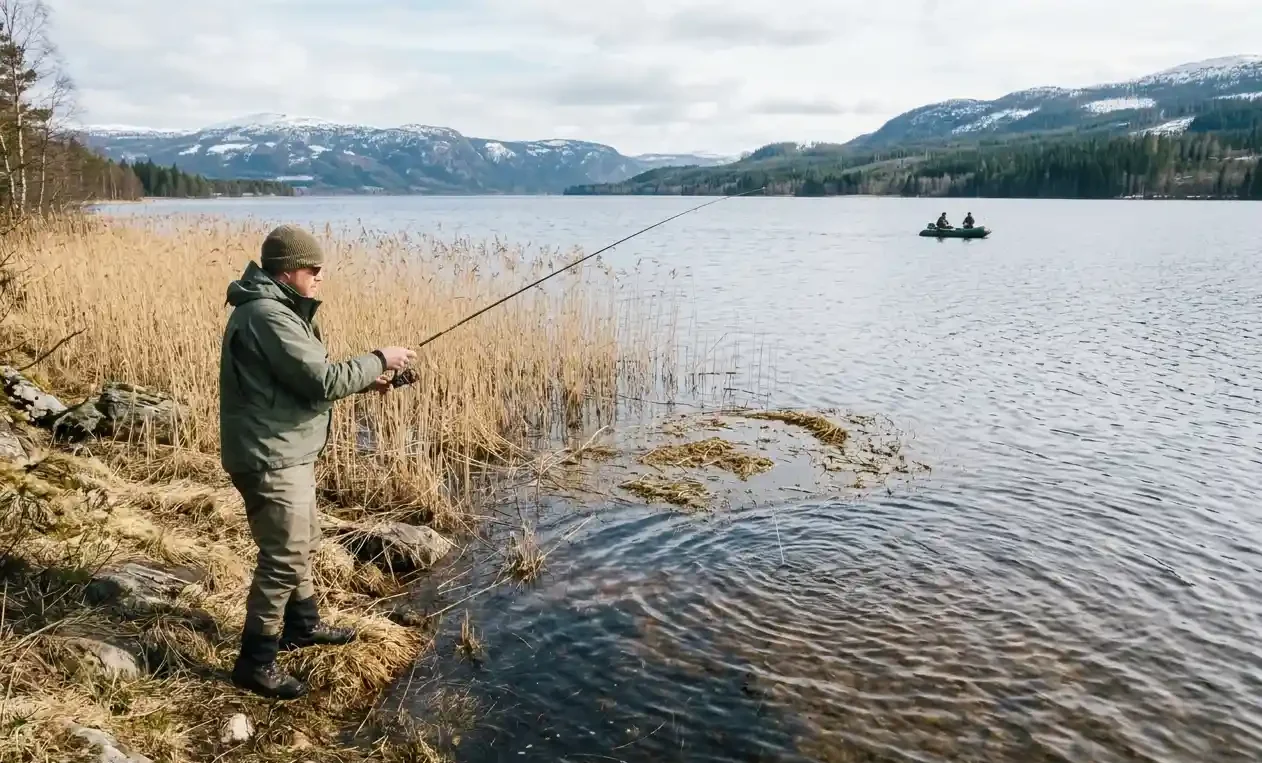
This creates a natural advantage—but only if you approach it correctly. From the bank, you’re not covering water—you’re intercepting movement. Pike don’t sit still in spring. They move along edges, cruise shallow flats, and hold briefly in micro-zones where conditions are right. If you understand these routes, you don’t need a boat—you need timing and precision.
The key difference is efficiency. Boat anglers rely on mobility to find fish. Shore anglers rely on positioning and timing. When done right, bank fishing removes unnecessary variables and puts your lure directly into active water without constant repositioning.
This is why understanding spring pike fishing as a seasonal movement pattern—not just a location—is critical. Once you see how fish transition into shallow zones, you stop guessing and start targeting areas where strikes are actually happening.
Spring Pike Fishing from Shore: Where to Find Active Fish (Shallow Bays, Edges & Warm Water Zones)
In spring pike fishing from shore, location is not random—it’s driven by temperature, sunlight, structure—and visible life. As soon as water starts warming into the 4–8°C (39–46°F) range, pike begin shifting toward areas that heat faster than the rest of the system. These are the zones where feeding activity starts first—and most of them are accessible directly from the bank.
The most consistent spots are shallow bays, protected shorelines, and reed edges. These areas warm faster because they are shielded from wind and exposed to longer periods of sunlight. South-facing banks are especially important because the sun hits them at a better angle throughout the day, increasing thermal absorption. Bottom composition also plays a role—dark, muddy bottoms retain heat far better than sand or gravel, often creating micro-zones that are just warm enough to trigger baitfish movement.
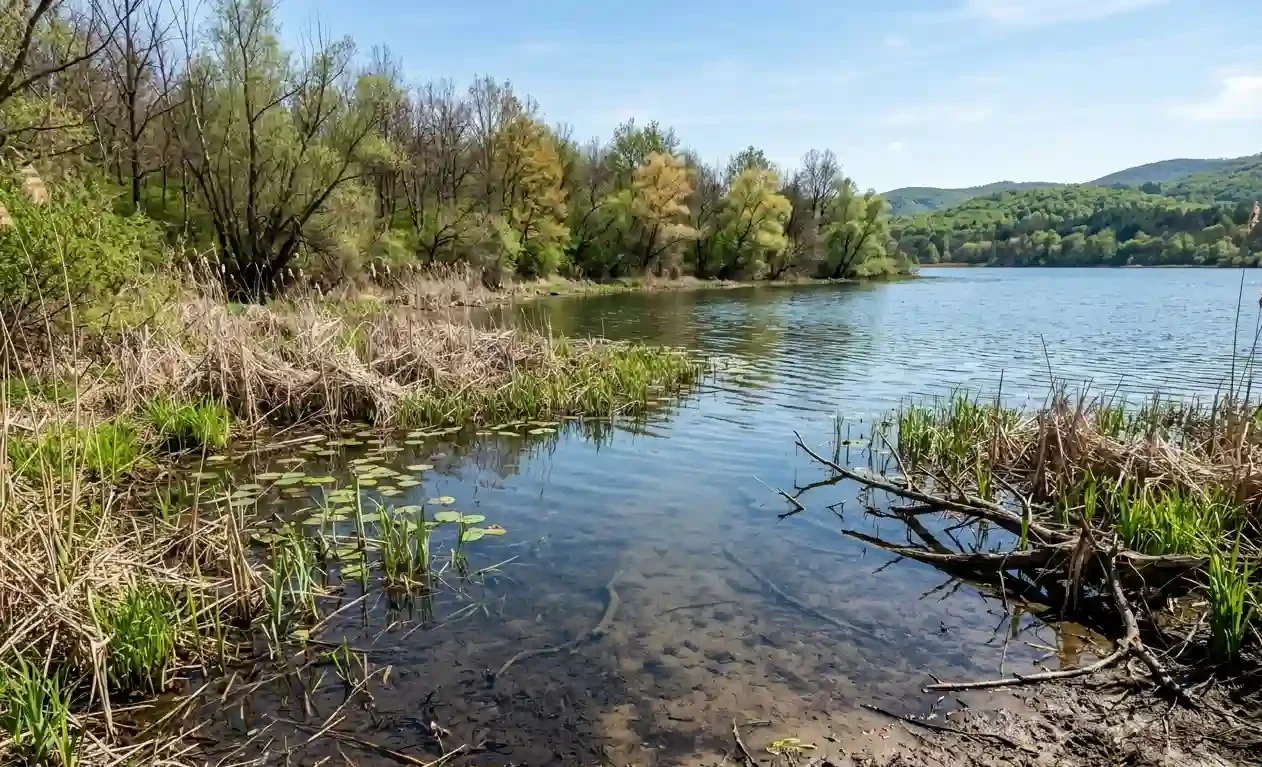
But the fastest way to confirm a good spot is simple: look for life. If you see small baitfish (roach, minnows) flickering near the surface or frogs starting to appear in shallow cover, you’re in the right place. Pike follow food, and in spring, they rarely sit far from active prey.
Wind is another key factor from shore. Position yourself with your back to the wind, targeting banks where waves are pushing into the shoreline. This movement concentrates warmer surface water, oxygen, and food, often triggering feeding activity. Even a light wind pushing into a shallow bay can turn a dead area into an active strike zone.
Pike don’t just sit in these areas—they move through them. In spring, fish follow predictable paths between deeper water and shallow feeding zones. From shore, your job is not to randomly cast, but to position yourself where you can intercept these transition routes as fish move in and out of warmer water.
Edges and transitions are key. The line where shallow water meets slightly deeper zones (1–2.5 m / 3–8 ft) often holds active fish. These are staging areas where pike pause before pushing fully shallow or dropping back after feeding. From the bank, these edges are often within casting range—you just need to recognize them.
Understanding spring pike locations helps you stop guessing and start targeting areas where fish are actually holding. Once you combine warm water, structure, movement routes, and visible life, you’re no longer fishing empty water—you’re fishing where strikes happen.
Best Shore Fishing Spots for Spring Pike (Accessible Structures That Hold Fish)
In spring pike fishing from shore, not every bank is worth fishing. The difference between empty water and consistent action comes down to finding accessible structure that naturally holds fish during their movement into shallow zones.
One of the most reliable spots is reed edges—especially old, dead reeds from the previous season. Early in spring, before new vegetation starts growing, these yellow, broken reed beds act as the only available cover. They also hold heat better than bare sand or gravel, creating slightly warmer micro-zones that attract baitfish first. If you find a small pocket or opening inside old reeds, there is a very high chance a pike is holding there.
Another high-percentage area is shallow flats with quick access to deeper water. These are transition zones where pike move in to feed and drop back when conditions change. Without sonar, you can still identify these “highways” by watching the water color. Where dark blue water shifts into lighter green or brown, you’re looking at a depth transition—and a natural strike zone.
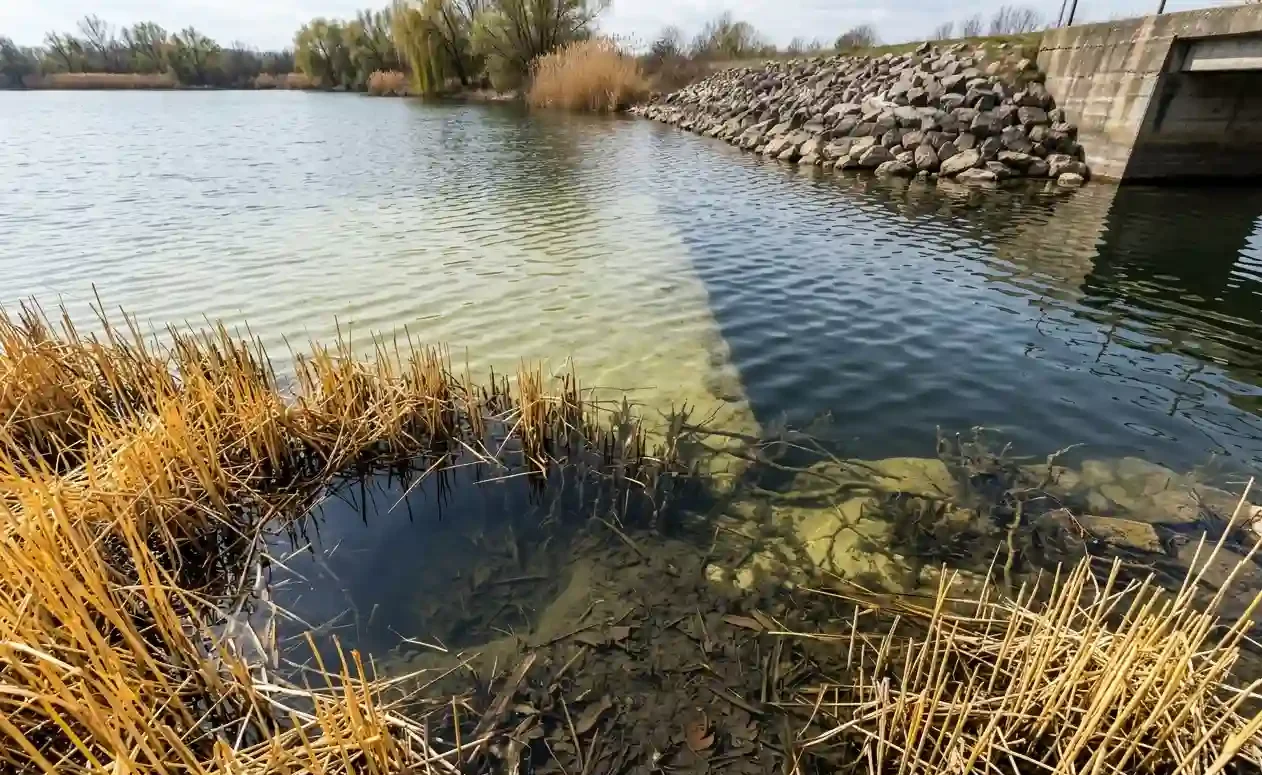
Points and shoreline corners are natural ambush funnels—but the key spot is not always the obvious one. While many anglers cast directly to the tip, the most consistent fish often hold just behind the point, in the calmer water where wind creates a subtle push and baitfish gather. This “quiet pocket” becomes a perfect ambush position, especially for larger pike.
Man-made structure can also be a major advantage from shore. Docks, bridges, rock banks, and rip-rap don’t just provide cover—they act as thermal mass. During sunny periods, stone and concrete absorb heat and slightly warm the surrounding water, sometimes just enough to activate nearby fish. Even a 1–2°C difference can turn a dead stretch into a feeding zone.
The key is not just finding structure—but understanding how pike use it. In spring, fish rarely stay in one place for long. They move between zones, stopping briefly where conditions are right. That’s why the best shore spots are always connected to deeper water and located along movement routes.
To consistently locate these areas, it helps to understand spring pike depths and how fish position between shallow feeding zones and deeper holding water. Once you combine structure with depth, temperature, and movement, you stop guessing—and start fishing spots that actually hold pike.
How to Cast from Shore Without Spooking Pike (Angles, Distance & Entry Control)
Most pike are lost before your lure even hits the water. In shallow spring conditions, fish are often holding within a few meters of the bank. One wrong step, one bad cast, or one loud entry—and the opportunity is gone.
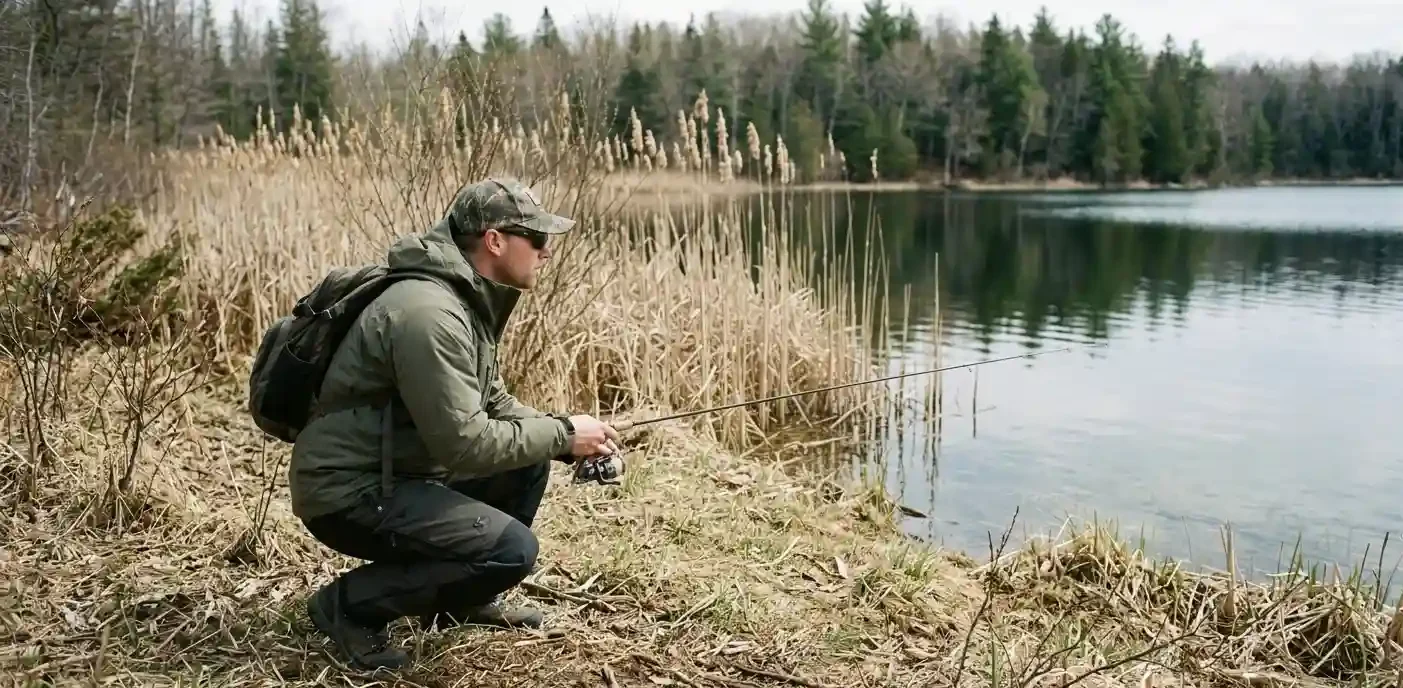
The first rule is distance—and positioning. Never walk straight to the water’s edge and start casting. Stay at least 2–3 meters back and make your first cast before you even reach the shoreline. But even more important is your silhouette. In shallow water, pike often look upward, and your body against a bright sky becomes a clear danger signal. Experienced anglers avoid standing exposed on the skyline—they keep a background (trees, reeds, bushes) behind them or lower their profile by crouching when approaching the bank.
The second rule is simple: parallel first. Your first cast should never go toward open water. It should run parallel to the shoreline, just 1–2 meters from the edge. The biggest spring pike are often sitting right under your feet. If you cast far immediately, your line cuts across that shallow zone and can spook fish before your lure even reaches them. Work the closest water first—then move outward.
Lure entry is a silent trigger—or a warning signal. In shallow water, a loud splash can kill the entire spot. Use controlled casts and practice “feathering the line”—slowing the spool or line just before the lure lands. This straightens your setup and allows the lure to enter the water with minimal disturbance. In 0.5–1 m (1.5–3 ft) depth, quiet entry often determines whether you get a strike or a follow that never commits.
Vision is your biggest advantage—if you use it. Polarized glasses are not optional; they allow you to scan the shallows before your first cast. Often, you can spot cruising or sunning pike holding motionless near cover. If you cast blindly into these fish, you risk spooking them. If you see them first, you control the situation.
Shadow control is the detail most anglers ignore. If the sun is behind you, your shadow is projected directly into the water—often right into the strike zone. This alone can push fish away before your lure arrives. Approach from an angle where your shadow stays behind you or off to the side, keeping the water in front of you undisturbed.
The goal is simple: enter the strike zone without announcing your presence. Once your lure is in the water, everything else—retrieve, speed, and pauses—starts to matter. But if the fish is already spooked, none of that will save the cast.
Understanding spring pike behavior explains why these details matter so much. In cold, clear water, pike rely heavily on vision and vibration—meaning your approach determines whether they strike or disappear.
Best Lures for Spring Pike from Shore (What Actually Works from the Bank)
Choosing the right lure in spring pike fishing from shore is not about variety—it’s about control, depth, and presentation. From the bank, you don’t have the luxury of perfect positioning like in a boat, which means your lure has to do more work. It needs to stay in the strike zone longer, move naturally, and trigger reaction strikes in cold, shallow water.
The most consistent performers from shore are suspending jerkbaits, soft swimbaits, and spinnerbaits. These lures allow you to control depth and speed while covering water efficiently. In early spring, when fish are still slow, suspending jerkbaits dominate because of the “hover factor”—the ability to stop and stay in place. In water around 4–6°C (39–43°F), pauses of 5–10 seconds are not too long. Most anglers move too fast. Pike often follow the lure for several meters and strike only when it fully stops and hangs in front of them.
Soft swimbaits and spinnerbaits rely on one key thing: vibration. In cold water, you’re not fishing fast—you’re fishing just fast enough to keep the lure alive. You should feel a steady “thump” through the rod tip, even at very slow retrieve speeds. If you lose that vibration, the lure stops being effective. That “thump” is what helps pike locate your bait in cold, low-energy conditions.
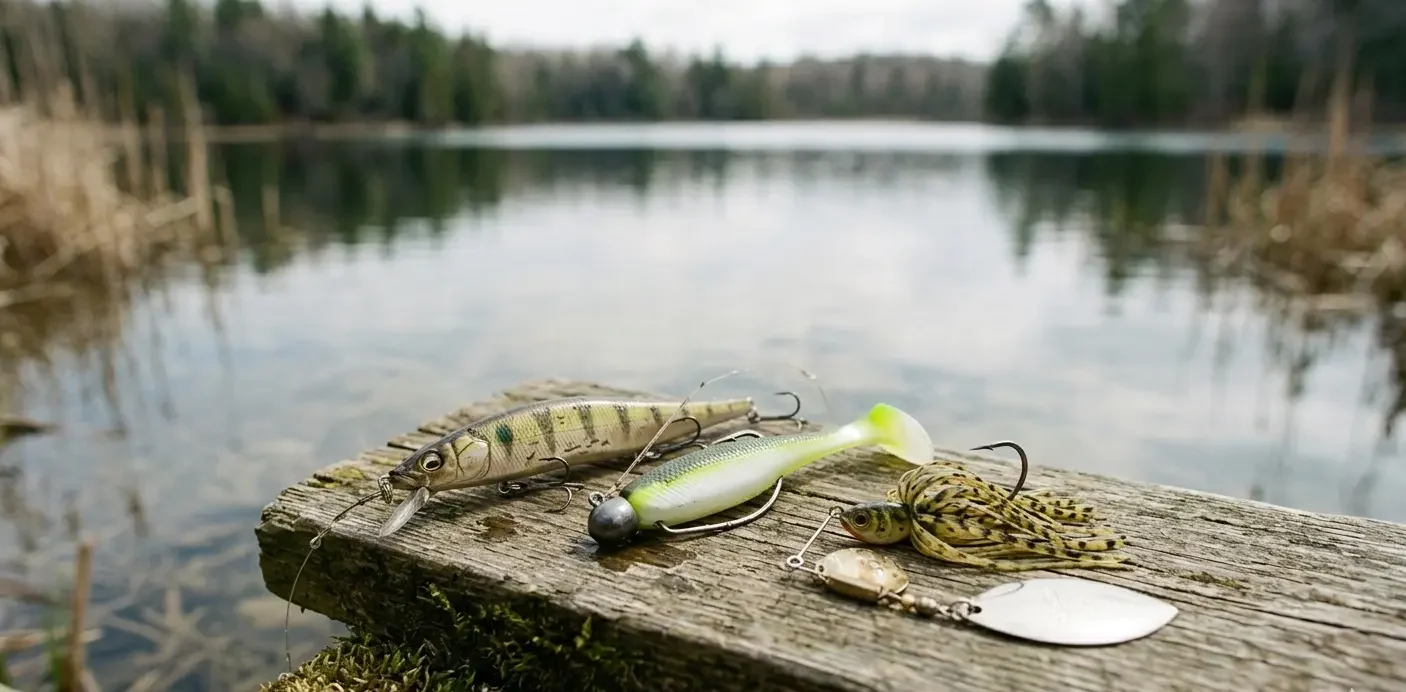
From the bank, snag control matters more than most anglers expect. Early spring shorelines are full of old vegetation, broken reeds, and submerged debris. Spinnerbaits and weedless-rigged soft plastics shine here because they can move through cover without constantly getting stuck. This means more time fishing—and less time losing lures.
Your setup plays a bigger role than most anglers think. From shore, you rely heavily on casting distance, line control, and consistent retrieve speed. A properly balanced spinning setup allows you to cast accurately, control your lure in shallow water, and maintain contact during pauses. In cold conditions, low-quality reel grease can thicken and reduce sensitivity, making it harder to feel subtle strikes. At the same time, a smooth drag system is critical—spring pike often hit heavy, but not always aggressively, and your reel must respond instantly without sticking.
That’s why choosing the right pike fishing reel for cold water matters more than most anglers realize. In early season conditions, when timing and control are everything, your reel directly affects how well you manage the lure and convert strikes into landed fish.
Color selection is the final piece most anglers overlook. In clear water, natural patterns like roach or perch work best because they match the environment. But when spring runoff adds stain to the water, brighter colors like chartreuse or white become far more visible, especially in shallow zones where pike rely on contrast to locate prey.
The key is not to switch lures constantly—but to match your presentation to the conditions. If the water is clear and fish are slow, use suspending lures with long pauses. If the water is stained or fish are more active, switch to moving baits that create vibration and cover water faster.
For a full breakdown of proven setups, check best spring pike lures and build your approach around lures that consistently stay in the strike zone from shore. When your lure matches both the depth and the behavior of the fish, strikes become predictable—not random.
How to Retrieve Lures from Shore (Speed, Pauses & Strike Triggers)
In spring pike fishing from shore, retrieve speed is not about covering water—it’s about staying in the strike zone long enough to trigger a reaction. Most anglers retrieve too fast, especially in cold water, and pull the lure away before the fish has time to commit.
The rule is simple: slow down more than you think. In water between 4–8°C (39–46°F), pike are active—but not aggressive. They follow, observe, and strike only when the presentation feels easy to catch. If your lure is constantly moving, you remove that opportunity.
The most effective retrieve from shore is a slow, controlled pull with long pauses. Whether you’re using a jerkbait, swimbait, or spinnerbait, the goal is to keep the lure in front of the fish as long as possible. In many cases, the strike comes during the pause—not during the movement.
Pause length is critical—but so is what happens during the pause. When working a jerkbait, allow a slight slack line after each twitch. This lets the lure glide naturally to the side before stopping, creating that unpredictable “kick” that often triggers strikes. In colder conditions, don’t be afraid to extend pauses to 3–5 seconds—or even longer.
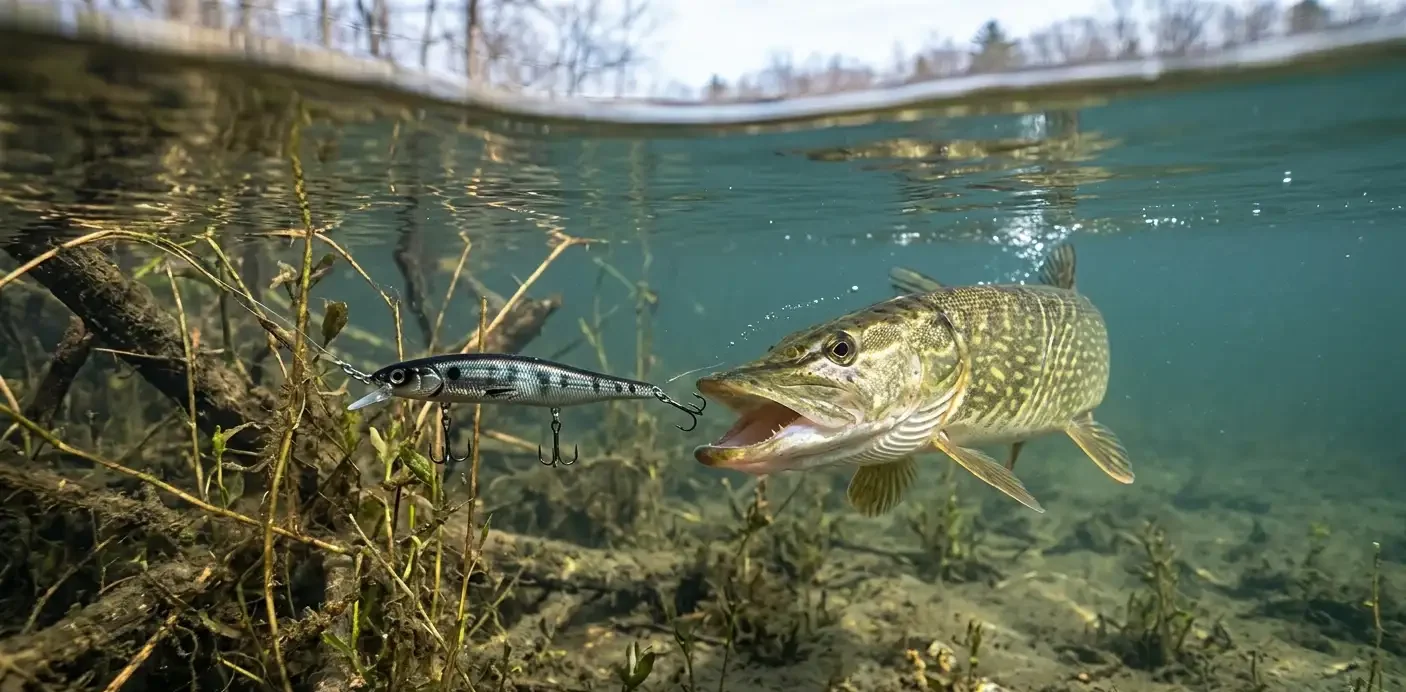
Subtle contact is everything. In spring, strikes rarely feel aggressive. Most of the time, it feels like your lure suddenly becomes heavier—almost like dragging through grass. That is often a fish. Experienced anglers react instantly with a hookset, while beginners hesitate and lose the opportunity.
From shore, angle and retrieve work together. A slow retrieve combined with a parallel casting angle keeps your lure inside the strike zone for the maximum amount of time. This is where most strikes happen—not in the middle of the cast, but along edges and shallow routes close to the bank.
One of the biggest mistakes happens at the very end of the retrieve. Never pull your lure out of the water too early. Spring pike often follow from deeper water and strike right at your feet. Always finish your retrieve slowly, and before lifting the lure, slightly change the rod angle or make a small turn. That final movement often triggers a last-second strike.
Swimbaits add another trigger when used correctly. Occasionally letting the lure touch bottom and lift a small cloud of silt can imitate a fleeing baitfish trying to hide. This subtle detail can turn a passive follower into an active strike.
Consistency matters more than constant changes. Once you trigger a strike, repeat the same retrieve speed and pause pattern. Spring pike often respond to rhythm more than randomness.
Understanding when pike are most active helps you adjust your retrieve based on feeding windows. During active periods, you can slightly increase speed—but in most spring conditions, slower presentations outperform everything else.
How to Detect Pike Strikes from Shore (Subtle Bites vs Aggressive Hits)
In spring pike fishing from shore, most strikes are missed—not because fish don’t bite, but because anglers don’t recognize the signal. In cold water, pike rarely hit with full aggression. Instead, they follow, inspect, and take the lure in a controlled, almost lazy way.
The biggest mistake is waiting for a hard hit. In reality, many spring bites feel like nothing more than added weight—or like your lure suddenly got stuck in grass. If something feels different, set the hook. Experienced anglers react instantly, while beginners hesitate and lose the fish.
Line behavior is just as important as feel. Watch for small twitches, slight stops, or sideways movement. From shore, especially at longer casting distances, visual cues often reveal bites before you feel them.
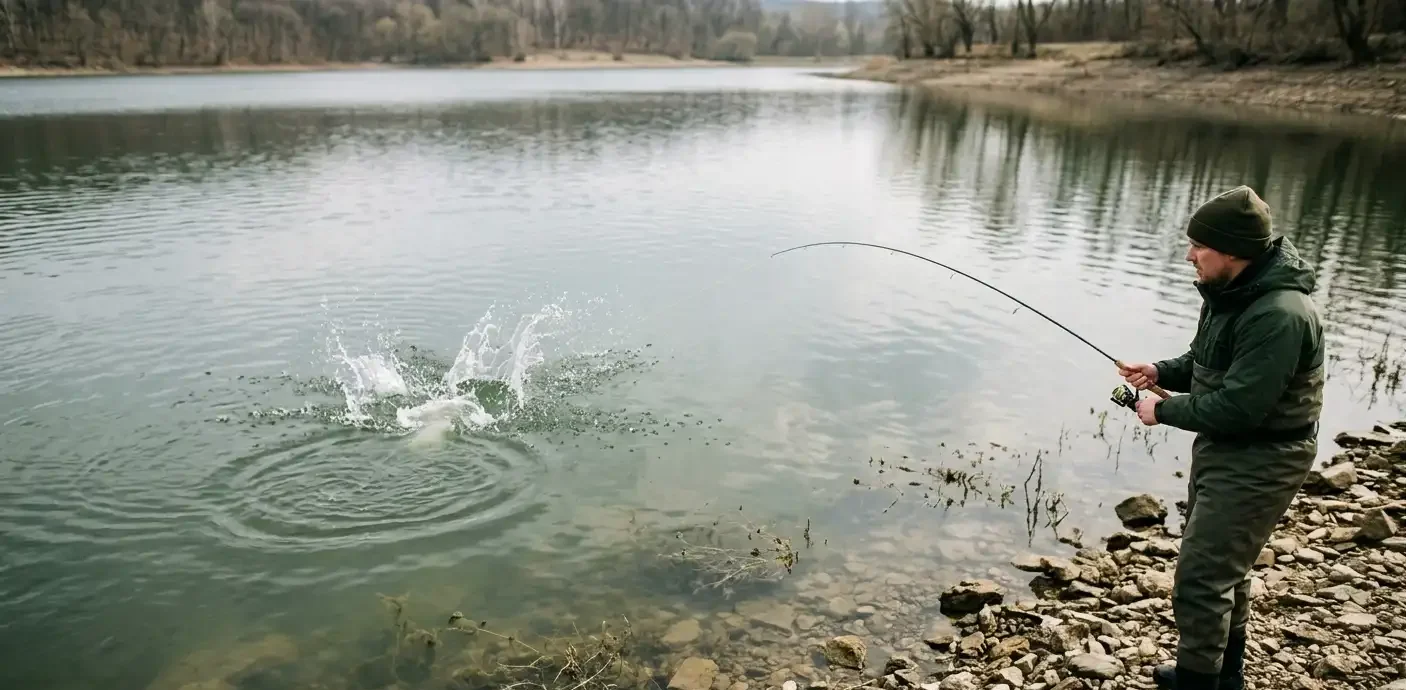
Not all strikes happen the same way. Some pike hit aggressively, especially during active feeding windows, but most early-season bites are subtle. A slow pickup during a pause, a soft resistance during retrieve, or a sudden stop in movement—these are all strike signals. This becomes even more noticeable in unstable conditions, like those explained in spring pike fishing after a cold front, where fish become even less aggressive.
The key is simple: stay connected and expect the bite at any moment. Whether you’re retrieving slowly or pausing the lure, always be ready to react. In spring pike fishing from shore, recognizing these small signals is what turns follows into landed fish.
Common Shore Fishing Mistakes That Push Spring Pike Away
- Walking straight to the water’s edge — you spook fish before your first cast. Always stay back and cast first.
- Casting too far immediately — the biggest pike are often close. Work the near water before targeting distance.
- Ignoring casting angle — casting straight out reduces time in the strike zone. Parallel casts catch more fish.
- Retrieving too fast — cold-water pike need time to react. Fast retrieves pull the lure away too early.
- Pulling the lure out too early — many strikes happen at your feet. Always finish the retrieve before lifting.
- Making too much noise — heavy steps, loud casts, and sudden movement push fish out of shallow water.
- Ignoring water clarity — adjusting your approach in different conditions is critical. In situations like muddy spring water, visibility drops and fish rely more on vibration than sight.
- Fishing dead water too long — if there’s no activity, no bait, and no follows, move. Spring pike are location-driven.
Most mistakes in spring pike fishing from shore are not about gear—they are about approach. Small adjustments in positioning, casting, and retrieve make a bigger difference than constantly changing lures.
In spring pike fishing from shore, success comes down to precision, timing, and understanding fish behavior—once you align all three, strikes stop being random and start becoming predictable. Scientific studies on Esox lucius behavior confirm that pike rely heavily on ambush positioning and energy-efficient feeding, which is exactly why slow, controlled presentations from the bank consistently outperform aggressive approaches.
Spring Pike Fishing from Shore: FAQ
Is spring pike fishing from shore effective?
Yes—spring pike fishing from shore is highly effective because pike move into shallow water that is easily reachable from the bank.
What is the best time for spring pike fishing from shore?
Late morning to afternoon, when shallow water warms and pike become more active.
How shallow are pike in spring?
Often 0.5–1.5 m (1.5–5 ft), especially in warming zones near the bank.
What retrieve works best?
Slow retrieve with pauses—most strikes happen during the pause.