

Pike Fishing in Muddy Spring Water: How to Use Mud Lines to Trigger Strikes
Pike fishing in muddy spring water is not a setback — it’s a positioning advantage if you understand what’s happening physically. Early season snowmelt often pours into lakes at 3–4°C (37–39°F), dragging silt, debris, and cold inflow through feeder creeks. Overnight, visibility can collapse to 30–60 cm (12–24 inches) while the surface looks like chocolate milk.
I’ve watched boat ramps empty out the moment that happens. Anglers see brown water and assume the bite is dead. They leave. The fish don’t.
Here’s what years of pre-spawn sessions have shown repeatedly: muddy water doesn’t eliminate feeding activity — it compresses it. Reduced visibility tightens a pike’s strike radius, but it also concentrates bait along clarity transitions. Instead of roaming, fish position with purpose.
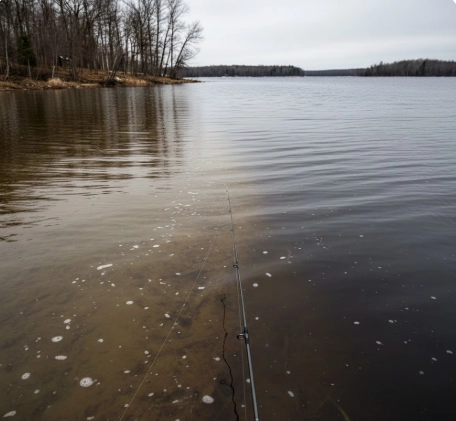
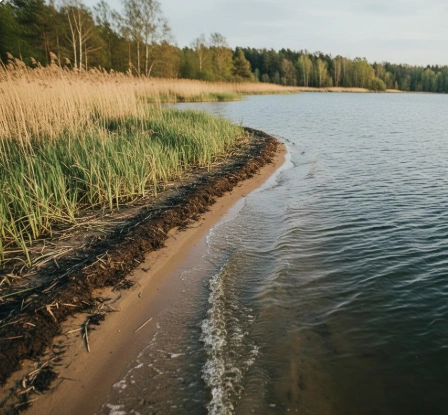
Mud lines aren’t just color changes; they’re physical walls in motion. You can see suspended silt pushing against older lake water like cream poured into black coffee. That seam isn’t cosmetic — it’s structural. Wind direction, inflow angle, and shoreline contour shape it hour by hour, creating a moving ambush lane.
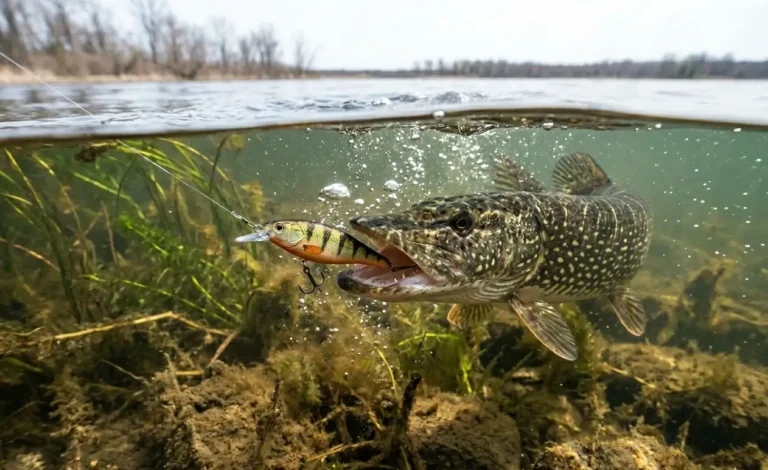
Inside those seams, pike don’t rely only on vision. Their lateral line system becomes critical, detecting erratic vibration from baitfish disoriented by turbidity. In low visibility, prey loses coordination. Predator efficiency rises. That imbalance is exactly what big pre-spawn females exploit.
The same migration logic explained in spring pike fishing still applies — temperature initiates movement — but clarity determines the final strike positioning. If you learn to treat mud edges like underwater breaklines instead of “dirty water,” pike fishing in muddy spring water becomes repeatable instead of frustrating.
This guide breaks down how much stain is productive, when runoff helps instead of hurts, how wind reshapes color seams, and how to adjust presentation so you trigger commitment instead of short follows. Not theory. Field patterns built from real cold-to-warm transition water.
How Much Visibility is Ideal for Pike Fishing in Muddy Spring Water? The 30–60 cm Test
Not all muddy water behaves the same when pike fishing in muddy spring water. Some stain compresses feeding lanes in your favor. Some of it turns the system blind and unstable. The difference usually isn’t a guess — it’s measurable.
On most early-season sessions, the MFG team gauges visibility the same simple way. We drop a bright white 1/2 oz chatterbait straight down beside the boat. No electronics. No Secchi disk. Just contrast and silhouette. If that white blade-and-skirt profile disappears before elbow depth, we’re usually in the dead zone. If we can still see the skirt flare and faint blade flash at roughly 50 cm (20 inches), we know we’re sitting inside the productive stain band.
Through repeated field patterns, that 30–60 cm (12–24 inch) visibility range consistently produces the most predictable positioning during pike fishing in muddy spring water. Pike can still detect displacement efficiently, baitfish lose visual precision, and feeding becomes short-range and decisive.
There’s a massive difference between suspended silt and heavy organic debris. Fine mineral silt — common after snowmelt or wind-driven shoreline erosion — creates workable stain that fish tolerate well. But water loaded with pine needles, decaying leaves, and flood debris behaves differently. That kind of organic surge reduces comfort, scatters bait unpredictably, and often pushes fish either deeper or toward cleaner transition pockets.
Surface conditions tell the story before your lure does. In many of these sessions, the lake is wide open — no ice buffering the wind — just raw spring gusts whipping chocolate-colored whitecaps across shallow banks. That wind doesn’t just move water. It stacks stain. It pushes clarity seams directly against reed edges and transition shelves, reshaping feeding lanes hour by hour.
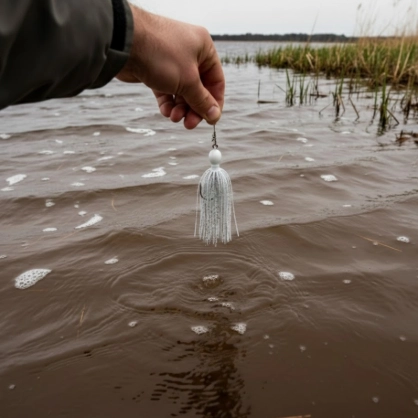
Once visibility drops below roughly 15–20 cm (6–8 inches), behavior shifts again. The MFG team has observed that pike don’t simply stop feeding in these conditions — they anchor themselves. They hug bottom contours, vertical timber, or reed bases, using physical structure as a reference point in low-visibility water. This sensory adjustment closely mirrors patterns explained in spring pike behavior, where pre-spawn fish rely more on positioning efficiency than on long visual chases.
The key question isn’t whether the water looks dirty — it’s whether a predator can still intercept prey efficiently. When visibility holds inside that 30–60 cm window, pike fishing in muddy spring water becomes an advantage rather than a handicap. When the system turns fully opaque and chaotic, positioning shifts and so must your approach.
Learn to measure stain with your own gear. Learn to distinguish silt from debris. And treat every clarity seam like a moving breakline — because in spring, it is.
Where to Position in Muddy Spring Water: The Exact Side of the Mud Line That Holds Big Pike
Most anglers see a mud line and cast straight into the brown water. That’s the mistake. The real decision isn’t whether the water is dirty — it’s which side of the seam gives the predator the advantage.
In spring runoff conditions, big pre-spawn pike rarely sit buried in the thickest stain. They also don’t cruise far out in fully clear water when bait is being compressed toward the edge. The highest-percentage zone is the transition — where workable clarity meets reduced visibility.
Think of the mud line like a moving underwater breakline. On one side, bait retains partial orientation. On the other, reaction time drops. Pike position where they can still detect movement while prey loses visual precision. That balance point becomes the ambush lane.
Execution on the seam is precise. Cast 1–2 meters (3–6 ft) beyond the mud line so the lure enters the stain naturally. In 30–60 cm (12–24 inches) visibility, most pike will not chase more than 1–2 meters (3–6 ft). If your lure doesn’t cross directly in front of them, it won’t get touched.
With a bladed jig such as the Z-Man Original ChatterBait, retrieve just fast enough to maintain steady blade vibration. If you cannot feel consistent thump through the rod tip, you are too slow. In 4–8°C (39–46°F) water, the retrieve should be controlled and deliberate — not burned, not dead-sticked.
For a suspending jerkbait like the Smithwick Perfect 10 Rogue, use short downward snaps followed by 3–6 second pauses in 5–6°C (41–43°F) water. If runoff temperatures drop closer to 3–4°C (37–39°F), extend pauses to 6–8 seconds. Strikes most often occur as the lure exits the stain and re-enters clearer water — not deep inside the mud.
Strike detection changes in cold, turbid water. Don’t wait for a violent thump. In 3–6°C (37–43°F) conditions, many strikes feel like added weight or your line suddenly going slack for a split second during the pause. Pike often inhale the lure and hold still rather than crushing it.
In muddy water, larger females frequently do not turn aggressively after inhaling the bait. They may hold position for 1–2 seconds before deciding whether to expel it. That hesitation is your hookset window. Detecting that subtle pressure shift becomes far easier with a properly balanced spring pike rod built to transmit cold-water vibration cleanly. If anything feels different during that extended pause — set the hook immediately.
Spoons such as the Mepps Syclops excel on a slow, steady roll parallel to the seam at roughly 1–1.5 meters (3–5 ft) depth, especially where a shallow shelf drops toward 2 meters (6–7 ft). Maintain rotation and flash without letting the spoon stall or helicopter.
If you’re interested in a deeper breakdown of these exact baits and how we use them throughout the pre-spawn period, you can find the full details inside our best spring pike lures guide.
Never fish a mud line parallel for long without crossing it. Make 6–8 perpendicular seam-crossing casts. If no contact occurs after multiple clean transitions, reposition. Active fish holding on a clarity edge rarely require more than a handful of correct entries to reveal themselves.
Muddy spring water isn’t chaos. It’s a moving edge. And when you position on the correct side of that edge — and execute with precise depth, pause timing, and seam crossings — big pre-spawn pike don’t roam. They wait.
When Muddy Spring Water Triggers Feeding Instead of Killing It: Wind Direction, Inflow Speed & Stability Windows
Muddy water by itself doesn’t trigger feeding — stability does. In pike fishing in muddy spring water, the biggest mistake anglers make is assuming that stain equals activity. In reality, pike respond to how that stain is moving and whether the system is stabilizing or still in shock.
In early spring, runoff events usually fall into two categories: sudden cold surge and gradual warming inflow. The difference between the two determines whether muddy water compresses feeding lanes or shuts them down temporarily.
A violent overnight temperature drop with heavy inflow is rarely productive in the first 12–24 hours. When 2–3°C (35–37°F) creek water dumps aggressively into a 5–6°C (41–43°F) lake, it doesn’t just reduce visibility — it destabilizes the thermal layer. Pike often reposition slightly deeper or tuck tighter to structural reference points until temperatures equalize.
But when runoff is moderate and air temperatures stabilize for two consecutive days, something different happens. The stain spreads gradually, wind begins shaping defined seams, and bait compresses predictably. This is when muddy water becomes a feeding accelerator in pike fishing in muddy spring water.
Dark, suspended silt acts like a thermal sponge. On a sunny spring afternoon, even with 4°C (39°F) air, that muddy cloud can absorb enough solar radiation to register up to 0.5–1°C (1°F) warmer than surrounding clear water. That small thermal delta may not sound dramatic — but in 4–6°C (39–43°F) systems, it is often enough to increase metabolic response and shorten reaction time.
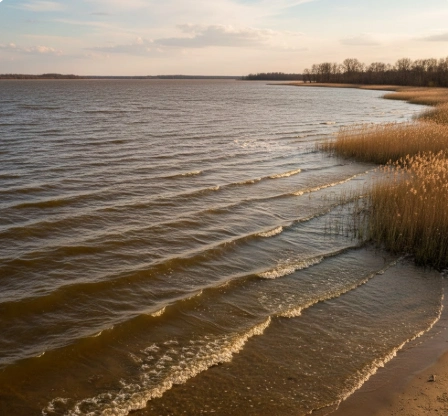
Wind direction is the multiplier. A steady wind blowing stained water into a shallow reed bay creates a natural bait trap. Plankton and micro-debris push first. Baitfish follow. Pike follow the bait. If that wind holds for 6–8 hours, the seam becomes structured and repeatable instead of chaotic.
You’ll know the seam is stabilizing when the muddy water stops looking like a turbulent cloud and begins forming long, oily-looking fingers stretching into clearer basins. When those fingers hold shape instead of dissolving in chop, ambush lanes are forming.
The MFG team consistently sees the strongest seam-related feeding windows when three conditions align:
- Visibility holds between 30–60 cm (12–24 inches)
- Water temperature is stable or rising by at least 0.3–0.5°C (0.5–1°F) over 24 hours
- Wind direction remains consistent for half a day or more
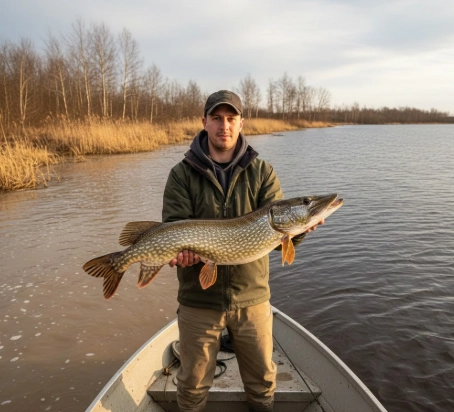
When those factors line up, muddy spring water doesn’t scatter fish — it positions them with surgical precision. But don’t expect an all-day bite. In multiple 30–60 cm visibility sessions, we’ve logged sonar screens that looked lifeless for four hours — only to see two or three 90+ cm (35+ inch) females strike within a 20–30 minute window once wind direction locked in.
This short burst is exactly why timing matters more than effort in spring. If you want to dial in when these windows are most likely to open during the day, we break that down in detail in our best time to catch pike in spring guide.
Conversely, if wind shifts repeatedly or inflow continues violently, seams dissolve. In that unstable phase, pike prioritize adjustment over hunting, and activity drops fast.
The takeaway is simple but critical: don’t evaluate muddy water in isolation — evaluate trend, direction, and stability. In pike fishing in muddy spring water, stable seams create opportunity. Chaotic surges eliminate it.
If you learn to wait for stabilization instead of fleeing at first sight of brown water, you’ll experience something most anglers never do — pre-spawn females feeding aggressively inside moving seams while the lake looks “ruined” to everyone else.
Contrast, Pressure Waves & Strike Radius: Why Vibration Outperforms Color in 30–60 cm Spring Visibility
In 30–60 cm (12–24 inches) of spring visibility, color becomes secondary. Contrast and pressure become primary factors for successful pike fishing in muddy spring water. Many anglers overthink paint patterns in stained conditions, but the biological reality is simple: a pike’s lateral line detects displacement before its eyes confirm detail.
In cold 4–10°C (39–43°F) systems, reaction distance shrinks dramatically — a compression pattern closely tied to documented spring pike depth adjustments during early pre-spawn transitions. A pre-spawn female positioned on a seam may only commit within a 1–2 meter (3–6 ft) strike radius. At that range, micro-details — scale patterns, subtle fades, hyper-realistic finishes — are irrelevant. What matters first is silhouette integrity and vibration signature.
The lateral line does not “see” color. It reads pressure waves. Low-frequency thump, steady displacement, and consistent hydrodynamic push travel farther through suspended silt than high-pitched, chaotic noise. This predictable rhythm is what guides the pike through the dead zone of the mud line and into that critical 1-meter strike radius.
Once the fish enters that compressed zone, the process shifts. Steady displacement brings the pike to the lure — but a single, controlled twitch at the seam transition acts as the final trigger. That movement isn’t about creating chaos. It’s about a sudden, mechanical shift in silhouette that mimics a prey’s last moment of vulnerability.
The distinction is critical: we are not talking about wild, erratic rod movement. We are talking about a clean, deliberate pulse. Even when working a suspending bait, the snap should create controlled water displacement followed by a rock-solid pause where the lure remains level and stable.
This is why long 6–10 second pauses in cold stained water are so effective. When pike fishing in muddy spring water, those extended pauses allow the pressure signal to settle and give the pike a fixed, readable silhouette it can commit to without overextending energy.
Silhouette becomes the second layer of confirmation. In these 30–60 cm visibility sessions on open water, a solid dark back — black, deep purple, or natural shadow tones — often creates a sharper outline against milk-tea colored water than chrome or neon finishes. It’s about the hard edge of the shape, not the brightness of the paint.
There is also a size threshold. Increasing profile slightly can improve detection, but oversizing in 4–6°C (39–43°F) water may reduce commitment distance. Pre-spawn females conserve energy. They will track efficiently — but they will not overextend for something that feels disproportionate.
The mechanical sequence is simple: vibration for navigation, silhouette for confirmation, pause for commitment. In pike fishing in muddy spring water, clarity of signal determines outcome more than cosmetic detail ever will.
The Muddy Water Trap: 3 Mistakes That Kill Pike Fishing in Muddy Spring Water
Muddy spring water does not ruin sessions. Misreading it does. After years of pre-spawn seam fishing, the same three mistakes appear repeatedly. Most anglers believe they are adapting, but they are actually working against the conditions — especially during pike fishing in muddy spring water, where positioning and signal control matter more than visibility alone.
Mistake 1: Chasing the Mud.
Seeing dark water and casting straight into the thickest stain is a common error. More mud does not automatically mean better camouflage. The highest-percentage fish position along the transition zone, not in completely blind water. When visibility drops below a functional range, feeding efficiency decreases. Stability matters more than density.
Mistake 2: The Speed Trap.
Cold, stained water makes anglers nervous, so they retrieve too fast. In 4–6°C (39–43°F) water, increased speed reduces commitment time. Overworking the bait disrupts the pressure signal and eliminates the pause, which is often where strikes occur. Cold-water pike track efficiently, not aggressively.
Mistake 3: Cosmetic Overload.
Too much attention goes to color and not enough to displacement. In 30–60 cm visibility, brightness does not equal detectability. A clean silhouette and controlled pulse outperform decorative finishes. Pike respond to signal clarity more than cosmetic detail.
The Stability Triangle: A Practical Mental Model for Pike Fishing in Muddy Spring Water
Remember this simple framework when fishing stained spring conditions:
- Visibility Window: 30–60 cm (12–24 inches) of functional stain
- Seam Positioning: The clean side of the transition edge
- Signal Clarity: Controlled vibration combined with a stable pause
When these three elements align, feeding windows become short but intense. The bite may last 20–30 minutes, but it can define the entire session.
Muddy spring water compresses visibility, strike radius, and opportunity. It does not eliminate them.
Locate stable seams. Deliver a readable signal. Wait for the window.
These are repeatable pre-spawn mechanics, not random luck.
FAQ: Pike Fishing in Muddy Spring Water
Do pike bite in muddy spring water?
Yes, pike absolutely bite in muddy spring water — especially during active pre-spawn periods. In pike fishing in muddy spring water, the key factor is functional visibility. The most productive range is usually 30–60 cm (12–24 inches). In that window, prey loses orientation while pike can still track pressure waves efficiently.
What is the best visibility for pike in stained spring water?
The highest-percentage feeding activity in pike fishing in muddy spring water occurs when visibility holds between 30–60 cm (12–24 inches). Below roughly 15–20 cm (6–8 inches), strike radius compresses significantly and fish rely heavily on structure rather than active seam hunting.
Where do big pike position along a mud line?
Large pre-spawn pike typically position on the cleaner side of the seam, not buried in the thickest mud. In pike fishing in muddy spring water, they hold where workable clarity meets reduced visibility, allowing efficient tracking with minimal energy expenditure.
Does wind improve pike fishing in muddy water?
Stable wind direction often improves pike fishing in muddy spring water. When wind pushes stain consistently into a reed edge or shallow bay for several hours, seams stabilize and bait compresses, creating short but intense feeding windows.
What retrieve works best in 4–6°C muddy spring water?
Controlled displacement combined with long pauses works best. In cold 4–6°C (39–43°F) conditions during pike fishing in muddy spring water, steady vibration brings fish within strike radius, while 6–10 second pauses allow commitment. Overly fast retrieves reduce conversion.
Do bright colors work better in muddy water?
Brightness is less important than silhouette. In pike fishing in muddy spring water with 30–60 cm visibility, a defined shape and stable vibration signature outperform detailed or flashy paint patterns. Pike react to pressure and outline before confirming color.
Conclusion: Mastering Pike Fishing in Muddy Spring Water
Pike fishing in muddy spring water is not random — it is structured. The stain compresses visibility, shortens strike radius, and reduces reaction time. But when stability replaces chaos, those same conditions create defined ambush lanes that disciplined anglers can exploit.
The biological reason this works is simple. A pike’s lateral line system allows it to detect subtle pressure changes long before visual confirmation occurs. In low-visibility spring conditions, vibration and displacement become primary navigation tools.
The difference between a dead session and a 20-minute feeding burst rarely comes down to lure color. It comes down to three controllable variables: functional visibility, seam positioning, and signal clarity. When you measure stain instead of fearing it, watch wind direction instead of guessing, and trust vibration over cosmetics, muddy water stops being a problem and becomes a filter that removes hesitation.
The lake stabilizes. The seam forms. The window opens. Your job is not to force bites — it is to recognize when physics align and deliver a readable signal inside that compressed strike zone.
In spring, most anglers retreat when the water turns brown. The few who understand structure, stability, and timing stay — and they are the ones who contact the largest pre-spawn females of the season.
Master the seam. Control the signal. Respect the window. Stay on the water longer than everyone else — and let the conditions work for you.