

Winter Pike Behavior: Why Big Pike Stop Chasing in Cold Water and How to Trigger Strikes
Winter pike behavior is the single most misunderstood part of pike fishing. Every winter, anglers keep using fast retrieves, shallow spots, and aggressive lures that worked in autumn — and they blank. At Master Fishing Guide, we’ve spent years focusing specifically on winter pike fishing, observing how large pike behave in cold water.
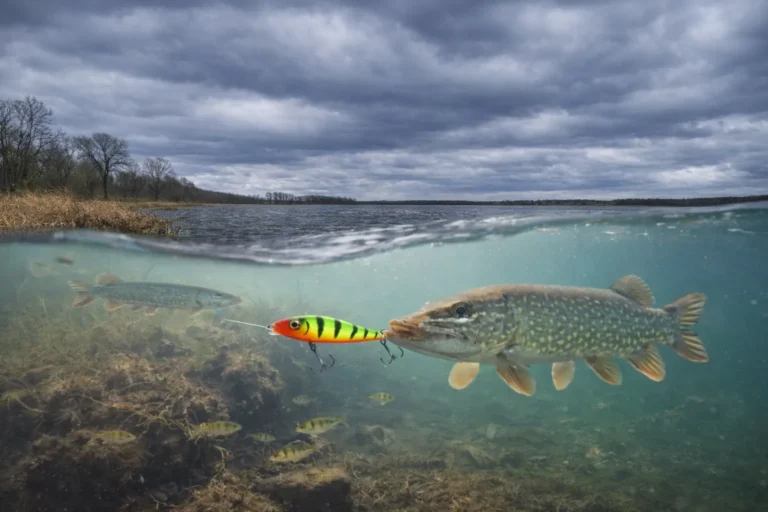
More than once, we’ve watched on sonar as a pike followed a lure for long seconds without reacting, only to strike after the slightest pause. Not because pike disappear, but because their entire feeding logic changes in cold water.
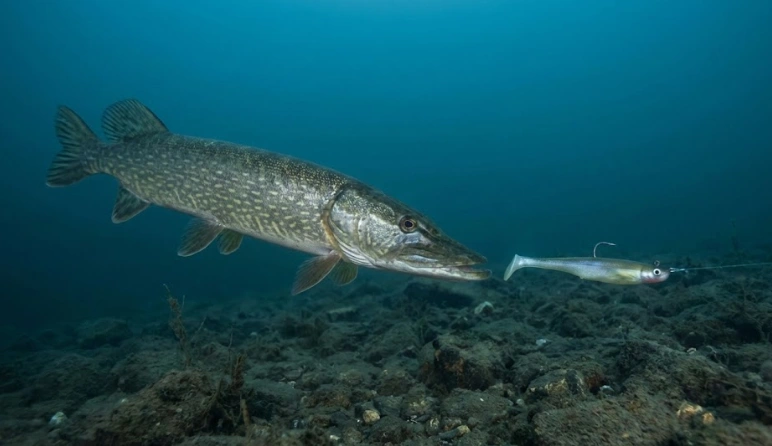
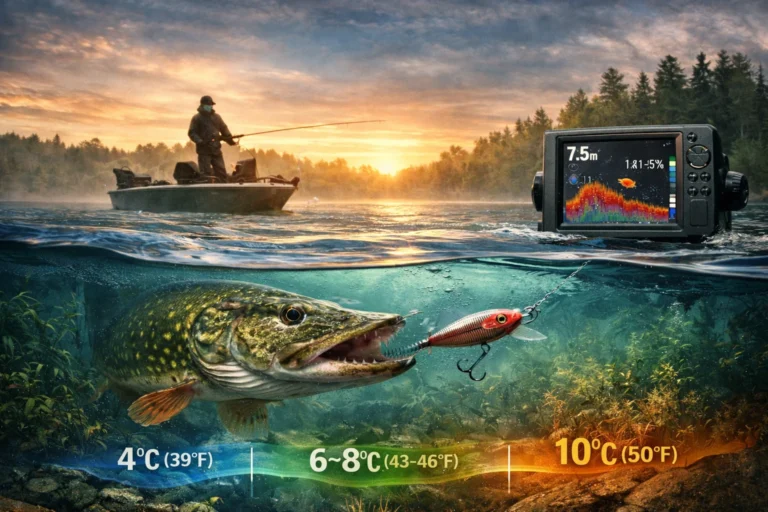
When water temperatures drop below 8°C / 46°F, northern pike begin a gradual metabolic slowdown. Their digestion slows, muscle efficiency decreases, and chasing prey becomes a waste of energy. This is the exact moment when pike abandon shallow flats and reposition into stable depth zones — the same depth ranges explained in our winter pike depths guide.
Understanding winter behavior is not about knowing which lure to throw — it’s about knowing why pike react only to certain presentations, why feeding windows become short, and why reaction strikes replace pursuit strikes. This behavioral shift is the reason slow-moving winter jerkbaits and large soft plastics consistently outperform fast lures.
This guide breaks down exactly how pike behave in cold water, step by step. You’ll learn when pike feed, when they ignore everything, and what actually triggers strikes when nothing else works. Everything else in winter pike fishing — depth selection, retrieve speed, and gear choice — builds on this foundation.
How Cold Water Changes Pike Metabolism
Cold water fundamentally alters how pike survive, feed, and strike. Unlike warm months, winter is not about growth or aggressive feeding — it is about energy conservation. As water temperatures drop, every movement costs more energy, while digestion slows dramatically.
Below roughly 8°C / 46°F, a pike’s metabolic rate begins to decline. Muscle efficiency decreases, oxygen demand changes, and fast, extended chases become inefficient. This is why winter pike stop actively hunting schooling baitfish and instead rely on ambush positioning and short reaction strikes, especially when fishing slow, cold-water winter pike lures.
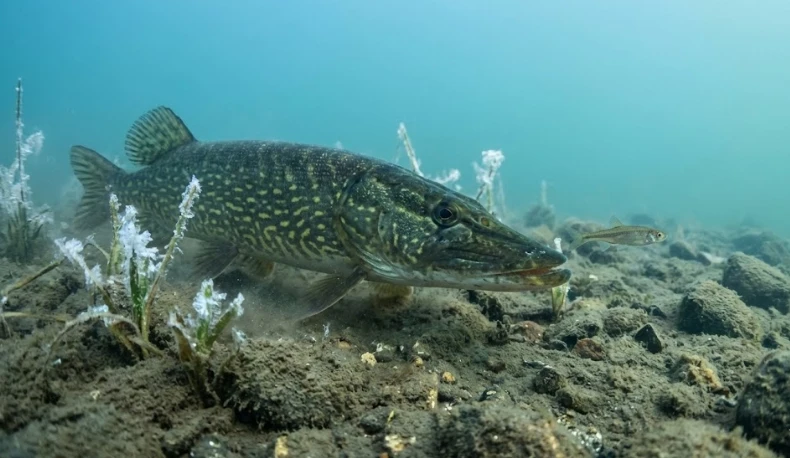
As temperatures continue falling toward 4°C / 39°F and below, digestion slows even further. Pike may still feed, but feeding windows become shorter and more selective. Instead of multiple daily feeding periods, winter pike often feed in brief bursts triggered by opportunity rather than hunger.
Winter pike do not stop feeding — they stop wasting energy. Every successful winter tactic, lure choice, and retrieve speed works only because it aligns with this biological reality.
Why Pike Stop Chasing and Rely on Reaction Strikes
In winter, pike rarely chase prey over distance. Once water temperatures fall and metabolism slows, extended pursuits become inefficient and risky. Instead of accelerating after fast-moving baitfish, pike switch to a strategy based on positioning, timing, and reaction.
This behavioral shift explains why winter strikes often feel sudden and violent. Pike remain motionless for long periods and strike only when a target enters the immediate strike zone. These attacks are not driven by hunger, but by opportunity — a moment where energy gain outweighs energy cost.
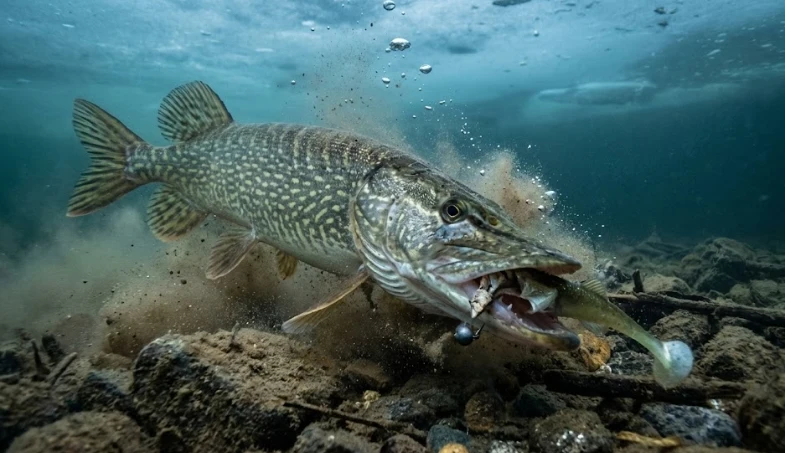
Reaction strikes replace pursuit strikes because they require minimal movement. A slow-moving or subtly gliding target triggers an instinctive response, especially when it moves close to bottom structure. This is why large, slow-falling profiles — like soft swimbaits fished tight to the bottom — consistently trigger strikes when faster presentations fail.
Understanding this change is critical. Winter pike are not lazy or inactive — they are selective and efficient. When your presentation matches this behavior, strikes feel sudden and decisive. When it doesn’t, even aggressive-looking lures are ignored completely.
How Pike Choose Holding Positions in Winter
In winter, pike do not choose locations — they choose stability. As metabolism slows and energy conservation becomes critical, pike abandon shallow roaming patterns and reposition into areas where temperature, pressure, and oxygen levels remain consistent.
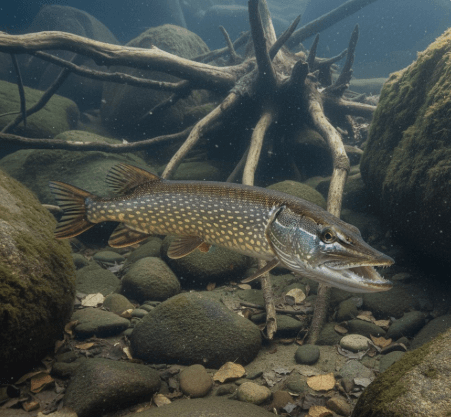
Rather than following baitfish across large flats, winter pike settle into specific holding zones that allow them to ambush prey with minimal movement. These areas typically include drop-offs, channel edges, and deep weed remnants where prey naturally funnels past their position.
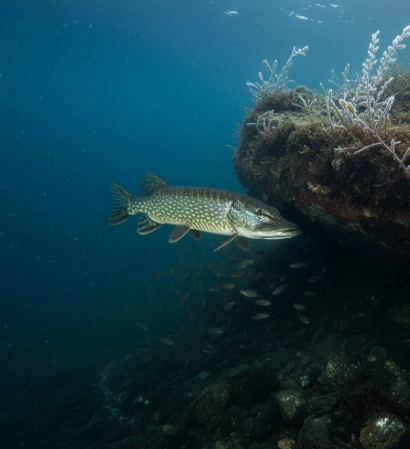
Depth becomes a deciding factor because it offers thermal stability. While surface temperatures fluctuate daily, deeper water remains far more consistent. This is why winter pike repeatedly hold within predictable depth ranges, especially those explained in winter pike depth patterns.
Holding positions are not random resting spots. Pike choose locations that combine easy access to prey with maximum concealment. Slight depth changes, hard-to-soft bottom transitions, or remaining vegetation all create ambush points where a slow-moving target can be intercepted without pursuit.
Winter pike fishing is won by finding these holding areas first. Once you understand where pike position themselves in cold water, lure choice and retrieve speed become secondary. Presenting a slow, deliberate bait through the correct zone matters far more than covering water.
How Slow Presentations Match Winter Pike Behavior
Slow presentations are not just a tactic choice — they are a behavioral requirement. Once pike shift to energy conservation, any lure that moves too fast or requires a long pursuit simply falls outside their strike logic.
In cold water, pike respond best to presentations that stay in the strike zone longer. A slow fall, a controlled lift, or a brief pause gives the fish time to assess the target without committing energy to a chase. This is why winter strikes often come after hesitation rather than motion.
Bottom-oriented movements are especially effective because they align with how pike position themselves. A lure that rises slightly, stalls, and then settles back down mimics vulnerable prey. This is exactly why heavy spoons worked with lift-and-drop pauses consistently trigger strikes when faster retrieves fail.
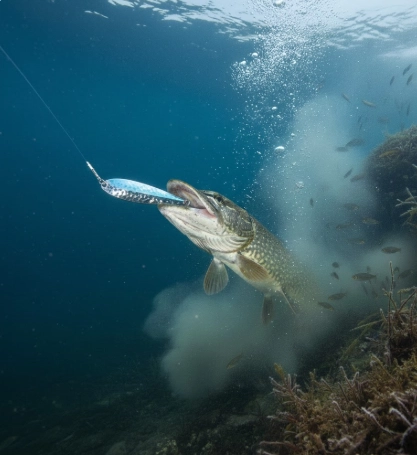
Speed control matters more than lure selection. Even the right bait becomes ineffective if it moves through the strike zone too quickly. Winter success comes from slowing everything down — retrieve speed, rod movement, and even how long the lure rests between actions.
When presentation speed matches winter pike behavior, strikes stop feeling random. They become predictable reactions to a bait that enters the strike zone, pauses, and gives the fish a low-risk opportunity to attack.
How Water Clarity and Light Affect Winter Pike Strikes
In winter, light and water clarity play a much bigger role in strike decisions. With reduced metabolism, pike rely more on visual confirmation before committing to an attack. Clear water and bright conditions often make them more cautious, while low light and stained water reduce hesitation.
Because winter pike rarely chase, they need to be convinced that a target is both easy to catch and safe to attack. In clear water, unnatural flashes or overly visible tackle can cause pike to follow without striking. In contrast, low-light periods compress decision time and increase reaction-based attacks.
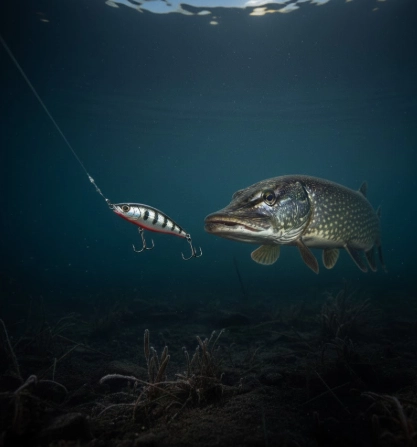
This is where subtle details matter. In cold, clear conditions, many anglers see better results when switching to less visible setups — a difference clearly noticeable when comparing titanium and fluorocarbon leaders in winter pike fishing.
Light conditions also affect timing. Overcast days, low sun angles, and dusk periods often align with short feeding windows. These moments reduce visual scrutiny and increase the effectiveness of slow, deliberate presentations.
Winter pike strikes are shaped by what the fish can see — and what it chooses to ignore. Matching presentation speed with the right visibility level often makes the difference between follows and solid hookups.
When Winter Pike Feed: Pressure Changes, Weather, and Short Bite Windows
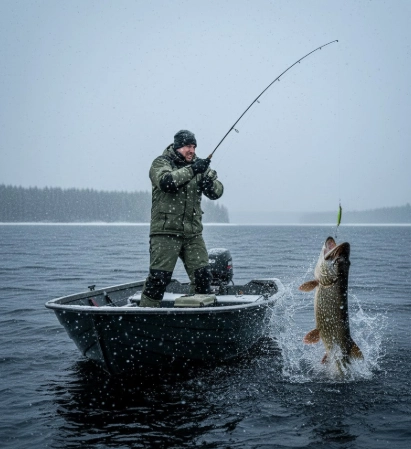
Winter pike feeding is not random — it is highly conditional. Unlike warmer periods where pike may feed multiple times throughout the day, winter activity is compressed into short, clearly defined bite windows. Outside of these windows, even perfectly presented baits can be ignored completely.
Why Winter Bite Windows Are So Short
The primary driver behind winter feeding windows is environmental stability. In cold water, pike avoid unnecessary movement and respond only when external conditions briefly improve their feeding efficiency. Small changes in barometric pressure, light levels, or weather patterns can activate fish that have remained inactive for hours or even days.
Gradual pressure drops are among the most consistent winter triggers. When pressure falls slowly and then stabilizes, pike often become more willing to feed. In contrast, sharp pressure spikes and fast-moving cold fronts frequently shut down activity entirely, forcing fish back into inactive holding mode.
Weather Stability Matters More Than Weather Type
Weather consistency matters more than weather intensity. Several days of stable cold often produce better winter pike fishing than rapidly changing conditions. Pike can adapt to harsh but stable environments, yet struggle when pressure, temperature, and light shift too quickly.
Because winter strikes often come suddenly during these short feeding windows, equipment reliability becomes critical. Cold temperatures magnify small mechanical issues, and reels that hesitate, bind, or lose drag smoothness can cost fish during the only opportunity of the day. This is why anglers fishing through winter windows often notice a clear difference when using reels designed to perform smoothly in cold-water conditions.
Timing Beats Persistence in Winter
Winter bite windows are often measured in minutes rather than hours. Long periods without action do not mean fish are absent — they mean the window has not opened yet. Being positioned correctly, fishing slowly, and having gear that responds instantly when the moment arrives is what turns a single opportunity into a landed fish.
| Condition | Winter Pike Behavior | Feeding Activity | Best Angler Adjustment |
|---|---|---|---|
| Stable cold weather (several days) | Pike hold position and conserve energy | Short but predictable feeding windows | Fish slowly and stay in proven holding areas |
| Gradual pressure drop | Increased alertness and willingness to strike | Brief activity spikes | Be ready — strikes often come suddenly |
| Rapid pressure rise / cold front | Pike become inactive and cautious | Very low or no feeding | Slow down further or wait for conditions to stabilize |
| Low light / overcast | Reduced visual scrutiny | Higher reaction strike rate | Fish tight to structure with slow presentations |
| Bright sun / clear water | Pike hesitate and follow more | Fewer committed strikes | Increase pauses and reduce visual pressure |
Common Mistakes That Kill Winter Pike Bites
Most winter blanks are not caused by a lack of fish — they are caused by small technical mistakes. In cold water, pike behavior leaves very little room for error. Feeding windows are short, strikes are subtle, and poor decisions compound quickly.
Fishing Too Fast and Leaving the Strike Zone
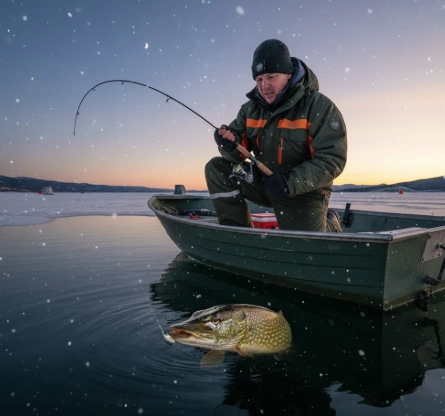
The most common mistake is moving the bait out of the strike zone too quickly. Winter pike rarely chase, and even a correct lure becomes ineffective if it passes the fish without pausing. Slow retrieves, controlled lifts, and deliberate pauses are not optional — they are mandatory.
Using a Rod That Fails to Load Properly
Many missed winter strikes happen not because pike refuse to bite, but because the rod setup fails to absorb and transmit subtle pressure. Overly stiff rods pull the lure away too early, while poorly matched actions make timing the hookset difficult. This is why anglers often see immediate improvement after switching to rods designed for controlled winter presentations.
Setting the Hook Too Aggressively
Winter strikes often begin as pressure rather than impact. Reacting with a hard, instant hookset can rip the lure out of the fish’s mouth before it commits. Allowing the rod to load and applying steady pressure produces far more solid hookups in cold water.
Misreading Inactivity as Absence
Long periods without bites do not mean pike are gone. They usually mean the feeding window has not opened yet. Leaving productive water too early is a common winter mistake that costs anglers the only opportunity of the day.
Winter pike fishing rewards precision, patience, and restraint. Eliminating these common mistakes often produces immediate results — even without changing spots or lures.
How to Adjust When Winter Pike Stop Biting
When winter pike stop biting, the problem is rarely location. In most cases, fish are still present — they have simply shifted into a low-response state where only perfectly aligned presentations trigger strikes.
The first adjustment is slowing everything down even further. Shorter rod movements, longer pauses, and fewer directional changes keep the bait within the strike zone for as long as possible. In cold water, time in the strike zone matters more than lure action.
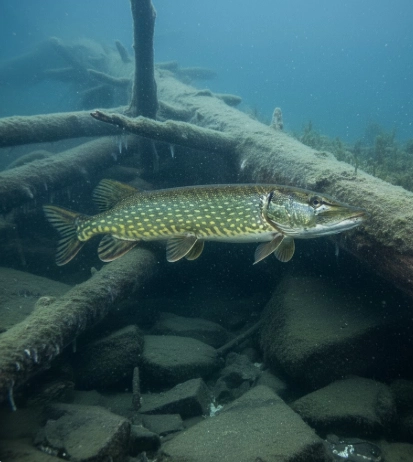
The second adjustment is reducing decision pressure on the fish. Large movements, sudden accelerations, or aggressive lifts force pike to evaluate risk versus reward. Subtle, predictable motion removes that decision-making burden and increases reaction-based strikes.
Positioning becomes critical when activity shuts down. Instead of covering water, successful anglers stay focused on small, repeatable holding areas and work them thoroughly. Leaving productive zones too early is one of the most costly winter mistakes.
The final adjustment is mental. Winter pike fishing is not about forcing bites — it is about waiting for alignment. When pressure stabilizes, light levels drop, or conditions briefly improve, strikes often come quickly and decisively. Being prepared during these moments matters far more than constant experimentation.
When winter pike stop biting, precision replaces persistence. Slower presentations, disciplined positioning, and patience turn inactive periods into brief but decisive opportunities.
Winter Pike Behavior – Frequently Asked Questions
Do pike feed in winter?
Yes, pike do feed in winter, but far less frequently than in warm water. Feeding happens in short, specific windows when conditions briefly favor energy-efficient strikes.
Why do pike stop chasing lures in cold water?
As water temperature drops, pike metabolism slows. Chasing fast prey becomes inefficient, which is why winter pike rely on reaction strikes rather than pursuit.
What triggers winter pike strikes?
Winter strikes are usually triggered by opportunity, not hunger. Slow-moving baits that pause inside the strike zone during a feeding window are far more effective than aggressive retrieves.
Are winter pike inactive for long periods?
Yes. Winter pike often remain inactive for hours or even days. This does not mean they have left the area — only that the feeding window has not opened yet.
Is timing more important than lure choice in winter?
Absolutely. Even the best lure will fail outside a feeding window. Proper timing, positioning, and presentation speed matter far more than constant lure changes.
Winter Pike Behavior Is About Energy, Not Effort
Successful winter pike fishing is not about forcing action — it is about understanding limits. Cold water reshapes how pike move, feed, and strike. Every decision they make is governed by energy conservation, stability, and environmental conditions.
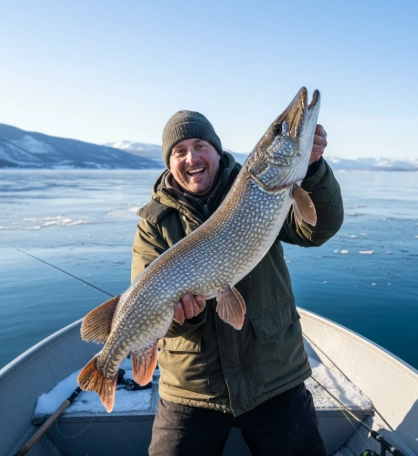
When anglers align their positioning, presentation speed, and timing with this reality, winter fishing becomes far more predictable. Bites may be rare, but they are intentional. Missed opportunities decrease, and each strike carries purpose.
The influence of water temperature on fish metabolism and general biology is well established in aquatic science. Temperature affects biological activity, growth, and the kinds of organisms that can thrive in a water body, and it plays a central role in how fish behave in cold conditions, as described by data from the US Geological Survey on thermal effects in fish ecology.
Winter rewards anglers who think before they cast. Those who slow down, stay disciplined, and wait for alignment don’t just catch more fish — they understand why those fish bite. This mindset shift separates consistent winter anglers from those who rely on luck, noise, and unnecessary effort.