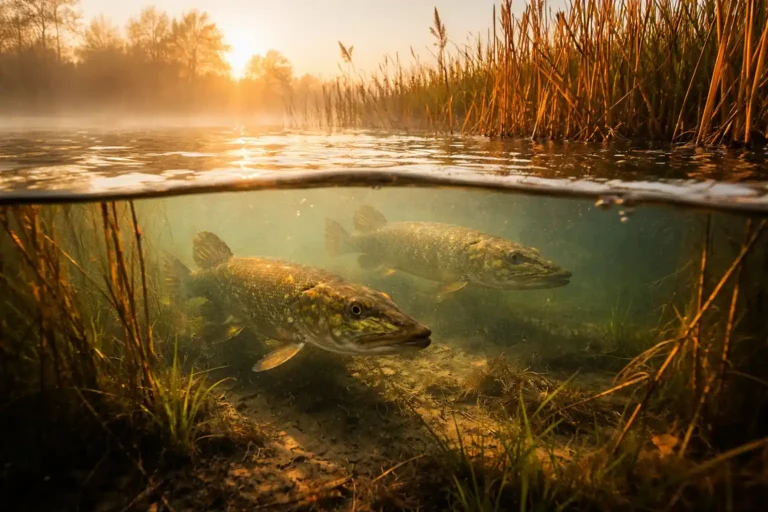



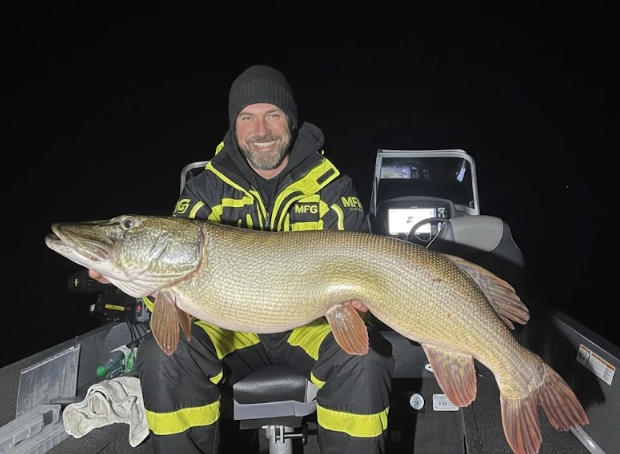
Winter Night Pike Fishing: Why Most Anglers Fail — And When Giants Finally Move
Winter night pike fishing sounded like a joke the first time we heard it. Minus temperatures. Frozen rod guides. Black water. Absolute silence. Who in their right mind goes after pike in the middle of winter, after dark, on a lure?
It felt more like punishment than fishing. Something people talk about online, not something real anglers actually do.
Then we started hearing the same stories from serious predator anglers across different countries. Dead daytime sessions. Zero action. Then — one short night trip. One cast. One brutal strike. One giant fish. Always the same pattern: nothing during the day, life after dark.
The first winter night we tried this, we stood for 47 minutes without a single sign of life.
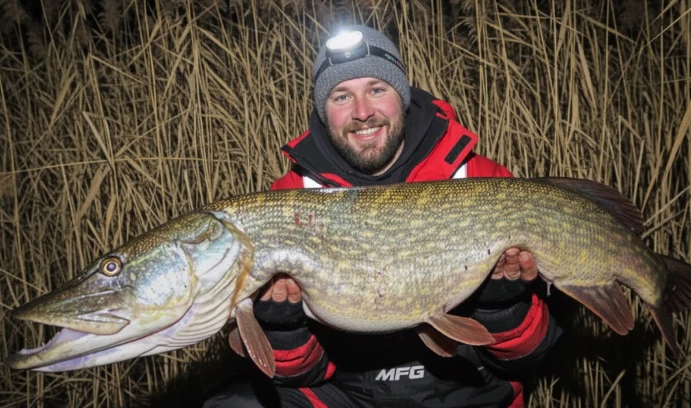
So the Master Fishing Guide team decided to test it for real. Not in theory. Not in mild weather. In true winter conditions. Frozen banks. Breath in the air. Headlamps cutting through darkness. We fished known winter holding zones with slow, deliberate lure presentations.
What we learned changed how we understand winter pike completely.
Winter night pike fishing is real. It’s not about numbers. It’s not about comfort. It’s about a narrow window where pressure disappears, baitfish move, and big pike make one mistake.
This guide is for anglers who are curious enough to step into that darkness and see what really happens there.
Does Pike Really Feed at Night in Winter — or Is It Just a Myth?
Most anglers assume that winter pike shut down completely after dark. Cold water. Low metabolism. No light. The logic feels obvious. But real behavior on the water tells a different story.
Pike don’t “turn on” at night in winter. What actually happens is more subtle: the environment changes in their favor. Light pressure disappears. Shore traffic stops. Baitfish begin to drift shallower. Sound and vibration vanish. The water becomes calm again.
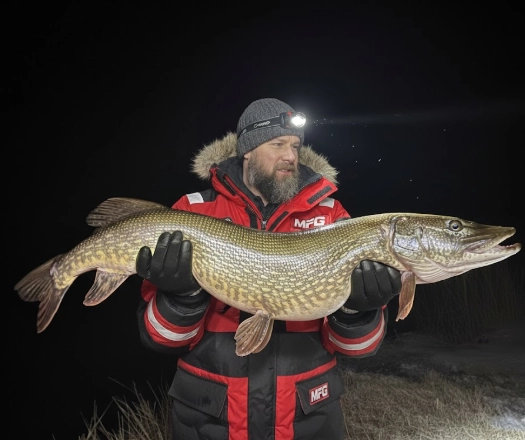
In that silence, big pike don’t suddenly become aggressive — they become efficient. They stop tracking and analyzing. They stop reacting to danger. They position themselves along edges, drop-offs, and winter corridors and wait for something easy to pass.
This matches everything we already know about winter pike behavior. In cold water, pike conserve energy. They do not chase. They strike only when the reward feels safe and effortless.
Night creates exactly that illusion.
The fish are still the same. The metabolism is still slow. The water is still cold. But the world above them changes. And sometimes, that shift is enough to open a single feeding window that never appears during daylight.
That’s why winter night pike fishing is not about “more bites.” It’s about being present when the only bite of the day finally becomes possible.
Where Pike Move After Dark in Winter — The Only Zones That Matter
Night fishing in winter is not about “searching.” There is no roaming. No covering water. No fan casting. In cold conditions, pike movement is limited even during feeding windows. They don’t travel far — they shift just enough to intercept easy prey.
After dark, winter pike leave their deepest daytime holding spots and slide toward transition zones:
- Edges of winter basins
- Drop-offs leading into shallow flats
- The mouths of bays that hold baitfish
- Old weedlines that still form structure in the cold margins
These are not random moves. Pike follow the same corridors every night. They don’t hunt wide — they position. They wait where a slow, drifting baitfish has no escape route.
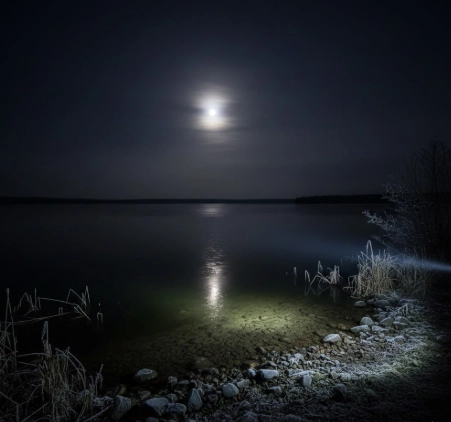
This behavior mirrors what we already mapped in our breakdown of winter pike depths. The only difference is that at night, those deep winter zones gain an “edge” — a boundary where darkness meets shallow water.
Your job is not to guess. It’s to fish the exact places where winter depth transitions into movement paths. Cast parallel to edges. Work the lip of drop-offs. Let your lure pass through the corridor, not across empty water.
At night in winter, location is everything. If your lure doesn’t cross a pike’s holding lane, nothing happens. But if it does — you’re fishing the only water that matters.
What Lures Really Work for Winter Night Pike — And Why Most Fail
Winter night pike fishing exposes one brutal truth: fine detail is useless in darkness. In cold water, after dark, pike do not analyze. They react to shape, pressure, and movement. If your lure relies on flash, color nuance, or speed, it disappears into nothing.
What works is presence. A lure must announce itself in slow water without screaming danger. That’s why night sessions in winter are dominated by three profiles:
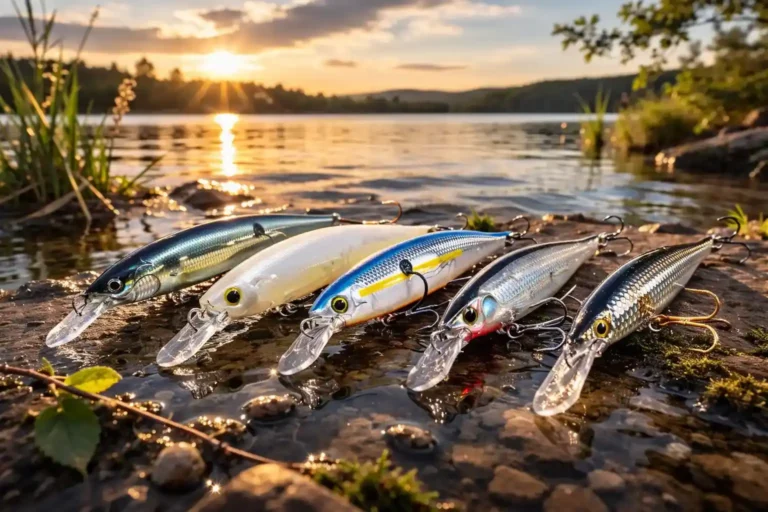
- slow suspending or sinking jerkbaits
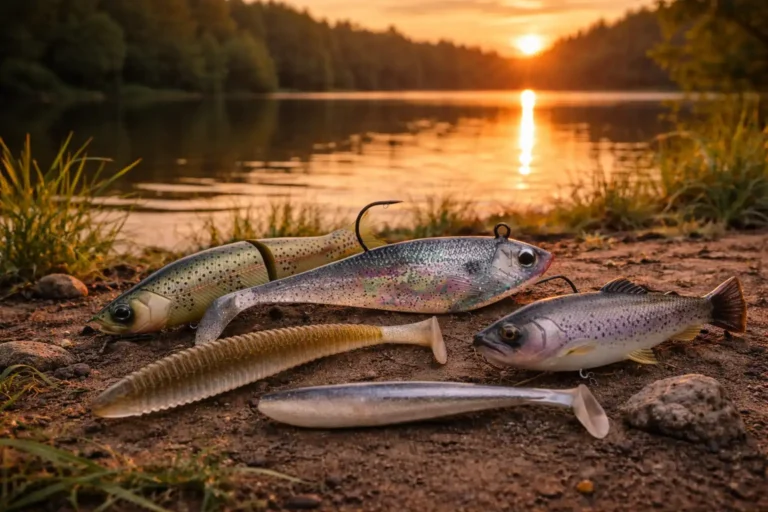
- large soft swimbaits with heavy silhouettes
- wide-bodied paddletails that move water at crawl speed
Every one of these creates a clear “object” in the dark. Pike don’t need to see it perfectly. They only need to sense that something large and slow is passing through their lane.
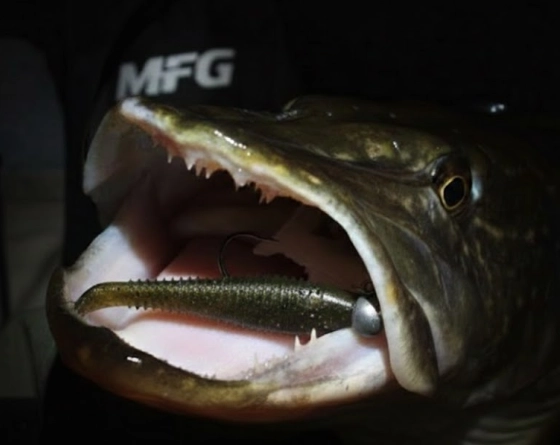
This is exactly why soft plastics become deadly in these conditions. Our night sessions repeatedly favored the same style of baits we already rely on in daylight winter fishing, especially the profiles we broke down in cold-water soft swimbaits. The difference is how they’re used.
There is no searching. No covering water. You cast into a known corridor, let the lure sink, then move it in short pulls followed by long pauses. The retrieve often feels too slow. That’s the point.
In winter darkness, pike strike when the lure feels easy. Not exciting. Not fast. Just available.
If your lure demands effort from the fish, it will be ignored. If it drifts like a mistake, it gets eaten.
How Slow Is “Slow” at Night — The Retrieve That Triggers Winter Pike
The biggest mistake anglers make during winter night sessions is fishing at daytime speed. Even when they choose the right lure, they move it like a fish that wants to escape. In cold darkness, that never looks natural.
At night in winter, pike do not chase. They intercept. Your retrieve has to feel like a drifting mistake, not a fleeing target. That means:
- Letting the lure sink for 10–20 seconds after every cast
- Using short 10–20 cm / 4–8 in pulls instead of long sweeps
- Holding pauses for 5–10 seconds between movements
In practice, a single cast can last over a minute. That feels absurd in daylight. In winter darkness, it becomes logical. Pike are already positioned. They are not searching. They are waiting.
This timing aligns perfectly with what we mapped in our breakdown of water temperature vs pike activity. In cold water, every strike window is narrow. Every movement must respect the fish’s energy budget.
Your lure doesn’t need to excite. It needs to remain present long enough for a slow, heavy fish to decide that the meal is worth the effort.
When winter night pike finally strike, it often happens during the pause. No jolt. No explosion. Just weight on the rod.
If you’re moving fast enough to feel productive, you’re moving too fast for the dark.
Gear That Makes Winter Night Pike Fishing Possible — Not Comfortable, Just Possible
Night sessions in winter are not limited by fish. They are limited by the angler. Cold hands. Frozen rod guides in winter. Wet sleeves. Darkness. Most people quit long before the conditions become fishable.
That’s why winter night pike fishing is not about having “good gear.” It’s about removing the physical barriers that make you stop fishing before the window opens.
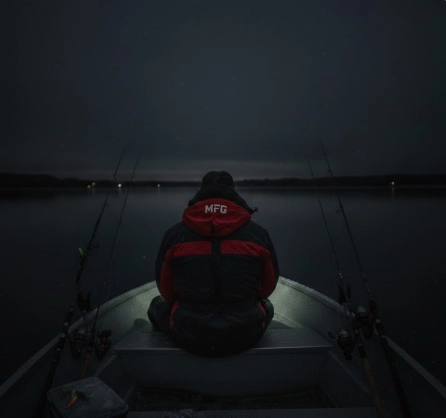
Two things matter more than anything else:
- Hands that still function after an hour in the cold
- Light that lets you work without breaking rhythm
We learned quickly that bare fingers kill sessions. You stop casting. You rush retrieves. You avoid pauses. That destroys everything this technique depends on. The solution wasn’t bulk — it was controlled warmth with dexterity, the same balance we detailed in our field tests of winter fishing gloves.
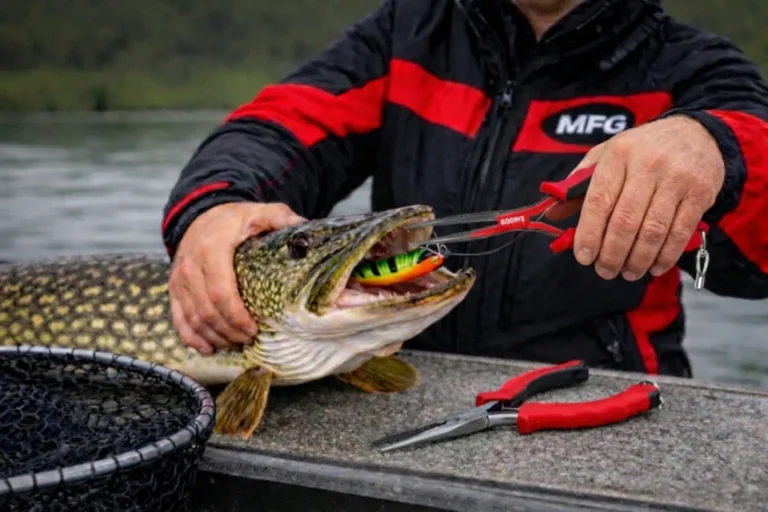
A headlamp is just as critical. Not for walking. For tying knots, clearing ice, and unhooking fish without breaking focus. The light should be narrow, dimmable, and mounted high enough to keep both hands free.
Everything else is secondary. Boots can be heavy. Jackets can be thick. But if your hands fail and your light fails, the session ends — no matter how perfect the conditions become.
One serious warning: winter night pike fishing is not a game.
Cold, darkness, wet hands, and long stillness slowly drain your body without you noticing. Numb fingers become clumsy. Balance disappears. Simple tasks turn into mistakes.
If you underdress, rush, or “push through” discomfort, you don’t become tougher — you become unsafe.
Hypothermia doesn’t arrive with drama. It arrives quietly. Slower reactions. Shaking hands. Poor decisions.
Dress for standing still. Not for walking. Not for casting. For waiting.
If your body fails, the session ends — and in winter darkness, that failure can carry consequences far beyond fishing.
Winter night pike fishing is not about comfort. It’s about staying functional long enough to be there when the moment finally opens.
When Winter Night Pike Actually Bite — Timing the Only Window That Matters
Most anglers who try winter night pike fishing fail for one simple reason: they go out “whenever they have time.” In winter darkness, that rarely works.
Night bites in cold water are not random. They are tied to short environmental shifts — subtle changes that happen above the surface but control everything below it. A pressure drop. Rising cloud cover. Wind calming after a front. These moments briefly loosen the grip winter has on the fish.
We’ve seen the same pattern repeat: hours of nothing, followed by a narrow burst where a single fish becomes catchable. Miss that window, and the lake feels dead again.
On several lakes, every winter night pike fishing session that produced a fish did so within the same 20-minute span.
This is the same logic we mapped in our breakdown of barometric pressure for winter pike. The difference at night is that the window is even shorter — and even more valuable.
The most productive night sessions usually fall into one of three moments:
- The first 60–90 minutes after full darkness
- A brief calm period after wind dies down
- The hours just before dawn, when the water stabilizes
You are not fishing for activity. You are fishing for alignment. Light, pressure, and stillness briefly line up — and a big pike becomes willing to make one mistake.
Winter night pike fishing rewards patience more than movement. The angler who waits in the right place during the right hour beats the one who casts all night without purpose.
In winter darkness, being there at the right time matters more than anything in your tackle box.
Shore or Boat at Night in Winter — Which One Actually Gives You an Edge?
Winter night pike fishing exposes a hard truth: mobility matters far less than position. Whether you fish from shore or from a boat, the outcome is decided by one thing — are you standing in the corridor when the window opens?
From the shore, your advantage is not distance. It’s memory. You are not discovering water in the dark — you are returning to structure you already know.
Every productive shore night session starts in daylight. You walk the bank. You note the drop-off. You mark the edge of the flat. At night, you are not “searching.” You are casting back into a place you already understand.
Most successful shore anglers follow one simple rule: never change location in the dark. They pick one winter edge and work it methodically:
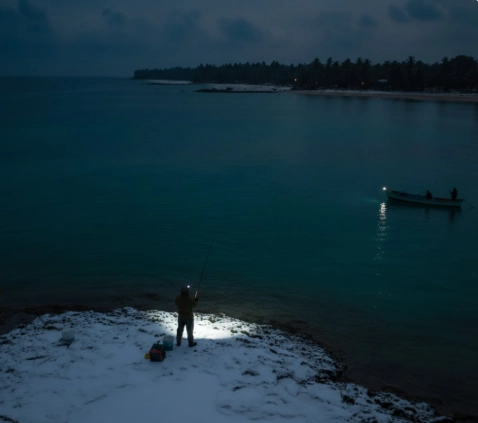
- First cast slightly left of the drop
- Second cast straight along the edge
- Third cast slightly right into deeper water
Each cast overlaps the same corridor. The angle changes, but the target does not. You are not guessing. You are sweeping a known lane where a pike already holds.
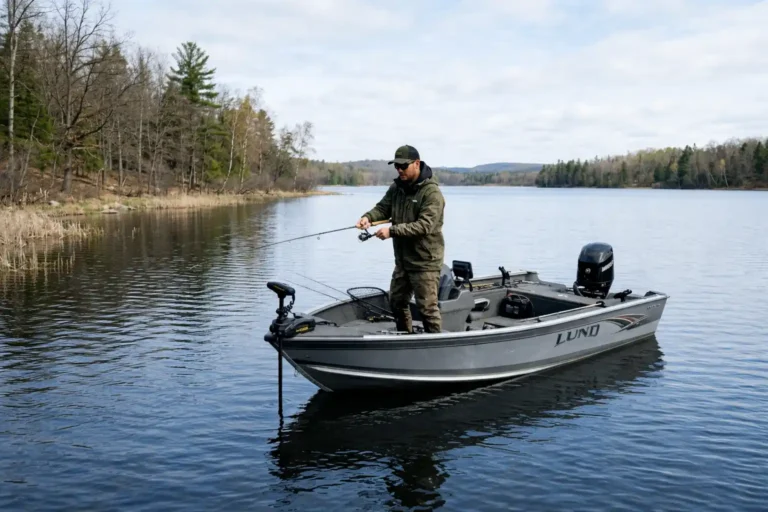
From a boat, the advantage is reach. You can sit directly over winter basins and work the transition from depth to flat without moving. But the rule remains the same: movement is minimal. Anchoring or controlled drifting beats covering water.
Both approaches succeed for the same reason — they respect what winter pike actually do. They hold. They wait. They shift only inches. This is the exact mindset behind every tactic in our winter pike fishing guide. Night simply strips away the illusion that movement creates opportunity.
If you can reach a proven winter edge from shore, you don’t need a boat. If your water demands offshore access, the boat becomes a tool — not an advantage by itself.
In winter darkness, success is not about how much water you can fish. It’s about how long you can remain in the one place where a big pike is willing to move.
Night doesn’t reward exploration. It rewards commitment.
Who Should Try Winter Night Pike Fishing — And Who Shouldn’t
Winter night pike fishing is not a “next step” in your angling journey. It’s a side path. A narrow one. It doesn’t lead to more fish. It leads to a different relationship with the water.
This approach fits anglers who already understand pike in winter. People who know their spots by heart. Who are comfortable fishing slowly. Who don’t measure success by numbers.
You will feel at home here if:
- you already catch pike in winter during the day
- you know where your fish hold when the water is cold
- you are patient enough to fish an hour without a single sign of life
- one heavy strike is worth an entire empty session
This is not for anglers who need constant feedback. It’s not for beginners. It’s not for people who change spots every ten minutes. And it’s definitely not for those who hate discomfort.
At night in winter, there is no rhythm of bites. There is only silence — and the possibility that it will break once.
If that idea excites you, this technique belongs in your arsenal.
If it frustrates you, you lose nothing by ignoring it. Daylight winter pike fishing remains one of the most rewarding games in angling.
Winter night pike fishing is not about proving toughness. It’s about choosing a very specific kind of challenge — and knowing exactly why you’re there.
Common Mistakes in Winter Night Pike Fishing — Why Most First Attempts Fail
Most anglers who try winter night pike fishing give up after one or two empty sessions. Not because the method doesn’t work — but because they unknowingly break its core logic.
The first mistake is movement. People change spots in the dark. They walk the bank. They “search.” In winter, at night, pike do not roam. Every step away from a proven edge moves you farther from the only fish that might bite.
The second mistake is speed. Even when anglers slow down, they are still too fast. Their pauses feel long to them — but not to a cold, heavy fish. Winter night pike require retrieves that feel uncomfortably slow.
The third mistake is timing. Many sessions fail before they even begin. Going out “whenever there’s time” ignores the narrow windows that actually trigger movement. Fishing the wrong hour feels identical to fishing the wrong lake.
The fourth mistake is expectation. People expect feedback. A tap. A follow. A sign of life. Winter darkness offers none. There is only silence — and then, suddenly, weight on the rod.
Every one of these mistakes creates the same outcome: the angler leaves just before the fish becomes reachable.
Winter night pike fishing does not reward effort. It rewards alignment — of place, timing, speed, and patience.
Once you understand that, empty nights stop feeling like failure. They become part of the process that eventually puts you in front of the one fish that matters.
Winter Night Pike Fishing Is About One Fish — And Being There When It Happens
Winter night pike fishing is not a technique for filling nets. It’s a decision to wait for a single moment. One corridor. One window. One fish.
You don’t go out expecting action. You go out prepared to sit in silence, knowing that nothing is the normal state — and that a strike, if it comes, will come once.
This is why it feels different from every other form of pike fishing. There is no rhythm. No feedback. No reassurance. Only patience and position.
When it finally happens, there is no explosion. No chaos. Just weight on the rod in complete darkness. And in that moment, you understand why some anglers willingly choose cold, silence, and stillness.
This approach isn’t about toughness. It’s about awareness — especially awareness of real cold-weather risks. For practical safety tips on staying warm and avoiding hypothermia in extreme cold, check guidance from the National Weather Service: cold weather safety advice.
Winter night pike fishing doesn’t promise success. It offers something rarer: the chance to be present when a giant fish finally makes one mistake.
If that idea resonates, you already know what to do.
Winter Night Pike Fishing — FAQ
Can you really catch pike at night in winter?
Yes. Pike do not become aggressive, but environmental pressure drops after dark. On some waters, that change opens the only feeding window of the day. It’s rare, narrow, and powerful.
Is night pike fishing in winter safe?
It can be safe if you prepare properly. The real danger is underestimating cold and fatigue. Dress for standing still, keep your hands functional, use a headlamp, and avoid moving in unknown terrain.
What lures work best at night in cold water?
Large silhouettes and slow movers: suspending jerkbaits, big soft swimbaits, and wide paddletails. Detail and flash matter far less than presence and slow movement.
How slow should the retrieve be?
Extremely slow. Let the lure sink for 10–20 seconds, use short 10–20 cm (4–8 in) pulls, and pause for 5–10 seconds. A single cast can last over a minute.
Is this technique for beginners?
No. Winter night pike fishing is for anglers who already understand winter behavior and their water. It rewards patience, not exploration.