

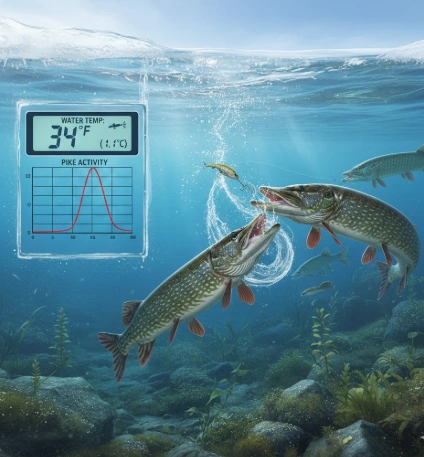
Water Temperature vs Pike Activity: Exact Strike Windows in Cold Winter Conditions
At Master Fishing Guide, we’ve spent more winter hours on the water than we’d like to admit — and almost none of them were pleasant. Frozen fingers, numb feet, and long stretches without a single touch. Definitely not the kind of fishing that looks good online.
But those uncomfortable hours taught us something important: Winter pike fishing doesn’t follow months, calendars, or weather apps. We’ve had January days with aggressive strikes and February sessions that felt completely lifeless. The common factor was never the date. It was always the water temperature.
Once we stopped asking “what month is it?” and started paying attention to the thermometer, things changed. At Master Fishing Guide, we learned that water temperature is the real switch behind pike activity. When it moves just a few degrees, pike behavior can change instantly — sometimes within days, sometimes overnight.
After enough slow retrieves and depth adjustments, one thing became obvious. Pike don’t slowly fade in winter — they operate in short, precise strike windows. Miss those windows, and even a perfectly presented lure means nothing.
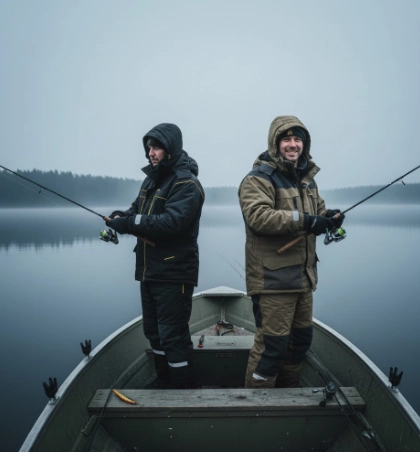
This is where winter pike behavior and water temperature meet. Behavior explains why pike conserve energy. Temperature explains when they’re still willing to spend it. Put those two together, and winter fishing finally stops feeling random.
Understanding water temperature vs pike activity is about recognizing hard thresholds. At some temperatures, pike will still chase briefly. At others, they only react to slow, easy targets. These changes aren’t gradual — and missing them by a couple of degrees can turn a full day into a blank.
In this guide, Master Fishing Guide breaks down exact water temperature ranges and what they actually mean on the water — how active pike really are and how long their strike windows last. No calendar fishing. No theory. Just lessons earned the uncomfortable way.
Why Water Temperature Matters More Than Season in Winter Pike Fishing
One of the biggest mistakes anglers make in winter is thinking in months instead of measurements. December, January, and February don’t mean much to a fish. Pike don’t know what month it is — they respond to water temperature and the biological limits it creates.
At Master Fishing Guide, we’ve seen this play out year after year. A mild winter can keep pike relatively active well into January, while an early cold snap can shut things down fast. The calendar stays the same, but pike behavior doesn’t.

Water temperature directly controls a pike’s metabolism, digestion speed, and muscle efficiency. As temperatures drop, every movement costs more energy. That’s why winter pike don’t roam, patrol, or chase the way they do in warmer water. They reposition, stabilize, and wait.
This is also why simply knowing the season isn’t enough. Two lakes in the same region can fish completely differently on the same day if their temperatures vary by just a few degrees. Those few degrees determine depth positioning, feeding windows, and strike intensity.
Once water temperatures fall into true winter ranges, pike fishing becomes a game of timing and restraint. This broader seasonal shift is explained in our winter pike fishing guide, but the deciding factor behind every adjustment is still temperature — not the date.
This is why water temperature vs pike activity matters more than season. The season tells you what gear to pack. Temperature tells you whether pike are willing to move, how far they’ll move, and how narrow the strike window really is.
Pike Activity by Water Temperature (Cold Water Breakdown)
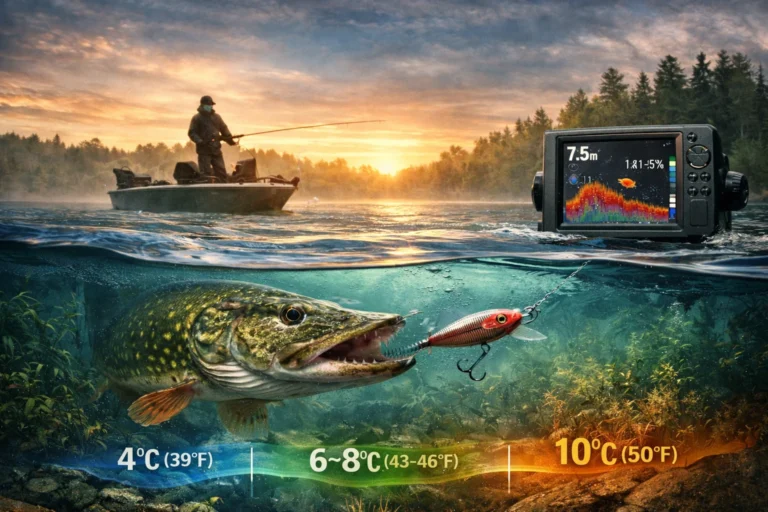
When winter fully sets in, pike activity doesn’t slowly fade away — it shifts in clear, measurable steps. Every drop in water temperature creates a biological limit that directly controls how far pike are willing to move, how fast they react, and how often they feed.

These changes are driven by temperature thresholds, not by the calendar. As water cools, pike begin stabilizing in specific depth zones where temperature remains more consistent and energy loss is minimized. That depth positioning is explained in detail in our winter pike depths guide, but water temperature is the trigger that pushes pike into those zones in the first place.
The Transitional Phase: Above 8°C (46°F)
At this range, pike are still capable of repositioning and feeding relatively freely. Strike windows are longer, movement between areas is common, and pike are still willing to chase a lure from a distance. Covering water is still effective, and active fish can be located by searching rather than waiting.
This is the last phase where winter fishing can resemble late autumn patterns. Once temperatures drop further, that flexibility disappears quickly.
The Calculated Range: 6°C to 4°C (43–39°F)
This is where winter behavior becomes highly calculated. Pike reduce unnecessary movement, feeding windows shrink, and most strikes occur only when a lure passes very close to the fish. Chasing stops, but feeding does not.
Success in this range depends on precision. Slow retrieves are no longer optional, depth control becomes critical, and presentations must stay in the strike zone longer. Pike are still feeding — but only when the energy equation makes sense.
The Opportunity Window: Below 4°C (39°F)
Below this threshold, pike operate almost entirely on energy conservation. They hold tight to stable depths, remain largely inactive, and feed only during short, precise windows when conditions such as light, pressure, or minor temperature shifts align.
Outside those moments, even perfectly timed presentations are often ignored — not because the fish aren’t there, but because the window is closed. This is the phase where winter pike fishing becomes less about action and more about timing.
This temperature-based breakdown explains why winter pike fishing feels unpredictable to many anglers. In reality, it isn’t random at all. Success comes from recognizing which temperature zone you’re fishing in and adjusting speed, depth, and expectations accordingly.
| Water Temperature (°C / °F) | Pike Activity Level | Typical Depth Behavior | Strike Window Characteristics | Angling Focus |
|---|---|---|---|---|
| 10–8°C / 50–46°F | Moderate, transitional activity | Moving between mid-depths and structure | Longer windows, active reaction strikes | Cover water, locate active fish |
| 8–6°C / 46–43°F | Noticeable slowdown | Stabilizing near deeper structure | Shorter windows, reduced chase distance | Slow down, tighten depth control |
| 6–4°C / 43–39°F | Low but consistent | Holding tight to stable depths | Very short, reaction-based strikes | Precision fishing, dead-slow presentations |
| 4–2°C / 39–36°F | Very low, selective feeding | Minimal movement, deep holding zones | Rare but deliberate strike windows | Timing over coverage |
| Below 2°C / <35°F | Near-dormant | Locked into deepest, most stable areas | Extremely short, opportunity-only strikes | Patience, perfect timing required |
MFG Winter Pike Cheat Sheet
Key Winter Pike Rules (Quick Reference)
-
Golden pause rule:
If a pause feels too long, it’s still too short.
Below 4°C (39°F): target pauses of 10+ seconds. -
Stability beats numbers:
Three days at 3°C (37°F) fish better than a sudden drop from 7°C to 4°C (45°F to 39°F). -
Location shrinks with temperature:
The colder the water, the smaller and deeper the strike zone becomes.
How Water Temperature Shortens Pike Strike Windows in Winter
As water temperature drops, pike don’t lose interest in feeding — they lose tolerance for effort. Cold water slows muscle response, digestion, and overall energy efficiency. Every unnecessary movement becomes a cost, and winter pike simply can’t afford to waste energy.
This is why strike windows shrink so dramatically in cold water. Instead of long feeding periods spread throughout the day, pike shift to short, precise moments of activity. Outside those moments, they remain neutral, inactive, and difficult to trigger — even when fish are clearly present.
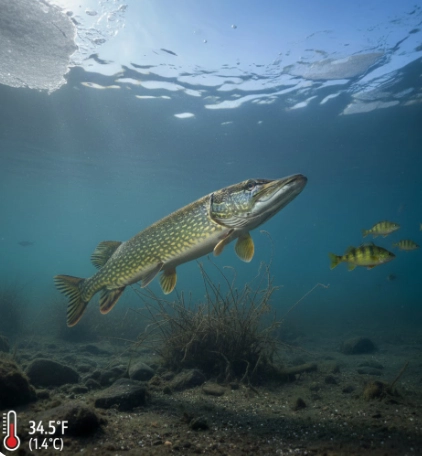
Water temperature is what defines how narrow those windows become. In higher cold-water ranges, pike may still show brief bursts of movement and reaction. As temperatures fall further, those bursts become shorter, rarer, and far more selective. The fish doesn’t “turn off” — the opportunity simply becomes smaller.
During true winter conditions, most successful strikes happen when multiple factors align at once: stable positioning, minimal energy output, and a stimulus that appears easy to capture. If any part of that equation is missing, the window stays closed.
This is why winter pike fishing often feels inconsistent to anglers who fish on instinct alone. One hour can feel completely dead, followed by a sudden strike out of nowhere. Those moments aren’t luck — they’re temperature-driven feeding windows opening briefly and then shutting again.
Understanding how water temperature shortens strike windows changes how you fish. It forces patience, precision, and realistic expectations. In winter, success isn’t measured by constant action, but by being ready when the window finally opens.
Lure Speed and Presentation by Water Temperature for Winter Pike Fishing
In winter pike fishing, lure speed is the single most important variable you control. Not lure size. Not color. Not even lure type. Through countless cold-water sessions, one pattern became impossible to ignore — when the retrieve is even slightly too fast, pike simply do not react.
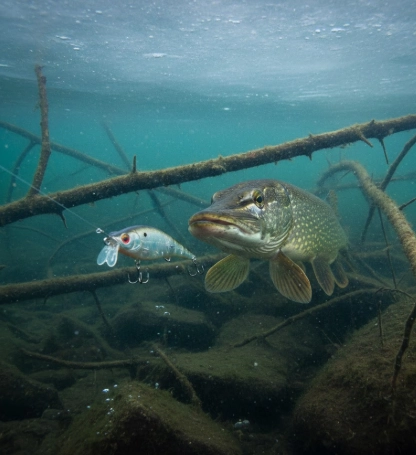
As water temperature drops, pike do not “think slower” — they tolerate less effort. A lure that moves just a bit too fast might as well not exist. This is why winter fishing punishes habits. The retrieve speed that worked in autumn almost always fails once water temperatures fall into true winter ranges.
Between 8–6°C (46–43°F), pike can still react, but only briefly. Lure speed must be slow and controlled, with no sudden acceleration. Short pauses of 2–4 seconds during the retrieve proved critical for us, especially after a few handle turns or a gentle twitch. This is the range where most anglers think they are fishing slowly — but in reality, they are still too fast.
Between 6–4°C (43–39°F), retrieve speed becomes unforgiving. This is where most winter mistakes happen. Any unnecessary movement pushes the lure out of the strike window. What worked best for us were longer pauses of 5–8 seconds, allowing the lure to suspend, flutter, or settle naturally before moving it again. Strikes almost always came at the end of the pause, not during movement.
Below 4°C (39°F), lure speed must drop to the absolute minimum. At this point, you are no longer “retrieving” — you are presenting. The most consistent results came from very small movements followed by long pauses of 10 seconds or more. In many cases, letting the lure sit motionless did more than any action ever could.
Over time, one Master Fishing Guide rule became clear: if the pause feels uncomfortably long, it is usually still not long enough. If the retrieve feels productive or dynamic, it is almost always too fast for winter pike.
Based on this approach, here is our practical winter lure selection — chosen specifically for slow-speed control and pause-friendly presentations:
- Best soft swimbaits for cold water control
- Best slow-suspending jerkbaits for winter pike
- Best heavy spoons for deep winter presentations
Winter success is not about finding active fish. It is about slowing the lure down — and extending the pause — enough that even an inactive pike is still willing to react.
Common Mistakes Anglers Make When Fishing Pike in Cold Water
Most winter blanks are not caused by “inactive fish.” They are caused by anglers fishing winter water with autumn habits. Cold water is unforgiving, and pike simply don’t reward extra effort the way they do in warmer seasons.
Mistake 1: Retrieving Too Fast (Even When You Think You’re Slow)
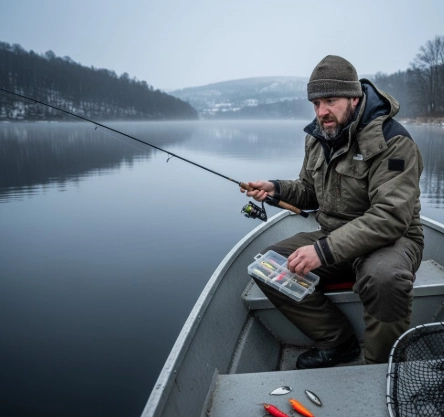
This is the 1 winter killer. In cold water, “slow” usually still isn’t slow enough. If your lure is moving consistently without long pauses, it’s probably outside the strike window most of the time. We made this exact mistake ourselves for years — thinking we were fishing slowly, when in reality we were still rushing every presentation. The fix is simple but painful: slow down, shorten movements, and extend pauses until it feels almost ridiculous.
Mistake 2: Too Much Action With the Rod
In winter, constant jerks, snaps, and aggressive twitches often do more harm than good. Extra movement looks like extra energy, and winter pike aren’t looking for a workout. What works better is controlled, minimal input: small movements, then stillness. Let the pause do the convincing.
Mistake 3: Changing Lures Every 10 Minutes
When bites are rare, many anglers panic and start cycling baits nonstop. The problem is that winter success is often about timing, not variety. Pike can sit in the same zone for hours and open their window for only a short period. If you keep changing lures and re-setting everything, you’re often not improving anything — you’re just wasting the window when it finally opens.
Mistake 4: Fishing Like Pike Are “Roaming”
Cold water pike are not cruising flats like early autumn fish. They are usually holding in stable zones and moving very little. Covering water fast is not the same as covering water effectively. In winter, it’s often smarter to fish fewer areas more thoroughly, keep your lure in the zone longer, and wait for the window.
Mistake 5: Expecting Constant Action
Winter pike fishing is not a high-bite game. Long silent stretches are normal. The mistake is judging the day too early and speeding up, moving too much, or abandoning the plan. Winter rewards discipline: if you are in the right zone with the right speed, one bite can be the entire day — and that bite is often a big one.
At Master Fishing Guide, we learned that winter success is usually not about doing more. It’s about doing less — less speed, less movement, fewer changes — and being ready when the strike window finally opens.
How Long to Stay in One Spot for Winter Pike Fishing in Cold Water
In winter pike fishing, leaving a spot too early is one of the most common reasons anglers miss their only bite. Cold water doesn’t reward movement — it rewards patience. When strike windows are short, the fish often come to you only once.

As water temperatures drop, pike movement becomes limited and predictable. They settle into stable zones and wait. If you’re in the right area but your timing is off, everything feels dead. The mistake is assuming that “dead” means empty.
Between 8–6°C (46–43°F), it usually makes sense to give a spot 30–45 minutes of disciplined fishing. Pike can still reposition during brief activity spikes, and a late bite is common once the presentation finally lines up with the window.
Between 6–4°C (43–39°F), expectations must change. One to two hours on a single spot is not excessive — it’s often necessary. In this range, pike may open their window only once, and it may last just minutes. Leaving early often means missing it entirely.
Below 4°C (39°F), patience becomes the strategy. Staying put for two to three hours in a proven zone is often more productive than hopping between spots. When the window opens at this temperature, it rarely stays open long — but when it does, the fish are already there.
What taught us this lesson wasn’t theory — it was lost opportunities. Many winter bites come late. After long silence. After doubt sets in. After the temptation to move becomes strongest.
In cold water, moving less often increases your chances. If depth, temperature, and presentation are correct, the smartest move is usually to wait. Winter pike don’t come to fast anglers — they come to patient ones.
Why Fewer Bites Often Mean Bigger Pike in Winter
One of the hardest things to accept in winter pike fishing is how few bites you actually get. Long periods of silence, cold hands, and no feedback can make even experienced anglers doubt their approach. Over time, however, one pattern becomes impossible to ignore — fewer bites in winter often mean better fish.
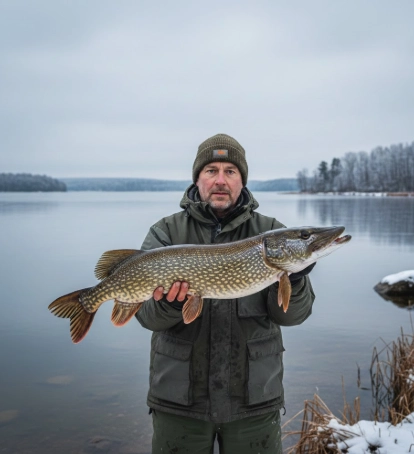
As water temperatures drop, pike feeding becomes highly selective. Smaller fish need to eat more often, but big pike don’t. Large predators conserve energy and wait for a single opportunity that makes sense. Instead of chasing multiple small meals, they prefer one easy, high-value target.
This is why winter fishing so often produces long quiet stretches followed by a single, deliberate strike. That strike is rarely random. It happens when conditions align and the energy equation finally works in the fish’s favor.
In these conditions, it’s no coincidence that deadbait fishing becomes so effective. A motionless or minimally presented bait represents exactly what big winter pike are looking for — maximum reward with minimal effort.
Fewer bites don’t mean you’re doing something wrong. In winter, they often mean you’re fishing the right zones, at the right speed, and under the right conditions for bigger fish. The real mistake is expecting winter to behave like any other season.
At Master Fishing Guide, we learned to judge winter days differently. If everything lines up and you get one solid bite, that day was a success. In cold water, patience doesn’t just pay — it filters out the smaller fish.
Read more about winter deadbait fishing:
- Best Winter Deadbaits for Pike 2025 (Smelt, Herring, Roach & Sardines Explained)
- How to Fish Deadbait for Winter Pike (2025): Proven Baits & Rigs Explained Step-by-Step
Water Temperature Stability vs Sudden Drops — Final Winter Pike Takeaway
In winter pike fishing, stability almost always matters more than the absolute number on the thermometer. A steady 4°C (39°F) over several days consistently produces better results than a sudden drop from 6°C to the same temperature overnight.
Sudden temperature changes force pike into survival mode. Feeding windows shrink even further, movement becomes minimal, and reaction strikes nearly disappear. This is why anglers often struggle after cold fronts — not because the water is cold, but because it changed too fast.
On the other hand, when cold water remains stable, pike adapt. They settle into predictable zones, feeding windows become short but repeatable, and timing becomes more important than lure choice. These are the conditions where patience, slow presentation, and long pauses finally pay off.
This is the core lesson behind everything covered in this guide. Winter pike fishing is not about forcing bites. It’s about understanding temperature, accepting inactivity, and being present when the brief window opens. When you align water temperature, lure speed, positioning, and patience, winter stops feeling random.
Research on fish metabolism confirms what long hours on the water already teach — cold water dramatically reduces energy output and feeding frequency in predatory fish, making efficiency the dominant factor in strike decisions. This biological principle is explained in broader terms in scientific literature such as studies published by the Food and Agriculture Organization of the United Nations (FAO).
At Master Fishing Guide, we judge winter success differently. Fewer bites don’t mean failure. One well-timed strike means you understood the conditions correctly. In cold water, that’s all winter ever offers — and that’s exactly why it rewards those who fish with discipline.