

Best 6 Pike Lures for Winter 2026: Proven Picks When Nothing Else Works
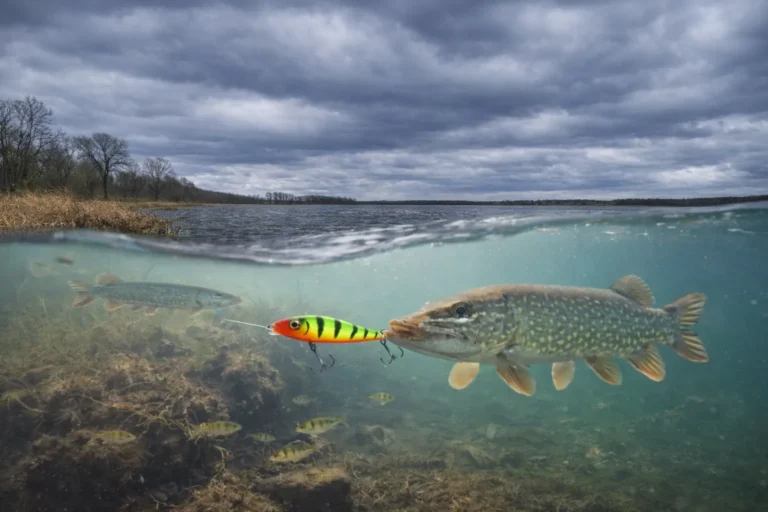
Winter pike fishing can feel like a test of patience. After working with the best fall pike lures, everything changes once the temperature drops — cold water slows everything down, strike windows get smaller, and most anglers think the fish simply shut down. But the truth is different. Big pike still feed in winter — they just stop wasting energy. They want slow, believable, easy targets.
As an Amazon Associate, we earn from qualifying purchases — no cost to you. That’s how we keep this site running. Read more ›
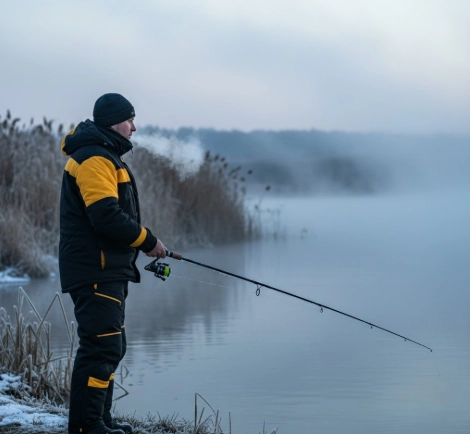
We spent real time on the water this season — cold wind, frozen rod guides, long silent stretches — testing lures in true cold-water conditions. And when the hit finally comes, slow and heavy, you know it wasn’t luck. It was the right lure, presented the right way. A balanced setup matters here: a rod that still has backbone and control in freezing weather (winter-ready pike rods), paired with a reel that stays smooth when temperatures drop (cold-water proven pike reels), makes all the difference.
So here’s what we’re doing in this guide: we’re giving you the exact lures that impressed us the most this winter, and then we’ll show you how to work each one. Not just “use this lure,” but the real pacing, pauses, depth, and retrieval rhythm that triggered strikes for us.
Then, further down the page, we’ll share the extra cold-water tricks that separate casual winter fishing from days you remember — how to adjust retrieve speed when the bite is slow, when to change color, how to react when a pike just follows, and how to make the strike happen.
Let’s start with the first lure that kept producing when everything else failed.
Quick List — Best Winter Pike Lures
If you are in a hurry, here are the top-performing winter pike lures: 2026
- Acme Kastmaster 2 oz (Chrome/Neon Blue) — best heavy spoon for deep winter pike and long vertical drops
- Dardevle Red & White 1 oz — best slow wide wobble spoon for lethargic cold-water pike
- Rapala Husky Jerk 14 — best suspending jerkbait for extremely long winter pauses
- Rapala X-Rap (Suspending) — best flash-and-freeze reaction jerkbait for neutral winter pike
- Z-MAN DieZel MinnowZ 5” — best soft swimbait for slow bottom-hugging winter presentations
- Strike King KVD Jerkbait — best reaction-bite jerkbait to wake up inactive winter pike
1. Acme Kastmaster 2 oz (Chrome/Neon Blue): Best Heavy Spoon for Deep January Pike
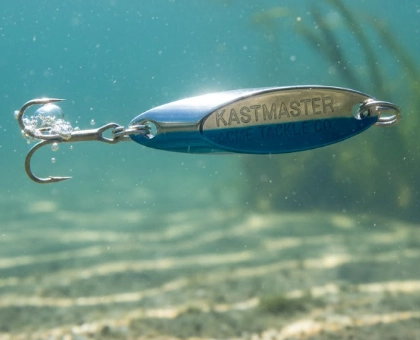
When pike are sitting deep and won’t chase fast-moving baits, the Acme Kastmaster 2 oz (Chrome/Neon Blue) is exactly the tool you want. The extra weight gets it down fast and keeps it in the strike zone, while the bright chrome flash on the fall mimics a weak, dying baitfish. In cold water, that means one thing: easy meal.
Why It Works in Cold Water
Winter pike don’t want to burn energy. They wait below baitfish schools and pick off the ones that fall behind. Kastmaster’s heavy design drops straight down and flashes hard on the fall, copying that exact dying glide. For a big, lazy pike, it’s a high reward with minimum effort.
How to Work It (Step-by-Step)
Cast and let it sink all the way to the bottom. Pause 2–3 seconds, then make a slow, smooth lift with the rod. Let it fall back on a semi-slack line so it can flutter. Pause on bottom for 1–2 seconds (extend to 3–4 seconds if fish are very sluggish). Most strikes come during the fall or right as you start lifting again.
Very important: the bite rarely feels like a hit. It usually feels like the lure suddenly got heavier. If it feels heavy — set the hook immediately.
Best Depths and Locations
Perfect for old weedlines, drop-offs, river bends and channel edges where pike hold deep and watch. Best working range is 5–12 m (about 16–40 ft). Chrome/Neon Blue color is ideal for clear winter water.
Check it: Acme Kastmaster 2 oz (Chrome/Neon Blue)
2. Dardevle 1 oz (Red/White): Wide-Wobble “Easy Meal” for Slow Winter Pike
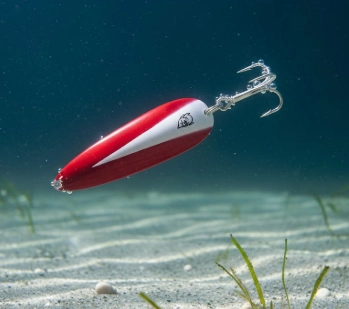
When pike are barely moving in winter and don’t want to chase, the Dardevle 1 oz (Red/White) is the bait that makes the most sense. The wobble is slow and wide, like a baitfish that’s tired and falling behind the group. Winter pike always take the easy target.
Why It Works in Cold Water
In cold water, pike don’t rush. They sit still and watch. They only react when something looks weak. The Dardevle doesn’t try to look fast or flashy. It looks like the one baitfish that’s losing strength and drifting off to the side — and that is the exact moment a big winter pike decides to move.
How to Work It (With Exact Timing)
After the cast, let the spoon sink close to bottom and wait 2–3 seconds before starting your retrieve. Begin reeling just slow enough to maintain that wide wobble. If the bait starts tightening into a fast spin, you’re reeling too fast — slow down.
Every few meters, stop reeling and let the spoon flutter down for 1–2 seconds. If the fish are following but not hitting, extend the fall pause to 3–4 seconds. Almost all strikes happen right when you begin reeling again. If the lure suddenly feels heavier than it should, that’s the fish. Set the hook immediately.
Best Spots & Depth Zones
Use the Dardevle in places where pike wait instead of move: old weed edges, gentle drop-offs, and slow outside bends in rivers. Depth between 2 and 5 meters (about 6 to 16 feet) is where winter pike usually hold. If there’s even a small inflow of slightly warmer water — a creek mouth or spring — pike will stack there. The Dardevle moves through these zones naturally, looking real, weak, and worth eating.
Check it: Dardevle 1 oz (Red/White)
3. Rapala Husky Jerk 14 (Purple Clown): Long-Pause Suspender for Ice-Cold Pike
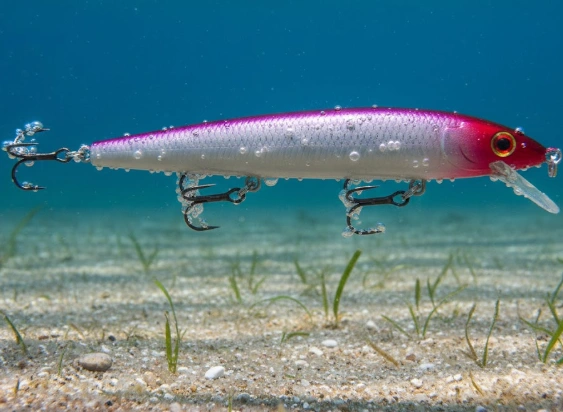
The Rapala Husky Jerk 14 is what we tie on when pike are present but refuse to chase. This lure stays where you stop it. It just hangs in place. That motionless, suspended look is exactly what triggers winter fish. A pike will watch it, study it, and then quietly decide to take it without needing to move much.
Why It Works in Cold Water
Winter pike often hold suspended just off structure instead of hugging the bottom. They prefer to wait for something that requires almost no effort to eat. The Husky Jerk does not float up or sink down — it holds its depth and looks like a baitfish that has already given up. For a cold-water pike, that’s the perfect target.
How to Work It (With Real Pause Timing)
Cast, reel down a few turns to bring it to depth, then give two short and gentle twitches. Not aggressive snaps — just enough to show life. After that, stop completely and let the lure sit still. Count the pause. A natural winter pause is between 8 and 12 seconds.
If the water is extremely cold, use a longer rest. A confident slow pause is between 12 and 15 seconds. When the fish are locked in place and barely moving, go for a deep winter pause of about 20 seconds. Do not move the rod. Let it look dead.
The strike almost never feels like a strike. It feels like weight, like something just leaned against the lure. The moment you feel that, set the hook with a firm short sweep. Pike clamp down before they turn. You don’t wait — you drive.
Best Spots & Depth Zones
Use the Husky Jerk along mid-depth weed edges, on points that taper from shallow to deeper water, and above bait that is suspended in the middle of the water column. The ideal working depth is between 1.5 and 4 meters (about 5 to 13 feet). If your sonar shows a cloud of baitfish mid-water, work the jerkbait just above them. Pike strike from below.
Check it: Rapala Husky Jerk 14 (Purple Clown)
4. Rapala X-Rap (Suspending): Sharp Flash and Dead-Still Pause for Triggering Cold Pike
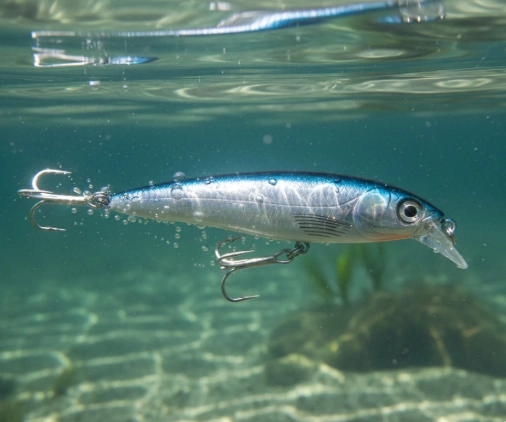
The Rapala X-Rap is the jerkbait we use when we need to actually get a reaction out of a winter pike. It flashes hard on the twitch, then stops and hangs motionless. That contrast — flash, then freeze — is what flips the switch in cold water. Pike do not hit it as it moves. They hit it when it looks like it just gave up.
Why It Works in Cold Water
Cold pike are not chasing. They sit in place and watch. A lure that moves too much just gets ignored. The X-Rap shows a quick sign of life, then goes completely still. That moment of stillness is where the decision happens. The fish does not have to move far, or fast, or think. It just opens its mouth. That is why this bait works when spoons and swimbaits get followed but not eaten.
How to Work It (Real Winter Rhythm)
Cast, reel it down to depth, then give two short and sharp twitches. Not wide sweeps, not soft pulls — just enough to make the lure flash sideways and stop again. After that, let it sit completely still. A natural winter pause is between 6 and 10 seconds.
If the water is colder or the fish are just staring, extend that pause to between 12 and 15 seconds. When the lake is in full winter lock and nothing seems to move, make the pause about 20 seconds. The longer the pause, the bigger the pike you are targeting. This is the part most anglers rush. Do not move the rod. Let it hang.
The strike almost never feels like a hit. It feels like the lure suddenly has weight. It may even feel like grass. That is the pike. Set the hook the moment you feel that dead weight. There is no “wait for pressure” in winter jerkbait fishing. You set as soon as the lure is not light anymore.
Best Spots & Depth Zones
The X-Rap is strongest where pike hold mid-depth, off the bottom. Think of points that drop into deeper water, the first break line outside old weedbeds, and anywhere baitfish show up in the middle of the water column. The best working range is between 1.5 and 4 meters (about 5 to 13 feet). If you see bait on sonar, run the X-Rap just slightly above that level. Pike almost always come from below.
Check it: Rapala X-Rap (Suspending)
5. Z-MAN DieZel MinnowZ 5” (Paddle Tail): Slow Tail Pulse for Cold, Bottom-Holding Pike
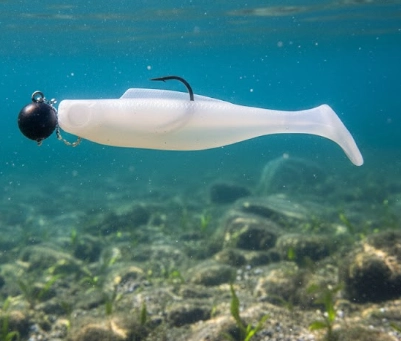
The Z-MAN DieZel MinnowZ 5” is the paddle tail we turn to when pike are holding tight to the bottom and reacting only to baits that look tired, slow, and easy to eat. The plastic is buoyant and soft, so instead of stiff kicking, the tail gives a weak, tired pulse that matches how real baitfish move in cold water.
Why It Works in Cold Water
In winter, baitfish do not sprint. They conserve energy and move in short, slow drifts close to bottom. The DieZel MinnowZ copies that perfectly. It does not force action. It looks like something that is still alive but barely holding on. For a big pike that doesn’t want to chase, that is the ideal target.
How to Work It (Real Winter Rhythm)
Cast and let the lure fall until you feel bottom. Once it settles, start a slow, steady retrieve just high enough to keep the bait above the bottom without dragging. Every few seconds, stop reeling and let the bait glide down. A natural winter pause is between 2 and 4 seconds. If pike are sluggish or following without striking, extend the pause to between 4 and 6 seconds.
The strike does not feel like a hit. It feels like the lure simply stopped or became heavier. That is the pike closing its mouth. The moment you feel that weight, sweep firmly and set. Do not wait.
Best Spots & Depth Zones
Fish this bait where winter pike rest close to the bottom: the deep edge of weedlines, the base of drop-offs, the bottom side of points, and the slower side of river bends. The ideal working depth is between 2 and 6 meters (about 6 to 20 feet). If your sonar shows bait near bottom, this is one of the most reliable lures to trigger a reaction.
Best Jig Head Pairing (Weights & Hooks)
Use a head that matches depth and current. In still or slow water, the most natural presentation comes with a head between 7 and 10 grams (around 1/4 to 3/8 oz). For deeper drops or slow river flow, use a head between 14 and 18 grams (around 1/2 to 3/4 oz). A 3/0 or 4/0 hook keeps the bait balanced and swimming naturally.
Check jig heads:
Universal Round Jig Heads (Choose Your Weight)
Best Colors for Water Clarity
Color is about visibility and contrast, not decoration. In clear water, use Smelt. In stained water, use Pearl. In dirty or muddy water, use Chartreuse Pearl.
Check it: Z-MAN DieZel MinnowZ 5”
6. Strike King KVD Jerkbait (3 Hook): Reaction Flash for Waking Up Neutral Pike
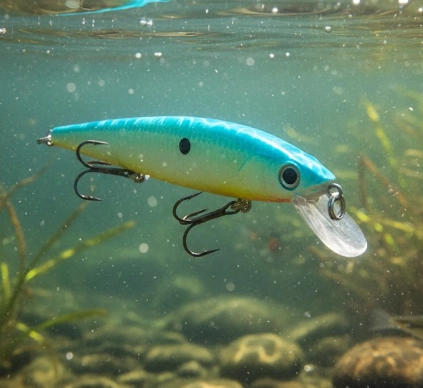
When pike are just sitting there watching everything go by, the Strike King KVD Jerkbait is the lure that forces a decision. It has a harder flash and a sharper body roll than the Husky Jerk or X-Rap, and that quick burst of life followed by stillness is what wakes up a fish that otherwise refuses to move.
Why It Works in Cold Water
Winter pike are lazy, but they are still predators. They will react to something that looks like it is trying to escape but has no real strength to get away. The KVD throws a fast flash on the twitch, then comes to a sudden stop and hangs motionless. That moment of stillness is where the fish commits. It does not look like food. It looks like weakness.
How to Work It (Real Reaction Rhythm)
Cast, reel down to depth, then use two sharp downward twitches to snap the bait sideways. Right after that, stop completely and let it hang. The natural reaction pause for this bait in cold water is between four and seven seconds. The flash draws attention. The stillness triggers the strike.
If the fish are following silently but not hitting, add a single small twitch in the middle of the pause, then let the bait sit again. The power of this lure is the contrast between sudden movement and complete stillness.
The strike usually feels like the lure just lost its freedom to move — like it became heavy or stuck. That is the pike clamping down. The moment you feel that, sweep the rod and set the hook firmly.
Best Spots & Depth Zones
Use the KVD where pike hold slightly above bottom, watching for an opportunity: the outer edge of weedlines, the drop-off side of points, and especially when baitfish show suspended on sonar. The ideal working depth is between one and three meters (roughly three to ten feet).
Check it: Strike King KVD Jerkbait (3 Hook)
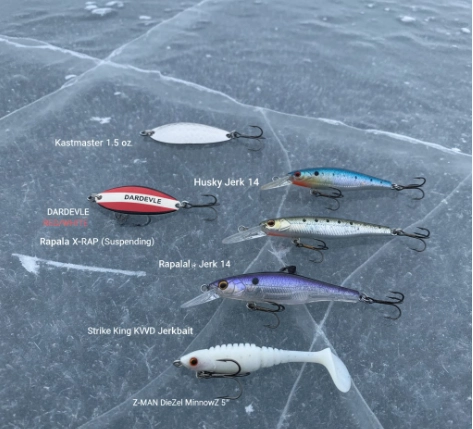
TOP 6 WINTER PIKE LURES (SUMMARY)
| Lure (Model) | Key Advantage / Why It Works | Optimal Depth (M/FT) | Key Retrieve Tip (Pause) | Affiliate Link |
|---|---|---|---|---|
| 1. Acme Kastmaster (2 oz) | Flash on the fall; mimics a struggling, sinking baitfish. | 4–9 m (12–30 ft) | Let it fall on a loose line for a “dying flutter.” Pause 1–4 seconds on the bottom. | Check Kastmaster Price |
| 2. Dardevle (1 oz, Red/White) | Wide, slow wobble for extremely lethargic pike. | 2–5 m (6–16 ft) | Reel just slow enough to maintain the wide wobble. Extend fall pause to 3–4 seconds. | Check Dardevle Price |
| 3. Rapala Husky Jerk 14 | Long-Pause Suspending: Stays motionless in the water column. | 1.5–4 m (5–13 ft) | Use long, motionless pauses: 8–15 seconds minimum. | Check Husky Jerk Price |
| 4. Rapala X-Rap (Suspending) | Sharp ‘Flash, then Freeze’ contrast to trigger reaction. | 1.5–4 m (5–13 ft) | Two sharp twitches, then long pause: 6–20 seconds (for extreme cold). | Check X-Rap Price |
| 5. Z-MAN DieZel MinnowZ 5” | Soft plastic gives a weak, tired tail pulse close to the bottom. | 2–6 m (6–20 ft) | Slow, steady retrieve just above bottom, with 2–6 second glide-down pauses. | Check Z-MAN Price |
| 6. Strike King KVD Jerkbait | Sharper “Reaction Flash” to wake up neutral, watching pike. | 1–3 m (3–10 ft) | Two sharp downward twitches, then a quick reaction pause: 4–7 seconds. | Check KVD Price |
How to Position and Fight Pike in Winter
Most of the time, winter pike don’t move far. They choose a spot and stay there until conditions change. If you want consistent results, you need to understand where they sit and how to handle them once they commit. Studies on cold-water feeding behavior from fisheries biologists confirm this slow-energy strategy.
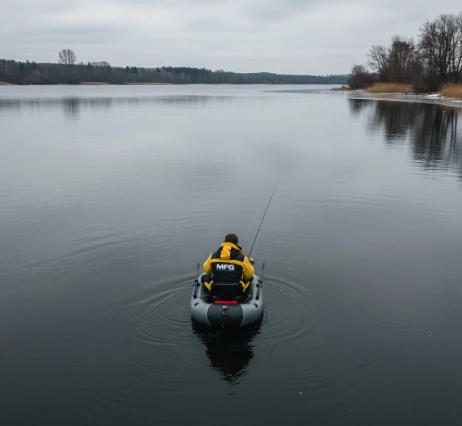
On lakes, pike settle near the first drop-off outside the last remaining weedline. They don’t sit in the weeds anymore, but they won’t move far from where the food used to be. Watch your depth finder. If the weeds end at three meters, the pike are usually somewhere between four and six meters just off the edge. This is where heavy winter spoons shine — they fall slow, hold depth, and stay in the strike zone instead of drifting upward.
In rivers, look for the slow side of bends. Anywhere the current takes pressure off the fish is a winter rest zone. If there is a deep hole with a soft bottom and even a hint of bait nearby, that’s a prime spot that can hold multiple pike at once.
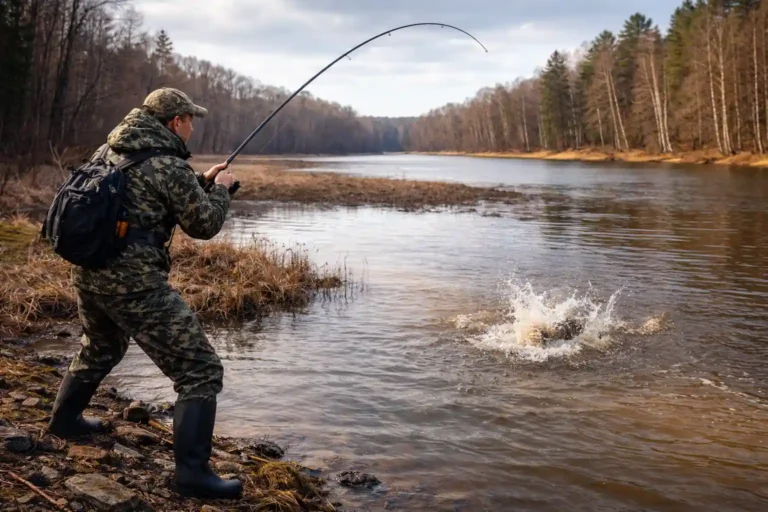
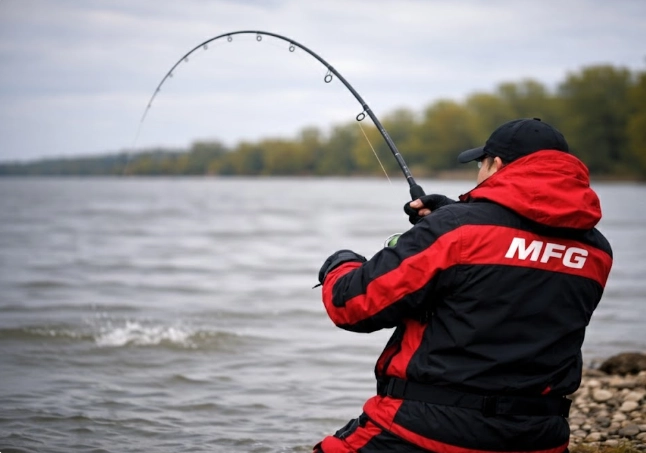
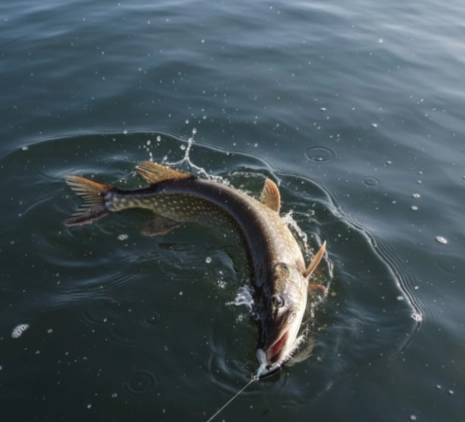
When you hook a big winter pike, do not rush the fight. Cold water makes fish feel heavy and slow, so people think the fish is tired. It isn’t. It’s conserving energy. If you force it in early, it will make its run right at your feet or right at the net, and that’s where most fish are lost.
Let the pike use steady pressure against the rod. Keep the rod at a 45-degree angle. Do not pump the rod up and down. Just hold, pull, and recover line smoothly. When the fish makes a run, let it go. When it stops, start gaining line again.
If you see the fish roll sideways near the surface, that means it is actually tired. That is the moment to land it. Not before. Not after. If you net too early, the fish will explode and either straighten hooks or slice the leader.
Take your time. Winter pike reward patience, slow movement, and clean pressure. The fight should look calm, not chaotic.
Winter Pike Fishing — FAQ
Do pike really feed in winter?
Yes. Pike do not stop feeding in winter — they simply reduce movement. They prefer slow, easy targets and short strike windows. Catching them is about timing and presentation, not covering water fast.
What is the best depth for winter pike?
Most winter pike hold between 4–9 m (12–30 ft), close to drop-offs, channel edges and the outside of old weedlines. They rarely stay very shallow unless warm water inflow is present.
Do winter pike prefer spoons or jerkbaits?
Both work. Spoons catch pike holding deep near bottom, while suspending jerkbaits shine for fish suspended mid-water. The key is long pauses and slow presentation.
How long should winter jerkbait pauses be?
Typical winter pauses are 8–15 seconds. In very cold water, pauses of 15–20 seconds often trigger the biggest fish that refuse to chase.
Why do many winter bites feel like “extra weight”?
Because winter pike rarely smash the lure. They simply clamp down on it. The bite often feels like heaviness or weed — set the hook immediately when that happens.