

How to Retrieve Lures for Summer Pike: Exact Speed, Pauses & Trigger Strikes
Learning how to retrieve lures for summer pike is often the difference between lazy follows and real strikes. Most anglers blame the lure first, but in hot water, the real problem is usually speed, pause length, or retrieve angle.
The fish follows, turns behind the boat, flashes once under the surface, and disappears. Very often, those lazy follows end with a small boil or soft swirl behind the bait—a clear sign the pike was interested, but never felt the final trigger to commit.
That is where most anglers start changing lures too fast.
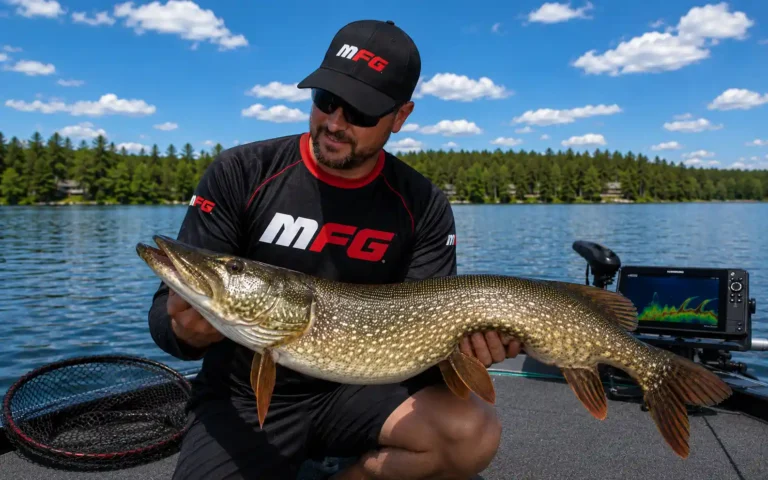
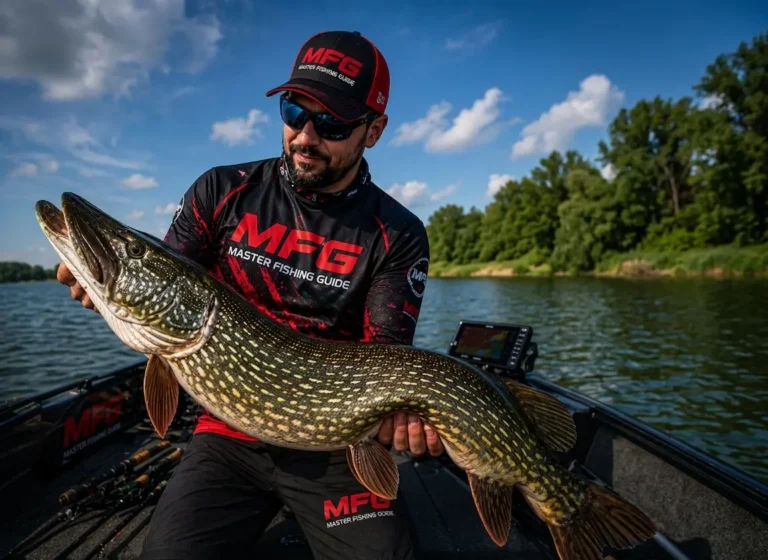
Before reaching for the tackle box, one simple check saves more fish than people realize: a wide figure-8 beside the boat. Big summer pike often track the lure all the way to the rod tip, especially along deep cabbage weed edges. That sudden change of direction is often what finally forces the strike.
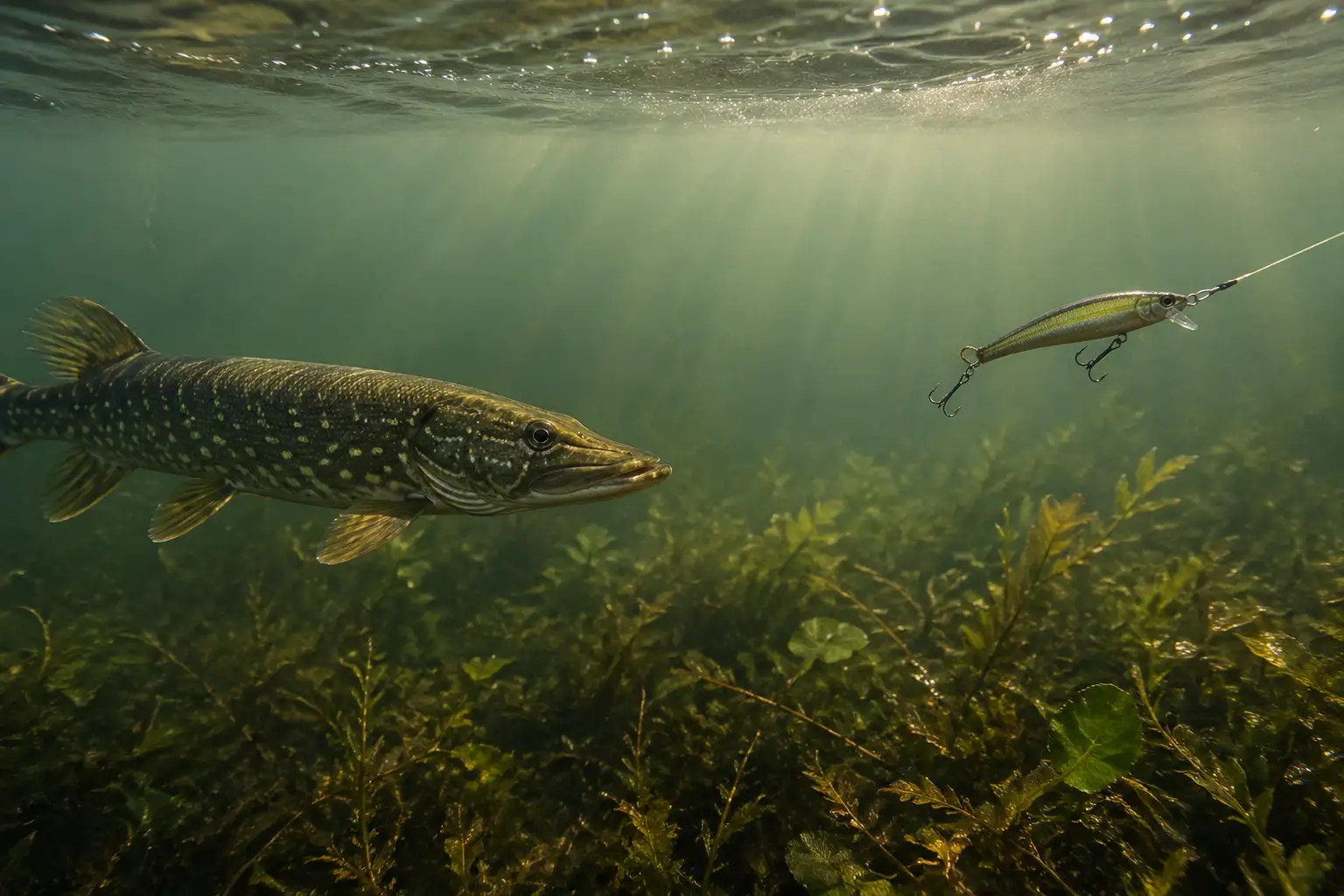
Once water reaches 20–24°C (68–75°F), retrieve speed becomes more important than lure color. Oxygen stability drops, baitfish slide toward cooler edges, and bigger pike stop wasting energy on bad opportunities. The same lure that feels dead at noon can become dangerous again in the last hour before sunset.
A suspending jerkbait with a two-second pause can outfish the same lure worked too fast for hours. A spinnerbait burned high over warm weed tops often gets ignored, while the same bait slow-rolled just outside the weedline gets crushed on the first turn.
In this guide, we break down the best retrieve speed for summer pike, when to slow down, when to speed up, and how to work jerkbaits, spinnerbaits, swimbaits, topwater lures, and spoons based on real feeding windows—not guesswork.
How to Retrieve Lures for Summer Pike in Hot Water
The best way to retrieve lures for summer pike is not simply “slow” or “fast.” In hot water, the correct speed depends on fish position, oxygen stability, baitfish movement, and how active pike are during that exact feeding window.
Most anglers fish too fast when pike are inactive and too slow when fish are ready to react. That is why depth matters before lure choice. Fish holding deeper along outside weed edges or suspended near cooler breaks usually respond better to controlled retrieves with pauses, while active fish pushing shallow bait often react harder to faster presentations.
This is exactly why knowing how deep are pike in summer changes the entire retrieve strategy. A lure worked perfectly at 2 meters (6–7 feet) can feel completely wrong when fish are sitting at 5 meters (16 feet) near the first hard drop.
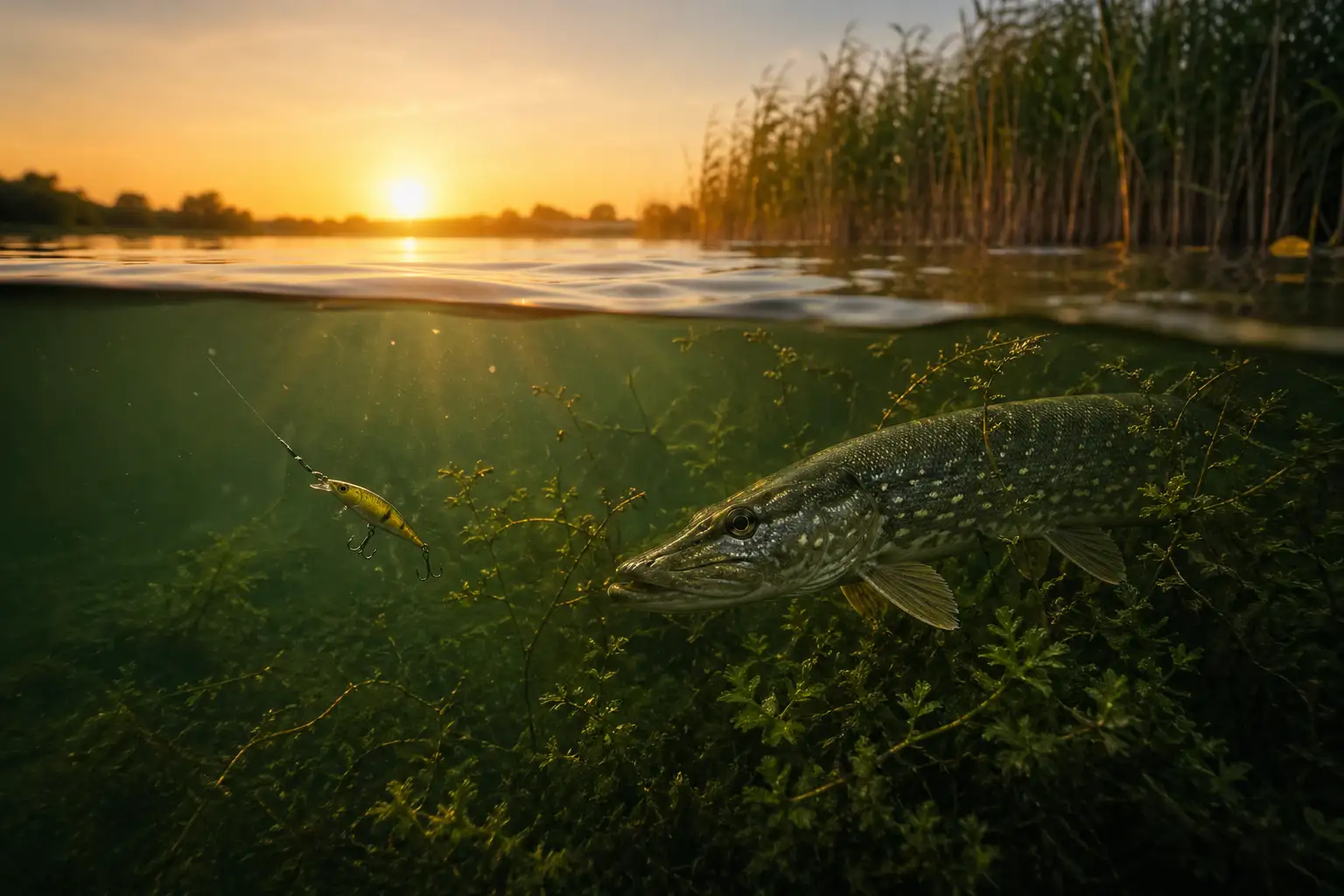
Early morning often rewards slightly faster retrieves because pike use that short oxygen reset after the night to feed more aggressively. A jerkbait with sharp twitches, a spinnerbait moving just above the weed tops, or a swimbait with a clean steady pull can trigger fast reaction strikes before the sun pushes fish deeper.
Wind can extend that feeding window longer than most anglers expect. If a steady summer breeze keeps hitting one bank, it often keeps baitfish active there for hours. Wind breaks the surface light, improves oxygen movement, and makes pike far bolder with faster retrieves—even well past noon. Many of our best summer fish come from windy weed edges when calm banks look completely dead.
Midday is different. Once the water stabilizes above 20–24°C (68–75°F) and the sun gets high, bigger pike often stop chasing for a reason—they lose their ambush advantage. In clear summer water, direct overhead light exposes their silhouette, and baitfish can see them coming much earlier. That is why big fish tuck into the thickest cabbage weed, shade lines, or slide down the first hard drop where the attack becomes easier again.
This is where slowing down matters. Longer pauses, softer turns, and slower directional changes usually outperform aggressive retrieves. Many “dead” summer sessions are simply bad timing mixed with too much speed.
Evening creates the best balance. Bait moves shallower again, light levels drop, and pike become far more willing to commit. At that point, cadence becomes more important than raw speed—pause, hesitation, and sudden acceleration often trigger the strike faster than lure color ever will.
If you get follows without commitment, change speed before changing lures. In most cases, the fish already told you the lure was right.
Best Jerkbait Retrieve for Hot Water Pike
Jerkbaits catch more summer pike when you stop trying to make them look aggressive and start making them look vulnerable. In warm water, big pike often follow first and strike second. The real trigger is usually not speed—it is hesitation.
Most anglers work jerkbaits too fast. Constant hard twitches without pause may create followers, but they often kill the actual strike. A pike holding near an outside weed edge or suspended over the first drop usually wants a target that looks separated, confused, or slightly injured—not something racing past its face.
This is why understanding where to find pike in summer matters before the first cast. A suspending jerkbait over shallow baitfish and the same bait fished beside deep cabbage walls require completely different cadence.
For most summer conditions, the best starting rhythm is simple: two sharp twitches, then a 2–3 second pause. That pause is where most strikes happen. If fish follow without committing, extending that pause to 4–5 seconds often changes everything.
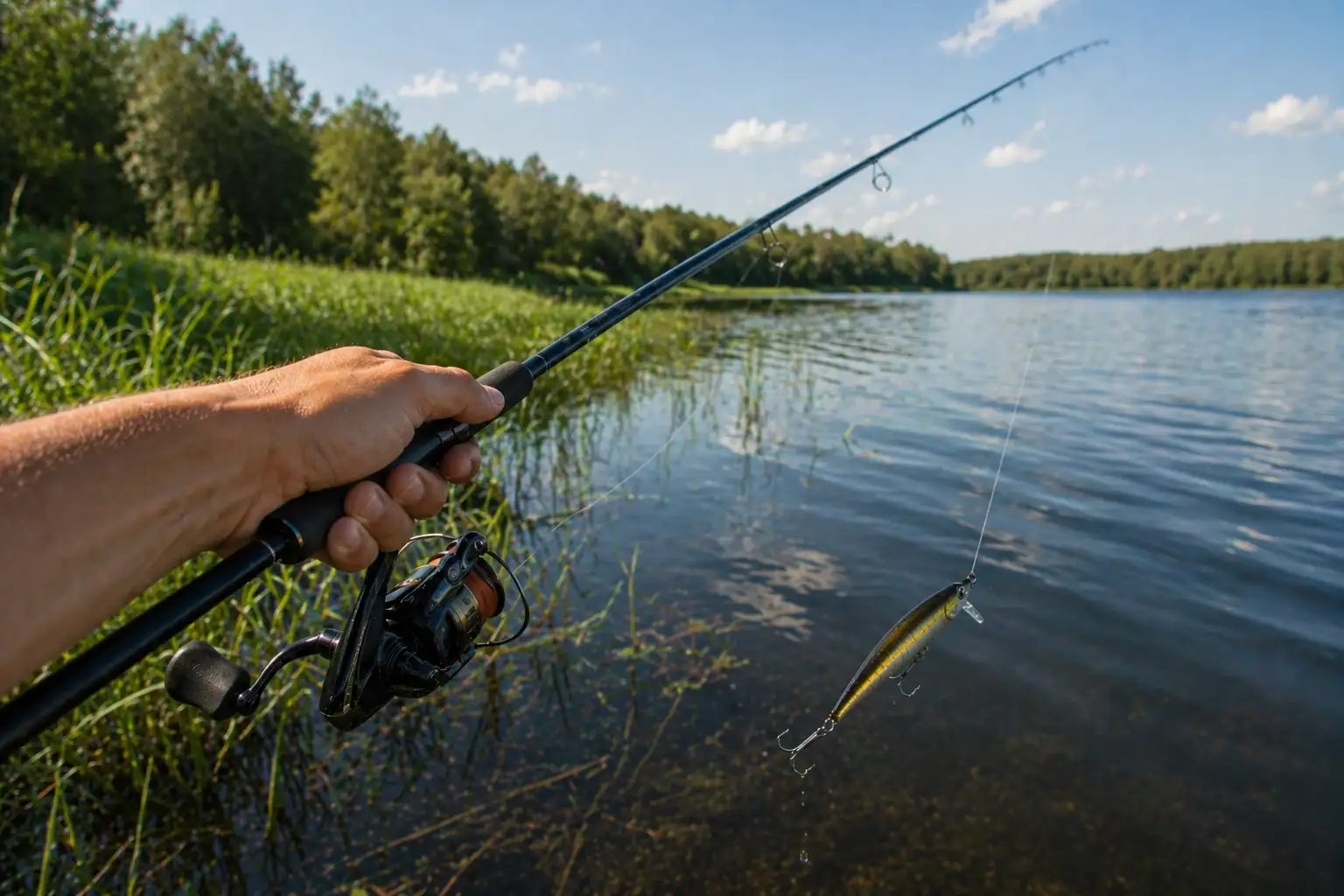
The secret to proper jerkbait action is working the lure on slack line. If you keep the line tight, you are only pulling the bait forward. But if you snap the rod tip and immediately give back a little slack, the jerkbait glides wider to the side and looks like a panicked baitfish trying to escape.
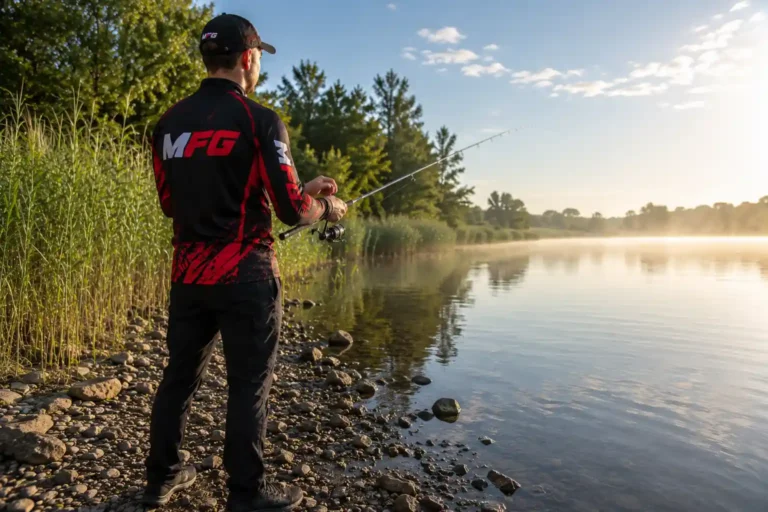
If you are fishing from the shore with a longer rod, keep the rod tip low, almost touching the surface. This helps the lure stay at maximum running depth longer instead of rising too early as it gets closer to the bank. Around shallow sand-to-weed transitions, that extra meter often decides the strike.
During the pause, do not just wait—watch your line. Summer pike often hit softly on the suspend. You may not feel anything in the rod. Sometimes the only signal is the slack line jumping, tightening, or moving slightly sideways. That is the moment to set the hook hard.
Whether from the boat or the bank, the rule stays the same: the best jerkbait retrieve is usually the one that makes the fish lose patience—not the one that looks fastest to the angler.
How to Fish Spinnerbaits and Spinners for Summer Pike
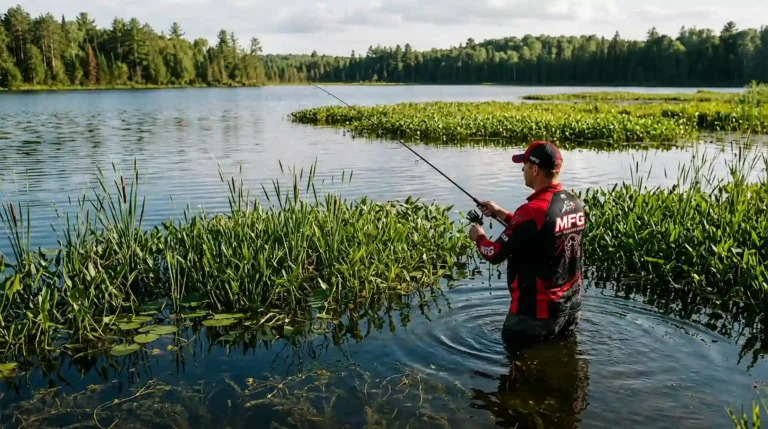
Spinnerbaits and inline spinners are some of the most reliable summer pike lures when weeds make everything else frustrating. They move clean through cabbage, stay high in the strike zone, and let you cover large sections of productive water without constantly clearing hooks.
The mistake most anglers make is fishing them too shallow and too fast. A lure burned across the top of warm weed mats may create flashes and follows, but bigger pike usually sit lower—right on the outside weed edge where cooler water, shade, and baitfish movement create the real ambush lane.
This is exactly why understanding how to catch pike from a boat in summer matters here. Boat angle changes everything. Casting parallel to the weedline keeps the lure inside the feeding lane far longer than casting straight at the bank. From shore, working along sand-to-weed transitions often produces the same effect.
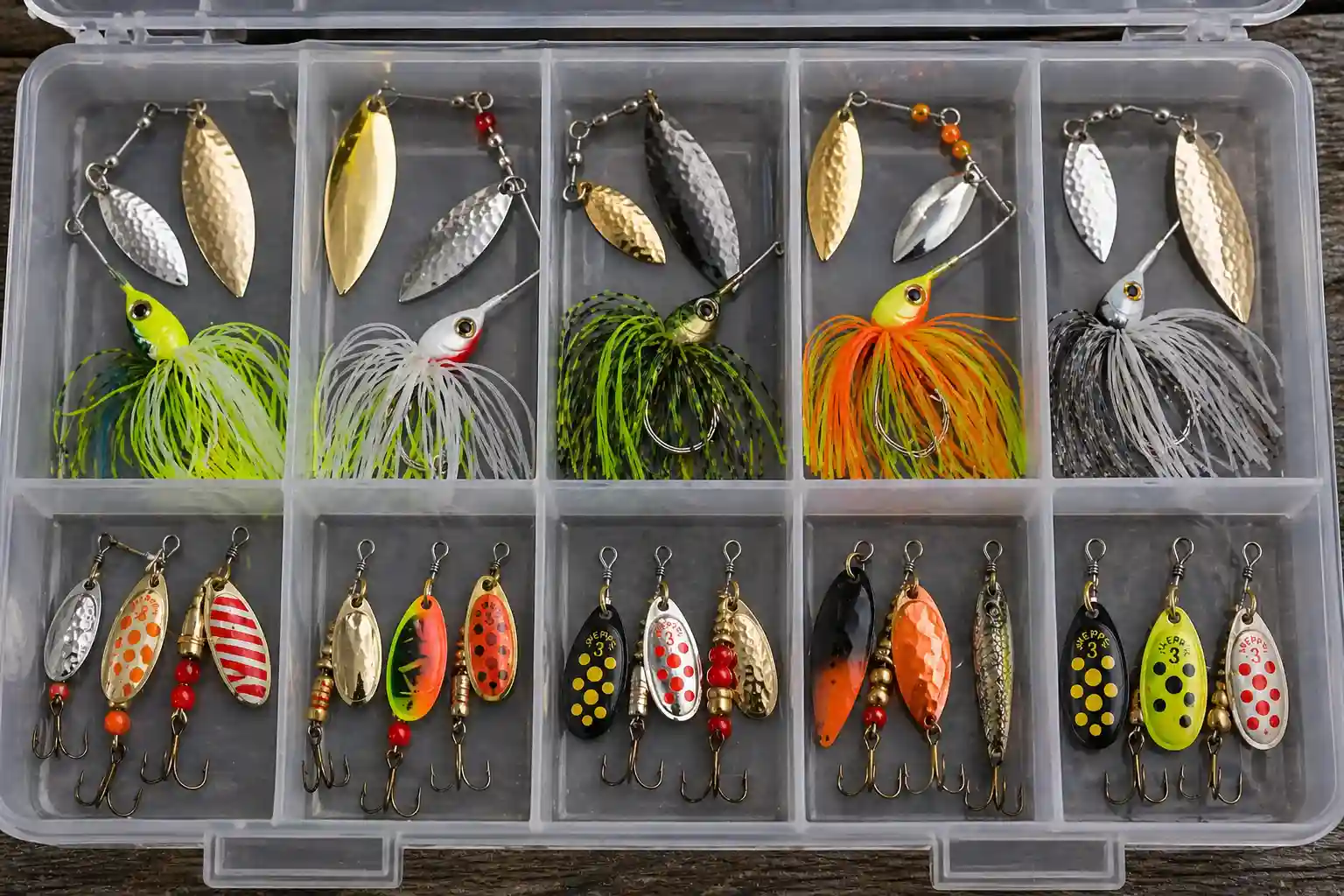
For spinnerbaits, the best starting retrieve is a controlled slow roll just above the weed tops. You want the blades turning steadily, but not racing. The key is feeling that constant “thump” in the rod tip. If that thumping suddenly stops, you either picked up slime on the wire—or a pike inhaled the lure from behind and is swimming toward you. In both cases, check immediately.
For inline spinners like Mepps-style baits, a slightly faster steady retrieve usually works better. The goal is strong flash and vibration without letting the lure rise too high. These are excellent search baits for covering shallower weed lanes, windy banks, and active fish pushing bait near the surface.
In summer, we never fish a spinnerbait without a trailer hook. Pike often swipe at the flash of the blades instead of fully eating the bait, especially during hot, lazy feeding windows. That extra hook converts short strikes into landed fish.
When you reach a pocket, hole, or broken gap in the cabbage, kill the retrieve for a split second. Let the spinnerbait helicopter down into that opening. That short vertical fall often triggers the biggest midday fish hiding deep in the shade where horizontal retrieves get ignored.
Deflection creates strikes. When the lure hits a weed stem, turns off a hard patch, or changes angle near a pocket, that sudden direction shift often triggers the hit. Many summer pike do not strike the retrieve—they strike the mistake in the retrieve.
Best Soft Swimbait Retrieve for Summer Pike
Soft swimbaits catch the biggest summer pike when the retrieve stays natural and controlled. Unlike jerkbaits that trigger reaction strikes or spinnerbaits that force aggressive follows, swimbaits work best when they look like easy prey moving exactly where big fish already want to feed.
The biggest mistake is retrieving them too fast and too high. Large summer pike holding near deeper breaks, outside weed edges, and first drop-offs rarely want to chase a swimbait burning near the surface. They want something slow, stable, and close enough to attack without wasting energy.
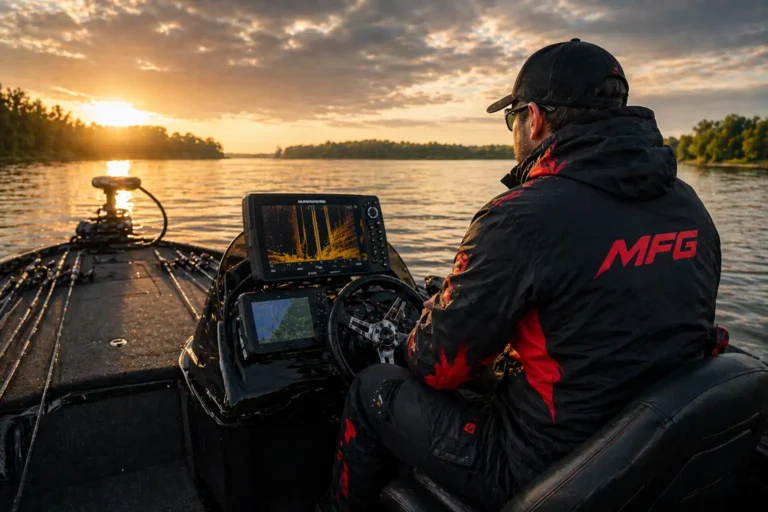
This is where using fish finders changes everything. If you can see bait suspended over deep weedlines or mark pike sitting just off the first break, your swimbait retrieve becomes far more precise. Blind casting works—but controlled depth wins faster.
For most summer conditions, the best starting retrieve is a steady medium-slow pull with small hesitation pauses. You want the paddle tail working naturally, not violently. You should feel a light, rhythmic tail vibration through the rod. If that feeling suddenly becomes heavy or muted without a hard strike, a big pike often already has the bait and is simply swimming with it—set the hook immediately.
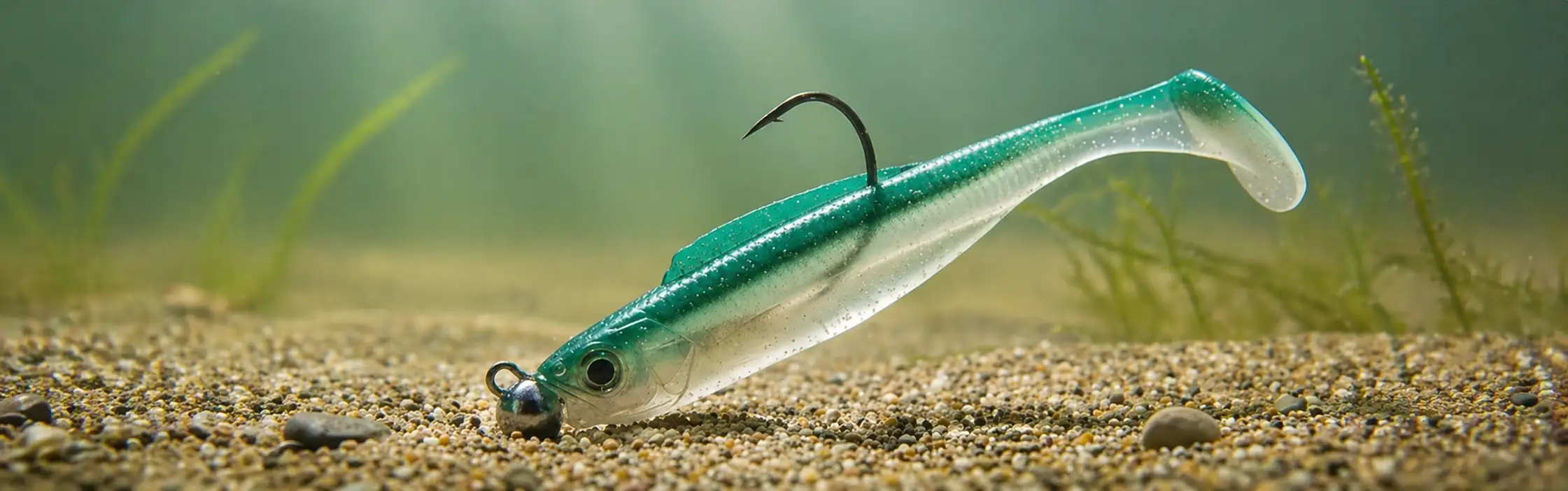
Lift-and-fall becomes deadly around deeper weed turns and isolated structure. A short sweep of the rod tip followed by controlled slack lets the swimbait glide and drop like a wounded baitfish. Many larger pike strike during that fall, especially when fish are holding just below active bait schools.
If your swimbait keeps rising too high over deep weed edges, do not solve it by simply reeling faster. A small 5 g (0.17 oz) screw-in weight in the belly or chin often keeps the lure running level and stable during slow retrieves and pauses, which is exactly where the strike usually happens.
From shore, diagonal casts along reed lines and sand-to-weed transitions usually outperform straight retrieves toward the bank. A longer rod helps keep the swimbait deeper for more of the retrieve, and many summer strikes happen in the final few meters when the lure slows naturally near the shallow edge. That last glide before the bank is often the real trigger.
Pike are extremely sensitive to boat shadow in clear summer water. When fishing from a boat, we rarely finish the retrieve right beside the hull. Kill the swimbait 5–10 meters (16–33 feet) away and let it glide naturally. If a fish was tracking, that sudden “death” away from the shadow often creates the final commitment.
One rule we trust every summer is simple: if pike follow hard baits but refuse to strike, slow swimbaits often finish the job. They do not need to look exciting—they need to look easy.
Topwater Retrieve During Low-Light Feeding Windows
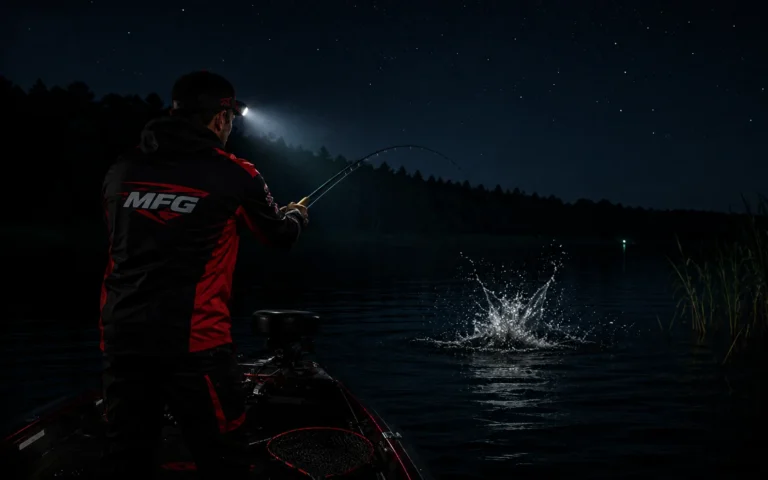
Topwater pike fishing is not an all-day game in summer—it is a low-light opportunity. Early morning, the last hour before sunset, overcast weather, and stable night windows are where surface strikes become realistic instead of random.
The biggest mistake is fishing topwater during dead midday conditions and assuming the lure simply “does not work.” In reality, pike are often still there—they just refuse to rise through warm, bright water for a surface meal that feels too risky.
Most failures happen because anglers fish surface lures outside the real feeding windows. When baitfish slide shallow again and light levels drop, pike regain their visual advantage and surface feeding becomes far more natural.
For walking baits and prop baits, the best starting retrieve is usually slower than most anglers expect. Long pauses between movements often outperform constant action. A walking bait should glide cleanly side to side with controlled rhythm, while a prop bait works best when short pulls create disturbance followed by complete stillness.
The strike often happens during silence, not noise. Many anglers speed up after the first swirl behind the bait, but big pike often need that extra pause to fully commit. If you see a boil or a missed strike, stop the lure completely for a second before moving again.
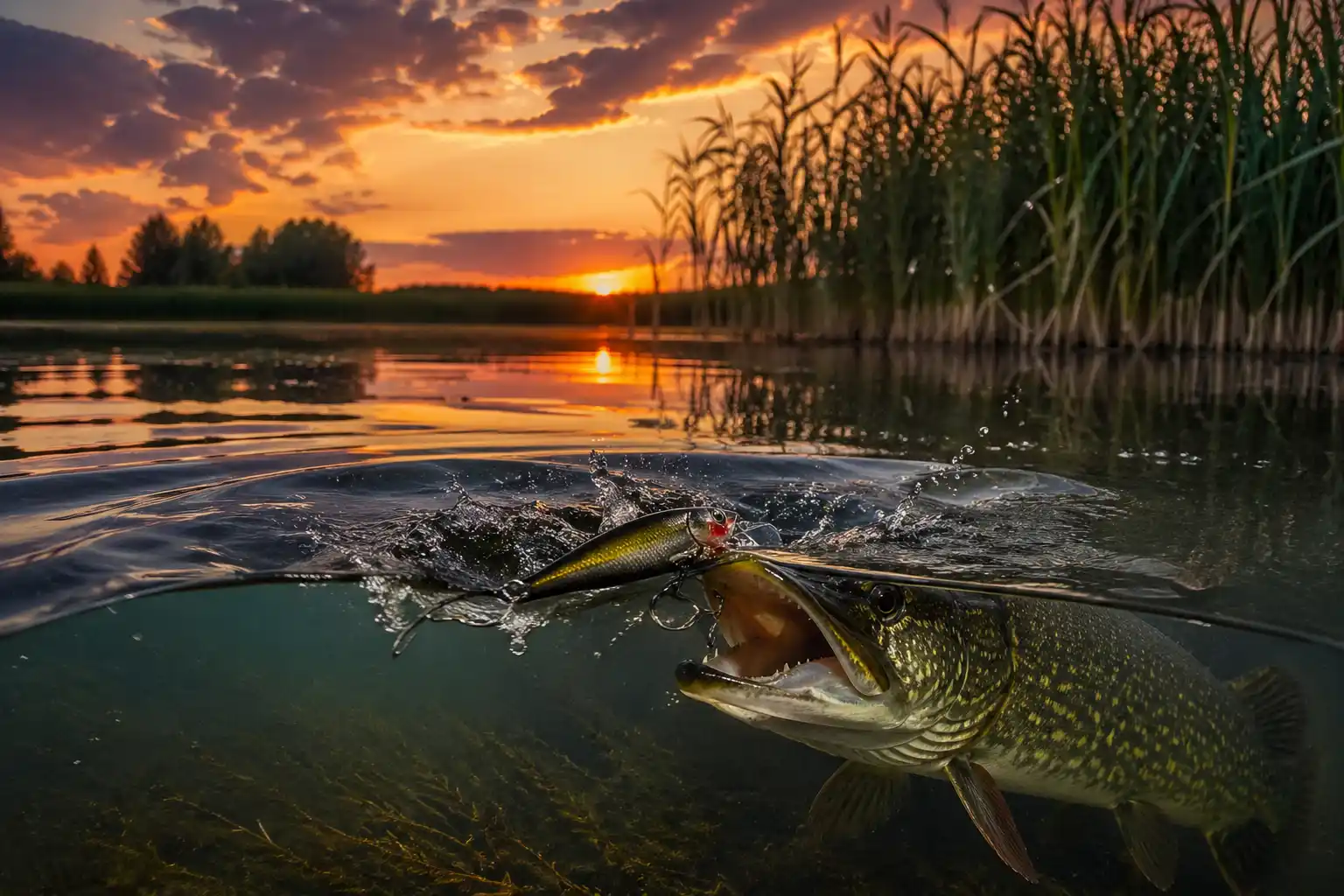
If a pike explodes on the surface and misses the hooks, resist the urge to strike back immediately. Keep the lure still for two seconds, then give it one small twitch. If the fish does not return, having a follow-up rod ready with a soft swimbait or jerkbait can save the entire moment—dropping it right into that boil often gets the real hookup.
On calm “mirror” evenings, pauses should become even longer. Let every ripple disappear before moving the lure again. In dead calm water, even a small vibration feels huge through a pike’s lateral line, and too much movement often kills the strike instead of creating it.
Calm evenings reward precision, while windy low-light conditions often allow slightly faster retrieves because broken surface light makes fish far bolder. Around lily edges, reed corners, and shallow weed flats, even a small direction change can trigger the hit.
Wait until you feel weight, not just see the splash. Summer topwater strikes create adrenaline, and many anglers set the hook too early. The fish blows up, the angler reacts, and the lure gets pulled away before the hooks ever touch. Let the rod load first—then drive the hooks home.
From shore, work the lure parallel to reeds and shallow weed lines instead of pulling it straight back from open water. From the boat, avoid pushing too shallow too early—surface fish in clear summer water react fast to hull pressure and unnatural noise.
Topwater fishing teaches patience. The goal is not to create the loudest surface explosion—it is to create one mistake that looks easy enough for a big pike to trust.
How to Trigger Lazy Followers with Spoons and Glide Baits
Spoons and glide baits are often the best answer when pike keep following but refuse to commit. These are not search lures for covering water fast—they are trigger tools for fish that already showed interest but need one final mistake to attack.
Summer pike in warm water often become classic lazy followers. They track behind the lure, stay just outside striking distance, and turn away at the last second. In most cases, the problem is not lure choice—it is the lack of hesitation, direction change, or depth adjustment.
This is where the right line setup matters more than most anglers realize. Heavy spoons and glide baits work best when you keep direct contact without killing the natural fall. Too much stretch removes the trigger, while poor leader balance can ruin the glide completely.
For spoons, the most reliable trigger is the death flutter. Instead of a straight retrieve, lift the rod tip up toward 11 o’clock, then let it fall back to 9 o’clock on a semi-slack line. That short moment where the spoon tumbles vertically instead of moving forward is where most big summer pike finally commit. Many lazy followers strike exactly when the bait turns sideways and starts to fall like a wounded fish.
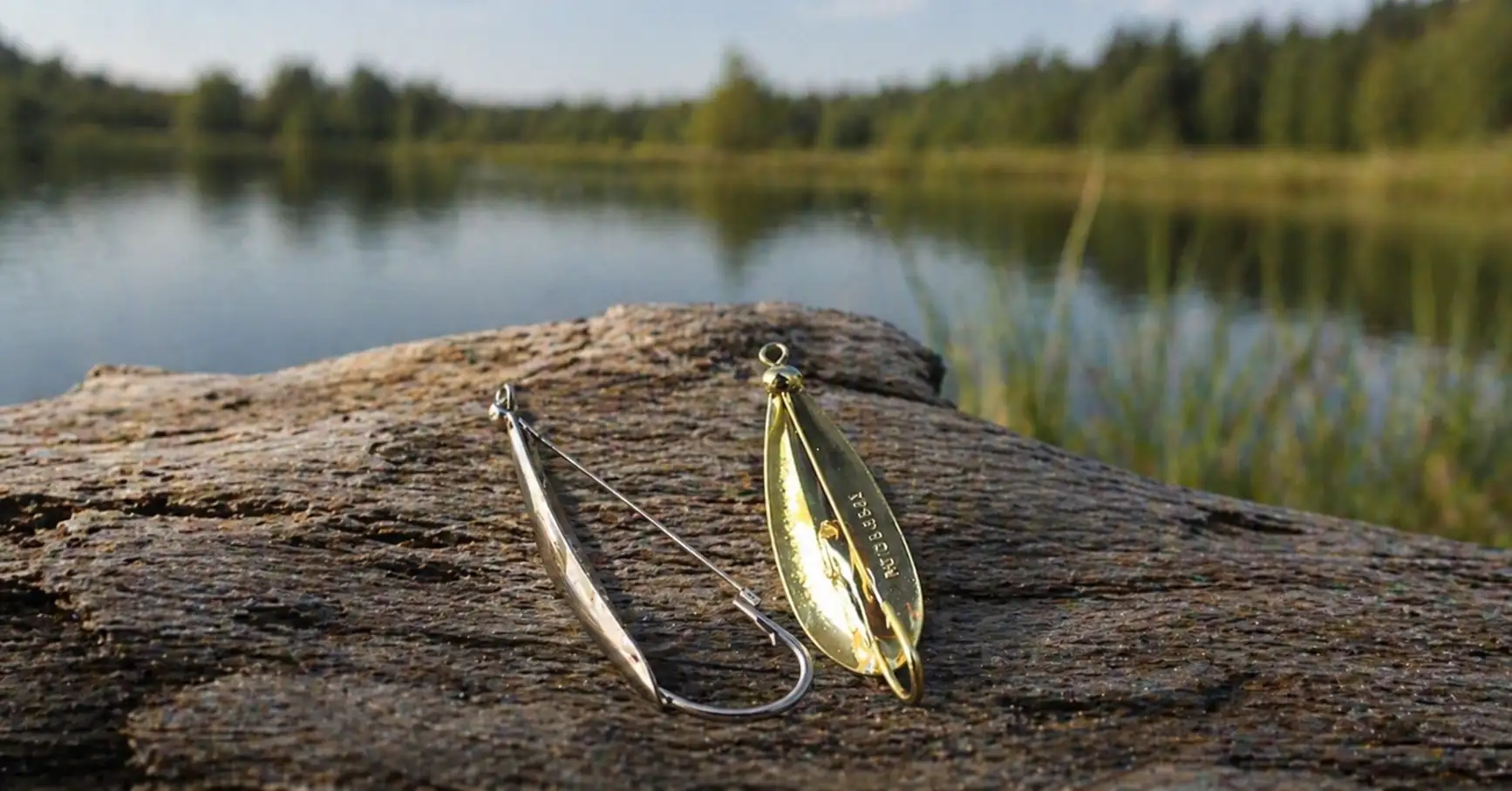
Glide baits trigger through direction change, not speed. A wide side-to-side sweep followed by a short hesitation forces the strike because the fish reacts to lost control, not pure aggression. The goal is to make the bait look like it made one fatal mistake.
If you are fishing from shore with a 9-foot (2.74 m) rod, use long sweeping side motions instead of short downward jerks. This creates a much wider glide and makes the bait search a bigger area before it reaches the bank. A following pike often commits simply because it runs out of room to keep inspecting.
On the pause, do not keep the line guitar-string tight. Give the glide bait just enough slack to complete the turn and sit slightly sideways. A pike tracking from behind for ten meters often cannot resist that sudden 90-degree turn when the bait seems to stop and stare back.
From the boat, wider turns and longer pauses outside visible weed edges consistently outperform fast straight retrieves. Many anglers end the retrieve too early and never see the fish that was already there.
Lazy followers do not need a louder presentation—they need a weaker-looking target. The goal with spoons and glide baits is not to impress the fish. It is to make the fish believe the prey just made one fatal mistake.
Common Retrieve Mistakes That Kill Big Pike Strikes
Most summer pike are not lost because of the wrong lure—they are lost because of the wrong retrieve decision. Big fish often show interest first and reject the bait only in the final seconds. That is where small mistakes ruin the entire opportunity.
For years, one of our biggest mistakes was changing lures after every lazy follow. A pike would track the bait, turn away, and we immediately blamed the lure. In reality, most of those fish were already telling us the lure was right—the cadence was wrong. Changing speed, pause length, or retrieve angle usually solves more problems than switching colors ten times.
Another common problem is fishing too high above the strike zone. Summer pike holding near deep weed edges or the first hard drop rarely move far upward in hot water. If your lure passes too high, the fish may follow out of curiosity but never fully commit. This is why depth control matters before lure choice.
Many anglers also fish too cleanly. Perfect straight retrieves look unnatural. Pike often strike when the lure hits a weed stem, turns off a hard patch, pauses near a pocket, or changes direction suddenly. Those small “mistakes” in the retrieve often create the real trigger.
We also lost more big pike by lifting the lure too early beside the boat than by choosing the wrong lure entirely. In clear summer water, boat shadow and hull pressure make fish far more cautious than most anglers realize. A final turn, figure-8, or one last pause often converts the fish you never even knew was there.
From shore, the same mistake happens in the final few meters near the bank. Many anglers rush the retrieve and pull the lure out too early instead of letting it glide through that shallow sand-to-weed transition. Some of the biggest summer strikes happen exactly where people stop paying attention.
Setting the hook too early is another expensive habit. This happens constantly with topwater, glide baits, and slow swimbaits. The fish explodes, the angler reacts to the splash, and the lure gets pulled away before the hooks ever touch. Wait for weight—not noise.
One rule we trust every season is simple: if you get three follows without a strike, stop blaming the lure first. Look at your retrieve. Most of the time, the fish is already telling you exactly what needs to change.
Summer pike rarely reward panic—they reward control. The anglers who catch the biggest fish are usually not the ones changing baits fastest, but the ones reading the fish better.
Summer Pike Retrieve Questions Anglers Ask Most
How fast should I retrieve lures for summer pike?
Most summer pike respond best to a medium-slow retrieve with pauses, not constant speed. Early morning and windy low-light periods often allow faster presentations, while bright midday conditions usually require slower retrieves, longer pauses, and better depth control.
Why do pike follow my lure but not strike?
Lazy follows usually mean the lure attracted attention, but the fish never got the final trigger. In most cases, the problem is not lure choice—it is cadence, pause timing, or retrieve angle. A sudden hesitation, direction change, or slower final glide often converts followers into real strikes.
Are jerkbaits better than swimbaits in summer?
Both work, but they solve different problems. Jerkbaits trigger reaction strikes and work best when fish are active enough to commit to pauses and sharp direction changes. Swimbaits are often stronger for neutral fish holding deeper because they look like easier prey and require less energy to attack.
Do spinnerbaits work for pike in hot weather?
Yes—especially around weed edges, cabbage lines, and windy banks. A controlled slow-roll retrieve just above the weed tops is often far better than burning the lure high over the surface. Adding a trailer hook also helps convert short strikes during hot summer conditions.
Should I use topwater lures during midday?
Usually no. Topwater works best during low-light feeding windows—early morning, late evening, overcast weather, and stable night periods. Midday surface fishing in bright hot conditions often creates follows without real commitment.
What is the biggest retrieve mistake in summer pike fishing?
The biggest mistake is changing lures too fast. If pike are following, the lure is often already correct. Most of the time, changing speed, pause length, depth, or retrieve angle produces better results than switching to another bait.
Read the Fish, Not Just the Lure
Summer pike rarely reward speed—they reward timing, control, and small mistakes that look real. The best anglers do not keep changing lures. They adjust cadence, pause length, depth, and direction until the fish finally commits.
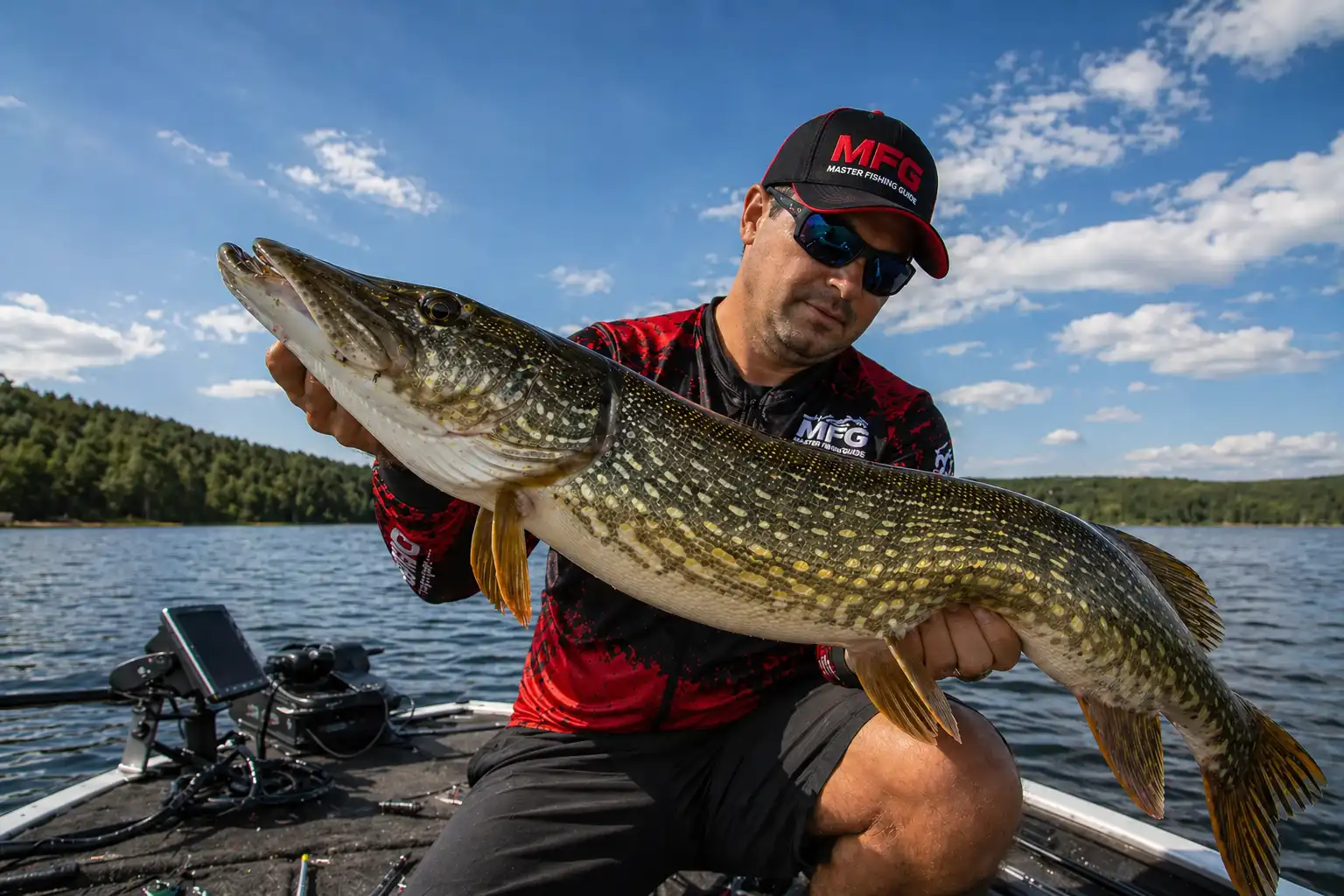
If you land a great summer pike, send us your catch photos on our Master Fishing Guide Facebook Page. We love seeing real catches from anglers who spend time on the water.