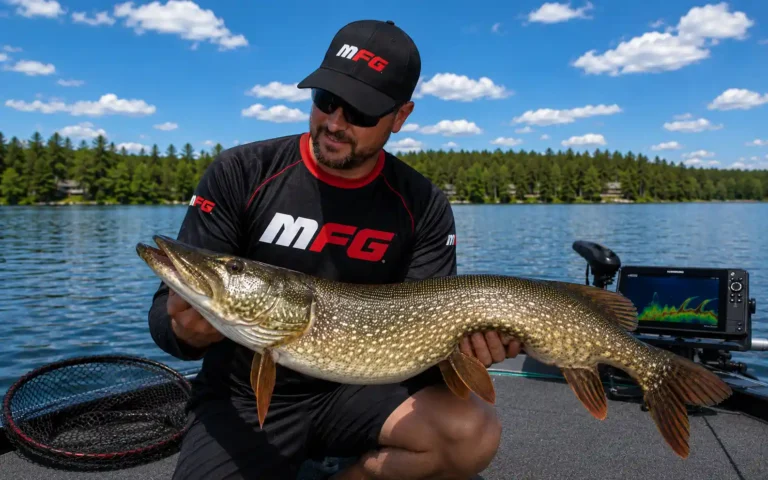


How to Catch Pike from a Boat in Summer: Positioning, Drifts & Deep Water Tactics
Knowing how to catch pike from a boat in summer is rarely about casting more—it is about positioning better. When water temperatures rise, oxygen levels shift, and shallow feeding zones become unstable, big pike stop behaving like spring fish. They move deeper, hold tighter to structure, and feed in much shorter windows.
That is why random casting across open water usually fails. Summer pike fishing from a boat becomes a game of control: boat angle, drift speed, sonar reading, wind direction, and understanding exactly where predator fish position between feeding windows.
Most anglers focus too much on lure choice and ignore the far more important question: where should the boat actually be? A perfect lure presented from the wrong angle often gets ignored, while an average presentation from the right drift line can trigger violent reaction strikes.
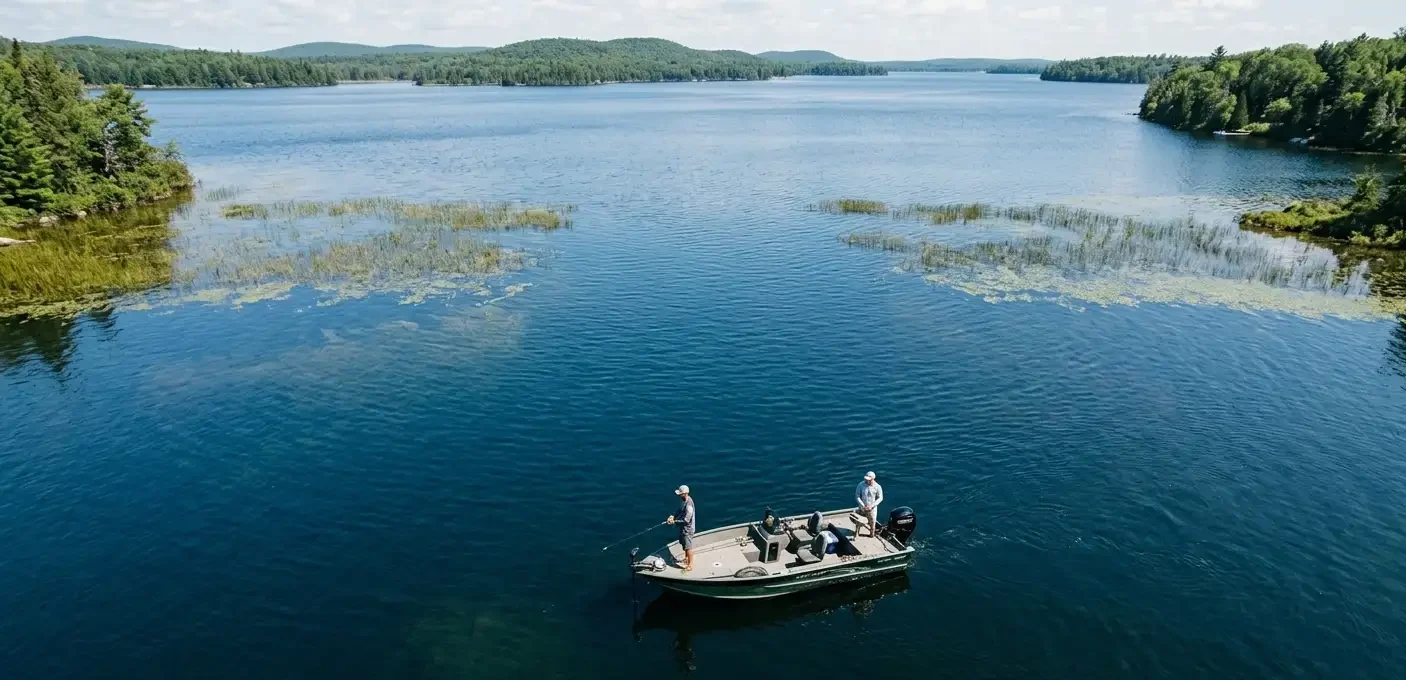
In high-sun summer conditions, the shadow of your boat and the direction of your lure’s silhouette against deep structure often matter more than lure color itself. A bad approach angle can kill the strike before the cast even reaches the strike zone.
Success starts by understanding where to find pike in summer, how deep they hold during stable heat, and when they move shallower during short feeding periods.
At Master Fishing Guide, after thousands of hours tracking summer pike movements across large lakes, slow river systems, and deep weed-fed reservoirs, we have seen the same pattern repeatedly: even a small 5-degree change in boat angle can be the difference between a lazy follow and a committed strike. The best summer boat anglers do not chase fish—they intercept predictable movement routes.
Weed edges, breaklines, suspended bait schools, current seams, and transition zones between deep water and feeding shelves become far more important than blind shoreline casting.
This guide breaks down exactly how to position your boat, control drifts, read deep structure, and fish smarter during the toughest warm-water periods of the season.
Mastering How to Catch Pike from a Boat in Summer Through Better Positioning
Most anglers ruin a summer pike spot before the first cast even hits the water. They slide the boat too close to the weed edge, drift directly over the breakline, drop the trolling motor too aggressively, and then wonder why the sonar looks perfect but nothing bites.
Learning how to catch pike from a boat in summer starts long before lure choice—it starts with understanding where the boat should actually be. In warm water, big pike are far less forgiving than in spring. They sit deeper, hold tighter to structure, and often react badly to noise, shadow, and poor approach angles.
Our team learned this the hard way on large lakes and slow river systems: fish would follow perfectly on side imaging, bait schools were clearly present, but strikes never came. The problem was not the lure—it was the boat sitting too high on the edge and killing the zone before the retrieve even started.
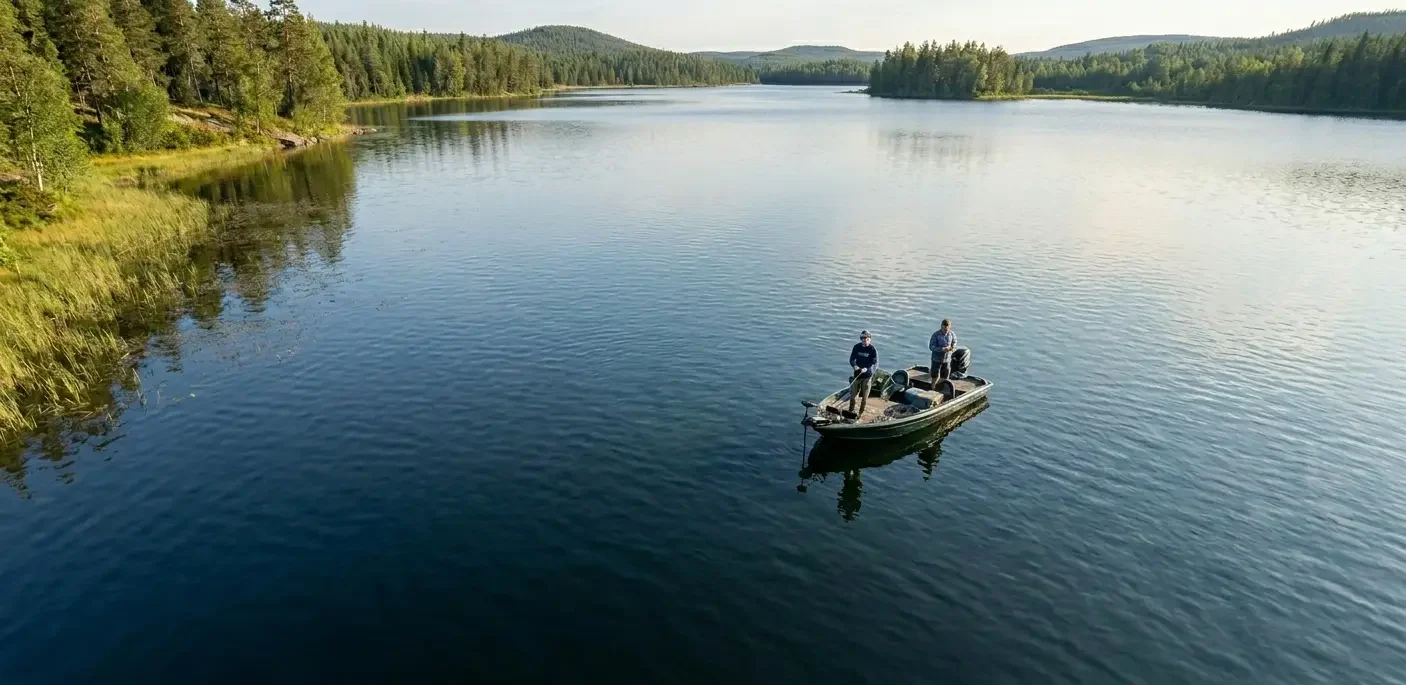
Summer pike usually position on the first major breakline outside shallow feeding areas—the outside weed wall, the first drop from a warm bay, deep cabbage lines, submerged timber near deeper water, or shaded transition zones where baitfish move between feeding shelves and open water.
Understanding how deep pike are in summer helps you position correctly before you even pick up the rod. Most active fish are not sitting on the shoreline—they are holding just outside easy feeding access, waiting for the right moment to move.
Just as shore anglers on large lakes often rely on longer 9-foot rods to reach deeper weed edges, boat anglers must use mobility to maintain that same stealthy distance. If you can clearly see the weeds under the hull, you are often already too close.
One of the biggest advantages of boat fishing is the ability to work structure parallel instead of attacking it straight from the bank. Keeping the boat parallel to a deep weed wall keeps your lure inside the strike zone for the entire retrieve, instead of only the first few feet of a cast thrown directly toward shore.
In clear, stable summer water, even the vibration of the hull or the shadow of a trolling motor can shut down the bite. We recommend approaching productive water from downwind and making long probing casts before moving the boat closer.
Our Rule of Distance: if you are fishing a weed edge that drops into deeper water, stay far enough off the structure that your hull shadow remains outside the primary ambush zone. As a starting point, keeping one full cast-length off the edge usually produces far more natural presentations.
We see this constantly during stable summer heat: moving the boat just one cast farther off the line often turns lazy followers into committed strikes. Position first. Cast second.
When to Leave Dead Water and Reposition
One of the biggest mistakes in summer boat fishing is staying too long on dead water. The structure looks perfect, baitfish are nearby, and the sonar shows life—so anglers keep casting for another hour hoping the bite will suddenly turn on.
Most of the time, it will not.
Learning how to catch pike from a boat in summer also means knowing when to leave a good-looking spot. In warm water, pike feed in short windows, not all day. Sometimes they feed hard for only 20–30 minutes, then disappear into neutral behavior for hours.
Pike are heavily controlled by water temperature and oxygen stability during summer. If you are not seeing baitfish flickering on the surface, active marks on 2D sonar, or movement around feeding shelves, you are often casting at dormant fish—not feeding fish.
That is why understanding the best time to catch pike in summer matters so much. Timing controls movement. Boat anglers simply have the advantage of reacting faster.
Morning usually starts with deeper edges and the first active bait movement. As light increases, fish often slide tighter to weed walls or suspend just off feeding shelves. Late evening can reverse that movement, especially after stable heat and light wind.
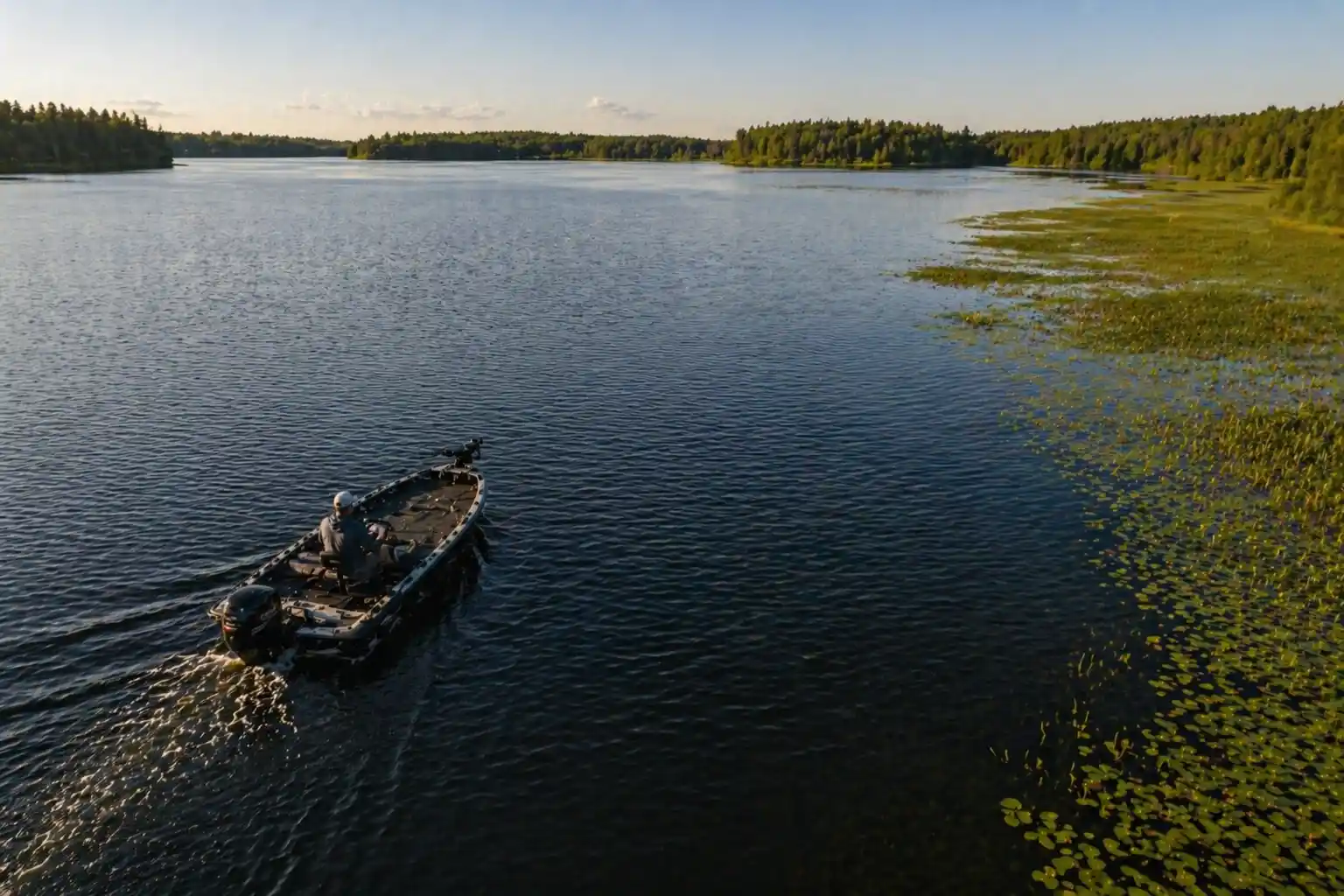
Cloud cover, a fresh wind change, or a small pressure drop can reopen a dead zone surprisingly fast. When wind hits a previously calm weed edge, it does not just move bait—it breaks surface tension, improves oxygen exchange, and slightly cools the upper layer. That small change is often enough to switch summer pike from neutral to active.
On river systems, dead water is often exactly that—water that has become too stagnant, too warm, and too low in oxygen. When the bite dies, moving toward current seams, shaded flow lanes, or areas with stronger water movement usually brings life back much faster than changing lures.
The key is rotation, not stubbornness. Instead of camping on one perfect-looking breakline, work a full system: deep edge, outside weed wall, shaded point, current seam, then back again when conditions shift.
If a structure gives you follows but no commitment, do not trust memory—drop a GPS waypoint. When the sun starts to fall, the wind shifts, or pressure changes, returning to that exact high-percentage spot with a fresh approach often produces the strike you missed earlier.
Our 20-Minute Check: if you have worked a high-quality structure with two different lure styles—something fast like a spinnerbait and something slower like a jerkbait—and you have not seen a follow, strike, or clear bait reaction, it is usually smarter to move. In summer, active fish often show themselves quickly.
The best summer boat anglers are rarely the ones casting the most—they are the ones moving at the right moment.
How Wind and Drift Create Better Pike Fishing
Most summer pike anglers think wind makes boat control harder—experienced anglers know it usually makes fishing better. Wind pushes bait, breaks surface light, improves oxygen exchange, and helps activate fish that looked completely dead an hour earlier.
The mistake is fighting the wind instead of using it. Many anglers overuse the trolling motor, constantly correcting position, pushing noise into the strike zone, and dragging the boat directly over active fish before the cast even starts.
A controlled drift is often far more effective than perfect spot-lock. Letting the boat move naturally along an outside weed edge, breakline, or deep cabbage wall creates better casting angles and keeps presentations far more natural than forcing the boat to stay frozen in one place.
If the summer breeze is too strong, a small drift sock deployed from the bow can stabilize your speed and keep your presentation inside the strike zone longer. This is especially effective when working jerkbaits, heavier spinnerbaits, or swimbaits that need time to trigger a committed follow instead of a lazy inspection.
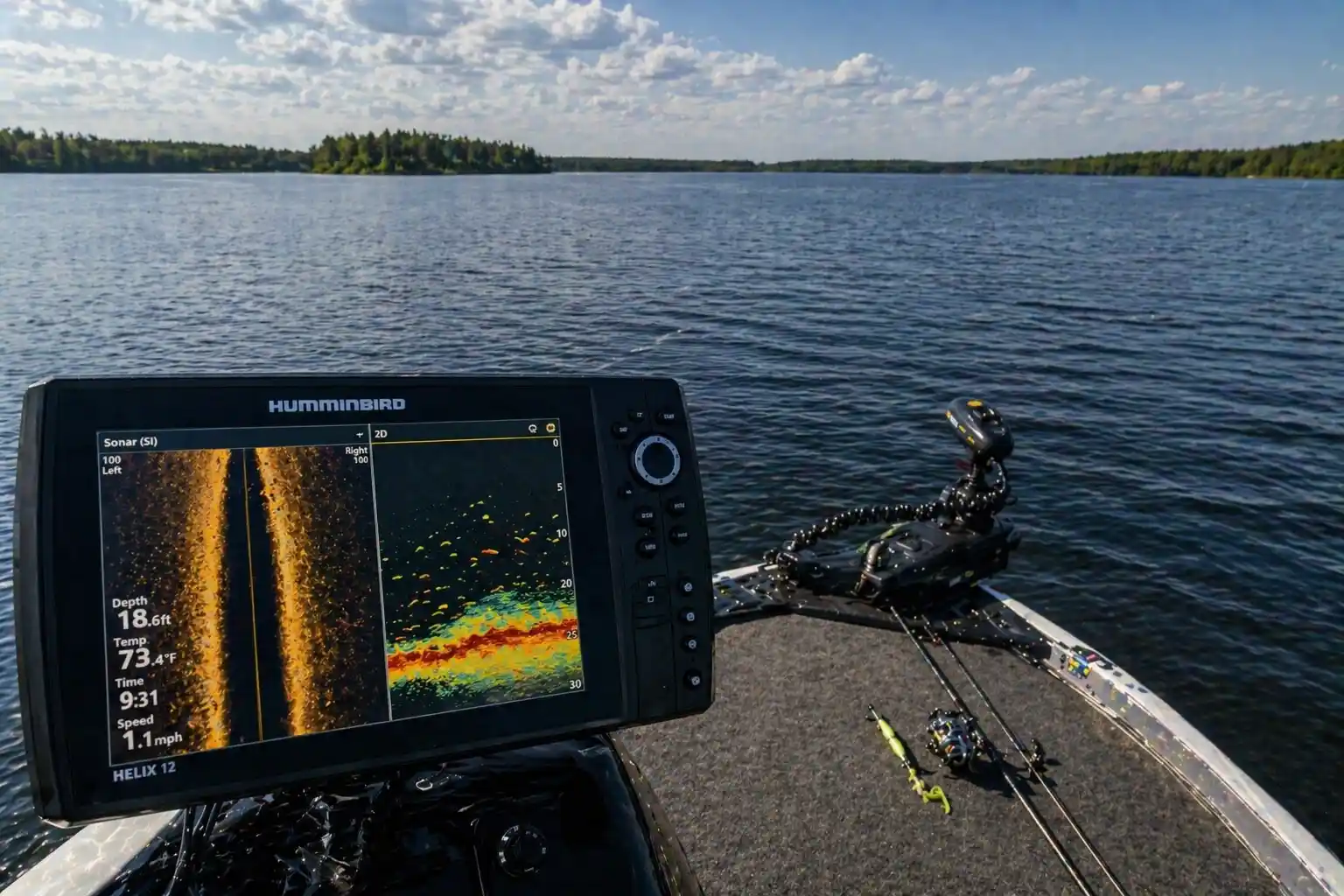
Watch your Side Imaging during the drift. If bait schools start sliding deeper or pike are holding ten feet off the weed edge instead of tight to it, adjust the drift line immediately. Do not wait until the end of the lake to realize you spent the last twenty minutes drifting over empty water.
Our team often prefers a slow crosswind drift instead of a direct downwind push. This keeps the lure working across the strike zone longer and allows repeated casts along the same feeding edge instead of rushing through the area too fast.
A crosswind drift also creates the perfect quartering cast angle. Staying 30–40 feet off the weed line allows the lure to travel diagonally across the edge, covering more water and showing fish a far more natural profile than a straight parallel retrieve.
Boat angle matters as much as drift speed. A lure pulled naturally across the edge almost always outperforms one dragged directly on top of the fish. Pike prefer prey entering the ambush lane—not crashing vertically into it.
In shallow summer zones, especially around weed flats and warm back bays, silence often catches fish that motor noise pushes away. This is where smaller platforms often outperform larger boats because they allow stealth access without hull shadow, aggressive repositioning, or constant trolling motor correction. For anglers focused on those harder-to-reach feeding lanes, the best fishing kayaks for stealth summer pike fishing offer the best balance between quiet access, stability, and full control around shallow structure.
One drift pattern we rely on often is a soft “S-pattern” drift. Instead of holding a perfectly straight line, use the trolling motor only for small corrections in and out of the breakline. This helps check both the cabbage tops and the immediate drop-off, especially during midday when bigger fish often slide just a few feet deeper into shade.
Approach productive water from downwind whenever possible. Make longer probing casts first, then move closer only if fish activity confirms the zone is alive. If you start too close, the best part of the spot is often already dead before the first retrieve.
Summer boat fishing is rarely about controlling the boat perfectly—it is about letting the conditions help you control the fish.
Best Casting Angles for Bigger Pike
Even with perfect boat positioning, most summer pike are lost because the cast enters the strike zone the wrong way. Pike are ambush predators. They do not want prey crashing directly on top of them—they want it entering naturally through the feeding lane.
This is why understanding how to cast from a boat in summer matters just as much as knowing where the fish are holding. A perfect weed edge can feel completely dead if every cast approaches from the wrong angle.
The best cast is usually parallel or quartering—not straight at the bank. Casting directly toward shore often keeps the lure in the strike zone for only a few feet before it leaves productive water. Parallel casts along outside weed edges keep the lure working through the ambush lane for the entire retrieve.
In summer, pike do not just sit in weeds—they hold inside shadow pockets along deep cabbage walls, cooler inside edges, and irregular ambush points where baitfish naturally lose direction. A parallel cast is not only about keeping the lure in the zone longer—it is about pulling that lure across multiple shadow pockets, giving a predator the perfect flanking opportunity instead of one fast reaction window.
We rely heavily on quartering casts along cabbage lines and first breaklines. Instead of throwing directly at the weed wall, cast diagonally across it so the lure travels from slightly deeper water across the edge and back toward the holding zone. This creates a much more natural baitfish movement and triggers far more committed strikes.
When using a quartering cast with a suspending jerkbait, the lure’s side-flash becomes far more visible to fish holding slightly deeper. As the bait kicks sideways along the breakline during pauses, it mimics a disoriented baitfish trying to find cover inside the grass—a trigger summer pike often find impossible to ignore.
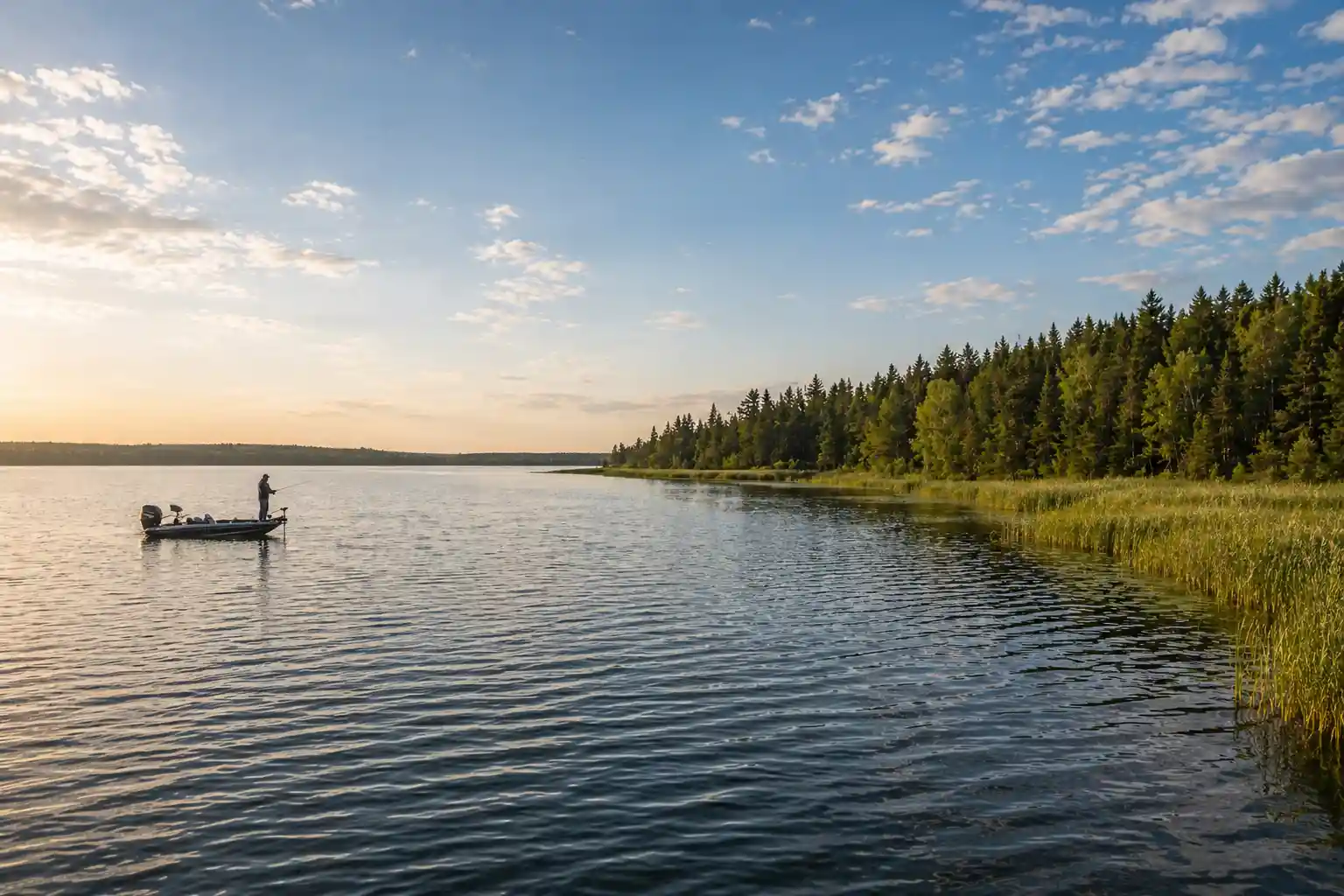
On suspended fish holding just outside visible weeds, casting too shallow is one of the biggest mistakes. Many anglers keep throwing directly into the grass while the bigger fish are sitting 10–15 feet outside the visible edge. This is where understanding summer pike depth patterns changes everything.
We also avoid casting directly over marked fish whenever possible. If Side Imaging shows pike sitting off the edge, do not drive the lure vertically onto their heads. Bring the lure across their lane instead. Reaction strikes happen when prey enters the ambush path—not when it drops like a rock from above.
When fishing deeper structure, pulling the lure from deep to shallow often outperforms the opposite direction. A swimbait or suspending jerkbait moving upward across the breakline forces fish to rise and commit, while a lure falling away often gets followed without the strike.
One pattern we trust most during stable summer heat is the “outside-in” cast. Stay off the weed edge, cast beyond the visible line into slightly deeper water, then work the lure back across the transition zone where active fish wait between feeding windows.
We use Side Imaging to locate the exact irregularities inside that weed wall—small gaps in cabbage, isolated hard-bottom patches, lone boulders, or darker pockets where baitfish hesitate. Instead of making random shoreline casts, we target those specific ambush points. Casting outside-in through those openings is often the only way to reach the biggest, most cautious fish that never move for standard presentations.
During midday heat, vertical presentations can also outperform long casts. If fish are holding tight to deeper cabbage or suspended under bait schools, slow lift-and-drop presentations beside the boat often trigger fish that ignore fast horizontal retrieves.
The biggest mistake is casting where the weeds look good instead of where the fish actually hold. Summer boat fishing rewards angles, not random distance.
Good anglers cast to structure. Great anglers cast through movement routes. That is where the real summer pike strikes happen.
How to Use Sonar to Find Bigger Pike in Summer
Summer pike fishing from a boat becomes much easier the moment you stop casting at “good-looking water” and start fishing confirmed structure. In warm months, big pike often hold deeper, suspend off breaklines, or sit just outside visible weed edges where blind casting misses them completely.
This is where sonar stops being a luxury and becomes a serious advantage. Without it, many anglers spend hours fishing beautiful water that simply holds no active fish. With it, you can confirm depth changes, bait concentration, weed edges, and the exact holding zone before the first cast even happens.
2D sonar tells you presence. Side Imaging tells you position. Both matter. Traditional sonar helps confirm depth and bait schools directly under the boat, while Side Imaging shows whether fish are holding tight to the weed line, suspended ten feet off the edge, or sitting on the first hard-bottom transition outside the grass.
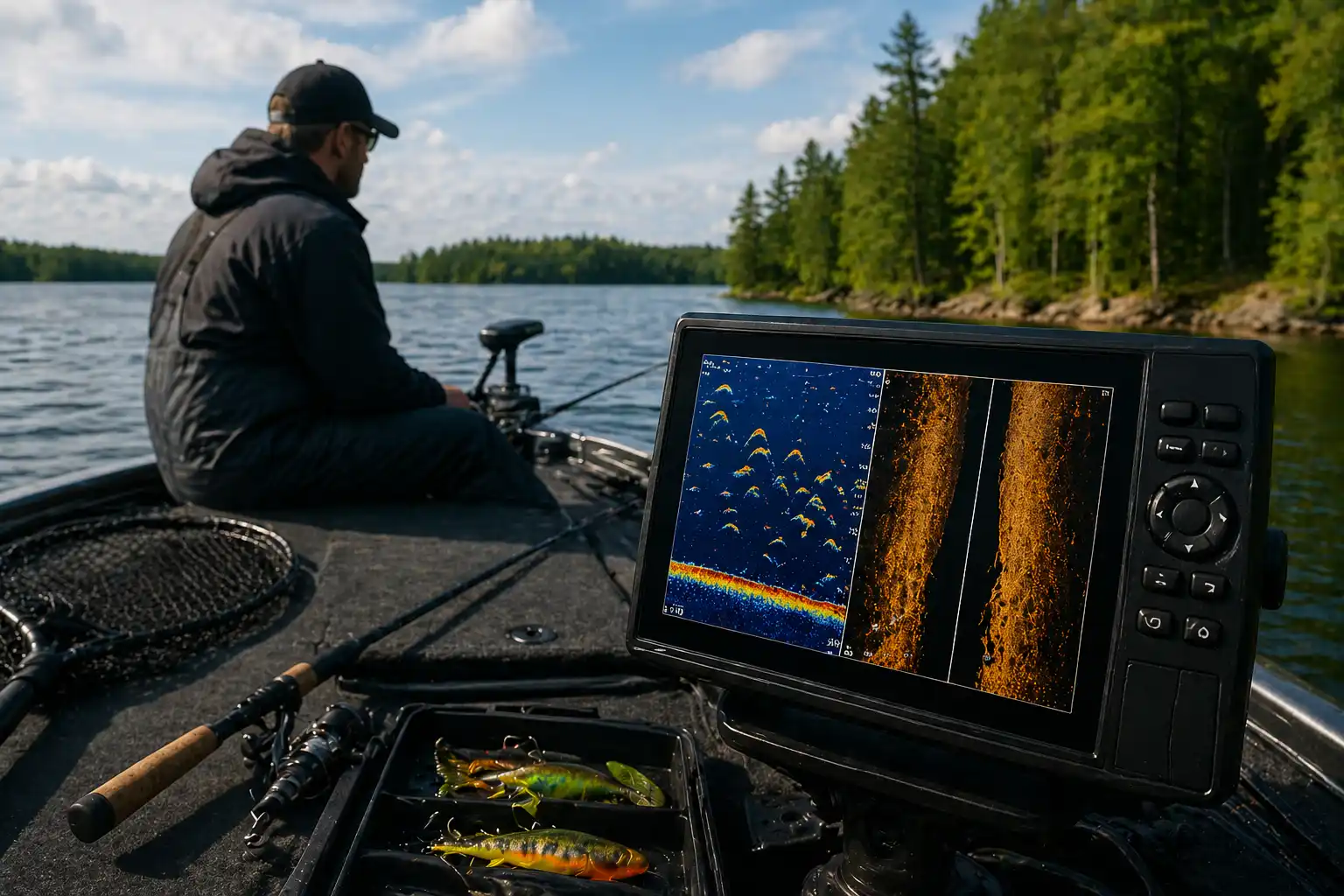
One mistake we see constantly is trusting a “pretty screen.” Just because bait appears on the graph does not mean pike are actively feeding there. You want separation—bait with predator marks nearby, not just random clutter that looks impressive.
Thermocline matters more than most anglers realize. In stable summer heat, pike often position just above it, where oxygen remains better and bait stays active. If your sonar shows fish below that layer, many of them are often inactive and far less likely to commit.
This is exactly why choosing tested sonar matters more than simply buying the most expensive screen. Summer pike fishing requires units that read deep weed edges clearly, separate suspended bait from predator marks, and stay reliable when fish shift between structure and open water.
Our team relies heavily on side passes before making the first cast. If we mark bait ten feet off the weed edge instead of inside it, the entire drift line changes. That single adjustment often turns a dead hour into the best fish of the day.
Do not use sonar to admire fish—use it to make decisions. If the screen tells you fish are holding deeper, change the drift. If bait slides wider, reposition immediately. Electronics only help when they change what you do next.
The best summer boat anglers do not guess where pike should be. They verify it first.
Best Boat Setup for Heavy Summer Pike
Boat positioning and sonar mean nothing if your setup fails when the fish finally commits. Summer pike often strike close to structure, hit hard beside the boat, and use heavy weed edges or deep breaks to create instant pressure. Weak gear usually gets exposed in seconds.
One mistake many anglers make is assuming shorter rods are always better from a boat. In reality, the right rod length depends on how you fish. Too short, and you lose casting control along weed edges. Too soft, and hooksets fail exactly when they matter most.
For most summer boat fishing situations, a 7’0″ to 7’6″ Medium Heavy Fast setup remains the safest choice. It gives better hook-setting control near the boat, cleaner lure management around weed edges, and enough backbone to stop heavy fish before they turn deep into structure.
From our experience, properly balanced tested spinning rods in this range handle almost everything summer pike fishing demands—spinnerbaits, swimbaits, jerkbaits, spoons, and repeated parallel casts along deep weed edges without losing control.
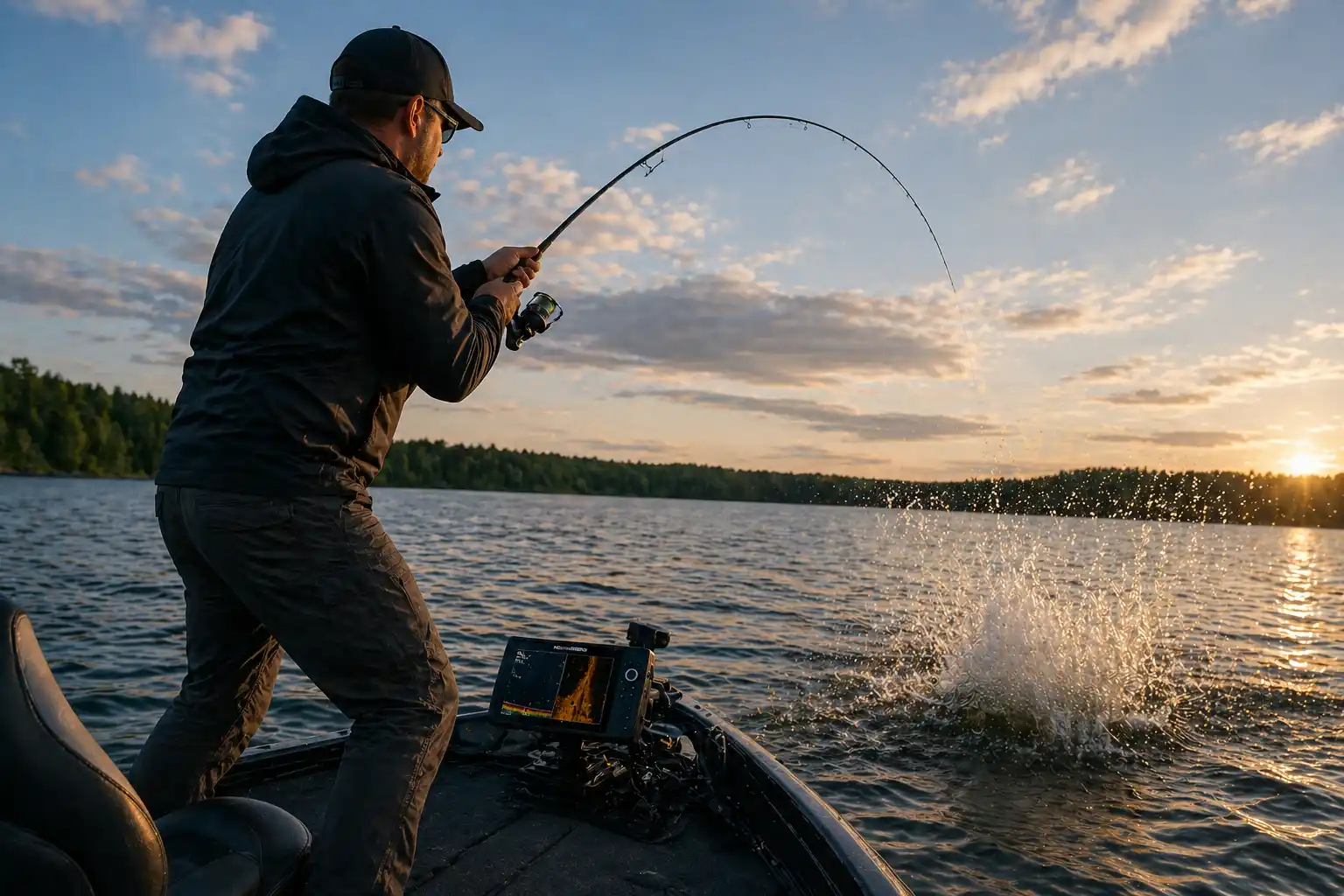
If the rod feels too soft at the hookset, it is usually the wrong rod for serious summer fish. Pike do not give second chances when they hit beside the boat.
Reel size matters just as much. A 4000-size spinning reel is the sweet spot for most anglers because it balances casting distance, stronger drag pressure, and better control during sudden boatside runs. Going too small often feels good until the first heavy fish turns under the boat.
Reliable reels for big fish are not about smoothness alone—they must stay tight under pressure. Summer pike rarely give long dramatic runs. Most losses happen during short violent headshakes beside the boat, where poor drag consistency costs fish fast.
Braid choice also changes everything. Around deep weed edges and heavy cabbage, 20–30 lb braid gives far better control than lighter finesse setups. You are not fighting trout—you are forcing a predator away from cover before it wins the angle.
We also avoid overly soft rods for boat fishing because they create false confidence. The cast feels great, but the hook never drives properly when the fish hits at the end of a long weed-line retrieve.
The best summer boat setup is not the lightest—it is the one that gives control during the ugliest five seconds of the fight. That is where big pike are actually won or lost.
Mistakes That Kill the Summer Pike Bite
Most summer pike failures do not happen because of the wrong lure—they happen because the fish were never truly fishable in the first place. Boat position, timing, noise, and decision-making usually matter far more than color patterns or lure brands.
The first major mistake is getting too close to the structure. Many anglers slide directly over the weed edge because it “looks perfect,” but by doing that, they push fish off the breakline before the first cast even lands. If the boat is too close, the best part of the spot is already dead.
The second mistake is staying too long on dead water. A clean sonar screen and visible bait do not automatically mean active pike. Summer fish often feed in short windows, and forcing an extra hour on a dead breakline usually wastes the best part of the day.
Another common problem is changing lures instead of changing position. Anglers switch from spinnerbaits to jerkbaits to swimbaits while staying in the exact same bad boat angle. In most cases, the fish are not rejecting the lure—they are reacting to the wrong presentation lane.
Ignoring wind direction is another expensive mistake. Wind pushes bait, improves oxygen exchange, and activates feeding zones. Fishing the calm “comfortable” side of the lake often feels better for the angler, but worse for the fish.
Too much trust in bait marks also causes problems. Seeing bait on sonar feels exciting, but bait without predator positioning often means nothing. You want bait plus structure plus predator marks—not just a beautiful screen that creates false confidence.
Light tackle around heavy summer cover is another classic mistake. A soft rod and undersized reel may feel fun until a big fish turns into cabbage or timber beside the boat. Summer pike punish weak setups fast.
We also see too many anglers overusing the trolling motor. Constant corrections, aggressive repositioning, and repeated passes over the same line create pressure and noise that shut fish down before the real presentation even begins.
The final mistake is fishing dead midday water like it is still spring. Bright sun, stable heat, and low oxygen often shut the bite down completely. Instead of forcing bad hours, the better move is rotating structure and preparing for the next feeding window.
The best summer boat anglers do not simply cast better—they make fewer expensive mistakes.
FAQ: How to Catch Pike from a Boat in Summer
What is the best way to catch pike from a boat in summer?
The best way to catch pike from a boat in summer is proper positioning first, casting second. Most big fish hold around outside weed edges, breaklines, deeper cabbage lines, and transition zones near feeding shelves. Boat angle, drift control, and timing usually matter more than lure color.
How deep are pike in summer when fishing from a boat?
Most summer pike hold on the first major breakline outside shallow feeding areas, often around deeper weed edges and cooler oxygen-rich zones. Exact depth changes with water temperature, lake type, and bait movement, but many active fish stay just outside easy feeding access rather than directly on the bank.
Is morning or evening better for summer pike from a boat?
Morning is usually more consistent, while evening can produce stronger but shorter feeding windows. First light and the first 60–90 minutes after sunrise often create the cleanest bite because overnight cooling improves oxygen stability and pushes baitfish back into active zones.
Do I need sonar for summer pike boat fishing?
Serious summer boat fishing becomes much easier with sonar because pike often hold deeper, suspend off breaklines, or sit outside visible weed edges. Side Imaging and traditional sonar help confirm bait concentration, depth changes, weed lines, and predator positioning before wasting time on empty water.
What rod is best for summer pike fishing from a boat?
A 7’0″ to 7’6″ Medium Heavy Fast spinning rod is the safest all-around choice for most summer boat fishing situations. It provides enough hook-setting power for hard pike jaws, better lure control around weed edges, and enough backbone to stop fish before they bury deeper into structure.
What reel size is best for boat pike fishing?
A 4000-size spinning reel is the best balance for most anglers. It gives stronger drag pressure, better line control, and more confidence during short violent boatside runs where many fish are lost.
Should I fish parallel to weed edges or cast directly at shore?
Fishing parallel to weed edges is usually far more effective. It keeps the lure inside the strike zone for the full retrieve instead of only the first few feet of a cast thrown directly toward shore. This creates a much more natural ambush presentation for summer pike.
Why Big Summer Pike Are Caught with Control, Not Chaos
The anglers who catch the biggest summer pike are rarely the ones making the most casts—they are the ones making the fewest mistakes. In warm water, fish become less forgiving. Bad boat angles, dead midday water, too much trolling motor noise, and weak hooksets get punished fast.
Success from a boat is rarely about finding a magic lure. It starts with positioning, timing, and understanding how fish use structure when oxygen drops and feeding windows become shorter. If the boat is wrong, everything after that becomes harder.
Summer pike reward control, not chaos. Staying off the weed edge, using wind correctly, reading sonar before casting, and knowing when to leave dead water will consistently outperform random casting and constant lure changes.
Research from the U.S. Geological Survey (USGS) also highlights how northern pike rely on permanent movement corridors and predictable feeding areas between summer holding zones and feeding routes. That same structure logic is exactly why boat positioning matters so much when targeting bigger fish during stable summer conditions.
That is why serious boat anglers think differently. They do not ask, “What should I throw first?” They ask, “Where should the boat be right now?”
Position first. Timing second. Cast last. That is how summer pike fishing from a boat actually works.