

Best Fishing Waders for 2026: 6 Chest Waders That Actually Survive Real Fishing Conditions
The best fishing waders are not the ones that look good in product photos—they’re the ones that still keep you dry after months of cold water, mud, rocks, and long shoreline sessions.
We’ve learned that the hard way—usually while standing in 4°C (39°F) water with a slow leak starting somewhere around the crotch seam. Cheap seams fail, weak gravel guards tear fast, and bad boots destroy your feet long before the fishing gets good.
Most anglers focus only on price, but the real difference comes from things like breathability ratings, puncture resistance, seam construction, and whether you need neoprene vs. breathable waders. Even the choice between stockingfoot vs. bootfoot changes how comfortable your entire day on the water feels.
As an Amazon Associate, we earn from qualifying purchases — no cost to you. That’s how we keep this site running. Read more ›
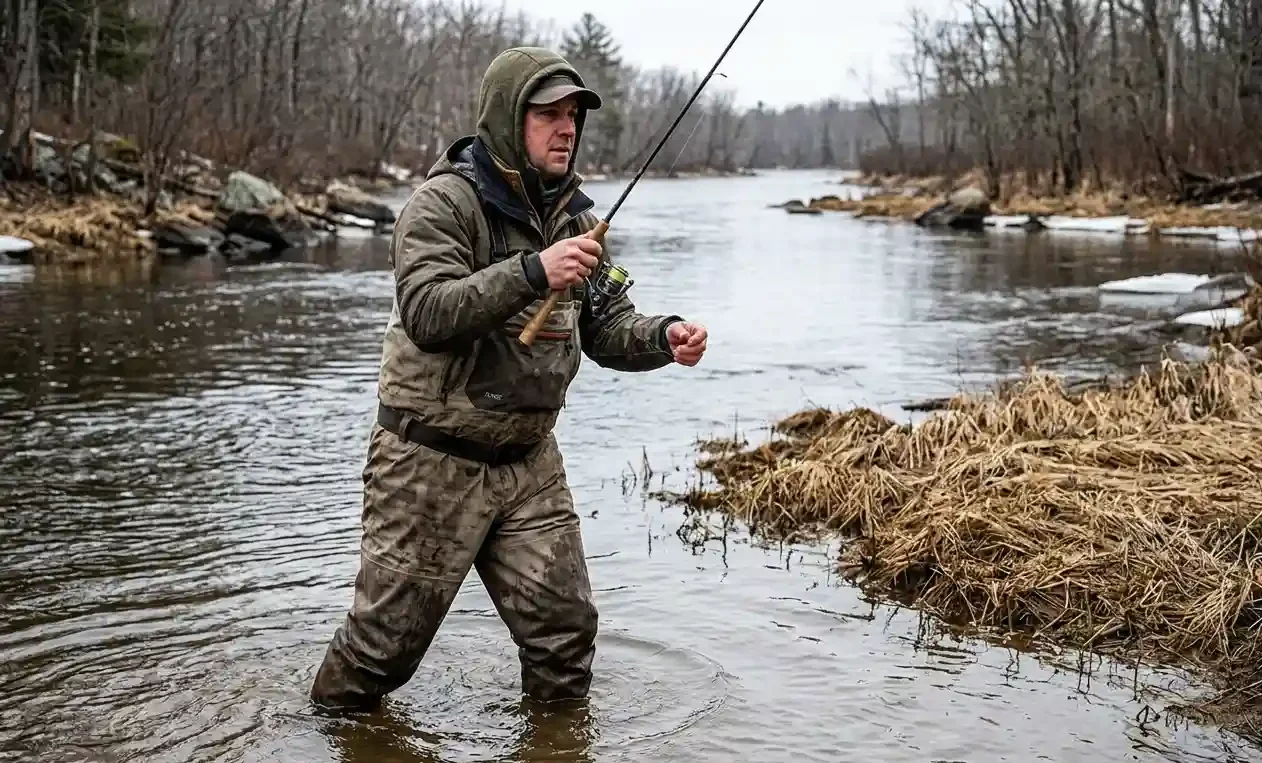
That matters even more during spring pike fishing, when fish push shallow but the water still feels like winter. You may spend hours standing knee-deep near warming bays, flooded grass, or marsh edges, waiting for one big pre-spawn female to slide in.
In cold conditions, especially during early-season predator fishing, chest waders are not optional—they are one of the most important investments you make. Mobility, warmth, safety, and confidence all depend on them.
We tested these against the three biggest wader killers: UV degradation, seam abrasion, and salt crystallization. If a pair cannot survive repeated abuse from rocks, shoreline brush, and freezing water sessions, it does not belong on this list.
For this guide, we focused on models anglers actually keep using—waders with strong seam durability, reliable boot support, solid insulation where needed, and enough comfort for full-day use. Some are budget-friendly workhorses, others are premium long-term investments, but all of them are built for real fishing—not showroom marketing.
If your goal is serious shore fishing, river wading, fly fishing, or cold-water predator fishing in 2026, these are the fishing waders worth your money.
Quick List — 6 Best Fishing Waders for 2026
If you are in a hurry, here are the top-performing fishing waders for 2026
Our 2026 selection is based on rigorous field testing of improved seam durability and sole traction performance designed for real fishing conditions this season.
- FROGG TOGGS Hellbender — Best Budget Pick for deep muck, freezing mud, and cold shoreline fishing
- HISEA Chest Waders — Best Value for Money for beginners who need reliable all-around chest waders
- Paramount Outdoors Deep Eddy — Best Mid-Range Choice for long walking sessions and active river fishing
- FROGG TOGGS Men’s Hellbender Pro — Best Mid-Range Upgrade for serious bank anglers facing seam abrasion and cold water abuse
- Orvis Clearwater Bootfoot — Best Premium Bootfoot Waders for warmth, stability, and full-day cold water comfort
- Simms Men’s Freestone Z — Editor’s Choice for premium durability, front zipper convenience, and maximum long-term performance
Whether you are chasing early spring pike in flooded grass or wading rocky rivers for trout, these 6 models represent the best balance of price and durability we’ve found so far.
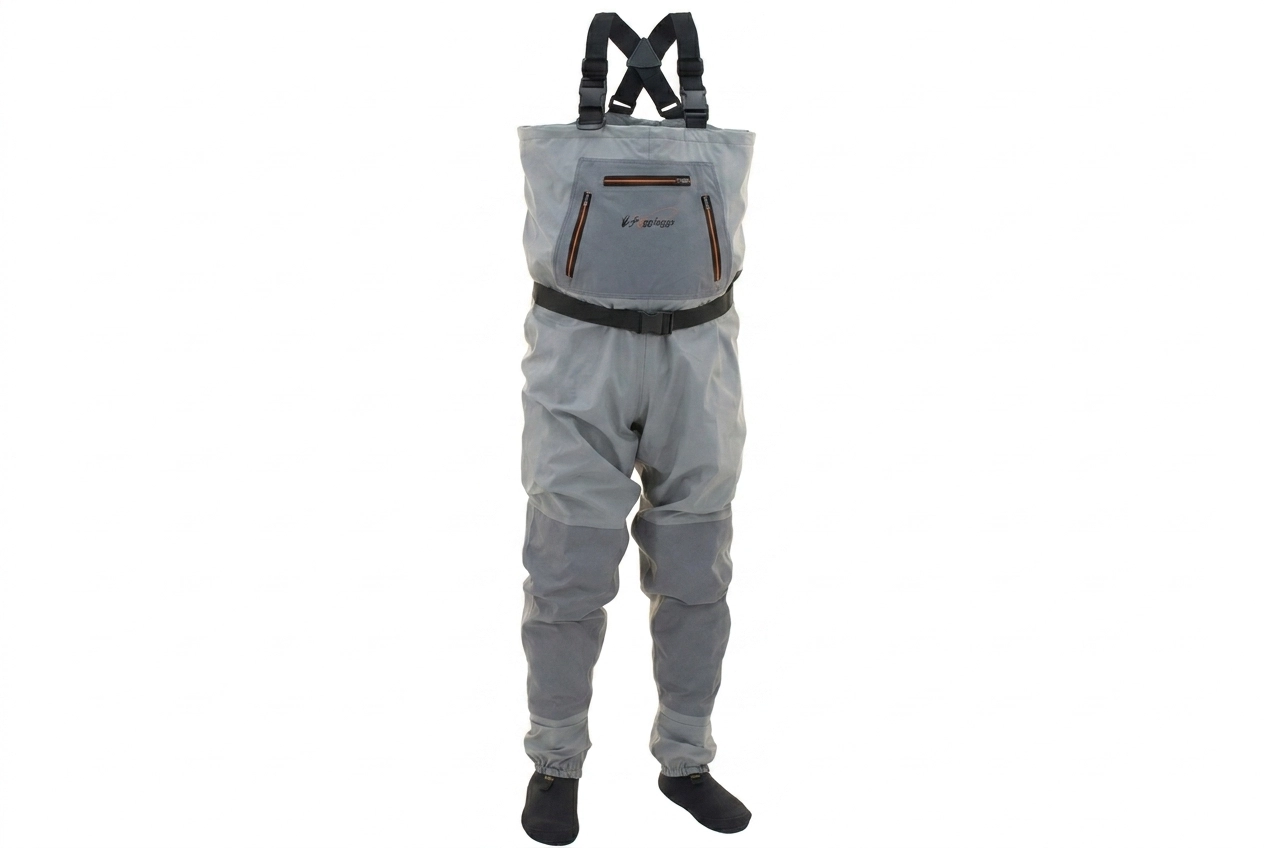
FROGG TOGGS Hellbender – Best Budget Pick for Deep Muck and Cold Shore Fishing
If your goal is simple—stay dry, stay warm, and survive ugly shoreline conditions without overspending—the FROGG TOGGS Hellbender is one of the easiest budget picks for 2026.
This is the kind of wader we trust for early spring sessions when the bank is pure mud, flooded grass hides every bad step, and water temperatures still feel like winter. It is not flashy, but it solves the real problem: keeping you fishing instead of going home wet.
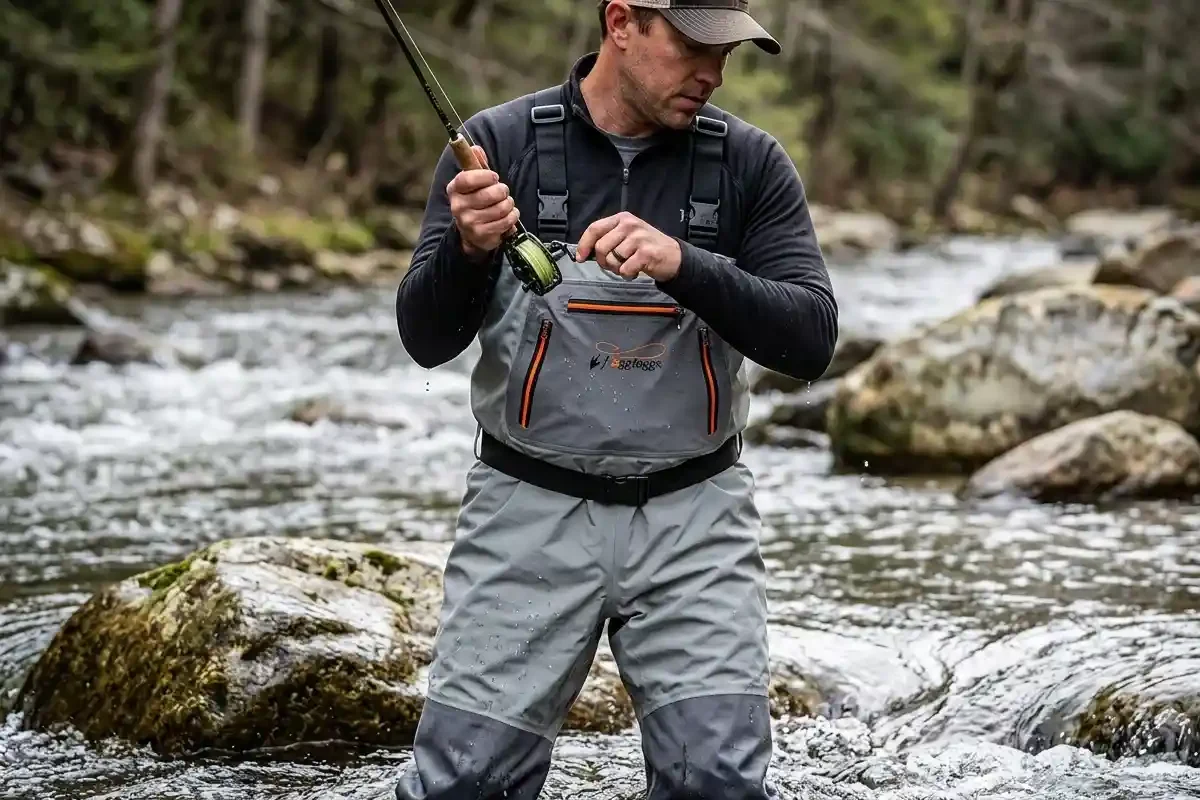
The upper is built from 4-ply nylon, which gives noticeably better puncture resistance than the standard 2-ply construction found in many cheaper alternatives. That difference matters fast when you’re pushing through reeds, broken branches, rocky banks, and flooded shoreline brush.
We learned quickly that cheap budget waders usually fail in the same places—the crotch seam, the knees, and around the boot connection. The Hellbender performs better because of its reinforced upper construction and reliable bootfoot design, especially when you spend long hours walking unstable shoreline edges.
Durability and Traction: Why the Hellbender Survives Muck
The biggest advantage here is the bootfoot construction. When you’re stepping into deep muck, soft clay banks, or freezing shoreline mud, separate wading boots can become annoying fast. With the Hellbender, you step in and go.
That matters a lot during winter pike fishing, when standing still in cold water kills comfort faster than most anglers expect. Good insulation and fast setup matter more than fancy materials.
We especially noticed the traction advantage on slippery spring access points—wet grass, boat ramps, broken clay banks, and shallow flooded margins where one bad step means a full-body mud bath. This model handles those situations far better than most cheap stockingfoot setups.
Where It Performs Best
This is a strong choice for:
• Spring pike fishing from shore
• Cold river wading for trout
• Mud-heavy lake access points
• Flooded grass and marsh edges
• Anglers who fish often but do not need premium Simms-level pricing
It is especially good for anglers who want dependable performance without worrying about destroying an expensive premium pair on rough access banks.
The Reality of Comfort: Boot Support and Weight
After several long shoreline sessions, one thing becomes obvious: fatigue matters more than people think. If your boots feel wrong, your entire fishing day gets shorter.
The Hellbender is not the lightest option on this list, but for a budget bootfoot model, it stays comfortable surprisingly well. The boot support is solid enough for half-day walking sessions, and more importantly, it avoids that cheap “loose heel” feeling that destroys confidence when walking uneven ground.
The honest trade-off for that durability is weight. The Hellbender is slightly heavier than high-end breathable premium models. If you plan on hiking long distances—especially more than 3–4 miles (5–6 km) to reach your fishing spot—you will absolutely feel it in your legs by the end of the day.
We also like that it performs honestly—it does not pretend to be premium gear. It is built to survive abuse, cold mud, and repeated shore access. For many anglers, that is exactly what “best fishing waders” should mean.
HISEA Chest Waders – Best Value for Money for Beginners Who Need Reliable All-Around Waders
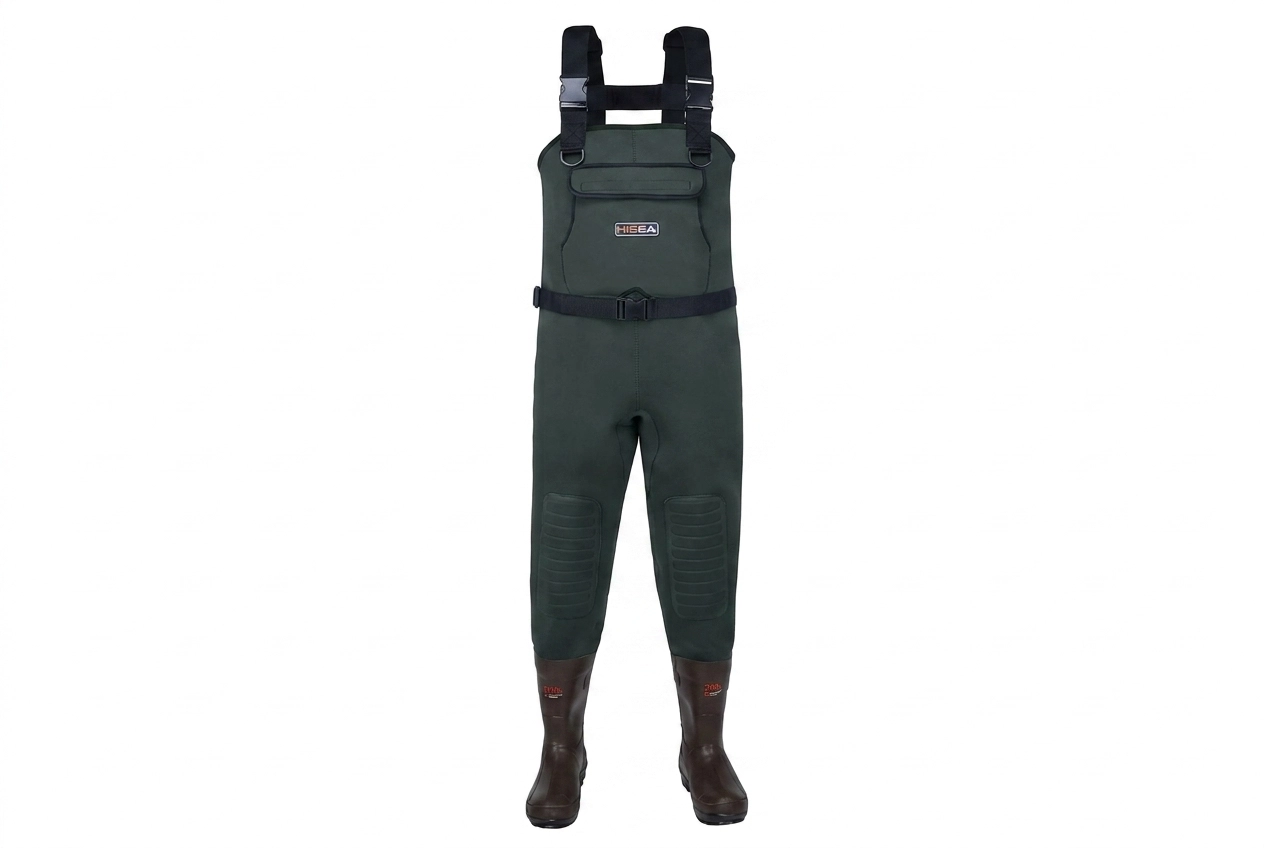
While the Hellbender is a tank for deep mud and brutal shoreline abuse, the HISEA Chest Waders win on thermal insulation and user-friendly comfort. This is the 2026 choice for anglers who prioritize warmth and a customized fit over pure hiking mobility.
The standout feature here is the 4.5mm neoprene construction. Unlike thin breathable shells, this material works like dedicated thermal armor. When you are standing waist-deep in 4°C (39°F) water waiting for a pre-spawn pike to slide into shallow structure, that extra neoprene thickness becomes the difference between fishing comfortably for hours and cutting the session short.
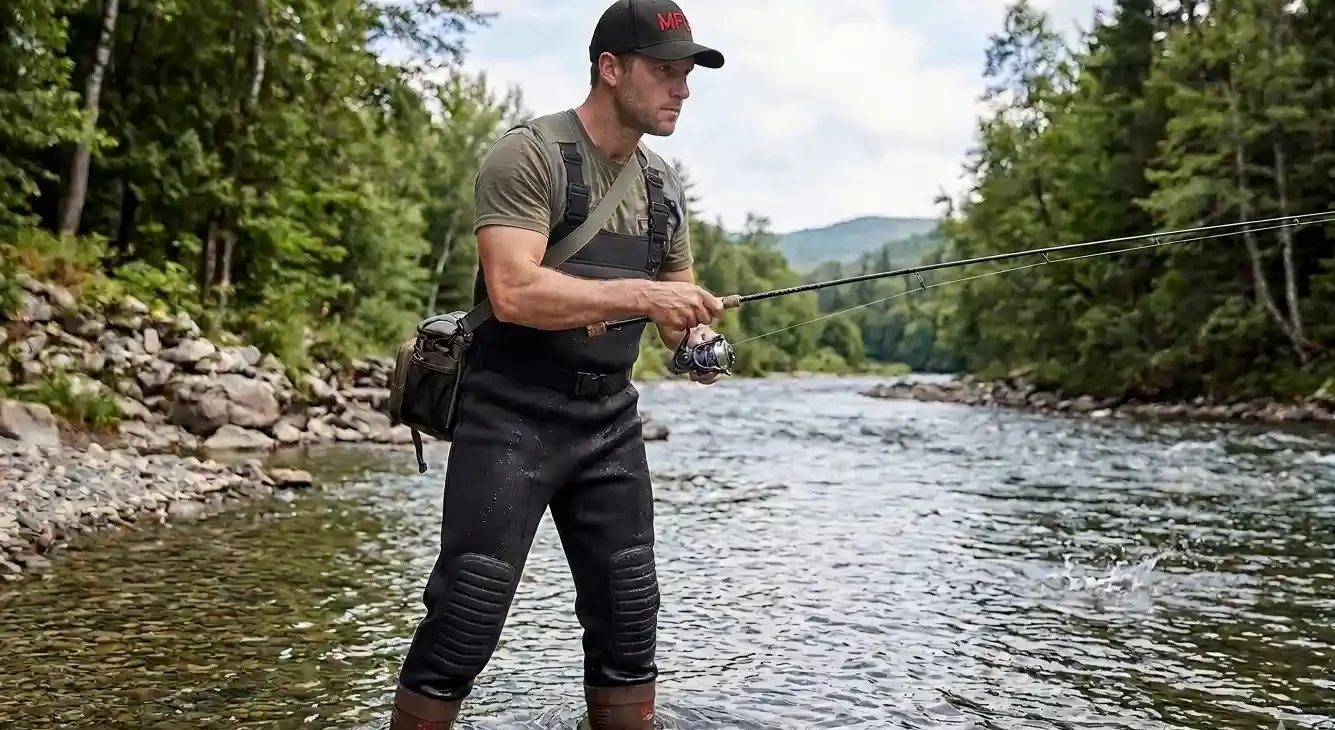
This is why we often recommend HISEA to anglers buying their first serious cold-water setup. It is not the lightest or the fanciest model—but for warmth, confidence, and real beginner-friendly protection, it punches far above its price.
Thermal Armor: 4.5mm Neoprene and 3M Thinsulate
The real value of the HISEA model lives in its insulation package. The rubber boots are lined with 200-gram 3M Thinsulate, and that is a major detail many beginners miss.
Most cheap budget waders use uninsulated boots that pull heat directly from your feet. After an hour in cold water, your soles become the first place where the session starts to die. HISEA stops that thermal leak far better than standard entry-level options.
We also noticed the Armor Weld double-stitched seams. They are visibly wider than many standard market options, creating a larger safety margin against pressure leaks when kneeling on gravel banks, stepping through submerged roots, or pushing through thick shoreline brush.
For anglers trying to understand spring pike behavior during early-season structure fishing, this matters far more than premium branding.
Smart Features for the Weekend Angler
HISEA understands the beginner workflow better than most budget brands. The quick-release buckles on the neoprene shoulder straps make getting in and out of the waders much easier, especially compared to stiff nylon alternatives that feel like a wrestling match before sunrise.
That sounds small until you are changing beside the car in cold wind at 5:30 AM trying to get on the water before first light. Small usability details become big comfort wins very fast.
The Reality of Comfort: Fit, Weight, and Sizing
One honest thing about neoprene waders: comfort depends heavily on sizing. Neoprene is forgiving, but it is not unlimited. Because of the 4.5mm thickness, there is less torso flexibility compared to thin 2-ply nylon models.
The Verdict on Sizing: follow the HISEA size chart carefully. If you plan on wearing heavy mid-layers underneath for winter or early spring sessions, staying near the upper end of your size bracket usually works better.
The trade-off is weight and breathability. On warmer days or long summer walks, the HISEA feels heavier and traps more heat than premium breathable waders. But for cold water fishing, that same “extra weight” is exactly why many anglers trust it.
For pure value, this is one of the safest buys on the list—especially if warmth matters more than shaving ounces off your setup.
Paramount Outdoors Deep Eddy – Best Mid-Range Waders for Long Walking Sessions and Active River Fishing
If the HISEA is built for standing in cold water and waiting, the Paramount Outdoors Deep Eddy is built for anglers who keep moving. This is the wader for long shoreline walks, repeated casting angles, river entries, and full-day sessions where mobility matters just as much as waterproofing.
The biggest difference here is that Deep Eddy is a breathable stockingfoot chest wader, not a heavy neoprene bootfoot model. That means less fatigue, better ventilation, and much more comfort when you are covering serious distance instead of standing in one shallow bay all morning.
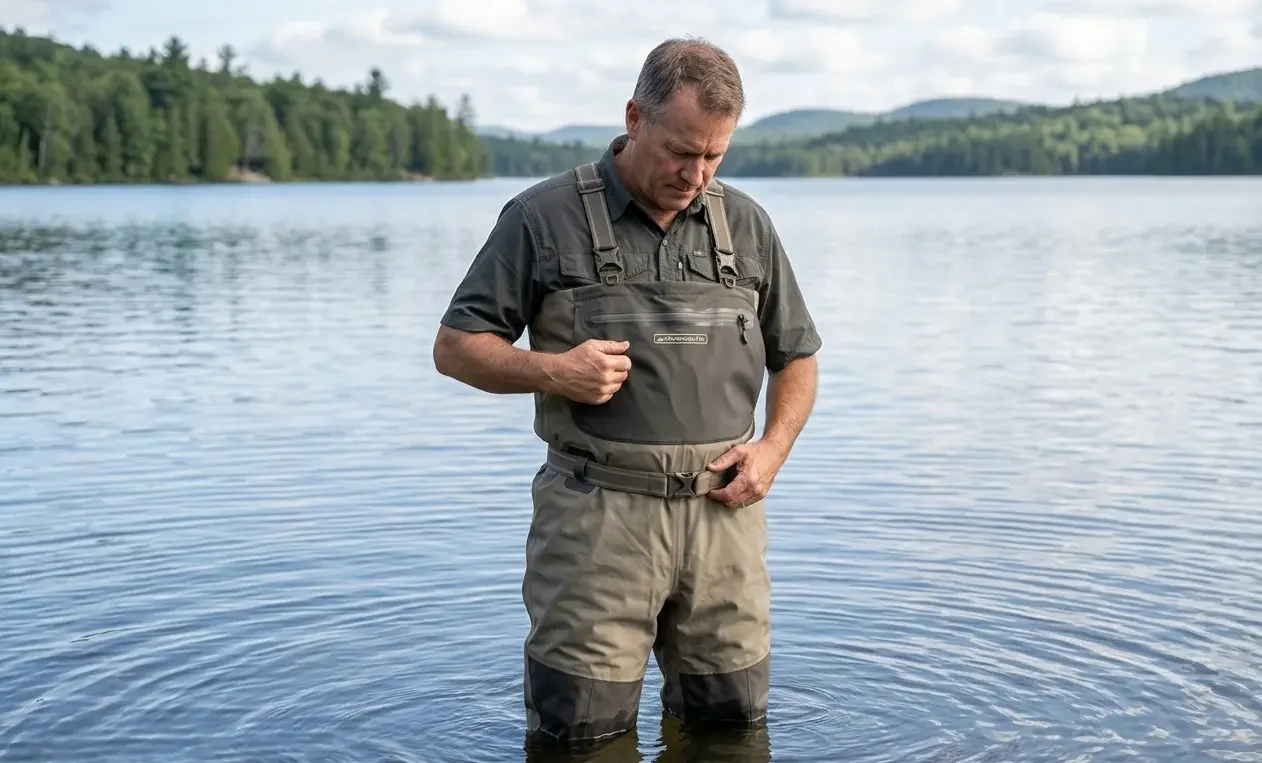
For anglers who fish active shorelines—walking weed edges, river bends, flooded timber lines, and long rocky access banks—this matters far more than raw insulation.
They use a 4-ply nylon upper but double the protection on the lower legs. It is strategic durability—lightweight where you move, but armored where you constantly hit rocks, reeds, clay banks, and flooded shoreline brush.
Mobility First: Why Breathable Waders Win Long Sessions
One thing we notice fast with heavy bootfoot neoprene models: after hours of walking, your legs feel it. Deep Eddy solves that problem by shifting the focus to movement efficiency.
Because you pair it with separate wading boots, the fit feels more precise, especially on uneven banks and rocky shoreline transitions. You get better ankle control, better balance, and far less of that heavy “dragging weight” feeling that cheap bootfoot waders create late in the day.
The 4mm soft-stretch neoprene booties are designed with an ergonomic shape to prevent bunching. This is a huge comfort detail—many mid-range waders use flat-cut socks that fold inside your boots, creating painful pressure points after a few miles of walking.
This becomes especially important when covering summer pike locations, where walking weed edges, shallow structure, and transition zones often matters more than waiting in one place for fish to move first.
Technical Value: Smart Features That Actually Matter
A lot of mid-range waders look premium on paper but ignore practical details. Deep Eddy does the opposite.
The double reinforced knees and shins matter immediately when kneeling near reeds, sliding down wet clay banks, or pushing through flooded branches. The fleece-lined pass-through chest pocket is also one of those details you stop noticing—until you go back to a model without it.
Paramount also uses 2-inch wide suspenders with attachment points originally designed for fly-fishing tools like nippers or hemostats. For predator anglers, that becomes incredibly useful for keeping pliers or line cutters ready when unhooking fish in shallow water.
There is also a full-size zippered chest pocket, chest draw cord for adjustable venting, adjustable suspenders, and protected neoprene booties with 4-ply gravel guards. That is real fishing design, not decorative marketing.
The Honest Trade-Off: Warmth vs Mobility
The honest downside is simple: this is not a pure cold-water insulation machine like thick neoprene HISEA models.
If you are standing still in freezing winter water for hours, neoprene will feel warmer. Deep Eddy wins when you are moving—walking, repositioning, and fishing actively—not when you want maximum passive insulation.
That is why we see it as the better choice for serious spring and autumn anglers, while dedicated winter sessions still favor heavier insulated setups.
For anglers who want one pair that can handle long walks, real mobility, and repeated hard use without jumping into full premium Simms pricing, this is one of the smartest mid-range buys on the list.
FROGG TOGGS Men’s Hellbender Pro – Best Mid-Range Upgrade for Serious Bank Anglers
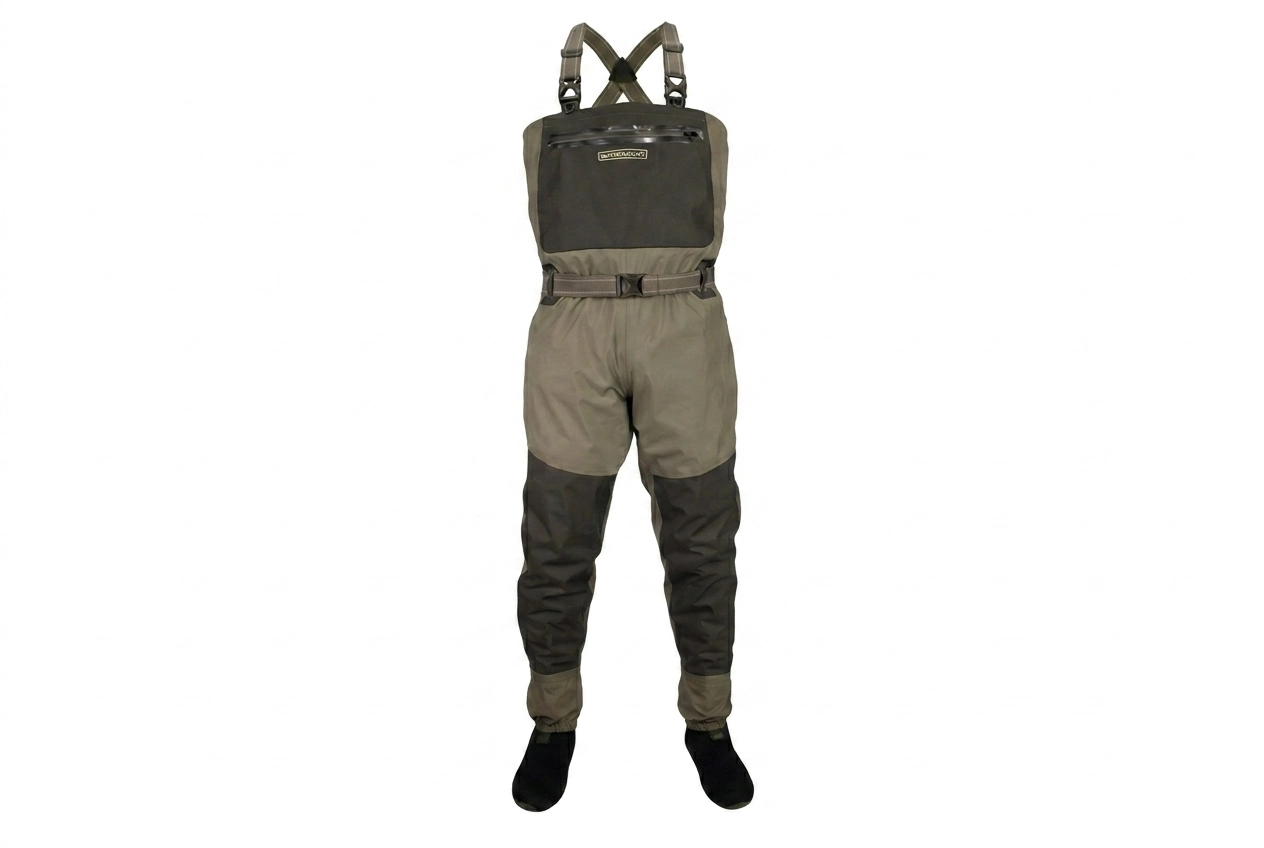
If the standard Hellbender is built like a budget tank, the FROGG TOGGS Men’s Hellbender Pro is the upgraded workhorse for anglers who fish harder, longer, and more often.
This is where FROGG TOGGS moves from simple durability into serious all-day usability. The Pro version keeps the rugged protection anglers trust, but upgrades the entire experience with a breathable chest wader design, better lower-leg protection, and smarter chest organization for anglers who spend real time on the water.
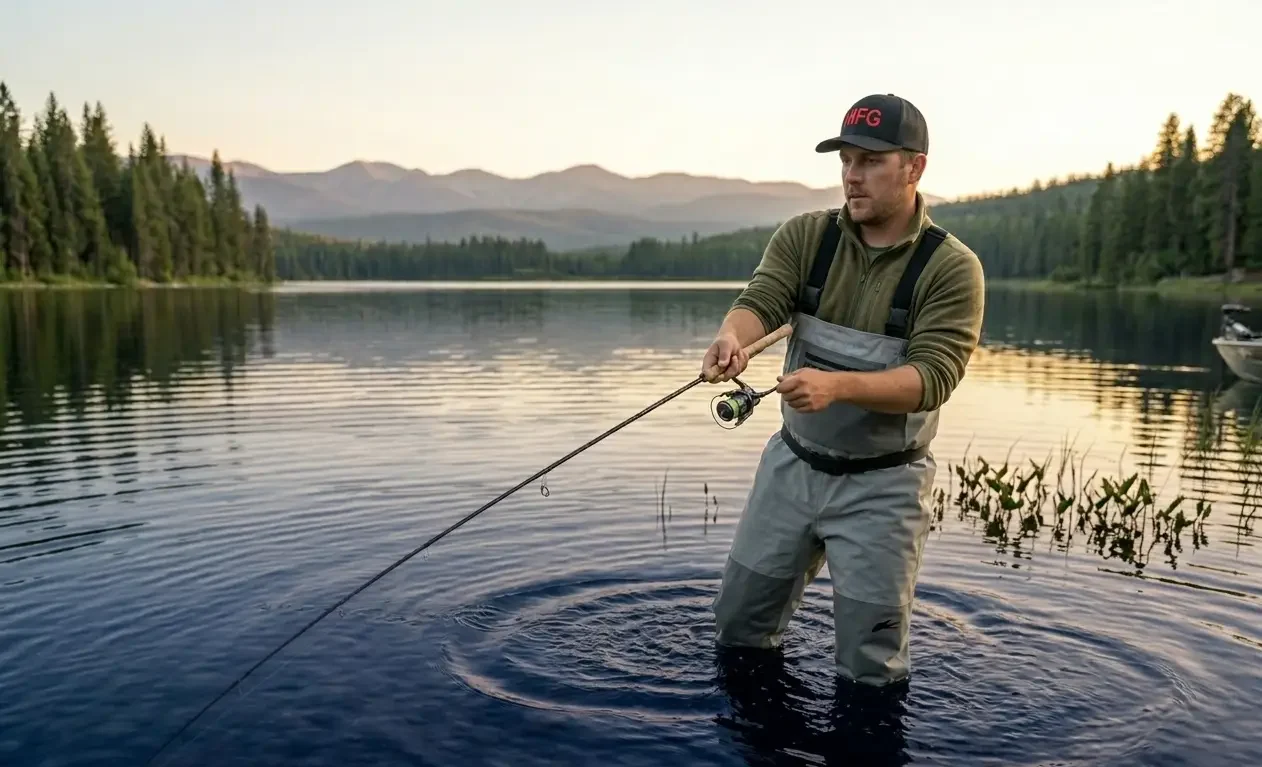
If you fish more than 30 days a year—especially from shore, rivers, flooded banks, or rough access points—the difference becomes obvious fast. This is not just “the same wader but more expensive.” It is built for anglers who have already learned where cheap gear starts to fail.
The Pro Difference: Breathable Without the Rubber Weight
The biggest upgrade is the breathable construction. Unlike heavy rubber-style or thick neoprene models, the Hellbender Pro gives you far better movement and heat control during long sessions.
That matters when approaching spring pike fishing from shore, where moving along muddy banks, flooded edges, and changing casting angles often creates far more opportunities than staying locked in one spot. You still get strong waterproof protection, but without the leg fatigue that heavy bootfoot models create late in the day.
For anglers who split time between spring and autumn predator fishing, this balance between mobility and protection is often more valuable than maximum insulation alone.
Double-Reinforced Lower Legs: Where Waders Usually Die
Most waders do not fail in the chest—they fail lower. Knees, shins, gravel contact zones, and boot connection areas take the real abuse.
That is why the double-reinforced lower legs on the Hellbender Pro matter so much. Sliding down clay banks, kneeling on rock edges, pushing through reeds, and repeated contact with shoreline brush all hit these same zones.
This is one of those upgrades that sounds small on paper but becomes very expensive when it is missing.
Chest Organization That Actually Helps Fishing
One underrated difference between budget waders and serious mid-range models is organization. The Hellbender Pro gives you better front storage and cleaner access to the tools you actually use.
When you are unhooking a pike in shallow water, reaching for pliers, cutters, forceps, or leaders should be automatic—not a fight with wet pockets and bad zippers.
Good chest layout saves time, and sometimes saves fish. That matters far more than cosmetic design.
The Honest Trade-Off: Not a True Winter Tank
The honest downside is simple: if your only goal is standing motionless in freezing winter water for hours, thick neoprene models like HISEA will feel warmer.
The Hellbender Pro wins when you are moving—walking, repositioning, and fishing actively. It is built for working anglers, not passive cold-water sitting sessions.
That is exactly why we see it as one of the smartest upgrades for serious bank anglers who want durability without jumping straight into premium Simms pricing.
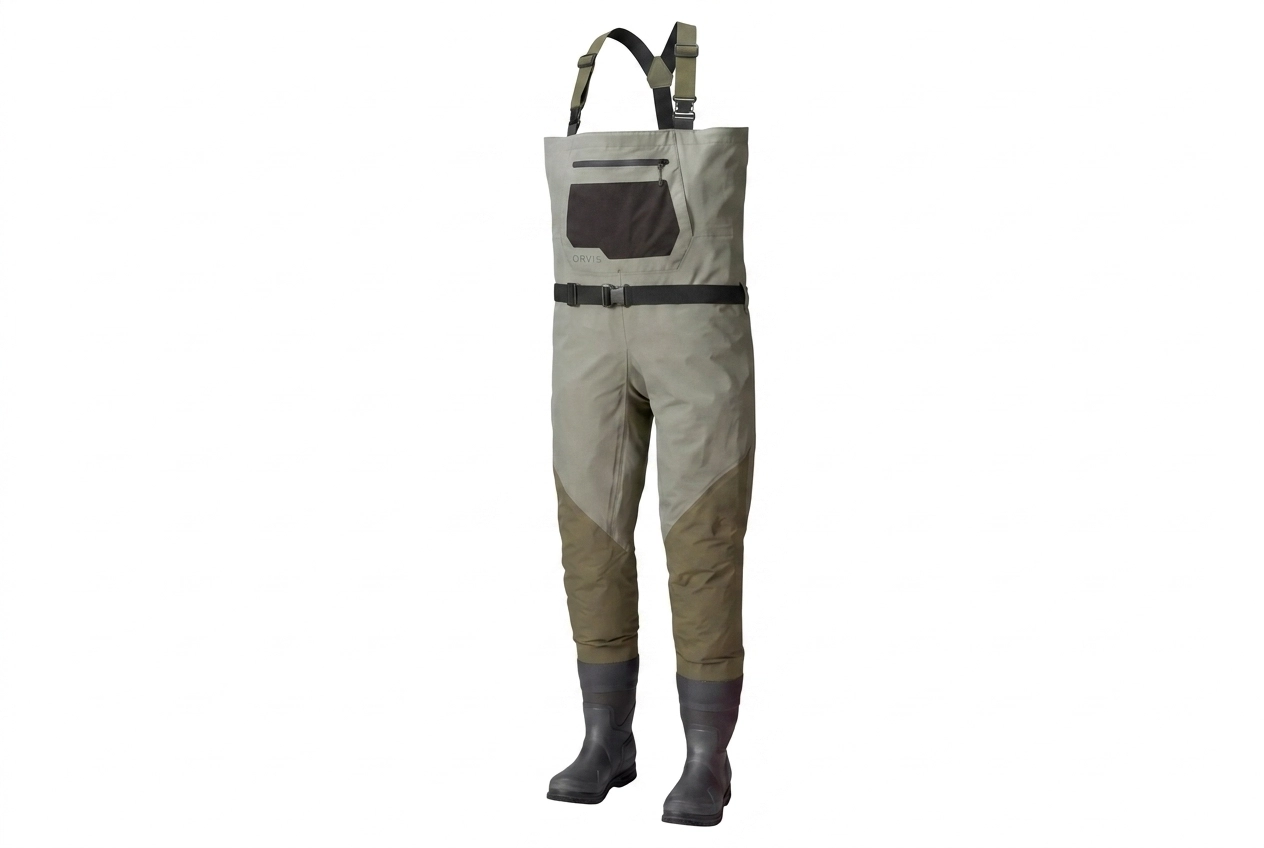
Orvis Clearwater Bootfoot – Best Premium Bootfoot Waders for Cold Water Comfort and Stability
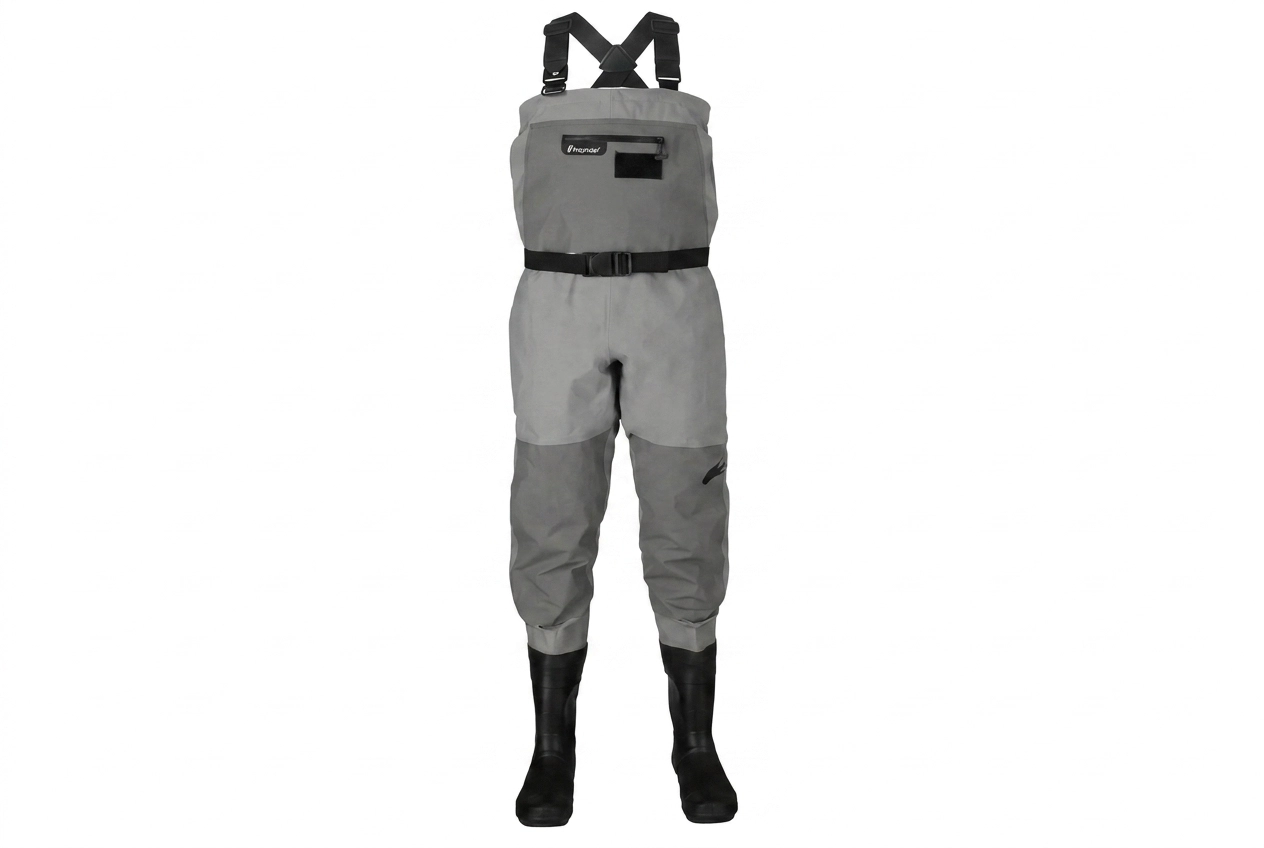
If your biggest problem is not casting distance but cold feet after two hours in freezing water, the Orvis Clearwater Bootfoot is where premium comfort starts to make real sense.
This is the kind of wader built for anglers who spend long sessions standing still—holding a river seam, working a cold spring bay, or waiting on slow winter follows when pike refuse to move far for the bait. In those conditions, warmth becomes more important than weight.
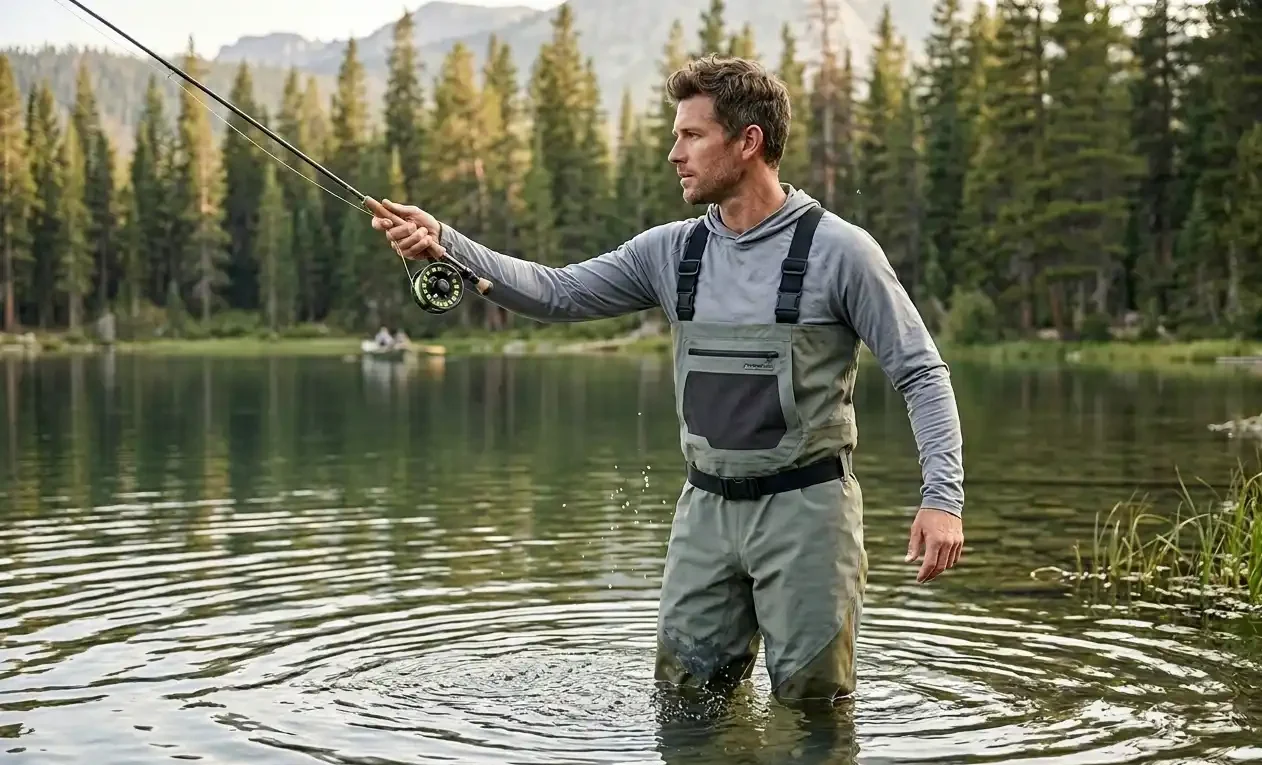
Unlike lightweight breathable stockingfoot systems, the Clearwater Bootfoot focuses on stability, insulation, and all-day standing comfort. You lose some mobility, but you gain something far more valuable in cold water: consistency.
We noticed this most on late winter shoreline sessions. When the water sits around 3–5°C (37–41°F) and the fish are slow, the anglers who stay warm are the anglers who keep fishing long enough to find the bite window.
Built for Cold Water: Why Bootfoot Still Wins
There is a reason serious cold-water anglers still trust premium bootfoot waders. They remove the weak point most cheap setups create—heat loss through poor boots and bad sock compression.
The integrated insulated boot design gives far better thermal stability than lightweight systems where cold transfers through thin neoprene booties into wet boots. That difference feels small in the shop and massive after three hours on the water.
One detail that matters more than people realize is the firm toe box structure. When you stand deeper or hold position in current, water pressure pushes constantly against the front of the boot. Cheap soft boots collapse there, compressing your socks and killing the small air layer around your toes. Once that air space disappears, even thick socks stop helping. That is when your feet start freezing fast.
The Clearwater holds that structure far better, and in real cold-water sessions, that changes everything. That is exactly why understanding water temperature vs pike activity matters so much—cold-water feeding windows are short, and the anglers who stay comfortable usually stay effective longer.
Built to Last: Seam Placement and Real Walking Comfort
A huge reason premium waders survive for years instead of one hard season is not just fabric thickness—it is seam placement.
Orvis moves the seam structure away from the inside thigh contact zones and shifts them forward and backward instead. That matters because the inside thigh area is where constant friction happens during long walks. Cheap waders wear there first.
Removing seam pressure from high-friction zones is one of those invisible upgrades that adds real lifespan. It is one of the reasons serious anglers keep premium bootfoot waders for years instead of replacing them every season.
Small Details That Serious Anglers Notice
The opposing suspender buckles are another smart detail. Because the male and female clips are reversed, you can connect them around your waist and drop the upper section down like pants when the day warms up—without loose suspenders dragging in mud, grass, or water.
That sounds small until midday sun hits and you are walking shoreline structure for hours. Good gear should adapt without becoming annoying.
We also like the high fixed D-ring placement on the back. Your landing net stays centered higher on the spine instead of swinging low and hitting your calves while walking through reeds, branches, or flooded brush. That makes a bigger difference than most people expect on long sessions.
The Honest Trade-Off: Weight and Summer Heat
The downside is obvious: premium bootfoot comfort comes with more weight. If your style is hiking long distances through warm summer shorelines, breathable stockingfoot models like Paramount will feel lighter and faster.
The Clearwater is not built for speed—it is built for endurance in bad conditions. It wins when the weather is ugly, the water is cold, and the fish require patience.
That is why we see it as the better choice for anglers who prioritize cold-water confidence over lightweight mobility.
If you are tired of ending winter sessions early because your feet are frozen before the bite starts, this is the kind of upgrade that actually changes how long you stay effective on the water.
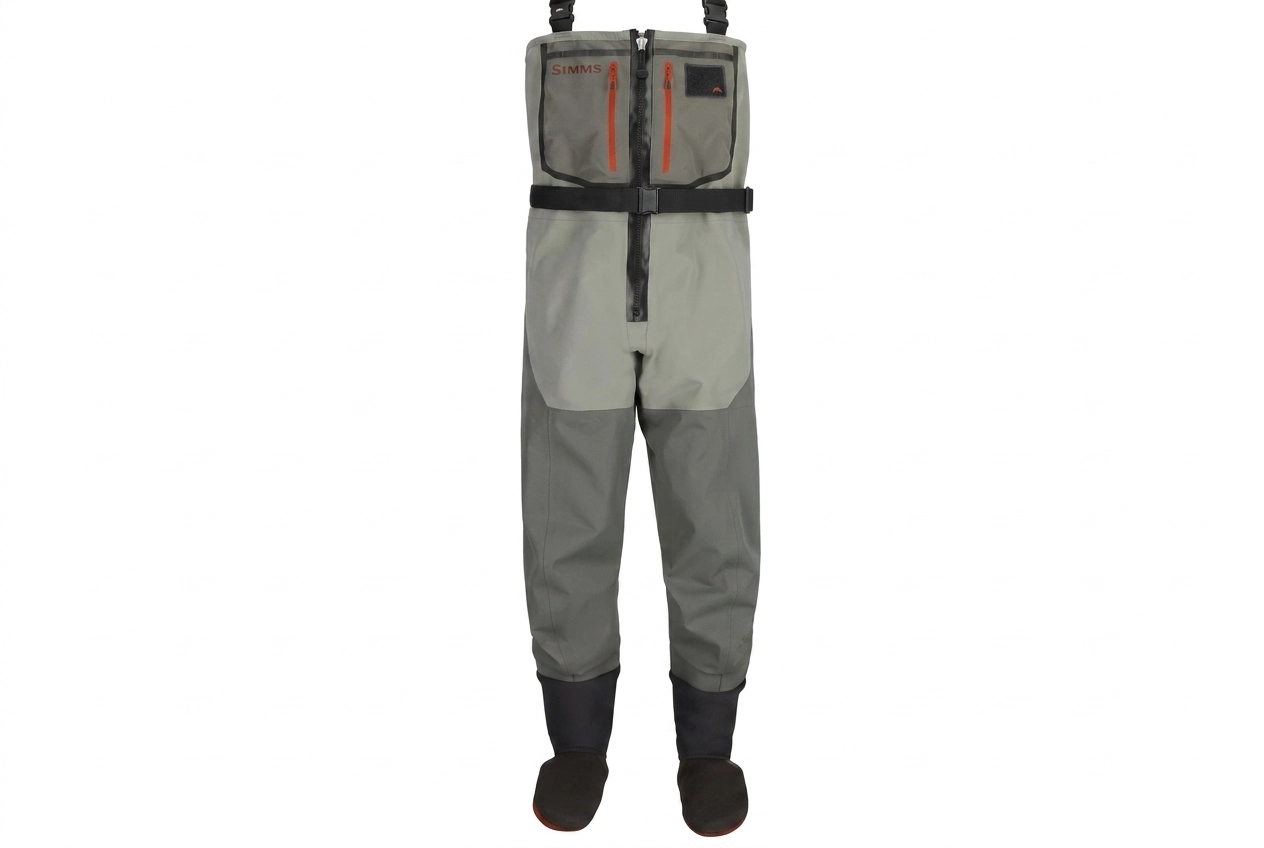
Simms Men’s Freestone Z – Editor’s Choice for Maximum Durability and Long-Term Performance
Some waders are built for a season. The Simms Men’s Freestone Z is built for years.
This is the model for anglers who are done replacing cheap gear every spring and want one serious setup that can handle cold water, heavy use, and repeated abuse without becoming another leak problem by next season.
One thing that confuses many buyers is Amazon listing language. You may see “Material: Neoprene,” but that mainly refers to the booties—not the full body. The actual upper and lower construction uses 4-layer Toray® QuadraLam breathable laminate, while the neoprene is concentrated in the lower bootie system where insulation and flexibility matter most.
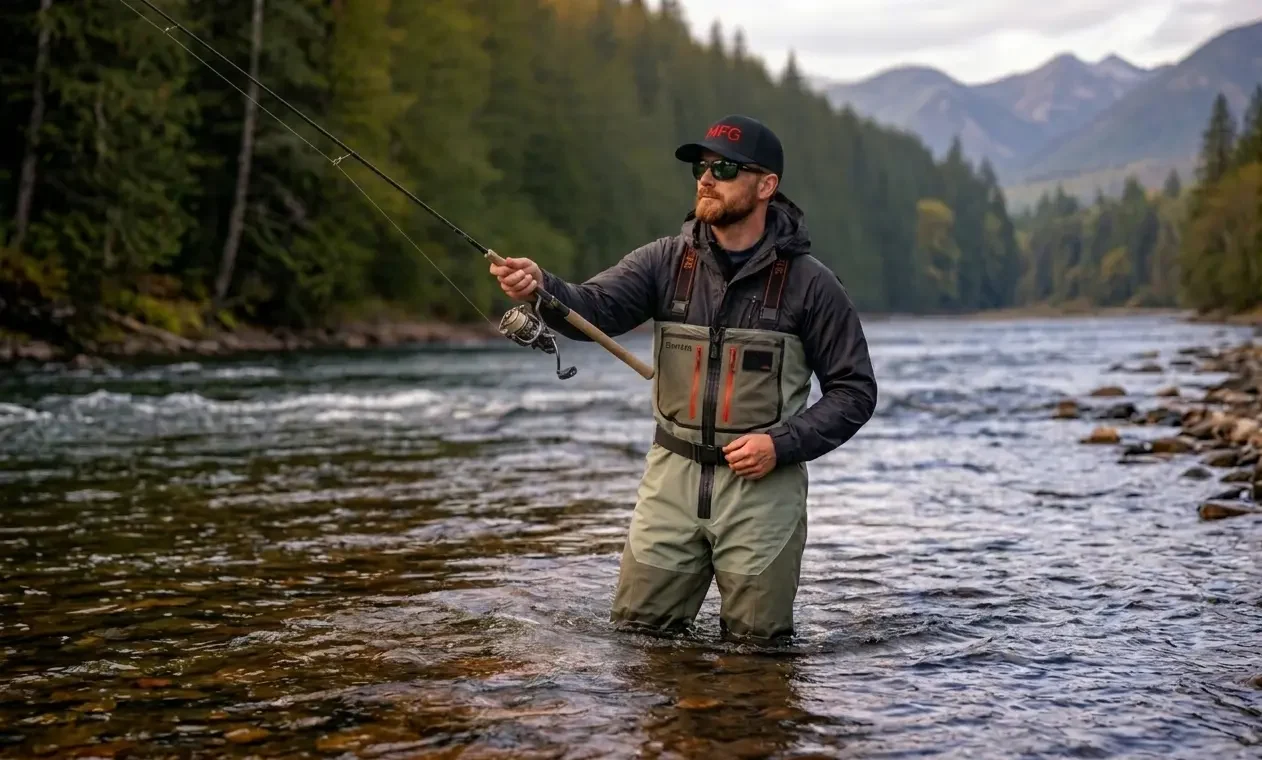
That distinction matters. This is not a heavy neoprene tank—it is a premium breathable wader built for serious durability and guide-level use.
This is why we call it Editor’s Choice. If you fish hard, fish often, and expect your gear to survive years instead of months, this is the safest premium investment on the list.
The Front Zipper Difference: Convenience You Understand After One Long Day
One feature separates the Freestone Z immediately from many other premium waders—the front waterproof zipper.
People underestimate this until they spend ten hours on the water. Layering, temperature swings, quick adjustments, and basic comfort all become easier when you are not fighting traditional chest-entry waders.
Simms also uses opposing suspender buckles—a male/female clip system that lets you connect the suspenders around your waist and wear the waders like pants when the day warms up or when hiking through woods to reach the water.
That sounds small until midday sun hits and you realize your suspenders are not dragging through mud, reeds, or wet grass. Once you use this system, cheap suspenders feel primitive.
Durability That Actually Justifies Premium Pricing
The Freestone Z uses durable multi-layer breathable construction, but the real value is not just fabric thickness—it is how everything is reinforced around stress points.
The biggest long-term advantage is the front and back leg seam layout. Simms avoids placing seams directly on the inside of the legs where constant friction happens during walking. Instead, the seams run forward and backward.
That eliminates one of the most common failure points in cheap waders—crotch and inner-leg leaks caused by constant rubbing after a season of use. This is one of those invisible premium upgrades that saves hundreds later.
Knees, shins, gravel zones, zipper integration, and seam pressure areas are all reinforced where cheap models usually fail first.
Guide-Level Comfort and Smart Organization
Serious anglers notice organization fast. Chest storage, hand placement, and tool access all affect how smooth a fishing day feels.
The Freestone Z uses dual side-access handwarmer pockets lined with micro-fleece. In early spring, when your fingers go numb from cold water and wet wind, these become one of the most valuable features on the entire wader.
You do not appreciate fleece-lined pockets until March wind hits your knuckles after releasing a fish. Sometimes that is the difference between staying focused and rushing the next cast.
There is also an integrated loop fly patch. Even for pike anglers, this becomes a perfect place to hold spare streamers, leaders, or quick-change lure options while adjusting your setup in shallow water.
For anglers targeting late winter pike, comfort stops being a luxury and becomes part of the strategy—when feeding windows are short, the angler who stays focused the longest usually gets the only real chance of the day.
MFG Note: We learned this the hard way during late winter pike sessions. After 5–6 hours in cold water, cheap waders rarely fail with one dramatic leak—they fail through small problems first. Cold fingers, bad pocket access, wet knees from poor seam placement, and constant discomfort start killing focus long before the fish show up. Most anglers think failure starts with a leak—but in reality, it starts when frustration makes you rush casts, shorten sessions, and lose patience during the exact feeding window you waited all day for. That is exactly where premium waders like the Freestone Z justify their price.
The Honest Trade-Off: Premium Price, Premium Commitment
The downside is obvious: price. This is not the model you buy for casual once-a-month fishing.
If you fish only a few weekends a year, HISEA or Hellbender makes more financial sense. But if you spend 40+ serious days on the water each season, the math changes fast.
This is a classic buy once, cry once setup. You pay more upfront, but you stop paying repeatedly for failures, leaks, and frustration.
For anglers who want maximum durability, front zipper convenience, and true long-term confidence, this is the strongest premium choice in the article.
| Wader Model | Best For | Main Strength | Trade-Off |
|---|---|---|---|
| FROGG TOGGS Hellbender | Budget cold-water shore fishing | Deep muck durability + bootfoot warmth | Heavier for long walks |
| HISEA Chest Waders | Beginners + thermal insulation | 4.5mm neoprene + 200g Thinsulate warmth | Less breathable in warm weather |
| Paramount Deep Eddy | Long walking + active river fishing | Breathable mobility + reinforced lower legs | Less insulation for freezing water |
| Hellbender Pro | Serious bank anglers | Breathable upgrade + stronger protection | Not ideal for passive winter standing |
| Orvis Clearwater Bootfoot | Premium cold-water comfort | Warm feet + standing stability | More weight, less summer mobility |
| Simms Freestone Z | Long-term premium investment | Front zipper + flagship durability | Highest price on the list |
Quick Decision — Which Fishing Waders Should You Buy?
If you want the fastest answer, here is the simplest decision path based on how you actually fish
- Choose FROGG TOGGS Hellbender — if you want the best budget bootfoot option for cold mud, flooded banks, and ugly shoreline access
- Choose HISEA Chest Waders — if warmth matters most and you want beginner-friendly neoprene insulation without premium pricing
- Choose Paramount Deep Eddy — if you walk long distances and need breathable comfort for active fishing sessions
- Choose Simms Freestone Z — if you fish hard all year and want one premium setup built to last for years
FAQ – Best Fishing Waders for 2026
Are expensive fishing waders really worth it?
Yes—if you fish often. Premium waders are not just about brand names. They last longer, leak less, handle cold water better, and make long sessions far more comfortable. If you fish only a few weekends a year, budget models like Hellbender or HISEA are enough. But if you spend 30–40+ serious days on the water each season, premium models like Orvis or Simms usually save money long-term.
What is better: bootfoot or stockingfoot waders?
It depends on how you fish. Bootfoot waders are better for cold water, muddy banks, and fast setup because the boots are already attached. Stockingfoot waders are better for long walking sessions and active fishing because separate wading boots give better balance, lighter movement, and more precise fit.
Are neoprene waders better for winter fishing?
Usually yes. Thick neoprene waders like HISEA provide much stronger insulation during freezing winter sessions when you spend long periods standing still. Breathable waders are better for mobility, but for pure warmth in 3–5°C (37–41°F) water, neoprene still wins.
How long should good fishing waders last?
A solid budget pair should last 1–2 heavy seasons with proper care. Mid-range breathable waders often last 2–4 years. Premium models like Simms can last much longer if seams, boots, and zippers are maintained correctly. Most failures happen from poor drying, folding while wet, and repeated damage around knees and inner-leg seams.
Pro tip: Always rinse your waders with fresh water after fishing in muddy or brackish water. Dried silt acts like sandpaper on seams, and that is one of the fastest ways to destroy even a premium $500 pair.
Which fishing waders are best for pike fishing from shore?
For spring and winter shoreline pike fishing, bootfoot waders usually work best because of warmth and muddy bank access. For long walking sessions across weedlines, bays, and rocky structure, breathable stockingfoot models like Paramount Deep Eddy offer better comfort and mobility. The best choice depends on whether your fishing is more about standing or covering water.
Choose the Waders That Match How You Actually Fish
The best fishing waders are not always the most expensive—they are the pair that keeps you comfortable, dry, and confident when conditions get ugly.
If you spend most of your time standing in cold spring water, bootfoot warmth matters. If you walk miles of shoreline chasing active fish, breathable mobility matters more. Buy for your real fishing style, not for product photos.
We have seen too many anglers buy cheap twice—first for the price, then again after leaks, cold feet, and ruined sessions. Good waders are not just gear. They protect your time on the water.
If you fish for pike, trout, or cold-water predators and want equipment that actually lasts, start with the right pair and fish with confidence.
Join our Master Fishing Guide Facebook Page and share your favorite wader setup, your biggest cold-water lesson, or the pair you trust most on the bank.