

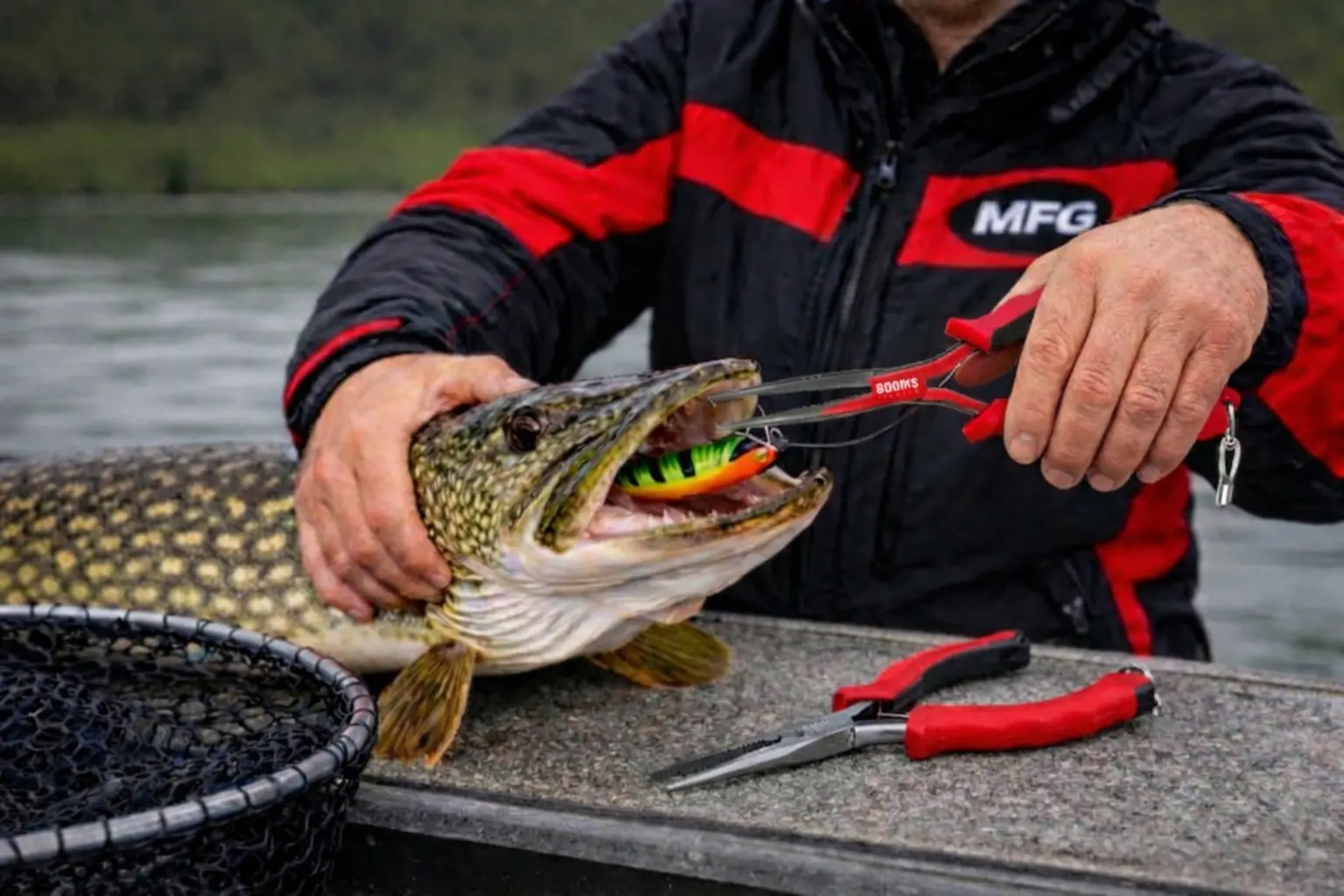
How to Handle Pike Safely: Hook Removal, Tools & Catch-and-Release Guide
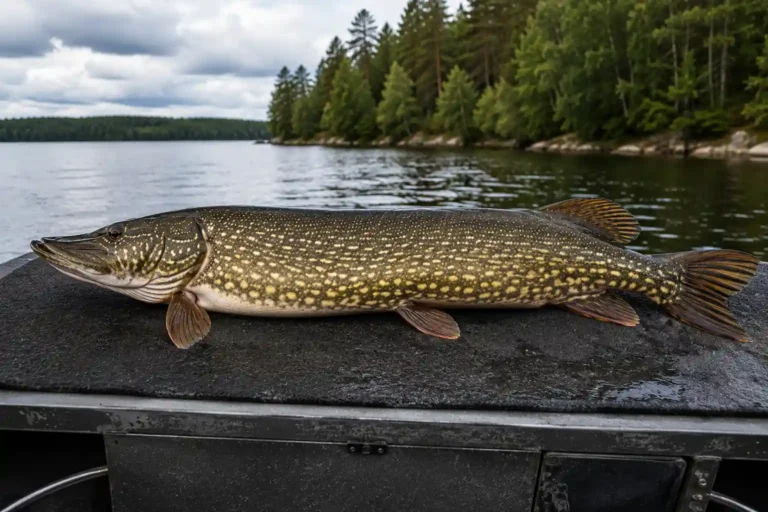
Northern pike are one of the most exciting freshwater predators to catch, but they are also one of the easiest fish to mishandle. With hundreds of razor-sharp teeth, violent head shakes, and unpredictable movements near the boat or shoreline, pike can quickly turn a successful catch into a dangerous situation for both the angler and the fish.
Learning how to handle pike safely is an essential skill for every serious predator angler. The most critical moment often happens after the strike—when the fish reaches the boat, kayak, or bank. Without proper control, a powerful pike can twist violently, drive hooks deeper, or injure the angler during hook removal.
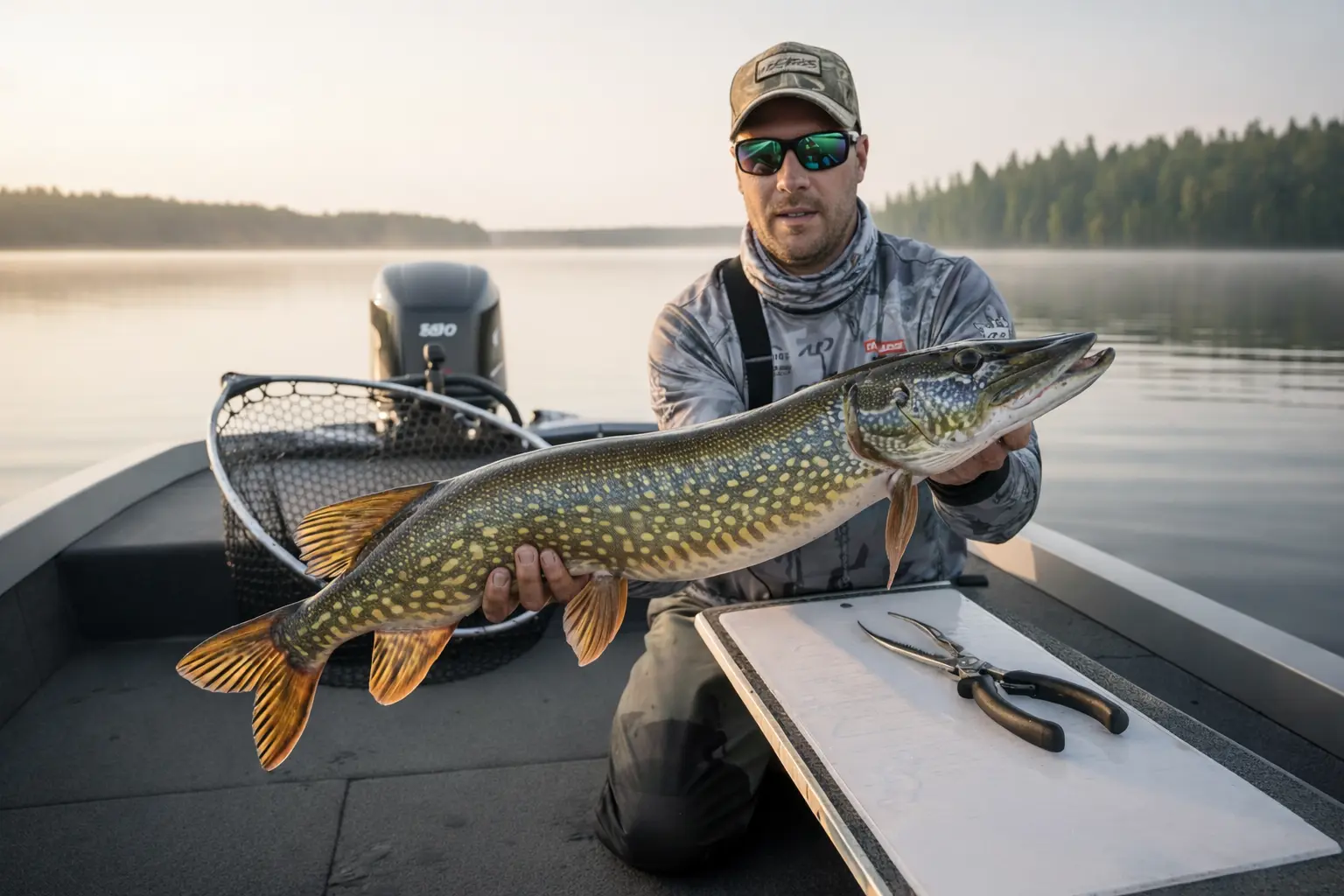
At Master Fishing Guide, these safe handling methods were refined through hundreds of hours targeting northern pike in real fishing conditions. During our field sessions the MFG team tested different landing approaches, tools, and fish-care techniques to determine what works best when handling large predators boatside.
Many anglers focus primarily on tackle and presentations. Choosing effective pike fishing lures can help trigger strikes, but safe landing and hook removal techniques become just as important once the fish is hooked. Proper handling determines whether the fish swims away healthy or suffers unnecessary stress.
Handling pike safely is not only about avoiding teeth. It is also about protecting the fish itself. Pike are covered by a delicate protective slime coating that shields them from infections and parasites. Rough handling, dry surfaces, or excessive air exposure can damage this layer and significantly reduce survival after release.
Throughout this guide we will explain how to handle pike safely step-by-step—from landing the fish with a proper landing net, to removing hooks using professional unhooking tools, and applying responsible catch-and-release practices.
For experienced predator anglers, safe fish handling is just as important as choosing the right lure or locating active fish. When done correctly, these techniques protect both the angler and the fish, allowing large pike to return to the water strong and healthy.
Why Pike Are Dangerous to Handle
Northern pike are built to capture and hold struggling prey. Their entire head structure is designed for ambush predation, which is why anglers must understand how to handle these predators carefully when landing and releasing them.
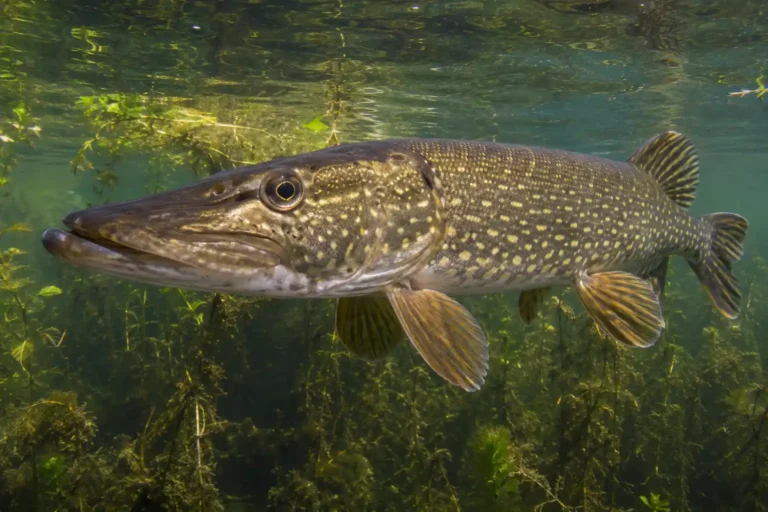
The first reason is obvious: pike teeth are extremely sharp. A large pike can have several hundred needle-like teeth pointing backward-pointing inside the mouth. These teeth allow the fish to grip prey such as perch or roach, preventing them from escaping once the jaws close.
What many anglers do not realize is that the danger does not come only from the teeth themselves. The powerful jaw structure of a pike allows the fish to twist violently during landing, often producing sudden violent head shakes. Even when the fish appears calm in the net, these sudden movements can drive hooks deeper or swing a lure toward the angler’s hand.
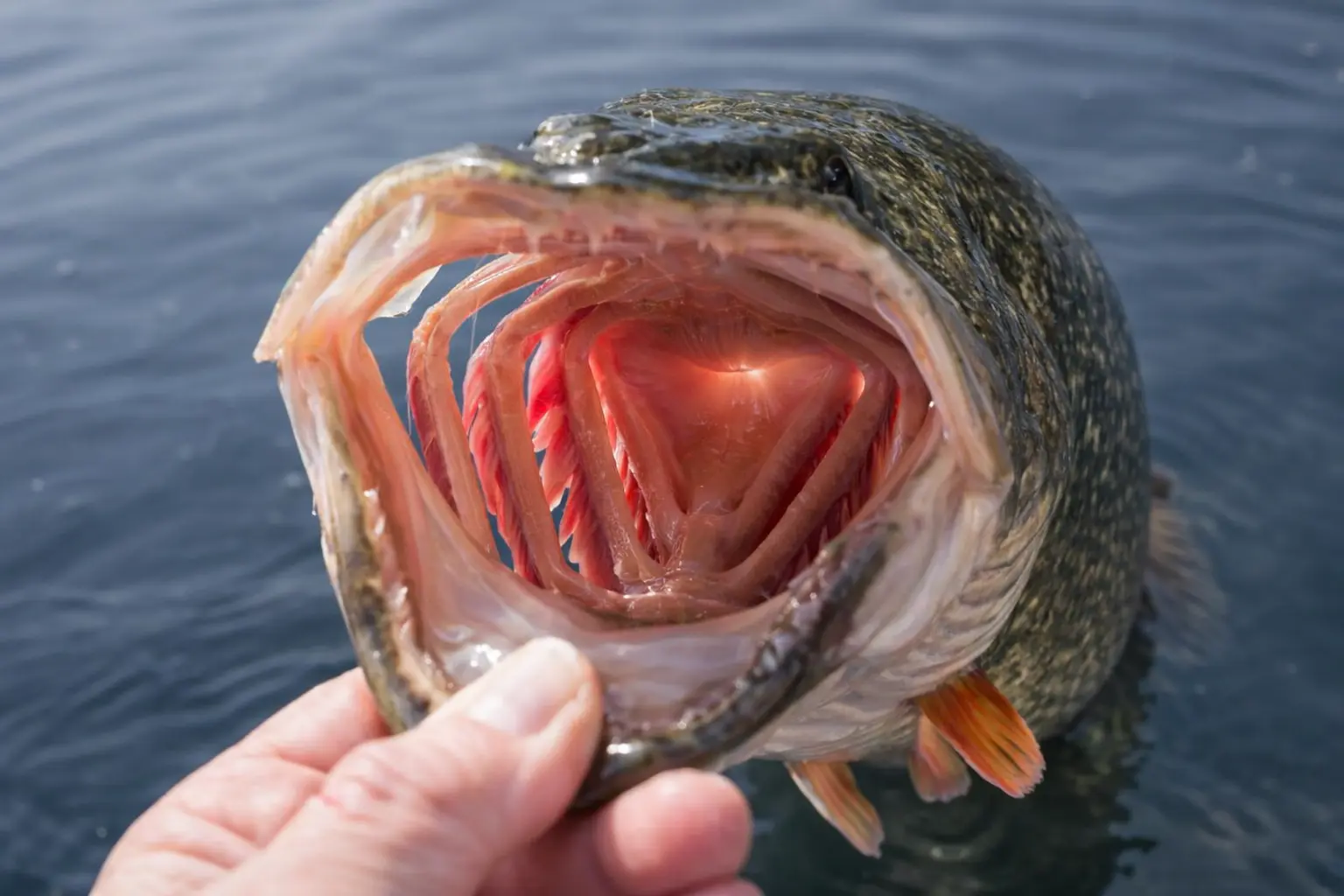
This becomes especially risky when fishing with modern lures equipped with treble hooks. Multiple hook points can catch inside the jaw hinges, the roof of the mouth, or around the gill plate. When the fish shakes, these hooks can swing freely, creating a real risk of injury.
Another sensitive area anglers must understand is the gill plate. While the lower edge of the gill plate can be used to control large fish, the gills themselves contain extremely delicate gill filaments. Damaging this area can seriously injure the fish and greatly reduce its chances of survival after release.
Experienced anglers also know that once a pike leaves the water it often enters a brief phase of sudden secondary movement. During this moment the fish may perform a powerful body twist or head shake, which is when many hook-related injuries happen.
This combination of sharp teeth, powerful head movements, and multiple hook points is why careful preparation and proper tools are essential when landing northern pike. With the right technique, anglers can control the fish quickly while minimizing risk for both themselves and the predator.
Essential Tools for Pike Handling
Before attempting to handle pike safely, experienced anglers always prepare the right equipment. Northern pike are powerful predators with sharp teeth and violent head movements, which means the moment of landing and unhooking can quickly become chaotic without proper tools ready within reach.
The most important piece of equipment is a rubber-coated landing net. A large net allows anglers to control the fish while keeping it partially in the water.
Rubber-coated nets are especially important because they protect the fish’s protective slime coating and reduce scale damage compared to traditional nylon nets.
Once the fish is secured in the net, the next essential tool is a pair of long-nose pliers. Experienced predator anglers usually carry pliers of at least 20 cm (8 inches) in length.
This extra reach keeps the angler’s hand safely away from the fish’s teeth while removing hooks deep inside the mouth.
In situations where hooks are deeply embedded, hook cutters become extremely valuable. Instead of forcing a hook out and risking injury to both the angler and the fish, cutting the hook often allows the lure to be removed quickly and safely.
Many experienced anglers consider hook cutters one of the most important safety tools in pike fishing.
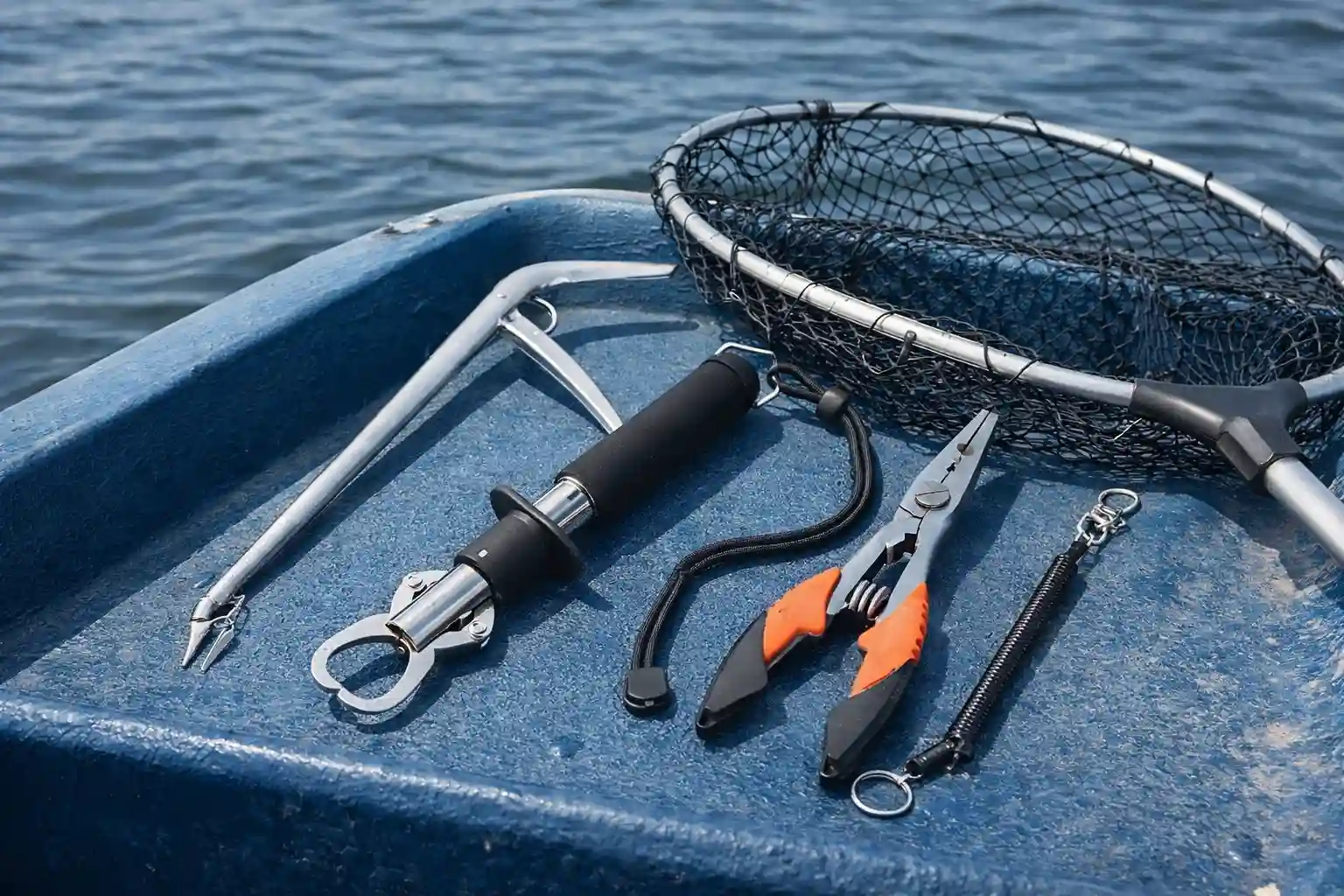
Some anglers also carry a jaw spreader. This tool gently holds the fish’s mouth open during hook removal.
While it is not always necessary, it can be helpful when dealing with large pike or deeply hooked lures that are difficult to reach with pliers alone.
Experienced anglers prepare these tools before the fish reaches the boat or shoreline. Once a large pike begins thrashing beside the boat, there is rarely time to search for equipment.
Having the right tools ready is one of the simplest ways to handle pike safely and reduce unnecessary stress for both the angler and the fish.
How to Handle Pike Safely When Landing
Landing a northern pike is often the most chaotic moment of the entire catch. Even a tired fish can suddenly explode with energy when it reaches the boat or shoreline. Because of this, anglers must stay calm and follow a controlled process when learning how to handle pike safely during the final seconds of the fight.
Experienced predator anglers know that most injuries happen during landing, not during the fight itself. A large pike may suddenly perform violent head shakes or powerful body twists once it approaches the boat or bank. Often, the most dangerous moment is the final lunge right at the net, where the fish feels the change in water pressure and makes a last-ditch effort to escape. Keep your rod tip low and to the side during this moment; raising it too high often causes the fish to jump or “walk” on its tail, which is when many hooks pull free.
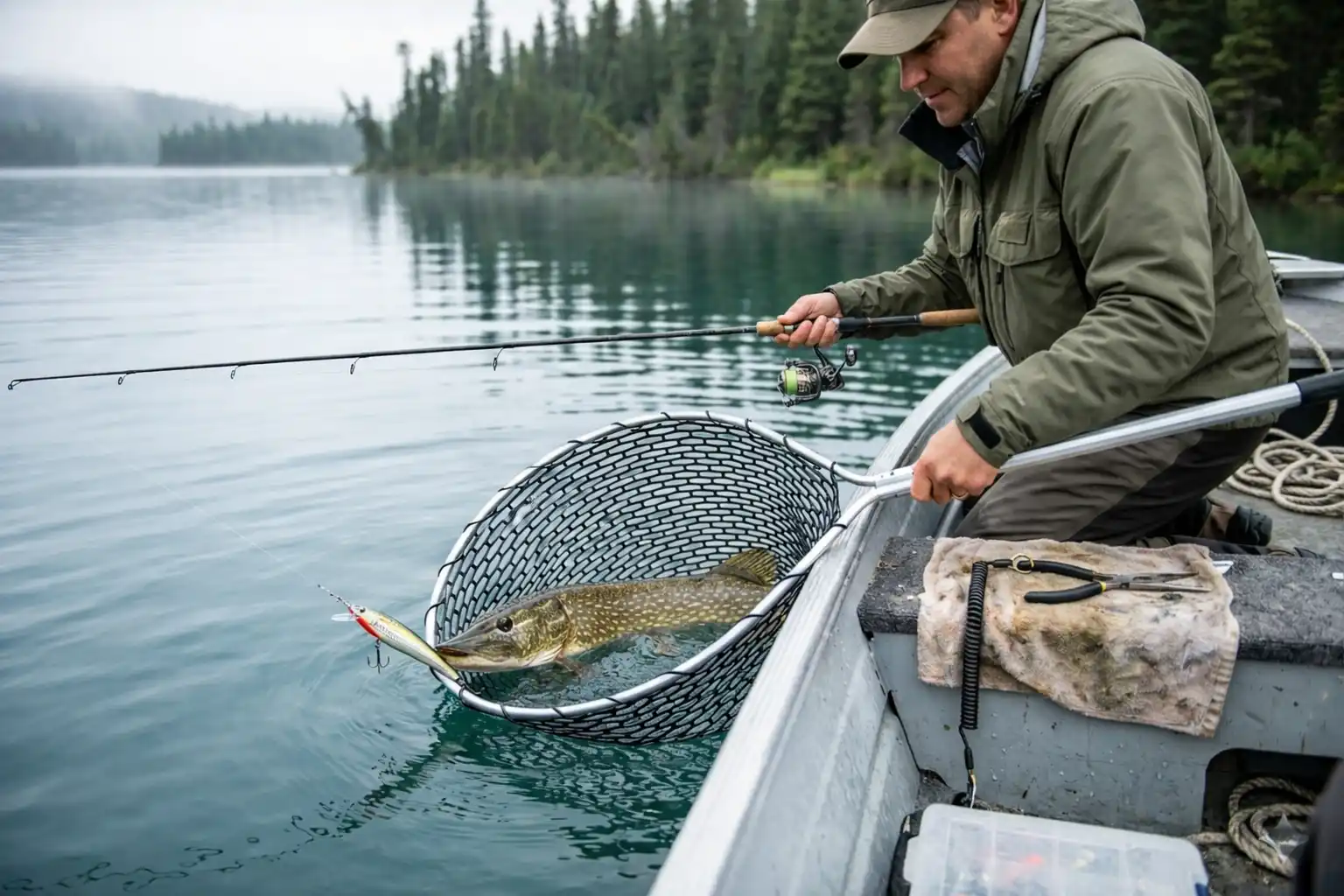
The safest way to land a pike usually follows a simple sequence:
- Keep the fish in the water until the landing net is ready.
- Lead the fish head-first into a rubber-coated landing net rather than trying to scoop it from behind.
- Keep the fish contained inside the net and allow it to settle before touching the lure or hooks.
- Secure the rod and maintain tension until the fish is fully controlled.
Using a rubber-coated landing net is especially important because it protects the fish’s slime coating and reduces scale damage. Once the pike is inside the net, anglers gain valuable time to prepare tools such as long-nose pliers or hook cutters before attempting to remove the hooks.
A calm and controlled landing gives anglers the best chance to handle pike safely while protecting the fish from unnecessary stress.
How to Hold a Pike Correctly (And How to Handle Pike Safely)
Knowing how to hold a pike correctly is one of the most important parts of learning how to handle pike safely. Northern pike have powerful jaws, razor-sharp teeth, and a flexible body capable of sudden violent movement. Without proper control, both the angler and the fish can be injured within seconds.
The safest method used by experienced predator anglers is the gill plate grip. This technique allows you to control the fish securely while keeping your hand safely away from the teeth.
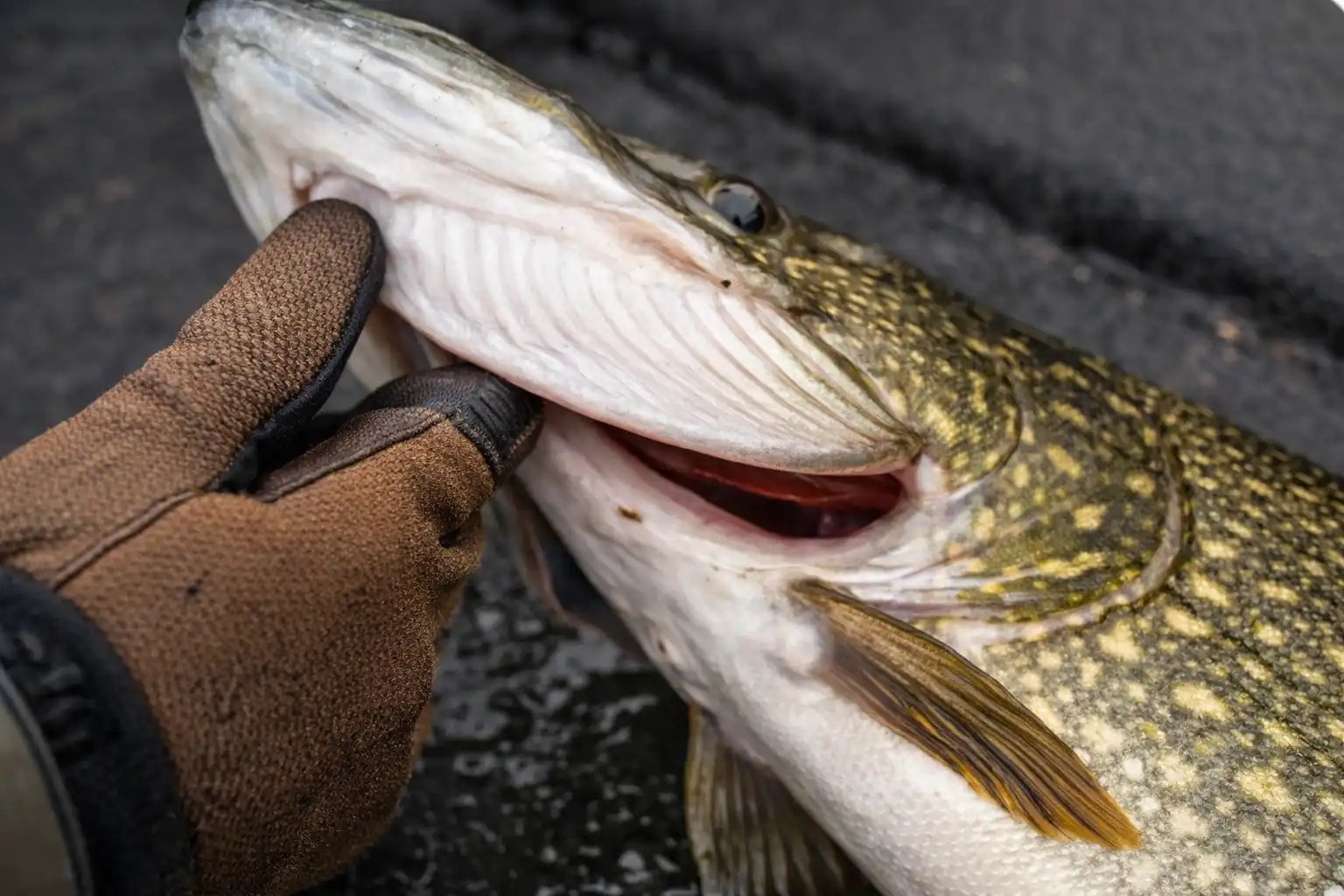
- Slide your hand carefully under the gill plate, staying strictly on the bony operculum (hard gill cover) to avoid contact with the delicate gill filaments.
- Grip the lower jaw hinge where the bone structure is strongest and provides stable control.
- Support the belly of larger pike with your second hand to distribute the fish’s full body weight.
- Keep the fish in a horizontal position whenever possible to protect the spine and internal organs.
Many inexperienced anglers try to lift pike vertically by the jaw alone. While this may look dramatic in photos, it places unnecessary pressure on the fish’s spine and internal organs. Supporting the belly and keeping the fish horizontal significantly reduces stress and injury.
If you are taking a photo, remember to keep the fish low over the water. Even a short fall from height can cause internal damage to a large specimen, especially when the fish is already stressed from the fight.
A proper gill plate grip combined with full body support is the safest way to control and handle pike safely during unhooking and photography.
How to Remove Hooks from Pike Safely
Learning how to remove hooks from pike is a critical part of understanding how to handle pike safely. Because northern pike often strike aggressively, lures equipped with treble hooks can become deeply embedded in the fish’s jaw hinges or mouth roof. Removing those hooks incorrectly can injure the angler or seriously damage the fish.
The most important rule is to keep the fish under control before touching the lure. A pike that is still thrashing can easily swing a lure with multiple hook points toward your hands. This is why experienced predator anglers first secure the fish using a landing net or a firm gill plate grip.
Once the fish is controlled, follow these steps to remove hooks safely:
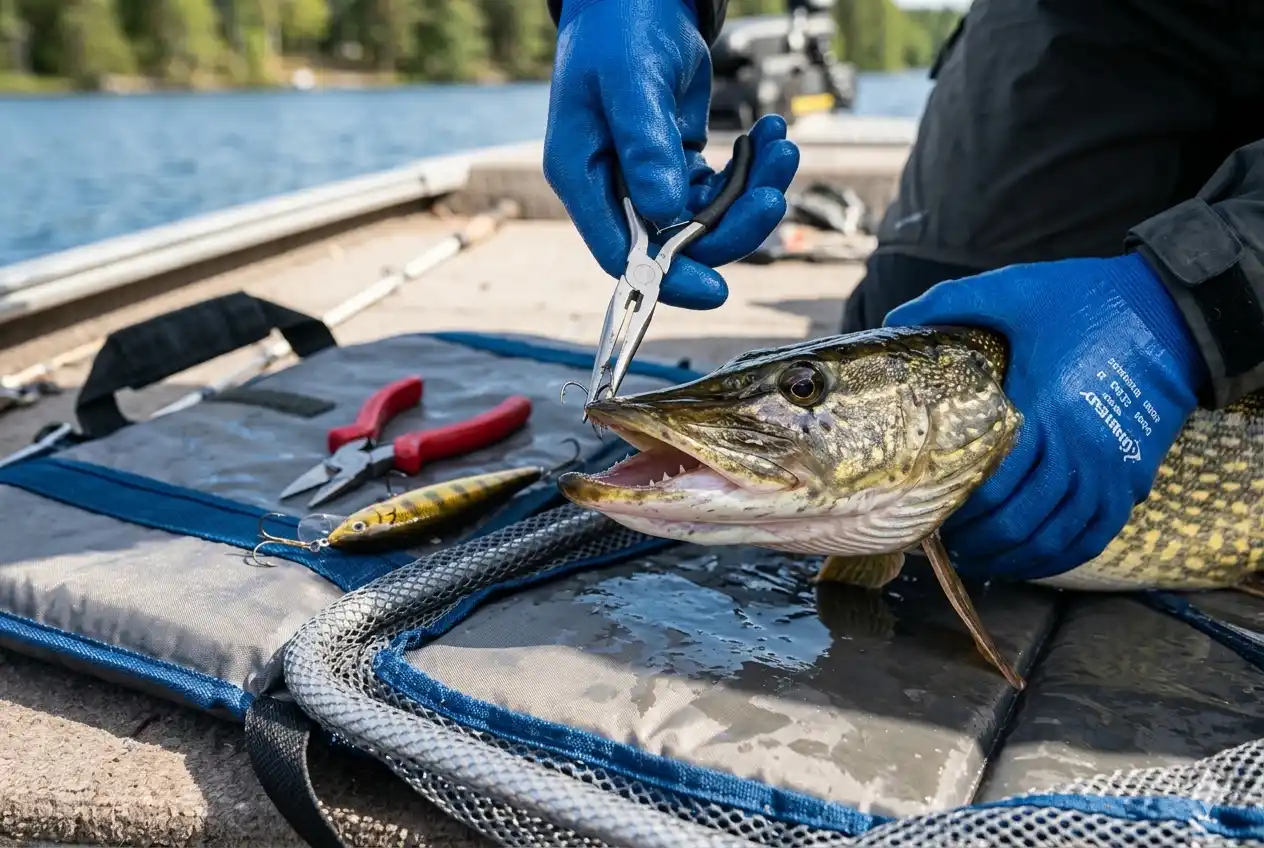
- Use long-nose pliers to reach deep into the jaw without placing your fingers near the teeth.
- Rotate the hook in the opposite direction of penetration rather than pulling it straight out.
- Control the lure body while removing the hook to prevent other treble points from catching your hand.
- If the hook is deeply embedded, cut the hook with hook cutters instead of forcing it free.
When removing hooks, always follow the “back-out” path. If the hook entered the tissue at an angle, forcing it straight out will tear additional tissue. Instead, gently maneuver the hook back along the same path it took to penetrate.
Many experienced anglers consider hook cutters one of the most important safety tools in pike fishing. When a treble hook penetrates deeply or becomes tangled around the gill plate area, cutting the hook is often faster and safer than trying to twist it free. Always keep your hook cutters within arm’s reach while unhooking a fish.
Quick, controlled hook removal protects both the angler and the fish while reducing unnecessary stress during catch and release.
Best Catch and Release Practices for Pike
Understanding catch and release practices is an essential part of learning how to handle pike safely. Northern pike are resilient predators, but poor handling can still cause unnecessary stress, internal injury, or delayed mortality after release. Responsible anglers focus not only on catching fish, but also on ensuring that those fish swim away healthy.
One of the most important factors is protecting the fish’s slime coating. This thin protective layer acts as a natural defense against infection and parasites. Dry hands, rough surfaces, or dropping the fish on the boat deck can damage this coating and significantly reduce survival chances.
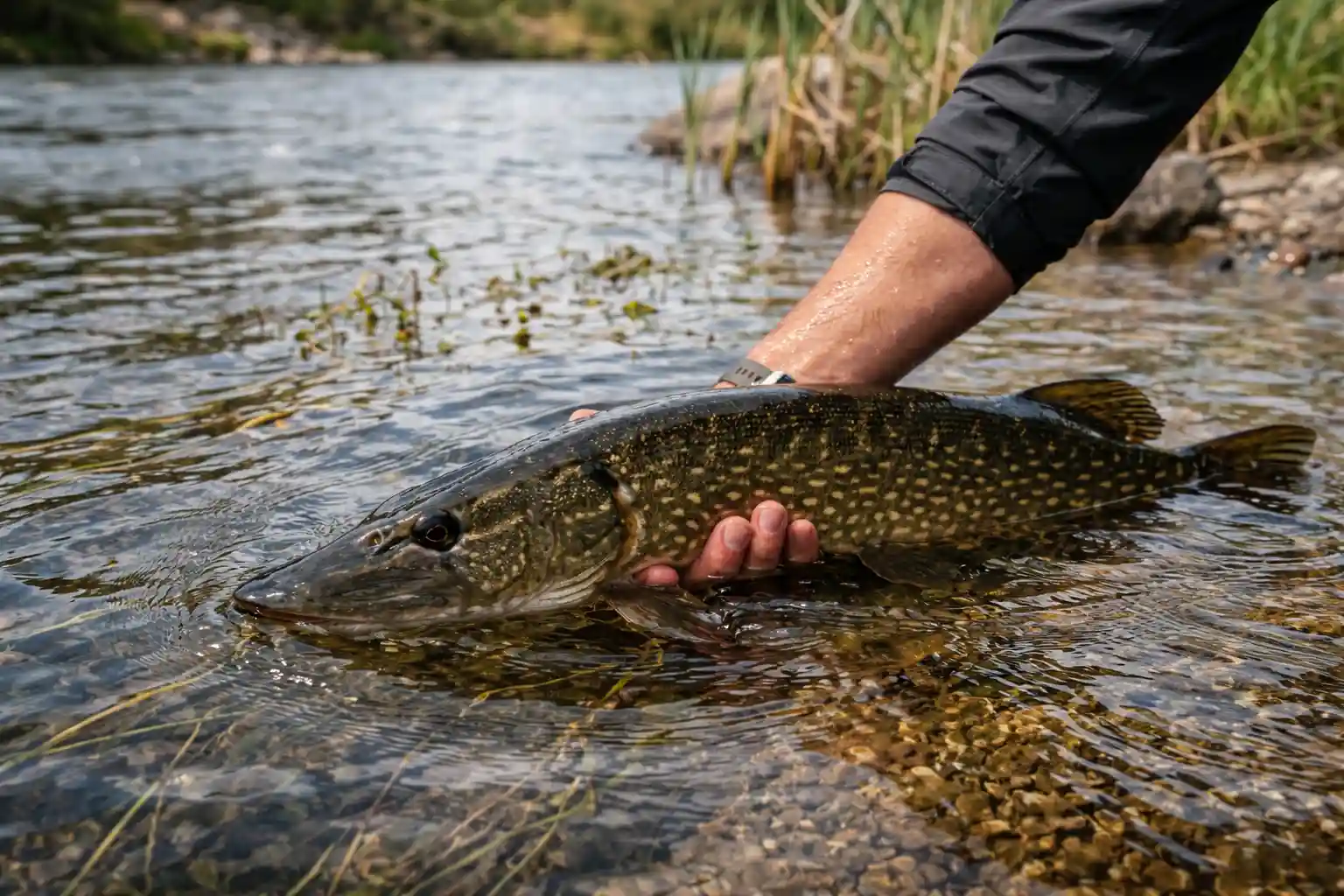
Experienced predator anglers generally follow a few simple principles when practicing catch and release:
- Keep the fish in the water as much as possible while preparing tools or camera equipment.
- Wet your hands before touching the fish to protect the slime layer.
- Limit air exposure and follow the 10–15 second air exposure guideline whenever possible.
- Support the body horizontally when lifting larger fish for a quick photo.
Before releasing the fish, hold it gently in the water and allow it to go through its natural reoxygenation process. Keeping the fish facing into the current helps water pass through the gills, allowing oxygen to circulate again after the stress of the fight. This short recovery period is especially important for large pike.
Proper catch-and-release handling ensures that pike remain healthy and continue to grow, allowing future anglers to encounter the same fish again.
Handling Large Trophy Pike
Handling large northern pike requires extra care compared to smaller fish. Trophy specimens are powerful predators with heavy bodies and sensitive internal organs. Improper lifting techniques can cause unnecessary stress, especially when the fish is out of the water.
The most important rule when dealing with large pike is full body support. Unlike small fish, large specimens should never be lifted vertically by the jaw alone. Their weight can place significant strain on the spine and internal organs.
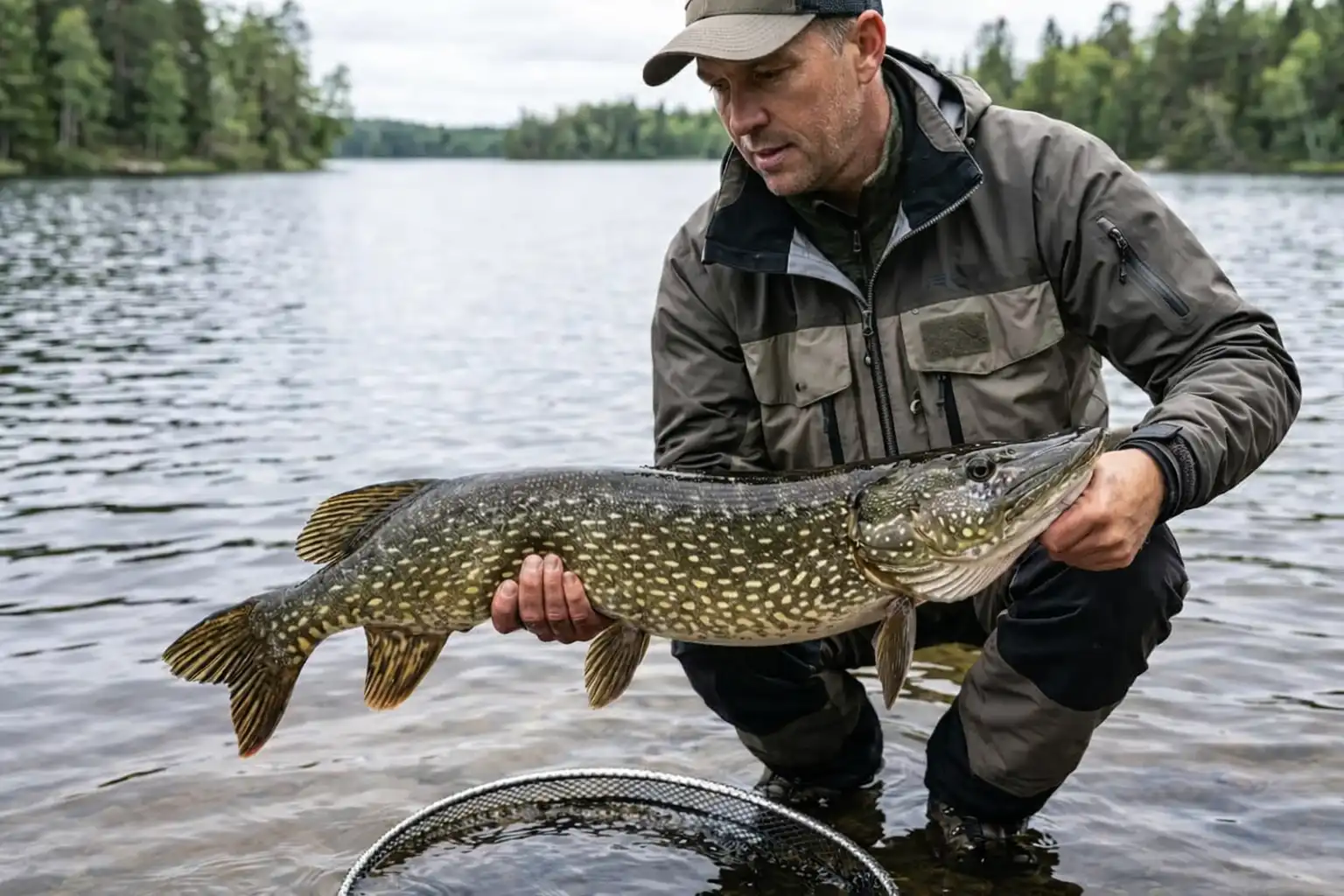
- Support the belly with your second hand to provide proper full body support.
- Keep the fish in a horizontal position to distribute weight evenly and protect the spine.
- Limit photo time: Lift the fish only briefly (within the 10–15 second air exposure limit) before returning it to the water.
- Stay prepared for sudden movement, as large pike often thrash unexpectedly during handling.
Large predators also require a longer recovery period after the fight. Holding the fish gently in the water allows it to regain balance and improves post-release survival, especially after long battles.
Photographing trophy fish should always be done quickly and close to the water surface. Keeping the fish low above the water reduces the risk of injury if it suddenly slips from your hands.
Respecting the size and power of large pike protects both the angler and the long-term health of trophy fish populations.
Common Pike Handling Mistakes (And How to Handle Pike Safely)
Even experienced anglers occasionally make mistakes when handling northern pike. Learning how to handle pike safely often begins with understanding what not to do. Many handling errors happen during the excitement of landing a fish, but those small mistakes can increase the risk of injury for both the angler and the pike.
Many anglers recognize these mistakes because they have experienced them at least once. In the excitement of landing a fish it is easy to rush the process. Even experienced anglers sometimes hurry in those first seconds, but time on the water quickly teaches that those few rushed moments can mean the difference between a safe release and an unnecessary injury to the fish.
By recognizing these situations in advance, anglers can greatly improve their ability to handle pike safely while protecting the fish during catch-and-release fishing.
- Grabbing the fish too quickly before it is fully controlled in the landing net. A thrashing pike can easily swing hooks or teeth toward your hand.
- Placing fingers inside the gills instead of gripping the gill plate. The delicate gill filaments are extremely sensitive and easily damaged.
- Lifting large pike vertically by the jaw. This places dangerous pressure on the spine and internal organs of heavy fish.
- Keeping the fish out of the water too long. Excessive air exposure significantly reduces post-release survival.
- Trying to remove hooks without proper tools. Working without long-nose pliers or hook cutters greatly increases the risk of injury.
Most of these problems occur when anglers rush the process. Taking a few extra seconds to control the fish, prepare tools, and follow proper technique makes it much easier to handle pike safely while minimizing stress on the fish.
Patience and preparation are the two habits that consistently allow anglers to handle pike safely in any situation.
What We’ve Learned Handling Big Pike
Northern pike are among the most exciting freshwater predators to catch, but their razor-sharp teeth, powerful jaws, and explosive bursts of energy mean they must always be handled with respect. Learning how to handle pike safely is not only about protecting yourself — it is equally about protecting the fish.
Throughout this guide we covered the key principles experienced predator anglers follow on the water: controlling the fish during landing, using the correct tools, supporting the body properly, removing hooks carefully, and minimizing air exposure during photographs. When these techniques become routine, handling pike becomes faster, safer, and far less stressful for the fish.
Responsible anglers also understand that every released fish represents the future of the fishery. Large pike grow slowly and may take many years to reach trophy size. According to biological research on the species available through Northern Pike (Esox lucius), these predators play an important role in maintaining balance within freshwater ecosystems.
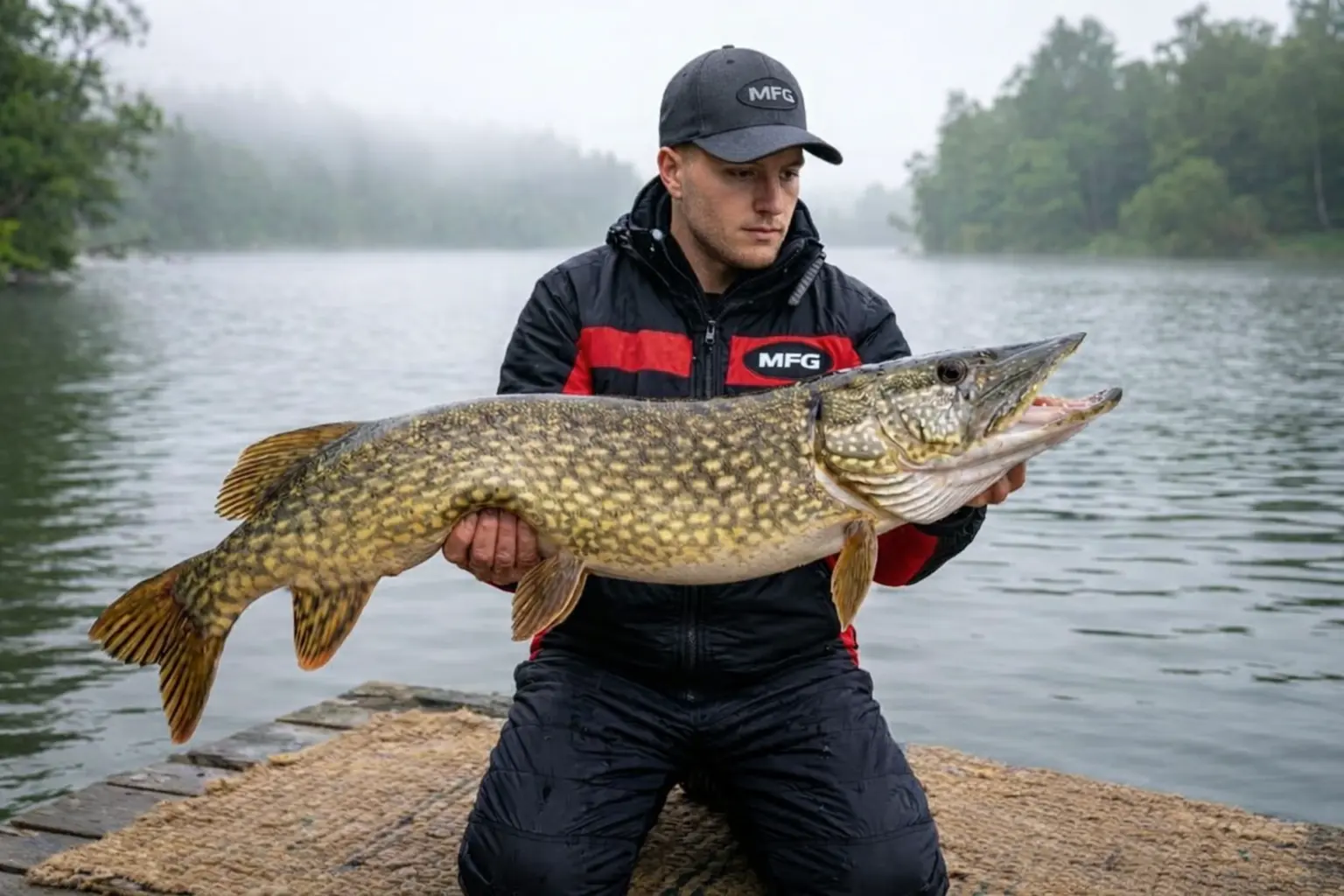
In the end, mastering how to handle pike safely is part of becoming a skilled predator angler. The more attention you give to safe landing, proper grip, and careful hook removal, the easier it becomes to release fish quickly and confidently.
Respect the fish, stay patient during handling, and every catch becomes a safer experience for both the angler and the pike.
Do you have a question or want to share your experience from the water?
At Master Fishing Guide (MFG), we believe anglers learn the most by sharing real experiences from the field. Whether you are a beginner or an experienced predator angler, your observations can help others improve their skills and learn how to handle pike safely in real fishing situations.
If you have a question about safe pike handling techniques, landing tools, or hook removal methods, feel free to contact us. You can also share your own tips or photos of memorable catches.
Reach us anytime at info@masterfishingguide.com and become part of the growing MFG community of anglers who care about responsible fishing and protecting our waters.
Pike Handling FAQ
How do you handle pike safely without getting bitten?
The safest way to handle pike safely is to control the fish first using a landing net and proper tools. Always keep your hands away from the teeth and use long-nose pliers when removing hooks. Most experienced anglers rely on the gill plate grip combined with full body support to handle pike safely.
What is the safest way to hold a northern pike?
The safest method to handle pike safely is the gill plate grip combined with supporting the fish’s belly. Slide your hand carefully under the hard gill plate while avoiding the gills themselves. Supporting the body horizontally prevents stress on the spine and internal organs.
Can you grab a pike by the gills?
No. You should never grab the delicate gill filaments. When learning how to handle pike safely, anglers place their fingers behind the hard gill plate (the operculum), not inside the gills. This provides control without damaging sensitive tissue.
How long can a pike stay out of water?
Many anglers follow the 10–15 second air exposure guideline. When trying to handle pike safely for photographs, prepare your camera first and return the fish to the water quickly to protect its slime coating and improve post-release survival.
What tools help handle pike safely?
Essential tools for anglers who want to handle pike safely include a rubber-coated landing net, long-nose pliers, and hook cutters. These tools allow quick hook removal while keeping your hands away from teeth and treble hooks.
Why is proper pike handling important?
Learning how to handle pike safely protects both the angler and the fish. Proper handling reduces injuries, protects the slime coating, and improves survival after release. Responsible handling also helps maintain healthy pike populations for future anglers.