

Pike Water Clarity in Winter — Why Clear and Murky Water Change Everything
Over the years, we’ve tested the same winter pike spots in every condition imaginable. Same lakes, same structure, same season — just different visibility. What kept repeating itself wasn’t luck or random activity, but one factor that consistently changed results: pike water clarity.
We’ve fished clear winter water where pike followed perfectly and refused at the last second. We’ve also fished murky water on the same systems where those refusals turned into hard reaction strikes. The difference wasn’t the lure alone. It was how pike were able to perceive what we presented.
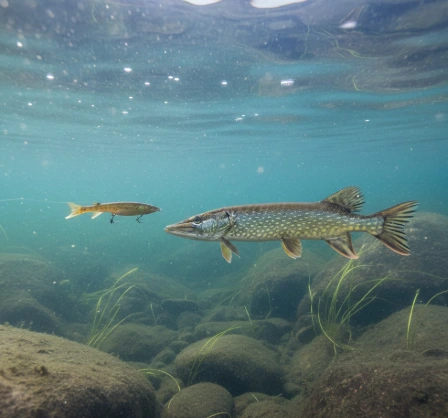
After enough seasons, one thing became obvious. Clear and murky water force pike into completely different decision-making modes. In clear water, pike evaluate. In murky water, they react. When anglers ignore that shift and fish both conditions the same way, winter sessions turn into guesswork.
Everything we share here is based on what we’ve tested repeatedly — what failed, what suddenly worked, and what kept producing when conditions changed. Once you understand how pike water clarity alters winter behavior, your approach stops being random and starts becoming deliberate.
How Pike Water Clarity Changes Winter Pike Behavior
Through years of winter fishing on the same waters, one pattern kept repeating itself. Pike water clarity doesn’t just influence where pike hold — it changes how they decide to strike. In cold water, pike don’t waste energy. Every movement, follow, and hit is controlled by how clearly they can detect what’s in front of them.
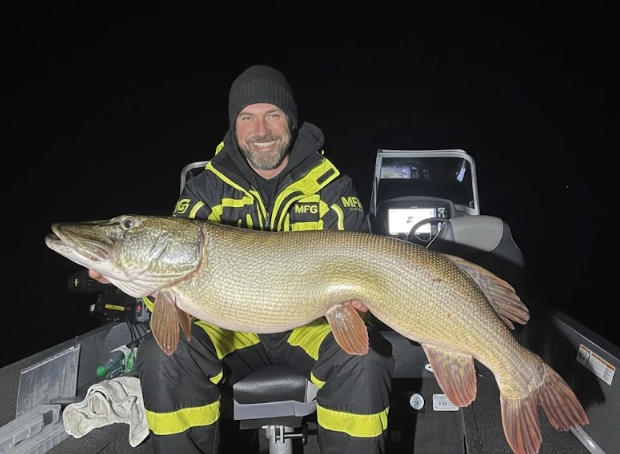
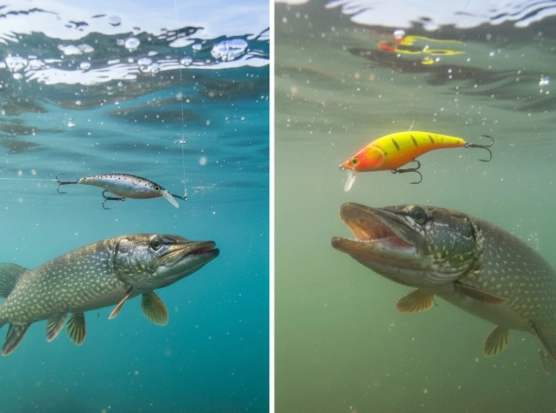
In clear winter water, we consistently saw pike behave cautiously. They followed lures longer, inspected them from multiple angles, and often turned away at the last moment. These weren’t inactive fish — they were evaluating. Clear water gives pike information, and more information means more reasons to reject a presentation.
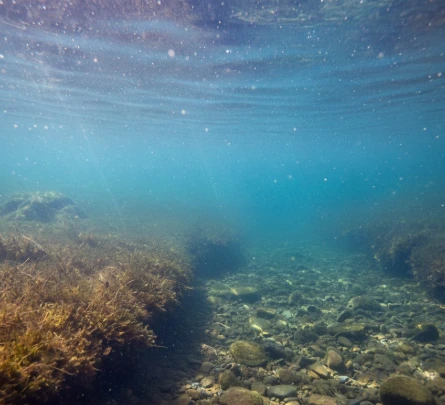
In murky winter water, that behavior shifted dramatically. Pike stopped tracking from a distance and reacted much closer to the lure. Strikes became shorter, heavier, and more decisive. With limited visibility, pike rely less on sight and more on vibration, pressure waves, and direct contact cues. That’s where many anglers lose fish without realizing why.
We’ve seen this pattern repeat across seasons and waters, and it matches what we break down in our analysis of winter pike behavior — water clarity doesn’t flip a switch between active and inactive fish, it changes how much certainty a pike needs before committing to a strike.
Winter Pike Depths in Clear vs Murky Water
After repeating the same winter drifts and shore spots year after year, one thing became clear to us: pike water clarity directly affects how deep pike position in winter. Temperature sets the general zone, but visibility decides whether pike feel comfortable holding higher, suspending, or pinning tight to bottom structure.
In clear winter water, we consistently found pike holding slightly higher in the water column or suspending off structure. When visibility is good, pike don’t need to glue themselves to the bottom to ambush prey. They can see movement from farther away, which allows them to position more freely along drop-offs, edges, and subtle contour changes where they can monitor a larger area.
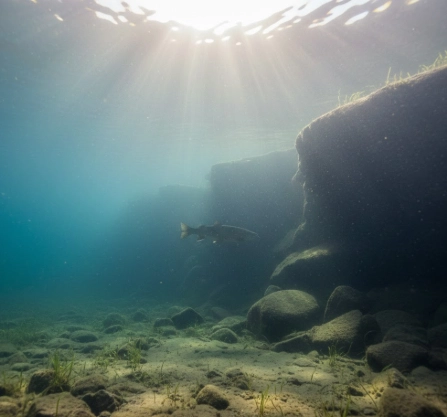
In murky winter water, that positioning tightens dramatically. Pike shorten their strike window and reduce search effort by holding closer to the bottom, structure, or hard edges. This exact shift is something we see repeatedly when analyzing winter pike depths, where limited visibility forces pike into zones where prey is pushed close and escape options are minimal.
This is why depth patterns that work perfectly one week can completely fail the next when clarity changes. Pike don’t “leave the area” — they reposition within it, reacting to how much information the water allows them to process.
Clear Water Winter Pike Strategies: Shore vs. Boat Success
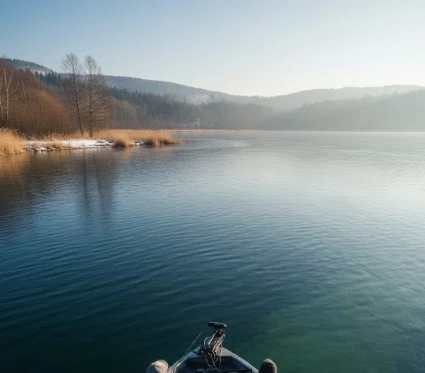
When we fish clear winter water, our entire approach slows down and tightens up. With high visibility, pike don’t rush decisions; they see the lure early, track it longer, and look for reasons not to strike. That’s why pike water clarity in clear conditions rewards stealth and realism far more than aggression.

Stealth Tactics for Shore Fishing
Fishing from the shore in clear water requires a “hunter” mindset. We’ve learned the hard way that standing tall on a high bank or wearing bright colors is a guaranteed way to spook winter pike before the first cast. We stay low, avoid casting shadows over the water, and always fish the “near” margin first. In clear water, a pike might be sitting just feet from the bank, and if you walk right up to the edge, you’ve already lost the battle.
The Advantage of Boat Fishing for Undisturbed Spots
However, the biggest challenge in clear water is reaching fish that have moved away from bank pressure. To truly stay stealthy and reach those undisturbed offshore spots, we always recommend investing in a dedicated platform; if you are looking to upgrade, check out these top-rated options for boat fishing. A good boat isn’t just transport—it’s a tool that allows you to hold distance, control your drift silently, and approach fish without the vibrations of a heavy engine alerting them.
Regardless of how you reach the water, gear precision is non-negotiable. When a pike can inspect every inch of your setup, small visual cues become warnings. This is why we are meticulous about our winter fishing line and leader. In clear water, we switch to longer fluorocarbon leaders and thinner diameters to remove unnecessary visual signals and keep the presentation as “honest” as possible.
Clear water doesn’t demand louder signals — it demands cleaner ones. Whether you are stalking the banks or positioning your boat for the perfect drift, success comes down to staying invisible until the moment of the strike.
Murky Water Winter Pike Strategies: Force the Reaction
In murky winter water, pike don’t “study” a lure — they react to it. Visibility is limited, strike windows are short, and fish won’t move far to investigate. This is where pike water clarity completely changes lure fishing logic. You are no longer convincing a fish. You are provoking it.
Shore Casting: Put the Lure Where Pike Actually Sit
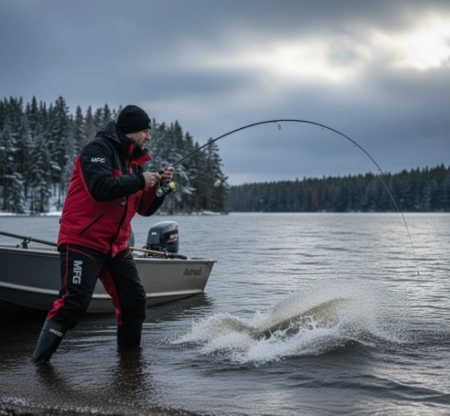
From the bank, random long casts waste time in dirty water. We tighten our casting lanes and work structure with intent. Every cast is aimed along edges, depth changes, and hard transitions where pike hold tight. The goal is simple: run the lure through the reaction zone, not through empty water. In murky conditions, a pike won’t come to the lure — the lure must pass tight and close to the fish.
Boat Control: Guide Every Retrieve Through the Zone
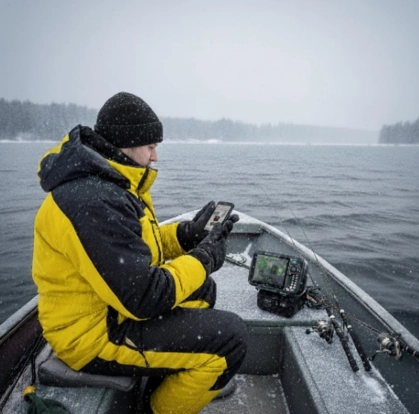
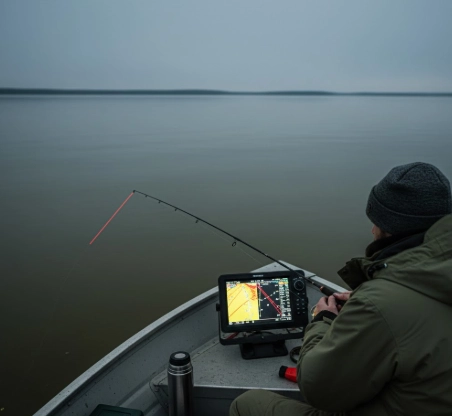
On larger waters, lure fishing in low visibility becomes a positioning game. Pike hug structure and won’t reveal themselves. This is exactly where a fish finder becomes a weapon, not a gadget. We use it to keep the boat on the contour, align drifts, and guide every retrieve through the same productive lane. Each cast follows the same path until it triggers a strike.
In murky water, exploration kills efficiency. Repetition inside a narrow window beats wide coverage. We cast, retrieve, and re-cast through the same corridor until the fish reacts. Once you understand how pike water clarity compresses strike distance, stained winter water stops feeling unpredictable and starts behaving like a system you can attack with every cast.
Recommended Pike Lures by Water Clarity
Once you understand how pike water clarity reshapes winter behavior, lure choice stops being guesswork. The goal is simple: in clear water you remove doubt; in murky water you create reaction. Everything we throw fits one of those two jobs.
Clear Winter Water — Remove Doubt
In high visibility, pike see first and decide later. We choose lures that look real, move cleanly, and allow long, convincing pauses. Our clear-water rotation is built around two tools:
Winter jerkbait lures — suspending profiles that hang in place and let a pike finish its inspection on its own terms.
Heavy spoons — when fished slow and controlled, their thin silhouette and clean flash stay natural instead of alarming.
Color rules in clear water: we stay natural and understated. Perch, roach, smelt, silver, ghost, and subtle translucent patterns dominate our boxes. In high visibility, pike notice everything — hook flash, paint edges, unnatural contrast. Bright or artificial colors become warnings. Natural tones let the lure merge with the environment and remove visual “red flags.” The fish doesn’t feel pressured to decide; it simply follows, evaluates, and slowly builds confidence.
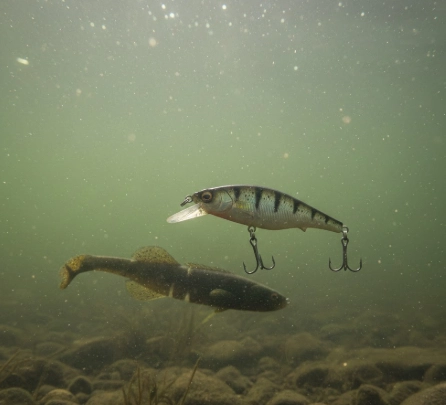
In clear water, these lures succeed because they don’t argue with the fish. They present, pause, and wait for certainty to build.
Murky Winter Water — Create Reaction
In stained conditions, pike don’t analyze — they collide with what enters their zone. Here, we want presence, silhouette, and a path that forces contact:
Cold-water soft swimbaits — broad profiles and steady tail pulse give pike something to lock onto at close range.
Heavy spoons — worked closer to bottom with deliberate lifts, they cut through dirty water and trigger short-window strikes.
Color rules in murky water: we flip the logic completely. Chartreuse, firetiger, bright orange, white, and solid black become primary tools. In low visibility, pike don’t “see” fine detail — they detect shape, contrast, and movement. High-contrast colors shorten decision time and make the lure impossible to miss inside the reaction zone. A bold silhouette gives the fish something to lock onto in the last split second before impact.
Murky water isn’t about elegance — it’s about presence. These lures succeed because they enter the reaction zone and demand a decision.
Match the lure to the water, not to habit. When your choice reflects what the fish can actually perceive, winter pike stop feeling unpredictable and start behaving exactly as they should.
How to Read Pike Water Clarity in Real Time
Water clarity isn’t a fixed label like “clear” or “murky” — it’s a moving condition that changes with light, wind, depth, and angle. Two anglers can stand on the same bank and see two different “waters.” That’s why experienced winter pike anglers don’t rely on memory or assumptions. We read clarity on the spot, every time.
The fastest test is visual. Drop your lure or rod tip into the water and watch how quickly it disappears. If you can track it clearly beyond two or three feet, you’re dealing with functional clear water. If it fades within inches, you’re already in murky logic. This simple check tells you more than any map or memory ever will.

Next comes light angle. Winter sun sits low, and that changes everything. Water that looks stained from the bank can become “clear” when viewed at a shallow angle along the surface. Likewise, a lake that seems crystal in overcast light can turn visually noisy when the sun breaks through and creates surface glare. Clarity is not just about particles in the water — it’s about what the fish can actually perceive from its position.
Wind is the silent modifier. A light chop can instantly turn a clear bay into reaction water by breaking up light and hiding movement. On calm days, that same bay becomes a glass window where every mistake is visible. We’ve watched the same shoreline flip from clear-water logic to murky-water behavior in under an hour as wind direction changed.
Depth also lies. Shallow flats often look clear because you can see the bottom, but as you drop off the edge into deeper water, that same visibility can vanish. Pike positioned deeper experience a different visual world than the angler standing above them. Always read clarity from the fish’s perspective, not your own.
Before the first cast, we always answer one question: Can a pike see far enough to evaluate, or only far enough to react?
That answer determines everything that follows — how fast we fish, how close we approach, and whether we are trying to remove doubt or trigger instinct. Winter success isn’t about choosing a technique. It’s about choosing the right visual world and fishing as if you were the predator waiting inside it.
Weather and Light — When Pike Water Clarity Lies
One of the biggest mistakes winter anglers make is treating pike water clarity as a permanent state. “This lake is clear.” “That river is murky.” In reality, clarity is not fixed — it is rewritten by light and weather every single hour. What matters is not how clear the water looks to you, but how pike water clarity feels from below.
The Impact of Sun and Cloud Cover
On bright winter days, even moderately stained water can behave like crystal. Low sun angles cut under the surface, creating long sight lines for fish. Pike suddenly gain the ability to evaluate, follow, and reject. Conversely, heavy overcast reverses the equation, compressing vision even in transparent lakes. We’ve watched clear reservoirs fish like dirty rivers under thick winter clouds. The water itself didn’t change — pike water clarity did.
Snow and Ice Reflection
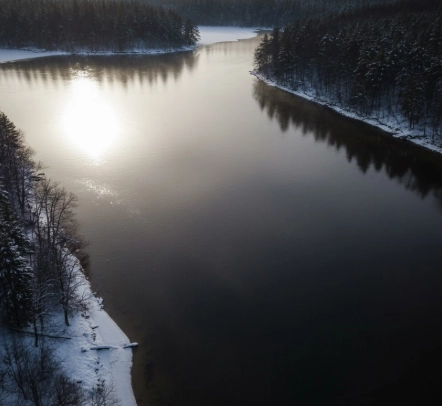
Snow along the banks and ice on vegetation amplify visibility. White surfaces reflect light back into the water, increasing contrast. A shoreline that fished “safe” yesterday can become a glass window overnight. Pike positioned near those edges suddenly see farther and with more detail. Anglers who ignore this shift keep fishing aggressively and wonder why follows replace strikes.
Wind: The Final Modifier
Wind is the final modifier. A light chop breaks up surface glare and fragments light paths. Clear water under calm skies demands extreme stealth, but the same water under wind becomes forgiving. This is why pike water clarity is never just about turbidity — it is a dynamic interaction between particles, light, angle, and motion.
Every winter session should begin with a simple assessment: What kind of visual world does the pike live in right now? Answer that correctly, and your tactics align automatically. Winter success comes from understanding that pike water clarity is a living condition, not a label on a map.
Common Mistakes Anglers Make with Water Clarity
Most winter failures don’t come from bad spots or the wrong lure. They come from fishing the right place with the wrong visual logic. We see the same mistakes every season, on every type of water.
Mistake 1: Treating All Winter Water the Same
Anglers often walk a clear shoreline and fish it like stained water — fast retrieves, loud movements, and careless positioning. In high visibility, pike will follow, inspect, and then fade away. The fish were there, but your approach was wrong for the conditions.
Mistake 2: Over-Searching in Murky Water
In dirty water, instead of tightening their focus, people fan-cast wide areas to “search.” In murky conditions, this is a waste of time. Pike don’t roam visually in winter; they hold tight. If your lure doesn’t pass tight and close, nothing happens. Murky water requires methodical repetition, not wide exploration.
Mistake 3: Ignoring Real-Time Changes
Conditions shift fast. Wind rises, clouds move in, or the sun breaks through. The water’s physical clarity might stay the same, but the fish’s visual world shifts. Anglers who fail to adapt often blame a “slow day” when they should have just adjusted their presentation to the new light.
“Clear water punishes exposure. Murky water punishes distance.”
Winter pike success doesn’t come from covering more water — it comes from matching your presence to what the fish can actually perceive. Once you internalize this, winter fishing stops feeling mysterious and starts behaving like a system you can control.
FAQ — Clear vs. Murky Water for Winter Pike
Do pike see better in clear or murky winter water?
Pike always rely on both vision and lateral line, but in clear winter water sight dominates. In murky water, vibration and pressure waves matter more. That’s why subtle lures work in clear water, while louder, bulkier profiles outperform in dirty conditions.
Are pike more active in murky water during winter?
Often, yes. Murky water gives pike a feeling of cover. In winter, when they are cautious and energy-conserving, that extra invisibility can trigger short feeding windows. In crystal-clear water, pike stay tighter to structure and strike less often.
What lure colors work best in clear winter water?
Natural tones dominate: silver, perch, roach, and translucent baitfish patterns. In clear water, pike inspect prey longer, so realism beats contrast. Oversized or fluorescent colors often push fish away.
What lure colors work best in murky winter water?
Contrast is king. Firetiger, chartreuse, black-red, solid white, and glow finishes help pike locate the lure. In dirty water, visibility range is short, so the lure must “announce” itself.
Should I fish deeper in clear winter water?
Yes. In clear systems, winter pike often slide deeper or hold on sharp structure to avoid exposure. Long casts, low angles, and deeper lanes outperform shallow probing.
Do pike strike differently in clear vs. murky water?
In clear water, strikes are precise and often gentle. In murky water, hits are more violent but less accurate. Hook-up ratios may actually drop in dirty water unless hooks are sharp and lure profiles are compact.
Read the Water, Not Just the Lure
Clear or murky, winter water always tells you how pike want to be approached. In crystal-clear systems, they demand precision, realism, and distance. In dirty water, they reward confidence, contrast, and vibration. The mistake most anglers make is fishing the same way everywhere. Pike don’t live in “winter” — they live in conditions.
Once you start reading water clarity before choosing depth, color, and retrieve speed, winter stops feeling random. You stop blaming cold fronts and start predicting short feeding windows. You move to the right lanes instead of hoping fish will wander in front of you.
If you want the full system — depth, location, behavior, timing, and seasonal movement — combine this with our winter pike fishing guide. That’s where clarity becomes strategy.
And remember: even in murky water, pike are not blind. They use vibration and pressure long before they see. That’s exactly how their lateral line system works. Match your presentation to what their body actually senses — not what looks good in your hand.
Read the water first. Let the lure be the answer, not the question.