

Winter Pike Fishing in January — Small Bite Windows, Big Fish, Proven Tactic
January pike fishing is not comfortable fishing — it is controlled patience. Cold water, short days and long periods with absolutely no activity are normal. You can fish for hours without a single touch, and then suddenly get one violent strike from a heavy fish that makes the whole day worth it. This is exactly what makes January pike fishing so addictive for anglers who understand it.
In January, pike do not waste energy chasing fast lures. They stay near structure, drop-offs and deeper edges, waiting for short feeding windows triggered by weather and pressure changes. If you are not in the right place at the right moment, nothing happens — no follows, no taps, just silence. That is why serious anglers treat January pike fishing as a timing and positioning game, not as a numbers game.
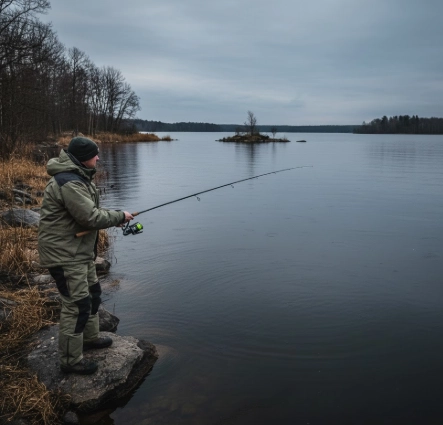
To understand why pike in January behave like this, you first need to understand how cold water changes their biology. Our full guide on winter pike behavior explains how metabolism slows down, why big fish move less and why they prefer ambush instead of chasing.
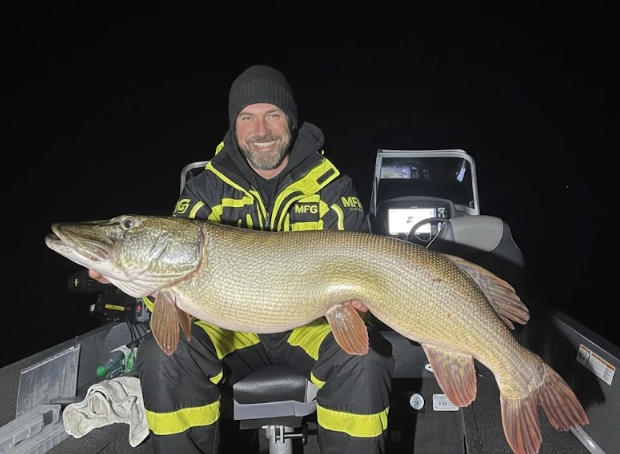
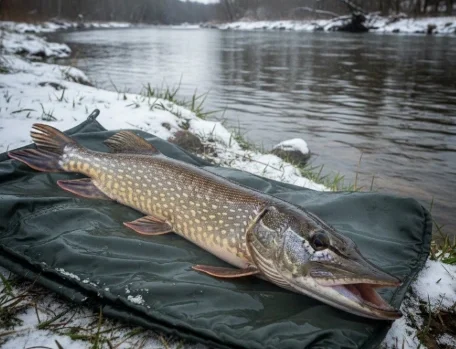
Simple truth: in January you get fewer bites — but those bites are usually from bigger fish. January pike fishing is about small bite windows, big fish and proven tactics, not luck.
Best Time of Day for January Pike Fishing
January pike fishing is all about short, predictable feeding windows. Unlike warmer months where pike may feed several times a day, in January activity is compressed into one or two short periods. You can fish all day and catch nothing — and then in 20 minutes everything happens.
The most consistent time for January pike fishing is late morning to early afternoon. After the coldest part of the night, water temperature stabilizes slightly and light increases just enough for pike to start moving. Sunrise can produce fish, but the true peak often comes between 10:00 and 14:00.
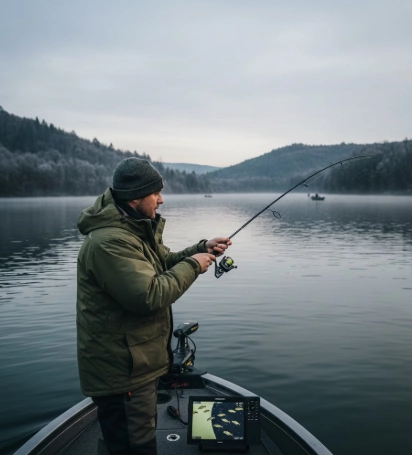
Feeding activity in January pike fishing is also closely tied to overall seasonal patterns. If you want the full picture of how winter conditions shape pike behavior, tactics and movement, check our complete winter pike fishing guide.
Bottom line: Successful January pike fishing doesn’t reward random casting. It rewards being on your best spot during these small bite windows. Plan around weather, light, and pressure — not around your free time.
January Pike Depths — Where Winter Pike Actually Hold
January pike fishing is far more predictable than most anglers think when it comes to depth. In the coldest month of the year, pike choose stability first. They avoid constant depth changes and sharp temperature swings, staying close to areas where they can feed without wasting energy.
During most January pike fishing sessions, the most consistent fish are found on deeper edges, typically just off the main drop-offs. These are not necessarily the deepest holes in the lake, but the transition zones between shallow flats and deeper basins. Pike can sit here, conserve energy, and slide only a few meters when a feeding opportunity appears.
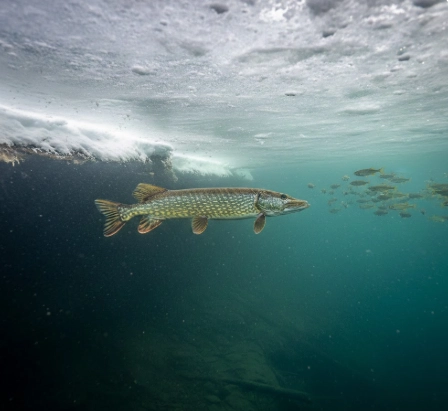
On very cold, high-pressure days, January pike fishing often requires looking even deeper where fish stay almost motionless. When weather softens or pressure falls, they may rise in the water column or move onto the upper edge of the break. For a detailed breakdown of exact depth zones, see our full guide on winter pike depths.
Key point: Successful January pike fishing is not about covering the whole lake. It is about finding the right depth zone and staying there during the short feeding window.
January Pike Fishing — Casting, Presentation, Tactics & Lure Choices
January pike fishing is not about speed — it is about control. Cold water forces pike to conserve energy, so they rarely chase fast-moving lures. Instead, they hold near structure and wait for an easy opportunity. That is why the right lure and the right presentation matter more than how far you cast.
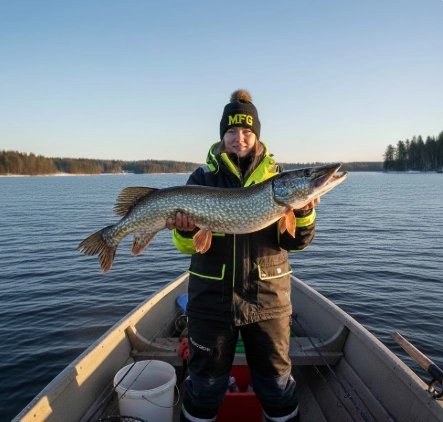
How to Cast and Present Lures for January Pike
January pike fishing is not about random long casting – it is about casting with purpose. Every cast should target structure or a depth change where pike actually hold. Blind fan-casting across open water rarely works in winter.
Where Should You Cast?
In January, pike position themselves where they can save energy and ambush prey. Your casts should be focused on:
- edges of drop-offs
- transitions between shallow and deep water
- weed lines that remain in winter
- points, bends and underwater humps
- the down-wind side where baitfish collect
Rule: if your lure is not passing close to structure, it is probably not in the strike zone.
How Fast Should You Retrieve?
Slow is normal. Slower is better. In January pike fishing, your retrieve speed should feel almost “wrong.” Jerkbaits should be worked with long pauses, swimbaits crawled just fast enough to move the tail, and heavy spoons lifted gently and allowed to sink back down.
Typical winter pause times:
- jerkbaits: 5–15 seconds
- swimbaits: continuous ultra-slow crawl
- heavy spoons: slow lift + controlled flutter drop
The Biggest Casting Mistake in January
Most anglers move too soon. They make ten casts and leave. In winter, you should:
- cast to the same break from different angles
- change depth before changing spot
- pause longer instead of reeling faster
Hidden tactic: make several casts where the lure passes the same piece of structure repeatedly. Winter pike often need to “see” the bait more than once before committing.
How Long Should You Stay in One Spot?
In January pike fishing, the biggest mistake is moving too fast between spots. Pick one high-confidence winter location and give it time to “wake up.” On strong winter structures, anglers should stay 30–60 minutes at minimum. If baitfish are present or pressure is dropping, staying even up to two hours is completely reasonable.
Hidden tactic: Don’t just stand and cast randomly. Rotate depths and retrieve speeds on the same spot. Many fish are hooked after 40+ minutes on the same break when the short feeding window finally opens.
Which Lures Work Best in January?
Not every lure is built for January pike fishing. You need lures that can be moved slowly, paused for a long time, and kept close to structure without snagging constantly. These three categories consistently produce when water is cold:
- Jerkbaits that suspend and allow long pauses
- Heavy spoons that reach deeper edges fast
- Natural-looking swimbaits for ultra-slow retrieves
Best Lines & Leaders for January Pike Fishing
Choosing the right line and leader is crucial for precision and hookup ratios in January pike fishing. In cold water, bites are subtle and slow, and sensitivity matters more than raw strength.
Best winter pike braid line gives low stretch and excellent bite detection when fishing deep edges and structure. Good braid helps you feel every pause and every gentle pickup.
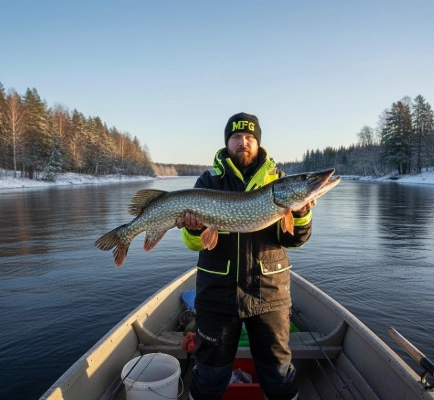
Titanium vs fluorocarbon leader for pike explains when to choose invisibility and when to choose abrasion resistance. The right leader often makes the difference between a follow and a hook-up.
Master Fishing Guide’s Top January Pike Lure Choices
Best Winter Swimbait for January Pike
Best Winter Jerkbait for January Pike
Best Heavy Spoon for January Pike
Retrieve Speed and the “Pause Game”
January pike fishing is won with pauses, not speed. With jerkbaits, pauses of 5–15 seconds are normal — and sometimes even longer. Swimbaits should be crawled so slowly that the tail barely moves. Heavy spoons should be lifted gently and allowed to flutter back down under full control.
Hidden tactic: When you believe you are already fishing slow enough, slow down even more. Most anglers fail in January not because of the wrong lure, but because they fish winter lures at autumn speed.
Final takeaway: January pike fishing is about staying on the right spot, using winter-specific lures, and trusting the process until the short bite window opens. One right cast during that window is worth more than 200 random casts all day.
Common January Pike Fishing Mistakes (And How to Avoid Them)
January pike fishing is simple, but not easy. Most blank days in winter have nothing to do with luck – they come from the same repeated mistakes. Fix these, and your bite rate immediately improves.
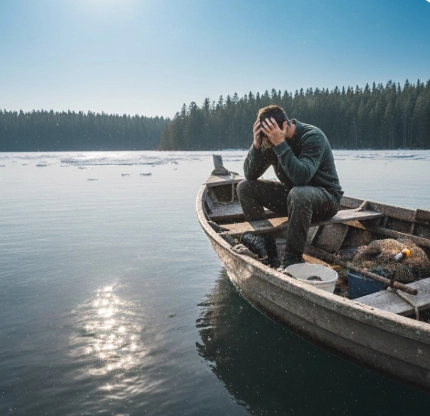
Mistake 1 – Fishing Too Fast
The biggest mistake in January is speed. Anglers retrieve lures like it is October. In cold water pike will not chase. January pike fishing requires long pauses, slow presentation, and bringing the lure right to the fish.
Mistake 2 – Leaving Good Spots Too Quickly
Many anglers get nervous. They make ten casts and leave. In winter, pike stay in place but feed in short windows. If the spot is good, stay there. Thirty to sixty minutes is normal, and sometimes even longer.
Mistake 3 – Ignoring Depth Changes
People often cast across flat, featureless bottoms. In January, pike hold on edges, drop-offs, and depth transitions. If there is no change in the bottom structure, there is usually no fish either.
Mistake 4 – Using the Wrong Lures
Winter pike do not respond like summer fish. Oversized or fast-moving lures kill your chances. The most reliable choices are:
- slow, suspending jerkbaits
- heavy spoons for deeper edges
- swimbaits retrieved ultra-slow
Bottom line: slow down, extend your pauses, fish structure, and do not leave good spots before the short bite window opens.
Water Clarity and Lure Colors in January Pike Fishing
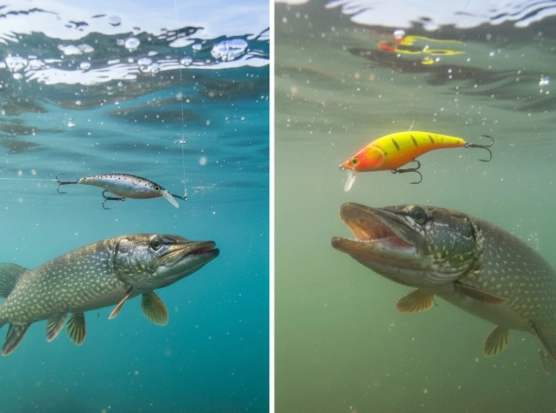
January pike fishing usually happens in the clearest water of the entire year. Cold weather slows algae growth and aquatic plants die back, which significantly increases underwater visibility. In summer, pike may strike out of reaction, but in January, they follow slowly and often turn away if something looks unnatural.
Because of this, lure color matters more in January than in almost any other month. In clear water, bright neon colors can have the opposite effect—they look unnatural and can actually spook cautious winter pike. Large, old fish do not make many mistakes; they prefer prey that looks exactly right.
Natural colors are the most consistent producers in January pike fishing. Silver imitates bleak, white mimics dying baitfish, and perch-pattern lures match the most common prey in lakes and rivers. Subtle greens, browns, and transparent patterns also work very well when visibility is high.
In very clear water, the combination of natural color and slow presentation is deadly. Instead of relying on flash, let the lure work through realism. When a pike has time to examine the lure, details like color tone and how it sits during the pause become decisive.
General rule: The clearer the water, the more natural and subtle the color should be. For successful January pike fishing, save bright chartreuse or firetiger patterns for stained water after thaws. In typical January clarity, silver, white, and perch patterns catch more and spook less.
Bite Detection in January Pike Fishing
In January pike fishing, pike rarely hit hard. Because of cold water and slow metabolism, bites often feel like nothing more than extra weight on the line or a very slight sideways movement during the pause.
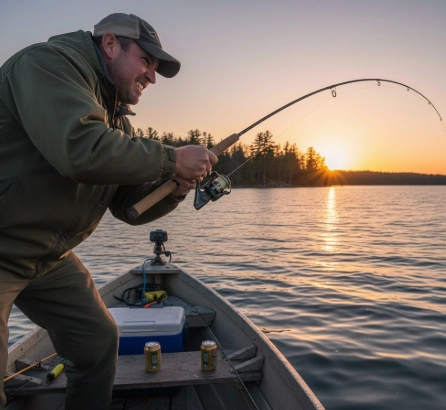
Most January bites happen during the pause, not during the retrieve. That is why line-watching is critical. Keep light tension on the line at all times and pay attention to any unnatural movement.
- If the lure suddenly feels “heavy,” set the hook immediately.
- If the line moves sideways during the pause, set the hook.
- Do not wait for a violent strike — in January pike fishing, it usually won’t come.
Using sensitive braid helps a lot in winter. A good option is best winter pike braid line, because low stretch makes subtle bites easier to feel.
A proper leader matters too. In January pike fishing, the right setup is everything. Read about choosing between titanium and fluorocarbon leaders to balance invisibility and bite protection.
Weather and Barometric Pressure in January Pike Fishing
During January pike fishing, weather patterns and barometric pressure strongly influence when pike decide to feed. Winter fish do not burn much energy, so they choose short feeding windows rather than constant movement. Understanding how pressure changes affect these windows helps you be on the right spot at the right time.
The most reliable conditions for January pike fishing are periods of stable or slowly falling pressure. When the barometer has remained steady for a day or two, pike settle into predictable positions. A slow fall in pressure often acts as a trigger, encouraging fish to move from deeper holding areas toward edges and ambush points.
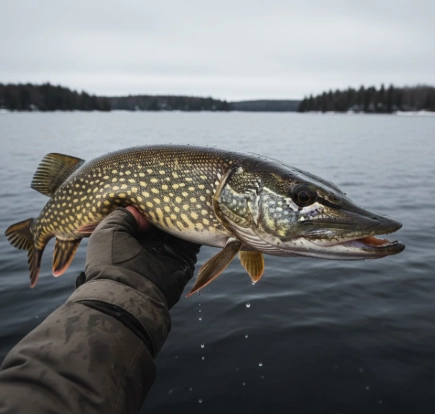
The toughest conditions usually come with rapidly rising pressure and bright, cloudless skies. After a fast pressure increase, January pike fishing becomes a grind. Pike hold tight to structure and refuse to chase; you will likely need to fish deeper, slower, and closer to heavy cover to get a strike.
Moderate cloud cover and small pressure drops can transform a “dead” lake into an active one within an hour. Planning your January pike fishing sessions around approaching fronts, rather than random timing, makes a noticeable difference in your catch rate.
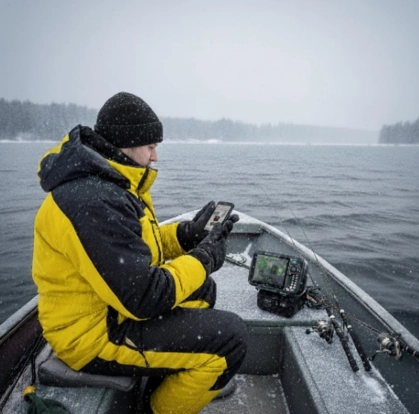
Cold weather also affects your performance. Staying still for long periods increases the risk of numb hands and rushed retrieves. Using warm winter fishing gloves is not just about comfort—it helps you maintain control, keep longer pauses, and react instantly when a subtle bite happens.
Simple rule: Stable or gently falling pressure usually means better January pike fishing; sharply rising pressure and clear blue skies usually mean tough sessions. Combine that with slow presentations, and January becomes predictable rather than random.
January Pike Fishing – Frequently Asked Questions
Do pike bite in January?
Yes, pike definitely bite in January, but feeding windows are short. Most activity happens during stable or slightly falling pressure and around midday when temperatures rise a little.
What depth are pike in during January?
Most January pike fishing occurs near depth transitions — the first major drop-off, channel edges, or deep weed lines. Pike conserve energy in deeper water and slide shallow only when a feeding opportunity appears.
What is the best lure for January pike fishing?
The best lures for January pike fishing are those that can be worked slowly with long pauses: suspending jerkbaits, heavy spoons for depth control, and natural-looking swimbaits.
Do pike hit hard in winter?
Rarely. During January pike fishing, bites are usually soft. Instead of a strong strike, you often feel extra weight or see the line move slightly sideways during the pause.
When is the best time of day to fish for pike in January?
Late morning to early afternoon is often best, when water warms slightly. However, successful January pike fishing is more connected to barometric pressure changes than to the clock.
Final Thoughts on January Pike Fishing
January pike fishing is not about covering water fast or changing spots every ten minutes. It is about understanding winter behavior, slowing everything down, and trusting the short feeding windows when they finally open. Big pike do not waste energy in cold water. They hold near structure, move only when necessary, and strike when the presentation looks easy and natural.
Focus on three core elements: precise depth control, long pauses, and realistic lure colors in clear winter water. Watch your line during every pause, because most January bites are almost invisible. Stay longer on proven spots instead of constantly searching for new ones. One perfectly timed cast can be worth more than a hundred rushed retrieves.
If you want to read more about the species itself — biology, distribution, size potential, and behavior — check the detailed profile of northern pike on Wikipedia (Northern Pike – Esox lucius). Understanding the fish makes every winter decision on the water more logical.
Bottom line: Slow down, stay confident, and fish with purpose. January rewards patience with the biggest pike of the season.