

Best Leaders for Winter Pike Fishing 2025: Titanium vs Fluorocarbon for Lures & Deadbait
When water temperatures drop toward the true winter range around 0–5°C (32–41°F), pike become slower, more cautious, and far more sensitive to anything that looks unnatural in the water. In these conditions, choosing the right winter pike leader becomes critical. Cold water exposes every weakness: fluorocarbon stiffens, steel gains memory, and even tiny presentation errors become visible. Aggressive baits like jerkbaits punish bad leader choice instantly, because winter pike won’t chase — they inspect.
As an Amazon Associate, we earn from qualifying purchases — no cost to you. That’s how we keep this site running. Read more ›
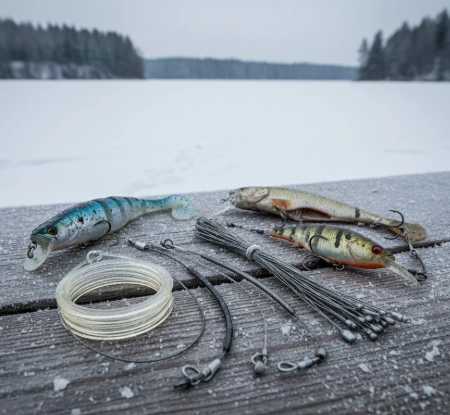
Leader choice matters even more with slow-moving presentations. Winter pike often follow baits for several meters before committing, which makes lure action and leader visibility absolutely crucial. Techniques like soft swimbait fishing demand a leader that won’t kill the glide, won’t stiffen in freezing temperatures, and won’t spook fish in clear water. This is where material differences between titanium, heavy fluorocarbon, and 7-strand steel become obvious — and unavoidable.
Deadbait anglers face a different problem: maintaining a natural, relaxed presentation in frigid water where pike feed slowly and cautiously. The wrong leader will make a bait spin unnaturally, sit awkwardly on the rig, or fail under a heavy winter strike. Rigs like the deadbait rigs you already use rely heavily on proper leader stiffness, abrasion resistance, and hook alignment. In winter, leaders are not just tooth protection — they directly control bait action, lure behavior, and your strike-to-landing ratio. This guide breaks down which material works best, why, and exactly when to switch between titanium, steel, and fluorocarbon during the coldest months of the year.
Do You Need a Leader for Pike in Winter? (Best Material Explained)
Yes — and in winter, the leader material you choose matters more than any other part of your terminal setup. Cold water changes how every leader behaves: fluorocarbon becomes stiffer, steel gains memory, and titanium stays flexible but highly visible. Understanding these differences is what actually tells you which material performs best in freezing conditions.

Fluorocarbon is the most invisible option in clear winter water, which makes it extremely effective for slow-moving lures and pressured fish. But in cold water it becomes noticeably stiffer, which can hurt lure action if you go too heavy. That’s why only thick fluorocarbon (0.90–1.00 mm) is safe from bite-offs — but this thickness can reduce glide and kill finesse action.
Titanium behaves completely differently: it does not kink, does not deform in freezing temperatures, and keeps the exact same flexibility at 0°C as it does in summer. This makes it the most reliable option for jerkbaits, glidebaits, spoons, and soft swimbaits. The downside? It is more visible, so not ideal in ultra-clear water or when pike are extremely cautious.

7-strand steel sits in the middle. It’s cheap, strong, and perfect for deadbait fishing, but in winter it kinks easily and once kinked, it loses strength and makes your bait spin unnaturally. That’s why many winter anglers prefer titanium for lures and thick fluorocarbon for clear-water finesse situations, switching to steel only for ledger or float-based deadbait rigs like the ones used in winter pike fishing.
So which material is “best” in winter? It depends on your technique: • Titanium = best for lures, stability, zero memory, freezing conditions. • Fluorocarbon = best for clear water and cautious fish. • Steel = best for deadbait rigs, not finesse lure action.
Best Titanium Leaders for Winter Pike Fishing (2025)
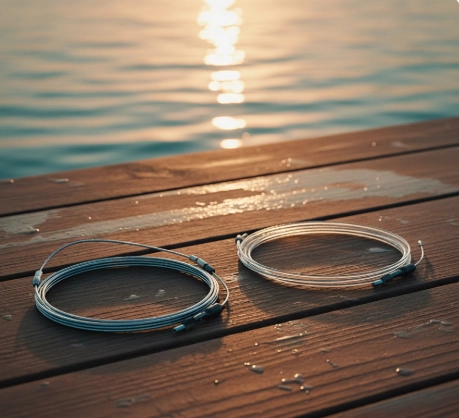
When water temperatures fall below 5°C (41°F), titanium becomes the most reliable leader material for winter pike fishing. Steel leaders kink after one fish, fluorocarbon becomes brittle, but titanium stays straight, elastic, and unaffected by extreme cold. This stability is critical when fishing slow cold-water lures like jerkbaits, soft swimbaits, and winter heavy spoons — presentations where any deformity in the leader kills the action.
Titanium has zero memory, meaning it resists permanent bends and always snaps back into a perfectly straight form. Winter pike often follow your lure for 10–20 meters before committing — a kinked steel leader destroys that glide, but titanium keeps everything natural and stable.
In addition, titanium provides elite tooth resistance. Winter pike inhale baits deeper and clamp harder. Titanium survives that easily, making it the safest option for both lure fishing and deadbait systems.
Recommended winter strengths:
— 40 lb titanium for jerkbaits, swimbaits, spoons, and deadbait traces.
— 25 lb titanium only for finesse tactics (rare in real winter conditions).
For real winter pike — 40–45 lb is the standard.
AFW Titanium Tooth Proof – 40 lb (Best All-Round Winter Choice)
The AFW Titanium Tooth Proof 40 lb wire is the most reliable all-round titanium option for cold-water pike. It remains kink-free after multiple fish, maintains perfect lure action, and performs exceptionally with jerkbaits, swimbaits, and winter spoons. If you want one titanium wire that survives an entire winter season without failure, this is it.

Knot2Kinky Nickel-Titanium – 45 lb (Best for Natural Lure Action)
Knot2Kinky 45 lb nickel–titanium is the leader you choose when maximum lure action matters. It stretches and instantly returns to shape, giving jerkbaits, suspending lures, swimbaits, and even winter spoons a noticeably more natural, fluid movement. In clear or pressured winter water, that difference is huge.

Best Fluorocarbon Leaders for Winter Pike (2025)
Fluorocarbon leaders are unbeatable when winter water turns ultra-clear and pike begin to inspect every presentation. Unlike steel, fluorocarbon is visually invisible, and unlike titanium, it offers a more natural flow for slow swimbaits, finesse retrieves, and deadbait rigs where a stiff leader can ruin the whole presentation. The key is using heavy winter-safe diameters that prevent bite-offs while keeping lure action intact.
Winter pike often follow your lure for several meters before committing. A clear, abrasion-resistant fluorocarbon leader can be the difference between a slow follower and a clean hookup. Below are the two best cold-water fluorocarbon options: a premium choice (Seaguar) and a softer, more affordable Japanese-made alternative (Daiwa).
Seaguar Blue Label – 60 lb (Best Clear-Water Winter Fluorocarbon)
Seaguar Blue Label 60 lb is the gold standard for winter pike fluorocarbon leaders. At this diameter, it offers near-invisibility in the clearest water while still being thick enough to resist bite pressure from big fish. Unlike lighter fluoros, the 60 lb version remains predictable in freezing temperatures — no sudden stiffness spikes that kill swimbait glide.
This is the fluorocarbon you choose when fishing slow soft swimbaits, suspending lures, or subtle deadbait presentations where titanium might be too visible. It is extremely abrasion-resistant, perfect for fishing around rocks, mid-water timber, or icy shorelines.

Daiwa J-Fluoro – 50 lb (Softest Winter Fluoro for Natural Action)
Daiwa J-Fluoro 50 lb is the perfect alternative when you want a softer, more flexible fluorocarbon that gives your lure maximum freedom. Unlike stiffer premium fluoros, Daiwa’s Japanese-made blend bends more easily, making it ideal for cold-water swimbaits, subtle twitches, and deadbait rigs that need to move naturally with current or micro-drifts.
In freezing temperatures, this softer formulation avoids the “board-stiff” feel some fluorocarbon gets at 0°C. It stays smooth, knots cleanly, and offers more forgiving lure action while still remaining invisible to pressured winter pike. If you fish clear lakes or slow presentations, this is the best budget-friendly option.

How Fluorocarbon Leaders Really Behave in True Winter (0–4°C)
On paper, fluorocarbon looks perfect for winter pike: it is nearly invisible, sinks naturally, and offers solid tooth resistance. But once water temperatures drop into the true winter zone around 0–4°C (32–39°F), the material starts to behave differently. If you do not understand how fluorocarbon changes in the cold, it will cost you fish, especially on slow presentations where pike follow and inspect the bait instead of smashing it.
Cold Stiffness – Why Cheap Fluorocarbon Costs You Fish
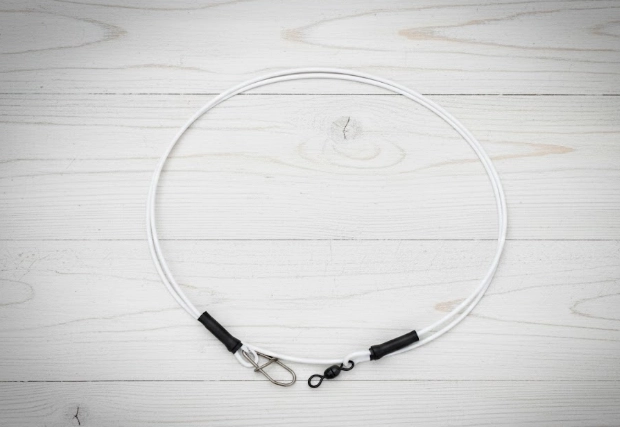
All fluorocarbon stiffens in cold water, but cheap formulations become almost rod-like as temperatures drop. That extra stiffness kills the natural glide of slow soft swimbaits, makes suspending jerkbaits look robotic, and turns subtle deadbait movements into something pike instantly reject. In real winter conditions, you are often fishing painfully slow, and any unnatural resistance from the leader is magnified.
The problem is worst when anglers step down to lighter diameters trying to keep action soft. Thin fluorocarbon might look better in clear water, but once a big winter pike turns on the bait, that combination of cold stiffness + tooth pressure is exactly how clean bite-offs happen. That is why serious winter setups start at 40–60 lb and use premium blends that stay manageable instead of turning into wire.
Micro-Damage, Teeth & One-Bite Failures
Winter pike do not always slam and run. Very often they inhale the bait slowly, clamp down, and sit still for a moment before moving. During that time, their teeth are grinding into the leader in one focused spot. If your fluorocarbon already has tiny nicks from previous fish or from dragging along rocks, that cold-stiff material can fail in a single head shake.
This is why winter anglers who rely on fluorocarbon leaders should treat them as a consumable. After every fish, run your fingers along the last 20–30 cm of leader and feel for flat spots, dents, or roughness. If there is any damage, you cut and retie immediately. In summer you might get away with “one more cast.” But in near-freezing water, that bad habit costs trophy fish.
Clear Water, Long Follows & Presentation Problems
Winter lakes and slow rivers often become the clearest they will be all year. Visibility goes up, sunlight penetrates deeper, and pike have more time to examine your presentation. Fluorocarbon is a huge help here — but only if the rest of your setup matches the conditions. A thick leader that has turned extra stiff in the cold will still create small, unnatural kicks in your lure, especially on controlled glides with heavy spoons or soft baits.
When you combine a good cold-stable fluorocarbon leader with the right lure category, everything lines up. Slow-rolled swimbaits, subtle twitches with suspending jerkbaits, and heavy spoons from the heavy winter spoons guide all look more natural when the leader is both thick enough for teeth and soft enough to follow the lure. Get that balance wrong and you start seeing followers that never commit.
When Fluorocarbon Is the Right Call — and When It Isn’t
Fluorocarbon leaders are at their best in three situations: clear water, slow presentations, and pressured fish that have seen too many clumsy steel traces. If you are fishing natural smelt or herring deadbaits on rigs from the winter deadbait rigs guide, or working slow swimbaits and suspending lures over clean bottoms, a premium 40–60 lb fluorocarbon leader is often the smartest choice.
But fluorocarbon is NOT the right tool in heavy structure, dirty water, or power-fishing conditions with big lures that pull hard. In those environments, pike don’t need the invisibility bonus as much, and the risk of tooth damage or rock abrasion goes way up. This is exactly where titanium leaders outperform fluoro — and why many serious winter anglers switch between them depending on clarity, structure, and lure style.
How Titanium Leaders Really Behave in True Winter
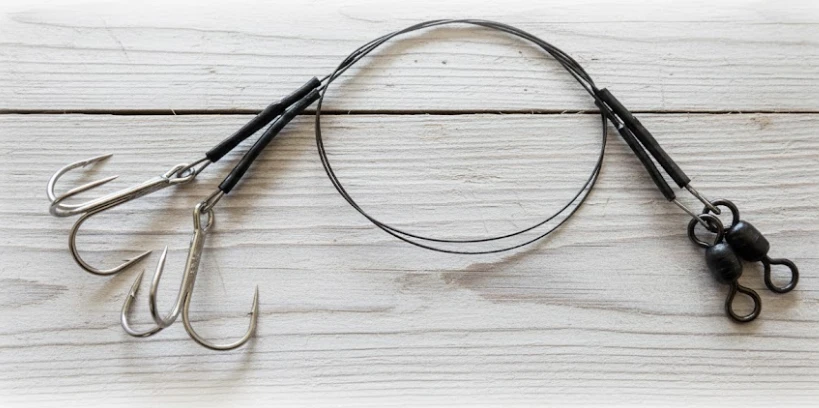
Titanium is the only leader material that does not change its behavior in freezing water. Whether the temperature is 20°C or 0°C, it keeps the same flexibility, recoil speed, and resistance to deformation. This stability is why titanium dominates winter lure fishing.
Zero Memory — Even at 0°C
Steel kinks after one fish. Fluorocarbon stiffens and holds bends. Titanium does neither. When a winter pike follows your lure and inspects every micro-glide, a kinked or stiff leader ruins the entire presentation. Titanium snaps back perfectly after every strike or snag.
Cold-Proof Flexibility for Lure Action
At 0–4°C, most leaders get noticeably stiffer. Titanium stays identical. Jerkbaits keep their sharp side cuts, glidebaits maintain full sweeps, swimbaits roll naturally, and spoons flutter correctly even on the slowest retrieves. Winter pike often follow lures for 10–20 meters — titanium keeps the lure alive until the final moment.
High Elasticity = Fewer Pull-Outs in Cold Water
Titanium stretches and returns to shape instantly. That elasticity reduces pull-outs, failed hooksets, and headshake losses — especially important when winter pike inhale slowly and clamp harder.
Visibility Is the Only Downside
In ultra-clear winter water, titanium can be more visible than heavy fluorocarbon. This is the only scenario where fluorocarbon outperforms titanium. In stained or snow-mixed water, titanium wins every time.
When Titanium Is the Correct Choice in True Winter
• Stained or snow-mixed water
• Jerkbaits, glidebaits, spoons, soft swimbaits
• When you need perfect lure action at freezing temps
• When you want zero kinks after multiple fish
• When fishing around rocks, timber, or ice edges
Titanium is the most stable, most predictable winter leader material — and the only one that behaves normally at 0°C.
Winter Pike Leader Guide 2025 – Material, Size & Exact Use Cases (Table)
| Scenario / Technique | Best Leader Material | Strength (lb) | Diameter (mm) | Recommended Length | Key Advantage |
|---|---|---|---|---|---|
| Jerkbaits / Glidebaits | Titanium | 40–45 lb | 0.50–0.70 mm | 25–35 cm | Zero memory, perfect cold-water action |
| Slow Soft Swimbaits | Fluorocarbon | 50–60 lb | 0.90–1.00 mm | 40–50 cm | Natural, free lure movement |
| Suspending Lures | Fluorocarbon | 50–60 lb | 0.90–1.00 mm | 35–45 cm | Soft subtle twitching action |
| Ultra-Clear Water | Fluorocarbon | 50–60 lb | 0.90–1.00 mm | 40–60 cm | Near invisibility for pressured fish |
| Deadbait Rigs | Fluorocarbon or Steel | 50–60 lb / 30–40 lb | 0.90–1.00 mm (Fluoro) | 40–60 cm / 30–40 cm | Natural bait posture; abrasion protection |
| Heavy Winter Spoons | Titanium | 40–45 lb | 0.50–0.70 mm | 30 cm | Perfect flutter with no kink |
| Snow-Mixed / Stained Water | Titanium | 40–45 lb | 0.50–0.70 mm | 25–35 cm | Reliability when visibility doesn’t matter |
Final Winter Leader Recommendations for 2025
If you want the most reliable winter setup, use titanium for all active lure fishing and premium fluorocarbon for slow, clear-water presentations. Titanium gives you zero memory and perfect action in freezing conditions, while fluorocarbon provides near-invisible presentation when pike follow slowly and inspect the bait.
Cold water punishes bad leader choices harder than any other season. When the water sits between 0–5°C (32–41°F), every unnatural movement becomes obvious, and that is exactly why the correct leader decides your entire hookup rate.
For deeper understanding of cold-water fish behavior, you can read this research on predator reaction time in low temperatures: Cold-Water Metabolic Response Study.
- Titanium = best for jerkbaits, glidebaits, spoons, swimbaits, and extreme cold.
- Fluorocarbon = best for clear water, slow winter retrieves, and subtle deadbait presentations.
- Use 40–60 lb in winter. Below that, bite-offs become a real risk at freezing temps.
- Replace fluorocarbon frequently. Micro damage in cold water is deadly.
FAQ – Winter Pike Leaders (Titanium vs Fluorocarbon)
Do pike bite through fluorocarbon in winter?
Yes — especially thin fluoro below 40 lb. Winter pike clamp harder and hold longer, which exposes the same spot on the leader. 40–60 lb is the safe winter range.
Is titanium too visible in clear winter water?
Sometimes. In ultra-clear lakes, fluorocarbon gets more follows and more committed strikes. But for lure action and reliability, titanium is unbeatable.
What pound-test leader is best for winter pike?
40–45 lb titanium for lures, and 50–60 lb fluorocarbon for slow finesse or deadbait fishing.
Does fluorocarbon really get stiff at 0–4°C?
Yes. Even premium fluoro stiffens, but high-end materials like Seaguar and Daiwa J-Fluoro stay manageable. Cheap fluoro becomes almost unusable and kills lure action.
Should I use steel leaders in winter?
Only in dirty water or heavy structure. In clear cold water, steel kills strike rates and stiffens too much.
How often should I replace fluorocarbon in winter?
After every fish or every noticeable abrasion. Cold-water micro-damage causes one-bite failures.
Is titanium safe for deadbait rigs?
Yes — especially for float-ledger and bottom rigs. Titanium does not kink in freezing water and keeps bait natural.
Final thought: In true winter conditions, your leader is not an accessory — it’s the only part of your setup that decides whether followers turn into actual hookups. Choose right, and your results change instantly.