

Spring Pike Fishing 2026: How to Catch Pre-Spawn Pike, Proven Tactics & Lures
Spring pike fishing changes everything — and we see it every single year on the water.
After months of winter sessions, frozen guides, and slow deep bites, the first real warming trend feels like someone flipped a switch. At Master Fishing Guide (MFG), this is the moment we wait for all season. The same lakes that looked lifeless in January suddenly start showing movement, baitfish, and shadows sliding through the shallows.
Over the past 10+ years, we’ve tracked this same pre-spawn shift across dozens of lakes and rivers — and the pattern repeats every single spring.
This is the pre-spawn phase — the most predictable and most aggressive feeding period of the entire year.
From late February into March and April, northern pike stop behaving like winter fish. They don’t sit in deep holes anymore. They don’t wait all day for one lazy meal. Instead, they move with purpose. They follow warming water. They push toward shallow bays. They cruise reed lines and soft bottoms.
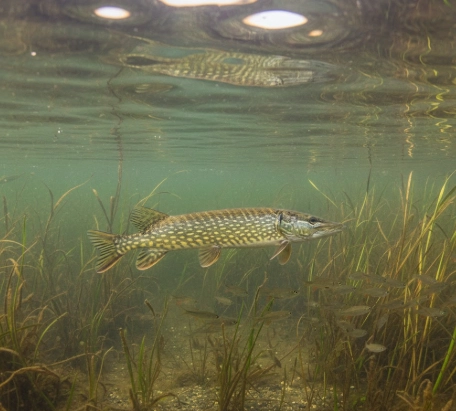
Through years of early-spring sessions, we’ve watched the same pattern repeat on different lakes, different countries, and different weather systems. Once water temperatures climb from 4–5°C (39–41°F) to around 7–10°C (45–50°F), big females appear shockingly shallow. Fish that ignored lures all winter suddenly hit hard and fast.
This isn’t luck. It’s biology — and it’s repeatable.
Pre-spawn pike are controlled by just three things: temperature, location, and energy efficiency. If you learn how those three forces guide fish movement, spring pike fishing stops being “searching” and becomes intercepting.
That’s exactly what this guide is built for.
Not generic tips. Not theory. Not recycled advice.
This is the same system the MFG team uses on real water — where to start, where fish migrate from, which areas warm first, and which presentations consistently trigger strikes.
If you want a full breakdown of where to find spring pike as they migrate from winter structure into warming zones, we’ve mapped the complete route logic in a dedicated guide.
Think of this page as your complete spring playbook. From here, we’ll break down:
- Where pre-spawn pike move first (depths, bays, channels, reed beds)
- How their behavior transitions out of winter structure
- The exact temperature windows that activate feeding
- The most reliable lure styles and retrieves
- And the gear setups we trust when targeting shallow-water giants
If you understand these patterns, you won’t be guessing anymore — you’ll know exactly where to stand when the fish arrive.
Spring Pike Fishing Behavior: Why Pre-Spawn Fish Leave Deep Winter Water First
Most anglers struggle with spring pike fishing for one simple reason — they’re still fishing like it’s January.
The air may feel cold. The calendar might still say late winter. But underwater, the system has already started changing. Daylight increases. Shallow water warms faster. Baitfish begin drifting away from deep basins. And the pike follow.
If you keep casting into the same deep holes that worked all winter, you’re often fishing water the fish are actively leaving.
During the coldest months, pike conserve energy and hold tight to stable structure. They sit deep, move very little, and feed only in short windows. That slow, low-metabolism survival mode is explained in detail in our winter pike behavior guide, where staying alive matters more than chasing prey.
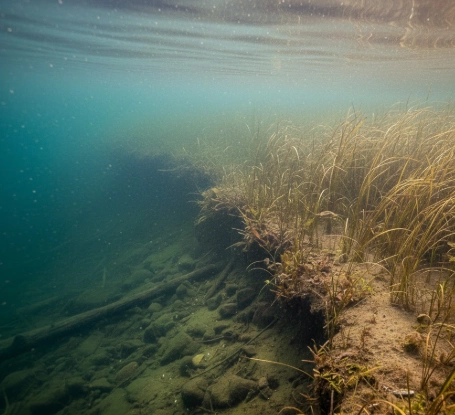
Spring flips that completely.
But here’s what most anglers still miss: spring pike don’t just “wake up.” Their positioning, reaction speed, and feeding windows shift in a very specific sequence. If you want to understand exactly what changes between winter survival mode and pre-spawn movement, read our full breakdown of spring pike behavior — it explains why fish move when they do and why some days explode while others stay quiet.
As soon as water temperatures rise even a few degrees, their metabolism speeds up fast. Pike are no longer trying to save calories — they’re preparing for the spawn. And preparation means feeding more often, covering more water, and relocating toward warmer, shallower areas.
This shift usually begins around 4–5°C (39–41°F) and becomes obvious near 7–10°C (45–50°F). That small change might seem insignificant to us, but underwater it works like a biological alarm clock. Fish that looked dormant all winter suddenly start moving with purpose.
Not randomly — but predictably.
They stage first on the edges of winter structure, then slide onto mid-depth flats, and eventually push toward bays, reed beds, and protected shallows where spawning will happen weeks later.
This is where spring pike fishing becomes logical instead of lucky. Once you understand that fish are migrating — not sitting still — you stop searching the whole lake and start positioning yourself along their routes.
Before lure choice, before gear, before anything else — you must understand this movement. Location and timing will always matter more than presentation.
Where to Find Spring Pike: Exact Migration Routes, Warmest Water Zones, Lakes & Rivers Explained
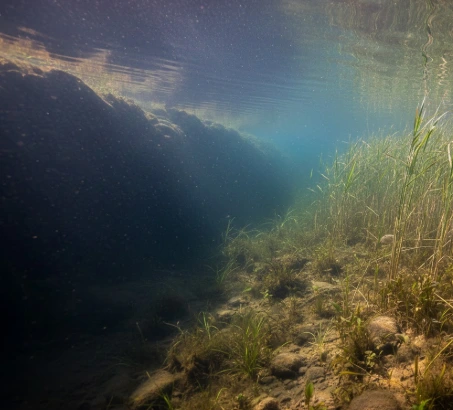
Spring pike fishing stops being confusing the moment you understand one thing: temperature controls everything.
Not lure color. Not depth charts. Not secret lures.
Water temperature decides where the fish physically move.
Every season we watch anglers keep casting winter holes and deep breaks because “that’s where the pike were.” Meanwhile the water looks empty and lifeless. Confidence drops fast.
The fish didn’t disappear.
They simply followed warmer water somewhere else.
In early spring, even a tiny difference of 1–2°C (2–4°F) is enough to change metabolism, wake baitfish, and trigger the first real feeding windows of the year. Pike react immediately to that change. That’s the entire game.
They Don’t Jump Shallow — They Migrate Step by Step
Big pre-spawn fish don’t teleport into skinny water overnight. They reposition gradually and conserve energy.
The same progression repeats almost every year:
Deep winter holding → first breakline → connecting routes → warmer edges → shallow feeding areas.
If you want to see the exact depth bands pike use during this transition, our breakdown of spring pike depths maps out how positioning shifts week by week.
It’s controlled movement, not chaos. Pike slide forward only when conditions improve.
If you want to understand where that migration begins, you first need to understand how they positioned all winter along depth lanes and structure, which we break down inside winter pike depths. Spring simply pulls them forward from those same starting points.
Where Water Warms the Fastest (This Is the Real Secret)
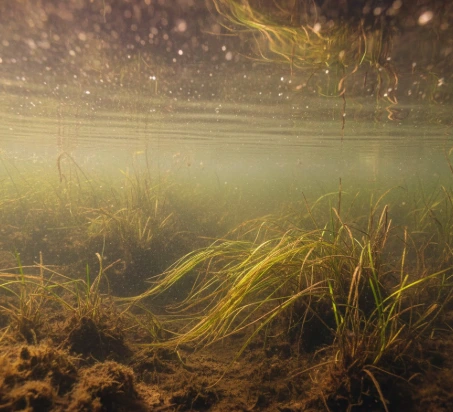
Not all shallow water warms equally. Some areas heat dramatically faster than others, and those become fish magnets first.
Across lakes, the fastest-warming zones are always:
• Small protected bays
• Mud or dark bottoms
• Reed beds and vegetation
• Areas shielded from cold wind
• Shallow pockets connected to deeper water
Dark bottoms absorb sunlight. Reeds block wind. Protected water traps surface heat. Simple physics creates warmer micro-zones before the rest of the lake wakes up.
We’ve measured days where the main lake sat at 5°C (41°F), yet a muddy bay just 30–40 m (100–130 ft) away reached 7°C (45°F). That tiny difference turned zero action into multiple strikes in minutes.
Same gear. Same lure. Only temperature changed — everything else followed.
Pro Tip: Target Northern Shorelines First
This is pure sun geometry most anglers ignore.
In the northern hemisphere, northern shorelines receive the most direct sunlight during late winter and early spring. The sun angle hits these banks longer and harder throughout the day.
We consistently see 2–3°C (4–5°F) warmer readings on dark-bottom northern bays compared to identical southern ones.
If you only have time to check one side of the lake, start north. It’s the highest-percentage decision you can make.
The Warm Wind Exception (Real-World Field Experience)
Most guides say “always fish the sheltered side.” That’s only half true.
A warm southerly wind for 24–48 hours can completely flip the pattern.
Wind physically pushes the warmest surface layer toward one bank. Heat stacks there. Bait follows. Pike follow the bait.
At MFG we call this “stacked heat.”
We’ve had choppy, ugly-looking shorelines outfish calm protected bays simply because a warm wind concentrated temperature on one side.
Sometimes the rough bank is actually the warmest bank. Always check temperature, not looks.
Channels and Bay Entrances = Migration Highways
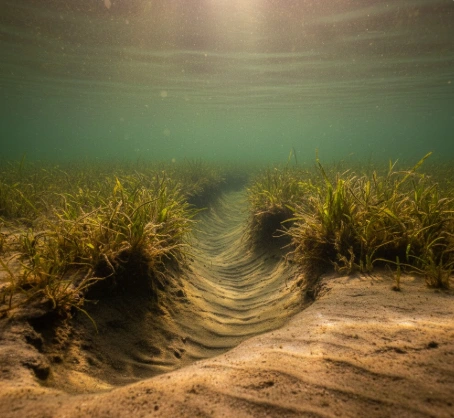
Most anglers rush straight into the shallowest water. That’s a mistake.
The highest percentage spots are the routes, not the destination.
Look for narrow connectors: cuts, depressions, ditch lines, small channels. These funnel bait and act like underwater highways.
Using side-scanning sonar, we’ve repeatedly confirmed that big females “park” on these slopes for days. They sit on staging points, waiting for the next temperature spike before sliding shallow.
Pike don’t roam here — they ambush.
A simple 5–8 m (16–26 ft) wide channel can hold more fish than an entire flat. Many of our earliest pre-spawn fish come exactly from these staging edges where the channel meets the first shelf.
The Same Logic Works in Rivers Too (Just Different Names)
Pike behave exactly the same in rivers. Only the terminology changes.
Instead of bays and flats, look for:
• Backwaters
• Slack water pockets
• Side channels
• Flooded reeds or grass
• Slow current zones protected from the main flow
Fast current stays cold. Slow water warms first.
Slack water in a river is simply the river’s version of a warm bay. Same physics. Same biology. Same results.
The First True Feeding Flats
Once temperatures stabilize, fish finally push onto the first real feeding areas.
1–2 m (3–6 ft) depth. Soft bottom. Sun exposure. Bait concentration.
This isn’t spawning yet — this is feeding behavior.
Warm water + trapped bait = easy calories.
Pre-spawn females always choose the easiest meal available.
The Only Question We Ask Before Casting
“Where is the warmest water today?”
Not lure. Not color. Not depth.
Temperature decides location. Location decides everything else.
Follow the warmth and you’ll consistently find pike — on lakes, rivers, canals, anywhere.
How to Fish Spring Pike: Proven Tactics & Lure Presentation for Cold-to-Warm Transition Water
Finding spring pike is only half the job. Catching them requires slowing down more than your ego wants to accept.
Most anglers finally locate warm water, see bait, feel confident… and then fish way too fast.
Cold water fish do not chase like summer fish. They react to easy opportunities.
Even at 4–8°C (39–46°F), metabolism is still closer to winter than summer. Pike will move, but they won’t sprint several meters to kill something. If your lure forces effort, they simply ignore it.
Pre-spawn fishing is patience, precision, and control.
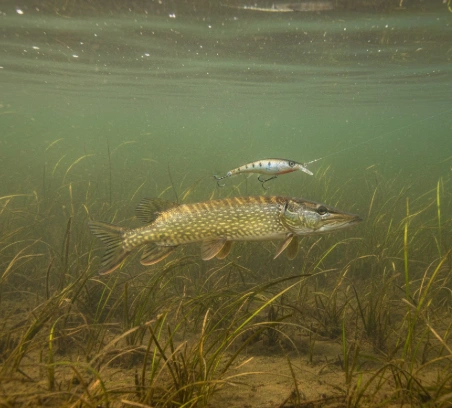
Slow Down More Than Feels Comfortable
This is the number one mistake every spring.
Anglers think they’re fishing slow. They’re not.
In transition water, slow usually means half your normal speed.
If your brain says “this is too slow,” you’re finally close to correct.
Cold-water rule: slow down… then slow down again.
Use Pause-Based Retrieves (Hang Time Triggers Strikes)
The majority of spring strikes happen when the lure is doing absolutely nothing.
Not during the twitch. Not during the pull.
During the pause.
At MFG we literally use a counting system:
• twitch → count to five
• no bite → count to ten
• sometimes even longer in 4–5°C water
It feels painfully slow. It feels wrong. But that “dead time” is exactly when big females commit.
Don’t expect a violent hit.
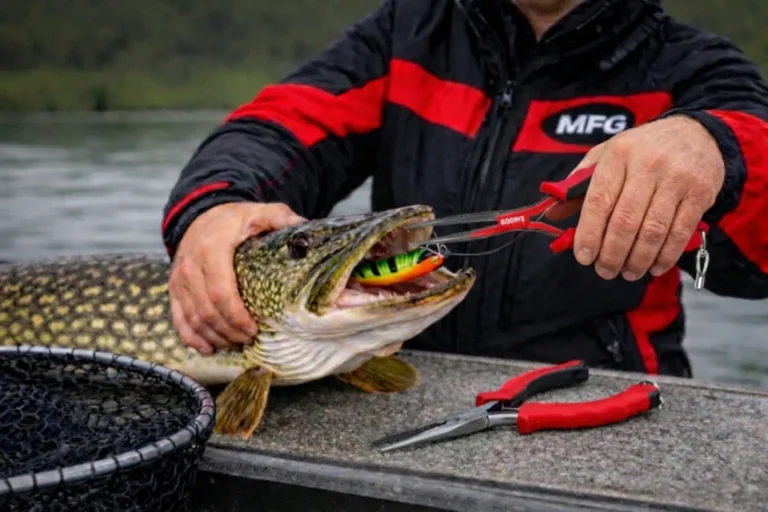
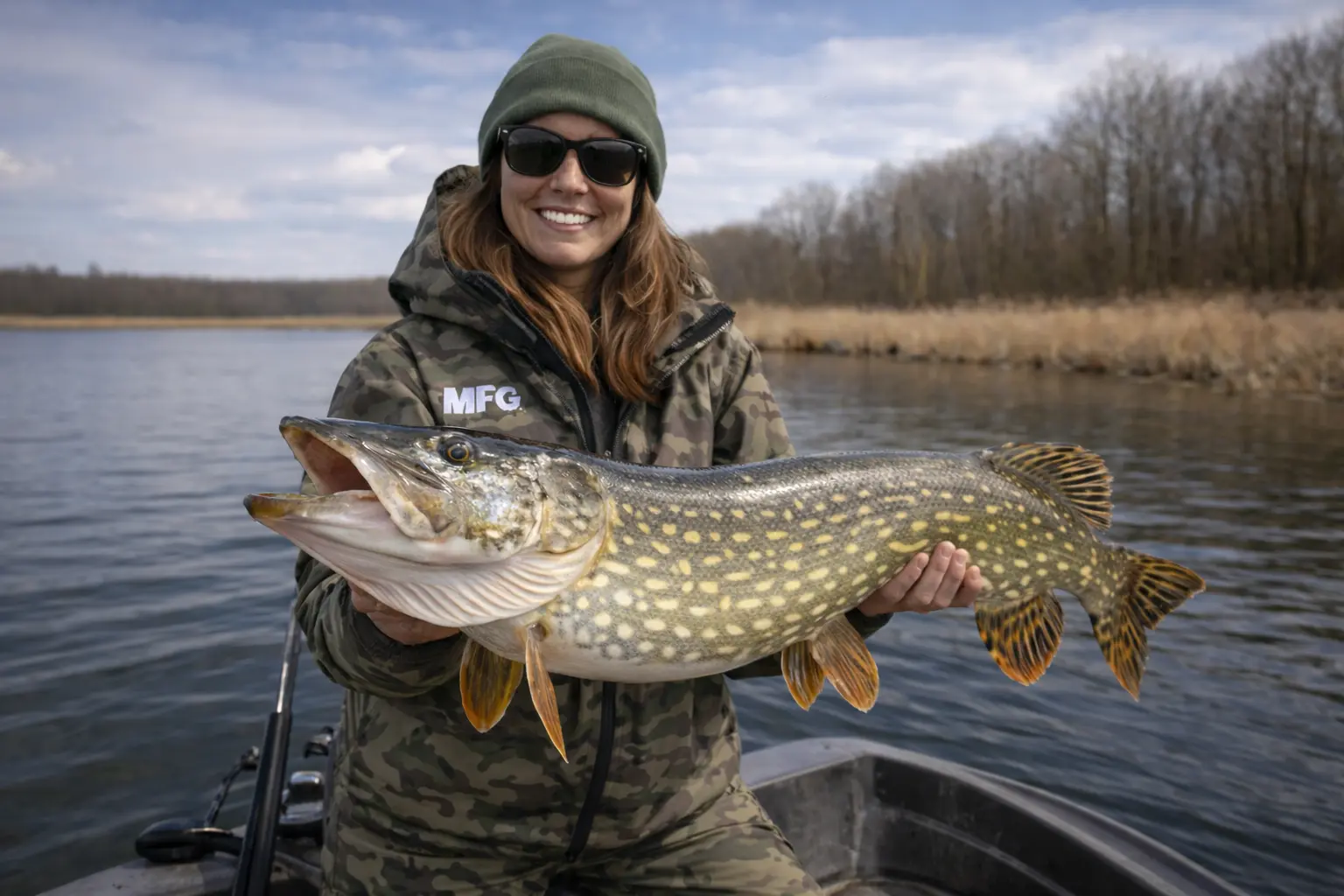
In cold water, a 10 kg (22 lb) fish often just “inhales” the lure. You won’t feel a smash. You’ll feel the line go slightly heavy… or a tiny “tick.”
If anything feels different — set the hook.
We tell everyone at MFG: “Hooksets are free.”
In spring, a heavy feeling is almost always a fish that gently sucked in your bait while it was suspended.
The “Lazy Follower” Scenario (Real Experience)
You will see followers. Big ones.
Huge shadows tracking your lure all the way to the boat… then refusing to commit.
This is where most anglers panic and speed up. That’s summer thinking.
Do the opposite.
Make a slow figure-eight beside the boat or completely kill the action and let the lure hang motionless for 5–10 seconds.
We’ve watched pre-spawn females inhale a dead lure right as we were about to lift it out of the water.
Stillness often beats movement.
Positioning Beats Casting Distance
In spring, random bombing casts waste time.
Precision beats distance every single day.
We fish every warm pocket methodically:
• fan cast the entire area
• work migration routes first (channels and edges)
• then cover the warm flats
• hit key angles multiple times
Pike often sit still. If your lure misses their strike lane by one meter, they won’t move for it.
Three accurate casts regularly outfish thirty random ones.
The Stealth Factor (Shallow Water Authority Rule)
Many spring fish sit in less than 1–1.5 m (3–5 ft) of water.
They see you before you see them.
Noise and sudden movement will kill the spot instantly.
So we treat shallow bays like stalking missions, not casting galleries:
• turn off unnecessary sonar pinging in skinny water
• keep the trolling motor on low constant power (no stop-and-go bursts)
• approach from deeper water when possible
• wear polarized glasses to spot dark silhouettes early
Stealth regularly doubles our catch rate in clear spring water.
Lure Styles That Actually Match Cold Water
You don’t need complicated gear. You need control.
We stick to lures that can stay slow and hang naturally:
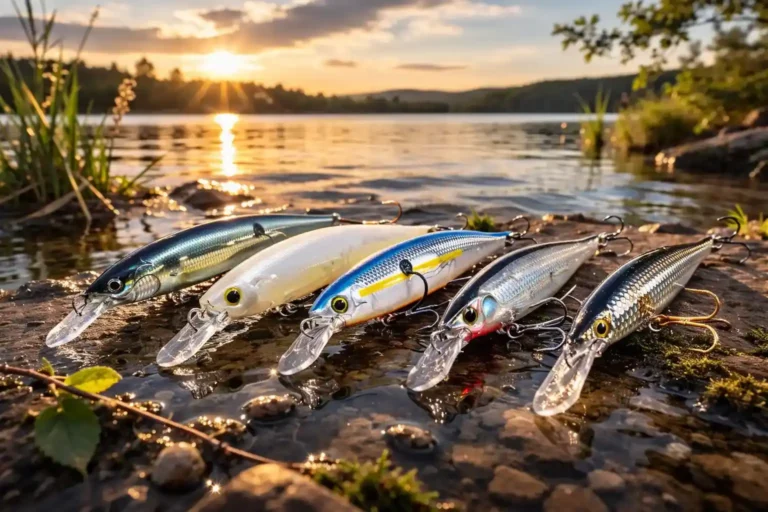
• suspending jerkbaits
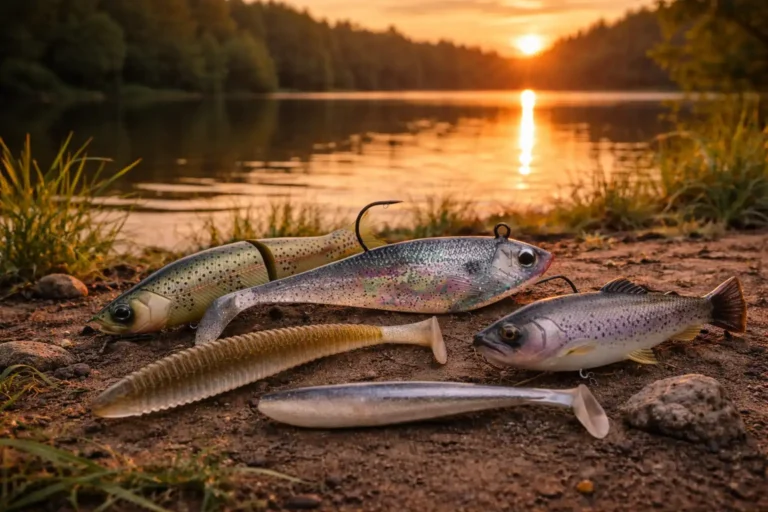
• slow soft swimbaits and paddletails
• spinnerbaits for stained or windy water
• glide baits crawled painfully slow
• bottom-dragged soft plastics
Everything shares one trait: it can stay in the strike zone for a long time.
Fast presentations belong to summer. Right now, hovering beats speed.
Fish the Right Time Windows (Not All Day)
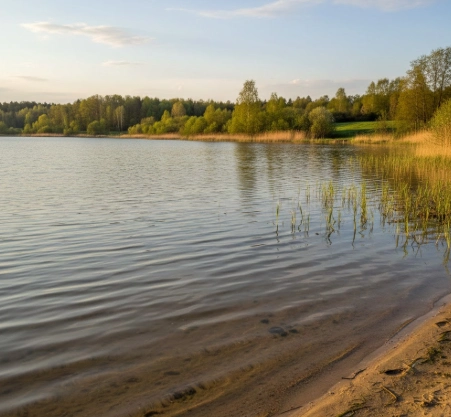
Spring pike feed in short temperature windows.
We consistently see activity spike:
• late morning to afternoon sun (11am–4pm)
• after 24–48 hours of stable weather
• after warm winds that stack heat
• when shallow water gains just 1–2°C
We’ve had days with one bite in six hours — and it’s always the biggest fish of the day.
Spring is quality over quantity.
Best Gear for Spring Pike Fishing: Rods, Reels & Lures We Actually Use in Cold Water
Gear doesn’t catch spring pike — control does.
After years of cold-water sessions, we learned something simple: you don’t need more tackle. You need equipment that lets you fish slower, feel subtle bites, and stay precise for hours.
Spring success comes from sensitivity, smoothness, and reliability — not brute strength.
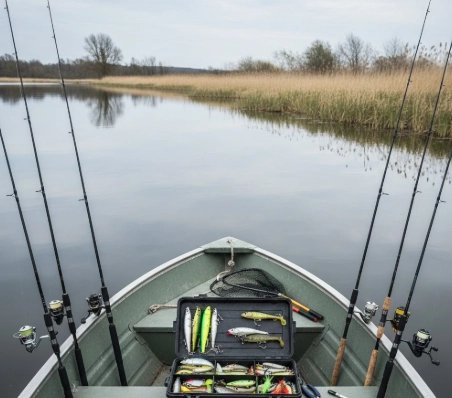
Everything below is based on real sessions in freezing wind, cold hands, and long pause-based retrieves. No catalog lists. No theory. Only gear that survived actual conditions on the water.
Rods — Sensitivity & Soft Tip Control Come First
Cold-water bites are rarely aggressive. Most of the time the line simply feels “heavy” during a pause.
If your rod is too stiff, you will never feel those bites.
We prefer rods with a responsive tip that load easily, keep tension during slow retrieves, and protect fish close to the boat.
Instead of guessing, we documented every setup we trust here:
Best Pike Fishing Rods — Proven for Spring Control
Reels — Smoothness Matters More Than Power
Cold temperatures expose cheap reels immediately.
Sticky drag, rough gears, or uneven rotation destroy subtle presentations and cost fish during close-range strikes.
In spring, you need smooth and predictable — not heavy and overbuilt.
Long pauses, slow retrieves, and light tension demand total control from your reel.
Baitcasting Reels — Precision for Heavier Lures & Edges
When fishing jerkbaits, glide baits, or heavier swimbaits around channels and staging points, baitcasters give better accuracy and lure control.
But early spring conditions are brutal on bad baitcasters — frozen line, backlashes, stiff drags, and lost sensitivity.
That’s exactly why we tested multiple models specifically in real cold conditions to see which ones actually stay reliable.
Our real-world recommendations here:
Proven Baitcasting Reels — Our Spring Recommendation
Lures — Keep It Simple & Slow
You don’t need 50 different baits.
If a lure can’t stay slow and hang naturally in the strike zone, it doesn’t belong in early spring.
We stick to jerkbaits, soft paddletails, spinnerbaits, and slow glide baits — the exact styles we break down inside best spring pike lures — because they match the pause-heavy tactics explained earlier in this guide.
Simple system. Maximum control. That’s the entire philosophy.
Our Gear Philosophy at MFG
Reliable rod. Smooth reel. Sensitive line. Slow lures.
Nothing complicated.
Because once your equipment disappears in your hands, you can focus on what really matters: location, stealth, and presentation.
Spring Pike Fishing FAQ: Exact Temperatures, Depths, Timing & Common Mistakes Answered
This is the section most anglers actually need. When spring pike fishing feels “random,” it’s usually because one key variable is off: temperature, timing, depth, or retrieve speed.
What is the best water temperature for spring pike fishing?
The most consistent pre-spawn bite usually starts when water climbs into 5–9°C (41–48°F). Below that, fish can still eat, but windows are shorter and retrieves must be slower. Once you’re consistently in that range, location and timing become predictable instead of random.
How shallow do pike move in early spring?
In many waters, pike will feed in 1–2 m (3–6 ft) when the sun has warmed protected areas. But the important detail is this: they rarely “live” on the flat all day. They often stage on the first edge and slide shallow only during the warmest window.
What depth should I start fishing first?
Start on the route, not the destination. Begin by working the first breakline and channel edges leading into warm shallows, then move onto the flat once you’ve covered the staging water. If you begin too shallow too early, you often miss the biggest fish that are still holding just off the edge.
What time of day is best for spring pike?
Late morning through afternoon is usually best (roughly 11am–4pm). That’s when shallow pockets peak in temperature. Early mornings can be slow in cold transition water because the system hasn’t “warmed up” yet.
How slow should my retrieve be in cold-to-warm spring water?
Slower than feels normal. Use pauses you can measure: count to five after your twitches. If bites are scarce, count to ten. Many big pre-spawn fish commit during the dead-still moment, not during movement.
Why do pike follow my lure but won’t bite?
Those are “lazy followers,” and they’re common in spring. The worst move is speeding up like it’s summer. Instead, slow down, widen your turns, and add a long pause near the end of the retrieve. Sometimes the best trigger is killing the action completely for 5–10 seconds. Big females often inhale the lure right as you’re about to lift it out.
Do I always need to fish sheltered water, or can wind help?
Protected bays are great, but warm wind can be a cheat code. If a warm southerly wind has pushed into one bank for 24–48 hours, it can stack the warmest surface layer and baitfish into that shoreline. That “stacked heat” can outfish a calm bay even if the water looks choppy.
Are spring pike strikes aggressive or subtle?
Often subtle. Don’t wait for a rod-thumping hit. In cold transition water, a big fish may just make the line feel “heavy” during a pause or cause a small tick. If something feels different, set the hook. We say it bluntly: hooksets are free.
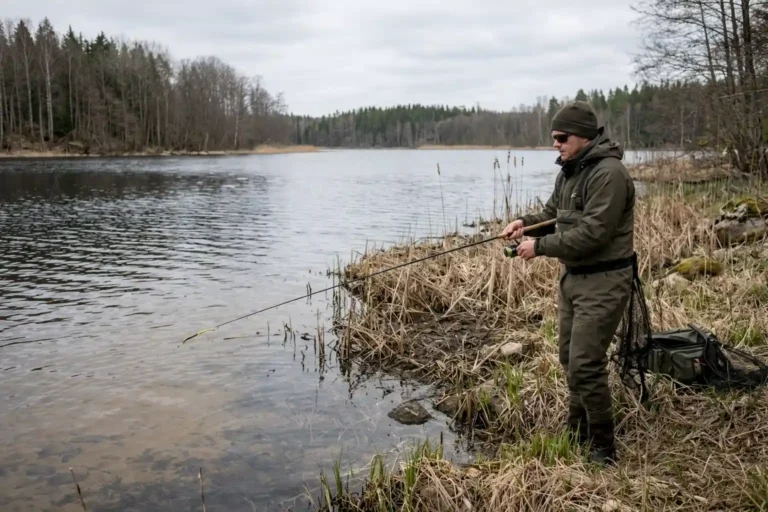
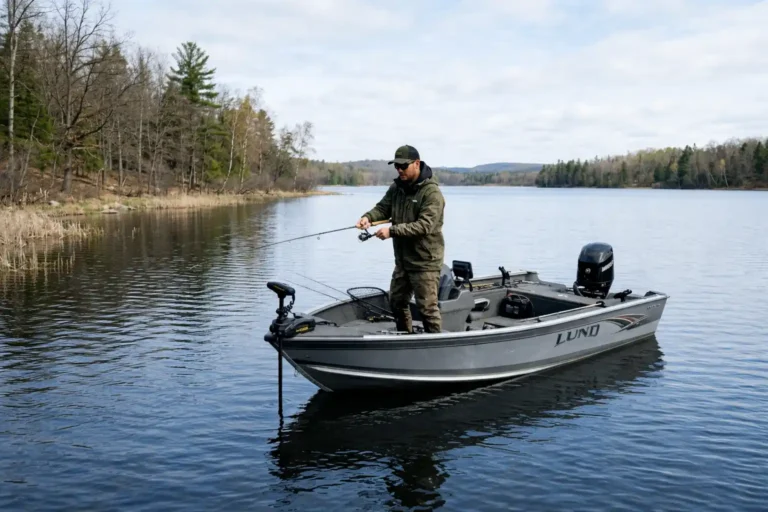
Shore or boat: what’s better for spring pike fishing?
Both work, but they win in different ways. Shore fishing can be deadly in small warm pockets because you can stay quiet and fish angles precisely. Boats shine when you can hold position and cover routes—channels, staging edges, and bay entrances—without burning the spot. The key is control and stealth, not the platform.
What’s the biggest mistake anglers make in spring?
Fishing spring like summer. Too fast, too much moving, and too little time spent in the warmest water. Spring rewards anglers who slow down, pause longer, and wait for the temperature window.
If you want the temperature logic explained in a simple, field-tested way, see water temperature vs pike activity.
See You on the Water — Put These Tactics to Work
Spring pike fishing isn’t complicated once you understand the rules.
Find the warmest water. Start on the routes. Fish slow. Pause longer than feels right. Stay quiet in the shallows.
Do those few things consistently and everything starts to make sense.
You’ll stop guessing. You’ll stop spot-hopping. And instead of “maybe today,” you’ll know exactly why a spot should hold fish.
That’s how we approach every session at Master Fishing Guide — simple decisions, repeatable tactics, and real time on the water.
Now it’s your turn.
Get out there, test the system, and trust the process. Spring rewards patience more than anything else.
If you land a good fish or try these tactics, share your catch with us.
Post your photos on our Master Fishing Guide Facebook Page — we regularly feature anglers from the community and would love to publish your shots too.
See you on the bank or the boat. Tight lines.