


Post-Spawn Pike in Spring: Why Big Females Disappear (And Where They Go Next)
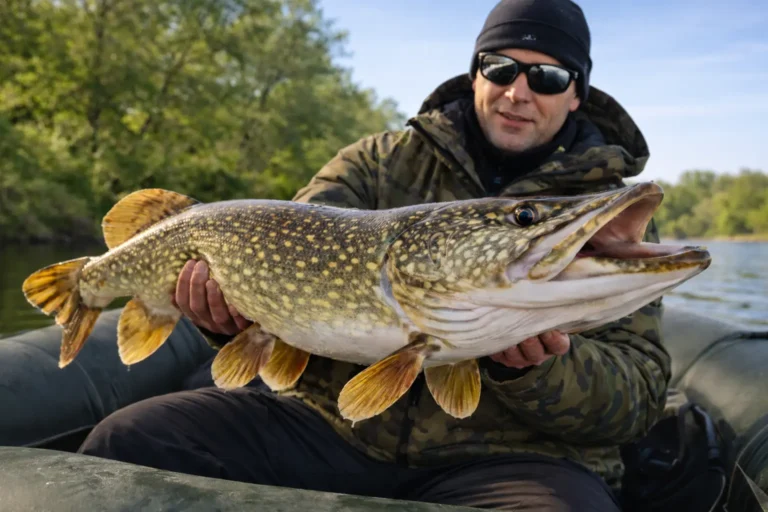
Post-spawn pike in spring are the most misunderstood phase of the entire season. One week, big females are visible in 1–2 m (3–6 ft) of shallow reeds. The next week, the same bays feel lifeless. No follows. No shadows. Just empty water. Most anglers assume the fish “left the lake.” They didn’t.
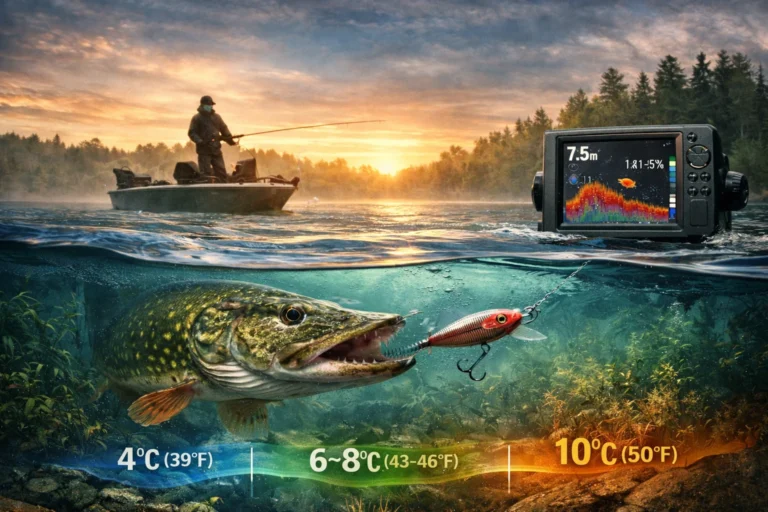
What actually changes is positioning, energy balance, and depth control. During the spawning window, northern pike (Esox lucius) move into ultra-shallow vegetation once water stabilizes around 7–10°C (45–50°F). Feeding intensity drops as reproduction takes priority. In our MFG field logs across unfrozen natural lakes and slow-flowing systems, we consistently observe that within 24–48 hours of stable spawning conditions, larger females begin withdrawing from extreme shallows. Immediately after spawn, the biggest fish do not stay shallow.
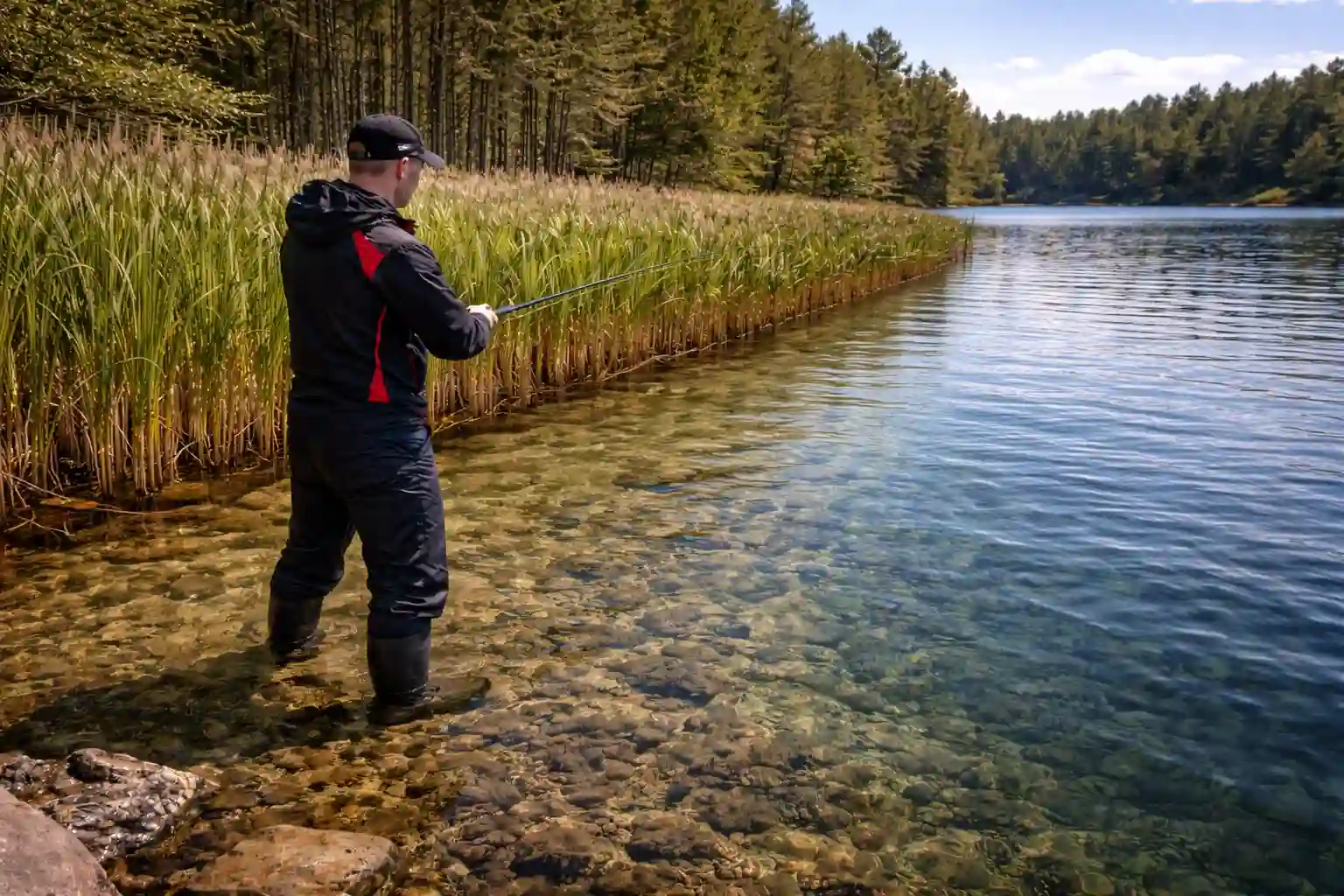
This is the beginning of metabolic recovery — a short phase often mistaken for inactivity. What anglers interpret as a “dead bite” is frequently post-spawn lethargy combined with a controlled repositioning toward the first breakline or outer reed edge. The shift is rarely dramatic in distance — sometimes only 1–3 m (3–10 ft) outward — but it is decisive in vertical precision.
Analyzing our team’s spring catch logs from the past five seasons, one pattern repeats: big females disappear from spawning flats before the first true feeding window reopens. There is a recovery window — typically 7–14 days depending on temperature stability — where energy rebuilds and aggression resets. During this time, post-spawn pike in spring hold near subtle staging areas just outside spawning bays, conserving energy before resuming active feeding.
If you continue fishing the same shallow flats that produced pre-spawn strikes, you are often casting behind the fish. Post-spawn pike in spring reposition first — and feed later. Control the transition zone. The aggression returns — but only after the reset is complete.
Why Big Females Disappear After Spawn
Post-spawn pike in spring do not vanish — they reset. What appears to be a dead shallow bite is usually an abrupt depth adjustment driven by energy loss and hormonal shift. After releasing eggs, large females enter a short phase of post-spawn lethargy where feeding is secondary to metabolic recovery.
Spawning demands enormous energy reserves. Once it ends, cortisol levels rise and aggression compresses. Across repeated early-season observations on unfrozen natural lakes, larger females consistently leave ultra-shallow vegetation within days of completed spawning activity. During multiple April tracking sessions, these “missing” fish were located just 15–20 meters (50–65 ft) from spawning beds, positioned along the first 3-meter (10 ft) drop-off.
This is not a relocation across the system — it is a controlled slide toward the first structural edge. The shift commonly follows a littoral zone transition, where shallow spawning cover meets slightly deeper, more stable water. These secondary staging points provide security, oxygen consistency, and reduced disturbance while recovery takes place.
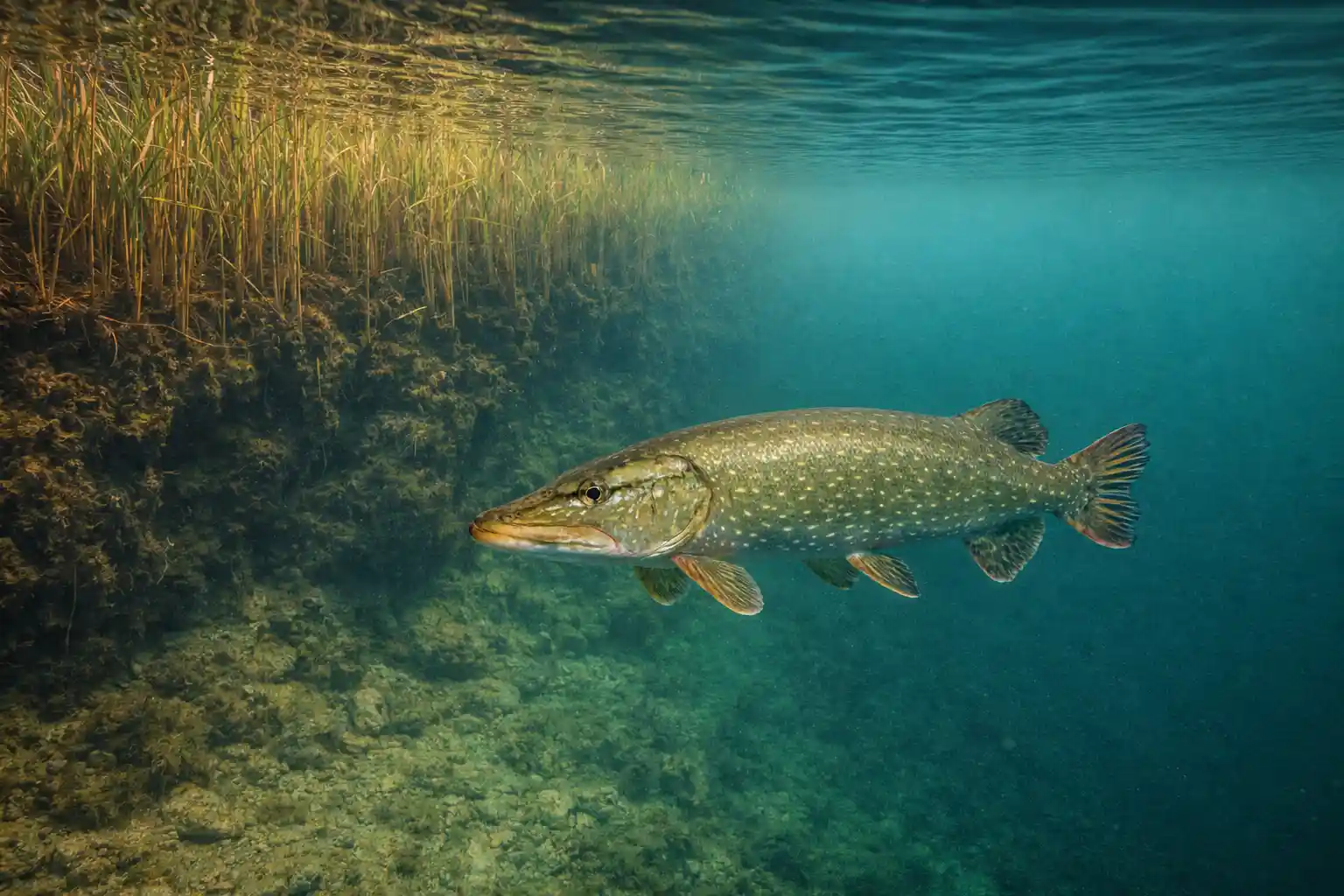
Pike landed from this specific 3-meter recovery band often show visible post-spawn stress markers — slightly reddened fins, softer abdominal profile, and mild weight reduction compared to peak pre-spawn condition. These physical cues confirm the fish are in recovery mode rather than active hunting mode. The behavioral slowdown is physiological, not random.
To understand this contrast clearly, compare it with peak pre-spawn aggression outlined in our spring pike behavior analysis. Before spawn, females push shallow and react decisively. Immediately after spawn, the fish are still present — but no longer positioned in exposed water.
Elevated stress hormones and energy depletion explain why aggressive vibration or high-speed retrieves often fail in this window. Post-spawn pike in spring reposition toward subtle staging areas just outside spawning zones — often along the first breakline, outer reed transition, or slightly deeper contour that allows recovery without abandoning proximity to feeding routes.
The disappearance is therefore structural and biological, not behavioral collapse. Big females rarely travel far. They shift vertically, settle into secondary holding water, and rebuild strength before the first true post-spawn feeding window opens.
The 7–14 Day Recovery Window for Post-Spawn Pike in Spring
Post-spawn pike in spring do not return to aggressive feeding immediately. After the hormonal spike of spawning, females enter a controlled recovery phase where energy rebuilds before hunting intensity rises again. This window typically lasts 7–14 days, depending on thermal stability and water consistency.
During this phase, large females reduce unnecessary movement, minimize exposure, and hold close to structural stability. They conserve energy inside secondary staging areas rather than actively hunting. This is not inactivity — it is strategic metabolic recovery.
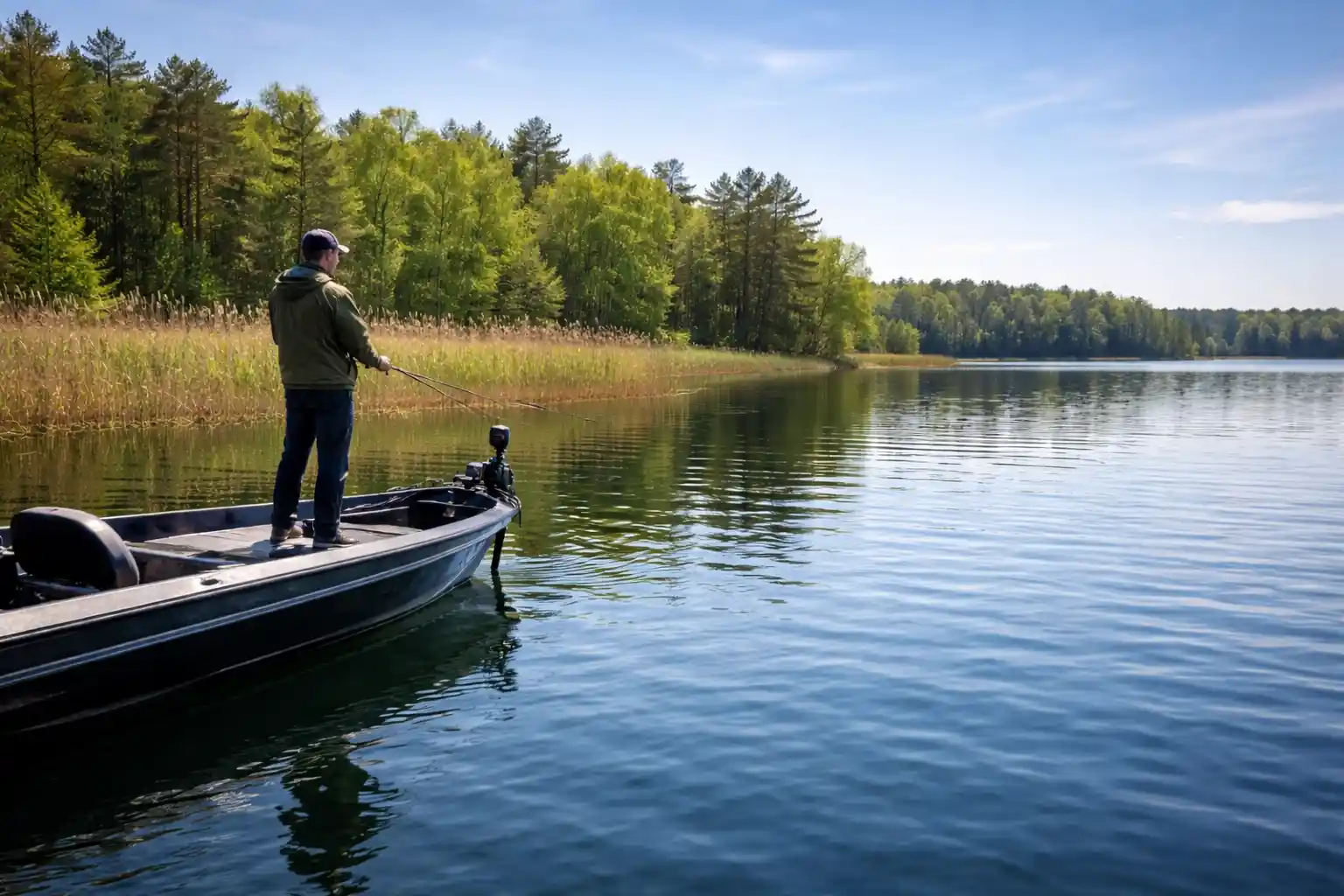
Across repeated early-season tracking sessions, the first reliable signal that recovery is ending is not calendar-based — it is environmental stability. When overnight temperature swings stop fluctuating and photoperiod (day length) increases consistently, baitfish behavior shifts. The first coordinated movement of roach and bream toward shallow bays typically marks the transition point. Pike do not resume aggressive feeding in isolation — they wait for prey concentration to align with stable conditions.
Post-spawn pike in spring often operate vertically during this recovery window. They remain within short horizontal distance of spawning zones but adjust depth subtly along contour changes and first breaklines. This vertical discipline explains why changing lure depth is often more effective than changing lure profile.
The mistake most anglers make is increasing retrieve speed too early. Recovery fish respond better to measured horizontal movement and precise depth control. Aggression rebuilds gradually — and only after stability, bait movement, and hormonal balance synchronize.
Post-Spawn Pike Depth Shift in Spring: Where Big Females Reposition First
Post-spawn pike in spring rarely “leave” — they slide out. After the shallow spawn phase, big females usually make a short, disciplined move away from the bedding cover and settle on the first stable holding water. This is the moment when most anglers keep casting the empty 1–2 m (3–6 ft) flats and miss the fish that are now sitting just off the edge.
High-percentage post-spawn positions are almost always the first breakline outside the spawning bay, the outer reed edge, and any stable contour that provides security without forcing long movement. In many natural systems, that means a shift into roughly 2–4 m (6–13 ft) before gradual repositioning based on stability and bait presence.
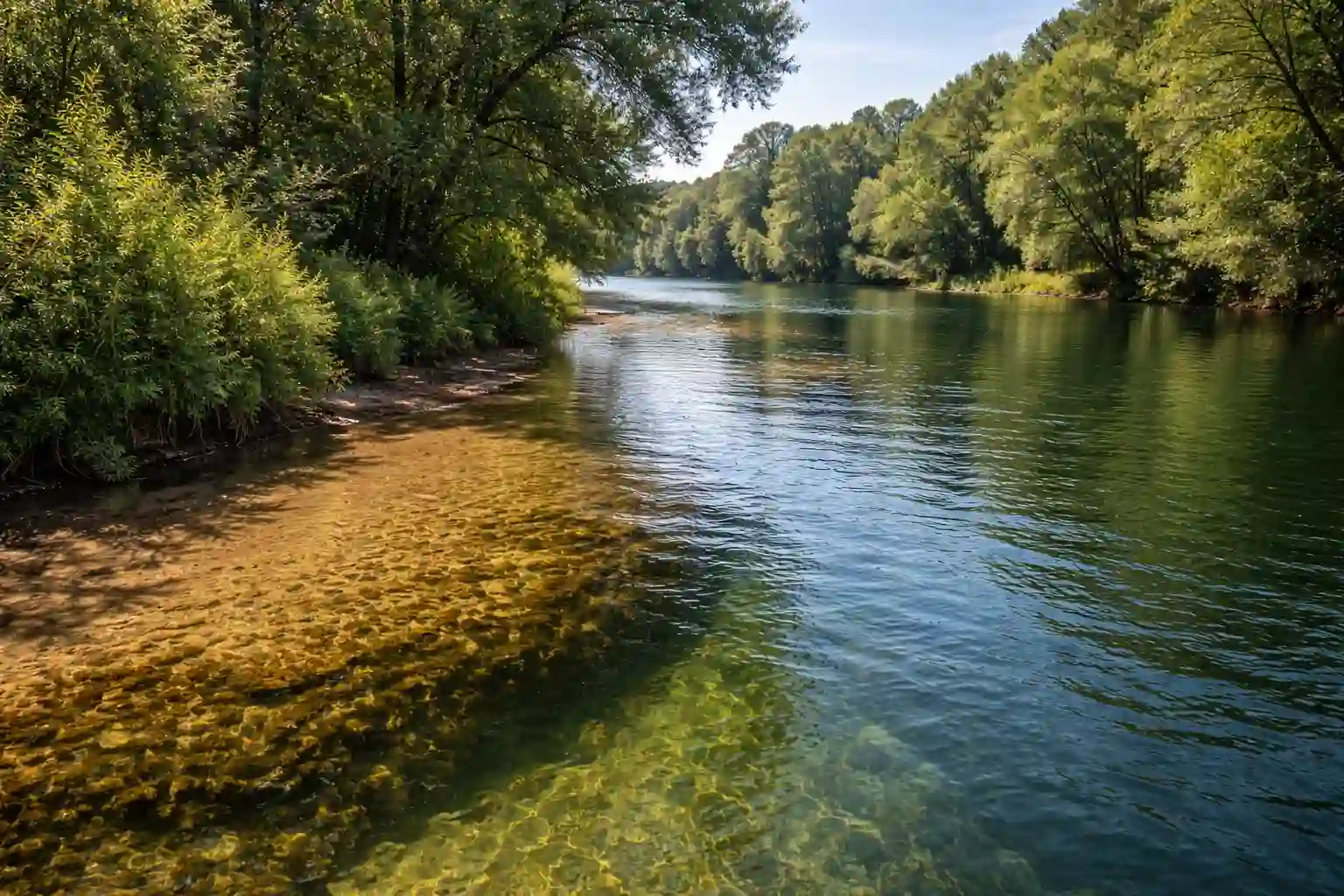
If you want a clean comparison between pre-spawn vs post-spawn depth behavior, our spring pike depths guide breaks down the earlier 4–10°C (39–50°F) staging bands. The difference now is simple: post-spawn fish prioritize comfort and recovery first — feeding second.
Field observations during multiple early-season sessions show a consistent pattern: positioning the boat in about 4 m (13 ft) of water and casting parallel along a 2.5–3 m (8–10 ft) drop-off keeps the lure inside the active depth lane significantly longer than casting perpendicular toward the bank. Cast parallel to the reed line where 1.5 m (5 ft) rolls into 2.5–3 m (8–10 ft). That subtle angle change often doubles your effective strike-zone exposure.
Work the outside corners of bays, the first contour turn leaving a spawn pocket, and the outer edge of recovering vegetation. Fish the edge — not the picture. What looks attractive in shallow water is often already empty.
When anglers finally connect during this phase, it feels like the lake “woke up.” In reality, the fish never left — you just moved your lure into the correct post-spawn depth lane.
Secondary Staging Areas: The Exact Post-Spawn Spring Locations Most Anglers Miss
Post-spawn pike in spring rarely move far — they reposition with intent. After sliding off the immediate spawning flats, big females settle into what we call secondary staging areas. These are precise transition zones that allow recovery while keeping feeding opportunities within short reach.
Repeated early-season mapping sessions consistently locate these fish 15–30 meters (50–100 ft) outside visible spawn pockets. What separates productive staging edges from empty water is often subtle bottom composition. Observations repeatedly show a transition from soft, silty spawning bottom into slightly firmer clay or gravel edges just 20 meters out. That firmness provides stability and better ambush positioning.
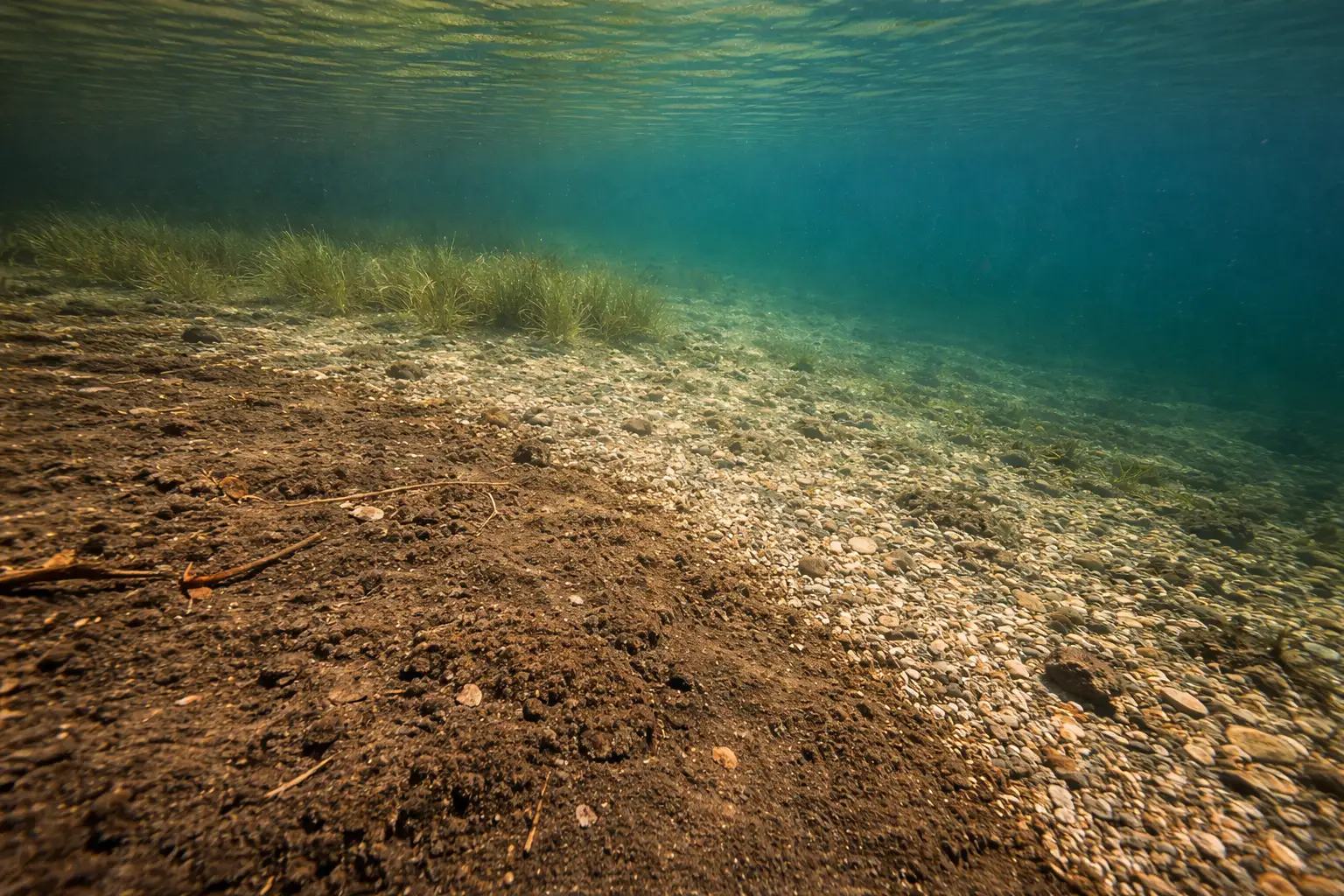
These areas are also frequently the first zones where fresh, green pondweed begins to grow. Unlike decaying reed beds inside the spawn pocket, new vegetation holds better oxygen and concentrates early bait movement. The fish are still present — but no longer sitting in exposed ultra-shallow water.
If you compare this pattern with our broader breakdown of spring pike locations, you’ll see the same rule repeat: transitional structure consistently outperforms flat water once spawning ends.
The key mistake anglers make is continuing to fish where the spawn happened — instead of where recovery happens. Secondary staging areas hold fish because they offer depth adjustment, bottom stability, and immediate access to prey lanes.
If you are not targeting edges just outside spawning cover, you are fishing behind the shift.
The First True Feeding Window for Post-Spawn Pike in Spring
The first real feeding window for post-spawn pike in spring does not explode open — it settles in. Most anglers expect a sudden shallow-water frenzy. What actually happens is controlled, structured activation tied to stability.
One pattern repeats on open, unfrozen lakes: when overnight temperatures stabilize for several consecutive days, strikes begin to appear with consistency — even if the water is only around 11°C (52°F). Stability, not warmth, is the real trigger. In many seasons, the most dependable bites show up around the third straight night without a temperature swing.
This lines up closely with what we break down inside our best time to catch pike in spring guide — feeding intensity follows environmental consistency, not calendar dates.
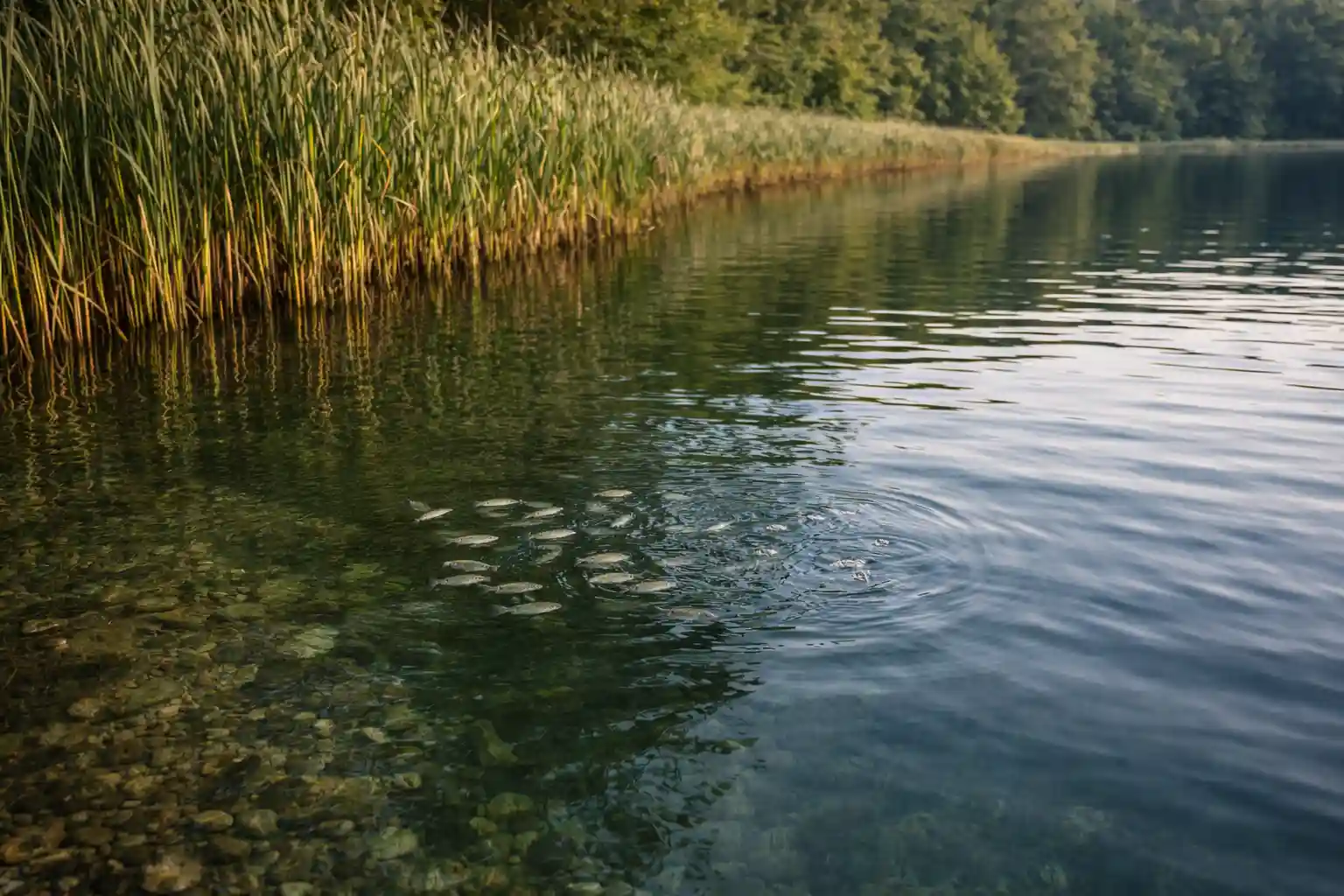
You can often see the shift before you feel it. Small groups of roach or bream begin holding slightly higher along outside corners of bays. Surface flickers appear near reed transitions. Pike do not initiate this movement — they respond to it.
The strike during this first window is rarely violent. It often feels like sudden weight — as if your lure picked up grass that slowly begins to move sideways. There is no sharp crack on the rod. Large females inhale and hold before committing.
The mistake most anglers make is increasing retrieve speed too early. During the first feeding window, slower suspending presentations and longer pauses outperform aggressive retrieves. The fish are no longer in recovery — but they are not in full chase mode either.
The fish are still structured, still edge-oriented — but now willing to commit.
Early Post-Spawn Pike in Spring: The Right Lure Speed, Depth & Pause Control
Early post-spawn pike in spring are positioned correctly before they are fully aggressive. That means lure presentation matters more than lure selection. Speed, depth control, and pause timing decide whether the fish commits — or simply watches.
The first adjustment is retrieve speed. Keep your lure operating inside the established 2–4 m (6–13 ft) recovery band. Post-spawn females conserve energy and rarely travel far horizontally. They react vertically, not laterally. If your bait stays in their depth lane long enough, they will rise or slide forward to intercept.
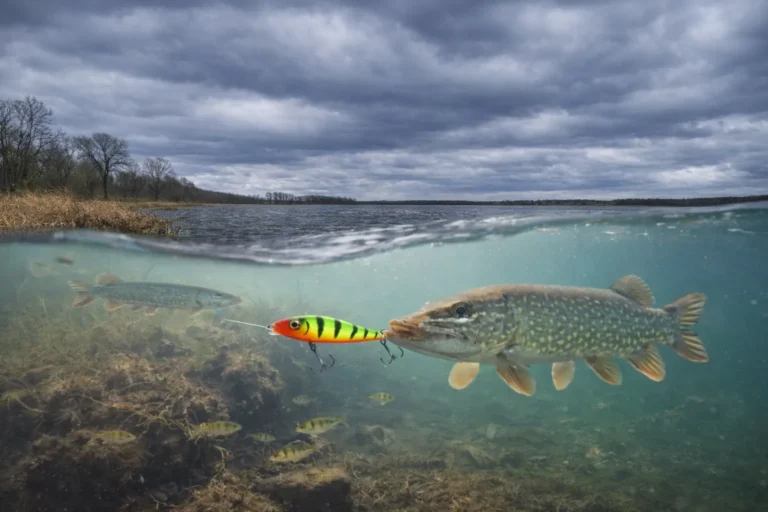
The pause is the real trigger. With suspending jerkbaits, extend pauses to 3–6 seconds. With larger soft swimbaits, slow the retrieve until the tail barely pulses. The goal is controlled presence — not motion. In this phase, movement attracts attention, but stillness closes the strike.
Wind adds a second layer most anglers ignore. When a steady wind pushes into the outer reed edge or outside bay corner, it compresses bait against that transition line. During multiple spring sessions on open lakes, we noticed something consistent: when the wind held for several hours from the same direction, strikes concentrated on the wind-facing breakline — not the calm side. The fish were not roaming. They were positioned where prey was being delivered to them.
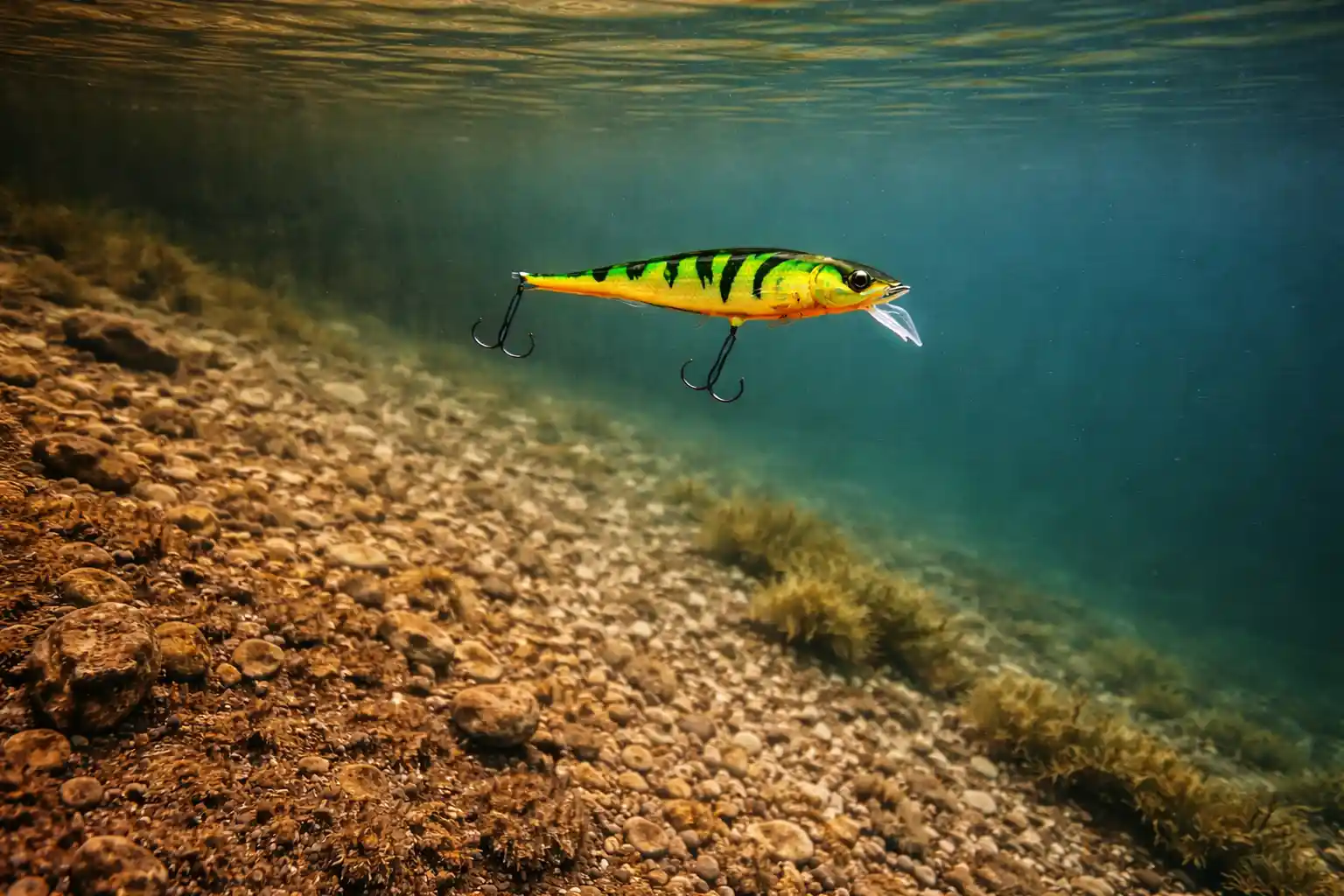
One afternoon, after two days of stable overnight temperatures around 11°C (52°F), the shallow flats remained quiet. The turning point came when a light south wind began pushing into the outside corner of the bay. Keeping the boat in 4 m (13 ft) and casting parallel along the 2.5–3 m (8–10 ft) edge, the lure only needed to hang for an extra second on the pause. The strike did not feel explosive. It felt heavy — as if the bait had snagged grass that suddenly moved sideways.
That is the early post-spawn signal. Not speed. Not chaos. Weight.
During this period, larger-profile lures often outperform smaller ones because they represent high-calorie prey without requiring pursuit. If you want a structured breakdown of profiles that excel in this phase, our best spring pike lures guide covers the most reliable categories.
The common mistake is overworking the bait. Fast jerks and constant rod movement push recovering fish out of their comfort window. Let the lure suspend. Let wind position the prey. Let depth control do the work.
Common Early Post-Spawn Mistakes That Kill the Bite
Most post-spawn failures are not location problems — they are control problems. Anglers often find the right depth, the right edge, even the right wind direction — and still struggle. The difference is rarely where the fish are. It is how the lure is being presented.
Mistake 1: Fishing the memory of the spawn. Many anglers keep casting into the exact shallow pocket where fish were weeks earlier. But once spawning ends, big females slide out. Fishing where the spawn happened is not the same as fishing where recovery happens.
Mistake 2: Moving the lure too fast. Early post-spawn pike are rebuilding, not racing. Fast retrieves force horizontal commitments they are not ready to make. When presentation speed increases too early, fish follow but rarely close.
Mistake 3: Ignoring wind direction. Calm water looks good. Wind-blown structure produces bites. When steady wind pushes bait against an outside reed edge or contour turn, pike reposition accordingly. Fishing the protected side may feel comfortable — but it is often empty.
Mistake 4: Overreacting to one missed strike. Early post-spawn strikes are often hesitation-based. When a big female misses, she frequently remains in the same zone — she simply needs another slow opportunity to correct her target lock. Abrupt lure changes often spook her. Extending the pause by one extra second on the second cast often converts the bite.
During one late-spring session, after a fish swirled and missed on the pause, the instinct was to switch color immediately. Instead, keeping the same lure and extending the suspension by two seconds produced a heavy, controlled strike on the very next cast. The fish had not left — the timing simply needed refinement.
Mistake 5: Fishing outside the comfort lane. Casting five meters too shallow or five meters too deep is often enough to move outside their post-spawn holding band. Early post-spawn females stay tight to first breaklines, outer reed transitions, and subtle contour turns. Precision of a few meters often separates empty casts from solid weight on the rod.
Post-spawn pike in spring punish impatience — and reward control.
Frequently Asked Questions About Early Post-Spawn Pike in Spring
How long does the post-spawn recovery phase last for pike in spring?
In most natural systems, the recovery phase lasts between 7 and 14 days, depending on water stability and temperature consistency. The key factor is not the exact temperature number, but whether overnight fluctuations stop. Once stability holds for several consecutive nights, feeding activity begins to increase gradually.
Where do big female pike go immediately after spawning?
Large females rarely travel far. Instead of abandoning the area, they reposition toward the first breakline, outer reed edge, or subtle contour transition 15–30 meters (50–100 ft) outside the spawning pocket. These secondary staging areas allow depth adjustment without leaving nearby bait concentrations.
When does the first real feeding window open after the spawn?
The first consistent feeding window often appears around the third consecutive day of stable overnight temperatures — even when water remains near 10–11°C (50–52°F). Stability, wind positioning, and bait movement matter more than calendar timing.
Why do post-spawn strikes feel “soft” or heavy instead of violent?
Early post-spawn pike frequently strike by inhaling and holding rather than attacking explosively. The bite often feels like sudden weight or slow sideways pressure. This behavior reflects energy conservation and controlled feeding rather than aggressive pursuit.
What is the biggest mistake anglers make after the spawn?
The most common mistake is increasing retrieve speed too early. Recovering females respond better to controlled pauses, vertical depth consistency, and presentations that stay inside their comfort lane. Speed and constant rod movement often push fish out of position instead of triggering them.
Final Thoughts on Early Post-Spawn Pike in Spring
Early post-spawn pike in spring are not inactive — they are strategic. What feels like a disappearance is usually a controlled depth shift combined with energy conservation. The fish are still within range. The angler simply has to adjust speed, angle, and patience.
Understanding this phase means accepting that feeding intensity rebuilds gradually. Large females do not immediately return to shallow chaos. They stabilize first, reposition along secondary structure, and only then expand their feeding window. This behavioral rhythm aligns with documented biological patterns of Esox lucius, which you can review in the species profile provided by the Animal Diversity Web – Northern Pike Overview.
Control beats aggression during early recovery. Precision beats speed. Wind-facing structure beats calm water. And one extra second of pause often beats a lure change.
If you read the water correctly, respect stability, and stay inside the comfort lane, early post-spawn pike in spring become predictable rather than mysterious.