


Pike Spawning in Spring: Exact Timing, Water Temperature & How to Recognize the Spawn
Pike spawning is something you don’t read about — you see it happen. If you spend enough early spring mornings on the water, you start noticing the same pattern every year. As soon as shallow margins hold a stable 4–10°C (39–50°F), you begin spotting subtle signs: slow wakes pushing through flooded grass, backs briefly breaking the surface near reed lines, fish moving in pairs along sun-warmed edges. Not aggressively. Not feeding heavily. Just moving with purpose.
We’ve seen it across different climates — in colder northern lakes immediately after ice-out, and in milder regions weeks earlier. It’s never about the calendar — it’s about stable warming. One sunny afternoon doesn’t trigger spawning. But several consecutive days of gradual temperature stability in shallow zones — especially when night cooling no longer resets the trend — do.

Understanding pike spawning changes how you interpret everything in early spring. Pre-spawn staging areas, sudden shallow activity, short feeding windows — they all revolve around this reproductive phase. If you already follow spring pike behavior, you’ve likely noticed how quickly fish shift from winter depth structures into ultra-shallow vegetation once spawning movement begins.
This guide breaks down when pike spawning actually starts in different climate zones, how to recognize it in the field, and how responsible anglers should interpret — not disturb — this critical phase.
Exact Water Temperature That Triggers Pike Spawning
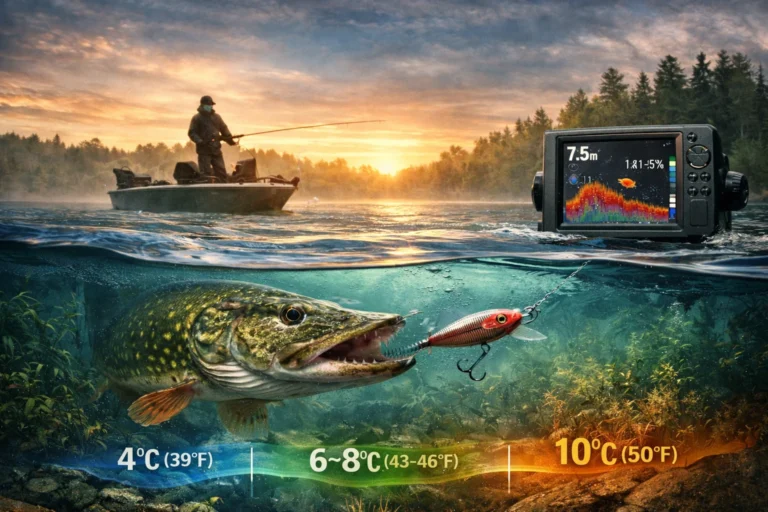
Pike spawning begins when shallow water temperatures stabilize between 4–10°C (39–50°F). But that number alone can be misleading. The key is not what your sonar reads in 2–3 m (6–10 ft) of water — it’s what the top 20–50 cm (8–20 in) along sun-exposed margins are holding consistently over several days.
In most natural lakes, the first real movement starts closer to 4–6°C (39–43°F) in protected bays with darker, softer bottoms. Mud and dark vegetation absorb heat faster than sand or rock, which is why spawning often begins there first. Peak egg deposition usually happens slightly warmer, around 5–8°C (41–46°F). Once water approaches 9–10°C (48–50°F), many larger females have already finished and begin sliding toward nearby post-spawn recovery zones.
What truly accelerates pike spawning is overnight stability. Early in the season, daytime sun can warm shallow water quickly — but if clear nights drop temperatures back down, the process slows. When night cooling no longer reverses the warming trend, spawning activity increases noticeably.
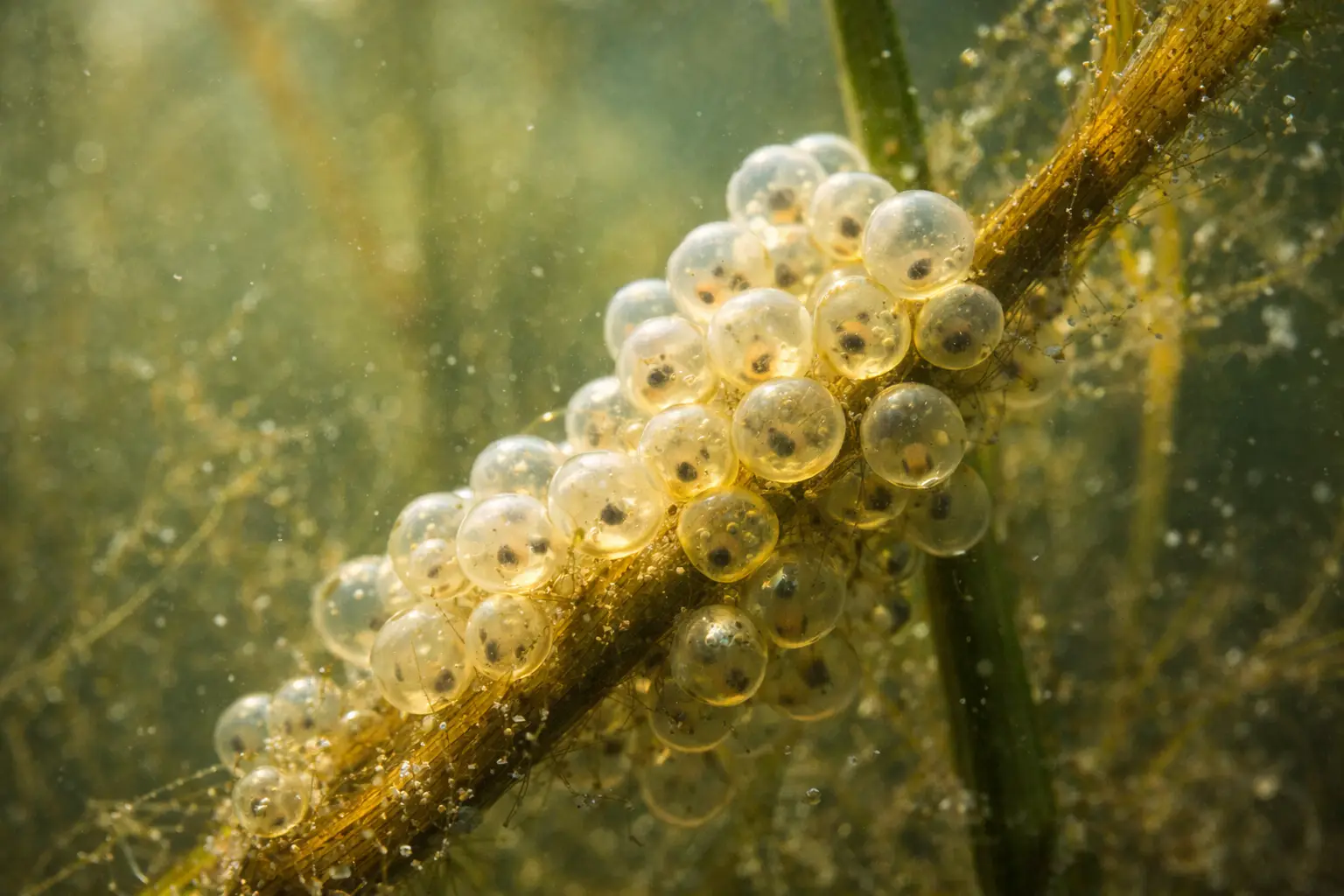
In river systems, rising water levels often play an additional role. Spring runoff and moderate floods open access to shallow grass flats and backwater pockets that are otherwise too shallow or disconnected. However, fast-flowing main channels rarely hold spawning fish. Pike consistently seek low-current, vegetation-rich backwaters where temperature remains stable and eggs can adhere to submerged plants.
Disturbing shallow margins during the critical 5–8°C window can significantly impact reproductive success. Recognizing this temperature band isn’t about targeting fish — it’s about understanding when pressure should decrease, not increase.
How to Recognize Active Pike Spawning in the Field
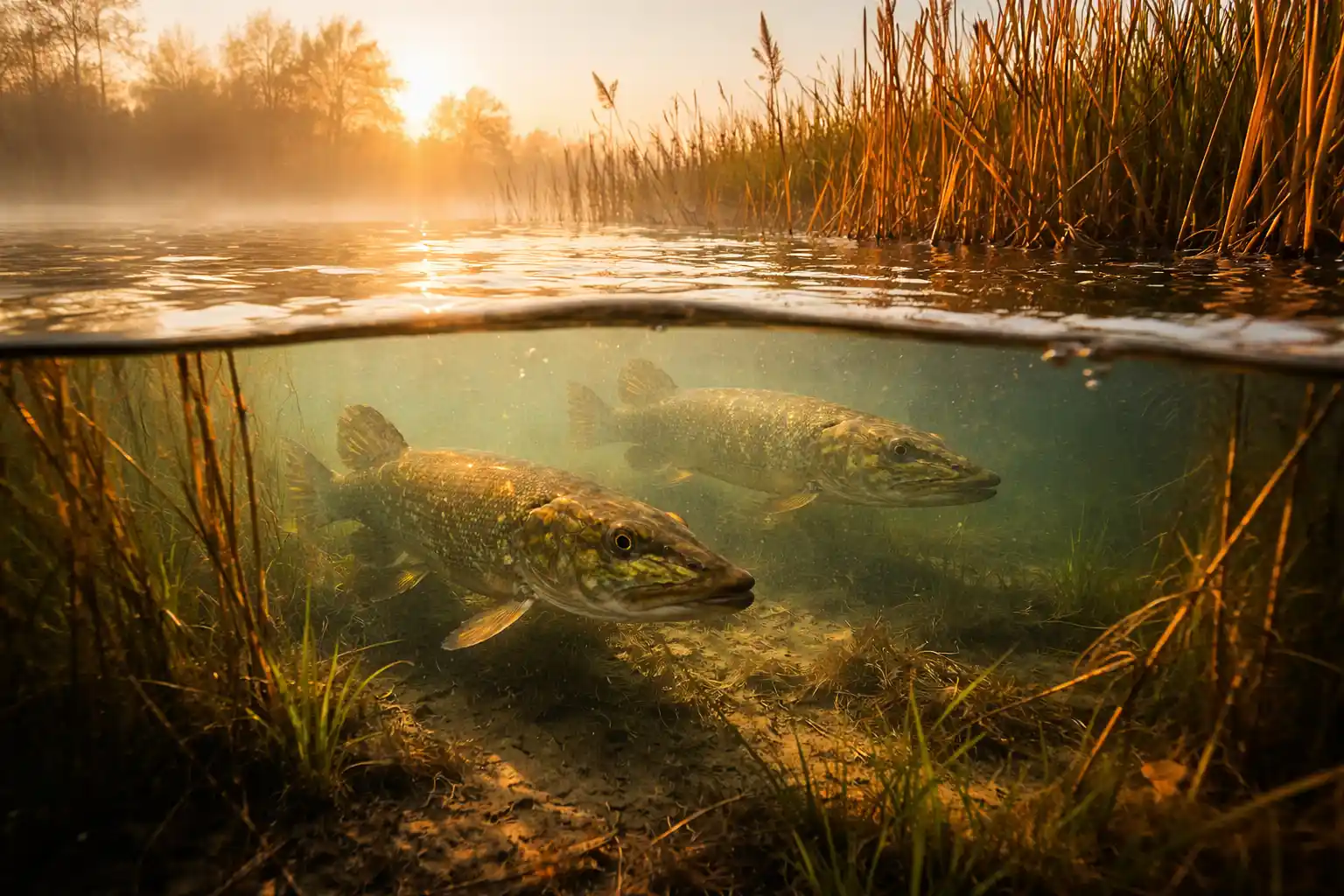
Active pike spawning is quiet, shallow, and surprisingly subtle. It doesn’t look like feeding activity. Instead, you notice fish holding in less than 1 m (3 ft) of water, pushing slowly through reeds or flooded grass along protected margins.
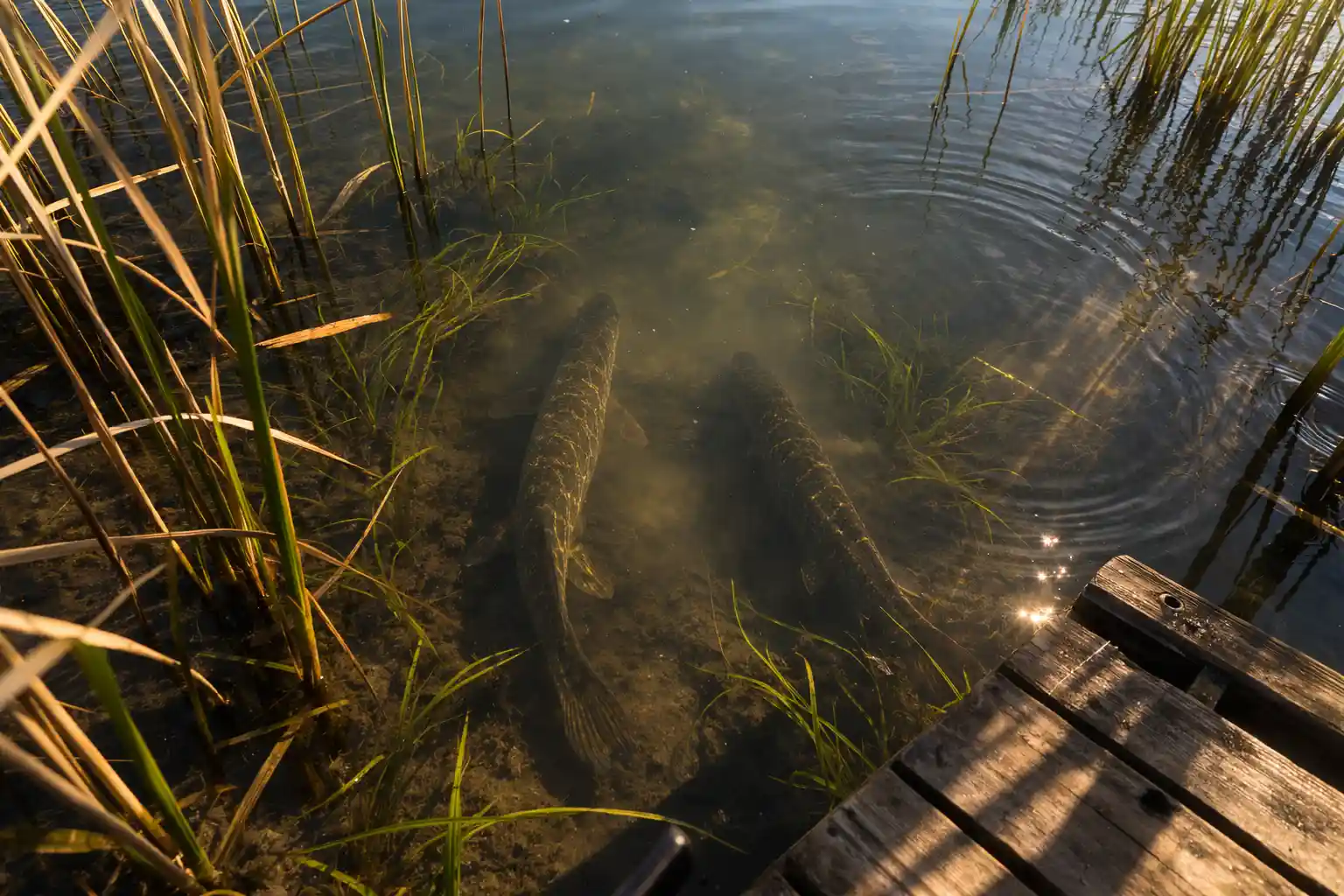
The clearest visual sign is fish moving in pairs or small groups. Larger females are often shadowed by one or two smaller males. You may see slow wakes in the grass, occasional backs breaking the surface, and water turning slightly cloudy as fish move repeatedly over soft bottom. In calm early mornings, faint splashing or shallow “slapping” sounds in vegetation can often be heard before anything is clearly seen.
Spawning fish frequently ignore lures completely. Even if a bait passes close, their focus is reproductive, not feeding-driven. This is very different from pre-spawn staging fish holding in 2–3 m (6–10 ft) of water, which will still strike aggressively under the right conditions.
In lakes, activity concentrates in sun-warmed, protected vegetation pockets. In river systems, fluctuating spring water levels often open access to newly submerged shoreline grass and shallow backwaters. These temporary zones become prime spawning habitat because they offer warmth, stability, and plant structure for egg adhesion.
If you observe paired movement, ultra-shallow positioning, minimal feeding response, and water temperatures in the 4–8°C (39–46°F) range, you are likely witnessing active pike spawning. Recognizing this phase allows anglers to interpret behavior correctly and minimize disturbance during a biologically critical period.
Does Pike Spawning Happen at the Same Time Everywhere?
Pike spawning does not follow a calendar — it follows temperature stability. That is why it can happen weeks apart in different waters, even within the same region.
During our early-season scouting sessions, the contrast becomes obvious. One lake may still look lifeless along the margins — gin-clear water, cold to the touch — while a nearby, tea-colored reservoir with darker bottom already shows subtle movement in flooded grass. The air temperature is identical. The difference is in the first few inches of the water column, where darker substrate absorbs and retains heat faster.
Deeper natural lakes often lag because of their larger thermal mass. Big water distributes heat slowly, delaying shallow stability. In smaller, shallow systems with dark bottom composition, the top layer warms faster, allowing the critical 4–8°C (39–46°F) band to stabilize earlier.
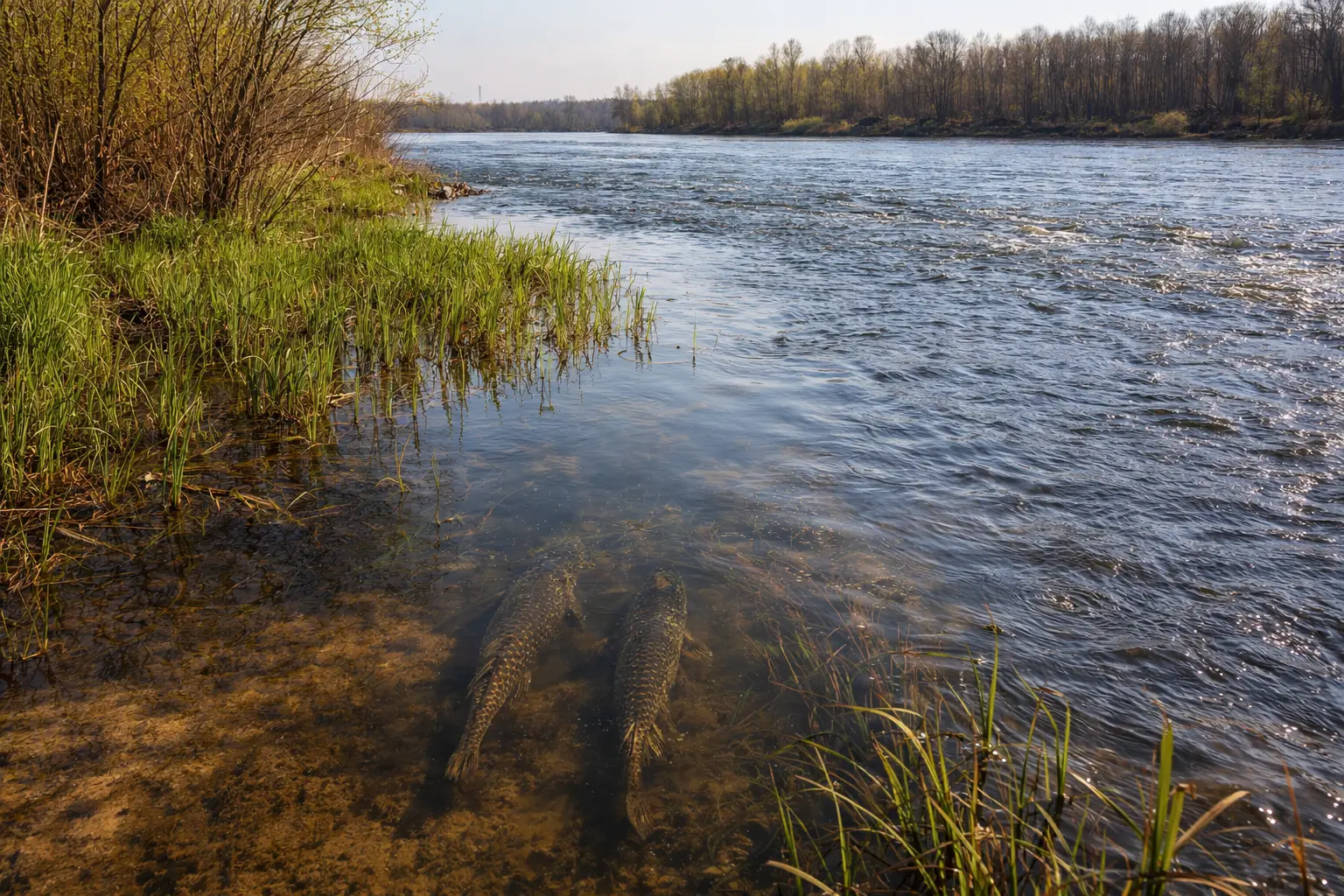
In river systems, temperature still governs the process, but hydrology influences timing. Spring runoff can carry slightly warmer water from shallow tributaries into connected backwaters. When those pockets experience temperature stability without overnight reversal, spawning activity can begin there even while the main channel remains colder.
The difference in timing between waters is thermal, not regional. And recognizing that pattern should not encourage anglers to chase spawning fish from lake to lake — it should signal when to back off shallow margins and reduce pressure during a biologically sensitive phase.
Field Observation: We’ve repeatedly seen shallow, dark-bottomed reservoirs show spawning activity up to 7–10 days earlier than nearby deep-water natural lakes, even under identical air temperatures. The consistent variable is substrate heat retention and shallow-layer stability.
How Long Does Pike Spawning Last? Exact Timeline & Phases Explained
Pike spawning is short, intense, and highly temperature-dependent. In most waters, the active spawning phase in a single location lasts between 7–14 days. However, that window is not continuous chaos — it unfolds in clearly defined micro-phases driven by shallow water stability.
The first movement begins when temperatures stabilize near 4–6°C (39–43°F). Smaller males often arrive first, holding in ultra-shallow vegetation and waiting for larger females. This pre-spawn gathering stage can last several days, especially if nighttime cooling briefly interrupts warming trends.
Once temperatures consistently hold within the 5–8°C (41–46°F) range, peak egg deposition begins. This is the most concentrated spawning activity period, often lasting only 3–6 days per female. Large females do not remain shallow for extended periods — they enter, deposit eggs across vegetation in multiple short bursts, often during mid-afternoon warming peaks when shallow margins reach their daily temperature maximum.
Individual fish complete spawning quickly — but entire populations do not. This creates what biologists call staggered spawning. Larger, older females frequently move first, while smaller fish follow days later, extending visible activity within the same shallow zone.
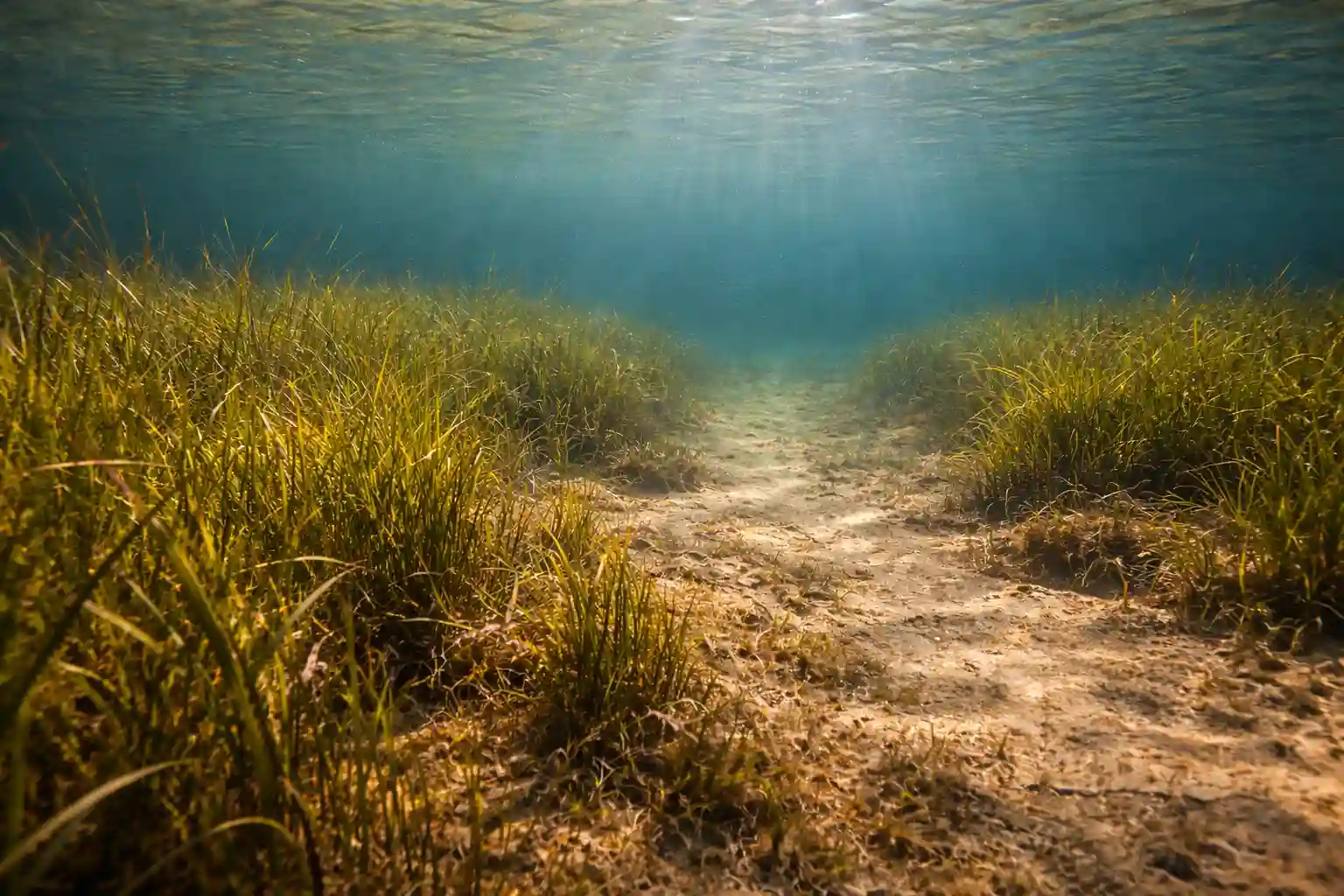
In stable conditions without cold reversals, the entire system may complete spawning within two weeks. In unstable springs — especially on unfrozen lakes without ice cover to buffer temperature swings — activity can compress into an intense 8–10 day window if sudden sun accelerates warming, or stretch longer if repeated rain and cold fronts cool shallow margins daily.
After egg deposition, females do not disappear into deep water. They typically slide toward the first breakline — often the nearest 1.5–3 m (5–10 ft) transition just outside spawning vegetation. They rarely travel kilometers. Instead, they “park” on the first meaningful depth shift where recovery begins.
Feeding does not resume immediately. What follows is a short metabolic recalibration period — a hormonal reset phase where the reproductive drive cools down and the feeding instinct gradually returns. The duration depends on temperature stability and individual fish condition.
Understanding this timeline prevents a critical mistake: visible silence in one shallow bay does not mean spawning has ended lake-wide. Activity may already be finishing in a warm, dark-bottom pocket while just beginning in a slightly colder section nearby.
Field Insight: During consistent early spring monitoring on our unfrozen systems, we’ve logged entire shallow grass areas shifting from zero visible movement to full spawning activity — and back to complete silence — within 9–11 days once stable 6–8°C (43–46°F) conditions held overnight.
Ethical Reminder: Recognizing the end of spawning in one zone does not justify increased pressure elsewhere. If shallow margins in any part of the system still hold fish within the critical 4–8°C band, disturbance should remain minimal.
Is It Legal (and Ethical) to Fish for Pike During the Spawn?
Legality and responsibility are not the same thing. In many regions, pike seasons are closed during spawning. In others, fishing may remain technically legal — especially in catch-and-release systems. But legal permission does not automatically equal biological sustainability.
Most European countries and many North American states align closures roughly with the critical 4–10°C (39–50°F) spawning window. These frameworks exist because pike are shallow, visible, and highly vulnerable during this phase. Removing even a small percentage of large egg-bearing females can disproportionately affect recruitment in smaller systems and slow population recovery for years.
In waters without formal closures, responsibility shifts directly to the angler. Targeting visibly spawning fish in less than 1 m (3 ft) of water is rarely defensible from a conservation standpoint. Even repeated disturbance — including constant repositioning or repeated casting pressure in ultra-shallow vegetation — can interrupt egg deposition behavior and increase stress during a hormonally sensitive period.
Catch-and-release does not eliminate impact. Pike engaged in spawning are operating in a physiologically committed reproductive phase. Their focus is hormonal and biologically programmed. They are not evaluating prey. They are executing a survival-driven process. Interference during this window carries a higher biological cost than pressure during normal feeding cycles.
A practical rule: if water temperature sits inside the spawning band and you observe paired movement in ultra-shallow grass, shift away from those margins. Instead, focus on adjacent structure or wait until the transition toward the post-spawn recovery period begins.
Visible silence in one bay does not mean the entire lake has finished. Spawning progresses in waves depending on substrate heat retention and exposure. Increasing pressure simply because one pocket appears quiet can undermine later-phase activity elsewhere.
Responsible anglers understand when not to cast. That decision — more than any lure or technique — defines long-term fisheries stability.
MFG Responsible Angler Checklist
- Check water temperature: 4–10°C (39–50°F) = heightened caution.
- Observe behavior: Paired fish in ultra-shallow water = spawning in progress.
- Analyze location: Flooded grass, reeds, low-current backwaters = primary egg deposition zones.
- Decision: Move toward adjacent breaklines or deeper staging areas instead of pressuring active spawning margins.
What Happens After Pike Spawning Ends?
Pike spawning is not the end of early spring — it is the pivot point. Once egg deposition finishes and females slide toward the first breaklines, the system does not immediately return to normal feeding behavior. It resets.
For several days, what many anglers interpret as “dead water” is actually post-spawn lethargy. Females enter a post-ovulatory period — a short physiological phase where hormonal drive declines and the body transitions from reproduction back to metabolic stabilization. Shallow margins grow quiet, but the fish have not vanished. They have repositioned.
Post-spawn females rarely travel far. They typically settle on the first breakline — often the first band of slightly deeper vegetation or the nearest sharp drop-off outside spawning grass that provides both security and temperature stability. These transition edges may sit only 20–60 m (65–200 ft) from active spawning zones, not kilometers away. This is a short slide, not a migration.
This is where many anglers misread the season. They either abandon the lake too early or continue pressuring ultra-shallow areas that have already emptied. In reality, fish are staging along adjacent depth transitions, waiting for metabolic signals to shift back toward feeding priority.
The speed of that shift is temperature-driven. If water remains cold and unstable, recovery slows and silence extends. But if temperatures continue climbing toward 12–14°C (54–57°F), metabolic demand increases and feeding activity reopens sooner. Rising stability accelerates appetite.
That first consistent bite does not happen randomly. It follows thermal progression, light penetration, and short activation periods that reopen the feeding window. If you want to understand exactly when that shift occurs and how to position correctly during it, study spring pike feeding windows in detail.
Spawning explains the silence. Metabolism explains the comeback. When you understand both phases — and respect the boundary between them — you stop guessing and start reading the season correctly.
Why Understanding Pike Spawning Matters Beyond the Season
Pike spawning is not just a spring event — it is the structural reset of the entire system. Everything that follows in early season behavior — depth shifts, feeding windows, aggression spikes — is built on what happens in that narrow reproductive window.
Biologically, northern pike (Esox lucius) are early-season broadcast spawners whose reproductive success depends on shallow vegetation, temperature stability, and minimal disturbance. Independent biological databases such as FishBase (Esox lucius reproduction data) document the temperature-sensitive and habitat-specific nature of this spawning process.
When you understand the biology, the behavior makes sense. Post-spawn lethargy is not “slow fishing.” It is a physiological transition. Breakline repositioning is not random movement. It is energy conservation. Feeding windows do not appear magically. They reopen as metabolism rises with continued thermal stability.
Anglers who recognize that sequence gain two advantages: better timing and better restraint. Knowing when fish are vulnerable protects long-term population structure. Knowing when recovery begins protects your consistency.
Spawning explains the silence. Temperature explains the transition. Metabolism explains the return of the bite. When those three pieces align, early spring stops being confusing and becomes predictable.
That predictability is not built on luck. It is built on respecting the biological boundary that starts in shallow grass and ends on the first stable breakline.
Frequently Asked Questions About Pike Spawning (Timing, Temperature, and Behavior)
Pike spawning triggers the biggest early spring behavior shift of the year. These quick answers cover the exact water temperature, timing, feeding behavior, and what responsible anglers should do during the spawn.
At what water temperature do pike spawn?
Pike typically spawn when shallow water stabilizes between 4–10°C (39–50°F). First movement often begins around 4–6°C (39–43°F), while peak egg deposition commonly happens between 5–8°C (41–46°F). The key is stability over several days in the top shallow layer — not one warm afternoon.
How long does pike spawning last?
In most systems, active spawning in a single area lasts about 7–14 days. Individual females often complete egg deposition within 3–6 days, but the overall lake or river system can show activity longer due to staggered spawning across different bays, substrates, and micro-temperatures.
Do pike feed during spawning?
Feeding is usually very limited during active spawning. Spawning fish operate in a physiologically committed reproductive phase, meaning hormonal priority outweighs feeding behavior. Some fish may still strike occasionally, but bites are typically inconsistent and should not be interpreted as “normal” feeding activity.
Can you fish for pike during the spawn?
It depends on local regulations — many regions close pike season during spawning, while some waters may allow catch-and-release fishing. Even where legal, targeting visibly spawning fish in ultra-shallow vegetation is rarely defensible from a conservation standpoint because disturbance can interrupt egg deposition and increase stress during a sensitive period.
Do all pike spawn at the same time?
No — pike spawning is temperature-driven, not calendar-driven. Dark-bottom bays, shallow reservoirs, and sun-exposed margins often start earlier, while deep clear lakes lag due to higher thermal mass. Within the same system, spawning can occur in waves as different zones stabilize at the right temperature range.