

Exact Barometric Pressure for Winter Pike Fishing — When They Feed and When They Don’t
You’ve done everything right — right spot, right lure, right depth — but the lake feels dead. The culprit isn’t your lure or your skills. It’s the barometric pressure.
We learned this on the water, not on forums. After countless winter sessions with frozen guides and stiff hands, the pattern became impossible to ignore: falling pressure opens short feeding windows, while a sharp rise after a front can make even the best water feel empty.
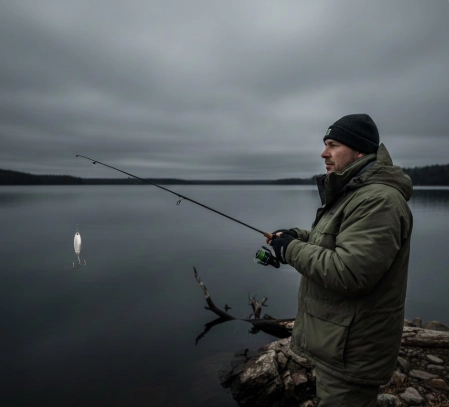
The fish never disappears — it simply changes behavior according to pressure.
In this guide we break down what really happens under the surface, how to read pressure trends, and how to adjust your tactics in time. We also connect pressure changes with real holding areas using winter pike depths.
Let’s dive into how air pressure works — and how to save your next winter pike session.
How barometric pressure actually changes winter pike behavior
We only started to understand pressure after we began logging every winter session. One pattern kept repeating: pike reacts less to the exact number on the barometer and much more to the trend and speed of change. Fast pressure movement forces the fish to change depth, comfort level and how far it is willing to chase.
To make it simple, here is what we kept seeing on the water:
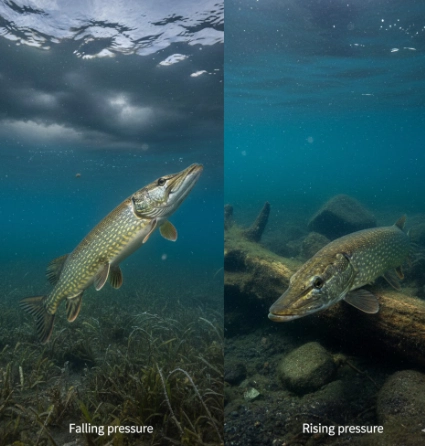
- falling pressure → pike slides shallower and patrols edges
- rapid falling pressure → very short but aggressive feeding bursts
- slow, steady falling pressure → fewer fireworks, but more consistent fishing
- rising pressure → fish sticks to structure and becomes reluctant to move
Those “dead days” after a front are not imagination. When pressure rises sharply, the same water that produced bites the previous day suddenly feels empty — the fish is still there, just locked tight to bottom transitions and cover.
This is why we now plan entire sessions around the pressure trend first, and then fine-tune tactics through our main winter pike fishing guide.
How to know if barometric pressure is falling or rising
This is the part most anglers usually overcomplicate. You don’t need physics formulas — you just need to read the trend correctly. After years of checking forecasts before every winter session, this is the simplest way to do it.
Different countries use different units (don’t let that confuse you)
Barometric pressure is shown in different units depending on where you live:
- hPa (hectopascals) — most of Europe and many weather apps worldwide
- inHg (inches of mercury) — USA, Canada and many American fishing apps
The unit doesn’t matter. What matters is whether the numbers go up or down.
Examples of falling and rising pressure in both systems
Falling pressure (fish usually more active):
- 1016 → 1011 → 1007 hPa
- 30.1 → 29.8 → 29.5 inHg
Rising pressure (fish often shuts down or becomes very sluggish):
- 1004 → 1010 → 1016 hPa
- 29.6 → 29.9 → 30.2 inHg
As long as you can see the direction, you already know what is happening under the surface.
Using an app with a graph (the easiest way)
Open a weather app that shows pressure by hours and watch the line:
- line goes down → pressure is falling (Negative Trend)
- line goes up → pressure is rising (Positive Trend)
- line is flat → pressure is stable (Neutral Trend)
Steep line = fast change (short, aggressive bite windows).
Gentle line = slow change (more predictable but weaker activity).
How we actually learned it
We used to carry a barometer watch and write values every 2–3 hours. When the needle moved down, bites often came before or during the fall. When it jumped up after a front, the activity dropped hard. That small notebook taught us more than any textbook.
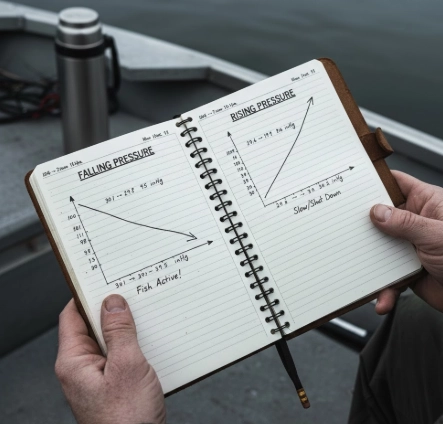
THE GOLDEN RULE: don’t chase “perfect numbers” — chase pressure trends. Then connect them with what you already know about winter pike temperatures and activity.
Falling pressure — the best winter feeding windows
If there is one situation when winter pike actually “wakes up”, it is during falling pressure. We’ve seen this pattern too many times to ignore it. As the barometer starts moving down, pike leaves its deepest holding areas and begins to patrol edges, drop-offs and slightly warmer shallow bays.
Why it happens: the drop in pressure often signals an incoming front with cloud cover or wind — conditions that make pike feel less exposed and much more confident to strike. Bright, clear, high-pressure days push them down; falling pressure does the opposite — it tells them it’s safe to hunt.
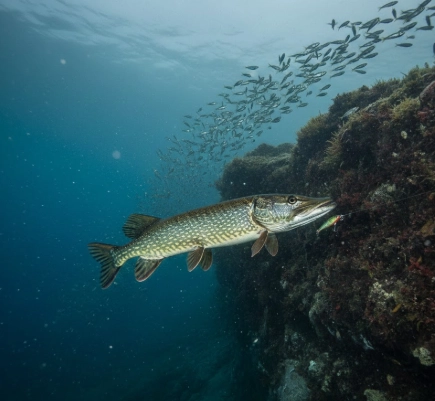
These are not all-day feeding frenzies. They are short, sharp windows that may last 10–30 minutes — and then everything goes quiet again. The key is to already be on the right spot when the pressure begins to drop, not after it has finished.
What we repeatedly saw in practice is simple: instead of sitting at the very bottom of the deep winter holes, pike moves to the upper lip of the drop-off, staging on ledges, points, creek mouths and the first break line out from the bank. It doesn’t roam randomly — it positions itself exactly where baitfish get pushed by the changing conditions.
Rapid fall = aggressive but very short bite window.
Slow, steady fall = fewer fireworks, but more consistent fishing through the day.
🚨 WARNING — The biggest mistake during falling pressure:
staying parked in the deepest “winter holes” out of habit. If the pressure is dropping, move 5–10 meters shallower — to the first break, bank-side structure or the upper lip of the drop-off. That’s exactly where the fish shifts when the barometer falls.
During these periods we consistently did best with lures that can be worked slowly but still send vibration or stay in the strike zone longer — suspending jerkbaits, soft swimbaits and spoons retrieved with long pauses. If you want specific models and styles that proved themselves for us in cold water, check our best 6 pike lures for winter.
When you see a Negative Trend on the graph, don’t wait for “better weather”. Falling pressure rarely brings many bites — but it very often brings the right bite.
Rising pressure — when winter pike shuts down
This is the hardest part of winter pike fishing. Right after a front passes and the sky clears, the barometer often jumps upward. Again and again we saw the same thing: pike doesn’t disappear, it simply becomes heavy, uncomfortable and very reluctant to move far from structure.
Instead of sliding along the edges, fish drops back to deeper ledges, holes and hard bottom transitions. Bites don’t stop completely, but they turn into soft “pressure taps” that are easy to miss. This is the period when covering water fast almost never works.
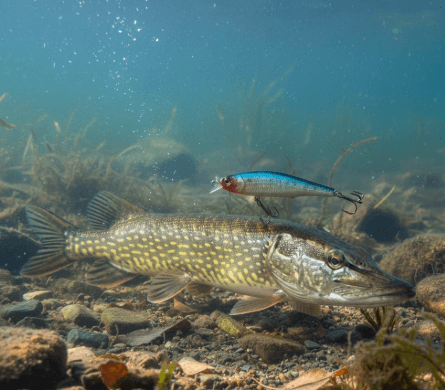
Why it feels so dead: rising pressure usually comes with clear skies and bright light. In cold, clear water that combination makes pike feel fully exposed — the exact opposite of falling-pressure confidence.
During rising pressure we stopped thinking about speed and started thinking about staying in the strike zone. Static or near-static presentations outfished everything else. That’s why deadbaiting shines here: oily, natural scent right in front of the fish, with minimal need for it to move. If you want to choose the right baits for this situation, take a look at best winter deadbaits for pike.
Equally important is how you rig them. In high pressure pike often picks up a bait and just holds it. Rigs with minimal resistance and clean presentation made a massive difference for us, especially on pressured waters. We explained the exact setups we use in winter pike deadbait rigs.
If you are strictly a lure angler, don’t worry — you can still catch fish in high pressure. This is the time for oversized soft baits with strong salt/scent, or lures that can hang in place almost indefinitely, like high-quality suspending jerkbaits. You are no longer “feeding” the pike — you are annoying it into biting by keeping something right in its face for too long to ignore.
On a Positive Trend day, don’t fight the fish’s mood. Go deeper, fish slower, and focus on scent and precise presentation instead of speed and covering water.
Stable Barometric Pressure in Winter Pike Fishing — The ONLY Times They Actually Bite
Stable pressure doesn’t usually produce fireworks, but it does produce patterns. When the barometer holds steady for 24–48 hours, winter pike settles into a routine. We’ve seen this many times: no wild feeding spells, but the same short windows repeat day after day.
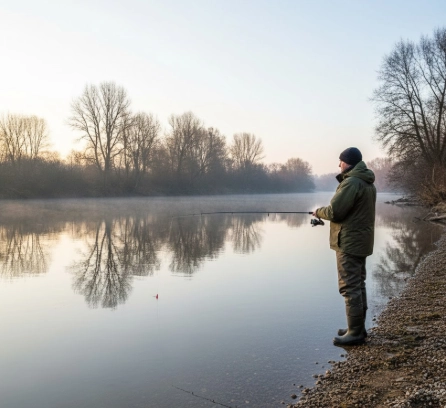
Those windows are usually tied to light, not location. First light and last light suddenly become far more important than the exact lure model you’re throwing. On stable-pressure days we often go hours without a touch, and then get two chances in fifteen minutes — and that’s it.
How pike behaves: it stays close to its “winter base” — deeper structure, holes, hard-bottom edges — and makes short excursions toward shallower water during the key times of day. It is not roaming far, it is conserving energy.
How we change tactics through the day: on stable days, we often start deep with deadbaits at dawn, then shift to casting slow-sinking lures toward shallow flats around midday, only to return to the deep holes for the final dusk window. Same fish, same water — different position depending on light.
The most reliable moments in our logs were always the same: dawn, dusk, and occasionally a small midday bump when the sun slightly warms a shallow flat. That’s why planning around specific days and times matters more here than chasing fronts. We described this in detail in January pike fishing.
When the pressure is stable, don’t expect miracles — expect repeatable, short bite windows. Be on your best spots exactly at those times, not an hour later, because winter pike won’t wait for you.
Barometric Pressure + Winter Weather — Which Conditions Actually Turn Pike On or Off
Pressure alone never tells the whole story. What really changes winter pike behavior is the combination of barometric pressure and weather on the surface — clouds, wind, snowfall, or suddenly clear skies after a front. After enough days on the water, you stop asking “what is the pressure?” and start asking “what is the pressure doing together with the weather?”.
Clouds + falling pressure are by far the most reliable feeding conditions. Low light + softer barometric load make pike feel less exposed, and it moves away from the deepest winter holes to hunt edges and shallower breaks. Add a bit of wind that ripples the surface and bites usually happen fast, in short windows.
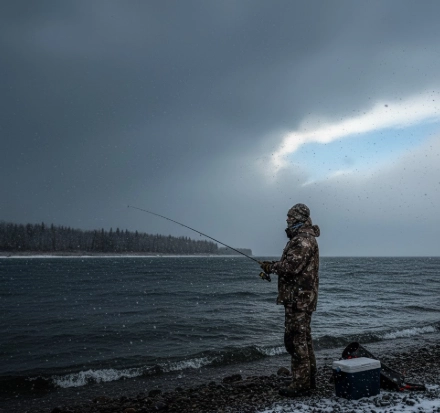
Clear sky + rising pressure is the opposite story. The water stays cold and transparent, light penetration increases, and pike locks down tight to structure. It still eats — but only if the bait is placed almost on its nose. That’s when deadbaits, suspending jerkbaits or painfully slow presentations matter more than anything else.
Snowfall with slowly falling or stable pressure has been one of our most consistent “green lights”. Snow cuts light, muffles sound and boat shadow, and creates the same confidence effect as heavy cloud cover. If we see snow coming with a gentle negative trend, we don’t cancel trips — we rearrange plans.
Just don’t forget the practical side of this story. The same conditions that trigger fish — wind, sleet, wet snow — are brutal on the angler. If your hands go numb, timing no longer matters. That’s why proper winter fishing gloves and insulated footwear like winter fishing boots are not comfort items — they are part of your winter strategy.
Always read pressure together with the sky. Clouds and wind with falling pressure mean it’s time to fish. Sun and rising pressure mean slow, precise presentations.
Best Pike Tactics for Falling, Rising and Stable Barometric Pressure (Quick Decision Table)
| 📉 Falling Pressure (Best Feeding Windows) | 📈 Rising Pressure (Hardest Conditions) | ➖ Stable Pressure (Short, Predictable Bites) |
|---|---|---|
| Move from deep winter holes to the upper edge of drop-offs | Go back to deeper ledges, pits and hard-bottom transitions | Stay close to known winter holding areas |
| Check wind-blown banks and slightly colored water | Present the bait almost directly on the fish’s nose | Rely on dawn and dusk more than spot changes |
| Fish shallower than you think — even in midwinter | Deadbaits or suspending lures that can “hang” in place | Short feeding windows repeat day after day |
| Speed: slow–medium with long pauses | Speed: ultra slow, minimal movement | Cover less water — be there at the right time |
Gear tip: when pressure swings, we often change not just location but also the reel speed and drag smoothness. Slower retrieves and precise drag control help a lot with lethargic winter fish. If you want to upgrade that part of your setup, check our best reels for pike fishing in cold water.
Practical takeaway: Pressure down → go shallower. Pressure up → go deeper. Stable → trust the clock more than the map.
FAQ — Barometric Pressure and Winter Pike Fishing
Does barometric pressure really affect winter pike fishing?
Yes. Falling pressure usually creates short feeding windows, rising pressure makes fish hold tight to structure, and stable pressure produces small but predictable bite periods around dawn and dusk.
What is the best barometric pressure for winter pike?
There is no single magic number. The trend is more important than the value itself. A falling barometer with clouds and light wind is usually the most productive scenario in winter.
Do pike stop feeding completely during rising barometric pressure?
No, they do not stop feeding, but during rising pressure pike become reluctant to move. Most bites happen close to deeper structure, and slow or almost static presentations work best.
What lures work best when the barometric pressure is falling?
When pressure is falling, pike often move shallower and hunt more actively. This is the time for slow-sinking swimbaits, spoons, and suspending jerkbaits worked with long pauses.
Is stable barometric pressure good or bad for winter pike fishing?
Stable pressure is neither strictly good nor bad. It usually creates short but predictable bite windows at first light and last light, while the rest of the day can be very slow.
Conclusion — Barometric Pressure Is a Tool, Not a Magic Switch
Barometric pressure will not “turn pike on and off like a light switch”, but it is one of the best tools you have in winter. Pressure does not work alone — it interacts with temperature, wind, cloud cover, and baitfish movement. That is why some anglers swear by it and others claim it does nothing. The truth is in the middle: pressure does not decide everything, but ignoring it costs you fish.
Focus on the trend, not the number. Falling pressure usually means short aggressive feeding windows. Rising pressure pushes pike deeper and makes them lazy. Long stable periods create predictable bites at dawn and dusk. If you combine these patterns with structure, water clarity, and correct lure speed, you stop guessing and start fishing with intent.
Winter gives you fewer chances, so every window matters. Track upcoming fronts, watch how fish react on your local waters, and keep simple notes in your phone. After a few trips you will clearly see the connection between pressure changes and your results.
For accurate real-time barometric charts and forecasts, check AccuWeather before your next session. Go when things are changing — not when everything is perfect on paper. Pike reward movement, not comfort.